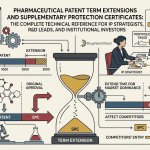
How European Supplementary Protection Certificates actually work, why their expiry dates keep moving, and what that means for your market position
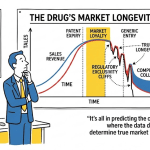
The term ‘patent cliff’ gets used as if it were a single, predictable event. It is not. For any drug sold in the European Union, the true end of exclusivity is governed by a legal instrument that most people outside IP departments understand imperfectly: the Supplementary Protection Certificate, or SPC. And the SPC expiry date, the number that shapes billion-euro launch plans and defensive strategies alike, is far less fixed than the spreadsheets in most strategy decks suggest.
This matters because the SPC period is often when a drug earns its largest revenues. A product that has spent a decade establishing itself as standard of care, embedded in clinical guidelines, widely prescribed and reimbursed, typically reaches peak sales in years eleven through fifteen of its commercial life. That coincides precisely with SPC protection. The commercial logic is stark: if a blockbuster generates EUR 10 million per week, a two-week error in calculating the SPC expiry date represents EUR 20 million of misallocated revenue planning. For the generic competitor eyeing that same market, the same two-week miscalculation means launching too early, inviting an injunction, or launching too late and ceding market share to a faster rival.
This article works through every moving part of the EU SPC system, from the foundational legislation to the court rulings that retroactively shifted expiry dates across Europe, from the new manufacturing waiver to Brexit’s quiet damage to once-harmonized protections. The goal is a working strategic framework, not a legal textbook.
Part I: The Architecture of Extended Exclusivity
Why Standard Patent Law Cannot Carry the Weight
The global standard for patent protection is a 20-year term, measured from the filing date. That rule, enshrined in the TRIPS Agreement and implemented uniformly across all World Trade Organization members, looks adequate on paper. In pharmaceutical reality, it is deeply problematic.
Drug development is not a linear, fast process. A compound that enters preclinical testing today will typically spend four to six years in animal studies before human trials begin. Phase I, II, and III clinical trials add another six to eight years, assuming no major delays. Then comes a regulatory review that can run twelve to eighteen months under the centralized European Medicines Agency (EMA) process, and longer in cases requiring additional safety data or Committee for Medicinal Products for Human Use (CHMP) clarification rounds. The entire sequence routinely consumes twelve to thirteen years of a patent’s twenty-year term before the first tablet reaches a pharmacy shelf [1].
The resulting ‘effective patent life,’ the actual window of commercial exclusivity, runs seven to twelve years on average. For a drug that cost EUR 2 billion or more to develop, that window is narrow. The European Commission recognized this structural problem as early as 1990, when it launched the legislative process that would eventually produce the SPC system. The goal was not to reward pharmaceutical companies with a windfall. It was to restore enough of the eroded patent term to make continued investment in European drug development rational, while simultaneously ensuring that generic competition would eventually arrive, bringing lower prices and improved patient access [2].
The SPC is the mechanism that attempts to satisfy both goals simultaneously. Whether it does so is a matter of active political and commercial debate, but its centrality to pharmaceutical strategy in Europe is beyond question.
What an SPC Actually Is, and What It Is Not
The SPC is described in law as a sui generis intellectual property right, which means it operates as a distinct legal instrument, not as a continuation of the underlying patent. This distinction is not a technicality. It carries real strategic consequences.
When a basic patent expires, the SPC takes effect as a separate right. It confers the same substantive protections as the patent, specifically the right to prevent unauthorized manufacture, use, sale, or importation of the protected product. But its scope is narrower than the patent it replaced. The SPC covers only the specific ‘product,’ defined as the active ingredient or combination of active ingredients, that was the subject of the marketing authorisation (MA) that triggered the SPC grant [3]. It does not extend every claim in the basic patent; it extends the commercial exclusivity of that specific authorized medicine.
This narrowing matters when generics attempt to launch products that fall within old patent claims but outside the SPC’s product definition. A generic manufacturer may be able to exploit expired patent claims for process variations, for example, while still being blocked from selling the identical active ingredient during the SPC term.
The legislative foundation for all of this is Regulation (EC) No 469/2009, the codified version of the original 1992 regulation. A parallel text, Regulation (EC) No 1610/96, covers plant protection products. These regulations are directly applicable across all EU Member States. No national transposition is required. Yet the implementation is, paradoxically, entirely national in character [4].
A Deliberately Fragmented System
There is no EU-level body that grants SPCs. An originator holding a European Patent and a centralized EU marketing authorisation must file separate SPC applications at the national patent office of each Member State where protection is sought. Germany, France, Italy, the Netherlands, Spain, Poland: each requires its own application, its own national procedural compliance, its own renewal fee structure, and its own potential for divergent interpretation [5].
This design choice from 1992 was a political concession to Member States unwilling to cede patent jurisdiction to a supranational body. The practical consequence thirty-plus years later is a legal landscape where the same drug, based on the same patent and the same EMA marketing authorisation, can hold an SPC in nineteen countries and be denied one in three others, based on differing national interpretations of what ‘protected by a basic patent’ means.
The European Commission has been explicit in identifying this fragmentation as a competitive liability. Its 2023 legislative reform package opens with an analysis showing that SPC applicants must pay multiple sets of filing fees, professional fees, and translation costs, all to obtain parallel rights that should, in theory, be identical [6]. The total system cost across all Member States for a full bundle of national SPCs has been estimated at roughly EUR 2 million over the protection period, compared to what would be a fraction of that cost under a unified system.
For strategy purposes, that fragmentation has two faces. It is a cost and a complexity burden for the originator. But it is also a source of opportunity for both sides. A generic that wins an invalidity ruling in one national court cannot automatically apply that ruling in another. An originator that loses a challenge in Germany still has its SPCs standing in France, Italy, and Spain. Every country is its own chessboard.
Part II: The Numbers That Drive Billions
The Core Duration Formula
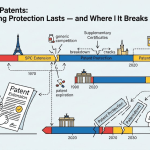
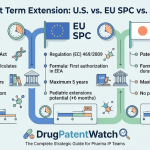
The SPC’s commercial value is encoded in a single duration calculation, specified in Article 13(1) of Regulation 469/2009. The formula reflects the system’s core policy goal: to provide an effective period of market exclusivity of up to fifteen years from the date of first authorization [7].
Duration = (Date of First MA in the EEA) minus (Date of Basic Patent Filing) minus 5 years
The five-year subtraction compensates for the expected minimum profitable patent life that would exist even without the regulatory delay problem. The net result is the number of additional years of protection the SPC adds to the basic patent term.
A worked example makes this concrete. A company files a composition-of-matter patent application on March 1, 2010. After twelve years of development and review, it receives its first MA in Germany on March 1, 2022.
Interval between patent filing and first EEA MA: 12 years
Formula result: 12 years minus 5 years = 7 years
The calculation yields seven years. But the SPC duration formula operates alongside a hard cap.
The Five-Year Cap and Its Interaction with the Formula
Article 13(3) of the Regulation imposes an absolute ceiling: the SPC duration cannot exceed five years from the date of basic patent expiry, regardless of what the formula produces [8].
In our example, the patent filed on March 1, 2010 expires on March 1, 2030 under the standard 20-year term. The formula gave a potential seven-year SPC duration, but the cap limits it to five years. The SPC therefore runs from March 1, 2030 to March 1, 2035.
Now consider a company that files the same patent on March 1, 2010, but obtains its first EEA MA very quickly, on March 1, 2014, after only four years.
Formula result: 4 years minus 5 years = -1 year
A negative result means no SPC is available. The drug entered the market while fourteen years of patent life remained. The effective patent life of fourteen years already exceeded the system’s target of fifteen years from first authorization, so no extension is warranted.
This arithmetic is simple in isolation. The complications arise from two sources: first, disagreements about which date counts as the ‘date of first authorization’; and second, the possibility that the relevant MA is held by a different company for a different indication, which may still foreclose the SPC for the new applicant.
Seattle Genetics: The Ruling That Moved Expiry Dates Across Europe
For years, different national patent offices answered the question ‘what is the date of first authorization?’ differently. The EMA’s centralized procedure produces a decision from the European Commission, called the grant date. But that decision reaches the applicant company through a formal notification, published shortly after in the EU’s Official Journal. The notification date is always later than the grant date, typically by five to fifteen days.
National offices split on which date to use. Some used the grant date; others used the notification date. For a drug earning EUR 5 million per day, a ten-day difference in SPC duration represents EUR 50 million. The financial stakes made this an urgent question, not an administrative curiosity.
The CJEU resolved it in Case C-471/14, Seattle Genetics, decided on October 6, 2015 [9]. The Court ruled that the ‘date of the first authorisation to place the product on the market’ is the date on which the marketing authorisation decision is notified to the applicant. The legal reasoning was that a decision produces legal effects only once it has been communicated to the party it concerns. Until notification, the addressee has no knowledge of the decision and no ability to act on it.
The ruling did more than resolve a procedural ambiguity. It retroactively rendered incorrect every SPC that had been calculated using the earlier grant date. Those SPCs expired too soon, as a matter of EU law.
The CJEU addressed the retroactive implications in Case C-492/16, Incyte [10]. The Court confirmed that its Seattle Genetics interpretation has ex tunc effect, applying from the date the incorrect SPCs were granted. It also confirmed that national patent offices enjoy no discretion: the duration is wholly determined by the Regulation’s criteria, and an SPC holder has the right to request a correction from the national office that granted it, provided the SPC has not yet expired.
This created an immediate action item for any SPC holder whose certificates were calculated using grant dates. The correction is not automatic; the rights holder must proactively identify the affected SPCs, prepare the legal arguments, and file correction requests at each relevant national office. For a blockbuster product with SPCs across fifteen to twenty countries, all calculated on the wrong date, the aggregate value of these corrections can run to hundreds of millions of euros.
DrugPatentWatch tracks SPC expiry dates across European jurisdictions, allowing IP teams to systematically audit their portfolio against the Seattle Genetics standard and flag certificates that may still be correctable [11]. That kind of systematic surveillance, applied at scale, is the practical tool that turns a court ruling into recovered revenue.
The Six-Month Paediatric Extension: Policy Prize, Strategic Lever
Beyond the standard SPC term, one mechanism exists to extend market exclusivity further: the six-month paediatric extension created by Regulation (EC) No 1901/2006 [12].
The mechanism is straightforward in design. To encourage pharmaceutical companies to conduct rigorous clinical research in children, a market segment historically underserved by proper clinical data, the Paediatric Regulation offers a six-month addition to the SPC term. This extends the maximum from five years to five and a half years beyond patent expiry.
The trigger for the extension is not a successful new paediatric indication. It is compliance with an agreed Paediatric Investigation Plan (PIP), a detailed research program negotiated with the EMA’s Paediatric Committee (PDCO). The PIP specifies the timing and scope of studies needed to assess the drug’s safety, efficacy, and appropriate formulation in children. If the company completes the agreed program, the results appear in the product’s Summary of Product Characteristics (SmPC), and the European Commission issues a compliance statement, the six-month extension is awarded regardless of whether the paediatric studies generated a positive or negative clinical outcome.
This ‘compliance, not outcome’ principle was deliberate. Had the reward been tied to a successful new indication, companies would rationally avoid conducting studies they were uncertain of passing. By rewarding the conduct of the research, the regulation ensures that paediatric data is generated and enters the public domain either way. <blockquote> According to the European Commission’s economic analysis of the SPC system, the estimated revenue benefit of a six-month paediatric SPC extension for a major blockbuster can exceed EUR 500 million, typically far outweighing the investment required to complete the agreed paediatric studies. [European Commission, *Economic Analysis of Supplementary Protection Certificates in Europe*, 2018] </blockquote>
The strategic calculus, then, is usually obvious for high-revenue products. The complications appear in three specific situations.
First, timing. An application for the paediatric extension must generally be filed concurrently with the main SPC application. If the SPC has already been granted by the time paediatric compliance is established, the extension application must arrive no later than two years before the SPC is due to expire. Missing that window forfeits the extension permanently.
Second, orphan drugs. Products designated as orphan medicinal products are ineligible for the six-month SPC extension. The orphan drug framework provides its own incentive: a two-year extension to the standard ten-year market exclusivity period. Companies developing drugs for rare diseases must understand from the outset which regime applies to their product [13].
Third, interaction with new indication extensions. Under some circumstances, a new therapeutic indication granted during the SPC term can itself attract a one-year extension of market protection. If that new indication is paediatric, the company may face a choice between the one-year extension and the six-month SPC extension. They cannot accumulate both. The correct choice depends on which form of exclusivity is more commercially valuable for that specific product in that specific market context.
Part III: The Manufacturing Waiver — An Economic Tool That Became a Legal Battlefield
The Problem the Waiver Was Built to Solve
For twenty-seven years after the SPC’s creation, its protections were absolute. During the SPC term, no third party could manufacture the protected product within the EU for any commercial purpose. This created a structural competitive disadvantage for EU-based generic and biosimilar manufacturers that their counterparts in India, China, and other manufacturing hubs did not face.
The logic of the disadvantage was precise. If an EU-based generic manufacturer wanted to supply a market in Brazil, Argentina, or Australia where the drug had no SPC protection or where the SPC had already expired, it was legally barred from making the product in its German or Italian facility during the EU SPC term. A manufacturer in Hyderabad had no such constraint. The result was consistent: EU generic manufacturers either built manufacturing capacity outside Europe or ceded export markets to non-EU competitors. In both cases, jobs and economic activity migrated out of the EU.
The secondary effect was equally damaging to European healthcare systems. Generic and biosimilar manufacturers could not prepare finished product inventory for the EU market before the SPC expired. Their first production runs had to wait until the morning after expiry. For complex biologics, the manufacturing cycle alone can take six to twelve months. The practical result was delayed generic availability, which meant patients and payers continued paying branded prices long after the legal exclusivity period had ended.
Regulation (EU) 2019/933 introduced the manufacturing waiver to correct both problems [14]. It created two specific exceptions to the SPC holder’s exclusive rights.
The Two Pillars: Export and Stockpiling
The first pillar permits a generic or biosimilar manufacturer (referred to in the regulation as a ‘maker’) to produce a generic version of the SPC-protected product within the EU during the SPC term, provided the product is manufactured exclusively for export outside the European Union. This export right also covers strictly necessary preparatory steps: sourcing active pharmaceutical ingredients, formulating the drug, conducting quality release testing, and storing the product before shipping.
The second pillar permits the maker to manufacture and store the product within the EU during the final six months of the SPC term, building inventory for a Day-1 EU market launch. The stockpiling must be for the express purpose of placing product on the EU market immediately after the SPC expires [15].
On paper, the two pillars complement each other. A generic manufacturer establishes its supply chain and generates early revenue from export markets under Pillar 1, then uses the Pillar 2 window to build sufficient EU stock for an immediate post-expiry launch.
In practice, the system has generated significant friction.
Procedural Obligations: Where the Litigation Starts
The waiver is conditional on strict procedural compliance. A maker cannot simply begin manufacturing. It must notify both the SPC holder and the relevant national patent office at least three months before starting any manufacturing activity covered by the waiver, including any ‘strictly necessary related acts.’ The notification must be made on a standardized form and must include specific information: the maker’s identity, the SPC number and the country of grant, a declaration of whether the purpose is export, stockpiling, or both, and the reference number of the MA in any country of destination [16].
Products manufactured under the export pillar must carry a specific ‘EU export’ logo on their outer packaging, intended to make it visibly identifiable that the product is not authorized for the EU market during the SPC term. Supply chain partners, including contract manufacturers, API suppliers, and distributors, must be explicitly informed that the products are covered by the waiver and warned that any diversion to the EU market before SPC expiry constitutes patent infringement.
These obligations are not administrative formalities. They are engineered tripwires. An originator’s legal team will scrutinize every notification for the slightest procedural defect: an incorrect SPC number, a missing export market reference, a notification filed two months before manufacturing began rather than three. Any such flaw potentially opens the door to a preliminary injunction proceeding designed to disrupt the generic’s supply chain, force product recalls, and delay the launch, all without adjudicating the patent’s underlying validity.
Generics and biosimilar manufacturers, through their trade association Medicines for Europe, have been consistent in arguing that this litigation risk is being used for purposes the regulation did not intend. Their 2024 industry report documented numerous instances where originator companies launched legal challenges based on procedural technicalities in waiver notifications, seeking injunctions that had nothing to do with whether the generic was infringing any substantive patent right [17].
The originator perspective, articulated through the European Federation of Pharmaceutical Industries and Associations (EFPIA), is that the notification requirements serve a legitimate transparency function. An SPC holder has a right to know who is using the waiver, for which product, and for export to which markets. Without that transparency, the risk of diversion, where waiver-manufactured product ends up being sold on the EU market before SPC expiry, cannot be monitored or prevented.
The Transitional Provisions: Three Classes of SPC
The waiver does not apply universally. Its applicability depends on the timing of the SPC’s grant, creating three distinct categories.
For SPCs that were already in force before July 1, 2019, the manufacturing waiver does not apply at all. Those SPCs retain the pre-2019 absolute protection.
For SPC applications filed on or after July 1, 2019, the waiver applies from the first day of the SPC term.
The most complex category covers SPCs that were applied for before July 1, 2019, but that only came into force after that date, because the underlying patent had not yet expired. For these SPCs, the waiver applies, but only from July 2, 2022 onwards [18].
The practical result is that for several years, the European market contains three classes of SPC running simultaneously: pre-2019 SPCs with no waiver, post-2019 SPCs with full waiver coverage, and transitional SPCs with partial waiver coverage. A generic manufacturer targeting a product whose SPC falls in any of these categories needs to establish precisely which regime applies before investing in manufacturing capacity. Getting this wrong, either by assuming waiver rights that do not exist or by failing to use waiver rights that do exist, carries serious commercial consequences in either direction.
Part IV: The Four Eligibility Conditions and Their Evolving Interpretation
Article 3: The Gateway to SPC Protection
Article 3 of Regulation 469/2009 specifies four cumulative conditions for SPC eligibility. All four must be satisfied in the Member State where the application is filed. Each has generated substantial case law.
Condition 1: A basic patent in force must protect the product. This requires that the product, meaning the active ingredient or combination of active ingredients, is protected by a valid, in-force patent. Precisely what ‘protected by’ means in this context has consumed an extraordinary volume of CJEU jurisprudence.
Condition 2: A valid MA must have been granted. A full marketing authorisation from a competent regulatory authority is required. A notice indicating that the procedure is complete is not sufficient. The MA must be formally issued as of the SPC application date [19].
Condition 3: The product must not already be the subject of a certificate. This prevents multiple SPCs being granted for the same active ingredient. Its interpretation for combination products has been heavily litigated.
Condition 4: The MA must be the first MA for that product anywhere in the EEA. The SPC must be anchored to the very first authorization for the specific product. An earlier MA for the same active ingredient, even held by a different company for a different use, can foreclose an SPC application.
Condition 1 and Condition 4 have generated the most litigation and the most commercially consequential rulings.
‘Protected by a Basic Patent’: The Two-Step Test
The CJEU developed its definitive test for Article 3(a) in Case C-121/17, Teva UK Ltd v. Gilead Sciences Inc. [20]. The case concerned Truvada, Gilead’s combination HIV drug containing two active ingredients, tenofovir disoproxil and emtricitabine. The patent covered tenofovir but described emtricitabine only in vague, functional terms. The question was whether the combination product was ‘protected’ by that patent.
The Court articulated a two-step analysis. A product is protected by a basic patent if, from the perspective of a person skilled in the relevant art, assessed in light of the patent’s description and drawings:
First, the product necessarily falls within the invention covered by the patent. This means the product must be part of the inventive concept, not merely something that technically falls within a broad claim.
Second, the product is specifically identifiable in light of everything in the patent disclosure plus the common general knowledge available at the filing date.
Both steps must be satisfied. The Truvada combination failed the second step because emtricitabine was not specifically identifiable from the patent disclosure; it was merely one of many potential compounds that a broad functional claim might cover. The SPC was therefore invalid under Article 3(a).
This two-step test overrides the simpler ‘infringement test’ that some national offices had applied, under which a product was ‘protected’ if making it would infringe the patent. The CJEU’s test demands a substantively tighter connection between the product and the patent’s inventive contribution.
Royalty Pharma: Closing the Broad Functional Claims Strategy
Case C-650/17, Royalty Pharma Collection Trust, decided in April 2020, applied the Teva v. Gilead framework to a strategically important scenario: a patent claiming all inhibitors of a particular enzyme (dipeptidyl peptidase-4), filed years before any specific DPP-4 inhibitor drug was developed, combined with an SPC application for sitagliptin, a DPP-4 inhibitor discovered and developed later by a different research program [21].
The CJEU gave a critical clarification: a product developed after the patent’s filing date as the result of an independent inventive step is not ‘protected by’ the basic patent for SPC purposes. The breadth of functional patent claims does not, by itself, confer SPC eligibility on any compound that happens to satisfy the functional description.
The practical consequence for originators is significant. The strategy of filing broad, early-stage ‘platform’ patents covering entire classes of molecules, then using one of those patents as the SPC basis for a drug developed independently within that class, no longer works. For generics, Royalty Pharma is a powerful weapon. Any SPC anchored to a broad functional patent can now be challenged on the grounds that the drug was independently conceived after the patent’s filing date.
The ‘First Authorisation’ Saga: Neurim, Santen, and Reversal
Condition 4 has produced the most dramatic pendulum swing in SPC jurisprudence.
In Case C-130/11, Neurim Pharmaceuticals, decided in 2012, the CJEU appeared to carve out a significant exception to the strict ‘first authorisation’ rule. Neurim had obtained a marketing authorisation for Circadin, a melatonin formulation used to treat insomnia in adults. An older authorisation existed for a veterinary melatonin product. The old veterinary MA would, under a strict reading of Article 3(d), block the SPC for Circadin.
The Court held that the prior veterinary MA did not block the Circadin SPC, provided the subject matter of the old MA fell outside the scope of the basic patent for the new human formulation. This decision appeared to open a viable route for second medical use SPCs: a company developing a new application of an existing compound could potentially obtain an SPC if its patent covered the new use specifically and did not extend to the earlier use.
The pharmaceutical industry built strategies around Neurim. Second medical use research became more commercially attractive; the prospect of an SPC for a genuinely new therapeutic application of an old molecule made the investment rational.
Then came Case C-673/18, Santen SAS, decided by the CJEU’s Grand Chamber in July 2020. The reversal was near-total. Santen had obtained a marketing authorisation for Ikervis, an ophthalmic emulsion of ciclosporin for dry eye disease. Ciclosporin had been approved as an immunosuppressant for many years. Santen argued, on the basis of Neurim, that the old ciclosporin MA was irrelevant because it did not cover the same ophthalmic use that its patent protected.
The Grand Chamber rejected this argument and effectively dismantled Neurim. Returning to the text of Article 3(d), the Court held that the condition requires the MA underlying the SPC to be the ‘first authorisation’ for the active ingredient, not the first authorisation for the specific therapeutic use. An earlier MA for the same active ingredient, whatever its indication or form, precludes a later SPC for a new formulation or indication.
The pharmaceutical industry’s reaction was sharp. Years of strategic planning built on Neurim had to be unwound. More fundamentally, Santen established that the CJEU’s SPC jurisprudence is not a stable foundation on which multi-decade commercial strategies can safely rest. The Court’s interpretation of identical statutory language can shift substantially between one Grand Chamber and the next.
Combination Products: From Medeva Confusion to Teva v. MSD Clarity
Article 3(c)’s prohibition on granting an SPC for a product that already has a certificate has generated its own turbulent body of case law, focused on combination products.
Case C-322/10, Medeva BV, decided in 2011, held that only one SPC could be granted for a basic patent. Many national offices interpreted this as meaning that if an originator already held an SPC for active ingredient A, it could not obtain a second SPC for the combination A+B from the same patent, even if the combination was independently clinically valuable.
Subsequent cases, including C-443/12, Actavis and C-484/12, Georgetown, provided corrective clarification. The rule, the Court explained, is ‘one SPC per product per patent,’ not ‘one SPC per patent.’ Multiple SPCs can issue from a single basic patent, provided each covers a distinct product.
The most recent and commercially significant development came in the joined cases C-119/22 and C-149/22, Teva Pharmaceutical Industries and Accord Healthcare v. MSD, decided in 2023. Here, the CJEU confirmed that an SPC for the combination A+B can be granted even when an existing SPC for A alone has already been issued based on the same patent. The combination A+B is a distinct product from A alone. The condition is that the combination must itself satisfy the Teva v. Gilead two-step test: it must necessarily fall within the patent’s inventive concept and be specifically identifiable from the patent disclosure [22].
This ruling provides meaningful legal certainty for companies investing in innovative combination therapies. A drug company that develops both a monotherapy and a synergistic two-drug combination can protect both with SPCs from the same patent, provided the combination meets the Article 3(a) standard in its own right.
Part V: A System in Transition — The UPC, the Unitary Patent, and the Proposed Unitary SPC
The New Court and Its Patent Jurisdiction
The Unified Patent Court, which opened on June 1, 2023, is the most consequential change to European patent enforcement in decades. Seventeen EU Member States are currently participating. The UPC can hear cases on infringement and validity of both European Patents and, explicitly under Article 32 of the UPC Agreement, Supplementary Protection Certificates.
The UPC’s core feature is geographic scope. A single UPC judgment on patent infringement or SPC infringement is effective across all participating states. Equally, a single invalidity ruling can invalidate an SPC across all those states simultaneously. This is a profound change from the pre-2023 world, where litigation was country by country, and a generic company that won an invalidity ruling in one national court could not automatically apply it elsewhere.
For originators with high-value SPCs, the UPC’s central revocation risk is the primary concern. The same mechanism that provides powerful, geographically broad enforcement also makes the SPC vulnerable to a geographically catastrophic invalidity finding. A single proceeding in Munich or Paris could extinguish protection across seventeen major pharmaceutical markets.
The Opt-Out Decision: Risk Architecture in Practice
The UPC Agreement’s architects provided an escape mechanism: a transitional opt-out period during which owners of classic European Patents can remove those patents from UPC jurisdiction, reverting entirely to the national court system they knew before.
The opt-out must be filed before any UPC action is brought. Once opted out, the patent and its associated national SPCs remain in national court jurisdiction. The opt-out can be withdrawn later, pulling the patent back into UPC jurisdiction, but the decision requires careful management and, in many cases, consent from co-owners, licensees, and security interest holders.
The strategic calculus is not uniform. Several factors shape the right answer for each product.
The strength of the patent matters most. A patent that has survived multiple opposition proceedings at the EPO and invalidity challenges in Germany and the Netherlands is a different risk proposition from a patent that has never been tested. Strong patents can potentially afford UPC exposure; weak ones cannot.
The enforcement context matters equally. For an originator managing a complex infringement situation, with multiple generic challengers preparing launches across ten or more EU countries, a single UPC infringement action that delivers one continent-wide injunction is dramatically more efficient than ten parallel national proceedings. If the patent is strong enough to justify the revocation risk, UPC jurisdiction is commercially attractive.
The current consensus in the innovative pharmaceutical industry leans toward opting out the most valuable SPC-generating patents, at least during the UPC’s initial years while its case law is still developing and its predictability remains uncertain. As the UPC builds a body of jurisprudence and its reliability can be better assessed, the calculus will shift.
The Unitary Patent and the Inescapable UPC
The Unitary Patent (UP) is a single, indivisible patent right effective across all UPC Member States, granted by the European Patent Office following the standard examination process. A UP can serve as the basic patent for SPC applications.
The critical distinction from a classic European Patent is that a UP cannot be opted out of UPC jurisdiction. This is non-negotiable. An originator that obtains a UP and uses it as the SPC basis is committed to UPC jurisdiction for any and all SPC litigation for the life of that SPC. There is no escape hatch.
This makes the patent type selection decision, UP versus classic EP, one of the most consequential strategic choices available to an originator today. The decision must account for not just the patent prosecution phase but the entire subsequent lifecycle of exclusivity, including the likelihood, nature, and preferred forum for SPC enforcement or defense proceedings that may occur fifteen to twenty-five years in the future.
The Proposed Unitary SPC: The Final Piece of the Puzzle
In April 2023, the European Commission proposed a comprehensive reform package designed to complete the harmonization project: a Unitary SPC (uSPC) paired with a centralized examination procedure for all SPCs [6].
The proposal has two operational components. First, a single SPC application could be filed, examined by a central authority (likely the EU Intellectual Property Office, with input from national offices), producing a harmonized legal assessment applicable across all Member States. Second, if the basic patent is a Unitary Patent and the examination is positive, a single Unitary SPC would be granted, providing uniform protection across the UPC territory from a single title.
For SPCs based on classic European Patents, the centralized examination would still produce a positive opinion, but the resulting grants would remain national SPCs, though issued through a streamlined central process. The cost savings and administrative simplification are substantial regardless of which patent type is used.
The reform package is working through the EU legislative process. Adoption is not certain, and implementation timelines remain subject to political negotiation. For strategists, the critical point is that the future European SPC system will likely be substantially different from today’s, and portfolio decisions made now will operate under that future system.
Part VI: The Post-Brexit UK SPC Regime
What Remained and What Changed
The UK’s departure from the EU on January 1, 2021 created an immediate need for a standalone SPC framework. The solution was structural continuity: through the EU (Withdrawal) Act 2018, the UK incorporated the existing EU SPC regulations into domestic law as ‘retained EU law.’ The substantive rules, including the eligibility conditions, the duration formula, the five-year cap, and the paediatric extension, remained intact.
Historic CJEU case law handed down before January 1, 2021, including Seattle Genetics and Santen, remains binding on UK courts. However, the UK’s Court of Appeal and Supreme Court now have authority to depart from pre-Brexit CJEU precedent when they consider it appropriate [23]. This creates the structural precondition for a divergence between UK and EU SPC law. No major divergence has yet materialized, but the possibility is real and must be factored into long-term portfolio planning.
The MA Schism and Its Territorial Consequences
The most operationally complex aspect of post-Brexit UK SPC practice stems from the special arrangements for Northern Ireland. To avoid a hard land border with the Republic of Ireland, Northern Ireland remained aligned with EU single market rules for medicines. Medicines for Northern Ireland are still regulated under EU law and, in relevant respects, by EMA authorization.
Great Britain, by contrast, has its own regulatory body, the MHRA. New centralised EU marketing authorisations no longer have legal effect in Northern Ireland as of January 2025, simplifying the future landscape by moving toward a single UK-wide MHRA authorization. But the legacy of the post-Brexit transitional period left a complex assortment of GB-only, NI-only, and UK-wide authorisations in the market [24].
A UK SPC is a single UK-wide IP right. But its protective scope follows its underlying MA. An SPC granted based only on a GB-only MA will protect only in Great Britain, leaving Northern Ireland exposed. A competitor could theoretically sell the product in Northern Ireland during the remaining SPC term, provided it held appropriate authorisation for that territory.
UK patent holders can extend an SPC’s territorial scope to cover the other part of the UK if an MA is subsequently obtained for that territory, using Form SP6 filed at the UKIPO. But this requires a timely, proactive application. It is not automatic, and missing the window creates a permanent gap in protection.
Term Calculation: The EEA Date Still Counts
A critical and easily missed point: the duration of a UK SPC is still calculated using the earliest valid marketing authorisation granted in either the UK or the European Economic Area. The EEA date remains relevant to UK SPC duration even though EEA authorisations have no legal effect in the UK.
This means that a company that obtained a French or German MA two years before its MHRA authorization will calculate its UK SPC duration from that earlier EEA date. The UK SPC term will be shorter as a result, sometimes significantly, compared to what it would have been if calculated using only the UK date.
This creates a concrete filing sequence optimization problem. Companies that sequence their regulatory submissions to maximize UK SPC duration will plan EEA and UK MA timelines in coordination with each other, not independently. The interaction between two regulatory jurisdictions that no longer share a legal framework now directly affects the commercial value of UK IP rights.
The UK Manufacturing Waiver
The UK retained the manufacturing waiver in domestic law. Its scope, however, differs from the EU version in one practically important respect. The UK waiver permits manufacturing in the UK during the SPC term for export to countries outside both the UK and the EU. Products manufactured in the UK under the waiver cannot be exported to EU Member States where the drug still has SPC protection, even if no UK SPC right is being infringed for that particular export.
This asymmetry potentially makes the UK a less attractive manufacturing base for generic companies supplying EU export markets compared to manufacturing locations fully inside the EU, where the EU waiver’s export provision would apply without that restriction [25].
Part VII: Competitive Strategy — Playing Both Sides of the Clock
The Originator’s Framework: Defense in Depth
The SPC is the most valuable single IP asset in most originator portfolios. Building a strategy around it means treating it not as a passive protection measure but as an active, managed asset requiring ongoing attention across legal, regulatory, and commercial dimensions.
Patent portfolio construction starts at the filing stage. A composition-of-matter patent that will serve as the SPC basis should be drafted with SPC eligibility firmly in mind. The claims must clearly and specifically identify the product that will be marketed. Broad functional claims that cover dozens of potential compounds without specifically identifying the intended drug create vulnerability under the Teva v. Gilead two-step test. The SPC strategy should inform the patent strategy from day one, not be appended to it years later [26].
Secondary patent portfolios extend protection beyond the SPC. Once the SPC expires, the originator’s last line of defence against generic entry is secondary patents covering formulations, dosage forms, methods of use, polymorphic forms, and manufacturing processes. Building this secondary portfolio is a deliberate, timed exercise. Patents filed too early may expire before the SPC does and leave a gap. Patents filed too late may lack inventive step. The goal is a ‘defense in depth’ where multiple independent IP rights continue to operate after the SPC term ends, each requiring separate challenge proceedings from any generic entrant.
Paediatric planning is a lifecycle management decision, not a regulatory formality. The decision to engage with the EMA’s Paediatric Committee and negotiate a PIP should be made early in commercial lifecycle planning, not when the SPC is two years from expiry. The six-month extension requires the PIP to be agreed, studies to be completed, and a compliance statement to be incorporated into the SmPC. This takes years. Companies that initiate the process late may complete the science but miss the two-year filing deadline for the extension.
SPC portfolio audits using the Seattle Genetics standard are revenue recovery actions. Any company that obtained SPCs before the 2015 Seattle Genetics ruling should have completed a systematic audit of those certificates. Many may still hold correctable SPCs, where the current expiry date was calculated using the earlier grant date rather than the notification date. Filing correction requests at the relevant national offices can recover days or weeks of exclusivity per certificate. For products with multiple EU SPCs, the aggregate value of these corrections can be substantial. DrugPatentWatch enables systematic cross-jurisdictional SPC tracking that makes this kind of portfolio-wide audit operationally feasible [11].
The manufacturing waiver notification is both intelligence and a legal tripwire. When an SPC holder receives a waiver notification from a generic company, it receives two things: advance warning of a competitor’s launch preparations, and potential grounds for legal action if the notification is procedurally defective. The right response is not reflexive litigation. A well-advised originator reviews each notification carefully, assesses the procedural compliance, monitors for any sign of diversion, and reserves litigation as a tool for genuine violations rather than deploying it indiscriminately in ways that invite regulatory and political scrutiny.
The Generic Playbook: Speed, Intelligence, and Procedural Precision
For a generic or biosimilar manufacturer, the SPC expiry date is the starting gun. Everything before that date is preparation; everything after is execution. The margin of competitive advantage often comes down to which company prepared most thoroughly and launched most decisively.
SPC expiry date verification is the non-negotiable starting point. The expiry date published in a national patent register is not necessarily correct. As discussed, pre-Seattle Genetics SPCs may have been calculated from the wrong date. Paediatric extensions may be pending or already granted. An SPC that looks like it expires in March may actually expire in September if the originator has filed and received a paediatric extension that has not yet been processed in all national registries.
DrugPatentWatch provides a systematic view of SPC status across EU jurisdictions, including paediatric extension data, allowing generic companies to verify expiry dates against multiple data sources rather than relying on a single potentially outdated national register entry [11]. Getting this wrong in the direction of launching too early produces an immediate injunction proceeding that can destroy a launch investment. Getting it wrong in the direction of launching too late costs first-mover advantage that may never be recovered.
Freedom-to-operate analysis must address the secondary patent thicket, not just the SPC. Originators routinely file dozens of secondary patents covering aspects of formulation, dosage form, manufacturing process, and method of use. These secondary patents do not provide SPC-level exclusivity, but they can still be the basis for infringement actions that delay or disrupt a post-SPC-expiry launch. A generic company’s pre-launch legal work must systematically identify, analyze, and address each secondary patent. The options are invalidity challenge, design-around, or acceptance of litigation risk.
The Bolar exemption enables early launch preparation. The research exemption, enshrined in EU pharmaceutical law, permits generic companies to conduct the development work, bioequivalence studies, and regulatory submissions needed for a generic marketing authorisation during the term of the patent and SPC. This exemption is what makes Day-1 launches possible. Without it, a generic applicant could only begin its regulatory work after the SPC expired, adding years to the competitive timeline. The Bolar exemption effectively compresses the generic development timeline into the originator’s exclusivity period, so that EMA approval and commercial launch can happen simultaneously with SPC expiry.
Waiver notification management demands procedural rigor. When a generic company uses the manufacturing waiver, its notifications are simultaneously business communications and legal documents. Every element of the required notification must be technically accurate: the SPC number, the name and address of the maker, the export countries and their MA references, the nature of the manufacturing covered. The notification must arrive at both the SPC holder and the national patent office at least three months before the earliest covered act. Companies should develop standardized notification templates and checklists, reviewed by qualified IP counsel before submission, to minimize the procedural vulnerabilities that could give an originator grounds for preliminary injunction proceedings.
Biosimilar manufacturers face a specific stockpiling constraint. The six-month Pillar 2 stockpiling window is designed for small molecule generics, which can typically be manufactured and released to quality standards within that timeframe. Biosimilar manufacturing is fundamentally more complex. A full biosimilar batch can take three to six months to produce, followed by extensive analytical release testing. Six months is often not enough time to build the inventory needed to supply the EU market at scale from a standing start.
The practical solutions available today are limited. API manufacture can often begin earlier, outside the six-month window, in facilities not subject to the EU SPC. Fill-and-finish operations and final packaging can then be completed within the EU during the six-month period. Alternatively, biosimilar manufacturers can participate in the ongoing EU legislative review process, through Medicines for Europe, advocating for removal of the six-month restriction [17]. That advocacy is a long-term play, but it addresses the structural problem rather than working around it.
Part VIII: The Information Infrastructure of Modern SPC Strategy
Why Data Quality Is the Decisive Variable
The European SPC landscape is not a stable, fully documented system from which reliable data can simply be read. It is a dynamic environment where the ‘correct’ expiry date for a given SPC can change as a result of a court ruling, a paediatric compliance statement, a successful correction request, or a legislative amendment. SPC data published in national registers reflects that register’s latest update, which may lag real-world legal developments by months.
A company managing a portfolio of thirty SPCs across twenty EU countries, with different states of paediatric extension progress in each, different pre- and post-Seattle Genetics calculation histories, and different opt-out decisions on the underlying European Patents, is managing an information problem as much as a legal problem. The same is true of a generic manufacturer tracking the SPC landscapes for ten target drugs across the same twenty countries, trying to identify the first jurisdiction where an SPC expires and launch there as a beachhead.
Manual tracking of this data through national register queries is feasible but error-prone and resource-intensive. A single missed paediatric extension, discovered after a generic product has already shipped, is a potentially catastrophic mistake.
DrugPatentWatch as Competitive Intelligence Infrastructure
DrugPatentWatch aggregates patent, SPC, regulatory, and litigation data across multiple jurisdictions into a unified platform specifically designed for the pharmaceutical competitive intelligence use case [11]. The platform’s practical utility operates at several levels.
For originator IP teams, it provides portfolio-wide SPC surveillance: expiry date tracking incorporating paediatric extension data, cross-jurisdictional status comparison, and alerts on competitor activities that may indicate launch preparations. It also enables the kind of systematic Seattle Genetics audit described earlier, comparing current registered expiry dates against the correct notification-date-based calculation for each SPC in the portfolio.
For business development and licensing teams, SPC data from DrugPatentWatch provides the basis for valuation of assets where extended market exclusivity is a primary value driver. A drug with five years of SPC protection remaining in Germany, France, and Italy is a materially different commercial asset from one whose SPC in those markets expired two years ago, and the data platform makes that valuation precise rather than approximate.
For generic and biosimilar companies, the platform functions as a market entry planning tool. By providing a clear, verified view of SPC expiry dates across jurisdictions, including pending paediatric extensions and historical litigation outcomes on the underlying patents, it allows launch planning teams to sequence their regulatory submissions, manufacturing preparations, and commercial launch activities against a reliable timeline rather than a potentially incorrect register entry.
The competitive intelligence function extends beyond SPC tracking. Patent filings, ANDA data from the US, and European Marketing Authorisation Application (MAA) submissions all feed into a picture of competitive dynamics around any specific drug. A generic company monitoring US Paragraph IV certification filings against a specific originator drug, tracked through DrugPatentWatch, can identify which competitors are preparing European generic applications even before those applications appear in European regulatory databases, because the US regulatory timeline often leads the European one for the same generic product [27].
In an environment where SPC litigation can produce preliminary injunctions within days of a launch, and where the difference between a correct and incorrect expiry date can represent hundreds of millions of euros, the investment in high-quality competitive intelligence infrastructure pays for itself in the first instance where it prevents a costly error.
Part IX: The Political Economy of the SPC
Why This Instrument Remains Politically Contested
The SPC is not neutral. It extends the period during which branded drugs sell at premium prices before generic competition arrives. For EU healthcare systems operating under intense fiscal pressure, every additional month of brand exclusivity represents millions of euros in excess pharmaceutical expenditure. Patient advocacy groups focused on access to medicines argue consistently that the SPC system tilts the balance of the innovation-access tradeoff too heavily toward innovator profitability.
Originator companies and their trade association EFPIA argue the reverse: that without strong protection mechanisms, including SPCs, the expected return on pharmaceutical R&D investment in Europe is insufficient to sustain current levels of research activity, let alone attract new investment. The cost of developing a new drug, including the full cost of failures, consistently exceeds EUR 2 billion by most industry estimates. An effective patent life of twelve years, the result of the full SPC term for a drug with a twelve-year development timeline, still provides a narrower return window than the economics of most other innovative industries.
Neither position is wrong in isolation; they represent a genuine distributional conflict, and the SPC Regulation is the legislative instrument through which EU policy attempts to balance them. The manufacturing waiver, the paediatric extension, the proposed reforms to the examination system, and the possibility of a Unitary SPC are all policy adjustments attempting to recalibrate that balance in response to evolving circumstances.
The Reform Agenda: What Is Actually Likely to Change
The European Commission’s 2023 reform package is the most ambitious restructuring of the SPC system since 1992. Its fate depends on negotiations within the EU legislative process, where Member States with strong innovative pharmaceutical industries, notably Sweden, Denmark, and Belgium, have historically favored robust exclusivity protections, while Member States with strong generic manufacturing bases have pushed for faster and cheaper generic entry.
The proposed Unitary SPC faces one fundamental political tension: granting a single, Europe-wide SPC right whose invalidity can be challenged in one proceeding before the UPC concentrates both the risk and the benefit of exclusivity in a way that may not suit every stakeholder. A single invalidity ruling could simultaneously liberate markets in seventeen countries. Conversely, a single positive finding could protect seventeen markets through one legal action. How this risk concentration is weighted depends entirely on one’s position in the market.
The centralized examination proposal faces a different implementation challenge: national patent offices, which currently generate fee income from SPC applications, have a structural incentive to defend some role in the process. The Commission’s proposal, under which the central authority issues a binding opinion that national offices must follow in granting national SPCs, attempts to preserve a form of national participation while eliminating the substantive divergence that results from independent national examination.
The most realistic near-term outcome is a hybrid: centralized examination producing binding opinions, national grants based on those opinions, and a Unitary SPC available only where the basic patent is a Unitary Patent. This would leave the system more harmonized than today but still more complex than a true single-title model.
Key Takeaways
The SPC expiry date is a managed variable, not a fixed point. It can be shifted by court rulings applied retroactively, by paediatric extension applications filed years after the original SPC grant, and by correction requests based on the Seattle Genetics notification date standard. Any company treating its SPC expiry dates as permanent entries in a static database is operating with unreliable data.
The Seattle Genetics correction opportunity may still be open for your portfolio. SPCs granted before October 2015 using the MA grant date rather than the notification date carry expiry dates that are legally incorrect. Correction requests can still be filed while the SPC remains in force. This is a revenue recovery action, not an academic legal exercise.
The manufacturing waiver is a legal battleground, not just a logistics mechanism. Originators use procedural defects in waiver notifications as litigation tools. Generics must approach every waiver notification with the same rigor applied to a court filing. The quality of the paperwork can determine whether the launch proceeds or is disrupted by an injunction.
The UPC opt-out decision has decade-long consequences for SPC enforcement. Choosing between classic European Patent and Unitary Patent, and deciding whether to opt out of UPC jurisdiction, determines the cost, forum, and risk profile of all future SPC enforcement and defense. This decision should be made at the patent prosecution stage, not years later when a challenge emerges.
Post-Brexit UK SPC management requires a fully separate strategy. The UK SPC regime is substantively familiar but operationally distinct. The EEA MA date still affects UK SPC duration. Territorial scope depends on which type of UK MA underlies the certificate. The manufacturing waiver has different export scope than its EU equivalent. These differences require explicit UK-specific analysis, not an assumption that EU SPC rules apply.
The CJEU’s case law is not a stable foundation. The reversal from Neurim to Santen demonstrates that interpretations of core SPC eligibility conditions can shift fundamentally between one Grand Chamber ruling and the next. Strategies built on a single case must account for the possibility that the case will be distinguished, limited, or overruled.
Superior competitive intelligence is the common enabler for both originators and generics. The fragmented, dynamic nature of the EU SPC landscape makes reliable, cross-jurisdictional, real-time data a prerequisite for sound strategic decisions. Platforms like DrugPatentWatch perform this aggregation function, converting a chaotic collection of national registry data, court decisions, and regulatory filings into actionable intelligence for both sides of the competitive equation.
FAQ
1. How does the Seattle Genetics ruling affect SPC terms calculated before 2015, and is it too late to seek a correction?
The CJEU’s Seattle Genetics ruling established that SPC duration must be calculated from the date the marketing authorisation was notified to the applicant, not the earlier date of the Commission’s grant decision. The Incyte ruling confirmed this interpretation applies retroactively (ex tunc), meaning SPCs calculated from the grant date have been legally incorrect from the moment they were granted. The right to seek correction from the national patent office remains available as long as the SPC has not expired. For any SPC expiring within the next several years that was granted before late 2015, an audit is warranted. The potential gain varies by product and by the specific number of days between grant and notification dates, but for high-revenue drugs, even a few additional days of exclusivity represent material financial value. The correction must be actively sought; it does not happen automatically.
2. What makes the six-month paediatric SPC extension strategically valuable even when the paediatric studies show the drug does not work in children?
The paediatric extension is awarded for compliance with an agreed Paediatric Investigation Plan, not for generating a positive clinical outcome. A company that completes the agreed studies and incorporates a compliance statement into the drug’s Summary of Product Characteristics receives the six-month extension regardless of whether those studies supported a new paediatric indication. This ‘compliance, not outcome’ rule means the extension can be earned even when the scientific result is negative. The extension applies only if the compliance statement is correctly included in the SmPC and the extension application is filed within the required timeframe. For a drug generating EUR 100 million per month in peak SPC-period sales, six additional months represents EUR 600 million in revenue that would otherwise disappear with SPC expiry. That calculation makes PIP engagement commercially rational for almost any significant product.
3. Can a generic company that fails to comply perfectly with the manufacturing waiver notification requirements be sued for patent infringement, even if the underlying SPC is weak?
Yes. The manufacturing waiver is a procedural right, not a substantive one. It provides a defense against infringement claims, but only when the maker complies fully with the conditions set out in Regulation (EU) 2019/933. If the notification is defective, whether because it was filed late, lacked required information, or was sent to the wrong address, the waiver’s protection does not apply to the manufacturing activity it was intended to cover. The originator can bring an infringement claim based on the substantive SPC right alone, seeking an injunction and, potentially, damages. The underlying strength or weakness of the SPC’s legal basis is a separate question litigated separately. A generic company can simultaneously be subject to an injunction for notification defects and mounting a validity challenge against the SPC itself. Courts have generally addressed the procedural compliance question as a threshold matter, and preliminary injunctions based on waiver notification defects can issue quickly, before any validity determination.
4. If a Unitary Patent expires, what happens to national SPCs based on it?
A national SPC based on a Unitary Patent takes effect when the UP expires, exactly as a national SPC based on a classic European Patent takes effect when that patent expires. The SPC is triggered by the expiry of its basic patent. The key operational difference is that any litigation over a national SPC based on a UP will be heard exclusively by the Unified Patent Court, because the UP cannot be opted out of UPC jurisdiction. There is no national court route available for SPC enforcement or invalidity challenges where the basic patent is a UP. This makes the choice of UP as basic patent a commitment not only to UPC jurisdiction for patent matters but for all subsequent SPC enforcement as well. Companies that select UP as the basic patent for a high-value SPC should do so with a clear understanding that the UPC will be the only forum for any future SPC dispute.
5. How should a biosimilar manufacturer account for the possibility that a target drug’s originator files a paediatric extension application after the biosimilar’s development program is already underway?
Paediatric extension applications are not always publicized in advance. A biosimilar manufacturer that has structured its entire development and launch timeline around a specific SPC expiry date can find that date moved by six months as a result of a paediatric compliance statement and extension application it did not anticipate. The mitigation is competitive intelligence and ongoing surveillance, not a single point-in-time check. EMA publications on Paediatric Investigation Plan agreements, PDCO opinions on PIP compliance, and SmPC updates incorporating paediatric compliance statements all provide early warning signals. DrugPatentWatch tracks regulatory submissions and SPC-related developments that can surface these signals ahead of formal paediatric extension grants. Launch planning timelines for complex biosimilars, which already operate on multi-year horizons, should include explicit checkpoints for surveillance of originator paediatric regulatory activity, with contingency plans for the six-month extension scenario, including the financial impact and possible adjustments to manufacturing schedules.
References
[1] European Commission. (2018). Economic analysis of supplementary protection certificates in Europe. Publications Office of the European Union. https://ec.europa.eu/docsroom/documents/25621
[2] DrugPatentWatch. (2025). The end of exclusivity: Navigating the drug patent cliff. https://www.drugpatentwatch.com/blog/the-impact-of-drug-patent-expiration-financial-implications-lifecycle-strategies-and-market-transformations/
[5] European Commission, Internal Market. (n.d.). Supplementary protection certificates for pharmaceutical and plant protection products. https://single-market-economy.ec.europa.eu/industry/strategy/intellectual-property/patent-protection-eu/supplementary-protection-certificates-pharmaceutical-and-plant-protection-products_en
[6] European Commission. (2023). Explanatory memorandum to COM(2023)231 – Supplementary protection certificate for medicinal products (recast). EU Monitor. https://www.eumonitor.eu/9353000/1/j4nvhdfdk3hydzq_j9vvik7m1c3gyxp/vm2lhx5hh2yb
[8] D Young & Co. (2017). CJEU decides on correction of SPC expiry dates. https://www.dyoung.com/en/knowledgebank/articles/spc-expiry-dates
[9] Court of Justice of the European Union. (2015). Judgment in Case C-471/14, Seattle Genetics. https://ipcuria.eu/case?reference=C-471/14
[10] Schlich Ltd. (n.d.). Check your dates! Your SPC could be extended. https://www.schlich.co.uk/check-your-dates-your-spc-could-be-extended/
[11] DrugPatentWatch. (n.d.). Transform data into market domination. https://www.DrugPatentWatch.com
[12] Taylor Wessing. (2013). Paediatric extensions to SPCs. https://www.taylorwessing.com/en/insights-and-events/insights/2013/10/paediatric-extensions-to-spcs
[13] PubMed Central. (2007). The EU’s new paediatric medicines legislation: Serving children’s needs? https://pmc.ncbi.nlm.nih.gov/articles/PMC2084007/
[14] Medicines for Europe. (2024). Review of the SPC manufacturing waiver: A 2024 industry report. https://www.medicinesforeurope.com/wp-content/uploads/2024/06/Updated-2024-Industry-Report-on-SPC-Manufacturing-Waiver-Medicines-for-Europe-REV-CLEAN.docx.pdf
[15] J A Kemp. (n.d.). SPC manufacturing waiver. https://www.jakemp.com/knowledge-hub/spc-manufacturing-waiver/
[17] Medicines for Europe. (2024). Review of the SPC manufacturing waiver: A 2024 industry report. https://www.medicinesforeurope.com/wp-content/uploads/2024/06/Updated-2024-Industry-Report-on-SPC-Manufacturing-Waiver-Medicines-for-Europe-REV-CLEAN.docx.pdf
[18] J A Kemp. (n.d.). SPC manufacturing waiver. https://www.jakemp.com/knowledge-hub/spc-manufacturing-waiver/
[20] Hannes Snellman. (2023). CJEU’s ruling on the SPC Regulation and combination SPCs. https://www.hannessnellman.com/news-and-views/blog/cjeus-ruling-on-the-spc-regulation-and-combination-spcs/
[21] Paris Court of Appeal. (2021). Paris Court of Appeal applies CJEU case law in three SPC judgments. JUVE Patent. https://www.juve-patent.com/cases/paris-court-of-appeal-applies-cjeu-case-law-in-three-spc-judgments/
[22] Kluwer Patent Blog. (2023). SPCs: The CJEU recognizes that A + B = C. https://legalblogs.wolterskluwer.com/patent-blog/spcs-the-cjeu-recognizes-that-a-b-c/
[23] Potter Clarkson. (2021). Brexit: Changes to UK SPC practice from 2021. https://www.potterclarkson.com/insights/brexit-changes-to-uk-spc-practice-from-2021/
[24] UK Government. (2025). Changes to supplementary protection certificates on 1 January 2025. https://www.gov.uk/government/publications/changes-to-supplementary-protection-certificates-on-1-january-2025
[25] J A Kemp. (n.d.). SPC manufacturing waiver. https://www.jakemp.com/knowledge-hub/spc-manufacturing-waiver/
[26] J A Kemp. (n.d.). Is your patent portfolio SPC ready? https://www.jakemp.com/knowledge-hub/is-your-patent-portfolio-spc-ready/
[27] DrugPatentWatch. (n.d.). DrugPatentWatch has revolutionized our approach to identifying and seizing business opportunities. https://www.drugpatentwatch.com/