1. The Economic Architecture of the Patent Bargain
1a. What the Patent System Actually Incentivizes
The pharmaceutical patent system rests on a specific economic premise: because the marginal cost of copying a synthesized small molecule is near zero, and because the sunk cost of discovering and developing it is immense, a time-limited monopoly is the mechanism the legal system chose to close that gap. Without it, no rational capital allocator would fund 10-to-15 years of attrition-heavy drug development in a market where the first competitor to reverse-engineer the molecule could immediately price below the innovator’s cost recovery threshold.
The average capitalized cost of bringing a single approved drug to market reached approximately $2.23 billion in 2024, per Deloitte’s longitudinal pharmaceutical R&D returns study. That figure is capitalized, meaning it already accounts for the cost of failures. The raw out-of-pocket cost for a successful compound sits lower, typically in the $300 million to $900 million range depending on therapeutic area, but the failure rate across a development portfolio inflates the per-approved-drug number dramatically. For every 10,000 synthesized compounds, roughly one reaches approval. The patent system’s 20-year nominal term is not generosity; it is the minimum period that makes the economics of that attrition rate viable for private capital.
What is less frequently examined is the mismatch between what patents protect and where development costs actually accumulate. The composition-of-matter patent protects the compound’s structure, which is typically discovered early and cheaply. The actual capital expenditure is the clinical trial program, which begins after the compound is identified and which constitutes 70% or more of total development cost. A patent on the molecule is therefore an indirect incentive for clinical investment, not a direct one. This gap is the theoretical justification for the separate system of FDA regulatory exclusivity, which protects the clinical data directly by preventing the FDA from relying on it to approve a competing product for a set period. IP teams at pharmaceutical companies who fail to track both systems, and to model their interaction, routinely miscalculate the effective exclusivity window on their products.
1b. Patents vs. FDA Regulatory Exclusivity: The Two Clocks Running Simultaneously
Patents and regulatory exclusivity are legally independent. A drug can lose its composition-of-matter patent but retain Orphan Drug Exclusivity. A drug can have active patent protection but no regulatory exclusivity because it was approved as a supplement to an existing NDA. The two systems must be tracked on separate timelines and against separate legal standards, yet both determine the effective loss of exclusivity (LOE) date.
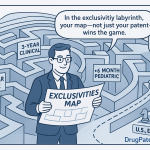
The FDA administers five primary exclusivity categories with directly commercial implications. New Chemical Entity (NCE) exclusivity runs five years from NDA approval for a drug containing an active moiety not previously approved. During the first four years of this window, the FDA will not even accept an ANDA. In year five, an ANDA with a Paragraph IV certification can be submitted, but the 30-month automatic litigation stay cannot begin until that fifth year, effectively compressing the challenge window to a much narrower corridor than the nominal five-year period suggests.
New Clinical Investigation exclusivity provides three years of protection for an NDA supplement that required new clinical studies, covering the specific change approved (new indication, new dosage form, new route) but not the active ingredient. Orphan Drug Exclusivity (ODE) gives seven years of market protection for drugs designated to treat diseases affecting fewer than 200,000 U.S. patients. ODE is structurally distinct from patent protection in one important way: it cannot be broken by a Paragraph IV certification. No ANDA referencing the same drug for the same indication can be approved during the seven-year window regardless of the patent landscape. Biologics Reference Product Exclusivity provides 12 years of data exclusivity from BLA approval. Pediatric Exclusivity adds six months to all active patents and exclusivities simultaneously, not just one, making it one of the highest-yield regulatory investments available to innovators.
The interaction between these exclusivities and the patent portfolio determines the terminal LOE date that matters commercially. IP teams should maintain a living matrix that separately tracks each patent’s expiry (adjusted for any PTE), each regulatory exclusivity’s expiry, all pending Paragraph IV ANDA filings, and active PTAB IPR petition status, then computes a probability-weighted LOE date that integrates litigation risk. Companies that report a single patent expiry date without this matrix are giving their boards and investors a false sense of precision.
Key Takeaways: Section 1
The patent bargain is an economic subsidy for drug development risk, not a reward for discovery alone. Patents and FDA regulatory exclusivity run on separate legal clocks administered by different agencies. ODE is the most durable exclusivity category because no Paragraph IV filing can break it. NCE exclusivity compresses the practical challenge window to less than one year when the 30-month stay mechanics are applied correctly. Every IP team needs a dual-clock LOE matrix, not a single patent expiry date.
2. Patentability in the U.S.: Title 35 and Its Practical Limits
2a. Patentable Subject Matter Under Section 101: The Judicial Exceptions
Section 101 of Title 35 defines patentable subject matter as any new and useful process, machine, manufacture, or composition of matter. The Supreme Court’s 1980 decision in Diamond v. Chakrabarty interpreted this broadly enough to permit patenting of genetically modified organisms, establishing the principle that essentially anything made by human ingenuity qualifies. The Court then spent the next four decades walking that back through a series of decisions that created judicially crafted exceptions for laws of nature, natural phenomena, and abstract ideas.
For pharmaceutical and biotechnology patent strategy, two of those decisions carry ongoing operational weight. Mayo Collaborative Services v. Prometheus Laboratories (2012) invalidated method claims directed to determining drug dosing based on a patient’s metabolite levels. The Court held that the relationship between metabolite concentration and drug efficacy is a law of nature, and that the steps of administering a drug and measuring the result were simply ‘conventional activity’ that did not add anything inventive beyond the natural law itself. This decision created real uncertainty around personalized medicine patents, pharmacogenomics claims, and many companion diagnostic method claims that involve measuring a biomarker and responding with a therapeutic adjustment.
Association for Molecular Pathology v. Myriad Genetics (2013) held that isolated genomic DNA is a product of nature and therefore not patentable, but that cDNA, which requires human intervention to create and differs structurally from naturally occurring genomic DNA, is patent-eligible. The practical consequences rippled through the oncology diagnostics space, invalidating portions of Myriad’s BRCA1/BRCA2 patent portfolio and opening that market to competition almost immediately.
The current USPTO guidance for evaluating Section 101 eligibility under the Alice/Mayo framework uses a two-step analysis: first determine whether the claim is directed to a judicial exception; if so, determine whether the claim contains additional elements that amount to ‘significantly more’ than the judicial exception itself. For most small molecule drug claims, Section 101 eligibility is not in serious dispute. The difficulty concentrates in method claims that involve natural correlations (pharmacogenomics, dosing optimization based on biomarkers), claims to purified natural products that are functionally identical to their naturally occurring counterparts, and software-implemented methods that touch diagnostic decision-making.
2b. Novelty Under Section 102: The Prior Art Problem
An invention lacks novelty if every element of the claimed invention is disclosed in a single prior art reference. This is the ‘anticipation’ standard. For pharmaceutical claims, the prior art universe includes published patent applications, issued patents, scientific journal articles, conference presentations, public demonstrations, and on-sale activity, all of which become prior art as of their public disclosure date.
The America Invents Act (AIA), which took effect for applications filed on or after March 16, 2013, shifted the U.S. from a ‘first-to-invent’ system to a ‘first-inventor-to-file’ system. Under pre-AIA law, an inventor could swear behind a prior art reference by demonstrating they had invented the subject matter before the reference’s publication date. Under AIA, the prior art cutoff is the effective filing date of the application, with a limited grace period that shields only the inventor’s own prior disclosures made within one year of the filing date. Disclosures by third parties before the filing date create absolute prior art regardless of when the inventor actually conceived the invention.
For pharmaceutical companies with pre-publication disclosure policies, the AIA’s first-inventor-to-file system creates an urgent filing pressure that did not exist under the old regime. Any conference poster presentation, grant application, manuscript submission, or collaborative disclosure with a partner can become prior art against the company’s own pending application if it predates the filing date. The practical consequence is that patent applications must be filed before any public disclosure, which requires close coordination between R&D, publications committees, and IP teams throughout the drug development process.
2c. Non-Obviousness Under Section 103: KSR and the Flexible Inquiry
Non-obviousness is the patentability requirement that produces the most litigation. An invention is obvious, and therefore unpatentable, if the differences between the claimed invention and the prior art are such that the claimed subject matter ‘as a whole would have been obvious at the time the invention was made to a person having ordinary skill in the pertinent art.’
The Supreme Court’s 2007 decision in KSR International Co. v. Teleflex Inc. rejected the Federal Circuit’s rigid ‘teaching, suggestion, or motivation’ (TSM) test in favor of a more flexible, common-sense inquiry. KSR permits examiners and courts to find obviousness based on ‘obvious to try’ reasoning when there are a finite number of identified, predictable solutions and market pressures or design incentives push toward those solutions. This was a significant shift for pharmaceutical chemistry, where structurally related compounds often have related but not identical properties, and where ‘lead compound modification’ is a well-documented methodology.
For pharmaceutical prosecutors and litigators, the response to an obvious-to-try rejection or challenge requires demonstrating one or more of several ‘secondary considerations’: commercial success of the invention, long-felt but unmet need in the art, failure of others, unexpected results relative to the closest prior art, and teaching away from the invention by the prior art. Of these, unexpected results is the most technically demanding and most persuasive when properly documented. A declaration from a named inventor demonstrating that the claimed compound’s activity or selectivity profile was not predictable from the prior art, supported by comparative data showing the claimed compound materially outperforming structurally adjacent prior art compounds, can overcome even a well-supported obviousness rejection.
2d. The Disclosure Requirements of Section 112: The Battleground That Matters Most
Section 112 imposes three distinct requirements, each independently sufficient to invalidate a patent if not met: written description, enablement, and definiteness. These requirements have become the central battleground in pharmaceutical patent litigation over the past 15 years, particularly for biologic and antibody patents. Section 8 covers the landmark cases in depth. At the drafting stage, the key principles are these: the specification must demonstrate that the inventor was ‘in possession’ of the full scope of the claimed subject matter as of the filing date (written description); it must teach a person of ordinary skill how to make and use the full scope of the claimed invention without undue experimentation (enablement); and the claims must define the invention’s boundaries with reasonable certainty (definiteness).
The most common Section 112 error in pharmaceutical patent drafting is a mismatch between the breadth of the claims and the depth of the specification’s working examples. A claim genus covering 10^15 possible compounds supported by 5 working examples is a patent that will not survive targeted IPR litigation.
Key Takeaways: Section 2
Section 101 creates ongoing eligibility risk for pharmacogenomic method claims, biomarker-based dosing methods, and purified natural product claims. The AIA’s first-inventor-to-file regime makes pre-filing disclosure management a tier-one IP risk. KSR‘s flexible obviousness standard requires pharmaceutical applicants to maintain comparative data files that document unexpected results relative to the closest prior art compounds. Section 112’s disclosure requirements, especially enablement and written description for broad genus claims, are the central validity risk for most pharmaceutical patents filed today.
3. The European Patent Convention: Where the Problem-Solution Approach Changes Everything
3a. Absolute Novelty and the Zero-Grace-Period Rule
The European Patent Convention (EPC) employs an absolute novelty standard with no grace period for the inventor’s own prior disclosures. Any disclosure made available to the public anywhere in the world, in any form, before the effective filing date destroys novelty under Article 54 EPC. This is materially stricter than U.S. law’s one-year inventor grace period. A paper published in Nature by the inventors one day before the priority filing date is irrecoverable prior art in Europe.
The practical consequence for globally coordinated pharmaceutical patent programs is that the European filing date, or the PCT priority date that will support European entry, must be the first filing date, and it must precede any public disclosure by any party. Clinical trial registrations, conference abstracts, company investor presentations, and collaborative partner disclosures are all potential absolute novelty killers in Europe. IP teams must review and clear all planned public communications against the pending filing calendar before release.
3b. Inventive Step and the Problem-Solution Approach
The EPO assesses inventive step through a formalized ‘problem-solution approach’ consisting of three steps. First, identify the ‘closest prior art,’ meaning the single prior art document that represents the most realistic starting point for a hypothetical skilled person seeking to solve the technical problem the invention addresses. Second, determine the ‘objective technical problem,’ which is the technical effect the invention achieves over that closest prior art, as demonstrated by data in the application. Third, evaluate whether the skilled person, starting from the closest prior art and tasked with solving the objective technical problem, would have arrived at the claimed invention in an obvious manner.
The problem-solution approach has an important strategic consequence for pharmaceutical patent applications filed at the EPO. The ‘objective technical problem’ must be supported by comparative data in the application. If the application claims a compound is useful for treating disease X but provides no comparative data showing it outperforms the closest prior art compound, the EPO examiner will formulate a more modest objective technical problem (‘providing an alternative compound’) rather than a more ambitious one (‘providing a compound with improved potency for disease X’). A modest objective technical problem is easier to solve and more likely to lead to an obviousness finding, because providing ‘an alternative’ to a known compound is often achievable by routine modification.
This means pharmaceutical applications destined for EPO examination need comparative data in the filing. An application that works for U.S. prosecution, where secondary considerations like unexpected results can be submitted after the fact by declaration, often runs into serious difficulty in European prosecution where the data must be in the application as filed. Post-filing data submitted to bolster inventive step is admissible at the EPO under limited circumstances (primarily if the data is merely confirming an effect already plausibly disclosed in the application), but it cannot introduce a new technical effect that was not suggested by the original disclosure.
3c. Article 53(c) and Second Medical Use Claims
The EPC explicitly excludes from patentability ‘methods for treatment of the human or animal body by surgery or therapy and diagnostic methods practised on the human body.’ Article 53(c) EPC. This prohibition does not apply to products for use in such methods, which is the opening through which pharmaceutical claims are protected at the EPO.
For new chemical entities seeking broad product claims, this distinction is straightforward: ‘Compound X’ is patentable; ‘a method of treating patient Y with compound X’ is not. The strategic complexity arises with second and subsequent medical uses, where the compound is known but the new therapeutic application is the inventive contribution. The current EPO-accepted format for a second medical use claim is a purpose-limited product claim: ‘Compound X for use in treating disease Y.’ This format, established under EPC 2000 practice, is preferred over the earlier Swiss-type format (‘use of compound X in the manufacture of a medicament for treating disease Y’), which is no longer accepted for new applications.
Purpose-limited product claims and Swiss-type claims have different infringement profiles in different EPC member states. UK case law, including Warner-Lambert v. Actavis, has analyzed the extent to which generic manufacturers infringe purpose-limited product claims when they launch a skinny-label product that avoids the patented indication. The CJEU and national courts within Europe have not yet converged on a uniform infringement standard for second medical use claims, making enforcement against skinny-label generics inconsistent across the continent. This jurisdictional divergence is a material commercial risk for branded companies holding second-indication patents in Europe.
3d. Sufficiency of Disclosure: The European Equivalent of Enablement
Article 83 EPC requires that the application disclose the invention ‘in a manner sufficiently clear and complete for it to be carried out by a person skilled in the art.’ This is the EPO’s equivalent of Section 112 enablement. The EPO’s Technical Boards of Appeal have been increasingly skeptical of broad functional claims in the biotechnology and pharmaceutical arts.
The EPO applies a ‘plausibility’ standard in addition to the Article 83 sufficiency requirement. To obtain patent protection for a claimed technical effect, that effect must be at least ‘plausible’ from the application as filed. If the claimed effect is implausible based on the technical disclosure and the common general knowledge of the skilled person, post-filing data cannot rescue the application. If the effect is plausible but not yet demonstrated, post-filing data can confirm it. This plausibility requirement has been developed through EPO case law rather than explicit statutory language, and the precise threshold for plausibility versus implausibility has been the subject of significant Technical Board jurisprudence that pharmaceutical applicants must track.
Key Takeaways: Section 3
Absolute novelty at the EPO makes pre-filing disclosure management even more critical than under U.S. law. The problem-solution approach requires comparative data in the application as filed, not submitted post-filing by declaration. Second medical use claims in Europe use the ‘Compound X for use in treating Y’ purpose-limited product format, and their infringement by skinny-label generics is litigated inconsistently across member states. The EPO plausibility standard requires that claimed technical effects be credible from the disclosure at the filing date.
4. The Anatomy of a Patent Claim: Preamble, Transitional Phrase, and Body
4a. The Preamble: When It Limits and When It Does Not
A patent claim is a single sentence structured into three functional parts. The preamble introduces the invention’s class. Examples: ‘A compound of formula I…’; ‘A pharmaceutical composition…’; ‘A method of treating cancer…’. The preamble does not limit the claim scope in most circumstances. Courts and examiners generally treat it as descriptive context rather than a substantive limitation unless the preamble is necessary to give meaning to the body of the claim or was relied upon during prosecution to distinguish prior art.
The critical drafting principle: do not write a preamble that inadvertently imports limitations. A preamble reading ‘An improved formulation for treating neuropathic pain comprising…’ invites the argument that ‘improved’ is a substantive limitation requiring proof that the formulation is in fact improved over prior art alternatives. A preamble reading ‘A pharmaceutical composition comprising…’ carries no such implication.
4b. The Transitional Phrase: ‘Comprising,’ ‘Consisting Of,’ and the Intermediate Options
The transitional phrase determines whether the claim is ‘open’ or ‘closed’ to elements not explicitly recited.
‘Comprising’ is the standard open transitional phrase in U.S. practice. A composition claim ‘comprising active ingredient A and excipient B’ reads on a product that also contains excipient C, D, or any additional component not claimed. This is the preferred phrase for most pharmaceutical composition and method claims because it makes designed-around workarounds harder to execute.
‘Consisting of’ is a closed phrase. The claim covers only what is explicitly listed, excluding any additional elements except unavoidable impurities. Its legitimate use in pharmaceutical drafting is narrow but real: highly purified API claims where the purity itself is the inventive feature, crystalline form claims where the polymorph identity depends on the precise composition, or claims for specific defined formulations where additional excipients would actually change the claimed technical property.
‘Consisting essentially of’ occupies a middle ground and is accepted in U.S. practice. It covers only what is listed plus elements that do not ‘materially affect’ the basic and novel properties of the invention. This phrase requires careful specification support defining which properties are ‘basic and novel’ to avoid indefiniteness problems under the Nautilus standard.
4c. The Body: Minimum Elements, Positive Recitation, and What Not to Do
The body of the claim recites the essential elements of the invention. The foundational drafting rule: include only the minimum number of elements required to distinguish the invention from the prior art. Every element added to a claim is a potential infringement escape hatch for a competitor.
U.S. patent law disfavors negative limitations, which define the invention by what it excludes. ‘A composition that does not contain compound C’ is permissible but structurally weak, because it raises the question of why the absence of compound C is inventive and invites enablement challenges over how broadly the negative is defined. Negative limitations are typically acceptable when the prior art specifically teaches the excluded element and the exclusion is the inventive contribution, or when no positive language can capture the same scope.
Functional language in the claim body, ‘wherein the compound inhibits kinase X with an IC50 of less than 10 nM,’ is legitimate and often necessary for pharmaceutical claims. It conveys the inventive result in a precise, testable way. The Amgen v. Sanofi decision, analyzed in depth in Section 15, does not prohibit functional language. It requires that the specification contain sufficient structural and mechanistic disclosure to enable the full scope of the functionally defined genus without requiring the skilled person to conduct a research program to identify which members of the genus satisfy the functional criterion.
Key Takeaways: Section 4
Preambles should be drafted as descriptive context, not loaded with adjectives that import substantive limitations. ‘Comprising’ should be the default transitional phrase for broad claims. The claim body should contain only the minimum elements necessary to distinguish the prior art. Every additional limitation is an infringement escape route for future competitors.
5. Claim Type Taxonomy: Every Tool in the Pharmaceutical Drafter’s Kit
A single pharmaceutical product typically supports at least eight distinct categories of patent claims. Drafting only one or two of them leaves IP on the table and gaps in the fortress that a generic or biosimilar challenger can drive through.
Composition of matter (species): Claims the active ingredient as a specific named compound. ‘A compound which is [IUPAC name].’ The strongest single claim type in pharmaceutical IP.
Composition of matter (genus/Markush): Claims a family of related compounds by reciting a common scaffold with variable substituents. ‘A compound of formula I wherein R1 is selected from halogen, C1-C4 alkyl, and cyano.’ Broad but increasingly difficult to defend post-Amgen.
Method of treatment (U.S.): Claims the therapeutic use of the compound in a direct, functional format. ‘A method of treating [disease], comprising administering to a subject in need thereof a therapeutically effective amount of compound X.’
Second medical use (EPC 2000): Purpose-limited product claim for new therapeutic uses of known compounds. ‘Compound X for use in treating disease Y.’
Formulation: Claims the combination of API with excipients or a specific drug delivery architecture. Extended-release tablets, nanoparticle carriers, liposomal encapsulation systems, and co-crystal forms each represent separately claimable inventions.
Dosage regimen: Claims a specific dose, frequency, route, or duration of administration that produces an unexpected clinical benefit. ‘Compound X for use in treating disease Y, wherein the compound is administered at 10 mg/kg once weekly.’ High obviousness hurdle; requires strong evidence of unexpected clinical advantage.
Process (method of manufacture): Claims the synthetic route to the API or a key intermediate. Valuable when the process is more efficient or stereoselective than prior art methods, or when it produces a specific polymorph that cannot otherwise be achieved.
Product-by-process: Claims a product by its manufacturing method when the product cannot be adequately defined by structure alone. Patentability turns on the novelty of the product, not the process.
Crystalline form (polymorph): Claims a specific solid-state form of the API, defined by X-ray powder diffraction (XRPD) pattern, differential scanning calorimetry (DSC) trace, or a combination of physicochemical parameters.
Antibody/biologic composition: Claims the biologic therapeutic by its structural definition (CDR sequences, heavy and light chain variable region sequences) and/or by its binding epitope and functional properties.
Drug-device combination: Claims the integration of the pharmaceutical agent with a delivery device, such as an autoinjector, prefilled syringe, or inhaler. These patents are frequently filed after NDA approval and can extend the relevant protection window by several years.
Pharmaceutical Patent Claim Type Reference Table
Claim Type
Primary Purpose
Key Validity Risk
Key Drafting Principle
Composition (species)
Protect the specific API
Low if structurally novel
Exact structural definition; broadest is simplest
Composition (genus/Markush)
Protect a compound family
Enablement and written description post-Amgen
Must have representative structural examples; limit functional-only definition
Method of treatment (U.S.)
Protect therapeutic use
Section 101 eligibility for natural correlations
Direct treatment language; avoid inferring natural laws
Second medical use (EPC)
Protect new use under EPC
Must use purpose-limited product format
‘Compound X for use in treating Y’; include dose data if available
Formulation
Lifecycle extension
Obviousness over prior art formulation
Document unexpected stability, bioavailability, or tolerability advantage
Dosage regimen
Lifecycle extension
High obviousness hurdle
Requires comparative clinical data showing unexpected effect
Process
Protect synthesis route
Prior art routes; obvious optimization
Emphasize unexpected yield, stereoselectivity, or purity benefit
Product-by-process
Protect undefined product
Patentability requires novel product, not novel process
File only when product cannot be defined structurally
Crystalline form
Lifecycle extension
Obvious from lead compound modification
XRPD and DSC characterization; unexpected stability data
Drug-device combination
Lifecycle extension; patient convenience
Obvious combination of known drug and known device
Document human factors data; unexpected compliance or safety benefit
Key Takeaways: Section 5
A robust pharmaceutical IP portfolio requires at least five to seven distinct claim type categories, not just a composition patent. Each claim type addresses a different competitive threat and a different loss-of-exclusivity timeline. Lifecycle management through secondary patents requires that IP teams identify which claim types are supportable from existing or planned data before those data are generated, not after the product approaches its original patent expiry.
6. Composition of Matter Claims: The Gold Standard and Its Tarnish
6a. Why Composition Claims Dominate
Composition of matter claims covering the active pharmaceutical ingredient itself are the most commercially valuable form of pharmaceutical intellectual property. Their dominance comes from their claim architecture: they cover the compound regardless of how it is made, what formulation it is placed in, or what therapeutic use it is applied to. A competitor who wants to sell any product containing the active compound must navigate the composition claim, whether they are making a branded reformulation, a generic drug, or a novel drug-device combination.
The market value of a strong API composition claim is quantifiable. For a drug generating $5 billion in annual U.S. revenue, the composition patent that blocks generic entry is worth approximately $350 million to $700 million per year of remaining protection at a 7% to 14% discount rate, depending on the probability of successful patent defense. That is the NPV calculation that drives the ferocity of pharmaceutical patent litigation.
6b. Species Claims: Maximum Precision, Minimum Design-Around Risk
A species claim names a single specific compound. Its strength is its precision: there is no ambiguity about what it covers, which makes the novelty analysis straightforward and the infringement analysis clear. A generic company that wants to sell atorvastatin calcium cannot argue it falls outside a claim that reads ‘the compound atorvastatin calcium.’ Its weakness is that it protects only the exact compound, leaving the entire surrounding chemical space open.
For marketed drugs, a species claim covering the exact API is the minimum acceptable patent protection. It should be the broadest claim an applicant can get, with genus claims layered on top to capture structural analogs and the core independent claim structured as the species, giving the applicant the clearest possible fallback position if the genus claims are narrowed during prosecution or invalidated in litigation.
6c. Markush Genus Claims: Power and the Post-Amgen Limitation
Markush claims, which define a genus of compounds by a common scaffold with specified variable substituents, provide the broadest form of composition protection. A well-drafted Markush claim covering a new pharmacophore can, in principle, preempt an entire class of structurally related compounds for decades. This is why they are targeted first in IPR proceedings.
The post-Amgen enablement doctrine, detailed in Section 15, imposes a practical ceiling on Markush claim breadth. The specification must enable the full scope of the genus. For small molecule chemistry, where structure-activity relationships can be systematically explored and the behavior of substituents is reasonably predictable based on known pharmaceutical chemistry principles, a Markush claim covering several hundred to a few thousand compounds supported by synthesis and bioassay data for a representative sample across the structural diversity of the genus may satisfy the enablement requirement. For biologics, where the relationship between structure and function is far less predictable, Markush-style functional genus claims have become very difficult to defend.
The practical consequence for small molecule drug discovery programs: structure-activity relationship (SAR) data tables in the patent specification are not just scientific content. They are the primary evidence base for defending the Markush claim’s enablement. Every data point in the SAR table that demonstrates a different structural series or substituent class performing the claimed function reduces the ‘undue experimentation’ argument a challenger can make. IP teams should review SAR data tables before filing specifically from the question: ‘Can a competitor argue that significant portions of this genus are not enabled by the data we have included?’
Investment Strategy: Composition Patent as Core Asset
For institutional investors evaluating a pharmaceutical company’s IP position, the composition-of-matter patent on the primary API is the asset that should receive the most rigorous independent analysis. Its expiry date (adjusted for patent term extension), the identity and status of all pending Paragraph IV ANDA filings against it, and the current PTAB IPR petition docket are the three data points that determine the probability-weighted LOE date. A composition patent with no pending ANDA filings and no instituted IPR petitions five years before its nominal expiry date carries a materially different risk profile than one facing simultaneous ANDA filings from six generic manufacturers and two instituted IPR petitions.
Key Takeaways: Section 6
Species composition claims are the most defensible form of pharmaceutical IP and should form the foundation of every drug patent portfolio. Markush genus claims provide broader protection but require detailed SAR data coverage across the claimed structural diversity to survive the Amgen enablement standard. IP teams should treat SAR data table content as legal evidence, not just scientific record-keeping.
7. Method of Treatment Claims: U.S. vs. EPC Practice
7a. U.S. Method of Treatment Claims: Section 101 Eligibility and Claim Architecture
In the United States, methods of treating a medical condition in a human patient are patentable subject matter. The standard claim format is: ‘A method of treating [disease], comprising administering to a subject in need thereof a therapeutically effective amount of [compound X].’ This format is direct, functional, and commercially effective. It covers every physician who prescribes the drug for the indicated use and every patient who takes it, making it essentially coextensive with the market for the drug in that indication.
The Section 101 risk for method of treatment claims concentrates in situations where the method involves correlating a natural phenomenon with a treatment decision. A claim structured as ‘a method of treating disease Y comprising measuring biomarker Z, and if Z is above threshold T, administering compound X’ runs squarely into the Mayo framework. The measuring step identifies a natural law (the correlation between Z and disease Y severity), and the treatment step, if it is routine, does not add ‘significantly more.’ Method of treatment claims should be drafted to emphasize the administering step as the substantive innovation, not the measurement or diagnostic step. When the diagnostic component is itself inventive, it belongs in a separate diagnostic patent claim that can be independently evaluated for Section 101 eligibility.
7b. Drug Repurposing Claims: Method of Use as the Second and Third Life of a Compound
When a compound’s primary composition patent expires, or when the composition patent is held by a different entity, method of use patents can provide independent protection for specific therapeutic applications. A generic manufacturer who wants to sell compound X off-patent can do so freely unless a method of use patent covers the indication for which X is being prescribed. In that case, the generic can obtain FDA approval for a different (or no) indication through a ‘skinny label’ that omits the patented use, but the practical market reality is that physicians routinely prescribe generics for patented indications regardless of label language, which creates an indirect infringement exposure that is actively litigated.
The commercial value of drug repurposing method patents depends heavily on the specificity of the claim, the prevalence of the repurposed indication relative to the original indication, and the extent to which the prescribing base uses the drug specifically for the patented use. Repurposing claims are most valuable when the new indication is a distinct patient population with a large market size, the claim language precisely captures the clinical use pattern, and the label-based carve-out strategy that generic manufacturers rely on is practically difficult to execute.
7c. EPC Second Medical Use Claims: Infringement Against Skinny-Label Generics
Under EPC 2000 practice, second medical use claims take the purpose-limited product format: ‘Compound X for use in treating disease Y.’ Their commercial value in European enforcement depends on whether national courts treat the presence of the patented indication in the prescribing information and the prescribing patterns as sufficient to establish infringement when a generic manufacturer sells the product with a skinny label that omits the patented use.
UK case law in this area, particularly the Court of Appeal’s 2016 decision in Warner-Lambert v. Actavis, established that a generic manufacturer can infringe a second medical use patent through ‘intentional encouragement,’ but that selling a skinny-label generic that doctors foreseeably prescribe for the patented indication, without more, did not constitute infringement on the facts. The Swiss Federal Patent Court has taken a different view. German, Dutch, and French courts have addressed the same question with varying outcomes. For pharmaceutical IP teams managing European portfolios, the multi-jurisdictional inconsistency in second medical use enforcement is a genuine commercial risk that requires country-by-country assessment before relying on these claims as the primary barrier to generic competition.
Key Takeaways: Section 7
U.S. method of treatment claims should emphasize the administering step and avoid structuring claims as correlations between biomarkers and treatment decisions. Drug repurposing method claims are most valuable when the new indication has a large market and when the claim language closely tracks actual clinical prescribing patterns. European second medical use enforcement against skinny-label generics varies materially by country, making these claims less reliable as the primary competitive barrier than composition claims.
8. Formulation, Dosage Regimen, and Delivery Device Claims
8a. Formulation Patents: The Primary Lifecycle Management Instrument
Formulation patents are secondary patents that cover the specific combination of the API with pharmaceutical excipients, polymers, or carrier systems. They are the most widely used lifecycle management instrument in small molecule pharmaceuticals and are increasingly important for biologics. Their commercial value is real and measurable, but they face a consistent and predictable challenge: the obviousness argument that combining a known API with known excipients using known formulation techniques is routine pharmaceutical development work that any skilled formulation scientist would perform.
Overcoming this challenge requires documented evidence of an unexpected technical effect. The strongest formulation patents demonstrate results that a skilled formulator would not have predicted at the outset: unexpected physical stability (the API remains non-hygroscopic or retains crystallinity under conditions where related compounds lose it), unexpected pharmacokinetic improvement (the formulation produces a meaningfully different bioavailability or release profile than what published formulation science would have predicted), or unexpected tolerability improvement (a specific excipient combination eliminates an injection site reaction or gastrointestinal adverse effect that was not predictable from the existing formulation literature).
Data comparing the claimed formulation to the closest prior art formulation, with specific measurements demonstrating the unexpected effect, must be in the specification as filed. The EPO requires it to establish plausibility. The USPTO will ask for it in a declaration after the fact if the examiner makes an obviousness rejection, but having it in the application from the start accelerates prosecution and reduces the prosecution history record’s vulnerability to later claim-narrowing arguments.
8b. Extended-Release and Modified-Release Formulations
Extended-release (ER) and modified-release (MR) formulations are the most commonly patented formulation type in pharmaceutical lifecycle management. The commercial rationale is obvious: once-daily dosing improves patient adherence, often improves the drug’s tolerability profile by avoiding peak concentration spikes, and creates a patent that can block generic substitution for the ER product even after the immediate-release (IR) API patent expires.
Generic manufacturers targeting ER formulation patents routinely argue obviousness on the grounds that ER drug delivery is a mature field with well-established polymer matrix and membrane-controlled release technologies. The principal inventors in this field (Shire’s extended-release methylphenidate patents, the omeprazole magnesium delayed-release formulation, Pfizer’s atorvastatin Form I crystalline polymorph) all faced and overcame this argument by demonstrating that their specific formulation produced a result that the prior art taught against or that the field had been unable to achieve despite sustained effort. ‘Long-felt need’ is one of the few secondary considerations that consistently carries decisive weight with both examiners and courts.
8c. Dosage Regimen Claims: The High Bar for Unexpected Clinical Effect
A dosage regimen claim protects a specific dose, dosing frequency, route, or duration that the patent applicant has identified as producing a clinically meaningful improvement. These claims must overcome the default obviousness argument that determining the optimal dose and frequency of a therapeutic is routine clinical pharmacology. Patent examiners and EPO examining divisions reflexively characterize dose-optimization studies as ‘routine,’ which is technically accurate in the narrow sense that dose-ranging is a standard component of Phase 2 clinical development.
The counter-argument that succeeds requires demonstrating that the specific claimed regimen produced an unexpected result. ‘Unexpected’ means that the result was not predictable from the known pharmacokinetics and pharmacodynamics of the compound class. Biologic dosing regimen patents have been particularly successful where the claimed regimen achieves sustained target suppression through a loading dose plus maintenance dose structure, and where the specific loading/maintenance ratio or the specific dosing interval was not predictable from the compound’s pharmacokinetic parameters measured in Phase 1 studies.
AbbVie’s dosage regimen patents for adalimumab, covering the 40 mg every-two-weeks subcutaneous dosing schedule and the 80 mg loading dose protocol, were among the most commercially valuable secondary patents in the Humira thicket. They were listed in the Purple Book, challenged in litigation and IPR proceedings, and ultimately survived long enough to contribute materially to the seven-year delay in U.S. biosimilar entry. Their survival depended on data demonstrating that the specific dosing interval achieved sustained DMARD-free response rates that were not predictable from the pharmacokinetic half-life of adalimumab alone.
8d. Drug-Device Combination Patents: The Autoinjector Wall
Drug-device combination patents are a growing category in biologic lifecycle management. These patents cover the integration of the API with its delivery device, including autoinjectors, prefilled syringes, needle-free delivery systems, and inhaler platforms. They are commercially valuable because they are listed in the Purple Book, trigger the BPCIA ‘patent dance’ process, and require biosimilar developers either to use an identical or equivalent device (which may infringe the device patent) or to develop a different device and conduct the additional human factors engineering studies required to demonstrate equivalence.
Johnson & Johnson’s Darzalex Faspro (daratumumab and hyaluronidase-fihj) subcutaneous autoinjector patents are a current example. The subcutaneous formulation, combined with hyaluronidase to enable delivery of a large volume, required an injection device specifically engineered for the larger injection volume and the co-formulation viscosity. The device patents covering this autoinjector are part of J&J’s Purple Book listing for Darzalex Faspro and will require any subcutaneous daratumumab biosimilar to either license the device design or develop and validate an alternative.
Key Takeaways: Section 8
Formulation patents require documented evidence of an unexpected technical effect in the specification as filed. Extended-release formulation patents are most defensible when the prior art taught against the claimed release profile. Dosage regimen claims have a high obviousness hurdle that requires comparative clinical data showing the specific regimen produces an unexpected result not predictable from the compound’s known pharmacokinetic parameters. Drug-device combination patents extend biologic exclusivity and require biosimilar developers to conduct additional human factors validation, adding cost and development time.
9. Process and Product-by-Process Claims
9a. Process Claims: The Manufacturing Moat
Process claims protect the method of manufacturing the API or a critical synthetic intermediate. They have a specific strategic utility: they can block a competitor from using the patented synthesis route even if the API composition patent has expired or is licensed. For complex natural product-derived APIs, APIs with difficult stereocenters, or APIs accessible only through multi-step routes developed by the innovator, the process patent can outlast the composition patent as the primary commercial barrier.
A process claim is infringed if the protected process is used domestically. Under 35 U.S.C. Section 271(g), a product made abroad by a patented process is subject to infringement liability when it is imported into the United States. This provision is particularly relevant for API manufacturing, where most generic API production occurs in India and China. A process patent held by a U.S. innovator can be enforced against imports of API manufactured by the patented process abroad, giving the process patent a geographic reach that extends well beyond the nominal U.S. patent territory.
The primary validity challenge to process claims is obviousness based on ‘obvious optimization of known synthetic routes.’ The counter-argument must establish that the claimed route achieves an unexpected result: higher yield, superior enantioselectivity, elimination of a toxic reagent without loss of efficiency, or access to a specific crystalline polymorph that cannot be produced by alternative routes. Comparative data against the closest prior art synthetic route is the core evidence.
9b. Product-by-Process Claims: When Structure Cannot Define the Product
Product-by-process claims define a product by the method used to make it rather than by its own structural or physical characteristics. They are used in pharmaceutical patent practice primarily for two situations: polymorphic forms that are difficult to define adequately by XRPD pattern alone and whose identity depends on process conditions, and biologic products where the full structural characterization required to write a structure-based claim is technically intractable.
The critical legal principle governing product-by-process claims in the U.S. is that patentability depends on the novelty of the product itself, not the novelty of the process. A product-by-process claim is unpatentable if the product it describes is identical to or indistinguishable from a product in the prior art, even if the prior art product was made by a completely different process. This rule creates a strategic risk: a drafter who chooses the product-by-process format because the structural characterization is difficult must also ensure the product is genuinely novel and distinguishable from all prior art products, not just those made by the same route.
Key Takeaways: Section 9
Process patents extend protection beyond composition patent expiry and can block API imports under Section 271(g). They are most defensible when the claimed process achieves an unexpected synthetic result. Product-by-process claims are patentable only if the product itself is novel; the novelty of the process is irrelevant to the patentability analysis.
10. The Breadth-Validity Tension: How to Calibrate Claim Scope
10a. Why ‘As Broad as Possible’ Is Not an IP Strategy
Every patent attorney’s instinct is to draft claims as broadly as the prior art permits. This instinct is correct in principle and dangerous in execution if it becomes a default rather than a calibrated decision. Claims that are broader than the specification supports will be invalid under the Ariad written description standard or the Amgen enablement standard. Claims that are broader than the prior art clearly distinguishes will face obviousness rejections that, in the post-KSR environment, are more likely to succeed than fail.
The right question is not ‘how broad can this claim be?’ but ‘what is the maximum breadth at which this claim is both valid and commercially meaningful?’ These are different questions with different answers. A Markush claim covering 10^12 possible compounds with supporting data for 10 compounds is not commercially broad; it is a future invalidity waiting to happen. A genus claim that covers the 200 structurally distinct compounds for which the applicant has actual data, with 80 additional analogs represented by synthesis examples but not bioassay data, may be defensibly broad if the SAR within the genus is predictable enough that the enablement standard is satisfied.
10b. Independent Claims as the Outer Boundary
The independent claim sets the outer boundary of protection. It should recite only the elements required to distinguish the prior art and no more. Every feature added to the independent claim creates a potential infringement workaround. For a compound claim, the simplest independent claim is the Markush genus that captures all inventive compounds. For a method claim, the simplest independent claim is the basic administration claim that covers the core therapeutic use.
The prosecution history of the claims that eventually issue is permanent. If the applicant narrows a claim during prosecution to distinguish a prior art reference, the narrowing is recorded in the prosecution history and can be used in claim construction or infringement proceedings to limit the doctrine of equivalents. Narrow enough during prosecution to get allowance, but not narrower than necessary, is the drafting principle. Every amendment made during prosecution should be accompanied by a clear statement of the reason for the amendment and its relationship to the prior art, to ensure the examiner’s allowance is attributed to a specific distinction rather than a general narrowing that could be construed as disclaiming more subject matter than intended.
Key Takeaways: Section 10
Maximum breadth is not an automatic goal; it is a calibrated outcome based on the specification’s supporting data. Independent claims should recite only the elements that distinguish the prior art. Prosecution history amendments are permanent and limit the doctrine of equivalents; every amendment should be specifically tailored and explained.
11. Dependent Claims as a Resilience Architecture
11a. The Tiered Claim Structure
A pharmaceutical patent application with only independent claims is fragile. If the independent claim is invalidated, the patent is dead. A patent application with independent claims followed by a tiered cascade of dependent claims has multiple fallback positions. If the independent claim is invalidated in an IPR proceeding or infringement litigation, the validity of each dependent claim is evaluated separately, and a dependent claim that adds a limitation not found in the prior art can survive even when the independent claim it depends from does not.
Dependent claims should be drafted with an explicit commercial goal for each tier. Tier one dependent claims narrow the independent claim to the most commercially important embodiments: the specific marketed compound, the specific formulation used in the NDA, the specific dosing regimen approved by the FDA. These claims, if valid, are the ones that directly protect the commercial product. Tier two dependent claims add secondary features that add further novelty over the prior art and create additional IP positions. Tier three dependent claims may cover highly specific embodiments that the applicant is willing to accept as the narrowest enforceable position.
11b. Terminal Disclaimers and Their Cost
When a dependent claim covers an obvious variant of the subject matter of an earlier-filed patent by the same applicant, the USPTO will issue a double-patenting rejection. To overcome this, the applicant can file a terminal disclaimer, which ties the expiry of the new patent to the expiry of the earlier patent it is being disclaimed against. Terminal disclaimers allow companies to obtain patents on improvements and follow-on inventions without extending the overall patent term beyond the original filing, but they add to the count of patents a generic challenger must litigate. AbbVie’s Humira patent thicket included a substantial number of patents subject to terminal disclaimers, the commercial effect of which was to multiply the litigation burden for biosimilar developers without extending the terminal exclusivity date.
The FDA Center for Drug Evaluation and Research published a study in 2024 examining the relationship between terminal disclaimer networks and LOE timing. The study found that terminal disclaimers contribute to patent thicket density but do not materially extend the last LOE date when compared to the terminal disclaimer anchor patent. Their value is procedural: they increase the cost and complexity of a comprehensive patent challenge, which can deter or delay challengers from pursuing complete invalidity campaigns against all thicket members.
Key Takeaways: Section 11
Dependent claims provide essential fallback positions that preserve enforceability if independent claims are invalidated. Each tier of dependent claims should be drafted with a specific commercial goal. Terminal disclaimers increase thicket density and litigation cost but do not extend the terminal LOE date.
12. Lifecycle Management and the Evergreening Toolkit: A Full Technology Roadmap
12a. The Economic Imperative for Secondary Patents
When a pharmaceutical company’s blockbuster drug faces LOE, the economic consequences are immediate and severe. AbbVie’s total Humira revenues fell from $21.2 billion in 2022 to $8.9 billion in 2024, a two-year decline of $12.3 billion attributable primarily to U.S. biosimilar competition. Pfizer’s Lipitor revenues fell from $9.6 billion in 2011 to $3.9 billion in 2012 following generic entry. These are not modest revenue adjustments; they are structural collapses that require years of pipeline development and M&A to offset.
Secondary patents represent an attempt to slow this collapse through follow-on innovation. Critics label this ‘evergreening’ and argue that secondary patents on trivial modifications of existing drugs delay affordable competition without providing clinically meaningful benefits to patients. Proponents respond that secondary patents protect real innovations, including improvements in stability, tolerability, dosing convenience, and patient compliance, that required significant research investment. The legal and policy debate has not been resolved, but the commercial practice continues because the financial incentives are large and the legal tools are available.
12b. The Polymorph Strategy: A Full Technical Roadmap
Polymorphism is the ability of a solid material to exist in more than one crystalline form. Different polymorphs of the same API can have different melting points, solubility, dissolution rates, hygroscopicity, and chemical stability profiles. These differences are pharmaceutically relevant: a more soluble polymorph can achieve higher oral bioavailability; a less hygroscopic polymorph has better shelf-life; a more thermodynamically stable polymorph is less prone to conversion during processing and storage.
The polymorph patent strategy follows a defined technical roadmap. Stage one is the solid-state screening program, conducted systematically using a grid of crystallization solvents, temperatures, and precipitation methods (anti-solvent addition, cooling crystallization, evaporation, slurry conversion). The goal is to identify and characterize all accessible polymorphs of the API. Stage two is the selection of the commercially preferred form based on pharmaceutical performance, typically the most stable polymorph with acceptable bioavailability. Stage three is filing a patent on the commercially preferred polymorph with XRPD, DSC, and solid-state NMR characterization data, a description of the conditions required to produce it reproducibly, and data demonstrating the unexpected pharmaceutical advantage over the other known forms or the amorphous form.
The unexpected advantage data is the core of polymorph patent enforceability. A claim to Polymorph Form I of compound X is not patentable on its own novelty alone if the examiner or a challenger can demonstrate that Form I is obvious over the known compound and the general knowledge that pharmaceutical compounds can exist in multiple solid-state forms. The unexpected result that the form has superior stability, dissolution rate, or processing characteristics, relative to other forms actually tested, is what elevates the polymorph patent above routine characterization work.
Pfizer’s atorvastatin Form I crystalline polymorph patent (U.S. Patent No. 5,273,995) is the canonical example. Its expiry, several years after the original atorvastatin composition patent, extended Lipitor’s market exclusivity and was itself challenged in Paragraph IV litigation. The patent’s survival depended on data demonstrating that Form I had superior characteristics relative to the other forms identified during Pfizer’s solid-state screening program.
12c. The Chiral Switch: Patenting the Enantiomer
When an API is marketed as a racemate (a 50:50 mixture of two mirror-image enantiomers), one enantiomer often carries the majority of the therapeutic activity while the other carries a portion of the side effect profile or is pharmacologically inert. Isolating and patenting the active enantiomer allows the company to market a ‘cleaner’ drug with a better therapeutic index, extend IP protection beyond the racemate’s patent expiry, and potentially obtain new FDA approval for the enantiomer as a distinct chemical entity entitled to its own NCE exclusivity.
AstraZeneca’s transition from omeprazole (Prilosec, a racemate) to esomeprazole (Nexium, the S-enantiomer) is the most commercially successful chiral switch in pharmaceutical history. Esomeprazole’s composition patent provided years of protection after omeprazole became generic, and the clinical data package for esomeprazole demonstrated superior acid suppression compared to the same dose of racemic omeprazole, supporting the ‘unexpected advantage’ argument required for patentability and for premium pricing. The commercial outcome: Nexium remained one of the top-selling drugs in the world for years after omeprazole became a $4 generic.
12d. Active Metabolite Patenting
When an API is metabolized in the body to produce an active metabolite that is itself responsible for part or all of the therapeutic effect, the metabolite can be patented as a distinct compound if it is novel and non-obvious. The metabolite patent extends the IP portfolio to cover a molecule that competes pharmacologically with the original API, making it harder for a generic to avoid the portfolio by claiming to make only the parent compound.
The technical requirement for metabolite patenting is demonstration that the metabolite has independent therapeutic activity, that the level of metabolite formed from the parent compound in clinical use is therapeutically meaningful, and that the metabolite itself, as a compound, was not previously known in the prior art. If the metabolite was a known compound in the chemical literature before the priority date of the metabolite patent, the novelty requirement fails regardless of whether its metabolic formation from the parent was previously known.
12e. New Indication Patenting and the Drug Repurposing Value Chain
A method of use patent for a new indication discovered after the API’s original approval provides independent protection that can outlast the original composition patent. The strategic sequence: the API composition patent and NCE exclusivity cover the original indication, the original indication generates the revenue to fund additional clinical studies in new disease areas, and those studies generate both new FDA-approved indications and new method of use patents that are independent of the original patent’s expiry.
The commercial value of new indication patents depends on the size of the new market and the specificity of the claim language. A method of use patent for an indication that represents 5% of the drug’s total prescriptions is commercially marginal. A new indication that represents 40% of prescriptions, as happened with adalimumab’s expansions into Crohn’s disease and psoriatic arthritis beyond its original rheumatoid arthritis indication, can be worth billions in protected revenue.
Investment Strategy: Lifecycle Management Patent Pipeline Value
Institutional investors can directly monetize lifecycle management patent intelligence. A company whose Orange Book filing shows a 10-year sequence of secondary patents extending through 2037 on a drug whose composition patent expires in 2028 has a meaningfully different revenue profile than a company whose only Orange Book listing expires in 2028. The critical analytical work is assessing the enforceability of each secondary patent: does the polymorph patent have unexpected advantage data? Does the ER formulation patent have comparative dissolution and clinical data? Does the dosage regimen patent have comparative Phase 3 data? Secondary patents without this data are more likely to be challenged successfully in IPR proceedings or Paragraph IV litigation, collapsing the projected exclusivity extension.
Key Takeaways: Section 12
Lifecycle management through secondary patents requires pre-planned data generation programs, not reactive filings after the primary patent nears expiry. The polymorph, chiral switch, ER formulation, and new indication strategies each require different technical evidence to survive validity challenges, and each should be initiated at least five years before the primary patent LOE to allow adequate clinical and analytical development time.
13. Building and Defending a Patent Thicket
13a. Quantitative Characteristics of Effective Thickets
Published data from the Initiative for Medicines, Access & Knowledge (I-MAK) and from academic analysis of the Orange Book shows that the average number of patents per drug product in the top 12 best-selling drugs in the U.S. exceeds 125. AbbVie’s Humira holds the record with approximately 250 patents. The same I-MAK analysis found that roughly 70% to 90% of patents covering blockbuster drugs were filed after the original NDA approval, and that secondary patents routinely extended the effective exclusivity window by an average of 6 to 10 years beyond the primary composition patent.
The commercial effect of this density is measurable. Drugs with more than 20 Orange Book-listed patents experienced generic entry delays of 3.4 years on average beyond the composition patent expiry, per published analysis of Orange Book data. Drugs with more than 50 listed patents experienced delays averaging 6 to 8 years. The Humira thicket, with over 130 listed patents and settlement agreements with all U.S. biosimilar developers, produced a delay of exactly seven years between the composition patent expiry (2016) and actual commercial biosimilar entry (January 2023).
13b. Litigation as a Business Tool: The 30-Month Stay and Its Multiple Deployments
Before the Medicare Modernization Act of 2003 limited stay stacking, brand manufacturers could list new patents in the Orange Book after an ANDA was filed and trigger new 30-month stays against each. Congress restricted this to one 30-month stay per product per ANDA. However, a brand manufacturer that issues new patents after an ANDA is filed and lists them in the Orange Book can still require the generic to certify against each new patent. If the generic cannot certify Paragraph II (patent expired) or Paragraph III (agree to wait), it must certify Paragraph IV (challenge validity), which notifies the brand, starts a new litigation clock, and delays approval pending resolution.
Patent thicket strategy at the litigation planning level involves identifying which patents can be used to generate the maximum aggregate delay through 30-month stays and subsequent litigation timelines, which patents are most likely to survive validity challenges and should be reserved for last-resort enforcement, and which patents can be used as settlement chips, offering the generic a license under non-core patents in exchange for a deferred launch date.
13c. Terminal Disclaimer Networks: Architecture and Vulnerabilities
Terminal disclaimer networks arise when a company files continuation applications or divisional applications that claim overlapping subject matter with earlier-filed patents, then overcomes double-patenting rejections by tying the new patents’ expiry to the earlier patents. The network can be extensive: a core composition patent issues, then 15 continuation-in-part applications issue on improvements, each subject to terminal disclaimers that tie them to the core patent’s expiry date.
The vulnerability in a terminal disclaimer network is that if the anchor patent (the one to which all disclaimers are tied) is held invalid, every patent in the network whose disclaimer ties to it is simultaneously rendered unenforceable for the period following the anchor patent’s hypothetical natural expiry. This is the ‘disclaimer anchor attack’ strategy that aggressive IPR petitioners have deployed against large biologic patent thickets: identify the anchor patent, petition for IPR, and if the petition succeeds, potentially collapse a significant portion of the network simultaneously.
Key Takeaways: Section 13
Patent thickets with more than 20 Orange Book or Purple Book patents produce measurable, quantified delays in generic and biosimilar entry averaging 3 to 8 years beyond the composition patent expiry. The 30-month stay, while limited to one per product per ANDA since 2003, remains the primary immediate litigation tool. Terminal disclaimer networks amplify litigation cost for challengers but are vulnerable to anchor patent IPR attacks that can propagate invalidation through the network.
14. Biologics: Unique Drafting Challenges for Antibodies, Fusion Proteins, and Cell Therapies
14a. Why Structure-Only Antibody Claims Are Insufficient
A small molecule drug can be defined completely by its structural formula. The exact arrangement of atoms leaves no ambiguity about the compound’s identity. An antibody cannot. A monoclonal antibody is a 150-kilodalton glycoprotein whose structure includes a variable region determining its binding specificity (itself defined by six complementarity-determining regions, or CDRs), constant regions that determine its effector functions and half-life, and post-translational modifications including glycosylation patterns that affect its pharmacokinetics and immunogenicity. The full structural description of an antibody exceeds what can be captured in a single claim without making the claim so specific that it covers only the exact molecule and none of the variants that perform the same function.
Pharmaceutical companies therefore draft antibody claims using a combination of structural and functional definitions. The typical format includes a structural anchor (the CDR sequences or the variable region sequences) and a functional limitation (binds to epitope X with a binding affinity of Kd < 1 nM and inhibits activity Y). This combination provides structural specificity to support the written description requirement while capturing functional equivalents within the range of normal antibody engineering variation. The difficulty is that the functional component of the claim creates a genus, and the scope of that genus determines whether the post-Amgen enablement standard is met.
14b. Sequence-Based Claims and CDR Variation
An antibody species claim with fully specified CDR sequences (CDR-L1 through CDR-L3 and CDR-H1 through CDR-H3 defined as exact amino acid sequences) is the most defensible single claim for a specific marketed antibody. It is the molecular equivalent of a species composition claim for a small molecule. Its weakness is identical: it covers only the exact sequence combination, leaving related antibodies with one or two CDR mutations outside the claim.
To capture sequence variants, antibody patent applications use position-by-position amino acid variant claims (‘wherein position X of CDR-H3 may be any of alanine, glycine, or serine’) or percent identity claims (‘wherein the antibody comprises a heavy chain variable region having at least 95% sequence identity to SEQ ID NO: 1’). These variant claims must be supported by data showing that the recited variants retain the claimed binding specificity and functional activity. A claim to ‘at least 90% sequence identity’ covering potentially millions of variant sequences requires either extensive experimental data confirming that representative variants throughout the sequence space maintain function, or a credible scientific explanation of why the 10% variation tolerance does not include variants that lose the claimed function.
14c. CAR-T and Cell Therapy Patents: The Juno Aftermath
Chimeric antigen receptor T-cell (CAR-T) therapy patents occupy a particularly difficult position in the post-Juno patent landscape. Juno Therapeutics v. Kite Pharma (Federal Circuit 2021) invalidated Juno’s foundational CAR-T patent on written description grounds, reversing a $1.2 billion jury verdict. The claims at issue covered a genus of CAR constructs defined functionally by a ‘binding element capable of binding to a selected target.’ The Federal Circuit held that two disclosed scFv examples were insufficient to demonstrate possession of the vast genus of all possible binding elements that could satisfy the functional limitation.
The Juno decision created an immediate drafting standard for CAR-T and similar cell therapy patent applications: functional definitions of the binding element or the signaling domain must be supported by data spanning the structural diversity of the claimed genus. A CAR-T patent claim that covers CARs incorporating any scFv that binds CD19 requires experimental data showing that scFvs with materially different structural features (different CDR sequences, different variable region frameworks, different linker configurations) all produce functional CARs with the claimed therapeutic activity. The two-example standard that failed in Juno will not be rescued by additional examples unless those examples cover the structural breadth of the genus.
14d. Biologic Manufacturing Process Patents
For biologics, the manufacturing process is inseparable from the product in a way that has no analog in small molecule chemistry. Post-translational modifications, including glycosylation patterns, oxidation states, and aggregate profiles, are production-process-dependent and can affect clinical performance. This creates a distinct category of biologic patent: claims directed to specific manufacturing conditions (cell culture media composition, fermentation parameters, downstream purification sequences) that produce a biologic with defined critical quality attributes.
These process patents are commercially valuable for three reasons. First, they can be independently enforced against a biosimilar manufacturer who uses the patented process even after the biologic’s composition patents expire. Second, they are part of the Purple Book patent dance process, adding to the list of patents a biosimilar developer must address. Third, they are technically difficult to design around because the manufacturing process for a biologic is constrained by regulatory requirements: the FDA’s requirement for process comparability means that a biosimilar manufacturer who switches manufacturing processes mid-development must conduct additional comparability studies, which adds time and cost.
Key Takeaways: Section 14
Antibody claims require a structural anchor (CDR sequences) plus functional limitations, and sequence variant claims must be supported by data spanning the claimed variation range. CAR-T and cell therapy genus claims require experimental data covering the structural diversity of the claimed genus after Juno. Biologic manufacturing process patents are independently enforceable, contribute to Purple Book density, and are difficult to design around due to FDA comparability requirements.
15. Post-Amgen Enablement: The New Rules for Genus Claims
15a. The Amgen v. Sanofi Decision: What the Supreme Court Actually Said
The Supreme Court’s unanimous 2023 decision in Amgen Inc. v. Sanofi is the most consequential pharmaceutical patent decision since KSR and must be understood precisely rather than paraphrased. The case involved Amgen’s claims to antibodies that bind to a specific site on the PCSK9 protein and block PCSK9’s interaction with the LDL receptor, thereby lowering LDL cholesterol. The claims defined the antibody genus by two functional properties: binding to specific amino acid residues on PCSK9 and blocking PCSK9’s activity.
Amgen’s specification disclosed the structure of 26 antibodies that satisfied both functional criteria. It also described two experimental methods for identifying additional antibodies that might satisfy the criteria: a ‘roadmap’ for generating antibody variants and screening them for PCSK9 binding and blocking activity, and a ‘conservative substitution’ approach for varying amino acids in known binders. The district court and the Federal Circuit both held that the specification did not enable the full scope of the genus because practicing the full scope required ‘painstaking’ screening of vast numbers of antibody variants that were not disclosed. The Supreme Court affirmed.
The Court’s key analytical points were these. Enablement requires that the specification ‘enable a person skilled in the relevant art to make and use the full scope of the claimed invention’ without undue experimentation, citing Section 112. A specification that requires extensive screening to identify which members of a claimed genus actually meet the functional criteria is a specification that assigns a research program to the public rather than enabling practice of the invention. The Court quoted its own description of the Amgen roadmap as a ‘hunting license’ rather than a teaching. And it stated, in plain terms: ‘The more one claims, the more one must enable.’
The Court explicitly declined to hold that all functional genus claims are per se invalid. It held only that the Amgen claims, on their facts, were not enabled by the specification as filed. This leaves open the question of how much data is enough.
15b. Applying the Post-Amgen Standard: What Constitutes Sufficient Enablement
The Federal Circuit’s subsequent decisions have been attempting to calibrate the ‘enough data’ threshold. The general principle emerging from post-Amgen decisions: for a functionally defined antibody genus, the specification must contain working examples that span the structural diversity of the genus in a representative way. Two examples from the same structural family, differing only in a few CDR positions, are insufficient if the genus claim’s functional definition could encompass antibodies with fundamentally different structural architectures.
For small molecule Markush genus claims, the standard is analogous but calibrated to the predictability of structure-activity relationships in the claimed chemical space. A Markush claim covering a series of kinase inhibitors within a defined chemical scaffold, supported by synthesis and IC50 data for 50 compounds representing each combination of R-group substituents at each variable position, is in a materially better position than a Markush claim covering the same 50 compounds plus a broad definition of ‘derivatives, salts, and prodrugs thereof’ supported only by the 50 specific examples.
The practical implications for pharmaceutical patent prosecution: before filing a genus claim, the IP team and the medicinal chemistry team must assess together whether the supporting data covers the claimed genus in the way a court applying Amgen would require. This is not a question the IP team can answer without input from the chemists who understand the SAR, and it is not a question the chemists can answer without understanding the legal standard being applied. The Amgen decision makes IP-R&D collaboration on specification content a non-negotiable prerequisite for genus claim prosecution.
Investment Strategy: Amgen Enablement Risk as Patent Discount Factor
Investors in pharmaceutical and biotech companies holding broad antibody genus patents should apply an explicit ‘Amgen discount’ to the NPV of those patents. The discount reflects the probability that the patent will be invalidated in IPR or infringement litigation based on insufficient enablement. The relevant inputs are: the breadth of the functional definition in the claims, the number and structural diversity of the working examples in the specification, the number of amino acid positions within the claimed CDR sequences that vary across the disclosed examples, and whether the specification contains a method for identifying additional members of the genus or merely describes the genus by its function. A patent with broad functional claims, two working examples, and a ‘roadmap for finding more’ is a patent with a high Amgen invalidation probability that should be substantially discounted in any IP asset valuation.
Key Takeaways: Section 15
Amgen v. Sanofi holds that functional genus claims require enabling disclosure that covers the full structural diversity of the genus without requiring undue experimentation. The standard applies to both antibody patents and small molecule Markush claims. The ‘hunting license’ framing means a specification that tells the skilled person how to find additional genus members, rather than disclosing them, is insufficient. IP teams must assess genus claim breadth against supporting data before filing, not after receiving an IPR petition.
16. Definiteness After Nautilus and Teva
16a. Nautilus and the ‘Reasonable Certainty’ Standard
The Supreme Court’s 2014 decision in Nautilus, Inc. v. Biosig Instruments replaced the Federal Circuit’s permissive ‘insolubly ambiguous’ definiteness standard with a stricter ‘reasonable certainty’ test. A patent is invalid for indefiniteness if its claims, read in light of the specification and prosecution history, fail to inform persons skilled in the art of the scope of the invention with ‘reasonable certainty.’
For pharmaceutical patents, the terms most frequently challenged under the Nautilus standard are terms of degree: ‘about,’ ‘substantially,’ ‘effective amount,’ ‘low dose,’ ‘significantly.’ These terms are permissible if the specification provides objective boundaries for their interpretation. A claim to ‘about 10 mg’ is definite if the specification explains that ‘about’ means within a defined percentage range (such as plus or minus 10%) and provides data supporting that interpretation. A claim to ‘about 10 mg’ that appears in a specification with no guidance on the meaning of ‘about’ and no data showing the relevant range is vulnerable to indefiniteness challenge.
The drafting principle is direct: use numerical values wherever they can be derived from the data. ‘A composition comprising 5 to 15 mg of compound X’ is more defensible than ‘a composition comprising about 10 mg of compound X.’ When terms of degree are necessary, define them explicitly in the specification with objective boundaries tied to the data.
16b. Teva and the Significance of the Trial Record
The Supreme Court’s 2015 decision in Teva Pharmaceuticals v. Sandoz concerned the standard of appellate review for claim construction decisions. The Court held that a district court’s claim construction is a legal question reviewed de novo on appeal, but that any factual findings underlying the claim construction, such as findings about the meaning of a technical term to a skilled artisan based on expert testimony, are reviewed with deference for clear error.
The practical significance for pharmaceutical patent litigation is that Markman hearings, at which the district court construes disputed claim terms before trial, have become a more strategically important battleground. If the court makes factual findings at the Markman stage about how a skilled person would understand a technical claim term, those findings receive deference on appeal. Pharmaceutical patent defendants and challengers who can persuade the district court to adopt narrow claim constructions at Markman have a meaningful appellate advantage that was less valuable under the prior de novo review standard.
Key Takeaways: Section 16
Use numerical values with defined ranges rather than terms of degree whenever possible. When terms like ‘about’ or ‘substantially’ are necessary, define their objective boundaries explicitly in the specification. Markman hearings are a more critical strategic event after Teva because district court factual findings on claim meaning receive appellate deference.
17. Inter Partes Review at the PTAB: Drafting to Survive the Administrative Challenge
17a. IPR Mechanics and the Pharmaceutical Patent Target Profile
The Patent Trial and Appeal Board (PTAB) administers inter partes review (IPR) proceedings, which allow any party to petition for review of an issued patent on the grounds of anticipation by prior art (Section 102) or obviousness in view of prior art (Section 103). Only prior art patents and printed publications are admissible bases for IPR, unlike district court invalidity litigation where Section 112 challenges are also available.
The PTAB institutes IPR in approximately 60% to 70% of petitioned proceedings. Of instituted proceedings, the board finds claims invalid in whole or in part in approximately 75% of cases. These statistics make the PTAB a formidable threat to pharmaceutical patent thickets. For a company with 100 secondary patents in its thicket, the expected number of patents that would not survive an IPR campaign is mathematically large, which is why well-funded generic and biosimilar challengers routinely file simultaneous IPR petitions on multiple thicket members.
Pharmaceutical patents most vulnerable to IPR are secondary patents filed after NDA approval that cover obvious modifications: salt form variations, hydrates and solvates, basic ER formulation patents without unexpected advantage data, and dosage regimen patents that rely on routine dose-finding rather than unexpected clinical results. Patents with the strongest IPR survival profiles are composition-of-matter patents with robust novelty over the prior art, polymorph patents with unexpected pharmaceutical property data, and biologic patents where the prior art does not specifically disclose the claimed antibody sequence.
17b. Claim Drafting Strategies to Improve IPR Survivability
Claims that are drafted with IPR in mind have specific structural features. Dependent claims should add limitations that are both clinically meaningful and not obvious from the prior art, creating fallback positions with independent commercial value. The specification should include explicit comparison to the closest prior art, documenting how the claimed invention differs from and outperforms the closest prior art reference, because this data is directly relevant to the unexpected results argument that can overcome an obviousness rejection in IPR.
At the prosecution stage, applicants should consider requesting an examiner interview to discuss prior art references that will inevitably form the basis of future IPR petitions. A thorough examination record that addresses the most likely prior art citations reduces the likelihood that an IPR petitioner can identify prior art that was not considered during prosecution, which is the standard argument in the petition that the USPTO’s original examination did not fully evaluate the relevant art.
17c. Terminal Disclaimer Networks and IPR Anchor Attacks
As discussed in Section 13, a terminal disclaimer network tied to a common anchor patent is vulnerable to a strategy in which the IPR petitioner targets the anchor patent. If the anchor patent’s claims are found invalid at the PTAB, and the relevant claims are identical or substantially similar to claims in the downstream patents subject to terminal disclaimers, the invalidity finding can propagate through the network. This is not automatic, because each patent’s claims are independent; but the estoppel and collateral estoppel effects of a PTAB final written decision can make it materially easier to challenge the downstream patents in subsequent proceedings.
Investment Strategy: PTAB Petition Monitoring
Pharmaceutical equity analysts should monitor PTAB petition filings as a leading indicator of patent vulnerability and LOE risk. PTAB petitions are filed roughly 12 to 24 months before the petitioner intends to enter the market commercially, giving investors advance notice that a challenger believes the relevant patents are weak. A cluster of IPR petitions filed simultaneously against multiple members of a patent thicket is a stronger bearish signal than a single petition, because it suggests the challenger has conducted a thorough freedom-to-operate analysis and believes the entire thicket is vulnerable. The PTAB’s Patent Trial and Appeal Board Electronic Filing System (EFS) is publicly accessible and updated in real time.
Key Takeaways: Section 17
PTAB IPR proceedings institute in 60-70% of petitioned cases and invalidate claims in approximately 75% of instituted cases. Secondary pharmaceutical patents without unexpected advantage data are the primary IPR targets. Claims should be drafted with specific comparative data supporting dependent claim limitations that can survive an IPR even if the independent claim does not. Terminal disclaimer network anchor attacks are a specific tactic that can propagate invalidity across multiple thicket members. PTAB petition filings are publicly available and function as advance LOE risk indicators for investors.
18. Freedom-to-Operate and Patent Landscape Analysis
18a. FTO as Pre-Clinical Risk Management
A Freedom-to-Operate (FTO) analysis determines whether a planned commercial activity, including the manufacture, sale, or use of a drug product in a specific country, would infringe an in-force patent claim held by a third party. It is a risk assessment, not a clearance certificate. No FTO analysis can guarantee non-infringement, because new patents issue daily and claim scope is ultimately determined by courts, not by the analysis. But a rigorous FTO analysis conducted before significant capital is committed to clinical development is one of the highest-value risk management activities an IP team can perform.
The pharmaceutical FTO analysis should address at least four patent categories for each product: composition-of-matter patents covering the API in the target jurisdiction, formulation patents covering the NDA formulation to be used, method of use patents covering the intended therapeutic indication, and process patents covering the planned synthetic route for the API. A clean FTO opinion on three of four categories, with a potential blocking patent identified in the fourth, is an actionable outcome: the team can evaluate licensing the blocking patent, designing around it, or challenging its validity before committing to a clinical development program that depends on the freedom to operate without it.
18b. Patent Landscape Analysis: Finding White Space and Tracking Competitors
A patent landscape analysis is a broader, technology-space mapping exercise that reveals who holds what patents in a given therapeutic area, where innovation is concentrated, and where competitive gaps exist. For pharmaceutical R&D strategy, the landscape analysis answers questions that the FTO does not: which competitors are most active in the space? Where has patenting activity been concentrated (suggesting saturated scientific territory) versus sparse (suggesting unexplored opportunity)? Which patent families are approaching expiry and will enter the public domain as freely usable prior art?
A rigorous landscape analysis for a target therapeutic area requires systematic searching of major patent databases (including USPTO, EPO, WIPO, CNIPA for China, and JPO for Japan) using chemical structure search, keyword search, and classification code search, then organizing the results by assignee, filing date, claim scope, and jurisdictional coverage. The output should be a visual technology map that cross-references claim scope with assignee identity, revealing concentration clusters and white-space regions. For drug discovery programs targeting protein targets where multiple companies are active, the landscape analysis is essential for understanding what structural space remains available for novel composition claims.
Key Takeaways: Section 18
FTO analysis should precede significant clinical development capital commitments and must cover composition, formulation, method of use, and process patent categories. A clean FTO in all four categories is a precondition for commercial development, not a formality. Patent landscape analysis maps competitive IP concentration and identifies white-space opportunities for novel composition claims.
19. Global Portfolio Harmonization: U.S., EPC, China, and Japan
19a. The PCT Priority Application: One Filing for the World
The Patent Cooperation Treaty (PCT) allows pharmaceutical companies to file a single international patent application that preserves patent rights in more than 150 countries for up to 30 months from the priority filing date. The PCT process does not produce a ‘world patent’; national or regional patent offices (including the EPO as a regional office) make the ultimate grant decisions under their own laws. What the PCT provides is time: 30 months from the priority date to determine which jurisdictions are commercially important and to resource the national/regional phase entry in those jurisdictions.
The priority application filed at the start of the PCT process must contain all the disclosure that will be needed to support claims in every jurisdiction where the patent is eventually filed. Post-filing data supplements that work well in U.S. prosecution are largely inaccessible in EPO prosecution. Claims tailored for U.S. method of treatment practice are impermissible in their standard form under Article 53(c) EPC. The priority application must therefore be drafted to support U.S.-style claims, EPC-style purpose-limited product claims, and the claim formats preferred in China and Japan, all from the same foundational disclosure.
19b. China: A Growing IP Battleground
China has transformed from a pharmaceutical IP enforcement backwater to a jurisdiction where global companies must have robust patent coverage. The China National Intellectual Property Administration (CNIPA) processes more patent applications annually than any other patent office. Chinese patent law has been substantively aligned with international standards through successive amendments, and Chinese courts have shown increasing willingness to enforce pharmaceutical patents and award meaningful damages.
China’s patent linkage system, modeled loosely on Hatch-Waxman, was formalized in rules that took effect in 2021. The rules require generic applicants in China to certify against listed patents and allow originator companies to initiate patent challenges. Chinese data exclusivity provides six years of protection for new chemical entities. The Chinese system is evolving rapidly, and pharmaceutical IP teams that managed China purely as an export market without active IP protection will find themselves increasingly disadvantaged as biosimilar and generic manufacturers based in China contest IP positions domestically.
19c. Japan: The Re-Examination Period and Administrative Linkage
Japan’s pharmaceutical IP landscape is governed by the PMDA and MHLW, with the re-examination period serving as the functional equivalent of data exclusivity. New drugs receive re-examination periods of 8 to 10 years, during which generic applications cannot reference the innovator’s clinical data. Japan’s administrative patent linkage, which is informal but consistently applied by the MHLW, prevents generic approvals for drugs with clearly valid in-force patents.
Japan’s patent term extension system allows extensions of up to five years to compensate for regulatory review time, mirroring the U.S. system. The extension requires a formal application to the Japan Patent Office, and the calculation of the regulatory review period follows JPO-specific rules that differ modestly from the USPTO calculations. Japanese patent prosecution favors narrower, more precisely defined claims than U.S. practice, and broad Markush-style claims often encounter narrowing requirements during examination.
Key Takeaways: Section 19
The PCT priority application must be drafted to support claim formats for all major jurisdictions simultaneously, because post-filing data supplements available in U.S. prosecution are largely unavailable at the EPO. China’s 2021 patent linkage rules create new enforcement opportunities for originator companies and new compliance obligations for generic manufacturers. Japan’s re-examination period and administrative linkage provide predictable exclusivity timelines but favor narrow claim formats.
20. AI-Assisted Drug Discovery: Inventorship, Obviousness, and Disclosure Risks
20a. The Inventorship Problem: Who Invented the AI-Generated Compound?
U.S. patent law, as affirmed by the Federal Circuit in Thaler v. Vidal (2022), requires that inventors be human beings. An AI system cannot be named as an inventor. This rule creates a real operational challenge for pharmaceutical companies using generative AI platforms (such as Insilico Medicine’s Chemistry42, Schrödinger’s FEP+ workflows, or Exscientia’s APIDC platform) to design drug candidates. If the AI system generates the compound structure based on specified target parameters, who is the human inventor?
The USPTO’s 2024 guidance on AI-assisted inventions requires that human inventors make a ‘significant contribution’ to the claimed invention. Significant contribution can come from several sources: designing and validating the AI model itself (which is a separate invention from the compounds it generates), specifying the training objectives and constraints that define the compound properties the AI optimizes for, curating the training data set in a scientifically meaningful way, interpreting the AI’s output to select candidates for experimental validation, and conducting the experimental validation that confirms or modifies the AI’s predicted structure-activity relationships.
The critical documentation practice for AI-assisted discovery programs: maintain contemporaneous records of each human decision point in the AI-assisted design process. Who defined the target, the selectivity requirements, the ADMET constraints? Who selected the AI model and validated it against known compounds? Who reviewed the AI’s output and made the selection decisions that led to the specific compound being patented? These records define the inventorship chain and distinguish the human contribution from the AI’s generative output.
20b. AI and the Evolving PHOSITA Standard
The non-obviousness requirement is assessed from the perspective of a person having ordinary skill in the pertinent art (PHOSITA). As AI tools become standard equipment in pharmaceutical discovery, the capabilities attributed to a PHOSITA in drug discovery contexts will expand to include the ability to use AI-assisted design tools. An AI-generated compound that is simply the optimal output of a publicly available generative model trained on public drug-receptor interaction data will become, over time, an obvious compound to make.
This will not happen uniformly or immediately. Courts and the USPTO are still developing the framework for assessing AI-assisted obviousness. But pharmaceutical companies that are now patenting compounds whose structural novelty derives primarily from AI optimization of known pharmacophores should anticipate that the obviousness standard in their technology area will tighten over the next decade as AI tools become more accessible and more powerful. The strongest AI-assisted drug discovery patents will be those where the human scientists made non-trivial decisions that the AI could not make alone: identifying a novel target, recognizing an unexpected SAR pattern in the AI’s output, or designing a hybrid structure that combined AI-generated and human-designed elements in a non-obvious way.
20c. Enablement and the AI ‘Black Box’
The enablement requirement demands that the specification teach a PHOSITA how to make and use the full scope of the claimed invention. For AI-generated compounds, the question is whether the specification must disclose enough about the AI-assisted design process to allow a skilled artisan to generate additional compounds within the scope of a Markush genus claim. If the claimed genus was defined by the AI’s training distribution, and the specification says only that the compounds were ‘identified using a generative AI model,’ that is unlikely to satisfy the enablement requirement for a broad genus claim.
The disclosure challenge is compounded by the proprietary nature of most pharmaceutical AI platforms. Companies invest hundreds of millions of dollars in their AI discovery infrastructure and resist disclosing the model architecture, training data, or algorithmic details in a patent specification. The practical solution is to ensure that the disclosed enablement route does not depend on the AI platform. The specification should describe a route to making and using the claimed compounds that a skilled artisan can follow using general chemistry knowledge and standard experimental techniques, with the AI’s role described as the method by which the inventors initially identified the compounds, not as the method by which the skilled artisan would practice the genus.
Investment Strategy: AI Discovery IP Risk Assessment
Investors evaluating companies that have built their IP portfolios primarily on AI-generated drug candidates should apply an additional risk discount for: (1) the inventorship documentation risk, specifically whether the company has maintained adequate records to support inventorship claims if challenged in IPR or litigation; (2) the obviousness risk as the AI platform becomes more widely used and the PHOSITA standard evolves; and (3) the enablement risk for broad genus claims where the primary enablement route is the proprietary AI platform rather than teachable chemistry. Companies that file patent applications listing human chemist inventors with documented decision-making contributions, provide extensive experimental SAR data in the specification, and describe enabling routes that do not depend on their proprietary AI platform carry materially lower IP validity risk than companies whose filings are thin on experimental data and rely primarily on computational predictions.
Key Takeaways: Section 20
U.S. patent law requires human inventors; AI-generated compounds require documented evidence of significant human contribution at specific decision points in the design process. The PHOSITA standard will evolve to incorporate AI tool capabilities, raising the bar for non-obviousness in fields where AI is standard practice. Enablement for AI-assisted invention must describe a route to practice that a skilled artisan can follow without access to the proprietary AI platform.
21. IP Asset Valuation: Pricing the Patent Portfolio as a Balance Sheet Item
21a. The DCF Framework for Single-Patent Valuation
A pharmaceutical patent’s economic value is the net present value of the revenue it protects, discounted by the probability that it survives validity challenges and the time-adjusted magnitude of the revenue it defends. The canonical formula: Patent NPV = Sum over T years of (Annual Revenue x Market Share x Probability Patent Survives to Year T) / (1 + Discount Rate)^T.
The inputs that require the most analytical discipline are probability-weighting. A composition-of-matter patent with no pending Paragraph IV ANDA filings and no PTAB petitions carries a high survival probability, perhaps 80% to 90%, reflecting the general statistical baseline for well-drafted primary pharmaceutical patents. A secondary formulation patent with three pending ANDA Paragraph IV certifications and an instituted IPR petition carries a much lower survival probability, perhaps 25% to 45%, reflecting the combination of district court litigation risk and PTAB invalidity risk.
The revenue denominator also requires precision. The relevant revenue is not the drug’s total global revenue; it is the revenue that would be lost if the specific patent in question were invalidated. For a composition-of-matter patent, that is substantially all branded U.S. revenue from the date of generic entry that would otherwise occur. For a dosage regimen patent covering 30% of the drug’s indications, it is the 30% share of U.S. revenue attributable to those indications and the price premium maintainable without generic competition in that subset.
21b. Portfolio-Level Valuation: The Patent Cliff NPV Matrix
At the portfolio level, IP valuation requires a patent cliff NPV matrix that maps each product’s revenue against each relevant patent’s survival probability and expiry date. The matrix produces a probability-weighted revenue timeline that is more informative than either the most optimistic (all patents hold) or most pessimistic (all secondary patents fail at the composition expiry) scenarios alone.
Public inputs for this matrix include: Orange Book and Purple Book patent listings (expiry dates for all listed patents), PTAB PABS database (all pending and resolved IPR petitions), PACER court dockets (all pending Paragraph IV litigation), and company 10-K disclosures (management disclosures of material IP risks). Private inputs that matter but are not fully public include: the strength of the supporting data for each secondary patent (available from the patent specification), the number and identity of generic manufacturers who have signaled entry intent through ANDA filings without yet filing Paragraph IV certifications, and the terms of any existing settlement agreements (not always fully disclosed).
21c. Royalty-Based Valuation for Licensing Transactions
When a pharmaceutical patent is being valued for a licensing transaction rather than a commercial product, the standard approach uses the ‘hypothetical negotiation’ framework from reasonable royalty patent damages law. The negotiation asks: what royalty rate would the licensor and licensee have agreed upon, in a hypothetical arm’s-length negotiation at the time infringement began, assuming both parties knew the patent was valid and would be infringed?
The principal factors in this negotiation include the profitability of the product being licensed, the availability of non-infringing alternatives (which sets the licensee’s reservation price), the portion of the licensee’s revenue attributable to the patented feature (the ‘apportionment’ analysis), the existence of established royalty rates for comparable licenses in the relevant technology sector, and the commercial relationship between the parties.
Pharmaceutical royalty rates for composition-of-matter patents on marketed drugs range from 5% to 25% of net revenues, depending on the drug’s profitability, the competitive alternatives available, and the strength of the patent. Secondary patents for formulation or method of use typically attract lower royalty rates, in the 1% to 8% range, reflecting their narrower scope and higher invalidity risk.
Key Takeaways: Section 21
Patent NPV requires probability-weighting each patent’s survival probability against its protected revenue contribution. The portfolio-level patent cliff NPV matrix, built from public Orange Book data, PTAB petition records, and PACER litigation dockets, is the most rigorous tool for LOE-adjusted revenue forecasting. Licensing royalty rates for composition patents range from 5% to 25% of net revenues; secondary patent rates are typically 1% to 8%.
22. Investment Strategy: Reading Claim Language as a Financial Signal
22a. Claim Scope as a Revenue Durability Indicator
The claims of a pharmaceutical patent are public documents. They can be read, parsed, and interpreted by anyone with access to USPTO or EPO records. For pharmaceutical equity analysts, reading the claims of the key patents protecting a blockbuster drug is not an academic exercise; it is a directly financial activity, because the claim language determines what a generic or biosimilar manufacturer must do to enter the market.
A composition-of-matter claim reading ‘the compound atorvastatin calcium’ cannot be designed around. Any product containing atorvastatin calcium is covered. A formulation claim reading ‘a pharmaceutical composition comprising atorvastatin calcium and a wetting agent in a weight ratio of 1:0.8 to 1:1.2’ can potentially be designed around by a generic formulator who uses a different ratio. An analyst who reads both claims understands that the composition claim is the primary barrier and the formulation claim is a supplementary one that a motivated generic could circumvent without a Paragraph IV challenge.
This type of claim-level reading, combined with an assessment of the supporting data in the specification for each non-composition claim, provides a more granular view of IP durability than the single LOE date that companies report in their annual filings.
22b. Prosecution History as a Claim Construction Map
The prosecution history of a patent, meaning the complete record of exchanges between the applicant and the patent examiner, is publicly available from the USPTO PAIR system and its successor, Patent Center. This record contains every office action issued by the examiner, every response and claim amendment filed by the applicant, every interview summary, and every argument made to distinguish the prior art.
Claim amendments made to overcome prior art rejections narrow the scope of the claims through ‘prosecution history estoppel.’ A competitor who reads the prosecution history can identify which features were added by amendment to distinguish the prior art, then design a product that lacks those features. An analyst who reads the prosecution history can identify whether the key claims were obtained by narrowing amendments (suggesting vulnerability to design-around) or by argument without amendment (suggesting the original broad scope was maintained).
22c. IPR Petition Calendaring as an LOE Early Warning System
PTAB IPR petition filings are typically submitted 12 to 24 months before the petitioner intends to enter the market commercially. Because the petitions are public records, monitoring the PTAB docket for pharmaceutical patents provides advance notice of competitive intent. A Paragraph IV ANDA filing signals competitive intent for small molecule entry. An IPR petition filing signals competitive intent for either a biologic or any drug product where the entry strategy involves patent challenge rather than waiting for expiry.
IPR petitions can be monitored through the PTAB’s public docket, which is searchable by patent number, assignee, and petition date. A pharmaceutical company that receives its first IPR petition on a key secondary patent should treat it as a material risk event requiring immediate response, not a routine legal matter to delegate entirely to outside counsel without senior IP and commercial leadership engagement.
Key Takeaways: Section 22
Reading composition, formulation, and method claim language directly from patent documents tells an analyst which claims can be designed around and which cannot. Prosecution history estoppel maps the design-around opportunities created by claim amendments during prosecution. PTAB IPR petition filings are a 12-to-24-month leading indicator of competitive entry intent and should be calendared as material risk events.
23. Master Key Takeaways and Drafting Checklist
23a. Master Key Takeaways
The patent bargain grants a limited monopoly in exchange for complete public disclosure. Courts have been tightening the terms of that bargain, demanding more from the disclosure side for every unit of monopoly breadth sought. The Ariad, Juno, and Amgen v. Sanofi decisions are the definitive expression of this trend in pharmaceutical patent law.
Patents and FDA regulatory exclusivity are legally independent and must be tracked separately. ODE blocks all ANDA filings regardless of patent status. Pediatric exclusivity extends all protections simultaneously. NCE exclusivity compresses the practical challenge window in ways that nominal five-year periods obscure.
Composition-of-matter species claims are the most defensible form of pharmaceutical IP. Markush genus claims are the most commercially powerful but require extensive SAR data coverage to survive post-Amgen enablement analysis. Every claim that is broader than the composition species claim needs independent validity support.
Secondary patents require pre-planned data programs, not reactive filing. Polymorph patents need unexpected pharmaceutical property data. Formulation patents need comparative bioavailability, stability, or tolerability data. Dosage regimen patents need comparative Phase 3 data showing unexpected clinical results.
Patent thickets work by converting the litigation process itself into a barrier. Their value is procedural as much as substantive: they multiply the cost and complexity of comprehensive patent challenges, deterring some challengers and forcing others into settlement agreements with deferred launch dates.
The Amgen enablement standard demands that specifications for broad genus claims contain working examples that span the structural diversity of the claimed genus. The ‘hunting license’ framing is the test: if the specification tells the skilled artisan to go find additional genus members rather than enabling them directly, the enablement requirement is not met.
IPR petitions are filed in 60-70% of petitioned cases and succeed in approximately 75% of those. Secondary pharmaceutical patents without unexpected advantage data are the primary targets. PTAB petition monitoring is a real-time LOE risk indicator available to anyone with internet access.
AI-assisted drug discovery creates inventorship documentation obligations, an evolving obviousness risk as AI becomes standard practice, and enablement challenges for broad genus claims where the enabling route depends on a proprietary AI platform.
IP asset valuation requires probability-weighted DCF modeling with separate survival probabilities for each patent category. The portfolio-level patent cliff NPV matrix, built from Orange Book, PTAB, and PACER data, is the most rigorous analytical tool for LOE-adjusted pharmaceutical revenue forecasting.
23b. Pre-Filing Drafting Checklist
Patentability assessment:
Confirm Section 101 eligibility for all method claims, particularly those involving biomarker correlations or natural phenomena
Conduct prior art search covering USPTO, EPO, WIPO, CNIPA, JPO, and scientific literature
Assess novelty against all public disclosures by any party before the planned filing date
Prepare comparative data supporting non-obviousness through unexpected results relative to the closest prior art compound or formulation
Specification content:
Include working synthesis examples for all structurally distinct compound families within any Markush genus
Provide comparative bioassay data across the claimed genus to demonstrate functional breadth
Include comparative data against the closest prior art for all secondary patents (formulation, dosage regimen, polymorph)
Define all terms of degree with objective numerical boundaries
Avoid ‘patent profanity’ (essential, critical, must, only, required) in descriptions of preferred embodiments
Include second medical use claim-compatible disclosure for EPO prosecution (comparative data supporting objective technical problem framing)
Claim architecture:
Draft broad independent Markush or genus claim with minimum limiting elements
Draft species claims covering each marketed compound as a fallback
Draft formulation, dosage regimen, and process claims as dependent or separate independent claims
Include tiered dependent claims covering preferred embodiments with independent commercial value
Confirm transitional phrase selection (‘comprising’ for most claims; ‘consisting of’ only when compositional exclusivity is itself the inventive feature)
Global filing strategy:
Verify filing date precedes all planned public disclosures (absolute novelty for EPC)
Confirm priority application supports U.S. method of treatment claims and EPC purpose-limited product claims from same disclosure
Assess China and Japan claim format requirements and prepare jurisdiction-specific claim sets
Identify all jurisdictions where regulatory exclusivity provides baseline protection, reducing reliance on patent coverage
Pre-filing IP risk assessment:
Conduct FTO analysis in all planned commercial jurisdictions covering composition, formulation, method of use, and process patent categories
Identify any blocking patents requiring license, design-around, or validity challenge before clinical development commitment
Review PTAB petition history for key prior art patents to assess their actual strength before relying on them as freedom-to-operate support
Appendix: Technical Glossary
CDR (Complementarity-Determining Region): The hypervariable loops in the variable regions of an antibody that determine its binding specificity to the target antigen. CDR-L1 through CDR-L3 in the light chain and CDR-H1 through CDR-H3 in the heavy chain are the standard nomenclature.
Chiral Switch: The development and patenting of a single enantiomer from a previously marketed racemic API, typically offering an improved therapeutic index.
Composition-of-Matter Claim: A patent claim directed to a physical substance, including chemicals and biologics, regardless of how it is made or used.
Double Patenting: A basis for rejecting a patent claim when it is directed to an invention that is identical or obvious to a claim in an earlier patent by the same inventive entity. Overcome by terminal disclaimer.
Enablement (35 U.S.C. Section 112): The requirement that the patent specification teach a person of ordinary skill in the art how to make and use the full scope of the claimed invention without undue experimentation.
Evergreening: The filing of secondary patents on modifications of an existing API to extend effective market exclusivity beyond the original composition patent’s expiry.
FTO (Freedom-to-Operate): An analysis determining whether a planned commercial activity would infringe an in-force third-party patent claim in a given jurisdiction.
IPR (Inter Partes Review): An administrative proceeding at the PTAB for challenging the validity of an issued U.S. patent on the basis of prior art patents or printed publications.
Markush Claim: A claim using a group of functionally equivalent alternatives in a genus format, typically used for chemical compound families (‘selected from the group consisting of…’).
NCE Exclusivity: Five-year FDA regulatory exclusivity for a new drug containing an active moiety not previously approved.
ODE (Orphan Drug Exclusivity): Seven-year FDA market protection for drugs treating rare diseases; not subject to Paragraph IV challenge.
Paragraph IV Certification: A certification by an ANDA applicant asserting that a listed brand patent is invalid, unenforceable, or will not be infringed; the primary mechanism for pre-expiry generic entry in the U.S.
Patent Thicket: A dense network of overlapping patents covering multiple aspects of a single drug product, designed to raise the cost and complexity of generic or biosimilar entry.
PHOSITA: Person Having Ordinary Skill in the Art; the legal standard against which obviousness and enablement are assessed.
Polymorph: A distinct crystalline form of a pharmaceutical solid. Different polymorphs can have different physical properties relevant to drug performance.
Problem-Solution Approach: The EPO’s structured three-step methodology for assessing inventive step: identify closest prior art, determine objective technical problem, evaluate whether the claimed solution was obvious.
PTAB (Patent Trial and Appeal Board): The administrative tribunal within the USPTO that adjudicates IPR petitions, post-grant review proceedings, and appeals from patent examiner decisions.
Second Medical Use Claim: An EPC-compliant purpose-limited product claim protecting a new therapeutic use of a known compound (‘Compound X for use in treating disease Y’).
Terminal Disclaimer: A document filed in a patent application tying its expiry to an earlier patent of the same entity, used to overcome double patenting rejections.
Written Description (35 U.S.C. Section 112): The requirement that the specification demonstrate the inventor was ‘in possession’ of the full scope of the claimed invention as of the filing date; established as a separate test from enablement in Ariad v. Eli Lilly.
This reference is intended for pharmaceutical IP counsel, R&D leadership, biotech investors, and patent professionals. Patent law changes rapidly; specific legal positions should be confirmed with qualified patent counsel for each jurisdiction. All case citations refer to publicly available judicial decisions. All regulatory guidance citations refer to publicly available USPTO and FDA publications.