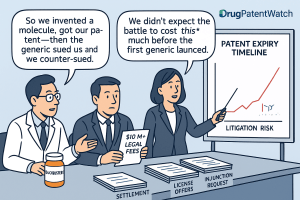
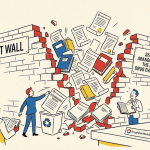
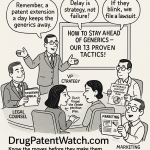
Patent litigation is where drug revenue is won or lost. For a blockbuster product generating $5 billion annually, a single adverse court ruling can erase that revenue almost overnight once generic competition enters. The difference between a company that navigates that threat and one that doesn’t often comes down to whether litigation was treated as a strategic function or an administrative expense.
This guide is written for IP counsel, portfolio managers, R&D leads, and institutional analysts who need more than a procedural overview. It covers the foundational legal architecture of both small-molecule and biologic patent disputes, the mechanics of every phase from pre-filing intelligence through Federal Circuit appeal, the specific legal doctrines that will determine whether a patent survives challenge, the economic game theory behind settlement decisions, and the international jurisdictions where the same battles play out under radically different rules. Where individual drugs or companies are relevant, their IP positions are examined specifically rather than generically.
Part I: The Legal Architecture — Hatch-Waxman and BPCIA
The Hatch-Waxman Act: The Framework That Built Modern Generic Competition
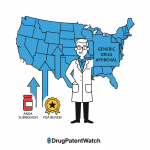
The Drug Price Competition and Patent Term Restoration Act of 1984, universally called Hatch-Waxman, established the legal infrastructure for pharmaceutical patent litigation as it exists today. Before 1984, generic drug companies had to conduct full clinical trials to obtain FDA approval, making generic development economically irrational for most products. Hatch-Waxman created the Abbreviated New Drug Application (ANDA), which allows a generic applicant to rely on the innovator’s existing safety and efficacy data by demonstrating bioequivalence. In exchange, brand-name companies received patent term restoration for time lost during FDA review and new statutory exclusivity periods layered on top of their patent rights.
The results reshaped the industry. Generic drugs went from roughly 19% of U.S. prescriptions in 1984 to over 90% today, though generics still account for only about 20% of total drug spending due to the dramatic price differential. What’s less frequently examined is how Hatch-Waxman simultaneously created the litigation machinery that keeps brand drugs profitable for years beyond their nominal patent expiry.
The ANDA Pathway and the Paragraph IV Certification
The central mechanism is the Paragraph IV (PIV) certification. When a generic manufacturer files an ANDA and asserts that a patent listed in the FDA’s Orange Book is invalid, unenforceable, or will not be infringed by the generic product, it triggers an automatic legal response. Under 35 U.S.C. § 271(e)(2), the act of filing an ANDA with a PIV certification constitutes an artificial act of patent infringement. No product has been sold, no harm has occurred, but the innovator can immediately sue.
This legal fiction is the engine of the entire system. It allows patent disputes to be resolved before a generic launches, eliminating the enormous complications of unwinding an already-launched product and calculating complex damages after the fact. The PIV filing is not a sign of system dysfunction. It is the intended trigger mechanism. Both brand and generic companies budget for it as a normal cost of doing business.
The generic applicant must send a detailed notice letter to the patent holder within 20 days of the FDA acknowledging a substantially complete ANDA. That letter must set out the factual and legal basis for the PIV assertion, patent by patent. The detail required in a PIV notice letter has increased substantially over the past decade as both sides have grown more sophisticated, with notices now routinely running hundreds of pages with accompanying expert declarations.
The 45-Day Window and the 30-Month Stay
The innovator has 45 days from receipt of the PIV notice to file suit. Filing within that window triggers an automatic 30-month stay of FDA final approval for the generic. The FDA cannot grant final approval during that period regardless of where the application stands scientifically. This gives the innovator a predictable runway to litigate without facing an imminent at-risk launch.
The stay can end early if a court rules for the generic on all asserted patents, or it can be extended by court order in certain circumstances. If the innovator does not file within 45 days, no stay attaches, and the generic can receive FDA approval on the normal scientific timeline. This forces brand-side IP teams to maintain perpetual litigation readiness: pre-vetted outside counsel, organized prosecution histories, and identified expert witnesses on call.
For patent terms that extend well beyond the 30-month stay, the brand company often litigates serially, asserting later-expiring patents in successive cases even after earlier ones expire or are invalidated. This is not procedurally abusive; it is the intended design of the multi-patent listing system, and courts have generally permitted it absent bad faith.
The Orange Book: A Ministerial Registry with Real Commercial Power
The Orange Book lists every patent that the innovator certifies claims the approved drug, a method of using it, or a method of manufacturing it. The FDA’s role in Orange Book listing is purely administrative: it lists what it receives without independently reviewing validity or scope. This creates an asymmetry of power, because a listed patent regardless of its actual legal strength forces a generic into a binary choice. The generic must either design around the patent, wait for it to expire, or file a PIV certification and accept the near-certainty of litigation.
The FTC and courts have scrutinized Orange Book listings with increasing rigor. In 2023, the FDA implemented regulations that gave it authority to remove patents it determined were improperly listed. The first major test came when several generic manufacturers challenged AstraZeneca’s listing of a patent covering the inhaler device for Symbicort (budesonide/formoterol) rather than the drug itself. The FDA ultimately delisted the patent after finding it did not meet the statutory listing criteria. This has opened a new front in patent strategy: challenging the propriety of the listing itself before a PIV certification becomes necessary.
The 180-Day First-Filer Exclusivity
The Hatch-Waxman system rewards the first generic manufacturer to file a substantially complete ANDA with a PIV certification by granting it 180 days of marketing exclusivity. During that period, the FDA cannot approve any other ANDA for the same drug. Generic number two, three, and four have to wait.
The 180-day exclusivity is the economic driver behind the entire generic patent challenge ecosystem. During this six-month window, the first filer typically prices its product at only a modest discount to the brand, often 15 to 25 percent below brand price, because it faces no generic competition. For a drug with $3 billion in annual brand-side revenue, that window can be worth $400 million or more to the generic. Litigation costs of $5 to $15 million to win that right represent an obvious positive expected value.
The exclusivity can be forfeited on several grounds, most commonly by failing to market the product within a specified time after winning FDA approval or a court judgment of non-infringement or invalidity. Complex patent settlements sometimes involve forfeiture triggers as part of the deal structure, requiring careful antitrust analysis under the post-Actavis framework discussed in Part IV.
Key Takeaways: Hatch-Waxman Framework
The PIV certification is the intended market entry mechanism for generics, not a legal anomaly. Brand companies must treat the 45-day response window as a standing operational readiness requirement, not an ad hoc crisis. The 30-month stay provides a predictable litigation runway but does not protect against an at-risk launch if the brand misses the 45-day window. Orange Book listing strategy now includes the risk of administrative delisting by the FDA, a relatively new litigation front that IP teams must integrate into their listing decisions.
Investment Strategy Note
For portfolio managers, the first PIV filing against a major brand product is a material event regardless of eventual outcome. The FDA’s Paragraph IV certification database is publicly available. A first PIV filing triggers the 30-month stay, which sets the outer boundary for near-term generic competition. A 30-month stay expiring without resolution signals elevated at-risk launch risk. First-filer exclusivity disclosures in generic company ANDA announcements are a reliable leading indicator of which products face the most imminent revenue impact.
Regulatory Exclusivities That Extend Beyond the Patent
Patents are not the only tool that delays generic entry. The Hatch-Waxman Act and subsequent legislation created several statutory exclusivity periods that run independently of patent protection and block FDA approval regardless of patent status.
New Chemical Entity (NCE) exclusivity grants five years of FDA approval protection to any drug containing an active ingredient never previously approved. NCE exclusivity runs from the date of approval, and a generic cannot even file an ANDA until four years into that period (or five years if it is not filing a PIV certification). For a drug approved immediately after its core patent issues, NCE and patent exclusivity overlap almost entirely. For drugs where FDA approval was delayed, NCE can provide meaningful standalone protection.
New Clinical Investigation exclusivity grants three years when a new use, new formulation, or significant labeling change is supported by new clinical studies essential to the approval. This is the workhorse of lifecycle management, and it stacks on top of existing patents. A brand company launching a new sustained-release formulation of a drug nearing patent expiry can secure three years of exclusivity for the new product while the generic company can still file an ANDA on the original formulation.
Orphan Drug exclusivity grants seven years of exclusivity to drugs treating conditions affecting fewer than 200,000 U.S. patients. AbbVie has used this aggressively for multiple indications of its biologic drugs, but it is equally available to small-molecule products. The seven-year clock starts on approval and blocks any FDA approval of the same drug for the same orphan indication during that period.
Pediatric exclusivity is not a standalone period but a six-month extension bolted onto existing patents and exclusivities. The FDA issues a Written Request to the sponsor to conduct specified pediatric studies. If the sponsor completes those studies, all Orange Book patents and statutory exclusivities get an additional six months, even if the pediatric studies themselves showed no benefit in children. This has been used systematically as a low-cost exclusivity extension mechanism, drawing substantial congressional scrutiny.
GAIN Act exclusivity, created by the Generating Antibiotic Incentives Now Act in 2012, adds five years to other exclusivities for Qualified Infectious Disease Products. With antibiotic development economics deeply unfavorable, GAIN was specifically designed to make the math work for sponsors. The total exclusivity stack available to a new antibiotic can reach 17 years when GAIN, NCE, orphan, and pediatric exclusivities are combined.
IP Valuation Note: Exclusivity Stacking
For any drug with listed Orange Book patents, the correct IP valuation analysis requires modeling the full exclusivity stack, not just patent term. A drug with patents expiring in 2027 but with residual orphan exclusivity running to 2029 is not equivalently exposed to generic competition as one where all exclusivities co-terminate with the leading patent. Generic manufacturers routinely miscalculate market entry timelines by failing to account for non-patent exclusivities, particularly orphan exclusivity that runs independently.
The BPCIA: How Biologic Patent Litigation Runs on Different Rules
The Biologics Price Competition and Innovation Act of 2009 (BPCIA), enacted as part of the Affordable Care Act, created the approval pathway for biosimilars and the litigation framework that governs them. The structural differences from Hatch-Waxman are significant enough that biologic IP strategy requires its own analytical framework.
A biosimilar is a biologic product that is highly similar to an FDA-approved reference product with no clinically meaningful differences in safety, purity, or potency. An interchangeable biosimilar meets a higher standard: it must produce the same clinical result as the reference product in any given patient and must be automatically substitutable at the pharmacy level without physician intervention in states that permit automatic substitution. Only one biosimilar has been designated interchangeable for any given reference product during the first year following that designation, providing a limited exclusivity period analogous to (but shorter than) the 180-day small-molecule first-filer period.
The Patent Dance: Structured Information Exchange as Litigation Framework
Where Hatch-Waxman relies on a PIV certification and a notice letter, the BPCIA establishes the ‘patent dance,’ a multi-step structured process for the biosimilar applicant and the reference product sponsor to exchange patent-relevant information before litigation begins. The sequence is specific:
The biosimilar applicant provides its aBLA and detailed manufacturing information to the reference product sponsor within 20 days of FDA acceptance of the application. The reference product sponsor then provides a list of patents it believes could reasonably be asserted. The biosimilar applicant responds with its own list and provides claim charts mapping its product to the asserted patents, along with its non-infringement and invalidity contentions. The parties negotiate the list of patents to be litigated in phase one. Phase two covers any remaining patents, which can only be asserted after commercial marketing notice.
The Supreme Court addressed whether participation in the patent dance was mandatory in Sandoz Inc. v. Amgen Inc. (2017), holding it is not. A biosimilar applicant can bypass the dance entirely by providing the aBLA directly to the reference product sponsor. The consequence is that all patents become available for litigation immediately rather than in two phases, which can actually benefit a biosimilar applicant seeking certainty before launch.
The Absence of an Automatic Stay
This is the single most consequential structural difference from Hatch-Waxman. There is no automatic 30-month stay of FDA approval for biosimilars. If the reference product sponsor wants to prevent a biosimilar from launching after the 12-year data exclusivity period ends, it must obtain a preliminary injunction from a federal district court.
The preliminary injunction standard under Winter v. Natural Resources Defense Council requires the movant to show a likelihood of success on the merits, a likelihood of irreparable harm absent the injunction, that the balance of equities favors the injunction, and that the injunction is in the public interest. This is a substantially higher bar than the automatic stay, and courts in the biosimilar context have not consistently found likelihood of success on the merits for reference product sponsors asserting complex manufacturing process patents. In multiple Humira biosimilar litigations, AbbVie elected to settle rather than litigate to preliminary injunction rulings, precisely because of this uncertainty.
AbbVie’s Humira Patent Portfolio: The Canonical Example of Biologic IP Strategy
AbbVie’s protection of adalimumab (Humira, approved 2002) is the most studied example of biologic IP portfolio construction. At peak, AbbVie had filed over 100 patents covering adalimumab, including composition-of-matter patents on the antibody itself, manufacturing process patents, formulation patents covering the high-concentration citrate-free formulation, and dosing regimen patents for various indications.
The composition-of-matter patents on the antibody itself expired in 2016 in Europe and 2023 in the United States. European biosimilar entry began in October 2018 from multiple manufacturers including Samsung Bioepis, Sandoz, Mylan (now Viatris), Amgen, and Pfizer. The U.S. market was protected by a far denser patent thicket through settlement agreements, with the first biosimilar entry (Amjevita from Amgen) occurring in January 2023, generating a five-year U.S./Europe differential that cost European patients and healthcare systems while sustaining U.S. revenues.
The AbbVie/Amgen settlement for adalimumab biosimilar Amjevita provided Amgen a U.S. launch date of January 2023, with AbbVie retaining full U.S. pricing power until then. AbbVie’s U.S. Humira revenues in 2022 were $17.2 billion, roughly 37% of total company revenues. The settlement structure illustrates the extraordinary value of even a few years of additional exclusivity in a market with no automatic price suppression mechanism.
IP Valuation Note: Biologic Reference Product Portfolios
For biologics, the correct IP exposure analysis is not limited to composition-of-matter patents but requires a complete manufacturing process, formulation, and indication patent audit. Reference product sponsors routinely file continuation patents on specific manufacturing conditions (cell culture media, purification sequences, glycosylation profiles) that are specific enough to avoid obviousness challenges while broad enough to cover any commercially viable manufacturing approach. Biosimilar developers consistently cite manufacturing process patents as the hardest to design around because the FDA’s requirement for highly similar manufacturing to the reference product limits the design-around space.
Key Takeaways: BPCIA Framework
The 12-year data exclusivity for biologics runs independently of patent rights. Composition-of-matter patents typically expire before data exclusivity ends, meaning the relevant post-exclusivity IP barriers are formulation, manufacturing process, and indication patents. The absence of an automatic stay means biologic patent disputes must be resolved through affirmative injunctive relief, raising the strategic premium on settlement. Biosimilar interchangeability designation triggers a one-year exclusivity period for the first interchangeable, the only meaningful first-mover advantage specific to the interchangeability pathway.
Part II: The Anatomy of a Case — From Pre-Filing Intelligence to Federal Circuit Appeal
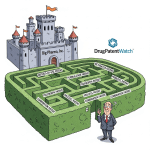
Pre-Litigation Strategy: Building or Breaking the Fortress
Freedom-to-Operate Analysis: The Generic Company’s First Obligation
A freedom-to-operate (FTO) analysis is a formal legal assessment of whether a proposed product or manufacturing process infringes any unexpired patent in a defined geography. For a generic or biosimilar developer, commissioning an FTO at the earliest stage of development is not optional from a risk management standpoint. A generic manufacturer that files an ANDA without an FTO has no informed basis for its PIV certification, no framework for identifying design-around opportunities, and no early warning of litigation exposure.
A thorough FTO for a small-molecule generic covers the compound itself, all salt, ester, and polymorph forms, all formulation approaches under consideration, the proposed manufacturing process route, and any method-of-use claims in the therapeutic area. The scope expands substantially for a biosimilar FTO, which must cover the reference product’s manufacturing process in granular detail: host cell line selection, fermentation parameters, purification sequences, and final formulation. A preliminary small-molecule FTO costs roughly $10,000 to $30,000. A comprehensive global FTO for a complex biologic can exceed $500,000 when factoring in the need for specialized process chemistry analysis.
The FTO should be updated at every major development milestone: when the formulation is finalized, when the manufacturing process is locked, and when the ANDA or aBLA is substantially complete. A clean FTO at molecule selection does not remain clean when the formulation team selects an excipient combination covered by a separately filed secondary patent.
Patent Landscape Analysis: Offensive Intelligence
A patent landscape analysis goes beyond the immediate FTO question to map the entire IP environment in a therapeutic area or technology platform. It identifies which companies hold patents on which mechanisms of action, where the patent density is highest, which patents are approaching expiry, and which areas have low patent density that could represent development opportunities. For a generic company’s business development team, a landscape analysis of the GLP-1 agonist space in 2022 would have revealed the formidable patent thicket surrounding semaglutide (Ozempic/Wegovy) and the specific patents most likely to face PIV challenges.
Patent landscape analysis also informs M&A and licensing decisions. When assessing whether to acquire a biosimilar development program, the acquirer needs a complete map of the reference product’s patent portfolio, the biosimilar developer’s existing FTO positions and prior art work product, any active litigations or inter partes review (IPR) proceedings, and the expected timing and probability of resolution. Platforms such as DrugPatentWatch aggregate this data with litigation outcome tracking, enabling analysts to assess the expected value of a contested development program against multiple outcomes.
The Innovator’s Pre-Filing Posture: Constructing a Patent Thicket
For an innovator, the pre-litigation strategic function is patent portfolio construction. The modern pharmaceutical patent thicket goes well beyond a core composition-of-matter patent on the active ingredient. A fully developed thicket for a small-molecule drug covers:
The compound itself in all structurally viable forms, with claims broad enough to capture obvious structural variations but specific enough to survive obviousness attack. Multiple crystalline polymorph and amorphous form patents with distinct stability, bioavailability, or manufacturability claims. Formulation patents covering specific excipient combinations, controlled-release matrices, and delivery mechanisms that are genuinely necessary for the commercial product’s performance characteristics. Method-of-use patents for each approved indication, filed separately so that each new FDA-approved indication adds an independent patent to the Orange Book. Manufacturing process patents on reaction sequences, purification methods, and particle size specifications that are commercially impractical to design around. Combination patents covering the drug paired with other agents where that combination is standard of care.
For biologics, the thicket extends to cell culture media composition, cell line characteristics, downstream processing sequences, and device patents covering autoinjectors or prefilled syringes where those devices are integral to the product’s commercial positioning.
AbbVie’s Humira portfolio is the best-documented example, but it is not unique. Johnson & Johnson built a comparable multi-layered portfolio around infliximab (Remicade). Pfizer’s original atorvastatin (Lipitor) portfolio included composition patents, specific polymorph patents, and method-of-use patents for specific patient populations, generating years of litigation against Ranbaxy, Teva, and multiple other generic filers starting in the early 2000s.
Drafting for Litigation Resilience
The quality of a patent is not determined at grant but at trial. Prosecution strategy must account for the arguments an ANDA challenger will make years later. This means building in multiple independent claims at different scope levels, creating fallback positions through dependent claim laddering, maintaining internal consistency in specification and claims to avoid prosecution history estoppel, and avoiding the broad genus claims that the Supreme Court’s Amgen v. Sanofi ruling (2023) has made increasingly difficult to defend.
The Amgen v. Sanofi case itself turned on Amgen’s broad functional claims to antibodies that inhibit PCSK9 by binding to specific residues and blocking LDL receptor binding. Amgen claimed a class of potentially millions of antibodies defined by function rather than structure. The Court held unanimously that the patent did not enable the full scope of what it claimed because Amgen provided a roadmap (conservative substitution and trial and error) rather than actual enablement for the full antibody genus. The practical effect for biologic patent drafters is that functional claims covering a genus must be accompanied by specific working examples throughout the claimed scope, not just a handful of exemplary antibodies at the claim boundaries.
The PIV Notice and the 45-Day Tactical Decision
When the PIV notice letter arrives, the brand-side IP team must make a litigation decision within 45 calendar days. This is not an attorney staffing question. It is a strategic business decision with direct revenue implications that requires input from IP counsel, general counsel, the business unit, and senior management.
The decision matrix has four primary inputs: the probability of winning on each asserted patent, the remaining exclusivity value at stake, the cost of litigation relative to that value, and whether a settlement structure is available that preserves more value than a litigated outcome. For a drug with $200 million in annual U.S. sales and four years left on the leading patent, the expected value of litigation is entirely different than for a drug with $4 billion in annual sales and eight years of exclusivity remaining.
The 45-day window forces a readiness posture that must be maintained continuously. Generic companies routinely file PIV certifications years before they want to launch, specifically to start the 30-month stay clock running. A brand-side team that is unprepared at receipt of a PIV notice, without pre-analyzed prior art, without identified claim construction positions, and without briefed outside counsel, will either miss the window or file a complaint that cannot sustain motion practice.
Discovery: The Volume Problem and How to Manage It
Discovery in ANDA litigation is broad. Federal Rules of Civil Procedure allow any non-privileged material relevant to any claim or defense. In a typical case, the parties produce the ANDA itself (often thousands of pages of chemical and pharmacological data), the complete prosecution histories of the asserted patents, all internal research and development documents that touch on the claims at issue, all communications with the FDA about the ANDA, inventor notebooks and lab records, and internal analyses of the competitor’s product.
The volume problem is structural. A pharmaceutical company’s relevant document corpus for a single drug product can include tens of millions of electronically stored information files spanning R&D, regulatory, legal, and commercial functions. Managing this requires specialized e-discovery counsel, AI-assisted document review with predictive coding trained on responsive documents, and rigorous privilege review. In cases involving trade secret claims about manufacturing processes, additional complexity arises from protective order negotiations about what the generic’s employees can access regarding the brand’s manufacturing information.
Depositions are where cases are often won or lost at the fact level. The drug’s inventors, when deposed on what they actually conceived and when, frequently provide testimony that either supports or undermines the patent’s priority date and its non-obviousness. Internal documents showing that the patent’s ‘unexpected results’ were not actually unexpected, or that the inventors were aware of prior art that was not disclosed to the USPTO, can turn a claim construction victory into an inequitable conduct defeat.
The Markman Hearing: Where Most Cases Are Actually Decided
Claim construction, the judicial determination of what each patent claim term means, is frequently more dispositive than the trial itself. The Markman hearing, named for Markman v. Westview Instruments, Inc. (1996), is the proceeding where the district court judge resolves disputes about claim term meaning. The judge’s rulings set the legal boundaries for everything that follows.
In pharmaceutical cases, the contested terms tend to cluster around measurement parameters (‘substantially similar,’ ‘about,’ specified percentage ranges), functional limitations, and the boundaries of genus claims. A court that construes ‘about 10 mg’ as covering 7.5 mg to 12.5 mg creates a very different infringement analysis than one that construes the same term as 9.5 mg to 10.5 mg. In formulation patent cases, whether ‘comprising’ is construed to permit additional ingredients beyond those listed is often case-dispositive.
Courts give primary weight to intrinsic evidence in claim construction: the claim language itself, the written description in the specification, and the prosecution history before the USPTO. Extrinsic evidence, including expert testimony, technical dictionaries, and treatises, is secondary and cannot override the meaning established by the intrinsic record. One consistent litigation error is over-investing in expert claim construction reports without first ensuring that the intrinsic evidence record firmly supports the desired construction.
The Supreme Court’s Teva Pharmaceuticals USA, Inc. v. Sandoz, Inc. (2015) ruling added an important procedural layer. While claim construction is ultimately a legal question reviewed de novo on appeal, any underlying factual determinations (for example, what a PHOSITA would have understood a term to mean) are reviewed for clear error. This creates a strategic premium on building a strong factual record through expert testimony at the district court level rather than relying entirely on intrinsic evidence arguments that the Federal Circuit will review fresh.
Trial, Judgment, and the Federal Circuit
ANDA cases are almost invariably bench trials, decided by judges rather than juries. Patent cases in the Southern District of New York, the District of Delaware (which handles the majority of ANDA cases), and the District of New Jersey are tried to experienced commercial judges who are familiar with pharmaceutical patent disputes. Delaware in particular has developed a body of pharmaceutical patent case law that effectively functions as a specialized pharma IP court within the general federal system.
Trial strategy in a bench trial differs fundamentally from jury trial strategy. The emphasis is on technical precision, logical rigor, and clear expert testimony that educates the judge on the science without being condescending. The judges before whom most ANDA cases are tried have seen hundreds of these cases; they know the standard arguments on obviousness and anticipation and will be impatient with repetitive expert testimony that does not add specificity.
Expert selection is critical. In a small-molecule formulation case, the best testifying expert is a medicinal chemist with academic credentials in the specific chemistry at issue, not a generic pharmaceutical scientist whose CV covers broad formulation experience. Specificity in expert selection signals to the court that the party understands its own technology.
Regardless of outcome, the losing party in virtually every significant ANDA case appeals to the U.S. Court of Appeals for the Federal Circuit. Congress created the Federal Circuit in 1982 expressly to provide uniform national patent law, replacing a system where different regional circuits applied conflicting legal standards. The Federal Circuit reviews claim construction de novo, applies the clear error standard to underlying factual findings after Teva v. Sandoz, and reviews obviousness determinations as mixed questions of law and fact. Its decisions bind all district courts on patent law questions, making it the practical final word on pharmaceutical patent disputes short of Supreme Court review.
Key Takeaways: Litigation Mechanics
Every phase from PIV notice through trial has discrete decision points where strategic error is irreversible. Missing the 45-day filing window loses the 30-month stay. Poor claim construction briefing sets a losing boundary before trial begins. Careless inventor deposition preparation can turn a patent-valid case into an inequitable conduct case. Resource allocation should weight pre-trial phases heavily, because summary judgment and Markman rulings resolve most cases before trial.
Part III: The Legal Doctrines That Decide Cases
Proving Infringement: Literal and Doctrine of Equivalents
The patent holder bears the burden of proving infringement by a preponderance of the evidence. The analysis proceeds claim by claim, element by element. For literal infringement, every element of the claim must be present in the accused product exactly as the claim language recites.
When the generic product modifies a known element in a way that avoids the literal claim language, the patent holder can pursue infringement under the doctrine of equivalents. The test, established in Graver Tank & Mfg. Co. v. Linde Air Products Co. (1950) and refined in Warner-Jenkinson Co. v. Hilton Davis Chemical Co. (1997), asks whether the accused element performs substantially the same function, in substantially the same way, to achieve substantially the same result as the claimed element. This function-way-result analysis is applied to each individual claim element, not to the invention as a whole.
The doctrine of equivalents has several judicially created limitations that reduce its practical scope. Prosecution history estoppel bars a patent holder from claiming equivalents for subject matter surrendered during prosecution to secure allowance of the claims. If the patent applicant amended a claim to overcome a prior art rejection, it cannot later assert that a product falling within the surrendered territory infringes under equivalents. All-elements rule prevents applying the doctrine in a way that would effectively eliminate any claim element entirely. These limitations mean the doctrine is most useful in cases where the generic product uses a minor, non-functional variation on the claimed element rather than a fundamental design-around.
Invalidity Challenges: The Generic Company’s Counter-Attack
A patent granted by the USPTO carries a presumption of validity under 35 U.S.C. § 282. Overcoming that presumption requires clear and convincing evidence, a higher standard than the preponderance standard the patent holder uses to prove infringement. This asymmetry matters: in a case where validity and infringement are both contested, the generic company faces a harder evidentiary burden on invalidity.
Anticipation Under 35 U.S.C. § 102
Anticipation requires that a single prior art reference disclose every element of the claimed invention. The reference must enable the invention, meaning it must teach a PHOSITA how to make and use the claimed compound or composition. For pharmaceutical compounds, anticipation challenges most often arise when a prior art patent or publication discloses a genus of compounds that encompasses the claimed specific compound, or when a prior conference abstract or publication describes experimental results with the specific compound before the critical date.
In practice, full anticipation arguments are less common in ANDA cases than obviousness arguments, because claiming strategies have evolved to place claims on specific features (polymorphic forms, specific particle sizes, specific excipient ratios) that are genuinely absent from prior art literature.
Obviousness Under 35 U.S.C. § 103: The Primary Battleground
Obviousness is the most common invalidity ground in pharmaceutical patent litigation, and it is where the most sophisticated legal and scientific arguments are made. The standard requires that the claimed invention would have been obvious at the time of filing to a PHOSITA, assessed by examining the differences between the claimed invention and the prior art and asking whether those differences would have been obvious to try or obvious to combine.
The Supreme Court’s KSR International Co. v. Teleflex Inc. (2007) ruling dramatically expanded the reach of obviousness. The Court rejected a rigid requirement that prior art explicitly contain a ‘teaching, suggestion, or motivation’ to combine references, adopting instead a flexible, common-sense approach that asks whether there was a reason for a skilled artisan to combine known elements to achieve the predictable result. For pharmaceutical formulation and dosing patents, KSR’s flexibility has made secondary patents significantly more vulnerable to challenge.
The KSR framework is particularly effective against formulation patents because pharmaceutical formulation is a disciplined, systematic field where combinations of known excipients are selected from established taxonomies based on predictable physicochemical principles. A generic company’s expert can argue that selecting a specific sustained-release polymer matrix, a specific disintegrant, or a specific plasticizer from a known set of candidates was obvious because each choice was a predictable solution to a well-defined problem.
To counter obviousness challenges, innovators present ‘secondary considerations’ or objective indicia of non-obviousness: unexpected results that were genuinely superior to what the prior art suggested, commercial success attributable to the claimed features rather than to marketing or brand recognition, long-felt need in the field that others tried and failed to solve, and copying by competitors who recognized the value of the claimed solution. The Federal Circuit has repeatedly held that secondary considerations must be given genuine weight, not merely acknowledged. A formulation that achieves dramatically improved bioavailability through a specific solid dispersion technology can overcome an obvious-to-try argument if the improved bioavailability was not predictable from the prior art.
Enablement and Written Description Under 35 U.S.C. § 112
The Amgen v. Sanofi ruling (2023) made 35 U.S.C. § 112 challenges far more significant for biologic patents than they were previously. Amgen’s claims to evolocumab (Repatha) and bococizumab covered any antibody that binds two specific PCSK9 residues and blocks its interaction with the LDL receptor. The Court held that Amgen’s specification provided only 26 specific antibodies through working examples, along with a general methodology for finding others. That was insufficient to enable claims covering potentially millions of structurally distinct antibodies.
The Amgen ruling affects not only broad genus claims but also any claim strategy that seeks to monopolize a functional outcome without disclosing specific structural embodiments throughout the claimed genus. For innovators, this means that broad functional claims in biologic patents filed before 2023 that have not yet been litigated carry meaningful § 112 invalidity risk. Post-Amgen patent drafting practice has shifted toward more structural specificity in biologic claims, accepting narrower but more defensible claim scope.
IP Valuation Note: Patent Validity Risk Scoring
For any drug’s patent portfolio valuation, a systematic validity risk assessment is required for each listed patent. The analysis covers: the breadth of the claim relative to the prior art background (broader claims have higher invalidity risk), whether the patent was drafted before or after KSR (pre-KSR formulation patents are significantly more vulnerable), the strength of the enablement disclosure relative to the claim scope (post-Amgen critical for biologics), and the prosecution history record (file-wrapper estoppel limitations reduce equivalents coverage and can generate validity arguments). Aggregating these risk assessments across a multi-patent portfolio generates a more accurate expected exclusivity duration than simply taking the expiry date of the latest-expiring Orange Book patent.
Inter Partes Review: The PTAB as a Parallel Battleground
The America Invents Act of 2011 created the Patent Trial and Appeal Board (PTAB) and inter partes review (IPR) as an administrative mechanism for challenging patent validity. Unlike district court validity challenges, IPR proceedings apply a preponderance of evidence standard (not the clear and convincing standard in district court), are decided by technically sophisticated administrative patent judges rather than generalist district court judges, and proceed on an accelerated 12-to-18-month timeline.
For generic companies, IPR petitions are a tactical tool that can be used in parallel with district court litigation. A successful IPR can cancel patent claims entirely, mooting the district court litigation on those claims. The PTAB’s claim construction standard shifted from the ‘broadest reasonable interpretation’ to the Phillips standard used in district courts in 2019, reducing but not eliminating scope discrepancies between IPR and litigation claim constructions.
Innovators use IPRs defensively by filing strategic patents that serve as IPR shields: patents that reference product sponsors can cite as evidence of ongoing R&D activity to resist estoppel arguments. Patent owners have also developed strategies to amend claims during IPR proceedings to narrow them to a scope that is more clearly novel and non-obvious while retaining commercially relevant coverage.
The intersection of IPR and ANDA litigation requires careful coordination. Filing an IPR raises estoppel implications for district court invalidity arguments: under 35 U.S.C. § 315(e), an IPR petitioner is estopped in district court from raising invalidity grounds that were raised or reasonably could have been raised in the IPR. Generic companies must therefore carefully scope IPR petitions to avoid foreclosing district court arguments they intend to preserve.
Part IV: The Economics of Litigation and Settlement
Asymmetric Risk and the Structural Incentive to Settle
The economic logic of Hatch-Waxman litigation is defined by radical asymmetry. The brand-side plaintiff has a revenue stream to protect; a court judgment of invalidity or non-infringement turns off that revenue immediately. The generic-side defendant has no revenue at risk from the litigation itself; its downside is litigation costs and continued exclusion from a market it has not yet entered.
For a drug with $3 billion in annual U.S. revenue, the brand company loses approximately $250 million per month in net revenue erosion when generic competition enters, assuming 80 percent market share loss within 12 months, a conservative figure for oral solid-dose products in a competitive generic market. Spending $15 million on litigation to protect even six months of additional exclusivity has an expected value of $150 million, before accounting for the probability of winning.
For the generic company, the calculus is a classic option structure. The litigation cost, $5 to $20 million for a typical ANDA case through trial, is the option premium. The payoff is access to 180 days of exclusivity and permanent market entry thereafter. For a drug with $1 billion in annual brand revenue, the 180-day exclusivity period alone is worth $75 to $125 million in generic gross margin. The litigation is a rational investment regardless of the probability of winning, as long as that probability is above roughly 10 to 15 percent.
This asymmetry creates a structural incentive for brand companies to pay generic companies to delay market entry, specifically because the brand’s expected cost of losing in court exceeds the cost of settling.
Pay-for-Delay: From Cash to Complex Compensation
Reverse payment settlements, colloquially called ‘pay-for-delay,’ involve a payment from the patent holder to the alleged infringer in exchange for the generic agreeing to delay market entry. The payment is ‘reverse’ because it flows from plaintiff to defendant, the opposite of a typical infringement settlement. These arrangements are logical from a pure game-theory standpoint: the brand company is buying the generic company’s share of the expected litigation outcome, and both parties can be better off than if they had litigated to judgment.
The FTC estimated that pay-for-delay agreements cost consumers $3.5 billion annually in higher drug prices. The Commission brought enforcement actions against multiple companies for these arrangements, including the case that reached the Supreme Court as FTC v. Actavis, Inc. (2013). Actavis involved AndroGel (testosterone gel, AbbVie/Solvay), where brand manufacturer Solvay paid generic challengers Watson, Paddock, and Par Pharmaceutical a total of $30 million annually to settle PIV challenges and agree to delayed market entry. The Court held, 5-3, that large reverse payments can violate antitrust law and must be evaluated under a ‘rule of reason’ analysis that weighs pro-competitive justifications against anticompetitive harm.
Actavis did not prohibit reverse payments but made explicit cash payments extremely high-risk from an antitrust standpoint. The post-Actavis settlement landscape has shifted to non-cash value transfers:
‘No-AG’ agreements, where the brand commits not to launch an authorized generic during the first-filer’s 180-day exclusivity period, are worth hundreds of millions of dollars to the generic company. An authorized generic marketed by the brand during the exclusivity window would capture 30 to 50 percent of the generic market, eroding the first-filer’s economics dramatically. By agreeing not to launch one, the brand transfers substantial value to the generic without a cash payment.
Co-promotion or licensing agreements, sometimes at above-market terms, can deliver value to a settling generic company through a commercial relationship rather than a direct settlement payment.
Quantity restrictions in the settlement, limiting the total volume of generic product that can be sold, suppress generic penetration and protect brand revenue without appearing to be a payment on the face of the agreement.
The FTC has maintained active enforcement scrutiny of all these arrangements. Its January 2025 paper on post-Actavis settlement structures flagged quantity restrictions specifically as a new enforcement priority, arguing they function as payment by restricting the upside the generic company can otherwise capture after settlement.
Investment Strategy Note
Investors in generic companies holding first-filer exclusivity should examine whether a settlement agreement contains a no-AG clause. A no-AG agreement effectively doubles the expected value of the 180-day exclusivity period by eliminating authorized generic competition. Conversely, investors in brand companies should treat a no-AG settlement commitment as a direct IP value transfer to the generic company, with a corresponding reduction in the brand’s net revenue during the exclusivity window. No-AG terms are typically disclosed in SEC filings as part of material settlement agreement descriptions and are worth modeling explicitly in generic launch scenarios.
Litigation Costs: The Real Numbers
For cases with more than $25 million at risk, median total costs through discovery and claim construction run approximately $2.4 million, with median total costs through trial and appeal reaching approximately $4 million. These figures, drawn from the American Intellectual Property Law Association’s economic surveys, represent the median, not the high end. Multi-patent, multi-defendant ANDA litigations involving dozens of Orange Book patents against 10 to 15 generic filers can cost $50 to $100 million over a 5-to-7-year litigation campaign. AbbVie has publicly disclosed hundreds of millions of dollars in total legal expenses related to the multi-front Humira patent litigation.
The cost composition for brand companies is weighted toward the pre-trial and claim construction phases, where the investment in expert preparation, document production, and claim construction briefing is highest. For generic companies, costs are more evenly distributed but front-loaded toward invalidity expert preparation. Both sides spend heavily on deposition preparation and witness fees. Top pharmaceutical patent litigation partners at firms such as Kirkland & Ellis, Wilmer Hale, Fish & Richardson, and Venable bill at $1,200 to $1,600 per hour. Technical expert witnesses in specialized fields, such as solid-state chemists or bioprocess engineers, command $600 to $1,000 per hour for deposition and trial testimony.
The Patent Cliff: Quantifying the Revenue Erosion
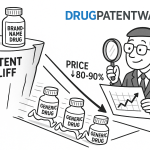
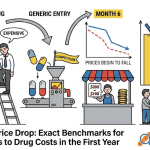
‘Patent cliff’ refers to the rapid revenue decline a brand drug experiences when patent and exclusivity protection ends and multiple generics enter the market simultaneously. The economics are precise: studies of Dutch and U.S. generic entry show median price decreases of 41 percent four years after patent expiration, with prices falling by up to 90 percent when five or more generics compete. Brand market share declines even more steeply than price, typically falling from 100 percent to under 10 percent within 12 months in competitive oral solid-dose markets.
The patent cliff calculation for a specific product requires four inputs: the date of first generic entry (accounting for all exclusivities, not just patent expiry), the expected number of generic entrants at month 1 and month 12, the expected price erosion curve by number of competitors, and the brand’s retention strategy (authorized generic, branded reformulation, or pure-play defense). Each of these inputs is directly affected by patent litigation outcomes: a successful Orange Book patent litigation delays first entry, a no-AG settlement eliminates one competitor during the exclusivity window, and a formulation patent victory can extend protection for the reformulated product.
For brand companies approaching a major patent cliff, the standard lifecycle management toolkit includes filing new method-of-use patents for additional indications that have been or will be FDA-approved, launching authorized generics under separate labels to capture the generic-seeking segment without cannibalizing the brand, transitioning patients to next-generation formulations or combination products before generic entry on the original formulation, and in some cases seeking product hopping, where prescription habits shift to a reformulated product before generic entry on the original.
Product hopping, the practice of discontinuing an original formulation and switching patients to a new one just before generic entry, has drawn antitrust scrutiny under theories that it manipulates the prescription market to prevent automatic substitution of approved generics. The Second Circuit’s ruling in In re Wellbutrin XL Antitrust Litigation (2017) addressed this issue in the context of bupropion XL, finding the plaintiff’s evidence insufficient but leaving the legal theory viable. Abbott’s introduction of extended-release TriCor formulations to succeed immediate-release TriCor (fenofibrate) before generic entry is the most-litigated product-hopping example, resulting in the FTC’s 2008 settlement requiring Abbott to pay $300 million.
Key Takeaways: Economics and Settlement
Settlement is rational for both sides in most ANDA disputes, but the legal structure of settlements is now more complex than pre-Actavis cash payments. The FTC’s 2025 enforcement guidance on quantity restrictions is the most recent signal of where antitrust risk lies for settlement architecture. For portfolio valuation, the correct model for brand companies facing PIV challenges accounts for the probability of each patent prevailing, the expected settlement terms if challenged, and the revenue erosion timeline under each scenario. For generic companies, the correct model values first-filer exclusivity separately from subsequent market entry economics, with explicit treatment of no-AG provisions as value-additive.
Part V: International Patent Litigation — A Jurisdiction-by-Jurisdiction Brief
The European Union and the Unified Patent Court
European pharmaceutical patent litigation operated for decades on a country-by-country basis. A European Patent issued by the European Patent Office had to be validated in each member state separately, and enforcement or invalidity actions had to be brought in each national court under national procedural rules. Pfizer litigated celecoxib (Celebrex) in multiple European national courts simultaneously with different case management timelines, different claim construction standards, and different invalidity grounds, producing outcomes that varied by jurisdiction.
The Unified Patent Court (UPC), which opened in June 2023, changes this structure for participating EU member states. A Unitary Patent validated through the UPC has automatic effect in all 17 participating states, and a UPC enforcement order or revocation ruling applies pan-European. The court covers a market of roughly 300 million people with a single decision.
The UPC operates through a Central Division in Paris, Munich, and Hamburg with subject-matter specialization (Paris: chemistry and pharmaceuticals; Munich: mechanical engineering; Hamburg: designated backup), and local and regional divisions across member states. The targeted first-instance timeline is 12 months to judgment, significantly faster than U.S. ANDA litigation. The UPC does not have a formal patent linkage system; patent and regulatory approval decisions proceed independently.
For pharmaceutical companies, the UPC presents a fundamentally different risk calculus than the U.S. system. A single invalidity action at the UPC can revoke a patent across all participating states simultaneously, a single adverse ruling that U.S. litigation simply cannot replicate. For innovators with strong confidence in a patent’s validity, the UPC offers efficient pan-European enforcement without repeat litigation costs. For those with weaker patents, the existing opt-out mechanism allows continued national court litigation for the remaining patent term, avoiding the concentration of invalidity risk.
Life sciences cases have become among the most active filings at the UPC in its first two years of operation. Pharma companies including Sanofi, Novartis, AstraZeneca, and multiple biosimilar developers have been parties in early UPC proceedings. The court’s preliminary injunction practice has been particularly active, with the UPC issuing pan-European preliminary injunctions in several high-profile cases based on a higher prima facie likelihood of success standard than some national courts previously required.
One critical distinction is that the UPC does not apply a U.S.-style supplementary protection certificate (SPC) system in its own right. SPCs, which extend patent protection for up to five additional years to compensate for regulatory approval delay, are national rights governed by EU Regulation 469/2009. SPC litigation has been heavy in major European markets, particularly Germany, the Netherlands, and the United Kingdom (which left the UPC framework via Brexit). The intersection of UPC patent rulings with national SPC rights creates a complex patchwork for lifecycle management in Europe.
China’s Pharmaceutical Patent Linkage System
China implemented its pharmaceutical patent linkage system in June 2021 through regulations jointly promulgated by the National Medical Products Administration and the China National Intellectual Property Administration. The system is deliberately modeled on Hatch-Waxman and includes a patent information registration platform (analogous to the Orange Book), a declaration system for generic applicants (analogous to Paragraph IV certifications), a 45-day filing window for patent holders, and a 9-month stay of generic regulatory approval.
For foreign pharmaceutical companies with significant China revenue, the Chinese linkage system represents a meaningful new tool that did not exist before 2021. Eli Lilly, AstraZeneca, Pfizer, and other multinational innovators have filed patent registration claims and initiated linkage litigation in China’s specialized IP courts. The Beijing, Shanghai, and Guangzhou Intellectual Property Courts handle pharmaceutical patent disputes with specialized judges who operate on significantly faster timelines than the U.S. system. Average time to first-instance judgment in China’s specialized IP courts is approximately 12 months.
The Chinese system’s primary limitation from an innovator perspective is the absence of U.S.-style broad discovery. Chinese civil procedure is substantially more limited in pre-trial evidence gathering; each party is responsible for obtaining its own evidence, and there is no deposition mechanism comparable to U.S. practice. This places a higher premium on maintaining contemporaneous documentation and early evidence preservation.
China’s secondary patent patentability standards are also stricter than the U.S. A polymorph or formulation patent that issues without difficulty in the U.S. faces a more exacting inventive step standard before the Chinese Patent Office, particularly after the 2021 Patent Law amendments. Generic companies with operations in China have used IPR-equivalent invalidation proceedings before CNIPA to challenge secondary patents that issued in the U.S. on less robust inventive step grounds.
IP Valuation Note: China Market Exposure
For any biopharmaceutical company with material China revenues, the patent linkage system requires the same analytical treatment as Hatch-Waxman in the U.S. Revenue modeling must account for Chinese patent expiry dates, the registration status of Orange Book-equivalent patents in China, any pending generic regulatory filings, and the litigation timeline in China’s specialized IP courts. A brand drug with a 2025 composition-of-matter patent expiry in China and no secondary patents registered in the Chinese linkage system faces near-term generic competition on a much faster timeline than U.S. investors may appreciate if they do not examine the China-specific patent landscape separately.
India: No Linkage, Section 3(d), and the World’s Pharmacy
India operates under a patent system that is explicitly designed to limit secondary pharmaceutical patenting and generic market barriers. The Patents Act, as amended in 2005 to comply with TRIPS, contains Section 3(d), which prohibits granting patents to new forms of a known substance unless the applicant demonstrates significantly enhanced efficacy. New polymorphs, solvates, esters, ethers, and salts of known compounds are presumptively unpatentable unless the applicant proves efficacy enhancement.
Section 3(d) became globally prominent in the Supreme Court of India’s 2013 ruling in Novartis AG v. Union of India. Novartis sought patent protection for the beta-crystalline form of imatinib mesylate (the compound sold as Gleevec/Glivec for chronic myeloid leukemia). The Court rejected the application, holding that Novartis had not demonstrated a significant enhancement of known efficacy over the prior known compound. The decision confirmed that the imatinib free base, which had been disclosed in prior patents, was the ‘known substance’ from which the beta-crystalline form was derived, and improved bioavailability in the crystalline form was not, on that evidence, a significant enhancement of therapeutic efficacy.
India also has no formal pharmaceutical patent linkage system. The Indian Patent Office and the Central Drugs Standard Control Organization operate entirely independently. A generic company can receive drug regulatory approval and begin marketing in India without reference to patent status, leaving the innovator to enforce its patent rights reactively through infringement litigation in High Courts. India’s High Courts, particularly the Delhi High Court, have developed a meaningful pharmaceutical patent jurisprudence, but the absence of a linkage mechanism means generic entry is not precluded by patent protection in the same structural way as in the U.S. or China.
India’s combination of strict secondary patentability standards and no linkage mechanism has made it the dominant global supplier of generic active pharmaceutical ingredients and finished generic formulations for both domestic consumption and export to developed markets. Indian generic companies including Sun Pharmaceutical, Dr. Reddy’s Laboratories, Cipla, and Aurobindo Pharma have used this environment to build global generics businesses financed in part by their protected access to the domestic Indian market.
For multinational innovators, India presents a market where revenue from branded products is structurally compressed by the generic-permissive environment. The strategic response is typically to price for volume rather than margin in India, seek orphan drug exclusivities where available, and focus on indications where Indian manufacturing capability is less developed.
Comparative Strategy: The Global Forum Selection Decision
The practical implication of this multi-jurisdictional diversity is that global pharmaceutical companies now make explicit forum selection decisions about where to litigate key patents and in what sequence. A reference product sponsor holding a biologic manufacturing process patent may choose to bring its first action in the UPC rather than the U.S. because the UPC’s 12-month timeline produces a binding pan-European ruling before the U.S. 30-month stay even expires. An adverse UPC ruling does not bind U.S. courts, but it shapes settlement negotiations and market expectations globally.
Chinese IP courts’ speed and increasingly sophisticated handling of pharmaceutical cases make China a forum where patent validity can be tested efficiently. A Chinese invalidity ruling, though not binding on U.S. courts, creates prior art record and litigation exposure that affects settlement value in concurrent U.S. proceedings.
India’s affirmative rejection of secondary patents through Section 3(d) provides generics companies with a source of substantive arguments (analogous to India’s enhanced efficacy standard) that can be adapted for obviousness contentions in U.S. or European proceedings, even though Indian law is not directly applicable outside India.
Key Takeaways: International Litigation
Each major pharmaceutical jurisdiction has materially different default rules on patent linkage, automatic stays, patentability standards for secondary patents, discovery, and litigation speed. Global IP strategy requires jurisdiction-specific analysis rather than extrapolation from U.S. rules. The UPC’s pan-European effect makes it the highest-leverage but also highest-risk forum for biologic patent disputes in Europe. China’s 9-month stay and 12-month adjudication timeline create a faster resolution clock than the U.S. 30-month stay. India’s Section 3(d) standard functionally renders most formulation and polymorph patents unenforceable, a structural market difference that must be modeled separately for any drug with material Indian revenue.
Part VI: Emerging Battlegrounds — Cell and Gene Therapies, AI Inventorship, and Policy Pressure
Cell and Gene Therapy Patents: A System Built for Small Molecules Confronting Living Drugs
Cell and gene therapies (CGTs) represent a class of products that the existing patent system was not designed to handle. CAR-T cell therapies such as Kymriah (tisagenlecleucel, Novartis) and Yescarta (axicabtagene ciloleucel, Kite/Gilead) are manufactured patient-by-patient from autologous T cells that are engineered outside the body and reinfused. They are not chemical entities. They are not biologics in the conventional sense. They are, in clinical and manufacturing terms, individualized interventions.
Patent eligibility for CGTs turns on the Supreme Court’s framework from Association for Molecular Pathology v. Myriad Genetics (2013), which held that naturally occurring DNA sequences are not patentable but that cDNA (which is not naturally occurring) can be. Modified human cells and engineered viral vectors are not naturally occurring and are patentable subject matter, but the line between engineered and merely isolated biological material can be unclear in specific applications.
Enablement under post-Amgen standards poses particular difficulties for broad CGT method claims. A claim to ‘a CAR-T cell comprising a chimeric antigen receptor that binds CD19’ encompasses millions of structurally distinct CAR constructs. Whether a specification with working examples for one or two specific CD19-targeting CARs enables the full claimed genus is directly analogous to the Amgen antibody genus problem. CGT patent holders are increasingly drafting claims with specific structural features of the CAR construct (specific scFv sequences, specific transmembrane domains, specific costimulatory elements) rather than broad functional claims, accepting narrower but more defensible scope.
Manufacturing process patents are particularly significant in the CGT context because the manufacturing process is inseparable from the product. The FDA’s position that process differences can affect the safety and efficacy of CGT products means there is limited design-around space for any future competitor; a substantially similar product necessarily requires a substantially similar manufacturing process, which is where the most valuable IP often sits.
Biosimilar-equivalent competition for CGTs faces additional barriers that do not apply to conventional biologics. The FDA has not yet defined a clear regulatory pathway for follow-on CGT products. The concept of ‘highly similar’ is ambiguous when applied to living cells manufactured from individual patients. Without a regulatory pathway, there is no triggering mechanism for a patent linkage-equivalent system, and the enormous manufacturing complexity creates independent market barriers that patent protection reinforces rather than creates.
CAR-T IP: Kymriah, Yescarta, and the Juno/Sloan Kettering Interference
The Kymriah and Yescarta CAR-T market entry was preceded by years of bitter patent interference and litigation. The foundational patents for CD19-targeting CAR-T technology were developed independently and near-simultaneously at St. Jude Children’s Research Hospital (licensed to Novartis for Kymriah), Memorial Sloan Kettering Cancer Center (licensed to Juno Therapeutics/Bristol-Myers Squibb for lisocabtagene maraleucel, Breyanzi), and the National Cancer Institute. Juno Therapeutics (before its acquisition by Celgene and subsequently Bristol-Myers Squibb) filed suit against Kite Pharma (now Gilead) alleging infringement of patents covering the costimulatory domain configuration in axicabtagene ciloleucel. After years of litigation, a jury initially awarded Juno $752 million in damages, a verdict later remanded by the Federal Circuit on obviousness grounds. The litigation illustrates both the high commercial stakes of CGT patent rights and the difficulty of defending broad functional claims in this space post-Amgen.
AI-Driven Drug Discovery and the Inventorship Problem
The role of machine learning and artificial intelligence in drug discovery has shifted from screening support to active candidate generation. Insilico Medicine, Exscientia, Recursion Pharmaceuticals, and others have identified lead compounds through generative AI systems that propose novel molecular structures with predicted target activity profiles. Some of these compounds have entered clinical trials.
Under current U.S. law, an inventor must be a natural person who conceives the claimed invention. The Federal Circuit confirmed this in Thaler v. Vidal (2022), holding that the AI system DABUS could not be named as an inventor on a patent application. The Court did not resolve the broader question of what happens when AI contributes substantially to conception but a human scientist also contributes. If a human medicinal chemist synthesizes and evaluates a compound that an AI system selected and proposed, who is the inventor?
The practical answer under current law is that the human scientist who made the final selection and evaluation is the inventor, even if the AI generated the initial set of candidates. But this framing becomes strained when the AI-generated candidates are adopted wholesale without material human modification, when the AI’s selection criteria are not fully interpretable, and when the human’s contribution was primarily to run the AI’s proposed synthesis rather than to conceive the molecular structure.
The inventorship question has direct implications for patent validity. A patent naming incorrect inventors is presumptively invalid. As AI drug discovery systems become more capable and their contributions to conception become harder to distinguish from the human scientists operating them, the risk of inventorship challenges to AI-assisted drug patents will increase. Companies building drug discovery programs on AI platforms should document explicitly the nature of human decision-making at each stage of the discovery process, specifically which choices were made by human scientists based on scientific reasoning and which were adopted from AI output.
Policy Pressure: The IRA, USPTO Quality Initiatives, and the Evergreening Debate
The Inflation Reduction Act of 2022 (IRA) introduced Medicare drug price negotiation for a defined set of high-expenditure drugs. The first 10 drugs subject to negotiation included adalimumab (Humira), apixaban (Eliquis, Bristol-Myers Squibb/Pfizer), ustekinumab (Stelara, J&J), and other high-revenue products. For drugs selected for negotiation, the government’s negotiated price takes effect independent of patent status. This creates an entirely new revenue modeling variable: a drug can retain full patent and exclusivity protection but still have its federal government pricing negotiated downward.
The IRA’s downstream effect on patent strategy is not fully mapped yet, but the direction is clear. If the most commercially successful drugs face government price negotiation regardless of exclusivity, the marginal value of extended exclusivity through secondary patent litigation is reduced. A company spending $50 million to extend Humira’s exclusivity by two years in a post-IRA world where Medicare negotiated prices reduce net revenue per unit by 25 percent is protecting a smaller revenue base than the same litigation would have protected pre-IRA.
The USPTO and FDA have separately pursued coordinated initiatives aimed at pharmaceutical patent quality. The USPTO’s FDA/USPTO collaboration program, formalized in 2023, facilitates information sharing between the two agencies on patent term extension requests and Orange Book listing accuracy. The FTC has issued guidance on Orange Book listing practices and has supported expanded FDA authority to delist improperly listed patents. Congressional proposals to require USPTO examination of ANDA-challenged patents or to create heightened standards for secondary pharmaceutical patent issuance have not yet advanced to enactment but reflect sustained legislative attention.
The evergreening debate, defined as the practice of obtaining successive secondary patents to extend effective market exclusivity beyond the original compound patent’s term, sits at the center of the policy discussion. A 2021 study in JAMA found that for the 100 best-selling drugs, the median number of Orange Book-listed patents per drug was four, with some drugs listing over 100. The median effective patent life, calculated from first approval to latest listed patent expiry, was 38 years, well beyond the nominal 20-year patent term. For advocacy organizations and policy-makers, this data supports arguments for reform. For pharma IP teams and investors, it reflects the commercial logic of portfolio construction and the legal validity of secondary patents that protect genuinely distinct aspects of the commercial product.
Key Takeaways: Emerging Issues
CGT patent strategy requires building around product-specific manufacturing process IP rather than broad functional compound claims, given both post-Amgen enablement risk and the FDA’s regulatory sensitivity to manufacturing process changes. AI drug discovery programs must establish contemporaneous documentation of human inventive contribution to maintain defensible inventorship positions. The IRA’s price negotiation mechanism reduces the marginal revenue value of extended exclusivity for Medicare-exposed products, requiring revaluation of litigation economics for brand drugs in this subset. Orange Book delisting risk is real, particularly for device patents listed against formulation-only products.
Conclusion: Litigation as a Capital Allocation Decision
Pharmaceutical patent litigation is capital allocation, not legal administration. Every decision from the structure of the Orange Book filing to the settlement terms negotiated after a PIV challenge converts directly into revenue or cost. For an innovator, the question is not whether to litigate but how to construct a portfolio that makes litigation cost-prohibitive for challengers while maximizing the probability of prevailing if challenged. For a generic or biosimilar developer, the question is which patent positions are genuinely vulnerable, what the expected value of each challenge is, and whether the litigation economics justify the investment.
The strategic tools have never been more sophisticated: AI-assisted prior art searches, predictive outcome modeling from case databases, specialized PTAB proceedings that run parallel to district court litigation, and international forum selection that sequences cases in the fastest-resolving jurisdictions first. The legal doctrines are also more demanding than they were a decade ago: Amgen v. Sanofi has raised the bar for broad biologic claims, KSR has made secondary small-molecule patents more vulnerable to obviousness challenge, and post-Actavis antitrust scrutiny has made settlement architecture more complex.
The companies that consistently win in this environment treat IP litigation as an integrated function: IP counsel, business development, R&D leadership, and finance working together from the molecule forward rather than calling the lawyers after a PIV notice arrives. The patent portfolio is constructed with the end litigant in mind. The FTO analysis is run before formulation lock, not before ANDA filing. The settlement decision is modeled quantitatively against expected trial outcomes rather than made on intuition about judicial temperament. That integrated posture, systematic rather than reactive, is the only consistent way to protect billions in pharmaceutical revenue in a legal framework specifically designed to erode it.