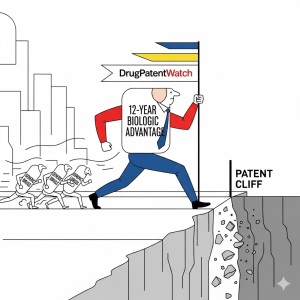
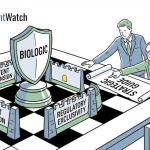
The pharmaceutical business model relies on a simple cycle. Companies invest billions into research, secure a period of market exclusivity to recover that investment, and eventually face competition from lower-cost alternatives. For decades, the 1984 Hatch-Waxman Act defined this cycle for small-molecule drugs. The 2010 Biologics Price Competition and Innovation Act (BPCIA) introduced a separate architecture for large-molecule biologics. This legislation grants biologics a 12-year period of data exclusivity, which is more than double the five-year baseline for small molecules.1 This gap is not just a regulatory quirk. It is the primary driver of current pharmaceutical strategy and capital allocation.
Small molecules are simple chemical structures. They are stable, easy to replicate, and usually taken as pills. Biologics are therapeutic giants derived from living cells. They are often hundreds of times larger and significantly more complex than their chemical counterparts.3 This physical reality dictates the laws that govern them. While Hatch-Waxman sought to balance innovation with rapid generic entry, the BPCIA reflects the higher scientific and manufacturing hurdles of biological medicine. The resulting 12-year shield has shifted the industry focus toward biologics, fundamentally changing how companies plan for the end of a drug’s profitable life.
The Regulatory Foundation of the 12-Year Moat
The BPCIA was enacted as part of the Affordable Care Act to create an abbreviated pathway for biosimilars. It provides an incontestable period for innovators to recoup investments, separate from any patent protection.2 This 12-year window prevents the FDA from approving a biosimilar that relies on the reference product’s safety and efficacy data. This statutory difference is the foundation of the modern pharmaceutical playbook.1
Data Exclusivity versus Patent Protection
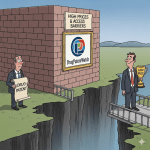
Data exclusivity is a regulatory barrier. It runs concurrently with patent protection but acts as an insurance policy for innovators whose patents might be vulnerable to legal challenge.6 For biologics, this 12-year period is foundational because it remains binding even if a competitor successfully invalidates every patent in the drug portfolio. Small-molecule drugs rely more heavily on patent linkage. Under the Hatch-Waxman framework, the FDA is prohibited from approving a generic until listed patents in the Orange Book expire or are successfully challenged via Paragraph IV certifications.7
Feature
Hatch-Waxman (Small Molecules)
BPCIA (Biologics)
Statutory Exclusivity
5 years
12 years
Filing Limitation
5 years (4 if P-IV)
4 years
Patent Listing
Orange Book (Public)
Purple Book (Private Exchange)
FDA Approval Stay
Automatic 30-month stay
No automatic stay
Generic Exclusivity
180 days for first-to-file
No exclusivity (First interchangeable gets 1 year)
2
The 12-year period is non-renewable for minor changes. Modifications to a biologic’s indication, dosing schedule, or delivery system do not trigger a new exclusivity window unless the change results in a significant modification to safety, purity, or potency.2 This prevents manufacturers from extending their regulatory monopoly through minor iterative changes, forcing them to rely on secondary patents to extend protection beyond the initial 12-year term.
The Information Asymmetry of the Purple Book
Strategic planning for loss of exclusivity (LOE) depends on transparency. Hatch-Waxman requires innovators to list relevant patents in the Orange Book. Generic manufacturers use this public list to decide which patents to challenge. The BPCIA operates under a “Patent Dance,” which is a private exchange of information between the biosimilar applicant and the reference product sponsor.3
This exchange became optional following the 2017 Supreme Court decision in Sandoz Inc. v. Amgen Inc..3 If a biosimilar developer refuses to participate in the dance, the innovator retains the right to sue for infringement, but the timeline becomes less predictable. This informational asymmetry gives biologic innovators a tactical advantage. Competitors cannot easily map the legal landscape until they have already invested hundreds of millions in development.3
The Three Billion Dollar Bet
The financial justification for the 12-year exclusivity period often centers on the cost and risk of development. Industry data shows that biologics are more expensive to bring to market than small molecules. Estimates for developing a new biologic range from $2.6 billion to $3 billion.4 Small molecules typically require between $1 billion and $2.1 billion.4
Clinical Success Rates and Investment Risk
Biologics have higher clinical trial success rates at every phase of development than small molecules.4 Small molecules frequently fail due to off-target effects or unexpected toxicity. They can easily enter cells and affect various molecular pathways. Biologics, such as monoclonal antibodies, act on specific surface receptors and are more selective. This specificity reduces the likelihood of failure in late-stage trials.4
Development Phase
Small Molecule Success Rate
Biologic Success Rate
Phase I
Lower
Higher
Phase II
Lower
Higher
Phase III
Lower
Higher
Overall Likelihood of Approval
Lower
Higher
4
This higher success rate makes biologics a more stable investment despite the higher initial costs. When combined with the 12-year exclusivity and the slower revenue erosion after competition begins, the ROI for a successful biologic often exceeds that of a small-molecule blockbuster. DrugPatentWatch data shows that while biologics account for only 2% of prescriptions, they represent nearly half of total drug spending in the U.S..14
The Economic Value of the Four-Year Gap
The extra seven years of exclusivity (12 years for biologics versus 5 for small molecules) creates a massive revenue advantage. Between 2012 and 2022, biologics reached higher median peak annual global revenue of $3.8 billion, typically in year 12.15 Small-molecule drugs reached a median peak of $1.4 billion in year 11.15
Using a 10.5% discount rate to account for the cost of capital, the cumulative economic value of these drugs diverges sharply. At 9 years post-approval, biologics have a median global economic value of $9 billion, compared to $4.1 billion for small molecules.15 By year 13, the value for biologics reaches $13.4 billion, while small molecules reach only $5.5 billion.15 Biologics earn approximately 33% of their total 13-year economic value in years 10 through 13.15
Manufacturing as a Defensive Asset
The distinction between these drug classes is physical. Small molecules are composed of 20 to 100 atoms.4 Biologics are large proteins often 200 to 1,000 times larger.4 The mantra for biologics is “the process is the product.” This means the living cell culture used to manufacture the drug is so sensitive that minor variations in temperature or nutrients can change the final drug’s safety and efficacy.3
The Manufacturing Moat
Manufacturing a generic small molecule is a matter of chemical synthesis. It is relatively inexpensive and easy to scale. Biologics require living cell cultures, such as mammalian or bacterial cells, grown in bioreactors. This process is prone to variability and requires a sophisticated cold chain for distribution and storage.13
The manufacturing complexity acts as a significant barrier to entry. While launching a generic might cost $1 million to $2 million, launching a biosimilar can cost between $100 million and $250 million.17 This high entry cost limits the number of competitors. In the small-molecule market, ten or more generic entrants often launch simultaneously. In the biosimilar market, it is common to see only two to five competitors even years after the 12-year exclusivity ends.18
Process Patents and Reverse Engineering
Innovators use process patents to protect their manufacturing methods. Biosimilar developers must reverse-engineer a comparable but non-infringing production process.20 This is a technical challenge that can delay competition even after the primary molecule patents expire. If a biosimilar developer cannot replicate the specific glycosylation pattern or protein folding of the reference product, the FDA may reject the application, or the developer may face patent infringement suits related to the production methods.
The Anatomy of the Patent Thicket
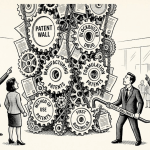
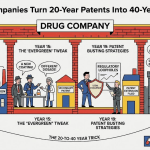
Biologic innovators use secondary patents to extend their monopolies beyond the 12-year regulatory window. This strategy, known as the patent thicket, involves filing dozens or hundreds of overlapping patents covering formulations, manufacturing processes, dosing regimens, and delivery devices.20
The Humira Case Study
AbbVie’s Humira is the industry archetype for this strategy. The company filed approximately 250 patent applications and secured over 130 granted patents for a single molecule.22 The goal was to create a litigation landscape so complex and costly that biosimilar competitors would settle rather than fight.
Strategic Timing: 89% of Humira’s patent applications were filed after the drug received FDA approval in 2002.20
Layering Secondary Patents: AbbVie filed 122 applications between 2014 and 2018, more than a decade after the drug was already generating billions in revenue.20
Formulation Patents: These included a higher-concentration, citrate-free version to reduce injection pain.20
Method of Use Patents: These covered specific conditions like Crohn’s disease and psoriatic arthritis, often filed years after initial approval.20
Process Patents: These protected the manufacturing methods, creating barriers for developers who had to find non-infringing ways to grow the same protein.20
Delivery Devices: AbbVie patented components of the autoinjector pen, such as the firing button.20
Terminal Disclaimers and the Numbers Game
Innovators use terminal disclaimers to link duplicative patents. This procedural maneuver allows a company to obtain patents on obvious variations of an invention by agreeing that the patents will expire at the same time as the original.21 This does not extend the patent term, but it increases the number of patents a competitor must challenge. Even if a court invalidates one patent, dozens of others remain as hurdles.21
The effectiveness of this strategy is visible in the delay of biosimilar entry. Humira faced biosimilar competition in Europe in 2018, which led to a 30% revenue drop in those markets.26 In the U.S., the thicket and subsequent settlements delayed biosimilar entry until 2023. This five-year delay is estimated to have cost the U.S. healthcare system between $14.4 billion and $19 billion.20
Market Erosion: Cliffs versus Slopes
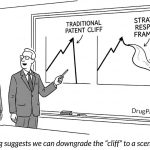
The patent cliff describes the revenue collapse for small-molecule drugs. When a generic enters the market, it often captures 80% to 90% of the brand share within 12 to 24 months.11 This is driven by automatic substitution at the pharmacy level. State laws allow or require pharmacists to dispense the generic version unless a doctor specifies otherwise.17
The Gradual Descent of Biologics
Biologics do not experience a cliff. They face a gradual slope or a contested descent. This is due to the lack of automatic substitution. Unless a biosimilar is designated as interchangeable by the FDA, a pharmacist cannot substitute it for the brand-name biologic without a new prescription from the doctor.17
Market Characteristic
Small Molecule (Generic)
Biologic (Biosimilar)
Speed of Erosion
Very Rapid (Cliff)
Gradual (Slope)
Price Decay Curve
Steep drop, bottoms at 5-10% of brand price
Slower decline, bottoms at 50-70%
Number of Competitors
High (often 10+)
Low (often 2-5)
Substitution
Automatic at pharmacy
Physician-led (unless interchangeable)
18
Biosimilar adoption is also slowed by brand stickiness. Patients who are stable on a biologic for a condition like rheumatoid arthritis are often reluctant to switch. Physicians are also hesitant to disrupt a successful treatment plan.17
First-Mover Advantage in Biosimilars
First-mover advantage is significant in the biosimilar market. The first biosimilar to enter the market earns 27% higher sales on average than later entrants.28 This is a smaller advantage than in the small-molecule market, where the first generic typically earns 80% more market share than those that follow.28 However, the absolute dollar terms for biologics make the first-mover position highly contested.
The Inflation Reduction Act and the Pill Penalty
The Inflation Reduction Act (IRA) of 2022 has introduced a new disruption. It allows the Centers for Medicare & Medicaid Services (CMS) to negotiate prices for top-spending drugs. The law features a disparity in the timing of these negotiations.29
The 9 versus 13-Year Negotiation Window
Small-molecule drugs become eligible for price negotiation 9 years after FDA approval. Biologics receive 13 years of market pricing before being subject to the same process.7 This 4-year gap is known as the pill penalty.
Investment Shift: Because biologics offer a longer window to recoup costs before government price controls take effect, developers are shifting resources away from small-molecule R&D.29
Funding Decline: Funding for small-molecule development has dropped 70% since the legislation was first drafted in 2021.29
Post-Approval Research: The IRA disincentivizes research into new indications for existing drugs. One study found that the number of initiated post-approval trials for small-molecule oncology drugs dropped 45.3% after the IRA’s passage, compared to a 32.5% drop for biologics.31
Market Entry: The CBO estimates that 13 fewer drugs will be introduced to the U.S. market over the next 30 years as a result of these pricing provisions.30
The EPIC Act and Policy Debate
There is a push to pass the EPIC Act, which would align the negotiation timelines for both drug classes at 13 years.29 Proponents argue this would allow researchers to follow the science rather than choosing a drug modality based on regulatory profitability. Critics note that extending the window for small molecules would increase Medicare spending, as these drugs would remain at market prices for several more years.7
Payer Warfare and Rebate Walls
Innovators use commercial strategies to maintain their market position as the 12-year exclusivity ends. They use their entire portfolio of drugs to maintain access for a single blockbuster.
Rebate Walls and Bundled Contracting
By bundling a popular biologic with other essential medications, a manufacturer can offer a deep rebate that is contingent on the payer excluding biosimilars from the formulary. If a payer adds a lower-priced biosimilar, they risk losing the rebates on the entire bundle. This often results in a higher total cost for the payer even with the cheaper drug.33
“Rebate walls occur when a drug manufacturer pays list price discounts to health plans or pharmacy benefit managers based on meeting market share targets… blocking patient use of competing, lower-priced products.” 34
These rebate traps benefit the incumbent and deter investment by potential biosimilar entrants. Growth in rebates has been linked to increases in list prices, which often leads to higher out-of-pocket costs for patients.34
Authorized Generics and Line Extensions
Launching an authorized generic (AG) allows the innovator to capture a portion of the generic or biosimilar market. For biologics, this often takes the form of an unbranded version of the original product. Launching an AG can disrupt the profit pool for competitors and allow the brand to control the speed of erosion.18
Innovators also use line extensions, such as switching the market from an intravenous (IV) version to a subcutaneous (SC) version that patients can self-inject at home. Manufacturers switch the market to the more convenient, newly patented SC product before the original IV version faces competition.27
Litigation as a Core Business Function
In the pharmaceutical sector, litigation is a core business function. The 30-month stay in small-molecule cases and the Patent Dance in biologic cases are used to extend the effective period of exclusivity.
The Value of the 30-Month Stay
For a small-molecule blockbuster, a 30-month stay of FDA approval during patent litigation is worth hundreds of millions of dollars. For a drug generating $10 million in daily revenue, a 30-month delay preserves approximately $900 million in revenue.27 This stay is granted automatically when an innovator sues a generic manufacturer within 45 days of a Paragraph IV certification.3
Case Studies in Defense: Enbrel and Plavix
Amgen has successfully defended Enbrel through a series of patent challenges and antitrust lawsuits. This defense has preserved its multi-billion-dollar revenue stream against biosimilar challengers like Sandoz.38
Plavix, which once accounted for nearly half of Bristol-Myers Squibb’s U.S. revenue, faced a rogue launch by Apotex in 2006. Although BMS won an injunction, the brief period of competition damaged sales. It served as a precursor to the massive price drop when the drug finally went generic in 2012.40 Plavix also illustrates the legal risks that persist after exclusivity. Hawaii sued the manufacturers for failing to warn that the drug was less effective in certain genetic profiles. This led to a $916 million penalty.42
Forecasting the Next Wave of Expirations
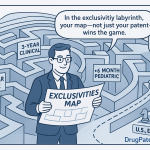
To accurately model the financial impact of LOE, companies must go beyond simple expiration lists. The true LOE date is the result of an interplay between the 20-year patent term, Patent Term Adjustments (PTA) for regulatory delays, and pediatric extensions.18
Quantitative Modeling for Strategy
Advanced models use historical analogs to predict erosion. For small molecules, these models assume a cliff with a 90% price reduction. For biologics, the models must account for physician perceptions, state substitution laws, and payer economics.16
The cumulative economic value can be calculated by applying a discount rate to projected revenue streams. The industry often uses a 10.5% cost of capital for these calculations.15
$$EV = \sum_{t=1}^{n} \frac{R_t}{(1+d)^t}$$
Where $R_t$ is the revenue in year $t$, $d$ is the cost of capital, and $n$ is the number of years until the LOE event.15
The 2025-2030 Tectonic Shift
The industry is bracing for a patent cliff of massive magnitude. Between 2023 and 2030, analysts estimate that blockbuster assets generating $200 billion to $400 billion in annual global revenue will lose exclusivity.8 This wave includes major biologics like Keytruda, which generated $29 billion in 2024.27
Drug
Company
Primary Indication
LOE Window
Keytruda
Merck
Oncology
2028
Eliquis
BMS/Pfizer
Blood Thinner
2026-2028
Opdivo
BMS
Oncology
2028
Enbrel
Amgen
Autoimmune
2029
27
This looming cliff drives industry-wide mergers and acquisitions (M&A). Large pharmaceutical companies are searching for new growth sources to fill the revenue gaps created by these massive expirations. The shift toward complex biologics and gene therapies is a response to the vulnerability of small-molecule revenue in the post-Hatch-Waxman and post-IRA era.8
The Global Divergence: U.S. versus Europe
The effectiveness of patent thickets is most starkly seen by comparing the U.S. and European markets. Humira faced biosimilar competition in Europe five years before it did in the U.S..20
Price Differences: Humira’s list price in the EU5 is up to 92% lower than its equivalent dose in the U.S..26
Biosimilar Pricing: Amjevita’s list price in the EU5 is on average 90% lower than its counterpart in the U.S..26
Revenue Impact: Competition in Europe resulted in AbbVie reporting a 30% decrease in net revenue in those markets in 2019.26
This divergence is due to the U.S. patent system’s tolerance for thickets and the specific settlement agreements between innovators and biosimilar manufacturers. In Europe, biosimilars often launch immediately after the primary patent and regulatory exclusivity expire. In the U.S., litigation over secondary patents often results in settlements that delay entry for years.
Strategic Recommendations for High-Level Professionals
Navigating the 12-year playbook requires a multi-disciplinary approach. Success depends on moving beyond regulatory lists to active intelligence.
Proactive Portfolio Mapping
Teams should categorize their brands into LOE archetypes. They must determine if a drug is a small molecule or a complex biologic and how many competitors are expected. They must also analyze how the drug is administered and the quality of market access.36
Early Intervention
LOE planning should begin 4 to 5 years before expiry. This gives time to develop line extensions or new formulations, such as subcutaneous versions. It also allows companies to align patient support and contracting strategies.36
Leveraging Specialized Intelligence
Platforms like DrugPatentWatch provide intelligence by offering access to databases on patent expirations, litigation status, and Paragraph IV challenges globally. This data is essential for identifying vulnerabilities in competitor fortresses years before statutory expiration dates.48
Strategic Sacrifice
Companies must know their discount tolerance. They should use deep discounts and authorized generics to defend share where it pays off, but they must also be prepared to walk away from low-value contracts.36
Key Takeaways
The 12-year exclusivity for biologics has created a two-tiered pharmaceutical economy. This window, combined with manufacturing complexity and lack of automatic substitution, makes biologics the premium asset class for developers and investors. Small-molecule blockbuster drugs face an immediate revenue collapse upon patent expiry. Biologics enjoy a prolonged period of high margins and gradual competition.
The Inflation Reduction Act’s pill penalty has further incentivized the shift away from small molecules. By subjecting chemical drugs to price negotiations four years earlier than biologics, the law has reduced the potential ROI for pills and tablets. This regulatory environment forces a realignment where R&D budgets are tilted toward the biological slope rather than the small-molecule cliff.
Success in the modern market requires an integration of IP law, manufacturing, and aggressive payer contracting. Companies that navigate this 12-year playbook will dominate the healthcare landscape for the next decade.
FAQ
Why do biologics receive 12 years of exclusivity while small molecules only receive five? The 12-year period reflects the higher costs, longer development timelines, and extreme manufacturing complexity of biologics. Legislators argued these factors require a longer period of protection to ensure companies can recoup investments and continue to innovate.1
What is the pill penalty in the Inflation Reduction Act? The pill penalty refers to the provision that allows Medicare to negotiate prices for small-molecule drugs 9 years after approval, while biologics are granted 13 years. This difference has led to a shift in R&D investment away from small-molecule drugs.7
How does a patent thicket differ from a standard patent? A standard patent protects the core active ingredient of a drug. A patent thicket is a strategy of filing dozens or hundreds of overlapping secondary patents on manufacturing processes, dosing schedules, and delivery devices. The goal is to make it prohibitively expensive for a competitor to challenge the entire portfolio.20
Why do biologic prices drop slower than generic prices when exclusivity ends? Biologics lack automatic substitution at the pharmacy. For small molecules, a pharmacist can switch a patient to a generic without a new prescription. For biologics, a physician must usually write a new prescription for a biosimilar. This, combined with rebate walls and brand stickiness, leads to slower erosion.16
What is the Patent Dance under the BPCIA? The Patent Dance is a private exchange of information between a biosimilar applicant and the brand manufacturer to resolve patent disputes before launch. This process is confidential and was made optional by the Supreme Court in 2017.3
MEDICARE PART D CMS Should Monitor Effects of Rebates on Plan Formularies and Beneficiary Spending, accessed February 6, 2026, https://www.gao.gov/assets/830/828768.pdf
Preliminary injunction ordered in PLAVIX® patent infringement case – Apotex to halt sales of unauthorized generic – Sanofi US News, accessed February 6, 2026, https://www.news.sanofi.us/press-releases?item=118385