The patent system’s founding logic is straightforward: disclose an invention, receive a time-limited monopoly, then surrender it to the public. Congress encoded this bargain in Article I of the Constitution, and for most industries, it functions roughly as intended. In the pharmaceutical sector, it has been systematically reengineered.
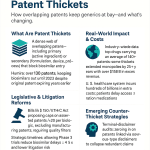
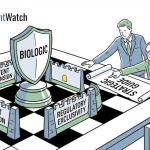
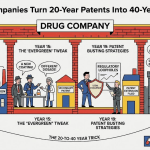
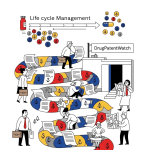
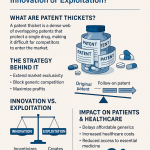
The mechanism that distorts it is the patent thicket — a dense, deliberately constructed web of overlapping intellectual property rights stacked atop a single drug. Not ten patents, not twenty, but hundreds. AbbVie filed 247 patent applications on adalimumab (Humira) over roughly three decades. Merck sought more than 129 patents for pembrolizumab (Keytruda), including claims on sterile packaging. A 2024 study found that 72% of the 1,429 patents and applications covering the top ten U.S.-selling drugs were filed after FDA approval — for biologics, that share climbs to 80%.
This is not a legal technicality. It is the single largest driver of delayed generic and biosimilar competition in the U.S. market, and its cost is quantifiable: patent thickets on just five brand-name drugs cost the U.S. healthcare system over $16 billion in lost savings in a single year, according to a 2023 Matrix Global Advisors report. The Humira thicket alone transferred an estimated $14 billion to $19 billion from U.S. payers and patients relative to what Europe paid after biosimilars launched there five years earlier.
This guide is written for IP teams, portfolio managers, R&D leads, biosimilar developers, and institutional investors who need a precise, technically grounded account of how these fortresses are built, how they are being dismantled, and what the landscape looks like as legislative and regulatory pressure intensifies heading into 2026.
1.0 Anatomy of a Patent Thicket: Architecture, Not Accumulation
1.1 What a Thicket Is and What It Is Not
A patent thicket is not a large patent portfolio. Many companies with large portfolios compete vigorously and price fairly. A thicket is a specific strategic configuration: overlapping patents on the same commercial product, filed in waves timed to the product’s commercial success rather than to any independent inventive activity, and deployed to impose prohibitive litigation costs on any challenger regardless of whether any individual patent would survive serious scrutiny.
The critical unit of analysis is not the patent count but the structure: primary patents cover the active pharmaceutical ingredient (API) or the core biologic sequence. Secondary patents — formulations, manufacturing processes, delivery devices, dosage regimens, metabolites, polymorphic crystal forms, new indications for conditions already treated in practice — surround the primary asset and provide overlapping fields of fire. The goal is not to prevent copying of any single innovation. It is to ensure that a would-be competitor must litigate dozens of claims simultaneously, bearing costs that can run to tens or hundreds of millions of dollars, to capture a market the incumbent earned from one original discovery.
The legal scholar’s term for the consequence is ‘anticommons’: a situation where multiple overlapping rights collectively block a use that any single rightsholder would permit. The pharmaceutical thicket is an industrialized anticommons, engineered rather than accidental.
A historical footnote worth retaining: the first documented American patent thicket emerged in the 1850s, when competing sewing machine patents paralyzed the industry until manufacturers formed the first U.S. patent pool. The modern pharmaceutical version differs in scale, deliberateness, and the stakes involved — measured in patient lives and national healthcare expenditures rather than sewing machine output. The sewing machine war ended in a voluntary pool. The pharmaceutical version is ending in legislation.
1.2 The Timing Data That Exposes the Strategy
The post-approval filing statistic is the single most revealing data point in the entire thicket debate. Primary API patents are filed pre-approval by definition. If the vast majority of patenting on a successful drug happens after approval, the activity cannot be primarily about protecting discovery. It is about protecting revenue.
For the ten top-selling U.S. drugs studied in 2024, 72% of patents and applications were post-approval. For biologics specifically, 80%. For Humira individually, AbbVie filed 89% of its 247 applications after the drug’s 2002 FDA approval, with the most intensive filing surge — 122 applications — occurring between 2014 and 2018, more than a decade into the product’s commercial life. This timing directly corresponds to the approach of the core antibody patent’s expiration and the emergence of viable biosimilar competitors.
The pattern is consistent enough across products to constitute corporate standard practice rather than isolated behavior. When a drug hits blockbuster status, the IP team’s mandate shifts from discovery protection to revenue defense. Patent filing volume, citation density, and continuation proliferation all accelerate in the three-to-five years before primary patent expiration.
1.3 Secondary Patent Taxonomy: The Technical Toolkit
Understanding the specific categories of secondary patents is essential for both challengers conducting freedom-to-operate analysis and brand teams managing portfolio strategy. Each type carries distinct claim construction risks, different IPR petition strategies, and different litigation dynamics.
Formulation Patents claim the specific delivery configuration of a drug: extended-release matrices, nanoparticle delivery systems, excipient combinations, concentration levels, or pH-adjusted buffers. AbbVie’s citrate-free, higher-concentration (100 mg/mL) Humira formulation is the canonical example — a genuine improvement for patients who experienced injection-site discomfort with the original citrate-containing version, but also the anchor for a new patent family that extended exclusivity on the reformulated product. For generic challengers, the task is demonstrating that their own formulation does not infringe, which often requires developing a distinct but bioequivalent version at considerable cost.
Method-of-Use Patents (second medical use patents) protect the application of an existing drug to treat a specific disease or patient population. AbbVie accumulated method-of-use patents covering Humira for psoriatic arthritis, Crohn’s disease, juvenile idiopathic arthritis, and other indications, most filed years after the drug was already being prescribed for those conditions. A generic applicant facing these patents can attempt a ‘skinny label’ carve-out, omitting the patented indication from its approved label. In practice, this creates significant market access constraints because pharmacies often substitute on the full commercial label, exposing the generic manufacturer to induced-infringement claims.
Manufacturing Process Patents cover the methods by which a biologic is produced: specific cell culture media compositions, purification chromatography sequences, viral inactivation protocols, fermentation conditions, and downstream processing steps. For biosimilar developers, these patents pose a distinct technical challenge because the biologic product is so tightly coupled to the process used to make it. A biosimilar manufacturer cannot simply copy the innovator’s manufacturing process. It must develop a comparable but non-infringing process that still yields a product meeting the FDA’s biosimilar interchangeability standards — a technical feat that adds years to development timelines and tens of millions to development costs.
Delivery Device Patents protect the injector pens, autoinjectors, prefilled syringes, and inhalers through which drugs are administered. The FTC’s 2023-2025 Orange Book challenge campaign focused heavily on this category, specifically targeting device patents for asthma inhalers (AstraZeneca’s Symbicort, GSK’s Advair) and injectable biologics. The FTC’s legal theory is that device patents do not ‘claim the drug substance or drug product’ within the meaning of the Hatch-Waxman Orange Book listing requirements and are therefore ineligible for listing — and therefore ineligible to trigger the 30-month stay.
Polymorph and Salt-Form Patents claim specific crystalline or amorphous physical forms of the API molecule. The same chemical compound can exist in multiple solid-state structures with different solubility, stability, and bioavailability profiles. Companies routinely patent multiple crystalline forms of the API after the primary compound patent issues, creating a secondary ring of protection around the molecular core. India’s Patent Act Section 3(d) was designed specifically to block this category: it requires that a new form of a known substance demonstrate significantly enhanced efficacy to qualify for patent protection, not merely different physical properties.
Dosage Regimen Patents claim specific administration schedules — once-weekly versus twice-weekly dosing, loading-dose protocols, dose titration sequences. These can be clinically meaningful, particularly in immunology where dosing intervals affect both efficacy and tolerability. They also can be trivially obvious extensions of the approved label’s pharmacokinetic data, yet they generate additional Orange Book listings and additional 30-month stay triggers.
Key Takeaways: Anatomy
The post-approval filing data proves the strategy is deliberate rather than incidental. Seventy-two percent of patents on top-selling U.S. drugs were filed after FDA approval — after the discovery work was done. Each secondary patent category carries distinct technical, legal, and economic implications that challengers and portfolio managers must analyze separately rather than treating the thicket as a monolithic obstacle. The Hatch-Waxman 30-month stay is the mechanism that converts each additional listing into guaranteed revenue protection, which is why reforming what qualifies for Orange Book listing has become the FTC’s primary enforcement target.
2.0 The U.S. Legal Architecture: How Thickets Take Root
2.1 Hatch-Waxman and the 30-Month Stay as a Revenue Mechanism
The Drug Price Competition and Patent Term Restoration Act of 1984 (Hatch-Waxman Act) was Congress’s attempt to resolve the standoff between the generic industry and the brand industry by creating a compromise: accelerated generic approval through the abbreviated new drug application (ANDA) pathway, in exchange for patent term restoration to compensate brands for time lost during FDA review. It has functioned roughly as intended for the core mechanism. Several provisions around it have been repurposed as thicket infrastructure.
The Orange Book is the cornerstone. Brand companies must list patents that claim their drug substance, drug product, or method of use. A generic ANDA applicant seeking approval before those patents expire must certify that each listed patent is invalid, unenforceable, or will not be infringed — the Paragraph IV certification. Filing a Paragraph IV certification is, legally, an act of technical patent infringement. It entitles the brand company to sue within 45 days.
When it does sue, FDA approval of the generic application is automatically stayed for up to 30 months. The stay triggers without any judicial finding of patent merit. The brand needs only to have listed the patent and to file the lawsuit within the 45-day window. A brand company with 15 patents listed in the Orange Book can, in theory, receive 15 separate 30-month stays — though courts and the FDA have placed some limits on stacking. The point is that the volume of listed patents directly determines the litigation surface area and the aggregate delay the brand can impose. This is the core mechanism translating thicket size into revenue.
The first-filer exclusivity provision compounds this dynamic. The first generic company to file a Paragraph IV certification earns 180 days of market exclusivity upon approval. This provision was designed to incentivize challenges to weak patents by giving early challengers a reward. Its unintended effect has been to create ‘authorized generic’ deals and complex settlement negotiations in which first filers agree not to launch during their exclusivity period in exchange for cash payments or favorable royalty terms — the ‘reverse payment’ that the Supreme Court addressed in FTC v. Actavis (2013).
2.2 The BPCIA’s Uncapped Litigation Architecture
The Biologics Price Competition and Innovation Act of 2009 (BPCIA) established the 351(k) abbreviated pathway for biosimilar approval and created the ‘patent dance’ — a choreographed information-exchange process between the reference product sponsor and the biosimilar applicant. The dance involves multiple rounds of patent lists, infringement contentions, and negotiations over which patents to litigate in the initial phase.
The critical legislative gap: unlike Hatch-Waxman, the BPCIA places no statutory cap on the number of patents that can be asserted against a biosimilar applicant. A brand company can assert every patent in its portfolio. AbbVie asserted more than 60 patents against Amgen’s Amjevita, 61 against Boehringer Ingelheim’s Cyltezo, and comparably large numbers against other Humira biosimilar challengers. Each assertion triggers discovery, claim construction, expert testimony, and potential trial on its individual merits. The aggregate litigation load for a biosimilar developer facing a fully deployed Humira-scale thicket runs to hundreds of millions of dollars in legal expense across a four-to-five-year timeline.
The Affordable Prescriptions for Patients Act, which passed the Senate but not the House in prior Congresses and has been reintroduced in the 119th Congress, directly addresses this gap by proposing a hard cap of 20 patents in the initial biosimilar litigation phase. The biosimilar industry supports this cap. PhRMA and its member companies oppose it as an arbitrary limitation on legitimate IP rights.
2.3 Terminal Disclaimers and the Double-Patenting Loophole
Double patenting — obtaining two patents on the same invention — is generally prohibited under U.S. patent law. But obviousness-type double patenting, where the claims of a second patent are not patentably distinct from those of a first patent, can be permitted if the applicant files a terminal disclaimer: a formal commitment that the second patent will expire on the same date as the first. Terminal disclaimers are a procedural safety valve. They have become a thicket-construction tool.
An independent analysis by I-MAK found that approximately 80% of the patents in Humira’s U.S. portfolio were ‘non-patentably distinct’ — covering the same or substantially similar inventions, linked by terminal disclaimers to survive obviousness rejections at the USPTO. AbbVie accumulated 132 to 136 granted patents on adalimumab, many of which exist only because terminal disclaimers resolved the USPTO examiner’s obviousness concerns by tying the new patent’s life to the original.
The ETHIC Act (H.R. 3269 in the 119th Congress, introduced in the House; companion Senate bill by Senators Welch and Hawley) targets this mechanism directly. It would amend the law so that in litigation against a generic or biosimilar applicant, a brand company could assert only one patent per terminally disclaimed patent family — the strongest one, presumably — rather than overwhelming challengers with the entire cluster. This single reform, if enacted, would more than halve the assertable patent count in many major biologics thickets.
2.4 The USPTO’s Role: Examination Quality and IPR
The USPTO is not neutral terrain in the thicket debate. It is the gatekeeper through which secondary patents enter legal existence. Its examination practices directly determine how many low-quality patents reach the Orange Book or the BPCIA patent lists.
Patent examiners spend an average of approximately 19 hours reviewing each application across all technology classes. Complex biologic formulation claims or manufacturing process claims require significant scientific expertise to evaluate properly against prior art. Given the workload, it is not surprising that some secondary pharmaceutical patents receive insufficiently rigorous review. Issued patents carry a statutory presumption of validity that challengers must overcome by clear and convincing evidence in district court — a burden that makes it costly to dislodge even weak patents through litigation.
Inter Partes Review (IPR), created by the America Invents Act (AIA) in 2011, was designed to provide a faster, cheaper administrative alternative to district court for challenging patent validity. IPR petitions are heard by the Patent Trial and Appeal Board (PTAB), a body of administrative patent judges with technical training. When IPR is instituted — meaning the PTAB finds a reasonable likelihood that the petitioner will succeed on at least one claim — invalidation rates have historically run around 70% of reviewed claims.
The practical limitations are significant. Each IPR petition addresses a specific patent. Filing 40 separate IPR petitions against a 130-patent thicket — even at the reduced cost of the administrative process — is prohibitively expensive for most challengers. One legal scholar’s description of IPR as ‘a scalpel when the public needs a machete’ captures the asymmetry: the tool is effective at excising individual weak patents but inadequate as a mass-clearance mechanism.
The political status of PTAB itself has become a proxy war in the thicket debate. The PREVAIL Act, backed by the innovator industry, would raise the petition institution bar, restrict who can bring IPR challenges, and impose new estoppel provisions that would make it harder to challenge the same patent on different grounds in district court. Generic and biosimilar manufacturers, patient groups, and some technology companies oppose it strongly. The outcome of that fight will materially affect the viability of IPR as a thicket-clearing tool.
Investment Strategy Note: U.S. Legal Architecture
For investors evaluating a biosimilar development company’s pipeline, the key variables are not just patent expiration dates but the structure of the target drug’s Orange Book listings, the number of terminally disclaimed patent families, BPCIA patent dance completion status, and any PTAB IPR proceedings already filed or completed against target patents. A biosimilar developer with a successful IPR record against a key thicket patent is substantially de-risked relative to one entering a fully intact 130-patent portfolio. Track the PREVAIL Act’s legislative progress closely — its passage would substantially shift the economics of the biosimilar development business.
3.0 Humira: The Definitive Case Study
3.1 Building the Fortress: Scale, Timing, and IP Valuation
AbbVie’s adalimumab IP portfolio is the most extensively analyzed pharmaceutical patent thicket in history. Its dimensions: 247 patent applications filed in the U.S., 132 to 136 granted patents, coverage spanning from the anti-TNF antibody molecule itself through formulations, manufacturing processes, delivery devices, and method-of-use claims across more than a dozen approved indications. The portfolio targeted approximately 39 years of continuous protection from the date of the first filing.
The IP valuation implications are direct and quantifiable. Humira generated peak annual U.S. revenues exceeding $20 billion. In 2022, AbbVie’s last full year of U.S. Humira monopoly, the drug contributed approximately $16 billion in U.S. net revenues. At the time of biosimilar entry in January 2023, the drug had generated cumulative global lifetime revenues exceeding $200 billion, with the U.S. representing the majority share. The patent portfolio — specifically its five-year delay of U.S. biosimilar competition — accounts for conservatively $14 billion in additional U.S. revenues relative to the European market, where biosimilar entry happened in October 2018. In IP valuation terms, the delta between the U.S. and European timelines represents the financial return on AbbVie’s secondary patent investment.
AbbVie spent approximately $200 million annually on adalimumab-related patent prosecution, maintenance, and litigation costs during the thicket’s peak years (2014-2022). Against $14-19 billion in protected revenues, the return on patent investment is on the order of 70:1 to 95:1. No other corporate investment in the company’s portfolio came close to this ratio. This is why AbbVie’s Chief Legal Officer explicitly described the patent strategy as the company’s most important business function during that period.
3.2 The Patent Dance and the Litigation Endgame
When biosimilar manufacturers filed their 351(k) applications with the FDA beginning in 2015-2016, the BPCIA’s patent dance commenced. The first phase required each applicant to provide AbbVie with its detailed manufacturing and product information within 20 days of FDA acceptance of the application. AbbVie then had 60 days to compile and exchange a list of patents it believed could be asserted. The process repeated through multiple exchange rounds before crystallizing into an initial litigation list.
AbbVie’s litigation strategy was consistent across challengers: assert the maximum number of patents, state explicitly that any biosimilar manufacturer should expect four to five years of litigation, and wait for challengers to calculate the cost-benefit. The strategy worked. Amgen settled in September 2017, receiving a U.S. launch license effective January 31, 2023, in exchange for a royalty on U.S. Amjevita sales and agreement not to launch earlier. Sandoz settled in October 2018. Mylan (now Viatris), Boehringer Ingelheim, Fresenius Kabi, Pfizer, Samsung Bioepis, and Coherus all settled on similar terms — European launch rights in October 2018, U.S. entry no earlier than 2023.
The settlement structure had two commercial layers that receive less attention than the headline delay. First, AbbVie collected royalties on biosimilar U.S. sales even after entry, meaning it participates in the economics of the competition it created. Second, AbbVie used the five-year runway to execute a formulation switch — aggressively transitioning the U.S. patient base to Hadlima-citrate-free (the 100 mg/mL citrate-free version) before biosimilar entry. Because early biosimilar approvals were for the original 40 mg/0.8 mL formulation, this switch created a substitution barrier at the pharmacy level: the biosimilar product was not automatically substitutable for the reformulated innovator product without additional FDA interchangeability designation.
3.3 The Seventh Circuit’s Antitrust Decision and Its Implications
Private plaintiffs — primarily union health and welfare funds that paid Humira’s inflated U.S. prices — filed antitrust class actions arguing two theories. First, that the act of building the ‘patent thicket’ itself was illegal monopolization under Sherman Act Section 2. Second, that the settlement agreements constituted illegal ‘reverse payments’ to delay competition under Section 1.
The U.S. Court of Appeals for the Seventh Circuit affirmed dismissal in August 2022 (Mayor and City Council of Baltimore v. AbbVie Inc., No. 20-2402). The court’s analysis on each theory is worth examining precisely because it defines the current outer boundary of antitrust exposure for thicket builders.
On monopolization: the court held that merely accumulating patents — including patents the plaintiffs characterized as ‘weak’ — is not an antitrust violation. The Noerr-Pennington doctrine immunizes patent prosecution (filing applications with a government agency) and patent assertion (suing in court) from antitrust liability unless the conduct falls within the narrow ‘sham’ exception. Sham litigation must be both objectively baseless and subjectively intended as a competitive weapon rather than a genuine effort to vindicate IP rights. The plaintiffs could not meet this standard because several Humira patents had survived PTAB challenges, demonstrating they were not objectively baseless. The court also explicitly stated that ‘weak patents are valid’ — their scope may be limited, but that is different from being illegitimate.
On reverse payment: the Supreme Court’s FTC v. Actavis (2013) decision held that reverse payment settlements — where a brand pays a generic to delay — can raise antitrust concerns and must be analyzed under the rule of reason. The Humira plaintiffs argued that AbbVie’s grant of early European launch rights was a form of payment in kind. The Seventh Circuit rejected the ‘opportunity cost’ theory, noting that Actavis focused on actual cash payments or their economic equivalent. A patent license — even one structured to benefit the licensee — is a traditional and lawful settlement mechanism, not a payment to a competitor.
The decision’s practical effect: short of proving fraud on the USPTO (a Walker Process claim) or sham litigation, there is no viable antitrust path to challenging a U.S. pharmaceutical patent thicket in court. The locus of reform is Congress and the FTC.
Key Takeaways: Humira
AbbVie’s IP investment on Humira generated a return of roughly 70-to-1 measured against delayed biosimilar entry revenues. The BPCIA’s uncapped assertion structure made the settle-or-litigate calculus decisive for every biosimilar applicant: no rational actor would choose to litigate 130 patents for five years when a settlement offered immediate European launch. The Seventh Circuit ruling immunizes the entire strategy from antitrust liability under current law. The only path to changing the outcome in the next blockbuster’s lifecycle is legislative: the ETHIC Act’s terminal-disclaimer assault and the Affordable Prescriptions for Patients Act’s patent cap are the primary vehicles.
4.0 Beyond Humira: Patent Thickets Across the Blockbuster Landscape
4.1 Keytruda (Pembrolizumab): The Oncology Thicket Blueprint
Merck’s pembrolizumab, approved in 2014 as the first PD-1 checkpoint inhibitor to reach U.S. patients, now generates approximately $25 billion annually in global revenues — the largest single pharmaceutical product by sales in the world as of 2024. Merck has pursued more than 129 patent applications on Keytruda, and the portfolio’s composition is instructive: claims on the antibody itself, manufacturing processes, specific dosing regimens (a fixed 200 mg every three weeks that Merck patented, even though weight-based dosing was the obvious precursor), combination use with other therapies, and the sterile packaging in which the drug ships.
The sterile packaging patents drew particular attention from the FTC’s Orange Book scrutiny campaign. Claiming the container rather than the drug substance or product represents an aggressive extension of what constitutes a patentable aspect of a pharmaceutical product. Merck’s position is that packaging innovations can affect product stability and patient safety and therefore qualify for protection. Critics argue these claims are designed to generate additional Orange Book listings and additional 30-month stay triggers without any meaningful clinical contribution.
Keytruda’s core anti-PD-1 antibody patents begin expiring around 2028. The secondary patent architecture Merck has built is intended to create a liability field extending into the mid-2030s for any biosimilar developer. At $25 billion in annual revenues, the incentives to build that field are even larger than they were for AbbVie.
IP Valuation Note: Keytruda’s patent estate is the single largest monetarily consequential IP asset in the global pharmaceutical industry at present. Analysts modeling Merck’s post-2028 revenue trajectory need to price in not just core patent expiration but the realistic timeline for biosimilar Paragraph IV filings and the expected BPCIA patent dance duration. Based on the Humira precedent, a fully litigated or settled thicket could protect U.S. revenues for four to seven years beyond the core antibody patent’s expiration.
4.2 Imbruvica (Ibrutinib): AbbVie’s Second Fortress
Ibrutinib, the BTK inhibitor marketed as Imbruvica by AbbVie (under a collaboration with Janssen/J&J), generated U.S. revenues of approximately $5.5 billion in 2023. The patent estate follows the Humira template: original compound patent, followed by a cascade of formulation, dosing regimen, combination therapy, and manufacturing process claims. The Matrix Global Advisors 2023 report estimated that Imbruvica’s thicket cost U.S. patients and payers $3.1 billion in lost savings in that single year.
The Imbruvica IP landscape is complicated by the AbbVie-Janssen collaboration structure: both companies hold portions of the patent portfolio under a profit-sharing arrangement, meaning any generic or biosimilar challenger must negotiate IP exposure with two major pharmaceutical companies simultaneously. This collaboration adds a layer of legal complexity that further deters challenge.
Paragraph IV filings on Imbruvica began emerging in 2022-2023 from generic manufacturers including Sun Pharmaceutical, Natco, and Cipla. The resulting Hatch-Waxman litigation is ongoing as of early 2026, with the core compound patent expiration in 2026 but secondary patents potentially extending exclusivity toward 2032.
Regeneron’s aflibercept (Eylea), used to treat wet age-related macular degeneration, diabetic macular edema, and related retinal conditions, generated approximately $9 billion in global revenues at peak. The core VEGF trap fusion protein patent issued in 2004 and expired in 2023. Regeneron’s response to approaching primary patent expiration followed the now-standard playbook: the company launched Eylea HD (8 mg/0.07 mL aflibercept), a higher-concentration formulation requiring less frequent dosing — every 12 to 16 weeks versus every 8 weeks for the original — and secured new patents covering the 8 mg dose and the extended treatment interval.
Biosimilar developers including Samsung Bioepis (Opuviz/Ahzantive), Mylan/Biocon (Yesafili), and Coherus BioSciences/Bio-Thera (Pavblu) received FDA approvals in 2023-2024 for the original 2 mg formulation. Regeneron’s legal strategy is to argue that the market has migrated to Eylea HD, leaving biosimilars competing for a shrinking 2 mg segment while the 8 mg formulation — where no approved biosimilar yet exists — captures the bulk of new patient starts. Whether the 8 mg patents survive challenge will determine how quickly the full aflibercept market opens to competition.
The Matrix analysis placed Eylea’s thicket cost to the U.S. system at $2.5 billion in 2023. With the 2 mg formulation patent expired and biosimilars launching, the next battleground is specifically the Eylea HD secondary patent cluster.
Novartis’s sacubitril/valsartan (Entresto), approved in 2015 for heart failure with reduced ejection fraction, demonstrates that the thicket strategy is not limited to biologics. Novartis secured patents on the sacubitril compound, the combination with valsartan, the specific crystalline form of the sacubitril-valsartan complex (a supramolecular structure called LCZ696), and multiple manufacturing processes. The crystalline complex patent is scientifically legitimate — the specific solid-state structure affects dissolution and bioavailability — but it also creates a technical barrier for generic manufacturers who must either use the same crystal form (potentially infringing) or develop a bioequivalent alternative.
Generic Paragraph IV filings began in 2019. Novartis has litigated the resulting cases aggressively, and the core compound patent expires around 2025-2026 in the U.S., with secondary manufacturing and formulation patents extending into 2028-2029. At approximately $7 billion in 2023 global revenues, the commercial stakes justify the full litigation investment.
5.0 The International Differential: Why U.S. Thickets Are Denser
5.1 The EPO’s Structural Barriers to Secondary Patenting
The European Patent Office does not uniformly block secondary pharmaceutical patents. It grants formulation patents, second medical use patents under the EPC’s Article 54(5) framework, and process patents routinely. What it does not permit, with broad structural effect, is the continuation-based patent proliferation that gives U.S. thickets their density.
Article 123(2) of the European Patent Convention prohibits amendment of an application after filing to include subject matter not ‘directly and unambiguously derivable’ from the original disclosure. In the U.S., a continuation application allows an applicant to claim, from a single parent filing date, inventions that were not explicitly described in the original application — as long as written description requirements are met for the new claims. This practice enables applicants to file a broad, prophetic original application early in development, then add specific product claims as the commercial product’s precise form becomes clear during clinical development.
The EPO’s added matter doctrine eliminates this option entirely. A European patent applicant must claim what was actually invented and described at the time of filing. This means the sprawling family of continuation-based secondary patents — covering later-discovered formulations, later-optimized manufacturing processes, later-developed dosage forms — that characterizes the U.S. thicket is structurally unavailable in Europe under the same filing strategy. The AbbVie Humira thicket had far fewer European equivalents for this reason, which is one mechanism (along with different regulatory exclusivities) explaining why European biosimilar entry happened in 2018 rather than 2023.
5.2 Terminal Disclaimers and Double Patenting: No European Equivalent
The terminal disclaimer mechanism that allows the U.S. system to accumulate dozens of non-patentably distinct patents on the same subject matter has no functional European equivalent. European patent law’s ‘same invention’ doctrine means the EPO will reject a second application on the same subject matter as the first, regardless of whether the applicant offers to have the two patents expire simultaneously. The ‘one invention, one patent’ principle is more rigorously enforced, which eliminates the cluster of terminally disclaimed Humira-type patents that the ETHIC Act targets.
5.3 Supplementary Protection Certificates vs. Thicket Extensions
Rather than relying on secondary patent accumulation to extend effective exclusivity beyond core patent expiration, E.U. law provides a transparent, bounded mechanism: the Supplementary Protection Certificate (SPC). An SPC extends a single, specific product patent by up to five years to compensate for time lost between patent filing and marketing authorization. The maximum total exclusivity period (patent plus SPC) is 15 years from first E.U. marketing authorization.
This channels the legitimate demand for post-approval exclusivity extension into a single, predictable administrative process. It does not prevent all secondary patenting, but it eliminates the primary commercial motive for accumulating dozens of secondary patents: the SPC already provides a defined, lawful extension path. The thicket’s economic logic — use secondary patents to extend exclusivity because the primary patent is expiring — loses force when a lawful SPC alternative exists.
5.4 India’s Section 3(d): The Enhanced Efficacy Standard
India’s Patents Act, as amended in 2005, includes Section 3(d), which specifies that a new form of a known substance — including new salts, esters, ethers, polymorphs, metabolites, pure forms, particles sizes, isomers, and combinations — does not constitute a patentable invention unless it demonstrates ‘significantly enhanced efficacy’ over the known form. The Supreme Court of India’s 2013 Novartis v. Union of India ruling, which denied Novartis a patent on imatinib mesylate (the crystalline beta form of the compound underlying Gleevec/Glivec) on Section 3(d) grounds, established the enhanced efficacy standard as a genuine bar, not a formality.
In practice, enforcement of Section 3(d) has been uneven, and studies suggest that secondary pharmaceutical patents continue to be granted in India at rates higher than the law’s plain language might suggest. The principle, however, represents the most explicit statutory statement anywhere of the view that polymorph and salt-form patents must prove clinical rather than merely physicochemical improvement — directly targeting one major category of secondary patent thicket construction.
Key Takeaways: International Comparison
The U.S. patent thicket problem is not intrinsic to pharmaceutical innovation — it is a product of specific legislative choices: continuation practice, terminal disclaimer doctrine, the BPCIA’s uncapped assertion architecture, and the 30-month stay’s mechanical trigger. The EPO’s added matter doctrine, the SPC mechanism, and India’s Section 3(d) demonstrate that alternative frameworks exist and are operational. The U.S. is an outlier, not the norm.
6.0 The Government Counter-Attack: Legislative and Regulatory Offensive
6.1 The ETHIC Act: Targeting Terminal-Disclaimer Clusters
The Ending the Term-based Harms from Evergreening and Thicketing (ETHIC) Act, introduced in both the House (H.R. 3269) and Senate in the 119th Congress, is the most structurally targeted legislative reform currently under active consideration. Its mechanism: when a brand company has a ‘patent family’ of patents linked by terminal disclaimers — meaning they are non-patentably distinct from each other and expire on the same date — it may assert only one of those patents in litigation against a generic or biosimilar challenger.
The reform does not invalidate any patent. It does not prevent patent prosecution. It does not limit how many patents a company can own. It specifically limits which patents can be asserted in a single ANDA or 351(k) litigation based on the terminal-disclaimer structure the company itself created. The argument for the bill is that a terminal disclaimer is the company’s own admission that the second patent is not distinct enough from the first to stand alone — requiring a tie to avoid double patenting rejection. Having made that admission to the USPTO, the company should not be able to weaponize both patents in litigation as if they represented independent inventive contributions.
PhRMA and the Council for Innovation Promotion (C4IP) oppose the bill as an arbitrary restriction on patent rights that would destabilize innovation incentives. The Association for Accessible Medicines and patient advocacy groups support it as a targeted correction to a documented abuse pattern.
6.2 The FTC’s Orange Book Campaign: Device Patent Delisting
Starting in September 2023, the FTC sent dispute letters to dozens of pharmaceutical companies challenging the propriety of Orange Book listings for drug delivery device patents. The FTC’s legal theory: under 21 U.S.C. 355(b)(1) and implementing regulations, only patents that claim ‘the drug substance’ or ‘the drug product’ are eligible for Orange Book listing. Device patents — claims covering an autoinjector pen, an inhaler actuation mechanism, a dose counter, a prefilled syringe plunger — do not claim the drug substance or product; they claim the mechanical device used to deliver it. Therefore they should not be listed, and any 30-month stay triggered by a challenge to such a patent is legally inappropriate.
The campaign targeted approximately 300 patents across more than 100 drugs by early 2025. GSK delisted device patents for Advair Diskus and Ellipta inhaler products. Amneal, Teva, and other manufacturers delisted challenged patents in response to FTC pressure. The FTC renewed its challenges in May 2025 against companies that had not voluntarily delisted, signaling that the effort would continue regardless of the change in administration.
The legal question the FTC’s campaign raises is significant: if device patents are ineligible for Orange Book listing, then any 30-month stay triggered by a Paragraph IV challenge to such a patent was improper — which could mean that years of delayed generic entry were legally unauthorized. Class action plaintiffs’ firms have been watching the FTC’s campaign closely for litigation theories.
6.3 March-In Rights Under the Bayh-Dole Act
The Bayh-Dole Act of 1980 grants universities and companies the right to patent inventions made with federal research funding but reserves to the government ‘march-in rights’: the authority to require the patent holder to license the invention to third parties on reasonable terms if the patent holder is not making the invention available to the public on reasonable terms. The government has never exercised march-in rights in the 45-year history of the Act.
The Biden administration issued a march-in rights framework in December 2023, inviting public comment on circumstances under which high drug prices could justify government exercise of march-in authority. The FTC filed a comment in support of using march-in rights as a drug pricing tool. The pharmaceutical industry opposed it vigorously, arguing that Bayh-Dole’s legislative history demonstrates Congress intended march-in rights to address situations where an invention was not being commercialized, not situations where it was being priced too high. The legal question remains unsettled. No march-in proceeding has been initiated.
The Trump administration’s posture on march-in rights is less clear. The FTC under Chair Andrew Ferguson (appointed 2025) has maintained the Orange Book challenge campaign — demonstrating continuity on that specific enforcement priority — but the broader march-in rights policy remains in limbo.
6.4 The Congressional Landscape: Bipartisan Pressure and Industry Pushback
Beyond the ETHIC Act, additional legislative proposals under active consideration in the 119th Congress include: amendments to Hatch-Waxman requiring brand companies to disclose all potentially relevant patents at the time of ANDA filing, eliminating the ability to hold patents in reserve for later surprise assertions; modification of the 30-month stay to require judicial or administrative finding of patent merit before the stay activates; and harmonization provisions aligning the BPCIA more closely with Hatch-Waxman’s more limited assertion framework.
The bipartisan character of reform efforts is genuine. The ETHIC Act’s Senate sponsors included both Democrat Peter Welch and Republican Josh Hawley — a combination reflecting the unusual political salience of drug pricing as an issue that cuts across party lines. The 2024 election cycle saw both parties campaign on drug cost reduction. This creates legislative space for reforms that would be impossible if the issue mapped neatly onto partisan divisions.
Industry’s counter-strategy is to argue that these reforms would damage the U.S. innovation ecosystem at precisely the moment when China and other competitors are investing aggressively in pharmaceutical R&D. PhRMA’s preferred framing positions patent reform as a national security risk: weakening U.S. pharmaceutical IP would accelerate dependence on foreign drug manufacturing. Whether this framing is persuasive to Congress in 2026 depends partly on how other geopolitical pressures interact with the domestic drug pricing debate.
Investment Strategy Note: Legislative Calendar
For portfolio managers with exposure to brand-name pharmaceutical companies with large biologics franchises, the ETHIC Act’s progress deserves close attention in 2026. If enacted, it would most directly affect AbbVie (Skyrizi, Rinvoq, Humira residual), Merck (Keytruda), Johnson & Johnson (Stelara, Tremfya), and Regeneron (Dupixent). The mechanism — limiting assertions in biosimilar litigation to one patent per terminally disclaimed family — would not eliminate thickets but would substantially reduce the litigation surface area available for settlement leverage. This compresses the settlement timelines and the delay achievable through the negotiate-or-litigate strategy. Investors should model a 12-to-24-month acceleration in biosimilar entry timelines for major biologics if the ETHIC Act passes in its current form.
7.0 Challenger Strategies: Navigating the Maze
7.1 IPR Petition Strategy: Where to Strike
An IPR petition at the PTAB is the most cost-effective tool available for invalidating individual thicket patents before or during district court litigation. The institution rate — the fraction of petitions on which the PTAB agrees to conduct a full trial — runs approximately 60-70% across technology classes, with pharma formulation and method-of-use patents showing somewhat variable rates depending on how thoroughly the prior art was examined during prosecution.
Effective IPR strategy against a thicket requires triage. Not every patent in a 130-patent portfolio is equally important to challenge. The highest-priority targets are patents that are both assertable (likely to be listed in the BPCIA initial patent list or Orange Book) and vulnerable to prior art challenge. The most assertable patents are those covering the core commercial product configuration — the formulation actually marketed, the manufacturing process actually used, the dosage regimen on the approved label. The most vulnerable are those where a diligent prior art search reveals publications, patents, or clinical literature that directly anticipates or renders obvious the claimed invention.
The ideal IPR candidate is a patent on a seemingly minor modification — a specific excipient concentration, a particular temperature range in a manufacturing step — where the claims are broad enough to be commercially significant but where the modification was widely discussed in the scientific literature before the priority date. Secondary pharmaceutical patents on obvious formulation improvements filed by large companies with overworked patent prosecution teams regularly contain this profile.
Timing matters. IPR petitions must be filed within one year of service of a complaint asserting the patent. In BPCIA litigation, where AbbVie (to use the precedent) sent notice of asserted patents before filing suit, the one-year clock begins at notice, not at complaint service. Challengers need to begin IPR prior art searches as soon as the BPCIA patent lists are exchanged, not after suit is filed.
7.2 Design-Around Strategy: Engineering Beyond the Thicket
For biosimilar manufacturers, the most durable long-term strategy is not litigation but engineering: developing a product and process that demonstrably does not practice any asserted claim, combined with selective IPR challenges against the patents most difficult to design around. This requires beginning freedom-to-operate (FTO) analysis early — ideally at the IND stage — rather than as a pre-launch legal review.
Effective FTO analysis for a biologic target means mapping the claim landscape of every patent family in the Orange Book and BPCIA patent lists, identifying which claims are broad enough to create infringement risk, and directing process development efforts to avoid those specific claim elements. For example, if the reference product sponsor holds patents on a specific Protein A chromatography sequence with defined pH wash parameters, the biosimilar developer’s process chemistry team should explore alternative purification approaches or alternative parameter ranges that are demonstrably outside the claim scope.
This requires integration of IP counsel into the process development team from the earliest stages — a practice that has become standard at major biosimilar developers like Amgen, Sandoz, and Samsung Bioepis but remains inconsistently implemented at smaller or newer entrants.
7.3 Patent Pool Feasibility in Pharma
Patent pooling — the aggregation of patents by multiple holders into a collective licensing arrangement — has resolved thicket problems in semiconductor (MPEG LA), telecommunications (WiFi, LTE standards bodies), and genomics (the Myriad Genetics BRCA testing context). In pharmaceutical biologics, the structural conditions for voluntary pooling are largely absent.
The core asymmetry: in technology standards, all participants in a pool need access to each other’s patents to manufacture products that must interoperate. The network effect creates mutual dependence. In pharmaceutical biologics, the innovator does not need access to any biosimilar manufacturer’s patents to continue selling its reference product. The innovator participates in a pool only if compelled by regulation (as in some governmental compulsory licensing regimes) or if the pool offers something the innovator cannot obtain through litigation — which in the current U.S. legal environment, given the Seventh Circuit’s Humira ruling, is essentially nothing.
Voluntary cross-licensing between innovators on non-competing products is a separate matter and does occur — AbbVie and Genentech have cross-licensed certain antibody manufacturing technologies historically. But this does not address the biosimilar access problem because the biosimilar manufacturer is not a patent holder seeking cross-license access; it is a market entrant seeking freedom to operate.
7.4 Authorized Generics and Licensing Deal Structures
For small-molecule drugs where the primary patent is expiring, brand companies routinely offer ‘authorized generic’ (AG) arrangements to a preferred generic partner, licensing the innovator’s own ANDA to a generic company at a negotiated royalty before or at the time of generic entry. The effect is to capture some revenue from the generic market while maintaining a form of market participation.
In the biologics context, the equivalent is a license agreement structured like AbbVie’s Humira settlements: European entry immediately, U.S. entry on a specified future date, royalties on U.S. biosimilar sales. These deals give biosimilar manufacturers a defined commercial path while extending the innovator’s effective U.S. exclusivity. Whether post-ETHIC Act reform would change the settlement calculus depends on how significantly the Act reduces the patent assertion count available for settlement leverage. Fewer assertable patents means a weaker litigation threat, which means biosimilar challengers have less reason to accept a delayed U.S. entry date.
8.0 The Stakeholder Conflict: Competing Interests and the Policy Equilibrium
8.1 PhRMA’s Innovation Incentive Argument
The Pharmaceutical Research and Manufacturers of America’s core position is internally consistent and commercially motivated. Their argument: developing a new drug costs an average of $2.6 billion over approximately 10-15 years, with clinical trial failure rates above 90% for compounds entering Phase 1. The patent system’s monopoly period is the only mechanism that allows companies to recoup this investment. Secondary patents protecting genuine improvements — better formulations, safer delivery systems, more effective dosing regimens — are legitimate inventions that benefit patients and deserve protection.
PhRMA’s empirical point on average exclusivity periods is accurate: they cite USPTO data showing that on average, brand-name drugs face generic competition after approximately 13 years, well short of the full 20-year patent term, suggesting the system is not uniformly extending exclusivity by the maximum available period. They also note that 90% of all U.S. prescriptions are filled with generics or biosimilars, indicating that competition does ultimately arrive.
The counterargument is about the specific cases, not the average. Averages mask the bimodal distribution: most drugs face competition at or before primary patent expiration, but the blockbusters — the drugs with $10-20 billion in annual revenues that account for the disproportionate share of the total cost problem — face the maximum possible delay through thicket construction. The average hides the outliers, and the outliers are where the $16 billion annual cost figure comes from.
8.2 The Generic and Biosimilar Industry’s Position
The Association for Accessible Medicines advocates for legislative reform to the Orange Book listing rules, the BPCIA patent cap, and the ETHIC Act’s terminal-disclaimer limitation. Its industry members’ economic interest aligns directly with these positions: faster generic and biosimilar entry means more revenue for the challengers and less for the incumbents.
One nuanced and often-overlooked AAM position: the association actively defends the right to settle patent disputes and opposes legislation that would make pharmaceutical patent settlements presumptively anticompetitive. AAM’s argument is that settlement agreements, even those structured with delayed U.S. entry dates, produce earlier competition than a litigated resolution would — litigation can take five to seven years, and a settlement for entry in three years is strictly better for patients than waiting for a final court judgment. The CREATES Act (enacted 2020), which addressed the separate but related issue of innovator companies refusing to provide biosimilar developers with product samples necessary for FDA-required comparative testing, demonstrated that targeted legislative fixes can work without sweeping presumptive rules.
8.3 Patients as the Downstream Variable
Patients For Affordable Drugs Now and similar organizations place this issue in terms that neither the innovator nor the generic industry frames it: one in three Americans cannot afford their prescription medications. Approximately 37% of Americans earning under $40,000 annually have skipped or substituted medications due to cost. These numbers do not resolve the patent policy debate, but they define why the debate has the political salience it does.
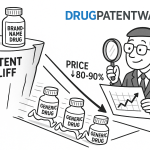
The human cost of five additional years of Humira pricing — before biosimilar competition reduced adalimumab costs by 40-80% — is not abstract. It is patients rationing doses of a $6,000-per-year drug, health plans raising copays to manage costs, and employers shifting cost burden to employees. The $14-19 billion aggregate loss to the U.S. system has a distributional character: it fell disproportionately on lower-income patients and on employer-sponsored health plans covering middle-income workers.
9.0 Competitive Intelligence Infrastructure: Turning Patent Data Into Strategy
9.1 What Patent Landscape Analysis Actually Requires
A proper pharmaceutical patent landscape is not a patent search. It is a structured intelligence product that answers specific strategic questions: What is the current IP barrier to market entry for drug X? Which patents in the thicket are most vulnerable to IPR challenge? When does the effective market exclusivity period end given the full secondary patent architecture? What are competitors filing today that indicates their development pipeline for the next decade?
The last question is often the most valuable and the least used. Patent applications are published 18 months after filing. A systematic analysis of pending applications — not just granted patents — for a competitor’s development portfolio reveals research priorities years before clinical trial enrollment becomes public. A company filing 12 continuation applications on formulations of a specific antibody-drug conjugate payload is signaling commercial development intent as clearly as a Phase 2 trial enrollment.
For biosimilar developers, the minimum landscape product for a development target should include: the full Orange Book listing history with legal status of each listed patent (validity challenges, term adjustments, pediatric exclusivity), the BPCIA patent lists exchanged in any prior biosimilar proceedings, PTAB IPR petition and decision history against target patents, district court litigation outcomes including claim construction rulings, and pending continuation applications that may result in additional listings. Assembling this manually from USPTO, FDA, and PACER sources requires weeks of effort. Integrated platforms reduce that to hours.
9.2 Platform-Specific Capabilities
DrugPatentWatch provides an integrated database combining patent data with FDA regulatory status, litigation history, and clinical trial information, updated daily. For a biosimilar developer assessing entry timing for a target biologic, the platform allows rapid identification of all Orange Book-listed patents with expiration dates and any associated patent term extensions or adjustments; pending Paragraph IV certifications filed by other challengers (indicating who else is in the queue and what their litigation positions are); settlement agreements and their disclosed entry date terms; and PTAB IPR proceedings with outcomes on individual claims.
For a brand-name manufacturer conducting competitor surveillance, the pending patent application monitoring capability addresses a specific strategic gap: generic and biosimilar manufacturers file their own continuation and divisional applications on manufacturing improvements, alternative formulations, and device innovations, occasionally in areas that overlap with the brand company’s own development pipeline. Identifying these filings early — before they issue and potentially create FTO complications — is substantially cheaper than resolving the problem after a conflicting patent issues.
9.3 Freedom-to-Operate Analysis: Timing and Scope
FTO analysis in the biologics context is distinct from small-molecule FTO in two ways. First, the claim scope of biologic manufacturing patents can be genuinely broad and difficult to design around — claims covering specific cell culture media formulations or protein A affinity chromatography conditions may effectively require a challenger to develop a substantially different manufacturing process to achieve clear non-infringement. Second, the product-process link in biologics means that manufacturing process IP affects the final product’s regulatory profile: a process change significant enough to design around a manufacturing patent may require a new comparability study and potentially additional clinical data.
FTO analysis for a biologic development candidate should begin at the start of process development, not at the end. The design choices made during cell line development and process scale-up establish the basis for the FTO position the company will defend in litigation. A manufacturing process designed without patent clearance may require expensive retrospective process changes or acceptance of residual infringement risk.
10.0 Key Takeaways by Section
On Anatomy: Patent thickets are post-approval phenomena — 72% of patents on the top ten U.S.-selling drugs were filed after FDA approval, rising to 80% for biologics. The strategy is revenue defense, not discovery protection. Each secondary patent category (formulation, manufacturing, device, method-of-use, polymorph) carries distinct technical and legal challenge profiles.
On U.S. Legal Architecture: The Hatch-Waxman 30-month stay, the BPCIA’s uncapped assertion structure, and the terminal disclaimer doctrine are the three mechanical enablers of U.S. thicket density. None of these features exists in the European system in its U.S. form. The ETHIC Act targets terminal disclaimers. The FTC’s Orange Book campaign targets device patent listings. The Affordable Prescriptions for Patients Act targets the uncapped BPCIA assertion structure.
On Humira: AbbVie earned a 70:1 to 95:1 return on its secondary patent investment measured in protected revenues. The Seventh Circuit in 2022 immunized the entire strategy from antitrust liability. Every biosimilar challenger settled rather than litigate 130 patents. The only viable reform path is legislative and regulatory, not judicial.
On the International Differential: The EPO’s added matter doctrine, the SPC mechanism, and India’s Section 3(d) enhanced efficacy requirement each independently reduce the density of secondary pharmaceutical patent portfolios relative to the U.S. baseline. These are policy choices, not technical inevitabilities.
On the Government Counter-Attack: The FTC’s Orange Book delisting campaign has already produced voluntary delisting of dozens of device patents. The ETHIC Act has bipartisan Senate and House support. Investors should model a 12-to-24-month acceleration in biosimilar entry timelines if the ETHIC Act passes.
On Challenger Strategy: IPR against high-priority, prior art-vulnerable thicket patents, combined with early-stage FTO-informed process development, is the most effective two-part approach for biosimilar developers. Patent pools are structurally unavailable as a voluntary solution in this context. Authorized generic and licensing deal structures remain viable settlement frameworks within the existing legal regime.
11.0 Frequently Asked Questions
Is a patent thicket the same as a large patent portfolio?
No. A large portfolio covering diverse, distinct inventions across multiple products is normal IP practice. A thicket is a specific configuration: dozens or hundreds of overlapping, non-patentably distinct patents on a single commercial product, with the primary effect of imposing prohibitive litigation costs on challengers regardless of any individual patent’s merit.
Can a company build a patent thicket on a biologic that started as a competitor’s product?
Yes, within limits. A company cannot patent another company’s existing product, but it can patent new formulations, manufacturing improvements, or dosage regimens that it develops for a product it licensed, acquired, or independently produced. AbbVie acquired Humira when it split from Abbott in 2013; the bulk of the thicket-building on adalimumab happened after AbbVie’s formation, on a product it did not discover. This demonstrates that thicket-building is a portfolio management discipline separable from original discovery.
Why doesn’t the FTC simply sue AbbVie or Merck for monopolization?
The Seventh Circuit’s Humira ruling explains the barrier: accumulating and asserting legally-obtained patents is not an antitrust violation absent proof of fraud on the USPTO (Walker Process) or objectively baseless sham litigation (Noerr-Pennington sham exception). Meeting either standard is extremely difficult. The FTC’s enforcement resources are better deployed through the Orange Book listing challenges — where the legal theory is regulatory eligibility, not antitrust — and through support for legislative reform.
What does ‘biosimilar interchangeability’ mean and why does it matter for thicket strategy?
An FDA interchangeability designation allows a pharmacist to substitute a biosimilar for the reference product without prescriber authorization, the same mechanism that governs generic substitution for small molecules. A biosimilar without interchangeability designation can be prescribed by name but is not automatically substitutable. Brand companies have used formulation switches (like Humira’s citrate-free version) to create reference products for which early-approved biosimilars lack interchangeability designation, requiring additional biosimilar clinical work before the pharmacy-level substitution that drives market share occurs. Interchangeability status is therefore a key variable in forecasting biosimilar revenue ramp timelines.
How should a biotech licensing its product to a larger partner structure IP rights to avoid contributing to a thicket?
Partnership agreements should specify clear co-ownership or licensing terms for secondary patents developed on the licensed product post-collaboration. A biotech that retains rights to its core compound patent but grants an exclusive commercialization license should insist on right-of-approval or participation rights for any secondary patent prosecution that uses the core compound as the subject matter. Without this provision, the licensing partner can independently build a secondary patent thicket on the licensed product that becomes an encumbrance on the biotech’s ability to partner with biosimilar developers after the exclusive license term expires. This is a negotiation point that too few biotechs raise in initial deal structuring.
What is the realistic timeline for a Keytruda biosimilar to reach U.S. patients?
The core anti-PD-1 antibody patents on pembrolizumab begin expiring approximately 2028. Based on the Humira precedent, a fully resourced thicket defense by Merck could extend effective U.S. exclusivity into 2032-2035. If the ETHIC Act passes before the first biosimilar Paragraph IV filings and BPCIA patent dances begin in earnest, the timeline compresses. If PREVAIL Act provisions weakening PTAB pass and IPR becomes more difficult, the timeline extends. The honest answer for planning purposes is a range of 2031 to 2036 for meaningful U.S. Keytruda biosimilar market penetration, with legislative and regulatory developments representing the primary swing variables.
All patent, litigation, legislative, and financial data referenced in this article reflects public records, regulatory filings, and published reports. Readers conducting investment or legal analysis should verify current status through primary sources including USPTO PAIR, FDA Orange Book, PACER, and congressional record systems.