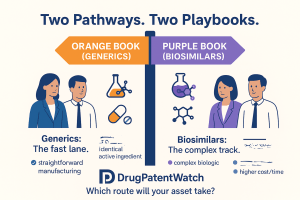
The gap between developing a generic drug and a biosimilar is not regulatory paperwork. It is the difference between a $2 million chemistry project with a predictable litigation calendar and a $250 million biological manufacturing challenge conducted partly in the dark, against an innovator company holding hundreds of patents you won’t see until you’ve already committed years of capital. That gap explains every strategic divergence that follows, from Paragraph IV filings to AbbVie’s Humira settlement strategy to the FDA’s June 2024 reversal on interchangeability switching studies.
This analysis builds the full picture: the science, the legislation, the patent resolution mechanics, the exclusivity arithmetic, and the commercial consequences. It covers what the Orange Book and Purple Book actually contain, why the information asymmetry between them shapes biosimilar market entry timelines, and what investors, IP teams, licensing executives, and commercial forecasters need to know before committing capital to either pathway.
What Makes a Small Molecule Replicable and a Biologic Impossible to Copy
Why Generic Chemistry Permits the Bioequivalence Standard
Small-molecule drugs are produced through chemical synthesis. Their structures are fully defined, typically contain fewer than 900 Daltons, and are composed of a small, fixed number of atoms. Aspirin has 21. A statin might have a few hundred. Because synthesis is reproducible and the final active pharmaceutical ingredient is chemically identical batch to batch, a follow-on manufacturer can produce an API structurally indistinguishable from the innovator’s. That identity is the scientific foundation on which the entire Hatch-Waxman Act rests. If the molecules are the same and behave the same in the bloodstream, clinical equivalence follows without repeating clinical trials.
Bioequivalence studies, typically run in a small cohort of healthy volunteers with pharmacokinetic sampling, verify that the rate and extent of absorption of the generic active ingredient are not meaningfully different from the reference listed drug. This is not a simplification of the science. It is the appropriate standard for a domain where identity is achievable.
Why Biologic Microheterogeneity Makes Identity Scientifically Impossible
Biologics are manufactured inside living cells. Therapeutic proteins, monoclonal antibodies, fusion proteins, and pegylated molecules are 200 to 1,000 times larger than small molecules, often comprising tens of thousands of atoms arranged in structures whose clinical activity depends not just on primary amino acid sequence but on higher-order protein folding, glycosylation patterns, charge variants, and aggregation profiles. Chinese Hamster Ovary cells, the dominant expression system for monoclonal antibodies including adalimumab (Humira), etanercept (Enbrel), and trastuzumab (Herceptin), produce a heterogeneous mixture of molecular variants even under tightly controlled bioreactor conditions. That microheterogeneity is intrinsic, not a manufacturing defect.
The innovator’s proprietary cell line and exact upstream and downstream processing parameters are trade secrets, meaning a biosimilar manufacturer cannot replicate the process. It must reverse-engineer the reference product analytically, develop an independent cell line, and build a manufacturing process that yields a protein highly similar to the reference product’s established range of variability. This is the scientific basis for the phrase “the process is the product,” and it cascades into every regulatory and commercial difference that follows.
Immunogenicity Risk as a Regulatory Driver
Therapeutic proteins can trigger anti-drug antibody formation. The consequences range from clinically silent to neutralizing of therapeutic effect to, rarely, severe hypersensitivity reactions. Because even minor differences in glycosylation, aggregation, or impurity profiles between a biosimilar and its reference product could theoretically shift immunogenicity risk, regulators require comparative immunogenicity data as part of every biosimilar development program. This requirement exists regardless of analytical similarity and is one reason biosimilar clinical programs cost 50 to 100 times more than generic bioequivalence studies.
The Legislative Gap: Why 26 Years Separated Hatch-Waxman from the BPCIA
How the Hatch-Waxman Act of 1984 Built the Generic Market from Scratch
Before 1984, a generic manufacturer often had to run its own clinical trials to prove safety and efficacy for a molecule the FDA had already accepted as safe and effective. The Drug Price Competition and Patent Term Restoration Act changed that by creating the Abbreviated New Drug Application, establishing the Orange Book as a mandatory patent registry, creating the Paragraph IV certification mechanism, and adding a 180-day market exclusivity period for the first generic to successfully challenge an innovator patent. The Act gave both sides something: generics got a streamlined approval pathway; innovators got patent term restoration for time lost during FDA review and new periods of regulatory exclusivity.
The market outcome was unambiguous. Generic prescriptions went from 19% of U.S. volume in 1984 to over 90% today, generating hundreds of billions of dollars in annual savings. That result was entirely predicated on small-molecule replicability.
Why the BPCIA Arrived in 2010 and Why Its Terms Differ So Sharply
By the mid-2000s, the patents on first-generation blockbuster biologics were approaching expiry. Biologics were regulated under the Public Health Service Act, explicitly excluded from Hatch-Waxman, and had no legally available follow-on pathway. The Biologics Price Competition and Innovation Act, enacted as part of the Affordable Care Act in 2010, created an abbreviated licensure pathway under section 351(k) of the PHS Act. It also established a 12-year market exclusivity period for reference biologics, more than double the five-year NCE exclusivity for small molecules.
The 12-year figure was a legislative negotiation, not a scientific derivation. Biologics R&D costs are substantially higher than small-molecule drug development costs, with average capitalized development costs for a new biologic frequently cited above $2 billion. The longer exclusivity period was the legislative price for innovator support. The consequence is that biosimilar developers must wait far longer before a reference biologic’s regulatory exclusivity expires, and the FDA cannot accept a biosimilar application that references a product still within that 12-year window.
Orange Book vs. Purple Book: The Information Asymmetry That Shapes Every Biosimilar Deal
What the Orange Book Actually Contains and Why Its Transparency Is Strategically Decisive
The Orange Book, formally the Approved Drug Products with Therapeutic Equivalence Evaluations, is a mandatory public registry. Under Hatch-Waxman, an NDA holder must list all patents for which a claim of infringement could reasonably be asserted against an unlicensed generic at the time of NDA approval, and must submit newly issued qualifying patents within 30 days of grant. Listed patents must relate to the drug substance, the drug product, or an approved method of use. Process patents are explicitly excluded.
The result is a prospective, public roadmap. Before filing an ANDA, a generic developer can review the Orange Book listing for the reference listed drug, identify every patent it must address, research the legal strength of each, model expiry dates and litigation timelines, and estimate with reasonable precision what a successful Paragraph IV challenge would cost and what the 180-day exclusivity window would yield. This transparency created the race-to-file dynamic that drives generic patent challenges, because the reward, 180 days of market exclusivity against all other generics, is large, visible, and calculable in advance.
The Orange Book also carries therapeutic equivalence codes. An AB rating means the FDA considers the generic product therapeutically equivalent to the reference listed drug, enabling automatic pharmacy substitution in all 50 states subject to state pharmacy laws. That substitution right is an enormous commercial lever: pharmacists can fill a branded prescription with the generic without contacting the prescriber.
What the Purple Book Contains and What It Deliberately Omits
The Purple Book, formally the Lists of Licensed Biological Products with Reference Product Exclusivity and Biosimilarity or Interchangeability Evaluations, lists FDA-licensed biologics, their BLA numbers, licensure dates, biosimilarity or interchangeability designations for approved biosimilars, and the expiration date of the 12-year reference product exclusivity. Until the Consolidated Appropriations Act of 2021, it contained essentially no patent information. The 2021 legislation made Purple Book publication mandatory and required for the first time that certain patent information be added, but the mechanism is reactive, not proactive.
Patent information enters the Purple Book only after a biosimilar developer has filed an application and initiated the BPCIA’s patent exchange. The reference product sponsor then has 60 days to provide its patent list to the applicant; that list reaches the FDA and appears publicly in the Purple Book only within 30 days after the exchange. The entire exchange is conditional on the biosimilar developer choosing to initiate it. The 2017 Supreme Court ruling in Sandoz Inc. v. Amgen Inc. confirmed that the initial step of the exchange, sharing the biosimilar application itself, is optional. A developer can skip it entirely, and the reference product sponsor’s recourse is a declaratory judgment action, not the loss of patent rights.
The practical consequence is that as of late 2023, approximately 2% of unique brand biologic listings in the Purple Book contained any patent information, compared to over 42% of unique brand drug listings in the Orange Book. When FDA transitioned insulin products from drug to biologic regulation in March 2020, their extensive Orange Book patent listings disappeared upon transfer to the Purple Book. Patent information that had been public and accessible for years became invisible overnight.
The First-Mover Disadvantage in Biosimilar Patent Challenges
In the generic world, the first Paragraph IV filer captures 180 days of exclusivity and bears the litigation risk that comes with it. The reward justifies the risk, and the Orange Book means the challenger can price that risk before committing. In the biosimilar world, the first developer to file an aBLA and engage in the patent dance bears the full cost of forcing the reference product sponsor to reveal its patent portfolio. That portfolio then becomes public in the Purple Book. Every subsequent developer gets that intelligence for free, the so-called free-rider problem, without having incurred the development costs that triggered the disclosure.
Because there is no 180-day exclusivity for the first biosimilar (only a separate, limited exclusivity for the first interchangeable biosimilar, and only against other interchangeables), the first-mover advantage that drives Paragraph IV filings in small molecules does not exist for biosimilars. This asymmetry pushes developers toward negotiated settlements and authorized biosimilar arrangements rather than decisive litigation, and it enables reference product sponsors to use the opacity of the pre-dance patent landscape as a deterrent to early filing.
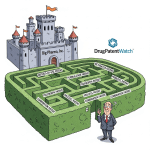
How Patent Thickets Work and Why Humira Is the Defining Case Study
AbbVie’s 247-Patent Strategy and What It Tells Investors
AbbVie filed over 247 patent applications covering adalimumab (Humira) in the U.S. 89% of those filings came after the drug was already on the market. The primary composition-of-matter patent on the molecule itself expired in 2016 in the U.S. The last Humira biosimilar settlement allowed U.S. entry in 2023, seven years after the primary patent expiry. European biosimilars launched in 2018. The gap between European and U.S. launch is a direct measurement of what AbbVie’s patent thicket was worth: seven additional years of near-monopoly pricing in the world’s largest pharmaceutical market.
The secondary patents AbbVie deployed covered formulation changes, concentration adjustments, dosing schedules, delivery device designs, and manufacturing processes. None of these touched the core adalimumab molecule. Each individually might have been challenged successfully. Collectively, they presented a multi-year, multi-hundred-million-dollar litigation burden for any biosimilar developer willing to fight through all of them simultaneously. Faced with that calculus and the absence of a first-mover exclusivity reward, biosimilar developers including Amgen (Amjevita), Samsung Bioepis (Hadlima), and Sandoz (Hyrimoz) negotiated settlements with AbbVie that provided royalty-bearing license arrangements and fixed U.S. entry dates.
How Evergreening Works in Biologics and Where It Differs from Small Molecules
Evergreening in small molecules typically involves reformulation patents (extended-release formulations, new salt forms), new indication patents, or polymorph patents. The Orange Book’s explicit exclusion of process patents limits the range of IP that can be listed and therefore the range that triggers the automatic 30-month stay. In biologics, process patents are a core component of the patent thicket. Because manufacturing is inseparable from the product, patents covering cell culture media, purification chromatography steps, bioreactor design parameters, and fill-finish processes all potentially bear on whether a biosimilar manufacturer’s process infringes. These patents are not visible in the Purple Book until after the dance, and the BPCIA does not restrict which patents the reference product sponsor can list.
The antitrust scrutiny of biologic patent thickets has increased. The AbbVie Humira antitrust litigation, in which plaintiff health plans alleged that AbbVie’s settlement agreements with biosimilar developers constituted unlawful market division, was dismissed at the district court level in 2021 but reflected growing attention to reverse payment arrangements in the biologic context. FTC oversight of large-molecule settlement agreements has intensified as the biosimilar market has expanded.
Patent Thicket Risk Assessment for Specific High-Value Biologics
The Humira playbook has been studied and, to varying degrees, replicated. Regeneron’s aflibercept (Eylea) accumulated a substantial secondary patent portfolio. Regeneron disclosed in SEC filings that it had listed 24 patents in connection with biosimilar challenges to Eylea. The first Eylea biosimilar, Samsung Bioepis’s Opuviz, received FDA approval in 2023. Settlement terms with multiple developers established U.S. entry dates in 2025, with royalty structures that mirror the Humira precedent.
Johnson & Johnson’s ustekinumab (Stelara), whose core composition patents expired in late 2023, faced rapid biosimilar entry from Amgen, Samsung Bioepis, and others. The Stelara situation differs from Humira because J&J’s secondary patent portfolio was narrower and the company’s settlement strategy was less aggressive, allowing biosimilar launch within months of exclusivity expiry rather than years.
The BPCIA Patent Dance Mechanics: Step-by-Step Timeline and Strategic Choices
Why the 2017 Sandoz v. Amgen Ruling Changed Biosimilar Litigation Strategy
Before the Supreme Court’s ruling in Sandoz Inc. v. Amgen Inc. (2017), there was ambiguity about whether the biosimilar developer was legally required to share its application with the reference product sponsor as the first step of the patent dance. The Court resolved it: the disclosure is optional. A biosimilar developer that chooses not to share its aBLA forfeits nothing under federal law. The reference product sponsor’s remedy for non-disclosure is immediate filing of a declaratory judgment action.
The strategic implications split developer behavior. Some developers engage in the full patent dance to obtain the reference product sponsor’s full patent list early, allowing negotiation of a narrowed litigation scope before trial. Others opt out, forcing the reference product sponsor to litigate immediately without the benefit of the organized information exchange. Neither approach is universally superior; the right choice depends on the number of patents in play, the strength of the developer’s non-infringement arguments, the reference product sponsor’s litigation history, and whether a negotiated settlement is a realistic outcome.
The 30-Month Stay That Doesn’t Exist in Biosimilars
Under Hatch-Waxman, if a brand company sues a generic developer within 45 days of receiving a Paragraph IV notice letter, an automatic 30-month stay of FDA approval triggers. The FDA cannot grant final generic approval until the 30 months expire or a court rules for the generic, whichever comes first. This mechanism structures the litigation calendar and gives both parties a defined window for resolution before market risk accumulates.
The BPCIA has no equivalent. Patent litigation between a reference product sponsor and a biosimilar developer proceeds through federal court without any automatic stay of the biosimilar’s licensure. Once the FDA approves the biosimilar and the 12-year exclusivity period has expired, the developer can launch commercially even while patent litigation is pending. This at-risk launch scenario exists in generic litigation too, but the automatic 30-month stay means it typically arises only after a court ruling rather than immediately upon approval. In biosimilars, at-risk launch is a realistic commercialization option from the moment of FDA approval, with the financial exposure being damages (potentially treble damages for willful infringement) rather than a blanket approval hold.
Approval Standards Compared: Bioequivalence vs. Totality of the Evidence
What the ANDA Actually Requires and Why It Costs $1-4 Million
An Abbreviated New Drug Application does not require new safety or efficacy clinical trials. The applicant demonstrates that its proposed generic is the same as the reference listed drug in active ingredient, dosage form, strength, route of administration, and conditions of use. It then runs pharmacokinetic studies in a small healthy volunteer population to confirm bioequivalence, typically defined as 80-125% confidence intervals for Cmax and AUC relative to the reference listed drug. The entire program, including formulation development, bioequivalence studies, and regulatory preparation, typically costs between $1 million and $4 million and takes roughly two years. Those numbers explain why dozens of generic manufacturers can pursue a single off-patent small molecule.
What the aBLA Totality-of-Evidence Framework Actually Demands
The abbreviated Biologics License Application under section 351(k) of the PHS Act requires a stepwise demonstration of biosimilarity through what the FDA calls the totality of the evidence. This begins with extensive analytical characterization. The biosimilar manufacturer uses state-of-the-art mass spectrometry, circular dichroism, surface plasmon resonance, and a range of functional assays to compare its product to the reference biologic across dozens of physicochemical and functional attributes: primary amino acid sequence, higher-order structure, glycosylation profile, charge variant distribution, aggregation, potency, receptor binding, Fc effector function, and more. A strong analytical package demonstrating high similarity across all critical quality attributes can reduce the clinical data package required.
Animal toxicology studies may follow. Comparative pharmacokinetic and pharmacodynamic studies in humans are typically required, along with a comparative immunogenicity assessment measuring the incidence and titer of anti-drug antibodies in the biosimilar arm versus the reference arm. A confirmatory efficacy and safety study in a sensitive patient population may also be required, though the FDA increasingly accepts that a highly similar analytical profile combined with comparable PK/PD data is sufficient to extrapolate biosimilarity across all approved indications of the reference product without indication-specific clinical trials.
The cost of this entire program runs $100 million to $300 million. The timeline from program initiation to FDA acceptance is seven to nine years. Those numbers limit the field of biosimilar developers to large, well-capitalized companies: Amgen, Sandoz (formerly Novartis’s generic/biosimilar arm), Samsung Bioepis, Celltrion, Pfizer’s Hospira business, Viatris, and a small set of regional manufacturers with sufficient manufacturing infrastructure.
Extrapolation: How Biosimilars Gain Multiple Indications Without Indication-Specific Trials
One of the more contentious scientific debates in biosimilar regulation involves extrapolation. When a biosimilar is approved based on a clinical program in one indication, the FDA may approve it for all indications held by the reference biologic without separate clinical trials in each, provided the mechanism of action is the same and there is no scientific reason to expect differential clinical behavior across the populations. Filgrastim biosimilars approved on oncology supportive care data have been extrapolated to non-myeloid malignancy prophylaxis. Infliximab biosimilars approved in rheumatoid arthritis have been extrapolated to inflammatory bowel disease.
Extrapolation is scientifically defensible but has generated litigation. Reference product sponsors have challenged biosimilar extrapolation decisions in court, arguing that indications with distinct patient populations or safety profiles require independent demonstration of biosimilarity. These challenges have generally failed, but they represent an ongoing litigation strategy that can delay commercial adoption even after FDA approval.
Interchangeability: What It Means, Which Products Have It, and Why the FDA’s 2024 Guidance Shift Matters
The Two-Tier U.S. System That Most Other Regulatory Agencies Rejected
The U.S. regulatory framework created a distinction that does not exist in the European Medicines Agency’s framework or most other major biosimilar markets. A biosimilar approved as merely “biosimilar” under section 351(k) cannot be automatically substituted for the reference product at the pharmacy without prescriber consent, in the absence of state-specific legislation. An “interchangeable” biosimilar meets an additional standard and can be dispensed in place of the reference product by a pharmacist without contacting the prescriber, subject to state pharmacy laws.
EMA-approved biosimilars are treated as substitutable in most European jurisdictions upon approval, without a separate interchangeability designation. The U.S. two-tier approach was driven by a cautious initial interpretation of switching risk, given immunogenicity concerns, but has had market access consequences. Formulary decisions, hospital purchasing committees, and pharmacy benefit manager contracts are often structured around interchangeability status because it determines whether automatic substitution is possible, which in turn affects the volume leverage available to payers.
Which Biosimilars Have Achieved Interchangeable Status
As of 2025, the FDA has designated interchangeable status for a growing number of biosimilars. Insulin glargine biosimilars, adalimumab biosimilars including Hadlima (Samsung Bioepis) and Cyltezo (Boehringer Ingelheim), and ranibizumab biosimilar Byooviz (Samsung Bioepis) are among those that have obtained the designation. Notably, of the first 13 products granted interchangeable status, nine received it without submitting dedicated switching study data, relying instead on comprehensive analytical and clinical pharmacology data.
Why the FDA’s June 2024 Draft Guidance Removes the Switching Study Requirement
The FDA’s June 2024 draft guidance on demonstrating biosimilar interchangeability formally removed the general expectation that a switching study would be necessary. The revised framework allows applicants to instead submit a scientific rationale explaining why the totality of evidence already in the biosimilar application supports an interchangeability determination. The agency drew on roughly 15 years of post-market experience with biosimilar switching, both from U.S. formulary transitions and from European markets where biosimilar substitution has been routine, to conclude that a high-quality analytical and clinical biosimilarity package typically provides sufficient confidence that switching is safe.
This is not a deregulatory move. It is a scientific maturation. The agency is acknowledging that switching studies, when conducted on a product that is analytically highly similar to the reference, consistently produce a null result for switching risk. Requiring them regardless was adding cost and timeline without adding scientific information. The practical effect is lower development cost for interchangeability designation, faster access for payers who need that designation to enable automatic substitution, and reduced regulatory differentiation between biosimilar and interchangeable products at the scientific level. Commercially, the distinction remains significant wherever formulary design or state pharmacy law depends on it.
Exclusivity Arithmetic: The Numbers That Drive Capital Allocation
The 12-Year vs. 5-Year Gap and What It Means for Revenue Modeling
An innovator biologic receives 12 years of market exclusivity from the date of first licensure under the BPCIA. An innovator small-molecule drug that qualifies as a New Chemical Entity receives five years of data exclusivity, during which the FDA cannot accept an ANDA (though it can be filed in year four with a Paragraph IV certification). The additional seven years of exclusivity for biologics reflect the higher R&D cost and complexity, but they also mean that the patent and exclusivity lifecycle management window is substantially longer.
For investors, the key analytical dates are: the reference product’s 12-year exclusivity expiration, the expiry of the primary composition-of-matter patent, and the expiry of the last secondary patent that could plausibly sustain an injunction. The gap between the last of these dates and actual biosimilar market entry is the measure of the patent thicket’s commercial value.
The 180-Day Exclusivity That Doesn’t Transfer to Biosimilars
The most powerful incentive in the Hatch-Waxman system is the 180-day market exclusivity period awarded to the first generic applicant to file an ANDA with a Paragraph IV certification against each patent listed for the reference listed drug. During those 180 days, no other ANDA for the same drug can receive final FDA approval. The first filer can price its product at a meaningful discount to the brand, capture a large volume share, and generate returns that justify the litigation investment.
There is no equivalent mechanism for biosimilars. The BPCIA provides a period of exclusivity, roughly one year in practice, for the first biosimilar to be designated interchangeable against a specific reference product. That exclusivity runs only against other biosimilars seeking interchangeability designation for the same reference product. It does not block approval of additional non-interchangeable biosimilars. For most therapeutic classes, multiple non-interchangeable biosimilars compete simultaneously from launch.
The absence of first-filer exclusivity means the return on investment from being the first biosimilar developer into a market depends entirely on commercial execution, pricing strategy, and formulary access, not on a statutory market protection period. This changes the risk-reward calculation substantially, particularly for the first developer willing to litigate rather than settle.
Key Patent Expiry Dates and Revenue Cliffs Through 2030
Which Biologics Face the Largest Revenue Exposure in the Near Term
Several of the highest-revenue biologics in global pharmaceutical markets are approaching or have recently passed their primary patent expiry and 12-year exclusivity dates, with biosimilar competition either launched or in late-stage development.
Pembrolizumab (Keytruda), Merck’s PD-1 checkpoint inhibitor and the world’s top-selling drug by revenue in recent years at approximately $25 billion annually, faces primary composition-of-matter patent expiry in 2028 in the U.S. Merck has built a secondary patent portfolio, but Keytruda’s broad oncology indication set and the highly competitive biosimilar development landscape, with multiple large companies having initiated aBLA programs, suggest that biosimilar entry in the 2028-2030 window represents one of the largest single revenue cliffs in pharmaceutical history.
Nivolumab (Opdivo), Bristol Myers Squibb’s competing PD-1 inhibitor with revenue around $9 billion annually, faces similar timelines. BMS’s IP strategy around Opdivo has included method-of-use patents on dosing regimens and combination therapy protocols that could extend effective protection beyond the molecule’s primary patent.
Dupilumab (Dupixent), the IL-4/IL-13 blocker co-developed by Regeneron and Sanofi, is one of the fastest-growing biologics in the market. Its primary patent protection runs into the early 2030s. The manufacturing complexity of dupilumab, which requires high-titer CHO expression and complex glycosylation control, contributes to the barrier for biosimilar entry.
Ustekinumab (Stelara), the IL-12/IL-23 blocker from Johnson & Johnson, lost its core U.S. patent exclusivity in late 2023. Multiple biosimilars launched in 2025 following settlement agreements that established royalty-bearing access. J&J reported Stelara revenue declining sharply through 2024-2025 as biosimilar competition materialized.
GLP-1 Receptor Agonists: Why the Patent War Is Just Starting
Semaglutide (Ozempic, Wegovy), manufactured by Novo Nordisk, and tirzepatide (Mounjaro, Zepbound), from Eli Lilly, are the two dominant GLP-1 and GLP-1/GIP receptor agonists driving the obesity and diabetes treatment market. Both are peptides rather than large-molecule biologics and are regulated as drugs rather than biologics in the U.S., meaning their follow-on pathway runs through Hatch-Waxman, not the BPCIA.
This regulatory classification is consequential. Semaglutide and tirzepatide are small enough to be chemically synthesized, so generic manufacturers can use the ANDA pathway rather than the biosimilar aBLA pathway. Novo Nordisk holds composition-of-matter patents on semaglutide expiring in the late 2020s, with a network of secondary patents on formulation, delivery device, and method of use. Lilly’s tirzepatide primary patents extend into the early 2030s. Both companies have faced and will continue to face Paragraph IV challenges, and the Orange Book transparency means generic developers can map the litigation landscape before committing capital.
The manufacturing complexity of these peptides, despite their regulatory classification as small molecules, creates a real barrier to generic entry that does not exist for conventional generics. Solid-phase peptide synthesis at commercial scale for a long, GLP-1 analog molecule is technically demanding and requires specialized infrastructure. Indian manufacturers including Sun Pharmaceutical, Dr. Reddy’s Laboratories, and Aurobindo, along with Teva, have indicated GLP-1 generic development programs, but manufacturing scale-up timelines are longer than conventional small-molecule generics.
Manufacturing Complexity as a Competitive Moat
Why CHO Cell Manufacturing Creates Barriers That Patents Alone Cannot
Large-molecule biologic manufacturing requires capital-intensive infrastructure: bioreactor suites, specialized cell culture media, complex chromatography purification trains, viral clearance validation, and fill-finish operations under aseptic conditions. A typical commercial-scale monoclonal antibody facility requires $300 million to $500 million in capital investment and three to five years to build, validate, and receive regulatory approval. This infrastructure requirement limits the number of companies that can realistically compete in the biosimilar market for any given product.
For biosimilars of highly complex molecules, the manufacturing barrier compounds the regulatory barrier. Biosimilars of adalimumab required developers to match not just the adalimumab primary sequence and glycosylation profile but also to demonstrate consistency of their unique manufacturing process across multiple production batches. Regulatory submissions for biosimilars like Amjevita (Amgen’s adalimumab biosimilar) ran to thousands of pages of manufacturing characterization data.
Formulation and Delivery Device Patents as Secondary Moats
Reference product sponsors have learned that formulation patents and device patents can sustain commercial premiums even as composition-of-matter patents expire. AbbVie’s citrate-free, high-concentration formulation of adalimumab, covered by secondary patents, allowed it to market a product with less injection site pain than earlier formulations. Biosimilar developers had to either develop non-infringing formulations or negotiate licenses, and formulary managers had to assess whether the formulation difference warranted a brand-biosimilar split in their coverage strategy.
Prefilled syringe and auto-injector design patents have become a distinct area of biosimilar patent litigation. The delivery device is the patient-facing interface for most self-administered biologics, and innovator companies have patented specific device mechanisms, spring assemblies, needle guard configurations, and dose confirmation indicators. A biosimilar entering the market with a device that looks similar to the reference product’s device risks device patent infringement; a biosimilar with a materially different device faces patient and healthcare provider adoption challenges.
What Investors Are Watching
How Loss of Exclusivity Forecasting Works for Biologic Products
Institutional investors and hedge funds tracking pharma IP need to distinguish between three different dates for any biologic product: the 12-year regulatory exclusivity expiration, the primary composition-of-matter patent expiry, and the effective market entry date accounting for secondary patents and settlement agreements. These three dates can span a decade. For Humira, the composition-of-matter patent expired in 2016, the 12-year exclusivity on the original formulation had already run, but effective U.S. biosimilar entry did not occur until 2023.
The premium that a strong secondary patent portfolio can command over nominal exclusivity is measurable. AbbVie’s Humira settlement agreements preserved approximately seven years of additional U.S. exclusivity relative to the primary patent expiry. At peak Humira U.S. revenues of $14+ billion annually, even a two-year extension had a present value in the range of $15-20 billion. That math explains the rationality of investing hundreds of millions of dollars in secondary patent filings.
Revenue at Risk: The Numbers That Drive Biosimilar Entry Decisions
A biosimilar developer deciding whether to enter a market must model expected revenue under three scenarios: first entry with several years of limited competition, entry alongside two to three competitors in an oligopolistic market, and entry as a fifth or sixth competitor in a crowded market with aggressive price competition. The reference product’s total global revenue, the U.S. proportion, and the likely number of biosimilar entrants based on disclosed development programs all feed into this model.
For pembrolizumab, a drug generating $25 billion annually with perhaps 75% of revenue in the U.S., even modest biosimilar market share at a 30% discount to the Keytruda list price yields multi-billion dollar potential revenue. The investment required, $250 million in development plus $400 million in manufacturing infrastructure, is justifiable for five or six competitors but creates poor returns for a tenth entrant.
Common Investor Questions
Q: Does FDA approval of a biosimilar guarantee market entry? No. FDA approval of a biosimilar confirms the product is safe and effective and meets the biosimilarity standard. It does not resolve patent infringement claims. A biosimilar developer can receive FDA licensure and then face a patent injunction that prevents commercial launch. The absence of an automatic 30-month stay in the BPCIA means approval and launch can occur while patent litigation proceeds, but an adverse court ruling post-launch can require the developer to cease sales and pay damages.
Q: How many biosimilars typically compete against a reference product? The number depends on the reference product’s revenue, manufacturing complexity, and patent thicket density. For adalimumab in the U.S., nine biosimilars were available by 2024. For ustekinumab, four to six biosimilars entered the market within the first year after exclusivity expiry. For more complex molecules or those with narrower revenue potential, three to four competitors is a more typical ceiling.
Q: What is the difference between a biosimilar and an interchangeable biosimilar for formulary purposes? A biosimilar that lacks the interchangeable designation requires prescriber involvement for substitution in most states. An interchangeable biosimilar can be automatically substituted at the pharmacy. For payers and pharmacy benefit managers seeking to drive formulary switches through automatic substitution programs, interchangeability status matters considerably. For products where physicians actively manage treatment decisions, like oncology biologics, the interchangeability distinction matters less in practice because pharmacist-level substitution is rare regardless of designation.
Q: How should investors model price erosion after biosimilar entry? Price erosion in biologics is slower and more modest than in small molecules. Initial biosimilar launch discounts versus the reference product’s list price have typically been 15-30%. With three to five competitors, list price discounts may reach 40-50%, but net pricing after rebates is more complex. In therapeutic areas where payers aggressively exclude reference products from formularies, net price erosion can be steeper. The Humira market in the U.S. post-2023 saw some biosimilars price at steep discounts to Humira’s list price while AbbVie competed through rebate structures and patient support programs. The resulting market share split was not purely price-driven.
How Biosimilar Launch Timing Works After Exclusivity Ends
The Settlement Landscape and How It Determines Real-World Entry Dates
The commercial launch date for most biosimilars is determined not by the FDA’s approval date or the primary patent expiry date, but by the terms of a settlement agreement between the biosimilar developer and the reference product sponsor. These settlements typically specify an authorized entry date, often structured around a royalty-bearing license, and may include provisions restricting the biosimilar developer’s ability to supply launch quantities before that date.
Settlement terms in biologic patent disputes are not publicly disclosed in full under current law, though the basic entry dates may be disclosed in SEC filings when financially material. The FTC has authority to review settlements between brand and generic manufacturers under the Medicare Prescription Drug, Improvement, and Modernization Act’s pay-for-delay provisions, and similar antitrust scrutiny can apply to biologic settlements under general antitrust principles. However, the legal treatment of biologic patent settlements under antitrust law remains less settled than in the small-molecule context.
At-Risk Launch Decisions in Biosimilars
When a biosimilar developer chooses to launch commercially before patent litigation is resolved, it takes an at-risk position. If the court later upholds the infringer’s patent claims, the developer faces damages based on the reference product sponsor’s lost profits or a reasonable royalty, and potentially treble damages for willful infringement. At-risk launches are more common in markets where the reference product’s revenues are large, the developer has high confidence in its non-infringement position, and the economic cost of waiting for full litigation resolution exceeds the expected damage exposure.
Several adalimumab biosimilar developers launched in January 2023 under authorized license agreements rather than true at-risk positions, meaning their entry dates were negotiated rather than contested. True at-risk launches in the biosimilar space have been less common than in generic pharmaceuticals, partly because the development cost is higher and partly because the patent landscape is less transparent, increasing uncertainty about the developer’s litigation exposure.
Regulatory Pathway Comparison Table
Feature
Generic Drug (ANDA / Hatch-Waxman)
Biosimilar (aBLA / BPCIA)
Governing law
FD&C Act, Hatch-Waxman (1984)
PHS Act, BPCIA (2010)
Approval standard
Bioequivalence
Totality of evidence / “highly similar”
Clinical trials required
Bioequivalence studies only
Comparative PK/PD, immunogenicity, possible efficacy study
Keytruda Patent Defense Strategy and What It Signals for 2028
Merck has not yet faced a biosimilar Paragraph IV-equivalent challenge to pembrolizumab, as the 12-year BPCIA exclusivity period has not yet expired and development programs are in early stages. However, Merck’s IP strategy around Keytruda mirrors the playbook established by AbbVie: secondary patents on dosing regimens, formulation, combination therapy methods, and biomarker-based patient selection. Method-of-use patents on PD-L1 expression thresholds for specific indications may be litigable, but combination therapy patents could be more defensible.
Eylea Biosimilar Litigation: What Regeneron’s Settlement Terms Reveal
Regeneron’s settlement agreements with biosimilar developers including Samsung Bioepis and Mylan (now Viatris) for aflibercept (Eylea) specified entry dates in 2025 with royalty-bearing licenses. The terms broadly resemble Humira settlement structures, with earlier entry in Europe than in the U.S. Eylea generated approximately $5 billion in U.S. annual revenue at peak. Regeneron also launched a higher-dose formulation (Eylea HD, 8mg) before biosimilar entry into the original 2mg market, a lifecycle management strategy designed to shift prescribing to a formulation not covered by biosimilar approvals referencing the original 2mg product.
Dupixent’s IP Fortress and What Regeneron/Sanofi Are Building
Dupilumab’s primary composition-of-matter patent runs into the 2030s, and Regeneron and Sanofi have filed extensively on manufacturing processes, formulation, dosing regimens for specific indications, and the combination use of dupilumab with standard-of-care therapies. Dupixent generated over $14 billion in global net sales in 2024, making it one of the fastest-growing biologics in history. The complexity of dupilumab’s CHO-derived manufacturing combined with a deep secondary patent portfolio positions Dupixent for a long effective exclusivity runway, though the absence of a Humira-scale patent thicket investigation suggests the secondary portfolio is narrower than AbbVie’s.
Which Competitors Could Benefit from the 2025-2030 Biosimilar Wave
The Commercial Biosimilar Leaders: Who Has the Manufacturing Scale
Amgen has arguably the most commercially established biosimilar operation in the U.S., with Amjevita (adalimumab), Riabni (rituximab), Mvasi (bevacizumab), and others achieving meaningful market penetration. Amgen’s existing biologics manufacturing infrastructure, built for its own products including etanercept and denosumab, supports biosimilar production without the fixed-cost burden faced by pure-play biosimilar manufacturers.
Samsung Bioepis, a joint venture between Samsung BioLogics and Biogen, has the largest approved biosimilar portfolio globally by number of products. It has achieved interchangeable designations for multiple products and has supply agreements with Organon (formerly Merck’s women’s health spinoff) and other commercial partners for U.S. distribution. Samsung BioLogics’ incheon manufacturing facilities represent some of the largest dedicated biologics manufacturing capacity globally.
Celltrion, the South Korean manufacturer, has pursued an integrated strategy with its own U.S. commercial operations through Celltrion USA. Its infliximab biosimilar Inflectra (in partnership with Pfizer) achieved significant U.S. market share. Pfizer brings commercial infrastructure that Celltrion could not replicate independently at launch.
Sandoz Post-Novartis Split
Following Novartis’s 2023 spin-off of Sandoz as an independent entity, Sandoz is the largest European generics and biosimilar company by revenue. Its biosimilar portfolio includes Hyrimoz (adalimumab), Zarxio (filgrastim, the first U.S. biosimilar approved), and biosimilars of rituximab, etanercept, and pegfilgrastim. Sandoz has stronger market positions in Europe, where biosimilar substitution policy is more favorable, but has built U.S. commercial capabilities. Its independence from Novartis removes the parent’s strategic priorities from biosimilar investment decisions, potentially accelerating pipeline development.
How the FDA Could Affect the Timeline
User Fee Programs and ANDA/aBLA Review Clock Commitments
ANDA review timelines have improved substantially since the Generic Drug User Fee Amendments (GDUFA) introduced performance commitments. FDA now aims for a 10-month review for standard ANDAs and 6 months for priority ANDAs. BiosiMIlar User Fee Act (BsUFA) commitments similarly target 12-month standard review for aBLAs. Complete Response Letters, which identify deficiencies requiring additional data, are a common source of delay for complex applications.
FDA Guidance Evolution and Extrapolation Policy
The FDA’s willingness to approve biosimilars for all reference product indications based on studies in a single indication has expanded steadily. Early biosimilar approvals required more indication-specific data. Current practice allows extrapolation where the mechanism of action is shared across indications and the clinical development program used a sensitive patient population. This policy direction lowers development costs by reducing the number of clinical studies required, which in turn increases the return on investment for biosimilar developers.
The Potential Impact of Purple Book Transparency Legislation
Legislative proposals to require proactive patent listing in the Purple Book, analogous to the Orange Book mandate, have circulated in Congress. If enacted, such requirements would dramatically reduce the information asymmetry that currently favors reference product sponsors and could trigger earlier, more aggressive biosimilar patent challenges. The FTC has separately advocated for greater transparency in biologic patent portfolios as part of its pharmaceutical competition policy work. The direction of regulatory and legislative pressure favors greater transparency, though the timeline for enactment is uncertain.
Investment Strategy
How to Use Orange Book and Purple Book Data for Pharma IP Valuation
For investors building positions in companies with significant biologic revenue exposure to loss of exclusivity, the Purple Book exclusivity expiration date is the starting point, not the end point of analysis. It establishes the earliest date of biosimilar competition. The secondary patent portfolio, the density of secondary filings, and the precedent set by settlements in analogous products determine how much additional effective exclusivity the innovator can sustain.
The key variables to model are: (1) the estimated last litigation-relevant secondary patent expiry, (2) the probability and terms of a negotiated settlement versus contested litigation, (3) the number of biosimilar developers with disclosed development programs for the reference product, and (4) the manufacturing complexity premium reflected in the development cost required for biosimilar entry.
For companies with large generic ANDA pipelines, the Orange Book provides the transparent input set needed to evaluate first-filer 180-day exclusivity potential, the litigation risk from Paragraph IV certifications, and the timing of expected generic entry into markets where a brand manufacturer holds a position. ANDA filings with Paragraph IV certifications are public record and are tracked in real time by firms including DrugPatentWatch.
Key Takeaways
The generic and biosimilar pathways share a legislative goal but operate through mechanisms so different that treating them as analogous in financial or strategic models produces errors. The Orange Book’s patent transparency, the ANDA’s bioequivalence standard, the Hatch-Waxman automatic 30-month stay, and the 180-day first-filer exclusivity create a high-volume, high-competition, rapid price-erosion market for small molecules. The Purple Book’s information opacity, the aBLA’s totality-of-evidence standard, the BPCIA’s optional patent dance, and the absence of first-biosimilar exclusivity create a lower-volume, oligopolistic, moderate-price-erosion market for biologics.
Patent thickets like AbbVie’s Humira portfolio are not anomalies. They are the rational output of a system that lacks proactive patent transparency, provides no first-mover reward for patent challengers, and offers no automatic approval stay to structure litigation calendars. Investors, licensing teams, and biosimilar developers who understand the structural differences between the two pathways, and who track the Orange Book and Purple Book systematically, can identify which products are truly exposed, which face durable protection, and where the capital allocation opportunities and risks actually lie.
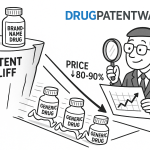
The biosimilar market is growing, driven by the wave of biologic loss of exclusivity from now through 2030. That growth will not replicate the generic market’s price dynamics. It will create a smaller number of well-capitalized competitors, more negotiated entry timelines, more complex formulary access strategies, and price erosion measured in tens of percent rather than eighty or ninety. The pharmaceutical IP teams, portfolio managers, and commercial forecasters who build that distinction into their models will read the next decade’s competitive landscape more accurately than those who do not.