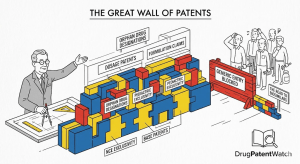
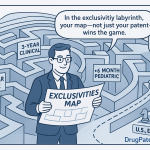
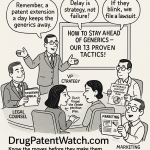
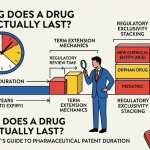
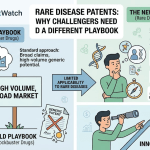
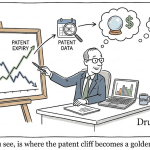
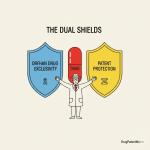
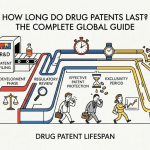
Pharmaceutical executives routinely talk about patent cliffs as if they were acts of nature. They are not. The shape of a patent cliff, its steepness, its timing, and whether it exists at all, is an architectural decision made years before a drug reaches pharmacy shelves. Two of the most powerful tools in that architecture are New Chemical Entity (NCE) exclusivity and Orphan Drug Exclusivity (ODE). Used independently, each one buys time. Used together, they can erect a regulatory barrier that keeps generics at bay for a decade or more.
This article walks through how each type of exclusivity works, where they overlap, where they conflict, and how sophisticated drug developers use both to build what patent attorneys call “layered defense.” It draws on FDA Orange Book data, court decisions, and patent intelligence platforms like DrugPatentWatch to show exactly how the strategy plays out in practice.
The Difference Between Patents and Regulatory Exclusivity
Most people in pharma conflate patents and regulatory exclusivity. They are separate systems that sometimes align, sometimes diverge, and always require independent management.
A patent is a property right granted by the U.S. Patent and Trademark Office (USPTO). It prevents anyone from making, using, or selling the patented invention without a license. A standard utility patent lasts 20 years from its filing date, though Patent Term Restoration under the Hatch-Waxman Act can extend it by up to five years to compensate for time lost during FDA review [1].
Regulatory exclusivity is different. It is a market protection right granted by the FDA, independent of whether a patent exists. It does not prevent a competitor from inventing around or challenging a patent. It prevents the FDA itself from approving a competing application during the exclusivity window. That distinction matters enormously. A competitor can hold a perfectly valid patent on a generic version of your drug and still be blocked from selling it because the FDA will not review the application.
The practical effect: regulatory exclusivity can survive patent invalidity. When a generic challenger wins a Paragraph IV case and invalidates the brand’s patents, NCE or ODE exclusivity can still block FDA approval for months or years. Biogen discovered this asymmetry the hard way with multiple sclerosis drugs, and the lesson has since become standard curriculum in pharma legal departments.
NCE Exclusivity: What It Is and Why It Has Teeth
The Five-Year Clock
NCE exclusivity applies to drug products that contain an active moiety never previously approved by the FDA [2]. “Active moiety” is the molecule or ion responsible for the drug’s therapeutic effect, stripped of any salts, esters, or other non-covalent derivatives. If the FDA has never approved that core molecule, the drug qualifies as a New Chemical Entity.
The reward: five years of regulatory exclusivity during which the FDA will not accept or approve an Abbreviated New Drug Application (ANDA) or a 505(b)(2) application that references the NCE drug. No ANDA, no generic. No 505(b)(2), no me-too product built on the brand’s clinical data.
The FDA registers NCE exclusivity in the Orange Book, the official compendium of approved drugs and their associated patents and exclusivities. DrugPatentWatch, which systematically tracks and analyzes Orange Book data, provides one of the most comprehensive public views of where NCE protections sit and when they expire across the entire approved drug landscape. Patent and business development teams use this data to map competitive windows with precision that FDA.gov alone cannot offer.
The Four-Year Exception
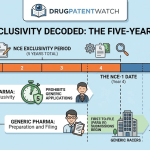
NCE exclusivity has one significant crack. A generic applicant can file an ANDA with a Paragraph IV certification, challenging the brand’s patents as invalid or non-infringing, after four years rather than five. If they file successfully in year four, the FDA can still approve the ANDA one year later, at the end of the five-year NCE period [3].
This rule means generic companies will not sit idle for the first four years. The Paragraph IV strategy is aggressive by design. Generics manufacturers time their patent challenges to land precisely at the four-year mark, and the brand company must then litigate within 45 days to trigger an automatic 30-month stay of ANDA approval.
The result is a compressed but still meaningful window. NCE exclusivity does not give a brand five years of peaceful exclusivity. It gives approximately four years before litigation begins, then a litigation period that, if the brand wins, extends protection to the five-year exclusivity expiry.
Which Drugs Qualify
Not every innovative drug earns NCE status. A drug that is a new salt, ester, or polymorph of an already-approved molecule does not qualify, because the active moiety was already approved. A new formulation of an existing active moiety, even a dramatically improved one, does not qualify. A new combination of two previously approved actives does not qualify.
This strict definition pushes drug developers toward genuine molecular novelty. Companies like Pfizer and AstraZeneca structure their research pipelines partly around this cutoff, designing new chemical entities rather than reformulations when they want the full five-year exclusivity benefit. The regulatory designation shapes medicinal chemistry decisions that begin in the lab, years before any clinical trial.
Orphan Drug Exclusivity: Seven Years of a Different Kind of Moat
How ODE Works
ODE originates from the Orphan Drug Act of 1983, passed to incentivize development of treatments for rare diseases affecting fewer than 200,000 people in the United States [4]. The FDA grants ODE upon approval of a drug for its designated orphan indication. The protection window is seven years, one of the longest in the U.S. drug exclusivity system.
During those seven years, the FDA will not approve another application for the same drug for the same disease or condition. “Same drug” is defined as the same active moiety (for small molecules) or the same principal molecular structural features (for biologics). The scope is narrower than it sounds. ODE blocks the same molecule for the same indication. A different molecule for the same indication can sail through. A different indication for the same molecule can sail through.
The ODE protection sits in the FDA’s Orphan Drug Designations and Approvals database, but it also feeds into the Orange Book and biosimilar product tracking systems. DrugPatentWatch aggregates this data alongside patent information, letting analysts see in a single view when ODE protection expires and which patent layers remain afterward.
The Same Drug, Same Indication Rule
The limiting principle of ODE is its specificity. It is the most powerful exclusivity for what it covers, and meaningless for what it does not.
Consider eculizumab (Soliris), Alexion’s complement inhibitor. The drug earned ODE for paroxysmal nocturnal hemoglobinuria (PNH) in 2007. The seven-year ODE expired in 2014. A competitor seeking to sell an identical eculizumab product for PNH was blocked during that window. But a competitor with a different complement inhibitor for PNH? Not blocked. And Alexion itself extended its commercial dominance not through ODE alone but through stacking ODE with multiple method-of-treatment and formulation patents, plus subsequent orphan designations for new indications [5].
Soliris became one of the most commercially durable drugs in orphan disease history, eventually generating over $4 billion in annual revenue, not because of any single exclusivity mechanism but because of how they were layered.
The Clinical Superiority Exception
ODE is not absolute. The FDA can approve a competitor’s same drug for the same orphan indication before ODE expires if the competitor can demonstrate clinical superiority. Clinical superiority means the new drug is safer, more effective, or makes a major contribution to patient care compared to the protected drug [6].
In practice, demonstrating clinical superiority is difficult and expensive. It requires head-to-head clinical data, which is precisely the kind of trial most drug developers cannot afford to run against a well-funded incumbent. The clinical superiority exception exists on paper as a public health safeguard. It is rarely successfully invoked. Of the orphan drug exclusivity disputes litigated since 1983, successful clinical superiority challenges have been the exception, not the pattern.
NCE vs. ODE: The Overlap Problem
When Both Apply
A drug can qualify for both NCE exclusivity and ODE simultaneously. This happens when a new chemical entity earns its first FDA approval for an orphan indication. The drug gets five years of NCE exclusivity (no ANDA or 505(b)(2) can be filed for the first four years) and seven years of ODE (no same drug same indication approval for seven years).
In theory, the longer ODE window extends protection past the NCE window. In practice, the two serve different functions. NCE exclusivity blocks the generic pathway broadly, any ANDA or 505(b)(2) referencing the brand. ODE blocks the same drug same indication pathway specifically. After NCE expires at year five, a generic can file an ANDA. But if ODE still runs through year seven, the FDA cannot approve that ANDA for the orphan indication until ODE expires.
This creates a graduated protection structure. Years one through five are the most protected, with both NCE and ODE running simultaneously. Years five through seven are ODE-only, which is narrower but still significant because it covers the specific indication that is likely the primary commercial use of the drug.
The Stacking Strategy
Smart exclusivity management involves not just relying on simultaneous NCE and ODE but engineering subsequent ODE windows through new indications. A drug approved first for one orphan condition can receive a separate orphan designation for a second orphan condition. If the FDA approves that second indication, it triggers a fresh seven-year ODE for that specific indication.
Imatinib (Gleevec) is the canonical example, though its primary story is about CML. More instructive is the strategy used with drugs like ivacaftor (Kalydeco). Vertex Pharmaceuticals obtained NCE exclusivity for Kalydeco when it was approved in January 2012 for cystic fibrosis patients with the G551D mutation, which represents roughly 4 to 5 percent of CF patients [7]. That population is small enough to qualify for orphan drug designation. Vertex received ODE on approval. Then Vertex pursued additional orphan designations for other CFTR mutations, each one creating a separate exclusivity bubble. By the time Trikafta (elexacaftor/tezacaftor/ivacaftor) arrived, Vertex had built an exclusivity architecture that stretched well into the 2030s, compounding patent protection with multiple ODE periods across multiple indications.
Pediatric Exclusivity as the Third Layer
Both NCE and ODE can be extended by six months through the Pediatric Research Equity Act and the Best Pharmaceuticals for Children Act framework [8]. Pediatric exclusivity attaches to the underlying NCE or ODE period and extends it by six months, not twelve or twenty-four. It is a modest increment. But on a blockbuster or orphan drug generating hundreds of millions annually, six months translates directly into nine figures of protected revenue.
The three-layer stack (NCE + ODE + pediatric exclusivity) is now a standard goal in regulatory strategy for qualifying drugs. The pediatric studies required to earn this extension are expensive, but the return on investment is almost always positive for drugs above a certain revenue threshold.
Real-World Architecture: Three Case Studies
Case 1: Ivacaftor (Kalydeco) – Layered to Last
Kalydeco illustrates how NCE and ODE combine to create a durable commercial position for a small-molecule drug in a rare disease setting. Vertex filed its NDA in 2011 and received approval on January 31, 2012. The drug was the first approved treatment targeting the underlying cause of cystic fibrosis rather than managing symptoms.
The NCE exclusivity ran through January 2017. The ODE for the G551D indication ran through January 2019. Patent protection extended further, with composition-of-matter patents covering ivacaftor itself running into the mid-2020s. DrugPatentWatch’s Orange Book analysis at the time showed multiple U.S. Patent numbers listed for Kalydeco, including patents covering the compound, methods of treatment, and formulation, creating a multi-layered patent estate that generic filers would need to address sequentially.
No generic version of Kalydeco reached the U.S. market within the ODE window. The clinical superiority exception was not invoked. The seven-year ODE protected the orphan indication fully.
Case 2: Eculizumab (Soliris) – ODE Without NCE
Eculizumab is a monoclonal antibody, a biologic, not a small molecule. Biologics do not receive NCE exclusivity because they are approved under the Biologics License Application pathway, not NDAs. They receive a different regulatory exclusivity called Reference Product Exclusivity under the Biologics Price Competition and Innovation Act (BPCIA): 12 years of data exclusivity and 4 years before a biosimilar application can be filed [9].
Soliris also received ODE for PNH in 2007. For Alexion, the seven-year ODE was not a substitute for patent protection; it was an additional layer on top of robust patent filings. The company filed patents covering the antibody sequence, manufacturing methods, and dosing regimens, creating a portfolio that extended commercial protection well beyond the ODE expiry.
When the ODE expired in 2014, no identical eculizumab biosimilar was ready for FDA submission. The clinical and regulatory complexity of biosimilar development, combined with ongoing patent litigation, meant Soliris maintained exclusivity far beyond its ODE window. The ODE had served its function: buying time for the patent portfolio to solidify and for clinical data to accumulate that would make any challenge expensive.
Case 3: Eliglustat (Cerdelga) – When ODE Dominates
Cerdelga, approved in 2014 for Gaucher disease type 1, received both NCE exclusivity and ODE. Gaucher disease type 1 affects approximately 6,000 patients in the United States, well within the orphan threshold. The drug is a glucosylceramide synthase inhibitor, a genuinely novel mechanism that earned NCE status.
The five-year NCE ran through August 2019. The seven-year ODE ran through August 2021. Sanofi, the sponsor, used the NCE window to accumulate commercial momentum in a market where competing enzyme replacement therapies (imiglucerase, velaglucerase, taliglucerase) were already established but operated on different mechanisms and therefore were not blocked by Cerdelga’s ODE.
The ODE protected Cerdelga specifically against another eliglustat product for Gaucher disease type 1. No competitor filed for that combination. The exclusivity held clean. DrugPatentWatch’s tracking of Cerdelga’s Orange Book listing shows multiple formulation and method-of-treatment patents extending beyond the ODE expiry, providing a third layer of protection that pushed the generic entry window toward the mid-2020s.
How Generic Companies Navigate the Wall
The ANDA Filing Strategy Under NCE
Generic manufacturers have developed a standard playbook for NCE drugs. They wait. During years one through four of NCE exclusivity, they cannot file an ANDA. During year four, their legal and scientific teams are building the Paragraph IV certification package. The filing lands at year four, day one, triggering the 30-month litigation stay.
During those 30 months, both sides litigate the branded company’s listed patents. If the generic wins, the ANDA can be approved once the NCE exclusivity expires. If the brand wins, the patent continues as a separate block. The NCE exclusivity itself does not extend based on litigation outcomes. It runs its five-year clock regardless.
For drugs with ODE layered on top of NCE, the generic faces a different problem at year five. Even if every patent is invalided, the FDA will not approve the ANDA for the orphan indication until ODE expires. The generic company may win the patent battle and still be blocked from the market by ODE for two more years.
Attacking ODE Directly
There are two ways to challenge an ODE-protected drug. A generic can argue the drug does not qualify as “the same drug” under FDA’s definition, an argument about molecular identity. Or a generic can seek to prove clinical superiority for its version, arguing that even though it is the same molecule, it is safer, more effective, or represents a major contribution to patient care.
Both arguments are difficult. The same-drug question requires technical and regulatory analysis. The clinical superiority claim requires clinical data. Neither route is cheap or fast. Most generic companies do not pursue ODE challenges for orphan drugs directly. Instead, they wait for ODE to expire and then compete on price.
The practical effect: ODE functions as close to an absolute block as any regulatory exclusivity in the U.S. system. It is narrower than NCE in what it covers, but within its scope it is nearly unbreakable without a full clinical development program.
Strategic Decisions at the IND Stage
Choosing Your Exclusivity Before Phase 1
The decisions that determine which exclusivity types a drug will receive are made largely before Phase 1 clinical trials begin. A company that wants NCE exclusivity must ensure the active moiety is genuinely novel. That means freedom-to-operate analysis before compound synthesis, not after.
A company seeking ODE must apply for orphan designation before FDA approval. Orphan designation is not automatic on approval. A company that delays its orphan designation application, or fails to maintain it through the development process, can lose ODE eligibility. The FDA has specific criteria for the timing and content of orphan designation applications, and missing those requirements has cost developers their exclusivity.
Repurposing Approved Drugs for Orphan Indications
One of the more aggressive uses of ODE involves approved drugs seeking orphan designation for new rare disease indications. The drug does not qualify for NCE exclusivity because its active moiety was already approved. But if it receives approval for a new orphan indication, it earns ODE for that specific indication.
Thalidomide, approved as Thalomid by Celgene, went through exactly this pattern. The drug had a disastrous history, but its reapproval in 1998 for erythema nodosum leprosum (an orphan indication) earned ODE. When Celgene then obtained approval for multiple myeloma under a separate orphan designation, each new approval triggered fresh ODE protection [10]. The strategy transformed a drug with no NCE exclusivity into a commercially protected product through serial orphan designations.
The FDA has grown more skeptical of this strategy, particularly when the orphan designations seem designed primarily to generate exclusivity rather than address genuine unmet medical needs. But within the rules as they currently exist, the repurposing-for-orphan strategy remains legally available.
The Risk of Single-Exclusivity Dependence
Companies that rely on one exclusivity type without building a supporting patent estate are exposed. ODE expires at seven years. NCE expires at five. If no supporting patents exist, the generic pathway opens fully at expiry.
The cautionary case is the original imatinib (Gleevec) patent situation, which generated decades of litigation and a Supreme Court case (Association for Molecular Pathology v. Myriad Genetics [11] addressed a different but conceptually related issue about what is patentable in the life sciences). Novartis’s ultimately successful strategy to extend imatinib’s patent protection through salt form patents was challenged under the doctrine of obviousness-type double patenting, and while the story is complex, the underlying lesson is that relying on exclusivity alone without a broad patent estate is a fragile strategy.
FDA Enforcement and the Courts
Amgen v. Hoechst Marion Roussel
The courts have shaped ODE jurisprudence in important ways. One of the defining questions is what counts as the “same drug” under ODE. In cases involving biologics, the FDA has interpreted “same drug” for orphan biologic purposes using the same principal molecular structural features standard, which requires scientific analysis of the molecule itself rather than just its mechanism of action.
Amgen’s erythropoietin disputes with competitors in the 1990s established early precedent that ODE protects the specific molecule approved, not the class of molecules with similar mechanisms. This interpretation has been consistently upheld, and it defines the ceiling and floor of ODE protection today.
Jazz Pharmaceuticals v. Amneal Pharmaceuticals
Jazz Pharmaceuticals built a formidable exclusivity position for sodium oxybate (Xyrem) using a combination of ODE, REMS (Risk Evaluation and Mitigation Strategy) protections, and an aggressive patent filing strategy. Amneal’s challenge to Xyrem’s exclusivity structure resulted in litigation that clarified how REMS requirements interact with the ANDA pathway, and how ODE protections cannot be used as a standalone REMS shield [12].
The Jazz case is required reading for any team building a layered exclusivity strategy that incorporates REMS, because it shows where regulatorily enforced risk programs end and exclusivity rights begin. Using one to compensate for the weakness of the other is a strategy the FDA and courts have shown willingness to scrutinize.
FDA’s Evolving Interpretation of “Same Condition”
The FDA’s interpretation of “same condition” for ODE purposes has shifted over time in response to litigation. Initially, the agency took a relatively narrow view, distinguishing between different subtypes of the same disease as different conditions for ODE purposes. Under this logic, a drug approved for Gaucher disease type 1 would not block a competitor’s approval for Gaucher disease type 3.
Courts pushed back on the narrowest version of this interpretation. The FDA’s current position, reflected in its 2013 guidance on orphan drug regulations, treats a condition as the same condition unless it is medically plausible to treat the two populations differently based on different underlying pathophysiology [13]. The practical effect: disease subtypes that are biologically distinct may be treated as different conditions, allowing a competitor to pursue ODE for a subtype while the brand holds ODE for the broader condition or a different subtype.
The International Dimension
EU Orphan Regulation vs. FDA ODE
The European Medicines Agency grants 10 years of market exclusivity for orphan drugs under Regulation (EC) No. 141/2000 [14]. Ten years is longer than the FDA’s seven years. The threshold is also different: in the EU, a disease is orphan if it affects fewer than 5 in 10,000 people in the EU, roughly equivalent to fewer than 250,000 in a population of 500 million.
The EU threshold is proportionally similar to the U.S. 200,000 patient ceiling, but the 10-year exclusivity window creates a meaningfully different commercial calculation. A drug with both FDA ODE (7 years) and EMA orphan exclusivity (10 years) occupies protected market space for a decade in Europe even after U.S. exclusivity expires. Companies like BioMarin and Alexion structure their global pricing strategies around this differential timing.
The EU also has a stricter significant benefit requirement for orphan designation. A drug must show significant benefit over existing treatments at the time of designation, not just at approval. This front-loads the evidentiary burden and has caused some drugs that qualified for U.S. orphan designation to fail to obtain EU orphan status.
Japan’s Orphan Drug System
Japan’s orphan designation threshold is fewer than 50,000 patients, a far smaller absolute number reflecting Japan’s population and disease epidemiology norms. Orphan drugs in Japan receive 10 years of reexamination exclusivity, which functions differently from FDA ODE but serves a similar commercial protection function [15]. Companies targeting global orphan strategies must account for all three regulatory systems simultaneously, since the combined royalty and revenue impact of staggered exclusivity across markets is substantial.
Using Patent Intelligence to Map Exclusivity
The Orange Book as Foundation
The FDA’s Orange Book is the starting point for any exclusivity analysis. It lists approved drugs, their associated patent numbers, patent expiry dates, and exclusivity codes. The exclusivity codes distinguish between NCE exclusivity (code “NCE”), ODE (code “OD”), pediatric exclusivity (code “PED”), and several other types.
The Orange Book does not tell you everything. It does not show patent claims, prosecution history, or the strength of individual patents. It shows what the brand company certified to the FDA, which sometimes differs from what the courts ultimately validate.
DrugPatentWatch builds substantially on Orange Book data by integrating it with USPTO patent records, litigation histories, and expiry projections. For a business development team evaluating an acquisition target, or a generic company planning its pipeline, DrugPatentWatch’s analysis provides a layered view of when each exclusivity type expires, which patents remain as barriers after exclusivity expires, and what litigation risk exists for any given ANDA pathway. The platform has tracked over 15,000 drugs and their associated IP positions, making it one of the most comprehensive commercial tools available for this type of competitive analysis.
Building a Patent Cliff Analysis
A patent cliff analysis for a drug with layered exclusivity looks different from one built on patent protection alone. The basic structure:
First, identify NCE expiry from the Orange Book. This sets the earliest possible ANDA filing date (year four from NCE approval start) and the earliest possible ANDA approval date (year five, absent ODE issues).
Second, identify ODE expiry. If ODE extends beyond NCE, the effective generic entry date for the orphan indication is ODE expiry, not NCE expiry.
Third, identify supporting patents from the Orange Book and USPTO. List each patent’s expiry date, whether it has been litigated, and the litigation outcome if applicable.
Fourth, identify any pediatric exclusivity that extends NCE or ODE.
Fifth, account for any Paragraph IV challenges already filed. If a Paragraph IV has been filed and litigation is underway, the 30-month stay and litigation timeline affect expected generic entry.
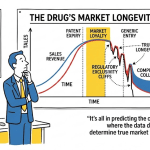
The output is not a single cliff date but a cascade: first-possible generic entry date, most likely generic entry date given litigation probability, and date of full generic competition across all indications. Each of those dates has different revenue implications. <blockquote> “Drugs with orphan drug designation account for approximately 50 percent of all novel drug approvals by the FDA, up from fewer than 10 percent in the 1990s,” according to an analysis by the IQVIA Institute for Human Data Science (2022) [16]. That shift reflects a strategic reorientation in the industry toward rare disease targets precisely because the exclusivity architecture, particularly ODE combined with small eligible patient populations, creates durable commercial positions that broadly targeted drugs rarely achieve. </blockquote>
Revenue Implications of Getting Exclusivity Strategy Wrong
The Cost of Missing ODE
A company that develops a drug for an orphan condition but fails to apply for orphan designation before approval loses seven years of ODE protection. The financial cost depends on the drug’s revenue profile, but in the orphan drug space, where prices per patient often reach six or seven figures annually, two additional years of exclusivity can represent hundreds of millions to billions in incremental revenue.
Bluebirdbio’s gene therapy Zynteglo for beta-thalassemia illustrates the complexity. The drug received orphan designation and ODE in the EU before its U.S. approval path developed. Managing orphan exclusivity across two regulatory jurisdictions, with different timing and criteria, is a specialized capability that requires regulatory and legal expertise that many smaller biotechs underestimate until they face a competitor filing.
The Cost of Over-Relying on ODE
ODE’s narrow scope means a competitor with a genuinely different molecule can enter the market freely. Alexion learned this with Soliris when Omeros and others pursued complement pathway inhibitors for PNH using different molecular targets. ODE blocked identical eculizumab products for PNH; it did not block ravulizumab, a modified version of eculizumab that Alexion itself developed (and which earned its own ODE as a different active moiety), nor did it block other complement inhibitors.
For companies that price drugs at rare disease premium levels on the assumption that ODE creates lasting exclusivity, the entry of a mechanistically different competitor does not require navigating the ODE barrier. The therapeutic competition arrives without triggering any exclusivity protection. Companies that model their revenue durability on ODE alone, without accounting for therapeutic competition from non-identical molecules, often face earlier-than-expected revenue erosion.
The Future of Layered Exclusivity
Congressional Pressure on Orphan Drug Designations
The Orphan Drug Act has attracted bipartisan scrutiny in recent Congresses. Critics argue that some companies are gaming the system by seeking orphan designation for subsections of common diseases where the eligible subpopulation falls below the 200,000 threshold but the drug could eventually serve a much larger population. The 21st Century Cures Act introduced some reforms, but the core exclusivity framework remains intact [17].
Any legislative change to ODE duration or eligibility criteria would reshape the economics of rare disease drug development significantly. Companies with pipeline drugs targeting orphan conditions should monitor proposed legislation and assess how their exclusivity projections would change if ODE were shortened from seven years to five, or if the eligibility criteria tightened.
Cell and Gene Therapy Exclusivity Questions
Cell and gene therapy products present novel challenges to the existing exclusivity framework. Some gene therapies use viral vectors that are unique biological constructs; the “same drug” analysis under ODE becomes technically complex when the therapeutic is not a defined chemical entity but a biological system. The FDA’s Center for Biologics Evaluation and Research is still developing its approach to exclusivity for these products, and guidance issued over the last five years has clarified some questions while leaving others open [18].
Gene therapy companies seeking ODE for orphan conditions must currently navigate uncertainty about how FDA will interpret “same drug” for gene therapy products. That uncertainty is itself a competitive risk, since a company that holds ODE for a gene therapy cannot be certain its protection would survive a challenge from a competitor using a different serotype of the same viral vector for the same disease.
Key Takeaways
NCE exclusivity and Orphan Drug Exclusivity are different tools with different scopes, and the most defensible commercial positions combine both alongside a supporting patent estate.
NCE exclusivity lasts five years, blocks the ANDA and 505(b)(2) pathways broadly, and is vulnerable to Paragraph IV challenges starting at year four. It applies only to small molecules, not biologics.
ODE lasts seven years, blocks the same drug for the same orphan indication specifically, and is nearly unbreakable without clinical superiority data. It applies to both small molecules and biologics.
When a new chemical entity earns its first approval for an orphan indication, the two exclusivities run simultaneously. ODE extends two years beyond NCE, protecting the orphan indication after the generic pathway technically opens.
Serial orphan designations for new indications create fresh ODE windows and extend the exclusivity architecture beyond what any single approval could achieve.
Patent protection and regulatory exclusivity operate independently. Winning or losing patent litigation does not affect regulatory exclusivity timing. A brand can lose a Paragraph IV case and still hold ODE for two more years.
Patent intelligence platforms like DrugPatentWatch provide the integrated view of patents, exclusivity codes, and litigation history that neither the Orange Book nor the USPTO alone can offer, and that view is essential for accurate patent cliff modeling.
Legislative risk around ODE is real. Companies with long-horizon revenue models built on seven-year ODE periods should stress-test those models against a scenario where Congress shortens or restricts the exclusivity.
FAQ
Q: Can a drug lose its Orphan Drug Exclusivity before the seven years expire?
Yes, under limited circumstances. The FDA can revoke ODE if the sponsor cannot ensure sufficient quantity of the drug to meet patient needs, if the drug is withdrawn from the market, or if the sponsor consented to approval of a competitor’s application. Revocation is rare but has occurred. The public health supply exception exists to prevent ODE from being used to restrict access in markets where the original sponsor lacks manufacturing capacity.
Q: Does NCE exclusivity apply to biologics approved under the BLA pathway?
No. NCE exclusivity applies specifically to drugs approved under Section 505 of the Federal Food, Drug, and Cosmetic Act, which covers small molecules. Biologics approved under Section 351 of the Public Health Service Act receive Reference Product Exclusivity under the BPCIA: 12 years of data exclusivity with a four-year no-filing period. Biologics that also receive orphan designation get ODE on top of this, creating a combined exclusivity structure that is, in some ways, more durable than the NCE plus ODE combination for small molecules.
Q: How does the FDA determine whether two drugs are “the same drug” for ODE purposes when one is a prodrug of the other?
The FDA looks at the active moiety. A prodrug that converts to the same active moiety as a previously approved drug is treated as containing the same active moiety for ODE purposes. The analysis focuses on what is biologically active in vivo, not what is administered. This matters for ODE because a company that develops a prodrug formulation of an orphan-approved molecule cannot claim separate ODE from the original approval; the active moiety is identical.
Q: Is there a strategic reason to pursue orphan designation even when NCE exclusivity is already secured?
Yes, for several reasons. ODE extends protection two years beyond NCE for the orphan indication. ODE also triggers financial incentives beyond exclusivity, including tax credits for qualified clinical testing expenses (up to 25 percent under current law, reduced from 50 percent by the Tax Cuts and Jobs Act of 2017) and waiver of PDUFA user fees, which currently exceed $4 million per NDA application. For smaller companies, the user fee waiver alone makes orphan designation financially significant even when NCE is already secured.
Q: Can a generic company receive Orphan Drug Exclusivity?
Technically, yes, if the generic company is the first to obtain FDA approval of a specific drug for a specific orphan indication through an NDA, not an ANDA. In practice, this scenario rarely arises. ANDAs, which are the typical generic application pathway, do not create ODE because they reference a listed drug’s approved application rather than submitting new clinical data. A generic company that submitted a full NDA with independent clinical data for an orphan indication and received first approval would theoretically earn ODE. This would represent a significant business model shift for a typical generic manufacturer, blurring the line between generic and specialty pharma.
Citations
[1] Drug Price Competition and Patent Term Restoration Act of 1984 (Hatch-Waxman Act), Pub. L. No. 98-417, 98 Stat. 1585.
[2] U.S. Food and Drug Administration. (2015). Approved drug products with therapeutic equivalence evaluations (35th ed.). U.S. Department of Health and Human Services.
[3] U.S. Food and Drug Administration. (2019). Paragraph IV certifications. FDA Guidance Documents.
[4] Orphan Drug Act of 1983, Pub. L. No. 97-414, 96 Stat. 2049.
[5] Alexion Pharmaceuticals. (2014). Annual report: Soliris commercial performance and intellectual property summary. Alexion Pharmaceuticals, Inc.
[6] U.S. Food and Drug Administration. (2013). Guidance for industry: Orphan drug regulations (Final Rule, 21 CFR Part 316). U.S. Department of Health and Human Services.
[7] Vertex Pharmaceuticals. (2012). Kalydeco (ivacaftor) FDA approval announcement. Vertex Pharmaceuticals, Inc.
[8] Best Pharmaceuticals for Children Act of 2002, Pub. L. No. 107-109, 115 Stat. 1408; Pediatric Research Equity Act of 2003, Pub. L. No. 108-155, 117 Stat. 1936.
[9] Biologics Price Competition and Innovation Act of 2009 (BPCIA), Pub. L. No. 111-148, tit. VII, 124 Stat. 119.
[10] Celgene Corporation. (2001). Thalomid (thalidomide) orphan drug designations and exclusivity analysis. Internal regulatory filing summary, cited in Celgene Annual Report 2001.
[11] Association for Molecular Pathology v. Myriad Genetics, Inc., 569 U.S. 576 (2013).
[12] Jazz Pharmaceuticals, Inc. v. Amneal Pharmaceuticals LLC, 895 F.3d 1347 (Fed. Cir. 2018).
[13] U.S. Food and Drug Administration. (2013). Orphan drug regulations: Final rule. 78 Fed. Reg. 35117 (June 12, 2013).
[14] Regulation (EC) No. 141/2000 of the European Parliament and of the Council of 16 December 1999 on orphan medicinal products. Official Journal of the European Communities, L18, 1-5.
[15] Ministry of Health, Labour and Welfare, Japan. (2018). Orphan drug designation system in Japan. MHLW Pharmaceutical and Food Safety Bureau.
[16] IQVIA Institute for Human Data Science. (2022). Global oncology trends 2022: Outlook to 2026. IQVIA Institute.
[17] 21st Century Cures Act, Pub. L. No. 114-255, 130 Stat. 1033 (2016).
[18] U.S. Food and Drug Administration. (2020). Long term follow-up after administration of human gene therapy products: Guidance for industry. U.S. Department of Health and Human Services.