Business Intelligence on Biologic and Small Molecule Drugs
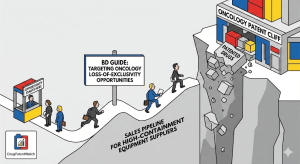
Oncology’s Patent Cliff Is Your Sales Pipeline: A Business Development Guide for High-Containment Equipment Suppliers Targeting Oncology Loss-of-Exclusivity Opportunities
The LOE Wave Nobody in Equipment Sales Is Talking About
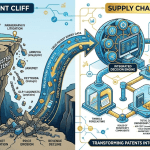
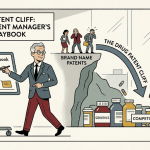
Between 2024 and 2029, roughly $130 billion worth of branded oncology drug revenue faces loss of exclusivity (LOE). That is not a forecast built on optimism. It is the arithmetic of patent expiration dates stacked against real-world sales figures. Kinase inhibitors, PARP inhibitors, androgen receptor antagonists, and immunomodulatory agents — compounds that redefined cancer treatment — are now entering or about to enter the generic arena. [1]
For biopharma equipment and manufacturing technology suppliers, this wave represents one of the most concentrated equipment procurement cycles in recent memory. Here is why: most oncology active pharmaceutical ingredients (APIs) are potent compounds. Many are classified as Occupational Exposure Band (OEB) 4 or OEB 5. They require high-containment manufacturing environments that most generic manufacturers do not currently own. When an oncology drug goes off-patent, the generic manufacturers that win the market must build out — or outsource — the capability to manufacture it safely. That means equipment purchasing. Significant equipment purchasing.
The suppliers who will capture this business are the ones who get there first, speak the right language, and arrive with a credible containment ROI argument. This guide is the map for doing exactly that.
What High-Containment Actually Means in This Context
The term ‘high-containment’ is thrown around loosely in pharma manufacturing circles. For the purpose of this guide, it refers to any manufacturing process where the occupational exposure limit (OEL) for the active compound is 10 micrograms per cubic meter (ug/m3) or below. In practice, that covers OEB 4 (OEL 1-10 ug/m3) and OEB 5 (OEL below 1 ug/m3). Many oncology APIs fall into these two bands because their cytotoxic, mutagenic, or genotoxic properties mean that even microgram-level worker exposure poses an unacceptable health risk. [2]
OEL, OEB, and the Classification That Drives Equipment Decisions
When a pharmaceutical company classifies a compound for manufacturing, the OEL drives everything downstream: the type of equipment required, the facility design, the personal protective equipment (PPE) protocols, and the validated containment performance target. The equipment supplier’s entire value proposition anchors to one number: the target containment performance (TCP), typically expressed in ug/m3, that a system must reliably achieve.
For OEB 4 compounds, contained processing equipment — isolators, downflow booths with HEPA filtration, contained transfer systems — is standard. For OEB 5, the containment requirements tighten considerably. Pharmaceutical isolators become the baseline, not the premium option. Split butterfly valves or equivalent active contained transfer systems replace open charging. The cost per square foot of manufacturing space rises sharply, and so does the price point for the equipment that fills it.
The critical business development insight: when an oncology API crosses from patent-protected to generic, the compound’s OEB classification does not change. The chemistry does not become less potent simply because the molecule is now off-patent. Generic manufacturers entering the oncology space must meet the same containment standards the originator built into their GMP facilities. If they do not own this equipment already, they must buy it before they can manufacture.
The Regulatory Floor Has Risen Since the Last Generics Cycle
The last wave of blockbuster patent expirations — from 2010 to 2015 — involved primarily conventional small-molecule drugs with moderate OELs. Equipment suppliers who sold into that cycle were mostly dealing with OEB 2 and OEB 3 requirements. The oncology LOE wave now underway is fundamentally different. The compounds are more potent, the global regulatory scrutiny is more rigorous, and the ISPE SMEPAC guidelines that define how containment equipment is qualified and validated have been substantially strengthened since their last revision. [3]
Health authorities in the EU, US, and Japan now expect manufacturers to demonstrate containment performance with documented engineering data, not assumptions. That increases the barrier to entry for generic manufacturers building in-house capacity, and it increases the specification complexity — and therefore the value — of what equipment suppliers are selling.
The Oncology LOE Pipeline: Reading the Calendar Before Your Competitors Do
The first concrete step in any LOE-driven equipment sales strategy is building a precise timeline of which drugs are losing exclusivity and when. This is not optional background research. It is the foundation of the entire go-to-market plan. A supplier who knows that a blockbuster oncology compound loses its primary composition patent in Q3 2026 can begin stakeholder mapping and discovery calls 18-24 months ahead — before competitors realize the procurement window is open.
Drugs Already Crossing the Cliff
Lenalidomide (Revlimid), AbbVie and Bristol-Myers Squibb’s immunomodulatory agent for multiple myeloma, provides a clear example of what LOE transition looks like for a potent oncology compound. Its exclusivity eroded through volume-limited generic licenses beginning in 2022, with full generic competition expected by 2026. Lenalidomide is classified as a teratogen with strict handling requirements, placing it firmly in the high-containment category for any generic manufacturer attempting to produce it. The companies that entered this market early invested heavily in closed powder handling systems and dedicated contained dispensing suites. [4]
Abiraterone acetate (Zytiga), the androgen biosynthesis inhibitor used in prostate cancer, entered the generic market in the US after key patent expirations beginning in 2018. Despite being a relatively early LOE, the compound’s genotoxic impurity profile and occupational exposure classification generated sustained equipment demand among the generic manufacturers who entered the market over the following four years.
The Next Wave: 2025-2029
The most commercially consequential near-term LOEs for high-containment equipment suppliers include the following:
Ibrutinib (Imbruvica) — AbbVie and Johnson & Johnson’s Bruton’s tyrosine kinase (BTK) inhibitor for hematologic malignancies. Peak sales exceeded $10 billion annually. Primary US patent protection runs through 2027-2028 on key claims, with generic entry anticipated shortly thereafter. [5]
Palbociclib (Ibrance) — Pfizer’s CDK 4/6 inhibitor for breast cancer. US sales peaked above $5 billion. Patent expiration on the compound itself arrived as early as 2023 in some markets, though litigation has shaped the generic entry timeline in the US. [6]
Enzalutamide (Xtandi) — Astellas and Pfizer’s androgen receptor antagonist for prostate cancer. A compound with significant potency classification requirements. Key US patent expiration expected around 2027-2028.
Niraparib (Zejula) — GSK’s PARP inhibitor for ovarian cancer, with composition of matter patents expiring in the 2027-2029 range in major markets.
Each of these compounds carries OEB 4 or OEB 5 designation — or will, when manufacturers conduct formal hazard band assessments for generic production planning. Each represents a manufacturing buildout event for every generic competitor entering the market.
How to Use DrugPatentWatch to Map Your Prospecting Calendar
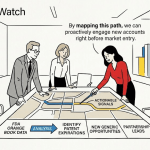
DrugPatentWatch is the primary intelligence tool for building a patent expiration calendar linked to commercial revenue data. The platform tracks FDA Orange Book patents, exclusivity periods, patent litigation dockets (Paragraph IV certifications), and estimated first commercial entry dates for generic and biosimilar drugs. For equipment suppliers, the most useful features are the ability to identify the anticipated generic entry date for a compound, cross-reference it against annual sales (which indicates the scale of generic opportunity and therefore the number of manufacturers likely to enter), and track the Paragraph IV certification activity that signals which companies are already planning to manufacture. [7]
A practical workflow: search DrugPatentWatch for oncology drugs with annual revenues above $1 billion and primary patent expiration within three years. Cross-reference those results against the OEB classifications of the APIs involved (your company’s regulatory affairs team or a toxicology partner can assist with band assessments if you do not have them internally). The intersection of high-revenue LOEs and high-potency APIs defines your addressable equipment market.
INTELLIGENCE WORKFLOW FOR LOE PROSPECTINGStep 1: Pull DrugPatentWatch list of oncology compounds with >$1B revenue and patent expiry within 36 months.Step 2: Run OEB classification screen on each API — internal regulatory team or toxicology partner.Step 3: Map Paragraph IV filers and ANDA submissions to identify which generic manufacturers are already in development.Step 4: Cross-reference against each manufacturer’s known facility capabilities and equipment inventory.Step 5: Begin stakeholder outreach 18-24 months before estimated generic first commercial date.
Who Buys High-Containment Equipment at LOE — and Why They Buy Differently
The three buyer types in this market have distinct procurement drivers, budget cycles, and decision-making structures. Treating them identically is one of the most common and costly mistakes equipment sales teams make.
Generic Pharmaceutical Manufacturers
Large generic manufacturers — companies like Teva, Mylan (now Viatris), Sun Pharma, Aurobindo, Hikma, and Dr. Reddy’s — are the highest-volume buyers in an LOE cycle. Their procurement logic is capital project-driven: once an ANDA or equivalent dossier is filed, engineering teams scope the manufacturing facility requirements, and capital expenditure authorizations follow. The equipment purchase decision typically lands 12-24 months before anticipated commercial launch.
Key buyer characteristics: generic manufacturers are cost-sensitive, move fast once funding is authorized, and make decisions heavily on validation data and regulatory track record. They want to know that the containment equipment you are selling has verifiable real-world performance data — ideally published SMEPAC test results — and that your organization can support them through the equipment qualification process. Your sales message should be built around speed-to-GMP-readiness and validated containment performance, not equipment feature lists.
Contract Development and Manufacturing Organizations (CDMOs)
CDMOs represent a structurally different opportunity. When a generic manufacturer lacks internal high-potency API synthesis or solid dosage form manufacturing capability, they contract it out. CDMOs who position themselves as high-containment specialists for oncology LOE compounds win this business — but they need the equipment to back the claim. [8]
The CDMO buyer is simultaneously a buyer and a sales tool for their own customers. When you sell a containment isolator to a CDMO, you are helping them win HPAPI manufacturing contracts from generic companies. This means the CDMO is receptive to capability-driven sales conversations, not just price negotiations. They want to be able to say to their pharmaceutical customers: ‘We have a validated OEB 5 isolator line with demonstrated <1 ug/m3 performance.’ Your equipment sale enables their business development.
Target CDMOs who have publicly announced HPAPI capability investments or who list high-potency services on their website but whose equipment inventory is aging. These companies are actively looking to upgrade.
Originator (Branded) Pharmaceutical Companies
The originator company that developed the drug still buys equipment at LOE — for a different reason. As generic competition enters the market, branded manufacturers often shift their production strategy. Some consolidate manufacturing to lower-cost sites, requiring facility retrofits. Others launch authorized generics through captive manufacturing, which may require separate containment lines to segregate production. A subset invest in next-generation formulations — extended-release, targeted delivery, combination products — that demand different process equipment.
Sales conversations with originator companies at LOE tend to be driven by the lifecycle management team and the manufacturing science and technology (MSAT) group rather than the standard procurement channel. The procurement volume per company is typically lower than generic manufacturers, but the relationship value is higher, and the specification complexity often means longer, more consultative engagement.
The Business Development Playbook: Execution Over Strategy
Every equipment supplier in the pharma sector claims to ‘partner with customers.’ The ones that actually win LOE business in oncology execute specific, timed, intelligence-driven actions. Here is what those actions look like in practice.
Time Your Outreach to the Patent Calendar, Not the RFP
By the time a generic manufacturer issues a formal request for proposal (RFP) for containment equipment, the preliminary engineering is usually done. They have a rough specification, a preferred vendor list, and a budget number. If you are responding to that RFP cold, you are almost certainly entering the process behind competitors who have already had discovery conversations.
The right entry point is 18-30 months before expected generic first commercial date. At that stage, the ANDA or foreign equivalent is either being prepared or recently filed. The technical development team has done enough work to know the compound’s potency classification and manufacturing process requirements, but capital projects are not yet authorized. This is the window for capability conversations — sharing containment performance data, understanding their process requirements, walking them through your qualification support program. You are not selling yet. You are becoming the obvious choice for when the purchase decision arrives.
“The HPAPI market is expected to grow from approximately $29.4 billion in 2024 to over $52 billion by 2029, at a compound annual growth rate of 12.2%.” — MarketsandMarkets Research, 2024 [9]
Speak the Language of the Buyer, Not the Language of Your Catalog
Equipment sales teams default to talking about their equipment: the isolator’s glove ports, the split butterfly valve’s passive side design, the milling system’s throughput capacity. Buyers do not care about features. They care about manufacturing outcomes. Specifically, they care about:
Can you demonstrate that your equipment achieves the OEL target for this compound class?
What is the fastest path from equipment delivery to GMP release?
What documentation package supports the process validation dossier?
What is the contamination control risk if something goes wrong?
Reframe every product capability as an answer to one of these questions. The isolator’s glove port design matters because it reduces the risk of containment breach during critical process steps — and because your published SMEPAC test data proves the system achieves <0.1 ug/m3 in worst-case transfer scenarios. That framing lands differently with a VP of Manufacturing than a specification sheet.
Build a Containment ROI Model — and Use It in Discovery
High-containment equipment carries a price premium over standard pharmaceutical processing equipment. Generic manufacturers are acutely cost-aware. If your sales team cannot quantify the ROI of containment equipment, the buyer’s procurement function will treat your system as a premium line item to negotiate down, rather than a necessary business enabler.
A credible containment ROI model for an oncology LOE situation covers four categories: regulatory risk mitigation (the cost of an FDA Form 483 observation or warning letter related to inadequate containment can reach tens of millions of dollars in remediation, market withdrawal, and reputational damage), worker compensation exposure (occupational illness claims related to inadequate HPAPI containment generate significant legal liability), throughput impact (equipment that achieves OEB 5 containment without excessive personal protective equipment allows production teams to work more efficiently than in chemotherapy-grade PPE), and customer qualification cost (CDMOs that can demonstrate validated high-containment capability charge a manufacturing premium and win more contracts). [10]
Map the Procurement Decision Tree Before Your First Meeting
High-containment equipment purchases for an oncology LOE project typically involve at least four internal stakeholder groups: engineering and facilities (who write the technical specification), EHS (who set the OEL target and approve the containment strategy), manufacturing or operations (who live with the equipment after installation), and procurement or finance (who control the budget and run the vendor selection process). Rarely does a single contact control all four inputs.
Before your first substantive meeting with any of these stakeholders, map the organizational decision structure. Who owns the capital project? Who has technical veto power? Which team is most likely to be your internal champion? Generic manufacturers tend to concentrate decision authority in operations and engineering. CDMOs often have a business development function that influences equipment selection because they need to market the capability to their clients. Originator companies route decisions through procurement more formally, but MSAT teams often hold the technical authority.
Equipment Categories and Their LOE Procurement Moment
Not all containment equipment enters the procurement cycle at the same project stage. Understanding which equipment category is purchased when — and for what reason — lets you sequence your sales engagement correctly.
Pharmaceutical Isolators and Enclosed Processing Lines
Isolators represent the highest-value equipment category in the high-containment oncology market. A single pharmaceutical isolator for OEB 5 processing can carry a list price from $200,000 to well over $1 million depending on size, complexity, and integrated process functions. For an LOE project involving a full contained solid dosage manufacturing line — from API weighing through tablet compression and coating — the total isolator equipment spend across a project can reach $5-15 million. [11]
Isolators are purchased early in the manufacturing buildout: they require long lead times (12-24 months from order to IQ completion is typical for complex systems), they define the facility layout, and they are part of the regulatory submission package. Equipment suppliers who can commit to delivery timelines that align with a generic manufacturer’s commercial launch schedule hold a meaningful competitive advantage.
The procurement decision for isolators typically sits with the engineering project team, with formal sign-off from EHS and manufacturing. Your isolator sales engagement should begin with the engineering function, but your validation support argument — the package of documentation, FAT/SAT protocols, and SMEPAC test methodology — should be delivered to the quality assurance stakeholder who will ultimately approve the equipment for GMP use.
Contained Transfer Systems and Split Butterfly Valves
Contained powder transfer represents one of the highest occupational exposure risk points in HPAPI manufacturing. Charging a reactor, transferring API into a granulator, moving potent powder between process steps — each transfer event is a potential exposure moment if it is not engineered correctly. Split butterfly valves (SBVs) and active contained transfer systems address this by creating a sealed connection between containers and process equipment, allowing powder to transfer without atmospheric release.
ChargePoint Technology, ILC Dover, and Matcon are among the established suppliers in this category. For equipment sales teams, the SBV and contained transfer market is particularly interesting in an LOE context because it is often purchased in multiple units per project — one per process step — and because it can be sold into existing facilities that are retrofitting for HPAPI without a full isolator buildout. That lower barrier to entry makes it a useful first commercial relationship with a new customer. [12]
Sales conversations for contained transfer systems should focus on validation data — specifically, the surrogate substance testing results demonstrating system performance at the claimed OEL — and on the operational efficiency of the connection mechanism. Time to connect, clean-in-place compatibility, and the availability of standardized sizes that integrate with existing process equipment are practical decision factors.
High-Containment Milling and Micronization
Particle size reduction is a critical process step for many oncology APIs. Kinase inhibitors and other small molecules intended for oral solid dosage forms often require milling to achieve the dissolution profile specified in the dossier. Micronization — using air jet milling to achieve sub-10 micron particle size — generates fine respirable dust, which is the highest-exposure-risk form of any HPAPI.
Contained milling equipment from suppliers like Hosokawa Micron, Frewitt, and Sturtevant is specified for OEB 4 and OEB 5 applications using integrated isolator technology or fully enclosed grinding chambers with validated HEPA exhaust filtration. The procurement decision typically rests with the process development team, who have determined the particle size specification, and the engineering team responsible for the manufacturing train design.
Business development opportunity: many generic manufacturers who have built contained dispensing and tablet compression capability have not yet invested in contained milling. They contract milling out to CDMOs or toll manufacturers — which is expensive and logistically complex. A consultative sale that demonstrates the cost-per-kilogram economics of in-house contained milling versus external tolling can move a CapEx conversation forward with quantitative backing.
Containment in Secondary Manufacturing
Tablet compression, capsule filling, and coating represent the secondary manufacturing steps where oncology APIs meet excipients and take their final dosage form. For OEB 4 and 5 compounds, these operations require contained press suites or full enclosure of the processing equipment. Tablet press manufacturers like Fette, IMA, and Korsch offer contained press designs, often integrated with isolator suppliers.
For equipment suppliers in the contained secondary manufacturing space, the LOE opportunity is concentrated in the 12-18 months before a generic product’s commercial launch — the window when a manufacturer is scaling from development to commercial batch sizes and qualifying their commercial manufacturing equipment. This is a shorter and more intensive procurement window than primary manufacturing buildout, but the decisions come quickly once the project is authorized.
Positioning Against the Competition
The high-containment equipment market for oncology LOEs is not uncrowded. European suppliers — particularly from Germany, Italy, Switzerland, and the UK — have dominated pharmaceutical isolator and containment technology for decades. US-based suppliers compete in some categories. Asian manufacturers, particularly from India and South Korea, are beginning to enter the lower end of the OEB 4 market.
Differentiation That Moves Procurement Decisions
Feature-level differentiation — ‘our isolators have better glove port ergonomics’ — does not move purchase decisions in this market. What does move decisions is evidence-based differentiation across four dimensions: validated containment performance backed by published or verifiable test data, regulatory support capability (can your team help the buyer through the IQ/OQ/PQ process and support their process validation documentation), delivery reliability (missing a commercial launch date due to equipment delays is a catastrophic cost for a generic manufacturer), and installed base at peer companies (buyers in pharma equipment purchasing are risk-averse; knowing that five comparable manufacturers use your system reduces perceived risk substantially). [13]
The Validation and Documentation Play
Equipment validation is one of the most time-intensive and cost-intensive elements of bringing a new high-containment manufacturing line into GMP service. Many equipment suppliers underinvest in their validation support capability, treating it as an afterthought. Suppliers who have built a systematic validation support program — standard IQ/OQ protocols, trained qualification engineers, a track record of smooth regulatory submissions — can use this as a genuine differentiator.
The economic case for buyers is concrete: a contained equipment installation that completes IQ/OQ six weeks ahead of schedule because the supplier’s validation package was well-designed can mean an earlier commercial batch release, which in a generic market means more revenue from the competitive window before price erosion sets in. Quantify that time value in your proposals.
Regulatory Tailwinds That Do Some of Your Selling for You
In an ideal sales environment, external regulatory pressure pushes buyers toward your equipment before your sales team has to argue the case. The current regulatory environment for HPAPI manufacturing provides several such tailwinds.
ISPE SMEPAC Guidelines and Their Commercial Consequences
The ISPE (International Society for Pharmaceutical Engineering) SMEPAC guideline — Standardized Measurement of Equipment Particulate Airborne Concentration — establishes the methodology for testing and reporting the containment performance of pharmaceutical manufacturing equipment. The third edition, published in 2022, tightened the requirements for surrogate substance selection, test protocol design, and the statistical interpretation of measurement results. [3]
For equipment suppliers, this is a sales asset. Any supplier whose containment equipment is tested and documented under SMEPAC third edition methodology has a compliance credential that buyers can take directly to their regulatory affairs and quality teams. Suppliers who have not updated their test data to the current standard are at a disadvantage in competitive evaluations — and your sales team should know which competitors fall into that category.
Global GMP Convergence and Occupational Safety Pressure
OSHA’s Hazard Communication Standard and the EU’s Chemical Agents Directive both require employers to implement engineering controls — not just administrative controls or PPE — for potent hazardous substances. As regulatory enforcement of occupational health standards has intensified in the US, EU, and India, pharmaceutical manufacturers face increasing audit risk if their containment approach relies on PPE rather than engineering controls for OEB 4 and 5 compounds.
This regulatory pressure generates demand that does not depend on your sales team’s persuasion skills. When a generic manufacturer’s EHS director receives an audit finding related to inadequate engineering controls for HPAPI handling, containment equipment procurement moves from ‘planned’ to ‘urgent.’ Equipment suppliers with short lead times and validated systems for rapid deployment have an outsized advantage in these reactive purchasing situations.
Pricing Strategy and Deal Structure in the LOE Market
High-containment equipment is CapEx, and in an LOE project context, it competes for capital allocation against facility upgrades, regulatory compliance costs, formulation development expenses, and the commercial launch budget itself. Pricing strategy needs to reflect this reality.
How Buyers Think About Containment CapEx
Generic pharmaceutical manufacturers evaluate CapEx investments against the net present value of the revenue stream the project is expected to generate. For a high-volume oncology LOE — say, a molecule with $5 billion in annual branded sales entering generic competition — the revenue opportunity justifies significant upfront investment. For smaller LOEs, the CapEx sensitivity is higher, and buyers will push harder on price and scope.
A practical pricing approach: tier your equipment offering by OEB classification, not by equipment model. An OEB 4 isolator line and an OEB 5 isolator line are not the same purchase decision. The buyer making a decision on OEB 5 equipment has a smaller universe of qualified suppliers, faces a higher cost of regulatory non-compliance, and is more willing to pay for validated performance. Price accordingly. The OEB 4 market is more competitive and more price-sensitive; the OEB 5 market rewards suppliers who can credibly demonstrate performance at the required limit.
Leasing, Rental, and Validation Package Models
Some equipment suppliers have begun offering lease or rental structures for contained equipment, particularly for CDMOs who want to demonstrate high-containment capability without large upfront CapEx commitments. For the LOE market specifically, a rental or lease model can accelerate a CDMO’s decision to commit — they can offer the capability to their pharmaceutical customers and generate revenue before the equipment is fully paid for.
Bundled validation packages — where the equipment purchase includes a fixed-fee IQ/OQ qualification service delivered by the supplier’s engineering team — are another deal structure that addresses a real buyer pain point. Buyers who have struggled with poorly documented equipment qualifications in the past will pay a premium for a supplier who owns the validation execution, not just the equipment.
Common Sales Mistakes That Lose LOE Equipment Business
The following mistakes are observed repeatedly in equipment supplier business development conversations with oncology LOE buyers.
Arriving After the Engineering Specification Is Written
If you are invited to quote against a finished engineering specification that you did not help write, your chances of winning are low unless you are clearly the lowest-price option. Engineering specifications for high-containment equipment are written by teams who have usually already consulted with their preferred supplier. The solution is early engagement — well before specifications are drafted. Ask your prospects: ‘When do you expect to begin the engineering scoping phase for this project?’ That question tells you immediately whether you have entered the cycle early enough to influence the outcome.
Conflating High-Containment with High-Complexity for Its Own Sake
Some equipment sales teams over-engineer their proposals, specifying systems with capabilities far beyond what the buyer’s process requires. This costs credibility, not just deal size. Buyers who receive a proposal for an OEB 5 glove box isolator system for a compound that sits at the lower boundary of OEB 4 will either conclude that your sales team does not understand their process, or that you are padding the specification to inflate the contract value. Both conclusions damage the relationship.
Calibrate your recommendations to the compound’s verified OEB classification and the buyer’s process conditions. Under-specifying is a compliance risk; over-specifying is a credibility risk. Neither serves the long-term customer relationship.
Underinvesting in the Post-Sale Technical Relationship
Equipment for oncology LOE projects remains in service for 15-20 years in many cases. The teams who install and validate the equipment will not be the same teams running it three years later. Suppliers who invest in training programs, user communities, spare parts availability, and responsive field service create switching costs that protect their installed base from competitive displacement. Suppliers who disappear after the IQ/OQ is complete get displaced at the first equipment upgrade cycle.
Building the Sales Team That Can Execute This Strategy
Selling high-containment equipment into oncology LOE markets requires a sales team with unusual depth. The technical complexity of the equipment, the regulatory sophistication of the buyer, and the long sales cycles mean that generalist pharma equipment sales reps — skilled at transactional sales and relationship maintenance — are not sufficient.
The effective LOE equipment sales team combines a business development function capable of intelligence-driven prospecting (reading patent databases, mapping competitive pipelines, identifying which buyers are building for which compounds) with technically credentialed specialists who can engage credibly with EHS toxicologists, pharmaceutical engineers, and GMP quality teams. Many equipment suppliers underinvest in the technical specialist role, relying on product managers to fill in during sales calls. That approach fails in a market where buyers test your team’s depth at every meeting.
Consider a hybrid model: a commercially focused business development lead who builds the LOE pipeline and manages executive-level relationships, partnered with a containment applications specialist who provides the process knowledge and regulatory fluency needed to convert technical meetings into specifications. This pairing operates more effectively than a single rep trying to do both, and it scales across a portfolio of concurrent LOE opportunities.
Key Takeaways
The oncology LOE wave through 2029 involves predominantly high-potency APIs classified OEB 4 or OEB 5. Every generic or CDMO entrant to these markets must demonstrate compliant containment — which means equipment procurement.
DrugPatentWatch is the foundational prospecting tool for mapping the LOE calendar. Build a compound pipeline filtered by revenue scale and OEB classification to define your addressable market.
Sales engagement must begin 18-30 months before estimated generic first commercial date — before engineering specifications are written and before RFPs are issued.
Generic manufacturers, CDMOs, and originator companies buy high-containment equipment for different reasons at different project stages. Your sales approach, message, and timing should differ for each.
Validated containment performance data — tested under ISPE SMEPAC methodology — is the single most influential technical credential in competitive evaluations.
Build a formal containment ROI model covering regulatory risk, worker liability, throughput efficiency, and customer qualification costs. Use it in early discovery conversations, not just proposals.
Tiered pricing by OEB classification is more defensible than model-based pricing. The OEB 5 market is less competitive and more performance-sensitive; price and position accordingly.
Post-sale investment in training, spare parts availability, and field service is a retention and growth strategy, not an overhead cost.
Frequently Asked Questions
Q1: How do I identify which generic manufacturers are actively building manufacturing capability for a specific oncology LOE compound?
The most reliable method combines patent litigation tracking with ANDA filing data. When a generic manufacturer files a Paragraph IV certification challenging an originator’s patent, it is a public signal that they are serious about entering the market. DrugPatentWatch tracks these filings in real time. Cross-reference Paragraph IV filers against the known manufacturing capability profiles of each company — their existing OEB 4/5 facility capacity, recent equipment investments, and CDMO partnership history. Companies filing Paragraph IV certifications without existing high-containment infrastructure are your most immediate equipment prospects.
Q2: What is the realistic sales cycle length for high-containment equipment in an oncology LOE project?
For a full contained manufacturing line — from first discovery conversation to purchase order — expect 12-24 months. For individual contained transfer systems or SBV components being retrofitted into an existing facility, the cycle can compress to 6-9 months. Capital project authorization, which is the single biggest delay in any pharma equipment purchase, typically adds 3-6 months to whatever timeline the technical team is working to. The implication: you need more opportunities in your pipeline than feel comfortable, because deals will stall at the CapEx approval stage regardless of how well you’ve executed the technical sale.
Q3: How should equipment suppliers approach CDMOs that already have some high-containment capability but are seeking to upgrade?
CDMOs upgrading existing capability respond to a different message than those building from scratch. Their core concern is not ‘can you prove this works’ — they have already made that determination for their current equipment — but rather ‘what does upgrading buy me commercially.’ The strongest approach is to quantify the difference in the manufacturing contracts they can bid on with updated OEB 5 performance data versus what their current equipment supports. If their current system demonstrates OEB 4 performance but a new system would extend their capability to OEB 5, the incremental market access that creates is your ROI argument. Work with their business development team, not just their engineering team, to quantify that opportunity.
Q4: What role does the ISPE SMEPAC third edition play in competitive differentiation, and how should equipment suppliers use it in sales conversations?
SMEPAC third edition (2022) requires more rigorous test methodology than previous versions — specifically around surrogate substance selection, multiple measurement conditions, and statistical result interpretation. Equipment suppliers whose containment performance data was generated under earlier SMEPAC versions are at a disadvantage in evaluations where the buyer’s quality team is current on the guidance. Suppliers with SMEPAC third edition test data can request that RFP evaluations specify third edition compliance as a mandatory criterion — which effectively narrows the competitive field to suppliers who have invested in updated testing. In sales conversations, do not simply cite your containment performance number; cite the specific SMEPAC edition under which it was generated and the methodology used.
Q5: How should suppliers price validation support services in the context of an oncology LOE equipment sale?
Validation support is best priced as a separate but bundled service, not buried in equipment pricing. A transparent line item for IQ/OQ protocol development and execution — with a clear scope, deliverable list, and timeline — is more credible than a vague ‘validation included’ promise rolled into the equipment price. Current market rates for pharmaceutical equipment qualification services from equipment suppliers range from $50,000 to $250,000 depending on system complexity and qualification scope. Positioning this as fixed-fee rather than time-and-materials removes budget uncertainty for the buyer’s project management team and creates a more compelling proposal structure.
References
[1] IQVIA Institute for Human Data Science. (2024). The Global Use of Medicines 2024: Outlook to 2028. IQVIA Holdings.
[2] International Society for Pharmaceutical Engineering. (2010). ISPE Baseline Guide Vol. 3: Sterile Manufacturing Facilities; and ISPE Risk-MaPP Baseline Guide (2010) — Occupational Health Hazard Categorization. ISPE.
[3] International Society for Pharmaceutical Engineering. (2022). SMEPAC: Standardized Measurement of Equipment Particulate Airborne Concentration, Third Edition. ISPE.
[4] U.S. Food and Drug Administration. (2023). Orange Book: Approved Drug Products with Therapeutic Equivalence Evaluations (43rd Edition). FDA. https://www.fda.gov/drugs/drug-approvals-and-databases/approved-drug-products-therapeutic-equivalence-evaluations-orange-book
[5] DrugPatentWatch. (2025). Imbruvica (ibrutinib) patent and exclusivity data. https://www.drugpatentwatch.com/p/brand/IMBRUVICA
[6] DrugPatentWatch. (2025). Ibrance (palbociclib) patent and exclusivity data. https://www.drugpatentwatch.com/p/brand/IBRANCE
[7] DrugPatentWatch. (2025). About DrugPatentWatch: pharmaceutical patent and exclusivity intelligence. https://www.drugpatentwatch.com
[8] Grand View Research. (2024). Contract Development and Manufacturing Organizations (CDMO) Market Size Report, 2024-2030. Grand View Research.
[9] MarketsandMarkets Research. (2024). Highly Potent Active Pharmaceutical Ingredients (HPAPI) Market — Global Forecast to 2029. MarketsandMarkets.
[10] Occupational Safety and Health Administration. (2023). Hazard Communication Standard: Safety Data Sheets (29 CFR 1910.1200). U.S. Department of Labor. https://www.osha.gov/hazcom
[11] Pharmaceutical Technology. (2023, September). Containment solutions for high-potency API manufacturing. MJH Life Sciences.
[12] ChargePoint Technology. (2024). Contained powder transfer: split butterfly valves and active contained transfer. https://www.chargepointtechnology.com
[13] ECA Academy. (2023). Containment Performance Testing of Pharmaceutical Equipment: A Practical Guide. European Compliance Academy.