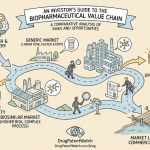
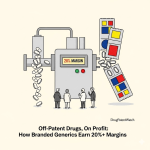
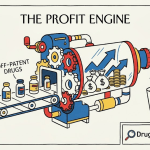
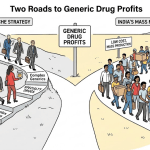
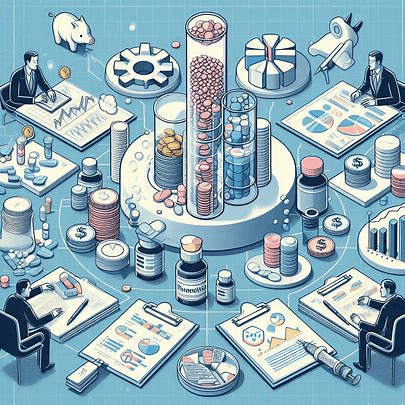
The pharmaceutical sector operates on a punishing mathematical divide. In 2024, generic and biosimilar medicines filled 90% of all prescriptions in the United States.1 Despite this volume dominance, these products represented a mere 12% of total prescription spending.1 While innovators captured $700 billion from 435 million prescriptions, generic manufacturers split a comparatively small $98 billion across 3.9 billion scripts.1 This disparity signals a fundamental reality for pharmaceutical executives: commoditization is a choice.
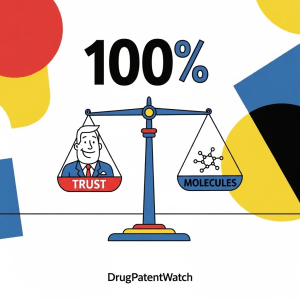
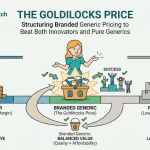
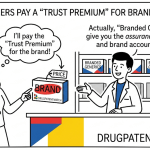
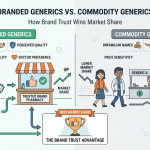
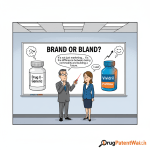
The strategy to escape this “race to the bottom” centers on the Trust Premium. This commercial mechanism allows branded generics to move out of the low-margin commodity bracket and into a mid-tier pricing strategy. These products, biologically equivalent to their originator counterparts, command prices 30% to 100% higher than unbranded alternatives.1 This premium relies on psychological differentiation, where the brand name acts as a guarantee of quality in an environment of perceived regulatory inconsistency.2
The Scalloped Curve of Commercial Collapse
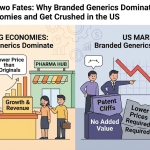
The traditional generic business model relies on high-volume, low-margin approaches that are increasingly unsustainable.1 The entry of a single generic competitor typically reduces the price of the original drug by 30% to 39%.1 This initial drop creates a duopoly between the brand and the first entrant. However, the entry of additional players triggers a non-linear collapse in value. Data from Medicare Part D between 2007 and 2022 confirms that price reductions of 70% to 80% become the standard within three years in markets with ten or more competitors.1
Market Competition and Price Erosion Metrics
Number of Generic Competitors
Approximate Price Reduction vs. Brand Price
Market Dynamic
1
30% – 39%
Duopoly (Brand + 1 Generic)
2
50% – 54%
Triopoly
3-5
60% – 79%
Competitive Oligopoly
10+
80% – 95%
Hyper-competitive Commodity
1
This volatility drives drug shortages. In 2023, 84% of reported shortages involved generic medicines where the price had dropped below the sustainable cost of manufacturing.1 For a business development team, the goal shifts from simple market entry to identifying molecules where branding or manufacturing complexity creates a barrier that arrests this decay. The price erosion curve eventually flattens at approximately 20% of the original brand price, occasionally experiencing a “Dead Cat Bounce” where manufacturers exit, supply tightens, and prices temporarily rise.1
Regulatory Engineering via the 505(b)(2) Moat
The choice of regulatory pathway serves as the primary lever for long-term ROI. The standard 505(j) or Abbreviated New Drug Application (ANDA) pathway mandates “sameness”.1 This requirement leads directly to commoditization because the products are viewed as interchangeable by payers and pharmacists. In contrast, the 505(b)(2) hybrid regulatory pathway allows for modifications in dosage, strength, or formulation.1
Using the 505(b)(2) pathway transforms a manufacturer from a “price taker” into a “price maker”.1 These products often receive “non-AB rating,” meaning they cannot be automatically substituted at the pharmacy counter.1 This forces market share to be driven by physician detailing rather than the lowest net cost, effectively mirroring the sales model of a patented innovator drug.
Comparative Advantage of Regulatory Pathways
Feature
505(j) (ANDA)
505(b)(2) (Hybrid NDA)
Development Cost
$1M – $5M
$5M – $50M+
Data Requirements
Bioequivalence only
Bridging clinical studies
Exclusivity
180 days (First-to-File)
3, 5, or 7 years
Pricing Power
Low (Price taker)
High (Price maker)
Differentiation
Minimal (Interchangeable)
Significant (Value-added)
1
Value-Added Medicines (VAMs) represent the pinnacle of this strategy. By moving beyond the simple molecule, companies address healthcare inefficiencies through drug reformulations. Examples include converting twice-daily tablets to once-daily versions or pairing two off-patent molecules into a single combination therapy.1 These innovations provide a basis for new patents and build a moat that prevents the price collapse seen in hyper-competitive commodity markets.
The Psychology of the Trust Gap
The scientific premise of a generic drug is interchangeability, but the commercial reality is differentiation.2 Brands exploit the “Trust Gap” created by regulatory standards. The FDA allows a confidence interval for bioequivalence ranging from 80.00% to 125.00%.1 While this range is medically acceptable for most patients, brands frame cheaper, unbranded options as “edge cases” or substandard to encourage providers to rely on the reputation of a known manufacturer.1
Trust acts as a form of private-label insurance. When a patient cannot verify the cleanliness of a factory or the potency of a pill, they rely on the reputation of the manufacturer.1 In the Indian market, branded generics command a 30% to 100% premium over “trade generics” yet still retain market dominance.1 Patients pay this premium to avoid the perceived risk of ineffective medication, a behavior rooted in loss aversion.2
Behavioral Economics and Patient Risk Aversion
Prospect Theory describes how individuals value gains and losses differently, typically giving more weight to losses.7 In pharma, this leads to conservative choices. Patients may stick with a more expensive brand because the fear of a treatment failure (a loss) outweighs the joy of a lower copay (a gain).7 Confirmation bias further entrenches this; if a patient believes an expensive drug is safer, they are more likely to interpret their results positively, regardless of the molecule’s performance.8
“Branding isn’t just a logo; it’s a promise of quality. In branded generics, that promise drives adoption.” — Dr. Sarah Lee, Pharma Marketing Consultant.1
Healthcare communications often fail by reinforcing the very behaviors they try to correct. A study by the Ontario Water Company showed that standard leafleting actually increased water consumption by 10%.10 In contrast, a social “contract” group saw consumption fall by 22%.10 This suggests that patient education programs for branded generics should focus on social motivators and personal commitments rather than simple data dumps regarding cost or efficacy.
Sales Machinery and Medical Science Liaisons
The transition from commodity sales to value-based competition requires a shift in field force strategy. Medical Science Liaisons (MSLs) now serve as the vital link between scientific advancement and clinical practice.11 Unlike sales representatives, MSLs focus on scientific exchange and building credibility with Key Opinion Leaders (KOLs).11
An elite MSL acts as an early-warning system, detecting adverse trends in perception or unmet clinical needs that can derail a launch.11 They handle non-promotional education, ensuring that data is interpreted correctly and ethically. This role is particularly critical during the rollout of biosimilars, where physicians may be hesitant to switch from a trusted brand.12
Impact of Customer Experience on Prescribing
CX Metric
Impact on Business Driver
Decision-Making Driver
CX drives 35% of prescription decisions 15
Prescribing Likelihood
Excellent CX doubles the likelihood of prescription 15
Product Confidence
74% vs 40% (Excellent vs Poor CX) 15
Digital Affinity
Only 33% of clinicians are “digital enthusiasts” 16
15
Field feedback collected by MSLs provides competitive intelligence that informs R&D and market access strategies.11 While sales professionals focus on operational access and distribution channels, MSLs offer the clinical perspective that establishes long-term scientific collaboration.12 This collaborative but distinct approach enabled the informed decision-making seen in recent prostate cancer biosimilar rollouts.12
Case Study: Pfizer’s 180-Day War for Lipitor
Lipitor (atorvastatin), developed by Pfizer, became the best-selling drug in history, generating $125 billion in sales by 2011.17 Its primary patent expired on November 30, 2011, triggering a massive threat from generic manufacturers like Ranbaxy.17 Pfizer’s response, characterized as a “180-day war,” involved several unprecedented maneuvers to retain market share.19
The Lipitor Defensive Strategy
Pfizer negotiated a “pay-to-delay” deal with Ranbaxy and partnered with Watson to sell an authorized generic version.19 This effectively limited the market to only three players for the first six months. Simultaneously, Pfizer struck rebate deals with PBMs like Medco and United Healthcare to reduce the net cost of branded Lipitor below the cost of generics.19
The “Lipitor for You” program directly appealed to patients by offering co-pay cards that lowered costs to $4 per month.17 Pfizer also paid pharmacies to mail information about these offers to their patients.19 Despite a 42% decline in global sales in the first quarter of 2012, Pfizer retained a 30% market share at the end of the 180-day period—far exceeding typical post-generic retention rates.17
Financial Impact of Lipitor Patent Expiry
Metric
1Q 2011 (Pre-Expiry)
1Q 2012 (Post-Expiry)
Change
Global Lipitor Sales
Peak performance
42% decline
-42% 19
Pfizer Total Earnings
Baseline
19% decline
-19% 19
US Sales Retained
N/A
$383 Million
Retained 30% share 19
90-Day Supply Profit
$250 (est)
$100 (est)
-60% 19
19
This case demonstrates that maintaining high marketing spend post-expiry can pay dividends. Pfizer spent over $220 million on DTC advertising for Lipitor in 2011 alone.19 By focusing on loyal physicians and direct-to-consumer digital initiatives, Pfizer transformed a potential revenue free-fall into a controlled descent.
Case Study: AbbVie’s Humira and the Rebate Trap
Humira represents a different defensive model: the patent thicket. AbbVie applied for over 250 patents for Humira, securing 130 approvals that resulted in nearly 20 to 30 years of protection from generic competition.20 Even after the first biosimilars launched in 2023, Humira maintained a dominant market share due to “rebate walls”.22
Rebate traps occur when a manufacturer leverages high market share to offer deep discounts to PBMs, contingent on meeting market share targets.23 These practices block lower-priced biosimilars from gaining a foothold because PBMs stand to lose millions in rebate revenue if they switch to a low-cost alternative.21 In 2023, adalimumab biosimilars accounted for only 1% to 3% of the market, despite some launching at list prices 85% lower than Humira.22
Adalimumab Market Share Dynamics (Nov 2023)
Brand
Written Rxs Ratio
Market Share
Pricing Strategy
Humira
46
99%
High-WAC / High-Rebate 25
Biosimilars
1
1%
Low-WAC / Low-Rebate 25
25
PBMs often exclude biosimilars from rebate pass-through provisions in client contracts, allowing them to pocket the savings rather than passing them to employers.26 This incentive misalignment means that even as list prices for biosimilars fall, net costs for health plans may remain high if they are wedded to the high-rebate originator.21 This structural barrier protects the brand’s dominance and reinforces the Trust Premium through artificial market exclusion.
Global Arbitrage and the 40% Revenue Shift
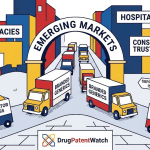
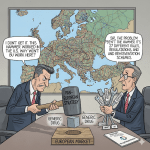
By 2030, emerging markets will account for an estimated 40% of all branded generic revenue.3 This signals a transfer of value from Western blockbusters to pharmerging regions like China, Brazil, and India. In these markets, regulatory oversight is often perceived as inconsistent, making the name on the bottle a “trust proxy” for quality.3
The Geography of Pharmerging Growth
While North America holds 41.9% of global market value, its growth is stagnant compared to the double-digit expansion in emerging regions.3 In India, the market is almost entirely composed of branded generics promoted to physicians by an army of medical representatives.3 Patients trust their doctors’ choice of brand as a proxy for manufacturing excellence. Manufacturers like Sun Pharma and Dr. Reddy’s use these domestic profit engines to fund global expansions.1
Brazil represents a high-potential market valued at $9.2 billion, with spending expected to hit $49 billion by 2030.3 Success here depends on navigating the ANVISA regulatory barrier and establishing local market penetration. Branded generic giants like Teva and Viatris operate massive manufacturing networks to supply nearly 200 million people daily, leveraging scale to command price premiums of 30% to 100% over unbranded counterparts.2
Lifecycle Management: The 15 Strategies
True lifecycle management (LCM) is a holistic discipline that maximizes a drug’s value throughout its entire lifespan.6 Pharmaceutical companies use a data-driven playbook of 15 distinct strategies to smooth the revenue curve and delay market competition.6
Pillar A: Developmental and Clinical Strategies
Indication Expansion: Expanding the patient pool by entering new therapeutic areas.
Next-Gen Formulations: Improving user experience (e.g., from injection to oral) to secure new patents.
Dosing Frequency Optimization: Enhancing convenience to drive adherence and differentiation.
Side Effect Profile Reduction: Improving tolerability to increase physician preference.
Combination Therapies: Pairing the drug with another therapy to create a new standard of care.
“Encore” Product: Switching patients to a patented, second-generation version late in the cycle.
Pillar B: Commercial and Market-Facing Strategies
Rx-to-OTC Switch: Moving a drug to the over-the-counter market to access mass consumers.
Geographical Expansion: Capturing growth in emerging markets to offset Western losses.
Strategic Alliances: Partnering to share development costs and amplify reach.
Pillar C: Legal and Regulatory Strategies
Pediatric Exclusivity: Gaining six months of additional protection by conducting trials in children.
6
Indication expansion typically offers high ROI through new revenue streams but carries high clinical trial risk.6 Next-generation formulations and dosing optimizations build brand loyalty by improving the patient experience.6 Meanwhile, combinations like Caduet (amlodipine and atorvastatin) provide convenient products and enhance sales for two branded drugs with minimal development costs.19
Manufacturing as a Competitive Advantage
In a market plagued by supply disruptions, manufacturing reliability becomes a brand in itself. Institutional buyers like hospitals and GPOs use supplier scorecards that weight FDA inspection history and “failure-to-supply” track records.1 A company that can prove consistent supply can justify higher acquisition costs.
Digital transformation through Quality by Design (QbD) and Process Analytical Technology (PAT) allows firms to reduce analytical labor by 90% and floor space by 70%.1 While the upfront investment for PAT instruments can exceed $4.5 million, the operational savings and reduced product waste provide a transformative ROI.1
Manufacturing ROI and Efficiency Gains
Metric
Traditional Method
PAT/QbD-Enabled
Operational Improvement
Analytical Labor
Baseline (100%)
10%
90% Reduction 1
Inventory Costs
Baseline (100%)
Significant Reduction
Faster Turnaround 1
Failure-to-Supply
High Risk
Low Risk
Premium Pricing Power 1
1
Complex generics—such as metered-dose inhalers and long-acting injectables—require high-precision formulation that keeps competition sparse.1 The “device as the moat” strategy is particularly effective here. For example, the drug combination in Combivent Respimat has been off-patent for over 25 years, yet it remains protected by 17 patents on its inhaler device, with protection stretching to 2028.28
The Looming Patent Cliff (2025–2030)
The scale of revenue at stake in the coming years is unprecedented. Between 2025 and 2030, analysts project that more than $200 billion in annual revenue is at risk from expiring patents.4 This cycle is significantly larger than the wave of expirations in the early 2010s, which eroded $100 billion in sales.6
Blockbusters Facing Loss of Exclusivity
Drug (Trade Name)
Company
Application Area
Market Status
Humira
AbbVie
Immunology
$21B Peak Sales 29
Lipitor
Pfizer
Cholesterol
$12.9B Peak Sales 29
Nexium
AstraZeneca
Proton Pump Inhibitor
80% Generic Price Drop 29
Plavix
Sanofi/BMS
Anticoagulant
90% Generic Price Drop 29
Alimta
Eli Lilly
Oncology
LOE 2016/US 30
29
This looming cliff forces companies to restock pipelines and master the art of LCM to survive. Biologics offer a “patent slope” rather than a cliff, as biosimilars are not identical and adoption is slower.6 However, even biologics can see net sales drop by 60% due to steep discounting required to compete with new entrants.31
DrugPatentWatch and other IP intelligence tools are essential for tracking Paragraph IV certifications and predicting exact market entry windows.3 These platforms allow companies to align their distribution methods and marketing strategies with the timing of competitive generic entry.33
The Digital Future of Brand Differentiation
The Trust Premium is increasingly reinforced by “Pill-Plus” strategies. By bundling medication with digital companion tools, companies create brand loyalty that transcends the molecule.1 These tools generate Real-World Evidence (RWE) that proves superior patient outcomes, allowing brands to enter Value-Based Contracts (VBCs) where pricing is tied to effectiveness.1
Eli Lilly and Novo Nordisk have implemented DTC models for weight-loss drugs like Zepbound and Wegovy, offering discounted cash prices to patients who are not covered by insurance.34 This allows companies to capture profits that would otherwise be diverted to PBMs. About one-fifth of total prescriptions for Zepbound are currently attributable to these cash-pay patients.34
Marketing ROI and DTC Trends
Pharmaceutical companies spent over $6 billion on DTC television advertising in 2024.35 While ROI for launch advertising is declining due to saturation, DTC ads remain a powerful tool for sparking doctor-patient conversations. A year-long study of 148,000 treatments found that 1 in 10 involved a patient request, and over 80% of those requests led to a prescription.35
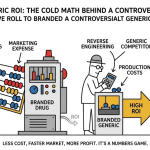
Targeting precision is the new ROI equation. Modern commercial teams focus on propensity scores built from near-real-time claims feeds rather than raw prescription counts.16 Companies that use multi-source scores achieve hit rates north of 70%, which shaves roughly one-third off the cost-per-incremental-script.16 This shift from volume to value ensures that marketing spend is concentrated on HCPs most likely to switch or champion the therapy.
Key Takeaways
Commoditization is a Choice: Companies must decide to compete on ruthless cost efficiency or pivot toward higher-barrier branded generics and Value-Added Medicines.1
The 10-Competitor Threshold: Market value collapses by 80-95% once ten generic competitors enter, making brand differentiation essential for survival.1
The 505(b)(2) Advantage: This regulatory pathway allows manufacturers to become “price makers” by introducing modified products that prevent automatic substitution.1
MSLs Drive Credibility: Medical Science Liaisons are the primary brokers of trust, influencing over a third of the prescribing decision-making process.13
Rebate Walls Protect Brands: Incumbents use high-list-price/high-rebate strategies to block biosimilar adoption, maintaining market share despite lower-cost alternatives.22
Emerging Markets are Vital: By 2030, pharmerging regions will account for 40% of branded generic revenue, driven by out-of-pocket spend and a reliance on corporate reputation.3
Manufacturing is a Brand: Reliability and supply chain integrity command a premium in a market defined by frequent drug shortages.1
FAQ
What is the “Trust Premium” in pharmaceutical pricing? The Trust Premium is the price markup (often 30-100%) that patients and physicians are willing to pay for a branded generic over an unbranded alternative. It is based on the reputation of the manufacturer as a guarantee of quality and safety in markets where regulatory trust is low.1
How do 505(b)(2) regulatory pathways differ from 505(j)? 505(j) is for “sameness” (generic interchangeability) and typically leads to price-taking behavior. 505(b)(2) allows for modifications (dosage, strength, formulation) that create differentiation, allow for new patents, and often block automatic substitution at the pharmacy.1
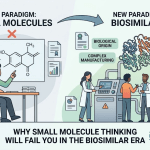
Why has biosimilar uptake been slower than generic drug uptake in the U.S.? The primary barrier is the “rebate wall.” PBMs often prefer high-list-price originator biologics because they generate larger rebates. Additionally, biosimilars face higher regulatory hurdles and clinician/patient hesitancy regarding interchangeability.22
What role does behavioral economics play in patient medication choices? Principles like loss aversion and confirmation bias explain why patients prefer brands. Patients feel the risk of a treatment failure (a loss) more intensely than the benefit of saving money, leading them to stay with trusted brands even when cheaper equivalents are available.7
How can pharmaceutical companies use manufacturing as a brand? By investing in PAT/QbD technologies and maintaining a robust FDA inspection history, companies can demonstrate superior reliability. Hospitals and GPOs often pay a premium for “failure-to-supply” insurance, preferring partners who ensure continuity of care.1