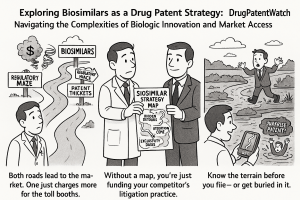
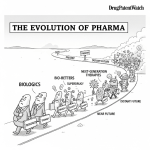
For biopharma IP teams, portfolio managers, R&D leads, and institutional investors who track biologic patent cliffs for a living.
1. Why Biosimilars Are an IP Function, Not Just a Drug Development Problem
The standard narrative around biosimilars frames them as a drug development challenge: complex molecules, demanding analytical comparability packages, expensive cell line work. That framing is incomplete. The dominant variable in biosimilar success or failure is not the science. It is intellectual property strategy.
A biosimilar developer who completes a full analytical, pharmacokinetic, and clinical comparability program for an adalimumab biosimilar and submits a flawless Biologics License Application (BLA) can still find its product blocked from U.S. shelves for years, not because the FDA rejected the application, but because AbbVie has over 250 Orange Book-listed and asserted patents that each require individual litigation or settlement. The drug itself is fine. The IP landscape is the problem.
This guide addresses biosimilar strategy from the IP layer up. It covers the full biologic patent stack, the mechanics of data exclusivity, the BPCIA ‘patent dance’ and its post-Sandoz v. Amgen landscape, formulation and manufacturing patents as offensive IP tools, Freedom-to-Operate (FTO) analysis methodology, the coming wave of Keytruda and Stelara patent cliffs, and the investment implications of the IRA’s price negotiation timeline. Every section targets the decision-makers who need to know not just what the regulatory pathway looks like, but what the patent estate reveals about timeline risk, litigation exposure, and market entry probability.
The global biosimilar market was valued at approximately $26.5 billion in 2024 and is projected to reach between $69 billion and $185 billion by 2029-2033, depending on which growth assumption governs. The spread in those projections reflects the degree of uncertainty in litigation outcomes, settlement terms, and regulatory policy shifts, not uncertainty about demand. Demand for affordable biologic alternatives is structural and will only intensify as healthcare systems in the U.S., EU, and emerging markets face cost pressure from an aging population and an expanding therapeutic menu of expensive biologics.
2. Biologics vs. Biosimilars vs. Small-Molecule Generics: The Distinctions That Drive Strategy
2.1 What Makes a Biologic Different From a Small Molecule
A small molecule like ibuprofen or atorvastatin is a chemically synthesized compound with a precisely defined, reproducible molecular structure. A manufacturer can replicate it atom-for-atom using documented synthesis routes, and a generic producer can demonstrate pharmaceutical equivalence through bioequivalence studies without repeating the originator’s clinical program. The active ingredient is identical. The regulatory pathway reflects this.
A biologic is categorically different. Adalimumab (Humira) is a fully human monoclonal antibody with a molecular weight approximately 1,000 times larger than most small molecules. It is produced in Chinese hamster ovary (CHO) cell lines that have been engineered to express the protein, grown in bioreactors under tightly controlled culture conditions, and purified through a multi-step chromatographic process. Every step of that production process, from cell line selection to upstream fermentation parameters to downstream purification buffers, influences the final product’s post-translational modification (PTM) profile: glycosylation patterns, charge variants, aggregation levels, and oxidized species. Change the cell line, change the culture conditions, or change the purification sequence, and you change the product’s molecular microheterogeneity, potentially affecting immunogenicity and clinical performance.
This is why the FDA’s standard for biosimilar approval under the BPCIA is ‘highly similar, with no clinically meaningful differences in safety, purity, and potency’ rather than ‘identical.’ Identical is not achievable, and not even the originator achieves it across manufacturing batches. What regulators require is that the biosimilar’s microheterogeneity falls within the acceptable range established by the reference product’s own batch-to-batch variation, as demonstrated through an extensive analytical comparability package.
2.2 Why Biosimilar Development Costs 10x More Than Generic Development
Generic development for a small molecule typically costs between $1 million and $5 million. Biosimilar development costs $100 million to $300 million and takes 7 to 10 years. The cost differential has a specific technical basis.
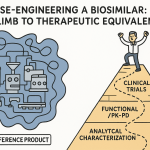
Cell line development alone can take 12 to 24 months. The biosimilar developer must independently establish a Master Cell Bank from a cell line engineered to express a protein highly similar to the reference biologic, because the originator’s cell line is proprietary and not accessible. Upstream process development, including optimization of bioreactor conditions to achieve target glycosylation profiles, adds another 12 to 18 months. Downstream purification development, where the goal is to achieve a purity and aggregate specification consistent with the reference product, adds further time and cost.
The analytical comparability package alone, covering structural characterization, physicochemical properties, biological activity, immunochemical properties, and impurity profiles, typically involves over 100 individual analytical tests. Each test requires validated methods, reference standards, and a statistical framework for demonstrating similarity. The FDA’s guidance on totality-of-evidence reviews means that every data gap in the analytical package must be filled with additional clinical data. A strong analytical package can potentially eliminate the need for a comparative efficacy study; a weak one requires a Phase III randomized controlled trial that may cost $50 million to $100 million by itself.
2.3 The IP Implication of Biological Complexity
The very complexity that makes biosimilar development expensive also creates an unusually broad IP space for originator companies to occupy. A small-molecule drug has one composition-of-matter patent, typically one or two formulation patents, and a handful of method-of-use patents. That is a defensible but finite estate.
A biologic like adalimumab can be patented at the sequence level (composition of matter), at the glycosylation profile level (specific post-translational modification patterns), at the manufacturing process level (cell culture conditions, purification methods, buffer compositions), at the formulation level (concentration, excipients, pH, citrate-free vs. citrate-containing), at the delivery device level (specific autoinjector designs), and at the method-of-use level across every approved indication. Each of these patent categories can overlap, reinforcing the others. A biosimilar manufacturer who successfully designs around the originator’s cell culture process patents may still face formulation patents. One who designs around the formulation may face device patents. The result is a multi-layered defense that requires patent-by-patent analysis rather than a single clearance event.
Key Takeaways: Section 2
The biological complexity of large molecules creates a fundamentally broader and more defensible IP space than small molecules. Biosimilar development costs $100 million to $300 million and takes 7 to 10 years because the science, not just the regulatory pathway, demands it. The ‘highly similar, not identical’ standard for biosimilar approval is a direct consequence of how biologics are made. Strategies that work for generic small-molecule entry cannot be mapped directly onto biosimilar development without accounting for each layer of the biologic’s patent estate.
3. The Biologic Patent Stack: Six Layers of Protection and How Each One Works
3.1 Composition-of-Matter Patents: The Foundational Layer
A composition-of-matter patent on a biologic claims the amino acid sequence of the therapeutic protein or antibody, the encoding DNA sequence, or both. This is the foundational layer of the biologic IP estate. For a monoclonal antibody, the composition-of-matter patent typically claims the variable domain sequences (CDR regions) that define the antibody’s binding specificity, and often the full heavy and light chain sequences. For a fusion protein like etanercept (Enbrel), the composition-of-matter patent claims the specific protein construct, including the TNF receptor domain and the IgG1 Fc region.
Composition-of-matter patents on biologics are filed earliest in the development program, often concurrent with or shortly after the filing of the first IND (Investigational New Drug application). They are the highest-value patents in the estate because they theoretically block all competing products containing the same or highly similar protein sequence, regardless of how those products are manufactured, formulated, or delivered. In practice, their enforceability against biosimilars often turns on the specific breadth of the claims and whether the biosimilar’s cell line produces a protein sequence that falls within the claimed scope.
IP Valuation Note: Humira (Adalimumab, AbbVie). AbbVie’s composition-of-matter patents on adalimumab’s antibody sequence expired in the United States in 2016. At that point, the asset had generated well over $100 billion in cumulative global revenue. The expiry of the composition-of-matter patent did not trigger biosimilar entry, because AbbVie had built 249 additional granted U.S. patents around the product, covering formulations, manufacturing processes, dosing regimens, and indications. U.S. biosimilar entry did not occur until January 2023, seven years after the composition-of-matter cliff. This gap is the clearest quantification available of what a fully executed secondary patent strategy can achieve: roughly $60 to $70 billion in additional U.S. revenue protected by non-composition-of-matter patents alone.
3.2 Process Patents: Protecting the Manufacturing Secrets
Process patents claim the methods used to produce the biologic. In biologics manufacturing, process patents can cover cell culture conditions (temperature, dissolved oxygen, pH control, feeding strategy), specific expression vector designs used to engineer the producing cell line, chromatography sequences and buffer compositions used in downstream purification, viral clearance validation approaches, and specific post-translational modification control strategies (e.g., methods for achieving a target glycan profile).
Process patents are particularly important for biologics because the manufacturing process directly determines product quality attributes. An originator’s process patent covering a specific purification method that achieves a particular low-aggregate specification creates two problems for a biosimilar developer simultaneously: it blocks use of that purification approach, and it requires the biosimilar developer to demonstrate that their alternative approach achieves a comparably low aggregate specification. In some cases, the alternative approach is technically feasible but yields a product with slightly different charge variant distribution or glycosylation patterns, generating additional analytical comparability work.
3.3 Formulation Patents: The Most Commercially Aggressive Secondary Layer
Formulation patents claim the composition of the drug product, including the active ingredient’s concentration, buffer system, stabilizing excipients, tonicity agents, and pH. For biologics, where stability and patient tolerability are genuine clinical concerns at high concentrations, formulation patents often represent genuine innovation in their own right. A high-concentration, low-viscosity formulation that enables subcutaneous self-injection at home is clinically meaningfully superior to an intravenous infusion requiring hospital administration.
The strategic controversy arises when formulation patents are filed not to protect a clinically superior product but specifically to erect a legal barrier for biosimilar competitors. AbbVie’s citrate-free adalimumab formulation, launched in 2017 as Humira Citrate-Free at 100 mg/mL (versus the original 50 mg/mL citrate-containing formulation), is the clearest recent example. AbbVie obtained formulation patents on the citrate-free high-concentration formulation and subsequently sought to convince prescribers and pharmacy benefit managers (PBMs) to shift patient panels to the citrate-free version before biosimilar entry. Biosimilar manufacturers who had developed comparability packages for the original 50 mg/mL citrate-containing formulation then faced a market where the reference product of record was shifting to the new formulation, complicating their regulatory and commercial positioning.
IP Valuation Note on Formulation Patent Value. A pharmaceutical formulation patent that successfully shifts the majority of prescriptions to the patented formulation before generic or biosimilar entry can extend effective commercial exclusivity by 3 to 7 years beyond the composition-of-matter cliff. In a blockbuster biologic with annual revenues of $5 billion or more, each year of extended exclusivity is worth $3 to $4.5 billion after accounting for the price erosion that begins immediately after the first biosimilar enters. The NPV of a formulation patent that extends exclusivity by five years on a $5 billion annual revenue asset is roughly $15 billion at a 10% discount rate, far exceeding what any clinical trial or R&D program produces per dollar invested. This is why originator companies invest heavily in formulation development and patent filing, and why biosimilar developers invest equally heavily in designing around these patents.
3.4 Method-of-Use Patents: Indication Expansion as IP Strategy
Method-of-use patents claim the therapeutic application of a compound. For biologics with multiple approved indications, the method-of-use patent estate can be extensive. Adalimumab has approved indications across rheumatoid arthritis, psoriatic arthritis, ankylosing spondylitis, Crohn’s disease, ulcerative colitis, plaque psoriasis, hidradenitis suppurativa, juvenile idiopathic arthritis, and uveitis. Each new indication approval typically corresponds to one or more method-of-use patents with a later priority date than the original composition-of-matter filing.
The biosimilar implications are complex. An ANDA or BLA for a biosimilar can be approved with a ‘skinny label’ that excludes patented indications, a practice borrowed from the Hatch-Waxman framework for small molecules. The biosimilar is approved only for the indications whose method-of-use patents have expired or are not asserted. However, the practical commercial impact of skinny labeling in biologics is more constrained than in small molecules, because biologic prescribing is concentrated among specialist physicians who write indication-specific prescriptions, and payers often restrict biosimilar coverage to specific approved indications. A biosimilar approved only for rheumatoid arthritis and not for Crohn’s disease faces a commercially limited formulary position if the reference product is predominantly used for IBD in a particular patient population.
3.5 Delivery Device Patents: The Tertiary Moat
Delivery device patents claim the physical device used to administer the biologic, including autoinjectors, pre-filled syringes, pen injectors, and prefilled cartridge systems. These patents are filed by originators with two goals: to improve patient compliance and comfort (a genuine clinical benefit) and to extend the effective exclusivity window beyond the expiry of drug-level patents (a commercial strategy).
Device patents are particularly relevant for biosimilar interchangeability in the U.S. The FDA’s interchangeability designation requires that patients can be switched between the reference biologic and the biosimilar without a loss of clinical effect. Demonstrating interchangeability with an autoinjector device that is covered by unexpired patents requires either licensing the patented device design or developing a functionally equivalent alternative device. The latter approach is feasible but adds regulatory burden, because the biosimilar developer must include device-related comparative data in the BLA.
3.6 Combination and Dosing Regimen Patents
Combination patents claim the co-administration of two drugs for a specific therapeutic effect. Dosing regimen patents claim specific dose levels, dosing intervals, or titration schedules. While these patent types are less central to the biosimilar entry analysis than composition-of-matter and formulation patents, they can become relevant in specific therapeutic contexts where the approved dosing regimen for the reference biologic is claimed in Orange Book-listed patents.
Merck’s Keytruda (pembrolizumab) patent estate includes dosing regimen patents covering the 200 mg flat dose administered every three weeks, which became the dominant commercial dosing schedule after earlier weight-based dosing was superseded. These dosing regimen patents have later priority dates than the composition-of-matter patent and, in combination with the PD-1 binding domain patents, create a layered estate that biosimilar developers for pembrolizumab must map thoroughly.
Key Takeaways: Section 3
The biologic patent stack has at least six distinct layers: composition of matter, process, formulation, method of use, delivery device, and dosing regimen. Each layer has a different priority date, different claim scope, and different design-around feasibility. Composition-of-matter expiry does not equal market entry. The Humira case demonstrates that a post-composition-of-matter patent estate, if systematically constructed, can extend effective exclusivity by seven or more years. Formulation patent value scales with the revenue of the underlying product. A single formulation patent on a $5 billion annual revenue biologic can be worth $10 to $15 billion in NPV terms.
4. Data Exclusivity vs. Patent Protection: Two Separate Clocks Running Simultaneously
4.1 What Data Exclusivity Covers and Why It’s Separate From Patent Rights
Data exclusivity is a regulatory protection, not a property right. Patents protect inventions. Data exclusivity protects the clinical trial data an innovator company submits to a regulatory agency to prove its drug’s safety and efficacy. Even if every patent on a biologic expired tomorrow, a biosimilar developer could not reference that data in a BLA submission during the applicable exclusivity period. The FDA is legally prohibited from accepting such an application.
This distinction matters commercially because data exclusivity periods are absolute and non-negotiable. A Paragraph IV challenge can invalidate a patent. A Freedom-to-Operate analysis can identify a design-around path that avoids infringement. Nothing equivalent exists for data exclusivity. The only available strategy is to wait.
4.2 U.S. Data Exclusivity: The BPCIA’s 12-Year Framework
The Biologics Price Competition and Innovation Act (BPCIA) of 2009 grants a 12-year reference product exclusivity period running from the date of first licensure of the originator biologic. Within that 12-year window, there is a 4-year ‘submission bar’: no biosimilar applicant may even submit a BLA that references the originator’s clinical data during the first four years after the reference product’s approval. From years 5 through 12, a BLA may be submitted but the FDA cannot approve it until the full 12-year period expires. An additional 6-month pediatric extension is available if the originator conducts qualifying pediatric studies under the Biologics Price Competition and Innovation Act’s pediatric exclusivity provisions.
This 12-year period is substantially longer than the 5-year data exclusivity granted to new chemical entities (NCEs) under Hatch-Waxman. The policy rationale was that biologic development is more expensive and complex than small-molecule development, warranting a longer exclusivity runway to encourage investment. Critics, including the Congressional Budget Office and multiple academic health economists, have argued that 12 years is longer than necessary to incentivize biologic development, and that reducing it to 7 years (as proposed in various legislative drafts) would generate substantial public savings without meaningfully reducing R&D investment. This policy debate has not resolved.
4.3 European Exclusivity: The 8+2+1 Framework
The EU’s exclusivity framework for biologics follows the ‘8+2+1’ model. The 8-year data exclusivity period begins from initial marketing authorization. During these 8 years, no biosimilar applicant may reference the originator’s data. Following the 8-year data exclusivity period, a 2-year market exclusivity period begins, during which a biosimilar may receive a marketing authorization but cannot be commercially marketed. A third year of market exclusivity, the ‘+1’, is available if the originator gains approval for a new therapeutic indication that provides significant clinical benefit over existing therapies during the first 8 years of exclusivity.
The maximum EU exclusivity period is therefore 11 years, versus 12.5 years (including pediatric extension) in the U.S. This one-and-a-half-year difference matters in global launch sequencing. Biosimilar developers who complete their analytical comparability packages on EU timelines may be commercially ready before U.S. regulatory approval is permitted, creating pressure to prioritize EU launch before the higher-revenue U.S. market opens.
4.4 How Data Exclusivity and Patent Protection Interact: The Double-Layer Problem
A biosimilar developer must clear both clocks simultaneously. Data exclusivity expires on a fixed date determined by the reference product’s approval date. Patents expire on dates determined by their filing dates and any patent term extensions or adjustments. In most cases, for blockbuster biologics approved in the early 2000s, both the 12-year data exclusivity period and the composition-of-matter patent have already expired or are approaching expiry. The live IP threat is the secondary patent estate.
For biologics approved more recently, the data exclusivity clock is still running. Pembrolizumab (Keytruda) received FDA approval in September 2014. Its 12-year data exclusivity period runs until September 2026. Biosimilar BLAs referencing Keytruda’s clinical data could be submitted from September 2018 (after the 4-year submission bar) but cannot receive FDA approval until September 2026, regardless of how strong the biosimilar’s analytical comparability package is. This creates a defined minimum market entry date that is independent of patent litigation outcomes.
Key Takeaways: Section 4
Data exclusivity and patent protection are two independent legal instruments that must be analyzed separately. Data exclusivity is absolute; it cannot be challenged or designed around. For recent-vintage biologics, the 12-year U.S. data exclusivity period sets a hard floor on biosimilar market entry that patent strategy cannot change. The U.S. 12-year framework is materially longer than the EU’s 8+2+1 model, creating sequencing differences in global biosimilar launch planning. Pediatric exclusivity adds 6 months to both frameworks when qualifying studies are completed.
5. The Humira Playbook: Anatomy of a 250-Patent Thicket
5.1 How AbbVie Built the Most Aggressive Patent Estate in Pharmaceutical History
Adalimumab (Humira) launched in the United States in January 2003 and generated its first $200 million in sales that year. AbbVie’s IP team, recognizing the molecule’s commercial potential, began systematically expanding the patent estate beyond the original composition-of-matter coverage. By 2023, AbbVie had secured or applied for over 250 U.S. patents related to Humira, covering formulations at different concentrations and pH levels, specific excipient combinations including histidine-buffered and citrate-free formulations, manufacturing process parameters for CHO cell culture, purification methods for achieving specific charge variant distributions, autoinjector devices, dosing regimens across multiple indications, and combination therapy methods.
The original composition-of-matter patent on adalimumab’s human antibody sequence expired in December 2016. At that point, multiple biosimilar developers, including Amgen (Amjevita), Sandoz (Hyrimoz), and Boehringer Ingelheim (Cyltezo), had already received FDA approval for their products. They could not launch commercially, however, because AbbVie’s secondary patent estate created a litigation wall. Each biosimilar manufacturer who sought to launch received a BPCIA ‘first wave’ complaint from AbbVie asserting dozens of the 250+ patents. The prospect of litigating each of those patents individually to completion would require a decade and hundreds of millions in legal fees, with no certainty of outcome on any individual patent.
5.2 The Settlement Architecture: How AbbVie Monetized the Thicket Without Going to Trial
Rather than litigating every patent to judgment, AbbVie used the thicket as leverage to negotiate settlements with every major biosimilar developer. The settlement terms were not publicly disclosed in most cases, but the commercial outcome was transparent: every U.S. biosimilar competitor agreed to delay commercial launch until January 2023, allowing AbbVie to generate approximately seven years of post-composition-of-matter exclusivity through settlements rather than litigation victories.
The economic return on AbbVie’s patent filing investment is calculable. Humira’s U.S. revenues from December 2016 (composition-of-matter expiry) through December 2022 (month before biosimilar launch) totaled approximately $60 billion. AbbVie’s legal and patent prosecution costs over that period were in the hundreds of millions of dollars, a rounding error against the revenue protected. Few capital allocation decisions in pharmaceutical history have yielded a comparable return on investment.
Former FDA Commissioner Scott Gottlieb described AbbVie’s patent strategy explicitly as ‘purely designed to deter the entry of approved biosimilars.’ The description is accurate. Whether it is objectionable depends on one’s view of the patent system’s intended function, but its commercial effectiveness is beyond question.
5.3 Post-2023 Humira Market: What Actually Happened to Biosimilar Penetration
When U.S. biosimilar entry finally occurred in January 2023, the market did not behave as economists had modeled. By mid-2024, after more than a dozen adalimumab biosimilars had received U.S. approval and several had launched commercially, the combined biosimilar market share for adalimumab remained well below 30% by volume in most formulary categories. Multiple factors explain this underperformance relative to EU biosimilar penetration curves, which reached 80-90% biosimilar share within three years of the first biosimilar launch.
The primary structural factor was the rebate system. AbbVie had for years offered PBMs deep confidential rebates on Humira, estimated by analysts at 40-60% of list price. These rebates were contractually protected and created a perverse incentive: keeping high-list-price Humira on formulary generated more rebate revenue for the PBM than substituting with a lower-list-price biosimilar that carried no rebate. This dynamic, which does not exist in the EU where rebate structures are regulated differently, is the main reason U.S. biosimilar penetration in high-rebate therapeutic categories consistently underperforms EU penetration curves.
Investment Strategy Note. For analysts modeling biosimilar revenue in the U.S. market, applying European penetration curve assumptions to high-rebate therapeutic categories (TNF inhibitors, IL-17 inhibitors, IL-23 inhibitors) will systematically overstate biosimilar revenue and understate reference biologic durability. U.S. adalimumab biosimilar penetration at 18 months post-launch was roughly 25-30% by volume, compared to EU biosimilar penetration of 70-80% at the same stage. Build a separate U.S. penetration curve calibrated to the adalimumab case rather than the EU template.
Key Takeaways: Section 5
AbbVie’s Humira patent estate generated approximately $60 billion in U.S. revenue after the composition-of-matter patent expired, protected entirely by secondary patents and the litigation threat they created. The thicket worked through settlements, not trial victories. No biosimilar manufacturer litigated the full estate to judgment. Post-2023 U.S. adalimumab market dynamics confirm that biosimilar penetration in the U.S. is structurally constrained by PBM rebate architecture in ways the EU is not, requiring separate penetration modeling assumptions for U.S. vs. EU biosimilar market forecasts.
6. Evergreening Technology Roadmap: Stage-by-Stage Tactics from Filing to Settlement
6.1 Stage 1: Lock the Core (Years 0-5 Post-Development)
The evergreening process begins at molecule discovery. As soon as a biologic candidate shows meaningful preclinical efficacy, the originator files composition-of-matter patents on the protein sequence, the encoding gene construct, and the cell line expressing it. These earliest-filed patents have the longest remaining term at launch, typically 8 to 12 years of effective post-approval exclusivity after accounting for development time and patent term adjustments under 35 U.S.C. Section 156.
The strategic imperative at this stage is claim breadth. Claim too narrowly (e.g., a single antibody sequence) and a competitor can design around the patent by developing an antibody that binds the same epitope with a slightly different sequence. The prosecution strategy targets broad functional claims (antibodies binding to a defined epitope or epitope region with defined binding kinetics) combined with specific structural claims on the lead molecule.
6.2 Stage 2: Process Patent Filing (Years 3-8 Post-Approval)
As manufacturing processes are optimized following FDA approval, originator companies file process patents covering the production methods that have been refined during commercial manufacturing scale-up. These patents claim specific cell culture parameters, purification column configurations, and quality control specifications that are difficult or impossible for a biosimilar manufacturer to independently replicate without infringing.
The technical basis for these patents is genuine: commercial-scale biologic manufacturing requires years of optimization to achieve consistent product quality, and the resulting process innovations are often non-obvious. The commercial motive, however, is equally important. Process patents filed during commercial manufacturing have priority dates 5 to 10 years after the composition-of-matter patent, providing a later expiry date that extends the overall protection window.
The formulation upgrade cycle is the most commercially impactful evergreening step. When an originator has sufficient market penetration data to know which aspects of the reference formulation create patient compliance problems, room exists to file a clinically meaningfully improved reformulation and patent it. Typical upgrades include: transition from IV infusion to subcutaneous injection (e.g., rituximab intravenous to subcutaneous); reduction from twice-monthly to monthly dosing through extended-release reformulation; concentration increase enabling smaller injection volume; elimination of irritating excipients such as citrate buffers; and development of heat-stable or refrigeration-free formulations for improved supply chain and patient convenience.
Each of these formulation upgrades generates new Orange Book-listable patents. If the originator can shift the commercial market to the new formulation before biosimilar entry, biosimilar developers face a more complex comparability challenge: they must match a newer, more sophisticated formulation rather than the original product.
6.4 Stage 4: New Indication Filing and Method-of-Use Patents (Years 8-18 Post-Approval)
Phase II and Phase III studies for additional indications generate method-of-use patents with priority dates years after the original molecule patents. These patents extend the effective life of the franchise beyond the composition-of-matter cliff, because biosimilar developers must either accept skinny labels excluding the new indications or wait for those method-of-use patents to expire before launching a full-label biosimilar.
The financial return on a new indication filing is therefore dual: the direct revenue from the new patient population, and the indirect patent estate extension value. For biologics with broad mechanisms of action (e.g., TNF inhibitors, IL-6 inhibitors, PD-1/PD-L1 inhibitors), the potential number of qualifying indications is large, creating substantial method-of-use patent stacking opportunities.
IP Valuation Note: Pembrolizumab (Keytruda, Merck). Keytruda had global revenues of $25 billion in 2023, making it the top-selling pharmaceutical product globally. Merck has sought 129 patents covering multiple aspects of pembrolizumab, including the antibody sequence, manufacturing process, formulations, dosing regimens, and combination therapy approaches across dozens of cancer types. The approved indication list runs from non-small cell lung cancer to melanoma to colorectal cancer to cervical cancer. Each approved indication has corresponding method-of-use patents. As of 2026, Merck’s composition-of-matter patent on pembrolizumab’s PD-1 binding domain patents has faced validity challenges, with some expiring in 2028. But the method-of-use patent estate, covering specific combination regimens and indications, extends materially beyond the composition-of-matter cliff. Analysts modeling Keytruda biosimilar entry should map the method-of-use patent estate before projecting revenue erosion timelines.
The delivery device patent layer is filed latest and expires latest. Autoinjector designs, pen injector mechanisms, and prefilled syringe specifications filed during the product’s commercial maturity phase can have 20-year protection periods extending well into the biosimilar era. These patents do not block biosimilar market entry per se, but they create interchangeability complications and require biosimilar developers to invest in parallel device development or licensing.
The final stage of the evergreening cycle is the next-generation molecule: a distinct biologic that improves on the original in a clinically meaningful way, filed with a new composition-of-matter patent that restarts the exclusivity clock. The archetype from small molecules is AstraZeneca’s transition from Prilosec (omeprazole) to Nexium (esomeprazole). In biologics, the model is the transition from infliximab (Remicade) to infliximab plus subcutaneous delivery, or from adalimumab to the IL-17A inhibitor ixekizumab (Taltz), which targets the same psoriatic disease space with a different mechanism.
The next-generation biologic strategy requires genuine scientific investment, not just patent filings, because the clinical differentiation must be real enough to support prescriber adoption. The return is a fresh composition-of-matter patent estate, brand-building investment that can carry the franchise forward, and potential premium pricing supported by head-to-head clinical data.
Key Takeaways: Section 6
Biologic evergreening follows a predictable six-stage sequence from composition-of-matter through next-generation molecule filing. Each stage adds patent protection with a progressively later expiry date. The most commercially impactful stage for blocking biosimilar entry is the formulation upgrade (Stage 3), which can shift the reference product away from the formulation on which biosimilar developers have built their comparability packages. Method-of-use patents (Stage 4) force biosimilar developers into skinny-label commercialization or extended waiting periods on indication-by-indication basis.
7. The BPCIA ‘Patent Dance’: Mechanics, Supreme Court Impact, and Litigation Outcomes
7.1 The Patent Dance Sequence: Step-by-Step
The BPCIA’s pre-litigation information exchange, universally called the ‘patent dance,’ is triggered when a biosimilar applicant submits a BLA to the FDA. The statutory sequence runs as follows.
Within 20 days of FDA acceptance of the aBLA for review, the biosimilar applicant must provide the reference product sponsor (RPS) with a confidential copy of the full aBLA and all manufacturing information submitted to the FDA. This disclosure includes the biosimilar developer’s proprietary cell line data, manufacturing process parameters, and formulation specifications. The RPS cannot use this information for any purpose other than the patent dance proceedings, but the disclosure is significant: it gives the originator company a detailed technical picture of exactly how the biosimilar is made.
Within 60 days of receiving the aBLA, the RPS provides the biosimilar applicant with a list of patents it reasonably believes could be infringed by commercial manufacture, use, sale, or import of the biosimilar product. Separately, the RPS discloses which patents from its list it would be prepared to license.
Within another 60 days, the biosimilar applicant provides a detailed claim-by-claim response. For each patent on the RPS’s list, the biosimilar applicant must provide a statement of why the patent is invalid, unenforceable, or not infringed by the biosimilar product, or must state its willingness to accept a license. The specificity required is substantial: the applicant must provide the factual and legal bases for its position on each claim of each patent.
Following this exchange, the parties have 15 days of good-faith negotiation to agree on a subset of patents for immediate litigation (the ‘first wave’). If no agreement is reached, both parties simultaneously file their proposed patent lists for the first wave, and the RPS files suit on those patents in the first wave.
A second wave of litigation may follow when the biosimilar applicant provides 180-day notice of commercial marketing, which under the Supreme Court’s ruling in Sandoz v. Amgen can be provided either before or after FDA approval.
7.2 Sandoz v. Amgen (2017): What the Supreme Court Actually Held
The Supreme Court’s unanimous decision in Sandoz v. Amgen, decided June 12, 2017, resolved two key questions about the patent dance.
First, the Court held that the patent dance is optional, not mandatory. A biosimilar applicant can choose not to provide the aBLA to the RPS. If the applicant opts out, the RPS can immediately seek a declaratory judgment for infringement, rather than waiting for the 180-day commercial marketing notice. The opt-out option therefore does not eliminate litigation; it changes when and how it begins.
Second, the Court held that 180-day notice of commercial marketing can be provided before FDA approval, not only after. This resolved a circuit split on a question that had significant commercial implications: pre-approval notice starts the 180-day clock earlier, allowing biosimilar applicants to potentially launch sooner after FDA approval.
The practical effect of Sandoz v. Amgen on the biosimilar litigation landscape has been mixed. Opt-out is rarely exercised in practice, because the dance provides biosimilar applicants with the RPS’s full patent list, allowing focused litigation preparation. When biosimilar applicants opt out, the RPS controls the initial litigation filing, which gives the RPS more flexibility in patent selection strategy.
7.3 Litigation Outcomes: Why 67% of Cases Settle Without Judicial Resolution
The BPCIA literature consistently shows that approximately 67% of patent dance litigations end in settlements or stipulated voluntary dismissals rather than full judicial resolution on the merits. This settlement rate is higher than the general civil litigation settlement rate and reflects specific structural features of BPCIA litigation.
First, the stakes are asymmetric at the time of first-wave litigation. Biosimilar applicants file their aBLA after completing development, spending $100 to $300 million on the program. The originator company faces the prospect of losing monopoly revenue on a product generating $1 to $25 billion annually. Both parties have enormous financial incentives to find a commercial resolution that avoids the uncertainty of judicial outcomes.
Second, at-risk launch, meaning commercializing the biosimilar while patent litigation is ongoing, carries extreme downside risk for the biosimilar developer. If the biosimilar launches while a patent is asserted and the court ultimately finds infringement, the damages award can include lost profits for every unit sold during the at-risk period. For a major biologic with annual U.S. revenues of $5 billion, a two-year at-risk launch generating $1.5 billion in biosimilar sales could expose the biosimilar developer to damages of $3 billion or more if the court values the originator’s lost profits at 2x the biosimilar’s revenues. This downside scenario makes settlement a rational choice even when the biosimilar developer believes it would win at trial.
Third, Patent Trial and Appeal Board (PTAB) inter partes review (IPR) proceedings provide biosimilar developers with a lower-cost alternative to district court litigation for challenging patent validity. A successful IPR petition, if granted and resulting in patent cancellation, removes the challenged patent from the estate without a district court trial. Coordinating IPR challenges with district court litigation, or using IPR outcomes as settlement leverage, is standard practice in modern BPCIA strategy.
7.4 Biosimilar Launch Timing: The Real-World Outcomes
AbbVie’s settlement terms with major Humira biosimilar competitors consistently included delayed U.S. launch dates of January 2023, paid royalty rates for the settlement period, and geographic carve-outs allowing European launches earlier. The Boehringer Ingelheim settlement is the most documented: Cyltezo (adalimumab-adbm) received FDA approval in August 2017 but launched in the U.S. only in July 2023, six months after the first batch of competitors. The settlement delay cost Boehringer approximately $300 to $500 million in U.S. revenue relative to a January 2023 launch date, but avoided the litigation and at-risk launch exposure.
Amgen’s Amjevita launched January 31, 2023, as the first adalimumab biosimilar to market in the U.S. The first-to-launch advantage under the BPCIA is not as commercially significant as the 180-day exclusivity period for first filers under Hatch-Waxman, but the head start on formulary contracting negotiations provided Amgen a meaningful commercial positioning advantage.
Key Takeaways: Section 7
The patent dance is optional under Sandoz v. Amgen, but in practice most biosimilar developers participate because the aBLA disclosure requirement gives them the RPS’s patent list, enabling focused litigation preparation. Approximately 67% of BPCIA litigations settle without judicial resolution on the merits, driven by at-risk launch downside exposure and asymmetric financial stakes. PTAB IPR proceedings are a valuable complementary tool for patent validity challenges that bypass district court litigation cost and timing. Settlement terms typically include delayed launch dates and royalty payments, meaning that even ‘successful’ biosimilar IP strategies often involve paying the originator for years of commercial entry delay.
8. Freedom-to-Operate Analysis: The Biosimilar Developer’s First Weapon
8.1 Why FTO Analysis Must Begin Before Formulation Selection
A Freedom-to-Operate analysis for a biosimilar program should begin before formulation selection, not after. The specific excipients selected, the buffer system chosen, the concentration target, and the delivery device specification all have direct patent implications. A biosimilar developer who selects a histidine buffer at pH 5.2 with polysorbate 80 and mannitol as stabilizers, then completes a two-year formulation development program, and only then runs an FTO analysis, may discover that the exact excipient combination is covered by an originator formulation patent with a 2032 expiry. The two years of development work may need to be partially or fully repeated.
Early FTO analysis identifies the formulation patent space, allowing developers to select excipient combinations, concentration levels, and buffer systems that achieve the target product quality profile while avoiding the originator’s claimed compositions. In some cases, early FTO analysis reveals that the originator’s formulation patents are drafted with claim scope that can be avoided through minor excipient substitutions without affecting product quality. In other cases, it reveals that the entire relevant formulation space is claimed, requiring a licensing approach or a challenge to patent validity.
8.2 Building the FTO Patent Map: What to Search and How
A complete FTO analysis for a biosimilar program requires comprehensive patent searching across the following categories: all composition-of-matter patents on the reference biologic’s active sequence; all process patents referencing the manufacturing of the reference product or structurally similar biologics; all formulation patents covering the reference product’s composition, concentration range, excipient types, and pH window; all delivery device patents referencing the originator’s autoinjector or pre-filled syringe designs; all method-of-use patents across every indication; and all combination therapy patents relevant to the biosimilar’s anticipated clinical use.
This requires searching not just U.S. patents but international patent families, because composition-of-matter patents filed in the EU or Japan under the Patent Cooperation Treaty (PCT) may have U.S. national phase applications with claim language differing from the originator application. The U.S. Orange Book (for NDA-listed small molecules) equivalent for biologics is the FDA Purple Book, which lists patents submitted by BLA holders. However, the Purple Book’s patent listing is less comprehensive than the Orange Book, because BPCIA patent submission requirements are less stringent than Hatch-Waxman requirements. The Purple Book is a starting point for FTO, not a complete picture.
DrugPatentWatch provides an integrated cross-reference of Orange Book listings, Purple Book entries, PTAB proceedings, and district court litigation records that materially reduces the manual search burden for FTO analysis. The platform’s automated monitoring of Paragraph IV filings against specific product patents is particularly valuable for identifying which patents other biosimilar developers are challenging, which is an indirect signal of which patents are considered the most commercially significant and legally vulnerable.
8.3 The Pfizer/Xalkori Case Study: FTO as Revenue Generator
The Xalkori (crizotinib) case demonstrates that a thorough FTO analysis can identify not just risks but commercial opportunities. Pfizer’s FTO team, analyzing Shire’s ROS1 kinase inhibitor patent portfolio when preparing to develop crizotinib for a ROS1 fusion gene indication in lung cancer, mapped all of Shire’s claims related to kinase selectivity ratios and structural requirements. The analysis revealed that Shire’s composition-of-matter claims focused on specific crystalline forms of kinase inhibitors. Pfizer’s team identified a polymorphic form of crizotinib with measurably different physical properties and filed a new composition patent on this polymorph, which also showed 30% higher bioavailability than the originally developed form.
This polymorphic form became the basis for an NDA supplement adding the ROS1 indication to Xalkori’s label, contributing approximately $2.1 billion in incremental sales. The FTO analysis did not just clear a legal path; it prompted a development choice, the polymorph pursuit, that directly generated revenue.
Key Takeaways: Section 8
FTO analysis for a biosimilar program must begin before formulation selection, because formulation choices have direct patent implications that are cheapest to address before development investment is committed. The Purple Book is an incomplete FTO resource for biologics; a complete analysis requires PCT family searching across multiple jurisdictions. PTAB IPR challenges filed by competing biosimilar developers are a signal of which originator patents are considered commercially significant and legally vulnerable. The Xalkori case shows FTO analysis generating revenue when it identifies patentable design-around paths with superior product attributes.
9. Biosimilar Formulation and Manufacturing as Offensive IP Strategy
9.1 Building a Defensive Patent Moat Through Formulation Innovation
Biosimilar companies are increasingly building their own patent estates, not to protect a first-in-class molecule, but to differentiate their products from both the reference biologic and competing biosimilars. Formulation innovation is the primary avenue for this strategy.
A biosimilar with a high-concentration, low-injection-volume formulation that reduces patient injection site discomfort offers a clinically meaningful advantage over both the original formulation and competing biosimilars that have not made this improvement. If that formulation is protected by a patent with a priority date filed during the biosimilar’s development program, the biosimilar manufacturer has a period of exclusivity on that specific formulation approach, creating a temporary commercial moat against competing biosimilars.
The 2025 paper by Zuniga-Pflucker and colleagues in Pharmaceuticals documents the current frontier of biosimilar formulation innovation: buffer-free systems that eliminate injection site burning, novel excipient combinations that achieve target protein stability without citrate, amino acid-based stabilizers (glycine, arginine) that reduce viscosity at high concentrations to enable subcutaneous administration, and co-formulation approaches that combine two biologics in a single prefilled syringe. Each of these represents a patentable formulation innovation that goes beyond mere biosimilarity to the reference product.
9.2 Cell Line Development and Process Patents: The Upstream Moat
Independent cell line development is both a regulatory requirement for biosimilar approval and a source of patentable innovation. A biosimilar developer who engineers a CHO cell line with a higher-expressing clone, a more stable genetic integration site, or a nutrient feeding strategy that yields a more consistent glycosylation profile than competing biosimilars has invented something potentially patentable. These upstream process innovations can reduce manufacturing costs (a direct competitive advantage), reduce batch failure rates (a supply chain reliability advantage), and produce a product with tighter specification ranges on critical quality attributes.
The manufacturing cost differential between an optimized biosimilar manufacturing process and an older, less optimized process can exceed $5 per gram of protein. For a biologic product administered at gram-scale doses, this cost difference translates directly into either higher margins or a lower price point that competitors cannot match. Companies like Samsung Bioepis, Celltrion, and Boehringer Ingelheim’s biosimilar division have invested heavily in manufacturing process optimization as a source of sustainable competitive advantage, not merely as a regulatory compliance measure.
9.3 Delivery Device Innovation: The Patient Experience Differentiator
If the originator’s autoinjector design is covered by unexpired patents, biosimilar developers must either license the device design, wait for the device patent to expire, or develop an alternative device with equivalent or superior patient experience characteristics. The third option, while requiring investment in device engineering and clinical human factors studies, creates a patentable device asset and can produce a user experience advantage.
The SHL Medical, Owen Mumford, and Haselmeier platforms are among the contract device manufacturers who work with biosimilar companies to develop purpose-built autoinjector systems for specific biosimilar programs. A well-engineered autoinjector that reduces needle exposure anxiety, enables one-hand operation, provides audible and tactile injection completion confirmation, and accommodates larger injection volumes without patient discomfort can meaningfully improve patient adherence and prescriber preference relative to competing products, whether originator or biosimilar. These device features are patentable through utility and design patents filed in the biosimilar developer’s own name, creating a proprietary IP asset that the developer fully controls.
Key Takeaways: Section 9
Biosimilar formulation and manufacturing innovation is not just a regulatory compliance exercise. It creates patentable IP assets that provide commercial differentiation from both the reference biologic and competing biosimilars. Buffer-free systems, novel excipient combinations, optimized cell lines, and superior delivery devices are all legitimate areas of patentable innovation for biosimilar developers. Manufacturing process optimization that reduces cost per gram of protein is a direct competitive moat; cost advantages of $5 or more per gram translate into sustainable pricing or margin advantages that regulatory compliance alone cannot create.
10. Regulatory Pathways: FDA Interchangeability vs. EMA Scientific Interchangeability
10.1 FDA Interchangeability: The Pharmacy Substitution Designation
The interchangeability designation under the BPCIA grants a biosimilar a specific additional label claim: that the product can be substituted for the reference biologic by a pharmacist without prescriber intervention, under applicable state pharmacy practice laws. This is the biologic equivalent of automatic generic substitution, though the parallel is imperfect.
To achieve interchangeability, a biosimilar must demonstrate all standard biosimilarity requirements and additionally demonstrate that switching between the reference biologic and the biosimilar, or alternating multiple times between them, produces no greater risk than remaining on either product continuously. The FDA requires switching studies specifically designed to capture immunogenicity and clinical effect in patients who alternate between the products. These switching studies are expensive and add 12 to 24 months to the development program.
The FDA issued draft guidance in 2023 proposing to eliminate the additional switching study requirement for most therapeutic protein biosimilars, on the grounds that analytical comparability data and existing clinical data are sufficient to support interchangeability without dedicated switching studies. If finalized, this guidance would substantially reduce the cost and timeline of achieving interchangeability, potentially making the designation standard for all biosimilars rather than a differentiating premium.
The first interchangeable biosimilar designation in the U.S. was granted to Viatris’s Semglee (insulin glargine-yfgn), approved as interchangeable with Lantus in July 2021. The commercial implication was immediate: Semglee became pharmacist-substitutable in states with interchangeable biologic substitution laws, qualifying it for automatic formulary substitution programs that did not require individual prescriber action. This distinction matters in managed care contracting: payers can implement interchangeable biosimilar substitution at the plan level without individual case-by-case prescriber conversion campaigns.
10.2 EMA Scientific Interchangeability: The European Standard
The EMA and Heads of Medicines Agencies (HMA) affirmed in 2022 that all EU-approved biosimilars are scientifically interchangeable with their reference products and with each other. This applies across all EU member states as a scientific position, though individual member state governments retain authority over actual substitution practices at the pharmacy level.
The practical consequence is that EU healthcare systems can implement automatic substitution policies for biosimilars without requiring the additional switching study evidence that the U.S. FDA has historically required for the interchangeability designation. Several EU member states, including Denmark, Germany, and the Nordic countries, have implemented automatic substitution or mandatory biosimilar prescribing policies for new biologic starts. These policies have driven EU biosimilar penetration to levels significantly above U.S. penetration in the same therapeutic categories.
10.3 EMA’s Proposed Comparative Efficacy Study Waiver: The 2025 Streamlining Proposal
In 2025, the EMA proposed streamlined pathways that would allow biosimilar applicants to waive comparative efficacy studies (CES) in certain circumstances where the mechanism of action is well understood and robust analytical and pharmacokinetic comparability has been demonstrated. This proposal, if finalized, would reduce the clinical development burden for biosimilar applicants from roughly $50 to $100 million (Phase III comparative efficacy trial) to $10 to $20 million (comparative PK/PD study with strong analytical package).
The financial impact of this change on biosimilar development economics is substantial. At current development costs, a biosimilar program targeting a $500 million annual revenue biologic has an NPV of approximately zero when accounting for development cost, time value of money, litigation risk, and market entry timing uncertainty. Eliminating the Phase III CES requirement would shift this calculus materially positive, making biosimilar development economically viable for mid-tier biologics that are currently uneconomic targets.
Key Takeaways: Section 10
FDA interchangeability enables pharmacy-level substitution without prescriber intervention, a commercially meaningful distinction from standard biosimilarity. The proposed elimination of switching study requirements would make interchangeability the standard designation rather than a premium differentiation, potentially unlocking automatic substitution in managed care. EU scientific interchangeability applies to all approved biosimilars, creating a structural policy environment that supports faster penetration than the U.S. market. The EMA’s proposed CES waiver would substantially improve biosimilar development economics for mid-tier biologic targets currently below the investment threshold.
11. The Keytruda and Stelara Patent Cliffs: What the Next Wave Looks Like
11.1 Pembrolizumab (Keytruda): The $25 Billion Annual Revenue Target
Keytruda generated $25.0 billion in global revenues in 2023, a number that makes it the single largest pharmaceutical revenue opportunity for biosimilar developers in the near-term pipeline. The composition-of-matter patent situation for pembrolizumab is complex. Merck holds multiple patents on the PD-1 antibody, and competing claims on PD-1 antibodies from other parties (including BMS’s nivolumab-related patents) have created a patent interference landscape that multiple biosimilar developers have navigated through IPR and inter partes legal proceedings.
The 12-year U.S. data exclusivity period for Keytruda runs until September 2026, establishing the hard floor for U.S. biosimilar BLA approval. The EU data exclusivity under the 8+2+1 framework has already expired for the original 2015 approval, allowing EMA biosimilar approval applications to proceed now. Merck’s 129 patent applications around Keytruda include claims on: the antibody sequence and CDR regions; manufacturing process parameters including specific cell culture conditions; formulations at 25 mg/mL in saline with polysorbate 80; the 200 mg fixed-dose IV regimen; combination regimens with chemotherapy agents across specific cancer types; and specific dosing schedules for adjuvant settings.
The method-of-use patent estate for pembrolizumab is particularly dense because the drug has over 40 approved indications across multiple cancer types, each with at least one corresponding clinical trial and method-of-use patent application. A full-label pembrolizumab biosimilar would need to either wait for each indication-specific method-of-use patent to expire or launch with a progressively expanded skinny label as individual indication patents expire. The practical commercial impact of a skinny label for a PD-1 inhibitor is significant, because pembrolizumab is used across a broad oncology practice, and a biosimilar without non-small cell lung cancer labeling cannot be used for one of the drug’s highest-volume indications.
IP Valuation Note: Keytruda/Pembrolizumab. Merck’s composition-of-matter patent protection and data exclusivity create a clearly defined market access timeline. The first U.S. biosimilar cannot receive FDA approval before September 2026. The first viable commercial launch, accounting for BLA review time and BPCIA first-wave litigation, is plausibly 2027 to 2029 for a standard biosimilar entry. If Merck pursues the same settlement strategy as AbbVie’s Humira playbook, the actual commercial launch date could extend further. Each year of delay from 2027 is worth approximately $5 to $8 billion in U.S. revenue to Merck at current volume and mix, because pembrolizumab is approaching its peak revenue plateau.
For biosimilar developers: the NPV of a Keytruda biosimilar program is highly sensitive to launch timing assumptions. The difference between a 2027 launch and a 2030 launch is roughly $15 to $25 billion in accumulated market opportunity across all biosimilar entrants, assuming price erosion of 30% from day one and market share build of approximately 20% in year one. A 3-year litigation-driven delay destroys the majority of NPV in programs entered at a $200 to $300 million development cost.
11.2 Ustekinumab (Stelara): The First Major Post-Humira U.S. Biosimilar Launch
Stelara (ustekinumab, Johnson & Johnson) generated approximately $10.9 billion in global revenues in 2023. Its composition-of-matter patent in the U.S. expired in September 2023, and J&J settled with biosimilar developers allowing commercial entry beginning in January 2025. The Stelara biosimilar launch is the first major post-Humira proof-of-concept test for whether the PBM rebate dynamics that slowed adalimumab biosimilar penetration will repeat in the IL-12/23 inhibitor category.
Several aspects of the Stelara competitive landscape differ from Humira. Stelara has fewer competing biosimilars entering simultaneously: Samsung Bioepis, Amgen, Sandoz, Fresenius Kabi, and Coherus have all received or are pursuing FDA approval. The rebate structure for Stelara is somewhat less entrenched than for Humira because Stelara entered a less rebate-saturated market. Early 2025 data on ustekinumab biosimilar penetration will be the most important real-world read on how the post-Humira U.S. biosimilar market structure behaves for subsequent large molecules.
IP Valuation Note: Stelara/Ustekinumab. J&J’s settlement terms with major biosimilar developers reportedly included royalty payments in the range of 5% to 10% of biosimilar net sales for a defined period, plus delayed launch provisions that required all settling biosimilar manufacturers to wait until January 2025. This settlement structure is the model the industry should expect for future blockbuster biologic patent cliffs: delayed entry, royalty-bearing settlements, and staggered commercialization dates. For analysts: model J&J’s Stelara revenue decline at a slower pace than a simple patent-cliff cliff model would suggest, because the settlement-mandated delay and the PBM rebate dynamics will compress the penetration curve in year one and two.
11.3 Aflibercept (Eylea): The High-Stakes Ophthalmology Battle
Eylea (aflibercept, Regeneron) had U.S. revenues of approximately $5.2 billion in 2023 in the original 2 mg dose formulation. The composition-of-matter patent for the original formulation has expired, and multiple aflibercept biosimilars received FDA approval in 2023 and 2024. However, Regeneron launched Eylea HD (8 mg high-dose aflibercept) in 2023, protected by new formulation patents, creating an evergreening transition in ophthalmology.
The commercial question for Eylea biosimilars is whether prescribers will shift to Eylea HD (which requires less frequent injection and is covered by new patents) or remain on the original 2 mg dose (against which biosimilars can compete). The ophthalmology market is unique in that most injections are administered in-office by the retina specialist rather than self-administered by the patient, creating different substitution dynamics than subcutaneous biologics. Hospital outpatient department (HOD) administration under Medicare Part B reimbursement gives providers a direct financial incentive to use the product with the highest average sales price, which historically favors branded products over biosimilars under the current ASP+6% reimbursement model.
Key Takeaways: Section 11
The Keytruda data exclusivity floor (September 2026) is a hard constraint on U.S. biosimilar BLA approval regardless of patent strategy. Merck’s 129-patent estate creates a litigation exposure similar in structure to Humira’s, suggesting settlement-delayed entry is the most likely outcome. Stelara biosimilar penetration data in 2025 is the key real-world signal for how post-Humira U.S. biosimilar market dynamics will unfold for future large-molecule launches. Eylea HD’s formulation-patent-protected launch demonstrates that high-dose/less-frequent reformulation is an executable evergreening strategy in ophthalmology, with the HOD reimbursement structure creating additional barriers to biosimilar adoption.
12. Market Economics: $192 Billion in Projected Originator Losses by 2028
12.1 The IQVIA Projection: What It Covers and What It Doesn’t
IQVIA’s widely cited projection of $192 billion in originator product losses to biosimilar and generic competition by end of 2028 is a U.S.-focused, gross-revenue displacement figure, not a net present value or profit impact number. The $192 billion represents the cumulative U.S. sales that IQVIA estimates will shift from originator branded products to biosimilar and generic alternatives between 2024 and 2028, of which $59 billion is attributed specifically to biologics losing share to biosimilars.
The biologics-specific figure breaks down across the wave of patent expirations now in progress or imminent. Humira biosimilar displacement accounts for a significant portion of the already-realized component. Stelara biosimilar displacement adds a meaningful incremental component from 2025. The next major contributors are expected to be ustekinumab follow-ons, aflibercept (original formulation), ranibizumab (Lucentis), and, depending on litigation outcomes, early pembrolizumab biosimilar entry in late 2027 or 2028.
Biosimilars generated $12.4 billion in U.S. healthcare savings in 2023 alone, bringing total savings since 2015 to $36 billion. The average biosimilar launch price is approximately 50% below the reference biologic’s average sales price, and biosimilar competition reduces the reference biologic’s ASP by an average of 25% as the originator competes for market share retention.
12.2 The Cost Structure of Biosimilar Competition: Five Years Post-Entry
Samsung Bioepis’ Q1 2025 Biosimilar Market Report provides the most recent systematic data on what competition actually does to biologic markets over time. After five years of biosimilar competition in a given therapeutic category, biosimilars achieve a 53% market share on average, and the average drug cost (blended across biosimilar and branded products) falls by 53% from pre-biosimilar levels. These numbers are composites across all therapeutic areas and all markets, including EU markets with aggressive substitution policies.
U.S.-specific data shows a wider distribution. In therapeutic categories without PBM rebate entrenchment, U.S. biosimilar penetration approaches EU levels over a five-year window. In rebate-entrenched categories like TNF inhibitors, U.S. penetration lags EU penetration by 30 to 50 percentage points at any given time point.
12.3 What the Economics Mean for Biosimilar Developer ROI
The typical biosimilar revenue model assumes: a 30 to 50% price discount to the reference biologic at launch; initial market share of 10 to 20% in year one, building to 30 to 50% over three to five years in U.S. markets (faster in EU markets); net revenues to the biosimilar manufacturer after wholesaler margin and PBM rebate sharing of approximately 60 to 70% of gross price; and a COGS structure of $50 to $200 per gram of protein depending on manufacturing scale and efficiency.
For a biologic with $2 billion in annual U.S. revenues, a biosimilar capturing 30% market share at a 40% price discount generates $360 million in annual gross U.S. revenue to the biosimilar producer, or approximately $220 to $250 million in net revenue after trade and rebate costs. Against a $200 million development cost and $50 million in cumulative legal costs, the program generates a positive NPV only if the developer achieves meaningful market share above the 30% baseline within three years and avoids settlement delays that push launch past year 4 of the investment.
The economics improve materially with manufacturing scale. Companies with multi-product bioreactor facilities, like Samsung Bioepis and Celltrion, spread fixed manufacturing infrastructure costs across multiple biosimilar products, reducing the per-product cost allocation and improving unit economics relative to single-product biosimilar developers who must build dedicated capacity.
Key Takeaways: Section 12
The $192 billion IQVIA originator loss projection is a gross revenue displacement figure for the U.S. market through 2028, of which $59 billion is biologics-specific. Biosimilar launches achieve 53% market share and 53% cost reduction at the five-year mark on average, but U.S. rebate dynamics systematically reduce penetration below this average in high-rebate therapeutic categories. Positive biosimilar program NPV requires either a large addressable market, a launch timing advantage, manufacturing cost leadership, or all three simultaneously. Single-product biosimilar development economics are marginal at $2 billion reference biologic revenue levels; portfolio manufacturers benefit from cost spreading that materially improves per-product economics.
13. The IRA’s Impact on Biosimilar Investment Economics
13.1 What the IRA’s Drug Price Negotiation Mechanism Does to Biosimilar Incentives
The Inflation Reduction Act of 2022 granted the Centers for Medicare and Medicaid Services (CMS) the authority to negotiate directly with pharmaceutical manufacturers on the prices of certain high-expenditure Medicare drugs. For small molecules, the negotiation eligibility window begins 9 years after FDA approval. For biologics, the window begins at 13 years after approval.
The 13-year biologic timeline was intended to preserve biosimilar market incentive: the policy logic was that if CMS negotiated a biologic’s price below the level that would support biosimilar entry economics, biosimilar manufacturers would exit the market, leaving only the price-controlled originator with no competitive discipline. The 13-year window was designed to allow biosimilar competition to develop before CMS negotiation compresses prices.
The practical problem is that 13 years from approval for major biologics approved in the 2012 to 2018 period places the negotiation window precisely in the period when biosimilar entry is occurring or anticipated. Stelara (approved 2009) reached its 13-year window in 2022, before biosimilar entry in 2025. Keytruda (approved 2014) will reach its window in 2027, exactly when biosimilar market entry is projected.
13.2 How IRA Price Negotiation Affects Biosimilar Market Entry Calculus
When CMS negotiates a biologic’s price downward by 20 to 60% (as occurred in the first round of negotiations), the addressable market for biosimilar competition shrinks proportionally. A biosimilar targeting a reference biologic with an ASP of $8,000 per month that CMS negotiates down to $4,800 per month sees its revenue model compress: a 40% biosimilar discount from the $4,800 negotiated price generates $2,880 per month in biosimilar ASP, versus $4,800 per month from a 40% discount on the original $8,000 price. The development cost ($200 to $300 million) remains constant while the revenue opportunity roughly halves.
Industry trade groups, including the Association for Accessible Medicines (AAM) and the Biotechnology Innovation Organization (BIO), have argued that the IRA creates a perverse incentive where biosimilar developers rationally exit development programs for products approaching CMS negotiation eligibility, leaving patients with only the negotiated-price originator and no competitive biosimilar alternative. The CBO and independent economists have pushed back on this framing, arguing that the negotiated prices still leave room for biosimilar entry at a sustainable margin, and that the post-negotiation market is simply a lower-price market rather than a closed market.
The empirical resolution of this debate will be visible in biosimilar development pipeline data over 2026 to 2028: if companies withdraw IND or BLA applications for products with near-term IRA negotiation eligibility, that is evidence of investment chilling. If the pipeline remains robust for those products, the chilling argument is empirically falsified.
13.3 The Medicare Reimbursement Add-On for Biosimilars: A Partial Offset
The IRA includes a separate provision specifically designed to support biosimilar adoption: a reimbursement add-on of ASP+8% for interchangeable biosimilars in Medicare Part B, versus the standard ASP+6% for non-interchangeable biosimilars and branded biologics. This 2 percentage point add-on creates a modest financial incentive for providers to prescribe interchangeable biosimilars over the reference biologic, in the Part B setting (hospital outpatient and physician office administration).
Early data from 2024 shows a modest boost to oncology biosimilar uptake under Part B from this provision, though the effect is limited by the fact that the major oncology biosimilars entering the market in 2024-2025 (rituximab, trastuzumab, bevacizumab biosimilars) are in competitive markets where multiple biosimilars already exist, compressing the add-on’s value through price competition among biosimilars themselves.
Key Takeaways: Section 13
The IRA’s 13-year biologic negotiation window intersects directly with the biosimilar entry period for products approved between 2012 and 2018, creating investment economics uncertainty for biosimilar programs targeting those products. CMS price negotiation compresses the addressable market for biosimilar entry proportionally to the negotiated discount, with uncertain NPV implications that depend on negotiated prices that are not known until after substantial development investment is committed. The Medicare Part B ASP+8% add-on for interchangeable biosimilars provides a modest financial incentive for provider adoption but is not large enough to offset the fundamental economics of biosimilar development for marginal programs.
14. AI and Machine Learning in Biosimilar Development: Where the Tech Actually Helps
14.1 Analytical Comparability: The Strongest Current AI Application
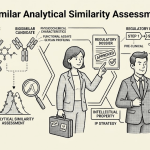
The analytical comparability package is the most data-intensive component of biosimilar development. It requires characterizing hundreds of product quality attributes across structural, physicochemical, biological activity, immunochemical, and impurity dimensions, for both the biosimilar candidate and multiple lots of the reference biologic. The goal is to demonstrate that the biosimilar’s attribute profiles are statistically consistent with the natural variability of the reference product.
Machine learning algorithms are genuinely valuable for this work. A neural network trained on multi-dimensional analytical data from reference product lots can identify which combinations of quality attributes cluster together in the reference product’s natural variation space, and assess whether a biosimilar candidate’s attribute profile falls within that cluster. This ‘totality-of-evidence’ analysis, which the FDA conceptually endorses but does not prescribe a specific method for executing, can be made more rigorous and more computable through ML-based multivariate statistical models than through traditional univariate comparisons.
PatSnap’s biosimilar platform and companies like Recon Technology have built ML models that aggregate analytical data across quality attributes to generate composite similarity scores with associated confidence intervals, directly supporting the regulatory submission narrative of analytical totality of evidence. This application of ML is not speculative; it is in active use in biosimilar development programs as of 2025.
14.2 Cell Line Development Optimization: Real Gains, Bounded Impact
AI applications in upstream cell line development focus on two problems: identifying the highest-expressing clones from screening libraries faster, and predicting which culture conditions will yield the target PTM profile. Both have genuine productivity benefits.
High-throughput clone screening generates thousands of data points across expression level, product quality, and growth performance metrics. ML models trained on historical data from previous programs can predict which early-stage clones are most likely to meet final drug substance specifications, reducing the number of clones that must be advanced through resource-intensive bioreactor characterization studies. This can compress cell line development timelines by 3 to 6 months and reduce early-stage development costs materially.
Glycosylation profile prediction from culture condition parameters (glucose, glutamine, dissolved oxygen, temperature shift timing) is more complex. The relationship between upstream parameters and downstream PTM profiles is non-linear and highly system-dependent. ML models trained on data from one cell line-product combination have limited transferability to new programs. Progress is being made, but the current state of the technology is ‘useful for hypothesis generation and parameter prioritization’ rather than ‘capable of reliably predicting target glycoform achievement without experimental validation.’
14.3 Regulatory Submission Support: Organizing Evidence, Not Generating It
The most commercially mature AI application in biosimilar regulatory affairs is not generating scientific data but organizing and presenting it. Large language models and document intelligence tools can automatically extract, categorize, and cross-reference analytical data from laboratory notebooks and reports, mapping data to regulatory guidance sections and identifying gaps in the evidence package before submission. This reduces the manual document preparation burden for Common Technical Document (CTD) Module 3 compilation and can identify regulatory gaps 6 to 12 months earlier than manual review processes.
This application does not require the AI to understand the science; it requires pattern matching against regulatory guidance structure. It is a document management and quality control tool, not a scientific AI. Its value is real but bounded: it reduces submission preparation time and cost, but it does not replace the scientific judgment required to design the comparability program itself.
Key Takeaways: Section 14
AI and ML provide measurable value in biosimilar analytical comparability (multivariate similarity scoring), cell line development (clone screening prioritization), and regulatory document preparation (evidence gap analysis). The glycosylation profile prediction application is promising but not yet reliable enough to replace experimental validation. ML-based totality-of-evidence analysis is the strongest current AI application for biosimilar development, directly supporting regulatory submissions with quantifiable scientific rigor that traditional univariate approaches cannot provide.
15. Investment Strategy: Reading Biologic Patent Estates for Portfolio Decisions
15.1 The Four-Layer Analysis for Any Biologic Asset
When a portfolio manager or institutional investor evaluates a pharmaceutical company holding a major biologic asset, four layers of patent estate analysis should inform the revenue durability model.
Layer 1 is data exclusivity expiry. This is public, deterministic, and non-negotiable. For any biologic, the 12-year U.S. data exclusivity date (or 8-year EU date) is the first hard constraint on biosimilar market entry. Before this date, no matter what is happening in the patent estate, U.S. biosimilar BLA approval cannot occur.
Layer 2 is composition-of-matter patent expiry, adjusted for patent term extension under 35 U.S.C. Section 156. This is public and computable. The USPTO database shows remaining patent term for every issued patent. Composition-of-matter expiry is the signal that biosimilar developers begin serious FTO analysis. The gap between composition-of-matter expiry and actual biosimilar market entry is determined by Layers 3 and 4.
Layer 3 is secondary patent density. Count the number of Orange Book/Purple Book-listed patents and their expiry dates. Map them to claim categories (formulation, process, method-of-use, device). A product with 10 to 20 secondary patents expiring within 2 years of the composition-of-matter patent has low secondary patent protection. A product with 50 to 100 secondary patents expiring 5 to 10 years after the composition-of-matter patent has Humira-level protection density.
Layer 4 is litigation history. Check whether Paragraph IV certifications have been filed against the product’s patents. If IPR proceedings have been initiated at the PTAB against specific patents in the estate, assess which patents are being challenged and what the institution rate and outcome record is. A patent estate where multiple IPRs have been instituted and several claims cancelled is fundamentally less durable than one without litigation history.
15.2 Revenue Durability Scoring: A Practical Framework
The following framework produces a revenue durability score for any biologic asset, translating the patent estate analysis into a NPV adjustment factor.
A product with data exclusivity expiry in the next 2 years, composed-of-matter expiry within 2 years of data exclusivity, fewer than 20 secondary patents, and one or more successful Paragraph IV certifications should receive a revenue durability adjustment of -35 to -50% on its 5-year revenue model. Biosimilar entry is imminent and the patent estate provides limited protection.
A product with data exclusivity expiry 5 or more years out, composition-of-matter protection beyond data exclusivity, 50 or more secondary patents staggered across a 10-year post-composition-of-matter window, and no successful Paragraph IV certifications should receive a revenue durability adjustment of -10 to -15% to reflect future litigation risk, but the primary revenue line can be modeled as secure for the data exclusivity period.
A product in the middle range, data exclusivity expired but composition-of-matter intact, 30 to 50 secondary patents, some active PTAB proceedings, should receive a -20 to -30% adjustment and require settlement timeline assumptions that explicitly model a 3 to 5 year delayed entry after the composition-of-matter cliff.
15.3 The GLP-1 Biosimilar Watch: Semaglutide Patent Estate Analysis
Semaglutide (Ozempic/Wegovy, Novo Nordisk) is not yet a biosimilar target for the near-term, but the patent estate analysis is worth monitoring. The composition-of-matter patents on the GLP-1 peptide analogue structure have priority dates in the early 2000s. Novo Nordisk’s formulation patents covering the specific aqueous semaglutide formulation (pH 7.4 phosphate-buffered, sodium chloride-containing, with m-cresol as preservative) and the delivery pen device have later priority dates. The 12-year U.S. data exclusivity period for the Ozempic BLA (approved December 2017) runs until December 2029. For Wegovy (approved June 2021), data exclusivity runs until June 2033.
The earliest plausible U.S. semaglutide biosimilar launch is therefore approximately 2030 to 2031, assuming a biosimilar BLA submitted in 2027 to 2028 (after the 4-year submission bar for Ozempic) and 12 months of FDA review. Novo Nordisk’s secondary patent estate will likely follow the Humira model of filing formulation and device patents that extend beyond the data exclusivity period, making the actual commercial entry date dependent on litigation and settlement outcomes.
Investment Strategy Note. Novo Nordisk’s current market capitalization and revenue model are built substantially around semaglutide’s continued dominance of the GLP-1 market through at least 2030 to 2033. The data exclusivity floors support this assumption. Investors modeling a semaglutide revenue cliff before 2030 are almost certainly wrong on the timing. The risk to Novo Nordisk’s revenue position before 2030 comes from oral small-molecule GLP-1 agonists (competing on convenience), combination therapies (GLP-1 plus GIP/glucagon triple agonists), and manufacturing capacity constraints on the existing products, not from biosimilar competition.
Key Takeaways: Section 15
The four-layer patent estate analysis (data exclusivity, composition-of-matter, secondary patent density, litigation history) provides a systematic framework for calibrating revenue durability adjustments on biologic assets. The Humira model (7 years post-composition-of-matter exclusivity through secondary patents and settlements) should be the upside scenario for highly contested assets, not the baseline assumption. GLP-1 biologics like semaglutide are protected by data exclusivity through 2029 to 2033, making biosimilar competition a post-2030 story that should not influence near-term revenue models for Novo Nordisk. IRA negotiation eligibility overlaps with the biosimilar entry window for products approved 2012 to 2018, requiring dual scenario modeling of negotiated-price originator vs. biosimilar competition economics.
16. Key Takeaways
Biological complexity creates a six-layer patent estate. Composition-of-matter patents are the foundational layer, but secondary patents covering manufacturing processes, formulations, delivery devices, methods of use, and dosing regimens systematically extend effective exclusivity beyond the original composition-of-matter cliff. Each layer requires independent FTO analysis and litigation or design-around strategy.
Data exclusivity and patent protection are independent legal instruments. Data exclusivity cannot be challenged or designed around; it sets a hard floor on biosimilar BLA approval. For recent biologics, the 12-year U.S. exclusivity period is the binding constraint, not the patent estate. For older biologics, secondary patents are the binding constraint after data exclusivity has expired.
The Humira case is the benchmark, not the outlier. AbbVie’s 250-patent estate generated approximately $60 billion in U.S. revenue after composition-of-matter expiry, through litigation threat and settlement rather than trial victories. Companies with blockbuster biologics approaching composition-of-matter cliffs will attempt to replicate this model. Analysts who model biosimilar entry at composition-of-matter expiry are systematically miscalibrating revenue forecasts.
BPCIA patent dance litigation settles 67% of the time. Settlement terms typically include delayed launch dates and royalty payments. At-risk launch exposure for a high-revenue biologic can reach $3 billion or more in damages if the court finds infringement, making settlement a rational choice even for biosimilar developers who believe they would win at trial.
FTO analysis is a revenue generator, not just a risk manager. The Xalkori polymorphic form case demonstrates that thorough FTO work can identify patentable design-around paths with superior product attributes. Beginning FTO before formulation selection avoids costly late-stage reformulation. Biosimilar formulation and manufacturing innovation creates defensive IP assets that differentiate from both the reference biologic and competing biosimilars.
U.S. biosimilar penetration is structurally lower than EU penetration in rebate-entrenched categories. The PBM rebate architecture in the U.S. creates formulary incentives that favor high-list-price branded products over lower-list biosimilars in therapeutic categories like TNF inhibitors. Applying EU penetration curves to U.S. market forecasts in these categories overestimates biosimilar revenue by 30 to 50 percentage points at any given post-launch time horizon.
The IRA creates investment uncertainty for biosimilar programs in the 2012-2018 approval vintage. CMS negotiation price compression reduces the addressable biosimilar market in proportion to the negotiated discount. Biosimilar development NPV for products with near-term IRA eligibility requires explicit modeling of negotiated price scenarios, which are not knowable at development investment decision time.
The next major wave: Keytruda, Stelara, and Eylea. Keytruda biosimilar entry faces a hard U.S. data exclusivity floor of September 2026 and a 129-patent estate suggesting Humira-style settlement delays. Stelara biosimilar entry began in January 2025 and provides real-world data on post-Humira U.S. market dynamics. Eylea’s Eylea HD evergreening transition demonstrates that high-dose reformulation with new formulation patents is a reproducible moat-building strategy in ophthalmology.
17. Frequently Asked Questions
What is the difference between a biosimilar and a generic drug, and why does it matter for patent strategy?
A generic drug contains an active ingredient chemically identical to the originator and is approved through a bioequivalence pathway that requires no new clinical trials. A biosimilar contains an active ingredient that is highly similar but not identical to its reference biologic due to inherent biological variability in production from living cells. Biosimilar approval requires a comprehensive analytical comparability package and often pharmacokinetic and clinical studies. This difference in complexity means biosimilar development costs 20 to 60 times more than generic development, biosimilar patent estates are wider and more layered than small-molecule estates, and biosimilar market entry timelines are substantially longer. Patent strategies that work for generic entry (Paragraph IV challenge on a single composition-of-matter patent) require significant adaptation for biosimilar programs targeting multi-layer biologic patent estates.
Can a biosimilar developer challenge an originator’s patent before filing a BLA?
Yes. PTAB Inter Partes Review (IPR) proceedings allow any party to challenge the validity of an issued U.S. patent on the grounds of prior art without waiting for a BPCIA first-wave litigation filing. Biosimilar developers routinely file IPR petitions against originator formulation, process, and method-of-use patents years before their BLA submission, using the IPR track to build a parallel validity challenge that can support FTO clearance or settlement leverage independent of the BPCIA dance. The IPR petition must be filed within one year of service of a district court complaint asserting the challenged patent, but proactive IPR petitions (before any complaint is filed) are permitted and widely used.
What is the commercial impact of the FDA’s proposed change to biosimilar interchangeability standards?
The FDA’s 2023 draft guidance proposing to eliminate additional switching study requirements for most therapeutic protein biosimilars would, if finalized, allow all biosimilars meeting standard biosimilarity criteria to apply for the interchangeability designation without dedicated switching studies. Currently, achieving interchangeability adds approximately 12 to 24 months and $20 to $50 million to the development program. Eliminating this requirement would make interchangeability the default achievable designation rather than a premium differentiation, potentially enabling pharmacy-level substitution for all approved biosimilars in states with relevant substitution laws. This would accelerate U.S. biosimilar penetration, particularly in therapeutic categories where automatic substitution has been the primary mechanism for biosimilar market share gain.
How does the BPCIA ‘patent dance’ opt-out affect litigation strategy?
Under the Sandoz v. Amgen ruling, a biosimilar applicant who opts out of the patent dance forfeits the aBLA-exchange requirement but also forfeits the structured patent list that the originator would have provided. The originator can immediately file for declaratory judgment on any patent it believes the biosimilar infringes, without waiting for the 180-day commercial marketing notice. In practice, opting out is rarely advantageous for biosimilar developers because it removes the structured patent-identification mechanism that allows focused litigation preparation and IPR petition planning. The dance, despite its procedural complexity, gives the biosimilar developer actionable intelligence about which patents the originator considers most important to assert.
What does a biologic patent estate look like for a drug that does not have a Humira-scale secondary patent strategy?
Drugs developed by smaller innovators or biotechs with less IP infrastructure often have thinner secondary patent estates. A biologic with a composition-of-matter patent, one or two formulation patents, and two or three method-of-use patents faces biosimilar entry much closer to the composition-of-matter cliff, often within 2 to 3 years of that expiry rather than the 7 to 10 years seen with Humira and (projected) with Keytruda. Analysts evaluating companies with single-product biologic portfolios and thin secondary patent estates should model revenue decline beginning at composition-of-matter expiry plus 2 to 3 years, not plus 7 to 10 years. The secondary patent density is the primary differentiator in post-cliff revenue durability modeling.
IRA price negotiation outcomes, PTAB decision records, FDA guidance finalization timelines, and biosimilar market penetration data are all subject to change. Readers should verify current FDA Purple Book listings, Orange Book patent records, and USPTO PTAB proceedings for the specific assets they are evaluating.
DrugPatentWatch provides automated monitoring of Purple Book listings, PTAB proceedings, Paragraph IV certifications, biosimilar BLA approvals, and competitive patent filing activity across the biologic landscape. The platform’s Orange Book and Purple Book integration is the foundational data infrastructure for the FTO methodology described throughout this guide.