The pharmaceutical industry operates on a punishing mathematical reality. In 2024, generic and biosimilar medicines accounted for 90% of all prescriptions filled in the United States, yet they represented a mere 12% of total prescription spending.1 While innovators captured $700 billion from just 435 million prescriptions, generic manufacturers split $98 billion across 3.9 billion scripts.1 This discrepancy underscores a brutal efficiency trap. You are moving more volume than ever, but your margins are vanishing. Since 2019, total spending on generic sales in the U.S. has declined by $6.4 billion despite higher volumes and a steady stream of new launches.1 When “sameness” is your only selling point, you are a price-taker in a market designed to drive you to zero.
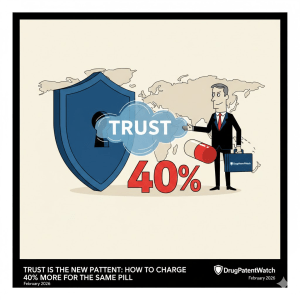
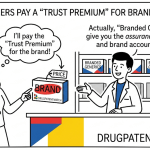
To survive this environment, you must pivot from unbranded “commodity” generics to “branded generics.” These products use the same active pharmaceutical ingredient (API) as the reference drug but leverage a brand name to command a “Trust Premium.” This strategy moves your product out of the “race to the bottom” and into a mid-tier pricing bracket—typically 30% to 100% higher than unbranded alternatives.2 The following analysis deconstructs the mechanisms of this premium and provides a blueprint for turning patent data into a sustainable competitive advantage.
The sameness paradox and the math of generic collapse
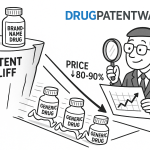
The traditional generic business model relies on a high-volume, low-margin approach that is increasingly unsustainable. When a single generic competitor enters a market, the price of the original drug typically falls by 30% to 39%.3 However, the entry of additional players triggers a non-linear collapse in value. Data from Medicare Part D between 2007 and 2022 confirms that price reductions of 70% to 80% are the standard outcome within three years of first generic entry in markets with ten or more competitors.3
Market competition and price erosion metrics
Number of Generic Competitors
Approximate Price Reduction vs. Brand Price
Market Dynamic
1
30% – 39%
Duopoly (Brand + 1 Generic)
2
50% – 54%
Triopoly
3-5
60% – 79%
Competitive Oligopoly
10+
80% – 95%
Hyper-competitive Commodity
This “scalloped curve” of price decay eventually flattens out at approximately 20% of the original brand price.6 In some cases, prices drop below the cost of manufacturing, leading to a “Dead Cat Bounce” where manufacturers exit the market, supply tightens, and prices temporarily rise again.6 This volatility is a primary driver of drug shortages; 84% of reported shortages in 2023 involved generic medicines.4 For your business development team, the goal is no longer just to enter a market, but to enter one where branding or complexity creates a barrier that arrests this decay.
Defining the trust premium as psychological arbitrage
While the scientific premise of a generic drug is its interchangeability with the reference product, the commercial reality of a branded generic is its psychological differentiation.2 This differentiation is built on the “Trust Premium”—the willingness of a patient or physician to pay more for a known quantity. In markets with lower regulatory trust or high information asymmetry, the mathematical allowance for bioequivalence is often framed by competitors to suggest that cheaper, unbranded options are substandard.2
The regulatory standard for bioequivalence requires that the $90\%$ confidence interval of the relative mean $C_{max}$ and $AUC$ of the test product to the reference product should be within $80.00\%$ to $125.00\%$.8 While this range is scientifically sound, it creates a “Trust Gap” that you can exploit. Patients and providers naturally worry about the “edge cases” of this range.
“Branding isn’t just a logo; it’s a promise of quality. In branded generics, that promise drives adoption.” — Dr. Sarah Lee, Pharma Marketing Consultant 10
Trust acts as a form of private-label insurance for the consumer. When a patient cannot personally verify the cleanliness of a factory or the potency of a pill, they rely on the reputation of the manufacturer. Companies like Sun Pharma, Viatris, and Abbott’s Established Pharmaceuticals Division (EPD) utilize this to protect their margins from the generic cliff. In the Indian market, branded generics command a 30% to 100% premium over “trade generics” and still retain market dominance.2
Regulatory engineering: The 505(b)(2) moat
Your choice of regulatory pathway is the single most important lever for determining long-term ROI. While the 505(j) Abbreviated New Drug Application (ANDA) is the regulatory superhighway for generic approvals, it mandates “sameness” in active ingredient, dosage form, and strength.11 This sameness is exactly what leads to commoditization.
The 505(b)(2) pathway, by contrast, is a hybrid. It allows you to reference the safety and efficacy data of an existing drug while introducing modifications. These can include changes in dosage form, strength, formulation, or even new indications.12
Comparative advantage of regulatory pathways
Feature
505(j) (ANDA)
505(b)(2) (Hybrid NDA)
Development Cost
$1M – $5M
$5M – $50M+
Data Requirements
Bioequivalence only
Bridging clinical studies
Exclusivity
180 days (First-to-File)
3, 5, or 7 years
Pricing Power
Low (Price taker)
High (Price maker)
Differentiation
Minimal (Interchangeable)
Significant (Value-added)
The 505(b)(2) pathway is a strategic tool to circumvent the 180-day exclusivity of a first-to-file ANDA.14 For example, when Pfizer faced the expiration of Norvasc (amlodipine besylate), competitors used 505(b)(2) filings to enter the market with different salt forms, avoiding the first-filer’s exclusivity window.14 More importantly, 505(b)(2) products are often “non-AB rated,” meaning they are not automatically substitutable at the pharmacy counter. This requires you to engage in physician-detailing—similar to an innovator—but at a fraction of the original R&D cost.2
Value-Added Medicines: Moving beyond the molecule
The generic sector is currently stuck between a rock and a hard place due to payer consolidation and intense competition.15 To escape, you must invest in Value-Added Medicines (VAMs). These are medicines based on known molecules that address specific healthcare inefficiencies or unmet needs.16
The VAM model involves three distinct innovation approaches:
Drug Reformulation: Converting a twice-daily tablet into a once-daily extended-release version or transforming a solid dosage form into a liquid for pediatric or geriatric populations.17
Drug Combinations: Pairing two off-patent molecules into a single pill to improve adherence.17
Drug-Device Combinations: Integrating a molecule with an advanced delivery system, such as a specialized inhaler or autoinjector.15
The complex generic market, which includes many VAMs, is projected to grow from $84 billion in 2024 to $200 billion by 2035.19 Because these products require specialized manufacturing—such as sterile production for injectables or high-precision formulation for inhalers—the barriers to entry are high, and the competition remains sparse.20
Manufacturing as a brand: The quality premium
In a market plagued by shortages, reliability has become a quantifiable competitive advantage. Generic manufacturers have historically underinvested in supply reliability due to low profit margins and a lack of information available to buyers about manufacturer quality.7 However, the FDA is now proposing a certification system to reward manufacturers with high reliability levels.7
You can use Process Analytical Technology (PAT) and Quality by Design (QbD) to transform your manufacturing from a volume operations model to a science and technology model.4 While the upfront investment for PAT instruments can exceed $4.5 million, the operational savings are transformative.
Financial ROI of advanced manufacturing (PAT/QbD)
Metric
Traditional Manufacturing
PAT/QbD-Enabled
Improvement
Analytical Labor Costs
100% (Baseline)
10%
90% Reduction 4
Inventory Costs
100% (Baseline)
50%
50% Reduction 4
Process Cycle Time
100% (Baseline)
50%
50% Reduction 4
Operating Margin
X%
X + 6%
6% Increase 4
For institutional buyers like hospitals and Group Purchasing Organizations (GPOs), a supplier with a robust FDA inspection history and a low failure-to-supply track record is worth a premium.21 A generic supplier scorecard that weights manufacturing redundancy and geographic diversification of API sources can justify a higher acquisition cost by reducing the much larger Total Cost of Ownership (TCO) associated with emergency alternatives and quality failures.21
Navigating the PBM gatekeepers and the rebate game
In the United States, your success depends heavily on your relationship with Pharmacy Benefit Managers (PBMs). Traditional PBMs often prefer high-list-price drugs because they generate larger rebates.22 Since PBMs typically retain a percentage of these rebates as revenue, they have a perverse incentive to favor more expensive brand-name drugs or branded generics over low-cost unbranded alternatives.22
A study of Medicare Part D plans found that 72% of formularies placed at least one branded product in a lower cost-sharing tier than its generic equivalent.24 For you, this means that setting a competitive low price can actually be counterproductive. To secure favorable formulary placement, a branded generic must often be priced high enough to allow for a significant rebate back to the PBM and insurer.22 This rebate-driven structure obscures the true net price and makes the list price a tool for negotiation rather than a reflection of market value.
Offensive intelligence: Using DrugPatentWatch to find blue oceans
Successful portfolio management requires identifying niche markets with high barriers and low competition. You need to find “blue oceans” where your branded generic can thrive without being undercut by ten other manufacturers.
Strategic teams use platforms like DrugPatentWatch to track:
Patent Thickets: Understanding the multi-layered IP surrounding blockbuster biologics to identify the exact window for biosimilar entry.25
Paragraph IV Opportunities: Identifying drugs where a patent challenge could secure 180 days of market exclusivity.20
Off-Patent Drugs Without Generics: The FDA maintains a list of off-patent drugs with no approved generic, which serves as a goldmine for developers looking for zero-competition entries.20
By monitoring these variables, you can move from a reactive posture to a proactive stance, identifying molecules where the competitive intensity will be low enough to sustain a branded generic premium for several years. For example, Mylan’s launch of generic Advair Diskus in 2018 leveraged precise timing and market analysis to dominate a niche with few competitors.20
Abbott EPD and the emerging market blueprint
Abbott’s Established Pharmaceuticals Division (EPD) represents a pure-play execution of the branded generic model. After divesting its developed-market business to Mylan in 2015, EPD focused exclusively on emerging geographies like India, China, Russia, and Latin America.27 EPD’s model is built on localized portfolios and innovation in formulation. They build country-specific portfolios of trusted products to suit local patient needs.29
The financial results validate the strategy. In the second quarter of 2025, EPD sales increased 7.7% organically, with more than half of its top 15 markets posting double-digit gains.27 By acting as a “most trusted partner” in regions where regulatory oversight may be perceived as variable, Abbott leverages its global brand to command a premium that local, unbranded manufacturers cannot touch.
Viatris and the climb up the value chain
Viatris, formed from the merger of Mylan and Upjohn, has spent 2024 rebalancing its portfolio to move up the value chain.30 Their strategy involves balancing a massive generics powerhouse with a focus on branded generics and complex products.31 In 2024, Viatris delivered new product revenues of $582 million and achieved operational revenue growth of 2%, even while managing significant divestitures.30
The company’s “Global Healthcare Gateway” leverages its existing infrastructure to expand patient access to high-quality branded medicines in developed and emerging markets alike.32 By focusing on complex injectables and executing over 150 new generic launches globally in a single year, Viatris is positioning itself as a source of stability in an evolving market.32
Viatris 2024 Financial Highlights
Segment
Revenue (GAAP)
Operational Change
Strategic Focus
Total Net Sales
$14.7 Billion
+2% (Divestiture-Adj)
Portfolio Rebalancing
New Product Revenue
$582 Million
N/A
High-Value Launches
Developed Markets
$8.9 Billion
+1%
Complexity/Service
Emerging Markets
$2.3 Billion
+5%
Branded Generics Growth
The failure of the high-priced copycat: A cautionary tale
Not every attempt at branding succeeds. The failure of HealthCo’s Zoloft generic provides a clear lesson in the limits of the Trust Premium. By pricing the product too high without sufficient differentiation, the company alienated cost-sensitive patients and captured only 5% of the market.10 You cannot simply slap a logo on a commodity and expect a 40% premium.
Conversely, PharmaNova’s LipNova captured 35% of the market within a year by emphasizing its heritage and quality, generating $600 million in revenue.10 The difference was the “Value-Add.” PharmaNova invested in educational initiatives for physicians and provided clear data on their manufacturing consistency, bridging the trust gap that HealthCo ignored.
Digital health and the future of the pill-plus strategy
The Trust Premium is increasingly being reinforced by digital health technologies. A 2024 survey found that 60% of patients are more likely to choose a branded generic if it comes with a digital companion tool.10 These tools, which include adherence apps, telehealth portals, and health-monitoring wearables, create a holistic experience that differentiates your pill from a commodity.10
Digital health solutions facilitate scale at a lower cost base and are not constrained by physical factors.15 By bundling a branded generic with a digital adherence program, you can generate real-world evidence (RWE) to prove superior patient outcomes compared to unbranded competitors.15 This RWE is essential for value-based contracting, where reimbursement is linked to performance rather than volume.34
Value-based contracting: Aligning incentives with outcomes
The market is shifting toward value-based contracts (VBCs), where reimbursement is linked to a treatment’s real-world performance.34 Unlike traditional per-pill models, a VBC ties the price or continued coverage of a drug to some measure of its effectiveness or cost impact.35
For you, VBCs offer a way to differentiate your product in a crowded therapy class.34 If you can prove that your branded generic, perhaps through superior formulation or a digital companion, reduces hospitalizations or improves adherence, you can secure a premium price even in a competitive market. Harvard Pilgrim’s contract for Repatha (evolocumab) is an early example of this, where a full refund was offered if a major cardiovascular event occurred within a year.35
Case Study: Teva and the “Science & Technology” pivot
Teva Pharmaceuticals, once the king of high-volume generics, is currently pivoting to a growth strategy centered on innovative medicines and complex generics.31 They invested nearly $1 billion in R&D in 2020 alone, focusing on a pipeline of 1,160 generic products that use QbD principles.9
Teva’s strategy recognizes that the future of the industry is bifurcated. One path involves ruthlessly efficient cost competition in the vanilla generics space. The other—the more sustainable path—requires a fundamental pivot toward higher-barrier, higher-value products like biosimilars and complex injectables.31 By balancing its generic powerhouse with an innovative franchise, Teva aims to build a $5 billion innovative business by 2030.31
The strategic roadmap for generic portfolio transformation
To successfully navigate the transition from a commodity player to a value-added partner, you must follow a multi-stage blueprint.
Portfolio transformation checklist
Analyze & Collect Data: Gather performance data for every single SKU in your portfolio. Use Pareto analysis to identify the “tail” products that are draining resources without contributing margin.37
Offensive Intelligence: Use DrugPatentWatch to identify molecules with complex formulations or niche indications that will deter competitors.20
Regulatory Selection: Favor the 505(b)(2) pathway for products where you can prove a clinical advantage, such as improved adherence or reduced side effects.13
Operational Upgrade: Invest in PAT and QbD to drive down cycle times and prove reliability to institutional buyers.4
Branding & Marketing: Craft a compelling identity that links your generic to the original drug’s legacy. Focus on physician and patient education regarding your quality standards.10
Payer Alignment: Negotiate contracts that reward you for supply reliability or patient outcomes rather than just the lowest price.34
The economic logic of the “Race to the Top”
The biopharma industry is facing a substantial loss of exclusivity, with more than $300 billion in sales at risk through 2030 due to expiring patents.39 This looms as a threat for innovators but as a massive opportunity for you—if you can avoid the “Race to the Bottom.”
The logic is simple: if you sell a molecule, you compete on price. If you sell trust, reliability, and outcomes, you compete on value. By leveraging the Trust Premium, you are not just surviving the patent cliff; you are building a proprietary moat around your off-patent portfolio. Trust is the new patent. It is harder to build than a molecule, but much harder for a competitor to copy.
Key Takeaways
Commoditization is a Choice: You can either compete on ruthless cost efficiency or pivot toward higher-barrier, higher-value products like complex generics and branded VAMs.31
The 10-Competitor Threshold: Once a market reaches ten competitors, prices drop by 80-95%. Avoid these red oceans by targeting complex formulations or niche therapeutic areas.3
Trust is Quantifiable: In many markets, patients will pay a 30-100% premium for a trusted brand name to mitigate perceived quality risks.2
505(b)(2) is a Moat: This pathway offers a faster route to market than a full NDA while providing longer exclusivity and more differentiation than a standard ANDA.13
Reliability Equals Revenue: In a shortage-prone market, supply chain resilience is a commercial differentiator that can justify premium pricing to health systems.4
Data-Driven Selection: Use DrugPatentWatch to identify low-competition targets and time market entry to maximize your first-mover advantage.20
FAQ
What is the difference between a branded generic and an authorized generic? An authorized generic is the exact same drug as the brand-name product, manufactured by the original patent holder but marketed without the brand name. A branded generic is a drug produced by a third party that contains the same API as the reference drug but is marketed under a new, proprietary brand name to build trust and loyalty.2
How does the Trust Premium vary between developed and emerging markets? In emerging markets, the premium is often higher because regulatory oversight is perceived as less consistent, making global brand names a proxy for safety.2 In developed markets like the U.S., the premium is driven by PBM formulary placement and physician preference for established manufacturers.
Why should I choose the 505(b)(2) pathway over a traditional ANDA? While 505(b)(2) is more expensive, it allows for product improvements—like better delivery systems—that justify a higher price. It also offers 3 to 7 years of market exclusivity, compared to the 180 days typically offered for an ANDA.13
What role does digital health play in generic competition? Digital companions create patient lock-in and generate real-world evidence. This data can be used to prove to payers that a specific branded generic leads to better adherence and lower total healthcare costs than a cheaper, unbranded alternative.10
Can a branded generic be automatically substituted by a pharmacist? If it is approved via an ANDA and receives an AB rating, it can be substituted. If it is approved via 505(b)(2) and is not AB-rated, it cannot be automatically substituted, giving you more control over your market share through physician detailing.2