Business Intelligence on Biologic and Small Molecule Drugs
Where Patent Law Draws the Line for Compounded Medications: A Strategic Analysis of Regulatory Exemptions, Intellectual Property Rights, and Market Realities
The Convergence of Federal Exclusivity and Public Health Necessity
The pharmaceutical industry operates on a fundamental tension between two opposing statutory frameworks: the patent system, which grants temporary monopolies to incentivize innovation, and the food and drug laws, which prioritize patient access to safe medications. Nowhere is this tension more acute than in the regulation of pharmacy compounding. The Drug Quality and Security Act (DQSA) of 2013 created a bifurcated system for compounding that was intended to balance these interests, but the subsequent decade has revealed significant fissures in the legal architecture. The current proliferation of compounded Glucagon-like peptide-1 (GLP-1) receptor agonists has transformed these fissures into chasm, exposing the limitations of patent enforcement in a market driven by clinical necessity and supply chain failure.
Intellectual property professionals and pharmaceutical executives often operate under the assumption that a valid patent provides an absolute right to exclude others from making, using, or selling an invention. In the context of compounding, this assumption is practically, if not theoretically, flawed. While the Patent Act contains no explicit exemption for pharmacy compounding, the enforcement of patent rights is frequently pre-empted or complicated by the FDA’s regulatory posture regarding drug shortages and clinical need. The “line” where patent law restricts compounding is not a static boundary but a dynamic threshold that shifts based on federal shortage declarations, the chemical specificity of patent claims, and the clinical judgment of individual prescribers.
This report analyzes the legal and commercial mechanics of this conflict. It examines the statutory framework of the DQSA, the specific vulnerabilities of patent claims against compounders, and the emerging litigation strategies—ranging from the Lanham Act to trade secret law—that innovators are employing to protect their market share. The analysis demonstrates that while the law does not explicitly exempt compounders from patent liability, the regulatory environment creates a de facto shield that requires innovators to adopt more sophisticated, multi-pronged enforcement strategies.
The Regulatory Architecture: Section 503A and 503B
To understand the patent implications, one must first master the regulatory “sandbox” established by the DQSA. The Act was a direct legislative response to the 2012 New England Compounding Center meningitis outbreak, which killed 64 people and revealed the dangers of unregulated industrial-scale compounding. The resulting statute divided the industry into two distinct sectors: traditional pharmacies (Section 503A) and outsourcing facilities (Section 503B).
Section 503A: The Traditional Pharmacy Exemption
Section 503A of the Federal Food, Drug, and Cosmetic Act (FD&C Act) describes the parameters for traditional pharmacy compounding. These entities—primarily community pharmacies and physicians—are permitted to compound drug products for identified individual patients based on the receipt of a valid prescription.1
The critical feature of Section 503A is the “clinical difference” exemption. The statute prohibits 503A pharmacies from compounding “regularly or in inordinate amounts” any drug products that are “essentially copies” of a commercially available drug product. However, the law provides a vital exception: a compounded drug is not considered a copy if the prescribing practitioner determines that there is a change that produces a significant clinical difference for an individual patient between the compounded drug and the comparable commercially available drug.3
This provision creates a subjective loophole that is difficult to police. If a prescriber documents that a patient requires a preservative-free formulation, or a liquid dosage form instead of a tablet, the resulting compound is legally distinct from the FDA-approved product, regardless of the patent status of the active ingredient. The FDA generally defers to the prescriber’s judgment, creating a pathway for 503A pharmacies to operate outside the direct scope of “copying” regulations, provided they maintain the patient-prescriber-pharmacist triad.4
Section 503B: The Outsourcing Facility Framework
Section 503B created a new category of “outsourcing facilities” designed to bridge the gap between traditional compounding and industrial manufacturing. Unlike 503A pharmacies, 503B facilities can compound sterile drugs in bulk without patient-specific prescriptions, allowing them to supply hospitals, clinics, and physician offices for “office use”.5
The regulatory trade-off for this operational flexibility is stricter oversight. 503B facilities must comply with Current Good Manufacturing Practice (CGMP) requirements and are subject to risk-based FDA inspections.6 Most importantly, the restriction on “essentially copies” is significantly tighter for 503B facilities. A 503B facility cannot compound a drug that is essentially a copy of one or more approved drugs unless:
The drug appears on the FDA’s drug shortage list (Section 506E).
The facility makes a change that produces a clinical difference for an identified individual patient (a difficult standard for bulk manufacturers to meet, as they often do not know the patient’s identity at the time of production).1
The definition of “essentially a copy” for 503B facilities is rigorous. A compounded drug is considered a copy if it is “identical or nearly identical” to an approved drug, or if it consists of a bulk drug substance that is a component of an approved drug, unless there is a change that produces a clinical difference.6 This provision serves as the primary firewall preventing 503B facilities from evolving into an unregulated generic drug industry.
Comparative Regulatory Analysis
The following table synthesizes the operational and legal distinctions between the two sectors, highlighting the different leverage points for intellectual property enforcement.
Table 1: Regulatory and Operational Distinctions (503A vs. 503B)
Feature
Section 503A Pharmacy
Section 503B Outsourcing Facility
Primary Customer
Individual Patient (Direct-to-Consumer)
Healthcare Facilities/Hospitals (B2B)
Prescription Requirement
Required prior to dispensing
Not required for bulk distribution
“Essentially a Copy” Rule
Prohibited unless clinical difference exists
Prohibited unless on Shortage List or clinical difference
Shortage List Reliance
Can compound shortage drugs (lift on “commercial availability”)
Critical for bulk production of approved copies
Manufacturing Standards
USP (Non-sterile) / (Sterile)
CGMP (Federal/FDA oversight)
State vs. Federal Oversight
Primarily State Boards of Pharmacy
Primarily FDA; State registration required
Market Revenue Share (2024)
~73% ($4.45 Billion)
~27% ($1.65 Billion)
Legal Risk Profile
High volume of small transactions; hard to monitor
Low volume of large transactions; high visibility
Source Data
5
1
The Drug Shortage Loophole: Section 506E
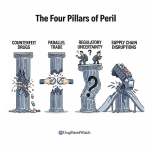
The interaction between the FDA Drug Shortage List and patent enforcement represents the most volatile area of current pharmaceutical law. Section 506E of the FD&C Act creates a temporary suspension of the “essentially a copy” prohibition, which has profound implications for patent holders.
The Mechanism of Suspension
When a drug is officially placed on the FDA’s drug shortage list, it is no longer considered “commercially available” for the purposes of 503A and is explicitly exempt from the “essentially a copy” restriction for 503B facilities.10 This statutory trigger allows compounders to legally mass-produce copies of the approved drug without violating the FD&C Act.
Industry Insight: “If a drug is officially placed on the FDA’s drug shortage list… the prohibition on compounding drugs that are ‘essentially copies’ is temporarily suspended for both 503A and 503B facilities. This creates a significant, though temporary, business opportunity.” — DrugPatentWatch.10
During the acute shortages of semaglutide (Ozempic/Wegovy) and tirzepatide (Mounjaro/Zepbound), this provision mobilized the entire compounding industry. 503B facilities invested in production capacity to fill the supply gap, operating under the explicit permission of the FDA guidance which states that restrictions on compounding copies “may not apply” during shortages.11
The Patent Trap: Regulatory Permission vs. Patent Liability
A pervasive misconception in the compounding sector is that the FDA’s permission to compound shortage drugs equates to a suspension of intellectual property rights. This is legally incorrect. The Patent Act (35 U.S.C.) and the FD&C Act are separate statutory regimes.
The FDA’s authority to regulate drug safety and availability does not supersede the patent holder’s right to exclude others. While the FDA may withhold enforcement action regarding regulatory approval during a shortage, the patent holder retains the full right to sue for infringement under 35 U.S.C. § 271(a) for making, using, or selling the patented invention.12
However, the practical ability to enforce patents during a shortage is constrained by public relations and equitable considerations. A patent holder suing to stop the production of a life-saving drug they cannot themselves supply faces the risk of a court denying a preliminary injunction on public interest grounds (one of the four eBay factors for injunctive relief). Innovators often wait until the shortage is resolved to launch aggressive litigation, utilizing the “shortage period” to gather evidence rather than to suppress production immediately.
Case Study: The Tirzepatide Delisting Crisis
The fragility of the compounding business model was demonstrated in late 2024 regarding tirzepatide. The FDA declared the shortage of tirzepatide resolved and removed it from the 506E list. This administrative action had an immediate cascading effect:
Regulatory Ban: The removal instantly reinstated the “essentially a copy” prohibition for 503B facilities, rendering their inventory of bulk compounded tirzepatide illegal under the FD&C Act.13
Litigation (OFA v. FDA): The Outsourcing Facilities Association (OFA) sued the FDA, arguing the delisting was arbitrary and capricious because it failed to account for actual market availability and regional supply gaps.
Judicial Intervention: A federal court ordered a re-evaluation, temporarily allowing compounding to continue. The court noted that FDA’s decision to add or remove drugs from the list is an “informal adjudication,” allowing the agency to act quickly but requiring it to have a rational basis.13
This incident highlights the existential risk 503B facilities face: their entire business model for a blockbuster drug serves at the pleasure of the FDA shortage list. Once the innovator proves they can meet demand, the regulatory shield evaporates, leaving compounders exposed to both FDA enforcement and patent litigation.
Intellectual Property Analysis: The Limits of Enforcement
For pharmaceutical innovators, the proliferation of compounding represents a direct threat to the exclusivity period guaranteed by patents. However, enforcing patents against compounders is fraught with legal complexity that differs significantly from standard generic litigation.
The Absence of Hatch-Waxman Procedures
In the standard generic drug lifecycle, the Drug Price Competition and Patent Term Restoration Act (Hatch-Waxman) governs the engagement. A generic manufacturer files an Abbreviated New Drug Application (ANDA) with a Paragraph IV certification, which constitutes an “artificial act of infringement” under 35 U.S.C. § 271(e)(2). This triggers a structured litigation process and a 30-month stay of approval.
Compounders do not file ANDAs. They operate under 503A/503B exemptions that bypass pre-market approval entirely. Consequently, they do not trigger the visible notification process of Hatch-Waxman. Innovators cannot rely on the “Orange Book” listing to automatically stay market entry.15 Instead, they must prove actual infringement under § 271(a)—that the compounder is currently making, using, or selling the patented invention without authority.
This shifts the burden of policing the market entirely onto the patent holder. They must identify infringers, obtain samples of the compounded product, analyze them for infringement, and file suit in federal court—a process that is slow, expensive, and difficult to scale against hundreds of fragmented pharmacies.
The “Salt” Defense and Chemical Identity
To prove infringement, the brand must show that the compounded product reads on every element of the patent claim. This requirement has led to the “Salt vs. Base” legal strategy, particularly in the GLP-1 litigation.
The Patent Claims: Most patents for GLP-1 agonists cover the specific peptide sequence or the base molecule (e.g., semaglutide base).
The Compounder’s Product: Many compounders use salt forms (semaglutide sodium or semaglutide acetate) because the patented base molecule is difficult to source or exclusively licensed to the brand.16
The Legal Argument:
Innovator Position: The salt form effectively functions as the base in the body and induces infringement or is chemically equivalent enough to infringe under the Doctrine of Equivalents. Furthermore, the FDA has stated that salt forms are not the same as the approved base and raise safety concerns.16
Compounder Position: The salt form is a distinct chemical entity not explicitly claimed in the base molecule patent. If the patent claims “semaglutide” (the base), and the compounder uses “semaglutide sodium,” they argue they do not literally infringe.
This “salt defense” complicates patent litigation. Innovators must rely on the Doctrine of Equivalents, which is subject to legal defenses such as prosecution history estoppel (if the patentee narrowed their claims during the application process to exclude salts, they cannot reclaim them now).
The “Clinical Need” Defense in Litigation
In Par Pharmaceutical v. QuVa Pharma, the intersection of patent law, trade secrets, and regulatory exemptions was tested. Par sued QuVa (a 503B facility) for trade secret misappropriation and for selling “essentially copies” of Par’s drug Vasostrict.18 Par argued that QuVa’s product did not meet the “clinical need” exemption required for 503B compounding.
The court acknowledged that while private parties generally cannot enforce the FD&C Act directly (that power belongs to the FDA), evidence of regulatory non-compliance can support state-level unfair competition claims. If a compounder cannot prove a valid clinical need for their copy, they are operating unlawfully, which can be framed as an unfair business practice that damages the patent holder.19 This case established that regulatory compliance is a necessary predicate for the compounding defense; a compounder violating the “essentially a copy” rule loses the equitable high ground in litigation.
The Lanham Act Strategy: Weaponizing Marketing Law
Given the difficulties of proving patent infringement against hundreds of disparate pharmacies and the chemical nuances of the “salt” defense, innovators like Novo Nordisk and Eli Lilly have pivoted to the Lanham Act (15 U.S.C. § 1125(a)) as a primary enforcement tool.
False Advertising Claims
The Lanham Act prohibits false or misleading descriptions of fact in commercial advertising. Innovators are utilizing this statute to attack the marketing of compounded drugs rather than the drugs themselves.
“FDA Approved” Claims: Compounders often market their products as “generic Ozempic” or imply they are FDA approved. Since compounded drugs are never FDA approved (they are exempt from approval), these statements are factually false.20
Safety Claims: Innovators allege that claiming compounded salt forms are “safe and effective” is misleading because these specific formulations have not undergone clinical trials.20
Case Study: Eli Lilly v. Empower Pharmacy
Eli Lilly sued Empower Pharmacy (a dual 503A/503B facility) not primarily for patent infringement, but for “unlawfully manufacturing and selling untested, unapproved weight loss drugs” and engaging in “deceptive trade practices”.20 The court explicitly found that the FD&C Act does not bar claims arising under the Lanham Act, allowing these suits to proceed even while the FDA regulates the shortage status.13
This strategy is highly effective because it attacks the compounder’s ability to acquire customers. By forcing compounders to stop using recognized brand names (“Ozempic,” “Mounjaro”) in their advertising, innovators significantly increase the compounder’s customer acquisition costs and reduce consumer trust.
Trademark Infringement
Parallel to false advertising, innovators are enforcing trademark rights. The use of the terms “Ozempic” or “Wegovy” in the metatags, search engine keywords, or website text of compounding pharmacies constitutes trademark infringement if it causes consumer confusion.22
Settlements in these cases often include permanent injunctions banning the pharmacy from using the brand trademarks or logos, effectively decoupling the compounded product from the brand equity of the innovator.23 This forces compounders to market “Semaglutide” generically, which has lower consumer recognition than the brand names.
Market Impact and Revenue Leakage
The legal skirmishes are driven by immense financial stakes. The market for obesity medications is projected to reach historic levels, and compounding pharmacies have captured a non-trivial percentage of this volume during the shortage periods.
Quantifying the Compounding Market
Analysts from Goldman Sachs and Morgan Stanley project the global obesity market to reach between $100 billion and $150 billion by 2030.24 Within this massive addressable market, the compounding sector has carved out a significant niche.
Patient Volume: Industry estimates suggest that compounding pharmacies may be serving up to 2 million patients in the U.S. with GLP-1 medications.26
Revenue Estimates: With compounded GLP-1s typically priced between $250 and $350 per month (compared to $1,000+ for the branded list price), the compounding market for these drugs alone could exceed $6 billion to $8 billion annually.26
Total Market Size: The broader U.S. compounding pharmacy market (across all therapeutic areas) was valued at approximately $6.57 billion in 2024, with 503A pharmacies accounting for the majority (~73%) of this revenue.9
Table 2: Estimated Market Valuation of Compounding Sectors (2024)
Hospital outsourcing, Drug Shortages (GLP-1), Sterile Injectables
Total US Compounding
~$6.57 Billion
~6.2%
Chronic disease management, Aging population, Drug Shortages
Source Data
9
Revenue Leakage Analysis
For Novo Nordisk and Eli Lilly, this represents significant “revenue leakage.” While some patients using compounds might not be able to afford the branded drug (and thus aren’t “lost sales” in the strictest economic sense), the widespread availability of cheaper compounds erodes the pricing power of the brand and creates a secondary market that competes for insured patients as well.
Furthermore, reports of “revenue leakage” in healthcare systems often stem from the mismanagement of drug approvals and the diversion of patients to lower-cost channels like compounding pharmacies when prior authorizations for branded drugs are denied.30 This dynamic incentivizes payers (insurance companies) to tacitly support compounding as a cost-containment mechanism, further entrenching the practice.
State-Level Regulatory Variance: The Battleground of Definitions
While federal law sets the baseline, the actual enforcement of compounding regulations often falls to State Boards of Pharmacy, creating a patchwork of liability that patent holders are exploiting.
The “Essentially a Copy” Definition in States
States like California and Texas have adopted rigorous definitions of what constitutes a “copy,” often stricter than the federal guidance.
California: The California State Board of Pharmacy closely scrutinizes the “clinical difference” documentation. Regulations recently discussed require that a pharmacist must document the medical need for every prescription that is essentially a copy, putting the pharmacist in a potentially adversarial position with the prescriber if the need is not clear.32
Texas: Texas regulations emphasize adherence to USP monographs. Since many GLP-1 salt forms (semaglutide sodium) do not have a USP monograph, Texas pharmacies compounding these forms face license revocation not just for patent reasons, but for violating state safety standards regarding bulk substances.17
The Memorandum of Understanding (MOU)
The FDA utilizes a Memorandum of Understanding (MOU) with states to regulate the interstate distribution of compounded drugs. States that sign the MOU agree to monitor and report “inordinate amounts” of interstate compounding. If a state does not sign, pharmacies in that state are limited to distributing only 5% of their total prescription orders across state lines.33
This creates a strategic bottleneck. Patent holders can lobby state boards to refuse the MOU or strict enforcement of the “inordinate amounts” clause, effectively trapping compounders within their home state borders and preventing them from achieving the scale necessary to justify the legal risk of patent infringement.
Strategic Intelligence: The Role of Patent Data
In this high-risk environment, data intelligence becomes a critical defensive and offensive asset. Both innovators and compounders utilize platforms like DrugPatentWatch to navigate the legal minefield.
Use Cases for Innovators
Pharmaceutical companies utilize patent intelligence to:
Identify Infringement Risks: By tracking the litigation history of 503B facilities, innovators can identify which entities have a pattern of challenging patents or operating in the “gray zone”.8
Monitor 505(b)(2) Filings: Innovators track filings that rely on their data to anticipate legitimate generic or reformulated competition that might emerge from the compounding sector.34
Use Cases for Compounders
For compounding pharmacies, DrugPatentWatch serves as a Freedom to Operate (FTO) tool:
Patent Expiration Tracking: Identifying exactly when a patent expires allows compounders to plan legitimate entry strategies.
White Space Analysis: Compounders use patent claim analysis to identify “white space”—formulations or salts that are not covered by the innovator’s patents. If a patent claims a specific crystalline structure (polymorph), a compounder might seek to identify a different, unpatented polymorph to use in their formulation.35
Litigation Intelligence: Understanding which patents an innovator has aggressively defended in the past helps compounders assess the risk of launching a specific product. If a company like Teikoku has spent millions litigating a specific patent, a compounder knows to avoid that area.36
The 505(b)(2) Pathway: The “Off-Ramp” for Compounders
As the regulatory walls close in on indefinite compounding of “copies,” sophisticated 503B facilities are looking toward the 505(b)(2) regulatory pathway as a legitimate exit strategy.
Mechanism of 505(b)(2)
The 505(b)(2) New Drug Application is a hybrid pathway that allows an applicant to rely on the FDA’s previous finding of safety and efficacy for an approved drug, while submitting new data for their specific formulation (e.g., a new route of administration or dosage form).37
Unlike compounding, a 505(b)(2) approval grants the applicant:
FDA Approval: The product is a legitimized, approved drug, removing the “unapproved new drug” liability.
Market Exclusivity: Depending on the innovation, the applicant may be granted 3, 5, or 7 years of market exclusivity.37
Patent Certainty: The applicant engages in the formal “patent dance” with the innovator, resolving infringement issues through the court system rather than risking a sudden shutdown.
Table 3: Comparison of Compounding vs. 505(b)(2) Strategy
Feature
Compounding (503B)
505(b)(2) NDA
Approval Status
Unapproved
FDA Approved
Development Cost
Low ($)
Medium ($1M – $10M+)
Timeline
Immediate
2-3 Years
Patent Risk
Continuous threat of 271(a) suit
Resolves via Paragraph IV litigation
Market Exclusivity
None
3-7 Years possible
Scalability
Limited by “Clinical Need” & Shortages
Unlimited Commercial Scale
Source Data
37
34
For 503B facilities currently profiting from the GLP-1 shortage, reinvesting those profits into a 505(b)(2) development program represents the only sustainable long-term strategy to remain in the market once the shortage ends.
Conclusion
The boundary where patent law draws the line for compounded medications is not a rigid statutory wall, but a shifting frontier determined by regulatory status, chemical specificity, and market dynamics.
For the pharmaceutical innovator, the strategy has evolved from simple patent enforcement to a “death by a thousand cuts” approach. Unable to rely on the automatic stays of Hatch-Waxman, innovators are weaponizing the Lanham Act to destroy the marketing viability of compounders, lobbying the FDA to aggressively manage the shortage list to remove the regulatory shield, and utilizing state boards of pharmacy to enforce strict technical standards on bulk ingredients.
For the compounding industry, the current boom in GLP-1 revenue is precarious. The “shortage shield” is temporary and revocable. The “salt defense” is legally untested at the appellate level and regulatory hostility toward it is growing. The only durable path forward is to transition from arbitrage—copying blockbuster drugs during shortages—to genuine innovation, utilizing the 505(b)(2) pathway to formalize their products.
Ultimately, the conflict reveals a gap in the U.S. healthcare system: a massive demand for accessible, lower-cost medications that the patent system is designed to delay and the compounding system is ill-equipped to supply safely at scale. Until this structural gap is addressed, the courts will continue to be the arbiter of where the right to exclude ends and the right to access begins.
Key Takeaways
No Patent Immunity: There is no statutory exemption in the U.S. Patent Act for pharmacy compounding. The ability of compounders to operate during shortages is a function of regulatory permissions (FD&C Act), not intellectual property waivers. Innovators retain the right to sue for infringement at any time.
The Shortage List is the Kill Switch: The legality of bulk compounding (503B) for blockbuster drugs is almost entirely dependent on the FDA’s Section 506E Drug Shortage List. Removal from this list instantly reinstates the “essentially a copy” prohibition, creating massive business risk for compounders.
Lanham Act > Patent Act: Innovators are finding greater immediate success using False Advertising and Trademark claims (Lanham Act) against compounders. It is easier to prove that a pharmacy falsely claimed a drug was “FDA Approved” or “Generic Ozempic” than to prove complex chemical patent infringement of a salt form.
The “Salt” Loophole is Closing: Regulatory bodies and courts are increasingly aligning to view salt forms (e.g., semaglutide sodium) as unapproved new drugs with safety risks, rather than legitimate compounded variations. This weakens the compounder’s argument that they are not infringing the base molecule patent.
505(b)(2) is the Exit Strategy: For 503B facilities, the only sustainable transition from the “shortage economy” is to utilize the 505(b)(2) NDA pathway. This converts their product from a vulnerable compound into an approved asset with its own exclusivity, shielding them from the “essentially a copy” litigation.
FAQ: Navigating the Legal Gray Zone
Q1: If a drug is on the FDA shortage list, does that mean a patent holder cannot sue a compounding pharmacy for infringement?
A: No. The FDA’s drug shortage list (Section 506E) affects regulatory enforcement under the FD&C Act, effectively suspending the FDA’s rule against compounding “essentially copies.” It does not suspend the Patent Act. A patent holder can legally sue for infringement under 35 U.S.C. § 271 at any time. However, practically, brands often refrain from suing widely during shortages to avoid public backlash and because proving “lost profits” is difficult if they cannot supply the market themselves.10
Q2: What specifically qualifies as a “clinical difference” that allows a 503A pharmacy to legally copy a commercially available drug?
A: A “clinical difference” must be a change to the formulation that produces a significant difference for the specific patient, as determined and documented by the prescriber. Common valid examples include removing a preservative (e.g., dye, gluten, alcohol) the patient is allergic to, or changing the dosage form (e.g., from a pill to a liquid) for a patient unable to swallow. Economic factors (cost) or convenience are not considered valid clinical differences by the FDA.1
Q3: Why do compounders use “Semaglutide Sodium” instead of the base form, and is this practice legal?
A: Compounders use salt forms because the FDA-approved base molecule is often patent-protected and restricted by the brand manufacturer, making it impossible to source legitimately. Compounders argue the salt is a distinct chemical entity and thus does not infringe the base patent. However, the FDA has stated that salt forms of semaglutide are not components of the approved drug and raise safety questions. Using them may violate the FD&C Act requirement to use bulk substances that are components of FDA-approved drugs or comply with USP monographs.16
Q4: How does the “Essentially a Copy” rule differ between a local pharmacy (503A) and an outsourcing facility (503B)?
A: For 503A (traditional) pharmacies, a drug is a copy if it has the same active ingredient, route, and strength, unless a prescriber documents a clinical need for that specific patient. For 503B (outsourcing) facilities, the rule is stricter: they cannot compound a copy at all unless the drug is on the FDA shortage list or they document a clinical difference for an individual patient (which is logistically difficult for bulk manufacturers). 503Bs cannot rely on general “office use” needs to bypass this rule without a shortage declaration.1
Q5: How can pharmaceutical companies use data intelligence tools like DrugPatentWatch to combat compounding?
A: Innovators use these platforms to monitor the “gray market” landscape. They can track the litigation history of 503B facilities to gauge their legal risk tolerance, monitor for “Paragraph IV” type challenges or 505(b)(2) filings that rely on their data, and identify the API suppliers providing bulk ingredients to the compounding sector. This data allows brands to target their litigation efforts toward the high-volume infringers and the upstream suppliers feeding the ecosystem.10
Works cited
Compounded Drug Products That Are Essentially Copies of Approved Drug Products Under Section 503B of the Federal Food, Drug, and Cosmetic Act – FDA, accessed December 19, 2025, https://www.fda.gov/media/98964/download