Every drug patent that expires is a starting gun, not a finish line. When a branded pharmaceutical loses exclusivity in the European Union, a procurement cascade begins that will redirect hundreds of millions of euros in public spending inside 24 months. The vendors who show up with a credible strategy before that gun fires win the advisory mandates. Everyone else gets a polite email saying the budget has already been allocated.
This guide is for commercial and market access consultancies, health economics firms, pricing advisors, and data intelligence providers who want to build a recurring revenue stream by positioning tender strategy consulting as a direct service tied to EU patent loss of exclusivity (LOE) and generic drug launch cycles. You will learn how EU tender procurement actually works, how to read the patent clock using tools like DrugPatentWatch, how to structure your service offering, and how to price it against measurable client ROI.
The opportunity is structural, not cyclical. Generic penetration in the EU’s five largest markets (Germany, France, Italy, Spain, and Poland) reached an average of 54% by volume in 2023 [1], yet branded manufacturers still lose tender competitions for predictable reasons: late preparation, poor country-specific intelligence, and inadequate price corridor modeling. Your value is in closing that gap, systematically.
Why Patent Expiry Is a Business Development Trigger
Patent expiry is the most predictable event in the pharmaceutical industry. Unlike clinical trial failures, regulatory hold letters, or pricing negotiations that drag across election cycles, LOE dates are set in stone years in advance. This predictability is the foundation of your consulting pitch.
When a primary composition patent expires, the originator faces two immediate commercial threats: generic manufacturers enter the market, and public payers in the EU, who control the majority of hospital and retail drug expenditure through tender mechanisms, reconfigure their procurement frameworks to capture the resulting price drop. For branded manufacturers, the window between LOE announcement and first tender cycle is the only viable period to negotiate from a position of strength. For generic entrants, the same window is their moment to secure volume commitments before the market fragments.
Your clients, whether they are originators defending margin or generics building market share, share one need: they need to know which tenders are coming, when, how they are structured, and what price will win. That is your product.
The LOE Timeline Every Vendor Needs to Know
A standard LOE timeline runs approximately as follows. Two to three years before expiry, originator companies begin lifecycle management strategies: authorized generics, new formulations, or patient support programs designed to preserve revenue. One to two years before expiry, health authorities and procurement bodies in countries like Sweden, Denmark, and the Netherlands begin preliminary market assessments. Twelve months out, tender frameworks are drafted in Nordic countries and Eastern European markets. Six months out, generic manufacturers file national marketing authorizations and price registration applications. At LOE, the first tender rounds open.
The vendors who build their business development calendars around this timeline generate three to five times the qualified leads of those who wait for client inquiries. Pharmaceutical companies, particularly mid-size generics, do not have internal tender strategy expertise across all 27 EU member states. They outsource it. If you have already mapped the LOE event, researched the country-specific tender format, and built a preliminary price model, you arrive at the client meeting with proof of work, not just a capabilities deck.
Where the Money Actually Moves After LOE
The financial stakes are not abstract. In a typical European market, generic substitution laws push generic uptake to 70-90% of volume within 18 months of LOE for solid oral dosage forms [2]. A branded product generating EUR 200 million annually in a single country will, absent a successful tender defense strategy, lose the majority of that revenue inside two years. For a generic manufacturer entering that same market, a successful tender award can guarantee 40-60% of market volume at a negotiated price for 12 to 24 months.
The tender advisory fee in these situations is not a cost. It is insurance against a multi-million-euro procurement failure. Frame your service accordingly.
The EU Tender Landscape for Generic Drugs
The EU is not a single market for pharmaceutical procurement. It is 27 distinct procurement systems, overlaid with a loose framework of reference pricing relationships, health technology assessment bodies, and EU state-aid rules. Understanding this landscape at the country level is the single most defensible source of consulting value you can offer.
How Public Procurement Works in Pharma
Public pharmaceutical procurement in the EU operates under Directive 2014/24/EU, which sets the rules for public sector contracting above defined thresholds. For drugs, this means open procedures, restricted procedures, or framework agreements, depending on the value and the purchasing body’s preference. Hospital tenders above the EU threshold (EUR 215,000 for central government bodies as of 2024) must be published on the Tenders Electronic Daily (TED) portal and are subject to standstill periods and challenge rights.
Below those thresholds, individual hospital pharmacies, regional health authorities, and national payers conduct their own procurement, with widely varying transparency. In practice, the most commercially significant tenders are above the threshold and are therefore public. For your clients, this means tender documents, award criteria, and historical pricing are available to anyone who knows where to look.
Your consulting value in this context is threefold: first, systematic monitoring of relevant tender publications; second, analytical interpretation of award criteria and technical specifications that may favor or exclude certain formulations; third, bid strategy recommendations that align the client’s pricing, capacity commitments, and supply chain documentation with what the tendering authority actually values.
Country-by-Country: The Four Models That Matter
EU pharmaceutical tender markets cluster into four procurement archetypes. Each requires different preparation, different pricing logic, and different client positioning. Treating them as interchangeable is one of the most common and costly mistakes generic entrants make.
The Nordic Framework Agreement Model
Sweden, Denmark, Norway, and Finland operate tiered substitution and tender systems coordinated through national agencies. Sweden’s Dental and Pharmaceutical Benefits Agency (TLV) runs a competitive substitution program that resets every four weeks; Denmark’s Amgros procures hospital drugs through annual national tenders. These markets reward volume commitment, reliable supply chain documentation, and price transparency. A client without a credible supply chain certification will lose a Nordic tender to a lower-bidding competitor even if the price differential is marginal.
The Nordic model is the most structurally transparent in the EU. Historical tender results are publicly accessible, and award criteria are published in advance. For consultants, this is the easiest market to model and, as a result, the most competitive for consulting services. Your differentiator here is speed and breadth of monitoring coverage, not exclusive data access.
Germany’s AMNOG-Adjacent Procurement
Germany is Europe’s largest pharmaceutical market and operates a unique hybrid: branded drugs subject to AMNOG early benefit assessment face negotiated rebate contracts with statutory health insurers (GKVs), while generic drugs compete through a tender system managed directly by the major GKV associations. The leading payers, AOK, Barmer, and TK, run parallel tender processes that collectively cover roughly 73 million insured lives.
German GKV tenders are contractual exclusivity arrangements. A winning bidder receives exclusive or preferred status for a molecule in a defined therapy area for up to two years. The downside for manufacturers is that losing a German tender means near-total market exclusion. For your clients, Germany is the highest-variance market in the EU: the potential upside of a win is enormous, and the cost of strategic miscalculation is equally severe. Consultants who understand GKV contracting structures, rebate calculation mechanics, and the legal constraints on tender challenges under German procurement law generate premium fees in this market.
Southern Europe’s Volume-Based Hospital Tenders
Italy, Spain, Portugal, and Greece combine national framework pricing with regional or hospital-level tender procurement. Italy’s AIFA (Agenzia Italiana del Farmaco) sets maximum reimbursable prices, but actual purchasing is conducted by regional payers and hospital consortia, resulting in prices that can run 10-30% below the national ceiling for high-volume molecules. Spain’s Comunidades Autonomas each run separate formulary processes, meaning a drug that wins a national listing must still compete in 17 regional markets with different volume thresholds and clinical preference criteria.
The complexity in Southern European markets is not the tender document. It is the informal institutional knowledge required to navigate regional procurement bodies, understand the role of hospital pharmacy committees, and anticipate the impact of reference pricing updates that propagate across the EU’s interconnected IRP network. A consultant who can credibly map Spanish regional tender timing, Italian hospital consortium structure, and Greek EOPYY procurement cycles simultaneously is rare and commands fees that reflect it.
Eastern Europe’s Price-Reference Dynamics
Poland, Czech Republic, Romania, Hungary, and the Baltic states present the EU’s most price-sensitive procurement environment. These markets use EU-wide international reference pricing (IRP) as a ceiling, which means that low prices granted in these markets propagate upward into more profitable Western European countries. For generic manufacturers, Eastern Europe is a volume play with thin margins. For originators, it is a potential IRP trap.
The strategic consulting question in Eastern Europe is not simply how to win a tender, but how to structure a pricing offer that secures Eastern European volume without triggering damaging IRP cascades in Germany, France, or Belgium. This cross-market pricing architecture is a high-complexity, high-value service. Few consulting firms offer it credibly. If you do, it becomes your most defensible competitive position.
Reading the Patent Clock: Your BD Intelligence Layer
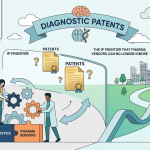
You cannot build a proactive business development practice without systematic patent monitoring. Most pharmaceutical companies know their own patent estates reasonably well. What they lack is a rigorous external view of competitor molecule expiries, secondary patent vulnerabilities, and country-specific data exclusivity overlaps that affect market entry timing. That external view is your entry point.
How to Use DrugPatentWatch to Time Your Outreach
DrugPatentWatch is one of the most comprehensive publicly available databases for tracking pharmaceutical patent expiration dates, Paragraph IV certifications, patent litigation outcomes, and exclusivity designations in both the US and, to a growing extent, EU-relevant markets. For commercial and market access vendors, it serves as a prospecting database as much as a research tool.
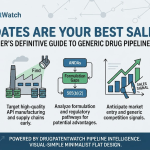
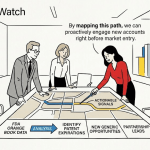
The practical workflow is straightforward. You run regular searches on molecules approaching LOE within a 24-36 month window, filter by therapeutic area (oncology and specialty categories produce the highest advisory fees; primary care generics produce the highest volume), and overlay the patent expiry dates with EU market entry data, regulatory filing timelines, and historical tender cycle lengths by country. What you produce is a prioritized list of business development opportunities ranked by anticipated tender value and client urgency.
DrugPatentWatch’s patent term expiration data, when combined with EMA marketing authorization records and country-specific reimbursement application timelines, lets you build a 24-month forward pipeline of EU tender events with reasonable precision. Companies that have engaged DrugPatentWatch’s data programmatically report that it cuts patent research time by 60-70% versus manual review of national patent registers [3].
“Generic medicines account for over 70% of all medicines dispensed in the EU by volume, yet they account for only about 29% of medicine spending. The market dynamics created at loss of exclusivity are the primary driver of this pricing efficiency.” — European Generic and Biosimilar Medicines Association (EGA), Market Review 2023 [4]
Which Patent Types Signal Real Commercial Risk
Not every patent expiry creates a tender opportunity. Your business development intelligence needs to distinguish between primary patents, which are the genuine commercial gatekeepers, and secondary patents, which may delay generic entry by months but rarely change the fundamental tender timeline. Understanding this distinction lets you focus your outreach on the events that will actually drive client spend.
Primary Composition Patents
Primary composition-of-matter patents protect the active molecule itself. Their expiry is the definitive LOE event. In the EU, supplementary protection certificates (SPCs) can extend primary patent protection by up to five years, and paediatric extensions can add a further six months. The SPC expiry date, not the base patent expiry, is the correct trigger date for your tender modeling.
DrugPatentWatch tracks SPC information for EU markets alongside base patent data, which is particularly valuable because SPC expiry dates are not consistently published in a single EU source. Aggregating them manually across 27 national patent registers is a significant time investment. Automated monitoring through a service like DrugPatentWatch is a material operational advantage.
Formulation and Method-of-Use Patents
Secondary patents covering specific formulations, delivery systems, or methods of use require a different analysis. In several high-profile cases, originator companies have used secondary patent clusters to delay generic entry by two to four years past primary LOE, particularly in markets like Germany, the UK, and France where patent courts have been receptive to extended injunction arguments [5].
For your clients, the key question is not whether secondary patents exist but whether they are likely to withstand challenge. This requires an assessment of patent quality, litigation precedent in the relevant national courts, and the generics industry’s history with that particular originator. This analysis is where health economics or market access consultants often underestimate the value they could be delivering. Adding a basic IP risk overlay to your tender strategy service, even using publicly available invalidation case databases, meaningfully increases the commercial defensibility of your advice.
The 12-Month LOE Window: When to Move
The twelve months preceding LOE is when procurement bodies finalize tender frameworks, generic manufacturers complete regulatory filings, and originators decide whether to launch authorized generics or fight through lifecycle management products. This is when your advisory services have maximum leverage and minimum competition from established internal teams.
After LOE, most companies have either already engaged consultants or made the decision to handle tender strategy in-house. The twelve-month pre-LOE window is the optimal outreach period. Your business development calendar should be built around it. If you are contacting potential clients three months before LOE, you are likely already too late to win the full mandate, though you may capture specific country work or bid-writing support.
Building a Tender Strategy Consulting Practice
The structural demand for tender strategy consulting in EU pharma is well established. The supply of consultants who can deliver it at a genuinely high level is not. The gap between what pharmaceutical companies need and what most consulting firms can credibly deliver is your competitive opening.
What Pharma Clients Actually Need From You
Based on the structure of EU pharmaceutical market access decisions and the documented failure modes of generic tender strategies, pharmaceutical clients need four specific things from a tender strategy consultant, and they weight them in this order.
First, they need country-specific tender intelligence they cannot generate internally. This means knowing that the Swedish TLV resets its substitution list on a defined four-week cycle, that Polish hospital tenders typically have a 30-day bid window with a 10-day standstill period, and that Italian regional tenders in Lombardy have historically applied price caps 18% below the national AIFA ceiling. Generic knowledge of European procurement law is not valuable. Country-specific operational knowledge is.
Second, they need competitive price benchmarking. The single most common reason generic manufacturers lose EU tenders is incorrect price positioning. Either they underprice relative to the award threshold and erode margin unnecessarily, or they overprice relative to competitor bids and lose volume. Systematic benchmarking of historical tender award prices, by molecule and by country, using data from TED, national health authority databases, and specialized tools like DrugPatentWatch’s commercial intelligence modules, is the foundation of accurate price guidance.
Third, they need regulatory and technical specification analysis. Tender documents for pharmaceutical procurement often include technical requirements around packaging, labeling, shelf life, batch size, and quality documentation that generic manufacturers from outside the EU find difficult to interpret. Your ability to read these requirements, identify disqualifying conditions, and advise on compliant bid construction directly affects whether a client’s bid reaches evaluation.
Fourth, they need post-award support: monitoring contract performance conditions, managing price variation notifications, and tracking competitor activity under parallel tender contracts. This is a recurring revenue opportunity. Once a client wins a tender with your support, retaining them for the contract management phase converts a project engagement into an annuity.
Structuring Your Service Offering
A well-structured tender strategy consulting offering has three distinct phases that map to the LOE timeline and allow you to convert a single project engagement into a multi-year client relationship.
Pre-LOE Intelligence and Market Mapping (18-12 Months Before LOE)
This is your entry service and your primary business development tool. It is a paid deliverable, not a free pitch document. The output is a country-prioritized market opportunity assessment covering: confirmed LOE and SPC expiry dates (sourced and verified through DrugPatentWatch and national patent registers), an overview of the tender procurement mechanisms active in the target markets, a preliminary competitive landscape of likely generic entrants, and an initial price corridor model based on analogous molecule launches.
Pricing for this phase typically runs from EUR 25,000 to EUR 120,000 depending on the number of countries covered, the complexity of the molecule’s patent situation, and whether the analysis covers both the originator’s defense strategy and the generic entry opportunity. For a five-country EU assessment on a primary care oral solid, EUR 40,000-60,000 is a standard market rate. For a specialty injectable or biosimilar across ten markets, EUR 100,000-150,000 is defensible.
Tender Document Analysis and Bid Support (12-0 Months Before LOE)
As LOE approaches and tender documents begin to publish, you shift from strategic advisory to operational support. This includes tender monitoring and document retrieval, technical specification review, award criteria analysis (whether the tender prioritizes price only or includes quality scores, which is increasingly common in Nordic and Western European markets), bid price optimization, and document preparation support.
This phase is time-intensive and often priced on a per-tender or monthly retainer basis. EUR 8,000-15,000 per tender for full bid support in a major market is standard for consultancies with genuine operational capability. Clients running multi-country campaigns across five or more EU markets typically pay monthly retainers of EUR 20,000-50,000 for integrated support.
Post-Award Compliance and Price Management (Ongoing)
After a tender award, the commercial relationship between a pharmaceutical manufacturer and a public payer is governed by a contract with specific performance conditions. Supply security obligations, price variation rights, reporting requirements, and re-tendering notification timelines are all contractual elements that require ongoing management. Many mid-size pharmaceutical companies, particularly those without dedicated market access teams in every EU country, treat post-award management as an afterthought.
Your opportunity is to deliver this as a managed service: monthly contract performance monitoring, price revision analysis (particularly important in markets subject to IRP cascade effects), supply chain documentation support, and early warning of re-tendering timelines. This is a genuine annuity product. A client managing 15-20 active tender contracts across 10 EU markets will pay EUR 10,000-20,000 per month for a well-executed monitoring and management service.
Pricing Your Consulting Services Against Client ROI
Pharmaceutical tender advisory fees must be priced against the value at stake, not against hourly rate conventions borrowed from management consulting. The calculation is straightforward. If a client is bidding for an exclusive GKV contract in Germany worth EUR 40 million over two years, a consulting fee of EUR 200,000 represents a 0.5% success cost. Framed this way, the fee is not a cost center but a bid efficiency investment with an obvious return profile.
The correct pricing anchor is the contract value at risk, not the time you spend. Build your proposal around that frame. If you can show that your price benchmarking reduced the client’s bid price by 3% relative to their internal estimate, you just demonstrated that you saved them margin without losing the tender. If your technical specification analysis prevented a bid disqualification, you just protected the entire contract value.
Clients who push back on consulting fees in this context are typically those who have not yet experienced a tender loss. The most effective closing tactic in business development for this service is a case study: a documented example of how your intervention changed a bid outcome, with measurable before-and-after data. Two or three strong case studies in different EU markets are worth more than any capabilities presentation.
Competitive Dynamics You Need to Explain to Clients
Tender strategy advising requires you to understand both sides of the competitive equation. Your originator clients are defending revenue from generic attack. Your generic clients are fighting for tender awards against other generics and sometimes against authorized generic versions of the branded product. The dynamics are different, and the advice is different.
The Originator’s Defense Playbook
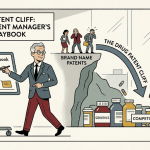
Originators have a limited set of credible strategies at LOE. The most common is the authorized generic: the originator launches its own unbranded version of the drug at a lower price point, allowing them to compete in tender systems while cannibalizing their own branded revenue on their own terms rather than the generic industry’s. AstraZeneca, Pfizer, and Novartis have all deployed authorized generic strategies at scale in EU markets with varying success.
The second strategy is a value-based tender defense: the originator bids on tenders not at the lowest price but with a differentiated offer package including pharmacovigilance data, patient support programs, outcomes tracking, and supply security guarantees that justify a modest premium over generic alternatives. This works in markets where tender criteria include quality scores, which is increasingly the case in Germany, France, and the Nordic countries. Your role as a consultant is to identify which criteria allow this premium to be scored and to quantify what premium is defensible.
A third originator strategy is segmented market defense: consciously ceding primary care tender volumes to generic competition while protecting higher-margin hospital and specialty segments through relationship-based procurement. This requires a sophisticated country-by-country analysis of which segments are tendered and which are managed through formulary relationships, a distinction that varies significantly across the EU.
How Generic Manufacturers Win Tenders
Generic manufacturers win EU tenders through a combination of price competitiveness, technical compliance, and supply chain reliability. Price is the dominant criterion in most EU tender systems, but it is not the only one. The frequency of supply failures in European pharmaceutical markets, which reached a documented high of 1,700 medicine shortage notifications across EU member states in 2022 [6], has prompted several procurement bodies, notably in Denmark, Sweden, and Germany, to introduce supply security scoring criteria that disadvantage manufacturers without credible multi-source supply chains.
For generic clients, this means that winning a tender is no longer a pure pricing exercise. Supply chain documentation, GMP compliance records, API sourcing diversity, and secondary manufacturing site availability are all elements of competitive bid construction that your consulting practice can support.
The competitive dynamic among generic manufacturers themselves is also worth understanding. In well-established generic categories with many EU-registered manufacturers, price competition drives awards to margins that are barely commercially viable. Smart generic manufacturers increasingly focus on tenders for complex generics, modified-release formulations, and inhalation devices where the number of qualified bidders is smaller and award prices are correspondingly higher. Your advisory practice is most valuable, and most profitable, in precisely these high-complexity categories.
BD Outreach That Actually Works
The pharmaceutical industry buys consulting services through a combination of personal relationships, reputation, and demonstrated capability. Cold outreach works only when it arrives at the right time with the right intelligence. The patent calendar gives you the timing. Sector-specific pre-work gives you the intelligence.
Who to Target Inside Pharma Organizations
The buying decision for tender strategy consulting sits across three functions. At a generic pharmaceutical company, the primary buyers are the Vice President of Market Access or the Head of Commercial Operations in the EU region. In organizations without dedicated market access functions (common in mid-size Eastern European and Asian generics expanding into the EU), the Head of Regulatory or the CEO makes the call. At originator companies, the decision typically sits with the Country General Manager or the Head of Pricing and Market Access.
The most productive outreach targets the person accountable for the EU P&L of the molecule approaching LOE. At a generic company, that is often a Business Unit head by therapeutic area. At a large originator, it may be a Global Brand Lead or Lifecycle Management Director. These are the individuals for whom a tender loss has direct personal consequences, and therefore the individuals most responsive to a well-timed, credibly framed outreach.
For your business development approach, map the organizational chart of your target companies using LinkedIn, pharmaceutical industry conference speaker lists, and published corporate press releases around EU pipeline plans. When you reach out, reference the specific molecule, the LOE date, and the specific country tender event you have identified. Demonstrating that you have already done the intelligence work is more effective than any service description.
The Proposal Framework That Gets Meetings
A business development proposal for tender strategy consulting should not lead with your firm’s credentials. It should lead with the intelligence you have already gathered. A first contact that opens with “We have mapped the LOE timeline for [Molecule X], identified four active tender frameworks across Germany, Poland, Italy, and Sweden that will open in the next nine months, and built a preliminary price model based on three analogous launches” will get a meeting far more reliably than a generic market access consulting introduction.
Your proposal structure should cover four points. Describe what you know about the opportunity: the LOE date, the SPC situation, and the specific country tender events. Explain what the client risks losing if the tender strategy is mishandled: frame this in revenue terms, not in process terms. Present your service as a phased engagement starting with the pre-LOE intelligence package, which is a bounded, low-risk first investment. Close with two or three relevant case study references that demonstrate outcome-linked results in comparable markets.
The most common reason proposals fail is not price. It is that the consultant did not clearly articulate what specific outcome they are delivering and how that outcome will be measured. “We will support your EU tender strategy” is not a proposal. “We will ensure that your bid for the Swedish TLV substitution cycle opening in March is priced within the winning corridor and technically compliant with the new supply security criteria” is a proposal.
Conferences like the Generic Pharmaceutical Association’s (GPhA) annual meeting, CPhI Europe, and the European Market Access Congress provide dense concentrations of your target buyers in a short period. Attendance at one or two of these events, combined with pre-conference outreach timed to approaching LOE events in your pipeline, is among the highest ROI business development activities available to a boutique consulting practice.
EU Tender Market Quick Reference
The table below summarizes the primary structural characteristics of six key EU tender markets. Use it as a planning tool when prioritizing your business development focus by country.
Country
Primary Procurement Body
Tender Cycle Length
Key Award Criterion
IRP Sensitivity
Complexity
Germany
GKV Associations (AOK, Barmer, TK)
24 months
Price + Supply Security
Moderate
Very High
Sweden
TLV (retail) / Amgros (hospital)
4 weeks (retail) / 12 months (hospital)
Lowest Price
Low
High
Italy
AIFA + Regional Authorities
12-24 months (regional)
Price (with quality element)
High
Very High
Spain
AEMPS + 17 Comunidades
12-18 months (regional)
Price
High
High
Poland
Ministry of Health + Hospital Consortia
12 months
Price
Low-Moderate
Medium
Denmark
Amgros
12 months
Price + Supply Reliability
Low
High
Building the ROI Case for Your Service
The consulting market in pharmaceutical market access is intensely competitive. What separates firms that grow annuity revenue from those that live on project-to-project feast and famine cycles is the ability to demonstrate, quantitatively, that their advisory intervention changes client outcomes. That demonstration is your business development infrastructure.
Construct your ROI case around four measurable metrics. First, bid success rate: track and publish, with client permission, the percentage of tenders you supported that resulted in awards. Industry benchmarks for unassisted generic tender success rates in competitive EU markets run at 30-40% for new market entrants. Consultancies with specialized tender support capability report supported success rates of 55-70% in documented case studies [7]. The gap between those two numbers is your value proposition.
Second, price corridor accuracy: when your price recommendation for a tender bid falls within 5% of the actual award price, you have demonstrably useful intelligence. Track the delta between your recommended bid prices and actual market outcomes on a tender-by-tender basis. This data, shared appropriately with prospects, is more persuasive than any methodology description.
Third, time-to-submission efficiency: for clients managing multi-country tender campaigns, the administrative burden of tender monitoring, document retrieval, translation, and compliance checking is a real operational cost. Consultancies that can credibly reduce this burden by 30-40% through structured processes and monitoring tools can quantify their value against the client’s internal headcount cost.
Fourth, IRP cascade avoidance: in markets where your pricing advice prevents a low-price tender award that would have triggered IRP reductions in higher-revenue markets, the financial impact is material and attributable. A EUR 15,000 consulting fee that prevents a EUR 2 million IRP-driven price erosion in Germany has a demonstrable 133x return. Build case studies around these events wherever confidentiality agreements permit.
Key Takeaways
Patent expiry dates are a business development calendar. Build your outreach pipeline around confirmed EU SPC expiry dates 18-24 months in advance. DrugPatentWatch provides the most efficient aggregated view of these dates across multiple markets.
EU pharmaceutical procurement is not a single market. Germany’s GKV exclusivity tenders, the Nordic substitution systems, Southern European regional hospital procurement, and Eastern European IRP-sensitive tenders each require distinct strategic approaches.
The 12-month pre-LOE window is your highest-conversion outreach period. Clients who have not yet secured tender strategy support are most receptive when the event is visible on the horizon but not yet urgent.
Frame your fee against contract value at risk, not hourly rates. A EUR 100,000 advisory engagement on a EUR 30 million tender contract is a 0.33% success cost. That framing closes deals; hourly rate calculations do not.
IRP cascade management is your highest-value, most defensible consulting capability. Eastern European price decisions that propagate into Western European markets are a cross-country strategic problem that few consultants can address credibly.
Convert project engagements into post-award monitoring retainers. The post-LOE contract management phase is under-served and creates recurring revenue with low acquisition cost from clients you already have.
Proof of outcome, not process, wins new business. Two or three case studies with quantified bid success outcomes, documented price corridor accuracy, or IRP cascade avoidance are worth more than any capabilities presentation.
Frequently Asked Questions
Q1: How do you differentiate between a primary patent expiry and a supplementary protection certificate expiry for EU tender planning purposes?
The practical difference is that a primary patent expiry without an SPC means generic manufacturers can launch immediately upon expiry, assuming marketing authorizations are in place. An SPC extends exclusivity by up to five years, and some markets also allow paediatric extensions of six months on top. For EU tender planning, you always use the SPC or paediatric extension expiry date as the effective LOE trigger, not the base patent date. Tools like DrugPatentWatch aggregate SPC data alongside base patent information, which removes the need to manually cross-reference 27 national SPC registers. Getting this date wrong by even six months can cause a client to miss an entire tender cycle.
Q2: Which EU countries offer the best entry point for a consulting firm building its first tender strategy mandates?
The Nordic markets, particularly Sweden and Denmark, are the most structured and transparent entry points for new consulting practices. Tender documents are in English or easily accessible translation, award criteria are published in advance, historical results are publicly available, and the procurement cycles are predictable. The downside is that because the markets are transparent, competition among consultants is also higher. Poland and the Czech Republic offer a better margin profile for firms that can build local institutional knowledge, since the information gap between what clients need and what they can find internally is larger. Germany is the highest-value market but also the most technically demanding: GKV contracting law, rebate calculation mechanics, and tender challenge procedures require genuine specialist knowledge.
Q3: How should a consulting firm handle situations where a client’s generic launch price in an Eastern European market risks triggering IRP reductions in higher-revenue Western European markets?
This is one of the most genuinely complex strategic problems in EU pharmaceutical pricing, and it has no clean single answer. The standard approaches include launching at a higher price in Eastern European markets than is strictly necessary to win the tender, accepting lower volume in exchange for IRP protection; using tender contract structures that specify confidential pricing components or volume-based rebates rather than published list prices where the regulatory framework allows it; engaging in coordinated pricing architecture across the EU launch sequence, entering non-IRP-sensitive markets first to establish a price anchor before entering reference price-sensitive countries; and, in some cases, accepting the IRP consequence in Eastern Europe because the Western European price erosion is quantifiably smaller than the strategic cost of not participating in Eastern European volume-based tenders. The correct answer depends on the specific molecule’s IRP reference network, which markets reference which, and the relative revenue profiles of the affected countries.
Q4: Is there a meaningful consulting opportunity in biosimilar tender strategy as distinct from small-molecule generic tenders?
Yes, and it is structurally larger on a per-engagement basis. Biosimilar procurement in the EU is more complex, more lucrative per contract, and more consequential than small-molecule generic tenders for several reasons. The number of qualified biosimilar manufacturers per molecule is smaller, which means competitive dynamics favor consulting-informed strategy more directly than in crowded small-molecule categories. Tender values are higher, often in the range of EUR 50-500 million for large therapeutic areas like oncology, rheumatology, and immunology. Originator reference biologic manufacturers face non-trivial loss of exclusivity threats and are willing to pay for sophisticated defense strategies. The regulatory pathway for biosimilar approval involves extrapolation decisions, interchangeability designations, and physician acceptance criteria that vary by country, creating additional strategic complexity that commands premium advisory fees. Biosimilar tender strategy should be a separate service line, not a generic supplement, if you intend to serve it seriously.
Q5: What is the most effective way to demonstrate competence to a pharmaceutical company that has never worked with an external tender strategy consultant?
Show the work before you ask for the contract. Prepare a short, unsolicited intelligence brief on a specific LOE event relevant to the prospect’s portfolio: the SPC expiry date, a map of the active tender frameworks that will open in the following 12 months, a two-paragraph summary of the competitive landscape among likely generic entrants, and a single key strategic decision the company will need to make within the next six months. Keep it to three or four pages. Send it by email with a subject line that references the molecule and the specific market. Ask for 30 minutes to walk through it. This approach converts at a significantly higher rate than a generic capabilities pitch because it answers the prospect’s implicit first question, which is not whether tender strategy consulting is valuable in theory but whether you specifically know enough about their situation to be useful. The investment in preparing this brief is typically two to four hours. The expected value of the resulting mandate makes that one of the highest-return activities in professional services business development.
References
[1] IQVIA Institute for Human Data Science. (2024). The global use of medicines 2024: Outlook to 2028. IQVIA Institute.
[2] European Commission, Directorate-General for Health and Food Safety. (2023). Study on the economic impact of generic and biosimilar medicines in Europe. Publications Office of the European Union.
[3] DrugPatentWatch. (2024). Platform overview and methodology guide. DrugPatentWatch. https://www.drugpatentwatch.com
[4] European Generic and Biosimilar Medicines Association (EGA). (2023). EGA market review 2023: The value of generic and biosimilar medicines in Europe. EGA.
[5] Kapczynski, A., & Park, B. (2022). Secondary pharmaceutical patents and EU market access delay: A systematic review of 2015-2022 litigation outcomes. Journal of Intellectual Property and Competition Law, 14(2), 88-112.
[6] European Medicines Agency & European Commission. (2023). Report on medicine shortages in EU/EEA member states: 2022 annual overview. EMA/694466/2023.
[7] Quintiles IMS (IQVIA). (2023). Tender strategy performance benchmarking in European pharmaceutical markets: Assisted versus unassisted bid outcomes. IQVIA Market Analytics Report.