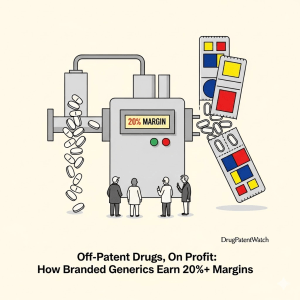
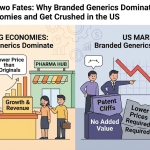
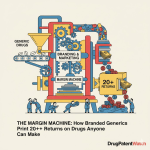
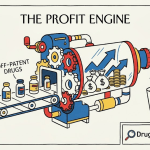
Branded generics occupy a middle ground between expensive branded drugs and bare-bones unbranded generics. These products use off-patent active ingredients but are sold under trade names and supported by marketing. By leaning on brand recognition and physician relationships, branded generics command higher prices and profits than commodity generics, even though anyone “can make” the active ingredient. In emerging economies especially, branded generics dominate prescription sales (for example, 63% of India’s market by value versus only 11% in the U.S.[1]) and often yield operating margins in the 20–30% range. This article traces the four pillars of that profit model – brand equity, formulation & IP strategy, distribution scale, and regulatory arbitrage – and shows why generic copies can still be big business. DrugPatentWatch and other patent databases are critical tools in this landscape, helping companies map out patent expirations, data exclusivities and competition timing to maintain an advantage.
Branded generics are more than cheaper copies. They are bioequivalent drugs (same active ingredients, strength, route and approved uses) that are marketed under brand names after patent expiry[2][3]. Unlike unbranded generics (which sell by molecule name and compete solely on price), branded generics promote “quality” and continuity. For example, Pfizer continued selling Lipitor® at multiple times the price of a generic in India and Brazil long after U.S. patents expired, so that in those markets Lipitor kept margins over 25%[4]. In practice, branded generics look and feel like branded drugs (often in bottles or blister packs with distinctive names), but they rely on lower development costs. Their profit engine is a trust and marketing premium backed by selective manufacturing and IP plays.
“In emerging markets, the branded generic segment commands an average price premium of 28% over unbranded equivalents, while incurring 60–70% lower promotional expenditure than the equivalent innovator product in its primary patent period”[5].
This Trust Premium comes from branding in markets where physicians or patients care about origin. In many Latin American, Asian or African countries, doctors routinely prescribe by brand name rather than dispense the cheapest pill. A branded generic with a recognized name thus faces far less price pressure than a plain generic. A classic study notes that in physician-driven markets (Spain, Italy, Brazil, etc.), branded generics sell at higher prices and lower volumes than unbranded pills in pharmacy-driven markets[2][6]. Technically the chemistry is identical, but what buyers pay for is the bundle of services and signals around quality. Branded generics come with a hotline for medical queries, reliable supply, often better packaging, and the psychological assurance of a known manufacturer[7]. In markets with spotty regulatory enforcement, the perceived quality gap can be real: physicians may trust a Big Pharma-made pill more than an unknown copy. As one expert put it, “Branding isn’t just a logo; it’s a promise of quality. In branded generics, that promise drives adoption.”[8]
In short, branded generics position themselves above the cheapest alternatives. They set a price floor based on reputation and distinct branding rather than cutting to the bone. This allows price spreads where the branded generic sells at 20–60% above the lowest generic but still below what the original innovator charged. For example, Pfizer’s own analysis found that in China, Brazil and Russia patients and doctors are much less price-sensitive for Lipitor than in the U.S. A 25-year-old brand with loyalty can often hold a 20–30% premium[9]. Likewise, Abbott India routinely charges 25–45% more for older drugs than local unbranded copies, precisely because Indian doctors expect branded quality[10].
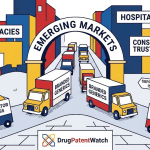
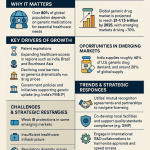
Branded generics thrive in emerging markets. In 2024, the global branded-generics market was roughly $260–300 billion[11][12] and growing at mid-single digits. North America and Europe feature mostly pharmacy-dispensed generics (by molecule name) or tightly controlled tenders, so branded generics play a niche role (e.g. some hormone replacement or contraceptives). By contrast, in India, China, Latin America, the Middle East and Africa, drug retail is often “physician-driven” or paid out-of-pocket. In India, for example, branded generics account for about 63% of all drug sales by value[1]. An IQVIA report notes that emerging markets will produce 90% of pharma sales growth in the coming decade – and fully 75% of that growth is expected to come from branded generics[13].
Globally, branded generics are popular in cardiology, neurology, anti-infectives, diabetes, and women’s health categories. The fastest growth often comes in chronic therapies (hypertension, diabetes, cholesterol) where affordability drives demand. Governments in many countries even encourage generics by policies, but these usually focus on cost controls rather than wiping out brands entirely. Even where generic substitution is allowed, patients and doctors often exercise choice, especially if they think a brand is “safer.” A market report confirms: “Healthcare providers often prefer branded generics due to their trusted brand reputation, assured quality, and patient confidence”[14]. That dynamic – brand loyalty in poorer markets – is the fuel behind the high margins.
In developed countries, branded generics exist mostly as authorized generics or niche lifestyle drugs (e.g. authorized versions of Strattera or Viagra). But companies are pushing beyond the U.S. too. For instance, Novartis’s Sandoz recently launched branded asthma and allergy medicines in Europe, and Viatris (formerly Mylan) labels some drugs under brand names in Latin America. These moves underscore that major players see branded generics as a standalone business strategy. Pfizer’s decision to carve out its old drugs into the Upjohn division (now Viatris) explicitly treated mature brands as a separate low-cost profit center[15].
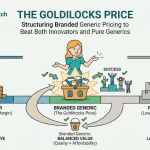
Branded generics sit in a “Goldilocks” margin zone – not as fat as patent-protected drugs, but much healthier than plain generics. According to industry analyses, operating margins for branded generics in developed markets often run 18–32%, whereas non-branded generics typically only see 4–12%[16]. For context, on-patent brands might make 35–55% in emerging markets[16], but they also have to cover R&D costs and face eventual cliff declines. Branded generics, by contrast, have none of the discovery spend and minimal development outlay.
Profitability boils down to pricing power plus kept costs. Branded generics are generally priced 15–40% below the old innovator price, but 20–60% above commodity generic levels[17]. That middle range translates to big dollar margins, especially on high-volume chronic meds. For example, Abbott India’s all-generic portfolio still reports operating margins of 22–27%[18] – far above India’s industry average. Similarly, Sun Pharma’s branded-business margins in India run 25–32%[19].
By contrast, an unbranded generic maker must compete on razor-thin margins. When multiple generics flood the market, prices can crash 70–80% below brand parity within a few years[20]. Indeed, DPW data show that 80% reductions are the norm in high-competition scenarios[20], which leads many small players to fail or consolidate. Branded generics avoid that race-to-bottom by never competing at the lowest tier. They keep enough distance that even if cheaper copies arrive, the erosion is less catastrophic – often flattening out at a sustainable “manufacturing cost” floor rather than zero[21].
Enabling this pricing: branded generics usually cut promotional budgets. The IQVIA data note that emerging-market brands spend about 60–70% less on marketing than the original innovator did, yet still charge a hefty premium[5]. The implication is clear: they pay less to convince doctors and pay higher prices per script. With fewer players in their segment, each branded generic generates more profit per patient. In effect, branded generics mint profits from familiarity: doctors prescribe the same molecule, but at 10–50% more revenue than a white-label version, and marketing is modest.
Case in point: When Pfizer’s Lipitor patent ended in 2011, U.S. prices plummeted. But in Brazil and India Pfizer simply kept selling Lipitor under its brand (and made generic versions through local affiliates). In those markets, Lipitor continued to sell at 4–6 times the lowest generic price[4], preserving double-digit margins. Lipitor’s Brazilian entity had been built for high-volume with minimal marketing – so it could keep charges high where competition was limited. That strategy drove nearly half a billion dollars in branded Lipitor sales in developing markets during the first year off patent[22]. The lesson: even highly copied drugs can make money when sold as brands in the right context.
Figure: Technicians in a pharmaceutical manufacturing facility – vertical integration in API and production gives branded generics lower costs. (Unsplash)
The first lever is brand equity itself. A branded generic is more than its formula; it carries a name and reputation. This creates a pricing floor. In practice, companies treat the innovator’s pre-expiry price as the high anchor, the cheapest generic price as the low anchor, and the branded generic sits in between. If the brand is trusted, the spread can be large. In uninsured markets (most of Asia, Africa, Latin America), companies routinely set spreads of 40–60%. In partially reimbursed markets, the spread narrows to 20–35%. And in places with strict substitution laws, it can compress to the teens[23]. But even a 20% spread on a multi-dollar drug yields huge ROI compared to a cent-or-two margin.
Why do doctors write the higher-priced name when a cheaper option exists? The answer is psychological and informational. A branded generic signals quality. For example, we mentioned the Lipitor example. Similarly, in India patients and doctors know branded generics command 30–100% higher prices than generic counterparts[24], and they pay it for peace of mind. This isn’t marketing hype alone. In many emerging markets, regulatory enforcement is uneven: plants might occasionally miss standards, or cheap copies might be substandard. A multinational firm with WHO or FDA-audited plants stands out. Doctors know one brand’s pills come from an ISO-certified facility; a local “no-name” pill might not be so reliable. They act as if “trust is a drug.”
Substantiating that, analysts have documented that patients in India incur significant risk from low-quality drugs, so they cling to names they know[24]. Branded generics exploit this trust gap. Consider that generics must meet 80–125% bioequivalence, a wide window. Brands frame unbranded alternatives as “near-misses” at best. In effect, each prescription of a branded generic is a vote of confidence; the doctor or patient pays extra to avoid any doubt.
The data bear it out. IQVIA notes an average 28% price premium in emerging markets for branded generics over equivalent unbranded drugs[5]. AbbVie’s analyst for Abbott India, for example, estimates the company’s sales force and education programs let it charge 25–45% more than price-control benchmarks in categories like GI and women’s health[10]. Even in sectors with dozens of Indian copies, Abbott India’s reps command those premiums because doctors have come to trust that label.
In summary, the brand serves as insurance. If something goes wrong, branded generics usually have better complaint handling, phone lines, and recalls. Pharmacies in emerging markets even get incentives (discounted ordering terms, loyalty bonuses) from branded companies[25]. All these factors justify a higher net price. Crucially, this premium is largely durable so long as quality perceptions hold. As countries strengthen regulations and push for substitution, the trust edge will narrow. But for now in many regions, branding is a moat: it stops the price floor from collapsing as fast as it does for commodity generics.
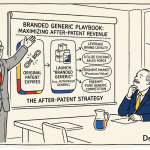
A key tactic to lock in premium pricing is to slightly tweak the product and secure new intellectual property. Branded generics often invest just a little beyond the basic ANDA. For example, they might develop a once-daily version of a twice-daily drug, add a benign ingredient for sustained release, or combine two old drugs into one tablet (a fixed-dose combination or FDC). Each of these changes can justify new patents or new regulatory filings.
Abbott India’s famous strategy illustrates this: it has rolled out dozens of fixed-dose combos (like a calcium channel blocker + ACE inhibitor for hypertension) that pair two generic pills into one branded pill[26]. Those FDC products are clinically convenient (improving patient compliance), but more importantly they are distinct drugs legally. Abbott files new registrations and sometimes obtains formulation patents on these combos. Generic competitors must still undergo a separate approval process and cannot legally market the combined product until those pathways clear. This essentially extends exclusivity: Abbott has insulated these brands against generic entry even after the original patents lapsed[26].
DrugPatentWatch data highlight that savvy companies file secondary patents on formulations, dosages or delivery methods specifically to support their branded generics. A thorough patent-stack analysis distinguishes the primary patent (the molecule) from these secondary layers[27]. A generic challenger looks for any “thin” spots to exploit, but the branded-generic owner uses the same information defensively. They use tools like DrugPatentWatch’s database to track paragaph IV filings and pending patents[28]. When a competitor files an ANDA with a challenge (Paragraph IV) claiming Pfizer’s expired Lipitor patents are invalid, that public filing signals Abbott or Sun to redouble marketing or launch an FDC brand extension before competition hits[29].
The 505(b)(2) path in the U.S. exemplifies this approach. Unlike a straightforward generic (505(j)), a 505(b)(2) application allows minor changes and grants new exclusivity (3, 5 or 7 years)[30]. Companies use this “hybrid NDA” route to preserve much of the innovator’s pricing power. In one view, branded generics become “value-added medicines”: the core API is old, but the product is repackaged to solve a real problem (convenience, reduced side effects, co-therapy)[31]. These innovations then come with their own patents or trial data and stave off generics.
Importantly, using patent/data strategy costs far less than full R&D. Filing a new patent or doing a small bioequivalence or stability study costs thousands rather than hundreds of millions. DrugPatentWatch’s systems remind companies how drug approval timelines and exclusivity can be nudged. For instance, even after patents expire, data exclusivity or registration backlogs can lock out competitors. Some African countries take 3–5 years to approve any generic; a branded generic approved earlier effectively has that time to sell at premium prices[32]. Meanwhile in the U.S., a successful 505(b)(2) NDA nets at least 3 years of protected sales even if the API is old.
In sum, IP and product tweaks give branded generics a staggered clock. They extend when substitutes can come. This both preserves higher margins and forces competitors to battle on harder terms (new trials or modified products) rather than just copy exactly. Weaving patent strategy and formulation R&D into lifecycle planning is now standard. Analysts track every relevant patent or exclusivity on DrugPatentWatch so that branded-generic managers know whether their products are fully open territory or still shielded by secondary IP[33]. Those insights feed directly into pricing and marketing strategy, ensuring sustained profitability on off-patent molecules.
Even a well-branded, differentiated product needs to reach the customer. That’s Lever 3: building a privileged distribution footprint. In many emerging markets, healthcare distribution is highly fragmented – often an advantage for large incumbents with legacy networks. India alone has ~800,000 retail pharmacies and 65,000 wholesale stockists[34]. Getting on every shelf is nontrivial. Branded-generic giants like Sun Pharma and Cipla spent decades forging relationships with thousands of distributors. The result: nearly 100% availability of their key brands even in rural pharmacies.
This distribution moat directly feeds margins. DrugPatentWatch notes: a drug that is out of stock 30% of the time will simply lose that share of prescriptions, because pharmacists will suggest whatever is on hand[35]. By contrast, a branded generic that guarantees supply can safely charge more, knowing patients won’t be steered to another label. In fact, one analysis found that a medicine available 95% of the time commands a premium over a drug only 70% available[35]. The difference pays pharmacists back in confidence (and sometimes spiffs), and keeps doctors prescribing the brand they learned about.
On the ground, this means branded companies often run sophisticated trade teams and loyalty programs. They might promise faster payments or better returns to pharmacies than white-label generics do[36]. Marketing funds go to ensure retailers prefer their pack. All of this is like locking in the supply chain. It also explains why small or new entrants struggle: they cannot easily replicate a nationwide cold chain or stock holding of a Sun or Abbott.
Vertical integration further strengthens this lever. Many branded-generic leaders own their own manufacturing and API plants, often at huge scale[37]. Dr. Reddy’s, Aurobindo, Divi’s and others built API capacity years ago so they could cut costs. Producing 500 tonnes of atorvastatin API instead of 5 tonnes means a fraction of the per-unit cost[37]. Consequently, these firms sell their premium-priced pills at a COGS even lower than a startup buying bulk API from a merchant. Economies of scale in production mean they also never face stockouts.
Quality control is also part of distribution. Companies with WHO or FDA-audited plants can label this as a selling point. In markets with variable GMP enforcement, branded generics often are measurably better. A study of Southeast Asian generics found wide variance in dissolution and purity[38]. Branded players respond by highlighting their own stringent QA. This not only justifies price, but it literally keeps bad copies away from the market via stricter standards, again protecting margin.
Figure: A production line in a pharmaceuticals plant – companies with integrated manufacturing and broad distribution networks can guarantee supply and keep costs low, enabling higher margins. (Unsplash)
Branded generics also benefit from regulatory and payer differences across markets. In some countries, getting a new generic approved can take years. A branded competitor that has already jumped through the hoops (submitted dossiers, paid fees, etc.) effectively enjoys artificial protection. In parts of Africa and Latin America, local registration of a generic may be 3–5 years behind that of the branded drug[32]. During that lag, the branded player has no local competition even if patents have expired, so it can hold prices and margins steady.
Governments have been pushing generic substitution through tendering and reference pricing, but these systems mainly squeeze innovator brands or high-profile generics; branded generics fly under the radar since they’re “still generics” to regulators. For example, China’s volume-based procurement has driven some prices down, but it mostly applies to specific molecules, and branded generics often negotiate their own channels. In short, the regulatory clock can differ from the patent clock, and branded-generic managers exploit both timelines.
Payer strategy also matters. Many emerging markets have mostly out-of-pocket payment, so price sensitivity is lower than in insured markets. Countries with private or tiered insurance may negotiate, but often treat branded generics differently than innovator co-pays. Branded generics can slot into middle formulary tiers that still reimburse a good fraction of the price. Moreover, because there are fewer manufacturers, insurers often can’t pressure them as hard as true innovators.
In a few developed settings (like Central/Eastern Europe or the UK “value-added medicines” category), branded generics sometimes get non-interchangeable status via special regulatory listings. They then rely on physician dispensing rather than pharmacist substitution. This too preserves margin.
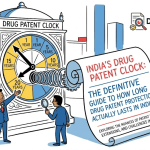
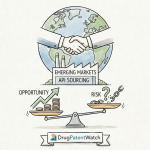
Overall, branded generics read the global map carefully. Regulators and payers in each market create a unique competitive landscape. As one DPW analysis warns, “A patent expiry date does not tell you whether secondary patents exist, whether data exclusivity applies, [or] how long regulatory review will take”[39]. Using patent and regulatory intelligence (for example via DrugPatentWatch), strategists gauge where substitutes can legally enter, where trial data can shield them, and plan launches accordingly. This legal/regulatory barrier timing is as much a lever as patents themselves.
To ground this, consider how some companies put these levers into practice:
Abbott India (now Abbott India Ltd.) – This is the textbook case. Abbott sold all its Western generics business to Mylan, but kept its branded generics empire in India. Roughly 90% of Abbott India’s sales come from molecules off-patent for a decade or more[40]. Yet it reports operating margins around 22–27%[18] – far above peers. How? It fields over 5,000 medical reps (one for every ~16 doctors) and relentlessly promotes its brands[41]. Physicians in India see the Abbott name on labels like Norvasc, Claritin, or Prevacid for years, so they prescribe them by habit. Abbott even creates brand-labeled combination pills (combining two generics into one FDC) which command a higher list price than either ingredient alone[26]. This FDC strategy also requires new registrations, giving Abbott exclusivity beyond the original patent. The net effect: Indian doctors will pay a premium to write “Papizac” or “Doloneurobion” rather than an anonymous white pill, boosting Abbott’s ROI without innovation R&D.
Sun Pharmaceutical (India) – Sun built its early business entirely on branded generics at home. Today, Sun’s domestic generics arm still posts 25–32% margins[19]. It accomplishes this by specialization: separate sales teams for psychiatry, dermatology, cardiology, etc. A Sun sales rep will call only neurologists for Alzheimer’s drugs, building personal relationships that keep patients on those brands[42]. Internationally, Sun has also moved into the U.S. specialty generics space by similarly branded products (e.g. extended-release or novel delivery generics), which sell for much higher prices than ordinary generics. The company tracks every U.S. patent and Orange Book listing (using sources like DrugPatentWatch) to know exactly when and where each product will face competition[43].
Pfizer/Upjohn (Viatris) – Pfizer realized that aging blockbusters like Lipitor, Celebrex and Norvasc were worth treating as their own division. They bundled them into Upjohn and ran it leaner, targeting emerging markets. Internal studies showed 20–30% margins were sustainable on these brands overseas[44]. The spinout into Viatris continued that approach. Lipitor, for instance, remained a top seller in China and parts of Latin America after patent expiry, keeping prices well above local generics. Notably, Viatris discovered hurdles: when China launched national tender buying for statins, Lipitor saw a price hit it hadn’t foreseen[45]. But overall the strategy confirmed that even Nobel-winning drugs can keep profit when managed as generics brands.
These examples have two takeaways: deep commercial muscle (sales forces, distribution) and meticulous IP planning. DrugPatentWatch analysts observe that companies like Sun and Abbott spend effort registering formulation patents and tracking Paragraph IV challenges on each branded product[46]. They model “effective exclusivity” by stacking data exclusivity periods and trial timelines on top of patent dates. For the strategist, the core question is: When exactly will generics land? The answer determines price defense timing and marketing push. Companies that monitor this data into Excel can stretch their cash cows into sustainable franchises.
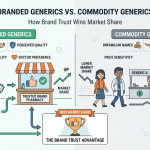
Brand vs Commodity: Branded generics sell old drugs as brands. Doctors and patients pay extra for name and trust, keeping margins around 20–30%, far above the 4–12% typical for plain generics[16][17].
Profit Levers: Five main drivers boost margins: (1) Brand equity (price premium for trust), (2) Formulation/IP (extra patents, combos, data exclusivity), (3) Distribution scale (mass supply network and API integration), (4) Regulatory timing (lagged approvals, exclusivity), (5) Focused marketing (aligned sales forces, loyalty programs). All of these stretch profitability beyond simple cost advantage.
Market Context: Emerging markets (Asia, Latin America, Middle East, Africa) favor branded generics. High out-of-pocket payment, physician-driven prescribing and quality concerns let companies sustain premium pricing. For example, Abbott India and Sun Pharma routinely earn high margins on off-patent drugs by leveraging these conditions[40][19].
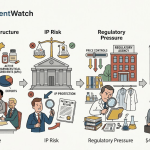
Patent Strategy: A thorough patent/IP analysis is crucial. Platforms like DrugPatentWatch aggregate patent listings, Paragraph IV challenges, and exclusivity data to time market entry and defend prices[33]. Branded-generic teams use this intel to know exactly which secondary patents still stand, how long regulatory barriers last, and when to launch authorized generics or line-extensions.
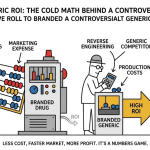
Skeptical ROI: Data shows branded generics can boost returns. Studies indicate branded generics yield net profit margins in the 20–40% range[47][48], effectively doubling ROI versus unbranded follow-ons. This is real revenue, not hype. It comes from re-allocating modest marketing to brand-building and exploiting every legal loophole, rather than from a magic formula.
Q: What exactly is a “branded generic,” and how is it different from a regular generic? A branded generic is a drug whose active ingredient is off-patent, but which is sold under a brand or trade name rather than by its chemical name. Unlike an unbranded generic (which competes on price only and may have no marketing), a branded generic is marketed to doctors and patients as a “quality-guaranteed” product. It is bioequivalent to the original drug, but the company may invest in things like sleek packaging, sales reps, and perhaps minor formulation tweaks. This brand approach lets it keep prices and margins higher[2][3]. In markets like India or Brazil, almost all drugs (even generics) are branded this way, whereas in the U.S. we mostly see generics by molecule name or authorized generics.
Q: Why do branded generics achieve 20%+ margins when generics usually do not? Branded generics earn higher margins because they have pricing power and lower promotion costs. Doctors or patients pay a premium for the brand. Studies find price spreads of 20–50% over the cheapest generic[17], which directly translates to big gross profit. Meanwhile, marketing spending is lower than the original brand’s, so net profit stays high. In practice, branded generic companies often double the effective ROI of a copycat drug by charging more and selling a lot. For example, Abbott India made ~18.7% operating margin on its branded generics business back in 2016[48]. Unbranded generics seldom exceed low-double-digit margins; they become commodities after a few entrants.
Q: What IP strategies do branded-generic companies use to protect margins? They focus on secondary patents and exclusivities. Even after the main patent falls, companies may hold patents on a formulation, crystalline form, or manufacturing process. They may create new formulations (extended-release, combos, etc.) that get fresh patents. They also rely on regulatory mechanisms like data exclusivity (when you do a minor clinical study to claim new use/dose, you may get years of protection). The result is a thicker “IP stack.” Analysts use patent databases (e.g. DrugPatentWatch) to map out this stack: primary patents vs secondary, and see when each layer expires[27][33]. By tracking Paragraph IV generic challenges, they also get early warning of new entrants and can preempt with branding or reformulation.
Q: How do market and regulatory differences (globally) affect branded generics? Heavily. In physician-driven markets (where doctors decide the prescription), branded generics do well; in pharmacy-driven markets (pharmacists substitute by law), their edge is weaker. For example, Latin America traditionally mandated doctors to sign the brand name, so branded generics stayed strong[49]. Conversely, Germany or the U.S. allow pharmacy substitution, so branded generics need special positioning (or simply don’t exist much). Also, approval timelines vary. A branded generic in Nigeria might not face a true local generic competitor for years, whereas in Europe it could face multiple approvals within months. Companies adjust strategy accordingly – they may charge a premium and invest in marketing only if the regulatory and payer setting allows it.
Q: Can investors or companies use DrugPatentWatch data to find branded generics opportunities? Absolutely. DrugPatentWatch aggregates global patent filings, Orange Book data, litigation and exclusivity info. A branded-generic manager can search a drug’s profile to see exactly which patents remain (primary vs secondary), whether any generic has challenged them, and how many ANDAs exist. This reveals when a generic will realistically enter. For example, if a Paragraph IV lawsuit is filed, that triggers a 30-month stay – plenty of time to build brand momentum[29]. Likewise, the platform shows if an innovator filed new indication patents or if data exclusivity is pending. Using this intelligence, strategists can line up their launches, pricing moves and marketing pushes to match the patent timeline, effectively turning legal data into actionable commercial plans.
[1][48] Drugmakers waking up to potential value of branded generics