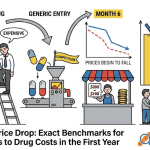
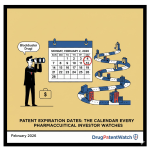
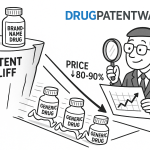
The pharmaceutical industry faces a contraction of unprecedented scale. Between 2025 and 2030, nearly 200 blockbuster drugs are scheduled to lose patent protection.1 This wave puts approximately $400 billion in annual revenue at risk as competitors prepare to flood the market with low-cost alternatives.1 When a small-molecule drug loses exclusivity, generic entrants often price their versions at discounts of 80% to 90% below the branded price.2 This erosion happens almost instantly, stripping originators of market share within weeks.
I see high-level executives increasingly turning to the prescription-to-nonprescription (Rx-to-OTC) switch to protect their assets. This is not just a marketing shift; it is a fundamental reconfiguration of the drug’s legal and commercial life. By moving a product from behind the pharmacy counter to the retail shelf, companies can bypass the “cliff” and tap into a consumer healthcare market valued at over $335 billion.4 More than 700 drugs have made this transition since 1976.5
The switch serves as a secondary lifecycle management tool that creates a brand that can live into perpetuity.7 Unlike prescription drugs, which die when the patent expires, an OTC brand like Advil or Claritin maintains value through consumer loyalty and retail presence long after the original chemical patents vanish. Successful switches often reach annual retail sales levels exceeding $100 million.7
The $400 Billion Disappearance
The current industry landscape is the result of a concentrated expiration of patents on high-revenue products. Industry-wide analyses show that between 2025 and 2030, approximately 69 “blockbuster” drugs—medicines generating over $1 billion in annual sales—will face generic or biosimilar entry.9 This period represents the most significant revenue hemorrhage in the history of the sector.2
At-Risk Blockbuster
Innovator Company
Expected LOE Window
Stelara (ustekinumab)
Johnson & Johnson
2025 – 2026
Eylea (aflibercept)
Regeneron
2025 – 2026
Entresto (sacubitril/valsartan)
Novartis
2025 – 2026
Ibrance (palbociclib)
Pfizer
2027 – 2028
9
I track these dates through DrugPatentWatch, which provides the precise window where a brand’s monopoly ends and the price-sensitive retail market begins. For small molecules, the impact is a vertical drop. For biologics, the slope is gentler but the end result is the same: a total loss of pricing power. The Rx-to-OTC switch is the only strategy that moves the drug into a different competitive arena where patent expiration is a manageable hurdle rather than a terminal event.1
Transitioning from Patients to Consumers
The switch requires a mindset shift from treating “patients” through “physicians” to engaging “consumers” through “retailers.” In the prescription world, the person taking the drug rarely sees the full price. Insurance payers and co-pays insulate them. In the OTC world, the consumer is the primary payer. They are highly sensitive to price and convenience.11
Research shows that retail prices for branded drugs reduce substantially after an Rx-to-OTC switch.11 This is not a failure of the brand; it is a response to the price elasticity of the retail market. Consumers are willing to pay for a name they trust, but only to a point. They often prioritize value for the dollar over medical provider visits with unknown price tags and high insurance deductibles.13
The Regulatory Skeleton of the Switch
The Food and Drug Administration (FDA) governs the change in marketing status through the New Drug Application (NDA) process. A sponsor initiates the switch by proving that the prescription status is no longer necessary to protect public health.14 The FDA evaluates the drug’s toxicity, potential for harmful effects, and the method of its use to determine if a consumer can use it safely without professional supervision.14
I categorize these transitions into two types: full switches and partial switches. A full switch moves the entire drug product covered under the NDA to nonprescription status. Once approved, the drug is only available over the counter.14 A partial switch allows some conditions of use, such as specific indications or dosages, to move to OTC status while others remain prescription-only.14 This requires a new NDA and can lead to complex market dynamics where the same molecule exists in two different price categories simultaneously.
Understanding Section 505 of the FD&C Act
The legal basis for drug approval in the United States resides in Section 505 of the Federal Food, Drug, and Cosmetic Act. There are three primary pathways for approval that I analyze when considering a switch.
505(b)(1): This is the full NDA. It contains complete reports of safety and effectiveness. The applicant either owns the data or has obtained a right of reference to it.16
505(b)(2): This pathway allows the applicant to rely on investigations that they did not conduct and for which they do not have a right of reference, such as published literature or the FDA’s previous findings of safety for an approved drug.16
505(j): This is the Abbreviated New Drug Application (ANDA) for generic drugs. It must show that the proposed product is identical to the “reference listed drug” (RLD) in active ingredient, dosage, and strength.16
Most switches utilize the 505(b)(2) pathway or an efficacy supplement to an existing 505(b)(1) application.6 This allows the sponsor to build on years of prescription-use data while only needing to conduct new studies focused on consumer behavior and safety in a non-supervised setting.
The 505(b)(2) Advantage for Line Extensions
The 505(b)(2) pathway is a powerful tool for lifecycle management because it provides a middle ground between a brand-new molecule and a simple generic copy. It is preferred if a company wants to retain some level of exclusivity while extending the brand life.15 By changing the dosage form, strength, or indication for the OTC market, the sponsor can potentially trigger new periods of market protection.
I see companies using this pathway to introduce “next-generation” formulations. This includes extended-release tablets, nasal sprays, or topical gels that improve the user experience.1 These innovations can be patented separately from the original chemical entity, creating a “patent thicket” that generic competitors must navigate long after the primary patent has expired.10
The Three Year Exclusivity Buffer
The primary incentive for a switch is the three-year marketing exclusivity period granted under the Hatch-Waxman Act.19 This exclusivity prevents the FDA from approving any generic ANDA or paper NDA for three years following the approval of an NDA for a drug that contains an improvement for which new clinical trials were required.19
Unlike NCE exclusivity, which lasts five years, the three-year “new clinical investigation” exclusivity applies specifically to changes in indications, dosing regimens, or the switch from Rx to OTC.19 The exclusivity period runs concurrently with any applicable patent terms but operates independently of them.20
Defining Essential New Clinical Investigations
To earn this three-year buffer, the new clinical studies must be “essential to the approval”.20 This means the FDA could not have approved the switch without that specific data. I find that the agency typically requires three specific types of studies to meet this threshold.
Label Comprehension Studies: These tests ensure that a consumer of average intelligence can understand the “Drug Facts” label and know what the drug is for.14
Self-Selection Studies: These trials evaluate whether a consumer can accurately decide if the drug is right for them based on their own symptoms and medical history.14
Actual Use Trials (AUT): These are simulated real-world studies where consumers are given the drug and monitored to see if they use it appropriately without a doctor’s guidance.14
These studies are significantly less expensive than the Phase 3 clinical trials required for a new drug, yet they provide a similar period of absolute market protection.23 For a blockbuster drug, three years of OTC exclusivity can be worth hundreds of millions in retail revenue.
Exclusivity vs Patent Life
It is a common misconception that drugs have 20 years of market monopoly. The statutory patent term is indeed 20 years from the date of filing, but the “effective patent life”—the time the drug is actually on the market without generic competition—is much shorter.10
Effective patent life typically ranges from just 7 to 12 years after accounting for time spent in clinical development and the FDA review process.21
This makes the three-year OTC exclusivity a high-impact extension. If a drug has an effective life of 10 years, the switch adds 30% to its total time as a protected brand. I use DrugPatentWatch to model these overlaps and identify the exact window where the switch provides the most tactical advantage.
Case Study: The Allergy Category Monopoly
The allergy market is the gold standard for Rx-to-OTC switches. Between 2002 and 2022, seasonal allergy products accounted for 29 out of 45 total switches.24 I see a clear pattern here: symptoms are easily recognized, the drugs have high safety margins, and the consumer demand is consistent.
The “Big Three” antihistamines—Claritin, Zyrtec, and Allegra—each used the switch to dominate the retail shelf after their prescription patents expired.10 They paved the way for more complex allergy treatments like intranasal steroids to follow.
Claritin and the Insurance Petition
The switch of Claritin (loratadine) in 2002 was unconventional. Usually, the manufacturer initiates the switch. In this case, WellPoint, a major health insurer, filed a citizen petition with the FDA to force the switch.10 WellPoint argued that Claritin and its competitors were safe enough to be OTC and that moving them would save insurers and patients millions in prescription costs.26
Schering-Plough, the maker of Claritin, initially resisted. They argued that patients needed physician supervision to manage allergies and that the switch would increase out-of-pocket costs for consumers with good drug coverage.26 However, as the patent expiration neared, Schering-Plough realized they would lose the market to generics anyway. They pivoted and became the first to successfully switch a second-generation antihistamine, preserving the Claritin brand name as a retail powerhouse.10
Flonase and the Eye Relief Exclusivity
GlaxoSmithKline’s (GSK) switch of Flonase (fluticasone propionate) in 2014 demonstrates the tactical use of indication expansion. Flonase was the second intranasal steroid to launch in the U.S. OTC market, following Nasacort.25 To differentiate itself, GSK secured a three-year exclusivity period specifically for the claim that Flonase relieves itchy, watery eyes—an indication its competitors did not have at the time.25
This “eye relief” claim allowed Flonase to take the allergy category by storm. The original Flonase brought in more than $200 million in sales during its first 10 months on the market.27 GSK then expanded the franchise by switching Veramyst and rebranding it as Flonase Sensimist, capitalizing on the established brand equity.27
Brand
Molecule
Switch Year
Sales Performance
Flonase
Fluticasone Propionate
2014
Principal growth driver for GSK US in 2015 28
Nexium 24HR
Esomeprazole
2014
Extended AstraZeneca’s PPI leadership 29
Claritin
Loratadine
2002
Proved the viability of the mass retail allergy model 10
Voltaren
Diclofenac Sodium
2020
Brought topical NSAID relief to the OTC pain market 14
14
Why Statins Failed the OTC Test
Not every attempt at a switch succeeds. The most notable failures are in the statin class of cholesterol-lowering drugs. Merck tried to switch Mevacor (lovastatin) three times, and Pfizer attempted to switch Lipitor (atorvastatin). All attempts were rejected by the FDA.30
I analyze these failures to understand the limits of self-care. The FDA’s primary concern with statins is that high cholesterol is an asymptomatic, chronic condition. Unlike an allergy, where the patient feels better after taking the drug, a statin user cannot feel their cholesterol dropping. They require lab tests and medical supervision to ensure the drug is working and that they are not suffering from hidden side effects like liver damage or myopathy.32
The Mevacor Rejection Analysis
In 2005, an FDA advisory committee voted 20 to 3 against endorsing the switch for Mevacor.34 The committee concluded that the risks associated with the drug were too complicated for patients to self-medicate. A major concern was that consumers would not be able to appropriately select themselves for treatment.35
In Merck’s own study, nearly 70% of potential users needed more information to decide whether to buy the product, and 33% did not know their initial LDL cholesterol levels.35 Furthermore, there were concerns about unintended pregnancy exposures, as statins are contraindicated in pregnant women due to fetal risk.30 The committee felt that without a physician to monitor the patient, these risks were too high for a retail setting.
Lipitor and the Asymptomatic Barrier
Pfizer faced similar hurdles with Lipitor. In 2015, the company pulled the plug on its OTC Lipitor program after a Phase III actual use trial failed.31 The study showed that patients were unable to take the medication correctly and monitor their cholesterol without a doctor’s assistance.31
I see this as the “Asymptomatic Boundary.” If a condition cannot be self-diagnosed and the treatment effect cannot be self-monitored, the FDA is unlikely to approve a switch. This explains why the OTC market is dominated by symptomatic conditions like pain, heartburn, and allergies, while chronic diseases like hypertension and diabetes remain behind the counter.7
The ACNU Framework and Digital Gatekeepers
The regulatory landscape is changing to address these barriers. In December 2024, the FDA announced a final rule for “Nonprescription Drug Product with an Additional Condition for Nonprescription Use” (ACNU).37 This rule establishes a new pathway for drugs that cannot be switched through labeling alone.38
The ACNU rule allows a drug sponsor to propose an “additional condition” to ensure safe use. This could be a digital questionnaire, a secure website, or a kiosk located in a pharmacy.23 The consumer must complete this extra step to determine if the drug is right for them before they can purchase it.37
Final Rule Analysis 2024-2025
The ACNU final rule became effective in early 2025.38 It requires a separate application for a drug with an ACNU rather than an efficacy supplement to an existing Rx NDA.39 This is a critical distinction for manufacturers because it forces them to build a de novo regulatory package for the ACNU version of the drug.
Key Requirements of the ACNU Final Rule:
Application Data: Applicants must submit data demonstrating that the ACNU is necessary to ensure safe self-selection or use because the label alone is insufficient.38
Post-Marketing Reports: Manufacturers must report “ACNU failures,” defined as the operational failure of the condition itself, within 15 days.38
Labeling Statements: The package must bear a specific statement: “You must complete an extra step to see if this drug is safe for you before you use it”.38
I view this as the birth of “smart OTC.” It allows companies to revisit failed categories like statins or more complex medications like antibiotics and oral contraceptives by replacing the human doctor with a digital algorithm.23
Replacing Doctors with Algorithms
The ACNU framework envisions a world where technology acts as the gatekeeper. For example, a secure website could analyze a consumer’s medical history through a series of questions and calculate a “risk score” before providing a barcode to unlock the medication at a retail kiosk.23
This reduces the logistical burden on pharmacists and retailers while maintaining the safety standards the FDA requires. For pharmaceutical companies, it provides an “elegant lifecycle management tactic” that extends the product’s protected life through the software used to manage the ACNU.23 If the brand owns the algorithm and the digital platform, it creates a new layer of intellectual property that generics must replicate or circumvent.
Sanofi and the Tadalafil Turning Point
The erectile dysfunction (ED) market is currently the most active testing ground for the ACNU concept. Sanofi has been pursuing an OTC switch for Cialis (tadalafil) for over a decade.41 ED treatments like Cialis and Viagra are high-value targets, but they have a dangerous interaction with nitrates used for chest pain.41
In 2022, the FDA placed a clinical hold on Sanofi’s actual use trial for Cialis due to concerns over the protocol design.41 This was a major setback, as it suggested that the agency was not yet convinced a consumer could safely navigate the nitrate contraindication through labeling alone.
The 2022 Hold and 2025 Approval
In January 2025, the FDA lifted the clinical hold on Sanofi’s trial.42 This makes Cialis the first PDE-5 inhibitor to move into a pivotal actual use trial in the United States.44 This move is a major milestone for the industry and signals that the FDA is now willing to consider digital tools as a valid way to manage contraindications.
Sanofi is completing the necessary clinical and regulatory activities to start the study, which will be the primary evidence for the eventual switch application.45 This case is being watched by every major pharma firm as it will prove if the “digital companion” model is commercially and regulatorily viable for high-risk medications.
Mandatory Health Survey Assessments
The Cialis trial utilizes a “mandatory health survey assessment” (HSA).46 This is essentially an early version of an ACNU. Participants must enter their data into the HSA, and only those who qualify based on the digital screening can proceed to purchase and use the drug.46
The study protocol includes:
Open-label use of tadalafil 5 mg tablets for 4 months.46
Approximately 2,250 participants enrolled.46
Requirement for an electronic diary (eDiary) to record usage and symptoms.46
Remote enrollment interviews and identity verification via government ID.46
This level of rigor shows that a modern switch is more like a Phase 3 clinical trial than a simple labeling change. I believe this will be the new standard for any medication that targets complex or asymptomatic conditions.
Business Economics of the OTC Model
The financials of an OTC brand are vastly different from its prescription predecessor. In the prescription market, the goal is high price and low volume. In the OTC market, it is high volume and lower price.48 A successful switch can increase drug class utilization by 25% to 42%.48
However, the margins are thin. A pharmaceutical company might only retain 5% to 10% of earnings from top-line OTC sales if they partner with a consumer-packaged goods (CPG) firm.48 I see companies with internal consumer health divisions, like GSK and Bayer, as having a significant advantage because they already have the retail infrastructure to manage these margins.6
ROI Modeling and Price Elasticity
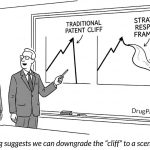
When I model the ROI of a switch, I focus on the “price erosion curve.” In the prescription market, prices are stable until the patent cliff, then drop vertically. In the OTC market, the brand-name price reduces substantially but levels off at a premium above the private label.9
The key to ROI is “patient price elasticity.” OTC consumers will pay more for a brand they trust—like Nexium or Claritin—but only if the benefit is clear. If the price gap between the brand and the store brand is too wide, the volume gain will not offset the margin loss.11
Authorized Generics and Market Flooding
I find that the most aggressive lifecycle strategy combines the Rx-to-OTC switch with an “Authorized Generic” (AG). An AG is identical to the brand-name drug but marketed as a generic under a different label.51
By launching an AG at the same time as the OTC switch, the innovator can capture both ends of the market. They take the high-value retail customers with the OTC brand and the price-sensitive patients with the AG. This “market flooding” can block independent generic competitors from gaining a foothold during their 180-day exclusivity period.52
Strategy Component
Purpose
Market Impact
Branded OTC
High-loyalty consumers
Long-term revenue, retail dominance
Authorized Generic
Capture low-cost volume
Discourage third-party generic entry
Next-Gen Formulation
Differentiate from copies
New patents, “evergreening” effect
Digital Companion
Safe-use screening
High-barrier to entry for competitors
1
Monitoring the Orange Book with DrugPatentWatch
I rely on the FDA Orange Book to track the chess match between brand-name and generic manufacturers. The Orange Book identifies drug products approved for safety and effectiveness and provides the patent and exclusivity information that dictates market entry.53
DrugPatentWatch transforms this raw data into strategic intelligence. It allows me to see which patents are being challenged and which exclusivities are expiring. This is the central ledger of the industry.55 For a company planning a switch, this data is the “most powerful offensive weapon” for identifying the optimal launch window.10
Identifying Market Entry Windows
The first legal opportunity for a generic to enter the market is determined by whichever barrier falls last—the final patent or the final exclusivity.21 I use DrugPatentWatch to identify “abandoned” or “pending” patent applications that might signal a competitor’s strategy.56
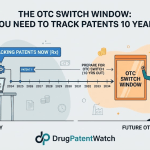
For an Rx-to-OTC switch, the window usually opens about three years before the primary patent expires. This is when the brand must begin the label comprehension and actual use studies. If they wait too long, they lose the three-year exclusivity advantage and generics can launch their own OTC versions simultaneously.48
Tracking Failed Patent Challenges
I also study failed patent challenges to refine market-entry strategies. If a generic manufacturer fails to invalidate a brand’s patent, it often creates an opening for the brand to negotiate a settlement that includes an OTC license.57
This “settlement and switch” strategy allows the brand to transition to the retail market in a controlled manner, often providing the generic competitor with a royalty or a delay in their launch in exchange for not challenging the new OTC exclusivity.57
Managing the Retail Shelf
Success in the OTC market is as much about the “shelf” as it is about the “science.” Retail pharmacies and drug stores account for 34.1% of the global OTC market.58 I find that the relationship with the retail buyer is just as important as the relationship with the FDA.
Pharmacies remain the preferred point of sale because consumers trust the advice of pharmacists, even for non-prescription products.13 Online retailers like Amazon are gaining ground, currently representing about one-third of all OTC sales.13
Private Label Defense Strategies
The primary threat on the retail shelf is the “store brand.” Approximately 81% of North American consumers prefer private-label products due to lower costs.50 In categories like smoking cessation, private labels account for nearly two-thirds of all sales.50
To defend against this, I see brands using “innovation buffers.” This includes 20% less plastic in Advil packaging or the introduction of “natural” versions of legacy products like TUMS Naturals.59 These small changes cater to evolving consumer preferences for sustainability and clean ingredients, which store brands are often slower to adopt.
E-commerce and Amazon Basic Care
The expansion of OTC sales to online platforms is a major growth driver. Amazon’s partnership with Perrigo to launch “Basic Care” aligns the world’s largest retailer with a leading generic manufacturer.50 This threatens the traditional pharmacy-based model of Rx-to-OTC switches.
I monitor this trend because it shifts the power from the drug manufacturer to the platform. In an online environment, search algorithms and “best seller” lists determine what the consumer buys. Branded drugs that successfully switched decades ago must now compete in a digital arena where their heritage is just one data point among thousands of reviews.4
Key Takeaways
The transition of a drug from prescription to over-the-counter status is a multi-year chess match involving regulatory data, intellectual property, and consumer behavior. I have identified the following critical factors for success in this domain.
Strategic Timing: The optimal window to begin a switch program is three to five years before patent expiration. This ensures the three-year “New Clinical Investigation” exclusivity is in place before generic entry.
The Asymptomatic Boundary: symptomatic conditions like allergies and pain are easily switched. Chronic, asymptomatic conditions like high cholesterol have a high failure rate unless they use new digital screening tools.
The ACNU Paradigm: The 2025 FDA final rule on Additional Conditions for Nonprescription Use allows for “Smart OTC” products. These use digital apps and kiosks to replace physician oversight for high-risk medications.
ROI Reality Check: Switching to OTC usually results in lower margins and higher volume. Success is measured by long-term brand equity rather than short-term blockbuster pricing.
IP Synergy: Combining a switch with an Authorized Generic strategy allows an innovator to dominate both the retail and the generic channels, blocking third-party competitors.
FAQ
How does the 3-year exclusivity period differ from a patent?
Exclusivity is granted by the FDA and prevents the approval of competing generic applications for a specific period. Patents are granted by the USPTO and give the holder the right to exclude others from making, using, or selling the invention. They often run concurrently, but exclusivity can protect a drug even if its primary patents have expired.
What is an Actual Use Trial (AUT)?
An AUT is a real-world simulation where consumers use a proposed OTC drug without doctor supervision. It is used to prove to the FDA that people can follow the label instructions, select the right dosage, and avoid contraindications. These trials are essential for obtaining the 3-year switch exclusivity.
Can a generic company initiate an Rx-to-OTC switch?
Technically, yes. While the original brand manufacturer usually initiates the switch to protect their market, any company can file an NDA to market a nonprescription version of a drug. However, they must provide their own safety and efficacy data if they cannot refer to the brand’s proprietary studies.
What happens to a generic prescription drug if the brand-name version switches to OTC?
If the brand-name manufacturer does a “full switch” via a supplement to their NDA, the entire listing in the Orange Book converts to OTC. This requires all existing generic ANDA holders to also update their labeling and move to OTC status, usually within six months.
Why are digital tools becoming part of the OTC market?
The new ACNU rule allows for digital companions, such as apps or kiosks, to act as a screening gatekeeper. This allows drugs that were previously considered too risky for OTC use—like statins or erectile dysfunction treatments—to be sold at retail because the app ensures the consumer meets the safety criteria before purchase.