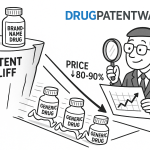
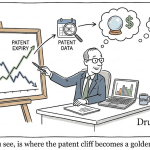
The pharmaceutical industry enters a period of unprecedented revenue contraction as the 2025-2030 patent cliff approaches. Analysis of current market data indicates that drugs representing over $200 billion in annual sales face the loss of exclusivity (LOE) within this window.1 This shift is not a simple expiration of legal protection; it is a massive structural realignment of how patients access medication. For biopharma packaging companies, this realignment provides a decisive lead-generation trigger. Success in this environment depends on targeting innovator companies that choose to transition their brands to over-the-counter (OTC) status rather than surrendering the field to generic manufacturers.
The $200 Billion Revenue Drain
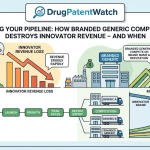
The scale of the impending disruption exceeds previous industry cycles. Between 2025 and 2030, nearly 200 blockbuster drugs lose their primary patent protection.2 This creates a revenue hemorrhage for companies that have relied on high-margin prescription sales. The U.S. OTC drug market reflects this shift, with projected growth at a compound annual growth rate (CAGR) of 4.01% through 2026, reaching a valuation of approximately $42 billion by 2024.3
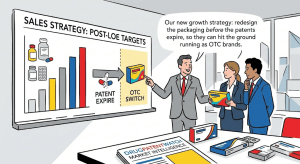
Innovators utilize the Rx-to-OTC switch to salvage brand equity and extend product lifecycles. When a drug moves from prescription-only (Rx) to nonprescription (OTC) status, it reaches a broader consumer base that prefers the convenience of retail pharmacies over physician consultations.3 This transition allows an Rx brand to have a second life as a consumer product, often at a lower price point but with significantly higher volume.3
Blockbuster Drug
Innovator Company
Projected U.S. Patent Expiry
Therapeutic Area
Keytruda (pembrolizumab)
Merck & Co.
2028
Immuno-oncology
Eliquis (apixaban)
BMS / Pfizer
2026-2029
Cardiology (DOAC)
Opdivo (nivolumab)
Bristol-Myers Squibb
2028
Immuno-oncology
Stelara (ustekinumab)
Johnson & Johnson
2025
Autoimmune
Enbrel (etanercept)
Amgen
2025
Immunology
Trulicity (dulaglutide)
Eli Lilly
2027
Diabetes/Obesity
Ibrance (palbociclib)
Pfizer
2027
Oncology
Xarelto (rivaroxaban)
J&J / Bayer
2026
Cardiology (DOAC)
Prolia / Xgeva (denosumab)
Amgen
2025-2026
Osteoporosis/Oncology
Entresto (sacubitril/valsartan)
Novartis
2025
Cardiology
1
The data suggests that the cardiology and immunology sectors are particularly exposed. Drugs like Eliquis and Xarelto represent the core of stroke prevention and blood clot treatment globally.7 Their oral small-molecule structure makes them highly susceptible to rapid multi-generic competition once barriers fall.7 For packaging firms, these drugs are primary targets for high-volume blister and bottle contracts.
Identifying Targets with IP Intelligence
Business development teams at packaging companies must look at patent filings as blueprints for future sales opportunities. A patent is a complex legal instrument with a hierarchy of strategic value.9 Mastery of this data separates market leaders from reactive suppliers. DrugPatentWatch provides the necessary intelligence to identify pivotal patents and confirm true LOE dates.10
The Layered Defense Strategy
Innovators do not rely on a single patent; they construct a multi-layered patent thicket to prolong market exclusivity.9 These layers include:
Product Patents: The base patent protecting the core molecule.
Formulation Patents: Protecting the unique combination of ingredients or delivery mechanisms.
Method-of-Use Patents: Safeguarding specific therapeutic applications for the drug.
Process Patents: Protecting the method of manufacturing the product efficiently.
9
When a company files a new formulation patent—such as an extended-release version of an existing drug—it signals a product hop.10 This is a direct cue for the packaging team to model a ramp-down of the old packaging format and a ramp-up of the new one.13 Proactive packaging firms use DrugPatentWatch to monitor Paragraph IV patent challenges, which indicate that a generic manufacturer is attempting to enter the market early.9
Blockbusters Expiring in 2025
The 2025 calendar year features several high-revenue targets for packaging sales. These drugs represent a mix of oncology, pain management, and cardiovascular treatments that require specialized container-closure systems.
Drug Name
Active Ingredient
2018-2024 Sales Range
Primary Treatment
Xalkori
Crizotinib
$524 Million+
Lung Carcinoma
Sprycel
Dasatinib
Blockbuster Status
Leukemia
Bosulif
Bosutinib
Blockbuster Status
Leukemia
Cresemba
Isavuconazonium
High Growth
Fungal Infections
Lysteda
Tranexamic Acid
Multi-Million
Heavy Bleeding
Antara
Fenofibrate
Multi-Million
Cholesterol
Yupleri
Revefenacin
High Growth
COPD
7
Identifying these drugs 24 months before their patents expire allows packaging firms to design specialized containers that support the innovator’s post-LOE strategy.10
The 24-Month Stability Window
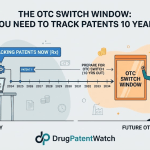
For business development professionals at biopharma packaging companies, the most critical timing factor is the 24-month pre-LOE window.10 Any change in primary packaging—the material in direct contact with the drug—requires stability testing.10 This testing ensures the product maintains at least 90% of its labeled potency throughout its shelf life.10
The Stability Testing Protocol
Stability programs follow ICH guidelines and 21 CFR Part 211.10 The sequential nature of these tasks dictates the sales cycle:
Months 1-6: Package design, material selection, and prototype development.10
Months 7-18: Real-time and accelerated stability testing.10
Months 19-24: Regulatory submission and production scale-up.10
If a packaging company waits until 12 months before LOE, the innovator company has no time to generate the stability data needed to support a primary packaging change.10 This results in the innovator sticking with their legacy packaging provider to avoid regulatory delays, even if the new provider offers better sustainability or cost-efficiency.
Stability Impact Factors
Moisture and oxygen are the primary factors in pharmaceutical degradation.15 Research in the International Journal of Pharmaceutics demonstrates that highly hygroscopic medications show 15% to 30% longer stability periods when stored in high-barrier blister packaging compared to HDPE bottles without desiccants.15 Packaging companies that can provide validated data on moisture ingress rates—such as Alu-Alu blisters with transmission rates below $0.001 \text{ g/m}^2/\text{day}$—hold a significant advantage during the 24-month window.15
ACNU and the Digital Package
The FDA finalized the Nonprescription Drug Product with an Additional Condition for Nonprescription Use (ACNU) rule in late 2024, with implementation beginning in 2025.16 Historically, a drug could only switch to OTC if its label alone provided all necessary information for safe use.16 The ACNU rule changes this by allowing medications for chronic conditions to move to the OTC market if the sponsor implements an extra step to ensure safety.16
The Mandatory Extra Step
The extra step required by ACNU makes the packaging a gateway to a digital platform. This extra step must be completed by the consumer to determine if the drug is right for them before they buy or use it.16 Common examples of these additional conditions include:
Digital questionnaires completed via mobile apps or secured websites.5
In-store digital diagnostics at a pharmacy kiosk.18
Consumer response videos that verify understanding.18
Telephone response systems for pharmacist consultation.18
16
This creates a massive opportunity for smart packaging. Packaging must now feature high-prominence statements alerting consumers to the ACNU.18 It must also incorporate digital triggers—such as QR codes or Near Field Communication (NFC) tags—that link the physical carton to the mandatory digital interface.18
ACNU Labeling Requirements
The ACNU rule mandates specific labeling language on the principal display panel and the immediate container surface.18 The label must state: “You must complete an extra step to see if this drug is safe for you before you use it. Do not take this drug without completing this step”.18 Packaging firms that integrate these requirements into their design templates early can help sponsors navigate the new NDA/ANDA process for ACNU products.17
Material Science as a Barrier to Entry
Sustainability is no longer a marketing choice; it is a regulatory requirement that dictates contract awards. The global sustainable pharmaceutical packaging market is projected to grow to $291.59 billion by 2034.21 Governments in the European Union, India, and China are implementing strict rules on packaging waste and recyclability.21
The Monomaterial Transition
Traditional blister packs use a complex multi-layer structure of PVC plastic and aluminum foil.23 This structure requires energy-intensive separation before recycling.23 The industry is shifting toward monomaterials, which use a single material type for both the forming film and lidding to simplify the recycling process.24
Polypropylene (PP): Berry Global recently launched ClariPPil bottles and jars made from fully recyclable clarified PP, offering 71% lower CO2 emissions than PET.25
Green Aluminum: Recycled aluminum sources reduce carbon intensity while maintaining a total barrier to light and oxygen.10
Bio-based Polymers: Polylactic acid (PLA) and polyhydroxyalkanoates (PHA) made from renewable sources like cornstarch.10
Fiber-based Blisters: The Blister Pack Collective—including Bayer, Sanofi, and Haleon—is developing dry-molded fiber alternatives to single-use plastic.5
5
The EU Regulatory Push
Regulation (EU) 2025/40 on Packaging and Packaging Waste requires all packaging to be recyclable by 2030.23 While primary packaging in contact with medicinal products is exempt until January 2035, the industry is moving now to avoid future financial penalties and extended producer responsibility (EPR) taxes.23
The Economics of Unit-Dose vs Bulk
The transition to OTC status often involves a debate over the economics of unit-dose (blister) versus bulk (bottle) packaging. While unit-dose material costs are 15% to 25% higher than bulk materials, total manufacturing costs are often 29% lower.28
“While material costs increase by 15-25% compared to traditional methods, total manufacturing costs decrease by an impressive 29%. This translates to net savings of 12-28% on your bottom line.” 28
Profit Advantage of Unit-Dose
Analysis of real-world case studies reveals that unit-dose operations generate significantly higher annual profits than bulk operations for the same product volume.28
Financial Metric
Unit-Dose Packaging
Traditional Bulk Packaging
Material Premium
15-25% Higher
Baseline
Labor Cost
40-60% Reduction
High Labor Intensity
Quality Control Cost
67% Reduction
Baseline
Annual Profit
$1,340,000
$847,000
Retail Price Premium
28-35% Increase
Baseline
28
This profit advantage stems from automated filling systems that eliminate manual measuring and counting.28 Furthermore, unit-dose packaging enables a 35% price premium because consumers value the convenience, safety, and dosing accuracy of individually sealed pills.28 For patients managing chronic conditions, blister-style packaging supports better adherence by simplifying the dosing process.30
Child-Resistant Packaging Compliance
The Poison Prevention Packaging Act (PPPA), codified at 16 CFR 1700, requires that most oral prescription and many OTC drug products use child-resistant packaging (CRP).31 This is defined as special packaging that is significantly difficult for children under five to open but not difficult for adults to use properly.34
The 16 CFR 1700 Testing Protocol
To obtain certification, a third party must conduct a study with 50 children and 50 senior citizens.33 The protocol is highly specific and literal.
The Child Test: Children are divided into pairs and placed in a well-lighted location familiar to them.35 The tester hands them the package and says, “PLEASE TRY TO OPEN THIS FOR ME”.36 They have five minutes to open the package. If they fail, they are shown a demonstration and given another five minutes.35
The Senior Test: Adults aged 50 to 70 are asked to read the instructions and open the package.36 They must open and, if applicable, properly resecure the package within five minutes.36 A high percentage of success is required for the package to pass the “senior-use effectiveness” standard.37
Packaging certifications apply to the combination of a container and a closure.33 You cannot mix a certified cap from one manufacturer with a bottle from another and claim compliance.33 Packaging firms that maintain a broad portfolio of pre-certified container-closure systems can accelerate the OTC switch process for innovators.
Late-Stage Customization and Agility
The pharmaceutical market is moving away from scale-driven efficiency toward agility-driven efficiency.38 Traditional models of long production runs with fixed stock-keeping units (SKUs) are incompatible with modern precision medicines and staggered global launches.38
Implementing LSC
Late-Stage Customization (LSC) involves delaying final packaging configurations—printing, labeling, and country-specific artwork—until demand and destination are confirmed.38 This is achieved by:
Utilizing neutral “brite stock” containers that can be customized late in the process.38
Applying digital printing technologies that allow for rapid label changes without compromising speed.38
Integrating LSC into clinical trials to ensure a smooth transition to commercial scale.38
LSC reduces waste, inventory risk, and working capital exposure.38 For a packaging provider, offering LSC capabilities is a major differentiator when bidding for contracts with global companies like Novartis or Johnson & Johnson that face “complexity creep” from regional regulatory requirements.38
M&A Trends in Consumer Health
The creation of independent consumer health companies like Kenvue and Haleon has transformed the OTC landscape.5 These companies prioritize Rx-to-OTC switches to optimize their portfolios and drive value growth.5
Portfolio Optimization Strategies
Large pharmaceutical companies are increasingly divesting non-core consumer health divisions to focus on higher-margin therapeutics.5 This creates opportunities for private equity firms like KKR or CapVest to acquire established brands.5 These firms are attracted to:
Stable demand and high margins in categories like oral care and eye care.5
The potential for operational improvements through digital buying and Amazon-native strategies.5
The consolidation of contract manufacturers (CDMOs) to provide stable cash flows.5
Haleon, for instance, spends approximately £300 million annually on R&D to drive innovations like turning prescription products into OTC favorites.39 Their commitment to sustainable packaging—reducing plastic in 80 million Advil bottles—shows how packaging innovation is central to their growth strategy.5
Supply Chain Intelligence as a Sales Tool
Patent data provides advance, predictive intelligence about major market events.13 Supply chain professionals can use this data to move from reactive firefighting to proactive management.13
Predicting Product Hops
When an innovator files a new formulation patent, it is often a signal for a product switch.10 The innovator plans to move patients from an old SKU facing patent expiration to a new, patented SKU. Packaging companies that detect these filings can offer:
Temperature and humidity sensors for new biologics or biosimilars.20
Blow-Fill-Seal (BFS) technology for sterile pharmaceuticals, which reduces the need for prefabricated containers and closures.41
Anti-counterfeiting features like holograms, color-shifting inks, and forensic taggants.20
These specialized technologies allow the packaging provider to become an indispensable partner in the drug’s lifecycle management.11
Key Takeaways
The $200 billion patent cliff represents the largest lead-generation event for biopharma packaging companies in the modern period. To win these contracts, business development teams must initiate outreach exactly 24 months before the loss of exclusivity. This timing is dictated by the mandatory 12-month stability testing required for any change in primary packaging materials.
The FDA’s new ACNU rule is a primary catalyst for growth, as it allows chronic-care medications to transition to OTC status. This rule effectively mandates that packaging become a digital interface, requiring QR codes or NFC tags to link consumers to mandatory safety questionnaires. Companies that provide these “smart” packaging solutions will be prioritized over traditional commodity suppliers.
Sustainability is the new baseline for entry into high-value contracts. Innovators like Johnson & Johnson and Novartis have committed to 100% recyclable packaging by 2025 and 2030. Packaging firms must provide a monomaterial roadmap, shifting from multi-layer PVC/Alu structures to recyclable polypropylene or fiber-based solutions to meet these requirements.
Profitability in the OTC sector is increasingly driven by unit-dose blisters. Despite higher material costs, blisters offer a 29% reduction in total manufacturing costs and support a 35% retail price premium. Packaging providers that can present this clear ROI to brand managers will successfully target the portfolios of newly independent consumer health giants like Haleon and Kenvue.
FAQ
Why is the 24-month window so critical for packaging sales?
Regulatory requirements demand that any change in the material touching a drug (primary packaging) must undergo stability testing. This process, which includes accelerated and real-time aging, typically takes 12 to 18 months. If you miss the 24-month pre-LOE window, the innovator will likely stick with their current supplier to ensure they hit their market launch date without regulatory delays.
What specific “extra step” does the ACNU rule require for OTC drugs?
The ACNU rule requires an “Additional Condition for Nonprescription Use” to ensure safety without a doctor’s supervision. This usually involves a digital questionnaire or an in-store kiosk interaction that the consumer must complete before purchase. The package must serve as the trigger for this interaction, usually through a QR code or NFC tag on the carton.
How does Late-Stage Customization (LSC) reduce manufacturer costs?
LSC allows a company to keep “brite stock” (unlabeled containers) and only print the labels or artwork once a specific regional order is confirmed. This prevents waste from over-ordering country-specific packaging that might expire if demand shifts. It reduces inventory risk and allows for faster response to global market changes.
What is the “50 children/50 seniors” test for child-resistant packaging?
Under 16 CFR 1700, packaging must be tested by a third party using a group of 50 children and 50 seniors. For the package to pass, at least 85% of children must be unable to open it within 10 minutes, while 90% of seniors must be able to open and properly resecure it within 5 minutes. This ensures the package is “child-resistant” but still “senior-friendly.”
How does a “product hop” impact a packaging company’s business development?
A product hop occurs when an innovator shifts patients to a new, patented version of a drug (e.g., from a pill to an auto-injector) just before the old version’s patent expires. For packaging companies, this means a total shift in the type of containers and production lines needed. Detecting these hops through patent filings allows you to pitch the specialized equipment needed for the new delivery system before the competition.
Global Innovations in Sustainable Pharmaceutical Packaging in the Last 25 Years: A Scoping Review – MDPI, accessed February 27, 2026, https://www.mdpi.com/2071-1050/17/23/10716