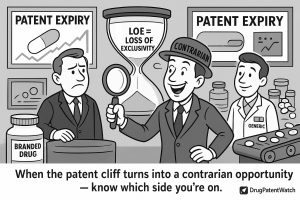
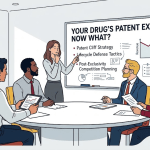
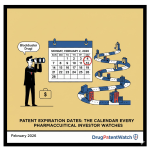
Between 2025 and 2030, drugs generating $236-$400 billion in annual branded sales will lose patent protection. The concentration of biologics in this cohort makes the competitive response fundamentally different from the 2010-2014 small-molecule cliff.
The pharmaceutical patent lifecycle creates three distinct, sequential investment opportunities: in the innovator facing loss of exclusivity (LOE), in the challenger filing the Abbreviated New Drug Application (ANDA) or biosimilars pathway, and in the specialty acquirer purchasing divested legacy assets.
For each of these strategies, the intellectual property estate is the core financial asset, not just a legal shield. Valuing it correctly, including patent thicket density, remaining term, and litigation exposure, separates accurate forecasting from guesswork.
The Inflation Reduction Act (IRA) Medicare drug price negotiation mechanism introduces a pre-LOE revenue haircut for high-spend drugs, compressing the window of peak profitability and altering both innovator defense strategies and the economics of generic/biosimilar entry.
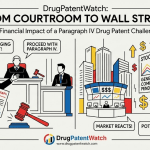
First-to-file Paragraph IV challengers capture market share advantages of up to 90% over later entrants. The 180-day exclusivity period is the most valuable regulatory prize in the generic industry, and it can be structurally undermined by an authorized generic launch.
Legacy brand acquisitions by specialty pharma and PE-backed platforms represent a structural, recurring M&A theme. The primary risks are reputational and regulatory, not commercial.
Section 1: The Patent Cliff Reframed: A Market Transformation, Not a Disaster
1.1 The Standard Narrative Gets It Half Right
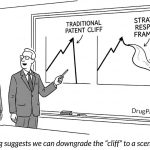
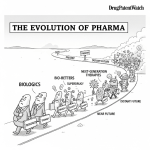
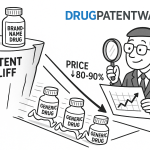
Most coverage of the pharmaceutical patent cliff opens with a collapse metaphor: a revenue torrent, once billions deep, falling off a precipice. The metaphor is accurate in one narrow sense. When generic or biosimilar competition enters a market, an originator’s sales can fall 80-90% within 12 months. That is a cliff by any reasonable definition.
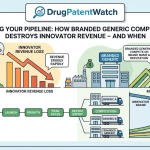
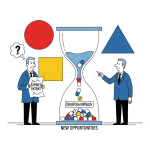
What the metaphor misses is everything that happens before and after the drop. The expiration of a pharmaceutical patent is not a sudden event. It is a scheduled market transformation, predictable years in advance, that creates three distinct categories of investment opportunity simultaneously. For each player who loses revenue, another one captures it. For each incumbent forced to defend, a challenger is funded and trained to attack.
A more useful mental model than the cliff is a market redistribution event. The total value generated by a drug does not disappear when its composition-of-matter patent expires. It transfers, partially to the healthcare system in the form of lower drug prices, and partially to the companies skilled enough to capture the post-exclusivity market. The contrarian thesis is built on identifying who captures that transferred value, and investing accordingly.
1.2 Why This Moment Is the Right Time to Use This Framework
The 2025-2030 LOE wave is the largest the industry has recorded. It differs from prior cycles in ways that create richer and more varied opportunity. The 2010-2014 cliff was dominated by oral small-molecule drugs, where the generic entry model is well-established, price erosion is predictable, and market dynamics collapse quickly. The current cliff is heavily weighted toward biologics, where biosimilar competition is slower, more expensive to mount, and structurally limited in how far prices fall.
This means the three-player model described in this report plays out over a longer arc, with more durable returns for each participant. A biosimilar competitor does not face the same 95% price erosion as a generic oral tablet. An incumbent defending a biologic can maintain meaningful market share for years post-LOE. A legacy brand acquirer targeting a biologic-adjacent product can find an asset with high residual physician loyalty and limited generic substitution pressure.
The framework below maps each of these opportunities with enough technical depth to inform actual capital allocation decisions.
Section 2: The 2025-2030 Patent Cliff: Scale, Composition, and Asset-Level IP Valuation
2.1 Quantifying the Exposure
Between 2025 and 2030, approximately 190-200 branded pharmaceutical products will lose their primary U.S. patent protection. Industry projections place the annual branded revenue at risk between $236 billion on the conservative end and $400 billion at the high end, depending on assumptions about pricing and market share retention.
The distribution of financial risk is not even across the industry. Five of the top 10 global pharmaceutical companies face LOE exposure exceeding 50% of current total revenues before 2030. The peak impact year is projected to be 2029, when multiple blockbuster LOEs converge. For portfolio managers tracking sector exposure, 2027-2029 is the window requiring the most active position management.
Individual company exposure estimates:
Merck & Co.: $15-19 billion in U.S. Keytruda revenue at risk by 2028
Bristol Myers Squibb: Combined Eliquis and Opdivo exposure creates a ‘dual cliff’ affecting roughly $19 billion in annual sales
AbbVie: Humira U.S. biosimilar competition began in January 2023; European biosimilar entry predated the U.S. by five years
Johnson & Johnson: Stelara biosimilar entry in 2025 and Darzalex LOE by 2029 compress J&J’s oncology revenue base
Novo Nordisk: The GLP-1 franchise, anchored by semaglutide, faces compound patent expirations from 2029 onward
2.2 Asset-Level IP Valuation: The Core Analytical Discipline
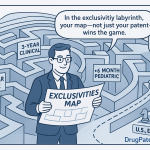
The patent estate of a major pharmaceutical product is not a single filing. It is a layered stack of intellectual property that extends, narrows, or complicates the effective market exclusivity period. Accurate revenue forecasting requires decomposing this stack for each asset.
The primary layers of a pharmaceutical IP estate are:
Composition-of-Matter Patents. These cover the active molecule itself and are the broadest, most defensible patents. Expiration of the composition-of-matter patent is what most financial models use as the ‘cliff date.’ For Keytruda (pembrolizumab), the foundational U.S. composition-of-matter patent expires around 2028, triggering the LOE event modeled in most Merck forecasts.
Formulation and Dosing Patents. Secondary patents cover specific formulations (e.g., subcutaneous versus intravenous delivery), concentration strengths, and dosing regimens. These can extend protection by 3-7 years past the composition-of-matter expiration. Humira’s patent thicket, which blocked U.S. biosimilar entry until January 2023 despite the composition-of-matter patent expiring in 2016, relied almost entirely on this layer.
Manufacturing Process Patents. For biologics, the proprietary cell lines, fermentation processes, and purification methods are patented and represent a separate defensive layer. A biosimilar developer must either design around these process patents entirely or accept the risk of infringement litigation. Process patents can be among the most technically difficult to challenge and are often underweighted in investor IP analyses.
Method-of-Use Patents. These cover specific clinical indications. Indication expansion filings add method-of-use patents throughout a drug’s lifecycle. For a drug like Keytruda, which has 40+ approved indications across oncology, the method-of-use patent layer is dense and adds complexity to any biosimilar freedom-to-operate analysis.
Pediatric Exclusivity. Under 21 U.S.C. 505A, completion of FDA-requested pediatric studies grants an additional six months of exclusivity that attaches to all existing patents and exclusivities. For a drug generating $10 billion annually, this half-year extension is worth roughly $5 billion in retained revenue. It is also FDA-requestable for drugs the agency specifically identifies, not just those the manufacturer volunteers for.
Orange Book Listed Patents. Only patents listed in FDA’s Orange Book for a given NDA can trigger the 30-month litigation stay under Hatch-Waxman when a generic filer submits a Paragraph IV certification. The distinction between Orange Book-listed and non-listed patents matters enormously for estimating the likely duration of pre-LOE litigation and the resulting delay to generic entry.
IP Valuation Methodology for Analysts. Translating this patent stack into a financial forecast requires four inputs: the probability of each patent surviving a validity challenge (based on prosecution history, claim breadth, and relevant prior art), the remaining patent term for each layer, the commercial value of the exclusivity each layer protects, and the cost to a challenger of mounting an invalidation campaign. Platforms like DrugPatentWatch provide structured access to Orange Book listings, USPTO prosecution histories, and Paragraph IV filing records, which are the raw inputs for this analysis.
2.3 The Biologic Distinction: Why the Biosimilar Cliff Runs Differently
The dominant feature of the 2025-2030 LOE cycle is that biologics, not small molecules, sit at its center. Keytruda, Humira, Stelara, Opdivo, Darzalex, and semaglutide are all biologic or biologic-derived products. This changes the post-LOE competitive model in four ways.
First, biosimilar development costs $75-250 million per product, compared to $1-5 million for a small-molecule generic ANDA. These costs limit the number of entrants. A small-molecule blockbuster off-patent may attract 15-20 generic filers. A major biologic LOE typically attracts 3-8 biosimilar developers.
Second, biosimilar interchangeability requires additional clinical switching studies demonstrating that patients can alternate between the reference product and biosimilar without increased risk or reduced efficacy. The FDA’s interchangeability designation allows pharmacist substitution without a new physician prescription. Products without interchangeability status require an active prescriber decision to switch, which slows adoption substantially. As of 2025, only a handful of U.S.-approved biosimilars carry interchangeability status.
Third, the originator’s rebate architecture with PBMs is entrenched in the biologic space in a way that creates the ‘rebate trap.’ An originator offering a 60% rebate to a PBM on a $60,000/year drug delivers net revenue per patient that may be lower than the biosimilar’s list price, but the PBM captures the spread. Without regulatory change to this rebate structure, biosimilar list price discounts do not automatically translate into formulary preference.
Fourth, manufacturing consistency requirements mean biosimilar approvals take longer. The BPCIA ‘patent dance’ regulatory pathway introduces additional timelines that the Hatch-Waxman ANDA pathway does not. This adds 12-24 months to biosimilar development schedules compared to generic equivalents in the small-molecule space.
The net effect: post-LOE price erosion in the biologic market is slower, less severe, and more dependent on non-price factors like physician comfort and payer formulary decisions. Originators retain meaningful share longer. Biosimilar developers face less margin compression from multi-competitor entry. Both dynamics favor more durable profitability on both sides of the LOE event.
2.4 The IRA Variable: Pre-LOE Revenue Compression
The Inflation Reduction Act introduced Medicare drug price negotiation, effective 2026 for the first tranche of drugs. For drugs selected for negotiation, CMS sets a Maximum Fair Price (MFP) well below the current list price. This creates a mechanism where a drug’s revenue is already reduced by government action before it faces biosimilar competition.
The implications for LOE analysis are direct. If Keytruda enters Medicare price negotiation before its 2028 LOE, Merck’s revenue base entering the LOE year will be smaller than models built on current list price assume. This compresses the financial impact of the LOE itself but also potentially reduces the incentive for biosimilar developers to invest in Keytruda biosimilars, since the return on a successful launch is lower. The IRA therefore introduces a paradox: it may slow biosimilar entry for some drugs while simultaneously reducing the competitive premium the originator loses when biosimilars do arrive.
For portfolio managers, IRA drug selection lists are now a required input for any LOE revenue model covering Medicare-significant products. The IRA’s drug selection criteria favor high Medicare spend and lack of existing generic/biosimilar competition, making many major LOE candidates prime negotiation targets.
Key Takeaways: Section 2
The pharmaceutical IP estate is a multi-layer asset, not a single expiration date. Accurate LOE modeling requires decomposing composition-of-matter patents, secondary formulation/process/method-of-use patents, pediatric exclusivity, and Orange Book listing status for each asset individually. The 2025-2030 cliff’s biologic composition means slower price erosion, fewer biosimilar entrants, and a longer competitive arc than the 2010-2014 small-molecule cycle. The IRA negotiation mechanism introduces pre-LOE revenue compression that must be modeled for Medicare-significant products.
Section 3: The Incumbent Playbook: Engineering a Controlled Descent
3.1 Lifecycle Management: The Technology Roadmap
Lifecycle management (LCM) is the structured process by which an innovator extends a product’s commercial life and IP estate beyond its original composition-of-matter patent. Executed well, it can add 5-12 years of protected revenue to a product’s commercial arc. Executed poorly or too late, it delays an inevitable collapse without generating genuine value.
The LCM toolkit, in order of typical implementation timing, works as follows.
Pediatric Exclusivity (Years 0-10 post-launch). The six-month pediatric exclusivity extension is often the first LCM lever activated because it requires only conducting FDA-requested pediatric studies. The commercial value is a function of the drug’s base revenue. At $20 billion annually, six months of retained exclusivity is worth approximately $10 billion. Pfizer used this mechanism for Lipitor. It is low-risk, highly capital-efficient, and should be a default action for any blockbuster drug where FDA issues a Written Request for pediatric studies.
Indication Expansion (Years 2-15 post-launch). Expanding a drug’s approved indications generates new method-of-use patents and, for certain regulatory pathways, new exclusivity periods. The canonical example in the LCM literature is Novartis’s Afinitor (everolimus), initially approved for renal cell carcinoma (RCC). Novartis ran additional trials across six tumor types and non-oncology indications including tuberous sclerosis and subependymal giant cell astrocytoma. Each successful expansion added method-of-use patents with terms extending years beyond the base molecule patent and opened new patient populations. For analysts, the pipeline of ongoing clinical trials for an existing drug is a direct proxy for planned indication expansion, and tracking IND filings and trial registrations on ClinicalTrials.gov gives early signal on LCM investment.
Formulation and Delivery Innovation (Years 1-12 post-launch). Creating a new, patented version of a drug through formulation or delivery changes is the core of many LCM strategies. Extended-release versions, subcutaneous formulations of previously intravenous drugs, or fixed-dose combinations each qualify for new patent protection. Reckitt Benckiser’s shift of Suboxone from sublingual tablet to sublingual film is the benchmark case. The film version, preferred by 80% of patients in clinical studies, generated its own patent estate and maintained brand revenue share against incoming generic tablets. The strategic logic is that a meaningful clinical improvement, even incremental, justifies a new patent and provides a legitimate basis for market conversion before the tablet’s generic entry date.
Fixed-Dose Combinations (Years 3-15 post-launch). Combining a maturing asset with a complementary drug into a single fixed-dose combination creates a patentable new product. AstraZeneca’s Symbicort (budesonide/formoterol) combined two established drugs into one inhaler device and built a multi-billion-dollar franchise protected by both formulation patents and device patents, with an effective exclusivity period far longer than either component compound alone. For a drug approaching LOE, the combination strategy works best when the companion drug is the innovator’s own asset (avoiding cross-licensing complications) and when clinical evidence supports the combination’s convenience or efficacy advantage.
Rx-to-OTC Switch (Years 8-20 post-launch). Transitioning a drug from prescription to over-the-counter status opens a consumer market that can dwarf the prescription market in unit volume, even as it typically involves a price reduction. Schering-Plough’s switch of Claritin (loratadine) to OTC in 2002 generated first-year OTC revenues that offset a significant portion of the prescription revenue lost to generic loratadine. Procter & Gamble’s Prilosec OTC switch built annual revenues approaching $400 million in its early years. The regulatory bar is high: the FDA’s standard requires that consumers can safely self-select, self-diagnose their condition, and self-manage treatment. Pfizer’s failed OTC Lipitor application illustrates the risk. Clinical trial data showed that patients without physician guidance could not reliably identify and manage their own statin eligibility, and the FDA rejected the application. OTC switches work when the condition is self-diagnosable (seasonal allergies, heartburn) and fail when clinical judgment is required (hypercholesterolemia, hypertension).
3.2 Patent Thickets: The IP Warfare Strategy
The patent thicket is the most controversial and most powerful LCM tool available for complex biological products. It involves filing a high volume of secondary patents, covering every commercially relevant feature of the product, throughout the drug’s marketed life. The objective is to construct a litigation landscape so dense and expensive that potential biosimilar developers either delay market entry to negotiate settlements or abandon development entirely.
AbbVie’s Humira adalimumab thicket is the definitive case study. Humira’s composition-of-matter patent expired in 2016. U.S. biosimilar entry did not occur until January 2023, a seven-year gap attributable almost entirely to AbbVie’s IP strategy. The mechanics were as follows:
AbbVie filed over 130 U.S. patents on Humira, with 90% filed after the drug was already marketed. The patent categories included: crystalline formulations, citrate-free high-concentration formulations (clinically relevant because the citrate-containing formulation caused injection site pain), dosing regimens for specific indications including Crohn’s disease and juvenile idiopathic arthritis, manufacturing process steps, and the prefilled syringe device.
When biosimilar developers filed their BLA applications, AbbVie initiated patent infringement litigation across this portfolio under the BPCIA’s ‘patent dance’ mechanism. Faced with litigating against 130+ patents across multiple validity theories, each potential biosimilar entrant faced litigation costs estimated at $200+ million and timelines of 5-10 years. Every major biosimilar developer eventually settled with AbbVie, accepting U.S. launch dates beginning January 2023 in exchange for royalty-bearing licenses.
The financial outcome: approximately $114 billion in additional U.S. revenue over the seven-year extension period, by industry estimates. For a drug generating $20+ billion annually, the cost of maintaining a large patent filing and litigation program, likely $100-500 million over the period, was a rounding error against the revenue protected.
The regulatory response to this strategy is ongoing. The FTC and DOJ have both issued guidelines and enforcement actions targeting what they characterize as anti-competitive patent thicketing. Multiple states have passed legislation limiting certain evergreening practices. The Patent Trial and Appeal Board (PTAB) has invalidated a meaningful percentage of challenged pharmaceutical secondary patents. Professor Jacob Sherkow of Illinois College of Law has noted that while regulators are targeting the practice, companies can still find structured ways to defend genuinely novel improvements through the patent system. The Humira model is under greater regulatory scrutiny now than it was in 2012, but the strategic logic remains intact for products with genuine formulation or manufacturing innovations.
For IP teams evaluating a competitor’s thicket, the analytical questions are: What percentage of the patent portfolio was filed post-launch? What proportion covers formulation/process claims versus the active molecule? How many patents are Orange Book listed and capable of triggering a 30-month stay? What is the prosecution history quality? Answers to these questions, accessible through USPTO PAIR and DrugPatentWatch’s patent portfolio tools, determine whether the thicket is a genuine defense or a paper barrier vulnerable to PTAB challenge.
3.3 Commercial Defense: The Pre-LOE Revenue Maximization Playbook
Independent of IP strategy, incumbent companies deploy commercial tactics in the 18-36 months before LOE to maximize revenue capture and slow post-LOE market share erosion.
Surge pricing is the most consistent pre-LOE commercial behavior across the industry. An analysis of drugs approaching LOE found that originators implement an average of three to five price increases in the 18-24 months before patent expiration. The logic is straightforward: after LOE, pricing power disappears. Maximizing the net price while exclusivity remains is rational revenue management. One major company increased the WAC of its nerve pain medication incrementally starting three years before its LOE. Another raised the WAC of a multiple myeloma drug by over 50% in the two years preceding its 2022 LOE.
Authorized generic (AG) launches are the most tactically sophisticated pre-LOE commercial tool. An AG is an identical version of the branded drug sold under a generic label, manufactured by the innovator or a contracted partner. The innovator retains economic interest while competing directly in the generic price tier. The strategic purpose is dual: first, capturing a share of the generic revenue that would otherwise go entirely to challengers; second, undermining the challenger’s 180-day exclusivity economics. When an AG launches simultaneously with the first-to-file generic, the expected duopoly becomes a three-player market. Studies show that an AG launch cuts the first-filer’s 180-day exclusivity period profits by 40-52%. This transforms the calculus for a generic company considering whether to invest in a Paragraph IV challenge at all, since the prize at the end of a successful challenge is substantially smaller when an AG is likely.
PBM and formulary defense strategies involve negotiating rebate structures with pharmacy benefit managers that maintain the branded drug’s preferred formulary position even after generics become available. In some architectures, the net cost to the PBM for the branded drug, after rebates, falls below the generic’s price, giving the PBM an economic incentive to maintain branded formulary preference. This can sustain branded market share at levels that would otherwise be impossible in a generic competitive market. Pfizer’s Lipitor defense in 2011-2012, which involved negotiating with Medco to maintain branded Lipitor’s net formulary cost below generic atorvastatin’s price for a six-month period, is the canonical example. The result: Pfizer retained approximately 30% U.S. market share at the end of the 180-day exclusivity period, far above analyst consensus estimates.
3.4 Case Study Deep Dives
Pfizer / Lipitor: The Commercial Playbook at Maximum Intensity. Lipitor (atorvastatin) was the best-selling drug in pharmaceutical history at the time of its November 2011 LOE, generating $12.9 billion in 2010 revenues and representing 27% of Pfizer’s total company revenue. Generic atorvastatin from Watson Pharmaceuticals entered under 180-day exclusivity in November 2011. Pfizer’s defense combined a patient co-pay assistance program reducing out-of-pocket cost to $4/month, a large rebate deal with Medco maintaining branded formulary preference, an authorized generic launch through Watson (interestingly, the same Watson receiving the 180-day exclusivity), and sustained high-reach marketing to physicians emphasizing Lipitor’s specific clinical trial data on cardiovascular outcomes. The outcome: Lipitor’s U.S. revenues fell 42% in Q1 2012 post-generic entry, but the branded drug retained a market share that exceeded analyst forecasts substantially, protecting hundreds of millions in incremental revenue.
AbbVie / Humira: The Legal Playbook at Maximum Intensity. As detailed in Section 3.2, AbbVie’s defense of Humira through patent thicket construction and settlement negotiations is the defining example of legal LCM. The IP estate AbbVie built was commercially rational: hundreds of millions spent on patent prosecution and litigation against an estimated $114 billion in protected revenue. The model created a template that competitors have attempted to replicate, with varying success, across other biologic blockbusters.
Bristol Myers Squibb / Plavix: A Failure Mode. Plavix (clopidogrel) generated over $7 billion in annual revenues and represented BMS’s single largest product before its 2012 LOE. BMS and co-marketer Sanofi attempted a ‘pay-for-delay’ settlement with Apotex, the primary generic challenger, paying Apotex to defer its launch. The FTC challenged this arrangement as anti-competitive, the settlement collapsed, and Apotex launched at-risk with its generic. Within months of generic atorvastatin entry in May 2012, the FDA approved nine generic clopidogrel manufacturers simultaneously. Revenue collapsed. Analysts estimated BMS would lose approximately 40% of total company sales from the combined Plavix and Avapro LOE events. The case established that pay-for-delay arrangements face serious FTC antitrust scrutiny, and that an originator relying entirely on litigation to delay generic entry bears substantial risk if that litigation fails.
3.5 Investment Strategy: The Oversold Incumbent
The Thesis. The equity market typically discounts a looming LOE progressively in the 2-4 years before the expiration date. For heavily blockbuster-dependent companies, this discount can be severe enough to create a value entry point if the market has over-estimated the revenue erosion or under-estimated the company’s pipeline replacement capacity.
What to Look For. Four factors determine whether an incumbent is genuinely undervalued or appropriately priced for its LOE risk.
The first is pipeline depth and quality. The direct replacement for lost LOE revenue is a next-generation drug launch. AbbVie’s ability to survive the Humira LOE depended on Skyrizi (risankizumab) and Rinvoq (upadacitinib) reaching commercial scale before and alongside biosimilar entry. Both drugs were approved before U.S. biosimilar entry began, and the two combined are projected to exceed Humira’s peak annual revenues. Merck’s current pipeline posture for post-Keytruda revenue is the critical variable in any Merck LOE analysis. Acquisitions including Prometheus Biosciences (for the IL-23 pathway drug MK-1654) and Verona Pharma (ensifentrine for COPD) signal the direction of Merck’s replacement strategy.
The second is M&A execution capacity. Companies generating peak blockbuster revenue accumulate significant cash and debt capacity. The acquisition of external pipeline assets can fill the revenue gap faster than internal R&D. The quality of management’s M&A track record, including integration success and strategic fit, is a due diligence input as important as the pipeline itself.
The third is LCM track record. Management teams with a history of successful indication expansion, formulation innovation, and commercial defense have demonstrated the competencies required to extract additional value from maturing assets. Prior behavior is the best predictor.
The fourth is valuation. If the stock trades at a meaningful and sustained discount to sector P/E multiples and to the company’s own historical average, and that discount is clearly attributable to LOE fear rather than pipeline failure, the contrarian entry case begins to form.
Key Risk. The thesis fails if the pipeline does not deliver. A company trading at a discount to peers solely because of an LOE overhang, but with no credible replacement revenue in development or available for acquisition, is not undervalued: it is appropriately priced for secular decline.
Key Takeaways: Section 3
LCM is a multi-decade technology roadmap, not a single tactic. The tools range from pediatric exclusivity (low-risk, high-value, early in the lifecycle) to Rx-to-OTC switches (high-risk, high-reward, late in the lifecycle). Patent thicket construction, the most powerful legal LCM tool for biologics, is under increasing regulatory and antitrust scrutiny but remains commercially viable for products with genuine secondary innovations. Commercial pre-LOE tactics, including surge pricing, AG launches, and PBM rebate strategies, can protect significant revenue in the transition window. For investors, the key question is whether an incumbent’s combined IP, pipeline, and commercial capabilities are sufficient to manage the controlled descent, and whether the stock price already reflects a pessimistic scenario that is less likely than the market prices.
Section 4: The Challenger Playbook: Ascending Into the Post-LOE Void
4.1 The Generic Business Model: Efficiency Over Innovation
The generic pharmaceutical model operates on the inverse of the innovator’s logic. An innovator invests $2.6 billion on average to develop and bring a single drug to market. A generic manufacturer invests $1-5 million to file an ANDA and prove bioequivalence with the reference listed drug (RLD). The generic manufacturer bears none of the original R&D risk, which allows it to price at 80-95% below the branded price while generating adequate margins at scale. The societal contract is explicit: the innovator earns a time-limited monopoly as compensation for the development risk, and when that monopoly expires, competition drives prices toward marginal cost.
The global generic market generated revenues of approximately $450 billion in 2024 and is projected to exceed $700 billion by the early 2030s. The primary driver is the compound effect of the 2025-2030 LOE wave. Key publicly traded challengers include Teva Pharmaceutical, the world’s largest generic manufacturer by revenue; Sandoz, the Novartis generic spinoff with particular strength in biosimilars; Viatris, formed by the merger of Mylan and Pfizer’s Upjohn division; and Indian manufacturers including Sun Pharmaceutical, Dr. Reddy’s Laboratories, and Cipla, which operate as major API producers and finished-dose manufacturers across the U.S. generic supply chain.
4.2 The Paragraph IV First-to-File Race
The Hatch-Waxman Act of 1984 created the ANDA pathway for generic drugs and embedded within it the most valuable regulatory prize in the pharmaceutical industry: 180-day market exclusivity for the first company to file a successful Paragraph IV certification challenging a brand drug’s Orange Book-listed patents.
A Paragraph IV filing asserts that the patent being challenged is invalid, unenforceable, or will not be infringed by the generic product. The filing triggers a 30-month automatic stay of FDA approval while the brand company litigates. If the generic company wins the litigation or the brand company fails to sue within 45 days, the FDA can approve the generic immediately. If the generic company is the first to file a complete Paragraph IV ANDA (and no one else filed on the same day), it receives 180-day exclusivity upon winning or settling the litigation.
The financial math of the 180-day exclusivity period is compelling. During this window, the FDA cannot approve any other generic version of the drug. The first filer operates in a duopoly with the brand, typically pricing at 15-30% below the brand’s WAC. This discount is large enough to win formulary access but small enough to generate gross margins far above the long-term generic market average. For a drug generating $5 billion annually, 180 days of duopoly pricing can generate $300-600 million in gross profit for the first filer.
First-mover advantage persists beyond the exclusivity window. Studies consistently find that the first generic to launch captures market share advantages of 50-90% over subsequent entrants, and these leads can persist for 3-5 years. Teva’s 2017 launch of generic sildenafil (generic Viagra) captured approximately 70% of the U.S. generic sildenafil market within 12 months, a position it held even as additional competitors entered.
Executing a successful Paragraph IV strategy requires four core competencies: patent intelligence to identify commercially attractive targets with challengeable IP; regulatory science to build a robust ANDA that satisfies FDA bioequivalence standards; legal resources to prosecute multi-year patent infringement litigation; and manufacturing capability to have commercial-scale product ready for a Day 1 launch. Companies with a track record across all four, demonstrated by prior successful Paragraph IV wins, are the targets for Challenger thesis investments.
4.3 The Price Erosion Curve
Generic drug pricing follows a predictable commoditization curve as the number of market entrants increases. This curve is one of the most reliable empirical patterns in pharmaceutical economics and is the primary tool for projecting the long-term profitability of any generic market entry.
The pattern, based on documented U.S. generic market data:
With one generic competitor (the 180-day exclusivity duopoly), the generic price settles at 30-39% below the brand WAC. This is the peak profitability point for any generic entry strategy.
With two generic competitors, the combined market drives prices to 50-54% below brand. The first filer’s market share advantage typically keeps it profitable, but margins compress.
With three to five generic competitors, prices fall to 60-79% below brand. The market becomes primarily price-competitive, and operational efficiency drives the difference between profitable and marginal operators.
With six or more generic competitors, prices move to 80-95% below brand. This is commoditized generic territory. Only the largest-scale, lowest-cost manufacturers can sustain adequate margins. Many smaller ANDA filers exit the market entirely or reduce supply, which creates periodic drug shortage dynamics.
This curve has direct implications for investment analysis. A generic ANDA filing against a drug where only two or three additional ANDA filers exist (visible through DrugPatentWatch Paragraph IV tracking) is a structurally different investment than a filing against a drug with 15 pending ANDAs. The former may sustain attractive economics for 3-5 years post-LOE. The latter commoditizes within 12-18 months of LOE.
4.4 The Biosimilar Frontier: Higher Barriers, Higher Returns
The biosimilar development pathway under the BPCIA is more expensive, more technically demanding, and more commercially uncertain than the ANDA pathway for small-molecule generics. These barriers are also why the biosimilar market offers more durable margins for successful entrants.
Development costs for a biosimilar run $75-250 million per product, depending on the molecule’s complexity and the extent of clinical data required by FDA. The analytical characterization program alone, which must demonstrate ‘high similarity’ across dozens of physicochemical and functional attributes, can cost $20-40 million before a single clinical study begins. Clinical trials, required when residual analytical uncertainty exists or when FDA specifically requests comparative data, add $30-100 million. Manufacturing process development and scale-up, particularly for highly complex molecules like monoclonal antibodies or fusion proteins, adds another $50-100 million.
Interchangeability designation requires additional switching studies demonstrating that patients transitioned alternately between the biosimilar and reference product do not experience increased immunogenicity or reduced efficacy. FDA’s interchangeability guidance, finalized in 2019, requires at least three switching intervals in these studies. Achieving interchangeability is commercially significant: pharmacists can substitute an interchangeable biosimilar without a new prescription, removing the physician inertia barrier entirely. Non-interchangeable biosimilars require the prescribing physician to actively switch the patient, a step that many physicians resist for stable patients on complex biologics.
The ‘rebate trap’ is the primary market access barrier post-approval. Major biologic originators, particularly AbbVie with Humira, built deep, confidential rebate structures with PBMs and hospital formulary committees over years of market dominance. These rebates, often 40-65% of list price for high-volume products, create a financial architecture where the PBM receives more net value from the high-list/high-rebate originator than from the lower-list biosimilar. Breaking this structure requires either a biosimilar rebate program that matches or exceeds the originator’s (eliminating the cost advantage of the biosimilar entry), a legislative change to rebate transparency rules, or a large payer making an explicit policy decision to prioritize biosimilar substitution. The IRA’s negotiation mechanism, by already reducing the originator’s net price for Medicare drugs, may partially dissolve the rebate trap for Medicare patients on selected drugs.
Despite these barriers, the biosimilar market opportunity is substantial. The combined U.S. and global biosimilar opportunity from the 2025-2030 LOE wave is estimated at $234 billion in addressable market through 2030. Companies with dedicated biosimilar development programs and manufacturing infrastructure, including Amgen Biosimilars, Samsung Bioepis, Celltrion, Formycon, and Sandoz, are positioned to capture this opportunity. The investment thesis for biosimilar developers focuses on pipeline breadth (more molecules in development reduces single-asset risk), regulatory track record (prior FDA biosimilar approvals signal capability), manufacturing scale (larger bioreactor capacity enables competitive cost structure), and market access strategy (particularly for achieving interchangeability status and navigating PBM formulary dynamics).
4.5 Investment Strategy: The Strategic Challenger
The generic and biosimilar market bifurcates cleanly into two investment categories. Commodity generics, covering oral solid dosage forms of well-established small molecules, operate on thin margins driven by manufacturing scale and supply chain efficiency. The investment logic here resembles industrial manufacturing more than pharmaceutical innovation. Specialty generics and biosimilars, covering complex molecules and delivery systems with high technical and regulatory barriers, generate margins more comparable to specialty pharmaceuticals.
The most attractive Challenger investments target complexity. Complex generics include long-acting injectables, metered-dose inhalers and dry powder inhalers, nasal sprays with complex formulations, transdermal systems, and ophthalmic products. Each has a regulatory pathway that requires bioequivalence demonstration beyond simple pharmacokinetic equivalence, limiting ANDA approval rates and reducing the number of approved generic competitors below what a simple oral tablet would attract. The result is a post-LOE market with 2-4 competitors rather than 10-15, and price erosion that stabilizes at 50-70% below brand rather than collapsing to 90%+.
Key indicators of a strategic Challenger investment: a documented history of successful Paragraph IV first-to-file filings; a pipeline weighted toward complex generics or biosimilars rather than oral solid tablets; vertical integration into API manufacturing that provides cost and supply chain control; and management commentary showing awareness of the AG launch risk and contingency planning around it.
Key Takeaways: Section 4
Paragraph IV first-to-file exclusivity is the most commercially valuable regulatory mechanism in generic drug development. It creates a temporary duopoly with 30-39% generic price discounts and margins far above long-run generic averages. Price erosion is rapid and predictable once exclusivity ends; the number of pending ANDA filers is the primary variable in forecasting post-180-day profitability. Biosimilar development costs $75-250 million per product, limiting entry to well-capitalized developers, and interchangeability designation is the critical commercial milestone for pharmacist-level substitution. The best Challenger investments are concentrated in complex generic and biosimilar segments where high barriers naturally cap the number of entrants.
Section 5: The Scavenger Playbook: Legacy Brand Acquisition as a Financial Strategy
5.1 The Strategic Logic of Legacy Brand Acquisition
When a pharmaceutical company’s patent expires and generic or biosimilar competition enters, the branded drug does not disappear. It retains a residual market share, typically 1-5% of total prescriptions over the long run, driven by physician inertia, patient preference, and brand equity accumulated over years of clinical use. This residual is small relative to the peak revenue, but it generates cash at relatively high gross margins because the commercial infrastructure supporting the brand has been stripped back substantially.
For a large innovator company, this residual is rarely worth active management. The commercial infrastructure required to maintain even a 2-3% market share across thousands of physicians represents a fixed-cost structure that is disproportionate to the revenue generated. Management attention that could be focused on the next blockbuster development is diverted to a product with no growth trajectory. The valuation drag on the parent company’s growth multiple is often larger than the intrinsic cash flow value of the legacy asset. This creates a motivated seller.
For a specialized acquirer built specifically to manage these assets, the same residual is core business. The acquirer’s cost structure, commercial infrastructure, manufacturing relationships, and management processes are all designed for a portfolio of slowly declining but stable-cash-flow brands. The acquirer’s corporate overhead is spread across dozens of assets, not allocated to a single declining product. Manufacturing is transferred to low-cost contract manufacturing organizations (CMOs) that the acquirer has established long-term relationships with. Promotion is targeted to the physicians and pharmacists most resistant to generic substitution, typically high-volume specialists managing chronic disease patients.
The result is an M&A market where large pharmaceutical companies divest legacy assets at valuations reflecting the seller’s opportunity cost (low) rather than the intrinsic cash flow value of the asset (higher). Specialized acquirers buy at these seller-motivated prices and generate strong returns through operational efficiency and, in some cases, targeted pricing adjustments.
5.2 The Acquirer’s Operating Model
The financial engineering of a legacy brand acquisition rests on four value-creation levers.
Manufacturing cost reduction is the most reliable lever. Large pharmaceutical companies typically manufacture legacy products in GMP facilities built for the innovator’s original production requirements. These facilities are often oversized, insufficiently utilized, and carry overhead structures designed for commercial-scale operations on a blockbuster product. Transferring manufacturing to a specialized CMO can reduce cost of goods sold by 40-60% on a per-unit basis, converting a marginally profitable product into a highly cash-generative one.
Lean commercial structure removes the overhead excess that makes these assets uneconomical for large pharma. The acquirer replaces a full sales force with a contract sales organization targeting only the highest-value prescribers, eliminates the brand marketing apparatus, and manages distribution through established wholesaler relationships. This reduces SG&A dramatically while preserving the relationships that maintain the residual market share.
Targeted promotion is the growth lever. Legacy brands often see declining sales not because physicians have rejected them but because they have been under-resourced from a promotional standpoint for years. A modest, focused promotional investment, reaching the subset of specialists who remain loyal to the brand, can stabilize or modestly grow revenues from the residual base.
Price management is the most controversial lever. For drugs with limited or no generic competition, an acquirer purchasing off-patent branded drugs may have pricing latitude well above what the market might expect. The Turing Pharmaceuticals case, in which pyrimethamine (Daraprim) was increased in price by more than 5,000%, established the reputational and political ceiling on this strategy. The lesson is not that pricing adjustments are unavailable, but that the magnitude and therapeutic context must be managed carefully. Drugs treating rare diseases or vulnerable populations attract disproportionate scrutiny. Drugs with established therapeutic alternatives face natural market discipline. Moderate price adjustments on products with no therapeutic substitutes and limited press visibility may be sustainable. Dramatic price increases on visible drugs treating serious or infectious diseases are not.
The divestiture market for legacy pharmaceutical assets has been active across geographies and therapeutic areas.
UCB sold its mature neurology and allergy product portfolio in China, including Keppra (levetiracetam) and Zyrtec (cetirizine), along with a manufacturing site, to CBC Group and Mubadala Investment Company in 2024 for $680 million. UCB’s stated rationale was to refocus Chinese market resources on new innovative launches, including its antibody therapies. For the acquiring consortium, the deal provided a turnkey CNS brand platform with established prescriber relationships across Chinese neurology practices.
Kyowa Kirin transferred 13 established drugs in the EMEA region into a joint venture with Grünenthal in 2022, valuing the assets at approximately $85 million for a 51% stake, with the portfolio generating around $210 million in annual revenues. Kyowa Kirin explicitly cited the need to concentrate resources on novel medicine launches. Grünenthal, a specialist in pain management with existing EMEA commercial infrastructure, acquired a portfolio complementary to its therapeutic focus without needing to build new market access capabilities.
LEO Pharma sold four non-dermatology products to Cheplapharm in 2020 for EUR 300 million. The divested portfolio generated approximately EUR 110 million annually. LEO Pharma’s divestiture supported its strategic pivot to become a focused medical dermatology company. Cheplapharm, a company explicitly built on acquiring and managing mature branded pharmaceuticals, treated the acquisition as core to its business development model.
These transactions share a common structure: the seller is a focused innovator reallocating capital toward its core therapeutic strategy, and the buyer is a platform operator whose competitive advantage is the efficient management of mature brands.
5.4 Investment Strategy: The Value-Extracting Acquirer
Investing in publicly traded specialty pharma companies or PE-backed platforms executing the legacy brand acquisition strategy requires evaluating the quality and durability of the acquisition model itself, not just individual product revenues.
Deal flow and sourcing capability are the primary value drivers. An acquirer with established relationships inside the business development functions of major pharmaceutical companies will see deal opportunities before they hit the open market. Proprietary deal flow means paying lower prices and having more time for thorough due diligence. Cheplapharm, pharma&, and similar operators have built these relationships over years of consistent execution.
Portfolio diversification reduces concentration risk. A portfolio of 20-30 legacy brands across therapeutic areas, geographies, and product categories is far less vulnerable to single-product revenue volatility than a 3-5 product portfolio. Acquirers with broad portfolios can absorb the occasional pricing regulatory action or supply disruption without company-level financial impact.
Manufacturing partner network quality determines whether the manufacturing cost reduction lever is accessible at scale. An acquirer with established CMO relationships and the internal technical expertise to manage manufacturing transfers efficiently can reduce COGS on newly acquired assets faster and more reliably than one that must source CMO partners deal by deal.
Regulatory expertise across multiple markets, including marketing authorization transfers in Europe, DEA scheduling compliance in the U.S., and pharmacovigilance infrastructure globally, is a prerequisite for the multinational legacy brand model. Errors in marketing authorization transfers can suspend product sales entirely and eliminate the financial rationale for an acquisition.
The primary investment risk is not commercial but political. A business model structured around acquiring mature drugs and managing their pricing in markets with limited competition is a target for pharmaceutical pricing reform initiatives. Legislative action that caps off-patent drug prices, increases transparency requirements for legacy brand acquisitions, or creates a regulatory pathway for government compulsory licensing of off-patent drugs in shortage situations would fundamentally alter the return profile of this strategy.
Key Takeaways: Section 5
The legacy brand acquisition market is a structural feature of the post-LOE pharmaceutical ecosystem, not a cyclical opportunity. Large pharmaceutical companies will continue to divest non-core mature assets to focus capital on innovation, creating a recurring supply of acquisition targets. Specialized acquirers extract value through manufacturing transfers, lean commercial infrastructure, and targeted promotion, not through dramatic price increases. The political and regulatory risk of aggressive pricing on off-patent drugs is real and must be modeled explicitly. Investors backing platform acquirers should evaluate deal sourcing capability, portfolio diversification, CMO network quality, and management’s track record across completed acquisitions.
Section 6: Due Diligence Framework: How to Analyze Any Patent Cliff Investment
6.1 Patent Intelligence as the Analytical Foundation
Every investment thesis in the post-LOE pharmaceutical space begins with a structured patent analysis. The core data sources are FDA’s Orange Book (listing approved drugs and their associated patents and exclusivities), USPTO public patent databases (providing full prosecution history and claim text), PTAB records (tracking inter partes review proceedings that challenge patent validity), and specialized platforms like DrugPatentWatch that aggregate and synthesize these datasets.
For an Incumbent investment, the patent analysis quantifies the remaining IP runway for each revenue-generating asset and identifies the specific patents most likely to be challenged. For a Challenger investment, it maps the specific patents that must be overcome or designed around before a product can reach the market, and tracks competing Paragraph IV filers. For a Scavenger investment, it confirms the off-patent status of acquisition targets and identifies any residual exclusivities that might affect the asset’s market dynamics.
The analytical discipline requires specificity. A general statement that ‘Keytruda’s patent expires in 2028’ is insufficient for any serious financial model. The accurate statement is: Keytruda’s foundational composition-of-matter U.S. patents expire in 2028, but the product’s Orange Book listing includes additional patents covering specific formulations and methods of use with expiration dates extending to 2033 and 2036 respectively. Biosimilar developers filing against Keytruda must address each of these separately, either through Paragraph IV certifications or through product designs that do not implicate the later patents. This distinction affects the timeline for biosimilar market entry and therefore the date at which Merck’s revenues face meaningful competitive pressure.
6.2 Regulatory Due Diligence
Regulatory history analysis goes beyond confirming that a company’s products are approved. It covers manufacturing inspection records, warning letter history, import alert status, consent decree exposure, and the quality of the company’s regulatory affairs function as demonstrated by FDA meeting minutes and Complete Response Letter histories.
For a Challenger investing in an ANDA filer, manufacturing site quality is existential. A Warning Letter to a key API supplier or finished-dose manufacturing facility can delay FDA approval by 12-24 months or block it entirely. ANDA filers with supply chains dependent on single-source API manufacturers in countries with elevated FDA inspection risk (particular concern for certain Indian manufacturing sites) carry regulatory supply chain risk that must be explicitly modeled.
For a biosimilar investment, the regulatory strategy for achieving interchangeability status is a key diligence item. Management’s assessment of the timeline and cost for interchangeability switching studies must be compared against FDA guidance and precedent from prior interchangeability applications. Delays in achieving interchangeability can materially reduce the commercial trajectory.
6.3 Legal and IP Due Diligence
For Challenger investments, legal due diligence covers the company’s Paragraph IV litigation track record (win rate, settlement terms, and cases resolved), the quality of its patent challenge arguments (assessed through PTAB IPR records and district court proceedings), and the specific strength of its challenge to the target drug’s patent claims. Freedom-to-operate analysis for biosimilar manufacturing processes requires outside IP counsel with biologic manufacturing expertise.
For Incumbent investments, the analysis covers the quality and breadth of secondary patent claims, the prosecution history quality (how narrowly or broadly claims are written), the track record of maintaining Orange Book listings under Paragraph IV challenges, and the history of settling or winning litigation against generic filers.
Pay-for-delay settlement exposure requires specific attention post-FTC v. Actavis (2013), the Supreme Court decision requiring antitrust rule-of-reason analysis for reverse payment settlements. Any settlement arrangement where the brand company pays a challenger to delay market entry is subject to FTC scrutiny. Due diligence on any Incumbent facing active generic challenges must assess whether the company’s settlement strategy creates antitrust exposure.
6.4 Commercial and Market Access Due Diligence
For Challenger investments in the biosimilar space, market access due diligence must model the PBM rebate architecture for the reference biologic. The analysis requires estimating the originator’s total rebate load to major PBMs and assessing whether the biosimilar can achieve formulary access without matching that rebate structure. Payers who have made explicit public commitments to biosimilar substitution, and therapeutic areas where physician prescribing flexibility is high, indicate more favorable market access conditions.
For Scavenger investments, commercial due diligence quantifies the residual physician loyalty driving the legacy brand’s residual market share. Prescriber-level data, available through IQVIA and Symphony Health databases, can show whether the residual is concentrated in a small number of high-volume specialists (who can be maintained with targeted promotion) or is distributed across a broad generalist prescriber base (which is more expensive to maintain). It also identifies whether the residual is growing, stable, or declining, which affects the asset’s cash flow profile and therefore its acquisition price justification.
6.5 Financial Modeling for Post-LOE Investments
Standard DCF models require modification for post-LOE pharmaceutical investments to capture the non-linear dynamics of this market.
Revenue trajectory modeling must incorporate the price erosion curve data specific to the drug’s competitive structure. A model projecting flat 80% revenue decline in Year 1 post-LOE misses the difference between a drug with two ANDA filers (likely 50% Year 1 decline) and one with 15 (likely 80-90% Year 1 decline with continued erosion in Year 2).
Litigation timing scenarios must be built into Challenger models. The 30-month litigation stay under Hatch-Waxman means that a Paragraph IV filing made 36 months before the patent expiry date may not result in commercial launch until 24+ months after the filing, depending on litigation duration and outcome. Modeling this timeline with scenario analysis around settlement probability and litigation duration is essential for estimating the present value of the 180-day exclusivity prize.
Authorized generic scenarios require explicit probability-weighted modeling for any first-to-file investment. The likelihood of an AG launch during the exclusivity window is related to the originator’s commercial sophistication, historical behavior, and available commercial partnerships. Drugs from originators with a history of AG launches (Pfizer, AstraZeneca) warrant higher AG probability assumptions than those from companies without a prior AG track record.
IRA negotiation scenarios must now be incorporated into any model covering Medicare-significant drugs from large originators. The probability that a given drug is selected for negotiation, the expected magnitude of the Maximum Fair Price haircut, and the timing of negotiation implementation all affect base revenue projections for incumbent models and the market size assumptions for challenger models.
Key Takeaways: Section 6
Patent intelligence is the analytical foundation of every LOE investment thesis. The Orange Book-listed patent stack, prosecution history quality, and PTAB challenge exposure are the inputs that determine effective exclusivity duration. Regulatory history and manufacturing site quality are existential risk factors for Challenger investments. Legal due diligence on pay-for-delay settlement exposure matters for Incumbent investments post-Actavis. Commercial due diligence for biosimilar investments must model the PBM rebate architecture. Financial models must incorporate dynamic price erosion curves, litigation timing scenarios, authorized generic probability weights, and IRA negotiation impacts.
Section 7: Investment Strategy: A Decision Matrix for Portfolio Managers
7.1 Comparing the Three Theses: Risk-Return Profiles
Each of the three LOE investment strategies described in this report has a distinct risk-return profile and requires a different core competency from the management team being backed.
The Incumbent thesis generates returns through re-rating: the stock has been discounted for LOE risk, and the investment thesis is that this discount is excessive relative to the company’s pipeline, M&A capacity, and LCM execution capability. The risk is primarily pipeline execution. If the pipeline fails to generate blockbuster replacements, the LOE revenue is not replaced and the discount was not excessive. This thesis is most suitable for investors who can independently evaluate Phase 2 and Phase 3 clinical trial data for the pipeline drugs and make probability-weighted assessments of commercial success.
The Challenger thesis generates returns through first-mover advantage in a defined regulatory race. The 180-day exclusivity prize is finite and time-specific. The investment thesis requires confidence that the company will win the Paragraph IV litigation or negotiate a settlement that preserves the exclusivity prize, that the company can manufacture at commercial scale on Day 1 of exclusivity, and that the originator will not launch an authorized generic that dilutes the exclusivity economics. This thesis rewards investors with litigation analysis capabilities and manufacturing due diligence depth.
The Scavenger thesis generates returns through operational alpha: buying mature assets at prices reflecting the seller’s disinterest rather than the asset’s intrinsic cash flow, then managing those assets more efficiently than the seller could. The returns are lower volatility and more predictable than the other two theses, but they are also bounded by the cash flow ceiling of the legacy brand. This thesis is most appropriate for credit-oriented or yield-focused investors who value cash flow predictability over capital appreciation potential.
7.2 Portfolio Construction Across the Three Theses
A portfolio explicitly designed to capture LOE-cycle alpha can blend all three strategies across different time horizons and pharmaceutical therapeutic areas.
Early in the LOE cycle (2-5 years before expiration), the Incumbent thesis dominates. The stock is being progressively discounted, and the contrarian entry point emerges when the discount reaches its maximum and pipeline news flow begins to counter the LOE narrative. This phase also includes Challenger investments in companies actively building ANDA or BLA filings for the expiring drugs.
At LOE (0-24 months around expiration), the Challenger thesis dominates. This is when 180-day exclusivity is activated and the first-mover advantage is captured. For biosimilars, the BPCIA patent dance and FDA approval timeline compress the returns into a narrower window post-approval.
Post-LOE (2+ years after expiration), the Scavenger thesis becomes active. The innovator has stabilized its commercial approach to the legacy product and begun evaluating whether to maintain or divest it. The acquisition opportunity emerges as the innovator’s focus shifts entirely to its next-generation pipeline.
7.3 Key Metrics to Track
For Incumbent positions: pipeline Phase 3 success rate, FDA PDUFA dates for pipeline drugs in 2025-2028, M&A deal activity and acquisition multiples paid, LOE year revenue consensus estimates versus management guidance, and IRA drug selection list exposure.
For Challenger positions: total ANDA or BLA filings against target drugs (DrugPatentWatch Paragraph IV tracker), litigation status (district court dockets and PTAB IPR proceedings), authorized generic announcements from originators, FDA Complete Response Letter history for the specific ANDA/BLA, and API sourcing concentration risk.
For Scavenger positions: deal pipeline activity (business development announcements from large pharmaceutical companies), acquisition multiples paid relative to trailing revenue, COGS trajectory post-acquisition, legacy brand revenue stability (quarterly tracking), and political/regulatory risk indicators including Congressional pricing committee activity and state-level drug pricing legislation.
7.4 Final Framework: A Decision Checklist
Before initiating a position in any LOE-related pharmaceutical investment, the following questions should have documented answers.
For any position type: What is the complete Orange Book patent stack for the relevant drug, and what is the realistic effective exclusivity expiration date accounting for secondary patents and pediatric exclusivity? Is the drug subject to or likely to be subject to IRA price negotiation? What is the current competitive landscape (number of approved or pending generic/biosimilar competitors)?
For Incumbent positions: Does the pipeline contain at least one Phase 3 asset in a large indication with a differentiated clinical profile? What is management’s M&A capacity (net debt/EBITDA, available revolving credit) and track record of successful integration? Does the LCM strategy include substantive indication expansion or formulation innovation, or does it rely primarily on patent thicket maintenance?
For Challenger positions: Is this a first-to-file opportunity (with documented Paragraph IV certification), or a later-entry opportunity (with a commoditizing market)? What is the probability of an authorized generic launch, and does the financial model’s base case reflect this risk? Is the company’s manufacturing site for this product in good FDA standing (no outstanding Warning Letters or import alerts)?
For Scavenger positions: Does the acquisition price reflect a multiple consistent with the asset’s long-term sustainable cash flow (excluding price increase upside that may not be achievable)? What is the CMO transfer plan, and has the company successfully executed similar transfers previously? Is the asset in a therapeutic category or price tier that attracts Congressional or media pricing scrutiny?
Conclusion
The pharmaceutical patent cliff running from 2025 to 2030 is large, concentrated, and structurally different from prior cycles. The prevalence of biologics means competition is slower to develop, price erosion is more gradual, and the strategic game between incumbents and challengers runs longer. The IRA adds a new variable that compresses pre-LOE revenues for Medicare-exposed products and may alter biosimilar entry economics for the most heavily negotiated drugs.
Within this environment, three distinct investment theses generate real, risk-adjusted alpha: backing oversold incumbents whose pipeline and M&A capabilities are underpriced relative to their LOE discount; backing strategic challengers with first-to-file Paragraph IV expertise and a focus on complex generics and biosimilars; and backing specialized acquirers executing the legacy brand model with demonstrated operational discipline and political risk awareness.
None of these is a passive strategy. Each requires specific analytical capabilities, access to granular IP and regulatory data, and judgment about management quality that goes beyond reading public earnings transcripts. The investors who execute these theses successfully are those who treat the pharmaceutical IP estate as the primary financial asset it is, model it with the same rigor applied to a DCF on a conventional growth company, and maintain the discipline to differentiate between a genuinely mispriced LOE opportunity and a cheap stock that is cheap for good reason.
Sources: DrugPatentWatch patent intelligence database, FDA Orange Book, FDA ANDA/BLA approval databases, PTAB IPR decision records, Merck 2024 Annual Report, AbbVie 2024 Annual Report, BMS 2024 Annual Report, IQVIA Institute for Human Data Science, FTC Generic Drug Study, U.S. CBO analysis of the Inflation Reduction Act, published academic literature as referenced throughout.
This article is for informational and analytical purposes only. It does not constitute investment advice. Drug patent status and competitive landscapes change. Consult current regulatory databases and qualified advisors before making investment decisions.