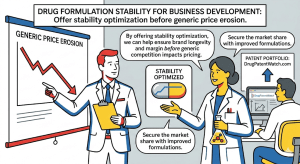
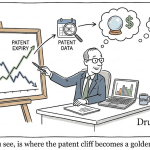
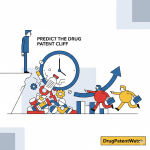
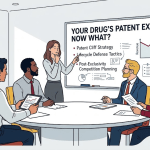
The pharmaceutical sector faces a revenue contraction of $236 billion through 2030 as blockbuster patents expire.1 This period marks the start of an unprecedented wave of patent expirations that puts over $200 billion in annual revenue at risk.2 Between 2025 and 2030, nearly 200 blockbuster drugs will lose patent protection, creating a vacuum that generic and biosimilar manufacturers race to fill.3 For companies heavily reliant on a single product, this represents an existential threat.4 The shift in market dynamics from monopolistic to intensely competitive triggers a rapid price war and a dramatic erosion of market share.4
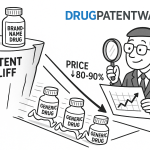
For small-molecule drugs, the drop is often a literal cliff. Upon generic entry, a branded drug typically loses 80% to 90% of its sales within the first year.3 In some cases, the market share for branded drugs dwindles by 73% within just two weeks of generic entry.3 This fiscal reality makes lifecycle management (LCM) a central battlefield where billions of dollars in revenue are won and lost.5 Formulation vendors and Contract Development and Manufacturing Organizations (CDMOs) occupy a unique position in this landscape. By offering stability optimization and sophisticated formulation development before the patent cliff, these vendors provide a competitive advantage that can preserve significant value long after primary patents expire.4
The Financial Mechanics of the Patent Cliff
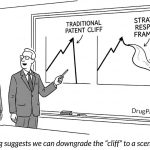
The term “patent cliff” describes the precipitous drop in revenue an innovator company experiences when a blockbuster drug loses its legal monopoly.4 This is not a slow slope of market share erosion but a dramatic shift where the ground falls out from beneath the company.2 For a blockbuster drug—defined as a product with annual sales exceeding $1 billion—the loss of exclusivity triggers a sharp and catastrophic decline.2
Quantifying Price Erosion
The number of competitors entering the market is the most significant variable in the price erosion curve.2 Prices fall with an increasing number of generic competitors.7
Number of Generic Competitors
Approximate Price Reduction (vs. Brand)
Market Dynamic
1 Competitor (Exclusivity)
20% to 39%
Temporary Duopoly 1
2 Competitors
44% to 54%
Margin Compression 1
3 to 5 Competitors
60% to 79%
High Volume Requirement 1
10 or More Competitors
80% to 95%
Full Commoditization 1
Twelve months after generic entry, prices of oral generic medicines drop 66%.10 After two years, oral generic prices are 74% lower than pre-expiry brand prices.10 More recent cohorts show even steeper declines, with prices falling 79% within 12 months for drugs that expired between 2011 and 2013.10 Nearly all price reductions now occur in the first eight months after generic entry.10
The Value of a Single Day
For a blockbuster drug generating $3 billion in annual revenue, a single day of market exclusivity is valued at approximately $8.2 million.11 Extending this exclusivity through secondary patent layers or regulatory maneuvers becomes the economic engine of the industry.4 According to DrugPatentWatch, products like Merck’s Januvia and Janumet generated more than $5 billion in annual sales, making them prime targets for generic manufacturers.12 When these products reach the loss of exclusivity, the resulting revenue void forces companies to master the art of lifecycle management to survive.4
A branded drug can lose up to 80% of its revenue within the first year of facing generic or biosimilar competition.2
Stability Optimization as a Strategic Lever
Formulation vendors help solve the challenges of cost management, regulatory compliance, and speed to market.6 They play a crucial role in the lifecycle of a product by optimizing the physical and chemical properties of a drug, such as solubility, stability, and bioavailability.6 Stability data is a non-negotiable component of any regulatory submission.1
Shelf-Life Extension and Market Differentiation
A longer shelf life sets a drug apart from competitors and serves as a market differentiator.13 Methods to improve stability can be unique and thus patentable.13 Patenting stability innovations provides exclusive rights to specific technologies that enhance the stability of products, preventing competitors from using the same technology.13 This exclusivity gives the patent holder a unique position in the market.13
For biopharmaceuticals, methods that improve stability during freezing and thawing are vital.13 Innovations in cryopreservation that prevent degradation or denaturation of biological drugs are patentable, extending both shelf life and efficacy.13
Managing Temperature Excursions
Refrigeration is essential for maintaining the stability of vaccines, biologics, and certain antibiotics.14 However, cold chain breaches are frequent during transport delays or handling errors.14 A single temperature deviation can compromise product integrity and render medications ineffective.15
Formulation vendors work to develop brand-specific data on acceptable room temperature excursions.14 Out of 150 refrigerated medications identified in a study, only 22.8% remained stable for at least 24 hours at room temperature.14 Vendors that can optimize a formulation to withstand these excursions reduce product waste and minimize clinical and economic loss.14 In some cases, vendors can move a product from a cold-chain requirement to room-temperature stability, which dramatically simplifies the supply chain and reduces costs.16
The Secondary Patent Fortress
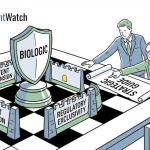
Innovator companies build layers of protection around their most valuable assets using secondary patents.5 These patents are filed later in a drug’s lifecycle, often years after FDA approval, claiming incremental innovations.17
Formulation and Device Patents
Secondary patents add significant market life to a product.11
Secondary Patent Type
Average Market Life Added
Formulation Patents
6.5 Years 11
Device Patents
4.7 Years 11
Method of Use
Indication-specific 11
Chiral Switches
Full New Term 11
Formulation patents protect new versions of the drug, such as extended-release forms or new combinations of ingredients, to improve compliance or efficacy.17 Device patents cover the delivery mechanism, such as respiratory inhalers, insulin pens, and auto-injectors.5 The strategic value of device patents is that they often expire years after the drug patents.5 A generic manufacturer may have the right to produce the drug but remains blocked because they cannot sell it without an infringing device.5
The Humira and Keytruda Examples
AbbVie’s management of Humira is the definitive case study in secondary patenting.18 AbbVie secured over 130 patents for Humira, creating a patent thicket that lasted until 2023.18 This thicket delayed US biosimilar competition by seven years, generating an estimated $75 billion in additional US revenue.11 One key component was the introduction of a citrate-free formulation, which reduced injection pain and volume.18
Merck is currently executing a similar “subcutaneous pivot” for Keytruda.11 As primary patents for the intravenous formulation approach their 2028 expiration, Merck is shifting patients to a subcutaneous injection called Keytruda Qlex.18 This new version takes two minutes to administer compared to 30 minutes for an infusion.18 Merck believes it can convert 30% to 40% of the Keytruda market to this new version before the patent cliff, establishing a new patent-protected platform.9
The 505(b)(2) Regulatory Shortcut
The 505(b)(2) pathway is a strategic route for drug development that allows sponsors to rely on existing scientific literature or the FDA’s prior findings for already approved drugs.19 It is a hybrid between a generic ANDA (505(j)) and a full NDA (505(b)(1)).19
Competitive Advantages of 505(b)(2)
This pathway is ideal for modified or improved versions of existing drugs.19
Pathway Type
Reliance on Prior Data
Typical Timeline
Relative Cost
Traditional NDA
None
8-12 Years
Highest 20
505(b)(2) Application
Partial
3-7 Years
Moderate 20
Generic ANDA
Complete
2-4 Years
Lowest 20
Reduced Cost and Time: It is vastly cheaper than a full NDA because it allows applicants to piggyback onto existing safety data.21
Avoidance of Sameness: Unlike the ANDA pathway, which requires identity in active ingredient and dosage form, 505(b)(2) allows for modifications in salt form, strength, or route of administration.21
Market Exclusivity: A 505(b)(2) drug can earn New Chemical Entity (NCE) status, granting five-year market exclusivity, which is significantly longer than the 180-day exclusivity for generic first-filers.21
Circumventing Competitors: Vendors use 505(b)(2) to launch a different version of a drug to circumvent the 180-day exclusivity of a first ANDA filer that would otherwise block generic entry.21
Strategic Repurposing
Formulation vendors use 505(b)(2) to create branded generics or stand-alone branded drugs.21 Examples include finding new therapeutic uses for known drugs, developing delayed-release formulations, or creating new combinations of existing generic drugs.21 For instance, TriCor used nanomilling technology to develop an improved version of its fenofibrate product, increasing oral bioavailability to differentiate itself from generic competition.22
Technical Innovations in Stability and Delivery
Excipients are the unsung heroes of stability optimization. Selecting the right inactive ingredients is crucial for enhancing solubility, bioavailability, and physical integrity.22
Excipient Modification
Modern excipients address challenges like low solubility (BCS Class II) and low permeability (BCS Class III/IV).24 Novel co-processed excipient systems, such as ABISORB-DC, allow for the direct-compression tableting of liquid lipid preconcentrates.24 This enables the bioavailability-enhancing features of lipid-based delivery to be combined with high-speed manufacturing.24
Injectable-grade polymers like Apisolex can enhance the solubility of hydrophobic APIs up to 50,000-fold.22 When lyophilized, these formulations can be rapidly reconstituted in saline, improving patient experience and shelf-life.22
Advanced Coating Technologies
Coating dosage forms masks taste, controls the rate of drug release, and acts as a barrier against atmospheric stress like humidity, UV light, and oxygen.25
Atomic Layer Deposition (ALD) is an innovative coating method where surfaces are subjected to alternating reactions of gaseous precursors to form a single monolayer of material.26 Coating individual pharmaceutical particles with ALD before processing into a solid dosage form allows for the creation of stable products without the need for fillers or binders.26 Other technologies, such as moisture-resistant polyvinyl alcohol coatings, provide long-term protection for sensitive drugs like ACE inhibitors.27
Packaging as a Strategic Barrier
Packaging has transitioned from a purely protective layer to a strategic lever for sustainability and brand loyalty.28 Any change in primary packaging—the material in direct contact with the drug—requires stability testing to ensure the product maintains potency throughout its shelf life.28
Moisture and Oxygen Scavenging
For hygroscopic formulations, standard HDPE bottles combined with high loads of desiccants are often impractical and expensive.29 Advanced multilayer packaging, like LOG’s MultiBlock, offers a 100x lower oxygen transmission rate and 4x lower moisture vapor transmission rate than standard HDPE.29 This reduces the need for active desiccant components, improving packaging efficiency and ensuring regulatory stability.29
Smart Packaging and Adherence
Smart packaging integrates digital tools like NFC, RFID, and Bluetooth sensors to track temperature, humidity, and patient adherence.13 These interactive caregivers improve patient outcomes and provide a clear ROI for manufacturers.28 In specialty channels, adherence programs using smart support achieve compliance rates 7% to 10% higher than traditional pharmacies.28 By initiating a smart packaging campaign 24 months before the patent cliff, an innovator company can build a repository of real-world evidence showing their branded product delivers superior outcomes compared to a generic.28
The 30-Month CDMO Playbook
Success in the patent cliff era depends on timing. For a CDMO, the most critical window is pitching scale-up services exactly 24 to 30 months before a drug loses its market exclusivity.1
The Technical and Regulatory Sweet Spot
This 30-month window is when generic drug sponsors finalize manufacturing partners to meet FDA filing deadlines.1 The development cycle for a generic product takes approximately 36 months from initial studies to final approval.1 Pitching at the 30-month mark ensures the CDMO is integrated during the critical phase of formulation development and API sourcing.1
Testing Stage
Scale
Objective
Laboratory Scale
Small R&D Batches
Initial shelf-life estimates 1
Scale-up Batches
Pilot Scale
Process verification 1
Exhibit Batches
1/10th Commercial
Pivotal data for ANDA 1
An ANDA submission must include at least six months of stability data from the final dosage form manufactured at scale.1 This data confirms the drug’s shelf life, typically aiming for two years or more.1
Proactive Business Development
Successful CDMOs do not wait for a Request for Proposal (RFP). They use patent intelligence platforms like DrugPatentWatch to identify opportunities years before a patent expires.30 By analyzing patent expiry dates and formulation complexities, a CDMO can tailor its pitch to solve specific manufacturing hurdles, such as low-yield synthesis or stability issues.30
A CDMO that can implement a 20% yield improvement while keeping manufacturing changes within Level I or Level II categories provides a massive advantage.30 This avoids the need for a major Prior Approval Supplement (PAS), allowing the sponsor to realize financial benefits much faster.30
The Economic Physics of Price Erosion
The entry of generic alternatives triggers a structural reshaping of an industry revenue base that demands C-suite attention.8 Across dozens of studies, the relationship between the number of competitors and price reduction is so consistent it functions as a virtual law of physics in the post-exclusivity environment.8
Small Molecules vs. Biologics
The distinction between molecule types is the most critical factor in erosion forecasting.8
Characteristic
Small Molecule (Generic)
Biosimilar
Speed of Erosion
Very Rapid (“Cliff”)
Gradual (“Slope”) 8
Price Decay
Steep drop to 5-10% of brand price
Slower decline to 50-70% of brand price 8
Number of Competitors
High (often 10+)
Low (typically <5) 8
Substitution
Automatic at pharmacy level
Not always interchangeable 4
For small molecules, the battle is an all-out legal and regulatory war fought before the patent expires.4 For biologics, the post-exclusivity commercial battle is just as important, as price reductions are less severe and take longer to manifest.4
The Role of Payer Behavior
For major biologics, the erosion forecast is less about patient switching and more about modeling payer behavior and contract negotiations.8 The key variable is the net price the brand is willing to offer to maintain its formulary position.8 Payer-driven cost containment becomes the primary driver of revenue loss once the first biosimilars enter the market.12
Maximizing Internal Rate of Return (IRR)
The pharmaceutical industry has seen a recovery in its internal rate of return, reaching 5.9% in 2024 after a decade of decline.31 This surge is driven by high-value products in areas of high unmet need, like obesity and diabetes.31
The R&D Paradox
While IRR is rising, the cost of R&D continues to threaten sustainability.31 The average cost to take a drug from discovery to launch reached $2.23 billion per asset in 2024.31 This high barrier to entry makes the preservation of existing revenue through stability optimization and lifecycle management a financial necessity.
Year
Forecast Average IRR
Average R&D Cost per Asset
2022
1.2%
$2.28 Billion 33
2023
4.1%
$2.28 Billion 33
2024
5.9%
$2.23 Billion 31
The Value of Novel Mechanisms
Research shows a direct link between investing in novel mechanisms of action (MoAs) and higher returns.31 While novel MoAs make up only 23.5% of the development pipeline, they are projected to generate 37.3% of total revenue.31 This highlight the importance of formulation vendors who can optimize novel molecules for maximum clinical and commercial impact.31
Advanced Technical Milestones for Stability
Stability testing is a rigorous process governed by ICH guidelines and 21 CFR Part 211.28 It involves testing a drug’s robustness under various environmental conditions, including temperature fluctuations and high humidity.13
Shelf-Life Prediction and Modeling
Advanced modeling frameworks predict the performance of packaging materials based on the moisture uptake profile of the drug product.35 This allows for rational packaging selection, reducing material waste and avoiding over-packaging while ensuring the drug maintains potency over its shelf life.35
Permeation: The rate at which moisture enters the packaging.35
Sorption: How the drug product absorbs that moisture.35
Degradation: The chemical breakdown of the active ingredient.35
Interconnecting these rate processes allows manufacturers to predict drug content over time and set accurate expiration dates.35
Cryopreservation for Biologics
For biopharmaceuticals, methods that prevent degradation during freezing and thawing are essential.13 This includes the development of new cryoprotectants and specialized equipment designed to extend the shelf life and efficacy of complex biological molecules.13
Strategic Vendor Partnerships
The relationship between pharma companies and their R&D suppliers is becoming increasingly critical for value creation.36 Both partners see opportunities to unlock value through increased transparency and the sharing of pipeline development plans.36
Partnership Archetypes
McKinsey identifies four distinct partnership archetypes, each requiring a specific engagement strategy to maximize innovation.36
Strategic Relationships: Require a strong shared vision and long-term commitment.36
Joint Accountability Partnerships: Critical for high-risk projects where both parties share the potential rewards and losses.36
Transactional Vendors: Focused on specific, well-defined tasks like large-scale manufacturing of off-patent products.6
Innovation Partners: Focused on technical breakthroughs and the application of new technologies like AI and advanced analytical methods.36
The Role of Procurement
A top-tier procurement function is essential for monitoring supplier performance and managing regulatory risk.36 Efficient supplier management can lead to cost savings from favorable terms and minimized disruption risks, enhancing overall supply chain efficiency.36
Regulatory Compliance as a Foundation
Facilities for pharmaceutical cold storage must meet strict requirements established by the FDA’s Title 21 CFR Part 211.15 They must also follow guidelines from the United States Pharmacopeia (USP) on temperature ranges and monitoring procedures.15
Validation and Monitoring
Modern storage facilities implement validated temperature monitoring systems with redundancy.15 These systems continuously track environmental levels and create detailed records for regulatory audits.15 Any deviation must be documented and investigated to ensure product integrity.15
Alarm Mechanisms and Oversight
Tiered alerting mechanisms notify staff immediately if temperatures drift outside acceptable ranges.15 Advanced systems use cloud-based monitoring to enable remote oversight and faster response times, reducing the risk of product loss due to temperature excursions.15
Case Study: The Humira Citrate-Free Pivot
AbbVie’s management of Humira is a masterclass in using stability and formulation to defend a multibillion-dollar franchise.9
The Problem of Injection Pain
The original version of Humira used citrate and phosphate buffers, which were associated with injection site reactions in 12.9% of patients.18 This clinical pain point represented a vulnerability that biosimilar competitors could exploit.18
The Formulation Solution
AbbVie introduced a citrate-free version in 2016 with a higher concentration.18 This allowed for a smaller injection volume (0.4 ml vs 0.8 ml) and a thinner needle (29-gauge vs 27-gauge).18 This version was not just more convenient; it established a new patent-protected platform.9
Metric
Original Humira
Citrate-Free Humira
Injection Volume
0.8 ml
0.4 ml 18
Needle Size
27-gauge
29-gauge 18
Concentration
40 mg / 0.8 ml
40 mg / 0.4 ml 18
Excipients
Citrate/Phosphate
Citrate-free 18
This strategy successfully delayed U.S. biosimilar competition until 2023, seven years after the primary patent expired.9
Case Study: Keytruda’s Subcutaneous Pivot
Merck is currently executing a similar strategy for its oncology blockbuster, Keytruda, which generated $29.5 billion in 2024.18
The Infusion Bottleneck
Keytruda is traditionally administered via a 30-minute intravenous infusion in a specialized medical center.18 As the 2028 patent cliff approaches, Merck is looking to move patients to a more convenient delivery system.18
The Qlex Formulation
In September 2025, the FDA approved Keytruda Qlex, a subcutaneous formulation.9 This injection takes only two minutes and can be given in a doctor’s office.18 Merck believes it can convert 30% to 40% of the market to this new version before the intravenous patents expire.9 This “product hop” establish a new platform protected by fresh patents, potentially extending the product’s dominance through 2036 or beyond.9
Case Study: Revlimid’s Managed Slope
The generic entry for BMS’s Revlimid follows a “managed slope” rather than a sudden cliff, thanks to complex settlement agreements.9
Phase 1: Volume Capping
From March 2022 to January 2026, generics are permitted to launch, but their market share is strictly capped at single-digit percentages.9 This cap gradually increases over time, allowing the brand to retain significant revenue while the market matures.9
Phase 2: Full Entry
From February 2026 onward, full, unlimited generic entry is permitted.9 This phased approach provides the innovator company with a predictable revenue decline, allowing them to reinvest in their pipeline and transition patients to newer therapies.9
Technical Frontier: Atomic Layer Deposition (ALD)
ALD represents a significant leap forward in coating technology for stability optimization.26 It involves applying a protective layer of material on the surface of pharmaceutical substrates using alternating surface reactions.26
Mechanism of Action
One ALD cycle is completed when the surfaces are subjected once to all gaseous precursors.26 These reactions are substantially saturated, meaning only a single monolayer of material is formed per cycle.26 This results in a highly conformable and pinhole-free coating that acts as a barrier against moisture and oxygen.26
Benefits for Manufacturing
The ALD coating coats individual particles, allowing for the creation of dosage forms without the need for traditional excipients like fillers, binders, or lubricants.26 This can lead to a significant improvement in the manufacturing process and the creation of highly stable formulations for sensitive active ingredients.26
Technical Frontier: Novel Excipients in 505(b)(2)
The use of novel excipients is a powerful tool for innovators looking to differentiate their products under the 505(b)(2) pathway.22
Enhancing Performance
Innovators can turn to excipients that improve solubility and facilitate high, stable drug loading of up to 80%.22 For example, Apinovex polymers allow for the creation of smaller, easier-to-swallow tablets, which can improve patient compliance and provide a competitive edge in the market.22
Carving out IP
Patents on new drug products often reference multiple formulations using different excipients to provide broad protection.22 Utilizing new ingredients and technologies is often required to navigate these IP challenges and carve out a unique space for a 505(b)(2) product.22
For extremely hygroscopic formulations, traditional packaging solutions often fail to meet regulatory stability criteria.29
The MultiLayer Solution
LOG’s MultiBlock packaging offers a passive barrier solution with a 100x lower oxygen transmission rate compared to standard HDPE.29 This multilayer bottle provides far better protection and reduces the need for active desiccant components.29
Efficiency and Regulatory Success
In a case study involving a highly sensitive tablet formulation, switching to MultiBlock packaging allowed a company to stabilize its product using only 1 gram of desiccant and 20 cc of oxygen scavenger.29 This resulted in a dramatic improvement in packaging efficiency and enabled the product to pass all required stability tests for commercial launch.29
Strategic Timing for CDMO Engagement
Early involvement of a CDMO is crucial for ensuring smooth downstream development and minimizing costly delays.38
Pre-Clinical Involvement
Engaging a CDMO during the transition from drug discovery to pre-clinical development provides significant advantages.38 CDMOs can help optimize a drug’s physical properties, anticipate manufacturability challenges, and design robust analytical methods.38
Avoiding Regulatory Hurdles
Early involvement allows for the selection of the most cost-efficient synthetic route and the justification of starting materials to meet regulatory expectations.38 Selecting a starting material too late in the process can lead to regulators requiring full GMP controls on several upstream intermediates, significantly increasing costs and causing delays in clinical trial supply.38
Key Takeaways
The patent cliff between 2025 and 2030 puts $400 billion in revenue at risk as 200 blockbusters lose protection.2
Small-molecule drugs typically lose 80% to 90% of revenue in the first year of generic competition.3
Formulation patents add an average of 6.5 years of market life, while device patents add 4.7 years.11
The 505(b)(2) pathway allows for faster, cheaper approval of improved drug versions with potential for five-year NCE exclusivity.21
The optimal CDMO business development window is 24 to 30 months before loss of exclusivity, aligning with the 6-month stability data requirement for ANDAs.1
Stability optimization, including advanced coatings and scavenging packaging, serves as a patentable market differentiator.13
Major players like AbbVie and Merck use product hopping—shifting from IV to subcutaneous or original to citrate-free—to preserve billions in revenue.9
FAQ
What is the difference between a “patent cliff” and a “patent slope”? A patent cliff refers to the rapid 80-90% revenue drop seen in small-molecule drugs due to automatic generic substitution.3 A patent slope describes the more gradual erosion seen in biologics, as biosimilars are not perfectly interchangeable and face more complex manufacturing and regulatory barriers.4
How does the 30-month stay work in patent litigation? Under the Hatch-Waxman Act, if a brand owner sues a generic challenger within 45 days of a Paragraph IV notification, the FDA triggers an automatic 30-month stay.1 This prevents the FDA from granting final approval to the generic drug for 30 months, preserving approximately $912 million in revenue for a blockbuster drug generating $10 million daily.1
Why is the 30-month window critical for CDMO business development? This window aligns with the technical and regulatory timeline for generic entry.1 Generic sponsors need roughly 36 months to develop a product, and the 24-30 month mark is the sweet spot for finalizing manufacturing partners and starting the 6-month stability studies required for FDA filing.1
What are the main advantages of using the 505(b)(2) pathway for formulation vendors? It reduces development costs and timelines by leveraging existing safety data while allowing for product differentiation that the standard generic ANDA pathway forbids.19 It can also grant three to five years of market exclusivity, creating a “branded generic” moat.19
How can advanced packaging contribute to lifecycle management? Packaging can be used to extend shelf life through moisture and oxygen scavenging, improve patient adherence via smart sensors, and build brand loyalty through functional design.13 These improvements can be patentable and provide a superior patient experience compared to standard generic versions.13
Stability Studies Needed to Define the Handling and Transport Conditions of Sensitive Pharmaceutical or Biotechnological Products – PMC, accessed March 1, 2026, https://pmc.ncbi.nlm.nih.gov/articles/PMC3225534/
The pharmaceutical sector faces a revenue contraction of $236 billion through 2030 as blockbuster patents expire.1 This period marks the start of an unprecedented wave of patent expirations that puts over $200 billion in annual revenue at risk.2 Between 2025 and 2030, nearly 200 blockbuster drugs will lose patent protection, creating a vacuum that generic and biosimilar manufacturers race to fill.3 For companies heavily reliant on a single product, this represents an existential threat.4 The shift in market dynamics from monopolistic to intensely competitive triggers a rapid price war and a dramatic erosion of market share.4
For small-molecule drugs, the drop is often a literal cliff. Upon generic entry, a branded drug typically loses 80% to 90% of its sales within the first year.3 In some cases, the market share for branded drugs dwindles by 73% within just two weeks of generic entry.3 This fiscal reality makes lifecycle management (LCM) a central battlefield where billions of dollars in revenue are won and lost.5 Formulation vendors and Contract Development and Manufacturing Organizations (CDMOs) occupy a unique position in this landscape. By offering stability optimization and sophisticated formulation development before the patent cliff, these vendors provide a competitive advantage that can preserve significant value long after primary patents expire.4
The Financial Mechanics of the Patent Cliff
The term “patent cliff” describes the precipitous drop in revenue an innovator company experiences when a blockbuster drug loses its legal monopoly.4 This is not a slow slope of market share erosion but a dramatic shift where the ground falls out from beneath the company.2 For a blockbuster drug—defined as a product with annual sales exceeding $1 billion—the loss of exclusivity triggers a sharp and catastrophic decline.2
Quantifying Price Erosion
The number of competitors entering the market is the most significant variable in the price erosion curve.2 Prices fall with an increasing number of generic competitors.7
Number of Generic Competitors
Approximate Price Reduction (vs. Brand)
Market Dynamic
1 Competitor (Exclusivity)
20% to 39%
Temporary Duopoly 1
2 Competitors
44% to 54%
Margin Compression 1
3 to 5 Competitors
60% to 79%
High Volume Requirement 1
10 or More Competitors
80% to 95%
Full Commoditization 1
Twelve months after generic entry, prices of oral generic medicines drop 66%.10 After two years, oral generic prices are 74% lower than pre-expiry brand prices.10 More recent cohorts show even steeper declines, with prices falling 79% within 12 months for drugs that expired between 2011 and 2013.10 Nearly all price reductions now occur in the first eight months after generic entry.10
The Value of a Single Day
For a blockbuster drug generating $3 billion in annual revenue, a single day of market exclusivity is valued at approximately $8.2 million.11 Extending this exclusivity through secondary patent layers or regulatory maneuvers becomes the economic engine of the industry.4 According to DrugPatentWatch, products like Merck’s Januvia and Janumet generated more than $5 billion in annual sales, making them prime targets for generic manufacturers.12 When these products reach the loss of exclusivity, the resulting revenue void forces companies to master the art of lifecycle management to survive.4
A branded drug can lose up to 80% of its revenue within the first year of facing generic or biosimilar competition.2
Stability Optimization as a Strategic Lever
Formulation vendors help solve the challenges of cost management, regulatory compliance, and speed to market.6 They play a crucial role in the lifecycle of a product by optimizing the physical and chemical properties of a drug, such as solubility, stability, and bioavailability.6 Stability data is a non-negotiable component of any regulatory submission.1
Shelf-Life Extension and Market Differentiation
A longer shelf life sets a drug apart from competitors and serves as a market differentiator.13 Methods to improve stability can be unique and thus patentable.13 Patenting stability innovations provides exclusive rights to specific technologies that enhance the stability of products, preventing competitors from using the same technology.13 This exclusivity gives the patent holder a unique position in the market.13
For biopharmaceuticals, methods that improve stability during freezing and thawing are vital.13 Innovations in cryopreservation that prevent degradation or denaturation of biological drugs are patentable, extending both shelf life and efficacy.13
Managing Temperature Excursions
Refrigeration is essential for maintaining the stability of vaccines, biologics, and certain antibiotics.14 However, cold chain breaches are frequent during transport delays or handling errors.14 A single temperature deviation can compromise product integrity and render medications ineffective.15
Formulation vendors work to develop brand-specific data on acceptable room temperature excursions.14 Out of 150 refrigerated medications identified in a study, only 22.8% remained stable for at least 24 hours at room temperature.14 Vendors that can optimize a formulation to withstand these excursions reduce product waste and minimize clinical and economic loss.14 In some cases, vendors can move a product from a cold-chain requirement to room-temperature stability, which dramatically simplifies the supply chain and reduces costs.16
The Secondary Patent Fortress
Innovator companies build layers of protection around their most valuable assets using secondary patents.5 These patents are filed later in a drug’s lifecycle, often years after FDA approval, claiming incremental innovations.17
Formulation and Device Patents
Secondary patents add significant market life to a product.11
Secondary Patent Type
Average Market Life Added
Formulation Patents
6.5 Years 11
Device Patents
4.7 Years 11
Method of Use
Indication-specific 11
Chiral Switches
Full New Term 11
Formulation patents protect new versions of the drug, such as extended-release forms or new combinations of ingredients, to improve compliance or efficacy.17 Device patents cover the delivery mechanism, such as respiratory inhalers, insulin pens, and auto-injectors.5 The strategic value of device patents is that they often expire years after the drug patents.5 A generic manufacturer may have the right to produce the drug but remains blocked because they cannot sell it without an infringing device.5
The Humira and Keytruda Examples
AbbVie’s management of Humira is the definitive case study in secondary patenting.18 AbbVie secured over 130 patents for Humira, creating a patent thicket that lasted until 2023.18 This thicket delayed US biosimilar competition by seven years, generating an estimated $75 billion in additional US revenue.11 One key component was the introduction of a citrate-free formulation, which reduced injection pain and volume.18
Merck is currently executing a similar “subcutaneous pivot” for Keytruda.11 As primary patents for the intravenous formulation approach their 2028 expiration, Merck is shifting patients to a subcutaneous injection called Keytruda Qlex.18 This new version takes two minutes to administer compared to 30 minutes for an infusion.18 Merck believes it can convert 30% to 40% of the Keytruda market to this new version before the patent cliff, establishing a new patent-protected platform.9
The 505(b)(2) Regulatory Shortcut
The 505(b)(2) pathway is a strategic route for drug development that allows sponsors to rely on existing scientific literature or the FDA’s prior findings for already approved drugs.19 It is a hybrid between a generic ANDA (505(j)) and a full NDA (505(b)(1)).19
Competitive Advantages of 505(b)(2)
This pathway is ideal for modified or improved versions of existing drugs.19
Pathway Type
Reliance on Prior Data
Typical Timeline
Relative Cost
Traditional NDA
None
8-12 Years
Highest 20
505(b)(2) Application
Partial
3-7 Years
Moderate 20
Generic ANDA
Complete
2-4 Years
Lowest 20
Reduced Cost and Time: It is vastly cheaper than a full NDA because it allows applicants to piggyback onto existing safety data.21
Avoidance of Sameness: Unlike the ANDA pathway, which requires identity in active ingredient and dosage form, 505(b)(2) allows for modifications in salt form, strength, or route of administration.21
Market Exclusivity: A 505(b)(2) drug can earn New Chemical Entity (NCE) status, granting five-year market exclusivity, which is significantly longer than the 180-day exclusivity for generic first-filers.21
Circumventing Competitors: Vendors use 505(b)(2) to launch a different version of a drug to circumvent the 180-day exclusivity of a first ANDA filer that would otherwise block generic entry.21
Strategic Repurposing
Formulation vendors use 505(b)(2) to create branded generics or stand-alone branded drugs.21 Examples include finding new therapeutic uses for known drugs, developing delayed-release formulations, or creating new combinations of existing generic drugs.21 For instance, TriCor used nanomilling technology to develop an improved version of its fenofibrate product, increasing oral bioavailability to differentiate itself from generic competition.22
Technical Innovations in Stability and Delivery
Excipients are the unsung heroes of stability optimization. Selecting the right inactive ingredients is crucial for enhancing solubility, bioavailability, and physical integrity.22
Excipient Modification
Modern excipients address challenges like low solubility (BCS Class II) and low permeability (BCS Class III/IV).24 Novel co-processed excipient systems, such as ABISORB-DC, allow for the direct-compression tableting of liquid lipid preconcentrates.24 This enables the bioavailability-enhancing features of lipid-based delivery to be combined with high-speed manufacturing.24
Injectable-grade polymers like Apisolex can enhance the solubility of hydrophobic APIs up to 50,000-fold.22 When lyophilized, these formulations can be rapidly reconstituted in saline, improving patient experience and shelf-life.22
Advanced Coating Technologies
Coating dosage forms masks taste, controls the rate of drug release, and acts as a barrier against atmospheric stress like humidity, UV light, and oxygen.25
Atomic Layer Deposition (ALD) is an innovative coating method where surfaces are subjected to alternating reactions of gaseous precursors to form a single monolayer of material.26 Coating individual pharmaceutical particles with ALD before processing into a solid dosage form allows for the creation of stable products without the need for fillers or binders.26 Other technologies, such as moisture-resistant polyvinyl alcohol coatings, provide long-term protection for sensitive drugs like ACE inhibitors.27
Packaging as a Strategic Barrier
Packaging has transitioned from a purely protective layer to a strategic lever for sustainability and brand loyalty.28 Any change in primary packaging—the material in direct contact with the drug—requires stability testing to ensure the product maintains potency throughout its shelf life.28
Moisture and Oxygen Scavenging
For hygroscopic formulations, standard HDPE bottles combined with high loads of desiccants are often impractical and expensive.29 Advanced multilayer packaging, like LOG’s MultiBlock, offers a 100x lower oxygen transmission rate and 4x lower moisture vapor transmission rate than standard HDPE.29 This reduces the need for active desiccant components, improving packaging efficiency and ensuring regulatory stability.29
Smart Packaging and Adherence
Smart packaging integrates digital tools like NFC, RFID, and Bluetooth sensors to track temperature, humidity, and patient adherence.13 These interactive caregivers improve patient outcomes and provide a clear ROI for manufacturers.28 In specialty channels, adherence programs using smart support achieve compliance rates 7% to 10% higher than traditional pharmacies.28 By initiating a smart packaging campaign 24 months before the patent cliff, an innovator company can build a repository of real-world evidence showing their branded product delivers superior outcomes compared to a generic.28
The 30-Month CDMO Playbook
Success in the patent cliff era depends on timing. For a CDMO, the most critical window is pitching scale-up services exactly 24 to 30 months before a drug loses its market exclusivity.1
The Technical and Regulatory Sweet Spot
This 30-month window is when generic drug sponsors finalize manufacturing partners to meet FDA filing deadlines.1 The development cycle for a generic product takes approximately 36 months from initial studies to final approval.1 Pitching at the 30-month mark ensures the CDMO is integrated during the critical phase of formulation development and API sourcing.1
Testing Stage
Scale
Objective
Laboratory Scale
Small R&D Batches
Initial shelf-life estimates 1
Scale-up Batches
Pilot Scale
Process verification 1
Exhibit Batches
1/10th Commercial
Pivotal data for ANDA 1
An ANDA submission must include at least six months of stability data from the final dosage form manufactured at scale.1 This data confirms the drug’s shelf life, typically aiming for two years or more.1
Proactive Business Development
Successful CDMOs do not wait for a Request for Proposal (RFP). They use patent intelligence platforms like DrugPatentWatch to identify opportunities years before a patent expires.30 By analyzing patent expiry dates and formulation complexities, a CDMO can tailor its pitch to solve specific manufacturing hurdles, such as low-yield synthesis or stability issues.30
A CDMO that can implement a 20% yield improvement while keeping manufacturing changes within Level I or Level II categories provides a massive advantage.30 This avoids the need for a major Prior Approval Supplement (PAS), allowing the sponsor to realize financial benefits much faster.30
The Economic Physics of Price Erosion
The entry of generic alternatives triggers a structural reshaping of an industry revenue base that demands C-suite attention.8 Across dozens of studies, the relationship between the number of competitors and price reduction is so consistent it functions as a virtual law of physics in the post-exclusivity environment.8
Small Molecules vs. Biologics
The distinction between molecule types is the most critical factor in erosion forecasting.8
Characteristic
Small Molecule (Generic)
Biosimilar
Speed of Erosion
Very Rapid (“Cliff”)
Gradual (“Slope”) 8
Price Decay
Steep drop to 5-10% of brand price
Slower decline to 50-70% of brand price 8
Number of Competitors
High (often 10+)
Low (typically <5) 8
Substitution
Automatic at pharmacy level
Not always interchangeable 4
For small molecules, the battle is an all-out legal and regulatory war fought before the patent expires.4 For biologics, the post-exclusivity commercial battle is just as important, as price reductions are less severe and take longer to manifest.4
The Role of Payer Behavior
For major biologics, the erosion forecast is less about patient switching and more about modeling payer behavior and contract negotiations.8 The key variable is the net price the brand is willing to offer to maintain its formulary position.8 Payer-driven cost containment becomes the primary driver of revenue loss once the first biosimilars enter the market.12
Maximizing Internal Rate of Return (IRR)
The pharmaceutical industry has seen a recovery in its internal rate of return, reaching 5.9% in 2024 after a decade of decline.31 This surge is driven by high-value products in areas of high unmet need, like obesity and diabetes.31
The R&D Paradox
While IRR is rising, the cost of R&D continues to threaten sustainability.31 The average cost to take a drug from discovery to launch reached $2.23 billion per asset in 2024.31 This high barrier to entry makes the preservation of existing revenue through stability optimization and lifecycle management a financial necessity.
Year
Forecast Average IRR
Average R&D Cost per Asset
2022
1.2%
$2.28 Billion 33
2023
4.1%
$2.28 Billion 33
2024
5.9%
$2.23 Billion 31
The Value of Novel Mechanisms
Research shows a direct link between investing in novel mechanisms of action (MoAs) and higher returns.31 While novel MoAs make up only 23.5% of the development pipeline, they are projected to generate 37.3% of total revenue.31 This highlight the importance of formulation vendors who can optimize novel molecules for maximum clinical and commercial impact.31
Advanced Technical Milestones for Stability
Stability testing is a rigorous process governed by ICH guidelines and 21 CFR Part 211.28 It involves testing a drug’s robustness under various environmental conditions, including temperature fluctuations and high humidity.13
Shelf-Life Prediction and Modeling
Advanced modeling frameworks predict the performance of packaging materials based on the moisture uptake profile of the drug product.35 This allows for rational packaging selection, reducing material waste and avoiding over-packaging while ensuring the drug maintains potency over its shelf life.35
Permeation: The rate at which moisture enters the packaging.35
Sorption: How the drug product absorbs that moisture.35
Degradation: The chemical breakdown of the active ingredient.35
Interconnecting these rate processes allows manufacturers to predict drug content over time and set accurate expiration dates.35
Cryopreservation for Biologics
For biopharmaceuticals, methods that prevent degradation during freezing and thawing are essential.13 This includes the development of new cryoprotectants and specialized equipment designed to extend the shelf life and efficacy of complex biological molecules.13
Strategic Vendor Partnerships
The relationship between pharma companies and their R&D suppliers is becoming increasingly critical for value creation.36 Both partners see opportunities to unlock value through increased transparency and the sharing of pipeline development plans.36
Partnership Archetypes
McKinsey identifies four distinct partnership archetypes, each requiring a specific engagement strategy to maximize innovation.36
Strategic Relationships: Require a strong shared vision and long-term commitment.36
Joint Accountability Partnerships: Critical for high-risk projects where both parties share the potential rewards and losses.36
Transactional Vendors: Focused on specific, well-defined tasks like large-scale manufacturing of off-patent products.6
Innovation Partners: Focused on technical breakthroughs and the application of new technologies like AI and advanced analytical methods.36
The Role of Procurement
A top-tier procurement function is essential for monitoring supplier performance and managing regulatory risk.36 Efficient supplier management can lead to cost savings from favorable terms and minimized disruption risks, enhancing overall supply chain efficiency.36
Regulatory Compliance as a Foundation
Facilities for pharmaceutical cold storage must meet strict requirements established by the FDA’s Title 21 CFR Part 211.15 They must also follow guidelines from the United States Pharmacopeia (USP) on temperature ranges and monitoring procedures.15
Validation and Monitoring
Modern storage facilities implement validated temperature monitoring systems with redundancy.15 These systems continuously track environmental levels and create detailed records for regulatory audits.15 Any deviation must be documented and investigated to ensure product integrity.15
Alarm Mechanisms and Oversight
Tiered alerting mechanisms notify staff immediately if temperatures drift outside acceptable ranges.15 Advanced systems use cloud-based monitoring to enable remote oversight and faster response times, reducing the risk of product loss due to temperature excursions.15
Case Study: The Humira Citrate-Free Pivot
AbbVie’s management of Humira is a masterclass in using stability and formulation to defend a multibillion-dollar franchise.9
The Problem of Injection Pain
The original version of Humira used citrate and phosphate buffers, which were associated with injection site reactions in 12.9% of patients.18 This clinical pain point represented a vulnerability that biosimilar competitors could exploit.18
The Formulation Solution
AbbVie introduced a citrate-free version in 2016 with a higher concentration.18 This allowed for a smaller injection volume (0.4 ml vs 0.8 ml) and a thinner needle (29-gauge vs 27-gauge).18 This version was not just more convenient; it established a new patent-protected platform.9
Metric
Original Humira
Citrate-Free Humira
Injection Volume
0.8 ml
0.4 ml 18
Needle Size
27-gauge
29-gauge 18
Concentration
40 mg / 0.8 ml
40 mg / 0.4 ml 18
Excipients
Citrate/Phosphate
Citrate-free 18
This strategy successfully delayed U.S. biosimilar competition until 2023, seven years after the primary patent expired.9
Case Study: Keytruda’s Subcutaneous Pivot
Merck is currently executing a similar strategy for its oncology blockbuster, Keytruda, which generated $29.5 billion in 2024.18
The Infusion Bottleneck
Keytruda is traditionally administered via a 30-minute intravenous infusion in a specialized medical center.18 As the 2028 patent cliff approaches, Merck is looking to move patients to a more convenient delivery system.18
The Qlex Formulation
In September 2025, the FDA approved Keytruda Qlex, a subcutaneous formulation.9 This injection takes only two minutes and can be given in a doctor’s office.18 Merck believes it can convert 30% to 40% of the market to this new version before the intravenous patents expire.9 This “product hop” establish a new platform protected by fresh patents, potentially extending the product’s dominance through 2036 or beyond.9
Case Study: Revlimid’s Managed Slope
The generic entry for BMS’s Revlimid follows a “managed slope” rather than a sudden cliff, thanks to complex settlement agreements.9
Phase 1: Volume Capping
From March 2022 to January 2026, generics are permitted to launch, but their market share is strictly capped at single-digit percentages.9 This cap gradually increases over time, allowing the brand to retain significant revenue while the market matures.9
Phase 2: Full Entry
From February 2026 onward, full, unlimited generic entry is permitted.9 This phased approach provides the innovator company with a predictable revenue decline, allowing them to reinvest in their pipeline and transition patients to newer therapies.9
Technical Frontier: Atomic Layer Deposition (ALD)
ALD represents a significant leap forward in coating technology for stability optimization.26 It involves applying a protective layer of material on the surface of pharmaceutical substrates using alternating surface reactions.26
Mechanism of Action
One ALD cycle is completed when the surfaces are subjected once to all gaseous precursors.26 These reactions are substantially saturated, meaning only a single monolayer of material is formed per cycle.26 This results in a highly conformable and pinhole-free coating that acts as a barrier against moisture and oxygen.26
Benefits for Manufacturing
The ALD coating coats individual particles, allowing for the creation of dosage forms without the need for traditional excipients like fillers, binders, or lubricants.26 This can lead to a significant improvement in the manufacturing process and the creation of highly stable formulations for sensitive active ingredients.26
Technical Frontier: Novel Excipients in 505(b)(2)
The use of novel excipients is a powerful tool for innovators looking to differentiate their products under the 505(b)(2) pathway.22
Enhancing Performance
Innovators can turn to excipients that improve solubility and facilitate high, stable drug loading of up to 80%.22 For example, Apinovex polymers allow for the creation of smaller, easier-to-swallow tablets, which can improve patient compliance and provide a competitive edge in the market.22
Carving out IP
Patents on new drug products often reference multiple formulations using different excipients to provide broad protection.22 Utilizing new ingredients and technologies is often required to navigate these IP challenges and carve out a unique space for a 505(b)(2) product.22
For extremely hygroscopic formulations, traditional packaging solutions often fail to meet regulatory stability criteria.29
The MultiLayer Solution
LOG’s MultiBlock packaging offers a passive barrier solution with a 100x lower oxygen transmission rate compared to standard HDPE.29 This multilayer bottle provides far better protection and reduces the need for active desiccant components.29
Efficiency and Regulatory Success
In a case study involving a highly sensitive tablet formulation, switching to MultiBlock packaging allowed a company to stabilize its product using only 1 gram of desiccant and 20 cc of oxygen scavenger.29 This resulted in a dramatic improvement in packaging efficiency and enabled the product to pass all required stability tests for commercial launch.29
Strategic Timing for CDMO Engagement
Early involvement of a CDMO is crucial for ensuring smooth downstream development and minimizing costly delays.38
Pre-Clinical Involvement
Engaging a CDMO during the transition from drug discovery to pre-clinical development provides significant advantages.38 CDMOs can help optimize a drug’s physical properties, anticipate manufacturability challenges, and design robust analytical methods.38
Avoiding Regulatory Hurdles
Early involvement allows for the selection of the most cost-efficient synthetic route and the justification of starting materials to meet regulatory expectations.38 Selecting a starting material too late in the process can lead to regulators requiring full GMP controls on several upstream intermediates, significantly increasing costs and causing delays in clinical trial supply.38
Key Takeaways
The patent cliff between 2025 and 2030 puts $400 billion in revenue at risk as 200 blockbusters lose protection.2
Small-molecule drugs typically lose 80% to 90% of revenue in the first year of generic competition.3
Formulation patents add an average of 6.5 years of market life, while device patents add 4.7 years.11
The 505(b)(2) pathway allows for faster, cheaper approval of improved drug versions with potential for five-year NCE exclusivity.21
The optimal CDMO business development window is 24 to 30 months before loss of exclusivity, aligning with the 6-month stability data requirement for ANDAs.1
Stability optimization, including advanced coatings and scavenging packaging, serves as a patentable market differentiator.13
Major players like AbbVie and Merck use product hopping—shifting from IV to subcutaneous or original to citrate-free—to preserve billions in revenue.9
FAQ
What is the difference between a “patent cliff” and a “patent slope”? A patent cliff refers to the rapid 80-90% revenue drop seen in small-molecule drugs due to automatic generic substitution.3 A patent slope describes the more gradual erosion seen in biologics, as biosimilars are not perfectly interchangeable and face more complex manufacturing and regulatory barriers.4
How does the 30-month stay work in patent litigation? Under the Hatch-Waxman Act, if a brand owner sues a generic challenger within 45 days of a Paragraph IV notification, the FDA triggers an automatic 30-month stay.1 This prevents the FDA from granting final approval to the generic drug for 30 months, preserving approximately $912 million in revenue for a blockbuster drug generating $10 million daily.1
Why is the 30-month window critical for CDMO business development? This window aligns with the technical and regulatory timeline for generic entry.1 Generic sponsors need roughly 36 months to develop a product, and the 24-30 month mark is the sweet spot for finalizing manufacturing partners and starting the 6-month stability studies required for FDA filing.1
What are the main advantages of using the 505(b)(2) pathway for formulation vendors? It reduces development costs and timelines by leveraging existing safety data while allowing for product differentiation that the standard generic ANDA pathway forbids.19 It can also grant three to five years of market exclusivity, creating a “branded generic” moat.19
How can advanced packaging contribute to lifecycle management? Packaging can be used to extend shelf life through moisture and oxygen scavenging, improve patient adherence via smart sensors, and build brand loyalty through functional design.13 These improvements can be patentable and provide a superior patient experience compared to standard generic versions.13
Stability Studies Needed to Define the Handling and Transport Conditions of Sensitive Pharmaceutical or Biotechnological Products – PMC, accessed March 1, 2026, https://pmc.ncbi.nlm.nih.gov/articles/PMC3225534/