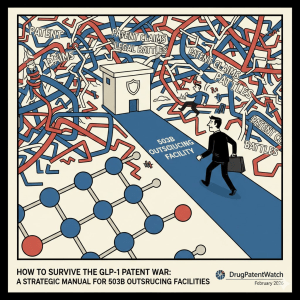
The era of easy arbitrage is over. If you have spent the last three years running a 503B outsourcing facility, you likely enjoyed a period of unprecedented growth fueled by a single class of molecules: glucagon-like peptide-1 (GLP-1) receptor agonists. The supply chain failures of Novo Nordisk and Eli Lilly were your greatest sales tool. When Wegovy and Zepbound vanished from retail shelves, your facility filled the void, providing semaglutide and tirzepatide to a desperate market. But as of February 2, 2026, the regulators have caught up, the manufacturers have built their factories, and the safe harbors that protected your business have largely evaporated.1
I want to be blunt about the state of this sector. We are no longer in a period of “regulatory discretion.” We are in a period of “market consolidation through litigation.” The pharmaceutical giants are no longer just making drugs; they are making examples of compounders. If your business development strategy relies on the hope that the Food and Drug Administration (FDA) will be too busy to check your batch records, you are holding a ticking clock. To survive, you must transition from a volume-based copyist to a precision-based clinical partner. This requires a deep understanding of patent intelligence, a literal reading of the “essentially a copy” rule, and a cold-eyed assessment of your facility’s return on investment (ROI) in a field that now hates your existence.4
The End of the Shortage Arbitrage
For years, the FDA drug shortage list was the most important document in your building. Section 503B of the Federal Food, Drug, and Cosmetic Act (FDCA) allows you to compound drugs that are “essentially a copy” of an approved drug only when that drug is on the official shortage list.7 This was your hall pass. As long as tirzepatide and semaglutide were listed as “Currently in Shortage,” you could mass-produce these peptides without a patient-specific prescription.8
That hall pass has been revoked. The FDA spent late 2024 and early 2025 issuing a series of declaratory orders that systematically cleared the shortage list. Why does this matter to you now? Because the “essentially a copy” prohibition is no longer a theoretical threat; it is a primary enforcement mechanism. When the FDA removed tirzepatide in December 2024 and semaglutide in February 2025, they didn’t just update a website—they triggered a legal shutdown of the primary revenue stream for hundreds of facilities.1
Table 1: The GLP-1 Shortage Shutdown Timeline
Molecule
Brand Names
Shortage Resolved
503B Enforcement Deadline
Tirzepatide
Mounjaro, Zepbound
Dec 19, 2024
March 19, 2025
Semaglutide
Ozempic, Wegovy
Feb 21, 2025
May 22, 2025
Source: 1
If you are still shipping standard formulations of these drugs, you are operating in the shadows of the law. I’ve seen business development teams argue that “local disruptions” still exist. They do. But the FDA is clear: localized supply chain lag does not constitute a national shortage. The agency has stated that manufacturing capacity now meets or exceeds projected national demand.1 For you, this means the legal “safe harbor” has been replaced by a “regulatory vice.”
Decoding the “Essentially a Copy” Doctrine
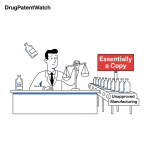
What does it mean to be a copy? Most facility managers think they can avoid this by adding a dash of Vitamin B12 or B6. This is a dangerous misunderstanding of the law. The FDA defines a compounded drug as “essentially a copy” if it contains the same active pharmaceutical ingredient (API) and can be used by the same route of administration as the approved drug.13
If your compounded drug is within 10% of the strength of the branded version, it is a copy. If it is 2.5mg, 5mg, or 10mg—the exact doses of Mounjaro—you are in the crosshairs. But what about that Vitamin B12? The FDA’s position is increasingly hostile to this practice. They view these additives as “evasive compounding”.14 If a patient can achieve the same benefit by taking the branded GLP-1 and a separate vitamin supplement, then your combination product is a copy.15
“The prohibition against producing drugs that are essentially copies of approved products protects the integrity and effectiveness of the new drug and abbreviated new drug approval processes. Without it, the incentive to invest in clinical trials would vanish.” — U.S. Food and Drug Administration, Guidance for Industry.7
To compound these drugs now, you must prove a “clinical difference” for an identified individual patient. This is a high bar. It requires a documented prescriber determination that a specific change—like removing a preservative because of a verified allergy—is necessary for that patient.15 Cost is not a clinical difference. Insurance coverage is not a clinical difference. Patient preference for a vial over a pen is not a clinical difference.13 If your marketing materials mention price savings, you are handing the manufacturer evidence for their next lawsuit.
Mapping the Patent Thicket with DrugPatentWatch
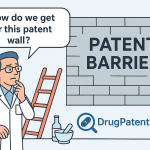
Why are Novo Nordisk and Eli Lilly so aggressive? Because they are protecting a “financialized business model” that values their market capitalization at over $700 billion.18 To keep that valuation, they have built “patent thickets”—dense forests of intellectual property designed to keep generics and compounders out for decades.
If you want to turn patent data into a competitive advantage, you need to look at more than just the “molecule patent.” You need to look at the “exclusivity stack.” Using tools like DrugPatentWatch, we can see that Novo Nordisk has filed 320 U.S. patent applications for semaglutide alone.19 They aren’t just patenting the chemical; they are patenting the way the pen clicks, the way the liquid stays stable in heat, and even the specific timing of the doses.11
Table 2: The Semaglutide Patent Fortress
Patent Type
Patent Number
Original Expiry
Extended Expiry (PTA/PTE)
Molecule (Base)
US 8,129,343
March 2026
December 5, 2031
Molecule (Alt)
US 8,536,122
March 2026
March 20, 2026
Dosage Regimen
US 9,764,003
June 21, 2033
June 21, 2033
Injectable Form
US 11,752,198
August 2038
August 24, 2038
Source: 19
Do you see the gap? While the molecule patents expire in 2026 and 2031, the formulation and delivery patents keep the door locked until 2042.19 This is why 503Bs are in trouble. Even if you argue that you aren’t “manufacturing” a new drug, any large-scale production of these peptides is viewed as a direct assault on this multi-billion dollar thicket. The manufacturers are using their patent data to “war game” your facility’s demise.5
The Litigation Wave: From Cease-and-Desist to Civil War
I’ve talked to facility owners who thought they were safe because they didn’t have a “Novo Nordisk” sign on their building. They were wrong. In 2025, the litigation strategy shifted from medical spas to large-scale 503B operators.
Take the case of Eli Lilly v. Empower Clinic Services.10 Lilly didn’t just sue for patent infringement; they sued under the Lanham Act and state consumer protection laws. They accused Empower of “unlawfully manufacturing and selling untested, unapproved weight loss drugs on a large scale”.10 Most importantly, they used an FDA warning letter as a weapon. If the FDA finds even a minor sterility issue at your facility, a manufacturer can use that to argue in court that your entire compounded GLP-1 line is “unsafe” and “unapproved”.10
Novo Nordisk has taken an even broader approach. On August 4, 2025, they filed 14 lawsuits in a single day against pharmacies and telehealth platforms.10 They aren’t just looking for damages; they are looking for injunctions. They want to stop your pumps from running. They are targeting “bad actors” who market compounded semaglutide as “FDA-approved” or “generic Wegovy”.23 If your website uses the word “generic,” you have already lost.
Strive’s Antitrust Counter-Attack: The David vs. Goliath Gambit
Is there any hope for the compounder? In January 2026, Strive Compounding Pharmacy filed a massive antitrust lawsuit against both Eli Lilly and Novo Nordisk.25 This is the “compounding industry strikes back” moment.
Strive alleges that the manufacturers have formed an illegal “duopoly” and used “bully tactics” to destroy competition.25 The claims are significant:
They allege the manufacturers manipulated supply data to trick the FDA into declaring the shortages over.25
They claim the manufacturers pressured payment processors (like Stripe and Tebra) to stop working with compounders.25
They detail “coordinated disparagement campaigns” that label all compounded drugs as “counterfeit” to scare away doctors.25
If Strive wins, it could change the economics of the field. But “if” is a very expensive word in a courtroom. For now, the manufacturers are winning. They have the cash, the patents, and the ears of the regulators. Your business development team needs to plan for a world where this antitrust suit fails.25
The SAFE Drugs Act 2025: Compliance as a Barrier to Entry
If you thought the current rules were tough, wait until you see the Safeguarding Americans from Fraudulent and Experimental (SAFE) Drugs Act of 2025.29 Introduced by a bipartisan coalition, this bill is designed to turn 503B facilities into “mini-manufacturers” with all the costs and none of the patent protections.
What does the SAFE Drugs Act do? It codifies the definition of “essentially a copy” into federal law, removing the FDA’s ability to be “flexible”.29 It requires an FDA inspection before you can start compounding any new product. It requires you to report any drug you ship in quantities of more than 20 out-of-state prescriptions.29
For your ROI, this is a disaster. The bill also allows the Secretary to increase the $15,000 base fee you pay to the FDA.30 We are looking at a future where compliance costs will eat 20-30% of your gross margin. If you are not operating at a massive scale, the SAFE Drugs Act will price you out of the market.29
Table 3: The Cost of Compliance Under the SAFE Drugs Act
Provision
Impact on 503B Facility
Estimated Cost Increase
Pre-Compounding Inspection
Delayed market entry for new formulas
High (Opportunity Cost)
Mandatory Bi-Annual Audits
Continuous state of “audit-readiness”
Moderate (Staffing/Quality)
Interstate Reporting
Data tracking for all shipments >20
Low (IT/Admin)
Increased User Fees
Direct payment to the FDA
Moderate (Direct Cost)
Source: 29
The Chemical War: Salt Forms vs. Base Forms
Let’s talk about the science, because this is where many facilities are tripping up. The API in Wegovy and Mounjaro is semaglutide and tirzepatide in their base forms. However, because the base form is expensive and hard to source, many compounders have been using salt forms like semaglutide sodium or semaglutide acetate.21
The FDA has been very clear: they do not recognize a legal basis for using salt forms in compounding.21 Why does this matter to you? Because salt forms have different solubility. If the salt form absorbs 20% faster than the base form, the patient isn’t getting “Zepbound”—they are getting a different drug with an unknown safety profile.31
In September 2025, the FDA issued over 50 warning letters to facilities using salt forms.23 If you are sourcing your peptides from “research grade” suppliers in China or Turkey, you are playing with fire. These materials are often labeled “not for human consumption,” but facilities are using them anyway.32 When the adverse event reports start rolling in—and they have, with over 1,000 reports filed by July 2025—the regulators will not look at your batch records; they will look at your sourcing contracts.21
ROI Analysis: The “Vial Strategy” Pricing Floor
Your greatest threat isn’t the FDA; it’s the price of a vial. In early 2025, Eli Lilly launched a direct-to-consumer platform called LillyDirect.28 They started selling single-dose vials of Zepbound for $299 to $399 per month for self-paying patients.28
This is the “pricing floor.” If a patient can get the branded, FDA-approved, insurance-verified drug for $300, why would they pay you $250 for a compounded version that comes with a warning label?.14 The compounder’s margin used to be $800. Now it’s being squeezed into a $50 window.
The “Specialty-Lite” Shift
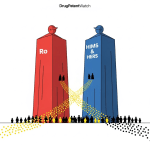
As the “vial strategy” takes hold, 503B facilities are being forced to pivot to “Specialty-Lite” services.36 You aren’t just selling a drug anymore; you are selling the telehealth consultation, the diet app, and the personalized dosing.34 But these “care wraps” are expensive to maintain. If your facility isn’t integrated with a telehealth platform like Ro or Hims & Hers, you are competing on price in a race to the bottom.34
The State Board Crackdown: California, Florida, Indiana
While you are focused on the FDA, don’t ignore the state capitals. State boards of pharmacy are often more aggressive and faster to act than federal regulators.
In California, new rules that took effect in October 2025 place an “affirmative duty” on you to verify and document a “clinically significant difference” for every patient.30 You cannot just say “patient requested it.” You have to have a medical reason that you have verified. If the California Board decides your documentation is thin, they can shut you down even if the FDA hasn’t said a word.30
Florida and Indiana are following suit. Florida’s SB 860 targets weight-loss drugs specifically, requiring you to certify that your API is identical to the approved drug and sourced from a facility inspected within the last two years.30 Indiana’s SB 282 now requires “medical spas” to register with the Board of Pharmacy, bringing the primary customers of your 503B products under direct state oversight.30 The “regulatory gap” is closing.33
Turning Patent Data into Competitive Advantage
So, how do you win? You stop chasing the “Skinny Shot” and start using DrugPatentWatch to find the next opportunity.
The most successful 503B facilities I see today are doing three things:
White Space Analysis: They use AI to find “white spaces” in the patent landscape—areas where the big guys haven’t patented a specific formulation or combination yet.37
Quality-Based Branding: They lean into the safety concerns. They market their “cGMP-compliant, base-form, multi-tested” products to doctors who are scared of the “research grade” junk coming from medspas.4
The Oral Pivot: They are already planning for the oral GLP-1 revolution. Novo Nordisk and Lilly are both filing for oral semaglutide and orforglipron.35 If you can’t compound an oral peptide (which is incredibly difficult), you need to find a way to offer a “significant difference” for the patients who fail on the pill.35
The Future of the GLP-1 Market: Poly-Agonists and Muscle Sparing
What is the “next wave”? It’s not just GLP-1; it’s poly-agonists like retatrutide (a triple agonist).23 The industry is moving toward “quality weight loss”—losing fat while keeping muscle. This is your biggest opportunity. Patents are already being filed for combinations of GLP-1s with myostatin inhibitors.39 If you can formulate a compounded product that genuinely spares lean mass in a way the branded “vials” don’t, you have a defensible, legal clinical justification to stay in the game.39
But remember the rule: you cannot compound an investigational drug like retatrutide.13 You must wait for approval, wait for the inevitable shortage (because demand always exceeds supply), and then move with precision.
Conclusion: Precision or Peril
The GLP-1 market is a $150 billion opportunity, but it is no longer a free-for-all.40 For 503B outsourcing facilities, the transition to the post-lawsuit environment requires a total professionalization of the business. You must move from “arbitrage” to “precision.”
If you continue to mass-produce copies of Ozempic and Zepbound without meticulous patient-level clinical justification, you are inviting a lawsuit that will likely end your facility. The manufacturers have the data, the regulators have the new laws, and the state boards have the duty to act. Your path forward is through quality, transparency, and the strategic use of patent intelligence. Use DrugPatentWatch to understand where the thickets are, and don’t try to walk through them—find the paths around them.
Key Takeaways
The Safe Harbor is Closed: The resolution of the tirzepatide and semaglutide shortages means the “essentially a copy” rule is now in full effect.1
Additive “Loopholes” are Failing: Simply adding B12 or B6 to a GLP-1 does not automatically satisfy the “significant difference” requirement.14
Base Form is Mandatory: Using salt forms like semaglutide sodium is a primary trigger for FDA warning letters and legal action.21
Pricing Floors are Real: LillyDirect and vial pricing ($299-$399) are squeezing the margins for compounders.14
The SAFE Drugs Act 2025 is the New Standard: Expect higher fees, mandatory pre-inspections, and strict interstate reporting.29
Patent Data is a Defensive Tool: Track the “exclusivity stack” to avoid infringing on delivery device and dosing regimen patents that extend far beyond 2031.5
Frequently Asked Questions (FAQ)
1. Can I still compound GLP-1s if my patients say they can’t afford the branded version? No. The FDA and the courts have been clear: financial hardship, lack of insurance coverage, and high list prices do not constitute a “clinical difference” that justifies compounding an “essentially a copy” product.13
2. What happens if I receive a warning letter from the FDA regarding semaglutide salts? You have 15 working days to respond with a corrective action plan.23 Failure to stop using salt forms or to provide a valid legal justification can lead to product seizures, injunctions, and significant fines.32
3. Is there a “grace period” after a shortage is declared resolved? Yes, but they have already passed. The FDA typically allowed 60 days for 503A pharmacies and 90 days for 503B facilities to “wind down” their operations. For tirzepatide and semaglutide, these periods ended in early-to-mid 2025.2
4. How can a 503B facility use DrugPatentWatch for business development? By monitoring “Loss of Exclusivity” (LOE) forecasts and performing “white space analysis,” facilities can identify therapeutic areas with high demand but low patent density, or identify when specific formulation patents expire, allowing for the legal production of non-infringing compounds.5
5. Does the Strive antitrust lawsuit mean I can keep compounding for now? No. Lawsuits do not stop the enforcement of existing FDA regulations unless a court issues an injunction or a stay, which has not happened for the broader industry. You must comply with the current “essentially a copy” rules while the litigation proceeds.3
Compounded Drug Products That Are Essentially Copies of Approved Drug Products Under Section 503B of the Federal Food, Drug, and Cosmetic Act – FDA, accessed February 2, 2026, https://www.fda.gov/media/98964/download