I. What the Global Biosimilar Market Actually Looks Like Right Now
The biosimilar market reached approximately USD 40.4 billion in 2025. Projections from multiple research vendors converge on a range of USD 93 to USD 176 billion by 2030-2034, depending on interchangeability adoption rates and the pace of legislative reform. The CAGR consensus sits near 17-18% through 2030, making this one of the fastest-compounding segments in pharmaceutical markets.
Three structural forces drive that growth. First, reference biologic pricing has become politically and commercially untenable at scale. Second, the expiry of primary patents on blockbuster monoclonal antibodies (mAbs) from the 2005-2015 era has opened the largest addressable cohort of biosimilar targets in history. Third, the FDA’s interchangeability framework, though still evolving, has begun to unlock pharmacy-level substitution in ways that Hatch-Waxman-era generics achieved automatically.
The geographic split matters for litigation strategy. Europe holds roughly 40.8% of the global market, driven by EMA’s fourteen-year head start on biosimilar regulation and payer willingness to mandate substitution. The Asia-Pacific region is growing at a 20-31% CAGR depending on the sub-region, with India and China investing in both manufacturing capacity and regulatory modernization to reduce dependence on Western originator supply chains. The US market, valued near USD 22.6 billion in 2025, grew rapidly post-2019 as the FDA cleared a critical mass of aBLA approvals, but systemic barriers, particularly pharmacy benefit manager (PBM) formulary design and originator rebate contracting, continue to suppress biosimilar penetration below what the patent landscape alone would predict.
The therapeutic mix tells its own story. Monoclonal antibodies account for 56% of the biosimilar market by value, a concentration driven by the breadth of oncology and immunology indications that mAbs cover. Oncology biosimilars, specifically trastuzumab (Herceptin), bevacizumab (Avastin), and rituximab (Rituxan), have achieved over 80% molecule volume share within three years of launch in competitive markets. Autoimmune indications, anchored by adalimumab biosimilars following Humira’s US patent wall coming down in January 2023, comprise the second-largest segment. The next competitive wave targets semaglutide (Ozempic) and ustekinumab (Stelara), with biosimilar entries expected between 2025 and 2026 pending litigation resolution.
Key Takeaways: Market Context
The market’s growth trajectory is not contingent on regulatory liberalization alone. Patent litigation outcomes determine whether that theoretical market is accessible in practice. A biosimilar product with FDA approval but unresolved BPCIA Phase 2 litigation produces zero revenue for its developer and zero savings for the healthcare system. Analysts who model biosimilar market penetration without modeling litigation probability are pricing in a scenario that frequently does not materialize on schedule.
Investment Strategy Note
For portfolio managers, the most actionable signal is not the market CAGR but the ratio of aBLA filings to resolved patent landscapes for specific reference products. A reference biologic with 10+ pending aBLAs and an unresolved patent thicket represents a potential inflection point, not an immediate revenue opportunity. Track the patent dance timelines, PTAB petition filing dates, and 180-day notice of commercial marketing submissions as leading indicators of competitive entry timing.
II. Biosimilars vs. Generics: Why the Structural Difference Drives Every Litigation Decision
A. The Manufacturing Complexity Gap and Its IP Consequences
Generic drugs are synthesized from defined chemical precursors. Their molecular identity is exact, and FDA bioequivalence standards confirm that a generic performs identically to its reference product in pharmacokinetic terms. The patent challenge for generics, governed by the Hatch-Waxman Act, runs through Paragraph IV certification, Orange Book listings, and a well-mapped 30-month stay. The entire framework assumes molecular simplicity.
Biologics are produced in living cells, and that biological origin means no two manufacturing runs are precisely identical at the molecular level. A monoclonal antibody like adalimumab has a molecular weight roughly 1,000 times that of aspirin, carries glycosylation patterns that vary by cell line and culture conditions, and requires cold-chain logistics that small molecules do not. This complexity produces three IP consequences that generic drug litigation does not face.
First, the manufacturing process itself is patentable and commercially significant. For a small molecule, the synthesis route is largely incidental to the drug’s identity. For a biologic, the cell line, fermentation parameters, purification sequence, and fill-finish process collectively determine the product’s critical quality attributes (CQAs). That makes manufacturing patents not just supplementary protection but core IP. Second, because the manufacturing process determines product quality, a biosimilar developer cannot simply replicate the originator’s process without risking infringement while simultaneously being required to produce a product that is ‘highly similar’ to the originator’s output. This creates the central paradox of biosimilar IP: you must make something very much like the reference product, using a process that must be meaningfully different from the one that made it. Third, the complexity of characterizing biological molecules means that analytical comparability data, rather than a simple chemical identity test, anchors both the regulatory submission and the litigation record.
B. Regulatory Approval Standards and Their Litigation Implications
The FDA’s aBLA pathway under Section 351(k) of the Public Health Service Act requires biosimilar applicants to demonstrate ‘no clinically meaningful differences’ in safety, purity, and potency compared to the reference product. The standard is ‘highly similar,’ not ‘identical,’ and that gap between high similarity and identity is where originator patent claims live.
The EMA’s approach, refined over nearly two decades of biosimilar regulation since its first approval in 2006, applies a ‘tailored clinical approach.’ Where analytical comparability data is sufficiently robust and the mechanism of action is well-characterized, the EMA may waive comparative efficacy studies. The FDA has moved incrementally in the same direction but has not formally adopted equivalent flexibility. That regulatory divergence produces different litigation environments: EU biosimilar developers often reach market faster because the regulatory and litigation clocks run concurrently rather than sequentially.
The interchangeability designation in the US represents a separate, higher evidentiary bar. An interchangeable biosimilar must demonstrate that switching between the biosimilar and the reference product, or vice versa, does not produce greater safety or efficacy risk than using the reference product without switching. Federal law authorizes the FDA to grant interchangeability, but pharmacy-level substitution without prescriber notification depends on individual state laws. As of 2025, the majority of states have enacted substitution laws that require an FDA interchangeability designation. Insulin glargine (Semglee) and adalimumab (Cyltezo) were among the first biosimilars to achieve this designation, and both products’ litigation histories illustrate how interchangeability status reshapes the commercial competition that follows.
Key Takeaways: Biosimilar vs. Generic
The structural complexity of biologics is not incidental context. It directly determines which types of patents are asserted, how long litigation lasts, what scientific evidence is required, and why settlements dominate over full trials. Any litigation prediction model that borrows from Hatch-Waxman precedent without accounting for biologic-specific factors will misestimate both probability and timing.
III. The BPCIA Framework: Mechanics, Strategic Optionality, and Phase Structure
A. Legislative Architecture and Exclusivity Windows
Congress enacted the BPCIA on March 23, 2010, as Title VII of the Affordable Care Act. The statute created the abbreviated Section 351(k) licensure pathway modeled on Hatch-Waxman but calibrated for biologic complexity. Two exclusivity provisions define the competitive window. A biosimilar application cannot be submitted until four years after the reference product’s first licensure date. FDA approval of the biosimilar cannot become effective until twelve years after the reference product’s first licensure. This 12-year data exclusivity period is distinct from patent protection and operates regardless of the originator’s patent portfolio status.
The combination of 12-year exclusivity, patent term extension under 35 U.S.C. § 156 (which can extend patent terms by up to five years for regulatory review delays), and supplementary protection certificates in Europe means that many reference biologics carry effective market protection of 14-20 years from first approval. The biosimilar developer’s first strategic decision is therefore not ‘should we litigate’ but ‘when does the litigation clock start, and how do we compress it.’
B. The Patent Dance: Structure, Optionality, and Strategic Calculus
The BPCIA patent dance is the structured information exchange between a biosimilar applicant (BA) and the reference product sponsor (RPS) that precedes litigation. The Supreme Court’s 2017 decision in Sandoz Inc. v. Amgen Inc. established that participation is optional, not mandatory. This is among the most consequential holdings in BPCIA jurisprudence because it fundamentally altered how both sides approach pre-litigation strategy.
If the BA chooses to participate, the sequence works as follows. Within 20 days of FDA acceptance of the aBLA, the BA provides the RPS with a copy of the application and related manufacturing information. The RPS then has 60 days to produce a list of patents it believes could support an infringement claim, along with any patents it would license. Critically, failure to list a patent at this stage generally bars the RPS from asserting that patent until after commercial marketing begins, a forfeiture provision that compels originators to maintain comprehensive, current patent lists well before any aBLA filing is anticipated.
The BA then has 60 days to respond with a claim-by-claim statement of invalidity, unenforceability, or non-infringement for each patent identified. This statement is the biosimilar developer’s first formal litigation document, and its quality determines the trajectory of subsequent proceedings. The exchange continues through further rounds before the parties attempt to agree on a subset of patents for immediate Phase 1 litigation.
If agreement fails within 15 days, the BA informs the RPS of the number of patents it will litigate, both parties exchange their final lists, and the RPS must file its infringement action within 30 days. The aBLA filing itself constitutes an artificial act of infringement for Phase 1 patents, enabling litigation to begin while the product is still in FDA review.
Phase 2 litigation is triggered by the BA’s 180-day notice of commercial marketing. This notice can be provided at any time after FDA approval, and following Sandoz v. Amgen, it can also be provided before approval for applicants who opt out of the patent dance entirely. Phase 2 allows the RPS to assert patents not litigated in Phase 1 and to seek a preliminary injunction to halt commercial launch.
C. Opting Out: When Bypassing the Dance Makes Strategic Sense
The decision to skip the patent dance is not simply a decision to fight. It is a timing decision with downstream litigation consequences. A BA that opts out forfeits the information advantages the dance provides: it will not receive the RPS’s patent list, will not compel the RPS to identify licensable patents, and will not benefit from the forfeiture rule that bars unlisted patents. What it gains is timing control.
By providing the 180-day notice of commercial marketing immediately after FDA approval, or even before approval in some strategic configurations, the BA compresses the gap between aBLA acceptance and commercial launch eligibility. This strategy works best when the BA has already developed a strong non-infringement or invalidity position through PTAB proceedings or prior art analysis conducted independently of the dance, and when the RPS’s patent portfolio has been substantially characterized through public information.
Key Takeaways: BPCIA Mechanics
The patent dance is a risk-allocation mechanism, not just a procedural formality. Engaging fully gives the BA information it could not obtain elsewhere and may narrow litigation scope. Opting out preserves timing control but requires the BA to have done its patent landscape work through other channels, chiefly PTAB petitions and freedom-to-operate analysis, before the FDA clock starts.
Investment Strategy Note
For analysts modeling launch timing, the 180-day notice filing date is the most reliable public signal that a biosimilar developer has decided to move toward commercial entry. Track these filings in BPCIA court dockets and FDA biosimilar product action communications. The gap between 180-day notice and actual launch reflects the Phase 2 preliminary injunction risk assessment by the BA’s legal team.
IV. Patent Types, Delay Correlations, and What the Data Actually Shows
A. The Counterintuitive Finding on Manufacturing Patents
The conventional assumption in biosimilar litigation analysis is that manufacturing patents, which are the most frequently asserted patent type, are the primary driver of market entry delays. This assumption is wrong, and the empirical evidence from peer-reviewed litigation analysis makes that clear.
A systematic study of biosimilar market delays, published in peer-reviewed literature and cited across the Center for Biosimilars and academic IP literature, found that while manufacturing patents appear most often in litigation records, the proportion of composition of matter, active pharmaceutical ingredient (API), and treatment use patents in a given dispute correlates more strongly with longer market launch delays. A higher proportion of manufacturing patents, by contrast, correlated with shorter delays.
The median market launch delay for biosimilars that lost litigation was 3,571 days, approximately 9.9 years, longer than for those that won or settled. In cases that ended in settlement, the patent portfolios asserted by originators contained a greater proportion of manufacturing, composition of matter, and treatment patents than in cases resolved by win or loss. This suggests that when the core IP, meaning the composition of the molecule and its therapeutic application, is legitimately contested, parties are more likely to reach negotiated outcomes rather than risk a final adjudication.
B. Patent Type Taxonomy for Biosimilar Disputes
Understanding which patent type is asserted in any given dispute is the first analytical step toward predicting outcome and timing. The categories are not simply legal classifications; each type carries distinct validity risk, infringement arguments, and economic stakes.
API and composition of matter patents cover the biologic molecule itself, including its amino acid sequence, glycosylation patterns, and structural variants. These are the patents originators most want to preserve and biosimilar developers most want to invalidate. Because the FDA’s ‘high similarity’ standard requires the biosimilar to closely replicate the reference product’s molecular profile, successful API patent claims tend to carry strong infringement presumptions. The Turkish legal analysis on ‘presumption of patent infringement’ published in biosimilar IP literature formalizes this dynamic: the closer the biosimilar is to the reference product in critical quality attributes, the stronger the presumption that it infringes patents covering those attributes.
Formulation and composition patents cover the excipient composition, pH, concentration, and stabilization chemistry of the drug product. These are frequently secondary patents filed years after the originator molecule’s first protection, and they are the core of what European analyses have labeled ‘evergreening.’ In the EU, these patents have consistently failed to block biosimilar entry for the nine top-selling mAbs studied in academic literature. In the US, they require challenge through PTAB or district court validity arguments.
Treatment method and dosing regimen patents cover specific therapeutic indications, dose levels, dosing schedules, and patient populations. The ‘carve-out’ strategy, in which biosimilar developers omit patented indications from their SmPC or FDA-approved labeling, is the primary counter to these patents. The EMA explicitly permits such deletions. The FDA has a parallel ‘skinny label’ mechanism, though originator challenges to skinny labels, including the argument that off-label use inevitably infringes, have generated significant recent case law.
Device and delivery system patents cover autoinjectors, prefilled syringes, and reconstitution devices associated with biologic administration. These patents rarely block market entry outright but can complicate product presentation and formulary positioning.
Manufacturing process patents cover cell culture conditions, purification steps, viral inactivation protocols, and fill-finish procedures. They are the most frequently asserted category by count but the weakest predictor of prolonged delay, partly because biosimilar developers have strong incentives to develop independent manufacturing processes that circumvent originator methods. Data suggests that 68% of recently approved biosimilars bypass originator manufacturing methods entirely through process innovation.
Key Takeaways: Patent Type Analysis
The patent type composition of a dispute is more predictive of outcome than the sheer number of patents asserted. An RPS asserting 40 manufacturing patents faces a fundamentally different litigation risk profile than one asserting 10 API and treatment patents. Analysts and IP teams should weight patent type heavily when modeling delay probability.
V. IP Valuation Deep-Dives: Humira, Enbrel, Eylea, and Soliris
A. Humira (Adalimumab): The Patent Thicket as Revenue Strategy
IP Valuation Profile
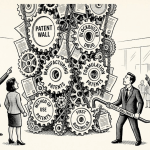
Humira generated peak annual revenues exceeding USD 20 billion, making its patent portfolio one of the most commercially valuable IP assets in pharmaceutical history. AbbVie built a thicket of more than 130 US patents around adalimumab, covering composition, formulation, manufacturing, dosing regimens, and device delivery. The primary composition patent expired in 2016. By constructing overlapping secondary patent claims, AbbVie extended effective US market exclusivity to January 2023, a seven-year extension beyond primary patent expiry that preserved cumulative revenues estimated at USD 60-80 billion during that window.
The IP valuation mechanics here are instructive. AbbVie pursued terminal disclaimers on many secondary patents, linking their expiry to the primary patent but preserving their claim scope as independent barriers to biosimilar entry. Biosimilar developers had to challenge or design around these claims individually. The Association for Accessible Medicines estimated that the Humira thicket involved 131 patents asserted in litigation, ranging from 11 to 65 patents per biosimilar product. Legal costs for clearing a single biosimilar through that thicket ran into tens of millions of dollars per developer.
Settlement Architecture
Every major biosimilar developer, including Amgen (Amjevita), Pfizer (Abrilada), Boehringer Ingelheim (Cyltezo), Samsung Bioepis, and Mylan (Hadlima), reached negotiated settlement with AbbVie for US launch dates beginning January 2023. AbbVie’s settlement with Boehringer Ingelheim, reached in May 2019, granted a non-exclusive license beginning July 1, 2023, with Boehringer paying royalties and acknowledging patent validity. This acknowledgment of validity is commercially significant: it removes a prior art argument from subsequent challengers who might otherwise cite the settlement as evidence that AbbVie’s secondary patents were of questionable quality.
In Europe, the dynamics differed sharply. Humira biosimilars launched in October 2018 following successful patent challenges to AbbVie’s secondary EU patents, and captured 15% of the market within four months, with projections of 50% within a year. The EU outcome illustrates that the same originator IP strategy produced opposite results in different jurisdictions, a key finding for any cross-jurisdictional launch planning.
Evergreening Roadmap for Adalimumab
AbbVie’s evergreening strategy followed a reproducible technology roadmap. Phase one involved filing the core composition patent (US 6,090,382, expiring 2016) and securing a five-year term extension under 35 U.S.C. § 156. Phase two involved filing formulation patents covering the citrate-free, high-concentration subcutaneous formulation that became the commercial standard (the Humira Pen), extending effective protection through 2022-2034 depending on the claim. Phase three involved filing method-of-treatment patents covering specific dosing regimens for rheumatoid arthritis, plaque psoriasis, ankylosing spondylitis, and pediatric indications. Phase four involved device patents on the autoinjector. By the time the primary patent expired, there were overlapping layers of protection that no single PTAB petition could clear.
This roadmap is now the template that biosimilar developers stress-test prospectively for any high-value reference biologic target. The Affordable Prescriptions for Patients Act (S.150), which caps patent assertions at 20 per biologic product in BPCIA proceedings, is a direct legislative response to the Humira model.
B. Enbrel (Etanercept): Successful Patent Defense and Its Valuation Consequences
IP Valuation Profile
Etanercept is a fusion protein combining the TNF receptor with the Fc portion of human IgG1. Amgen’s Enbrel is co-commercialized with Pfizer in the US and generated annual revenues exceeding USD 4 billion at peak. The core composition patents, US 8,063,182 and US 8,163,522, cover the etanercept molecule and its method of production. These are not secondary manufacturing patents. They protect the molecule itself, which places them at the highest end of the IP valuation hierarchy.
Sandoz filed an aBLA for an etanercept biosimilar and acknowledged infringement of seven claims across those two patents, litigating solely on the question of validity. In August 2019, the US District Court for the District of New Jersey upheld both patents. Sandoz had not met its burden to prove invalidity by clear and convincing evidence. The Federal Circuit affirmed in July 2020. A permanent injunction was entered, barring Sandoz from commercializing its biosimilar. The commercial consequence was the preservation of Enbrel’s US market exclusivity years beyond what the patent expiry calendar suggested was possible. Amgen’s ability to defend a composition patent through district court litigation and Federal Circuit appeal, at the highest evidentiary standard, represents the strongest possible outcome for a reference product sponsor.
The Enbrel case has particular value for IP teams assessing the relative strength of their composition patent positions. It demonstrates that a well-drafted composition patent, even when acknowledged to be infringed, can survive a validity challenge if the written description, enablement, and prior art record are clean. Biosimilar developers analyzing Enbrel-like situations should therefore invest in prior art searches before aBLA filing, not after.
C. Eylea (Aflibercept): IP Valuation in an Active Litigation Market
IP Valuation Profile
Regeneron’s Eylea (aflibercept) is an anti-VEGF fusion protein used in neovascular AMD, diabetic macular edema, and related retinal conditions. Eylea generates annual revenues exceeding USD 6 billion globally and USD 4 billion in the US alone. As of early 2024, Eylea faced five pending BPCIA lawsuits, multiple IPR petitions, and at least five pending aBLAs, making it one of the most actively contested biosimilar battlegrounds in the current market.
Regeneron’s core patent strategy for Eylea involves composition of matter patents on the aflibercept molecule, formulation patents covering the specific VEGF Trap concentration and buffer system used in the commercial product, and method patents covering intravitreal dosing regimens. The IP portfolio also includes patents on the manufacturing cell line and purification process.
The Samsung Bioepis Preliminary Injunction
The Federal Circuit’s 2025 decision affirming the district court’s preliminary injunction against Samsung Bioepis’ Eylea biosimilar is among the most consequential recent holdings in BPCIA litigation. The court found that Regeneron was likely to succeed on the merits of its infringement claims, that Samsung Bioepis had not presented a substantial invalidity defense on obviousness-type double patenting or written description grounds, and that Regeneron would suffer irreparable harm from market share loss and price erosion.
The irreparable harm finding deserves scrutiny because courts do not uniformly accept this argument. The Eylea court’s analysis rested on the market-specific characteristics of retinal disease treatment: prescribers are sticky, switching costs are real, and price erosion in the context of specialty pharmacy distribution is difficult to reverse. Biosimilar developers targeting Eylea must now demonstrate either a stronger invalidity position or a different commercial entry strategy than Samsung attempted.
IP Valuation Implication
Regeneron’s Eylea IP portfolio currently functions as a USD 4 billion annual revenue protection mechanism. Each year of delayed biosimilar entry preserves that revenue base. The present value of the patent thicket, discounted at a cost of capital appropriate for biologic IP, runs into the tens of billions. For biosimilar developers, the corresponding question is whether the legal cost and litigation risk of clearing the Eylea landscape yields a sufficient commercial return given the five-competitor market that will emerge when entry occurs.
D. Soliris (Eculizumab): Orphan Drug IP and the Long Exclusivity Tail
IP Valuation Profile
Alexion’s Soliris (eculizumab) treats paroxysmal nocturnal hemoglobinuria (PNH) and atypical hemolytic uremic syndrome (aHUS), rare complement-mediated disorders with no alternative therapies. Soliris generated revenues exceeding USD 4 billion annually before Alexion was acquired by AstraZeneca for USD 39 billion in 2021. The IP valuation of eculizumab reflects not just the revenue base but the absence of therapeutic substitutes, which means biosimilar entry would capture a high proportion of the market quickly.
Canadian Patent No. 2,645,810 covers eculizumab and was upheld by Canada’s Federal Court in May 2025 against Amgen’s invalidity challenges on anticipation and obviousness grounds. The court found infringement of claims 1 and 2, issued an injunction against Amgen’s Bekemv, and barred Canadian launch until the patent expires in March 2027. This is a canonical example of a primary patent successfully defended through the patent expiry date, with no settlement and no design-around.
In the US, both Samsung Bioepis and Amgen reached settlements with Alexion for their eculizumab biosimilars, with launches occurring in early 2025. The settlement followed a class action complaint alleging that Alexion had misused its patents to delay biosimilar competition. Samsung Bioepis’ 180-day notice of commercial marketing was filed in July 2023, signaling its readiness for an at-risk launch if necessary.
Orphan Drug IP Dynamics
Eculizumab illustrates the specific IP dynamics of orphan drugs. Because patient populations are small, the financial stakes per patient are extremely high, Alexion priced Soliris at approximately USD 500,000 per year. This creates a biosimilar economics problem: the development cost for a biosimilar in a rare disease indication is comparable to a large-indication product, but the revenue opportunity is a fraction of the size. Only the most committed biosimilar developers, typically large generics players with existing manufacturing capacity, pursue rare disease biosimilars. Alexion’s ability to enforce its IP aggressively, including the Canadian court victory in 2025, reflects the leverage that orphan drug exclusivity and small patient populations give reference product sponsors.
Key Takeaways: IP Valuation by Drug
The IP value of any reference biologic is not static. It is a function of patent claim quality, litigation track record, revenue base, and competitive landscape. Humira’s thicket was commercially brilliant but legislatively vulnerable. Enbrel’s composition patent was scientifically strong and legally durable. Eylea’s litigation posture is active and injunction-friendly. Soliris’ orphan economics limit biosimilar entry to well-capitalized players willing to accept small markets with high per-patient margins.
VI. PTAB as a Litigation Weapon: Mechanics, Timing, and Estoppel Risk
A. Why PTAB Changed the Biosimilar Litigation Calculus
The Patent Trial and Appeal Board, established by the Leahy-Smith America Invents Act in 2011, provides Inter Partes Review (IPR) and Post-Grant Review (PGR) proceedings as alternatives to federal district court validity challenges. PTAB’s adoption by biosimilar developers transformed the strategic landscape in three ways: cost, speed, and burden of proof.
Federal district court patent litigation for a complex biologic dispute costs USD 10-50 million per side through trial. PTAB IPR proceedings typically cost USD 300,000-800,000 per petition through final written decision. The statutory mandate that PTAB issue a final written decision within 12 months of institution (with a possible six-month extension) compresses timelines that district courts routinely extend to three to five years. And PTAB applies a ‘preponderance of the evidence’ standard for invalidation, compared to the ‘clear and convincing evidence’ standard in federal court. The lower burden is not trivial: it meaningfully increases the probability that a patent claim with a genuine prior art problem will be invalidated.
B. IPR vs. PGR: Choosing the Right Petition Type
Inter Partes Review challenges validity on prior art grounds only, specifically anticipation under 35 U.S.C. § 102 and obviousness under 35 U.S.C. § 103. It can be filed any time after the patent issues but must be filed within one year of the petitioner being served with a complaint alleging infringement of that patent. For biosimilar applicants who have not yet been sued, the one-year bar does not apply, giving them flexibility to file IPRs strategically before BPCIA Phase 1 litigation begins.
Post-Grant Review is broader, allowing challenges based on any ground of invalidity including written description, enablement, and definiteness under 35 U.S.C. § 112, in addition to prior art. PGR must be filed within nine months of patent grant or re-grant. The broader challenge scope makes PGR particularly useful against recently issued secondary patents, precisely the category of evergreening patents that biosimilar developers most frequently need to address. The ‘description attacks’ that PTAB practice guides reference, challenges to overly broad specifications that claim more than the inventor actually enabled, are PGR-specific strategies that cannot be pursued through IPR.
C. Coordinating PTAB with BPCIA Litigation
The optimal PTAB filing timeline is not independently determined. It must be synchronized with the BPCIA patent dance, the FDA review timeline, and the biosimilar developer’s commercial launch calendar.
The general principle is to file PTAB petitions early enough that the final written decision will be issued roughly concurrently with, or before, the district court action. A PTAB institution decision raising a ‘substantial question of validity’ against a patent directly weakens the RPS’s ability to obtain a preliminary injunction in Phase 2 BPCIA litigation. District courts evaluating preliminary injunction motions assess four factors: likelihood of success on the merits, irreparable harm, balance of hardships, and public interest. A pending or decided IPR that casts doubt on patent validity speaks directly to the first factor. If the RPS cannot show a reasonable likelihood of prevailing on validity, the injunction fails even if infringement is clear.
The USPTO’s bifurcated approach for IPR and PGR petitions, implemented in March 2025, introduced a preliminary assessment of discretionary denial factors before full merits briefing. This change increases the probability of denial when there is parallel district court litigation on the same patents, a policy intended to prevent PTAB from being used purely as a litigation harassment tool. For biosimilar developers, the practical consequence is that filing PTAB petitions before district court litigation is initiated, or at minimum before a scheduling order is entered, significantly reduces the discretionary denial risk. Early and precise filing is the operative standard.
D. Estoppel: The Principal Risk of PTAB Participation
Statutory estoppel under 35 U.S.C. § 315(e) bars a petitioner who has received a final written decision from asserting in subsequent district court proceedings any ground of invalidity that it ‘raised or reasonably could have raised’ during the IPR. The phrase ‘reasonably could have raised’ has generated substantial case law and remains a source of litigation risk. Courts have interpreted it broadly in some circuits, meaning that a biosimilar developer who pursues an IPR and receives a final written decision may find its district court invalidity arguments constrained even as to prior art it did not specifically cite in the petition.
The strategic response is thorough petition drafting. A biosimilar developer should include every credible prior art reference and every viable invalidity ground it can locate before filing the IPR, accepting the cost of a broader petition in exchange for reduced estoppel exposure. The alternative, filing a narrow petition and hoping to expand the invalidity argument in district court, carries substantial risk of being estopped from exactly the argument that would have won at trial.
Key Takeaways: PTAB Strategy
PTAB is not a substitute for district court litigation. It is a pre-clearance mechanism for the weakest patents in an originator’s portfolio. Used correctly, it eliminates the patents most vulnerable to written description and prior art attacks before those patents reach district court, reducing the number of issues the BA must litigate at trial and weakening the RPS’s preliminary injunction position. Used carelessly, it creates estoppel traps that can eliminate the BA’s strongest district court arguments.
Investment Strategy Note
Portfolio managers should monitor PTAB institution decisions on biologic patents as a proxy for preliminary injunction risk. When a PTAB panel institutes review of a patent the RPS has asserted or is likely to assert in Phase 2 BPCIA litigation, the probability of an injunction blocking commercial launch declines materially. This is a measurable, publicly available signal that biosimilar launch timing assumptions should be revised upward toward earlier entry.
VII. Jurisdiction-by-Jurisdiction Breakdown: US, EU, Canada, Japan
A. European Union: Secondary Patents Fail, Primary Protection Holds
The EU biosimilar litigation record through 2025 produces a consistent finding: secondary patents, meaning those covering formulations, dosing regimens, and manufacturing variants filed after the originator biologic’s first approval, have not blocked biosimilar market entry for any of the nine top-selling monoclonal antibodies studied in European academic literature. This does not mean secondary patents are ignored; they are challenged and typically either not upheld by the European Patent Office or successfully opposed by biosimilar developers in national courts.
The primary patent, combined with supplementary protection certificates (SPCs) and pediatric extensions, is what actually determines EU biosimilar entry timing. SPCs can extend patent protection by up to five years beyond the patent expiry date, and pediatric extensions add six months on top of SPCs. The combination produces effective market protection of 10-17 years from first product approval across EU member states.
The EMA’s formal position, supported by more than one million patient-treatment years of safety data, is that EU-approved biosimilars are scientifically interchangeable with their reference products and with other biosimilars of the same reference. This position, which the EMA and HMA have stated explicitly, reduces physician hesitation about prescribing biosimilars, a market dynamic that US payers cannot yet rely on due to the state-by-state interchangeability substitution framework.
The Humira EU outcome, with biosimilars capturing 15% market share within four months and projections of 50% within one year of launch in October 2018, reflects this environment. Adalimumab biosimilar developers challenged AbbVie’s EU secondary patents, won or settled those challenges, and launched at scale. The US launch, delayed until January 2023, illustrates the divergence a patent thicket creates between jurisdictions with identical regulatory approval standards but different litigation environments.
B. Canada: Patent Linkage and the Notice of Compliance Framework
Canada’s biosimilar patent framework operates through the Notice of Compliance (NOC) Regulations. A subsequent entry biologic (SEB) applicant may allege that a listed patent is invalid or will not be infringed. If the patent holder files a prohibition order within 45 days of that allegation, it triggers litigation during which the Minister of Health may not grant an NOC to the SEB applicant. The Federal Court may then prohibit the Minister from issuing an NOC until patent expiry if the SEB’s allegations are not justified.
The May 2025 Federal Court decision in the Alexion-Amgen eculizumab dispute illustrates how this framework operates at the primary patent stage. The court upheld Alexion’s Canadian Patent No. 2,645,810, found that Amgen’s Bekemv infringed claims 1 and 2, rejected invalidity challenges on anticipation and obviousness grounds, and issued an injunction barring Canadian launch until March 2027. The court also ordered Amgen to deliver up or destroy any infringing eculizumab product already manufactured for Canadian distribution, a significant commercial penalty.
The Canadian framework’s distinctive feature for IP strategy is the patentee’s ability to bring a patent infringement action independently of the NOC proceeding, and the SEB applicant’s ability to counterclaim for invalidity when sued for infringement. Recent case law suggests a patentee may maintain a counterclaim of infringement even when the SEB has not yet launched commercially, a development that expands the temporal scope of Canadian biosimilar litigation.
C. Japan: Patent Linkage Voluntarism and the Unfair Competition Complication
Japan’s patent linkage process for biosimilars is voluntary, not mandatory. Originator companies may provide patent information about APIs to the Ministry of Health, Labour and Welfare (MHLW), but this disclosure is not a prerequisite for regulatory review and does not automatically trigger a litigation hold comparable to the US or Canadian frameworks.
The 2024 Tokyo District Court decision in the Samsung Bioepis-Bayer dispute over aflibercept introduced a new wrinkle: Samsung sought to prevent Bayer from providing patent information to the MHLW, arguing that such disclosure constituted unfair competition under the Unfair Competition Prevention Act. This argument, that the use of the voluntary patent linkage system could itself be anticompetitive when based on patents of questionable validity, represents a novel and still-developing theory of liability in Japanese biosimilar IP.
Standard Japanese patent infringement procedure allows patentees and exclusive licensees to seek injunctions and damages. Non-exclusive licensees may seek damages only. Invalidity can be raised as a defense in infringement proceedings or through a separate invalidity trial before the Japan Patent Office, with standing broadly construed to anyone whose future business activities would conflict with the patent. Japan applies the Doctrine of Equivalents with a five-part test, and damages may be presumed based on marginal profit or reasonable royalty. These procedural features make Japanese biosimilar patent disputes procedurally complex but commercially meaningful given Japan’s position as the world’s third-largest pharmaceutical market.
Key Takeaways: Jurisdictional Comparison
No single jurisdictional outcome predicts another. The same patent portfolio that blocked US biosimilar entry for seven years in the Humira case failed entirely to delay EU entry. The same eculizumab composition patent that was settled in the US was fully litigated and upheld in Canada. Multi-market biosimilar launch strategies require jurisdiction-specific litigation models, not a single global forecast.
VIII. Scientific Evidence Standards and Their Role in Claim Construction
A. The Comparability Exercise as Litigation Foundation
The FDA and EMA’s biosimilarity determination rests on a hierarchical comparability exercise. Analytical characterization comes first: head-to-head comparison of primary structure (amino acid sequence, disulfide bonds), higher-order structure (secondary, tertiary, and quaternary folding), post-translational modifications (glycosylation, oxidation, deamidation), biological activity (receptor binding affinity, effector functions), purity and impurity profiles, and concentration. The FDA’s ‘totality of the evidence’ standard means that robust analytical comparability can reduce or eliminate the need for clinical pharmacology or comparative efficacy studies.
Nonclinical studies evaluate PK/PD comparability and toxicity, typically in relevant animal models. Clinical studies confirm that PK profiles are comparable in human subjects, that immunogenicity (specifically anti-drug antibody formation) is not meaningfully different, and, in some cases, that comparative efficacy in a sensitive clinical model supports extrapolation to all approved indications.
Each layer of this exercise generates data that becomes relevant in patent litigation. Analytical characterization data can speak to composition of matter infringement: if the biosimilar’s glycosylation pattern is demonstrably different from the reference product’s, that difference may be claim construction evidence. Clinical PK data can establish that the biosimilar reaches equivalent exposure levels through the same or different mechanistic pathways, relevant to treatment method patent claims. Manufacturing process data generated during comparability studies can reveal whether the biosimilar’s production method overlaps with patented originator processes.
B. Expert Testimony: Scope, Limitations, and Strategic Use
Expert testimony in biosimilar patent cases spans biochemistry, clinical pharmacology, regulatory science, manufacturing science, and economics. The technical complexity of biologic products means that claim construction hearings in BPCIA cases regularly involve competing expert interpretations of molecular biology concepts that district court judges are encountering for the first time.
The most consequential expert testimony is typically on three issues. First, claim construction: what does a term like ‘anti-TNF antibody having an association constant of at least 10^8 M-1’ mean to a person of ordinary skill in the art (POSA) at the time of invention? The POSA standard is itself contested in biologic cases because ‘ordinary skill’ in monoclonal antibody technology looked very different in 1998 than in 2010. Second, validity: whether a prior art reference, which may itself be highly technical, anticipated or rendered obvious the claimed invention. Third, infringement: whether the accused biosimilar product, as manufactured and sold, falls within the construed claim scope.
FDA approval documents, including the biosimilar’s product-specific guidance and the approval package, can be introduced as evidence in patent litigation. FDA’s finding that a biosimilar is ‘highly similar’ to the reference product is not a finding of patent infringement, but it is evidence that the relevant molecular features of the biosimilar closely resemble the reference product. Courts have used FDA approval data to inform claim construction and infringement analysis, particularly where the technical terms in patent claims correspond to regulatory characterization standards.
IX. Patent Thickets, Evergreening Roadmaps, and Anticompetitive Risk
A. The Technology Roadmap for Biologic Evergreening
An originator company’s evergreening strategy for a biologic drug follows a predictable multi-phase roadmap. Understanding this roadmap allows biosimilar developers to anticipate the patent landscape they will face at each stage of their development program, rather than discovering it at aBLA filing.
Phase one covers the core molecule. This involves the composition of matter patent on the biologic’s primary sequence and structure, filed at or before IND submission, typically granted 6-10 years before commercial approval, and eligible for patent term extension under 35 U.S.C. § 156 of up to five years. This is the hardest patent to challenge because it was filed when the molecule was genuinely novel, the specification is typically well-developed, and 20-plus years of prosecution history constrain claim scope narrowing arguments.
Phase two covers the manufacturing process. Process patents are filed as the originator’s commercial manufacturing process is developed and scaled, typically 2-5 years before FDA approval. These patents cover cell line selection and characterization, upstream culture conditions, downstream purification sequences, viral clearance steps, and formulation and fill-finish procedures. Process patents are the most frequently asserted in BPCIA litigation but the weakest predictor of market delay, as noted above, because biosimilar developers routinely develop independent commercial-scale processes.
Phase three covers formulation and device. Formulation patents protecting the commercial presentation, including the high-concentration subcutaneous formulation, specific buffer compositions, and excipient selection, are typically filed 3-7 years after the original composition filing. Device patents on autoinjectors and prefilled syringe systems follow the commercial launch and are often filed reactively when a specific delivery system achieves commercial success.
Phase four covers dosing regimen and indication expansion. Method of treatment patents covering new dosing schedules, combinations with methotrexate or other agents, and new patient populations (pediatric indications, specific disease subtypes) are filed throughout the biologic’s commercial life and are often tied to post-approval clinical trials. These patents are the basis for ‘skinny label’ carve-out strategies and are the most actively litigated category in EU secondary patent challenges.
Phase five involves the next-generation product. As the 12-year exclusivity window approaches expiry, originators may develop ‘biobetter’ products, biosimilar molecules with improved PK profiles, reduced immunogenicity, or new delivery routes. These products carry independent IP and can shift clinical practice away from the reference biologic before biosimilars enter, reducing the commercial prize available to biosimilar developers.
B. Terminal Disclaimers and the Spike at Exclusivity Expiry
Academic analysis of biologic patent filing patterns has identified a spike in patent applications with terminal disclaimers in the years immediately preceding 12-year statutory exclusivity expiry. A terminal disclaimer links a later-filed patent’s expiry date to an earlier patent’s expiry date, preventing obvious variations from extending protection beyond the base patent term. However, terminal disclaimer patents still require biosimilar developers to either challenge and invalidate them or design around them. The disclaimer prevents term extension but does not reduce the litigation burden of each individually asserted claim.
The pattern suggests that biologic firms use terminal disclaimer patents strategically to populate the patent thicket with claims that cannot be accused of extending the exclusivity period (because they expire with the base patent) but that still create litigation risk for biosimilar developers who lack the resources to challenge dozens of claims simultaneously. For biosimilar IP teams, terminal disclaimer patent clusters are a signal that the originator has identified a vulnerability in the primary patent’s scope and is hedging with overlapping claims.
C. Pay-for-Delay, Formulary Exclusivity, and Antitrust Exposure
The Remicade litigation involving Johnson & Johnson and Pfizer, settled in July 2021 after nearly four years, remains the most prominent example of antitrust claims arising from biosimilar competition strategy. Pfizer alleged that J&J violated the Sherman Act and Clayton Act by entering de facto exclusivity agreements with insurers and healthcare providers, conditioning Remicade discounts and rebates on promises to eliminate or substantially limit formulary access for biosimilar infliximab, including Pfizer’s Inflectra. The settlement terms were confidential, but J&J acknowledged that Remicade and infliximab biosimilar prices had declined following biosimilar introduction, which implicitly conceded the competitive market impact.
The FTC’s July 2025 Listening Session on formulary and benefit practices that impede drug competition reflects the regulatory attention this conduct now receives. The FTC’s current enforcement priorities include exclusive agreements for API supply, restricted distribution programs, formulary design that systematically disadvantages biosimilars, rebating practices that lock in reference biologic market share, and disparagement of biosimilar safety and efficacy. Each of these practices can generate antitrust liability independent of patent validity, and biosimilar developers who encounter them should evaluate both antitrust counterclaims and FTC referrals as part of their litigation strategy.
The ‘pay-for-delay’ framework from small molecule Hatch-Waxman precedent applies to BPCIA settlements with modifications. A biosimilar settlement that provides value transfer from the originator to the biosimilar developer, in exchange for delayed market entry, carries potential antitrust exposure under FTC v. Actavis (2013). BPCIA settlements are generally structured to avoid this characterization by framing compensation as reasonable royalty on an admitted infringement rather than naked delay payment, but the line between these characterizations is not always clear.
Key Takeaways: Thickets and Anticompetitive Conduct
Evergreening is a legal activity with predictable mechanics. Antitrust violations are a different category of risk. Biosimilar developers who identify both IP barriers and commercial conduct barriers to market entry have a richer set of legal tools than those who focus exclusively on patent validity. The combination of PTAB challenges, BPCIA phase litigation, and antitrust counterclaims is increasingly the standard playbook for well-resourced biosimilar developers.
X. Predicting Outcomes: A Six-Factor Model for Litigation Forecasting
Predicting biosimilar patent litigation outcomes requires integrating regulatory, patent quality, competitive intelligence, economic, jurisdictional, and timing factors into a coherent analytical framework. Each factor carries distinct weight depending on the specific product and patent portfolio at issue.
A. Factor 1: Patent Type Composition
As the empirical literature establishes, a higher proportion of API and treatment patents correlates with longer delays. For any reference biologic under analysis, the first quantitative step is categorizing the asserted patent portfolio by type and calculating the proportion in each category. A thicket with 70% manufacturing patents presents a fundamentally different delay risk than one with 40% API and 30% treatment patents.
B. Factor 2: PTAB Prior Art Landscape
Conduct a systematic prior art search against the reference biologic’s secondary patents before any PTAB petition filing decision. The relevant prior art for biologic patents extends to scientific publications, conference abstracts, patent publications from academic institutions and research hospitals, and international patent filings. The quality of available prior art against each patent category determines whether PTAB IPR or PGR is viable, what the expected institution rate is, and how the resulting PTAB proceedings will affect the district court preliminary injunction analysis.
C. Factor 3: Regulatory Approval Timing and Interchangeability Status
FDA aBLA review timelines are relatively predictable, running 12 months for standard review and 6 months for priority review. The interchangeability designation, if pursued, adds several months to the development and review timeline but may significantly improve commercial adoption rates post-launch, particularly in states with automatic substitution laws. For any litigation prediction model, the FDA approval date is a critical input because it determines when the 180-day commercial marketing notice can be filed and when Phase 2 BPCIA litigation can be triggered.
D. Factor 4: Settlement Probability
Historical BPCIA data shows that 67% of terminated BPCIA proceedings end in settlement or stipulated voluntary dismissal. Settlement probability is higher when the patent portfolio includes a mix of strong primary claims and weaker secondary claims, when multiple biosimilar developers are simultaneously in litigation with the same RPS, and when the reference product’s exclusivity period has less than three years remaining. Settlement probability is lower when the RPS has a strong composition patent track record (as in the Enbrel case), when the RPS has successfully obtained preliminary injunctions against prior biosimilar challengers, and when the product is an orphan biologic where the commercial prize does not justify negotiated revenue sharing.
E. Factor 5: Jurisdictional Risk Stratification
For products with global commercial ambitions, model litigation risk separately by jurisdiction. EU secondary patent risk is low based on historical outcomes. US patent thicket risk is high for products with Humira-like portfolio construction. Canada presents primary patent risk that may not be compromised even when US settlement is reached, as the Alexion-Amgen eculizumab case demonstrates. Japan’s voluntary linkage system creates lower automatic litigation risk but introduces the novel unfair competition theory that may need to be addressed before or concurrent with MHLW submission.
F. Factor 6: At-Risk Launch Decision Framework
An at-risk launch, where the biosimilar developer begins commercial distribution before all BPCIA litigation is resolved, is the highest-stakes decision in biosimilar commercialization. If the RPS subsequently prevails on an unresolved patent, the biosimilar developer faces disgorgement of all profits from the at-risk period plus potential enhanced damages for willful infringement. The decision requires assessing the strength of the remaining unresolved patents, the probability and timeline of a preliminary injunction (which, if granted, would halt the launch), the commercial cost of delay compared to the litigation risk, and the financial capacity to absorb a worst-case damages award.
The Sandoz Tysabri (natalizumab) at-risk launch decision in 2024, following a denied preliminary injunction, is the most recent high-profile example. Sandoz’s analysis concluded that Biogen’s remaining patent claims did not support an injunction and that the commercial value of early market entry justified the residual litigation risk. Not all at-risk launches end favorably; the framework for making this decision requires quantitative analysis of each remaining patent’s validity and infringement risk.
Key Takeaways: Prediction Framework
No single factor determines biosimilar litigation outcome. The six-factor model produces a probability-weighted range rather than a point estimate. The most useful output for IP teams and portfolio managers is not ‘this biosimilar will launch in Q2 2026’ but ‘the probability-weighted expected launch date, under the distribution of litigation outcomes, is Q2 2026 with a 60% probability, Q4 2026 with a 25% probability, and 2028 or later with a 15% probability if a preliminary injunction issues.’
XI. Legislative Reform Tracker: What Congress and the FTC Are Actually Doing
A. The Affordable Prescriptions for Patients Act (S.150)
S.150 caps BPCIA patent assertions at 20 per biologic product, with carve-outs for actively used manufacturing process patents. It requires patent quality filters, meaning that patents asserted in BPCIA litigation must meet additional criteria beyond mere listing. Projections cited by DrugPatentWatch estimate a 20% price reduction for affected drugs through accelerated biosimilar entry. The bill has not yet passed as of April 2026, but it has been reintroduced in successive Congresses and reflects a bipartisan concern about patent thicket-driven pricing that makes eventual passage plausible.
B. The ETHIC Act (H.R. 3269)
The ETHIC Act proposes to restrict originators to asserting only one patent from each terminally disclaimed patent family in BPCIA proceedings. The practical effect is to prevent the strategy of filing dozens of obvious variants of a single patent claim and then asserting each variant separately against every biosimilar applicant. If enacted, this would specifically address the AbbVie Humira model, where terminal disclaimer patents provided claim volume without claim novelty.
C. Patent Dance Acceleration Proposals
Legislative proposals have suggested allowing BPCIA patent dance initiation at the Type III development meeting with FDA, rather than waiting for aBLA acceptance. A Type III development meeting typically occurs 18-24 months before aBLA filing in a biosimilar program. Moving the patent dance trigger to this earlier point would allow Phase 1 litigation to begin while the biosimilar is still in Phase 3 clinical trials, potentially resolving patent disputes before the product reaches FDA review. Early litigation has been shown to reduce market entry delays by 4.8 times compared to post-approval disputes, based on Phase 3 preclearance protocol data.
D. FTC and Executive Actions
President Trump’s executive orders on drug affordability, issued in 2025, directed the FDA to provide recommendations on accelerating biosimilar approval timelines. The FDA has not yet published formal guidance in response, but the directive creates pressure to reduce administrative delays distinct from patent litigation. The FTC’s July 2025 listening session on formulary and benefit practices examined PBM conduct, rebate walls, and formulary exclusions as competition barriers independent of patent enforcement. The FTC’s enforcement authority under Section 5 of the FTC Act extends to unfair methods of competition, which can capture originator commercial conduct that falls short of antitrust violation but still distorts the biosimilar market.
The IQVIA Institute research underlying a June 2025 FDA Law Blog analysis found that patent litigation settlements have accelerated patient access to generic and biosimilar medicines by more than five years before patent expiration on average, with some cases accelerating entry by over a decade. This finding, which directly contradicts the characterization of patent settlements as anticompetitive, was cited by biosimilar developers and the Association for Accessible Medicines as evidence that legislative disincentives to settlement would harm patients by forcing full litigation timelines.
Key Takeaways: Legislative Reform
The legislative agenda on biosimilar patent reform has been active but not yet enacted. IP teams should model both the current statutory framework and the scenarios that would result from S.150 and the ETHIC Act passing, because those scenarios would materially alter the economics of originator patent portfolio maintenance and biosimilar litigation strategy.
XII. Investment Strategy for Portfolio Managers and Institutional Analysts
A. Reading the BPCIA Docket as a Market Signal
BPCIA case filings, PTAB petitions, 180-day commercial marketing notices, and preliminary injunction decisions are all public records. Together they constitute a real-time map of biosimilar entry probability for any reference biologic with pending aBLAs. Portfolio managers who systematically track these signals will, on average, anticipate competitive entry earlier than those who rely on company guidance alone.
The specific signals to monitor are these: PTAB institution decisions against patents asserted in BPCIA Phase 1 litigation (negative for originator’s preliminary injunction position), denial of preliminary injunction motions (highly predictive of imminent at-risk or licensed launch), settlement filings (trigger a search for disclosed license terms that reveal expected entry dates), and 180-day commercial marketing notices (the most direct signal of a biosimilar developer’s launch timeline commitment).
B. Originator Stock Impact Model
Originator biologic revenues do not decline uniformly following biosimilar entry. The pace of penetration depends on interchangeability designation, payer formulary positioning, PBM contracting, and physician inertia. In oncology, hospital formulary committees drive rapid biosimilar substitution for intravenous products, producing faster erosion curves. In immunology, where subcutaneous self-administration and patient adherence patterns are deeply established, erosion is slower.
The Humira case provides the benchmark: US adalimumab market share for the reference product declined sharply in 2023 and 2024, but AbbVie’s revenue impact was partially offset by its own biosimilar (Skyrizi and Rinvoq) in the immunology market. Regeneron’s Eylea faces a different trajectory: if the Federal Circuit’s preliminary injunction holding in the Samsung Bioepis case ultimately produces a favorable claims construction at trial, Eylea’s market protection may persist longer than current analyst models project.
For originators, the key valuation question is whether the patent portfolio’s remaining enforcement value exceeds the cost of defending it. For biosimilar developers, the key question is whether the expected revenue from market entry, discounted for litigation risk and launch timing uncertainty, exceeds the all-in cost of development and litigation.
C. Biosimilar Developer Portfolio Construction
A well-constructed biosimilar pipeline should include products at different stages of the litigation cycle. Products targeting reference biologics with resolved or near-resolved patent landscapes provide predictable near-term revenue. Products targeting reference biologics with active patent thickets and multiple pending aBLAs provide medium-term option value, particularly if PTAB petitions are already filed and moving toward institution. Products targeting next-wave reference biologics, including semaglutide, ustekinumab, and dupilumab (Dupixent), represent longer-dated option value with higher development and litigation risk.
Biosimilar developers who can absorb at-risk launch decisions have a structural advantage over more conservative players. The at-risk launch, executed after a denied preliminary injunction and a strong PTAB institution record, compresses the time-to-revenue window substantially. Developers who require settled patent landscapes before launching will consistently lag market leaders who have the financial capacity and legal sophistication to manage residual litigation risk.
D. Litigation Data Analytics as a Recurring Due Diligence Input
Pharmaceutical M&A, licensing transactions, and biosimilar program acquisitions all require systematic patent landscape analysis as a due diligence input. A target company’s biosimilar pipeline asset is only as valuable as the probability-weighted expected launch date, and that probability is a function of the litigation variables outlined in this framework.
AI-powered prior art analysis tools have been shown to identify weak patents 82% faster than traditional manual searches, cutting patent clearance costs by an estimated USD 2.8 million per application. Advanced manufacturing process innovation can circumvent 63% of originator process patents based on current biosimilar development data. Both capabilities are becoming standard in well-resourced biosimilar programs and should be evaluated as part of any due diligence process examining a biosimilar development organization’s patent clearance capability.
Key Takeaways: Investment Strategy
Biosimilar patent litigation is quantifiable, not merely qualitative. The six-factor prediction model, combined with systematic monitoring of PTAB and BPCIA public records, produces probability distributions over launch timing that are more accurate than company guidance alone. Analysts who build these models will price biosimilar pipeline assets and originator revenue protection more accurately than those who treat litigation as a binary event.
Appendix: Biosimilar Litigation Outcomes Data Summary
Litigation Result
Median Entry Delay
Market Penetration (12-18 months post-entry)
Frequency in BPCIA Terminated Cases
Biosimilar Win
2.3 years post-primary patent expiry
84% within 12 months
~20%
Settlement
2.5 years post-primary patent expiry
63% within 18 months
~67%
Originator Win
9.9 additional years beyond win/settlement median
22% after 5 years
~13%
Source: Synthesized from Center for Biosimilars analysis, DrugPatentWatch patent thicket reporting, and BPCIA litigation docket data.
Glossary of Technical Terms Used
aBLA: Abbreviated Biologics License Application, the FDA submission pathway under Section 351(k) of the Public Health Service Act for biosimilar approval.
BPCIA: Biologics Price Competition and Innovation Act, enacted in 2010 as part of the ACA, establishing the US biosimilar approval and patent litigation framework.
Biosimilar interchangeability: The FDA designation indicating that a biosimilar may be substituted for the reference product at the pharmacy level without prescriber intervention, subject to state law.
CQAs (Critical Quality Attributes): Physical, chemical, biological, or microbiological properties or characteristics that should be within an appropriate limit, range, or distribution to ensure the desired product quality.
Evergreening: The practice of filing secondary patents covering minor variations of an approved biologic to extend effective market exclusivity beyond the primary patent term.
Freedom to Operate (FTO) Analysis: A systematic examination of the patent landscape surrounding a product to identify patents that might restrict commercialization.
IPR (Inter Partes Review): A PTAB proceeding to challenge patent validity on prior art grounds, available any time after patent issuance and subject to a one-year bar from service of an infringement complaint.
Patent dance: The structured information exchange between a biosimilar applicant and reference product sponsor under the BPCIA, confirmed as optional by the Supreme Court in Sandoz v. Amgen (2017).
Patent thicket: A dense web of overlapping patents covering multiple aspects of a biologic product, designed to extend market exclusivity and increase the cost of biosimilar entry.
PGR (Post-Grant Review): A PTAB proceeding allowing validity challenges on any statutory ground, filed within nine months of patent grant.
PTAB: Patent Trial and Appeal Board, the USPTO adjudicatory body established by the Leahy-Smith America Invents Act in 2011 to conduct IPR and PGR proceedings.
RPS (Reference Product Sponsor): The holder of the approved reference biologic license who is the defendant or patent-asserting party in BPCIA proceedings.
SPC (Supplementary Protection Certificate): An EU mechanism extending patent protection for medicinal products by up to five years to compensate for time lost during regulatory review.
Terminal disclaimer: A patent prosecution tool that links the expiry of a later-filed patent to an earlier patent, preventing obvious variants from extending the effective protection period while still requiring biosimilar challengers to address each claim independently.