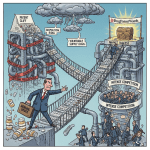
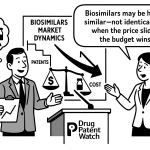
The U.S. generic drug market saved the healthcare system $445 billion in 2023 alone. Generics fill 90% of all prescriptions dispensed in this country. They consume just 13.1% of the national drug budget. By any measure of operational efficiency, generic competition is the single most effective cost-containment mechanism in American medicine.
And yet, the system routinely fails patients, fragments supply chains, rewards anti-competitive behavior, and leaves hundreds of billions in potential savings stranded in intermediary margins.
This guide unpacks all of it. The regulatory scaffolding that makes a generic drug possible, the specific IP mechanics that determine which molecules face competition and when, the economic anatomy of the patent cliff, the full evergreening technology roadmap, and the biosimilar frontier where the next decade of savings will be won or lost. Each section includes the IP valuation context that pharma analysts and portfolio managers need to make accurate, defensible market-entry calls.
Part I: The Regulatory Foundation of Generic Competition
The cost-saving power of generic drugs is not an accident of market economics. It is the engineered output of a legal and scientific architecture built over four decades, starting with the Drug Price Competition and Patent Term Restoration Act of 1984 (the Hatch-Waxman Act) and refined continuously through FDA guidance, court decisions, and Congressional action.
Understanding that architecture is prerequisite to evaluating generic market opportunity, because every generic drug program lives or dies on two questions: Can the molecule be proven bioequivalent? And can the patent estate be cleared in time to matter financially?
Section 1: What the FDA Actually Requires When It Approves a Generic Drug
The Reference Listed Drug Standard and the ANDA Pathway
A generic drug, within FDA’s regulatory framework, is not a cheaper or lesser product. It is a pharmaceutical product approved under an Abbreviated New Drug Application (ANDA) by demonstrating that it is the same as its Reference Listed Drug (RLD) in active pharmaceutical ingredient (API), strength, dosage form, and route of administration.
The ANDA pathway is ‘abbreviated’ in a specific and consequential sense: the applicant does not repeat the original New Drug Application’s full clinical program. The FDA’s prior finding that the brand-name drug is safe and effective stands. The ANDA manufacturer’s burden is to demonstrate that its product is bioequivalent to the RLD, that manufacturing meets Current Good Manufacturing Practice (cGMP) standards, and that labeling mirrors the approved label except for permissible carve-outs for patented indications.
That regulatory shortcut is the primary source of generic cost advantage. A full NDA clinical program can cost $1 billion to $3 billion and consume 10 to 15 years. An ANDA program, in most cases, costs $1 million to $5 million and takes three to four years from formulation development to approval. The FDA reviews ANDAs in a typical 30-month window, though this runs concurrently with any patent litigation triggered by a Paragraph IV (PIV) certification.
Key ANDA submission components include extensive API and excipient characterization, a full manufacturing process description, stability data confirming shelf-life parity with the RLD, and a patent certification for each Orange Book-listed patent. All submissions now travel through the FDA Electronic Submissions Gateway in eCTD format.
Bioequivalence: The 90% Confidence Interval Standard Explained
The term ‘bioequivalence’ describes a specific statistical finding: that the 90% confidence interval (CI) of the ratio of the generic product’s pharmacokinetic parameters (AUC and Cmax) to those of the RLD falls entirely within 80% to 125%.
This is not, as a persistent myth holds, a license for up to 20% less drug or 25% more drug to reach systemic circulation. The 90% CI constraint is far tighter than a simple range allows. For the entire confidence interval to sit inside the 80-125% window, the observed geometric mean ratio must sit extremely close to 1.0. FDA data across approved ANDAs shows an average AUC difference of approximately 3.5% between approved generics and their RLDs. That magnitude of inter-product variability is comparable to, and often smaller than, the variability observed between different manufacturing lots of the same brand-name drug.
Inactive ingredients (excipients) are permitted to differ from the RLD, subject to evidence that the differences do not affect overall performance, safety, or bioavailability. U.S. trademark law also prohibits the generic from replicating the RLD’s trade dress, meaning color, shape, and markings can and do vary. This creates visual differences that have no clinical significance but produce measurable patient perception effects, an issue addressed in Part III.
An authorized generic (AG) sidesteps all of these perception issues. An AG is the brand-name drug itself, distributed under a private label and sold at generic pricing, manufactured on the same line to the same specification as the branded product. AGs represent a distinct strategic instrument, and their deployment is covered in depth in Section 5.
IP Valuation: What the RLD’s Patent Portfolio Is Actually Worth
For the IP team or portfolio manager, the critical insight from the ANDA framework is that the RLD’s patent estate, as listed in the FDA Orange Book, is the primary determinant of the timing and economics of any generic entry program.
Orange Book patents fall into two categories with materially different IP valuations. Composition-of-matter (CoM) patents covering the active molecule itself are the highest-value assets in any pharmaceutical portfolio: they typically grant approximately 20 years of nominal protection from filing date, with Patent Term Extension (PTE) available under Hatch-Waxman to restore time lost during FDA review, up to a maximum of five additional years, capped at 14 years of remaining exclusivity post-approval. A CoM patent on a $5 billion annual revenue drug, with a full PTE applied, can represent $25 billion to $75 billion in net present value, depending on discount rate, anticipated biosimilar or generic competition, and therapeutic area.
Formulation, method-of-use, and process patents, the secondary layer of the patent estate, carry substantially lower individual IP valuations, but their collective effect, the ‘patent thicket,’ is highly material to generic entry timing and litigation cost. A secondary patent with a 2030 expiry on a $3 billion drug need not be technically strong to be economically powerful: the cost of challenging it through inter partes review (IPR) at the Patent Trial and Appeal Board (PTAB) or district court litigation can exceed $10 million per defendant, enough to delay entry by three to five years, which at standard NPV discount rates can represent a multi-hundred-million-dollar transfer of value from generic entrants to the brand company.
The practical valuation framework for any ANDA target therefore requires assigning probability-weighted present values to each listed patent, factoring in PIV challenge cost, estimated litigation duration, and the revenue impact of delayed entry. Platforms like DrugPatentWatch provide the raw data architecture for this analysis.
Key Takeaways: Section 1
The ANDA pathway creates a structurally lower development cost baseline, typically 99% cheaper than a full NDA program, and that cost advantage is the source of generic savings, not any compromise on API quality or manufacturing standards. Bioequivalence is proven at an average inter-product difference of 3.5% AUC, not 20%. The Orange Book patent estate, specifically the distinction between CoM patents with PTE and secondary thicket patents, is the most important variable in any generic entry timing model. IP teams should value each listed patent separately, using PIV challenge economics and revenue-at-risk calculations, before committing to an ANDA filing strategy.
Section 2: The Hatch-Waxman Act: Forty Years of Grand Bargain
The 1984 Design Intent and Its Structural Logic
The Drug Price Competition and Patent Term Restoration Act of 1984, co-authored by Senator Orrin Hatch (R-UT) and Representative Henry Waxman (D-CA), resolved a specific market failure. Generic manufacturers faced a prohibitively difficult market entry path. They were required, under existing law, to conduct independent clinical trials to prove safety and effectiveness for drugs that had already cleared the NDA process for the brand company. Predictably, they did not: generic drugs accounted for only 19% of U.S. prescriptions in 1984, despite many blockbuster drugs having lost patent protection years earlier.
The Act’s core structural logic was a bilateral bargain. Generic manufacturers received the ANDA pathway, which eliminated the duplicative clinical burden and substituted a bioequivalence standard. They also received a ‘safe harbor’ provision under 35 U.S.C. 271(e)(1), which shields them from patent infringement liability for activities reasonably related to preparing and submitting a regulatory filing, including manufacturing clinical and bioequivalence test batches. Without the safe harbor, brand companies could have used pre-market activities to trigger litigation and prevent ANDA submission entirely.
In exchange, brand manufacturers received two forms of protection. First, Patent Term Extension (PTE) under 35 U.S.C. 156, which restores up to five years of patent life lost during the FDA regulatory review period, with a ceiling of 14 years of remaining exclusivity post-NDA approval. Second, a tiered system of data exclusivities tied to specific types of clinical investment: five years for new chemical entities (NCEs), three years for applications supported by new clinical investigations for a new indication, new dosage form, or new route of administration, and, under the Biologics Price Competition and Innovation Act (BPCIA) of 2009, twelve years for reference biologics. These exclusivities run independently of patents and bar the FDA from approving an ANDA or abbreviated BLA (aBLA) during their operative term regardless of patent status.
The Paragraph IV Certification Mechanism and Its Strategic Consequences
The Hatch-Waxman Act’s most tactically significant provision is the Paragraph IV (PIV) certification. When an ANDA applicant believes that one or more Orange Book-listed patents are invalid, unenforceable, or will not be infringed by the generic product’s marketing, it files a PIV certification for each such patent and simultaneously serves notice on both the patent holder and the NDA holder.
That service triggers the brand company’s right to file a patent infringement suit within 45 days. If the brand company files suit, the FDA is automatically stayed from approving the ANDA for 30 months (or until a court resolves the litigation in the generic’s favor, whichever comes first). This 30-month stay is a critical strategic lever for brand companies: it buys 30 months of additional exclusivity for the cost of filing a complaint, regardless of the patent’s actual validity or the strength of the infringement argument.
The practical consequence is that every PIV filing initiates an adversarial proceeding with eight-figure cost implications for both sides. Brand companies have strong incentives to list patents broadly in the Orange Book to maximize stay coverage. Generic companies have strong incentives to challenge listings they view as invalid or not directed to the drug product, and increasingly pursue PTAB inter partes review (IPR) as a faster, cheaper alternative to district court litigation.
The 180-day first-filer exclusivity, available to the first substantially complete ANDA applicant with a PIV certification, creates an additional strategic dimension. During the 180-day window following first commercial marketing of the first-filer generic, the FDA is barred from approving any subsequent ANDAs for the same drug. This exclusivity functions as a six-month duopoly with the brand, during which the first-filer can price its generic at 20% to 30% below the brand price rather than the 80% to 95% discounts that emerge under multi-competitor conditions. A first-filer exclusivity on a $1 billion annual revenue drug translates to roughly $100 million to $200 million in incremental gross profit during the exclusivity window.
IP Valuation: The First-Filer Exclusivity as a Balance Sheet Asset
Generic pharmaceutical companies treat first-filer 180-day exclusivities as contingent intangible assets. The precise valuation methodology treats the exclusivity as the net present value of the incremental margin earned during the 180-day window, probability-weighted by the likelihood of successfully clearing the PIV litigation or reaching settlement.
For a drug generating $2 billion in annual brand revenue with an expected generic entry price at 75% of the brand price, a 50% generic market share capture during the exclusivity window generates approximately $375 million in revenue over 180 days. At a 35% gross margin on that revenue (typical for a first-filer generic), the exclusivity is worth roughly $130 million in gross profit before litigation costs. With PIV litigation costs averaging $5 million to $15 million per case through trial, the net-of-litigation exclusivity value on a $2 billion drug is approximately $115 million to $125 million. Portfolio managers should recognize that this value is contingent and subject to forfeiture under Hatch-Waxman’s exclusivity forfeiture provisions, which can be triggered by failure to obtain tentative approval within 30 months, failure to market within the specified window, or certain settlement terms.
Large generic manufacturers, Teva, Viatris, Sun Pharma, and Hikma, derive a meaningful portion of their annual earnings from first-filer exclusivities, making Orange Book monitoring and PIV strategy a core corporate finance function, not merely a legal one.
40 Years On: The Legacy Data
The Act’s impact on prescription mix is unambiguous. Generic utilization rose from 19% of U.S. prescriptions in 1984 to over 90% today. No comparable market has achieved this penetration rate: the OECD average generic utilization rate is approximately 41%, less than half the U.S. level. The mechanism is straightforward. No other developed economy built a comparably aggressive ANDA pathway with equivalent PIV litigation incentives. The result is more generic manufacturers per molecule, faster multi-competitor entry, and steeper price erosion curves than anywhere else in the world.
The Act also, inadvertently, created a high-value information market. The complexity of Orange Book patent certifications, PIV filings, exclusivity periods, and litigation outcomes requires continuous professional intelligence to navigate. That complexity is why specialist platforms tracking patent expiration, ANDA submission history, PIV certification status, and litigation outcomes have become indispensable to generic business strategy.
Key Takeaways: Section 2
The ANDA pathway, the safe harbor provision, and the PIV 30-month stay are the three structural mechanisms that define generic entry timing and cost. The 180-day first-filer exclusivity is a monetizable IP asset with precise NPV valuation characteristics, and portfolio managers should model it as a probability-weighted contingent intangible. The distinction between patent protection and data exclusivity is non-trivial: a drug can have expired patents but active NCE exclusivity, completely blocking ANDA approval regardless of IP clearance. At 40 years old, the Act’s utilization record (19% to 90%) represents the most successful managed market competition framework in U.S. pharmaceutical history.
Investment Strategy: Part I
Generic companies entering a new ANDA program must value the patent estate’s PIV risk-adjusted timeline before committing to formulation development expenditure. The Orange Book carve-out strategy, filing ANDAs that deliberately exclude patented indications (‘skinny labeling’), can reduce litigation exposure but limits commercial potential. Investors evaluating generic pipelines should prioritize first-filer PIV certifications on drugs with high revenue concentration in a single indication, where a successful PIV challenge maximizes the revenue capture during the 180-day exclusivity window. For brand companies, the PTE application is one of the highest-return IP activities available: a successful PTE can add years to market exclusivity for a fraction of the cost of discovering a new molecule.
Part II: The Economic Engine of Savings
Section 3: Quantifying the Impact — Trillions in Verified Savings
A Decade of Consistent Deflation
The IQVIA data compiled annually for the Association for Accessible Medicines (AAM) tracks a clear and large number: generics and biosimilars saved $445 billion from the U.S. healthcare system in 2023. For the decade ending in 2023, the cumulative saving reached $3.1 trillion.
Annual savings have grown consistently over the past decade. The 2016 figure was $253 billion. By 2020, it reached $338 billion. In 2022, $408 billion. The 2023 record of $445 billion represented roughly a 9% year-over-year increase, driven by biosimilar scale-up in the adalimumab (Humira) market, continued utilization growth in legacy generic categories, and the maturation of oncology oral generics.
This deflationary track record is structurally reliable because it is driven by the predictable mechanics of patent cliff timing, not policy discretion. As long as brand drugs lose patent protection on a scheduled basis and the ANDA pipeline clears, savings will continue to accumulate.
Payer-Specific Savings: Medicare, Medicaid, and Commercial Plans
The savings distribute across payers with specificity. Medicare, the largest single purchaser of prescription drugs in the country, saved $77 billion in 2016, rising to $137 billion in 2023. On a per-beneficiary basis, the 2023 Medicare generic savings equated to $2,672 per enrollee. That number matters for policy purposes: it shows that generic competition is delivering a meaningful subsidy equivalent to every Medicare beneficiary each year, an amount that would require a substantial tax increase to replace if generics disappeared.
Commercial health plans saved $206 billion in 2023. Medicaid, while not disaggregated separately in all AAM reports, benefits from supplemental rebate programs that layer additional savings on top of generic pricing, making generics doubly valuable for state programs.
For patients, the out-of-pocket experience is the most tangible data point. The average generic prescription copay was $7.05 in 2023. The average brand copay the same year ran to multiples of that. 93% of all generic prescriptions in 2023 filled for a patient copay of $20 or less. That price accessibility is the direct consequence of multi-competitor generic markets, where six or more manufacturers compete and prices fall to 95% or more below the original brand price.
The 90/13 Structural Disparity
The single most policy-relevant statistic in U.S. pharmaceutical economics is what might be called the 90/13 ratio: 90% of prescriptions are generic, but generics account for only 13.1% of total drug spending. The mirror of that equation, that the remaining 10% of brand prescriptions account for 86.9% of total drug expenditure, frames the actual scope of the drug pricing problem with precision.
This disparity has grown sharper over time. Generic share of spending was 26% in 2016. It fell to 18.2% in 2021, 17.5% in 2022, and 13.1% in 2023. The directional trend reflects two simultaneous forces: continued price erosion in the generic market (pushing generic spend down), and continued price inflation in the on-patent brand market (pulling brand spend up). The U.S. does not have a generalized drug pricing problem. It has a concentrated, on-patent brand pricing problem, and the generic market is solving its portion of the equation efficiently.
When viewed as a percentage of total U.S. healthcare expenditure, generic and biosimilar drug spending was approximately 1.2% of all healthcare costs in 2023. The entire category of workhorse medicines, filling 90% of prescriptions, consumes less than the administrative overhead of most large hospital systems.
Where the System Fails: Macro Savings, Micro Failures
The aggregate savings figure masks a structural failure at the patient level. Pharmacy benefit managers (PBMs) can create conditions where patients face higher copays for generic drugs than for brand-name drugs on the same formulary, a phenomenon known as adverse tiering. One analysis found that patients placed on higher brand tiers saw their annual drug spending increase by 135%, even though the average acquisition price of their medications fell 38% during the same period. The system saved money. The savings were captured by supply chain intermediaries. The patient paid more.
The Medicare $2 Drug List (M2DL) Model, an HHS initiative designed to standardize low-cost access to a defined list of high-value generics, is a direct policy response to this disconnect. Its existence as a specific federal program indicates that system-level savings and patient-level access are not the same thing, and that PBM formulary design is actively working against patient benefit for a measurable subset of the generic market.
Key Takeaways: Section 3
$445 billion in 2023 savings is real, measurable, and consistent. The 90/13 ratio is the cleanest framing of the U.S. drug price problem: brand drugs in the 10% prescription minority consume 87% of drug expenditure. But macro savings and patient-level access are not equivalent, and PBM formulary practices represent the primary structural gap between them. Portfolio managers should note that the steady decline in generic share of total drug spending (from 26% in 2016 to 13% in 2023) reflects relative brand price inflation, not generic market weakness.
Section 4: The Mechanics of Price Erosion and the Patent Cliff
Competition Curves: How Many Entrants Does It Take?
Generic price erosion follows a predictable, dose-response relationship with the number of market entrants. FDA analysis of Average Manufacturer Price (AMP) data defines the competition-price curve with specificity:
One generic competitor: prices fall 39% below the pre-entry brand price on average.
Two generic competitors: prices fall 54% below the brand price.
Four generic competitors: prices fall 79% below the brand price.
Six or more generic competitors: prices fall more than 95% below the brand price.
These figures have significant implications for policy and strategy. The steepest absolute price reduction occurs at the transition from zero to one competitor (a 39-point drop). The next sharpest incremental decline occurs between two and four competitors. Beyond six, the marginal price-reduction benefit of additional entrants is modest because prices are already near manufacturing cost-plus. This means that for drugs with high public health value and large patient populations, the goal is to reach six or more quality manufacturers, not merely to approve one or two.
Number of Generic Competitors
Average Price Reduction vs. Brand (%)
1
39%
2
54%
4
79%
6+
>95%
Source: FDA analysis of Average Manufacturer Prices (AMP).
The first-filer generic, protected by 180-day exclusivity, typically prices at the high end of the generic discount range, 20% to 40% below brand, capturing maximum margin during the exclusivity window. Once exclusivity expires and multi-competitor entry begins, prices collapse rapidly toward the 80%-to-95% discount range, and per-unit margins compress to levels that require scale to sustain.
The Patent Cliff: Revenue Anatomy of a Blockbuster’s Expiry
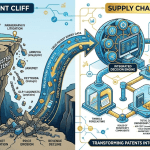
The ‘patent cliff’ is the rapid revenue collapse that occurs when a blockbuster drug loses market exclusivity. Brand-name drug revenues can fall 80% to 90% within 12 months of first generic entry. The speed and severity of the decline depends on the number of immediate entrants, the degree to which the market has been pre-seeded with authorized generics, and whether the brand company has executed any successful therapeutic switching strategies.
Pfizer’s Lipitor (atorvastatin) is the canonical case study. At the time of its November 2011 patent expiry, Lipitor was generating approximately $5 billion annually in U.S. sales, down from a peak of $13 billion globally in 2006. Within two years of generic entry, atorvastatin generic sales ran at a fraction of Lipitor’s former brand revenue, and Pfizer’s U.S. Lipitor revenues had fallen by more than 80%. The rapidity of this decline is not exceptional. It is the norm for primary-care drugs in large, well-characterized therapeutic categories where prescribers can substitute generics with low clinical friction.
Merck’s pembrolizumab (Keytruda) is the next landmark patent cliff. With over $29 billion in 2023 global sales, Keytruda is the world’s highest-revenue oncology drug. Its core composition-of-matter patents begin expiring in the U.S. around 2028. Unlike Lipitor, Keytruda is a biologic, meaning it will face biosimilar competition rather than small-molecule generic entry, and the competitive dynamics will be materially different, as discussed in Part IV.
IP Valuation: Lipitor and the Atorvastatin Franchise
Atorvastatin’s IP history provides a detailed anatomy of brand drug IP valuation across a product lifecycle.
Pfizer’s original atorvastatin composition-of-matter patent (US 4,681,893) was filed in 1986 and expired in 2009. Pfizer received a Patent Term Extension under Hatch-Waxman, extending effective exclusivity to November 2011. The drug also carried pediatric exclusivity, adding six months past the base expiration, to May 2012 in some formulations. Multiple secondary patents covered crystalline forms, calcium salt formulations, and specific manufacturing processes, listing in the Orange Book and generating PIV challenges from at least 20 generic manufacturers.
At a peak revenue run rate of $5 billion annually in the U.S. and a hypothetical weighted average cost of capital of 8%, the aggregate IP portfolio protecting Lipitor represented an enterprise value on the order of $35 billion to $45 billion, attributable primarily to the CoM patent and PTE extension. The secondary patent portfolio added perhaps two to three years of high-revenue protection against early generic entry, contributing an additional $8 billion to $12 billion in cumulative revenue that would otherwise have been lost to multi-competitor erosion. This illustrates the economic incentive structure behind secondary patent filing: even patents with a low probability of surviving PIV challenge create enough delay risk to justify the filing and maintenance cost.
IP Valuation: Keytruda and the Pembrolizumab Cliff (2028)
Pembrolizumab’s IP estate is the highest-value patent portfolio in global oncology. Merck’s core anti-PD-1 patents, including the antibody composition patent and key method-of-treatment patents covering pembrolizumab’s numerous FDA-approved indications (spanning 40+ across multiple tumor types as of early 2026), are scheduled to expire across a 2028 to 2034 window. The layered structure of this IP estate means the cliff is not a single event but a staged sequence.
The pembrolizumab CoM patent covers the specific antibody amino acid sequence and its humanized variants. Method-of-treatment patents cover individual indication-specific uses, any one of which can be listed in the Orange Book and extend exclusivity for that use. A biosimilar applicant seeking to market a pembrolizumab biosimilar for all current indications must either design around all active method-of-treatment patents or challenge each, a litigation effort of extraordinary cost and duration. For purposes of IP valuation, the estimated NPV of Merck’s pembrolizumab IP estate in early 2026, assuming a 2028 entry point for the first biosimilar on initial indications, a 10-year revenue tail, and standard oncology biosimilar discount rates of 30% to 50% below reference pricing, is in the range of $80 billion to $120 billion. That valuation makes pembrolizumab IP the most consequential single pharmaceutical asset facing competitive cliff conditions in the current decade.
Portfolio managers should watch Merck’s patent prosecution activity at the USPTO through 2027, and any IPR petitions filed by prospective biosimilar entrants (Coherus BioSciences, Samsung Bioepis, Celltrion, and others), as leading indicators of cliff timing.
International Context: Why U.S. Generic Prices Beat Canada But Brand Prices Lead the World
The U.S. pharmaceutical market is genuinely bifurcated by patent status. For on-patent brand drugs, a 2022 HHS analysis found U.S. gross prices were 422% of the average price in 33 OECD comparison countries. For unbranded generics, U.S. prices were only 67% of the same OECD average. U.S. generic prices are consistently lower than Canadian generic prices, which are roughly twice as high on a per-unit basis due to a smaller manufacturer pool and less intense competition.
This bifurcation is a direct product of divergent policy choices. Other OECD countries apply centralized price negotiation or reference pricing to on-patent drugs, holding brand prices near their own cost-plus-margin ceilings. The U.S. resists centralized price controls for on-patent drugs but runs the world’s most aggressive generic competition system. The Inflation Reduction Act of 2022 introduced Medicare drug price negotiation for a limited set of high-cost drugs, with negotiated prices taking effect from 2026, representing the first structural modification to the bifurcated U.S. model since Hatch-Waxman.
Metric
United States
OECD Comparison Countries (Average)
Brand Drug Prices (% of OECD average)
422%
100%
Unbranded Generic Prices (% of OECD average)
67%
100%
Generic Prescription Volume (% of total Rx)
90%
41%
Source: 2022 HHS/RAND International Price Comparison.
Key Takeaways: Section 4
Six or more generic competitors produce price reductions exceeding 95%. The patent cliff for small-molecule drugs is rapid and predictable; brand revenue declines of 80% within 12 months are standard. The CoM patent plus PTE is the highest-value single asset in any brand portfolio, while secondary patent thickets contribute meaningful but lower incremental IP value. Pembrolizumab’s 2028 patent cliff is the most financially significant pharmaceutical IP event of the current decade. The U.S. generic price advantage over Canada reflects the hyper-competitive ANDA market, confirming that the Hatch-Waxman framework functions as designed for off-patent molecules.
Investment Strategy: Part II
Investors tracking patent cliff opportunities should run a five-variable screen: (1) CoM patent and PTE expiry date, (2) number of ANDA filers with PIV certifications, (3) 180-day first-filer exclusivity status and identity, (4) brand company’s authorized generic deployment history, and (5) market revenue concentration in a single indication (higher concentration means a cleaner first-filer economics calculation). For biosimilar programs, add a sixth variable: the reference biologic’s interchangeability designation status with FDA, which directly affects pharmacy-level substitution rates and ramp speed. For the Keytruda biosimilar opportunity specifically, entry timing probability distributions should account for multi-year IPR proceedings and the staged indication-by-indication erosion pattern unique to PD-1 inhibitors.
Part III: Anti-Competitive Forces and Structural Failures
Section 5: The Brand Company Playbook for Delaying Generic Entry
Brand pharmaceutical companies operate under a fundamental financial reality: the patent cliff will arrive, and when it does, U.S. revenue typically collapses by 80% or more within 12 months. The management imperative to delay that event is intense. The strategies available to delay it are well-documented, legally contested, and economically consequential.
Patent Thickets: Construction, Cost, and the Humira Case Study
A patent thicket is a dense cluster of secondary, tertiary, and auxiliary patents filed around a drug after the core CoM patent has been granted, covering formulation variants, salt forms, crystal polymorphs, manufacturing processes, dosing regimens, patient selection methods, device configurations, and specific metabolite applications. The thicket’s commercial function is not primarily to protect novel innovation. It is to multiply the litigation cost and timeline facing generic or biosimilar entrants.
The median number of patents listed in the FDA Orange Book for a new drug tripled between 1985 and 2005. That trend has continued. It is now common for a major brand drug to accumulate 40 to 100 or more secondary patents over its commercial life.
AbbVie’s adalimumab (Humira) is the most comprehensively documented patent thicket in pharmaceutical history. The adalimumab program generated over $20 billion in U.S. annual revenue at peak. AbbVie’s strategy was to surround the core CoM patent, which expired in 2016, with a portfolio of more than 250 patents. These covered antibody formulations, concentration strengths (40mg/mL vs. 100mg/mL), citrate-free formulations, prefilled syringe devices, and manufacturing process improvements. The cumulative effect was to delay U.S. biosimilar competition until 2023, seven years beyond the CoM patent’s expiry, despite the EMA clearing biosimilar entry in Europe as early as 2018.
AbbVie did not win this delay through adjudicated patent validity. It achieved it through settlement: AbbVie reached bilateral settlement agreements with each biosimilar entrant, granting licenses that permitted European entry in 2018 but U.S. entry only from January 2023. The agreed entry dates, rather than court-adjudicated invalidity findings, structured the competitive timeline. The seven-year U.S. delay, during which adalimumab faced no meaningful competition, was worth an estimated $50 billion or more in cumulative U.S. revenue that would otherwise have faced biosimilar price erosion.
For IP teams and portfolio managers, the Humira thicket is the template against which all large-biologic IP strategies are measured. AbbVie invested an estimated $300 million to $500 million in secondary patent prosecution over the course of the adalimumab lifecycle. The return on that IP investment, in terms of revenue protection, was roughly 100:1. No other R&D investment in the pharmaceutical industry produces comparable capital efficiency.
IP Valuation: The Humira Patent Estate
The adalimumab patent estate is a case study in IP valuation at the portfolio level. At peak U.S. exclusivity, the full patent portfolio, including both the core antibody patents and the secondary thicket, carried an estimated risk-adjusted NPV of $120 billion to $150 billion, which is why AbbVie spent aggressively on prosecution and litigation: the marginal value of each additional year of U.S. exclusivity on a $20 billion revenue drug is approximately $14 billion to $17 billion in pre-tax income (at typical pharma operating margins). The settlement terms granting 2023 U.S. entry were structured as a license agreement that effectively monetized the remaining thicket portfolio, converting patent litigation risk into a defined revenue stream rather than allowing court adjudication to invalidate key patents. This settlement-as-monetization structure is the current best practice for large-molecule IP lifecycle management.
Evergreening: The Technology Roadmap
‘Evergreening’ is the umbrella term for a set of commercial and IP strategies designed to extend the revenue lifecycle of a pharmaceutical brand beyond its primary patent expiry. Practitioners use several distinct tactics, often in combination.
The pharmaceutical evergreening technology roadmap includes the following components, typically deployed in a sequenced lifecycle management strategy:
Phase 1 (8 to 12 years pre-expiry): Core IP maximization. File CoM patent with maximum claim scope. Apply for PTE immediately upon NDA approval. File pediatric studies for six-month pediatric exclusivity. Begin secondary patent prosecution (formulation, polymorph, method-of-use) to build thicket.
Phase 2 (5 to 8 years pre-expiry): Extended-release and formulation switching. Launch an extended-release (XR) or once-daily version of the drug. Invest in DTC marketing to shift patient base from twice-daily immediate-release (IR) to the XR version. Once the patient base is predominantly on XR, the immediate-release formulation approaching generic entry has a smaller commercial residual. This is ‘product hopping’: the market migrates to the protected product just as competition arrives for the original.
Phase 3 (3 to 5 years pre-expiry): Indication expansion and method-of-use patents. Pursue additional clinical indications, generating new three-year marketing exclusivities and new method-of-use patents. Each new indication listed in the Orange Book requires a separate PIV challenge, multiplying the litigation cost for full-label generic entry. A new indication also repositions the drug commercially, extending prescriber attachment.
Phase 4 (1 to 3 years pre-expiry): Fixed-dose combinations, pediatric formulations, patient support ecosystem. Combine the active molecule with a complementary agent in a fixed-dose combination (FDC), which carries its own patent protection and requires separate ANDA filings. Launch liquid or chewable formulations for pediatric use. Build patient assistance programs and branded adherence ecosystems that create switching costs.
Phase 5 (at or near expiry): Authorized generic deployment. Launch an authorized generic on Day 1 of generic entry to compete directly with first-filer generics, reduce the market share available to independent generics, and capture a revenue stream in the off-patent category.
Not every phase is available or appropriate for every drug. But the cumulative revenue protection from executing the full roadmap can extend effective market exclusivity by five to ten years beyond the primary CoM patent expiry.
Pay-for-Delay: The Reverse-Payment Settlement Problem
A reverse-payment (pay-for-delay) settlement occurs when a brand company facing a PIV patent challenge pays the generic challenger a sum of money (or provides comparable non-monetary value) in exchange for the generic agreeing to delay market entry to a specified date. The nomenclature reflects the financial inversion: in normal litigation, defendants pay plaintiffs to settle. Here, the plaintiff (brand company) pays the defendant (generic company) to make the case go away and keep the generic off the market.
The FTC has consistently estimated that pay-for-delay settlements cost U.S. consumers and payers approximately $3.5 billion annually in elevated drug prices. From the brand company’s perspective, the payment is rational: if the drug earns $3 billion annually, and a PIV challenge could bring generics to market 3 years early, the revenue at risk is $9 billion. Paying a generic challenger $200 million to delay entry by 3 years generates an approximately 45:1 return on the settlement payment.
The legal landscape shifted with the 2013 Supreme Court decision in FTC v. Actavis, Inc., which held that reverse-payment settlements are not immune from antitrust scrutiny. A ‘large and unjustified’ payment is presumptively anti-competitive. Post-Actavis, explicit cash payments in these settlements declined materially. However, the FTC documents continued use of non-cash equivalent value, including co-promotion agreements, distribution rights, and supply agreements, as settlement currency. The FTC reviews more than 200 pharmaceutical patent settlements annually; the vast majority are filed under the Medicare Modernization Act of 2003 reporting requirement.
For generic portfolio managers, the pay-for-delay settlement represents a choice between certainty (a defined market entry date, cash consideration for waiting) and opportunity (earlier entry if the PIV challenge succeeds at trial). The 30-month stay period creates the negotiating leverage, since the brand company knows the clock is running and that a court loss could accelerate generic entry at any point after the stay expires.
Authorized Generics as Competitive Deterrence
The brand company’s authorized generic (AG) strategy is structurally designed to reduce the profitability of the first-filer generic’s 180-day exclusivity window. By launching an AG on Day 1 of generic entry, often through a subsidiary or designated partner, the brand creates a de facto three-way market immediately: brand product, independent first-filer generic, and AG. The AG typically prices between the brand and the independent generic, capturing patients who want price sensitivity but stay on the brand supply chain.
For the first-filer generic, the AG’s presence reduces market share from the high end of the exclusivity period range (potentially 50% to 70% generic market share) down toward 30% to 40%, with corresponding impact on exclusivity-period gross profit. This deterrence effect is intentional. It reduces the financial reward for challenging the patent and, over time, reduces the volume of PIV challenges filed. The AG strategy thus simultaneously captures off-patent revenue for the brand company and discourages future generic entry challenges.
Key Takeaways: Section 5
Patent thickets, product hopping, pay-for-delay settlements, and authorized generics are distinct but often combined strategies, each with a specific IP valuation and competitive deterrence logic. The Humira thicket delivered an estimated 100:1 return on prosecution investment through a seven-year U.S. biosimilar delay. The evergreening technology roadmap is a sequential five-phase program that can extend effective exclusivity by 5 to 10 years. Post-Actavis, reverse-payment settlements have structurally migrated from cash payments to non-cash equivalent value, which is harder to detect but equally anti-competitive in effect. The AG on Day 1 of generic entry is the single most effective tactical response to first-filer 180-day exclusivity.
Section 6: Structural Failures in the Generic Market
The PBM Incentive Misalignment Problem
Pharmacy Benefit Managers (PBMs) are intermediaries who manage prescription drug benefits for insurers, employers, and government payers. They occupy a structurally powerful position in the pharmaceutical supply chain: they negotiate rebates with brand manufacturers, design formularies that determine drug tier placement, and process prescription claims. The three largest PBMs (CVS Caremark, Express Scripts, and OptumRx) collectively manage benefits for the majority of commercially insured Americans.
The rebate system creates a documented incentive misalignment. Brand manufacturers pay PBMs rebates calculated as a percentage of the drug’s list price. The higher the list price, the larger the rebate. This means a PBM’s rebate revenue is positively correlated with brand drug list prices and negatively correlated with generic utilization. A generic drug with a list price of $0.50 per pill generates no meaningful rebate. A brand drug with a $50 list price and a 25% rebate generates $12.50 per pill in PBM rebate income. The PBM’s financial incentive is to prefer the brand drug on the formulary.
This incentive manifests in formulary design through ‘rebate walls’: contractual arrangements where brand companies agree to high rebates in exchange for preferred formulary placement, explicitly or implicitly excluding competing generics and biosimilars from preferred tiers. The consequence is adverse tiering, where the lower-cost generic product is placed on a non-preferred tier requiring a higher patient copay than the brand product on the preferred tier. The patient is penalized financially for choosing the option that costs the system less.
One documented consequence: shifting generics to higher brand tiers increased annual patient spending by 135% on affected drugs, even as average acquisition prices fell 38%. This is not a marginal effect. It is a systematic redistribution of savings from patients to supply chain intermediaries.
Drug Shortages and the Race to the Bottom
The same competitive intensity that drives generic prices below $1 per unit also drives manufacturers out of markets. The economics of sterile injectable generics, many of them essential hospital medicines, complex oral dosage forms, and drugs with small patient populations, are frequently incompatible with sustainable manufacturing at market-clearing prices.
When margins collapse and a manufacturer exits, the remaining supplier pool may consist of one or two companies. A single production disruption at a sole-source generic manufacturer can create an immediate shortage of a critical drug. More than 60% of the drugs on the FDA’s drug shortage list are priced at $1 per unit or less. The causal logic is direct: the market’s success in driving prices to cost-floor levels has made the production of many essential medicines economically unviable for a competitive set of manufacturers.
The FDA shortage list has grown materially over the last decade. Hospital formulary managers, Group Purchasing Organizations (GPOs), and state Medicaid programs have all identified generic drug shortages as a patient safety risk. The 2020 COVID-19 pandemic exposed additional fragility in the global API supply chain, with approximately 80% of U.S. API sourcing concentrated in India and China. A single regulatory action by the Central Drugs Standard Control Organisation (CDSCO) in India, or a manufacturing incident at a Hyderabad or Ahmedabad API facility, can cascade through multiple generic drug supply chains simultaneously.
This creates what might be called a dual-market instability problem: the generic segment is simultaneously threatened by anti-competitive forces that keep some prices too high (patent thickets, pay-for-delay settlements) and by hyper-competitive forces that push other prices too low to be sustainable (sterile injectable race to the bottom). The market is not failing uniformly. It is failing at both tails.
Perception, Non-Adherence, and the Price-Quality Heuristic
Patient skepticism about generic drugs persists despite four decades of FDA equivalence standards and extensive clinical evidence of therapeutic interchangeability. Consumer research consistently shows that a material share of patients and physicians believe generics are less effective, take longer to act, or carry higher side-effect risk than their brand counterparts.
Two cognitive mechanisms drive this misperception. First, the price-quality heuristic: consumers across product categories associate lower price with lower quality. For medicines, this heuristic maps poorly onto reality, but it is deeply embedded and resists correction through abstract reassurance. Second, visible physical differences between generic and brand product (tablet color, shape, size, and coating differences required by trademark law) create ‘pill anxiety’ at refill, particularly among elderly patients managing multiple medications. When a patient receives a new-colored tablet without counseling, some fraction will question whether they received the correct drug, and some fraction of those will reduce or discontinue dosing.
The adherence effects are real but not uniformly directional. Studies show that lower copayments from generic substitution generally improve adherence for chronic conditions where cost is the primary barrier. A large retrospective study of commercially insured patients found that generic substitution improved adherence for hypercholesterolemia but was associated with lower adherence for hypertension, suggesting condition-specific dynamics. A separate study, examining steep price reductions in a policy context, documented a ‘paradox of access’ where increased generic availability was counterintuitively associated with reduced adherence, potentially reflecting disrupted routines or formulation changes alongside the price reduction. These findings resist a simple cost-access-adherence model and point to the need for patient education and pharmacist counseling as essential components of any generic substitution policy.
Key Takeaways: Section 6
PBM rebate mechanics actively work against the translation of generic cost advantages into patient savings. Adverse tiering is not a marginal phenomenon: it can increase patient out-of-pocket costs by 135% while acquisition costs fall 38%. Drug shortages are structurally concentrated in the lowest-priced generic categories (under $1 per unit), where competition has eliminated the manufacturing margin that would sustain supplier diversity. API supply chain concentration in India and China creates geopolitical fragility in the essential medicines supply. Generic adherence effects are real but condition-specific and not reducible to copay alone.
Investment Strategy: Part III
For generic portfolio managers, the strategic lesson of Part III is that pipeline selection must account for both anti-competitive exposure (patent thicket cost and delay risk) and post-entry structural risk (PBM formulary dynamics, market supply fragility). Drugs with concentrated patient populations on formularies managed by the three largest PBMs face specific rebate wall risk that can delay biosimilar or generic uptake even after market entry. For brand IP teams, the evergreening roadmap and AG deployment strategy together represent the highest-return IP investment available in the pre-cliff window. For institutional investors, the pharmaceutical company earnings most exposed to downside risk are those with single-drug revenue concentration and CoM patent expiries in the 2026 to 2030 window without a completed formulation-switching or indication-expansion program.
Part IV: Biosimilars, the Next Savings Frontier, and Policy Reform
Small-molecule drugs are synthesized through defined chemical reactions. Atorvastatin is always C33H34FN2O5•Ca. The synthesis pathway can be precisely replicated, and the resulting molecule can be proven identical by analytical chemistry. This is why generic bioequivalence means ‘same’ at the molecular level.
Biologics are different in kind. A biologic is typically a large protein, an antibody, a fusion protein, or a cytokine, produced in living cell lines (Chinese hamster ovary cells for monoclonal antibodies, Saccharomyces cerevisiae for some recombinant proteins, E. coli for simpler biologics). The cell line, culture conditions, harvest process, purification cascade, and formulation all contribute to the final molecule’s structural characteristics. Small variations in any step produce small but measurable differences in glycosylation patterns, charge variants, high-molecular-weight aggregates, and three-dimensional folding. Two batches of the same biologic from the same manufacturer are ‘highly similar’ but not identical. Two products from different manufacturers will exhibit greater structural heterogeneity.
The regulatory consequence is that a biosimilar cannot be, and is not required to be, ‘identical’ to its reference product. The FDA approval standard under the BPCIA is ‘biosimilarity’: high similarity with no clinically meaningful differences in safety, purity, and potency. Demonstrating biosimilarity requires a ‘totality of evidence’ package including extensive analytical characterization (structural and functional), animal toxicology studies if FDA deems necessary, pharmacokinetic/pharmacodynamic (PK/PD) clinical studies in healthy volunteers or patients, and typically at least one comparative efficacy and safety clinical trial.
The cost of a biosimilar development program ranges from $100 million to $300 million, versus $1 million to $5 million for a small-molecule ANDA. This higher development cost is the fundamental reason biosimilar price discounts are smaller than generic price discounts at market entry. The first biosimilar for a reference product typically enters at 15% to 30% below the reference product’s price. The generic first entrant, by comparison, enters at 20% to 40% below brand and then falls to 95% below with six or more competitors. Multi-competitor biosimilar markets mature to 50% to 60% below reference pricing, not 95%, because the development cost floor sets a structural minimum for sustainable pricing.
The BPCIA Framework: 12-Year Exclusivity and the Patent Dance
The Biologics Price Competition and Innovation Act (BPCIA), enacted as part of the Affordable Care Act in 2010, established the U.S. biosimilar approval pathway. It grants reference biologics 12 years of data exclusivity from the date of reference product approval, during which the FDA cannot approve a biosimilar application for that molecule regardless of patent status. This is four years longer than the five-year NCE data exclusivity available to small-molecule drugs, reflecting the higher development cost and clinical risk of biologic R&D programs.
The BPCIA also established the ‘patent dance’: a structured information exchange process through which the biosimilar applicant shares its manufacturing process with the reference product holder in exchange for the reference holder identifying which patents it considers infringed. The patent dance has been widely criticized as complicated, costly, and often gamed by reference product holders to delay litigation to near-market-entry. Many biosimilar applicants have opted to bypass the dance and litigate conventionally, accepting less certainty about the full patent landscape in exchange for faster resolution.
Interchangeability: The FDA vs. EMA Divergence
The BPCIA created a two-tier biosimilar classification in the U.S.: ‘biosimilar’ and ‘interchangeable biosimilar.’ To achieve interchangeability designation, a manufacturer must conduct additional switching studies demonstrating that patients can be alternated between the biosimilar and the reference product (and back) without increased safety or efficacy risk compared to patients maintained on either product alone. An interchangeable biosimilar can be substituted at the pharmacy level without prescriber intervention, the functional equivalent of generic substitution for small-molecule drugs.
The EMA takes a different position. All EMA-approved biosimilars are treated as interchangeable with their reference product by the scientific authorities, with automatic substitution authority delegated to individual EU member states for national determination. This approach avoids the U.S. system’s implicit implication that ‘non-interchangeable biosimilars’ are somehow less equivalent, a framing the FDA actively works to correct but has not fully succeeded in eliminating from clinical culture.
The practical consequence in the U.S. is that interchangeability designation accelerates pharmacy-level substitution and market penetration. Without it, biosimilar uptake depends entirely on prescriber and institutional formulary decisions, which are slower, more susceptible to brand detailing, and more vulnerable to rebate wall dynamics.
FDA is updating its interchangeability guidance to reduce the switching study burden, recognizing that the existing standard may be unnecessarily restrictive and that the accumulation of real-world safety data post-approval strengthens the scientific case for interchangeability without additional prospective studies.
Biosimilar Technology Roadmap: From IND to Commercial Scale
A biosimilar development program follows a defined sequence with specific technical milestones:
Phase 1 (Years 1 to 3): Analytical characterization and cell line development. The biosimilar manufacturer must comprehensively characterize the reference product’s primary structure (amino acid sequence), higher-order structure, post-translational modifications (especially glycosylation), charge variants, size variants, and biological activity. This analytical foundation, built using orthogonal analytical methods including mass spectrometry, NMR, dynamic light scattering, and cell-based potency assays, is the core of the biosimilarity demonstration. Cell line selection and upstream process optimization are completed in parallel.
Phase 2 (Years 2 to 4): Process development and scale-up. Upstream (cell culture) and downstream (purification) processes are optimized to produce a drug substance whose analytical fingerprint matches the reference product as closely as possible. Process development is the highest-skill component of biosimilar manufacturing: small variations in culture media, temperature, pH, and harvest timing produce structural differences that complicate biosimilarity demonstration.
Phase 3 (Years 3 to 5): Preclinical and early clinical studies. PK/PD comparability studies in healthy volunteers or relevant patient populations generate the core pharmacological data package. Animal toxicology studies are included if FDA deems them necessary based on the analytical similarity assessment.
Phase 4 (Years 4 to 6): Comparative clinical trial. A randomized, double-blind, equivalence-design clinical trial in a patient population sensitive to efficacy differences. The trial is designed with equivalence margins, not superiority endpoints, and must demonstrate that any differences in clinical outcome are within the pre-specified equivalence bounds.
Phase 5 (Years 5 to 7): Regulatory submission and review. The biosimilar BLA is submitted through FDA’s abbreviated pathway under Section 351(k) of the Public Health Service Act. FDA review typically takes 12 months from acceptance.
Phase 6 (Pre- and post-launch): Patent dance, litigation, and commercial launch preparation. PIV-equivalent patent challenges under the BPCIA biosimilar pathway, commercial manufacturing scale-up, and formulary negotiations with PBMs and GPOs proceed in parallel with regulatory review.
Total elapsed time from program initiation to commercial launch: 7 to 10 years at current industry norms. Total program cost: $100 million to $300 million, with higher-complexity biologics (glycoprotein products, PEGylated molecules, fusion proteins) toward the upper end.
IP Valuation: The Reference Biologic Franchise
For reference product holders, the biologic franchise’s IP value rests on four stacked protections: the 12-year BPCIA data exclusivity, the composition-of-matter patent plus any applicable PTE, secondary formulation and manufacturing process patents, and device patents covering prefilled syringes, auto-injectors, or other drug delivery configurations. These protections can stack to provide effective market exclusivity of 15 to 20 years from initial approval for well-managed biologic programs.
The device patent layer is increasingly significant. Auto-injector and prefilled syringe patents, often listed in the reference product’s Orange Book-equivalent (Purple Book) entry, require biosimilar manufacturers to either design around the device or secure a license. For biologics with patient-administered subcutaneous formulations, device patents represent a meaningful barrier to interchangeability designation, since switching studies typically require use of the same device configuration as the reference product.
For biosimilar developers, the IP valuation challenge is to estimate the residual value of the biosimilar market position after absorbing development, litigation, and launch costs and accounting for the compressed discount structure relative to small-molecule generics. A biosimilar entering an $8 billion annual reference market at a 25% discount and capturing 30% market share in the first two years of multi-competitor conditions generates approximately $600 million in annual revenue. At an operating margin of 20% (lower than small-molecule generics due to higher COGS), that is $120 million in annual operating income, against a development investment of $150 million to $250 million. The IRR on that investment is positive but requires a 4- to 8-year payback horizon, which means biosimilar program investment decisions are highly sensitive to launch timing risk.
Early Impact of U.S. Biosimilar Competition: The Adalimumab Market
Total U.S. biosimilar savings from 2015 through the end of 2023 reached $36 billion, with $12.4 billion attributed to 2023 alone. The 2023 acceleration reflects the delayed but then rapid entry of adalimumab biosimilars. By January 2023, when the first biosimilar agreements permitted U.S. launch, more than eight adalimumab biosimilars were approved or nearly approved, including products from Amgen (Hadlima), Samsung Bioepis/Organon (Hadlima and Cyltezo), Fresenius Kabi, Celltrion, Coherus BioSciences, and Sandoz. The price of the reference product (AbbVie’s Humira) fell materially in response to this competition, though list price reductions did not translate directly to patient-level savings given rebate wall dynamics.
The adalimumab biosimilar market illustrates the reference-product holder’s commercial response to biosimilar competition: AbbVie segmented the Humira product into a high-concentration, citrate-free formulation (Humira 100mg/mL, covered by a distinct set of device and formulation patents) and aggressively shifted patients to that formulation, which does not have an interchangeable biosimilar as of early 2026. Patients on the 100mg/mL formulation cannot be automatically substituted by pharmacists. This formulation switch is a direct application of the Phase 2 evergreening roadmap applied to a biologic, and it has functionally segmented the market in ways that reduce the commercial impact of biosimilar competition.
Competition from biosimilars has reduced the average sales price of a biosimilar to approximately 50% below the reference brand’s pre-entry price, and has also reduced reference product prices by an average of 25% following biosimilar entry. The combined effect is substantial but still less than the 80% to 95% price erosion seen in mature small-molecule generic markets.
Key Takeaways: Section 7
Biosimilars are not generics of biologics. The development cost ($100M to $300M vs. $1M to $5M for ANDAs), the approval standard (biosimilarity vs. bioequivalence), and the pricing dynamics (50% maximum vs. 95%+ in small-molecule markets) are all structurally different. The BPCIA’s 12-year data exclusivity is four years longer than small-molecule NCE exclusivity, reflecting the higher biologic R&D cost. Interchangeability designation is commercially critical: without it, biosimilar uptake depends on slow prescriber-level adoption rather than pharmacy-level substitution. The adalimumab market, now the world’s most competitive biosimilar market, demonstrates both the savings potential ($12.4B in 2023) and the limits of that savings under rebate wall and formulation-switching dynamics.
Investment Strategy: Biosimilar Programs
Biosimilar investment decisions require a fundamentally different IRR model than ANDA programs. The key differentiating variables are: (1) reference product annual revenue and growth rate, (2) number of competing biosimilar programs in development (high correlation with post-launch pricing pressure), (3) interchangeability designation probability and timeline, (4) PBM formulary position probability (historically difficult for first-cycle biosimilars on rebate-wall-protected products), and (5) reference product holder’s formulation switching history (a reliable indicator of market segmentation risk). The highest-value biosimilar opportunities in the 2026 to 2032 window include pembrolizumab (Keytruda), ustekinumab (Stelara, already in U.S. competition as of late 2023), dupilumab (Dupixent, composition patents expiring 2031 to 2034), and atezolizumab (Tecentriq). These programs carry billion-dollar market opportunity sizes but require early-stage commitment given the 7- to 10-year development timeline.
Section 8: Policy Recommendations for a Sustainable Competitive Market
The generic and biosimilar market is not self-correcting on the most consequential failure modes. Anti-competitive delays require enforcement. Misaligned incentive structures require regulatory or legislative redesign. Supply chain fragility requires public-sector investment that the private market will not make independently. The following recommendations follow directly from the structural analysis in this guide.
Strengthen Patent Quality Standards for Secondary Pharmaceutical Patents
The USPTO should apply heightened non-obviousness standards to secondary pharmaceutical patents covering formulation variants, polymorphic forms, and dosing regimens, particularly where the claimed modification produces no clinical differentiation from the prior-art compound. Congress should consider creating a streamlined, low-cost PTAB review mechanism specifically for Orange Book-listed patents, with a compressed 12-month adjudication timeline that prevents the current dynamic where an IPR petition takes 18 to 24 months, during which the 30-month ANDA stay has already expired.
Statutory Prohibition on Large Reverse-Payment Settlements
Following the Actavis framework, Congress should enact a rebuttable presumption that any payment from a brand company to a PIV-filing generic challenger that exceeds the avoided litigation cost is anti-competitive. The presumption should extend to non-cash payments, including co-promotion agreements and distribution rights, using fair market value tests to establish equivalency. Strengthening the FTC’s damages recovery authority in proven pay-for-delay cases would improve deterrence.
Biosimilar Interchangeability Reform
FDA should finalize updated interchangeability guidance that accepts real-world evidence, post-market safety data, and extrapolation from clinical equivalence demonstrations in one indication as sufficient for interchangeability across all indications, absent specific safety signals. The current prospective switching study requirement has no equivalent in the EMA framework and has not been justified by comparative biosimilar safety data. Alignment with EMA’s functional interchangeability standard would accelerate pharmacy-level substitution and materially improve biosimilar uptake rates.
PBM Transparency and Formulary Neutrality
Legislation should require PBMs to provide insurers and government payers with full, auditable visibility into net rebate flows by drug and formulary tier. Formulary design rules should prohibit plans from placing a lower net-cost generic or biosimilar on a higher patient cost-sharing tier than the corresponding brand or reference product. The M2DL Model’s approach, capping copays at $2 for a defined list of essential generic drugs under Medicare Part D, should be expanded in scope and applied to commercial plans through minimum-benefit standards.
Sustainable Manufacturing Incentives for Essential Generic Medicines
The FDA should maintain and expand its list of critical drug shortages and publish forward-looking supply vulnerability assessments that allow GPOs and government payers to execute multi-year volume commitment contracts with manufacturers of vulnerable essential generics. The Biomedical Advanced Research and Development Authority (BARDA) should be authorized to fund domestic manufacturing capacity for a defined list of critical API and finished generic products, analogous to the pandemic preparedness manufacturing investments made for vaccines. Advanced manufacturing technologies, including continuous flow chemistry for API production and continuous tablet compression, reduce the unit cost floor for essential generics and should be supported through targeted R&D tax credits.
Pharmacist Counseling Mandates for Generic and Biosimilar Substitution
All states should require pharmacist counseling for patients receiving a generic or biosimilar in place of a previously dispensed brand-name product. Counseling should address three specific points: therapeutic equivalence under FDA standards, any physical appearance differences (color, size, shape), and the copay difference. Clear patient communication at the dispensing point is the single most cost-effective intervention for reducing non-adherence attributable to generic distrust or pill anxiety.
Key Takeaways: Section 8
No single policy intervention closes all the gaps in the current generic and biosimilar market. Patent quality reform reduces thicket construction costs and delay length. Pay-for-delay prohibition increases the risk-reward of PIV challenges. Biosimilar interchangeability reform accelerates pharmacy-level substitution. PBM transparency rules align formulary design with patient financial interests. Manufacturing stability programs prevent the supply chain fragility that flows from hyper-competitive price deflation. Pharmacist counseling captures the adherence benefit that lower generic pricing makes possible but patient perception sometimes forecloses.
Investment Strategy: Regulatory and Policy Watch
Policy timelines directly affect generic and biosimilar market economics. The Inflation Reduction Act’s Medicare price negotiation provisions, taking effect from 2026 on the first 10 negotiated drugs, will reduce Medicare expenditure on high-cost brand drugs and may alter the relative savings calculus between generic-accessible and biologic-only therapeutic categories. The FDA’s interchangeability guidance update, if finalized in 2026, will materially improve biosimilar ramp rates for products entering the market from 2027 onward. Investors in biosimilar programs should model scenario-specific ramp curves for interchangeable vs. non-interchangeable designations, as the market penetration trajectory difference is typically two to three years in time-to-peak-share.
Appendix: Data Tables
Table A: U.S. Generic and Biosimilar Savings (2016-2023)
Table B: Generic Price Reduction by Number of Competitors
Competitors
Avg. Price Reduction vs. Pre-Entry Brand (%)
1
39%
2
54%
4
79%
6+
>95%
Source: FDA analysis of Average Manufacturer Prices (AMP).
Table C: International Price and Utilization Comparison
Metric
United States
OECD Average
Brand drug prices (% of OECD benchmark)
422%
100%
Unbranded generic prices (% of OECD benchmark)
67%
100%
Generic share of total prescription volume
90%
41%
Source: 2022 HHS/RAND International Price Comparison.
Table D: Generic vs. Biosimilar — Regulatory and Market Comparison
Attribute
Generic Drug
Biosimilar
API standard
Identical
Highly similar
Production source
Chemical synthesis
Living cell system
Approval standard
Bioequivalence (AUC/Cmax CI 80-125%)
Biosimilarity (totality of evidence)
Regulatory pathway
ANDA under Hatch-Waxman
Abbreviated BLA under BPCIA
Clinical trial requirement
None
Typically one comparative efficacy/safety trial
Data exclusivity
5 years (NCE)
12 years
Development cost range
$1M-$5M
$100M-$300M
First-entrant price discount
20-40% vs. brand
15-30% vs. reference
Mature multi-competitor discount
>95% vs. brand
50-60% vs. reference
U.S. interchangeability
All approved ANDAs
Separate designation required
Source: FDA, BPCIA, Hatch-Waxman Act, IQVIA.
Data sourced from FDA, AAM, IQVIA, HHS/ASPE, and company filings. This guide is intended for informational purposes for professional pharmaceutical and investment audiences. It does not constitute legal, financial, or regulatory advice.