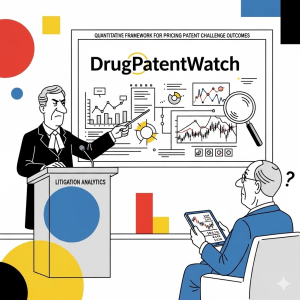
Traditional financial models, which often rely on single-point estimates for market exclusivity, are ill-equipped to handle the high-stakes, probabilistic nature of patent disputes. By moving beyond qualitative risk assessments, this methodology enables institutional investors, corporate finance executives, and strategic planners to transform raw legal data into tangible financial metrics. The core of this framework is the recognition that patents are not merely legal documents but the fundamental economic engine of the biopharma business model, representing the primary mechanism for recouping monumental R&D investments.
The analysis synthesizes key insights from legal, financial, and strategic disciplines. It establishes that high-stakes litigation, particularly within the Hatch-Waxman and Biologics Price Competition and Innovation Act (BPCIA) frameworks, is a predictable, multi-layered event driven by distinct regulatory rules and economic incentives. Market reactions, as evidenced by event studies, are powerful indicators of investor expectations, often pricing in a dispute’s perceived outcome well before a final verdict is announced. This report demonstrates how advanced valuation techniques, such as Monte Carlo simulations and Real Options Analysis, are uniquely suited to model the binary and probabilistic risks inherent in these legal battles. Case studies illustrate that market sentiment is highly nuanced, influenced by the specific nature of the dispute—for example, a reputational lawsuit versus a strategic patent defense. The ultimate goal is to provide a clear, repeatable, and actionable framework for a deeper understanding of biopharma valuation, where legal strategy and financial performance are inextricably linked.
II. The Foundation: Patents as the Currency of Biopharma Value
The pharmaceutical and biotechnology sectors operate on a business model where intellectual property, specifically patents, serves as the central economic asset. A drug’s patent portfolio is not a mere legal formality; it is the strategic foundation that allows a company to secure a period of market exclusivity, thereby creating a monopoly necessary to recoup the colossal investments required to bring a new medicine to market.1
The Anatomy of a Pharmaceutical Patent Portfolio
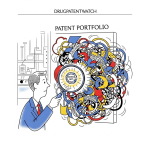
A company’s market exclusivity is not determined by a single patent but by an interlocking, multi-layered “patent thicket” designed to deter and delay generic or biosimilar competition.1 This fortress of exclusivity is constructed from a variety of patent types, each serving a distinct strategic purpose. The “gold standard” is the composition of matter patent, which protects the core active molecule itself, preventing any competitor from selling the same substance for any purpose.1 This broad protection is supplemented by an arsenal of secondary patents. Method-of-use patents cover a specific application of a compound, such as a new way to treat a particular disease.1 Formulation and delivery patents protect unique formulations or novel delivery systems, like an extended-release pill or a transdermal patch.1 This layered strategy transforms a patent from a defensive shield into an offensive strategic weapon, making it “economically and logistically prohibitive for a generic or biosimilar competitor to challenge” the entire portfolio.1
From Intangible Asset to Financial Bedrock
The immense value of a patent is a direct result of the astronomical costs and risks associated with drug development. A widely cited study from the Tufts Center for the Study of Drug Development pegs the average capitalized cost of bringing a new drug to market at $2.6 billion, with other estimates reaching as high as $2.23 billion in 2024.2 This figure is not just a direct financial outlay; it includes the “time cost” of capital that is tied up over the decade-plus development period, accounting for nearly half of the total capitalized cost.2 In this high-risk environment, a patent’s 20-year term is not a windfall but the “essential period” during which a company has the opportunity to generate the revenue necessary to cover these costs and fund the next generation of research.2
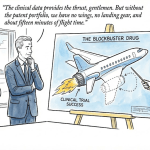
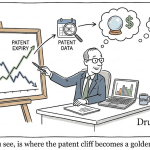
The value of this exclusivity is starkly evident in revenue statistics. Drugs protected by strong patents generate 80% to 90% of their lifetime revenue during their exclusivity periods.4 Conversely, the impact of patent expiration is immediate and severe, with a staggering average revenue drop of 80% to 90% after generic entry.4 This makes the “Loss of Exclusivity” (LOE) date the single most critical variable in any financial valuation model.1 The scale of this financial risk is demonstrated by the “patent cliff” facing the industry, with estimates suggesting that between $236 billion and $350 billion in global revenue is at risk from patent expirations between 2025 and 2030.4
The colossal cost of R&D and the subsequent financial value of market exclusivity create a unique dynamic in the legal landscape. The necessity for brand-name companies to “rationally spend millions on litigation to protect its market exclusivity” 2 is a logical defense. However, this same high cost simultaneously erects a formidable barrier to entry for smaller, less-capitalized challengers, which may have the scientific and technical capability to produce a generic but not the financial wherewithal to fight a prolonged legal battle.2 The legal expense, in this context, is not merely a cost of doing business; it is a strategic economic weapon that inherently favors incumbents with deep pockets. This reality potentially stifles the very competition that regulatory frameworks like Hatch-Waxman were designed to foster, turning legal strategy into a form of economic warfare.2
III. The Legal Arena: Patent Challenges in the Life Sciences
The rules of engagement for pharmaceutical patent disputes are primarily defined by two landmark pieces of legislation: the Hatch-Waxman Act and the BPCIA.2 Both create a structured legal pathway for challenging patents, but they operate with distinct mechanisms. A third, equally important, forum for patent challenges exists at the Patent Trial and Appeal Board (PTAB).
The Hatch-Waxman Framework
The Drug Price Competition and Patent Term Restoration Act of 1984, known as the Hatch-Waxman Act, created a procedure for generic firms to challenge patents on the grounds of non-infringement and invalidity.5 A generic company files an Abbreviated New Drug Application (ANDA) with a “Paragraph IV certification,” which declares that a branded drug’s patent is invalid, unenforceable, or will not be infringed.6 This certification is considered an act of infringement itself, automatically triggering a 30-month stay of FDA approval while the dispute is litigated.7 For the first generic company to successfully challenge a patent, there is a significant financial reward: a 180-day market exclusivity period from the time of its market launch.5 This exclusivity is extremely profitable, as it allows the generic drug to capture a large market share with moderate discounts while being the sole competitor to the branded product.5 Due to the high stakes, many cases result in a settlement, which may include a “reverse payment” from the brand company to the generic to delay its market entry.7 These payments have drawn antitrust scrutiny from the FTC and the Supreme Court.7
The Biologics Price Competition and Innovation Act (BPCIA)
The BPCIA of 2009 established a similar, though more complex, pathway for biosimilars to enter the market.8 The process includes a structured information exchange known as the “patent dance,” which is designed to facilitate the resolution of patent disputes early in the process.8 Litigation proceeds in two distinct phases and, similar to Hatch-Waxman, settlements are a “predominant outcome” that often result in earlier market entry than a full trial.8 A crucial difference in BPCIA litigation is that it often centers on manufacturing patents and processes, which are not listed in the Orange Book for traditional pharmaceutical drugs.9
The Patent Trial and Appeal Board (PTAB) and Inter Partes Review (IPR)
In addition to district court litigation, generic and biosimilar companies can leverage the Inter Partes Review (IPR) process, a post-issuance administrative proceeding at the PTAB.10 This has emerged as a “powerful patent-busting weapon” for challengers, as it provides a new, relatively cost- and time-efficient tool to challenge patents.11 The PTAB offers a significantly different legal environment from a district court. While a brand company must prove patent infringement in district court under a high “clear and convincing evidence” standard, an IPR challenger only needs to demonstrate a “preponderance of the evidence” that a patent claim is unpatentable.10 Furthermore, the PTAB applies a “broadest reasonable interpretation” standard when construing patent claims, whereas district courts use a more restrictive “plain and ordinary meaning” standard.10 This combination of a lower burden of proof and a broader interpretation of claims makes it arguably easier for a challenger to prevail at the PTAB.11
The existence of IPR creates a powerful dual-track litigation strategy. A generic company can simultaneously pursue a Paragraph IV challenge in district court and an IPR petition at the PTAB.11 This dual-pronged attack significantly increases the pressure on the brand company, as it must defend its patent in two different venues under different legal standards. This higher risk of losing patent rights makes brand companies “receptive to settling” the district court case.11 A settlement, in turn, can result in earlier generic entry than would be possible if the case were to proceed through a full trial, which can take several years.5 The IPR process, therefore, fundamentally shifts the balance of power in favor of generic and biosimilar challengers, making settlements a more likely and often earlier outcome.
Table 1: Comparison of Patent Challenge Frameworks
Framework
Initiating Event
Forum
Legal Standard for Invalidity
Claim Interpretation Standard
Hatch-Waxman
Paragraph IV Certification
District Court
Clear and Convincing Evidence
Plain and Ordinary Meaning
BPCIA
aBLA “Patent Dance”
District Court
Clear and Convincing Evidence
Plain and Ordinary Meaning
IPR
IPR Petition
Patent Trial and Appeal Board (PTAB)
Preponderance of the Evidence
Broadest Reasonable Interpretation
IV. The Analytical Engine: Leveraging Litigation Data for Predictive Insights
The complexities of the legal landscape necessitate a data-driven approach to forecasting outcomes. This is the realm of patent litigation analytics, defined as the “systematic analysis of data related to patent cases”.12 This practice moves beyond simple case-by-case legal analysis to leverage vast datasets to identify patterns and predict future events.
From Data to Intelligence
Patent litigation analytics uses a wide range of data points as inputs, including past litigation outcomes, judge rulings, the behavior of opposing parties, and the strategies of specific law firms.12 Publicly available resources such as the USPTO website, the Iowa Database for Federal Circuit decisions, and CourtListener’s RECAP Archive provide a “treasure trove of free resources” for legal data enthusiasts.13 Specialized commercial platforms, such as RPX Empower, provide comprehensive, expert-analyzed data sets with millions of litigation records and targeted research reports.14
By aggregating and analyzing this data, practitioners can generate “probabilistic determinations” that help forecast potential outcomes.13 The analysis can be used to assess the strength and vulnerability of a patent by examining its claims, prior art, and prosecution history.6 Analysts can also predict litigation outcomes by tracking historical success rates for different invalidation arguments and analyzing the behavior of specific judges.8 Beyond predicting litigation, this data can be used to track competitor strategies, identify “white spaces” in a patent landscape for R&D investment, and inform mergers and acquisitions due diligence.16
V. The Valuation Framework: Pricing Litigation Outcomes into Stocks
The core challenge for financial professionals is to translate the probabilistic outcomes from litigation analytics into a quantifiable impact on a company’s stock price. The most effective approach is to leverage financial theory and advanced modeling techniques that can account for the inherent uncertainties of the legal process.
The Efficient Market Hypothesis and Event Studies
The foundation of this quantitative approach is the Efficient Market Hypothesis, which posits that stock prices reflect all available information.18 In this context, it is assumed that markets “already incorporated expectations about the outcome of the litigation into stock prices well before a verdict is announced”.18 Therefore, when a verdict or settlement is announced, the resulting change in the company’s stock price can be broken down into two components: an “uncertainty removal” component and a “surprise” component.18 The first part reflects the market’s reaction to the elimination of risk, while the second measures the difference between the actual outcome and the market’s expectation.
A large “surprise” component—an unexpected, significant stock price movement—is not merely a reflection of investor sentiment; it can serve as a leading indicator of a flawed legal outcome. Research has shown a positive correlation between a significant deviation of the actual stock return from the expected return and the probability that a verdict will be reversed upon appeal.18 This suggests that the collective judgment of the market can function as a predictive tool for legal outcomes. A large, unanticipated stock price swing indicates that the legal verdict was problematic from a financial standpoint, a discrepancy that may be resolved later in a higher court. This approach effectively turns stock market signals into a form of litigation analytics, reinforcing the notion that legal and financial domains are deeply intertwined.
Integrating Patent Risk into Financial Models
Traditional valuation models, such as discounted cash flow (DCF), are often too rigid to handle the probabilistic nature of patent litigation. They typically use a single “Loss of Exclusivity” (LOE) date, which is highly susceptible to change based on litigation outcomes.1 A more robust approach replaces this single date with a range of possible outcomes, each with its own probability and financial implications.
Monte Carlo simulations are a powerful tool for this purpose. Instead of using a single value for variables like market share or LOE date, the model defines a probability distribution for each key input, such as the probability of a win, loss, or settlement.6 The simulation runs thousands of iterations, with each run incorporating a different combination of inputs based on their likelihood.6 The result is not a single valuation number, but a range of possible valuations and a probability distribution of potential outcomes, providing a more realistic picture of the asset’s true value.6
Real Options Analysis (ROA) offers another sophisticated framework. This model frames the decision to pursue a drug pipeline or to engage in litigation as a series of financial options.6 The investment cost of the next clinical trial or the legal costs of a lawsuit are the “strike price,” and the future value of the drug’s sales is the “stock price” in the model’s analogy.6 This approach values “managerial flexibility”—the ability to invest further, abandon a project, or delay a decision—which is particularly well-suited for high-risk, high-reward ventures like drug development and litigation.6
Table 2: Framework for Patent Risk-Adjusted Valuation Inputs
Litigation Outcome
Probability
Effective LOE Date
Peak Sales Forecast
Post-LOE Market Share
Key Financial Impact
Win
Analyst-derived probability
Nominal Patent Expiration Date (e.g., 2035)
Unchanged
Estimated residual share (e.g., 20%)
Maximize discounted cash flows
Loss
Analyst-derived probability
Accelerated Date (e.g., 2028)
Significantly reduced
Low (e.g., 5-10%)
Significant reduction in DCF, potential asset write-down
Settlement
Analyst-derived probability
Negotiated Date (e.g., 2030)
Slightly reduced
Modest (e.g., 15%)
Moderate reduction in DCF, mitigated by litigation cost savings
VI. Case Studies: The Framework in Action
Real-world cases demonstrate the complex interplay between legal outcomes and financial performance.
AbbVie and Humira: The Patent Thicket Strategy
AbbVie’s strategy to protect its blockbuster drug Humira provides a classic example of using a “patent thicket” to delay generic entry.4 By layering patents covering different aspects of the drug, the company successfully delayed generic competition until 2023, even as the original patent expired much earlier.4 This strategic management of its patent portfolio allowed AbbVie to generate tens of billions in sales from Humira.19
The market’s reaction to AbbVie’s legal challenges was highly nuanced. The company’s stock price plummeted after news broke of a separate legal issue—a class-action lawsuit alleging that the company had inflated its stock price through a kickback scheme.20 This demonstrates that investors are sophisticated enough to distinguish between different types of legal risks. While a lawsuit over an alleged kickback scheme signifies a serious reputational and operational risk that the market swiftly punished, the company’s well-managed patent challenge strategy was a predictable, strategic event that was already factored into the stock price.19 This highlights the importance of using litigation analytics not just to identify legal risks, but to understand their specific nature and potential impact on a company’s brand and operations.
Novartis and Gilenya: The High Cost of a Patent Loss
Novartis’s experience with its multiple sclerosis drug, Gilenya, underscores the catastrophic financial consequences of a patent loss. After a court loss that opened the door for generic competition, Gilenya’s U.S. sales dropped by 19% in a single year.21 This decline directly demonstrates the causal relationship between a legal defeat and a significant loss of revenue. The framework presented in this report would have modeled this outcome as a “Loss” scenario, with a dramatically accelerated LOE date and a resulting sharp reduction in discounted cash flows, accurately reflecting the impact on the company’s valuation.
Amgen and Blincyto: The Verdict that Wasn’t
The case involving Amgen’s leukemia drug, Blincyto, illustrates the non-binary and multi-stage nature of litigation. A Delaware federal jury initially found that Amgen had willfully infringed on two patents and ordered the company to pay $50.3 million in damages.23 This seemingly clear “loss” for Amgen was completely reversed when a judge later nullified the verdict, finding the patents “unenforceable due to inequitable conduct”.23 This case shows that a negative verdict at one stage of the legal process is not necessarily a final outcome. A robust valuation framework must account for the full litigation lifecycle, from trial to appeal, and the associated probabilities of reversal, which can completely change a case’s financial outcome.
Gilead and the Nuanced Settlement
A highly illuminating case is Gilead’s $40 million settlement to patients for allegations that the company delayed the development of a safer drug to extend the patent life of an older, more profitable one.24 Despite the negative nature of the allegations and the financial outlay, Gilead’s share value “rose after the settlement announcement, reflecting the market’s judgment that its strategy was an overall commercial success”.24 The financial market’s judgment was a cold, hard cost-benefit analysis. The $40 million settlement was a small fraction of the “billions in profits” reaped from the “extra years of patent protection” that the alleged delay secured.24 This example demonstrates that a settlement, even for a serious allegation, can be perceived as a strategic “win” if the cost of the settlement is dwarfed by the profits it protected. This case is a powerful example of how a valuation framework must integrate legal risk with commercial reality, as the market’s reaction is ultimately based on financial outcomes, not just legal or ethical ones.
VII. Strategic Implications and Recommendations
The framework presented in this report provides actionable guidance for various stakeholders across the biopharma ecosystem.
For Brand Pharma Companies: The analysis underscores the need for a proactive and offensive patent strategy.4 Litigation analytics can be leveraged for proactive patent portfolio management, including auditing and pruning weak patents, identifying gaps in protection, and strategically choosing the most advantageous forums for litigation.15 In the context of M&A, patent due diligence is not a routine legal check but a foundational element of corporate strategy and a primary driver of deal value. The process must verify the validity, enforceability, and strategic alignment of a target company’s patent portfolio to ensure that the purchase price reflects the true value of its IP.25
For Generic and Biosimilar Manufacturers: Litigation analytics provides a powerful tool for identifying and targeting vulnerable patents with weak claims or significant prior art.17 By systematically analyzing litigation data, these companies can predict the optimal timing for an “at-risk” launch and strategically navigate the complex “patent dance”.8 The data allows them to make more informed decisions by modeling the probability of success based on historical outcomes and specific judicial behavior.8
For Investors and Analysts: The key recommendation for financial professionals is to move beyond simple qualitative risk assessments. The framework encourages the use of quantitative models, like Monte Carlo simulations and Real Options Analysis, to price patent litigation outcomes directly into investment theses.6 It is crucial to combine patent data with other non-patent factors that influence stock prices, such as clinical trial results, regulatory approvals, and M&A activity, to create a more comprehensive and nuanced valuation.18
VIII. Conclusion
The biopharmaceutical industry stands at the nexus of science, law, and finance, where each discipline’s risks and rewards are profoundly interconnected. This report has demonstrated that in this high-stakes environment, the ability to analyze and price litigation outcomes is not merely a legal exercise but a core financial and strategic competency. By transforming patent data into actionable financial intelligence, professionals can move from a reactive posture to a proactive and offensive strategy. The future of biopharma valuation and investment lies in the synthesis of legal, financial, and scientific intelligence, where a deep understanding of patent litigation analytics provides an unprecedented competitive advantage.
Gilead pays $40m to settle allegations that it delayed work on an improved HIV drug to maximise profits from an older drug | The BMJ, accessed August 20, 2025, https://www.bmj.com/content/385/bmj.q1285