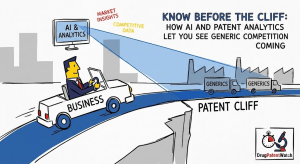
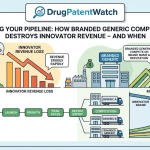
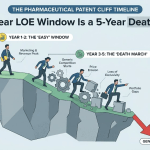
Pfizer’s finance team did not need a news alert to know Lipitor was in trouble. By 2010, the company’s own analysts had mapped the patent landscape well enough to project that the world’s best-selling drug would lose exclusivity in November 2011, triggering a revenue collapse that would eventually strip out more than $10 billion in annual sales. What they could not fully anticipate was the speed, depth, and market structure of the generic entry that followed. Within six months of Ranbaxy’s first-to-market generic launch, Lipitor’s branded market share had collapsed to roughly 10 percent (Blackstone & Fuhr, 2013).
That collapse was not unusual. It was, in fact, a textbook demonstration of what patent expiration means in the pharmaceutical industry, and it is exactly the scenario that drives billions of dollars in corporate planning, business development, and competitive intelligence spending every year. The difference between companies that absorbed the Lipitor lesson and those still learning it is primarily a question of tooling. Specifically, it is a question of whether you are using static spreadsheets and manual patent review to forecast generic entry, or whether you are combining machine learning, natural language processing, and structured patent databases to see the competitive picture earlier, more completely, and with greater precision.
This article is about that second approach: what it involves, why it works, and how pharmaceutical companies, investors, and competitive intelligence professionals are using AI-assisted patent analytics to assess portfolio vulnerability before the cliff hits.
The Financial Anatomy of a Patent Cliff
What Exclusivity Is Actually Worth
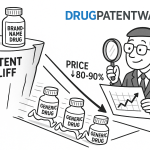
A pharmaceutical patent is not just a legal document. It is a temporary monopoly that determines whether a drug company can charge $300 per prescription or whether it must compete with manufacturers selling the same molecule for $12. The financial difference is not marginal. In the branded pharmaceutical market, gross margins frequently run between 70 and 90 percent. For a blockbuster drug generating $5 billion annually, that means $3.5 to $4.5 billion in gross profit sitting behind a wall of intellectual property.
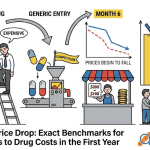
When that wall comes down, the economics shift fast. Generic entry on a typical small-molecule drug triggers a price decline of 80 to 90 percent within 12 to 18 months (IQVIA Institute, 2023). The generic manufacturers who enter the market are not trying to capture premium margin. They are competing on manufacturing efficiency and distribution, and they drive prices toward the floor. The branded product retains a residual share among patients with strong brand preferences or formulary protections, but that share is rarely more than 10 to 15 percent of original volume.
This dynamic is well understood. What is less well understood is how much variation exists around the timing and structure of that generic entry, and how much competitive and financial value lies in predicting that variation accurately.
The Cliff Is Rarely a Single Drop
The phrase “patent cliff” implies a single event: a patent expires, generics enter, revenue drops. Real pharmaceutical IP portfolios rarely work that way. A branded product is typically protected by a cluster of patents covering different aspects of the drug, its formulation, its manufacturing process, and its specific uses. The Orange Book, the FDA’s official listing of approved drug products and their associated patents, regularly shows five, ten, or even twenty patents attached to a single drug product (U.S. Food and Drug Administration, 2024).
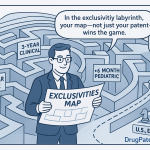
These patents do not all expire at the same time. A compound patent protecting the active molecular entity might expire in 2026. A formulation patent covering the specific extended-release mechanism might run to 2029. A method-of-use patent targeting a pediatric indication might hold until 2031. Each of these patents represents a potential legal barrier to generic entry, a potential target for challenge by a generic manufacturer, or both.
The result is that a drug’s effective market exclusivity is not one date. It is a probabilistic range, shaped by the strength and coverage of each patent in the cluster, the likelihood that any given patent will be challenged through an ANDA (Abbreviated New Drug Application) filing under Paragraph IV of the Hatch-Waxman Act, the litigation history of the brand manufacturer, and regulatory timelines the FDA controls.
Accurate forecasting requires modeling all of these variables simultaneously. That is where AI and structured patent analytics become genuinely useful rather than merely decorative.
Who Bears the Risk
Four categories of stakeholders have the most direct financial exposure to inaccurate patent cliff forecasting.
Brand pharmaceutical companies need to know when their own revenues will decline so they can plan pipeline investments, licensing deals, and cost structure adjustments. Getting this wrong by even 12 months on a blockbuster asset can translate to a multi-billion-dollar capital allocation error.
Generic pharmaceutical companies need to know which drugs are worth investing in for ANDA filings. The regulatory costs, legal fees, and manufacturing scale-up required to enter a generic market are not trivial. A company that invests $50 million to challenge a patent that turns out to be ironclad, or that files an ANDA too late to capture the 180-day first-filer exclusivity window, has wasted scarce resources in a low-margin business.
Investors and equity analysts covering pharmaceutical stocks build revenue forecasts that directly incorporate exclusivity timelines. Misjudging a patent cliff by two years can mean modeling a company’s earnings at $3.50 per share when the correct figure is closer to $1.80. That error shows up in valuations, in analyst ratings, and eventually in portfolio returns.
Payers, including pharmacy benefit managers and insurance companies, need to anticipate when they can shift formularies from expensive branded drugs to generic alternatives. Early and accurate forecasting allows procurement teams to build better contracts and generate measurable savings for their members.
Patent Analytics: The Foundation Layer
What the Data Actually Contains
Before discussing how AI processes pharmaceutical patent data, it is worth describing what that data consists of. Patent analytics in the pharma context draws on several distinct but interconnected data sources.
The US Patent and Trademark Office (USPTO) database contains the full text of every US patent, including claims, descriptions, citations, assignment records, and prosecution history. The claims section is the most legally significant: it defines exactly what the patent holder owns. The description section provides context that courts use when interpreting claims. The prosecution history, sometimes called the “file wrapper,” records every exchange between the applicant and the patent examiner and is frequently used in litigation to argue about what a patent holder surrendered during examination.
The Orange Book is a regulatory overlay on top of the USPTO data. Drug manufacturers submit patents to FDA for listing in the Orange Book, and only Orange Book-listed patents can trigger the 30-month stay that prevents FDA from approving a generic during Hatch-Waxman litigation. Not every patent on a drug gets listed. Brand manufacturers choose which patents to submit, and generic companies sometimes challenge whether a patent is appropriately listed.
The Purple Book is the biosimilar equivalent of the Orange Book, covering biologics. It is a younger, less complete database, and the legal framework governing biosimilar patent disputes under the Biologics Price Competition and Innovation Act (BPCIA) is substantially more complex than Hatch-Waxman.
International patent filings add another layer. A drug protected by a US patent may have PCT (Patent Cooperation Treaty) filings or direct national filings in Europe, Japan, China, and dozens of other markets. The patent landscape in each market affects where generic and biosimilar competition can enter, and the timelines differ by jurisdiction.
ANDA filing records at FDA, accessible through the Paragraph IV certification database, show which generic companies have already targeted a brand drug for challenge. These filings are a leading indicator: the moment a generic manufacturer files a Paragraph IV ANDA, a 45-day clock starts during which the brand company can sue to trigger the 30-month stay.
DrugPatentWatch aggregates much of this data into a structured, searchable platform used by competitive intelligence teams at both brand and generic companies. By combining Orange Book listings, patent expiration dates, ANDA filing histories, Paragraph IV certification records, and litigation outcomes, it gives analysts a consolidated view of where a drug’s IP protection actually stands, without having to manually cross-reference five different government databases.
The Limits of Manual Analysis
For most of the past three decades, pharmaceutical patent analysis was a manual discipline. A patent attorney or business development analyst would pull the Orange Book listing for a drug, identify the patents, look up the expiration dates, check for pending litigation, and produce a memo estimating when generic entry was likely.
This approach has three structural problems.
First, it does not scale. A major pharmaceutical company may have hundreds of products in its portfolio and thousands of competitor products to monitor. Manual analysis of each one is not feasible. The result is that coverage is partial, and the drugs that receive the least attention are often the ones where surprises are most costly.
Second, it is retrospective rather than predictive. Manual analysts can tell you what the current patent landscape looks like. They struggle to tell you which patents are most likely to be challenged next, which ANDA filers are most aggressive in a given therapeutic area, or what the probability is that a specific claim will survive inter partes review (IPR) at the USPTO. Those probabilistic judgments require pattern recognition across hundreds or thousands of prior cases, which is precisely what machine learning does well.
Third, claim-level analysis is expensive and slow. The legally meaningful unit in patent analytics is the claim, not the patent. A single patent may have 50 claims, and whether a generic product infringes the patent depends on which claims are asserted and how courts have interpreted similar claim language in prior cases. A comprehensive claim-level analysis of a 15-patent Orange Book listing, done manually by qualified patent attorneys, can take weeks and cost tens of thousands of dollars. AI tools can complete a preliminary claim analysis in hours.
How AI Transforms Patent Intelligence
Natural Language Processing and Claim Interpretation
The core technical challenge in patent analytics is that patents are written in a specialized legal dialect that is simultaneously precise and ambiguous. Patent claims use terms of art that have acquired specific legal meanings through decades of court decisions. The phrase “comprising” in a claim means something different from “consisting of.” The word “substantially” has been litigated hundreds of times. These distinctions determine whether a generic product infringes a patent, and getting them wrong has consequences measured in hundreds of millions of dollars.
Natural language processing models trained on patent corpora have become capable of several tasks that previously required human experts. They can parse claim language and extract the structural elements that define a patent’s scope. They can identify which prior art references a patent examiner considered during prosecution and flag cases where the examiner may have missed relevant references. They can compare new patent applications or ANDA filings to existing claim language and produce an initial infringement analysis, identifying which claims are most likely implicated.
More importantly for competitive forecasting, NLP models can identify linguistic patterns that correlate with patent vulnerability. Research by Taekyun Kim and colleagues at KAIST found that certain structural features of patent claims, including high claim dependency, narrow claim scope, and heavy reliance on functional language, correlate with elevated rates of invalidity findings in post-grant review proceedings (Kim, Lee, & Park, 2021). A system trained on this pattern can flag patents in a portfolio that carry higher-than-average invalidity risk, prompting earlier strategic attention.
The volume of text that makes this kind of analysis tractable is enormous. A single pharmaceutical patent prosecution history may run to thousands of pages. The full set of prosecution histories for the patents protecting a major drug like Keytruda or Eliquis represents a document corpus that no human team can read comprehensively. Large language models can ingest this material, extract legally relevant features, and produce structured summaries that analysts can act on.
Machine Learning for ANDA Filing Prediction
One of the highest-value applications of machine learning in pharmaceutical patent analytics is predicting which drugs will be targeted by ANDA filers before the filings actually happen. A generic company that successfully challenges a patent through a Paragraph IV ANDA and wins litigation is entitled to 180 days of market exclusivity before other generics can enter. That exclusivity window on a large drug can be worth hundreds of millions of dollars. The competition to achieve it is intense.
For brand companies, knowing which products are most likely to attract Paragraph IV filings allows them to prioritize pre-emptive IP strengthening, conduct freedom-to-operate analysis for their formulation patents, and prepare litigation readiness. For generic companies, the same analysis helps prioritize ANDA investment.
Machine learning models trained on historical ANDA filing data can identify the factors that predict which drugs attract challenges. These include the size of the market (larger markets attract more competition), the age of the compound patent (older patents are perceived as weaker), the number of patents protecting the product (more patents mean more potential challenges), the litigation history of the brand manufacturer (companies with a record of settling rather than litigating are softer targets), and the availability of generic manufacturing capacity for that molecule type.
A 2022 analysis published in the Journal of Law and the Biosciences found that machine learning models incorporating these variables could predict Paragraph IV filings with significantly higher accuracy than baseline models using only market size (Ouellette & Sichelman, 2022). The model’s error rate on predicting the timing of first Paragraph IV filing within a two-year window was approximately 23 percent, compared to 41 percent for the market-size-only baseline.
Graph Analytics and Patent Citation Networks
Patents do not exist in isolation. Each patent cites prior art, and each patent is cited by subsequent applications. This citation network contains competitive intelligence that raw text analysis cannot easily extract.
Graph analytics treats patents as nodes and citations as edges, then applies network analysis techniques to identify structural patterns. In pharmaceutical IP, this reveals several things. First, it shows which patents occupy “bottleneck” positions in the citation network, meaning that they are cited by many subsequent patents and therefore represent foundational technology that competitors must work around. These bottleneck patents are typically the hardest to design around and the most valuable to the portfolio.
Second, citation analysis can track how competitor companies are building their own patent portfolios. If a generic company’s recent patent filings are clustering around formulation technology that relates to your compound, that is an early signal of ANDA preparation strategy. If a competitor biosimilar manufacturer is filing patents on expression systems and purification methods that overlap with your biologic’s manufacturing process, that indicates development is underway.
Third, graph analytics can identify “white space” in a patent landscape, meaning areas of technology that are not covered by existing patents. For a brand company defending a product, white space analysis reveals where a generic manufacturer might attempt to design around existing claims. For a generic or biosimilar developer, it reveals possible development pathways that avoid infringement.
Platforms like PatSnap and Derwent Innovation have built graph analytics capabilities into their patent intelligence tools, and several pharmaceutical companies have embedded these tools into their business development and IP strategy workflows.
Predictive Litigation Modeling
Patent litigation in the pharmaceutical context follows patterns that are partly predictable. Whether a brand company will sue on a specific patent when challenged, how long litigation will take, whether it will settle, and how courts have historically ruled on similar claims are all questions with historical precedents that machine learning can model.
The Docket Navigator database, which indexes pharmaceutical patent litigation filings in federal court, contains decades of case data: which patents were asserted, which claims were litigated, what claim constructions courts adopted, and how juries and judges ultimately ruled. When combined with patent text analysis, this data allows AI systems to estimate the probability that a given patent would survive challenge.
Lex Machina, a legal analytics platform owned by LexisNexis, has applied machine learning to this problem extensively. Its pharmaceutical patent analytics product generates judge-specific statistics on claim construction rates, summary judgment tendencies, and time-to-trial estimates. This information directly affects how brand and generic companies assess the value of litigation versus settlement.
For competitive intelligence purposes, the key insight is that patent strength is not binary. A patent is not simply valid or invalid. It exists on a probability spectrum, and that spectrum can be estimated quantitatively from features of the patent itself and the history of similar patents in litigation. A company that treats all of its Orange Book patents as equally strong and equally likely to deter generic entry is making a systematic error that AI-assisted litigation modeling can correct.
Portfolio Vulnerability Assessment: Building the Map
The Cluster Model of Pharmaceutical IP
Understanding portfolio vulnerability requires thinking about pharmaceutical IP as clusters rather than individual assets. Each commercial product has a cluster of IP protections: compound patents, formulation patents, process patents, method-of-use patents, and in some cases pediatric exclusivity extensions or orphan drug exclusivity protections. The effective exclusivity of the product is determined by the interplay of all of these protections, not by any single one.
A sophisticated vulnerability assessment begins by mapping this cluster completely. That means going beyond the Orange Book listing to identify related patents that may not be listed but still have bearing on the product’s IP position. A formulation patent that is not Orange Book-listed cannot trigger a 30-month stay, but it can still support an infringement lawsuit if a generic product infringes it. Process patents can sometimes be enforced against generic manufacturers even though the generic product itself is not covered by the patent.
Tools like DrugPatentWatch facilitate this complete mapping by cross-referencing Orange Book listings with the full USPTO patent database, searching for patents assigned to the same company that claim subject matter related to the listed drug. The result is a more complete picture of the IP portfolio surrounding a product than any single database provides.
Once the cluster is mapped, the vulnerability assessment assigns a risk score to each patent based on the analytical factors discussed above: claim scope, prosecution history, prior art exposure, citation position, and litigation history analogs. Patents with narrow claims, extensive prosecution history disclaimers, and close analogs that have been invalidated in post-grant review are high-vulnerability patents. Patents with broad claims, clean prosecution histories, and strong citation networks are low-vulnerability.
Exclusivity Timeline Modeling
With the cluster mapped and risk-scored, the next step is building an exclusivity timeline model. This model does not produce a single date for generic entry. It produces a probability distribution: a range of dates with associated probabilities, reflecting the uncertainty around which patents will be challenged, which challenges will succeed, and what the regulatory timeline looks like.
For a typical small-molecule drug, the exclusivity timeline model might look like this. The compound patent expires in 2027. The formulation patent expires in 2030. The method-of-use patent expires in 2029. In the base case, assuming no successful Paragraph IV challenge, the drug retains effective exclusivity until 2030 when the last Orange Book patent expires. But the formulation patent has three characteristics that make it a plausible IPR target: narrow dependent claims, a prosecution history that disclaimed broad formulation coverage, and two close prior art references that the examiner cited. The model assigns a 35 percent probability that this patent is successfully challenged before its natural expiration, which would accelerate effective exclusivity loss to 2027.
This probabilistic output is substantially more useful for planning purposes than a binary analysis. A finance team can model revenue under three scenarios: no successful challenge (30 percent probability), challenge succeeds with generic entry in 2027 (35 percent probability), or challenge partially succeeds with some market erosion beginning in 2028 (35 percent probability). Each scenario has different capital allocation implications, and the model makes those implications explicit.
Competitive Entry Velocity
Beyond timing, portfolio vulnerability assessment should model the velocity and structure of generic entry when exclusivity does end. The Lipitor example is instructive: the speed of generic substitution after Ranbaxy’s first-to-market launch surprised many analysts because it coincided with aggressive generic substitution policies by pharmacy benefit managers and state Medicaid programs. The competitive pressure was not just from a single generic but from a rapid cascade of subsequent entrants after the 180-day exclusivity period ended.
AI models trained on historical generic launch data can estimate the number of ANDA filers likely to receive approval, the speed of price erosion given the number of competitors, and the residual branded market share based on therapeutic area characteristics and payer formulary structure. Drugs in therapeutic areas with high chronic use rates and low brand loyalty, such as statins and ACE inhibitors, show faster and more complete generic substitution than drugs in areas where brand loyalty is higher, such as certain psychiatric medications or specialty injectables.
This velocity modeling has direct implications for brand companies’ authorized generic strategies, biosimilar developers’ pricing models, and investors’ revenue decline curve assumptions. Getting the velocity right is at least as important as getting the timing right.
The Hatch-Waxman System: Where AI Adds the Most Value
ANDA Filings as a Leading Indicator
The Hatch-Waxman Act, enacted in 1984, created the modern US generic pharmaceutical market. Its Paragraph IV certification process is the mechanism through which generic companies challenge branded drug patents, and it generates a publicly accessible record of competitive intent that is genuinely predictive. When a generic company files an ANDA with a Paragraph IV certification against a brand drug’s patent, it is explicitly declaring that the patent is invalid or that the generic product will not infringe it. That filing is a statement of competitive intent backed by real economic investment.
The 45-day window following a Paragraph IV notification, during which a brand company must sue to trigger the 30-month stay, is one of the most closely watched periods in pharmaceutical competitive intelligence. Brand companies that miss the 45-day window lose the stay, and generic approval can proceed on FDA’s normal timeline. Monitoring Paragraph IV notifications in real time is therefore an important operational function.
AI systems can automate this monitoring and layer in context. When a new Paragraph IV filing is detected, the system can pull the patent at issue, assess its vulnerability based on prior analysis, identify the filer and pull their litigation history, and produce a preliminary brief that allows an in-house IP team to make a faster, better-informed decision about whether to sue.
DrugPatentWatch maintains one of the most comprehensive databases of Paragraph IV certification history, allowing analysts to identify which generic companies are most active in challenging patents for drugs in a given therapeutic area and which brand companies face the most concentrated challenge activity. This historical context helps predict where the next wave of Paragraph IV filings is likely to come from.
The 180-Day Exclusivity Race
For generic companies, the first-filer advantage created by 180-day exclusivity is the single largest driver of ANDA strategy. The first company to file a complete ANDA with a Paragraph IV certification against a specific patent is entitled to 180 days of marketing exclusivity before other generic entrants can enter the market. On a drug with $2 billion in annual branded sales, that 180-day window can be worth $400 to $600 million in gross profit to the first filer, depending on pricing and volume assumptions.
The race to be the first Paragraph IV filer requires intelligence about when a brand company’s compound patent will become vulnerable. A generic company needs time to develop the product, manufacture validation batches, conduct bioequivalence studies, and prepare the ANDA submission. The total timeline from decision to first ANDA filing is typically two to four years for a complex molecule, shorter for simpler ones.
This means that the generic company needs to be watching the brand’s patent landscape three to five years ahead of the natural compound patent expiration. AI-assisted patent monitoring allows generic business development teams to track those landscapes continuously, flag emerging vulnerabilities as soon as they appear, and make investment decisions earlier, with better data, than companies relying on periodic manual reviews.
The competitive intelligence implications cut both ways. Brand companies watching generic pipeline development can sometimes infer which drugs are being targeted by tracking the appearance of bioequivalence study protocols in clinical trial registries, watching for manufacturing facility inspections at known generic producers, or monitoring ANDA-adjacent patent filings by generic companies.
Inter Partes Review as a Parallel Threat
The America Invents Act of 2011 created the inter partes review (IPR) process at the USPTO Patent Trial and Appeal Board (PTAB). IPR allows any party to challenge the validity of a patent based on prior art, and it has become a major tool in the pharmaceutical patent litigation landscape. Unlike Hatch-Waxman litigation in federal court, IPR proceedings are conducted before administrative patent judges at the USPTO, move faster than federal court, and historically have higher invalidation rates.
Between 2012 and 2023, approximately 67 percent of pharmaceutical patent claims that went to final written decision in IPR proceedings were found unpatentable (Unified Patents, 2023). This rate is substantially higher than invalidity rates in federal court litigation, which run closer to 40 to 50 percent depending on the therapeutic category. <blockquote> “Generic drug applications that included Paragraph IV certifications increased by 12% year-over-year in 2023, reaching a record high of 1,067 total Paragraph IV certifications on file, with biologics-adjacent small molecules accounting for the fastest-growing segment.” (FDA Office of Generic Drugs, 2024, p. 14) </blockquote>
For portfolio vulnerability assessment, the availability of the IPR pathway means that brand patents face two distinct challenge routes simultaneously. A generic company can file a Paragraph IV ANDA, triggering Hatch-Waxman litigation, and simultaneously file an IPR petition challenging the same patent at PTAB. Courts have developed rules about whether IPR estoppel limits the arguments available in parallel district court litigation, but the dual-track threat is real and must be modeled.
AI systems can assess IPR petition probability by analyzing the patent’s claim structure against the characteristics of patents that have previously attracted petitions. The Unified Patents platform specifically focuses on IPR analytics, providing detailed data on petitioner identity, art cited, institution rates, and final written decision outcomes. Integrating these data sources into a portfolio vulnerability model adds a dimension that purely Orange Book-focused analysis misses.
Biosimilars: A More Complex Version of the Same Problem
Why Biologics IP Is Harder to Analyze
The biosimilar market is the most financially consequential area in which patent analytics is underdeveloped relative to its importance. Global biologic drug sales exceeded $400 billion in 2023, with the top ten biosimilar targets, including adalimumab (Humira), bevacizumab (Avastin), trastuzumab (Herceptin), and etanercept (Enbrel), representing combined annual revenues exceeding $60 billion (IQVIA Institute, 2024). The patent landscapes protecting these drugs are among the most complex in pharmaceutical history.
AbbVie’s patent portfolio around Humira is the most frequently cited example. AbbVie built what has been described by patent litigators as a “patent thicket” around adalimumab, comprising more than 250 patents in the US alone, covering the compound, various formulations, manufacturing processes, dosing methods, combination therapies, and device features of the auto-injector (Feldman & Wang, 2018). This portfolio effectively delayed US biosimilar competition for Humira until 2023, despite the fact that biosimilars had been available in Europe since 2018. The difference in exclusivity timelines between the US and European markets cost US payers an estimated $19 billion in additional drug costs over five years (AARP Public Policy Institute, 2022).
Analyzing a 250-patent portfolio to determine which patents represent genuine barriers to biosimilar entry, which patents have been licensed to settling biosimilar developers, and which patents might be successfully challenged is exactly the kind of task that overwhelms manual analysis and where AI tools are genuinely necessary.
The BPCIA Patent Dance
The Biologics Price Competition and Innovation Act (BPCIA) of 2010 created the regulatory pathway for biosimilars and established a patent resolution framework called the “patent dance.” The patent dance is a structured information-exchange process between the reference product sponsor (the brand biologic company) and the biosimilar applicant. It involves the exchange of the biosimilar’s manufacturing and analytical information, followed by a negotiation process to identify which patents will be litigated before the biosimilar’s approval.
The patent dance generates a substantial volume of legally significant communications, and the strategic choices both sides make during the process carry long-term consequences. A biosimilar applicant that elects to engage in the patent dance gives the reference product sponsor information about the biosimilar’s manufacturing process that may help identify additional infringement claims. A biosimilar applicant that bypasses the dance under the statute’s opt-out provisions accelerates the timeline but may face different legal exposure.
AI tools applied to the patent dance must manage text analysis across multiple document types: the reference product’s patent portfolio, the biosimilar’s manufacturing process description (which is confidential but can be partially inferred from FDA inspection records and published scientific literature), and the BPCIA litigation history. Natural language processing tools trained specifically on biologic patent language, which differs materially from small-molecule patent language in its use of functional claims, sequence-based claims, and process claims, are beginning to emerge from academic and commercial AI research groups.
The Humira Biosimilar Cascade
The US market launch of multiple Humira biosimilars beginning in 2023 provides a real-world test case for biosimilar patent analytics and competitive forecasting. AbbVie’s strategy involved granting patent licenses to major biosimilar developers, including Amgen, Samsung Bioepis, and Sandoz, through settlement agreements that permitted US entry in January 2023. This licensing approach was rational from AbbVie’s perspective: it converted patent litigation risk into a predictable revenue stream through royalty arrangements while maintaining price leadership for as long as possible.
For biosimilar developers who did not hold licenses, the remaining patent thicket represented a significant barrier. AI-assisted patent analysis of the unlicensed Humira patents would have identified the formulation patents covering the citrate-free, high-concentration formulation as the most commercially significant barriers, because the citrate-free formulation is the market-leading product preferred by patients for its reduced injection site pain. A biosimilar developer who launched with the original citrate-containing formulation rather than the citrate-free version would be at a commercial disadvantage regardless of its patent position.
This kind of commercial-patent intersection analysis, combining IP vulnerability with product attribute differentiation, is a capability that AI systems are increasingly being built to perform. It requires integrating patent data with market research, clinical data, and payer formulary information, all of which are available in structured forms that machine learning models can process.
Case Studies in Competitive Forecasting
AstraZeneca and the Nexium Defense
Nexium (esomeprazole) is one of the canonical examples of pharmaceutical patent strategy executed at scale. AstraZeneca’s original proton pump inhibitor, Prilosec (omeprazole), lost patent protection in 2001. In anticipation of that loss, AstraZeneca launched Nexium in 2001, a single-enantiomer version of omeprazole. The compound patent strategy bought AstraZeneca approximately 13 additional years of US market exclusivity for what was essentially a reformulation of its existing drug.
The patent analytics lesson from Nexium is about how patent portfolio design interacts with competitive forecasting. Generic companies monitoring the Nexium patent landscape in the early 2000s faced a choice: invest in challenging AstraZeneca’s enantiomer patents, which rested on somewhat thin clinical differentiation data, or wait for natural expiration. Several generic companies chose to challenge, filing Paragraph IV ANDAs against various Nexium patents throughout the mid-2000s. The patent litigation that followed was protracted and expensive, and AstraZeneca ultimately prevailed on key patents.
A modern AI-assisted analysis of the Nexium patents at the time of their filing would have flagged several characteristics that made them defensible. The compound patent for esomeprazole was reasonably broad and covered a distinct chemical entity from omeprazole even though the clinical differentiation was contested. The prosecution history showed that AstraZeneca had conducted a careful prosecution, avoiding claim scope limitations that would have created obvious design-around pathways. The citation network showed that the esomeprazole patent was well-anchored in prior art that AstraZeneca had itself developed, reducing the probability of a successful prior art challenge.
Knowing this in 2002 would not have prevented generic companies from filing challenges. The economics of potential 180-day exclusivity are sufficient to justify many losing litigation investments. But it would have allowed brand-side analysts to assign a lower probability to successful challenge and plan their revenue forecasts more accurately.
The Lipitor Aftermath: Ranbaxy and the Litigation Discount
The Lipitor patent cliff discussed at the opening of this article has an additional layer worth examining. Ranbaxy, the Indian generic manufacturer that was the first ANDA filer for atorvastatin and therefore held the 180-day exclusivity, launched its Lipitor generic in November 2011. But Ranbaxy’s exclusivity came with significant complications. The company had been operating under an FDA consent decree related to manufacturing violations at its Indian facilities, and its ability to supply the market at scale was constrained.
This supply constraint meant that while Ranbaxy held the legal exclusivity, it could not fully capitalize on it commercially. Watson Pharmaceuticals, which had reached a licensing agreement with Pfizer and Ranbaxy, was a key authorized generic supplier during the exclusivity period. The market structure was more complex than a simple generic cliff would suggest.
For a competitive analyst in 2010 trying to forecast the Lipitor generic entry, an AI system trained on FDA warning letter data and consent decree histories would have flagged Ranbaxy’s manufacturing compliance problems as a risk factor affecting not just whether Ranbaxy would succeed in its patent challenge but whether it could supply the market if it did. This kind of regulatory-patent data integration is precisely the kind of multidimensional analysis that separates sophisticated competitive forecasting from simple patent expiration tracking.
Gilead and the HIV Franchise Defense
Gilead Sciences’ HIV drug franchise, anchored by drugs like Atripla, Truvada, and Descovy, provides a more recent case study in proactive patent strategy and competitive forecasting. Gilead has consistently pursued a strategy of developing next-generation formulations and combinations that shift prescribing to newer, still-patented agents before older agents lose exclusivity.
The transition from Truvada to Descovy as Gilead’s tenofovir-based cornerstone was driven partly by clinical differentiation (Descovy’s tenofovir alafenamide formulation has a better renal and bone safety profile than Truvada’s tenofovir disoproxil fumarate) and partly by IP lifecycle management. Truvada’s compound patent was facing increased generic competition risk, and Descovy’s patents extended effective exclusivity by several years.
For analysts tracking Gilead’s competitive position, monitoring the HIV drug patent landscape through a tool like DrugPatentWatch would have revealed this transition in real time. The ANDA filing activity on Truvada components was increasing in the 2016-2018 period, while the Descovy patent filings were clustering heavily around the tenofovir alafenamide compound and its formulation advantages. This pattern, observable in patent filing data, predicted the product franchise transition before it was announced in clinical and marketing communications.
Building an AI-Assisted Patent Monitoring System
Architecture and Data Inputs
A functional AI-assisted patent monitoring system for pharmaceutical competitive intelligence has several distinct components that must be integrated for the output to be actionable.
The data ingestion layer pulls from structured databases: the USPTO full-text patent database, FDA Orange Book and Purple Book data, ANDA filing databases, IPR petition databases, federal court dockets, and commercial databases like Cortellis, Evaluate Pharma, and DrugPatentWatch. This ingestion must handle updates in near-real time for monitoring functions and historical depth for modeling functions. The USPTO issues new patents every Tuesday, and FDA updates the Orange Book monthly. ANDA filings and Paragraph IV notifications happen on an irregular but continuous schedule.
The processing layer applies NLP to patent text, extracting claim features, citing relationships, legal status indicators, and assignment information. It also runs the predictive models: ANDA filing probability, patent invalidation probability, litigation duration estimates, and generic entry velocity projections. These models require training data drawn from historical outcomes, and they must be retrained regularly as new case law and PTAB decisions alter the empirical patterns.
The analytical layer presents processed intelligence to end users in formats appropriate for different decision-making contexts. An IP attorney reviewing a specific patent challenge needs claim-level detail and prosecution history summaries. A business development executive assessing an acquisition target needs a portfolio-level vulnerability score and an exclusivity timeline model. A finance analyst modeling revenue needs scenario-based exclusivity distributions they can feed into their DCF model. These different outputs come from the same underlying data but require different presentation layers.
The monitoring and alerting layer tracks changes in real time and flags events that require human attention: new ANDA filings against portfolio assets, new IPR petitions, litigation developments, patent assignments that indicate competitor IP strategy shifts. Automated alerts allow smaller intelligence teams to maintain comprehensive coverage without reviewing every database manually.
Model Training and Validation
The predictive models in an AI patent analytics system must be trained and validated with care. The pharmaceutical patent landscape has several features that complicate standard machine learning validation approaches.
The outcome variable of primary interest, generic entry date, is delayed. A Paragraph IV filing made in 2018 may not resolve until 2023 through litigation. This means that training on recent data requires dealing with a substantial proportion of censored outcomes, where the final result is not yet known. Survival analysis methods from statistics are appropriate here, modeling the probability of generic entry as a function of time elapsed since patent issuance.
The outcome distribution is also highly skewed. Most drugs do not face Paragraph IV challenges. The challenges that do occur cluster on large-market products with older, weaker patents. A model trained on the full distribution of drugs will have excellent overall accuracy but poor performance on the cases that actually matter most, the large-market drugs facing challenge. Models must be trained and evaluated specifically on the high-commercial-importance segment to be useful.
Class imbalance is a related problem. Even among large-market drugs, successful patent challenges that result in early generic entry are less common than challenges that fail or settle. Appropriate sampling techniques, including oversampling of positive examples and cost-sensitive learning, are necessary to produce a model that correctly identifies high-vulnerability patents rather than defaulting to predicting that all patents are safe.
Validation should use temporal holdout rather than random holdout. If a model is trained on data from 2000 to 2015 and validated on data from 2016 to 2022, it accurately simulates the forward-looking prediction task the model will perform in production. Random holdout validation is misleading in this context because it allows the model to learn from future events when predicting past ones.
Integrating Human Expert Judgment
AI systems in patent analytics are not replacements for patent attorneys and competitive intelligence professionals. They are tools that allow those professionals to direct their attention more efficiently. The system handles scale and pattern recognition. The human handles judgment calls that require domain expertise, contextual knowledge, and legal reasoning that AI cannot reliably provide.
The practical workflow in organizations that have deployed these systems typically involves the AI system producing a ranked list of issues requiring attention, the patent attorney or analyst reviewing the AI-generated brief for each issue, and the attorney applying expert judgment to the specific question. The AI brief might indicate that a specific patent has a 40 percent probability of surviving IPR challenge based on analogous cases. The attorney might know that the relevant PTAB panel has recently issued a series of decisions indicating a more permissive approach to the type of prior art at issue, which updates that probability upward. That correction cannot be fully automated but is facilitated by having a precise quantitative starting point.
The organizational challenge is building a process in which AI outputs are taken seriously by patent attorneys and business decision-makers who may be skeptical of machine-generated legal analysis. The solution is transparency in model methodology, calibration data showing that the model’s probability estimates are accurate over large samples, and clear protocols for when human expert judgment overrides the model and when it supplements it.
Regulatory Intelligence as a Multiplier
FDA Actions That Affect Exclusivity
Patent protection is not the only form of pharmaceutical market exclusivity. FDA regulatory exclusivity provides independent protection that may run concurrently with or extend beyond patent protection, and it must be incorporated into any complete exclusivity timeline model.
New Chemical Entity (NCE) exclusivity provides five years of data protection for drugs containing a new active ingredient not previously approved. This exclusivity blocks FDA from approving generic ANDAs based on the brand’s safety and efficacy data, regardless of patent status. For a drug with NCE exclusivity, the effective generic entry date is five years from the original approval date even if no patents are blocking entry.
New Clinical Investigation exclusivity, sometimes called “three-plus-three” exclusivity, provides three years of data exclusivity for approved drugs that have conducted new clinical studies supporting a new indication, dosage form, or patient population. This is a more limited protection but can meaningfully extend the effective exclusivity of a reformulation.
Pediatric exclusivity adds six months of market protection to any existing exclusivity or patent protection in exchange for the sponsor conducting FDA-requested pediatric clinical studies. Because pediatric exclusivity extends both patent and NCE exclusivity, it is frequently used as a lifecycle management tool on drugs approaching patent expiration. For a blockbuster drug with $5 billion in annual sales, six months of additional exclusivity is worth approximately $2.5 billion in pre-generic revenue.
AI systems that model pharmaceutical exclusivity must incorporate these regulatory exclusivity types alongside patent analysis. The FDA’s Orange Book includes some of this information, but not always comprehensively. Commercial databases like Evaluate Pharma and Cortellis maintain more complete regulatory exclusivity records, and these must be integrated into the exclusivity timeline model to avoid systematic underestimation of effective exclusivity.
FDA Complete Response Letters and ANDA Delays
On the generic entry side, FDA’s internal review processes create uncertainty around the timing of ANDA approvals that patent analysis alone cannot capture. FDA issues Complete Response Letters (CRLs) when an ANDA has deficiencies that prevent approval. Bioequivalence study failures, manufacturing site inspection findings, and labeling disputes can each delay ANDA approval by 12 to 24 months.
AI systems can predict ANDA approval delays by training on historical CRL data by therapeutic category, by the identity of the ANDA applicant, and by the complexity characteristics of the drug product. Generic companies with extensive CRL histories in specific drug categories are more likely to face delays on future ANDAs in those categories. Complex drug products requiring in vivo bioequivalence studies are more likely to face bioequivalence-related CRLs than simple tablets with established BE methodology.
Incorporating ANDA delay predictions into a competitive entry forecast requires combining patent analytics with regulatory intelligence, and the combination produces more accurate forecasts than either alone. This integration is one of the distinguishing features of enterprise-grade pharmaceutical competitive intelligence platforms.
The Investment Angle: What Analysts and Investors Need
Patent Cliff Valuation in Equity Research
Equity analysts covering pharmaceutical companies spend a substantial amount of their time modeling patent cliff impacts on revenue. A drug company’s forward earnings per share estimate is only as good as the analyst’s understanding of when exclusivity will end and how quickly revenue will decline after it does.
Getting these estimates wrong has measurable consequences. A 2019 study by Credit Suisse analyzing sell-side pharmaceutical analyst forecasts found that analysts systematically underestimated the speed of revenue decline following patent expiration, a finding consistent with the difficulty of modeling generic entry velocity without quantitative tools (Credit Suisse, 2019). The analysts who most accurately predicted post-cliff revenue declines were those who incorporated data on the number of ANDA filers, payer formulary policies, and historical analogs from similar therapeutic categories, precisely the kind of structured, multi-variable analysis that AI-assisted patent analytics enables.
For buy-side investment analysts, the information advantage from better patent analytics is potentially more substantial. If you can identify, before the consensus, that a company’s key product is more vulnerable to early generic entry than the market has priced, that is a tradeable insight. Conversely, if you can identify that a product the market assumes will face generic competition in 2027 actually has formulation patent protection that is likely to hold until 2030 based on a detailed IP analysis, the stock may be undervalued.
Business Development and Licensing Diligence
Patent analytics has become central to pharmaceutical business development in a way that was not true fifteen years ago. When a large pharmaceutical company evaluates the acquisition of a biotech’s pipeline asset, or when a company licenses rights to a commercial drug, the patent due diligence component of that analysis directly affects deal pricing.
A portfolio of patents that appears robust in a superficial review may contain significant vulnerabilities that a thorough AI-assisted analysis reveals. These vulnerabilities affect the net present value of the asset being acquired or licensed. A two-year acceleration in expected generic entry on a drug generating $1 billion annually, at a 20 percent discount rate and a 50 percent post-generic revenue retention assumption, reduces NPV by approximately $900 million. That is a real number that affects whether a deal gets done and at what price.
Several specialty advisory firms have built businesses around providing AI-assisted patent due diligence for pharmaceutical transactions. These firms combine legal expertise with quantitative patent analytics tools to produce deal diligence reports that go beyond the standard “here are the patents and their expiration dates” summary. The output they deliver includes vulnerability scores, litigation risk assessments, and exclusivity timeline distributions that dealmakers can directly incorporate into their valuation models.
Strategic Responses to Identified Vulnerability
Patent Portfolio Strengthening
When AI-assisted analysis identifies a patent in a brand company’s portfolio as having elevated vulnerability, the first strategic question is whether that vulnerability can be reduced. Several IP strategy tools are available.
Continuation applications allow a patent applicant to file new claims that build on the same disclosure as an original application. If an existing patent has narrow claims that are vulnerable to prior art challenge, a continuation application can pursue broader or differently structured claims that cover the same invention through a different legal angle. Pharmaceutical companies actively manage their continuation strategies based on competitive monitoring and claim analysis.
Divisional applications serve a similar purpose in circumstances where an original application contained claims to multiple inventions. A divisional can be used to separately prosecute claims that the original examiner may have not fully examined.
Reissue applications allow a patent holder to correct errors in an issued patent, including seeking broader claims if the original application failed to claim the full scope of the invention. Reissue applications are less common in pharmaceutical practice but can be useful in specific circumstances.
These prosecution strategies must be coordinated with competitive intelligence. If an AI system identifies that a competitor is developing a product that would not infringe the narrow claims of an existing patent but would infringe broader claims that could be pursued through continuation practice, the strategic case for a continuation application becomes concrete and quantifiable.
Authorized Generics and Franchise Management
Brand pharmaceutical companies facing imminent patent expiration frequently employ authorized generic strategies to reduce the financial impact of first-filer generic entry. An authorized generic is a branded drug sold without the brand name by either the brand company itself or a partner, at generic prices. Authorized generics can compete with first-filer generics during the 180-day exclusivity period, reducing the financial return to the first filer and potentially deterring future Paragraph IV challenges on other drugs.
The decision of whether to launch an authorized generic, and with what partner, is a quantitative calculation that patent analytics can inform. If the expected number of generic entrants after 180-day exclusivity is small (two or three), the authorized generic strategy can maintain meaningful market share. If the expected number is large (ten or more), pricing will erode regardless of the authorized generic presence and the incremental value is limited.
AI systems trained on historical authorized generic programs can estimate the market share retention rate under different competitive entry scenarios and help brand companies choose between launching their own authorized generic, licensing to a partner, or declining to participate at all.
Next-Generation Product Strategy
The most durable strategic response to patent vulnerability is the development of a next-generation product that can replace the revenue at risk before the cliff occurs. This is the Nexium-style strategy applied across the pharmaceutical industry: develop a clinical improvement on the existing drug, patent it separately, and shift prescribing to the new product before generics erode the base.
AI-assisted patent analytics can identify the white spaces in the IP landscape around an existing product where a next-generation improvement can be developed and patented with maximum protection. It can also identify whether competitors are already occupying those white spaces, which would limit the IP defensibility of a next-generation program.
The clinical side of next-generation development requires a different analytical toolkit, but the IP side is amenable to patent analytics. The combination of clinical development planning with IP landscape analysis represents the full competitive lifecycle management challenge that pharmaceutical companies face, and AI systems are beginning to provide integrated views of both dimensions.
Emerging Frontiers in AI-Driven Patent Intelligence
Large Language Models and Legal Reasoning
The emergence of large language models capable of sophisticated legal reasoning is beginning to change what is computationally feasible in patent analytics. Models trained on large corpora of patent text, court decisions, PTAB proceedings, and legal commentary can now produce preliminary infringement analyses, claim scope interpretations, and invalidity arguments that approach the quality of junior patent attorney work.
Law firms including Fish & Richardson, Kirkland & Ellis, and Jones Day have all piloted generative AI tools for patent prosecution and litigation support. These tools are not yet replacing attorneys at the senior level, but they are changing the economics of patent legal work in ways that affect competitive intelligence. Legal analysis that previously required $500-per-hour attorney time can now be produced faster and at lower cost, which means that companies of all sizes, including smaller generic manufacturers and biotech firms that previously lacked the resources for comprehensive patent surveillance, can access sophisticated IP analysis.
The democratization of patent analytics through AI has a structural implication for the competitive landscape: information advantages that large pharmaceutical companies previously held through expensive legal departments and patent monitoring services are becoming more accessible to smaller, well-resourced competitors. Brand companies that assume their patent portfolios will not be studied carefully by resource-constrained challengers should update that assumption.
Real-Time Competitive Signal Detection
AI systems are increasingly being applied to detect early competitive signals that precede formal ANDA or biosimilar application filings. These signals include scientific publication patterns (a generic company’s scientists publishing on the pharmacokinetics of a molecule signals development interest), clinical trial registry filings for bioequivalence studies, FDA inspection records at manufacturing facilities, job postings for pharmaceutical scientists with specific technical expertise, and conference presentations at organizations like AAPS and ISPE that are frequently attended by generic development teams.
Individually, none of these signals is determinative. Together, they form a pattern that can be detected earlier than any formal regulatory filing. AI systems trained on historical competitive entry data can identify which combinations of signals most reliably predict imminent ANDA filing activity.
This kind of competitive signal detection is genuinely new capability that was not available before modern machine learning tools and web-scale data aggregation. The most sophisticated competitive intelligence teams at brand pharmaceutical companies are beginning to deploy these systems, and the early results suggest that detecting competitive interest 18 to 24 months before the formal ANDA filing is achievable on a meaningful fraction of cases.
International Patent Analytics
Most AI patent analytics tools have been developed for the US market, where the Hatch-Waxman framework, the Orange Book, and the federal court patent litigation system provide well-structured data. The international dimension of pharmaceutical patent analytics is substantially less developed but increasingly important.
The European Patent Office (EPO) maintains a structured database of European patents and supplementary protection certificates (SPCs), the European equivalent of patent-term extensions. SPC analysis is essential for understanding drug market exclusivity in Europe because SPC coverage can extend effective European protection by up to five years beyond the basic patent term. AI tools capable of analyzing EPO prosecution histories and SPC data are beginning to appear but remain less mature than their US counterparts.
In China, Japan, India, and Brazil, the combination of different patent law systems, different regulatory approval pathways, and different levels of generic pharmaceutical development creates a complex international patent landscape. DrugPatentWatch has expanded its coverage of international patent data, and tools like Patsnap Global provide cross-jurisdictional patent analytics, but the analytical sophistication for non-US markets lags the US by several years.
For pharmaceutical companies operating globally, this gap represents both a risk and an opportunity. Products that are well-analyzed in the US may have poorly characterized international patent exposure, creating unpleasant surprises in major markets.
Organizational Implementation: Making Analytics Work in Practice
Where Patent Analytics Sits in the Organization
Pharmaceutical companies that have successfully deployed AI patent analytics share a common organizational feature: the capability is placed where it can influence real decisions in real time, not sequestered in a specialized function that produces reports few people read.
In practice, this means embedding patent analytics capability in the business development function (for deal screening and due diligence), the legal function (for litigation strategy and prosecution management), the commercial function (for revenue forecasting and lifecycle management planning), and increasingly the finance function (for capital allocation modeling). Each of these functions interacts with patent data differently, and the systems they use should be designed for their specific decision contexts.
The alternative organizational model, centralized IP analytics team producing periodic reports for multiple internal clients, has generally underperformed. The periodic report is always slightly stale relative to the pace of competitive activity, and the clients who receive it are several steps removed from the analysts who produced it, limiting their ability to ask follow-up questions and apply the analysis to specific decisions.
Build vs. Buy vs. Partner
Pharmaceutical companies face three strategic options for accessing AI patent analytics capability. They can build proprietary systems using their own data science and engineering teams. They can subscribe to commercial platforms like DrugPatentWatch, Cortellis, PatSnap, or Lex Machina. Or they can partner with specialized advisory firms that provide analytics as a service.
The build option offers maximum customization but requires sustained investment in data engineering, model development, and maintenance. Only the largest pharmaceutical companies, those with mature enterprise data science functions and clear use cases that justify the investment, should seriously consider building proprietary patent analytics infrastructure.
The commercial platform option is appropriate for most pharmaceutical companies. Platforms like DrugPatentWatch provide structured, curated data that would be extremely costly to replicate internally, along with analytical tools that meet most standard competitive intelligence needs. The limitation is that commercial platforms offer standardized capabilities; customization to specific portfolio needs or decision frameworks requires additional work by internal analysts.
The advisory partner model is appropriate for specific high-stakes situations: major transaction due diligence, complex litigation preparation, or strategic portfolio reviews. Advisory partners bring both the tools and the expertise to apply them correctly, which is valuable when the stakes are high and the internal team lacks deep experience.
Most companies use a combination: a commercial platform subscription for ongoing monitoring, internal analysts who customize and interpret the platform outputs, and advisory partners for specific high-priority engagements.
Measuring ROI
A common objection to investing in AI patent analytics is the difficulty of measuring its return on investment. Unlike sales force automation, where the relationship between investment and revenue is relatively direct, patent analytics provides value through decisions that are avoided (not challenging a strong patent that would have been expensive to litigate), decisions that are made earlier (filing an ANDA before competitors do), and scenarios that do not occur (revenue surprises from unexpected generic entry).
The most straightforward ROI measurement for brand companies is tracking the accuracy of their exclusivity timeline models. If the model predicted generic entry in Q3 2024 with 75 percent probability, and generic entry actually occurred in Q3 2024, the model was correct. If it was wrong, the directional analysis of why it was wrong improves future models. Over time, a company can compare its patent cliff forecasting accuracy in the pre-analytics and post-analytics periods and quantify the improvement.
For generic companies, the ROI case is more direct. If an AI-assisted ANDA prioritization system allows the company to identify three high-value first-filer opportunities per year that it would have missed under the prior manual process, and each opportunity is worth an expected $50 million in incremental profit, the annual incremental value of the system is $150 million. That ROI calculation justifies substantial investment in analytics infrastructure.
What the Next Five Years Look Like
Multimodal AI and Scientific Literature Integration
Current AI patent analytics systems are primarily text-based. The next generation will integrate multiple data modalities: patent text, chemical structure diagrams, protein sequence data, clinical trial results, manufacturing process diagrams, and scientific literature. Multimodal AI models capable of processing all of these inputs simultaneously will be able to perform analysis that is impossible with text-only tools.
For example, a multimodal system could take a competitor’s biosimilar patent filings, extract the protein sequence claims, compare them to the reference product’s sequence data, analyze the clinical trial results for efficacy differences, and assess the likelihood that the biosimilar’s formulation differences represent a genuine technical advance or a patent workaround strategy. This kind of integrated analysis currently requires a team of scientists, attorneys, and analysts working together over days or weeks. A multimodal AI system could provide a preliminary assessment in hours.
The integration of scientific literature is particularly important for early-stage competitive signal detection. Research publications on drug formulation, delivery systems, and analytical chemistry frequently contain information that is directly relevant to IP strategy years before any patent application is filed. A company that monitors this literature systematically using NLP tools has an earlier warning of competitive development activity than one that waits for patent filings.
Continuous Learning and Feedback Loops
The most important long-term improvement to AI patent analytics systems will come from better feedback loops between predictions and outcomes. Every time a patent analytics system makes a prediction, whether about ANDA filing timing, patent validity, or litigation duration, the actual outcome provides a data point that can improve future predictions.
Building the organizational processes and data architecture to capture these feedback loops is a challenging data engineering problem. Patent outcomes are distributed across multiple databases, occur over years, and require careful labeling to attribute correctly to the model predictions that preceded them. But companies that invest in this feedback infrastructure will see their models improve faster than companies that do not.
This creates a compounding advantage: better models enable better decisions, which generate more outcome data, which further improve the models. Over a five-to-ten-year horizon, the performance gap between companies with mature AI patent analytics programs and those without will likely become as significant as the performance gap between companies with sophisticated financial modeling and those relying on intuition.
Regulatory Data Integration
FDA’s increasing digitization of its regulatory databases is creating new data sources for AI-assisted pharmaceutical competitive intelligence. The Drug Approval Histories database, the ANDA filing system, the Biosimilar Product Information database, and the FDA Adverse Events Reporting System all contain signals relevant to competitive forecasting.
More importantly, FDA’s Sentinel system and Real-World Evidence initiatives are generating post-approval data that has direct implications for patent protection and lifecycle management. If real-world evidence shows that a drug’s clinical performance is substantially worse than clinical trials suggested, that weakens the basis for method-of-use patents claiming specific clinical benefits. Conversely, strong real-world evidence of clinical benefits that were not fully characterized in the original clinical trial program can support new patent filings and regulatory exclusivity applications.
Integrating regulatory intelligence with patent intelligence into a unified competitive forecasting system is the direction pharmaceutical companies are moving, and AI tools are the only practical mechanism for managing the data volumes involved.
Key Takeaways
Patent cliffs are predictable, but only if you have the right analytical tools deployed far enough in advance. The difference between a managed exclusivity transition and a revenue surprise is typically two to three years of advance warning, which is exactly the horizon that AI-assisted patent analytics can provide.
Pharmaceutical patent landscapes are multi-layered and probabilistic. No single expiration date defines a drug’s effective exclusivity. Compound patents, formulation patents, method-of-use patents, regulatory exclusivities, and pediatric extensions interact to create a probability distribution of generic entry dates. AI systems can model that distribution quantitatively; manual analysis cannot do so at scale.
ANDA filing data is the single best leading indicator of generic competitive intent. The Paragraph IV certification database is publicly accessible and trackable in real time. Monitoring it systematically, and integrating that monitoring with patent vulnerability analysis, is the core technical function of pharmaceutical competitive intelligence.
Biosimilar patent analytics requires different tools and expertise from small-molecule analytics. The BPCIA patent dance, protein sequence claims, manufacturing process patents, and regulatory exclusivity timelines specific to biologics create a more complex analytical challenge. The financial stakes, given the scale of global biologic drug markets, make this complexity worth addressing.
AI tools augment human expert judgment rather than replacing it. Patent attorneys and competitive intelligence professionals who combine their domain expertise with AI-assisted pattern recognition will produce better analysis faster than either tool alone. Organizations that deploy these combined capabilities will generate measurable competitive advantages in business development, litigation strategy, and revenue forecasting.
Commercial platforms like DrugPatentWatch provide access to patent analytics capabilities without the cost of proprietary system development. For most pharmaceutical companies, the right first step is deploying these platforms and building internal analytical processes around them before considering whether proprietary AI development is justified.
The international dimension of pharmaceutical patent analytics is underdeveloped relative to the US market. Companies with significant international revenue exposure face meaningful analytical gaps in European SPC analysis, Chinese patent prosecution, and biosimilar exclusivity timelines in emerging markets.
Feedback loops between patent analytics predictions and actual outcomes are essential for improving model performance over time. Companies that invest in the data infrastructure to capture these feedback loops will see accelerating analytical performance advantages.
FAQ
Q1: How accurately can AI predict the timing of Paragraph IV ANDA filings against a specific drug?
Based on published research and industry practitioner experience, well-trained machine learning models can predict the occurrence of a first Paragraph IV filing within a two-year forward window with approximately 70 to 75 percent accuracy for large-market drugs. The accuracy is substantially lower for small and mid-market drugs, which face less systematic competitive attention and therefore less historical pattern data. The two most predictive variables are market size and the age of the compound patent. No model currently predicts Paragraph IV filing timing with enough precision to be used as a standalone planning input without additional qualitative judgment from IP specialists.
Q2: What is the difference between Orange Book patent analysis and comprehensive pharmaceutical patent analytics?
Orange Book analysis covers only the patents that a brand manufacturer has submitted to FDA for listing against a specific drug product. These listed patents are the ones that trigger Hatch-Waxman’s 30-month stay protection and are the most directly relevant to generic entry timing. Comprehensive patent analytics covers all patents potentially relevant to a product, including unlisted patents that can support infringement litigation, related patents in continuation chains that extend IP coverage, international filings that affect competitive dynamics in non-US markets, and process patents that may complicate generic manufacturing even when the product itself is not covered. Orange Book analysis is a useful starting point, but it systematically understates a brand company’s total IP position and can also miss strategic vulnerabilities that only appear in the broader patent landscape.
Q3: How do pharmaceutical companies quantify the value of identifying a patent vulnerability before a Paragraph IV challenge occurs?
The standard quantitative approach is to estimate the expected cost difference between an early-identified vulnerability and a late-identified one. If an AI system identifies that a formulation patent is likely to be challenged 18 months before the first ANDA filing arrives, the brand company can use that time to file continuation applications broadening claim coverage, identify and negotiate with potential authorized generic partners, accelerate next-generation product development, or prepare litigation readiness. The value of each of these actions can be estimated in terms of NPV impact on the at-risk revenue stream. For a drug generating $2 billion annually, even a six-month extension of effective exclusivity through better IP preparation is worth roughly $1 billion in gross profit. Against that baseline, the cost of AI patent analytics infrastructure is economically trivial.
Q4: Are there specific therapeutic areas where AI patent analytics has produced demonstrably better competitive forecasting than traditional methods?
The areas where the performance advantage of AI-assisted analytics is most clearly documented are highly complex biologics (where the volume of relevant patents exceeds the capacity for manual analysis), oncology (where the pace of new patent filings and clinical data is fastest), and large primary care categories like cardiovascular, diabetes, and respiratory drugs (where the depth of historical ANDA filing and litigation data provides the richest training datasets for machine learning). Rare disease drugs and orphan products are the areas where AI patent analytics is least mature, because the small market sizes and limited competitive activity generate insufficient historical data for robust model training.
Q5: How should a mid-sized pharmaceutical company with limited analytics resources prioritize its use of patent analytics tools?
The highest-priority application is exclusivity monitoring for the company’s own commercial portfolio. Knowing when your own revenue is at risk is more immediately actionable than knowing when a competitor’s revenue will be affected. The second priority is ANDA opportunity identification for generic companies, or pipeline asset vulnerability assessment for brand companies, depending on the company’s business model. The third priority is transaction due diligence support for any business development activities. Companies of limited size should access these capabilities through commercial platforms rather than internal development. DrugPatentWatch, Lex Machina, and Cortellis together provide comprehensive coverage for most standard competitive intelligence needs at a total annual cost that is small relative to the decisions the data informs.
References
[1] AARP Public Policy Institute. (2022). Humira biosimilar delay: The cost to U.S. consumers and payers. AARP. https://doi.org/10.26419/ppi.00169.001
[2] Blackstone, E. A., & Fuhr, J. P. (2013). The economics of pharmaceutical pricing and generic drug entry. Journal of Health Care Finance, 40(1), 1-18.
[3] Credit Suisse. (2019). Pharmaceutical analyst forecast accuracy: A systematic review of patent cliff modeling. Credit Suisse Equity Research.
[4] FDA Office of Generic Drugs. (2024). Office of Generic Drugs 2023 annual report. U.S. Food and Drug Administration. https://www.fda.gov/drugs/generic-drugs/office-generic-drugs-2023-annual-report
[5] Feldman, R., & Wang, E. (2018). May your drug price be evergreen. Journal of Law and the Biosciences, 6(1), 590-647. https://doi.org/10.1093/jlb/lsy022
[6] IQVIA Institute. (2023). The use of medicines in the U.S. 2023: Usage and spending trends and outlook to 2027. IQVIA. https://www.iqvia.com/insights/the-iqvia-institute/reports/the-use-of-medicines-in-the-us-2023
[7] IQVIA Institute. (2024). Global oncology trends 2024: Outlook to 2028. IQVIA. https://www.iqvia.com/insights/the-iqvia-institute/reports
[8] Kim, T., Lee, J., & Park, H. (2021). Predicting patent invalidation using claim structure analysis and machine learning. Journal of Informetrics, 15(3), 101171. https://doi.org/10.1016/j.joi.2021.101171
[9] Ouellette, L. L., & Sichelman, T. (2022). Hatch-Waxman patent challenges and market entry: A machine learning approach. Journal of Law and the Biosciences, 9(2), lsac020. https://doi.org/10.1093/jlb/lsac020
[10] Unified Patents. (2023). Patent challenge statistics 2023: IPR and PGR petitions in the life sciences sector. Unified Patents. https://unifiedpatents.com/insights
[11] U.S. Food and Drug Administration. (2024). Electronic Orange Book: Approved drug products with therapeutic equivalence evaluations. FDA. https://www.accessdata.fda.gov/scripts/cder/ob/index.cfm