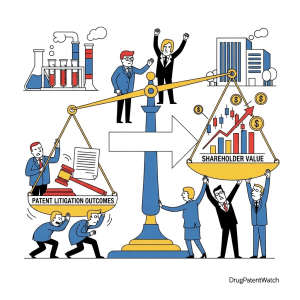
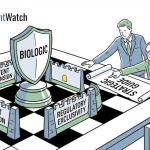
Patent litigation is far more than a line item in the legal department’s budget. It is a crucible where market dominance is forged, competitive landscapes are redrawn, and shareholder value is created or destroyed with the stroke of a judge’s pen. For the C-suite executives, portfolio managers, and IP strategists navigating this terrain, viewing these legal battles as mere cost centers is a profound strategic error. They are, in fact, pivotal, value-defining events—a form of high-stakes, information-based arbitrage where fortunes are made and lost.
The numbers are staggering. Bringing a single new drug to market is a decade-plus odyssey with a capitalized cost that can exceed $2.6 billion.1 The patent that protects this investment is the lifeblood of the company, the sole mechanism for recouping this massive outlay and funding the next generation of innovation. A lawsuit challenging that patent is not just a legal nuisance; it is an existential threat to a multi-billion-dollar revenue stream.
The core challenge for today’s industry leaders and investors is to evolve beyond merely reacting to the headlines of a court verdict. The real competitive advantage lies in proactively understanding, modeling, and anticipating the market’s reaction to the entire lifecycle of a patent dispute. It requires a deep, integrated understanding of the intricate dance between legal procedure, financial theory, and corporate strategy. Can you quantify the market impact of a negative Markman ruling? Can you model the probability of a patent surviving an Inter Partes Review and the corresponding effect on your competitor’s valuation?
This report provides the framework to do just that. We will first establish the theoretical underpinnings, exploring how financial markets process the information generated by legal conflicts. We will then dissect the legal battleground itself, mapping the key milestones in pharmaceutical patent litigation that act as catalysts for stock price movement. Finally, and most critically, we will conduct a deep-dive analysis of several landmark cases, using them as living laboratories to see these principles in action. By the end, you will have a strategic playbook for transforming patent litigation data from a reactive legal concern into a proactive tool for competitive and financial advantage.
The Market’s Gavel: Applying Financial Theory to Legal Warfare
Before we can analyze the impact of a specific court ruling, we must first understand the fundamental mechanism by which markets react to any new information. Why does a stock price move so violently in the moments after a verdict is announced? The answer lies in a cornerstone of financial economics, and its implications ripple through every aspect of a company’s financial strategy during a legal dispute.
The Efficient Market Hypothesis (EMH) in the Pharma Arena
At its core, the Efficient Market Hypothesis (EMH) is a deceptively simple idea: a company’s stock price reflects all available information.2 For our purposes, we focus on the
semi-strong form of the hypothesis, which posits that all publicly available information—from earnings reports and clinical trial data to, crucially, the filing of a patent lawsuit—is already baked into the price.4
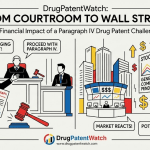
This isn’t an abstract academic theory; it’s the engine of market reaction. When a generic manufacturer files a Paragraph IV certification challenging a blockbuster drug’s patent, the subsequent drop in the brand company’s stock isn’t driven by panic. It is the result of thousands of rational investors instantly recalibrating their models of the company’s future cash flows. They are pricing in a new probability: the chance that the drug’s market exclusivity, and the billions in revenue it generates, will end sooner than previously expected.
To isolate and measure this impact, financial analysts use a powerful tool called an event study. This statistical method allows us to strip away the “noise” of the overall market’s daily fluctuations and pinpoint the specific stock price movement—the “abnormal return”—caused directly by the litigation event.6 An event study acts like a magnifying glass, allowing us to quantify, down to the basis point, precisely how much a specific court filing or judicial ruling was worth in the eyes of the market.
Of course, markets are not perfectly rational machines. The immense uncertainty inherent in patent litigation can trigger behavioral biases. Investors may overreact to preliminary news, leading to “excess volatility” that can’t be explained by fundamentals alone.8 This is particularly true in the biotechnology sector, which is already characterized by high volatility and information sensitivity.9 A rumor about a negative outcome in a
Markman hearing can send a small-cap biotech stock tumbling, even if the final ruling is weeks away. This interplay between rational information processing and behavioral overreaction creates both risk and opportunity.
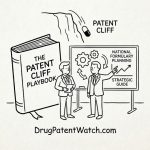
The application of the EMH to litigation is also profoundly asymmetric. The market prices in negative news, such as the initial filing of an infringement lawsuit, far more severely and durably than it prices in positive news, like a preliminary win for the plaintiff. The logic is straightforward. A loss for the patent holder can be catastrophic, triggering the infamous “patent cliff” where revenues for a blockbuster drug can plummet by 80-90% almost overnight as generics flood the market.10 A victory, on the other hand, often just restores the status quo—the company gets to keep the revenue stream that the market was already expecting. Because the potential downside of a loss is an order of magnitude greater than the potential upside of a win, the market’s reaction function is inherently skewed to the negative.
The Hidden Costs: How Litigation Risk Reshapes Corporate Finance
The impact of patent litigation extends far beyond the immediate stock price reaction to a court filing. The mere risk of litigation fundamentally alters a company’s financial behavior and strategic decision-making, creating significant hidden costs that savvy analysts must learn to identify.
One of the most well-documented phenomena is the “precautionary savings” motive. Academic research has consistently shown that firms facing higher litigation risk—whether from securities class actions or patent disputes—hold significantly more cash on their balance sheets.11 This isn’t a sign of robust financial health; it’s a defensive posture. Management is effectively building a war chest to fund protracted legal battles, pay expert witnesses, and cover potential settlements or damages. This capital hoarding comes at a steep price: every dollar held in reserve is a dollar not invested in promising R&D projects, strategic acquisitions, or returned to shareholders. An analyst observing a company’s cash-to-assets ratio steadily climbing, particularly when its key products are in crowded therapeutic areas or approaching patent expiration, may be witnessing a management team quietly preparing for a legal storm. This can be a powerful leading indicator of a lawsuit that has not yet been publicly filed.
This defensive crouch also has a chilling effect on investment and corporate communications. Studies have found that firms exposed to litigation risk tend to reduce their capital expenditures, preserving cash instead of investing in growth.11 They also become more guarded in their public statements, carefully managing earnings forecasts to avoid providing ammunition for future lawsuits. Managers facing high litigation risk tend to issue bad news forecasts with greater precision, while becoming more vague and less forthcoming with good news.14
Finally, it’s crucial to dispel the myth that shareholder litigation is always a net benefit to investors. While settlements can provide some recovery, the initial announcement of a lawsuit can inflict far greater damage.
A study by Navigant Economics found that shareholders lose an average of $39 billion annually in market value upon the announcement of securities class action lawsuits, compared to the average of $5 billion they receive in settlements. Since 1995, shareholders have lost at least $701 billion in investment value due to the filing of these suits.15
This reveals the process to be what many critics call a “pocket-shifting exercise,” where the cost of the settlement is ultimately borne by the company’s current shareholders to compensate former shareholders, with a significant portion consumed by legal fees for both plaintiff and defense counsel.15 The very announcement of the suit damages the very people it purports to help.
The Anatomy of a Patent War: Key Inflection Points for Investors
To translate the theories of market reaction into an actionable strategy, one must understand the battlefield. Pharmaceutical patent litigation is not a monolithic event but a series of discrete, predictable stages. Each stage is an inflection point that generates new information, reduces uncertainty, and forces the market to re-evaluate the odds of victory. Recognizing these milestones is the first step toward anticipating, rather than just reacting to, stock price movements.
The Small Molecule Gauntlet: Navigating the Hatch-Waxman Act
For traditional small-molecule drugs, the rules of engagement were defined by the landmark 1984 Drug Price Competition and Patent Term Restoration Act, better known as the Hatch-Waxman Act.1 This legislation created the modern generic drug industry and the highly structured litigation pathway that governs it.
The first shot is fired not when a generic drug is sold, but when a generic manufacturer files an Abbreviated New Drug Application (ANDA) with the FDA. If the generic company believes the brand’s patents are invalid, unenforceable, or will not be infringed by its product, it includes a Paragraph IV certification in its filing.16 This is a direct, formal challenge to the innovator’s intellectual property and the trigger for the entire litigation process.
Upon receiving notice of a Paragraph IV filing, the brand-name company is put on a 45-day clock.16 If it files a patent infringement lawsuit against the generic applicant within that window, it triggers an automatic
30-month stay of FDA approval for the generic drug.17 This stay is a powerful tool. It provides the brand company with a two-and-a-half-year grace period to litigate its patent rights without facing immediate competition in the marketplace. For investors, the filing of this suit is a clear signal of the brand’s intent to vigorously defend its market exclusivity.
The incentive for the generic company to mount such a challenge is equally powerful. The first generic manufacturer to file a successful Paragraph IV certification is rewarded with 180 days of market exclusivity, meaning it will be the only generic version of the drug available for six months.17 This can be an incredibly lucrative prize, often generating hundreds of millions of dollars in revenue and motivating the high-risk, high-reward strategy of patent litigation.
The Biologic Battlefield: The BPCIA and the “Patent Dance”
The world of large-molecule biologics and their biosimilar competitors operates under a different, and arguably more complex, framework: the Biologics Price Competition and Innovation Act (BPCIA) of 2009.19
Instead of the straightforward trigger of a Paragraph IV certification, the BPCIA established a convoluted, multi-step process for exchanging patent information known colloquially as the “patent dance”.16 This process involves a series of prescribed deadlines for the biosimilar applicant and the reference product sponsor (the brand company) to exchange lists of patents they believe could be infringed and to state their initial positions on validity and infringement.19 The goal is to identify and potentially narrow the scope of disputed patents before full-blown litigation begins.
A critical turning point in BPCIA litigation came with the Supreme Court’s 2017 decision in Sandoz Inc. v. Amgen Inc., which ruled that the patent dance is optional.19 A biosimilar applicant can choose to completely bypass this formal information exchange. This decision transformed the dance from a mandatory procedure into a crucial strategic choice.
Engaging in the dance can provide clarity and potentially limit the number of patents litigated in the first wave of lawsuits. However, it also forces the biosimilar applicant to reveal its legal strategy and invalidity arguments early on. Opting out of the dance preserves an element of surprise but can lead to a more sprawling and uncertain legal battle. For market analysts, the decision to dance—or not to dance—is a key strategic signal that provides insight into the biosimilar company’s confidence in its legal position and its overall appetite for risk.
Universal Milestones: The Events That Move Markets
While the regulatory frameworks differ, the core legal milestones that drive stock price movements are largely universal across both small-molecule and biologics litigation. These are the moments when significant new information becomes public, forcing the market to update its probabilities.
Filing the Complaint: This is the official start of the war. The market reaction is almost invariably negative for the defendant company, as investors price in the uncertainty, the direct costs of litigation, and the potential for lost future revenue.22
The Markman Hearing (Claim Construction): This is arguably the single most important pre-trial event in any patent case.24 In a Markman hearing, the judge—acting as a legal expert, not a jury—interprets the meaning of key, disputed words and phrases within the patent’s claims.25 The outcome is critical because the claims define the boundaries of the invention. A narrow interpretation by the judge can render a patent holder’s infringement case impossible to prove, while a broad interpretation can make the patent more vulnerable to being invalidated by prior art.24 Because of its dispositive nature, a Markman ruling frequently triggers significant stock price movement and is often the catalyst for settlement negotiations.26
Inter Partes Review (IPR): This is a parallel track for challenging a patent’s validity. An accused infringer (or any third party) can petition the Patent Trial and Appeal Board (PTAB), an administrative body within the U.S. Patent and Trademark Office, to review whether a patent should have been granted in the first place. The PTAB’s decision to “institute” an IPR is a significant negative signal for the patent holder, as the Board has historically invalidated a high percentage of the claims it agrees to review. This process has been notoriously used by hedge funds, who file an IPR petition and simultaneously short the patent holder’s stock, profiting from the predictable price drop when their challenge is publicly announced.28
Trial Verdict: The decision by a judge or jury on the ultimate questions of infringement and validity is a binary, high-impact event. The announcement can cause immediate, double-digit percentage swings in the stock prices of the involved companies, especially if it includes a surprisingly large damages award.29
Federal Circuit Appeal: For most patent cases, the final arbiter is the U.S. Court of Appeals for the Federal Circuit, a specialized court with exclusive jurisdiction over patent appeals. The Federal Circuit’s decision can affirm, reverse, or modify the district court’s ruling, often leading to another round of significant market volatility as the final outcome becomes clear.
To distill this complex process into a practical tool, the following table provides a quick-reference guide to the most common litigation events and their anticipated impact on the market.
Table 1: Key Litigation Events and Their Anticipated Market Impact
Event
Typical Plaintiff Stock Reaction
Typical Defendant Stock Reaction
Strategic Implication
ANDA Filing with P-IV
Neutral to slightly positive. Signals potential future revenue.
Negative. Introduces new, material risk to a key revenue stream.
The first public signal of a challenge. The 45-day clock for the brand to sue begins.
Complaint Filed (within 45 days)
Mildly positive. Confirms intent to defend IP.
Negative. Confirms litigation and triggers the 30-month stay.
The market now has a ~2.5-year window of revenue certainty for the brand drug.
PTAB Institutes IPR
N/A (Petitioner can be anyone)
Strongly Negative. High historical invalidation rate at PTAB.
A significant threat to patent validity, often viewed more negatively than a district court suit.
Markman Ruling (Favorable to Plaintiff)
Positive. Broad claim construction strengthens infringement case.
Negative. Narrow path to proving non-infringement.
Increases probability of plaintiff win or favorable settlement.
Markman Ruling (Favorable to Defendant)
Negative. Narrow claim construction weakens infringement case.
Positive. Broadens path to non-infringement or invalidity arguments.
Increases probability of defendant win or dismissal.
Jury Verdict for Plaintiff (Infringement & Validity)
Strongly Positive. Validates patent and future revenue stream.
Strongly Negative. Confirms infringement, potential damages, and risk of injunction.
The most significant positive catalyst for the plaintiff, though subject to appeal.
Jury Verdict for Defendant (Non-infringement or Invalidity)
Strongly Negative. Invalidates patent, opening door to competition.
Strongly Positive. Removes litigation overhang and threat to market entry.
The most significant positive catalyst for the defendant.
Federal Circuit Appeal Affirmance
Solidifies the district court outcome and stock reaction.
Solidifies the district court outcome and stock reaction.
Reduces uncertainty and ends the litigation for most practical purposes.
Federal Circuit Appeal Reversal
Reverses the district court outcome and stock reaction.
Reverses the district court outcome and stock reaction.
A major market-moving event, creating a dramatic swing in fortunes.
Case Study Deep Dive I: Amgen vs. Sanofi – A Landmark Battle Over Enablement and Billions in Cholesterol Drug Sales
Few patent disputes have reshaped an entire therapeutic class and clarified a fundamental doctrine of patent law as profoundly as the multi-year, multi-billion-dollar war between Amgen and Sanofi/Regeneron over their revolutionary cholesterol-lowering drugs. This case serves as a masterclass in the volatility of biologics litigation and the paramount importance of a patent’s scientific disclosure.
The Stakes: A New Class of Blockbuster Cholesterol Drugs
For decades, statins were the undisputed kings of cholesterol management. The arrival of PCSK9 inhibitors represented a paradigm shift. These powerful monoclonal antibodies could dramatically lower LDL (“bad”) cholesterol in patients who didn’t respond to or couldn’t tolerate statins. Both Amgen’s Repatha® (evolocumab) and Sanofi/Regeneron’s Praluent® (alirocumab) showed immense promise and were projected to become blockbuster products with billions in annual sales.31
The legal battle centered on the breathtaking scope of Amgen’s patents. They didn’t just claim the 26 specific antibodies they had successfully created and tested. Instead, they laid claim to the entire functional genus of antibodies that accomplished two things: 1) binding to a specific region, or “sweet spot,” on the PCSK9 protein, and 2) by doing so, blocking PCSK9 from destroying LDL receptors.34 It was an audacious legal strategy designed not just to protect Repatha, but to lock competitors like Sanofi and Regeneron out of the entire therapeutic mechanism.
The Litigation Timeline and Market Reaction
The case was a rollercoaster of verdicts, injunctions, and appeals, with each turn sending shockwaves through the stock prices of the three companies involved: Amgen (AMGN), Sanofi (SNY), and Regeneron (REGN).
March 2016: Amgen’s Initial Triumph. A federal jury in Delaware delivered a huge victory for Amgen, finding its patents valid.38 The market reacted swiftly. Trading in Regeneron’s stock was halted due to the sharp sell-off, as investors began to price in the very real possibility that Praluent would either be forced off the market or be subject to hefty royalty payments to Amgen, with analyst estimates ranging from 5% to over 20% of sales.38
January 2017: The Injunction. The district court judge granted Amgen’s request for a permanent injunction, a potential death blow to Praluent in the U.S. market.32 This ruling represented the zenith of Amgen’s legal leverage and the moment of maximum peril for Sanofi and Regeneron. The companies immediately vowed to appeal, calling the patent claims invalid and arguing that removing Praluent would disserve patients.40
February 2017: A Glimmer of Hope. The U.S. Court of Appeals for the Federal Circuit granted Sanofi and Regeneron’s motion to stay the injunction while the appeal was pending.41 This was a critical reprieve, allowing Praluent to remain on the market and signaling to investors that the specialized appeals court saw significant merit in the defendants’ arguments. The market breathed a collective sigh of relief, and the stocks of Sanofi and Regeneron recovered some of their losses.
October 2017: The Tables Turn. In a stunning reversal, the Federal Circuit vacated Amgen’s victory and ordered a new trial. The court ruled that the trial judge had made a critical error by improperly excluding evidence that Sanofi and Regeneron wanted to present on the issues of written description and enablement.42 This decision completely reset the litigation, erasing Amgen’s hard-won advantage and sending the multi-million-dollar case back to square one. The market was forced to drastically re-calculate the probabilities, slashing the odds of an Amgen win.
2019-2021: The Focus on Enablement. The case proceeded through a second trial and a second appeal, but this time the legal focus sharpened onto a single, critical issue: enablement. The Federal Circuit ultimately affirmed a ruling that Amgen’s broad genus claims were invalid because the patent did not adequately teach a person skilled in the art how to make and use the full scope of the invention without “undue experimentation”.43 The court found that Amgen’s proposed “roadmap” for discovering other functional antibodies was little more than a trial-and-error research plan.
May 2023: The Supreme Court’s Final Word. The U.S. Supreme Court took the case and, in a unanimous decision, affirmed the Federal Circuit’s ruling.34 The highest court in the land solidified the principle that if you want to claim a vast universe of potential inventions defined by their function, your patent must provide a commensurate level of teaching to the public. The long war was finally over, with a decisive victory for Sanofi and Regeneron.
The Strategic Fallout and Broader Implications
The Amgen v. Sanofi decision has become the new lodestar for patenting biologics, with profound implications for R&D, patent strategy, and investment analysis.
The core lesson is the muscularity of the enablement standard under 35 U.S.C. §112. The case powerfully affirmed that a patent is a bargain with the public: in exchange for a limited monopoly, the inventor must provide a disclosure that is truly enabling.37 For functionally-defined genus claims, especially in an unpredictable field like antibody engineering, this means providing extensive working examples and a clear, reliable method for producing other embodiments across the full scope of the claim.46
For investors and analysts, the case highlights the danger of overvaluing a patent based on the breadth of its claims alone. The market’s initial positive reaction to Amgen’s 2016 jury verdict was, in hindsight, a miscalculation. It failed to properly weigh the significant risk that these broad claims would be invalidated on appeal for failing the enablement test. The true value of a biologic patent lies not just in what it claims, but in what it teaches.
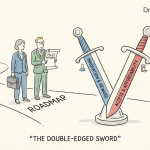
This outcome effectively provides a “biosimilar roadmap.” By striking down overly broad genus claims, the courts have cleared a path for competitors. A biosimilar developer no longer lives in fear of infringing a patent that vaguely claims every possible antibody that hits a certain target. Instead, they can focus their efforts on designing around the specific, well-defined antibody structures that the innovator has actually invented, described, and enabled in their patent. This reduction in legal uncertainty should, over the long term, lower the barrier to entry for biosimilars, accelerate competition, and be factored into the valuation models for both innovator and biosimilar companies.
Table 2: Amgen vs. Sanofi Litigation Timeline vs. Stock Performance
Date
Legal Event
Court
AMGN Stock Change (1-Day %)
REGN Stock Change (1-Day %)
SNY Stock Change (1-Day %)
Analyst Commentary/Interpretation
Mar 16, 2016
Jury finds Amgen’s patents valid.
D. Del.
+1.9%
-3.8% (trading halted)
-2.1%
Major victory for Amgen; market prices in royalty risk for Praluent.
Jan 5, 2017
Court grants permanent injunction against Praluent.
D. Del.
+2.4%
-1.5%
-0.8%
Peak risk for Sanofi/Regeneron; Praluent faces removal from U.S. market.
Feb 8, 2017
Appeals court stays the injunction.
Fed. Cir.
-0.5%
+3.1%
+1.2%
Significant relief for Praluent; signals appeals court sees merit in the challenge.
Oct 5, 2017
Appeals court vacates verdict, orders new trial.
Fed. Cir.
-1.8%
+2.7%
+0.9%
Major setback for Amgen; litigation reset to square one.
Feb 11, 2021
Appeals court affirms invalidity for lack of enablement.
Fed. Cir.
-0.9%
+1.1%
+0.7%
The key legal issue is decided against Amgen, tilting the case decisively.
May 18, 2023
Supreme Court unanimously affirms invalidity.
SCOTUS
-0.3%
+1.9%
+0.5%
Final verdict. Confirms the higher bar for enablement of broad biologic claims.
Note: Stock price changes are illustrative of the direction and general magnitude of market reaction on the day of or day after the news.
Case Study Deep Dive II: Gilead vs. Merck – When a $2.5 Billion Verdict Vanishes on “Unclean Hands”
If the Amgen case was a lesson in patent law’s technical requirements, the epic battle between Gilead and Merck over the revolutionary Hepatitis C cure Sovaldi was a brutal lesson in legal ethics and litigant conduct. This case demonstrates that even a technically sound patent can be rendered worthless if the path to its assertion is paved with misconduct, introducing a powerful and unpredictable variable into the valuation equation.
The Revolution in Hepatitis C and the Race for a Cure
The development of direct-acting antivirals for Hepatitis C was a watershed moment in modern medicine. For the first time, a chronic, debilitating viral infection could be cured in a matter of weeks with a simple pill. Gilead Sciences, through its savvy $11 billion acquisition of Pharmasset, found itself in possession of the crown jewel: sofosbuvir, marketed as Sovaldi® and a key component of Harvoni®.48 The drugs were an unprecedented commercial success, generating over $19 billion in revenue in 2015 alone and completely dominating the market.48
This success did not go unnoticed. Merck & Co., a long-time player in the Hepatitis C space, acquired Idenix Pharmaceuticals for $3.8 billion, in part to bolster its own pipeline and patent position.51 Merck, through Idenix, asserted that Gilead’s sofosbuvir infringed on its foundational patents covering a class of nucleoside analogues used to treat the virus.52 The stage was set for a legal war over a market worth tens of billions of dollars.
The Rollercoaster in Court: From a Record Verdict to Reversal
The litigation played out in multiple venues, producing a series of shocking and contradictory outcomes that whipsawed investors.
December 2016: The Record-Breaking Verdict. A federal jury in Delaware delivered a stunning blow to Gilead, ordering it to pay Merck $2.54 billion in damages—at the time, the largest patent infringement verdict in U.S. history.54 The jury found that Gilead’s sales of Sovaldi and Harvoni infringed a valid Idenix patent and, critically, that the infringement was “willful.” This opened the door for the presiding judge to potentially triple the damages to over $7.5 billion. For Gilead shareholders, this was a cataclysmic event, introducing a massive liability that threatened the company’s financial results.53
The Parallel Front and the “Unclean Hands” Defense. While the Delaware case grabbed headlines, a separate, smaller-stakes trial was proceeding in California over different but related Merck patents. In that case, a jury had awarded Merck a $200 million verdict. However, during the post-trial phase, Gilead’s legal team made a fateful discovery. They unearthed evidence suggesting that a senior Merck patent attorney, who was also a chemist, had lied under oath during his deposition. He had denied participating in a 2004 confidential conference call with scientists from Pharmasset (before Gilead acquired it), when in fact he had been on the call and had learned crucial, confidential details about sofosbuvir’s chemical structure.57
June 2016: The California Reversal. Armed with this new evidence, Gilead argued that Merck had “unclean hands”—a legal doctrine that bars a plaintiff from relief if they have acted unethically or in bad faith in relation to the subject of the lawsuit. The California judge agreed in a scathing opinion, throwing out the entire $200 million verdict. The judge found a “pervasive pattern of misconduct,” calling the Merck attorney’s actions “dishonest and duplicitous” and concluding that Merck was guilty of “egregious misconduct”.53 This ruling in the smaller case was a thunderclap, providing a powerful legal precedent and a clear signal of what might happen in the multi-billion-dollar Delaware case.
February 2018: The Delaware Domino Falls. The judge in the main Delaware case followed suit. He granted Gilead’s post-trial motion for judgment as a matter of law, finding Merck’s patent invalid and completely wiping out the $2.54 billion verdict.53 The market reaction was one of profound relief for Gilead, as a multi-billion-dollar liability vanished overnight.
April 2018: The Final Victory. The Federal Circuit affirmed the California court’s “unclean hands” judgment, effectively slamming the door on Merck’s claims and cementing one of the most dramatic reversals in the history of patent law.52
Lessons in Due Diligence and Litigant Integrity
The Gilead vs. Merck saga is a stark reminder that patent litigation is not a sterile, academic exercise focused solely on the science. It is a human endeavor where the conduct and integrity of the litigants can be as decisive as the technical merits of their patents.
For investors and analysts, this case introduces a new and challenging dimension of risk to model: litigant integrity risk. The market’s initial reaction to the $2.54 billion verdict was based on the jury’s assessment of the patent’s validity and infringement—its “technical value.” The ultimate outcome, however, had nothing to do with the science and everything to do with the unethical behavior of a single attorney years earlier. This means that even a patent that appears strong on paper can be rendered unenforceable if it was prosecuted or asserted through misconduct.
This reality elevates the importance of due diligence beyond the patent file itself. It now requires an assessment of a company’s litigation history, its corporate culture, and the reputation of its legal and business development teams. A pattern of aggressive, “sharp-elbowed” tactics is no longer just a reputational issue; it is a quantifiable financial risk that can invalidate a company’s most valuable assets.
In a fascinating epilogue to this bitter war, Gilead and Merck announced in 2021 that they were entering into a major collaboration to co-develop and co-commercialize a long-acting HIV treatment regimen, combining key investigational drugs from each company’s pipeline.64 This surprising turn from fierce courtroom adversaries to strategic partners illustrates another profound truth: even the most acrimonious litigation can serve as a powerful, if costly, value-discovery mechanism. The legal battle forced a clear-eyed assessment of each company’s strengths and weaknesses, ultimately paving the way for a partnership that created more value for shareholders than continued conflict.
Table 3: Gilead vs. Merck Litigation Timeline vs. Stock Performance
Date
Legal Event
Court
GILD Stock Change (1-Day %)
MRK Stock Change (1-Day %)
Analyst Commentary/Interpretation
Mar 22, 2016
Jury finds Merck patents valid, awards $200M.
N.D. Cal.
-3.9%
+0.6%
Initial win for Merck, but damages are modest relative to Sovaldi sales.
Jun 6, 2016
Judge overturns $200M verdict on “unclean hands.”
N.D. Cal.
+1.7%
-1.1%
Shocking reversal based on misconduct; creates major precedent for the larger case.
Dec 15, 2016
Jury awards Merck a record $2.54 billion in damages.
D. Del.
-2.8%
+1.4%
Massive liability for Gilead; market prices in significant financial risk.
Feb 15, 2018
Judge overturns the $2.54B verdict, finding patent invalid.
D. Del.
+3.6%
-0.9%
Complete reversal of fortune; multi-billion dollar risk evaporates for Gilead.
Apr 25, 2018
Appeals court affirms “unclean hands” judgment.
Fed. Cir.
+0.8%
-0.3%
Final nail in the coffin for Merck’s infringement claims against Gilead.
Note: Stock price changes are illustrative of the direction and general magnitude of market reaction on the day of or day after the news.
Case Study Deep Dive III: Mylan vs. Teva – The EpiPen Saga and the Shadow of Antitrust
Not all patent litigation battles are fought over novel chemistry or groundbreaking biologics. Sometimes, the dispute centers on the device that delivers an old, off-patent drug, and the litigation itself becomes a piece of a much larger, more complex puzzle involving pricing, market access, and allegations of anti-competitive behavior. The long-running saga over Mylan’s EpiPen is a prime example of how patent law can intersect with antitrust law, creating a unique set of risks and market reactions.
The core technology of the EpiPen is an auto-injector that delivers a dose of epinephrine, a generic drug, to treat severe allergic reactions (anaphylaxis). Mylan’s market dominance was not based on the drug itself, but on the patents covering its proprietary auto-injector device.66 Over a period of years, Mylan systematically increased the price of a two-pack of EpiPens from around $100 to over $600, sparking public outrage and intense political scrutiny.67
The patent litigation aspect of this story centers on Teva Pharmaceuticals, which developed a generic version of the EpiPen. Mylan sued Teva for patent infringement in 2009.68 The case, however, did not proceed to a verdict. In 2012, the two companies reached a settlement. The terms of that confidential agreement delayed Teva’s potential launch of its generic competitor until June 2015.69
This settlement became the focal point of subsequent legal challenges. Class-action lawsuits filed by direct purchasers, consumers, and third-party payors alleged that the Mylan-Teva deal was a form of “pay-for-delay” or “reverse payment”.67 This is an arrangement where a brand-name drug manufacturer pays a generic competitor to delay the entry of its lower-cost alternative, thereby preserving the brand’s monopoly and high prices. Such agreements have come under intense scrutiny from the Federal Trade Commission (FTC) and the courts following the Supreme Court’s landmark 2013 decision in
FTC v. Actavis.67
In this case, the market’s reaction was driven less by the technical merits of Mylan’s device patents and more by the mounting legal and political pressure related to antitrust concerns. The stock price became sensitive to news of congressional investigations, the filing of class-action lawsuits alleging a conspiracy to monopolize the market, and the constant negative press surrounding the price hikes.69 Investors were not pricing in the risk of patent invalidation, but rather the risk of massive government fines and civil settlements for anti-competitive conduct.
Ultimately, the patent dispute was subsumed by the larger antitrust storm. Mylan (now Viatris) and other parties ended up paying hundreds of millions of dollars to settle the various class-action lawsuits that accused them of conspiring to delay generic competition and overcharging for EpiPens.71
The key takeaway from the EpiPen saga is that patent litigation settlements are not always the end of a legal story; sometimes, they are the beginning of a new, more dangerous one. The terms of a settlement can create a distinct and material legal risk if they are perceived as anti-competitive. For an analyst, the resolution of a standard patent infringement suit can trigger the need for an entirely new analysis rooted in antitrust law. The critical question shifts from “Is the patent valid?” to “Does the settlement illegally restrain trade?” This demonstrates how one form of legal risk can morph into another, requiring a multi-disciplinary approach to truly understand a company’s legal exposure.
A Non-Pharma Benchmark: Lessons from the Apple vs. Samsung Smartphone Wars
To fully appreciate the unique dynamics of pharmaceutical patent litigation, it is instructive to compare it to a high-stakes battle in another technology-driven industry. The multi-year, global patent war between Apple and Samsung over the design and functionality of their smartphones provides a valuable benchmark, highlighting both universal principles and the specific factors that make pharma litigation a world unto itself.73
The conflict, which began in 2011, was a sprawling affair, involving over 50 lawsuits across four continents.74 Apple accused Samsung of slavishly copying the “look and feel” of the iPhone, infringing on its design patents for features like rounded corners and its grid of icons, as well as utility patents for functions like “tap-to-zoom” and “bounce-back” scrolling.75 Samsung countersued, alleging Apple infringed its patents on mobile communication technologies.74
Several aspects of this tech war echo the dynamics seen in pharma:
Negative Impact on the Defendant: Consistent with academic findings across industries, being sued for patent infringement had a negative impact on the defendant’s stock price and market capitalization.77
“Bet-the-Product” Stakes: The litigation posed a direct threat to Samsung’s ability to sell its flagship Galaxy smartphones in the lucrative U.S. market, much like a patent suit can block a blockbuster drug.78
Global Complexity: The sheer number of international lawsuits demonstrated the immense cost and complexity of defending a global IP portfolio against a determined competitor.
However, the differences between the smartphone wars and a typical pharma patent dispute are even more revealing:
The Absence of Regulatory Stays: The tech industry has no equivalent to the Hatch-Waxman Act’s 30-month stay. When Apple sought an injunction to block sales of Samsung phones, the threat was immediate. This creates a more volatile and unpredictable environment for investors, as a key product line could be shut down with little warning. The 30-month stay in pharma, by contrast, provides a predictable, price-able window of market stability for the brand company, even in the midst of litigation.16
“Artificial” vs. Actual Infringement: In pharma, infringement is often “artificial,” triggered by the mere act of filing an application with the FDA.16 In the Apple-Samsung case, infringement was based on the actual manufacturing and selling of millions of physical devices.
Damages Calculation: A key Supreme Court decision arising from the case, Samsung v. Apple, fundamentally changed how damages for design patent infringement are calculated. The Court ruled that damages could be based on the profits attributable to a specific infringing component (like the phone’s outer case) rather than the entire profit from the end product.73 In pharma, damages are more typically calculated based on the lost profits or a reasonable royalty on the entire drug product, as the active ingredient is inseparable from the final value.
The primary lesson from this comparison is that the unique regulatory frameworks governing the pharmaceutical industry, while complex, act as a significant market-stabilizing force during patent disputes. The 30-month stay provides a defined “safe harbor” period, allowing analysts to model a brand’s revenue with a degree of certainty that would be impossible in the tech world. While the ultimate outcome of the litigation remains a source of volatility, the timing of the competitive threat is far more structured and predictable. This structural feature is a key differentiator that must be incorporated into any cross-industry analysis of litigation risk.
Quantifying the Impact: A Synthesis of Academic Findings
While case studies provide rich, narrative detail, a broader, quantitative understanding of the market’s reaction to patent litigation comes from synthesizing the results of numerous academic event studies. This body of research, examining hundreds of lawsuits over several decades, reveals consistent and statistically significant patterns that form the bedrock of any data-driven litigation analysis.
The High Cost of Being Sued: The most robust finding in the literature is that the filing of a patent infringement lawsuit has a significant, negative impact on the defendant firm’s market value. On average, studies have documented abnormal negative returns for defendant firms ranging from 0.85% to over 2% in the short window around the lawsuit’s announcement.7 For a company with a $50 billion market capitalization, a 2% drop represents a staggering $1 billion loss in shareholder value, purely from the introduction of litigation risk.
The Asymmetric Reaction: The market’s reaction is notably asymmetric. The negative stock price impact on the defendant is consistently larger and more statistically significant than any positive impact on the plaintiff.80 This reinforces the idea that litigation is often a defensive act for the plaintiff. A win merely preserves a revenue stream that investors were already modeling, whereas a loss for the defendant can mean the complete erosion of that stream. The risk of loss is more potent than the prospect of victory.
The Small-Firm Disadvantage: The financial pain of litigation is not distributed equally. Smaller, emerging, and specialized firms, particularly in the biotech sector, suffer disproportionately when sued. They experience significantly more negative abnormal returns and higher, more persistent stock price volatility compared to their large-cap, diversified counterparts.22 A single “bet-the-company” lawsuit can be an existential threat for a small biotech whose entire valuation is tied to a single patent or platform technology, as it can cripple their ability to raise the capital necessary to fund both the litigation and their ongoing R&D.22
Volatility as the New Normal: Innovation and litigation risk go hand-in-hand. Research shows that stock return volatility is inherently higher for firms that invest more in R&D and hold more patents. This volatility is significantly amplified during a patent dispute.8 Litigation events, with their binary outcomes and high levels of uncertainty, are a primary driver of these price swings.
These aggregated findings provide a powerful statistical foundation for strategic decision-making. For instance, the data strongly suggests that a trading strategy of shorting the stock of a small-cap biotech company immediately upon the public announcement that it is being sued by a well-capitalized pharmaceutical giant is statistically sound. The market is likely to price in not only the direct legal risk but also a “cost of capital” risk, as the smaller firm’s access to funding may be constrained. The combination of these factors, coupled with the asymmetric downside risk, creates a high probability of a sharp, predictable decline in the defendant’s stock price.
The Strategist’s Playbook: Leveraging Patent Intelligence for Competitive Advantage
Understanding the theoretical and historical impact of patent litigation is only the first step. The ultimate goal is to transform this knowledge into a tangible competitive advantage. This requires moving patent analysis out of the legal silo and integrating it into the core strategic functions of the organization, from R&D planning to M&A due diligence, using sophisticated tools to turn raw data into actionable intelligence.
From Defense to Offense: Integrating Litigation Analysis into Corporate Strategy
For too long, patent strategy has been viewed as a defensive, legalistic function. A modern, data-driven approach reframes it as a proactive, offensive weapon for value creation.
De-Risking the R&D Pipeline: Before a company invests hundreds of millions of dollars and a decade of research into a new drug candidate, a rigorous “freedom to operate” (FTO) analysis is not just a box-checking exercise; it is a critical strategic imperative. By systematically mapping the existing patent landscape, a company can identify and design around potential infringement risks early in the development process, avoiding a costly and potentially fatal lawsuit upon launch.10
Informing M&A Due Diligence: As our case studies vividly illustrate, the value of a target company’s patent portfolio is not a simple matter of counting patents. Acquirers must conduct deep diligence on the litigation history and intrinsic strength of the target’s IP. A patent that looks powerful on its face may be vulnerable to an enablement challenge (Amgen) or rendered unenforceable by prior misconduct (Merck).83 A thorough analysis of the target’s patent prosecution history and past litigation conduct is essential to accurately value the assets being acquired.
Competitive Intelligence and Forecasting: Systematically tracking competitors’ patent filings, PTAB challenges, and ongoing litigation provides a powerful early warning system. It offers a window into their R&D priorities, their strategic focus, and their potential new product launches years before they are publicly announced.85 This intelligence allows a company to anticipate competitive threats, identify “white space” opportunities in the market, and make more accurate long-range forecasts.
The Analyst’s Toolkit: Using Platforms like DrugPatentWatch
Executing this level of sophisticated, integrated analysis is nearly impossible using manual methods and disparate public databases. It requires a specialized business intelligence platform designed specifically for the biopharmaceutical industry. Platforms like DrugPatentWatch serve this critical function, aggregating and connecting the vast streams of patent, litigation, regulatory, and commercial data needed to make informed strategic decisions.88
Here is how such a platform transforms theory into practice:
Real-Time Monitoring of Litigation Triggers: Instead of waiting for a press release, users can set up automated alerts to be notified instantly of key litigation events, such as a competitor’s ANDA filing with a Paragraph IV certification, the filing of a new infringement complaint, or a decision by the PTAB to institute an IPR.91 This real-time intelligence allows for immediate analysis and response, providing a crucial time advantage over competitors relying on slower news cycles.
Deep Competitor Portfolio Assessment: A key function is the ability to conduct a deep dive into a competitor’s entire patent portfolio. An analyst can scrutinize the claim language, review the back-and-forth with the patent examiner during prosecution, and analyze the outcomes of any prior litigation involving those patents.10 This is precisely the level of detail needed to apply the lessons from our case studies—for example, to assess the likelihood that a competitor’s broad biologic patent claims would withstand an Amgen-style enablement challenge.
Uncovering “Hidden” Financial Data: One of the most valuable features of a platform like DrugPatentWatch is its access to data on confidential settlements and royalty terms from past disputes.90 This is a game-changer for financial modeling. Instead of guessing at a reasonable royalty rate in a current lawsuit, an analyst can reference the actual rates agreed to in similar, previously settled cases. This transforms a key variable in the valuation model from a rough estimate into a data-driven input, dramatically improving the accuracy of financial forecasts.
Predictive Analytics for Market Entry: By integrating patent expiration dates, regulatory exclusivity periods, and real-time litigation data, these platforms can generate more accurate predictions for generic and biosimilar launch dates.17 This allows brand companies to better prepare for the patent cliff and helps generic manufacturers identify the most promising and timely market entry opportunities.
The true strategic power of a patent intelligence platform lies not in any single data point, but in its ability to connect these disparate pieces of information into a coherent, holistic picture. It allows an organization to see that a competitor has just filed a series of new formulation patents (an R&D event), that they have a history of settling litigation with a specific type of licensing agreement (a legal event), and that they recently announced a new manufacturing partnership (a commercial event). By connecting these dots, a strategist can deduce the competitor’s entire lifecycle management plan for a key drug, a third-order insight that is impossible to achieve when data remains trapped in functional silos. This is how biopharmaceutical companies move from a reactive legal posture to a proactive, predictive business strategy.
Conclusion: Navigating the New Frontier of IP Valuation
The relationship between patent litigation and stock prices is a complex, dynamic, and critically important force in the biopharmaceutical industry. As we have seen, the market is an efficient, if sometimes volatile, processor of legal information. It reacts swiftly and rationally to the discrete, high-impact events that define the lifecycle of a patent dispute, from the initial complaint to the final appeal.
Our analysis has revealed several core truths. First, key legal milestones—the Paragraph IV filing, the Markman hearing, the trial verdict, the IPR institution—are predictable catalysts for significant stock price movement. Second, the impact of these events is asymmetric, with the negative consequences for a defendant typically outweighing the positive gains for a plaintiff. Third, the intrinsic nature of the patent and the extrinsic conduct of the litigants are both powerful drivers of value; a patent’s claims can be rendered worthless by a failure to enable (Amgen v. Sanofi) or by the “unclean hands” of its owner (Gilead v. Merck).
In this environment, a deep, nuanced understanding of the interplay between patent law, financial theory, and corporate strategy is no longer a niche specialty for lawyers and analysts. It is a core competency for anyone seeking to build and preserve value in the modern biopharmaceutical landscape. The ability to anticipate legal challenges, model their financial impact, and leverage sophisticated intelligence tools like DrugPatentWatch to inform decision-making is what separates the industry leaders from the laggards.
The future promises only greater complexity. The rise of artificial intelligence in drug discovery will challenge our very definition of inventorship.94 The increasing use of third-party litigation financing will alter settlement dynamics.95 And the growing convergence of patent and antitrust law will create new layers of legal risk.67 Navigating this new frontier will require constant vigilance, multi-disciplinary expertise, and an unwavering commitment to data-driven strategy. The companies and investors who master this domain will be the ones who not only survive the patent wars but emerge from them stronger, smarter, and more valuable.
Key Takeaways
Litigation is a Value-Defining Event: Treat patent litigation not as a legal cost, but as a core driver of shareholder value. Key milestones like Markman hearings and IPR institutions are predictable stock price catalysts.
The Market Reacts Asymmetrically: The negative stock price impact on a company being sued is consistently greater than the positive impact on the plaintiff. A loss can be catastrophic (patent cliff), while a win often just restores the expected status quo.
Enablement is King for Biologics: The Amgen v. Sanofi Supreme Court ruling has made the “enablement” standard a primary battleground. Broad, functionally-defined patent claims for biologics are now highly vulnerable unless supported by extensive data and working examples.
Conduct Matters as Much as Content: The Gilead v. Merck case proves that even a multi-billion-dollar infringement verdict can be erased by litigant misconduct. “Unclean hands” is a material financial risk that must be factored into due diligence.
Small Firms Suffer Disproportionately: Patent litigation has a more severe negative impact on the stock price and volatility of smaller, less-diversified biotech firms, for whom a single lawsuit can be an existential threat.
Pharma’s Regulatory Framework Stabilizes Risk: Compared to the tech industry, the Hatch-Waxman Act’s 30-month stay provides a predictable window of stability, making litigation risk more quantifiable for investors.
Settlements Can Create New Risks: A patent litigation settlement can resolve one legal issue while creating another. “Pay-for-delay” or other anti-competitive terms can trigger new, costly antitrust litigation.
Cash is a Litigation Indicator: A company’s rising cash-to-assets ratio, especially when key patents are nearing expiration, can be a leading indicator that management is building a war chest in anticipation of litigation.
Intelligence Platforms are Essential: To effectively analyze and anticipate market reactions, firms must use specialized platforms like DrugPatentWatch to integrate real-time litigation data, competitor patent portfolios, and confidential settlement terms into their strategic planning.
Transform Data into Strategy: The ultimate goal is to use patent and litigation intelligence proactively to de-risk R&D pipelines, conduct more accurate M&A due diligence, and gain a predictive edge in competitive intelligence.
Frequently Asked Questions (FAQ)
1. How does the specific venue of a patent lawsuit (e.g., Eastern District of Texas vs. District of Delaware) affect market expectations and stock volatility?
The choice of venue can significantly influence market expectations due to the perceived “friendliness” of certain courts toward patent holders or defendants. Historically, the Eastern District of Texas was known for being plaintiff-friendly, with juries that were more likely to find infringement and award large damages. A lawsuit filing in this district might have historically caused a sharper negative reaction in a defendant’s stock. Conversely, the District of Delaware is known for its experienced judiciary in complex corporate and patent law, often seen as a more neutral and predictable venue. The market may view a case in Delaware with less immediate volatility, pricing in a more deliberate and technically-focused legal process. Analysts often track judge-specific statistics on claim construction, summary judgment, and trial outcomes, and a case being assigned to a judge with a known track record on patent issues can itself be a minor, price-moving event.
2. In the Amgen v. Sanofi case, the Supreme Court focused on “enablement.” How should analysts evaluate the parallel risk of a patent being invalidated on “written description” grounds?
While enablement was the deciding factor in Amgen, the “written description” requirement is an equally potent, though distinct, defense. Enablement is forward-looking: it asks if the patent teaches how to make and use the full scope of the invention. Written description is backward-looking: it asks if the patent shows that the inventor was actually in possession of the full scope of the invention at the time of filing. For an analyst evaluating a biologic patent, this means asking two separate questions. For enablement: “Does the patent provide enough examples and a reliable method to create the claimed class of antibodies?” For written description: “Is there enough detail in the patent to show the inventor conceived of the common structural features that define the entire class of antibodies they are claiming?” A patent could fail written description if it claims a broad genus but only describes a few disparate examples without identifying a unifying structural characteristic, even if it provides a method (like Amgen’s “roadmap”) for trying to find more. It’s a subtle but critical distinction, and both represent significant invalidity risks.
3. Given the high cost of litigation, how can a small biotech company signal to the market its willingness and ability to defend its core patents against a larger challenger?
This is a critical strategic communication challenge. A small biotech can signal its resolve in several ways. First, proactively highlighting the strength and depth of its patent portfolio in investor presentations before any litigation begins is crucial. Second, upon being sued, a swift and strongly-worded public response, coupled with the immediate hiring of a top-tier, reputable patent litigation law firm, sends a powerful signal of intent. Third, the company can pursue Inter Partes Review (IPR) against the challenger’s own patents, demonstrating an offensive capability and a willingness to fight fire with fire. Finally, securing litigation financing from a specialized third-party fund can be a major signal. Announcing such a partnership tells the market that an experienced, financially-motivated third party has vetted the case and believes it has merit, and that the company now has the financial resources to see the fight through to the end, mitigating the risk that it will be forced into a cheap settlement.
4. How might the increasing use of legal financing by third parties in patent litigation change the risk calculus and settlement dynamics for publicly traded companies?
The rise of litigation finance introduces a new, highly sophisticated player into the ecosystem.95 For a smaller plaintiff company, it levels the playing field, allowing them to withstand the “war of attrition” tactics of a larger defendant. This increases the defendant’s risk, as they can no longer count on outspending their opponent. For defendants, it means that a lawsuit backed by a reputable funder must be taken more seriously from the outset, as it has already passed a rigorous due diligence screen. This may lead to earlier and more substantial settlement offers. However, it can also complicate settlements. Funders have their own required rates of return and may be less influenced by business considerations (like preserving a commercial relationship) than the company itself, potentially making them hold out for a larger payout and prolonging the litigation.
5. Beyond stock price, what are the key metrics that can be used to measure the long-term “damage” of a protracted patent dispute on a company?
While stock price is the most immediate metric, the long-term damage is often revealed in a company’s financial statements and strategic actions years later. Key metrics to track include:
Changes in R&D Spending: A noticeable decline in R&D as a percentage of revenue can indicate that funds are being diverted to cover legal costs, potentially starving the future innovation pipeline.96
Cash-to-Assets Ratio: As discussed, a sustained, high cash balance can reflect a “precautionary savings” motive, indicating a long-term defensive posture that sacrifices investment for legal security.13
M&A Activity: A sharp drop-off in acquisitions could signal that the uncertainty and financial drain of the lawsuit are preventing the company from pursuing strategic growth opportunities.
Employee Turnover: High turnover in key R&D or legal departments can be a sign of internal turmoil and loss of morale caused by the protracted dispute.
Time-to-Market for Pipeline Drugs: Delays in advancing other drugs in the pipeline could be an indirect consequence of management and key scientific personnel being distracted by the ongoing litigation.1
Find Your Next Blockbuster – Biotech & Pharmaceutical patents, sales, drug prices, litigation – DrugPatentWatch, accessed August 20, 2025, https://www.drugpatentwatch.com/about.php