Eight investigative methods that turn public data into hard manufacturing intelligence
You will never get a tour of your competitor’s production floor. Their process engineers won’t take your calls, their capacity models won’t land in your inbox, and their CMC teams are contractually obligated to say nothing useful at conferences. Yet the information you need — exactly what they make, where they make it, how much they can produce, and what their supply chain looks like — is sitting in public databases, government permit files, satellite image archives, and the job boards you scroll past every morning.
This is the reality that most pharmaceutical competitive intelligence professionals miss: the black box is not nearly as black as it looks. The industry is so heavily regulated, so reliant on public filings, so dependent on licensed facilities and disclosed IP, that a disciplined analyst can reconstruct a remarkably detailed picture of a competitor’s manufacturing capability without any insider access at all. You just need to know where to look, what to look for, and — critically — how to read what you find.
This article is the operational guide for that work. It covers eight investigative methods in depth, from the obvious (FDA databases, financial filings) to the genuinely underappreciated (environmental permits, satellite thermal imaging, import manifests). Along the way, we’ll cover the foundational science you need to interpret what you find correctly, build a multi-source triangulation framework that separates signal from noise, and work through a realistic case study that shows how these methods combine into a complete intelligence product.
One clarification before we go further: everything described here is legal, ethical, and standard practice in business intelligence. There is no hacking, no misrepresentation, and no proprietary document theft. The goal is to get far more out of the public record than your competitors currently do.
Part I: Why Manufacturing Capacity Is Your Most Undervalued Intelligence Target
The Factory Floor as Competitive Weapon
For most of the past three decades, the standard mental model in pharma strategy placed manufacturing somewhere between a necessary cost and a pure commodity. You needed it, obviously, but it wasn’t where the real action was. The real action was in the pipeline: Phase III results, FDA advisory committee votes, patent filings, commercial launch execution.
That model is wrong, and its wrongness has become increasingly expensive to maintain. The past five years have made clear that manufacturing capability is itself a source of durable competitive advantage — and, equally, a catastrophic source of competitive vulnerability. Companies that could not produce their drugs at scale, on time, and to quality spec have lost market share, damaged relationships with payers and hospital systems, and, in some cases, failed to capitalize on clinical success at all. Conversely, companies that invested in manufacturing before they needed it at commercial scale captured first-mover advantages their competitors could not replicate quickly enough to matter.
The strategic calculus has shifted. Building a commercial-scale biologic manufacturing facility takes four to five years from groundbreaking to the first validated batch and can cost up to $800 million. [1] A specialized cell and gene therapy facility is faster to construct but requires a level of process development expertise that cannot be acquired overnight. The practical result is that capacity constraints are now a major strategic variable in competitive modeling — not an afterthought you address once the molecule works.
When a competitor announces a new facility, or when shipping data shows an unusual volume of bioreactor equipment arriving at one of their sites, or when their environmental permit application lists a specific new piece of process equipment, these are not operational footnotes. They are strategy disclosures. If you read them correctly, they tell you what that company believes its pipeline will require eighteen to thirty-six months from now.
The Capacity-Strategy Link: R&D, M&A, and Portfolio Management
A company’s manufacturing assets shape its R&D choices more than most executives will admit publicly. A pharmaceutical company with a world-class network of small-molecule synthesis plants and no biologic manufacturing capability does not pursue biologic candidates with the same confidence as a rival that runs commercial-scale mammalian cell culture. The infrastructure creates a gravitational pull. Watch enough pipeline decisions over time and you can often trace the R&D strategy back to the manufacturing footprint, rather than the other way around.
This same logic drives M&A targeting. When large pharmaceutical companies lack a specific manufacturing capability, they frequently acquire it rather than build it. The timeline arithmetic is simple: a build takes four or five years, while an acquisition closes in twelve to eighteen months. A company that makes noise about wanting to enter cell and gene therapy will almost certainly look to acquire a smaller biotech that already has the facility, the process development team, and the regulatory track record. The analyst’s job, then, is to identify the probable acquisition targets by mapping which smaller companies have the unique manufacturing assets the larger player currently lacks. Capacity intelligence becomes predictive M&A intelligence.
Portfolio management introduces another dimension. Manufacturing capacity is finite. When a product nears its patent cliff, a company often starts reallocating production slots toward newer assets with longer exclusivity runways. This creates supply gaps that observant competitors can plan to fill. Understanding which products an incumbent is likely to deprioritize — and when — can inform a generic or biosimilar company’s launch timing with precision that simple patent expiration analysis alone cannot provide.
From Cost Center to Strategic Asset: The New Resilience Imperative
The COVID-19 pandemic did something economists had been predicting for years but companies had been slow to act on: it made supply chain fragility visible and expensive simultaneously. Hyper-optimized, just-in-time manufacturing networks, fine-tuned to minimize inventory and concentrate production in lowest-cost locations, turned out to be extraordinarily brittle the moment demand patterns shifted abruptly and logistics chains broke down. [2]
The strategic response across the industry has been a move toward resilience, which means something specific and observable: geographic diversification of manufacturing networks, deliberate dual-sourcing from both internal capacity and external CDMOs, higher inventory buffers for critical starting materials and finished goods. When you see a competitor building a moderately sized facility in a high-cost but politically stable jurisdiction — Ireland, Switzerland, Singapore — resist the analyst instinct to flag it as an inefficient decision. It may be a calculated investment in supply security, particularly if their existing network is concentrated in regions with geopolitical exposure.
For the sleuth, the resilience pivot has two implications. First, more signals are now publicly visible, because companies are building more facilities, registering more sites, and hiring for more locations than they were a decade ago. Second, interpreting those signals requires understanding what kind of resilience strategy the company is pursuing — which is itself revealed by the pattern of investment, not just its existence.
Part II: Know Your Modalities Before You Start Reading the Evidence
Why Process Knowledge Is Not Optional
You can master every database in this article and still produce garbage intelligence if you misread what a facility actually does. A job posting for a “process engineer” at a pharmaceutical site means something completely different depending on whether the plant makes small molecule tablets, monoclonal antibodies, or CAR-T cell therapies. An environmental permit listing large volumes of solvent emissions tells you something important — but only if you already know that high solvent loads are characteristic of small-molecule API synthesis, not biologics.
Before you look at a single piece of data on a competitor, you need a working understanding of how drugs are made across the three major therapeutic modalities. Not a PhD-level understanding, but enough to correctly interpret the clues you find.
Small Molecules: The Chemistry of Scale
Small molecule drugs — the pills and capsules that represent the vast majority of prescriptions filled globally — are synthesized through a sequence of controlled chemical reactions. The process starts with relatively simple chemical building blocks and builds up the active pharmaceutical ingredient (API) through a series of reaction steps, each of which must be controlled for temperature, pressure, reaction time, pH, and a host of other parameters. The resulting API is then formulated with excipients into a final dosage form.
This is fundamentally industrial chemistry, and the facilities that perform it look like it. The signature equipment includes glass-lined reactors (sometimes enormous ones, measured in thousands of liters), distillation columns, solvent recovery systems, and a range of filtration and drying equipment. These plants use large volumes of organic solvents — toluene, ethyl acetate, dichloromethane, methanol — which creates both operational complexity around solvent handling and a trail of regulated emissions that we will return to in detail when we cover environmental permits.
The key analytical point about small molecule manufacturing is that it scales up in a relatively predictable way. If a process works in a 50-liter pilot reactor, scaling to a 5,000-liter commercial reactor is challenging but tractable, following well-established engineering principles. The critical manufacturing quality attributes — purity, yield, particle size distribution — are all measurable by standard analytical chemistry techniques, and the relationship between process parameters and product quality is generally well understood. This makes small molecule capacity relatively easier to estimate from the outside than other modalities.
From a sleuthing perspective: look for emissions data listing organic solvents, job postings for process chemists and chemical engineers, and patent claims describing organic synthesis routes. Large-scale tablet compression lines will also show up in permit applications as sources of particulate emissions.
Biologics and Monoclonal Antibodies: When the Process Is the Product
Biologics — proteins, peptides, monoclonal antibodies, fusion proteins — are not synthesized. They are grown. The production process begins with a genetically engineered cell line, most commonly derived from Chinese Hamster Ovary (CHO) cells, which has been engineered to express the desired therapeutic protein. These cells are cultured in a highly controlled environment inside bioreactors, gradually scaled up from small research vessels through seed bioreactors to production-scale vessels that may hold anywhere from 500 to 20,000 liters. This is the upstream process.
Once the cells have produced sufficient protein, the downstream process begins: separating the desired molecule from the cells, cell debris, host cell proteins, DNA, and a complex mixture of other molecules. This involves a series of chromatography steps, filtration operations, and viral inactivation treatments to ensure safety. The entire process is conducted under aseptic conditions — any bacterial or viral contamination can destroy an entire batch or, worse, go undetected and compromise patient safety. The final drug substance is then formulated and filled into vials or syringes in a sterile fill-finish operation.
The critical phrase in biologics manufacturing is that the process is the product. Because the therapeutic protein is produced by living cells responding to thousands of process variables, even minor deviations in cell culture conditions, raw material lot, or downstream processing parameters can alter the final molecule’s glycosylation pattern, aggregate content, or other critical quality attributes. This makes changing the manufacturing process — or the manufacturing location — an enormously complex regulatory exercise. A company cannot simply move biologic production from one site to another without extensive comparability studies and regulatory approval. This rigidity is itself a strategically important fact: once a biologic is anchored to a specific facility and process, it stays anchored.
Sleuthing signatures for biologics: look for bioreactor equipment in import manifests and environmental permit applications (though emissions are very different from small molecule plants — primarily water vapor and CO2 rather than organic solvents). Job postings will specify cell culture, purification, aseptic processing, single-use technology, and lyophilization experience. GMP certificates from EudraGMDP will explicitly state authorization for “biological medicinal products.” The construction of large, highly controlled cleanroom environments with extensive environmental monitoring systems is characteristic.
Cell and Gene Therapy: The Manufacturing Frontier
If small molecule manufacturing is industrial chemistry and biologic manufacturing is high-precision bioprocessing, then cell and gene therapy (CGT) manufacturing is something else entirely. It is, in many respects, a craft industry struggling to become an industrial one — and the tension between those two states creates visible signals all along the supply chain.
Autologous cell therapies, most prominently CAR-T cell therapies, present a manufacturing problem with no real precedent in the drug industry. Each batch is made from a single patient’s own cells, extracted from their blood, shipped to a central facility, engineered and expanded, then shipped back and infused into the same patient. The “batch size” is one. There is no opportunity for scale-up in the traditional sense; instead, the industry uses the term “scale-out” — the ability to run many individual patient batches simultaneously in parallel. A facility’s capacity is measured not in kilograms of API but in patient slots per year.
The chain of identity between a specific patient’s cells and the final product administered to that patient is not merely a quality goal; it is a patient safety imperative. Mixing up two patients’ cells would be catastrophic. This requirement drives a level of automation, segregation, and tracking system sophistication that has no real analog in traditional pharmaceutical manufacturing.
Allogeneic cell therapies aim to solve the scalability problem by using cells from healthy donors to create a master cell bank from which multiple patient doses can be manufactured. The commercial logic is compelling, but allogeneic approaches face their own manufacturing challenges around maintaining cell consistency, ensuring safety across patient populations, and managing immune rejection.
Gene therapies, which use viral vectors — most commonly adeno-associated virus (AAV) or lentiviral vectors — to deliver genetic material into patient cells, have a different manufacturing profile again. Vector manufacturing involves complex biological production using producer cell lines and extensive purification to achieve the necessary titer and purity. The yields are often low relative to the dose requirements, making manufacturing capacity a limiting factor in many gene therapy programs.
From an intelligence standpoint, CGT is the most signals-rich of the three modalities because it is the most unusual. Companies building or acquiring CGT capability make very distinctive moves: they build smaller, more geographically distributed facilities rather than single large ones (to minimize the time between cell collection and product infusion for autologous therapies); they hire for highly specialized roles that barely existed fifteen years ago; they partner with academic medical centers and hospital networks for cell collection and infusion logistics; and they make distinctive investments in cryopreservation, cold chain logistics, and scheduling software. Each of these moves leaves a clear trace in public data.
Part III: The Eight Investigative Methods
Method 1: FDA Establishment Registration
The most basic entry point in any pharma manufacturing intelligence investigation is the FDA’s Drug Establishments Current Registration Site (DECRS). Any facility — domestic or foreign — that manufactures, repacks, relabels, or prepares drugs for the U.S. market must register annually with the FDA. [3] That registration is publicly searchable.
The mechanics are straightforward: go to the FDA’s registration search portal, enter a company name, and you get a list of registered facilities with their physical addresses and registration status. For many companies, this is the fastest way to map their known manufacturing network in thirty seconds.
The real intelligence value, though, is not in the snapshot but in the trend. Monitor the database over time and new registrations tell you something significant. A site appearing in the database that was not there six months ago is one of the earliest and most definitive public signals that a company is bringing new capacity online or has engaged a new contract manufacturer. It is not a hypothesis based on press release language; it is a direct, regulatory-compelled disclosure. Cross-reference the new site address against commercial real estate databases, satellite imagery, and local building permit records, and you can quickly understand what kind of facility this is — existing building being repurposed, new construction, or CDMO space being leased.
One nuance worth knowing: registration does not tell you what a facility is authorized to do at a process level. For that depth, you need to move to the next source.
Method 2: Drug Master Files and the Supplier Intelligence They Unlock
Drug Master Files (DMFs) are submissions made to the FDA by manufacturers — typically API suppliers, excipient suppliers, or packaging material manufacturers — that contain detailed, confidential technical information about their processes, facilities, or materials. [4] The contents are protected as trade secrets, but the FDA maintains a public index of all filed DMFs that includes the holder’s name, the DMF type, and the date of filing.
The intelligence application is supply chain mapping. A Type II DMF (covering drug substances and intermediates) filed by an API manufacturer in India or China, when cross-referenced against the drug applications that reference it, can reveal exactly which U.S. pharmaceutical companies rely on that supplier for a specific API. This is the kind of information that never appears in a press release but is sitting in a government database.
The pattern analysis is where it gets genuinely interesting. A surge in Type II DMF filings from a particular country of origin for a specific API, all filed within a narrow time window, often signals a deliberate strategic sourcing initiative by a major pharmaceutical company looking to qualify multiple suppliers. This is visible public evidence of supply chain strategy — the company’s response to concentration risk in a single source — before any official announcement.
DMF analysis also reveals CDMO relationships. When a CDMO files a DMF covering a manufacturing process for a specific API, and that DMF begins accumulating multiple drug application references, you can track which pharmaceutical companies are using that CDMO and for which products. Combine this with other sources and you get a detailed picture of a competitor’s external manufacturing dependencies, including the vulnerabilities those dependencies create.
If you want to know not just where a facility is, but what it is specifically authorized to do, the EudraGMDP database operated by the European Medicines Agency is the most direct public source available. [5]
The database contains Manufacturing and Import Authorisations (MIAs) and Good Manufacturing Practice (GMP) certificates for facilities inspected by regulatory authorities across the European Economic Area. Unlike a company’s own claims about its capabilities, a GMP certificate is a regulator’s finding after an on-site inspection. It is verifiable and specific.
A GMP certificate does not say a facility manufactures drugs in general. It states, with regulatory precision, what the facility is authorized to do: “manufacture and aseptic filling of biological medicinal products,” “manufacture of solid oral dosage forms,” “manufacture of sterile products for parenteral use.” This is direct evidence of capability, confirmed by inspectors who saw the equipment and reviewed the processes. For a competitive intelligence analyst, the difference between a company’s press release about their “world-class biologics capabilities” and an EudraGMDP certificate confirming “aseptic filling of biological medicinal products” is the difference between marketing and fact.
Perhaps even more valuable are the statements of non-compliance the database records when inspections reveal serious deficiencies. A non-compliance statement for a competitor’s critical manufacturing site is, from your perspective, a market opportunity signal. It indicates potential production disruption, possible supply shortfall, and regulatory scrutiny that will occupy senior management attention and resources for months. Any competitor paying attention to this database when a rival is cited for GMP non-compliance has weeks of advance notice to prepare for the market impact.
Method 4: Financial Forensics — Capital Expenditure Analysis and the Art of Reading an MD&A
Public companies disclose their manufacturing investments in their annual reports, and the forensic analysis of those disclosures is one of the most reliable lagging indicators of capacity change available.
The mechanics: in the Statement of Cash Flows, the line item for capital expenditures (labeled “Purchases of property, plant and equipment” or “Capital expenditures” depending on the company) shows how much cash the company spent on physical assets during the year. Tracking this number year-over-year is the starting point. A sustained, significant increase in CapEx — 30%, 50%, or more over two to three years — is strong evidence of major physical investment, almost always in manufacturing when you’re looking at a pharma company. [6]
The Balance Sheet’s Property, Plant and Equipment (PP&E) note adds detail. In the footnotes — which most analysts skip — companies often break PP&E down by asset category (buildings, machinery and equipment, land) and sometimes by geography. These breakdowns can tell you whether a company’s investment is concentrated in specific regions and whether the growth is primarily in production equipment (indicating new or expanded lines) or buildings (indicating new facility construction).
The Management’s Discussion and Analysis (MD&A) section is where you find the narrative. Track the language across multiple years. A company that spent three years saying nothing significant about manufacturing in its MD&A and then devotes two pages to discussing a “major strategic investment in manufacturing capabilities to support our next-generation biologics portfolio” has told you something. Perform keyword searches on the text — “capacity,” “facility,” “CDMO,” “supply chain resilience,” “biologics,” “single-use” — and map the frequency and context of these terms across annual reports. The direction of travel in that language is a leading indicator of where the physical investment will land.
Investor presentations and earnings call transcripts add real-time color. Companies use these forums to make explicit capacity announcements. AstraZeneca’s 2025 announcement of a $50 billion U.S. investment plan covering small molecule, peptide, and oligonucleotide manufacturing was not buried in footnotes. [7] But the signals that precede those announcements — the rising CapEx, the shifting MD&A language, the new facility registrations — are detectable quarters before the formal announcement if you’re watching.
Method 5: Patent Landscaping — Process Patents as Manufacturing Intelligence
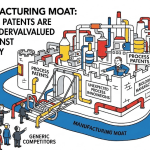
Most analysts think of pharmaceutical patents as protecting drug compounds. The more experienced ones know that method-of-use and formulation patents extend market exclusivity beyond the compound patent. But the most sophisticated layer — process patents — is where the real manufacturing intelligence lives, and it’s the most consistently overlooked.
A process patent does not claim ownership of a molecule. It claims ownership of a specific method for making it. The claims define a sequence of steps: the reagents, the reaction conditions, the purification approach, the specific equipment class. Reading these claims carefully reveals the core of a competitor’s manufacturing process — what makes it novel, what cost or quality advantage it provides, and what it requires in terms of equipment and infrastructure. [8]
The “Examples” and “Detailed Description” sections of a process patent are effectively a laboratory notebook. Patent law requires an enabling disclosure — detailed enough that a skilled practitioner could reproduce the invention. [9] In practice, this means that the process chemistry or bioprocessing approach described in a patent’s examples section is a real technical disclosure, not an approximation. The reaction temperatures, solvent choices, column chromatography conditions, and fermentation parameters described there are the competitor’s actual process data, voluntarily disclosed to obtain patent protection.
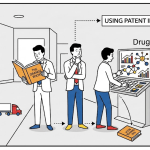
The challenge is linking process patents to specific commercial products. A process patent may not name the API it is designed to produce, particularly in early filings where the commercial application is still uncertain. This is where specialized databases become necessary. DrugPatentWatch maintains systematic links between patents and the FDA’s Orange Book, which lists the patents associated with approved drug products. [10] Using DrugPatentWatch, an analyst can build a complete patent landscape for a specific drug, identifying not just the compound and formulation patents, but all process patents linked to it, along with their expiration dates.
The expiration date piece matters strategically. A process patent expiring on a blockbuster biologic, for example, opens the door for biosimilar manufacturers to use that specific production method without license. The manufacturer of the reference product may respond by securing next-generation process innovations — something you can track in their own patent filings — or by switching to a process that is covered by a newer, longer-lived patent. Either way, the patent landscape tells you something important about the long-term manufacturing strategy.
Method 6: Job Posting Analysis — Hiring as a Leading Indicator of Expansion
Companies hire before they produce. A new manufacturing line needs engineering leadership before it needs operating staff. A technology transfer needs process scientists before it needs QC analysts. The sequence and clustering of job postings for a specific facility is therefore one of the most reliable leading indicators available — and it is entirely free to monitor.
The technique requires moving beyond individual postings to pattern recognition. A single job posting for a “manufacturing engineer” proves nothing. A cluster of twenty-five postings for a site that previously had three, including a “Director of Manufacturing,” a “Head of Quality Assurance,” a “Capital Projects Manager,” a “Validation Engineer,” and ten openings for “Manufacturing Associates” with start dates three months out — that is a facility preparing to go live.
The specific roles and required skills carry precise technical meaning. A posting requiring experience with “single-use bioreactors” and “mammalian cell culture” tells you, unambiguously, that the new capacity is for biologics. A requirement for “sterile aseptic fill-finish” experience narrows it further. A posting specifying “perfusion bioprocessing” tells you not just the modality but the specific bioprocessing approach. A cluster of postings for a new site mentioning “AAV vector production,” “viral clearance,” and “ultra-low temperature storage” is describing a gene therapy facility in specific technical detail.
The temporal sequence matters. When a company is building a new site, you tend to see senior leadership and engineering roles appear first (twelve to twenty-four months before production start), followed by validation and quality roles (six to twelve months out), followed by a wave of production operator postings (three to six months before launch). Tracking this sequence lets you build a rough production start timeline from public hiring data alone.
The technology stack disclosed in postings is a bonus layer. When a posting requires familiarity with a specific Manufacturing Execution System (like Siemens SIMATIC IT or Rockwell PharmaSuite) or a specific LIMS platform, you get insight into the company’s digital infrastructure choices, their level of automation investment, and the vendors they rely on — all relevant context for understanding their operational maturity and future capital allocation.
Method 7: Environmental Permits — The Most Underutilized Quantitative Tool in the Toolkit
Here is the technique that most business analysts have never heard of and, once they understand it, cannot believe they overlooked. Environmental permits — specifically air quality permits — are public records that can, when combined with process knowledge, yield a hard quantitative estimate of a facility’s maximum annual production capacity.
The logic works like this. Any industrial facility that emits air pollutants above certain thresholds must obtain a permit specifying the maximum amount of each pollutant it is legally allowed to emit per year, known as the Potential to Emit (PTE). [11] For pharmaceutical manufacturing, the most relevant pollutants are Volatile Organic Compounds (VOCs) — primarily solvents — and Hazardous Air Pollutants (HAPs) like chlorinated solvents. Facilities that emit more than 100 tons per year of VOCs, or 25 tons per year of combined HAPs, or 10 tons per year of any single HAP, require federal Title V permits. State-level permits often have lower thresholds and are equally useful.
The permit application itself often contains remarkable detail. When a company applies for permission to install new equipment — a new fluid bed dryer, a new reactor, a new spray dryer — it must describe that equipment in the permit application, specify what process it is used for, and estimate its emissions. This creates a publicly accessible equipment inventory for the facility that may predate any public announcement of capacity expansion by months.
The capacity calculation works as follows. Using your knowledge of the manufacturing process — from patent documents, published chemistry, or general process chemistry principles — you identify the key solvent used in the synthesis of the target drug. You estimate (or calculate from published stoichiometry) the amount of that solvent emitted per kilogram of API produced, or per batch. You then divide the facility’s permitted annual VOC limit by the per-batch emission rate to get the maximum legally permitted number of batches per year. Multiply by batch size in kilograms of API and you have an estimated annual production ceiling. [12]
This is not a precise calculation — there are assumptions in the emission-per-batch estimate, and the permitted limit may be set conservatively above actual operating rates. But it gives you a data-anchored upper bound that is far more defensible than any estimate based on press release language or industry rumors. <blockquote> ‘The pharma industry is facing new modalities — such as cell and gene therapy and mRNA vaccine technology — that have increased from 11 to 21 percent of the drug development pipeline, the fastest growth ever seen in the sector. This change is likely to bring more fragmentation of technology, new supply chains, and unique product life cycles.’ <br><br> — McKinsey & Company, <em>Emerging from Disruption: The Future of Pharma Operations Strategy</em>, October 2022 [13] </blockquote>
For biologics facilities, the VOC approach does not apply — bioreactors do not emit significant organic solvents. But permit applications for biologic plants still contain useful equipment information, and the broader permitting record (water discharge permits, for example) can provide complementary data on facility scale.
Method 8: Satellite Imagery — Seeing the Factory From Space
This is the method that gets the most skeptical looks in presentations, and then the most enthusiastic follow-up questions once people see what it actually shows. Commercial satellite imagery, once the exclusive domain of intelligence agencies and defense contractors, is now available to commercial subscribers at spatial resolutions under thirty centimeters per pixel. You can see cars in a parking lot. You can see construction equipment and building footprints. You can see whether a facility’s HVAC systems are running.
The core technique is change detection. By pulling a time series of high-resolution optical images over a known facility location — obtained from a provider like Maxar — you can watch the physical evolution of the site. Land clearing, foundation pouring, steel frame erection, roof installation, external utility connections: each of these construction stages is visible and dateable. This lets you verify whether an announced expansion project is on track, ahead of schedule, or running behind, well before any public announcement from the company.
Beyond construction tracking, two more advanced capabilities are particularly relevant for pharmaceutical facilities:
Thermal imaging detects heat signatures. Pharmaceutical production generates heat — from HVAC systems managing cleanroom environments, from process equipment, from utilities plants running boilers and chillers. A production building that is operational emits a characteristic thermal signature that an inactive building does not. By comparing thermal images taken at different times, you can distinguish which parts of a multi-building campus are actively running production and which are offline. Combined with a knowledge of the facility’s product portfolio, this can help you infer when specific production lines are in active use.
Synthetic Aperture Radar (SAR) imaging works through clouds and at night. For facilities in high-rainfall regions or for analysts who need continuous coverage rather than opportunistic optical images, SAR provides all-weather monitoring capability. While it is less intuitive to interpret visually, SAR can still detect construction-stage changes and is highly reliable for tracking large-scale physical changes over time.
Computer vision and AI analysis now automate much of the image interpretation work. Algorithms can be trained to count construction vehicles, measure building footprint changes, track parking lot occupancy as a proxy for workforce size, and automatically flag changes between consecutive images. This turns what would otherwise be a labor-intensive manual review process into a systematic data stream. [14]
The practical workflow: identify the facility address from FDA registration or EudraGMDP records, acquire historical imagery to establish a baseline, then commission periodic refresh images — monthly or quarterly depending on the question you are trying to answer. For a facility in active construction, monthly is often sufficient to track progress. For an operational facility where you are trying to understand production tempo, more frequent coverage may be warranted.
Part IV: Supply Chain Triangulation
Reading Import and Export Data
A manufacturing facility is a node, not an island. Raw materials and equipment flow in; finished goods and intermediates flow out. The logistics that surround a facility are as informative as the facility itself, and much of that logistics data is publicly accessible through import and export databases.
Commercial platforms like Panjiva and ImportGenius aggregate shipping manifest data from customs declarations around the world. These manifests record the shipper, the consignee, the commodity, and often the weight and quantity of each commercial shipment. For pharmaceutical intelligence, the most valuable commodity categories to track are specialized production equipment (bioreactors, large-scale chromatography systems, fill-finish lines, lyophilizers) and key raw materials (specialty cell culture media, specific chemical precursors, viral vector components).
The signal interpretation is straightforward once you understand the context. A single 50-liter bioreactor imported by a research organization is R&D activity. Ten 2,000-liter single-use bioreactors imported by a pharmaceutical company over two months, shipped from Thermo Fisher’s manufacturing facility in Germany to a site address you have already identified as a new facility via FDA registration — that is commercial-scale biologics capacity being installed. The equipment itself describes the scale and intent of the operation.
Raw material tracking provides a different but complementary signal. Large, recurrent shipments of a specific API precursor from a known supplier to a pharmaceutical company’s facility provide quantitative evidence of ongoing production. If the precursor volume increases 40% year over year with no corresponding announcement of new product launches, you are likely seeing a supply chain build-up ahead of a major launch — or an attempt to rebuild strategic inventory buffers.
Identifying CDMO Dependencies and Their Vulnerabilities
No single intelligence source will definitively map a competitor’s contract manufacturing relationships. But combining four or five partial signals usually gets you there.
The typical triangulation: the 10-K mentions “a strategic manufacturing partner” without naming them. The CDMO’s own investor materials name your target company among their key customers. A DMF filed by the CDMO for a specific API lists your competitor’s drug application as a reference. Import data shows a consistent flow of finished goods from the CDMO’s facility address to the pharmaceutical company’s distribution center. The jobs being posted at the CDMO include one for a “dedicated site manager” for a named product — sometimes companies require on-site representation for commercial manufacturing arrangements.
Thread these together and you can confirm the relationship with high confidence.
The strategic significance of this analysis extends beyond simply knowing who makes what. A competitor heavily dependent on a single CDMO for a critical product has concentrated risk that you can monitor on their behalf. The EudraGMDP database’s non-compliance records, FDA warning letters, and 483 observations are all public. If the CDMO that makes your competitor’s top revenue product receives a serious regulatory citation, the implications for their supply chain are immediate — and you will have seen it coming.
This kind of supply chain vulnerability analysis is where competitive intelligence becomes genuinely strategic. It is the difference between knowing that a competitor exists and understanding where they are fragile.
Part V: Synthesizing a Multi-Source Capacity Profile
The Triangulation Framework
Raw data from any single source is a starting point, not a conclusion. The power of the investigative approach described in this article comes from cross-validation — from confirming the same hypothesis through multiple independent channels. When a signal from a financial filing is corroborated by a regulatory database entry, which is corroborated by a cluster of specific job postings, which is confirmed by a satellite image showing new construction at the exact address, the confidence level in your conclusion is qualitatively different from anything a single source could provide.
The framework works in three stages:
Stage 1: Form a Hypothesis. Start with the softest signals — an earnings call comment, a vague press release, an unusual CapEx jump in the annual report. These are your initial hypotheses. Don’t stop here; these alone are not actionable intelligence.
Stage 2: Test Against Hard Sources. Take each hypothesis to the regulatory databases, patent filings, and permit records. Is there a new FDA registration that corroborates the expansion announcement? Does an EudraGMDP certificate confirm the specific manufacturing capability claimed? Does an environmental permit application describe the installation of equipment consistent with the technology platform suggested by job postings?
Stage 3: Verify Physical Reality. Satellite imagery is your ground truth check. Construction milestones visible in satellite images provide a physical anchor that is very difficult to fake or misinterpret. If the financial and regulatory signals suggest a new biologic plant is being built at a specific address, and satellite imagery shows a new building with large-scale utility infrastructure under construction at that address, your confidence level is extremely high.
The following table summarizes how to apply each intelligence source within this framework:
Intelligence Source
Stage of Framework
Strength
Primary Limitation
Earnings calls / press releases
Hypothesis formation
Real-time, explicit
May be deliberately vague or misleading
10-K CapEx and MD&A analysis
Hypothesis formation + validation
Audited, quantitative
Lagging indicator, often lacks operational detail
FDA Establishment Registration
Hard source validation
Regulatory fact, specific addresses
Does not describe process capabilities
EudraGMDP certificates
Hard source validation
Regulator-verified capabilities
EU-focused, search requires some navigation skill
Drug Master Files
Hard source validation
Reveals supply chain links
Contents are confidential; index only is public
Environmental permits
Hard source validation + quantitative model
Provides hard production ceiling
Requires process chemistry knowledge to interpret
Patent process claims
Hard source validation
Technical depth, reveals manufacturing technology
Requires expertise to link patents to specific products
Job posting clusters
Leading indicator
Highly specific, real-time, free
Noisy signal; postings don’t always result in hires
Import/export manifests
Hard source validation
Quantitative, names specific equipment
Can be incomplete; requires paid subscription
Satellite imagery
Physical verification
Objective, difficult to misrepresent
Cost for high-frequency coverage; weather-dependent for optical
A Case Study: Reconstructing a Competitor’s Biologic Manufacturing Buildout
Let’s walk through a realistic example using all eight methods.
You are a CI analyst at a mid-size oncology company. Your primary competitor — call them Apex Pharma — has a pipeline monoclonal antibody, “OncoVex,” that hit positive Phase III results six months ago. Approval is expected in eighteen to twenty-four months. You need to understand their manufacturing strategy for launch.
Step 1 (Financial Forensics): Apex’s most recent 10-K shows a 45% increase in CapEx, with the MD&A stating they are making “substantial investments in sterile biologics infrastructure to support future pipeline launches.” Their PP&E footnote shows the machinery and equipment subcategory has grown significantly, concentrated in European operations.
Step 2 (FDA and EudraGMDP): You search both databases. A new FDA establishment registration appears for an Apex site in Cork, Ireland. The EudraGMDP database shows a GMP certificate for that same address, issued eighteen months ago, explicitly authorizing “manufacture of biological medicinal products, including monoclonal antibodies, using single-use bioreactor technology.”
Step 3 (Patent Analysis): You know OncoVex is a monoclonal antibody. Using DrugPatentWatch, you search for Apex process patents linked to the OncoVex development program. You find a patent filed three years ago claiming a perfusion-based cell culture method that significantly increases protein yield by maintaining continuous cell viability in the bioreactor rather than using batch culture. The claims specify bioreactor configurations, perfusion rate parameters, and downstream processing adaptations. This is their core production technology. The patent is Orange Book-listed.
Step 4 (Job Posting Analysis): You search for Apex Pharma openings at the Cork address. You find thirty-seven current openings, including “Senior Scientist — Perfusion Bioprocessing” (confirming they are implementing the exact process from the patent), “Automation Engineer — Emerson DeltaV” (naming their control system), “QA Specialist — Single-Use Systems” (confirming the technology type), and twelve “Manufacturing Associate” openings. The cluster of operator-level roles suggests production start is approaching.
Step 5 (Environmental Permit): You contact the Irish Environmental Protection Agency and request the permit application for the Cork facility. The document describes the installation of four 2,000-liter single-use bioreactors in Building C, along with supporting utility systems. This tells you the production scale precisely: four reactors at 2,000 liters each is a mid-size commercial biologic facility, not a massive one — likely designed to supply initial launch quantities with room for expansion.
Step 6 (Satellite Imagery): You task imagery of the Cork site. The historical optical sequence shows construction beginning twenty-two months ago and the main production building completing about seven months ago. Current thermal imagery shows active heat signatures from Building C’s HVAC systems — the production building is operational. The utility plant shows continuous operation. The administrative wing is cooler.
Step 7 (Import Data): You pull customs data for the Cork facility address. It confirms the import of four Thermo Fisher Xcellerex single-use bioreactor systems eighteen months ago, consistent with the permit application’s equipment list. More recently, large, recurrent shipments of specialty cell culture media arrive monthly — evidence of ongoing production runs.
Synthesized Conclusion: With high confidence, you know Apex has a commercial-scale monoclonal antibody facility in Cork, Ireland, running perfusion bioprocessing in four 2,000-liter single-use bioreactors. The facility received its GMP certificate eighteen months ago, is currently operational, and is likely in validation batches or early commercial production. Their entire global OncoVex supply for the EU and likely U.S. markets will come from this single site. The supply is anchored to Ireland, which creates geopolitical and single-site concentration risk. The production technology — perfusion culture — is patented, providing process insight and a patent expiration timeline.
This is actionable intelligence. You know not just that they have capacity, but where it is, what it does, how it works, and where it is vulnerable.
From Intelligence to War-Gaming
The synthesized profile is an input, not a conclusion. The question is what you do with it.
First, you can model Apex’s production ceiling. Four 2,000-liter bioreactors running perfusion culture typically produce significantly higher protein titers than batch culture — the patent claims as much. Based on published yield data for comparable perfusion processes, you can construct a reasonable range for their annual API output in kilograms. Compare that against published clinical trial dosing data for OncoVex, estimate patient demand from prevalence and projected treatment rates, and you can assess whether their facility is likely to be supply-constrained at launch or comfortably ahead of demand.
If they are likely to be supply-constrained — if your model suggests demand will outpace their Cork capacity within twelve to eighteen months of launch — that tells you something important. They will need to either build additional capacity (probably announced via a press release you will see) or rely on a CDMO (visible through DMF filings and shipping data). Either path creates a window of vulnerability that a well-positioned competitor can exploit.
Second, the single-site dependence is a flag to monitor. Any regulatory citation, operational incident, or supply chain disruption at Cork would directly affect Apex’s ability to supply OncoVex globally. Setting a monitor on Cork in EudraGMDP — watching for any inspection outcomes — costs you nothing and could give you weeks of advance notice if a problem emerges.
Third, the perfusion technology patent has an expiration date. When that process patent expires, biosimilar manufacturers can use the same high-yield production method for their own OncoVex biosimilar programs. That expiration date is a strategic clock for the competitive landscape, visible now to anyone who takes the time to look it up.
Part VI: The Legal and Ethical Frame
What Is and Is Not Competitive Intelligence
Every method described in this article relies on information that is publicly available, commercially accessible, or legally obtainable through standard business channels. There is a clear line in business intelligence between competitive analysis and corporate espionage, and nothing in this framework approaches that line.
Public regulatory filings, financial reports, patent databases, environmental permits, job postings, satellite imagery of facilities from public airspace, and shipping manifest data from customs records are all legal intelligence sources. Courts have consistently held that information disclosed in public filings — even when detailed and operationally sensitive — is available for competitive analysis. Companies choose to manufacture in regulated industries that require disclosure; the intelligence value of that disclosure is part of the regulatory bargain.
What this framework does not include — and what would constitute inappropriate conduct — is obtaining non-public information through deception, misrepresentation, access to proprietary systems, or any other means that would violate applicable law or standard professional ethics. Using a pretext to obtain a facility tour you would not otherwise be granted, accessing internal systems without authorization, or inducing a competitor’s employees to share confidential information are all off-limits, legally and ethically.
The goal is to extract maximum value from the substantial volume of information that is already legitimately available. The gap between what most analysts currently extract from public sources and what is actually there is large enough that improving the analytical process produces substantial competitive advantage without any ethical compromise.
Part VII: Building a Systematic Intelligence Program
Making This Repeatable: Monitoring vs. Investigation
The methods in this article work for both one-time deep dives into a specific competitor and as the basis for an ongoing, systematic monitoring program. The two use cases have somewhat different designs.
An investigative deep dive starts with a question — “What is Apex’s manufacturing strategy for OncoVex?” — and works through the available sources until it can be answered with sufficient confidence. This is a project with a defined scope and a deliverable.
A monitoring program is different. Its goal is to detect significant changes in the competitive landscape before they become common knowledge. For this purpose, you need automated alerts on the most signal-rich sources: FDA establishment registration changes (new registrations or address changes for target companies), EudraGMDP certificate updates or non-compliance statements, new patent filings from key competitors, keyword-triggered alerts on job posting platforms for target companies and facilities, and periodic satellite imagery refreshes for critical sites.
The combination of automated monitoring and periodic investigative deep dives is what a mature CI program looks like in practice. The monitoring keeps you current; the deep dives provide the analytical depth that converts raw signals into actionable strategic intelligence.
Prioritizing the Intelligence Stack for a Smaller Team
Not every organization has the resources for a full-time CI team running all eight methods simultaneously. For a small company or an investment firm working with limited analyst bandwidth, prioritization matters.
Start with the entirely free tier: FDA registration monitoring, EudraGMDP searches, patent analysis through Google Patents and DrugPatentWatch, SEC filings on EDGAR, and job posting monitoring on LinkedIn and ZipRecruiter. These sources alone, used with the analytical framework described here, give you a substantial intelligence advantage over competitors relying on press releases and analyst reports. The discipline of systematically monitoring these free sources and actually reading what they say in depth — rather than skimming headlines — is where most of the value lies.
The paid capabilities — commercial satellite imagery, access to shipping manifest databases, specialized environmental permit retrieval services — are most justified when you have a specific, high-value hypothesis to confirm. Commission a satellite image when you have a specific address from an FDA registration and want to verify construction status. Pull import data when you have a CDMO relationship you want to confirm quantitatively. Use the free sources to identify where to focus paid resources, rather than buying broad coverage and hoping to find something interesting in it.
The Intelligence Product: What Good Analysis Actually Looks Like
The output of this process is not a data dump. Raw data from eight sources organized into a single document is not analysis; it is an inbox problem. Good intelligence synthesis produces a structured argument with a clear conclusion, supported by cross-validated evidence, with explicit statements of confidence level and identified gaps.
A well-formed capacity intelligence product should answer four questions clearly:
What is this facility capable of producing, and at what approximate scale?
What is the status of the facility right now — under construction, in validation, in commercial production?
What are the key dependencies and vulnerabilities in this manufacturing operation?
What does this capability imply about the competitor’s near-term strategic options and constraints?
Each of these answers should be supported by specific, cited evidence from at least two independent sources. Conclusions that rest on a single source should be labeled as such, with an explicit note about what additional evidence would be needed to confirm. Intelligence that is honest about its confidence levels is more useful to decision-makers than intelligence that overstates certainty.
Key Takeaways
Manufacturing capacity is a direct expression of strategic intent. A competitor’s facility decisions reveal what they believe their pipeline will need eighteen to thirty-six months from now. Reading those decisions correctly is reading their strategy.
Process knowledge is prerequisite, not optional. You cannot correctly interpret manufacturing signals without understanding the fundamental differences between small molecule synthesis, biologic bioprocessing, and cell and gene therapy manufacturing. Misidentifying a facility type produces wrong conclusions, not just imprecise ones.
Triangulation determines confidence. No single source is sufficient. The strength of an intelligence conclusion is proportional to the number of independent sources that corroborate it. A regulatory filing plus a job posting cluster plus satellite construction evidence plus import data is a very different level of confidence than any one of those alone.
Environmental permits are the most underused quantitative tool available. Most business analysts have never read a pharmaceutical air permit. The ones who have know that it can provide a data-anchored ceiling on a facility’s annual production volume — information that is simply not available from any other public source.
EudraGMDP non-compliance records are competitor vulnerability alerts. When a competitor’s critical manufacturing site receives a regulatory non-compliance citation, it appears in a public database. Monitoring that database requires no special access and costs nothing. Ignoring it is leaving market intelligence on the table.
DrugPatentWatch connects process patents to commercial products. The link between a process patent and the drug it is used to manufacture is not always explicit in the patent itself. Specialized platforms that maintain Orange Book linkages make this connection tractable and allow analysts to build complete manufacturing IP landscapes for specific drugs.
Supply chain mapping reveals strategic vulnerability. A competitor that relies on a single CDMO for a critical product has concentrated risk that you can monitor. Their supply chain vulnerability is your market opportunity signal.
Good intelligence is honest about uncertainty. Confidence levels matter. State what you know, what you infer, and what you are guessing — clearly and separately. Decision-makers who act on intelligence need to know which conclusions rest on bedrock and which are extrapolations.
FAQ
Q1: These methods are described as legal, but some of them — particularly satellite imagery and import data — feel like surveillance. Is that ethical?
The ethical question is worth taking seriously. The distinction that matters here is between public and private information. A pharmaceutical facility built on land, with buildings visible from public airspace, operating under environmental permits disclosed to government regulators, importing equipment through public customs systems — the externally observable characteristics of that facility are, in a meaningful sense, public. The information was never private. Satellite imagery companies provide access to imagery taken from above public airspace; customs data is disclosed as part of international trade law; environmental permits are public records by statute.
The ethical principle that applies is proportionality: using available information to understand a competitive landscape is different from obtaining information that was never meant to be disclosed. Everything in this framework falls on the legitimate side of that line. What would be ethically problematic is using misrepresentation, unauthorized access, or coercion to obtain non-public information. None of the methods here involve any of those things.
Q2: How do you handle the cell and gene therapy modality differently, given that traditional volume metrics don’t apply?
The conceptual shift for CGT is from “how many kilograms of API per year” to “how many patient batches per year.” For autologous therapies, a facility’s capacity is essentially the number of individual patient manufacturing runs it can complete annually, which is a function of the number of parallel processing suites, the cycle time per patient batch, and the operating hours of the facility.
The signals you track shift accordingly. The number of modular cleanroom pods or processing suites announced or visible in satellite imagery is a direct indicator. Job postings mentioning “scheduling coordinators” for patient logistics, partnerships with hospital networks for cell collection, and investments in ultra-cold chain logistics infrastructure all signal the patient-throughput focus of an autologous CGT operation. For allogeneic CGT, the scale metrics return to something closer to traditional biologics, but the manufacturing process signals — viral vector production, master cell bank activities, specific cell expansion technologies — remain highly distinctive.
Q3: What should a company do if it discovers, through this kind of analysis, that its own manufacturing footprint is obviously visible and analyzable by competitors?
This is the most actionable implication of understanding this intelligence toolkit. If you can do this analysis on competitors, competitors can do it on you. The first step is to perform an honest assessment of your own visible footprint — what would a skilled analyst conclude about your manufacturing strategy from the public record?
That assessment will typically reveal that a substantial amount is already visible and unavoidable: regulatory registrations must be made, environmental permits are required, patent protection requires disclosure, and public markets require financial transparency. The practical response is not to try to hide what is already visible but to ensure that the interpretation of those signals is aligned with your intended strategic narrative. If your environmental permit suggests you are building capacity for a specific product, does that track with what you want competitors to believe about your pipeline priorities? If your hiring pattern clearly signals entry into CGT, is that disclosure appropriately timed relative to your IP protection strategy?
This kind of counter-intelligence review — looking at yourself through the lens of this framework — is genuinely useful and often produces insights about your own strategic communications that have value well beyond the intelligence application.
Q4: Can AI tools meaningfully accelerate any of these methods?
Yes, in specific and bounded ways. Large language models can accelerate patent claim parsing, MD&A language analysis across large numbers of documents, and initial interpretation of job posting clusters. Computer vision tools can automate change detection in satellite image series. Natural language processing can flag significant new permit filings or EudraGMDP entries from large document volumes.
What AI cannot do is replace the domain knowledge required to interpret what it finds. A language model that processes a patent’s claims without understanding the underlying chemistry will miss the significance of specific reagent choices or process parameters. A computer vision system that counts bioreactors in an import manifest needs a human analyst who knows that a 2,000-liter single-use bioreactor from a specific supplier means commercial-scale monoclonal antibody production, not R&D scale-up. The tools accelerate data processing; the analytical framework and domain knowledge determine whether the output is intelligence or noise.
Q5: Is there a meaningful difference between how this analysis is performed for an established large pharma company versus a small biotech or a CDMO?
The target type changes what you are looking for and where you are likely to find it, more than the fundamental approach. Large pharmaceutical companies produce rich financial disclosures, maintain complex global manufacturing networks with multiple registered sites, and have extensive patent portfolios with detailed process innovations worth analyzing. The challenge with large pharma is signal-to-noise — there is a lot of public information, and identifying the signals that matter requires discipline and focus.
Small biotechs produce sparser financial disclosures (if public at all) and may have only one or two relevant facilities. But their job postings are often remarkably informative — a company of 200 people hiring a Head of Manufacturing with experience in “autologous cell therapy scale-out” is telling you their entire operational strategy in one job description. For biotechs that are still private, the patent database and regulatory filings become even more important, as financial disclosure is absent.
For CDMOs, the analysis flips: you are looking at their capabilities to understand what client activities they could be supporting. A CDMO that builds out a new sterile biologics filling suite and begins hiring aseptic processing specialists is expanding into a new service category — which tells you something about the demand they are seeing from pharma clients, and potentially about which large pharma companies are shopping for that kind of external capacity.
References
[1] McKinsey & Company. (2022, October 10). Emerging from disruption: The future of pharma operations strategy. McKinsey & Company. https://www.mckinsey.com/capabilities/operations/our-insights/emerging-from-disruption-the-future-of-pharma-operations-strategy
[2] Deloitte. (2023). Did removing weak links make pharma supply chains stronger? Deloitte US. https://www.deloitte.com/us/en/Industries/health-care/blogs/did-removing-weak-links-make-pharma-supply-chains-stronger.html
[3] U.S. Food and Drug Administration. (2024). Registration and listing. FDA. https://www.fda.gov/industry/fda-basics-industry/registration-and-listing
[4] U.S. Food and Drug Administration. (2024). Drug Master Files (DMFs). FDA. https://www.fda.gov/drugs/forms-submission-requirements/drug-master-files-dmfs
[5] European Medicines Agency. (2024). EudraGMDP database. EMA. https://www.ema.europa.eu/en/human-regulatory-overview/research-development/compliance-research-development/good-manufacturing-practice/eudragmdp-database
[6] Financial Modeling Prep. (2024). How to analyze an annual report (10-K) like a PRO. FMP. https://site.financialmodelingprep.com/education/financial-analysis/how-to-analyze-an-annual-report-k-like-an-investor
[7] AstraZeneca. (2025). AstraZeneca plans to invest $50 billion in America for medicines manufacturing and R&D. AstraZeneca Press Release. https://www.astrazeneca.com/media-centre/press-releases/2025/astrazeneca-plans-to-invest-50bn-dollars-in-the-us.html
[8] PatentPC. (2023). Patent considerations for drug manufacturing processes. PatentPC Blog. https://patentpc.com/blog/patent-consideration-drug-manufacturing-processes
[9] World Intellectual Property Organization. (2023). WIPO patent drafting manual, second edition. WIPO. https://www.wipo.int/edocs/pubdocs/en/wipo-pub-867-23-en-wipo-patent-drafting-manual.pdf
[10] DrugPatentWatch. (2024). The strategic value of Orange Book data in pharmaceutical competitive intelligence. DrugPatentWatch Blog. https://www.drugpatentwatch.com/blog/the-strategic-value-of-orange-book-data-in-pharmaceutical-competitive-intelligence/
[11] Minnesota Pollution Control Agency. (2024). Air permits. MPCA. https://www.pca.state.mn.us/business-with-us/air-permits
[12] New York State Department of Environmental Conservation. (2023). Permit review report (Ref. 339260072900054). NYS DEC. https://extapps.dec.ny.gov/data/dar/afs/permits/prr_339260072900054_r2_3.pdf
[13] McKinsey & Company. (2022, October 10). Emerging from disruption: The future of pharma operations strategy [industry blockquote]. McKinsey & Company. https://www.mckinsey.com/capabilities/operations/our-insights/emerging-from-disruption-the-future-of-pharma-operations-strategy
[14] Ultralytics. (2024). Vision AI for satellite imagery. Ultralytics Blog. https://www.ultralytics.com/blog/using-computer-vision-to-analyse-satellite-imagery
Copyright considerations: This article draws on publicly available information and synthesizes original analysis. DrugPatentWatch data and platform capabilities are referenced as a factual source of pharmaceutical patent and regulatory intelligence.