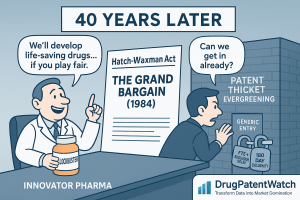
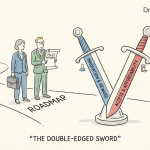
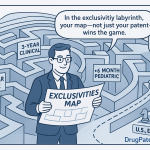
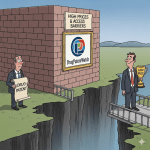
Forty years after Congress passed the Drug Price Competition and Patent Term Restoration Act of 1984, the law’s core tension has not been resolved. It has been industrialized. What began as a legislative compromise to simultaneously reward drug innovation and lower barriers to generic competition has evolved into the most sophisticated patent arms race in any regulated industry. The stakes: hundreds of billions in annual revenue, decades of market exclusivity, and the pricing of medicines that millions of patients depend on.
This analysis covers the full architecture of the Hatch-Waxman framework, its mechanics, its exploitation, its economic consequences, and where it goes from here.
Why Congress Needed to Act in 1984: The Pre-Hatch-Waxman Patent Distortion
The pharmaceutical market before 1984 was broken in two directions at once. Innovator companies watched their patent terms erode during FDA review — sometimes losing a decade of exclusivity before earning a dollar in revenue. Generic manufacturers faced an equally dysfunctional environment: no abbreviated approval pathway existed, so any company seeking to copy an approved drug had to run its own full clinical trials, repeating efficacy work already done by the innovator. The cost was prohibitive and the timeline often stretched beyond the original patent’s remaining life.
The 1962 Kefauver-Harris Amendments to the Federal Food, Drug, and Cosmetic Act had strengthened the FDA’s authority after the thalidomide disaster, requiring manufacturers to prove efficacy — not just safety — before approval. That was the right policy for patients, but it lengthened clinical and regulatory timelines dramatically. Because patent terms ran from issuance date, not approval date, the clock was ticking throughout review. By 1984, effective patent life for a new drug had fallen to well under ten years for many products, versus the nominal 17-year term.
The Roche Products, Inc. v. Bolar Pharmaceutical Co. decision in 1984 made the problem worse. The U.S. Court of Appeals for the Federal Circuit ruled that Bolar’s pre-expiry bioequivalence testing of a patented drug constituted infringement. The practical result: generic firms could not even begin development work until after patent expiration, then needed years more to complete regulatory review. A brand-name drug enjoyed three years of additional de facto exclusivity beyond patent expiry — without the innovator lifting a finger. In 1984, generics held just 19% of prescriptions, and only about 35% of top-selling brand-name drugs faced any generic competition after patent lapse.
How the Hatch-Waxman Act Structured the Grand Bargain
Senator Orrin Hatch and Representative Henry Waxman engineered a two-sided exchange. Generics got a fast lane into the market; innovators got compensated for time lost to FDA review.
The ANDA Pathway: Why Generic Entry Became Economically Viable
The Abbreviated New Drug Application, codified in Section 505(j) of the FD&C Act, let generic manufacturers rely on the FDA’s prior safety and efficacy findings for the reference listed drug. Instead of independent clinical trials costing tens of millions of dollars and spanning years, a generic applicant needed only to prove bioequivalence — same active ingredient, dosage form, strength, and route of administration, with comparable absorption rate and extent. The cost dropped to roughly $1-2 million; the timeline compressed from years to months. The ANDA pathway is the single most consequential provision ever enacted for pharmaceutical competition.
The Safe Harbor: Overturning Roche v. Bolar by Statute
35 U.S.C. § 271(e)(1) directly overruled the Roche decision. Making, using, or selling a patented invention “solely for uses reasonably related to the development and submission of information under a Federal law which regulates the manufacture, use, or sale of drugs” is not infringement. Generic companies could now begin development and bioequivalence testing before patent expiration, positioning for Day 1 market entry. The Supreme Court later expanded this protection in Merck KGaA v. Integra Lifesciences I, Ltd. (2005), extending safe harbor coverage to preclinical research activities that are reasonably related to FDA submissions — not only work that ultimately ends up in a regulatory filing.
The Orange Book: Where Patent Law Meets Drug Regulation
The FDA’s “Approved Drug Products with Therapeutic Equivalence Evaluations” — universally called the Orange Book — became the operational center of the Hatch-Waxman framework. Innovator companies must list patents they assert could be infringed by an unapproved generic version of their drug. A generic ANDA applicant must then certify for each listed patent:
Paragraph I: No patent information has been filed. Paragraph II: The patent has expired. Paragraph III: The applicant will wait for patent expiration. Paragraph IV: The patent is invalid, unenforceable, or will not be infringed by the generic product.
A Paragraph IV certification is defined as a statutory act of patent infringement, immediately triggering a structured litigation pathway. This fusion of patent law and food and drug law — where a regulatory filing creates a cause of action — is the mechanical heart of everything that followed.
180-Day Exclusivity: The Financial Incentive That Drives Patent Challenges
The first generic applicant to file a substantially complete ANDA with a Paragraph IV certification gets 180 days of market exclusivity once it launches. During those six months, the FDA cannot approve any subsequent ANDA for the same drug. In a competitive market, the first filer often achieves a temporary duopoly with the brand, capturing pricing well above eventual commodity generic levels. For blockbuster drugs, the 180-day exclusivity can be worth hundreds of millions of dollars — sometimes more than $1 billion. That economic prize is what makes Paragraph IV litigation economically rational even against formidable patent estates.
Patent Term Extension Under 35 U.S.C. § 156: How the Calculation Works
Patent Term Extension is the Act’s central concession to innovators. The formula is not a simple day-for-day restoration:
The testing period runs from the IND effective date to initial NDA or BLA submission. Only half of this period is credited. The approval period, from submission to FDA approval, gets full credit. The total is then reduced by any time the applicant failed to act with “due diligence” and by any regulatory review period that preceded the patent’s grant.
Two hard caps apply: the extension cannot exceed five years, and the remaining patent term after extension cannot exceed 14 years from the date of FDA approval. A patent can be extended only once, and the extension covers only the approved product for its approved indication — not the full scope of the original patent’s claims. A company with multiple patents on a single drug must choose which one to extend within a strict 60-day window after FDA approval.
PTE Component
Credit Rate
Notes
IND Effective Date to NDA Submission (Testing Period)
50%
Reduced to incentivize efficient development
NDA Submission to FDA Approval (Approval Period)
100%
Full day-for-day credit
Non-diligent periods
0%
Deducted from total
Pre-patent regulatory review
0%
Not creditable
Maximum extension
5 years
Hard statutory cap
Maximum post-approval exclusivity
14 years
Hard cap from approval date
Regulatory Exclusivity vs. Patent Protection: Why Both Matter
The Act created two forms of regulatory exclusivity administered by the FDA, entirely independent of patents. Five-year New Chemical Entity exclusivity blocks the FDA from accepting any ANDA for a drug containing an active ingredient never before approved — a Paragraph IV challenge can be filed after four years. Three-year New Clinical Study exclusivity applies to supplements supported by new, essential clinical investigations, such as new indications, new dosage forms, or OTC switches. It blocks ANDA approval for three years but does not prevent filing.
These exclusivities matter enormously because they operate on a separate legal track from patents. A drug with no patent protection at all still gets five years of NCE exclusivity. A drug with patents extending well beyond FDA approval can stack those patents on top of regulatory exclusivity to extend effective market protection. In practice, strategic companies manage both tracks simultaneously.
How the 30-Month Stay Became a Structural Weapon
When an innovator files a patent infringement suit within 45 days of receiving a Paragraph IV notice, the FDA’s approval of the generic ANDA is automatically stayed for 30 months. Unlike a traditional preliminary injunction, this stay requires no court finding of likelihood of success on the merits, no showing of irreparable harm, no balancing of hardships. It is automatic. The brand-name company receives what amounts to a statutory preliminary injunction simply by filing suit.
Before the Medicare Prescription Drug, Improvement, and Modernization Act of 2003 reformed this provision, innovator companies could trigger multiple sequential 30-month stays by listing additional patents in the Orange Book after a generic had already filed its ANDA — each new listing, each new suit, each new 30-month stay. The MMA closed this loophole by limiting the automatic stay to one per ANDA and restricting it to patents listed before the ANDA filing. It also required that any settlement between a brand and a generic be filed with the FTC and Department of Justice.
Why Patent Thickets Work: The Humira Case Study
AbbVie’s adalimumab, marketed as Humira, is the most documented patent thicket in pharmaceutical history and the commercial proof of concept for the strategy. Humira received FDA approval in December 2002. AbbVie’s U.S. patent estate eventually encompassed over 247 patent applications. Critically, approximately 89% of those filings came after initial approval. Independent analysis by I-MAK found roughly 80% to be duplicative or non-patentably distinct, bound together by terminal disclaimers — a legal tool that links patents’ expiration dates but also their validity, meaning a challenge to one can pull down others in the cluster.
The thicket worked. Biosimilar versions of adalimumab launched in Europe in October 2018. In the United States, the first biosimilars — Amjevita (Amgen), Hyrimoz (Sandoz), Hadlima (Samsung Bioepis), Cyltezo (Boehringer Ingelheim) — did not reach patients until January 2023, more than four years later. Over two-thirds of Humira’s cumulative U.S. sales were generated after its primary patents expired. The delay cost the U.S. healthcare system an estimated tens of billions in excess spending on branded product. At peak, Humira generated $21.2 billion annually in global sales. Even after biosimilar entry, AbbVie’s U.S. net revenue erosion in the first three quarters of 2023 was approximately 30.8% — far less severe than a typical small-molecule patent cliff — partly because the biosimilar market fragmented across multiple entrants rather than consolidating around one competitor.
Why Manufacturing Complexity Makes Biologics Harder to Challenge
Adalimumab is a fully human monoclonal antibody produced in Chinese hamster ovary (CHO) cell lines through a complex upstream fermentation and downstream purification process. The active drug product — a 148 kDa protein — cannot be fully characterized by any single analytical method. Biosimilar developers must demonstrate no clinically meaningful differences in safety, purity, and potency through extensive analytical and clinical programs. The FDA’s biosimilar approval pathway under the BPCIA requires a “totality of evidence” standard that typically costs $100-250 million to complete.
This manufacturing complexity is not incidental to patent strategy — it is integral to it. A dense patent thicket raises the cost of litigation; high development costs raise the cost of scientific demonstration; together they create multiple independent barriers to entry that compound each other’s deterrent effect.
How the Evergreening Toolkit Extends Market Exclusivity
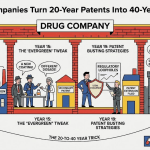
“Evergreening” is the term critics use for what companies call lifecycle management — the systematic application of new patent filings and regulatory exclusivity claims to extend market protection as original patents near expiration.
Chiral Switching: The Prilosec-to-Nexium Strategy and How AstraZeneca Executed It
Omeprazole, marketed as Prilosec, is a racemic mixture of two mirror-image enantiomers. Before generic entry, AstraZeneca isolated the single S-enantiomer — esomeprazole — patented it, and launched it as Nexium. The company then invested heavily in direct-to-consumer advertising, branding Nexium as “the new purple pill” and transitioning the patient base before generic omeprazole flooded the market. Clinical evidence for meaningful therapeutic superiority over omeprazole in most patient populations was weak; subsequent head-to-head studies showed minimal to no significant advantage. Regardless, Nexium became a multi-billion-dollar product, extending AstraZeneca’s market position in proton-pump inhibitors by nearly a decade. The FDA’s three-year New Clinical Study exclusivity applied to the new approval, while fresh patents on the esomeprazole compound provided additional protection.
Extended-Release Formulations and New Dosage Forms
Patenting an extended-release version that permits once-daily dosing is among the most common lifecycle management tactics. While clinical improvements such as reduced peak-to-trough variability are sometimes genuine, the patent protection attached to the formulation can block generic versions of the modified form even after the active ingredient is fully genericized. Patients and physicians may be transitioned to the new formulation through prescriber marketing before generic immediate-release products are widely available, reducing the effective savings from generic entry.
Device Patents and Delivery System Evergreening in Biologics
For combination products — particularly prefilled syringes, auto-injectors, and metered-dose inhalers — patents on the delivery device can survive well after the active ingredient’s patents have expired. AbbVie holds device patents on the Humira auto-injector pen that extend into the late 2020s. A biosimilar developer must either design around these device patents, potentially accepting a different delivery system that may disadvantage them on interchangeability determinations, or challenge them in litigation — adding cost and delay to an already expensive development program.
Combination Products: Locking in New Exclusivity on Old Molecules
Combining a proprietary drug with a generic active ingredient in a single pill can create a new product with its own NCE or New Clinical Study exclusivity. When the proprietary component’s protection expires, the combination product’s separate exclusivity may remain. In the HIV space, Gilead Sciences has executed this strategy with particular effectiveness, building successive fixed-dose combination products around tenofovir alafenamide (TAF) after earlier tenofovir disoproxil fumarate (TDF) combinations faced loss of exclusivity — each combination supported by clinical data on reduced renal and bone toxicity that justified new approvals and new exclusivity periods.
The Paragraph IV Litigation Economy: Who Files, Who Wins, Who Settles
Paragraph IV filings are the primary mechanism through which generic firms challenge innovator patents before expiry. The litigation is structured, predictable, and expensive. An innovator who files suit within 45 days of receiving notice gets the automatic 30-month stay. The economics of who wins in court are not symmetrical: generic firms need only prove invalidity or non-infringement by a preponderance of evidence; innovators must prove infringement. Patent validity challenges — particularly obviousness and anticipation — succeed at material rates when patents are secondary or tertiary filings in a large estate.
Between 1984 and 2012, Paragraph IV challengers prevailed (patents held invalid or not infringed) in approximately 75% of cases that reached a final court judgment. Most cases do not reach judgment; they settle. The shape of those settlements, and the antitrust issues they raise, is the other central legal battleground in Hatch-Waxman.
How Pay-for-Delay Settlements Work and Why FTC v. Actavis Changed the Math
A “reverse payment” or “pay-for-delay” settlement involves the brand-name company paying the generic challenger — in cash, no-authorized-generic commitments, or other consideration — to drop its litigation and delay its market entry. The logic from the innovator’s perspective: if your patent is weak, it may be cheaper to pay the challenger than to litigate and risk a ruling of invalidity that opens the market to all generics simultaneously.
From the consumer’s perspective, both parties to the deal benefit at the expense of patients and payers, who continue paying monopoly prices for longer.
In FTC v. Actavis, Inc. (2013), the Supreme Court rejected the prevailing “scope of the patent” test, which had largely shielded these settlements from antitrust scrutiny, and instead held that large, unjustified reverse payments can be anticompetitive and subject to “rule of reason” analysis. The decision did not declare such settlements per se illegal — it opened them to antitrust challenge, shifting the burden of justification to the settling parties when the payment is “large and unjustified.”
The Third Circuit’s 2015 decision in King Drug Co. of Florence, Inc. v. SmithKline Beecham Corp. extended Actavis to non-cash consideration. A no-authorized-generic agreement — where the brand promises not to launch its own generic during the first-filer’s 180-day exclusivity — can be a form of reverse payment subject to antitrust scrutiny. No-AG commitments are often worth more than cash: a first generic with no authorized-generic competition can earn 50-80% of pre-generic branded revenue during the exclusivity period; with an authorized generic competing, that figure drops dramatically.
Post-Actavis, explicit cash payments in settlements have declined. The FTC has documented a rise in more complex forms of “possible compensation” — co-promotion agreements, supply agreements, license arrangements with above-market royalties — that serve the same economic function but are harder to characterize and challenge.
What the Medicare Modernization Act of 2003 Fixed — and What It Missed
The MMA’s Hatch-Waxman amendments closed several loopholes that had accumulated over nearly two decades of practice. The single-stay rule ended the serial stay abuse. The forfeiture provisions addressed “parking” — where a first generic filer with 180-day exclusivity would settle with the brand, delay its own launch, and effectively block all other generics from receiving approval. Under the MMA, the first filer forfeits its exclusivity if it fails to obtain tentative approval within 30 months of filing, fails to market within 75 days of a favorable court decision or tentative approval, or enters into a settlement agreement that would otherwise be an antitrust violation.
What the MMA did not fix: the underlying incentive structure that makes patent thickets and settlement agreements rational from a corporate standpoint. The law is reactive; it patches specific abuses as they become visible. The strategic response from innovator companies has consistently been to find new structures that achieve the same economic objectives while complying with the revised rules.
Key Patent Expiry Dates Investors Are Watching Through 2030
The next five years concentrate an extraordinary amount of revenue exposure. Drugs approaching or recently past their primary patent expiry dates include:
Drug (Innovator)
Active Ingredient
Primary U.S. LOE Year
2023 Global Sales
Biosimilar/Generic Entrants
Keytruda (Merck)
Pembrolizumab
2028
~$29.5B
Multiple biosimilar programs in development
Eliquis (BMS/Pfizer)
Apixaban
2026-2028
>$10B
Generic ANDAs filed
Stelara (J&J)
Ustekinumab
2023 (U.S.)
~$9.7B
Biosimilar entry underway
Opdivo (BMS)
Nivolumab
2028
~$9B
Biosimilar programs advancing
Ibrance (Pfizer)
Palbociclib
2027
~$5B
ANDA activity increasing
Dupixent (Sanofi/Regeneron)
Dupilumab
2031+
~$11B
Early-stage biosimilar development
Ozempic/Wegovy (Novo Nordisk)
Semaglutide
2032+ (GLP-1 patents complex)
~$21B
Significant patent litigation expected
Keytruda’s loss of exclusivity is the single most consequential patent cliff in pharmaceutical history by revenue. Merck’s projections model a 19% revenue decline in the first year post-expiration, from approximately $33.7 billion to $27.4 billion — a more gradual erosion than typical small-molecule cliffs because biosimilar competition in complex biologics takes longer to fully commoditize the market.
Why Keytruda’s Patent Expiry Matters for Merck Investors
Pembrolizumab is a humanized monoclonal antibody targeting PD-1, approved across more than 40 indications including melanoma, non-small cell lung cancer, head and neck squamous cell carcinoma, and multiple tumor-agnostic applications under the MSI-H/dMMR and high TMB designations. Its clinical breadth and manufacturing complexity make it a difficult biosimilar target, but not an impossible one. Samsung Bioepis, Celltrion, and Alvotech all have pembrolizumab biosimilar programs in clinical development.
Merck’s strategic response includes accelerating subcutaneous formulation development (MK-3475A, its subcutaneous pembrolizumab), which received FDA approval in 2024 and carries new patents on the delivery formulation, extending protection beyond the intravenous formulation’s expiry. It is also pursuing fixed-dose combination regimens, such as pembrolizumab plus lenvatinib, which generate separate clinical data and potentially separate exclusivity periods. Merck’s pipeline diversification across antibody-drug conjugates, TIGIT inhibitors, and GLP-1 assets reflects the standard industry response to an impending patent cliff: build the next generation before the old revenue base collapses.
How Bristol Myers Defended Opdivo Against Patent Challenges
Nivolumab (Opdivo) competes directly with pembrolizumab across multiple oncology indications. BMS holds a series of composition-of-matter, method-of-use, and formulation patents covering nivolumab, with the core composition-of-matter patent expiring around 2026-2028 depending on PTE applications. BMS filed for patent term extension on several nivolumab patents. It has also pursued indication expansion aggressively, generating new method-of-use patents with separate expiry profiles for each new tumor type.
The nivolumab-ipilimumab combination (Opdivo + Yervoy) creates an additional layer of complexity for generic or biosimilar entrants: a challenger seeking to market a nivolumab biosimilar with the full label must navigate not only nivolumab-specific patents but also any patents covering the combination regimen. Method-of-use patents for the combination therapy may extend well beyond the individual component patents, creating a carve-out dynamic where biosimilar entrants must limit their labels to indications not covered by combination-use patents.
What Makes GLP-1 Manufacturing Difficult for Generic Entrants
Semaglutide, the active ingredient in Ozempic and Wegovy, is a 31-amino-acid glucagon-like peptide-1 receptor agonist produced through recombinant DNA technology and conjugated to a fatty acid chain that extends its half-life through albumin binding. Unlike small-molecule generics that can be fully characterized by mass spectrometry and NMR, peptide therapeutics require demonstration of equivalence across multiple analytical dimensions including primary sequence, secondary structure, fatty acid conjugation site and chain length, and absence of immunogenic impurities.
Novo Nordisk’s GLP-1 patent portfolio encompasses composition-of-matter patents on semaglutide itself, process patents on the fermentation and conjugation methods, formulation patents on the aqueous buffer system used in the prefilled pen, and device patents on the FlexTouch and OzempicPen delivery systems. The composition-of-matter patent expires in the early 2030s in most jurisdictions. The device and formulation patents extend further. Any ANDA or biosimilar filer faces a potential Paragraph IV challenge on each layer.
The manufacturing scale constraints are also relevant: Novo Nordisk and Eli Lilly have faced capacity limitations on GLP-1 supply even at peak demand. A generic entrant needs to build or contract sufficient manufacturing infrastructure before launch — a capital requirement that, combined with litigation costs, raises total investment to levels that deter smaller ANDA filers.
Revenue at Risk: Which Companies Face the Largest Exclusivity Cliffs in 2028
The 2028 window is the sharpest concentration of blockbuster biologics facing primary patent expiry. Merck’s Keytruda at approximately $33-35 billion in projected annual sales by 2028 is the headline number. BMS’s Opdivo at roughly $10 billion and Revlimid’s follow-on portfolio risks are additional concentrations. Pfizer faces a compounding problem: Ibrance (palbociclib) patent expiry coincides with continued post-Prevnar 20 competition and the fading of COVID-related revenue from Paxlovid and Comirnaty.
For institutional investors modeling pharma equities, the relevant metric is not just revenue at risk in the first LOE year but the slope of erosion over years two through five. Biologic cliffs erode more gradually than small-molecule cliffs because biosimilar uptake is constrained by physician inertia, payer interchangeability designations, and the market structure of each therapeutic category. Humira’s U.S. erosion curve, while ultimately severe, declined at roughly 30-35% per year rather than the 80-90% first-year cliff typical of small-molecule generics. That slower curve still represents a $7-8 billion annual revenue decline off a $20 billion base.
How Biosimilar Launch Timing Works: From BLA Filing to First Commercial Sale
A biosimilar applicant submitting a 351(k) application under the BPCIA triggers a structured patent dispute process known colloquially as the “patent dance.” In the first step, the biosimilar applicant provides the reference product sponsor with a copy of the BLA and manufacturing information. The reference product sponsor then identifies patents it would reasonably assert if the biosimilar were commercialized. The parties exchange lists, narrow the universe of patents to litigate in the “first phase,” and reserve additional patents for potential later litigation.
The innovator has the option to opt out of the patent dance entirely — accepting that it cannot initiate first-phase litigation — but retaining the right to sue for infringement upon commercial launch. Biosimilar applicants must give 180 days’ notice before first commercial marketing. This notice requirement creates a minimum delay between FDA approval and market launch.
The total timeline from initial BLA submission to first commercial sale for a biosimilar typically runs four to seven years, factoring in FDA review, patent litigation, and launch preparation. Interchangeability designation — which permits pharmacists to substitute a biosimilar for the reference product without physician intervention — requires additional clinical switching studies and adds roughly 12-18 months to development timelines, but provides a significant commercial advantage upon approval.
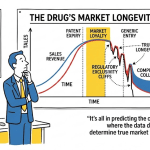
What Happens After Exclusivity Ends: The Generic Price Erosion Curve
Price erosion following generic entry is not uniform. The extent and timing depend on the number of ANDA approvals, whether the innovator launches an authorized generic, and whether institutional purchasers — pharmacy benefit managers, hospital group purchasing organizations — move rapidly to generic-preferred formulary placement.
With one generic entrant, prices typically fall 20-30% below branded levels. With four entrants, 70-80% price reductions are standard. With 16 or more manufacturers, prices can approach 90% below brand. The annual savings to the U.S. healthcare system from generic competition have exceeded $400 billion in recent years.
For biologics, the price erosion curve is materially different. Biosimilar entry in the Humira market has produced two distinct pricing tiers: “high list price” versions (including AbbVie’s own authorized biosimilar Hadlima) used for rebate-based contracting, and “low list price” versions (including Amgen’s Amjevita in its LA-HP formulation) targeting patients with high cost-sharing. The bifurcated market structure has slowed payer-driven adoption and kept net prices higher than the analogous small-molecule generic transition would produce.
What Investors Are Watching: The FTC’s Aggressive Orange Book Enforcement
The Federal Trade Commission’s 2023-2024 campaign against improper Orange Book listings represents a structural shift in enforcement posture. The FTC challenged hundreds of patents — primarily device and inhaler-component patents listed for combination respiratory products — arguing that listing non-drug patents triggers automatic 30-month stays that have no legitimate relationship to the drug product being protected.
AstraZeneca, Boehringer Ingelheim, and GSK have all received FTC patent-listing challenges covering inhaler device patents listed for products including Symbicort (budesonide/formoterol), Spiriva (tiotropium), and Advair Diskus (fluticasone/salmeterol). The FTC’s theory: listing patents covering plastic components of a delivery device, rather than the active pharmaceutical ingredient or its formulation, constitutes an improper use of the Orange Book mechanism and an anticompetitive act.
The legal standard for FTC success here is unresolved. Under FTC v. Actavis, improper listings would need to be shown to harm competition under a rule-of-reason framework; some courts have held that listing decisions are not independently actionable unless they trigger litigation. But the FTC’s challenge campaign creates reputational and regulatory pressure on innovator companies even absent a final judicial ruling, and forces patent holders to justify each listing decision with more precision than historically required.
How the USPTO’s Terminal Disclaimer Rules Could Dismantle Patent Thickets
The USPTO’s 2024 proposed rules on terminal disclaimers target the mechanism that makes patent thickets structurally coherent. A terminal disclaimer links a later-filed patent’s expiration date to an earlier patent, used to overcome obviousness-type double-patenting rejections. Under existing practice, the disclaimer limits when the later patent expires but does not affect its enforceability — each patent in a terminally disclaimed cluster remains independently enforceable even if its sibling patents are invalidated.
The USPTO’s proposed rule would change this: a patent subject to a terminal disclaimer would become unenforceable if any patent in its disclaimer chain is found invalid. For patent thickets built on dozens of terminally disclaimed patents all tracing back to a core composition-of-matter filing, this rule would create a “cascade invalidation” risk. A single successful IPR or district court invalidity ruling against one thicket patent could collapse the entire cluster.
The pharmaceutical industry mounted significant opposition to this proposal during the comment period, arguing it would chill legitimate continuation practice and undermine investments made in reliance on existing rules. The rule’s final form and survival of potential judicial challenge under the post-Chevron landscape remain uncertain as of 2026.
How the Post-Chevron World Changes FDA and USPTO Authority
The Supreme Court’s 2024 decision in Loper Bright Enterprises v. Raimondo overturned the Chevron deference doctrine that had required courts to defer to agency interpretations of ambiguous statutory language. For pharmaceutical patent law, the consequences are material. The FDA’s use code system — where innovators describe the scope of patent protection in the Orange Book — has historically received deference. After Loper Bright, courts have broader authority to substitute their own interpretation of what the FD&C Act requires or permits in Orange Book listing decisions, use code descriptions, and biosimilar pathway requirements. The USPTO’s PTE calculation methodology, similarly, had been insulated from aggressive judicial review under Chevron; that insulation is gone.
The net effect is likely to be more litigation, more uncertainty, and slower resolution of regulatory disputes that previously settled under agency interpretation. Whether that shift helps innovators or generic and biosimilar challengers depends on the specific legal question at issue.
U.S. Patent Term Extension vs. EU Supplementary Protection Certificates: Key Differences
The U.S. PTE and the EU SPC are designed to achieve the same objective by different legal mechanisms with materially different consequences.
Feature
U.S. PTE (35 U.S.C. § 156)
EU SPC (Regulation 469/2009)
Legal nature
Extension of existing patent term
Separate sui generis IP right; activates after patent expires
Maximum extension
5 years
5 years
Post-approval exclusivity cap
14 years from FDA approval
Generally 15 years from first EU marketing authorization
6 months from marketing authorization or patent grant
One-per-product rule
One patent per approved product
One SPC per product per member state
Manufacturing waiver
None — manufacturing during PTE term is infringement
Permitted for export to non-protected territories; stockpiling in final 6 months
Administering body
USPTO, coordinated with FDA
National patent offices; EUIPO centralization in progress
The manufacturing waiver introduced into EU SPC law in 2019 has no U.S. equivalent. It permits EU-based manufacturers to produce generic or biosimilar versions of SPC-protected medicines during the SPC term, provided the product goes exclusively to export markets without SPC protection or is stockpiled for Day 1 EU launch after the SPC expires. The waiver is designed to prevent EU generic and biosimilar manufacturers from being structurally disadvantaged relative to Asian competitors who face no such restriction in their domestic markets.
The structural differences in patent prosecution between the U.S. and EU explain much of the Humira gap. The European Patent Office applies a strict “added matter” doctrine that prevents patent applicants from expanding claim scope during prosecution. This makes it far harder to build large, overlapping patent families from a single original application — the core architecture of a U.S.-style patent thicket. AbbVie’s European adalimumab portfolio was much smaller and expired earlier than its U.S. counterpart, which is why biosimilar competition arrived four years earlier in Europe.
How Paragraph IV Litigation Changes Drug Valuation
For an innovator company, an active Paragraph IV challenge against a blockbuster drug’s core patent is a material overhang on valuation. Analysts typically model scenarios: probability of patent validity being upheld, probability of settlement with a launch date, and probability of an adverse ruling accelerating generic entry. A drug with five years of expected remaining exclusivity, facing Paragraph IV litigation, may trade at a valuation implying 2-3 years of effective exclusivity if market probability-weights point toward a negotiated settlement.
For a generic or biosimilar challenger, the Paragraph IV filing itself has option value. A successful challenge on a $5 billion drug, with 180-day exclusivity, can generate $1-2 billion in gross margin during the exclusivity period. The cost of litigation — patent counsel fees, bioequivalence studies, manufacturing scale-up — typically runs $5-50 million depending on complexity. The expected value of a Paragraph IV challenge on a sufficiently large drug with a weak patent is strongly positive, which is why generic firms with sufficient balance sheets pursue them aggressively.
The 180-day exclusivity has created a distinct investor class: specialized generic pharma funds that model Paragraph IV pipelines as option portfolios, weighting each challenge by probability of success, drug revenue size, and first-filer status. Companies like Teva, Mylan (now Viatris), and Hikma have been valued in part on the strength of their Paragraph IV challenge pipelines.
Most Important Ongoing Litigation: Keytruda, Eliquis, and Stelara
Three active litigation fronts matter most to institutional pharma investors in 2025-2026.
Pembrolizumab: Merck faces multiple Paragraph IV filings from Fresenius Kabi, Samsung Bioepis, and others. The litigation involves composition-of-matter, method-of-use, and formulation patents. The 2028 primary patent expiry is the central date, but settlement negotiations are likely given the commercial stakes on both sides.
Apixaban (Eliquis): BMS and Pfizer face ANDA filings from multiple generic challengers including Mylan/Viatris, Teva, and Hikma. The apixaban patent estate has been thinned through prior Paragraph IV litigation. Generic entry is expected in the 2026-2028 window depending on patent litigation outcomes, with combined branded revenues well above $10 billion annually at risk.
Ustekinumab (Stelara): J&J’s IL-12/23 inhibitor has already seen biosimilar entry begin in the U.S. in 2023. The pace of biosimilar uptake has been slower than some models projected, partly due to J&J’s contracting strategies with PBMs and partly due to the bifurcated interchangeable vs. non-interchangeable biosimilar designation landscape.
Which Competitors Could Benefit from the Coming Patent Cliff
The magnitude of the 2026-2030 patent cliff creates significant commercial opportunities for well-positioned generic and biosimilar companies.
Amgen: Already the largest U.S. biosimilar player by volume with Amjevita (adalimumab), Mvasi (bevacizumab), and Kanjinti (trastuzumab) in market. Its early-mover positioning in biosimilars and manufacturing infrastructure make it the most likely beneficiary of the pembrolizumab biosimilar market once it opens.
Sandoz (spun out from Novartis in 2023): Has Hyrimoz (adalimumab) and Zarxio (filgrastim) among others, and is investing heavily in the next wave of biologic targets including pembrolizumab and ustekinumab.
Samsung Bioepis: Has a broad pipeline of biosimilar candidates across oncology and immunology. Its Hadlima (adalimumab) approved in the U.S. in 2019, provided a learning base for the next generation of biosimilar filings.
Teva and Viatris: Both maintain large small-molecule ANDA portfolios and are positioned to benefit from apixaban, palbociclib, and other small-molecule LOEs. Their biosimilar buildouts are more limited but targeted at specific high-value assets.
How the FDA Could Affect the Timeline: Interchangeability, Purple Book, and BPCIA Interpretation
The FDA’s interchangeability designation under the BPCIA is the regulatory determination with the most commercial impact on biosimilar uptake. An interchangeable biosimilar can be automatically substituted for the reference product at the pharmacy without prescriber intervention — the biologic equivalent of a generic AB-rated substitution. Achieving interchangeability requires additional switching study data demonstrating that alternating between the biosimilar and reference product produces no greater risk than using the reference product alone.
As of 2025, the FDA has approved interchangeable designations for adalimumab biosimilars including Cyltezo (Boehringer Ingelheim) and Hadlima (Samsung Bioepis). Each additional interchangeability designation increases the efficiency of payer formulary management and accelerates market penetration. The FDA’s guidance on switching study design requirements for other biosimilar molecules will directly affect how quickly interchangeable versions of pembrolizumab, ustekinumab, and other biologics can be brought to market.
Common Investor Questions on Pharma Patent Cliffs
How long does a drug patent actually last? A composition-of-matter patent for a new chemical entity runs 20 years from filing. After PTE of up to 5 years and the 14-year post-approval cap, effective patent protection post-FDA approval ranges from 10 to 14 years, depending on when during the patent’s term the drug was approved. Regulatory exclusivity (NCE: 5 years; orphan drug: 7 years; pediatric: 6 months) can stack on top of or operate independently of patent protection.
What happens after a drug loses patent protection? Revenue typically falls 50-90% within 12-18 months for small-molecule drugs with multiple generic entrants. For biologics, the erosion is slower: 20-40% in the first year, with continued gradual erosion over 3-5 years as biosimilar market share builds. Innovator companies typically retain a residual market share through brand loyalty, patient assistance programs, authorized generics, and formulary positioning.
How does 180-day generic exclusivity affect the patent cliff timeline? The first generic entrant’s 180-day exclusivity period generates significant profit for the first filer but moderates price erosion during that window. After 180 days, as additional generics enter, prices fall rapidly. From the innovator’s perspective, the 180-day period is often the steepest part of the revenue decline curve.
Can a company lose patent protection but retain market exclusivity? Yes. Regulatory exclusivities — particularly NCE, orphan drug, and pediatric — operate independently of patents. A drug with no patent coverage but unexpired NCE exclusivity is fully protected from ANDA filing during that period. In practice, the two protection mechanisms are usually managed in parallel.
What is “patent dance” in the context of biosimilar litigation? The patent dance refers to the BPCIA’s pre-litigation information exchange process, where the biosimilar applicant provides manufacturing information to the reference product sponsor, and the parties identify and negotiate which patents to litigate in a structured sequence. The process is designed to front-load patent disputes and resolve them before commercial launch. In practice, it adds complexity and delay to biosimilar development timelines.
Investment Strategy: How to Position Around the 2026-2030 Patent Cliff
The patent cliff creates both risk and opportunity. For long-only holders of large-cap pharma, the central question is whether pipeline assets can replace lost blockbuster revenue before the market prices in the miss. Merck’s situation with Keytruda — $30+ billion in annual revenue facing LOE in 2028 — is the clearest stress test. Its current pipeline in ADCs, TIGIT combinations, and metabolic disease assets must collectively be credible enough to maintain multiple expansion, or the stock will derate toward the cash-generative but declining profile of an AbbVie post-Humira.
For investors in generic and biosimilar pure-plays, the timing of ANDA and 351(k) approval, first-filer status on high-value Paragraph IV challenges, and manufacturing capacity are the operational metrics that determine financial outcomes. Companies with both the litigation infrastructure to challenge complex patent estates and the manufacturing scale to launch at full commercial volume on Day 1 capture a disproportionate share of cliff economics.
Hedge funds and event-driven strategies have historically found value in tracking Paragraph IV filings — particularly first filings on large drugs with primary composition patents nearing expiry — as early-indicator events with binary outcomes. The FTC’s increased Orange Book enforcement activity adds another event-driven signal: a successful FTC challenge to an improper listing can accelerate generic entry by removing a 30-month stay trigger, creating a discrete catalyst.
Key Takeaways
The Hatch-Waxman Act generated approximately $3 trillion in healthcare savings over its first 40 years through generic competition. It also created the structural incentives — the patent cliff, the 180-day exclusivity prize, the synthetic infringement trigger — that make patent thickets, pay-for-delay settlements, and evergreening strategies rational and, in many cases, highly profitable.
The system is not broken in the sense of failing to produce generic drugs. Generics now account for over 90% of U.S. prescriptions. It is broken in the sense that the effective period of market exclusivity for major biologic drugs has extended well beyond what the law’s drafters intended, and the U.S. premium over European pricing — partly a function of the denser U.S. patent thicket environment — is the largest in the developed world.
Reform efforts are accelerating: the FTC’s Orange Book enforcement campaign, the USPTO’s proposed terminal disclaimer rules, congressional interest in skinny-label protection, and the post-Loper Bright judiciary are all exerting pressure simultaneously. Whether these forces recalibrate the system or merely produce new forms of strategic evasion will be determined over the next decade of litigation, legislation, and regulatory action.
The grand bargain of 1984 remains in effect. It is just being renegotiated continuously, by everyone involved.
Analysis covers public judicial decisions, statutory text, FDA regulatory guidance, and publicly reported financial data. Nothing herein constitutes investment advice or legal counsel.