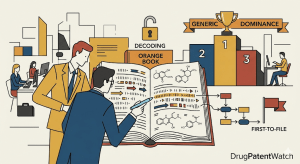
The pharmaceutical industry operates within a sophisticated regulatory and legal architecture where the difference between a multi-billion-dollar windfall and a total loss is often measured in hours, if not minutes. At the epicenter of this high-stakes environment is the Approved Drug Products with Therapeutic Equivalence Evaluations, more commonly known as the Orange Book. For the astute investigative business journalist and intellectual property analyst, this publication serves as the primary ledger for the generic drug industry, a tactical map of the competitive landscape, and a predictive engine for market entry.1 To the uninitiated, it is a dry list of pharmaceutical approvals; to the expert, it is the foundational text for life-cycle management and the essential tool for identifying Paragraph IV opportunities that can shift market capitalizations overnight.1
The mechanism of this system is defined by the Drug Price Competition and Patent Term Restoration Act of 1984, popularly known as the Hatch-Waxman Act. This landmark legislation created the regulatory framework that permits generic manufacturers to seek approval via an Abbreviated New Drug Application (ANDA) while simultaneously challenging the patents held by brand-name pharmaceutical companies.3 The ultimate incentive within this framework is the 180-day period of market exclusivity, often referred to as the “brass ring” of the pharmaceutical sector. This six-month window allows the first generic challenger to operate in a high-margin duopoly with the brand-name innovator, often capturing up to 80% of the generic product’s lifetime profits before the arrival of multi-player competition collapses prices by 95% or more.2
The Anatomy of a Market Engine: Deconstructing Orange Book Data Fields
Identifying a first-to-file (FTF) opportunity begins with a granular understanding of the data fields within the Orange Book. Every entry represents a potential lever for market entry, and the ability to interpret these fields with surgical precision is what separates high-level professionals from casual observers. The FDA maintains four distinct parts within the publication: approved prescription drug products, approved over-the-counter (OTC) drug products, drug products approved under Section 505 of the FD&C Act administered by the Center for Biologics Evaluation and Research (CBER), and a list of discontinued products.8
The strategic utility of the Orange Book lies in its detailed reporting of New Drug Application (NDA) data and the associated patent information provided in the Addendum. The fields included in each listing are not merely informational; they are the statutory triggers for litigation and exclusivity.9
Data Field
Description and Strategic Significance
Ingredient
The active pharmaceutical ingredient (API). Multiple ingredients are listed alphabetically, which is critical for identifying fixed-dose combinations.9
Dosage Form; Route
Defines the “sameness” requirement for ANDAs. A generic must match the brand’s dosage form and route of administration exactly.9
Trade Name
The brand name used for marketing. This is the primary key for cross-referencing market sales data.9
Applicant
The entity holding legal responsibility for the NDA. Understanding the corporate parentage of the applicant reveals the resources available for patent defense.9
Strength
The potency of the active ingredient. Each strength is treated as a separate product, meaning a generic may be first-to-file for one strength but not another.9
Application Number
The six-digit FDA identifier. Numbers starting with “N” are NDAs (innovators), while “A” indicates ANDAs (generics).9
Therapeutic Equivalence (TE) Code
Indicates if the generic is substitutable at the pharmacy. AB ratings signify proven bioequivalence, while B-series codes indicate potential problems.1
Reference Listed Drug (RLD)
The innovator product against which a generic must prove bioequivalence. This is the mandatory benchmark for all ANDA development.4
Approval Date
The date the product was cleared for marketing. This is the “T-zero” for calculating data exclusivity periods like NCE.9
The Addendum: The Patent and Exclusivity Ledger
The Addendum of the Orange Book contains the specific patent numbers and exclusivity codes that generic firms must navigate to achieve market entry. Innovators are required to list patents that claim the drug substance (active ingredient), the drug product (formulation or composition), or a method of using the drug for an approved indication.9 Crucially, the FDA explicitly prohibits the listing of patents covering manufacturing processes, packaging, metabolites, or intermediates.1 This distinction is often the source of high-stakes legal battles, as brand companies may attempt to list unapproved uses or process patents to deter generic entry, leading to delisting requests by challengers.1
Patent Field
Tactical Application
Patent Number
The unique identifier that generic IP counsel must deconstruct to find vulnerabilities.9
Patent Expiration
The date the legal protection ends, including any extensions. This defines the “patent cliff” for the industry.9
Drug Substance (DS) Flag
Indicates the patent claims the active moiety. These are typically the “compound patents” and the most difficult to overturn.9
Drug Product (DP) Flag
Indicates the patent claims the formulation. These are “secondary patents” and statistically more vulnerable to invalidation.7
Patent Use Code
Designates a patent covering an approved method of use. Generic firms can often “carve out” these uses to enter the market for other indications.9
Submission Date
The date the FDA received the patent info. Late listings may have different legal implications for the 30-month stay.9
The Mechanics of Challenge: The Four Tiers of Patent Certification
A central pillar of the Hatch-Waxman framework is the patent certification process. When a generic manufacturer submits an ANDA, it must provide a certification for every patent listed in the Orange Book for the RLD. These certifications are the formal mechanisms through which the industry negotiates market entry.4
The four tiers of certification determine the regulatory path:
Paragraph I: No patent information has been filed with the FDA for the RLD.4
Paragraph II: The listed patent has already expired.4
Paragraph III: The generic applicant agrees to wait until the patent’s expiration date before entering the market. This is the “path of least resistance,” used when the patent estate is deemed too strong to challenge.4
Paragraph IV: The generic applicant asserts that the listed patent is invalid, unenforceable, or will not be infringed by the manufacture, use, or sale of the proposed generic drug.3
The Paragraph IV (PIV) certification is essentially a “declaration of war”.13 It acts as a statutory act of infringement that allows the brand-name company to sue the generic applicant immediately, before any product is sold. This “artificial infringement” is necessary because it allows the courts to resolve patent disputes before the generic drug reaches the market, providing legal certainty for both parties.2
The 45-Day Trigger and the 30-Month Stay
Upon filing a PIV certification, the generic applicant must notify the patent owner and the NDA holder within 20 days. This notice must include a detailed statement of the factual and legal basis for the applicant’s opinion that the patent is invalid or not infringed.4 The receipt of this notice starts a 45-day window during which the brand-name company must decide whether to file an infringement lawsuit. If the suit is filed within this period, the FDA is automatically barred from granting final approval to the ANDA for up to 30 months.5
This 30-month stay is one of the most powerful defensive tools in the pharmaceutical innovator’s arsenal. It provides a guaranteed window of continued market exclusivity while the litigation proceeds in federal court, regardless of how quickly the FDA completes its scientific review of the generic application.2 For blockbuster drugs with annual sales exceeding $2 billion, this stay can protect billions of dollars in revenue, which is why innovators defend their patent estates with such ferocity.2
The NCE-1 Trigger: Timing the First Filing with Surgical Precision
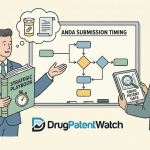
For the professional generic strategist, the most critical date in the Orange Book is the NCE-1 date. Under the law, New Chemical Entities (NCEs) receive five years of data exclusivity. During this time, the FDA cannot approve an ANDA that relies on the innovator’s safety and efficacy data.11 However, a specific provision in the Hatch-Waxman Act allows a generic manufacturer to submit an ANDA containing a PIV certification exactly four years after the NCE’s approval.2
The NCE-1 date represents the “starting gun” for generic competition. Being first-to-file on this date is mandatory for securing the 180-day exclusivity prize.5 The precision required here is absolute; an application submitted even one day early will be rejected as premature, while one submitted a day late will likely lose its FTF status to a more punctual competitor.5
Calculating the Window and Managing PTE/PTA
The calculation of the NCE-1 date requires a sophisticated understanding of how the 20-year patent term is modified by Patent Term Extension (PTE) and Patent Term Adjustment (PTA). Under 35 U.S.C. § 156, a patent holder can extend the term of one patent per drug to compensate for the time spent in clinical trials and the FDA approval process.14
Extension Component
Calculation Mechanism
Testing Period (TP)
Begins on the IND effective date and ends when the NDA is submitted. 50% of this time is added to the patent term.14
Approval Period (AP)
Begins on the NDA submission date and ends on the approval date. 100% of this time is added to the patent term.14
Effective Life Cap
The total remaining patent term after approval cannot exceed 14 years.14
PTA (A, B, C Delays)
Adjustments made for USPTO failures to meet specific deadlines during patent prosecution.14
Firms must account for these extensions when calculating the ultimate “patent cliff.” Meticulous tracking of the RRP (Regulatory Review Period) determined by the FDA is essential, as even minor errors in these calculations can lead to disastrous timing failures during the NCE-1 filing window.5
The Evolution of Shared Exclusivity
Historically, if only one generic manufacturer filed on the NCE-1 date, it held the 180-day exclusivity alone. However, the current landscape has shifted toward “shared exclusivity.” If multiple companies submit substantially complete applications on the first possible day, they are all considered “first applicants” and must share the 180-day period.5 This shift has profound economic implications; instead of a duopoly with the brand, the first generic entrants find themselves in a multi-player market from day one, which drastically accelerates price erosion and reduces the individual windfall for each participant.2
Identifying Vulnerabilities: Compound vs. Secondary Patents
The strategic selection of a drug target depends on the ability to deconstruct a patent estate and identify its weakest links. Professionals categorize the patents listed in the Orange Book into two primary groups: “core” and “secondary.”
The Robustness of Compound Patents
Compound patents, which cover the active pharmaceutical ingredient itself, are the foundational “Drug Substance” protections. These are the most difficult to challenge because they represent the fundamental innovation of the drug.6 Successful challenges to these patents are rare and usually involve “anticipation” (lack of novelty) or “inequitable conduct.” Inequitable conduct involves proving that the patent applicant intentionally deceived the USPTO by withholding material information, such as contradictory literature previously submitted to the FDA.13
The Vulnerability of Secondary Patents
Secondary patents cover everything from formulations and salt forms to dosing regimens and methods of use. These are the primary targets for PIV challenges because they are often “incremental innovations” designed to extend the monopoly rather than provide a breakthrough.7 Statistically, these patents are far more vulnerable to “obviousness” challenges under 35 U.S.C. § 103.7
A patent is considered obvious if a Person of Ordinary Skill in the Art (POSITA) would have been motivated to combine known elements from the prior art to arrive at the invention with a “reasonable expectation of success”.7 Following the Supreme Court’s KSR v. Teleflex decision, the legal standard shifted from a rigid “teaching-suggestion-motivation” test to a more flexible, common-sense inquiry, making it easier for generic companies to invalidate weak secondary patents.7
The “Obvious to Try” Strategy
A specific subset of the obviousness argument that has become a staple of the “challenger’s playbook” is the “obvious to try” strategy. This asserts that when a problem is known, and there are a finite number of identified, predictable options, a POSITA would have been motivated to pursue the claimed invention as a matter of routine experimentation.7 This is frequently used to attack polymorph patents (different crystalline forms) and salt selection patents. If a scientist testing a molecule for solubility would naturally test a standard range of salt forms, the specific salt that works best is often deemed “obvious to try” rather than a patentable breakthrough.7
Defensive Moats: Patent Thickets, Serial Litigation, and Product Hopping
Innovators do not relinquish their blockbusters without a fight. As the industry enters a historic “super-cycle” of patent expirations between 2025 and 2030—with an estimated $236 billion to $400 billion in annual revenue at risk—brand-name companies are deploying increasingly aggressive “Life Cycle Management” (LCM) strategies.2
The Architecture of the Patent Thicket
A “patent thicket” is the proliferation of dozens or even hundreds of patents surrounding a single drug product. This creates a dense web of legal protection that makes the cost of cutting through the estate prohibitive for many generic competitors.19 The anti-inflammatory drug Humira serves as the definitive example of this strategy; AbbVie protected it with a thicket of 105 patents, effectively blocking biosimilar competition for over 20 years and extracting more than $100 billion in U.S. sales during its extended monopoly.6
The Loophole of Serial Litigation
Serial litigation is a tactic where a brand company uses “continuation patents” to trigger multiple 30-month stays. Continuation patents are “children” of an original patent application that claim similar but slightly different features.19 Under the Hatch-Waxman Act, a brand can sue a generic for infringing one patent, and if the generic wins, the brand can immediately sue again under a new continuation patent, triggering another round of legal costs and potential delays.19
Case Study: Serial Litigation in Action
Impact on Generic Market Entry
Astellas (Myrbetriq)
Astellas filed five rounds of lawsuits against nine generic competitors. Even after a court invalidated an early patent, Astellas appealed and used new patents to keep the litigation alive.19
Settlement Dynamics
The persistent legal pressure forced seven of the nine challengers to settle and stay off the market. Only two firms eventually launched “at-risk” in 2024.19
The Cumulative Delay
The serial litigation strategy successfully pushed the expected date of broad generic competition from May 2024 to March 2030, a delay of nearly 6 years.19
Product Hopping and Evergreening
Another sophisticated LCM tactic is “product hopping.” This involves a brand company introducing a new, slightly modified version of a drug (e.g., an extended-release formulation or a new combination product) as the original drug’s patent nears expiration. The brand then uses marketing and clinical switches to move patients to the new product, which has a much longer patent life, effectively “killing” the market for the original drug just as generics are about to enter.13
In the landmark Namenda case, antitrust law was used to challenge this behavior when the brand tried to force a market shift to prevent generic competition. Analysts must monitor “product hopping” signals—such as new dosage forms appearing in the Orange Book supplements—to determine if a target drug’s market volume will actually be there by the time of launch.13
The Economic Calculus of the 180-Day Prize
The decision to pursue a Paragraph IV challenge is a calculated corporate risk. The rewards are astronomical, but the costs and liabilities are equally significant. For a blockbuster drug, the “first-filer” period is the most profitable phase of a generic product’s entire life cycle.5
Revenue Potential vs. Litigation Costs
During the 180-day exclusivity period, the first generic entrant typically prices its product at only a 20% to 40% discount compared to the brand. Because they face no other generic competition, they can capture a massive share of the market at high margins.2
Financial Metric
Blockbuster Target ($2B Annual Sales)
Estimated First-Filer Revenue
$200 million – $400 million.6
Estimated Litigation Cost
$6 million – $30 million.6
Return on Legal Spend
~10x to 20x ROI on the litigation investment.6
This high expected value explains why the pipeline of Paragraph IV challenges remains robust despite the 36% decline in raw case filings between 2017 and 2021. Generic firms have become more selective, focusing their resources on high-value targets where the “brass ring” is worth the risk.6
The “Authorized Generic” Tax
The most effective defensive move against a 180-day exclusivity period is the “Authorized Generic” (AG). A brand-name company can launch its own generic version of the drug—essentially the brand drug in a different bottle—either directly or through a partner firm.2 Because an AG does not require an ANDA, it is not blocked by the first-filer’s exclusivity.
The entry of an AG during the 180-day window turns a duopoly into a triopoly, which crashes the first-filer’s margins. Studies have shown that an AG can reduce a first-filer’s revenue by 40% to 52%, a significant “tax” on the generic challenger’s victory.2
Scientific Barriers to Entry: Bioequivalence and QbD
Identifying a legal opening in the Orange Book is only the beginning. A successful ANDA must be “substantially complete,” meaning it must contain robust scientific data demonstrating that the generic is identical to the RLD in safety and efficacy.5
The Arithmetic of Bioequivalence
The cornerstone of the ANDA is bioequivalence (BE). The generic manufacturer must demonstrate that its product performs the same as the RLD by measuring the rate and extent of drug absorption in a human subject.10
The FDA focuses on two primary pharmacokinetic (PK) parameters:
$AUC$ (Area Under the Curve): The total area under the drug concentration-time curve, representing the total extent of drug absorption.5
$C_{max}$ (Maximum Plasma Concentration): The maximum observed concentration of the drug in the blood, representing the rate of absorption.5
To be approved, the 90% confidence interval for the ratio of the generic’s geometric mean to the RLD’s geometric mean for both $AUC$ and $C_{max}$ must fall within the range of $[0.8, 1.25]$.5 Achieving this level of “sameness” requires significant technical expertise in formulation science, especially for complex drugs where solubility and absorption are highly variable.
Quality by Design (QbD) and Process Analytical Technology (PAT)
As the generic market for simple oral solids becomes increasingly commoditized, top-tier firms are moving toward “complex generics” (e.g., inhalers, injectables, transdermals) that are much harder to replicate.21 To manage the risk of manufacturing these products, companies are adopting Quality by Design (QbD) and Process Analytical Technology (PAT).
The traditional approach to manufacturing is reactive: quality is “tested in” at the end of the line. If a batch fails, it’s a total loss, often costing six figures for high-value drugs.23 By contrast, QbD builds quality into the process by identifying the “Critical Quality Attributes” (CQAs) of the drug and establishing a “design space” within which manufacturing parameters can vary without affecting the final product’s quality.23 PAT uses real-time sensors (like Raman spectroscopy) to monitor the process in-line, allowing for immediate adjustments to prevent batch failures.23 This technical prowess creates a “technical moat” that is often more durable than a legal one, as it prevents competitors from easily copying the manufacturing process even after the patents expire.23
Tactical Maneuvering: Citizen Petitions and At-Risk Launches
The battle for market entry also takes place in the “regulatory seams” of the FDA’s administrative processes.
The Citizen Petition as a Stall Tactic
Brand companies frequently use “Citizen Petitions” to raise last-minute concerns about the safety or bioequivalence of a pending generic.13 While the FDA eventually denies over 90% of these petitions, the agency must review them before granting final ANDA approval. This review process itself can buy the brand weeks or months of additional monopoly time.13
The “At-Risk” Launch: A High-Stakes Gamble
In some cases, a generic company may receive FDA approval while its patent litigation is still pending (e.g., after the 30-month stay has expired but before a final court decision). If the company chooses to launch its product at this stage, it is an “at-risk” launch.13
If the generic eventually wins the case, they have a massive head start. However, if the patent is upheld, the generic is liable for “lost profit” damages to the brand. Because generic sales cannibalize brand revenue, these damages can be astronomical.
Case Study: The Danger of At-Risk Launches
Outcome
Protonix (Teva/Sun Pharma)
The companies launched generic Protonix at-risk in 2007. The courts eventually upheld the patent.13
The Financial Impact
Teva and Sun were ordered to pay a combined $2.15 billion in damages, one of the largest patent litigation awards in history.13
Success Patterns: Settlement as the True Metric of Victory
When evaluating the success of a Paragraph IV strategy, professional analysts look past the courtroom “win/loss” column. The data shows that while innovators win about 20% of cases and generics win only 2%, the “overall success rate” for generic entry is actually 76%.7 This discrepancy is explained by the “shadow of the courthouse”: most cases are resolved through settlements that grant the generic a licensed entry date before patent expiration.7
The Anatomy of a Modern Settlement
Following the 2013 Actavis ruling, the “reverse payment” (pay-for-delay) model—where a brand pays a generic cash to stay off the market—has largely disappeared due to antitrust scrutiny.6 Modern settlements are structured around “non-monetary” compromises:
Licensed Entry Dates: The most common outcome is a negotiated date for generic entry, often months or years before the last patent expires.6
Quantity Restrictions: The generic may be allowed to sell a limited volume of the drug during a defined period rather than accepting a flat delay.6
Staggered Entry: A series of dates where different competitors are granted entry to manage the pace of market erosion.6
For a generic firm, securing a licensed entry date that is two years before a patent expiration is a massive financial victory, even if it is technically a “settlement” rather than a courtroom “win”.7
Alternative Intelligence: The Role of PTAB and IPR
A major shift in Paragraph IV strategy over the last decade has been the introduction of Inter Partes Review (IPR) at the Patent Trial and Appeal Board (PTAB). This allows generic companies to challenge patents in an administrative proceeding that is faster and has a lower burden of proof than federal district court.7
Feature
District Court (Hatch-Waxman)
PTAB (Inter Partes Review)
Burden of Proof
Clear and Convincing Evidence.7
Preponderance of the Evidence.7
Decision Maker
Federal Judge.24
Panel of APJs (Patent Judges).7
Timeline
24 – 36+ Months.11
12 – 18 Months.13
Stay Provision
30-Month Automatic Stay.2
No Automatic Stay on FDA.13
Successful challengers often use a “pincer movement,” filing an IPR at the PTAB while simultaneously litigating in district court. The higher invalidation rates at the PTAB provide immense leverage to force the brand company into a favorable settlement.7
Future Outlook: The 2025-2030 “Super-Cliff”
The pharmaceutical industry is currently facing a historic convergence of events. Between 2025 and 2030, an estimated $236 billion to $400 billion in annual revenue is at risk as major blockbuster drugs face their primary patent expirations.2
This “super-cliff” will redistribute massive amounts of market capitalization from brand-name companies to generic and biosimilar competitors. Professionals are using advanced intelligence platforms to track:
NCE-1 Milestones: Identifying the “starting gun” for the next generation of blockbusters.5
IPR Institution Rates: Monitoring the hospitality of the PTAB, which saw a decline in institution rates to 4% in late 2025, signaling a more challenging environment for patent challengers.2
Legislative Changes: The BLOCKING Act and other reforms aim to prevent “parking” of the 180-day exclusivity, which would increase the predictability and value of generic entry for patients.5
Conclusions and Executive Recommendations
The FDA Orange Book is not merely a database; it is the central nervous system of the pharmaceutical competitive environment. To use it successfully to identify first-to-file generic opportunities, high-level professionals must move beyond basic patent tracking and adopt a sophisticated, multi-disciplinary approach.
Surgical Timing on NCE-1: The 4-year mark from NCE approval is the absolute window for securing 180-day exclusivity. Firms must automate this tracking and be ready to file a “substantially complete” application on Day One.5
Target Secondary Vulnerabilities: Focus fire on “incremental” formulation and dosing patents. The “obvious to try” framework is the most effective tool for dismantling these protections.7
Account for Serial Litigation and Thickets: When selecting a target, evaluate the “thicket complexity” and the innovator’s history of serial litigation. Factor in the cost of 4-5 rounds of lawsuits when calculating ROI.6
Leverage PTAB/IPR for Settlement: Use the PTAB’s lower burden of proof as a strategic hammer to force brand companies to the settlement table, aiming for licensed entry dates rather than risky trial verdicts.7
Pivot to Complex Generics and QbD: As simple small-molecule markets become commoditized, invest in technical moats. Quality by Design and Process Analytical Technology provide durable competitive advantages that survive beyond the 180-day window.21
By mastering the nuances of the Orange Book and the broader legal-regulatory landscape, the IP analyst and strategic generic leader can transform complex patent data into a definitive and sustainable competitive advantage.
Unlocking Generic Market Access: A Retrospective Analysis of USFDA Paragraph IV Filings (2020-2024) – PubMed, accessed March 1, 2026, https://pubmed.ncbi.nlm.nih.gov/40660052/