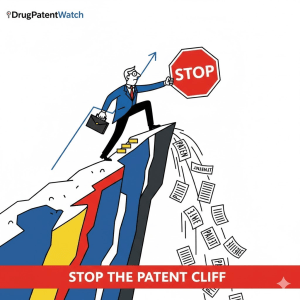
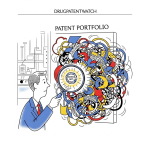
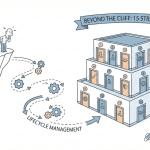
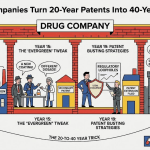
The global pharmaceutical industry reached a valuation of $1.6 trillion in 2023.1 Projections show this market will hit $2.35 trillion by 2030.1 This expansion is not purely a result of new drug discovery. It is increasingly a result of how companies manage their intellectual property (IP). Patents are the foundation of this industry. They allow companies to hold temporary monopolies. These monopolies encourage investment in research and development. However, these protections also create a tension between innovation and drug access. When a patent expires, generic companies can sell the same medicine at lower prices. This drives affordability but cuts into the margins of the original discoverer. To stop this revenue loss, many drugmakers use a strategy called evergreening. They file secondary patents on minor modifications to extend their control over a drug’s market share.1
## The Mechanics of Secondary Patenting
A primary patent covers the active pharmaceutical ingredient (API). It is the core of the drug. Secondary patents cover everything else. This includes new formulations, dosage amounts, delivery mechanisms, and methods of use.3 These are often filed shortly before the primary patent expires. The goal is to extend the exclusivity period beyond the original 20-year term.3 Research on the top 12 drugs in America shows more than 690 patents restricting competition.5 On average, 56% of these patents are filed after the Food and Drug Administration (FDA) has already approved the drug.5
### The 12 Categories of Secondary Claims
The United Nations (UN) Guidelines identify 12 specific types of secondary claims. These allow companies to layer their protection. These categories are Markush claims, selection patents, polymorphs, enantiomers, salts, ethers and esters, compositions, doses, combinations, prodrugs, metabolites, and new medical uses.6 Each of these claims targets a different physical or chemical aspect of the drug. For example, a company might patent a specific crystalline form of a molecule called a polymorph. This form might have better shelf-life or solubility than the original.7 Even if the core molecule is off-patent, a generic manufacturer might be blocked if their version uses that specific crystalline form.
### Chiral Switches and Enantiomer Patents
A common evergreening method involves enantiomers. These are mirror-image versions of a molecule.1 Eli Lilly used this to protect Prozac. They filed a patent for R-fluoxetine, a mirror-image version of the original fluoxetine. They then marketed this version as Sarafem to treat premenstrual dysphoric disorder.1 This allowed the company to maintain a monopoly in a different therapeutic category using the same basic chemistry. These chiral switches represent a significant part of lifecycle management. They often involve expensive research, but critics argue they offer no significant benefit to the consumer.1
## The Humira Fortress
AbbVie’s management of Humira (adalimumab) is the definitive case study in secondary patenting. Humira is a biologic drug used for rheumatoid arthritis and other conditions. It was the world’s best-selling drug for several years.8 AbbVie secured over 130 patents for Humira. This created a patent thicket that lasted from the drug’s launch in 2002 until 2023.8 This web of patents made it too expensive and risky for competitors to enter the market. They feared long and costly litigation.
### Citrate-Free Formulations and Injection Pain
AbbVie introduced a new version of Humira in 2016. This version was citrate-free and had a higher concentration. It used a 29-gauge needle instead of a 27-gauge needle.9 This change reduced the injection volume from 0.8 ml to 0.4 ml.9 The goal was to reduce injection site reactions, which were previously reported in 12.9% of patients.9 While this offered a therapeutic improvement, it also served a strategic purpose.
Humira Formulation Comparison
Original Version
Citrate-Free Version
Injection Volume
0.8 ml
0.4 ml
Needle Size
27-gauge
29-gauge
Concentration
40 mg / 0.8 ml
40 mg / 0.4 ml
Excipients
Citrate/Phosphate buffers
Citrate-free
Launch Year
2002
2016
By introducing this version before the original patents expired, AbbVie could move patients to the new formulation. In the United States, patients needed new prescriptions for this version.10 This move is often called product hopping. It shifts the market to a new, patent-protected version so that generic biosimilars have no market to enter.10 AbbVie argues this was not product hopping because they did not withdraw the original version from the market.10
### The $200 Billion Wall
The result of this strategy was massive revenue. Between the expiration of its primary patents and the entry of biosimilars, Humira generated billions in additional sales. Delayed biosimilar entry for Humira cost the U.S. healthcare system an estimated $7.6 billion.11 Total revenue amassed by drugmakers after primary patent expiration for just four biologics—Humira, Avastin, Rituxan, and Lantus—hit $158 billion.12
## Keytruda and the Subcutaneous Pivot
Merck is currently executing a similar strategy for Keytruda (pembrolizumab). Keytruda is the top-selling drug in the world, with sales reaching $29.5 billion in 2024.13 Its primary U.S. patents expire in late 2028.13 To mitigate this revenue risk, Merck is shifting patients from intravenous (IV) infusion to a subcutaneous (SC) injection called Keytruda Qlex.
### The Qlex Strategy
Keytruda Qlex was approved by the FDA in September 2025.13 It uses a recombinant enzyme to help the drug disperse under the skin. An IV infusion of Keytruda takes 30 minutes in a specialized center. The SC injection takes one to two minutes and can be given in a doctor’s office.14 Merck believes it can convert 30% to 40% of the Keytruda market to this new version.15
Merck’s patent filings for Keytruda have increased as the patent cliff approaches. Since 2022, the company has filed over 100 new patent applications for the drug.16 In total, Merck holds over 100 granted patents and nearly 300 applications on Keytruda.16 This thicket is designed to delay biosimilar competition and maintain market share for the newer, protected version. Analysts project Keytruda sales will peak at $34 billion in 2028 before dropping 19% in 2029 as biosimilars enter.13
## Managed Entry and the Revlimid Slope
Bristol Myers Squibb (BMS) used a different approach for Revlimid (lenalidomide). Instead of a sharp revenue drop, they engineered a revenue slope. They did this through volume-limited settlements with generic manufacturers like Teva and Natco.11
### Creating a Slope Instead of a Cliff
A typical patent cliff results in an 80% to 90% loss of market share within a year.17 BMS avoided this by allowing generics to enter the market before the final patents expired, but only in limited quantities. These generics were restricted to a small percentage of the total market, which increases over time until 2026.11 This gave BMS a predictable, albeit declining, revenue stream. It also helped them avoid the legal risks associated with cash-based pay-for-delay settlements.11
## The Economics of Exclusivity
The cost of developing a single new drug is often cited as $2.6 billion.19 This figure includes the cost of failed candidates. Because of this high cost, companies are rational to protect their successful products. Every month of added exclusivity for a blockbuster drug translates into hundreds of millions of dollars in revenue.18
“The median additional years of patent protection afforded by device patents was 4.7 years, with a range of 1.3 to 15.2 years.” 4
This statistic shows why drug-device combinations are a major focus for evergreening. For products like inhalers or insulin pens, the device patents often expire years after the drug patents.4 A generic manufacturer may have the right to make the drug, but they cannot sell it if they are blocked from using the delivery device.
### The ROI of Evergreening
It is more profitable for a company to extend a monopoly on an existing drug than to discover a new one. Discovery is a long-shot gamble. Extending an existing asset is a low-risk business decision.4 By adding three to seven years of exclusivity through secondary patents, a company can smooth its revenue curve and make its financial future more predictable for investors.4
Drug Asset
Primary Expiry
Secondary Protection
Economic Impact of Delay
Humira
2016
2023
$7.6 Billion cost to system
Imbruvica
Early 2020s
Late 2030s
$3.1 Billion in lost savings
Revlimid
2019
2026 (Full entry)
Retained majority market share
Lantus
2014
2020s
95% patents filed post-FDA
## Legal Battlegrounds: Enablement and Infringement
The courts are now a primary venue for determining the strength of secondary patents. Two major areas of focus are enablement and induced infringement.
### Amgen v. Sanofi and Genus Claims
In 2023, the U.S. Supreme Court ruled on Amgen v. Sanofi. This case involved patents for Repatha, an antibody that lowers cholesterol.22 Amgen had claimed a broad genus of antibodies that bind to a specific protein called PCSK9.23 The Court invalidated these claims because they were not enabled. They did not provide enough detail for a scientist to make and use the full scope of the invention without painstaking experimentation.23 This ruling makes it harder for companies to use broad, functional claims to block competition for biologics. It requires them to patent what they actually discovered, not everything that might work in the same way.24
### Skinny Labeling and GSK v. Teva
A generic drug can enter the market for unpatented uses while carving out patented indications from its label. This is called skinny labeling.7 The Federal Circuit’s decision in GSK v. Teva has made this strategy more dangerous. The court ruled that Teva induced infringement of GSK’s heart failure patent, even though heart failure was carved out of Teva’s label.27
The court looked at Teva’s marketing materials and press releases. Teva had called its product an AB-rated generic equivalent to GSK’s Coreg.27 Because Coreg was indicated for heart failure, the court found that calling the generic an equivalent implied it was equivalent for all uses.27 This has created a liability minefield for generic companies. They must now be extremely careful about how they describe their products to avoid massive patent liability.
## Regulatory and Political Response
The rising cost of prescription drugs has led to increased scrutiny of patent thickets and evergreening. In 2025, a bipartisan group of senators introduced bills to limit these practices.
### The Affordable Prescriptions for Patients Act
This bill targets patent thickets by limiting the number of patents a biologic maker can bring into an infringement suit against a biosimilar competitor.29 It would cap the number of patents at 20 in certain actions.29 This is intended to stop companies from using massive lists of weak patents to delay competition through expensive litigation.
### FTC Orange Book Challenges
The Federal Trade Commission (FTC) has become more active in challenging improper patent listings in the FDA’s Orange Book. In 2024 and 2025, the FTC sent warning letters to companies like Novartis, Teva, and Novo Nordisk.30 The FTC argues that these companies have listed patents for device components—like caps or dose counters—that do not mention any drug in their claims.31
When the FTC disputes a listing, the manufacturer has 30 days to withdraw or amend it.30 This effort has already led to the delisting of patents across 22 different brand-name products.30 The goal is to remove junk patents that prevent the FDA from approving generic versions based on delivery device limitations.32
## The Cost of the Status Quo
Healthcare spending in the U.S. reached nearly $5.3 trillion in 2024.34 Retail prescription drugs account for 8.8% of this spending.34 In 2024, overall pharmaceutical expenditures grew by 10.2% to $805.9 billion.35 This growth is driven by utilization and new, high-cost drugs like GLP-1 agonists.35
Generics and biosimilars provide a major check on these costs. In 2024 alone, they saved the U.S. healthcare system $467 billion.37 Over the last decade, these savings totaled $3.4 trillion.37 However, the evergreening of blockbuster drugs prevents these savings from reaching the system for several years.
Sector
2024 Spending (Billions)
Annual Growth Rate
Overall US Health
$5,300
7.2%
Retail Prescription Drugs
$466
11.4%
Non-Federal Hospitals
$39.0
4.9%
Clinics
$158.2
14.4%
## The Intelligence Advantage
For business professionals, tracking these developments manually is no longer viable. Reliance on Microsoft Excel for patent tracking creates systemic operational risk. Human error rates in spreadsheet modeling range from 1% to 5% per cell.38 In a portfolio with hundreds of data points, these errors are inevitable and difficult to detect.
Tools like DrugPatentWatch provide real-time intelligence on patent expirations, litigation, and generic entry timelines.39 This allows companies to move from a reactive legal posture to an offensive value-creation strategy. By using predictive machine learning, firms can forecast the probability of a patent being granted or the likely behavior of a specific examiner.40
### Patent Term Adjustments and Extensions
Calculating the true expiration date of a patent requires factoring in Patent Term Adjustments (PTA) and Patent Term Extensions (PTE). These are granted for delays in the patent office or the regulatory approval process.
The formula for calculating a PTE is generally as follows:
The testing phase is the period from when an investigational drug application becomes effective until the drug application is submitted. The approval phase is the period from when the drug application is submitted until it is approved.41 These extensions can add several years to a drug’s life, and tracking them accurately is a matter of fiduciary responsibility.38
## The Shifting Landscape of 2026
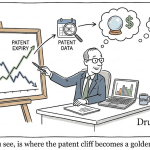
As we move through 2026, several factors will influence the pharmaceutical market. The Inflation Reduction Act (IRA) has introduced government price negotiations for top-selling drugs. Keytruda and other blockbusters will face these negotiated prices starting in 2028 and 2029.13 This coincides with their primary patent expirations, creating a dual pressure on revenue.
Specialty pharmacy revenue is expected to rise as the market shifts toward complex biologics.43 The barriers to entry for these products are legal and technical. Developing a biosimilar takes seven to eight years and costs up to $250 million.41 This ensures that even after patents expire, price erosion is slower than it is for small-molecule drugs.41
Companies that master lifecycle management will continue to find ways to extend their monopolies. They will use combination regimens, new delivery formats, and aggressive litigation to defend their franchises.13 Meanwhile, regulators and generic challengers will use tools like DrugPatentWatch to identify vulnerabilities in these thickets and force earlier market entry.
## Key Takeaways
Secondary patenting is a central strategy for maintaining market share in the pharmaceutical sector. It involves filing dozens of patents on minor modifications after the core molecule has been approved. This practice allows companies like AbbVie and Merck to build patent thickets that delay competition for years. While this behavior is rational for manufacturers seeking to maximize the value of their multi-billion-dollar investments, it imposes significant costs on the healthcare system.
Legal rulings are making broad genus claims harder to defend, but new theories of induced infringement are creating hurdles for generic entry via skinny labeling. The FTC and members of Congress are actively working to curb these practices by challenging Orange Book listings and proposing caps on the number of patents that can be litigated. For industry professionals, success requires a shift toward automated, data-driven IP intelligence to manage the increasing complexity of the patent landscape and the upcoming wave of patent cliffs.
## FAQ
What is the primary difference between evergreening and a patent thicket?
Evergreening refers to the practice of filing successive patents on minor drug modifications to extend the total period of exclusivity. A patent thicket is a specific type of evergreening where a manufacturer files a large, overlapping web of patents on many different aspects of a single product. The goal of a thicket is to make it prohibitively expensive for a competitor to litigate their way into the market.
How does the Amgen v. Sanofi ruling impact the future of biologic drugs?
The ruling sets a higher bar for the enablement requirement. Companies can no longer claim an entire class or genus of antibodies based solely on their function or the target they bind to. They must provide enough detail to enable a skilled person to make the full scope of what is claimed. This will likely lead to narrower patent claims that are easier for competitors to work around by creating different molecular structures.
Why are “skinny labels” under threat if they are legally allowed?
While the Hatch-Waxman Act allows generic companies to carve out patented uses, the GSK v. Teva case showed that other evidence—such as marketing materials or calling a product “equivalent”—can be used to prove that the company intended to induce infringement of the carved-out use. This makes it easier for brand manufacturers to sue for infringement even when the label technically excludes the patented indication.
What role does the Biologics Price Competition and Innovation Act (BPCIA) play in these disputes?
The BPCIA created an abbreviated pathway for biosimilars and established a procedure known as the “patent dance.” This is a structured information exchange between the biosimilar applicant and the original manufacturer to identify which patents will be litigated before the biosimilar launches. It is intended to resolve patent disputes early, but it is a complex process with strict deadlines that can also lead to launch delays.
How can data-driven tools like DrugPatentWatch change a company’s IP strategy?
These tools eliminate the errors associated with manual tracking and provide proactive alerts on litigation and regulatory changes. They use machine learning to predict the outcomes of patent challenges and identify “white space” in therapeutic areas where a company can build a defensible position. This shifts IP management from a defensive legal function to a primary driver of competitive advantage and financial planning.
The impact of an ‘evergreening’ strategy nearing patent expiration on the uptake of biosimilars and public healthcare costs: a case study on the introduction of a second administration form of trastuzumab in The Netherlands – PMC, accessed February 8, 2026, https://pmc.ncbi.nlm.nih.gov/articles/PMC11377641/
Amgen v. Sanofi: Supreme Court Holds Patents Claiming Antibody Genus Invalid as Not Enabled | Congress.gov, accessed February 8, 2026, https://www.congress.gov/crs-product/LSB10971