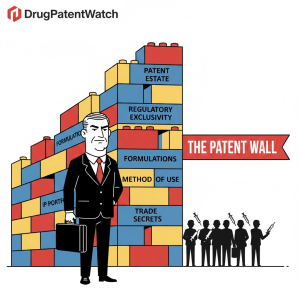
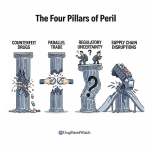
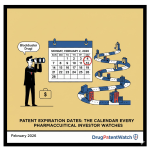
The global pharmaceutical landscape is currently navigating a period of unprecedented fiscal exposure, characterized by a looming “super-cliff” of patent expirations that places an estimated $200 billion to $400 billion in annual branded revenue at risk between 2025 and 2030.1 For the institutional investor, the intellectual property (IP) strategist, and the healthcare policy analyst, the traditional binary concept of the “patent cliff”—where revenue collapses immediately upon the expiration of a primary compound patent—has become a relic of a simpler era.1 In its place, the industry’s most sophisticated actors have erected a multifaceted “Patent Wall,” a defensive architecture designed to transform a catastrophic financial drop into a managed, gradual decline, or “patent slope”.4
This wall is not a single monolith but a sophisticated combination of three distinct legal and commercial strategies: patent thickets, evergreening, and product hopping.7 While these terms are frequently used interchangeably in political discourse, their technical mechanisms, legal foundations, and economic implications differ profoundly.7 For high-level professionals, distinguishing between these tactics is essential for accurately forecasting asset valuation, predicting generic or biosimilar entry timelines, and assessing the risk of federal antitrust intervention.6
The current environment is further complicated by a “whole-of-government” offensive launched by the Federal Trade Commission (FTC) and the United States Patent and Trademark Office (USPTO), aimed at dismantling these barriers through aggressive Orange Book challenges and legislative reforms like the Eliminating Thickets to Increase Competition (ETHIC) Act of 2025.10 As the industry moves into this “year of action,” the ability to decode the structural integrity of a drug’s patent wall provides a decisive competitive advantage.13
The Structural Core: Defining the Patent Thicket
At the most fundamental level, a patent thicket is defined as a dense web of overlapping intellectual property rights that a competitor must “hack through” to commercialize a competing product.14 Unlike a single patent that protects a novel molecule, a thicket comprises dozens or even hundreds of patents covering every conceivable aspect of a drug’s lifecycle.7 This strategy is particularly prevalent in the biologics sector, where the manufacturing complexity of large-molecule drugs allows for a broader range of patentable innovations than traditional small-molecule therapies.6
The Quantitative Reality of Thicket Density
The scale of modern patent thicketing is illustrated by the intellectual property portfolios surrounding current market leaders. Research into the top twelve drugs by gross U.S. revenue reveals that manufacturers have filed an average of 125 patent applications per drug, with 71 granted patents per product.15 This density serves a primary strategic goal: to extend market exclusivity far beyond the 20-year term intended by the Hatch-Waxman Act, with many top-grossing drugs seeking protection for upwards of 38 years.15
Drug Brand (Active Ingredient)
Manufacturer
Total Patent Applications
Granted Patents
Reported Peak Revenue (USD)
Humira (adalimumab)
AbbVie
250 – 300+
132 – 160
$21.2 Billion (2022)
Ozempic/Wegovy (semaglutide)
Novo Nordisk
320
154
$20+ Billion (2024 Global)
Revlimid (lenalidomide)
BMS / Celgene
105
76
$12.8 Billion (2020)
Keytruda (pembrolizumab)
Merck
150+
50% Post-FDA
$29.5 Billion (2024)
Eliquis (apixaban)
BMS / Pfizer
Complex Thicket
5+ Active
$20.7 Billion (2024)
Enbrel (etanercept)
Amgen
47+
TBD
$3.3 Billion (2024)
4
The economic logic of the thicket is predicated on the prohibitive cost of litigation. A generic or biosimilar challenger does not merely face the risk of losing a single lawsuit; they face a “minefield” of potential infringement claims.1 For a blockbuster drug, the innovator’s return on investment (ROI) for these legal strategies is astronomical.4 While a typical patent dispute may cost a challenger $5 million to $15 million, an innovator is often willing to spend $50 million or more to defend a monopoly that generates billions in quarterly free cash flow.4
Case Study: The Humira Blueprint
AbbVie’s management of Humira (adalimumab) stands as the canonical example of the patent thicket as a revenue engine. Although the primary composition-of-matter patent for Humira expired in late 2016, the company successfully delayed U.S. biosimilar competition until 2023.2 This seven-year extension was achieved through a portfolio of 132 patents that covered diverse elements such as citrate-free formulations (to reduce injection pain), specific fermentation methods, and the firing mechanism of the auto-injector pen.1
This thicket provided AbbVie with the leverage to negotiate favorable settlements with virtually every major biosimilar competitor, including Amgen, Sandoz, and Samsung Bioepis.4 These agreements followed a consistent pattern: competitors were granted immediate entry into the European market, where the patent estate was perceived as weaker, in exchange for agreeing to stay out of the U.S. market until 2023.4 The Seventh Circuit Court of Appeals upheld this strategy in 2022, ruling that “invalid patents cannot be used to create a monopoly,” but the mere “sheer number” of patents is not an antitrust violation.20 This ruling underscored the judicial reality that weak patents remain valid until proven otherwise, and the burden of that proof lies with the challenger.20
Evergreening: The Art of Lifecycle Management
If the patent thicket is the wall’s structure, evergreening is the process of extending its height. Also known as “patent layering” or “lifecycle management,” evergreening involves filing for new patents on secondary features of a drug—such as new dosages, formulations, or methods of administration—as the original patents approach their expiration dates.8
The Mechanics of Minor Modification
The goal of evergreening is to maintain a monopoly by transitioning the market to a “new and improved” version of the drug that enjoys its own period of exclusivity.7 Critics contend that these secondary patents often represent minor, clinically unnecessary changes that add little therapeutic value but effectively block lower-cost generic entry.7
Common evergreening tactics include:
New Formulations: Converting a twice-daily tablet to a once-daily extended-release (XR) version.7
Route of Administration: Moving from a pill to a capsule or from an intravenous infusion to a subcutaneous injection.6
Chemical Derivatives: Patenting specific salts, esters, or polymorphic crystalline forms of the original active ingredient.4
Indication Expansion: Seeking new patents for using the same drug to treat a different disease.9
Evergreening Tactic
Technical Mechanism
Strategic Implication
Polymorph Patents
Securing rights to specific crystalline structures
Blocks generics from replicating the exact physical form 4
Pediatric Exclusivity
Conducting studies on pediatric populations
Grants an automatic 6-month extension to all existing patents 23
Device Patents
Patenting the delivery tool (e.g., inhaler, pen)
Prevents generic substitution unless the device is also replicated 1
Salt/Ester Shifts
Modifying the chemical salt of the active ingredient
Resets the exclusivity clock on the modified compound 7
Subcutaneous Pivot
Moving from IV to SC administration
Complicates biosimilar development based on IV standards 3
The prevalence of post-approval patenting is high. One analysis found that 72% of patent applications for top-selling U.S. drugs were filed after the drug had already received FDA approval.1 This “drip-feed” strategy ensures that as one patent nears its end, a new one is granted to take its place, creating a perpetual cycle of protection.4
The Subcutaneous Pivot: Keytruda and Opdivo
A prominent contemporary example of evergreening is the “subcutaneous pivot” being executed by Merck for Keytruda and Bristol Myers Squibb (BMS) for Opdivo.3 As the primary intravenous (IV) formulation patents for these blockbuster oncology therapies approach their 2028 expiration, both companies are developing subcutaneous (SC) versions.24
In September 2025, the FDA approved Keytruda Qlex, a subcutaneous formulation of pembrolizumab.27 Merck believes it can convert 30% to 40% of Keytruda’s multi-billion dollar market share to the Qlex formulation before the 2028 patent cliff.24 This strategy is dual-purpose: it offers patients a more convenient, faster administration (minutes versus hours for IV), while simultaneously establishing a new patent-protected platform that is not subject to the impending biosimilar competition for the IV version.24 Analysts project that while standard Keytruda sales may dwindle to $7 billion by 2032, the Qlex formulation could sustain Merck’s oncology dominance for years beyond the original LOE.24
Product Hopping: The Strategy of Forced Migration
Product hopping is perhaps the most controversial element of the patent wall, as it directly manipulates the market to bypass the mechanism of automatic generic substitution.7 This practice occurs when a brand-name manufacturer encourages or forces patients to “hop” from a drug nearing its patent expiration to a newer, patent-protected version.9
The Distinction Between Hard and Soft Switches
Antitrust regulators distinguish between two types of product hops, with significantly different legal risks.7
The Hard Switch: The manufacturer removes the original, soon-to-expire drug from the market entirely before generics can enter. Patients and physicians are left with no choice but to transition to the newer version. This tactic is viewed as highly anticompetitive because it destroys the efficient distribution mechanism of the original drug.7
The Soft Switch: The manufacturer leaves the original drug on the market but ceases all marketing and promotion for it, while aggressively promoting the new version with rebates and discounts. While less legally vulnerable than a hard switch, it can still raise antitrust concerns if it effectively eliminates the prescription base for the original product.7
Antitrust Enforcement and the Suboxone Scheme
The FTC has historically been aggressive in pursuing product hopping schemes that involve deception or coercion.30 A landmark case involved Reckitt Benckiser and its subsidiary Indivior regarding the opioid addiction drug Suboxone.30 The companies allegedly used false safety claims—suggesting that Suboxone tablets posed a greater risk of pediatric exposure than their newer dissolvable film—to coerce a market-wide switch to the patent-protected film.30 In 2019 and 2020, the FTC secured $60 million in settlements for this deceptive scheme, representing the first major enforcement action targeting product hopping as an antitrust violation.30
Similarly, in the case of the antibiotic Doryx, Warner Chilcott was accused of making modest, non-therapeutic changes to the product’s dosage and formulation to prevent generic competition.30 The FTC argued in amicus briefs that a monopolist cannot avoid antitrust liability by “destroying efficient distribution mechanisms” like automatic generic substitution.30 This principle remains a cornerstone of the FTC’s current scrutiny of pharmaceutical marketing practices.30
The Economic Consequences: The “Corruption Tax” on Healthcare
The maintenance of these patent walls comes at a staggering cost to the U.S. healthcare system, taxpayers, and individual patients.32 By delaying the entry of lower-cost generic and biosimilar alternatives, these strategies sustain supracompetitive pricing far beyond the period intended by Congress.7
Systemic Spending and Excess Costs
The scale of overspending is profound. One study focused on just four biologic drugs (Humira, Avastin, Rituxan, and Lantus) found that extended patent protection allowed manufacturers to amass an additional $158 billion in revenue after their primary patents had expired.34 These “extended protection” years are particularly lucrative; the four drugs averaged $6.2 billion in annual U.S. revenue during the period of extended protection, compared to just $2.4 billion during the primary patent term.35
Drug Asset
Years of Primary Protection (Post-Launch)
Years of Extended Protection (Thicket/Evergreen)
Total Excess Cost to System (Est.)
Humira
13 Years
7 Years
$167 Billion (Shared with Eliquis/Enbrel)
Avastin
7 Years
8 Years
Included in $158B Biologic Total
Rituxan
4 Years
18 Years
Included in $158B Biologic Total
Lantus
15 Years
5 Years
Included in $158B Biologic Total
Revlimid
Initial Period
2019 – 2028 (Min)
$45 Billion (Projected)
4
Beyond the asset-specific impacts, there is a broader “corruption tax” associated with patent misuse. Research indicates that antitrust violations and patent thickets increased Medicare Part D gross spending by roughly 14.15%, or $14.82 billion, for the top 100 drugs.5 This represents a cost of approximately $120 per year for every American citizen.5 In 2022, Medicare Part D spent $46.4 billion on just ten high-cost drugs, many of which are protected by the very thickets currently under legislative and regulatory scrutiny.37
The “Managed Slope” of Revlimid
The transition of Revlimid (lenalidomide) into the generic era provides a modern blueprint for what experts call the “managed slope”.4 Celgene (now BMS) executed a masterstroke of lifecycle management by negotiating “volume-limited” settlements with multiple generic manufacturers, including Natco, Dr. Reddy’s, and Cipla.4
Instead of a single date for full generic entry, the settlements established a phased launch:
Phase 1 (March 2022 – January 2026): Generics are permitted to launch, but their market share is strictly capped at single-digit percentages, which gradually increases.4
This structure effectively extends the monopoly revenue stream while technically allowing generic entry.4 Because generic manufacturers are volume-constrained, they have no incentive to slash prices to capture a market they are legally barred from taking.4 Consequently, the price for lenalidomide remains artificially high even with multiple “competitors” on the market, resulting in projected excess costs of $45 billion for payers.4
The Regulatory Counter-Offensive: 2024–2025 Action
The years 2024 and 2025 have marked a paradigm shift in how federal agencies interact with the pharmaceutical patent system.13 Under a “whole-of-government” mandate from the executive branch, the FTC and USPTO have transitioned from isolated departments into active collaborators focused on dismantling patent walls.11
The FTC’s War on Orange Book “Junk” Listings
One of the most effective tactical maneuvers has been the FTC’s challenge to “improper” patent listings in the FDA’s Orange Book.7 Under the Hatch-Waxman Act, a patent listed in the Orange Book allows a brand manufacturer to trigger an automatic 30-month stay on generic approval if they file an infringement suit.6 In recent years, companies have increasingly listed patents for “ancillary” features—such as the plastic cap on an inhaler or the dose counter mechanism—to trigger these stays.1
In 2023, 2024, and 2025, the FTC issued a series of warning letters and amicus briefs asserting that hundreds of these patents were improperly listed because they did not claim the drug substance or a method of using it.7 This pressure has yielded tangible results: in December 2025, Teva Pharmaceuticals requested the removal of more than 200 patent listings from the Orange Book following sustained FTC pressure.4 This move effectively dismantled the mechanism for a 30-month stay for dozens of asthma, diabetes, and COPD medications, clearing a path for generic entry that was previously blocked.4
The “Year of Action” for the USPTO and FDA
The USPTO and FDA have entered what they term a “year of action” to improve patent quality and curb gamesmanship.13 Historically, these agencies have had minimal interaction; the FDA refers to extending patent terms for regulatory delays as “restoration,” while the USPTO calls it “extension”.41 However, recent initiatives have focused on:
Duty of Disclosure: Reminding patent applicants of their duty to provide the USPTO with all information shared with the FDA, preventing companies from telling the FDA a change is “minor” while telling the USPTO it is “novel and nonobvious”.40
Information Sharing: Establishing reciprocal access to databases to ensure patent examiners have the necessary information to make well-informed decisions regarding patentability.42
Inter Partes Review (IPR) Optimization: Harmonizing the Hatch-Waxman process with the IPR system to allow the Patent Trial and Appeal Board (PTAB) to eliminate “bad patents” more efficiently.13
Legislative Frontiers: The ETHIC Act and Beyond
As the judicial system has shown reluctance to dismantle patent thickets under existing antitrust law, the focus has shifted to legislative reform.12 Several bipartisan bills introduced in 2025 target the core mechanisms used to build the patent wall.
The Eliminating Thickets to Increase Competition (ETHIC) Act
Introduced in both the Senate (S. 2276) and the House (H.R. 3269) in mid-2025, the ETHIC Act is a direct response to the Humira model of thicketing.12 The bill aims to limit the number of drug patents that can be asserted in a single infringement action against a generic or biosimilar competitor.12
The bill targets “Patent Groups,” defined as patents that are related by way of “terminal disclaimers”.12 A terminal disclaimer is often filed by an applicant to overcome a “double patenting” rejection—essentially admitting that the new patent is not significantly different from an existing one.45 Under the ETHIC Act, a manufacturer would be restricted to asserting only one patent per Patent Group.12 This would prevent innovators from burying challengers in dozens of nearly identical lawsuits, significantly lowering the cost and risk of entering the market.12
The Affordable Prescriptions for Patients Act (APPA)
Another critical piece of legislation is the APPA, which seeks to curb patent thickets by placing a statutory cap on the number of patents a brand-name biologic manufacturer can use to sue a biosimilar competitor.7 By forcing companies to select their “strongest” patents to defend, the APPA aims to protect genuine innovation while removing the legal “machete” used to scare off competitors.7
Strategic Risk Assessment: The 2025–2030 Portfolio Exposure
For professionals managing pharmaceutical portfolios, the next five years represent a period of maximum exposure. The convergence of the “super-cliff” of expirations and the new Medicare price negotiation rules under the Inflation Reduction Act (IRA) has created a unique set of risks.3
The Impact of the Inflation Reduction Act (IRA)
The IRA introduces a seismic shift by allowing Medicare to negotiate prices for top-selling drugs that have been on the market for a certain number of years.3 Crucially, the timeline is bifurcated: small-molecule drugs (oral pills) are eligible for negotiation after just 9 years, while biologics are granted 13 years.3
This 4-year gap is already reshaping R&D investment. Venture capital funding for small-molecule development has plummeted by an estimated 70% since the IRA’s drug pricing provisions were drafted.3 Furthermore, 78% of surveyed biopharma companies expect to cancel early-stage small-molecule programs because they are no longer economically viable under the 9-year window.3 This regulatory pressure may inadvertently drive companies toward even more aggressive evergreening of biologics to secure the longer 13-year protection period.3
Portfolio Vulnerability Map (2025–2030)
Drug Name
Primary Indication
Expected LOE Year
2024 Sales (USD)
Primary Defense Strategy
Keytruda
Oncology
2028
$29.5 Billion
Subcutaneous pivot / Indication expansion 25
Eliquis
Cardiovascular
2026/2028
$20.7 Billion
Thicket / IRA Negotiation (2026) 37
Ozempic
Diabetes / Obesity
2026 (Semaglutide)
$17.5 Billion
Device patents / Thicket (Thru 2031) 7
Stelara
Immunology
2025
$10.4 Billion
Settlement-based delays / IRA Neg. (2026) 24
Opdivo
Oncology
2028
$9.3 Billion
Subcutaneous pivot / Thicket 6
Januvia
Diabetes
2026/2027
$2.2 Billion
Polymorph/Salt patents / IRA Neg. (2026) 37
2
The transition of these drugs into a competitive market is no longer a binary event. Instead, it is a distribution of probabilities governed by the strength of the patent wall, the results of the “patent dance” under the BPCIA, and the outcome of IRA price negotiations.5
The Counter-Narrative: Innovation vs. Abusive Patenting
To maintain a nuanced understanding, one must acknowledge the pro-patent community’s defense of these practices. Legal scholars and industry leaders argue that the “patent thicket” narrative is a misleading political tool that ignores the reality of medical advancement.22
The Necessity of Incremental Innovation
From the innovator’s perspective, a drug is rarely “finished” when it first reaches the market.22 Continuous research into better delivery systems (like auto-injectors) or new therapeutic uses (like Botox’s evolution from eye disorders to migraines) requires significant investment that only patents can protect.22 These “secondary” patents often represent the science that patients value most: safety, convenience, and expanded efficacy.22
Furthermore, the USPTO has noted that multiple patents associated with a single complex product are not unique to pharmaceuticals; they are common in all highly advanced fields, from semiconductors to aerospace.45 Prohibiting the enforcement of validly issued patents, as the ETHIC Act proposes, could “destabilize the entire innovation ecosystem,” stripping startups of the IP certainty needed to attract capital.45
The Structural Deficit and the Social Payoff
The fundamental economic reality is that without the “temporary monopoly” created by patents, the industry’s high-risk R&D cycle would collapse.52 The patent system is built on a social contract: a period of exclusive profit in exchange for public disclosure of the invention, which eventually becomes a low-cost generic available to everyone.52 The vertical “patent cliff” seen in small molecules, where prices drop by 90% or more within months, is the ultimate public payoff of the patent system.6
Number of Generic Labelers
Average Price Reduction (vs. Brand)
Market Dynamic
1 Manufacturer
31% – 39%
Duopoly; High-margin period 53
2 Manufacturers
44% – 54%
Early competition; Share shift begins 53
3 – 5 Manufacturers
60% – 79%
Competitive erosion; Margin compression 53
6 – 10+ Manufacturers
80% – 95%
Full commoditization; Near marginal cost 53
Conclusions and Future Strategic Outlook
The pharmaceutical “Patent Wall” is currently facing its most significant structural challenge since the passage of the Hatch-Waxman Act forty years ago. The convergence of three forces—a massive wave of high-value patent expirations, aggressive new antitrust enforcement by the FTC, and the implementation of Medicare price negotiations—has created a “perfect storm” for the industry.
The Emerging “Type II” Thicket and Biologic Slope
In the biologics space, we are seeing the rise of what analysts call the “Type II” thicket—a portfolio that relies less on the molecule itself and more on the complexities of biosimilarity and manufacturing.6 This ensures that even when a biosimilar is approved, it may follow a “slope” rather than a “cliff,” as seen with Humira, which retained 40% of its sales in its first year of competition despite losing $12 billion in net revenue.1
Actionable Intelligence for Professionals
For high-level professionals, competitive advantage in this decade depends on granular tracking of the following:
Orange Book Litigation Dynamics: The removal of “junk” device patents by companies like Teva will serve as a bellwether for the speed of future generic launches.4
The Subcutaneous Pivot Timeline: Monitoring the conversion rates of IV-to-SC formulations for drugs like Keytruda and Opdivo is the single best predictor of whether a company can “soft-land” its patent cliff.6
The Legislative “Terminal Disclaimer” Risk: If the ETHIC Act or similar provisions pass, the value of a patent thicket will be fundamentally undermined, requiring a shift in IP strategy toward fewer, stronger, and more distinct “root” patents.12
The “Patent Wall” remains a formidable defense, but its foundations are no longer untouchable. As the regulatory machetes get sharper, the era of the perpetual pharmaceutical monopoly is being replaced by a more dynamic, and potentially more precarious, landscape of managed competition.5 For those who can accurately predict the breaches in these walls, the rewards remain, as they always have been, astronomical.