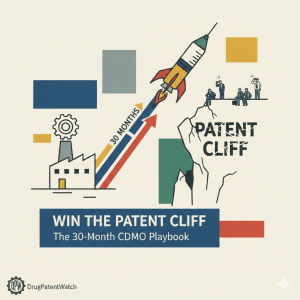
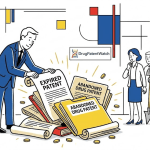
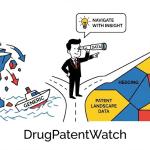
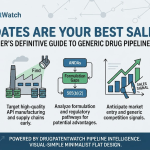
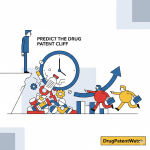
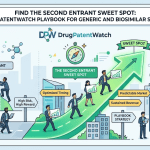
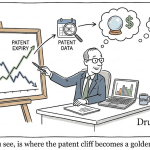
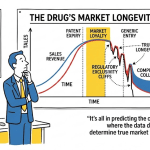
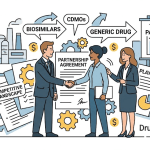
The pharmaceutical sector faces a revenue contraction of $236 billion through 2030 as blockbuster patents expire. This contraction is a predictable cycle for innovators but a high-value entry point for the contract development and manufacturing organization (CDMO) sector. Success in this landscape does not go to the most reactive provider. It goes to the partner that pitches scale-up services exactly 24 to 30 months before a drug loses its market exclusivity. This specific window is the technical and regulatory sweet spot where generic drug sponsors finalize their manufacturing partners to meet the filing deadlines of the Food and Drug Administration (FDA).
The Commercial Logic of the 30-Month Pitch
Generic drug manufacturers operate on a unique paradigm where affordability is the primary strength and the source of a significant perceptual weakness.1 To win in this market, a sponsor must be the first to market. The entry of a single generic competitor typically slashes the brand price by 30% to 39%.2 Once ten or more competitors enter, the price collapses by 80% to 95%.3 The 180-day exclusivity period granted to the first generic applicant to successfully challenge a patent is the financial jackpot of the industry.3 This six-month window allows a generic firm to capture 40% to 50% of the market share at a high margin before multi-source competition destroys the price point.5
A CDMO that understands this timeline can position itself as a strategic partner rather than a simple vendor. The development cycle for a generic product takes approximately 36 months from initial studies to final approval.6 Pitching at the 30-month mark ensures the CDMO is integrated into the project during the critical phase of formulation development and active pharmaceutical ingredient (API) sourcing.
Competitive Density
Price Reduction (vs. Brand)
Market Dynamic
1 Competitor (Exclusivity)
20% to 30%
Temporary Duopoly
2 Competitors
50% to 54%
Margin Compression
3 to 5 Competitors
60% to 79%
High Volume Requirement
10 or More Competitors
80% to 95%
Full Commoditization
The data suggests that the “first generic” window offers the highest potential margins, making it the primary target for Paragraph IV challengers.2 CDMOs must align their capacity and expertise to support these aggressive timelines.
The Hatch-Waxman Game Board
The Drug Price Competition and Patent Term Restoration Act of 1984, known as the Hatch-Waxman Act, defines the rules of generic entry in the United States.3 It allows generic firms to seek approval by demonstrating bioequivalence to a Reference Listed Drug (RLD) without repeating the expensive clinical trials conducted by the innovator.7 The act provides a framework for patent challenges, most notably the Paragraph IV certification.
The Paragraph IV Mechanism
A Paragraph IV certification states that the brand-name manufacturer’s patent is invalid, unenforceable, or will not be infringed by the generic product.8 This is a technical act of patent infringement that triggers a specific legal sequence. The generic firm must notify the patent owner within 20 days of the FDA acknowledging the application.8 If the brand owner sues within 45 days, an automatic 30-month stay is triggered, during which the FDA cannot grant final approval to the generic drug.9
The Value of the 30-Month Stay
The 30-month stay is one of the most valuable assets in an innovator’s defensive arsenal. For a blockbuster drug generating $10 million in daily revenue, a 30-month delay in generic entry preserves approximately $912 million in revenue.5 This revenue is preserved even if the patents are ultimately found to be invalid or not infringed.
Daily Revenue of Brand Drug
12-Month Stay Value
30-Month Stay Value
$1 Million
$365 Million
$912 Million
$5 Million
$1.82 Billion
$4.56 Billion
$10 Million
$3.65 Billion
$9.12 Billion
The financial impact of these stays explains why innovators aggressively defend their patents. For a CDMO, this means that the client’s project will likely face years of litigation. The CDMO must be prepared to maintain readiness and stability data throughout this period to ensure the product can launch the moment the stay expires or the litigation resolves.11
Lead Generation via Patent Intelligence
CDMOs often struggle to differentiate themselves in a crowded market. Strategic use of patent data provides a competitive advantage. Analyzing patent filings reveals a drug’s research priorities, emerging therapeutic areas, and manufacturing challenges.12 Using a platform like DrugPatentWatch allows a CDMO to move from a reactive service provider to a proactive partner.
Identifying the NCE-1 Date
The New Chemical Entity (NCE) exclusivity period lasts five years from the date of the brand drug’s approval. During this time, the FDA cannot accept an Abbreviated New Drug Application (ANDA).5 The NCE-1 date is the first day a generic firm can submit an ANDA with a Paragraph IV certification, exactly four years after the brand drug’s approval.9 This date is the “warning bell” that generic competition is imminent.5
CDMOs use DrugPatentWatch to track these dates and identify potential clients whose products require specialized manufacturing support. For example, if a CDMO has expertise in handling highly potent compounds, it can target companies developing generics for oncology drugs approaching their NCE-1 dates.12
Mapping the Patent Thicket
Innovators often build a “thicket” of secondary patents covering formulations, methods of use, and manufacturing processes to extend their exclusivity.13 A CDMO that can help a client design around these secondary patents is invaluable. This involves analyzing the patent claims and developing a manufacturing process or formulation that does not literally infringe the brand’s IP.14
Technical Milestones in the 30-Month Window
The path to a successful ANDA submission involves rigorous technical milestones. A CDMO must guide the client through reverse engineering, formulation development, and scale-up.
Reverse Engineering and Q1/Q2 Compliance
The FDA requires that most generic drugs be qualitatively (Q1) and quantitatively (Q2) the same as the RLD.15 This means they must contain the same inactive ingredients in the same concentrations. A CDMO performs de-formulation to understand the excipient function and dissolution behavior of the brand-name product.16 This reverse engineering informs the design of a formulation that achieves therapeutic equivalence while accounting for stability and manufacturability.
API Sourcing and DMF Review
Selecting a high-quality API supplier is a critical early step. The supplier must have a robust Drug Master File (DMF) that the CDMO reviews to understand the API’s quality attributes, stability profile, and manufacturing route.16 The CDMO must ensure the API is physically compatible with the proposed formulation, focusing on particle size and crystalline form.16
Exhibit Batches and the 1/10th Scale Rule
The FDA requires exhibit batches to demonstrate that the manufacturing process is robust at a scale representative of commercial production.15 For oral solid dosage forms, these batches must typically be at least 100,000 units or one-tenth the size of the intended commercial batch, whichever is larger.15 These batches are manufactured at the commercial site and are used for pivotal bioequivalence and stability studies.15
The 6-Month Stability Requirement
Stability data is a non-negotiable component of an ANDA submission. The application must include at least six months of stability data from the final dosage form manufactured at the required scale.6 This data confirms the drug’s shelf life, with sponsors typically aiming for two years or more.16
Stability Testing Stage
Scale
Objective
Laboratory Scale
Small R&D Batches
Initial shelf-life estimates
Scale-up Batches
Pilot Scale
Process verification
Exhibit Batches
1/10th Commercial
Pivotal data for ANDA
Stability studies are conducted under International Council for Harmonisation (ICH) guidelines, exposing the drug to various conditions of temperature and humidity.16 CDMOs that can execute these studies flawlessly reduce the risk of the FDA issuing a “refuse-to-receive” (RTR) letter, which can cost a sponsor over $60,000 in lost filing fees.15
Bioequivalence: The Scientific Hurdle
The fundamental requirement of the ANDA pathway is demonstrating bioequivalence.8 The generic drug must deliver the same amount of active ingredient into the patient’s bloodstream in the same amount of time as the innovator drug.7
Measuring Bioequivalence
The FDA assesses bioequivalence by measuring the area under the curve (AUC) and the peak concentration (Cmax) of the drug in the blood. For a generic to be approved, the 90% confidence interval for the ratio of the generic’s to the brand’s AUC and Cmax must fall between 80% and 125%.1 This range is often misunderstood; the actual measured difference between the generic and brand is typically very small, averaging around 3.5% for absorption.1
Pilot Bioequivalence Studies
A skilled CDMO conducts pilot bioequivalence studies using a small group of healthy volunteers before manufacturing the final exhibit batches.15 These studies identify whether the formulation requires adjustment to match the RLD’s performance. This iterative testing is vital for complex generics where proprietary delivery technologies make bioequivalence difficult to achieve.16
The Complex Generic Moat
The generic market is shifting toward complex products to avoid the intense competition of simple small molecules. Complex generics involve challenging active ingredients, non-standard formulations, or alternative administration routes.16
Specialized Dosage Forms
Products such as softgels, modified-release tablets, and transdermal patches require specialized expertise. Softgels, for example, often involve poorly soluble APIs or sensitive compounds that require early characterization and targeted formulation strategies.16 Modified-release products use multi-layer tablets or enteric coatings to manage release kinetics.15
Sterile Injectables and BFS Technology
Bringing a sterile injectable product to market requires a seamless scale-up process and facilities designed to meet global regulatory requirements.17 Blow-Fill-Seal (BFS) technology is a major innovation in this area. It is a closed, automated process where a plastic container is formed, filled with sterile solution, and sealed within a single piece of equipment.18 This significantly reduces the risk of contamination and allows for the rapid scale-up of unit-dose containers.19
Integrated Continuous Manufacturing
Integrated Continuous Manufacturing (ICM) is reshaping pharmaceutical production by replacing fragmented batch processes with a seamless, end-to-end system.20 Unlike batch manufacturing, where materials are moved between segregated suites, ICM links all unit operations from API synthesis to final dosage form.20
Operational and Capital Advantages
CM facilities can be up to 70% smaller than traditional plants and cut operational costs by as much as 50%.21 The process uses less API during development and reduces inventory requirements.
Metric
Batch Manufacturing
Continuous Manufacturing
Facility Footprint
Large, segregated suites
Compact, modular systems
Operational Costs
High (Hold times, handoffs)
Up to 50% lower
Production Timeline
Weeks to Months
Days to Weeks
Scalability
Requires new equipment
Adjust run time
Real-Time Quality Control
ICM systems utilize Process Analytical Technology (PAT) to monitor critical process parameters in real time.20 This enables early detection of deviations and ensures consistent product quality across every production run. For CDMOs, these efficiencies impact pricing power and improve the competitiveness of their service offering.21
The 2025 Trade Policy Shift
The pharmaceutical supply chain is currently facing massive disruptions due to US trade policies and executive orders. In May 2025, the US government issued orders to promote the domestic production of critical medicines and remove regulatory barriers to onshoring.23
Impact of Tariffs on APIs
A blanket 10% tariff was imposed on imports in April 2025, specifically targeting China and later expanding to other regions.25 These tariffs have triggered a 12% to 20% increase in the cost of widely used APIs such as amoxicillin and metformin.25 A 25% tariff on pharmaceutical imports could increase annual US drug costs by nearly $51 billion.25
The Biosecure Act and Onshoring
The Biosecure Act is driving a high demand for US-based CDMO capacity.26 It pressures sponsors to rethink their global manufacturing footprints and prioritize resilience over cost. Sponsors are increasingly adopting dual-sourcing strategies, keeping a portion of their manufacturing in lower-risk regions like the US or Europe.26 CDMOs that have recently expanded their domestic capacity, such as Alcami, are well-positioned for growth in 2026.26
Financial Impact of Manufacturing Delays
Manufacturing delays are catastrophic for generic sponsors. The 180-day exclusivity window is a one-time opportunity. If a CDMO fails to deliver the product on time, the sponsor risks losing hundreds of millions in high-margin revenue.5
“The 30-month stay is one of the most valuable assets in an innovator’s defensive arsenal. For a blockbuster drug generating $10 million in daily revenue, a 30-month delay in generic entry preserves approximately $900 million in revenue.” 5
Pay-for-Delay and Federal Costs
Historically, some brand and generic manufacturers have agreed to delay generic entry through “pay-for-delay” settlements.27 Between 2014 and 2023, the impact of these delays on federal expenditures was as high as $16.1 billion, with Medicare bearing $9.9 billion of the cost.27 Over the next decade, projected costs to the federal government from generic delays could exceed $27.4 billion.27
Out-of-Pocket and Premium Impacts
Delays also affect individuals through higher out-of-pocket expenditures, which exceeded $4.4 billion over the last decade.27 Furthermore, private insurance premiums were as much as $12.2 billion higher due to the absence of lower-cost generic alternatives.27 CDMOs that can guarantee a timely launch help their clients avoid these reputational and financial risks.
Portfolio Mastery and ROI Modeling
Sophisticated generic sponsors use advanced financial modeling to manage their portfolios. This involves moving beyond simple ROI to risk-adjusted Net Present Value (rNPV) calculations.2
The rNPV Calculation
The rNPV model incorporates the probability of technical success, the probability of winning patent litigation, and the expected price erosion curve.2
Forecast Peak Sales: Project the potential annual revenue assuming a successful launch.
Model Price Erosion: Develop a realistic curve based on the forecasted number of competitors.
Assess Probability: Assign a percentage to the likelihood of the brand’s patent being found valid or infringed.2
The CDMO as a Strategic Partner
A CDMO contributes to this modeling by providing accurate estimates for manufacturing costs and timelines. By pitching 30 months pre-LOE, the CDMO helps the sponsor de-risk the technical and manufacturing feasibility of the project.2 This collaboration transforms the relationship from a transactional service to a strategic partnership that ensures long-term program success.17
Case Study: Small Molecule Erosion vs. Biologics
The rate of revenue loss varies between small molecules and biologics. For small molecules, the entry of multiple generics leads to a rapid price collapse. In contrast, biosimilars experience a “slope” rather than a cliff.28
Small Molecule Dynamics
Small molecule generics are typically chemically identical to the brand product. Once the 180-day exclusivity ends and the “floodgates” open, the market becomes fully commoditized. Prices often drop to 5% to 10% of the original brand price.2
Biosimilar Challenges
Biosimilars are much more expensive to develop and manufacture, leading to fewer entrants. Price discounts for biosimilars are often in the range of 15% to 40%, and price erosion bottoms out at roughly 50% to 70% of the brand price.11 For CDMOs, this means that biosimilar projects require longer-term commitments and more sophisticated technical capabilities than traditional generics.
Risk Management in CDMO Engagements
Partnering with a CDMO involves sharing sensitive intellectual property. This position of trust is a double-edged sword.14 While it offers CDMOs a view into cutting-edge science, it also exposes them to legal and financial risks.
Protecting Trade Secrets
A CDMO has a legal and ethical obligation to safeguard the client’s patented compounds and proprietary formulations.14 This requires strict internal controls and cross-functional review teams to monitor for potential IP conflicts.14
Negotiating Liability
Contracts must clearly define the ownership of IP developed during the engagement. For example, if a CDMO develops a new, more efficient purification process for a client’s drug, the contract must specify who owns that process.10 Failure to manage these risks can lead to catastrophic infringement litigation and the loss of key partnerships.14
The Future of Generic Manufacturing
Looking toward 2026, the CDMO market will be shaped by AI-driven drug development, smart manufacturing, and a continued focus on supply chain agility.29
AI and Predictive Analytics
AI is starting to play an important role in identifying manufacturing inefficiencies and managing complex product and process data.18 CDMOs are adopting “digital twins” for process simulation and AI-driven predictive analytics for demand planning.29
Talent and Workforce Stability
As US-based capacity expands, the limiting factor may be talent. Operating complex, highly regulated plants requires a skilled workforce.23 CDMOs that prioritize workforce stability and proactive recruitment will be best positioned to thrive in the competitive landscape of 2026.26
Key Takeaways
The 30-Month Window: Pitching scale-up services 24 to 30 months before a patent expires is critical. This timing allows for API sourcing, reverse engineering, and the manufacturing of exhibit batches required for a timely ANDA filing.
First-to-File Advantage: The 180-day exclusivity period is the primary profit engine for generic manufacturers. CDMOs that can guarantee a launch on the first day of eligibility provide massive ROI to their clients.
Patent Intelligence: Strategic use of data from DrugPatentWatch allows CDMOs to identify upcoming NCE-1 dates and target potential clients before they have selected a manufacturing partner.
Onshoring and Tariffs: New trade policies and the Biosecure Act are driving a surge in demand for US-based manufacturing. Tariffs on APIs from China and India have increased costs by 12% to 20%, making domestic supply chains a strategic imperative.
Technical Excellence: As small molecules commoditize, the industry is shifting toward complex generics and continuous manufacturing. CDMOs with specialized capabilities in softgels, sterile injectables, or integrated continuous lines have a significant competitive moat.
FAQ
How does a Paragraph IV certification impact CDMO capacity planning?
A Paragraph IV filing typically triggers a 30-month stay. This means the CDMO must be prepared for a project to be delayed by two and a half years of litigation. The CDMO must ensure that stability data remains current and the manufacturing line can be activated immediately once the stay expires.
What is the difference between Q1 and Q2 in generic drug formulation?
Q1 refers to the qualitative sameness, meaning the generic must contain the same inactive ingredients as the brand drug. Q2 refers to quantitative sameness, meaning those ingredients must be present in the same concentrations. Achieving Q1/Q2 compliance is often a requirement for the FDA to waive expensive clinical trials.
Why is the NCE-1 date important for business development teams?
The NCE-1 date is the first day the FDA can accept a generic application for a drug with new chemical entity exclusivity. This occurs exactly four years after the brand drug’s approval. It is the most critical tactical window for generic firms to secure first-to-file status.
How do 2025 tariffs on APIs affect the pricing of generic drugs?
Tariffs of 10% to 25% have increased the cost of essential APIs like metformin and amoxicillin by up to 20%. These costs are often passed through to the consumer, potentially raising US drug prices by 12.9% for high-volume products.
What are exhibit batches, and why must they be manufactured at 1/10th scale?
Exhibit batches are used to prove to the FDA that a manufacturing process is stable and reproducible. The 1/10th scale rule (or 100,000 units) ensures the process is tested at a size large enough to reveal any issues that might occur during full commercial production.