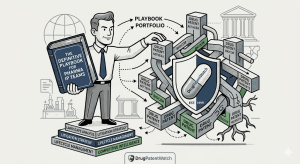
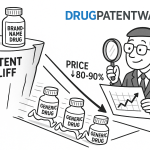
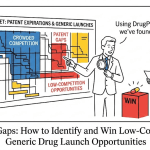
Pharmaceutical patent portfolio management is not a legal overhead function. It is the mechanism by which an industry that spends an average of $1-2 billion and 10-13 years to bring a single drug to approval recovers that investment at all. Strip away the patents and the market exclusivity they anchor, and the economics of drug development collapse: generic manufacturers can replicate a compound for a fraction of the original R&D cost, enter the market within months of approval, and drive prices down by 80% or more within two years.
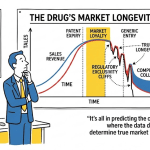
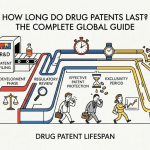
The 20-year patent term granted from filing date sounds generous. In practice, by the time a drug clears Phase III trials and obtains FDA approval, the effective commercial window shrinks to roughly 7-10 years. Every decision made about which patents to file, how broadly to draft claims, which jurisdictions to pursue, and how aggressively to defend against challengers directly translates into months of exclusivity, and at blockbuster revenue rates, each additional month can represent hundreds of millions of dollars.
This guide treats patent portfolio management as what it actually is: a revenue discipline, not a compliance function.
1.1 The R&D Investment Equation
Global biopharmaceutical R&D spending reached approximately $250 billion in 2023. The United States accounts for roughly 45% of that figure, with ‘Big Pharma’ contributing close to 60% of total global expenditure. Roche spent over $14 billion on R&D in 2023; Johnson & Johnson allocated $13.8 billion; Pfizer invested approximately $12 billion in the same year.
Against that backdrop, only about 12% of drug candidates that enter clinical trials receive FDA approval. The math is unforgiving. A company running ten Phase I programs statistically launches one drug. The revenue from that drug must recoup the cost of all ten programs, plus the cost of discovery, plus regulatory expenses, plus the capital cost of tying up that cash for over a decade.
Patent exclusivity is the only mechanism that makes those numbers work. A portfolio manager who treats patents as legal hygiene rather than revenue infrastructure is managing the wrong risk.
1.2 From Reactive Filing to Strategic IP Architecture
Most pharma companies file their first patent on a new molecular entity (NME) reactively, because the science demands it. The difference between a weak portfolio and a strong one is everything that happens after that first filing.
Strategic portfolio management means mapping every patent asset to a specific business objective: product protection, licensing revenue, market entry deterrence, or pipeline optionality. It means running gap analyses against the competitive landscape quarterly, not annually. It means having a cross-functional IP committee where R&D, business development, regulatory affairs, and legal sit in the same room, not siloed in separate processes that occasionally exchange memos.
Companies that run IP as a strategic function track their portfolio’s contribution to enterprise value with the same rigor they apply to pipeline NPV calculations. Companies that run it as a legal function find out they have a problem when a Paragraph IV certification lands in their inbox.
Key Takeaways for Section 1:
Effective market exclusivity averages 7-10 years post-launch, not the nominal 20-year patent term.
At blockbuster revenue rates, each additional month of exclusivity can represent $200-500M in revenue for a top-20 drug.
IP strategy must be integrated into R&D portfolio decisions, not appended to them post-discovery.
2. The IP Valuation Framework: Patents as Balance Sheet Assets
Patents are rarely valued correctly in pharma financial analysis. Accounting standards require most internally generated IP to be carried at cost rather than market value, which means a patent covering a drug generating $5 billion in annual revenue may appear on the balance sheet at a few million dollars in capitalized prosecution costs. This disconnect creates both analytical risk and strategic opportunity.
2.1 How IP Teams and Investors Should Value a Drug Patent
Institutional investors and licensing counterparties use several approaches when valuing a pharmaceutical patent or patent portfolio:
Discounted Cash Flow (DCF) with exclusivity-adjusted terminal values. The most rigorous method models revenue under three scenarios: full exclusivity through patent expiration, partial erosion from a Paragraph IV settlement granting early generic entry, and immediate generic entry following successful invalidity challenge. Each scenario carries a probability weight derived from litigation history and patent strength scoring. The resulting probability-weighted NPV is the patent’s economic value.
Patent strength scoring. Proprietary scoring models, used by firms like IPD Analytics and institutional IP advisory practices, weight patents on dimensions including claim breadth, prosecution history estoppel exposure, prior art density, number of continuation applications pending, and litigation track record for the filing law firm. A composition-of-matter patent on an NME with broad claims, filed before significant prior art existed, and prosecuted with minimal estoppel, scores very differently than a formulation patent filed post-approval on an existing compound.
Royalty relief method. Commonly used in M&A due diligence, this approach estimates what a licensee would pay in royalties to access the protected technology, then capitalizes that stream. Industry royalty rates for pharma licenses typically run 5-15% of net sales for primary molecule rights, with secondary patents (formulation, method-of-use) commanding 2-8%.
Comparable transaction analysis. Licensing deals in public databases (e.g., Royalty Pharma’s disclosed transactions, SEC filings for collaboration agreements) provide benchmark multiples for specific therapeutic categories, patent types, and development stages.
2.2 IP Valuation in Specific Drug Asset Classes
Small molecule NMEs. The composition-of-matter patent is the primary value driver. For a small molecule, this patent typically provides 7-10 years of effective market exclusivity after approval. Secondary patents (polymorph, salt form, formulation) add statistical value primarily through their deterrent effect on generic Paragraph IV filings rather than through high litigation success rates. Post-approval secondary patents are invalidated at materially higher rates than primary composition-of-matter patents.
Biologics. Patent valuation for biologics is more complex. The FDA’s 12-year data exclusivity period under the BPCIA operates independently of patent protection and provides a hard floor on biosimilar entry that does not exist for small molecules. For originators, this means the IP valuation model must incorporate both the patent portfolio and the data exclusivity period, with the 12-year clock often being more commercially relevant than the patent term. AbbVie’s Humira strategy is instructive: the company built a patent portfolio of over 130 patents that, combined with data exclusivity and the BPCIA litigation framework, delayed U.S. biosimilar competition until 2023, approximately 7 years after the core composition-of-matter patent expired.
Orphan drugs. The 7-year orphan drug exclusivity in the U.S. (10 years in the EU) interacts with patent protection to create a combined exclusivity profile that can significantly exceed what either mechanism provides alone. For rare disease companies, the orphan exclusivity period often determines the commercial window more directly than the patent term, particularly for drugs that achieve fast-track or accelerated approval before most patent claims mature.
2.3 IP Valuation in M&A Due Diligence
When a larger company acquires a biotech or pharma asset, the patent portfolio is not a secondary diligence item. It is often the primary asset being purchased.
A rigorous IP due diligence process covers:
Chain of title verification for all patents in the portfolio (assignments, inventor agreements, university licensing agreements for any academic spin-out IP).
Freedom-to-operate (FTO) assessment against third-party patents that could block manufacture or commercialization.
Prosecution history review for each material patent, with specific attention to claim amendments that may create file wrapper estoppel and limit enforceability.
Pending continuation applications and their claim scope, which represent optionality value not always visible in a simple patent list.
Inter Partes Review (IPR) exposure, including any pending petitions and the strength of the prior art cited against key claims.
Jurisdictional coverage gaps relative to the commercial plan.
Acquirers that skip thorough IP diligence on pharma targets discover the problem when a generic files a Paragraph IV certification six months post-close.
Key Takeaways for Section 2:
Most pharma patents are carried at cost on the balance sheet, dramatically understating economic value. IP teams and deal teams must build independent valuation models.
For biologics, the BPCIA’s 12-year data exclusivity period frequently anchors commercial projections more reliably than the patent term.
M&A due diligence must include file wrapper estoppel analysis, not just a patent list review.
Investment Strategy Note: Portfolio managers evaluating pharma equities should treat patent portfolio quality as a distinct factor in company valuation. A company with strong composition-of-matter coverage, pending continuations, and favorable PTE outcomes will sustain revenue longer than a company with thin secondary patent coverage, even if near-term earnings look identical. Paragraph IV certification activity against a company’s drugs is a leading indicator of revenue erosion risk, often 3-4 years before generic market entry.
3. Patent Taxonomy: Matching Protection Type to Commercial Goal
A single drug with peak annual sales above $1 billion typically needs more than one patent to hold its market position. The composition-of-matter patent is the anchor, but the patent portfolio surrounding a blockbuster drug can span dozens of related filings, each serving a distinct strategic purpose.
3.1 Composition-of-Matter Patents
These patents cover the active pharmaceutical ingredient (API) itself, including the compound’s chemical structure and, in the case of biologics, the amino acid sequence and glycoform profile. Composition-of-matter patents carry the broadest claim scope and are the most difficult to design around. For a first-in-class NME, this patent represents the core of the commercial moat.
The strategic priority is filing composition-of-matter applications as early as possible to establish priority date. Companies routinely file provisional applications before preclinical data is complete, locking in the priority date while using the 12-month provisional window to gather additional characterization data for the full non-provisional filing.
Composition-of-matter patents for small molecules are typically granted with claims covering the specific compound structure, close structural analogs, and in some cases a genus of related compounds. The breadth of genus claims is a function of the disclosure in the specification and is frequently contested during prosecution. Overly broad genus claims without adequate written description support invite rejection under 35 U.S.C. Section 112 and invalidity challenges in litigation.
3.2 Method-of-Use Patents
Method-of-use patents protect specific therapeutic applications of a compound. The strategic role of these patents has grown significantly as pharmaceutical companies use them to extend commercial protection beyond composition-of-matter expiration.
Data from I-MAK’s analysis of top-selling drugs shows that 41% of patents filed after initial FDA approval carry method-of-use claims. These late-filed method patents are a core tool in lifecycle management strategy, and they are also the category most scrutinized by generic challengers and policymakers.
Method-of-use patents vary significantly in strength. A patent claiming treatment of a condition that was not known or obvious at the time of the original NME filing is strong, particularly when the claim includes specific dosing parameters, patient subpopulations, or biomarker-defined populations. A patent claiming treatment of the same condition already disclosed in the original application, but adding minor dosing specificity, is vulnerable to obviousness challenges and generates limited additional exclusivity.
The most durable method-of-use patents tend to arise from genuine clinical discovery: new indications, companion diagnostic-linked patient selection, or dosing regimens that significantly improve the therapeutic index relative to the originally disclosed use.
3.3 Formulation and Delivery Patents
Formulation patents cover specific drug preparations, dosage forms, or delivery mechanisms. Extended-release formulations, transdermal patches, subcutaneous auto-injector devices, and combination products each represent patentable formulation innovations, provided they meet novelty and non-obviousness standards.
The threshold for patentability is higher than many companies assume. Patent offices and courts have repeatedly held that minor adjustments to excipient ratios, pH, or release profiles do not constitute an inventive step in the absence of demonstrated technical advantage. Formulation patents that survive challenge typically rest on demonstrable clinical benefits: meaningfully improved bioavailability, reduced dosing frequency that improves adherence, reduced side effects, or expanded patient access (e.g., a pediatric-friendly liquid formulation of a previously adult-only tablet).
The strategic value of formulation patents is primarily as a lifecycle extension tool, not a primary protection mechanism. Generic manufacturers generally challenge formulation patents first, before or concurrently with composition-of-matter challenges, because they are statistically more vulnerable to invalidity findings.
3.4 Process Patents
Process patents cover the manufacturing methods used to produce a drug, including synthetic routes, reaction conditions, purification processes, and, for biologics, cell line development, fermentation parameters, and downstream processing steps.
For small molecules, process patents are primarily defensive: they prevent competitors from using a specific, optimized manufacturing process, though generic manufacturers can often develop alternative synthetic routes that design around the patent. For biologics, process patents carry more strategic weight. The complexity of biologic manufacturing means that the process and the product are closely linked. Small variations in the manufacturing process can affect glycoform profiles, aggregation, and immunogenicity, making it genuinely difficult to replicate a biologic product without reproducing key process elements.
3.5 Polymorph, Salt, and Metabolite Patents
Crystalline polymorphs, salt forms, and active metabolites of an approved drug each represent separately patentable subject matter, provided they demonstrate novelty and non-obviousness. These are the most contentious category in the evergreening debate.
The distinction between a legitimate polymorph patent and a thin secondary patent depends on whether the claimed form offers a meaningful technical advance over prior art. A polymorph with significantly improved solubility, stability, or bioavailability relative to the originally approved form is defensible. A polymorph patent filed shortly before composition-of-matter expiration, covering a form with no demonstrated clinical advantage, is the type of filing that generates Paragraph IV challenges, IPR petitions, and congressional attention.
Key Takeaways for Section 3:
Composition-of-matter patents are the commercial anchor. Every other patent type in the portfolio should be assessed against this anchor’s expiration timeline.
Method-of-use patents filed post-approval extend exclusivity only when they capture genuine clinical discovery, not dosing adjustments or obvious indications.
Process patents for biologics carry strategic weight that exceeds their role in small molecule portfolios due to the process-product linkage in biologic manufacturing.
4. Strategic Filing Architecture: Provisional, Continuation, and Divisional Applications
The filing sequence and timing decisions made during patent prosecution have long-term commercial consequences that are difficult to reverse once a patent family matures. This section covers the mechanical and strategic elements of building a patent family that maximizes protection over a drug’s commercial life.
4.1 Provisional Applications: Securing the Priority Date
A provisional patent application establishes a priority date at a lower cost and with reduced disclosure requirements relative to a full non-provisional application. The applicant has 12 months from the provisional filing date to file the non-provisional (or PCT application), during which time additional experimental data can be gathered and the specification refined.
For pharmaceutical companies, provisional applications are most valuable at two points: early in discovery, when the core compound has been identified but complete characterization data is not yet available, and during clinical development, when new data generates patentable discoveries (new indications, dosing regimens, patient subpopulations) that warrant establishing a priority date quickly.
The single most common error with provisional applications is treating them as placeholders. A provisional application must include a disclosure that adequately supports the claims ultimately filed in the non-provisional. A thin provisional that describes a compound at a high level but lacks synthetic route details, pharmacological data, or specific utility disclosure will fail to provide priority date support for the claims that matter most. IP teams should budget time and resources for provisional applications comparable to a non-provisional, with the understanding that speed, not comprehensiveness reduction, is the goal.
Continuation applications allow a company to pursue additional claims based on the disclosure of a parent application while the parent remains pending. Because patent prosecution in the U.S. can take several years, a well-managed pharmaceutical patent family keeps at least one continuation application pending throughout the commercial life of the relevant drug.
The strategic value of a pending continuation is optionality: the ability to draft and prosecute new claims in response to competitive developments, newly published science, or generic challenger strategies. If a generic company files a Paragraph IV certification based on a claim construction argument that certain drug uses fall outside the current patent’s scope, a pending continuation allows the originator to draft claims specifically addressing that gap.
AbbVie’s Humira patent family illustrates this approach at scale. AbbVie maintained pending continuations and continuation-in-part applications that collectively generated over 100 U.S. patents, many filed in the years following adalimumab’s 2002 approval. This created the foundation for challenging biosimilar entry not on any single patent but across a web of overlapping protections.
Continuation strategy must account for prosecution history estoppel. Claim amendments made during prosecution of parent applications can limit the doctrine of equivalents available in continuation cases. IP counsel must track the prosecution history of the entire family, not just the individual case under prosecution.
4.3 Divisional Applications
Divisional applications arise when a patent examiner determines that a single application claims more than one distinct invention (restriction requirement). Companies can also file voluntary divisionals as a strategic tool. Each divisional creates an independent case with its own prosecution history, which has both defensive advantages (limiting estoppel in one case from contaminating another) and cost implications (each case carries its own prosecution and maintenance costs).
For biologics companies, divisional strategy is particularly relevant because biologic patent applications often encompass the amino acid sequence, the cell line used for production, the formulation, and the antibody-binding domain in a single initial disclosure. Deliberately separating these into divisional families with distinct prosecution histories provides cleaner, more defensible patent estates.
4.4 Patent Cooperation Treaty (PCT) Applications
The PCT process allows a company to file a single international application that initiates the patent examination process in most major global markets simultaneously, deferring the cost of national phase entry (and the associated translation, local counsel, and filing fees) by up to 30 months from the priority date.
For pharmaceutical companies with global commercial ambitions, PCT filing is standard practice. The strategic decision points are the selection of International Searching Authority (ISA), which influences the initial written opinion and can set the tone for prosecution in national phases, and the choice of whether to demand an International Preliminary Examination, which can accelerate national phase prosecution in certain jurisdictions.
The 30-month PCT window is a planning tool. Companies use it to assess clinical data emerging from early-phase trials, refine commercial market prioritization, and negotiate partnership or licensing deals in specific jurisdictions before committing to the cost of national phase prosecution.
Key Takeaways for Section 4:
A pending continuation application is a strategic asset, not a housekeeping filing. Pharmaceutical companies should maintain at least one pending continuation in each material patent family throughout the drug’s commercial life.
Provisional applications need substantive disclosure to provide genuine priority date support. Treat them as accelerated non-provisionals, not placeholders.
The 30-month PCT window is a commercial planning period, not a delay tactic. Use it to align patent prosecution strategy with clinical and licensing developments.
5. Claim Drafting as Competitive Weapon
The commercial value of a patent depends almost entirely on claim scope and claim quality. A patent with narrow, easily circumvented claims protects nothing, regardless of how innovative the underlying science is. A patent with broad, well-supported claims backed by thorough written description can anchor market exclusivity across the full commercial life of a drug.
5.1 Claim Architecture: Independent and Dependent Claims
Every patent application should be built around a hierarchy of independent and dependent claims. The independent claims define the broadest scope of protection. Dependent claims narrow the scope incrementally, adding specific limitations that create fallback positions if the independent claims are challenged.
For a pharmaceutical composition patent, a standard claim architecture might begin with an independent claim covering the compound broadly (e.g., a genus or the specific molecular entity), followed by dependent claims adding specific salt forms, formulation parameters, dosage ranges, and pharmaceutical compositions. Each layer of dependent claims provides a litigation backup if broader claims are invalidated.
Method-of-use claims follow similar architecture: independent claims cover the broadest therapeutic use, dependent claims add patient subpopulation restrictions, dosing schedule parameters, combination therapy requirements, or biomarker specifications. Dependent claims that track the Phase III trial protocol are particularly valuable because they cover the specific use that will be labeled, and the clinical data package supporting approval also supports the patent claims.
5.2 Anticipating Design-Around Attempts
Generic and biosimilar manufacturers employ patent counsel specifically to find design-around routes: formulations, synthetic routes, or dosing schedules that provide equivalent therapeutic benefit while falling outside the claim scope of the originator’s patents.
Claim drafting that anticipates design-around attempts requires IP counsel to understand the chemistry and biology deeply enough to identify the obvious alternative approaches a competitor would take. This means consultation between patent attorneys and the R&D team goes beyond describing the preferred embodiment. It requires mapping the likely competitive moves and drafting claims broad enough to capture them.
Functional claiming is one tool: instead of claiming a specific crystalline form, claiming any form with a defined bioavailability or solubility profile. Markush groups in chemical claims capture structural analogs. Method claims that cover the therapeutic result rather than only the specific mechanism of action provide broader protection, though examiner pushback on functional claims has increased.
5.3 Written Description and Enablement
The written description and enablement requirements (35 U.S.C. Sections 112(a) and (b)) are the most common grounds for patent invalidity challenges against pharmaceutical patents with broad claims. The specification must describe the full scope of the claimed invention with sufficient detail to enable a person of ordinary skill in the art (POSA) to practice the invention across its entire claimed scope.
For genus claims covering a broad class of compounds, enablement challenges focus on whether the specification provides working examples or sufficient guidance across the claimed genus. The broader the genus, the more examples or prophetic guidance the specification must provide.
The Amgen v. Sanofi and Regeneron case decided by the Supreme Court in 2023 significantly raised the enablement bar for broad functional antibody claims. The Court held that Amgen’s patents claiming antibodies that bind to a particular PCSK9 domain and block its interaction with LDL-R were not enabled across the full claim scope, because Amgen had provided only about two dozen examples from a potentially vast universe of qualifying antibodies. This decision has direct implications for how biologic companies draft broad antibody claims: more examples, or a more principled predictive approach to guidance, are now required.
5.4 Prosecution History Management
Every statement made to a patent examiner during prosecution becomes part of the prosecution history and can limit claim scope in litigation through prosecution history estoppel. IP teams must treat prosecution as a strategic process, not a procedural negotiation to obtain allowance.
Claim amendments made to overcome prior art rejections narrow the range of equivalents available under the doctrine of equivalents. Statements made to distinguish the invention from prior art can estop the patentee from asserting infringement by products that differ from the invention in the way the prior art did.
In pharmaceutical patent prosecution, the most common estoppel risk arises from distinguishing the claimed compound or formulation from structurally similar prior art. If counsel argues that the invention is patentable because it has a specific structural feature that the prior art lacks, that argument can later be used to argue that an allegedly infringing generic, which has a slightly different structure, does not infringe. Prosecution strategy should, where possible, rely on claims that are patentable over prior art without requiring narrowing arguments that limit equivalents.
Key Takeaways for Section 5:
Dependent claims tracking the Phase III trial protocol are among the most commercially durable claims in a pharmaceutical patent because they are supported by the same data that obtained approval.
The Amgen v. Sanofi decision (2023) raises the enablement bar for broad functional antibody claims. Biologic patent specifications now require substantially more disclosed examples to support genus-level functional claims.
Prosecution history estoppel is a long-term liability. Every argument made to an examiner should be reviewed against the question: ‘What will a generic challenger argue this means in litigation?’
6. Global Patent Strategy: Jurisdiction-by-Jurisdiction Analysis
Pharmaceutical companies sell globally and must protect globally. But ‘global protection’ is not a single strategy applied uniformly. Each major jurisdiction has distinct patent law, regulatory exclusivity frameworks, examination standards, and litigation forums that require tailored approaches.
6.1 United States
The U.S. patent system is central to global pharma IP strategy for most companies, given that the U.S. typically represents 40-50% of global pharmaceutical revenue for branded drugs. Key U.S.-specific considerations include:
The Orange Book listing system under the Hatch-Waxman Act ties patent protection directly to regulatory approval. Companies must list patents covering an approved drug in the FDA Orange Book within 30 days of approval or, for patents issued after approval, within 30 days of issuance. Failure to timely list a patent forfeits the ability to trigger the 30-month stay that delays generic approval while patent litigation is pending.
Inter Partes Review (IPR) at the USPTO has fundamentally changed U.S. pharmaceutical patent litigation since it became available under the America Invents Act (AIA) in 2012. IPR allows generic challengers to attack patent validity before a specialized administrative panel (Patent Trial and Appeal Board, PTAB) rather than in district court. PTAB proceedings are faster, cheaper for challengers, and have historically had higher invalidity rates than district court litigation. The availability of IPR has added a second front to Paragraph IV litigation strategy, and pharmaceutical patent prosecution now routinely incorporates explicit consideration of IPR vulnerability.
6.2 European Union
The EU pharmaceutical patent landscape operates on two distinct tracks: patent protection under the European Patent Convention (EPC) and Supplementary Protection Certificates (SPCs) administered nationally. A European Patent granted by the EPO requires validation in each member state where protection is sought, and each national validation carries its own maintenance fee obligations. SPCs must be applied for in each national jurisdiction separately.
The Unified Patent Court (UPC), which became operational in June 2023, fundamentally changed the enforcement landscape. A Unitary Patent, validated through the UPC, provides uniform protection across participating EU member states through a single patent. Central revocation actions before the UPC can invalidate a Unitary Patent across all participating states simultaneously, which creates both efficiency and risk. Companies should actively monitor UPC litigation developments and assess whether opting out of the UPC system (available for existing EPC patents) is appropriate for key assets.
6.3 Japan
Japan’s patent system is generally considered strong and reliable for pharmaceutical IP. The patent examination process tends to be thorough and the Japan Patent Office (JPO) provides detailed written rejections. Japan’s patent term compensation system allows extensions for time lost during regulatory review, with an average extension of approximately two years.
A Japan-specific consideration is utility model rights, which provide shorter, faster protection for incremental innovations without an inventive step requirement, though pharmaceutical compositions are not eligible for utility model protection.
6.4 China
China has evolved from a jurisdiction with limited pharmaceutical patent enforcement to one that requires active strategic engagement. The Patent Law revisions of 2021 introduced patent term compensation (PTC) for pharmaceutical products and a linkage system similar to the U.S. Orange Book.
China’s PTC system has a critical qualifying condition: to obtain the maximum five-year extension, the drug must have obtained its first marketing approval in China. This creates direct strategic pressure on global regulatory submission sequencing. Companies that previously treated China as a secondary market for regulatory filing may now find compelling IP incentives to prioritize Chinese approval, particularly for biologics and other high-value products where a five-year extension is commercially significant. The first Chinese full five-year patent extension was granted for Telitacicept (RCT-18/TACI-Ig, developed by RemeGen), setting a concrete precedent for how the system operates in practice.
China’s National Medical Products Administration (NMPA) drug patent linkage system, launched in 2021, allows patent holders to challenge generic registration by notifying the NMPA when a generic applicant files a bioequivalence study registration, analogous to triggering the U.S. Paragraph IV process. The Chinese system is newer and case law is still developing, but it represents a significant increase in the strategic value of Chinese patent protection.
6.5 Emerging Markets: India, Brazil, and South Africa
These jurisdictions require separate analytical frameworks from high-income markets.
India applies a high patentability threshold for pharmaceutical compounds under Section 3(d) of the Indian Patents Act, which prohibits patents on new forms of known substances unless they demonstrate significantly enhanced efficacy. This provision has been used to reject polymorph, salt form, and metabolite patents that would be granted in the U.S. or EU. For companies selling in India, primary protection comes from composition-of-matter patents on NMEs filed before any disclosure that would create prior art, rather than on secondary patents.
Brazil’s INPI (National Institute of Industrial Property) has historically had long patent examination delays, sometimes exceeding 10 years for pharmaceutical applications. Brazil also has a constitutional health mandate that courts apply aggressively in compulsory licensing contexts. Active prosecution follow-up and engagement with INPI are essential for maintaining effective coverage.
South Africa does not substantively examine pharmaceutical patent applications, granting patents on formal compliance. This has generated controversy and policy pressure for stronger examination standards, particularly around secondary patents.
Key Takeaways for Section 6:
China’s patent term compensation system creates a regulatory sequencing incentive: first approval in China may qualify a drug for the maximum five-year extension, which can be worth hundreds of millions of dollars for high-value biologics or specialty drugs.
The UPC’s central revocation mechanism means that a single successful IPR-equivalent proceeding can invalidate a Unitary Patent across all participating EU states. Evaluate opt-out strategy for each key asset.
India’s Section 3(d) patentability threshold makes secondary patents (polymorphs, salts, metabolites) largely unenforceable. India strategy for pharma IP should prioritize composition-of-matter filings on NMEs.
Comparison Table: Patent Term Extensions and Data Exclusivity Across Key Jurisdictions
Feature
United States
European Union
Japan
China
Mechanism
PTE (Hatch-Waxman)
SPC
PTE
Patent Term Compensation
Maximum Extension
5 years
5 years
5 years
5 years
Post-Approval Exclusivity Cap
14 years from FDA approval
~15 years from first EU authorization
Not explicitly capped
14 years effective patent term post-approval
Pediatric Extension
+6 months
+6 months (PIP compliance)
Not specified
Not specified
Key Qualifying Condition
Unexpired patent; single extension per product
First EU marketing authorization; unexpired patent
Regulatory approval delay
Drug must be first approved in China for maximum benefit
Average Extension Granted
~2.5 years
~3 years
~2 years
Recent precedent: 5-year full extension (Telitacicept)
Small Molecule Data Exclusivity
5 years (NCE)
8+2+1 years (data/market/Bolar)
8 years
6 years
Biologic Data Exclusivity
12 years (BPCIA)
10 years (reference to biosimilar pathway)
8 years
Not yet fully established
7. Patent Term Extensions and SPCs: The Mechanics of Exclusivity Extension
7.1 U.S. Patent Term Extensions Under Hatch-Waxman
The PTE mechanism under 35 U.S.C. Section 156 compensates patent holders for time lost during FDA regulatory review. The calculation is: half the clinical testing period plus the regulatory review period, minus five years, subject to a maximum extension of five years and a total post-approval exclusivity cap of 14 years.
Only one patent per drug product can receive a PTE, and only one drug product per patent can be extended. This creates a strategic selection decision when a drug is covered by multiple patents of differing expiration dates. The PTE application must be filed within 60 days of FDA approval. Missing this deadline forfeits the right to the extension.
The selection of which patent to extend requires analysis of which patent, when extended, provides the longest effective exclusivity period given the specific calculation for each patent. Composition-of-matter patents with earlier filing dates are not automatically the right choice; a formulation or method patent with a later base expiration date may yield a longer extended term when the PTE formula is applied. IP counsel should run the calculation for each candidate patent before selecting.
Approximately 40% of all U.S. PTE requests cover pharmaceutical patents, reflecting the industry’s reliance on this mechanism for commercial viability.
7.2 EU Supplementary Protection Certificates
The EU SPC system operates through national patent offices rather than the EPO centrally. An SPC application must be filed in each EU member state where the patent is validated and where the drug has received marketing authorization. The SPC extends protection for up to five years, with the total duration of SPC protection calculated as the period between the filing date of the basic patent and the first marketing authorization in the EU, minus five years.
A key nuance in SPC strategy is the ‘first authorization’ rule. The marketing authorization that triggers the SPC calculation is the first authorization in the EU, not the authorization in the country where the SPC is being applied for. Companies that stagger EU regulatory submissions to manage launch timing can inadvertently shorten their SPC duration in later-authorized markets.
The Pediatric Extension (PE), granted for compliance with a Pediatric Investigation Plan (PIP) approved by the EMA, adds six months to both the SPC duration and the underlying patent’s term in some member states. For pediatric drugs, this can represent significant additional commercial value.
7.3 Data Exclusivity: A Separate, Complementary Mechanism
Data exclusivity protects the clinical data package submitted for approval from being referenced by generic or biosimilar applicants for a defined period, independent of patent status. A patent can expire, but if the data exclusivity period has not run, a generic cannot rely on the originator’s clinical data to support approval.
In the U.S., small molecule NCEs receive five years of data exclusivity; new clinical investigation exclusivity (NCIE) provides three years for new indications, formulations, or dosing regimens supported by new clinical trials. Biologics receive 12 years of reference exclusivity (4-year ‘approval bar’ plus 8-year ‘licensure bar’) under the BPCIA.
Data exclusivity and patent protection are complementary, not redundant. A biologic originator whose composition-of-matter patent expires before the 12-year data exclusivity period ends retains protection through the data exclusivity clock. Conversely, a patent that expires after the data exclusivity period provides protection even after reference product data can be used by biosimilar applicants.
Key Takeaways for Section 7:
The 60-day PTE application deadline post-FDA approval is non-negotiable. Missing it permanently forfeits the extension.
Patent selection for U.S. PTE requires calculation of the PTE formula for each candidate patent. The compositon-of-matter patent is not always the right selection.
For biologics, the 12-year BPCIA data exclusivity period often provides more reliable commercial protection than the patent portfolio, because data exclusivity is not subject to challenge in the same way patents are.
8. Lifecycle Management and Evergreening: Tactics, Roadmaps, and Regulatory Risk
8.1 What Counts as Legitimate Lifecycle Management
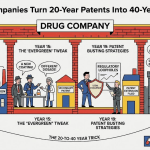
Lifecycle management (LCM) covers all activities designed to extend a drug’s commercial viability beyond its initial approval. The spectrum runs from clearly legitimate innovation (a new pediatric formulation that enables treatment in a population previously unable to use the drug) to clearly problematic thin-patent filing (a polymorph patent on the commercially irrelevant crystalline form, filed the year before composition-of-matter expiration).
The commercial and regulatory environment has moved significantly toward scrutiny of the less defensible end of this spectrum. I-MAK data shows that 72% of patents for top-selling drugs are filed post-FDA approval, and these patents correlate with 22% longer exclusivity periods. The Affordable Prescriptions for Patients Act (APPA), introduced in multiple Congresses, specifically targets biologics patent thickets by giving the FTC authority to challenge anti-competitive patent clusters. While the APPA has not passed as of April 2026, the legislative pressure has not diminished.
Legitimate LCM strategies share a common characteristic: they solve a real clinical or manufacturing problem and produce a measurable patient benefit or efficiency gain. The patent must be the output of genuine innovation, not a filing timed to a competitive threat.
Biologic lifecycle management is more complex than small molecule LCM because the product’s complexity creates more genuine patentable innovations at each stage of development and post-approval experience.
Stage 1: Core biologic sequence and initial manufacturing process (Year 1-5 post-discovery) The composition of matter patent on the amino acid sequence or nucleic acid encoding the biologic is filed in discovery. Manufacturing process patents covering the cell line, expression system, fermentation parameters, and initial downstream processing are filed as the manufacturing process is developed.
Stage 2: Formulation development (Year 3-8) As the biologic moves through clinical development, formulation work generates patentable innovations: stabilizing excipients, high-concentration subcutaneous formulations, lyophilized formulations for improved stability, prefilled syringe or auto-injector configurations. Each advance that provides a measurable stability, tolerability, or convenience benefit is a legitimate LCM patent.
Stage 3: Second-generation manufacturing (Year 5-12) Improvements to the manufacturing process that increase yield, reduce impurity profiles, or enable higher-concentration production at lower cost are patentable and commercially significant. Next-generation cell line development, perfusion bioreactor processes, and improved purification steps can extend manufacturing exclusivity even as formulation or sequence patents age.
Stage 4: New indications and combination therapies (Year 7-15) The most valuable post-approval LCM for biologics comes from genuine clinical discovery: new patient populations, combination regimens with other approved drugs, biomarker-defined subpopulations with superior response, or entirely new therapeutic areas. Each approved new indication receives its own regulatory exclusivity period (three years for new clinical investigations in the U.S.) and can be protected by method-of-use patents.
Stage 5: Device and digital integration (Year 10-20) Administration devices (smart auto-injectors with adherence monitoring, connected devices with dose logging), companion diagnostics, and digital health tools paired with the biologic represent an emerging layer of LCM protection that did not exist a decade ago.
8.3 Small Molecule Evergreening Roadmap
Small molecule LCM follows a more constrained but still meaningful roadmap.
Extended-release formulations are the most commonly used and most scrutinized tool. To survive challenge, an ER formulation must demonstrate clinical superiority over immediate release: reduced side effects, improved efficacy, less frequent dosing that meaningfully improves adherence, or treatment of a patient population (e.g., pediatric or renal impairment) not served by the original formulation.
Pediatric reformulations benefit from a regulatory incentive structure that aligns with legitimate LCM. The Pediatric Research Equity Act requires companies to study drugs in pediatric populations, and successful pediatric development triggers six months of additional exclusivity through the Pediatric Exclusivity provision. This creates a direct financial incentive for genuine pediatric formulation innovation.
Fixed-dose combination (FDC) products combine an existing drug with another therapeutic agent, creating a new product with its own composition-of-matter protection on the combination, method patents on combination treatment, and potentially formulation patents on the FDC dosage form. FDC patents are strongest when the combination demonstrates pharmacokinetic or clinical synergy that would not have been obvious to combine.
8.4 Patent Thickets: Risk Assessment Framework
A patent thicket exists when a company has filed a large number of overlapping patents on a single product, many of which individually provide limited incremental protection, with the aggregate effect of creating a near-impenetrable barrier to generic or biosimilar entry.
The risk of a patent thicket strategy is no longer purely regulatory or litigation-based. The political environment in 2025-2026 has shifted materially. The Inflation Reduction Act’s drug price negotiation provisions explicitly target high-spend drugs with extensive patent protection. The FTC has increased enforcement activity under its competition mandate. Congressional investigations into patent thicket practices have generated substantial public record.
Companies employing aggressive LCM strategies should run a regular ‘thicket audit’ that maps every patent in the portfolio against the question: ‘If this patent were challenged in IPR, what is the realistic probability of surviving on the merits?’ Patents with high invalidity risk provide limited protection in practice and generate significant reputational and regulatory exposure. Pruning the weakest patents from an aggressively filed portfolio is not conceding ground; it is removing liabilities.
Key Takeaways for Section 8:
Legitimate lifecycle management patents are identified by the same test as any patentable innovation: genuine novelty, non-obviousness, and utility. Clinical benefit is not a legal requirement, but it is the most reliable predictor of surviving Paragraph IV challenge.
Biologic LCM has a natural five-stage technology roadmap driven by the product’s complexity. Each stage generates defensible innovations; the challenge is executing the R&D to generate them.
Post-approval patent thickets face increasing FTC, legislative, and IRA-linked pressure. Regular invalidity risk audits should be standard practice.
9. Patent Analytics and Competitive Intelligence
9.1 Patent Landscape Analysis as R&D Strategy Tool
Patent landscape analysis maps the existing IP coverage in a therapeutic area, technology domain, or competitive set to identify coverage density, white space, and strategic vulnerabilities. It is among the most underutilized tools in pharmaceutical strategic planning.
A well-executed patent landscape answers specific business questions: Where is the technology space uncrowded enough that new filings would face limited prior art? What manufacturing process innovations are competitors pursuing? Which therapeutic indications for a known target have been claimed and which have not? Who are the dominant filers in the space and what are their prosecution strategies?
For R&D portfolio decisions, a patent landscape shifts the analysis from ‘can we patent this?’ to ‘where should we direct R&D to generate the most defensible IP?’ These are different questions with substantially different outputs.
9.2 Competitive Intelligence from Patent Filings
Competitor patent filings are a leading indicator of R&D pipeline direction, available 18 months before the application publishes and years before clinical trial registration or product disclosure. Teams that systematically monitor competitor patent filings in target indication areas have early warning of competitive threats that they can either design around, challenge in prosecution, or use to redirect internal R&D.
Machine learning models analyzing patent language have been shown to correlate with eventual commercial outcomes. DrugPatentWatch’s analysis found that patent specification language patterns correlated with sales volumes at R squared of 0.67 across 432 drugs analyzed, and that incorporating patent data improved sales forecasts by 32% compared to brand-based predictions alone. This converts patent surveillance from a legal function into a forecasting input.
9.3 Analytics Platform Comparison
Platform
Primary Strength
Key Use Cases
Best For
DrugPatentWatch
Pharmaceutical-specific business intelligence; patent expiration, generic entry, Paragraph IV tracking
LOE forecasting, generic market entry identification, Paragraph IV surveillance, clinical trial data
AI-powered chemical structure and bioactivity extraction from patent text
SAR analysis, compound landscape mapping, competitive chemistry intelligence
Small molecule discovery teams
9.4 Key Metrics for Portfolio Monitoring
Effective patent portfolio monitoring requires consistent tracking of a defined metric set:
Coverage ratio: Percentage of currently marketed products covered by at least one in-force patent per jurisdiction. Gaps in coverage by jurisdiction signal market-specific vulnerability.
Effective exclusivity duration: For each product, the time from today to the last patent expiration date, by jurisdiction. This is the primary commercial risk metric for the portfolio.
Continuation pendency: Number of patent families with at least one pending continuation or PCT application in national phase. Families without pending continuations have reduced optionality.
IPR exposure index: For each material patent, a probability-weighted assessment of IPR invalidity risk based on the number of prior art references cited during prosecution, the type of claim amendment made to achieve allowance, and the PTAB’s historical invalidity rate for the claim type.
Paragraph IV certification status: Real-time tracking of ANDA filings against Orange Book-listed patents, including filing party, patent(s) challenged, and certification type.
Key Takeaways for Section 9:
Patent landscape analysis should drive R&D portfolio allocation decisions, not follow them. White space analysis before committing to a therapeutic area can dramatically improve the defensibility of resulting IP.
Patent filing surveillance of competitors provides 18+ months of early warning on pipeline direction, well ahead of clinical trial registration or press releases.
Paragraph IV certification status and IPR exposure index are the two highest-priority metrics for ongoing portfolio monitoring. Both are leading indicators of revenue at risk.
10. Litigation, Paragraph IV Challenges, and the BPCIA Patent Dance
10.1 Paragraph IV Certification Mechanics
Under the Hatch-Waxman Act, a generic applicant that wants to market a drug before the expiration of an Orange Book-listed patent must file a Paragraph IV certification asserting that the patent is either invalid or will not be infringed by the generic product. The originator has 45 days to sue; filing suit triggers a 30-month stay on FDA approval of the ANDA, during which litigation proceeds.
The 30-month stay does not guarantee 30 months of exclusivity. A district court can order a shorter stay, or the litigation can resolve earlier through settlement. Generic companies can also launch ‘at risk’ after the stay expires if no injunction is in place, accepting the risk of paying infringement damages if the originator ultimately prevails.
The first ANDA filer that files a Paragraph IV certification is entitled to 180 days of marketing exclusivity against other generic entrants (first-filer exclusivity). This exclusivity can be forfeited through failure-to-market rules, settlements with specific revenue-sharing structures that are viewed as unlawful pay-for-delay, or other statutory triggers. The 180-day exclusivity makes first-to-file Paragraph IV timing a significant competitive advantage for generic companies with multiple potential targets.
For originators, the Paragraph IV notification is both a warning and a discovery event. The notification must identify the specific legal and factual basis for the invalidity or non-infringement assertion. This reveals the generic company’s theory of the case before litigation commences, enabling the originator to focus its litigation strategy.
10.2 Litigation Strategy for Originators
When a Paragraph IV certification is received, the originator must rapidly assess whether to file suit (triggering the 30-month stay) or allow the ANDA to advance without the stay. Filing suit is almost always the correct decision for high-value products where the exclusivity period remaining is commercially significant, because the 30-month stay preserves revenue while litigation proceeds.
Litigation preparation before any Paragraph IV certification arrives is the mark of a well-managed IP function. For each Orange Book-listed drug, the IP team should maintain a current litigation readiness file that includes:
Prosecution history summary for each listed patent, identifying the key prior art and the arguments made to overcome it.
FTO analysis identifying the design-around routes most likely to be asserted as non-infringement theories.
Expert witness identification for claim construction, invalidity, and non-infringement.
Prior art landscape update within the 24 months preceding any anticipated generic challenge.
IPR petitions are frequently filed concurrently with or shortly after Paragraph IV notifications. PTAB proceedings run on a faster timeline than district court litigation, and an IPR institution decision (expected within 6 months of petition filing) can significantly affect settlement dynamics. Originators should have a PTAB strategy ready for each material patent before a Paragraph IV notification arrives.
10.3 The BPCIA Patent Dance for Biosimilars
The BPCIA’s patent resolution framework is substantially more complex than the Hatch-Waxman process. The ‘patent dance’ involves a structured exchange of information between the biosimilar applicant and the reference product sponsor (RPS) before litigation commences.
Within 20 days of FDA accepting the biosimilar’s BLA for review, the biosimilar applicant must provide the RPS with the BLA and all supporting manufacturing information. The RPS then has 60 days to identify a list of patents it believes could be infringed. The biosimilar applicant responds with its non-infringement and invalidity contentions. The parties then exchange lists of patents they believe should be litigated in a first phase. The RPS can sue immediately on patents on the agreed first-phase list; patents not included in the first phase can be asserted in a second phase after biosimilar approval.
Key strategic points in the patent dance:
The biosimilar applicant’s disclosure of manufacturing information can reveal process details that the RPS uses to identify patents covering the biosimilar’s specific process. RPS patent teams should be prepared to rapidly analyze manufacturing disclosures against their process patent portfolio.
Biosimilar applicants can, and increasingly do, decline to participate in the patent dance, which moves directly to a second-phase litigation triggered by commercial launch notice. This strategy forfeits some procedural advantages but compresses the litigation timeline.
The ‘notice of commercial marketing,’ which biosimilar applicants must provide at least 180 days before launch, triggers the RPS’s right to seek a preliminary injunction to block launch pending litigation resolution.
Key Takeaways for Section 10:
Litigation readiness files for each Orange Book-listed patent should be maintained as living documents, not created after a Paragraph IV notification arrives.
IPR petitions filed concurrently with Paragraph IV certifications create a two-front litigation requiring simultaneous district court and PTAB strategy.
In BPCIA patent dance proceedings, the biosimilar applicant’s mandatory manufacturing disclosure is an intelligence event for the RPS. Rapid IP analysis of the disclosed process against the process patent portfolio is a high-priority task.
11. Biosimilar Patent Strategy: A Dedicated Framework
11.1 The Biologic Patent Landscape After Primary Patent Expiration
Once the core sequence patents for a biologic expire, the competitive field shifts to secondary patents: manufacturing process patents, formulation patents, method-of-use patents, and device patents covering administration. These secondary patents are systematically targeted by biosimilar applicants because they cover the product characteristics most relevant to demonstrating biosimilarity and interchangeability.
PTAB data shows that secondary biologic patents have higher invalidity rates in IPR proceedings than primary sequence patents. However, the aggregate effect of multiple secondary patents, each requiring a separate challenge, can delay biosimilar market entry even when individual patents are ultimately invalidated.
The Humira precedent is instructive for strategic planning: AbbVie’s combination of over 130 patents (sequence, formulation, manufacturing, method-of-use, dosing regimen), combined with the BPCIA litigation structure and voluntary license agreements with biosimilar applicants, produced a situation where the first U.S. biosimilar launched in 2023, approximately 7 years after the core adalimumab composition patent expired. This delay translated into hundreds of billions of dollars in retained U.S. exclusivity revenue.
11.2 Biosimilar Interchangeability Designation
The FDA’s interchangeability designation for biosimilars, which allows pharmacists to substitute the biosimilar for the reference biologic without prescriber intervention (analogous to the substitution available for small molecule generics), carries significant commercial implications.
For originators, an interchangeable biosimilar represents a materially greater market share threat than a non-interchangeable biosimilar, because it enables automatic substitution at the pharmacy level without physician involvement. For biosimilar manufacturers, achieving interchangeability designation requires additional switching studies demonstrating that alternating between the biosimilar and the reference biologic does not produce greater safety or efficacy risks than using either product alone.
Originator patent strategy should account for interchangeability: patents on formulation, device, or delivery characteristics that are difficult to replicate exactly (rather than therapeutically equivalent formulations that differ in non-clinically meaningful ways) create hurdles for biosimilar interchangeability designation specifically.
11.3 Investment in Next-Generation Biologic Platforms
The most commercially durable response to biosimilar competition is not deeper patent coverage of the original biologic; it is development of next-generation products that command new patent protection and offer clinical advantages over both the original biologic and its biosimilars.
ADC (antibody-drug conjugate) platforms, bispecific antibodies, and engineered antibody fragments each represent next-generation biologic modalities that can be developed from established therapeutic targets and provide new composition-of-matter protection. Subcutaneous administration technologies, extended half-life engineering, and pH-dependent FcRn-binding modifications (as seen in the transition from IV to subcutaneous formulations of several biologics) are examples of genuine biologic innovations that generate new IP and clinical differentiation simultaneously.
Key Takeaways for Section 11:
The Humira strategy’s commercial outcome demonstrates that a large, multi-layered biologic patent portfolio can extend effective U.S. exclusivity by 7+ years beyond core sequence patent expiration, but requires sustained IP investment and aggressive litigation willingness.
Interchangeability designation creates a materially greater commercial threat than non-interchangeable biosimilar approval. Patent strategy should specifically account for interchangeability hurdles.
The most defensible long-term response to biosimilar competition is next-generation biologic platform development with new composition-of-matter protection, not exclusively deeper secondary patent coverage of the original biologic.
12. AI, Inventorship, and the Next Frontier of Pharma IP
12.1 AI in Drug Discovery: Current State
AI drug discovery platforms have moved from proof-of-concept to commercial programs in clinical development. Insilico Medicine’s INS018_055, identified through AI-driven target identification and compound design, entered Phase II clinical trials for IPF. Recursion Pharmaceuticals has multiple AI-discovered programs in clinical development. Exscientia’s platform has been applied in multiple partnered clinical programs. The technology is real, the question of who owns the output is increasingly pressing.
12.2 The Inventorship Question
U.S. patent law requires that patents be issued to human inventors. The DABUS cases, decided against AI inventorship in the U.S., UK, and EU, established that AI cannot be named as an inventor. The question that remains unresolved is how much AI contribution to a discovery disqualifies human researchers from naming themselves as inventors.
If a human researcher uses an AI platform to identify a target, asks the AI to generate candidate structures, selects among AI-generated candidates based on docking scores, and advances the top candidate to synthesis and biological testing, who is the inventor? The AI identified the structural series; the human made the selection decision. Current patent doctrine would likely name the human, but the analysis is not straightforward, and no appellate court has squarely addressed this fact pattern.
The practical risk is that an AI-assisted discovery program generates patents that are later challenged on inventorship grounds, with the argument that the human researchers lacked the requisite contribution to constitute inventorship. Companies using AI discovery platforms should implement internal documentation protocols that specifically record what decisions were made by human researchers and what was generated autonomously by the AI, with the IP implications of the inventorship analysis in mind.
12.3 AI in Patent Analytics and Prosecution
AI tools deployed in patent analytics and prosecution are generally uncontroversial from an IP ownership perspective; they are tools used by human attorneys, not co-inventors.
AI prior art search tools can scan patent databases and scientific literature more comprehensively and faster than human searches, identifying relevant prior art that manual searches might miss. AI claim drafting tools can generate initial claim sets and check for internal consistency and written description support. AI prosecution management tools can flag deadline risks, identify patterns in examiner rejections, and suggest successful prosecution arguments based on historical data from the same examiner.
These tools reduce prosecution cost and time. They do not change the legal framework; the attorney remains responsible for every statement made to a patent office.
12.4 Contracts with AI Platform Providers
Pharmaceutical companies licensing or co-developing drugs using AI platforms must address IP ownership in licensing agreements with specificity. Key provisions to address:
Who owns discoveries made using the AI platform: the platform company, the pharmaceutical company, or jointly? Joint ownership in the U.S. creates complications because each joint owner can exploit the patent without consent of the other and without accounting, which can undermine the commercial value of the IP.
Does the AI company’s existing patent portfolio on the platform’s foundational methods create FTO risks for drugs discovered using the platform? A drug company that develops a candidate using a licensed AI platform should conduct FTO analysis against the AI company’s own patents to avoid inadvertently practicing a process patent it has no license to.
What happens to the IP if the AI company is acquired, goes bankrupt, or pivots its business? Force majeure and IP ownership provisions in these agreements require careful drafting.
Key Takeaways for Section 12:
The inventorship risk from AI drug discovery is real and not yet resolved by appellate case law. Implement human decision documentation protocols now, before programs advance to the stage where inventorship is formally assessed.
AI tools in prosecution and analytics are uncontroversial from an ownership perspective but require professional oversight. They are cost-reduction tools, not substitutes for strategic IP counsel.
AI platform licensing agreements require IP ownership, FTO, and change-of-control provisions that are specific to the AI discovery context.
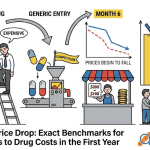
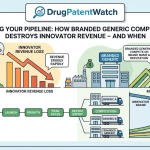
Loss-of-exclusivity (LOE) events are quantifiable well in advance. NBER research analyzing physician-administered drugs found that generic entry correlates with price declines of 38-48% in the first year, accompanied by volume increases of approximately 157%. The net revenue effect, counterintuitively, showed a 57% increase in total market revenue, driven by volume. However, originator market share in that volume-expanded market drops sharply, with the originator capturing a minority of the enlarged market. The 74% revenue decline for the originator brand by Year 3 post-generic entry is the operationally relevant figure.
For branded pharmaceutical companies, this means that a $3 billion revenue drug approaching LOE will likely generate approximately $780 million in brand revenue by Year 3 post-LOE. That $2.2 billion annual shortfall must be identified and filled through pipeline progression, business development, or business model adaptation years before it materializes.
13.2 The Authorized Generic Decision
An authorized generic (AG) is a version of the branded drug that the originator licenses to a generic company (or manufactures itself) to sell at generic prices concurrently with independent generic entry. The commercial rationale is that the originator captures a portion of the generic market volume rather than ceding all post-LOE volume to independent generics.
The timing of the AG decision relative to the 180-day first-filer exclusivity period matters significantly. If an originator launches an AG during the first-filer’s 180-day exclusivity window, the first-filer’s exclusivity is diluted, which can affect the settlement dynamics in Paragraph IV litigation. Sophisticated first-filer generic companies now factor AG entry probability into their settlement valuation; originators should understand this dynamic when negotiating ANDA settlements.
13.3 Pipeline Sequencing to Offset LOE
Best-in-class LOE management requires that the replacement revenue from pipeline products reach commercial scale approximately when the incumbent drug’s brand revenue begins its sharp decline, typically 12-18 months post-generic entry.
This sequencing requires working backward from projected LOE dates (available years in advance through patent expiration monitoring) to the required Phase III initiation dates that would produce regulatory approval with the necessary timing. For large-molecule biologics requiring pediatric studies, PIP compliance, and multiple geographic submissions, the lead time from Phase III initiation to full global approval can exceed five years.
Companies that model this sequencing explicitly, rather than managing their pipeline and their LOE exposure in separate processes, avoid the scenario of a major patent cliff with no approved replacement product in the pipeline.
13.4 Portfolio Diversification as Cliff Mitigation
A concentrated revenue portfolio with two or three blockbuster drugs dominating revenue creates cliff exposure that no pipeline alone can reliably mitigate. Therapeutic area diversification, geographic revenue diversification, and the development of biologics alongside small molecules (given the distinct competitive timeline from biosimilar versus generic entry) all reduce single-event LOE risk.
Key Takeaways for Section 13:
The LOE revenue curve is predictable. A 74% brand revenue decline by Year 3 post-generic entry is the planning assumption for small molecule drugs. Biologic brand erosion is slower but still material.
Authorized generic strategy affects Paragraph IV settlement negotiations. Generic challengers factor AG probability into their settlement valuations.
Pipeline sequencing to offset LOE requires working backward from projected generic entry dates to the required clinical development start dates. This analysis should be updated annually for every drug approaching LOE within a 10-year window.
Investment Strategy Note: Patent expiration monitoring provides institutional investors with a reliable forward-looking revenue signal. Tracking Orange Book patent expiration dates, Paragraph IV filings, and ANDA first-filer activity against a pharmaceutical company’s major drugs gives a more accurate revenue forecast than management guidance alone for the 3-7 year forward period. Companies with diversified LOE timing across their portfolios carry materially lower revenue cliff risk than companies with concentrated expiration dates.
14. Monetization: Licensing Structures and Partnership IP Architecture
14.1 Out-Licensing Strategy
Out-licensing converts patents from cost centers into revenue generators. The strategic decision is not whether to license but what to license, to whom, and on what terms.
Candidates for out-licensing include non-core platform technologies that are valuable to other companies but not central to the licensor’s own commercial strategy. A company whose primary focus is oncology may hold patents on a drug delivery platform developed internally that would be highly valuable to a CNS or metabolic disease company. Rather than allowing those patents to generate only maintenance costs, out-licensing the platform in non-competing therapeutic areas generates royalty revenue and maintains exclusivity in the core focus area.
Geographic licensing is similarly valuable. A company without direct commercial infrastructure in Japan or Southeast Asia can license its drug patents in those markets to local partners with established distribution, generating royalties without the capital cost of building local operations.
14.2 Royalty Rate Benchmarking
Royalty rates in pharmaceutical licenses vary significantly by development stage, therapeutic category, patent strength, and commercial exclusivity profile. General benchmarks from disclosed transactions:
Preclinical/early discovery: 2-5% of net sales on single-molecule rights, plus milestones. The low royalty reflects high development risk.
Phase II-ready asset with strong composition-of-matter protection: 8-15% of net sales, plus $50-150M in development milestones, plus a significant approval milestone.
Approved drug in a non-competing geography: 15-25% of net sales, reflecting the licensor’s validated clinical package and reduced risk profile.
Platform technology licenses: Often structured as a running royalty on sublicensed products plus access fees, rather than a percentage of the platform licensor’s own sales.
14.3 IP Provisions in Collaboration Agreements
Joint development agreements, co-promotion agreements, and research collaborations all involve IP that requires explicit contractual treatment. The most common IP disputes in pharmaceutical collaborations arise from:
Ambiguous ‘arising IP’ provisions that fail to specify whether improvements, variations, or extensions of the licensed technology belong to the licensor, licensee, or are jointly owned.
Failure to address the treatment of jointly owned patents at termination of the collaboration, including who controls enforcement and prosecution decisions and who can license the jointly owned IP to third parties.
Insufficient milestone definitions for triggering IP rights, resulting in disputes about whether clinical or commercial benchmarks have been met.
Change-of-control provisions that address what happens to the collaboration’s IP and product rights if one partner is acquired.
Getting these provisions right requires IP counsel at the negotiating table before term sheets are signed, not during agreement drafting when positions have already hardened.
Key Takeaways for Section 14:
Out-licensing in non-competing geographies or therapeutic areas converts maintenance-cost IP into royalty revenue without compromising core exclusivity.
Royalty rates for approved drugs in non-competing geographies run 15-25% of net sales. Understanding this benchmark prevents under-valuation of IP assets in licensing negotiations.
Joint ownership of patents in collaborations creates operational complexity. Where possible, negotiate exclusive licensing to one party with royalty obligations rather than true joint ownership.
15. Investment Strategy for Portfolio Managers
15.1 Assessing Patent Portfolio Quality in Equity Analysis
Pharmaceutical equity analysis that relies on revenue estimates without independently assessing patent portfolio durability systematically misevaluates LOE risk. A drug generating $5 billion annually looks very different if it is protected by a composition-of-matter patent expiring in 2031 versus a collection of formulation and method patents expiring in 2029 that have already received three Paragraph IV certifications.
Portfolio managers and sell-side analysts covering pharmaceutical equities should build the following into their standard due diligence process:
Orange Book analysis for each material drug: Identify all listed patents, expiration dates, and Paragraph IV certification history. Monitor for new ANDA filings using publicly available FDA databases and services like DrugPatentWatch.
Patent quality scoring: Assess each material patent for claim breadth, prosecution history estoppel exposure, and prior art density. Narrow claims with extensive prosecution history are high invalidity risk in IPR. Broad claims with limited prior art and clean prosecution history support full exclusivity valuation.
PTE and SPC status: Confirm which patents have received extensions and what the extended expiration dates are. Extensions that have not yet been granted but are being pursued represent upside optionality.
Continuation pendency: Families with pending continuations retain optionality to strengthen or extend protection. Families with no pending applications have fixed scope and cannot be adapted to competitive challenges.
15.2 Patent Cliff Event Risk Quantification
LOE events are binary risks in pharmaceutical equity positions: revenue is retained at the pre-LOE level until generic entry occurs, then declines sharply. The value destruction is approximately linear in the product’s revenue contribution and the speed of generic erosion (faster for oral solid dosage forms, slower for injectable biologics).
Quantifying this risk requires:
Probability of successful Paragraph IV challenge for each listed patent (can be estimated from PTAB grant rates for the relevant claim type, the number of generic challengers, and the patent’s prosecution history complexity).
Probability of LOE in each forward year, weighted by challenge probability and litigation timeline.
Revenue at risk per year of LOE, discounted to present value.
This analysis converts patent portfolio uncertainty into a quantified probability distribution of future revenue, which should be reflected in price targets and position sizing.
15.3 Biosimilar Entry Risk for Biologic Holdings
Biosimilar entry risk assessment for biologic holdings requires the additional step of analyzing the BPCIA data exclusivity clock alongside the patent portfolio. For biologics with 12-year data exclusivity expiring before key patents, the relevant risk event is the data exclusivity expiration, not the patent expiration.
Track the number of biosimilar BLA submissions and approvals for reference products in your portfolio. FDA approval does not equal market entry; many approved biosimilars launch months to years after approval due to litigation, commercial readiness, or market dynamics. But each additional biosimilar approval in a category increases the probability that at least one entrant will launch at risk.
Key Takeaways for Section 15:
Standard pharmaceutical equity analysis that uses patent expiration dates without assessing patent quality significantly misevaluates LOE timing risk.
Paragraph IV certification filing is a leading indicator, typically 2-4 years before generic market entry. Track ANDA filing activity for all major portfolio holdings.
For biologic holdings, data exclusivity expiration and biosimilar BLA approval count are the primary risk indicators, ahead of patent expiration dates.
16. Key Takeaways by Segment
For IP Counsel and Patent Teams
Patent portfolio management is a revenue function. Every filing decision, prosecution strategy, and enforcement action has a commercial value attached to it. Quantify that value explicitly, not just qualitatively. Maintain pending continuation applications in every material patent family. Document human inventorship decisions in AI-assisted discovery programs now, before the legal standards are settled.
For R&D Leadership
Patent strategy should be input to R&D portfolio allocation, not output. White space analysis and competitive patent landscape reviews identify where R&D resources produce the most defensible IP, not just the most interesting science. Lifecycle management patents are only as durable as the clinical evidence supporting them; invest in the studies that generate the differentiated data, not just in the patent filings.
For Commercial and Business Development Teams
LOE timelines are knowable years in advance. Build LOE risk explicitly into commercial forecasts and business development target prioritization. Out-licensing in non-competing geographies converts cost-center IP into revenue. Authorized generic strategy is a negotiating tool in ANDA settlement discussions as well as a post-LOE revenue mechanism.
For Institutional Investors
Paragraph IV certification activity and PTAB IPR petition filing are the two highest-signal leading indicators of pharmaceutical revenue risk in an equity portfolio. Both are public information, available in FDA databases and USPTO records. Supplement sell-side estimates with independent patent durability assessment for any position where a single drug represents more than 15% of a company’s revenue.
17. FAQ
What is the difference between a Paragraph IV challenge and an IPR petition, and how do they interact?
A Paragraph IV certification is filed by a generic applicant with the FDA as part of an ANDA, asserting that the brand’s Orange Book patents are invalid or not infringed. It triggers the right for the originator to sue in district court and, if suit is filed within 45 days, activates the 30-month stay on FDA approval of the ANDA. An IPR petition is filed at the USPTO with the PTAB, challenging patent validity based on prior art patents and publications. The two proceedings can run concurrently. Generic companies frequently file IPR petitions against the same patents subject to their Paragraph IV certifications to gain a faster invalidity ruling from PTAB while district court litigation proceeds, creating two-front patent battles that originator companies must manage simultaneously.
How should a pharmaceutical company decide which patent to select for a U.S. Patent Term Extension?
Only one patent per approved drug product can receive a PTE. The selection requires running the PTE formula (half the clinical testing period plus the regulatory review period, minus five years, capped at five years) for each candidate patent. The goal is to select the patent whose extended expiration date provides the longest effective exclusivity period. The composition-of-matter patent is not always the right selection, because its earlier filing date means it may already have a later absolute expiration date that results in a shorter PTE relative to a later-filed formulation or method patent. IP counsel should run the calculation for every listed patent before selecting.
What are the most common grounds on which pharmaceutical patents are invalidated in IPR proceedings?
Anticipation (the claimed invention was fully described in a single prior art reference) and obviousness (the claimed invention would have been obvious to a person of ordinary skill based on a combination of prior art references) are the predominant invalidity grounds in IPR. For pharmaceutical patents specifically, obviousness challenges to formulation and polymorph patents are common, arguing that the claimed form would have been an obvious variation of a known compound. Enablement challenges are more common in district court than in IPR. Secondary patents (method-of-use, formulation) show higher invalidation rates than primary composition-of-matter patents in PTAB proceedings.
How does China’s patent term compensation system differ from the U.S. PTE, and why does it affect regulatory submission sequencing decisions?
China’s patent term compensation system, introduced in the 2021 Patent Law amendments, allows up to a five-year extension to compensate for regulatory review delay, with the effective post-approval patent term capped at 14 years. The critical distinction from the U.S. system is the qualifying condition: to be eligible for the maximum extension benefit under Chinese regulations, the drug must receive its first marketing approval in China. This creates a direct financial incentive to prioritize China in the global regulatory submission sequence, because a later Chinese approval relative to other markets does not qualify for the same extension benefit. For high-value biologics or specialty drugs where a five-year extension can be worth hundreds of millions of dollars, this provision can materially change the order in which regulatory submissions are made globally.
What should pharmaceutical companies include in IP provisions when contracting with AI drug discovery platforms?
The critical provisions are: (1) clear IP ownership allocation for discoveries made using the platform, specifying whether the pharma company, the AI company, or both own the resulting patents; (2) FTO warranties or representations from the AI company that use of the platform in accordance with the agreement does not infringe the AI company’s own patents; (3) documentation obligations requiring the pharma company to maintain records of human inventorship contributions sufficient to support patent applications; (4) representations regarding the AI company’s ownership of the platform IP and freedom to sublicense; and (5) change-of-control provisions addressing what happens to license rights and IP access if the AI company is acquired or undergoes insolvency. Joint ownership should be avoided where possible; exclusive licensing with royalty obligations to one party provides cleaner IP governance.
All financial figures and statistics cited in this article reflect publicly available data current as of the research date. Patent law is jurisdiction-specific and evolves through legislative action and court decisions. This article is intended for informational purposes for sophisticated business and legal professionals and does not constitute legal advice. Consult qualified patent counsel for advice specific to your portfolio and jurisdiction.