The blueprint for drug competition is clean on paper. A company wins a 20-year patent, recovers its R&D investment during that monopoly window, and the moment protection expires, generic manufacturers flood in, prices collapse 80%, and patients win. The U.S. generic drug sector has delivered on this promise at scale — generics now account for over 90% of all prescriptions filled, and the cumulative savings to the U.S. healthcare system over the last decade exceeds $2.4 trillion.
But the blueprint fails — repeatedly, predictably, and for reasons that are anything but accidental.
The FDA maintains and regularly updates a formal list of off-patent, off-exclusivity drugs with no approved generic competitor. The list is not a footnote. It is a public admission from the primary regulatory body that, for hundreds of essential medicines, the competitive machinery has seized up entirely. These are not fringe compounds. Some are decades-old therapies for serious diseases that clinicians rely on daily. Others are essential injectables for which a single manufacturing disruption can put entire hospital systems on allocation.
This guide examines why competition fails to emerge, who profits from that failure, what the consequences look like in clinical and financial terms, and where sophisticated market participants can find durable opportunity in the gaps. It is structured for pharma IP teams, generic portfolio managers, R&D leads, institutional investors modeling loss-of-exclusivity (LOE) curves, and business development executives who need to understand what drives — and what blocks — generic market formation.
Part I: How Protection Is Supposed to Work — Patents, Exclusivities, and the Hatch-Waxman Bargain
The Foundational Architecture: What Patents Actually Cover
A pharmaceutical patent is a grant from the U.S. Patent and Trademark Office (USPTO) conferring the exclusive right to prevent others from making, using, or selling a specific invention for 20 years from the filing date, per the TRIPS Agreement baseline. The pharmaceutical industry uses four primary patent types, and understanding each one is prerequisite to understanding how they are weaponized later.
A composition-of-matter patent covers the active chemical entity itself — the molecule. It is the strongest and most commercially valuable form of protection because it bars any generic from using that molecule, regardless of formulation. A method-of-use patent covers the specific therapeutic application of a compound, for instance, the use of a previously known molecule to treat a newly discovered disease. These are narrower: a generic can potentially design around a method-of-use patent by modifying labeling, though the resulting “skinny label” strategy is itself subject to induced infringement litigation. A formulation patent covers a specific delivery system — extended-release matrix, transdermal patch, nanoparticle encapsulation — rather than the molecule itself. Process patents cover the manufacturing steps used to produce the drug, and while they do not bar a competitor who uses a different synthesis route, they often constrain the API supply chain. An innovator holding both the composition-of-matter patent and the dominant API synthesis process patent is, in effect, doubly fortified.
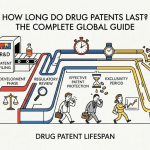
The practical patent life — the time remaining after FDA approval — is typically only 7 to 12 years, because companies file patent applications in the early stages of development, consuming most of the 20-year clock during the 10-to-15-year FDA review and clinical trial process. This shortfall is the original justification for the second layer of protection: FDA-granted regulatory exclusivities.
FDA Exclusivities: The Independent Second Layer
FDA exclusivities operate under different legal authority than patents and run independently of patent status. They are statutory grants, created by Congress to provide targeted incentives for specific types of drug development.
New Chemical Entity (NCE) exclusivity grants five years of protection from the date of first approval for any drug containing an active moiety the FDA has never previously approved. During the first four years of that window, the FDA cannot even accept an ANDA for review if it contains a Paragraph IV certification (discussed below). This is a full intake bar, not merely an approval bar — a material distinction for competitive modeling.
Three-year “other” exclusivity applies when an approved drug’s NDA is supplemented with new clinical investigations that are essential to approval — a new dosage form, new route of administration, new strength, or new indication. The protection covers only the specific approved change, not the entire product. This matters for evergreening analysis: an innovator can potentially stack multiple three-year exclusivities on successive supplements, extending the effective protection window on the core product well beyond what the original NCE exclusivity provided.
Pediatric exclusivity adds six months to all existing patents and exclusivities on a product whose active moiety was studied under a Written Request from the FDA. It attaches not just to the pediatric indication but to the entire commercial portfolio of that moiety — a powerful economic sweetener that costs the government deferred competition across multiple indications in exchange for one set of pediatric studies.
Orphan Drug Exclusivity (ODE) grants seven years of market protection for drugs approved for rare disease indications, defined in the U.S. as conditions affecting fewer than 200,000 individuals. The protection bars competing applications for the same drug in the same indication — but does not bar competing drugs with different mechanisms, nor does it bar the approved drug’s use in non-orphan indications. This structural nuance is central to the strategic abuse discussed in Part V.
Biologic exclusivity under the Biologics Price Competition and Innovation Act (BPCIA) provides 12 years of reference product exclusivity from first licensure, plus a 4-year period during which biosimilar applications cannot even be submitted. The 12-year clock reflects the structural and analytical complexity of biologics versus small molecules, the difficulty of demonstrating biosimilarity (versus bioequivalence), and the substantially higher development cost.
The Hatch-Waxman Framework: The Grand Bargain and Its Unintended Consequences
Before 1984, generic manufacturers faced the same evidentiary burden as innovators: prove your drug is safe and effective in your own clinical trials. This created a de facto patent extension lasting years beyond formal expiration. The Drug Price Competition and Patent Term Restoration Act — universally called Hatch-Waxman — broke this deadlock through a bilateral deal. Brand companies received Patent Term Extension (PTE) of up to five years to compensate for FDA review time. In exchange, the generic industry received the Abbreviated New Drug Application (ANDA) pathway.
The ANDA replaces full clinical trials with two demonstrations: pharmaceutical equivalence (same active ingredient, strength, dosage form, and route of administration as the Reference Listed Drug) and bioequivalence (BE). BE is typically established through PK studies in healthy volunteers, comparing area under the curve (AUC) and peak concentration (Cmax) between the generic and the RLD. The FDA’s acceptance window for BE is 80-125% of the brand reference for these parameters, using 90% confidence intervals. When BE studies can be conducted cleanly, this pathway is genuinely efficient — a full ANDA can be submitted for a fraction of the cost of an NDA.
The Paragraph IV (PIV) certification mechanism is the engine of patent challenge. When a generic company believes a brand’s Orange Book-listed patent is invalid, unenforceable, or not infringed by the generic product, it files a PIV certification with its ANDA. That filing constitutes a technical act of “permissible patent infringement,” triggering the brand’s right to file a patent infringement lawsuit within 45 days. When the brand files suit, an automatic 30-month stay on FDA final approval activates, preventing the agency from fully approving the ANDA while litigation proceeds. The economic prize for this risk: 180-day first-filer exclusivity, granted to the first ANDA applicant who files a substantially complete application with a PIV certification. During this window, the FDA cannot approve any other generic.
The 180-day prize has reshaped the industry. It concentrates generic development effort toward the highest-value patent challenges and away from small-market or complex products where the prize either doesn’t apply or the math doesn’t support the investment. This is not a flaw in human character — it is a rational allocation of capital. The unintended consequence is a two-tier market: ferociously competitive for blockbusters, completely vacant for hundreds of older, small-market drugs.
Key Takeaways: Part I
Composition-of-matter patents are the primary commercial barrier. Formulation, process, and method-of-use patents thicken it. Regulatory exclusivities layer on independently. The ANDA pathway is genuinely efficient when the underlying biology is cooperative, but the Paragraph IV lottery concentrates generic development on high-value targets, leaving low-volume, off-patent drugs in a permanent competitive vacuum. Portfolio managers modeling LOE windows must map all four patent types plus all applicable exclusivities before projecting a competitive entry date — relying on a single expiration date from Orange Book is a common and costly error.
Part II: The IP Asset Underneath — Valuing an Off-Patent Drug’s Residual Moat
When a drug’s last patent expires and its final exclusivity lapses, conventional analysis treats it as IP-depleted. That framing is frequently wrong and always incomplete.
The residual IP moat of a “patent-free” drug can take several forms, each with meaningful implications for asset valuation.
Trade Secret Value in Manufacturing Processes
A synthesis route for a complex active pharmaceutical ingredient (API) is not always patented. Many companies deliberately keep manufacturing processes as trade secrets rather than disclosing them in patent filings, which would require eventual public disclosure. When a multi-step API synthesis is held as trade secret and requires specialized equipment or catalyst handling, the effective barrier to entry can exceed what any patent would have provided, because there is no 20-year expiration date on a trade secret as long as it remains secret. Competing manufacturers who want to enter the market must independently reverse-engineer the process — a time-consuming and capital-intensive exercise whose cost may not be justifiable relative to the expected market return. For portfolio valuation, this form of IP should be assessed in terms of time-to-replication rather than patent expiration date.
Orange Book-Listed Patent Residuals and Post-Expiry Litigation Tail
Even after the nominal expiration of a composition-of-matter patent, minor patent challenges through PIV litigation can take years to resolve. Brand companies may list formulation or method-of-use patents in the Orange Book that a generic applicant must certify against. Each certified patent can potentially trigger a 30-month stay. This litigation tail, even on patents of marginal commercial significance, can delay generic entry by two to three years post-nominal expiry — a period during which the brand product’s IP-derived price premium remains largely intact. Financial models that value an asset at zero upon patent expiry and assume generic entry in month 13 systematically undervalue the brand residual cash flow.
Regulatory Data Protection as a Standalone Asset
Regulatory exclusivities are assets in the literal sense: they can be licensed, transferred, and valued independently of the underlying patents. An orphan drug exclusivity, for instance, can be sold with the NDA to a buyer who values the protected market access even in the absence of IP coverage. Several specialty pharma companies have built acquisition strategies around acquiring regulatory exclusivity positions on off-patent drugs with small or medium market sizes, where the ODE effectively replicates the commercial function of a patent at a fraction of the cost of innovative development.
The “Citizen Petition as IP Prolongation” Valuation Problem
A citizen petition filed near a generic’s expected approval date does not appear in patent databases or FDA Orange Book listings, but it is a real IP-equivalent asset in terms of its market impact. The FDA’s target review time for a petition is 180 days — a timeline that, when triggered strategically immediately before a competitor’s ANDA approval, can extend effective monopoly by six months or more. Modeling a pharmaceutical asset’s competitive entry timeline without accounting for citizen petition probability introduces meaningful forecast error, particularly for products where the brand company has a track record of petition filing.
Investment Strategy Note: IP Valuation for Off-Patent Assets
For distressed asset acquirers, specialty pharma business development teams, and institutional investors conducting due diligence on pharma M&A: a complete IP valuation of an off-patent drug requires mapping seven distinct elements. First, the composition-of-matter patent status and any remaining PTE. Second, all secondary Orange Book-listed patents (formulation, method-of-use, process) and their remaining terms. Third, the status and expiry of all FDA exclusivities including any pediatric extensions. Fourth, the existence of undisclosed manufacturing trade secrets and their estimated replication cost. Fifth, the pending citizen petition docket. Sixth, any active 30-month stays from ongoing PIV litigation. Seventh, the number of pending ANDAs and their certification type. This seven-element audit, rather than a single Orange Book expiry date, is the appropriate basis for competitive entry probability modeling.
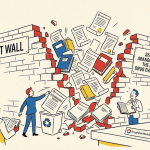
Part III: The Four Walls That Block Generic Entry
The Economic Wall: When the Math Does Not Work
The single most common reason an off-patent drug has no generic competitor is that no generic manufacturer has found the economics attractive enough to justify the investment. This sounds simple, and conceptually it is, but the specific mechanics of the economic barrier are worth unpacking precisely because they interact in ways that create non-obvious equilibria.
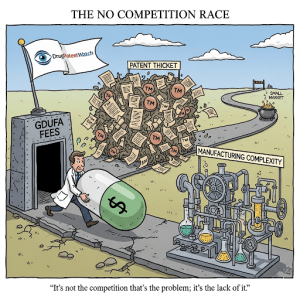
GDUFA (Generic Drug User Fee Amendments) fees establish a mandatory upfront cost that has no relationship to potential revenue. For fiscal year 2025, the ANDA filing fee is $321,920, non-refundable regardless of whether the application is approved. Manufacturers with approved manufacturing facilities also pay annual program fees exceeding $300,000. For a drug with annual U.S. sales of $5 million, the filing fee alone represents over 6% of the entire market’s annual revenue, before a single hour of development work, bioequivalence study cost, or manufacturing investment. An IQVIA Institute analysis found that the median annual U.S. spending on expired-exclusivity orphan drugs with no generic competition was approximately $8.6 million, a market size at which GDUFA fees alone make the business case essentially incoherent for any generic company operating at scale.
Price erosion dynamics compound this. The first generic entrant to a market typically prices at a 20-30% discount to the brand and captures a substantial share of that market during the period before further entrants arrive. The second entrant drives average selling price down further, and by the time four or more generics compete, market prices frequently sit at 80-90% below the brand. For a drug with $8 million in annual brand sales, a four-competitor generic market might produce $1.6 million in total annual generic revenue shared across those four players — roughly $400,000 each. At those numbers, the initial ANDA filing fee alone represents a negative NPV investment.
The “rational exit” problem reinforces the barrier. Even if a single competitor could sustain a profitable sole-source generic business in a small market, the mere prospect that a second entrant might follow often prevents the first from entering. Generic companies model their expected return including the probability that a competitor emerges within the first 18 months of launch. In markets where a second entrant would erase all profitability, the rational decision for both potential competitors is to enter the market only if they have reason to believe they will face no competition — an assumption that, absent a specific exclusivity mechanism, is generally unverifiable. Both companies reason identically and independently conclude the risk is unjustifiable. The result is a competitive vacuum produced not by coordination but by identical rational calculations applied to poor market fundamentals.
The Manufacturing Gauntlet: Complex Generics and the Legacy Product Trap
The ANDA pathway assumes the generic manufacturer can actually make the product. For a standard oral solid dosage form — a tablet or capsule — this assumption is usually valid. For an expanding list of complex products, it is not.
The FDA’s “complex generics” designation covers sterile injectables, drug-device combination products (metered-dose inhalers, auto-injectors, transdermal patches), locally acting drugs (topical creams, ophthalmic solutions, inhaled products), drugs with complex active ingredients including biologics, and products with complex pharmacokinetic profiles like depot injections with non-linear release characteristics. Developing a generic version of any of these requires not just chemistry knowledge but engineering capability, specialized manufacturing infrastructure, and validated analytical methods that many contract manufacturers and mid-sized generic houses simply do not possess.
The API supply chain bottleneck is equally constraining. Some APIs have no more than one or two qualified global manufacturers, often located in China or India. If the sole API supplier does not wish to supply a new market entrant — perhaps because they have an existing relationship with the current sole-source manufacturer, or because the volume is too low to justify a separate qualification batch — the generic development program cannot proceed, regardless of the applicant’s manufacturing capability or financial resources. This dependency creates a privately enforced barrier to entry that has no regulatory visibility and does not appear in any patent or exclusivity database.
Nitrosamine contamination risk has added a significant layer of complexity to manufacturing older drugs. The 2018-2019 nitrosamine crisis, triggered by the discovery of N-nitrosodimethylamine (NDMA) contamination in valsartan and ranitidine, produced sweeping regulatory requirements: manufacturers must now conduct nitrosamine risk assessments for all products, implement confirmatory testing protocols, and, where risk is identified, reformulate or revalidate manufacturing processes. For a drug that has been manufactured by the same process since the 1970s, meeting these requirements may require a complete process overhaul that costs more to execute than the product’s annual revenue can justify. This creates what is accurately called a “legacy product trap”: a drug that was economically viable to manufacture under older standards becomes economically unviable to modernize to current standards, leaving it in a state of perpetual sole-source manufacture — often by a company that is itself barely motivated to invest in quality upgrades.
The Regulatory Maze: Bioequivalence as a Moving Target
For standard oral solid dosage forms with predictable systemic absorption, bioequivalence is demonstrated by a relatively routine PK study in 24 to 36 healthy volunteers. For an expanding category of drugs, this approach is scientifically insufficient and the FDA knows it.
Highly variable drugs, whose intra-subject coefficient of variation for AUC or Cmax exceeds 30%, require substantially larger study populations to achieve the statistical power necessary to keep the 90% confidence interval within the 80-125% acceptance window. Some sponsors use reference-scaled average bioequivalence (RSABE) to adjust the acceptance limits based on the brand’s own variability, but regulatory acceptance of RSABE is product-specific and requires pre-approval of the study design.
For locally acting drugs — topical corticosteroids, ophthalmic solutions, nasally inhaled products — measuring systemic blood levels is largely irrelevant to proving therapeutic equivalence, because the drug never needs to enter systemic circulation to work. The FDA requires clinical endpoint studies for many of these products: full comparative efficacy trials against the brand, enrolling hundreds of patients, running for months, with a pre-specified primary endpoint. These trials cost $5 million to $25 million and take two to five years. A generic development program for a topical corticosteroid cream or an ophthalmic anti-inflammatory that requires a clinical endpoint study is, economically and operationally, nearly equivalent to running a Phase 3 trial. The abbreviated in the ANDA becomes aspirational rather than descriptive.
Drug-device combination products — particularly dry powder inhalers (DPIs) and metered-dose inhalers (MDIs) for respiratory conditions — present a combined bioequivalence and device performance challenge. The FDA requires that generic versions demonstrate equivalence not only in delivered API dose but in particle size distribution (critical to lung deposition), inhaler device resistance, and aerodynamic particle size distribution across multiple airflow rates. Achieving this equivalence requires the generic developer to either replicate the brand’s proprietary device design (raising patent issues) or develop a novel device that produces an identical aerosol profile (a genuine engineering challenge). AstraZeneca’s Symbicort and GSK’s Advair each attracted years of attempted generic development before the first equivalent versions received approval — not because of patent obstruction alone but because the device BE standard was genuinely difficult to meet.
The Strategic Obstruction Playbook: Patent Thickets, Pay-for-Delay, and Citizen Petition Abuse
Beyond economics and manufacturing, a third category of barrier is constructed deliberately. Brand companies, operating as rational market participants, employ a range of strategies to raise the cost and uncertainty of generic entry to levels that deter even well-capitalized competitors.
Patent Thickets
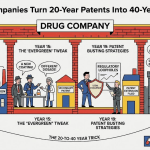
A patent thicket is a dense web of overlapping patents filed around a single drug product, designed to ensure that any generic entrant must challenge not one patent but many — each of which can independently trigger a 30-month stay. The primary composition-of-matter patent is surrounded by formulation patents (e.g., the extended-release matrix), method-of-use patents for each approved indication, patents on metabolites, patents on polymorphic forms of the API, patents on specific particle sizes, and patents on the devices used for administration. AbbVie’s approach to Humira (adalimumab) became the pharmaceutical industry’s canonical example of patent thicket construction at scale: the company filed more than 130 U.S. patents around the drug, with expiry dates extending to 2034 — years after the original composition-of-matter patent expired. The litigation cost of challenging a thicket of this density is prohibitive for any company not operating at top-tier generic scale, and the legal risk of losing on a single peripheral patent is sufficient to block launch entirely.
When a Paragraph IV challenge is filed and litigation commences, both parties face uncertainty. The brand risks having its patents invalidated, which would immediately open the market. The generic risks losing the litigation, losing its 180-day exclusivity through failure to launch, and having spent tens of millions in legal fees for nothing. This mutual risk creates incentives for settlement. In a pay-for-delay (also called reverse payment) settlement, the brand company pays the generic challenger — in cash, in product rights, or in some combination — to withdraw the PIV challenge and agree to a delayed market entry date. The FTC estimates these agreements cost U.S. consumers and government payers approximately $3.5 billion per year in excess drug spending. They are legal in the U.S. following FTC v. Actavis (2013), which held that they are not presumptively anticompetitive but must be analyzed under a rule-of-reason standard — a holding that has not eliminated the practice but has increased its legal scrutiny. For analysts, pay-for-delay settlements in SEC filings and litigation dockets are a key signal that a generic’s expected market entry date may be substantially later than the underlying patent expiry would suggest.
Citizen Petition Weaponization
The citizen petition mechanism under 21 CFR Part 10 exists to allow any interested party — including a competitor — to request that the FDA take or refrain from specific regulatory actions. The abuse pattern is well-documented: a brand company files a substantive-looking petition raising safety or quality concerns about a pending generic application, timed to land in the FDA inbox within weeks of the anticipated generic approval date. The FDA’s statutory obligation to respond before approving the generic can delay the generic’s launch by six months or more. The FDA explicitly recognized this pattern and issued guidance stating that it would not delay ANDA approvals based on petitions unless “necessary to protect public health” — but the mechanism still adds procedural friction that, for a small-market product where every month of delay matters, can be commercially decisive. Brand companies rarely face formal consequences for filing petitions that are ultimately rejected as scientifically unsupported.
Restricted Distribution Networks (REMS Abuse)
Some drugs require a Risk Evaluation and Mitigation Strategy (REMS) due to serious safety concerns, including restricted distribution through a closed network of certified pharmacies and prescribers. Where a REMS legitimately exists, generic developers must obtain samples of the brand product to conduct BE studies, but the brand can — and some have — refused to sell to generic developers, claiming REMS restrictions prevent any sale outside the approved network. The FDA has attempted to address this through guidance clarifying that REMS restrictions do not bar sample sales to generic developers for testing purposes, and some states have pursued litigation against brands using this tactic. The underlying behavior has been difficult to fully eradicate.
Product Hopping
Product hopping occurs when a brand company reformulates its product — changing from a capsule to a tablet, from immediate-release to extended-release, from twice-daily to once-daily dosing — in the period before the original formulation’s patent expires. The company then aggressively markets the “new” formulation, migrates its patient base to it, and simultaneously discontinues the original, leaving generic developers who had been pursuing ANDA approval for the original product with a reference listed drug that no longer has a meaningful commercial market. The generic may be approved but finds itself competing against a brand that has already pivoted. Namenda (memantine), Suboxone (buprenorphine/naloxone), and Aggrenox (aspirin/dipyridamole) each featured in major product hopping disputes.
Key Takeaways: Part III
Economic barriers, particularly small market size combined with GDUFA fees and erosion risk, account for most uncontested markets. Manufacturing complexity creates a secondary barrier that is technically challenging and capital-intensive to overcome. The regulatory bar for complex generic products has risen substantially and will continue to rise. Strategic barriers — patent thickets, pay-for-delay, citizen petition filing, REMS abuse, and product hopping — add deliberate legal and procedural friction that can render an otherwise attractive market economically unviable. Competitive entry modeling that addresses only patent expiry dates without analyzing all four wall types is structurally incomplete.
Part IV: Case File — Daraprim and the Anatomy of an Exploited Vacuum
The Drug: Pyrimethamine’s Commercial History
Pyrimethamine, marketed as Daraprim by GlaxoSmithKline and subsequently by smaller specialty distributors, is a 62-year-old dihydrofolate reductase inhibitor used in combination regimens to treat toxoplasmosis, a life-threatening parasitic infection in immunocompromised patients. Toxoplasmosis in AIDS patients and post-transplant immunosuppressed individuals can cause encephalitis and death without treatment. The drug is on the WHO Model List of Essential Medicines. It was priced at $1 per tablet for decades, reflecting its off-patent status and the absence of meaningful development cost to recoup.
Its U.S. commercial profile — approximately 2,000 prescriptions per year, a tiny patient population, and no patent protection — made it structurally unattractive for generic development. No generic manufacturer had filed an ANDA. The brand existed as the sole FDA-approved source by default.
The Acquisition and the Price Event
In August 2015, Turing Pharmaceuticals, founded by Martin Shkreli, acquired the U.S. marketing rights to Daraprim from Impax Laboratories for approximately $55 million. Within weeks, Turing raised the per-tablet price from $13.50 to $750 — a 5,455% increase. Annual treatment cost for some patients moved from approximately $1,000 to over $600,000. The price hike was legal. Pyrimethamine had no patent protection, no FDA exclusivity, and no regulatory ceiling on its price.
Turing simultaneously converted Daraprim’s distribution to a closed, specialty pharmacy network. This was the structural move that made the price sustainable: without open distribution, a generic developer cannot purchase the brand samples legally required to run bioequivalence studies. The distribution network, combined with the already unattractive market economics for a drug with 2,000 annual scripts, effectively immunized the price from generic competition.
Shkreli’s stated rationale was that the profits would fund development of a new, improved therapy for toxoplasmosis. An internal email reviewed in subsequent congressional testimony revealed a more transactional framing: “Should be a very handsome investment for all of us.” The Infectious Diseases Society of America characterized the pricing as “unjustifiable” and noted that pyrimethamine was already the standard of care with no therapeutic need for a replacement.
The Aftermath: Lessons for IP and Portfolio Teams
Shkreli was convicted and imprisoned — for securities fraud from a prior hedge fund, not for the Daraprim pricing. The pricing itself generated no criminal liability. A compounding pharmacy began offering pyrimethamine at approximately $1 per capsule, providing a practical alternative for some patients but not an FDA-approved generic equivalent. The FDA’s Competitive Generic Therapy pathway, enacted in 2017, was designed in part to address Daraprim-style vacuums by providing 180-day exclusivity as an incentive for generic entry into markets with inadequate competition.
The strategic lesson is not that Shkreli was unusually predatory. The lesson is that the conditions enabling a 5,000% price increase existed long before Turing acquired the asset, and they are not unique to Daraprim. Any drug sitting on the FDA’s uncontested list shares, in varying degree, the same structural vulnerability: sole-source manufacture, small market deterring new entrants, no active patent protection to challenge, and no regulatory mechanism capping price. For business development teams assessing specialty asset acquisitions, identifying and pricing this structural vulnerability — either as an opportunity or as a reputational and policy risk — is a material part of due diligence.
Part V: The Orphan Drug Exclusivity Problem — Rare Disease Protection or Blockbuster Shield?
The Orphan Drug Act’s Design and Its Strategic Exploitation
The Orphan Drug Act of 1983 created a set of incentives — seven-year market exclusivity, R&D tax credits, reduced PDUFA fees, expedited FDA interactions — specifically to attract investment toward diseases affecting fewer than 200,000 U.S. patients. Without these incentives, treatments for most rare diseases would be commercially unviable. The Act has been substantively successful on those terms: orphan drug approvals have increased from fewer than 10 per year pre-1983 to over 300 per year in recent years, and the FDA has approved treatments for more than 600 previously untreatable rare conditions.
The strategic problem arises from the structure of Orphan Drug Exclusivity itself. ODE attaches to a specific drug-indication pair, not to the drug molecule broadly. A company can designate and ultimately approve the same drug in multiple separate rare disease indications, each receiving its own independent seven-year exclusivity grant. There is no statutory limit on how many orphan approvals a single drug can accumulate.
Quantifying the Exclusivity Stack: The Health Affairs Data
A 2020 analysis in Health Affairs examined the exclusivity extension effect of multiple orphan approvals. Drugs with a second orphan approval saw their effective market exclusivity extended by a mean of 4.7 years beyond the first approval’s term. Drugs with five separate orphan approvals had, on average, 13.4 years of additional exclusivity stacked on top of the original seven years. The study identified 16 drugs that had secured at least a decade of exclusivity beyond their initial ODE grant. The estimated aggregate budget impact of this additional exclusivity — across government payers, insurers, and patients — was $591 billion over a seven-year window following first approval.
The drugs generating this figure are not obscure compounds serving truly rare populations in the traditional sense. They include treatments that, across all approved indications combined, serve patient populations large enough to generate hundreds of millions or billions in annual revenue — placing them firmly in the blockbuster category by standard commercial definitions, even though each individual indication technically qualifies as rare.
The IQVIA Counter-Data: Where ODE Is Actually Working
An important competing data set comes from the IQVIA Institute’s 2018 orphan drug report. IQVIA analyzed 217 orphan-designated drugs whose patents and exclusivities had all expired and found that 101 — roughly 47% — still faced no generic competition. The reason was not surviving legal protection. The median annual U.S. spending on these unprotected orphan drugs was $8.6 million. The market was simply too small to attract generic investment regardless of the legal landscape.
This finding runs against the narrative that ODE is primarily a barrier to competition. For the large majority of truly rare disease drugs, the problem is the opposite: even after all exclusivities expire, the market is too small to sustain competitive entry. ODE is functioning as intended — protecting investment returns for drugs that would otherwise be commercially unviable — and generating no durable competitive harm after expiry because no competitor has financial incentive to enter.
The honest policy picture is bifurcated. A subset of drugs with multiple orphan approvals covering conditions that are individually rare but collectively substantial are using ODE as a blockbuster exclusivity mechanism that extends monopoly decades beyond what patents alone would permit. Separately, the large majority of orphan drugs remain uncontested after expiry not because ODE is artificially blocking entry but because the underlying market economics make competition structurally impossible. Policy reform targeted at the first group without disrupting incentives for the second is technically feasible but politically difficult.
Investment Strategy Note: Orphan Drug Asset Modeling
For institutional investors and M&A teams: valuing an orphan drug asset requires a separate analysis of its “stacked exclusivity profile.” Identify the number of existing orphan designations, the dates of each approved indication’s ODE grant, and any pending supplemental applications that could generate additional orphan approvals. Map the ODE expiry dates against the patent expiry landscape to identify the most restrictive constraint on competitive entry for each indication. A drug with strong composition-of-matter patent coverage and two stacked ODE grants may have a legitimate combined exclusivity window extending to the early 2030s even if the core patent was filed in the 2000s. Separately, assess whether any of the orphan indications are clinically adjacent to non-orphan conditions that a competitor might use as an alternative development pathway, bypassing the ODE barrier entirely.
Part VI: Consequences — Price Gouging, Supply Fragility, and the Hidden Cost to Payers
The Pricing Power of an Uncontested Market
A sole-source manufacturer of an off-patent drug with no competitive threat has pricing power that is, in practical terms, bounded only by payer pushback and political risk. The theoretical constraint from Hatch-Waxman — that the generic market will erode pricing post-LOE — does not apply when no generic competitor exists. The brand manufacturer can raise prices annually, as many specialty pharma companies have done for decades, relying on PBM formulary inertia, prescriber habit, and patient lack of alternatives to absorb the increases.
U.S. consumers systematically overpay for a measurable subset of generic drugs as well. USC Schaeffer Center analysis found that Medicare Part D paid more for 184 common generics in 2018 than cash-paying customers at Costco would have paid at retail, with excess spending totaling $2.6 billion. An HHS analysis found that Medicare could have saved approximately $3 billion over a measured period if generic substitution had occurred at available rates. These figures reflect not just uncontested brand pricing but also dysfunction in the generic drug supply chain — where a nominally generic market may have only one or two producers, prices do not always behave competitively even in the absence of formal patent protection.
Drug Shortages as a Predictable Outcome of Single-Source Dependence
The FDA has consistently identified manufacturing quality failures as the leading cause of drug shortages, and these failures disproportionately affect sterile injectable generic drugs manufactured at a small number of facilities. When a drug has only one FDA-approved manufacturer and that manufacturer encounters a 483 observation, a consent decree, a Form 483 response failure, or a natural disaster affecting its production site, the U.S. drug supply for that product goes to zero. There is no backup. Allocation begins. Hospitals begin substituting less-effective or less-tested alternatives. Clinicians managing cancer patients on critical injectable chemotherapy agents, or intensivists managing ICU patients dependent on specific injectable vasopressors or sedatives, report forced substitutions that create direct patient risk.
The FDA’s drug shortage database documents hundreds of active and resolved shortages at any given time, with sterile injectable generic drugs consistently overrepresented. The economic logic is self-reinforcing: sole-source production of a low-margin product provides minimal incentive for the manufacturer to invest in redundant manufacturing capacity, advanced manufacturing technology, or aggressive quality system improvement. The result is a supply chain that is simultaneously fragile and difficult to enter.
Stagnation in Manufacturing Quality and Technology Adoption
In competitive markets, manufacturers have financial incentive to adopt continuous manufacturing, process analytical technology (PAT), and advanced quality systems because these reduce cost and differentiate product quality. A sole-source manufacturer of a low-price, off-patent injectable faces no such incentive: its customers have no alternative supplier, and process improvement investment yields no commercial benefit. FDA’s Center for Drug Evaluation and Research (CDER) has explicitly flagged the absence of competitive pressure as a structural barrier to voluntary adoption of Advanced Manufacturing Technologies (AMTs) in the generic drug sector. The regulatory response — including the National Emerging Technology Association program and various CDER AMT initiatives — attempts to incentivize adoption through expedited review for manufacturers voluntarily implementing AMTs, but uptake remains limited among sole-source manufacturers of commodity generics with no competitive threat.
Part VII: The Policy Response — FDA’s Competitive Generic Therapy Pathway in Detail
The Drug Competition Action Plan (DCAP): Framework and Priorities
In 2017, under Commissioner Scott Gottlieb, the FDA launched its Drug Competition Action Plan (DCAP), the most comprehensive structural reform of generic drug policy since Hatch-Waxman itself. DCAP had four explicit pillars: reducing the backlog of pending ANDAs, clarifying complex product bioequivalence standards, closing regulatory loopholes enabling anticompetitive gaming, and creating new economic incentives for entry into markets with inadequate competition.
The ANDA backlog problem was real and acute: by 2012, the backlog had grown to over 2,900 pending applications, with median review times of three years or more. GDUFA I (enacted 2012) provided the FDA with new funding in exchange for performance commitments, and GDUFA II (2017) added priority review designations for products with few competitors. Average ANDA review times dropped substantially following GDUFA implementation, though complex generics continue to require longer review cycles due to scientific complexity and the frequency of complete response letters (CRLs) requesting additional data.
The Competitive Generic Therapy Pathway: Mechanism and Incentive Architecture
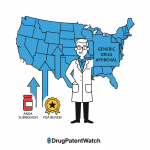
The Competitive Generic Therapy designation, created by the FDA Reauthorization Act of 2017, is the most targeted policy intervention yet deployed against the uncontested market problem. It has two eligibility criteria: the drug must have no more than one approved application (either one brand NDA or one generic ANDA), and the applicant must request CGT designation in its ANDA submission.
Approved CGT applicants receive two benefits. First, FDA expedited review: more frequent meetings with the agency, faster responses to information requests, and targeted engagement intended to resolve scientific issues without issuing CRLs that would restart the review clock. Second — and the commercially decisive element — the first approved CGT applicant receives 180-day marketing exclusivity if the drug had no unexpired Orange Book-listed patents or exclusivities at the time of ANDA submission. This is a manufactured prize, created by policy to replicate the economic incentive structure of the Hatch-Waxman 180-day exclusivity in markets where no PIV challenge is possible because no patents exist.
The policy insight is precise: the source of the uncontested market problem for many off-patent drugs is not that generic manufacturers lack scientific capability but that they lack a viable financial prize for entering a small, low-price market. The CGT pathway creates a temporary artificial monopoly in a market that has none, generating a window of above-competitive pricing that can make development economics work for the first entrant.
CGT Program Data: What Has Actually Happened
As of early 2021, the FDA had approved 63 unique generic products carrying CGT exclusivity. The agency received hundreds of designation requests in the program’s first three years, granting over 320 designations, with final approval and exclusivity capture substantially lower due to development attrition, CRL cycles, and launch timing challenges. The 75-day post-approval launch requirement — a condition of retaining CGT exclusivity — has created operational challenges for companies that secured approval but experienced manufacturing scale-up delays, packaging procurement issues, or supply chain constraints in the post-COVID period. Companies that miss the 75-day window forfeit the exclusivity, reducing the program’s economics materially.
More recent CDER data from 2024 suggests a potential slowdown in the rate of new CGT-eligible products launching with exclusivity, which is consistent with the hypothesis that the most commercially viable CGT targets — those with the best combination of market size, manufacturing accessibility, and manageable BE complexity — have already been developed. The remaining candidates on the FDA’s uncontested list may include products with more severe economic or technical barriers that the CGT incentive alone cannot overcome.
Key Takeaways: Part VII
The Competitive Generic Therapy pathway is a well-designed intervention that has produced measurable outcomes, but it operates at the margin of a structural problem with deep economic roots. The 75-day launch requirement should be reviewed: it was designed to prevent “paper launches” of exclusivity-holding ANDAs, but it creates real risk for companies experiencing legitimate post-approval manufacturing challenges. The program’s long-term efficacy will depend on whether the FDA can also lower the technical barriers — particularly for complex generic products where the BE standard itself is the primary deterrent.
Part VIII: Investment Strategy — Finding Durable Opportunity in Uncontested Markets
The Generic Portfolio Manager’s Framework for CGT Targeting
Identifying viable CGT targets requires integrating data from at least five distinct sources: FDA Orange Book (patent and exclusivity status), FDA’s published uncontested drug list, IMS/IQVIA prescription volume and sales data, ANDA docket data (identifying existing applications and their certification status), and internal manufacturing capability assessments. No single database provides all five dimensions, which is why platforms that aggregate pharmaceutical regulatory and commercial data — including DrugPatentWatch — provide a distinct analytical advantage over manual research.
A rigorous target screening process applies filters in sequence. Begin with drugs appearing on the FDA’s official list of off-patent, off-exclusivity products with no approved generic, which the FDA publishes and updates regularly. Remove all products where the therapeutic category requires clinical endpoint BE studies, unless your company has demonstrated capability in running those studies and a budget to support them. Apply a minimum annual market size threshold that produces acceptable project NPV after ANDA filing fees, development costs, and the probability-weighted assumption that a second entrant arrives within 18 months of your launch and compresses margins. Prioritize products where your company has an existing validated API supply relationship or a proprietary manufacturing process that constitutes a genuine barrier to the second entrant.
The final filter — and the most frequently overlooked — is competitive intelligence on other companies’ ANDA filing activity. A drug on the FDA uncontested list with zero pending ANDAs is a fundamentally different opportunity than one with two pending ANDAs in active review. The former may represent a genuine first-mover play; the latter means the CGT exclusivity window may be contested. DrugPatentWatch’s ANDA tracker provides real-time visibility into application status, which is critical to this competitive assessment.
The Niche Specialty Positioning Strategy
For companies without the scale to compete at the high-volume end of the generic market, uncontested off-patent drugs with moderate market size — roughly $15 million to $75 million in annual U.S. sales — represent the most durable opportunity. In this range, the CGT exclusivity window is long enough to generate strong returns, but the market is not large enough to attract large-scale generic manufacturers as immediate competitors at exclusivity expiry. A company that can establish itself as the dominant supplier of a drug in the $40 million annual sales range, even after CGT exclusivity expires, may retain 60-70% market share simply through incumbency, supply reliability, and prescriber familiarity — particularly in hospital injectable markets where procurement teams prioritize supply security over marginal price differences.
This “niche specialty positioning” strategy has been executed successfully by companies including Civica Rx, Amphastar Pharmaceuticals, and several mid-tier generic injectable specialists. The common thread is not lowest-cost manufacturing but supply chain reliability and a willingness to remain in markets that are too small to attract larger competitors.
The Biosimilar Parallel: Applying the Same Framework to Biologic LOE
The uncontested market problem for small-molecule generics has a structural parallel in the biosimilar space that deserves explicit discussion. Biologics lose reference product exclusivity after 12 years under BPCIA, but biosimilar development costs — typically $100 million to $250 million per program, reflecting the complexity of analytical characterization, comparative clinical studies, and manufacturing process development — create a much higher floor on commercially viable market size. Reference products with annual U.S. sales below approximately $500 million have historically attracted limited biosimilar development interest, meaning that dozens of off-exclusivity biologics currently have no biosimilar competition and may not attract any for years.
The FDA’s biosimilar action plan parallels the generic DCAP in intent but lacks an equivalent to the CGT pathway’s 180-day exclusivity mechanism for the biosimilar space. The BPCIA’s “interchangeability” designation — which allows pharmacists to substitute without physician intervention, analogous to bioequivalence for small molecules — adds both a development incentive and a higher regulatory bar. For investors and BD teams: the list of biologics approaching or past 12-year LOE with no approved biosimilar competitor is a credible analog to the small-molecule uncontested list and merits systematic screening using the same multi-factor framework.
Part IX: The Multi-Agency Reform Horizon — FTC, USPTO, and PBM Restructuring
FTC and DOJ Antitrust Enforcement: The New Posture
The Federal Trade Commission and Department of Justice Antitrust Division have both signaled, through a series of public actions and policy statements since 2021, that pharmaceutical antitrust enforcement is a priority area. The FTC has actively litigated pay-for-delay settlements under the rule-of-reason standard established by FTC v. Actavis, with mixed results. The agency has also expanded its scrutiny to citizen petition abuse — referring petitions that appear to have been filed primarily for delay to antitrust review — and to REMS-based sample access restrictions.
In June 2025, the FTC and DOJ co-hosted a public listening session specifically focused on structural and regulatory impediments to generic and biosimilar drug competition. A subsequent July 2025 session addressed formulary and benefit design practices. These are not routine policy forums. They represent coordinated inter-agency signaling that enforcement is moving upstream: from challenging specific anticompetitive acts after the fact, toward identifying and dismantling the structural conditions that enable anticompetitive behavior systemically.
For legal and regulatory teams at brand companies: the citizen petition calculus has changed. Petitions filed with inadequate scientific grounding, timed to coincide with a generic’s anticipated approval, now carry a non-trivial risk of FTC referral and potential antitrust scrutiny. The cost-benefit of the delay tactic has shifted.
USPTO Reform: Raising the Patent Bar
There is a bipartisan legislative push to strengthen the Inter Partes Review (IPR) process at the USPTO Patent Trial and Appeal Board (PTAB), which allows third parties to challenge the validity of issued patents after grant. The pharmaceutical industry’s use of PTAB has been significant: generic companies and biosimilar developers have used IPR petitions to invalidate secondary patents that would otherwise require expensive PIV litigation to challenge. Brand companies have argued that PTAB proceedings are “patent death squads” that undermine innovation incentives. Generic advocates argue that PTAB is the only cost-effective mechanism for small and mid-sized companies to challenge the weakest elements of patent thickets without committing to full district court litigation.
The policy question at stake is whether issued secondary patents covering minor formulation changes or obvious polymorphic forms should receive the same deference as composition-of-matter patents on genuinely novel therapeutic molecules. A tiered examination standard — more rigorous review at initial grant for secondary pharmaceutical patents — would reduce the density of patent thickets at the source, before IPR challenges become necessary. Several legislative proposals along these lines have been circulated in the Senate Judiciary Committee, though none have yet cleared committee.
PBM Formulary Reform: The Commercial Barrier No One Talks About
A generic drug can be approved by the FDA, launched by its manufacturer, and still fail to reach patients if pharmacy benefit managers (PBMs) — the intermediaries managing prescription drug benefits for health plans — decline to place it on covered formularies or impose step therapy requirements that effectively require patients to fail on the brand before accessing the generic. This occurs because PBM revenue models are in some cases tied to manufacturer rebates: a high-price brand drug offering a large rebate to a PBM may receive preferred formulary placement over a low-price generic offering no rebate, because the net cost to the PBM’s plan after rebate may be competitive with, or even below, the generic’s list price, while the PBM captures a spread.
Congressional scrutiny of PBM practices has intensified significantly since 2023, with both chambers advancing legislation requiring PBM transparency, prohibiting spread pricing in Medicaid, and restructuring how rebates flow through the supply chain. These reforms, if enacted and implemented at scale, would remove one of the least visible but commercially significant barriers to generic adoption — the formulary placement barrier — and could substantially accelerate the market share capture that newly approved generics achieve post-launch.
Part X: Key Takeaways by Segment
For Generic Portfolio Managers
The CGT pathway has created a new category of opportunity: off-patent drugs with small-to-moderate markets that are now economically viable to develop because of the 180-day exclusivity prize. Systematic screening of the FDA’s uncontested drug list against internal manufacturing capability and API supply chain access is the starting point. The competitive intelligence layer — tracking pending ANDAs and designation requests through platforms like DrugPatentWatch — is the differentiating step. First-mover timing and the 75-day post-approval launch requirement demand that manufacturing scale-up planning begins no later than first submission, not at receipt of tentative approval.
For Pharma IP and Legal Teams
The IP asset landscape of an off-patent drug is not fully described by its Orange Book entry. Trade secret process value, citizen petition history, REMS distribution network structure, and pending PIV litigation across secondary patents all constitute real IP-equivalent assets that affect competitive entry probability and timing. A full seven-element IP audit, rather than a single patent expiry check, is the appropriate diligence standard. For brand companies: citizen petition filing strategy now carries FTC referral risk. REMS-based sample restriction strategies have been documented, publicized, and are subject to both FDA guidance opposition and state enforcement actions.
For Institutional Investors and M&A Teams
Uncontested markets create durable pricing power that standard LOE modeling systematically undervalues, because the competitive entry date assumed in the model never materializes. Identifying specialty pharma assets on the FDA uncontested list — particularly those with moderate market size and a proprietary distribution position — is a legitimate value creation strategy. Orphan drug stacking analysis (number of ODE grants, stacked exclusivity terminus, non-orphan indication overlap) is a material component of biologic and specialty drug valuation that is frequently omitted from sell-side models. Biosimilar analogies apply: uncontested biologic LOE is a structural parallel to the small-molecule uncontested market problem.
For R&D Leads and Business Development
Manufacturing technology investment — particularly in sterile injectable manufacturing, complex formulation capability, and regulatory expertise in complex generic BE standards — translates directly into a wider addressable universe of CGT targets. Companies with validated sterile injectable manufacturing and a credible API supply for at least 15 complex generic candidates are positioned to build a durable niche portfolio in the $15-75 million annual sales range, below the threshold that attracts commodity generic competition, above the threshold that requires philanthropy to justify development.
Part XI: FAQ for Analysts and IP Teams
Q: What is the accurate legal definition of ‘inadequate generic competition’ for CGT designation purposes?
A: The FDA defines a drug as having inadequate generic competition for CGT purposes if it has not more than one approved application in the NDA or ANDA system at the time of submission — meaning either the brand NDA alone, or the brand NDA plus one approved generic ANDA. A drug with two approved generics already does not qualify.
Q: How does the 30-month stay interact with CGT designation?
A: CGT designation applies to ANDAs submitted for drugs with no unexpired Orange Book-listed patents or exclusivities. If no patents are listed in the Orange Book, there is no PIV certification to file and therefore no mechanism for a 30-month stay to be triggered. The CGT pathway targets precisely the population of drugs where the traditional Hatch-Waxman litigation architecture is irrelevant — the drug is legally unprotected, but economically uncontested.
Q: Can a company hold CGT exclusivity and also benefit from state substitution laws?
A: Yes. CGT exclusivity prevents FDA from approving additional ANDAs for 180 days. State pharmacy substitution laws govern whether pharmacists can automatically dispense the generic without a new prescription. These operate on different tracks. During the CGT exclusivity window, there is, by definition, only one approved generic — automatic substitution of that generic for the brand is both legally permissible (in states with mandatory substitution laws for therapeutically equivalent products) and commercially desirable for the CGT holder.
Q: What is the most common reason a CGT designation results in no launched product?
A: Manufacturing readiness. Companies that secure CGT designation frequently encounter API supply constraints, sterility validation delays, or facility capacity issues in the period between ANDA approval and the 75-day launch deadline. If the launch window is missed, CGT exclusivity is forfeited. Companies that succeed with CGT consistently began manufacturing scale-up planning at the point of ANDA submission, not at approval.
Q: How does the FDA treat a brand company that acquires a sole-source off-patent drug and raises its price by more than 1,000%?
A: The FDA has no statutory authority over drug pricing. Price increases on off-patent drugs with no competitor are legal under current U.S. law. Congressional authority over pricing is limited and largely exercised through Medicare negotiation provisions in the Inflation Reduction Act, which apply to a specified set of high-Medicare-expenditure drugs selected for negotiation — not to all sole-source off-patent drugs. FTC authority is limited to anticompetitive conduct, not price levels per se. The primary regulatory response has been the CGT pathway — creating a competitive entry incentive rather than a price ceiling.
Q: For biosimilar modeling, what is the functional equivalent of the FDA’s off-patent uncontested drug list?
A: There is no direct equivalent. The FDA publishes a reference product exclusivity list in its Purple Book, but no analogous curated list of off-exclusivity biologics without approved biosimilars. Building the equivalent requires a custom screen of the Purple Book against biosimilar ANDA filings and approvals. Several commercial data providers maintain this cross-referenced dataset, including DrugPatentWatch and IQVIA’s biosimilar pipeline database. The analysis should incorporate not just U.S. approval status but ex-U.S. biosimilar approval activity, as a biosimilar approved in the EU under the EMA pathway can seek FDA approval using the EMA dossier as supporting reference data, substantially reducing development cost for a U.S. application.
This analysis integrates primary regulatory data from the FDA Orange Book, Orange Book patent and exclusivity filings, BPCIA reference product exclusivity listings, CDER CGT designation and approval records, FTC enforcement data, and published academic analyses from Health Affairs, IQVIA Institute, and the American Economic Review. Prescription and market size data sources include IQVIA, CMS Part D public use files, and HHS ASPE analyses. Patent landscape data referenced in the Humida thicket section reflects publicly filed USPTO records.