The twenty-year patent term is a commercial fiction. While federal law grants two decades of exclusivity from the date of filing, the actual window for profit is a shifting target defined by secondary intellectual property layers and regulatory maneuvers. This structural reality forces pharmaceutical firms to move beyond the active pharmaceutical ingredient (API) and construct a dense web of overlapping exclusionary rights known as a patent thicket.1 Mapping this thicket is no longer a peripheral task for legal departments. It is a core commercial requirement for any firm looking to forecast the loss of exclusivity and the arrival of generic competition. Between 2025 and 2030, an estimated $200 billion to $400 billion in annual branded revenue is at risk as the largest wave of patent expirations in a generation arrives.3
The 20 Year Patent Illusion
The foundational error in pharmaceutical valuation is the assumption that a drug enjoys a clean twenty-year monopoly followed by a sudden revenue drop. In reality, the drug development cycle consumes a significant portion of the primary patent term before a product generates its first dollar. Preclinical studies, three phases of clinical trials, and the Food and Drug Administration review process typically take ten to twelve years.6 This leaves an effective patent life of fewer than ten years for many new chemical entities. Manufacturers attempt to recover this lost time through statutory mechanisms and strategic patenting.
The pharmaceutical industry uses a multi-layered defense to protect its assets. The primary patent covers the active ingredient, but this core is often the most vulnerable. Smart innovators surround it with secondary patents that target every conceivable modification and use of the drug. Research on top-selling drugs shows that 72% of patent applications are filed after the drug has already received FDA approval.1 These filings do not protect the initial invention. They protect market share by creating a labyrinth that generic manufacturers must walk through at great expense. I have found that relying solely on the primary patent is now considered a failure of corporate strategy.1
The Mechanics of Market Exclusivity Extension
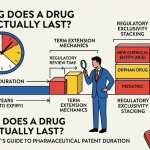
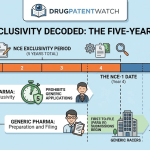
The total period of market protection is an aggregate of several distinct legal and regulatory shields. While a patent lasts 20 years, the effective market life is determined by whichever barrier expires last. This exclusivity stack includes statutory extensions designed to compensate for regulatory delays. Patent Term Adjustment compensates for delays at the patent office, while Patent Term Extension restores time lost during clinical trials.3
I have analyzed the caps that limit these extensions. The Patent Term Extension is subject to a five-year ceiling, and the total remaining term cannot exceed 14 years from the date of FDA approval.6 Speed to market can paradoxically reduce the benefit of these extensions. Drugs with long, arduous clinical trials benefit most from the restoration, provided they do not breach these rigid caps.
Protection Type
Duration
Mechanism
Criteria
New Chemical Entity (NCE)
5 Years
Prevents the FDA from accepting a generic application for 5 years.
Active moiety never before approved by the FDA.
New Clinical Investigation
3 Years
FDA cannot approve a generic that relies on the reference data for that specific change.
Change to an approved drug requiring new clinical trials.
Orphan Drug Exclusivity
7 Years
Blocks approval of the same drug for the same rare indication.
Disease affecting fewer than 200,000 people in the US.
Pediatric Add-on
6 Months
Attaches to all listed patents and regulatory shields in the Orange Book.
Completion of FDA-requested pediatric studies.
6
Anatomy of the Secondary Fortress
Secondary patents are the building blocks of the patent thicket. Unlike primary patents that cover the core molecule, secondary patents target peripheral aspects of the drug product. These include alternative crystalline structures, specific combinations of ingredients, dosing regimens, and the hardware used to deliver the medicine.1 The strategic goal is to force a competitor to invalidate or design around dozens of patents. Even if individual secondary patents are weak, the aggregate cost of challenging them creates a formidable barrier to entry.
The construction of these fortresses is a systematic process. Manufacturers often file hundreds of applications on a single drug. For example, Novo Nordisk’s semaglutide products are associated with 320 patent applications and 154 approved patents.13 This density ensures that even if a generic firm successfully challenges the primary molecule patent, it must still overcome a wall of secondary protections that can extend the monopoly for decades.
Polymorphs and the Crystalline Trap
A chemical compound can exist in multiple three-dimensional crystalline forms known as polymorphs. These variations have different physical properties, such as solubility, stability, and bioavailability.1 Innovators conduct extensive polymorph screens early in development to identify and patent every stable and commercially viable version of the drug. This creates a “Polymorph Paradox” for generic firms. To gain FDA approval, a generic must be bioequivalent to the branded drug. If the innovator has patented the only stable polymorph, the generic manufacturer is trapped. It must find an alternative crystalline form that is stable enough to sit on a pharmacy shelf but bioequivalent enough to pass regulatory muster.1
I have observed that companies like Celgene (now part of Bristol Myers Squibb) used patents on specific polymorphic forms of Revlimid to secure their market position long after the primary molecule patent was set to expire.11 The generic manufacturer must navigate these “hidden” patents that decide when a product actually launches.
Formulation Patents as Final Barriers
Formulation patents protect the specific combination of the active ingredient with inactive excipients, buffers, and release mechanisms. These are often filed late in the drug lifecycle to address minor improvements, such as an extended-release version or a more stable liquid buffer.1 Formulation patents add an average of 6.5 years of patent life to a product.6
The strategic value of a formulation patent lies in its ability to block “AB-rated” generic substitution. In the United States, pharmacists can automatically substitute a generic for a brand-name drug only if the generic is therapeutically equivalent. If a generic firm cannot replicate the patented formulation, its product will not receive the “AB” rating. It will fail to capture the high-volume automatic substitution market.16
Method of Use and Indication Expansion
Method of use patents protect the use of an existing drug to treat a specific disease or a new patient population. These are also known as “second medical use” patents.2 Companies often launch a drug for a niche indication and then expand to broader markets, filing new patents for each additional condition.
These patents are particularly effective against “skinny labels.” Under Section viii of the Hatch-Waxman Act, a generic manufacturer can “carve out” patented indications from its label and launch for older, unpatented uses.1 However, branded companies have successfully used litigation to argue that even with a carved-out label, generic manufacturers are inducing infringement by promoting the drug for all its known uses. This creates legal uncertainty that can delay generic entry even after the primary patents have expired. The impact of these method-of-use patents is a key pillar of the thicket.1
The Biologic Paradigm Shift
The patent thicket strategy reaches its most extreme form in the biologics sector. Unlike small-molecule drugs, which are chemically synthesized, biologics are complex proteins manufactured in living cells. This complexity allows for an even denser web of patents covering manufacturing processes, cell lines, and purification methods.1
The regulatory framework for biologics, the Biologics Price Competition and Innovation Act, creates a “Patent Dance” that differs significantly from the small-molecule process. For small molecules, the goal is often to trigger a 30-month stay of FDA approval. For biologics, the goal is to create a thicket so dense that the sheer cost of litigation forces biosimilar developers into settlements that dictate launch dates years into the future.1
Case Study: The Adalimumab Wall
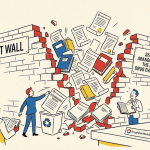
AbbVie’s defense of Humira (adalimumab) is the definitive case study of the biologic patent fortress. While the primary compound patent for adalimumab expired in 2016, biosimilar competition in the United States did not arrive until 2023.15 AbbVie constructed a thicket of 136 patents covering the formulation, manufacturing process, and various indications for the drug.11
My analysis of the data shows that 80% of the patents in the Humira thicket were non-patentably distinct or duplicative, linked together by terminal disclaimers.21 These are patents that cover minor variations of the same invention. In contrast, the European Union patent portfolio for Humira was much smaller, consisting of only eight non-duplicative patents.21 This disparity explains why biosimilars launched in Europe four years earlier than in the United States, highlighting the effectiveness of the thicket strategy within the U.S. legal system.11
Category
Humira (US Portfolio)
Humira (EU Portfolio)
Total Patents
136
~8
Core Distinction
80% Duplicative
Mostly Non-duplicative
Entry Delay
~7 Years post-API expiry
Launched near API expiry
Cost to System
$7.6 Billion
Significantly Lower
1
Case Study: Apixaban and Lifecycle Extension
Eliquis (apixaban) demonstrates how small-molecule manufacturers use a combination of statutory extensions and secondary patents to push back the patent cliff. The original compound patent (‘208) was filed in 2002 and was set to expire in 2022. However, a Patent Term Extension added four years, moving the expiration to November 21, 2026.4
Beyond the primary patent, BMS secured formulation patents, including the ‘945 patent, which covers specific compositions of apixaban. This secondary patent is set to expire in 2031.28 Through litigation and settlements with generic manufacturers like Sandoz and Teva, BMS has delayed generic entry until April 1, 2028, at the earliest.20 This strategy has preserved billions in revenue, as Eliquis is projected to generate $39.1 billion in U.S. revenue during the extension period alone.28 I have calculated the ROI of these extensions:
Celgene used a variation of the patent thicket for its oncology drug Revlimid (lenalidomide). Instead of a total block, they engineered a “patent slope” through volume-limited settlements. They asserted secondary patents on specific polymorphic forms of the drug to bring generic manufacturers to the negotiating table.11
The result was a two-phase entry:
Phase 1 (2022 to January 2026): Select generic manufacturers launch, but their market share is strictly capped at single-digit percentages.
This mechanism prevents a sudden price collapse. Because generic manufacturers cannot capture more volume than their cap allows, they have little incentive to slash prices. This has allowed the brand to maintain high prices and significant market share years after generic competition technically began.10
Predictive Modeling and Launch Windows
Forecasting generic entry is no longer about checking expiration dates in the FDA’s Orange Book. It is a discipline of predictive intelligence that synthesizes litigation data, regulatory signals, and supply chain activity. I use specialized platforms like DrugPatentWatch to map the exclusivity stack and identify the linchpin patent that actually dictates the launch date.1
The actual launch date is a probability distribution rather than a fixed calendar point. Advanced teams use Monte Carlo simulations to run thousands of iterations based on variables like the probability of successful litigation, the expected delay from regulatory hurdles, and the timing of tentative FDA approvals.22
The Data Inputs for Forecasting
Accurate models rely on four primary categories of data:
Litigation Dockets: Monitoring Paragraph IV challenges and the progress of district court cases. A Markman hearing, where a judge defines patent claim terms, is a signal of a potential settlement or verdict.22
Tentative Approvals: Identifying which generic firms have received FDA tentative approval. This indicates that a generic product is ready for launch as soon as the legal barriers are removed.30
Drug Master Files: Tracking the submission of DMFs by API vendors. A spike in DMF filings for a specific molecule indicates that multiple generic firms are preparing their supply chains.16
Regulatory Hurdles: Monitoring Citizen Petitions filed by branded companies. These petitions raise scientific or safety objections that can delay generic approval by hundreds of days.20
The Legal Mechanics of Delay
The Hatch-Waxman Act provides the legal framework for resolving patent disputes before a generic drug reaches the market. When a generic firm files an Abbreviated New Drug Application, it must certify against every patent listed in the Orange Book. A Paragraph IV certification states that the patents are invalid or will not be infringed by the generic product.13
This certification triggers a specific legal sequence. Filing the lawsuit triggers an automatic 30-month stay of FDA approval for the generic. This stay provides a guaranteed window of exclusivity for the brand during the litigation.1 To encourage challenges, the first generic firm to file a Paragraph IV certification is granted 180 days of market exclusivity. During this window, no other generic can enter.6
This structure creates a step function in revenue erosion. During the 180-day exclusivity, the brand faces only one generic competitor and typically sees a moderate price drop of 15% to 30%. The true cliff occurs once the 180 days expire and multiple competitors flood the market, causing prices to collapse by 90% or more within weeks.10
Administrative Challenges at the PTAB
The America Invents Act created the Patent Trial and Appeal Board as an alternative venue for challenging patent validity. Inter Partes Review at the PTAB offers a faster and cheaper process than district court litigation. Challenges are decided by technical experts using a lower standard of proof. There is no presumption of patent validity.10
However, the PTAB has become a more difficult venue for patent challengers. In 2025, the use of discretionary denials spiked, with the PTAB denying 60% of institution requests.36 These denials are often based on the “settled expectations” of the patent owner or the existence of parallel district court proceedings. For pharmaceutical patents, the institution rate in late 2025 was around 37%, a significant decline from the 68% seen just a year earlier.37
PTAB Metric (FY2025)
Percentage
Overall Petition Denials
44%
Discretionary Denials (DSCO)
60%
Institution Rate (Bio/Pharma)
67%
Final Written Decisions (All Claims Invalid)
17%
37
Policy Shocks and the FTC Crackdown
The expansion of patent thickets has triggered an aggressive regulatory response. The Federal Trade Commission is currently leading a campaign to delist improper patents from the FDA’s Orange Book. The FTC argues that many device patents do not claim the drug itself and are used solely to trigger the 30-month stay and block competition.6
In December 2025, this campaign reached a significant milestone when Teva Pharmaceuticals agreed to remove more than 200 patent listings following pressure from the FTC.34 These removals involve patents for asthma, diabetes, and COPD medications. The FTC’s actions have already led to the delisting of patents across 22 different brand-name products, potentially clearing the way for earlier generic entry for dozens of drugs.40
The IRA Super Cliff Dynamics
The Inflation Reduction Act introduces the most significant change to pharmaceutical pricing in decades. It grants the Centers for Medicare & Medicaid Services the authority to negotiate prices for top-selling drugs that lack competition. This creates a new statutory cliff that operates independently of patent status.5
The IRA creates a bifurcated timeline for price controls. Small molecules are eligible for price negotiation 7 years after approval, with prices taking effect in year 9.5 Biologics are eligible 11 years after licensure, with prices taking effect in year 13.5
This policy significantly reduces the long tail of profitability. Historically, a drug might generate its highest profits in years 12 through 15 as secondary patents blocked generics. Under the IRA, the government captures the asset just as it reaches its peak commercial potential. This has already shifted R&D incentives. 75% of venture capital firms surveyed indicated plans to divest from small-molecule projects in favor of biologics.5
Market Duration
MFP Ceiling (% of Non-FAMP)
9 to 12 Years
75%
12 to 16 Years
65%
More than 16 Years
40%
5
Strategic Sourcing and Supply Intelligence
Forecasting the arrival of generic competition requires an understanding of the economic physics of the event. The number of generic entrants dictates the price floor. If only one generic enters, price erosion is moderate. If ten or more enter, the price collapses to the marginal cost of production.10
Analysts use Drug Master File tracking to determine the number of viable competitors. A generic company cannot submit a substantially complete application without a qualified API supplier and a high-quality dossier.16 By identifying the API suppliers, firms can gain intelligence on the cost basis of potential competitors and predict the intensity of the coming price war.16
This intelligence also allows branded firms to manage their own supply chains more effectively. By monitoring the signals of generic intent, a brand can ramp down its production of the original product as the loss of exclusivity approaches. This prevents millions in write-offs of unsellable stock post-cliff.16
Quantifying the Commercial Erosion
The financial impact of a generic launch depends on the molecule type. Small molecules face a vertical cliff, while biologics face a more gradual slope. For small molecules, automatic substitution at the pharmacy level causes the brand to lose 80% to 90% of its revenue within the first year of competition.11
Biologics follow a different trajectory. Biosimilars are not identical copies and are not always interchangeable at the pharmacy level. Development costs are much higher, ranging from $100 million to $250 million. This results in fewer competitors.20 Price erosion for biologics typically bottoms out at 50% to 70% of the brand price, compared to the 90% drop seen with small-molecule generics.10
The industry is entering a super-cliff. Between 2026 and 2030, a cluster of mega-blockbusters including Keytruda, Eliquis, and Opdivo will lose exclusivity. Projections suggest that if the impacts of the IRA are included, the total revenue at risk could reach $400 billion by 2033.5
Key Takeaways
The patent cliff is not a single calendar date. It is a probabilistic window determined by an exclusivity stack of primary patents, secondary patents, and regulatory shields. Strategic forecasting requires shifting away from passive monitoring of the Orange Book toward active intelligence involving litigation analysis, DMF tracking, and the modeling of policy shocks like the Inflation Reduction Act.
Secondary patents are the real fortresses of market exclusivity. They frequently extend monopolies by six to ten years beyond the active ingredient expiration. The effectiveness of these thickets is being challenged by a coordinated regulatory crackdown. The FTC successfully forced the removal of hundreds of improper patent listings in late 2025.
For biologics, the revenue erosion is a steep slope rather than a vertical cliff. The sheer volume of assets losing protection by 2030 creates a massive financial risk for the sector. Success in this environment depends on Patent Cliff Protocols that use Monte Carlo simulations and specialized intelligence platforms like DrugPatentWatch to transform complex patent data into a quantifiable competitive advantage.
FAQ
What is the difference between a hard switch and a soft switch in product hopping? A hard switch occurs when a drug company removes the original product from the market before generic entry, forcing patients to move to a new, patent-protected version. A soft switch happens when the company leaves the original product on the market but aggressively markets the new version to transition the patient base.13
How does the 30-month stay affect generic entry? If a brand-name company sues a generic firm within 45 days of a Paragraph IV certification, the FDA is prohibited from approving the generic for 30 months or until a court rules the patent is invalid. This stay provides a guaranteed window of continued monopoly for the branded drug during the litigation.20
Why do biologics have a 12-year exclusivity period while small molecules only have 5 years? Under the BPCIA, new biologics receive 12 years of data protection to compensate for their high development costs and manufacturing complexity. Small molecules receive a 5-year New Chemical Entity exclusivity under the Hatch-Waxman Act.6
What are skinny labels and why are they important? A skinny label allows a generic manufacturer to launch for the unpatented uses of a drug while carving out the indications that are still under patent protection. This mechanism allows competition for older uses even if the branded company has secured newer method-of-use patents.6
How does the Inflation Reduction Act change the ROI of small-molecule drugs? The IRA allows for price negotiations starting 7 years after approval, with prices effective in year 9. This window is much shorter than the 13-year window for biologics. It reduces the long tail of profitability and has led to a shift in R&D investment away from small-molecule projects.5
Maximizing Pharmaceutical Patent Longevity: A Mechanistic and Strategic Guide to IP Term Extension and Lifecycle Fortification – DrugPatentWatch – Transform Data into Market Domination, accessed February 7, 2026, https://www.drugpatentwatch.com/blog/how-long-do-drug-patents-last/