The Pricing Shock: How the Inflation Reduction Act Rewrites the Valuation Rules
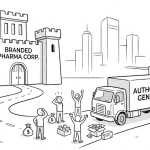
The economic foundations of the pharmaceutical industry are undergoing a forced transformation. For decades, the value of a drug was determined by a predictable countdown of patent expirations. This stability has been replaced by a mandate-driven environment where government negotiation timelines often supersede traditional intellectual property protections. The Inflation Reduction Act (IRA) introduces a regulatory mechanism that allows the Centers for Medicare & Medicaid Services (CMS) to set prices for top-selling drugs that lack generic or biosimilar competition.1 This shift effectively moves the revenue cliff forward, often by several years, fundamentally altering the return on investment (ROI) for research and development (R&D).2
Under the current framework, the federal government targets the 50 highest-spending drugs in Medicare Part D and Part B for negotiation.1 The first 10 Part D drugs were selected for 2026, with an additional 15 selected for 2027.3 By 2029 and beyond, the government will select 20 drugs annually.1 This cumulative approach creates a growing list of price-controlled assets that limits the “long tail” of profitability that manufacturers previously relied upon to fund future innovation.2
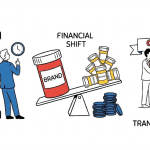
The drug pricing provisions in the law are estimated to reduce the federal deficit by $237 billion over ten years.1 While this serves as a win for the federal budget, it represents a direct transfer of value from the balance sheets of pharmaceutical companies to the public coffers. For business development (BD) and intellectual property (IP) teams, the priority is no longer just defending patents but navigating a labyrinth of government-mandated price ceilings.2
The Nine-Year Cliff: Why Small Molecules Face an Accelerated Attrition
The most contentious element of the IRA is the bifurcated timeline for price negotiation eligibility. Small-molecule drugs—typically oral pills or tablets—become eligible for selection just seven years after their initial FDA approval.7 Because the negotiation process takes approximately two years, the negotiated “Maximum Fair Price” (MFP) takes effect in the ninth year.1 This creates a truncated window for revenue generation compared to biological products, which enjoy a 13-year window before price controls apply.5
This four-year discrepancy, often referred to as the “pill penalty,” ignores the reality that small molecules are frequently easier for patients to take and cheaper to manufacture.8 By subjecting them to price controls earlier, the law disincentivizes the development of oral medications in favor of more complex, injectable biologics.9 Data indicates that small-molecule funding has dropped by 70% since the legislative provisions were first drafted.9
Table 1: Economic Value of Global and U.S. Revenues at Year 9 and Year 13 (Median)
Molecule Type
U.S. Revenue (Year 9)
U.S. Revenue (Year 13)
Global Revenue (Year 9)
Global Revenue (Year 13)
Small-Molecule
$2.4 Billion
$3.4 Billion
$4.1 Billion
$5.5 Billion
Biologic
$4.3 Billion
$6.1 Billion
$9.0 Billion
$13.4 Billion
Source: 5
The median peak annual global revenue for biologics is $3.8 billion, typically occurring in year 12.5 For small molecules, the peak is significantly lower at $1.4 billion, usually in year 11.5 By setting the price control date at year nine for small molecules, the government captures the asset just as it is reaching its maximum commercial potential, effectively erasing the most profitable years of its lifecycle.5
The Biologic Buffer: Evaluating the 13-Year Advantage
Biologics are granted an 11-year selection window, meaning price negotiations do not take effect until 13 years after licensure.1 This four-year buffer is a significant competitive advantage. It aligns more closely with traditional patent lifecycles and allows for a longer period of market-based pricing.9 However, the distinction has created a shift in how venture capital and internal R&D funds are allocated.10
Investors are increasingly skeptical of small-molecule projects, particularly those in oncology and rare diseases, where the time to reach peak sales can be long.10 Over 75% of surveyed venture capital firms have indicated plans to divest from small-molecule projects due to the IRA’s shorter window.10 This capital flight threatens the pipeline of innovative oral therapies that could treat millions of patients more conveniently than injectable alternatives.9
The biologics window is not just about the four extra years; it is about the “slope” of revenue erosion. Biologics face higher barriers to entry for biosimilars, including manufacturing complexity and the need for clinical switching studies to achieve “interchangeability”.6 In contrast, small molecules face a “cliff” where multiple generic competitors can enter the market simultaneously, eroding 90% of the brand’s revenue within months.13
Medicare as a Monopsony: The Mechanics of the Maximum Fair Price
The term “negotiation” in the context of the IRA is viewed by many in the industry as a euphemism for price setting.9 The federal government, acting as a monopsonist—a single powerful buyer—dictates the MFP through a process that includes crippling penalties for non-compliance.16 Manufacturers that refuse to participate face an excise tax starting at 65% of U.S. sales, eventually rising to 95%, or must withdraw all their products from the Medicare and Medicaid programs.1
The MFP is subject to a statutory ceiling based on a percentage of the non-federal average manufacturer price (non-FAMP). This ceiling becomes more aggressive the longer a drug has been on the market.
Table 2: IRA Maximum Fair Price (MFP) Ceilings by Market Duration
Years Post-Approval
Maximum Fair Price Ceiling (% of Non-FAMP)
9 to 12 Years
75%
12 to 16 Years
65%
More than 16 Years
40%
Source: 1
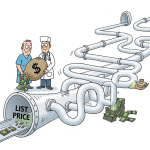
For drugs selected in the first tranche, the negotiated prices represented discounts between 38% and 79% from the list price.18 For instance, Novo Nordisk’s Ozempic is projected to drop from a list price of $959 to a Medicare price of $274 per month.15 These reductions significantly impact the gross-to-net (GTN) margins that firms rely on to fund their R&D pipelines.2
The 2025 Part D Redesign: Shifting Liability to the Balance Sheet
Starting in January 2025, the Medicare Part D benefit structure was overhauled, shifting more financial risk from the government and patients to insurance plans and manufacturers.19 The most significant changes include the elimination of the “donut hole” coverage gap and the implementation of a hard $2,000 annual cap on out-of-pocket (OOP) spending for beneficiaries.19
While the cap is a major victory for patient advocacy groups, it creates a “utilization surge” that manufacturers must finance.20 With lower OOP costs, patients are more likely to fill and adhere to expensive specialty medications, increasing the total volume of claims.21 However, the redesign also introduces new mandatory discounts that manufacturers must pay in both the initial and catastrophic phases of coverage.21
The Catastrophic Phase: Manufacturer Discounts and the $2,000 Cap
Under the 2025 redesign, the manufacturer’s liability changes dramatically. Previously, manufacturers were primarily responsible for a 70% discount during the coverage gap.23 Now, they must pay a 10% discount during the initial coverage phase and a 20% discount during the catastrophic phase.21
Table 3: 2025 Medicare Part D Redesign Liability Structure
Benefit Phase
Beneficiary Pays
Part D Plan Pays
Manufacturer Pays
Medicare Pays
Deductible ($0 – $590)
100%
0%
0%
0%
Initial Coverage
25%
65%
10%
0%
Catastrophic (>$2,000 OOP)
0%
60%
20%
20%
Source: 19
The shift in the catastrophic phase is particularly impactful. Medicare’s reinsurance—the share of costs the government pays—has dropped from 80% to 20% for brand-name drugs.21 Manufacturers must now pick up 20% of the tab for patients with the highest drug costs, a group that was previously mostly subsidized by the federal government.21 For a portfolio heavily weighted toward high-cost oncology or immunology drugs, this represents a multi-billion dollar headwind.23
Quantifying the Super-Cliff: $400 Billion on the Brink
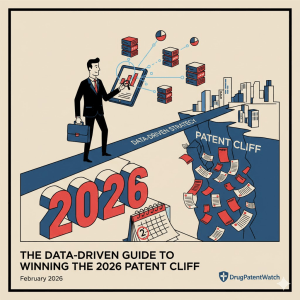
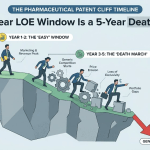
The pharmaceutical industry is entering what analysts describe as a “super-cliff.” Between 2026 and 2030, a cluster of mega-blockbuster drugs will lose market exclusivity.6 This is not a typical cycle of expiration; the sheer volume of revenue at risk is unprecedented. Estimates suggest that between $180 billion and $236 billion in global brand sales will face generic or biosimilar erosion by 2030.13 If the impacts of the IRA are included, some projections reach as high as $400 billion by 2033.2
“Industry-wide analyses project that between 2025 and 2030, nearly 70 high-revenue products will face patent expiration, putting a colossal $236 billion in annual revenue at risk.” — DrugPatentWatch.13
Unlike the patent cliffs of the early 2010s, which primarily affected primary care small molecules like Lipitor, this cliff targets complex biologics and specialized therapies.6 The entry of biosimilars for drugs like Stelara and the negotiation of anticoagulants like Eliquis represent a coordinated attack on the industry’s most profitable segments.6
The Big Three: Keytruda, Eliquis, and Opdivo
The impact of this cliff is concentrated among a few heavy hitters. Merck’s Keytruda, Bristol-Myers Squibb’s Opdivo, and the Pfizer/BMS co-developed Eliquis are all on the list of assets facing imminent revenue erosion.2
Table 4: Major Pharmaceutical Assets Facing 2026-2030 Revenue Erosion
Drug Name
Innovator
2023/2024 Sales (Est.)
Primary Threat
Keytruda
Merck & Co.
$29.5 Billion
LOE (2028)
Eliquis
BMS / Pfizer
$12.2 Billion
IRA Negotiation (2026)
Stelara
Johnson & Johnson
$10.9 Billion
Biosimilar Entry (2025/2026)
Opdivo
BMS
$9.0 Billion
LOE (2028)
Jardiance
Boehringer / Lilly
$7.0 Billion
IRA Negotiation (2026)
Januvia
Merck & Co.
$4.0 Billion
IRA Negotiation (2026)
Source: 2
Merck is attempting to mitigate the Keytruda cliff by shifting patients to a subcutaneous (SC) formulation protected by newer patents.2 This “defensive innovation” aims to move the standard of care before the primary intravenous (IV) formulation loses protection.6 Similarly, BMS is navigating the double threat of Eliquis being negotiated in 2026 while also approaching its traditional patent expiration.2
The Anti-Thicketing Offensive: Regulating the Patent Defense
The legal strategy of building a “patent thicket”—a dense web of dozens or hundreds of patents around a single drug—is under intense scrutiny by the USPTO, FTC, and Congress.6 These thickets often include secondary patents covering formulations, methods of use, or manufacturing processes that extend exclusivity long after the primary “composition of matter” patent expires.13
Critics argue that patent thickets insulate dominant firms from competition, keeping drug prices artificially high.29 In response, the FTC has begun challenging “junk” listings in the FDA Orange Book, targeting patents that cover minor device components rather than the active drug substance.29
The Terminal Disclaimer Trap: Lessons from USPTO Rulemaking
A terminal disclaimer is a binding agreement where an applicant synchronizes the expiration of a second patent with a first patent to overcome an “obviousness-type” double patenting rejection.29 In May 2024, the USPTO proposed a rule that would have made a patent unenforceable if it was tied via terminal disclaimer to another patent that was found invalid.32
The implications of this rule would have been catastrophic for large patent portfolios. An infringer would only have needed to invalidate a single claim in one patent to take down an entire family of related patents.32 Although the USPTO withdrew the rule in December 2024 due to intense industry opposition and resource constraints, the initiative signals a clear regulatory desire to simplify patent challenges.32
Teams at law firms and in-house IP departments are now more cautious. There is a renewed focus on ensuring continuation applications are “patentably distinct” from their parents to avoid the need for terminal disclaimers.33 Furthermore, firms are utilizing DrugPatentWatch to monitor competitor filing velocity and identify “white spaces” where they can build protection without relying on easily challenged thickets.6
The Orange Book Purge: FTC Enforcement and Inhaler Patents
The FTC’s war on Orange Book listings has already claimed high-profile victims. In late 2024, the Federal Circuit ruled in Teva v. Amneal that Teva had improperly listed patents for its ProAir HFA inhaler.36 The court found that patents claiming device components, such as a dose counter, did not “claim the drug” as required by the listing statute.36
Following this victory, the FTC issued renewed warning letters in May 2025 to manufacturers including Novartis, Teva, and Mylan, disputing over 200 patent listings across 17 brand-name products.31 These challenges are particularly potent because an Orange Book listing triggers an automatic 30-month stay on generic approval during litigation.30 By forcing the delisting of these patents, the FTC effectively removes a significant barrier to generic entry.30
Judicially Mandated Narrowing: The Post-Amgen Patent
The judiciary has also joined the effort to narrow patent scope, particularly in the biologics sector. Recent rulings have raised the bar for how much detail an inventor must provide to claim a broad class of inventions.
The Enablement Crisis: Why Genus Claims Fail
In Amgen v. Sanofi, the Supreme Court unanimously invalidated Amgen’s patents for its PCSK9-inhibitor, Repatha.38 Amgen had claimed an entire “genus” of antibodies that bind to a specific region of a protein and block its interaction with LDL receptors.40 The Court ruled that because Amgen only disclosed 26 specific antibodies but claimed potentially millions of others, the patent failed the “enablement” requirement.39
The Court emphasized that “the more a party claims, the more it must enable”.40 It rejected the idea that a “roadmap” for future research could substitute for a detailed disclosure of every embodiment.39 This decision makes it nearly impossible for biotech firms to claim broad biological concepts, forcing them to file much narrower, species-specific patents that are easier for competitors to “design around”.6
The Cellect Precedent: PTA as a Hidden Risk
The Federal Circuit’s decision in In re Cellect introduced a new risk for patent owners who receive Patent Term Adjustment (PTA).42 PTA is granted to compensate for USPTO delays during prosecution.44 The court ruled that if a patent receives PTA, its expiration date—including that adjustment—is used to determine if it is invalid for obviousness-type double patenting (ODP).42
Table 5: Comparison of PTA and PTE in Patent Strategy
Feature
Patent Term Adjustment (PTA)
Patent Term Extension (PTE)
Trigger
USPTO administrative delay
FDA regulatory review delay
Max Extension
No fixed cap
5 years
ODP Impact
Yes; PTA is counted in ODP analysis
No; PTE is applied after ODP analysis
Risk
Can render a patent invalid if it outlives its parent
Low ODP risk
Source: 42
This creates a “trap” where a continuation patent that expires just a few days after its parent due to PTA can be declared entirely invalid unless a terminal disclaimer was filed before the parent expired.42 Many IP teams are now reviewing their portfolios to ensure that their most valuable assets do not fall victim to this timing-based invalidity.44
Strategic Responses: Turning Data into Defensive Moats
In this environment, “business as usual” is a recipe for revenue collapse. Successful firms are evolving from a purely legal defensive posture to a more integrated, data-driven strategy that combines clinical, regulatory, and commercial intelligence.
Defensive Innovation: The Subcutaneous Switch
One of the most effective ways to blunt the impact of a patent cliff is to migrate the market to a more advanced formulation before the original product loses exclusivity.6 Subcutaneous (SC) formulations are the gold standard for this strategy. They are faster for patients to administer and can often be done at home, creating a strong preference among physicians and payers.2
Merck’s transition of Keytruda to an SC version is a textbook example.2 By the time the primary IV patents expire in 2028, Merck hopes to have moved a significant portion of the market to the SC version, which is protected by its own set of patents and potentially a new 12-year window of biologic exclusivity.6 This moves the goalposts for biosimilar competitors, who must now decide whether to launch an IV version into a shrinking market or invest in their own SC version.6
The Biosimilar Paradox: Pricing out the Competition
The IRA has created what analysts call the “Biosimilar Paradox”.6 Historically, biosimilars thrived by offering a discount to the brand price. However, if the brand’s price is already negotiated down to a Maximum Fair Price by Medicare, the “spread” available for the biosimilar to undercut the brand disappears.6
If the brand is negotiated to 40% or 60% of its former list price, a biosimilar developer may find that their margins are too thin to justify the $100 million+ cost of development and clinical trials.6 This could paradoxically result in less competition for negotiated drugs, leaving the brand manufacturer with a lower-margin but more stable monopoly.6 Competitor intelligence teams are now analyzing biosimilar pipelines through this lens, factoring in a reference product’s negotiation status as a primary risk factor.6
Competitive Intelligence in 2026: Agentic AI and Real-Time ROI
The sheer volume of data—spanning millions of patents, clinical trials, and regulatory filings—has made traditional manual monitoring obsolete.6 The modern competitive intelligence (CI) function is built on a “hybrid intelligence” architecture that leverages Agentic AI.6
These autonomous agents continuously scan registries like ClinicalTrials.gov and investor transcripts to detect subtle signals.6 For example, if an agent detects that a competitor has stopped enrolling patients in a specific geography, it can synthesize that data with other signals to predict a 6-month delay in launch.6 This allows BD teams to adjust their own launch timelines or M&A valuations in real-time.6
The DrugPatentWatch Advantage: Predicting the Probabilistic Launch
In this hyper-competitive market, the “Kill Metric” has become a high-ROI activity.6 Using data from DrugPatentWatch, CI teams can identify freedom-to-operate (FTO) issues or patent thicket strengths years before they become critical.6 One mid-sized company reportedly saved $100 million by detecting an IP conflict early and killing a doomed internal program before entering Phase III trials.6
DrugPatentWatch provides the foundational data for “probabilistic launch modeling”.6 Rather than treating Loss of Exclusivity (LOE) as a fixed date, these models account for the strength of the patent estate, the likelihood of a successful IPR (inter partes review) challenge, and the probability of a strategic settlement.6 This allows firms to maximize their IRR (internal rate of return), which industry-wide has already seen a rise from 1.2% in 2022 to 5.9% in 2024 as companies become more disciplined in their portfolio choices.6
Conclusion: The Survival Guide for the New Labyrinth
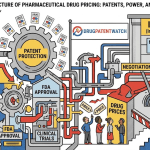
The intersection of the IRA, aggressive anti-thicketing regulations, and a narrowing judiciary has created a new labyrinth for the pharmaceutical industry. The 2026-2030 patent cliff is not just a revenue problem; it is a structural challenge that demands a new way of doing business. Firms that rely on the old “protect and defend” model will likely see their valuations crumble.2
The winners of the next decade will be those who master “the convergence advantage”—the ability to integrate disparate data sources into a single, cohesive strategy.46 This means prioritizing biologics to capture the 13-year window, utilizing defensive innovation to move standards of care, and leveraging Agentic AI to stay steps ahead of competitors.6 In a world where the government sets the price and the courts narrow the patent, data-driven intelligence is the only durable competitive advantage.
Key Takeaways
Accelerated Attrition: The IRA’s 9-year negotiation timeline for small molecules (the “pill penalty”) has caused a 70% drop in small-molecule funding as investors pivot toward the 13-year biologic window.7
The Super-Cliff: Approximately $236 billion in global revenue is at risk by 2030, with mega-blockbusters like Keytruda, Eliquis, and Stelara facing imminent erosion.2
Redesign Realities: The 2025 Medicare Part D redesign shifts significant liability to manufacturers, who must now pay a 20% discount in the catastrophic phase while managing an adherence-driven utilization surge.19
Legal Narrowing: Rulings like Amgen v. Sanofi and In re Cellect have invalidated broad genus claims and created new risks for patents with Patent Term Adjustment (PTA).41
Defensive Innovation: Leading firms are migrating patients to subcutaneous formulations and “white space” technology platforms to protect their market share ahead of primary patent expirations.2
Intelligence ROI: Organizations are utilizing DrugPatentWatch and Agentic AI to transform raw patent data into strategic advantages, achieving higher IRR through early program termination and more accurate competitor forecasting.6
FAQ
1. What is the “Bona Fide Marketing” rule and why does it matter? A drug is disqualified from IRA negotiation if a generic or biosimilar version is available and being marketed on a “bona fide” basis.1 CMS monitors FDA reference sources to determine this. For manufacturers, the goal is to ensure that generic entry is truly “bona fide” and not just a token launch to evade negotiation.1
2. How does the EPIC Act aim to change the IRA? The EPIC Act (Ensuring Pathways to Innovative Cures Act) is a bipartisan bill introduced in 2025 that seeks to equalize the negotiation period for small molecules and biologics.9 If passed, it would extend the small-molecule window to 11 years before selection (13 years for price implementation), matching the biologic timeline.47
3. What is the difference between PTA and PTE in light of the Cellect ruling? Patent Term Adjustment (PTA) compensates for USPTO delays and, according to In re Cellect, is included in double-patenting analysis, creating an invalidity risk.42 Patent Term Extension (PTE) compensates for FDA delays and is not counted against the patentee for purposes of ODP, making it a “safer” form of extension.42
4. How does the 2025 Part D $2,000 cap affect manufacturer rebates? While the cap reduces patient costs, it increases the number of people who enter the catastrophic phase.21 Manufacturers must pay a 20% discount on brand drugs in this phase, which is an increase in liability for high-utilization products that were previously mostly covered by government reinsurance.21
5. Why are orphan drugs sometimes eligible for negotiation despite their exclusion? Under the IRA, a drug is only exempt if it has exactly one orphan designation and is approved for only that indication.1 If the drug gains a second orphan designation or an approval for a non-orphan indication, it loses its exemption and can be selected for negotiation based on its total Medicare spending.1
Medicare Drug Price Negotiation Under the Inflation Reduction Act: Industry Responses and Potential Effects | Congress.gov, accessed February 2, 2026, https://www.congress.gov/crs-product/R47872
Amgen v. Sanofi: Supreme Court Holds Patents Claiming Antibody Genus Invalid as Not Enabled | Congress.gov, accessed February 2, 2026, https://www.congress.gov/crs-product/LSB10971