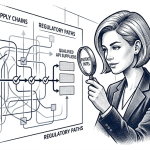
This report provides a comprehensive strategic framework for Active Pharmaceutical Ingredient (API) sourcing tailored to the unique pressures of the generic drug industry. It argues that in a market defined by intense price competition and a race to market, API sourcing must evolve from a cost-centric procurement function into a core driver of competitive advantage. The analysis dissects the critical linkage between sourcing decisions and the high-stakes regulatory pathway established by the Hatch-Waxman Act, particularly the 180-day “first-to-file” exclusivity. The report outlines a rigorous, multi-stage supplier qualification process, details best practices for architecting resilient sourcing models and contractual agreements, and provides a playbook for mitigating the profound geopolitical and quality risks inherent in the modern global supply chain. Ultimately, this analysis equips generic drug leaders with the intelligence to build a sourcing ecosystem that is not only cost-efficient but also agile, compliant, and strategically aligned to win in a commoditizing market.
Section 1: The Generic Imperative: Why API Sourcing Defines Market Success
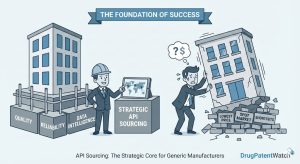
For a generic drug manufacturer, the strategic importance of API sourcing cannot be overstated. It is not a secondary, tactical function but the central determinant of profitability, market entry timing, and ultimate commercial success. In an industry where margins are perpetually compressed and speed is paramount, the selection and management of API suppliers form the foundational pillar upon which a competitive business is built.
1.1 The API as the Epicenter of Cost, Quality, and Speed
The Active Pharmaceutical Ingredient is the biologically active component responsible for a drug’s therapeutic effect, making it the veritable “heart and soul” of any medication.1 Its quality, purity, and potency are non-negotiable prerequisites for the final drug product’s safety and efficacy, forming the basis of regulatory approval and patient trust.3
Unlike the business model for branded pharmaceuticals, where the immense costs of research, development, and marketing are the primary financial drivers, the generic model’s profitability is overwhelmingly dictated by the Cost of Goods Sold (COGS). Within this cost structure, the API stands as the single largest and most volatile component, typically accounting for 50% to 52% of the total manufacturing cost.7 This economic reality positions the API price as the primary lever for achieving financial viability in a fiercely competitive market. Furthermore, the API’s intrinsic characteristics—its chemical synthesis route, physical properties such as polymorphism and particle size, and its impurity profile—directly influence every subsequent stage of development, from formulation and manufacturing process design to the timeline for regulatory approval. A well-characterized and consistent API can streamline development, whereas an API with variable properties can introduce costly delays and technical hurdles.2
1.2 Deconstructing the Generic Profitability Equation: The Overwhelming Impact of API COGS
The generic drug market is defined by a brutal and predictable cycle of price erosion. Upon the expiration of a brand-name drug’s patents, the entry of the first generic competitor can slash the price by more than half. In a crowded market with six or more players, prices can collapse by a staggering 95% from the original brand price.7 This hyper-competitive dynamic makes cost leadership not just an advantage, but a prerequisite for survival. A company that masters API sourcing—whether by securing lower prices through negotiation, optimizing synthesis routes to reduce complexity, or achieving vertical integration to control production—gains a decisive and sustainable competitive edge.7
The dynamics of this market dictate an exponential, rather than linear, relationship between API cost and commercial viability. In a market where price erosion can be extreme, a seemingly minor variance in API cost can determine the entire margin between profit and loss. For example, if a drug’s price falls by 95% from $100 to $5, and the API represents 50% of COGS, a 10% difference in API cost between two competitors (e.g., $1.00 vs. $1.10 per unit) may represent a substantial portion of the entire profit margin, thereby amplifying the strategic weight of sourcing decisions far beyond simple procurement.
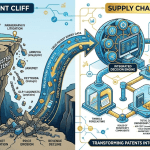
This high-stakes environment exists within a massive and expanding global market. The generic drug sector is projected to grow from approximately $491 billion in 2024 to over $926 billion by 2034.9 This growth is relentlessly fueled by the “patent cliff”—the predictable expiration of patents on blockbuster drugs—which creates a continuous pipeline of multi-billion-dollar opportunities.2 However, this immense potential is accessible only to those manufacturers who can navigate the razor-thin margins fundamentally dictated by API costs.
1.3 The Race Against Time: How API Sourcing Dictates Speed-to-Market and Commercial Viability
In the generic market, commercial success is a function of both price and timing. The first few entrants invariably capture the vast majority of the market share and profit. Consequently, speed-to-market is as critical as cost control. An effective API strategy cannot be reactive; it must be predictive and meticulously planned. The choice of an API supplier and the comprehensive qualification of their material must begin years in advance of the planned market launch to align with the demanding timelines of regulatory submission and review.2
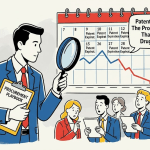
The patent cliff is both the industry’s greatest opportunity and its most significant threat. It creates predictable revenue streams but simultaneously signals the start of a rapid and unforgiving commoditization cycle. A successful generic company’s strategy is therefore a race against a known clock, where the API sourcing timeline represents the critical path. This path determines whether a company arrives in time to capture substantial value or arrives too late to find only residual market scraps. A failure in API sourcing—such as a supplier failing a Good Manufacturing Practice (GMP) audit, an unexpected impurity issue arising late in development, or a delay in the submission of a Drug Master File (DMF)—can derail a product launch entirely. Such a delay cedes the most profitable period to competitors and can render the entire multi-year, multi-million-dollar development project economically unviable.2
Section 2: The Regulatory Gauntlet: Navigating the Hatch-Waxman Landscape
API sourcing decisions for generic drugs, particularly for the lucrative U.S. market, cannot be made in an operational vacuum. They must be intrinsically linked to the company’s legal and regulatory strategy, which is governed by a landmark piece of legislation that fundamentally shaped the industry. Understanding this framework is essential, as the choice of an API supplier directly impacts a company’s ability to execute high-stakes legal maneuvers and secure the most valuable commercial advantages.
2.1 The ANDA Pathway and the “First-to-File” Doctrine
The modern generic drug industry was effectively created by the Drug Price Competition and Patent Term Restoration Act of 1984, more commonly known as the Hatch-Waxman Act.16 This legislation established the Abbreviated New Drug Application (ANDA) pathway, a streamlined regulatory process that allows generic manufacturers to gain FDA approval without the need to repeat the costly and time-consuming clinical trials required of the innovator drug.16 Instead, an ANDA applicant must demonstrate that its product is bioequivalent to a “Reference Listed Drug” (RLD)—the original brand-name product.19
The Hatch-Waxman Act masterfully balanced the competing interests of innovator companies and generic manufacturers. It provided patent term extensions to innovators to compensate for time lost during the FDA review process, while simultaneously creating a clear, viable pathway for generic competition post-exclusivity.17 A core strategic element of the Act, designed to encourage and reward early challenges to innovator patents, is the concept of being the “first applicant” or “first-to-file” (FTF), a status that carries a significant commercial prize.17
2.2 Paragraph IV Certification: The High-Stakes Challenge Shaping Sourcing Timelines
When filing an ANDA, a generic company is required to make a certification for each patent that the innovator company has listed for the RLD in the FDA’s publication, “Approved Drug Products with Therapeutic Equivalence Evaluations,” colloquially known as the “Orange Book”.19 There are four types of certifications, but the most strategically significant is the
Paragraph IV (PIV) certification.
A PIV certification is a bold declaration by the generic applicant that it believes a listed patent is invalid, unenforceable, or will not be infringed by the manufacture, use, or sale of its proposed generic product.23 This is an aggressive legal maneuver designed to bring a generic drug to market
before the brand’s patents are set to expire. The submission of an ANDA with a PIV certification is considered an act of “artificial infringement,” which typically triggers a patent infringement lawsuit from the brand manufacturer. This lawsuit must be filed within 45 days of the brand company receiving notification of the PIV filing.19
The filing of such a lawsuit initiates an automatic 30-month stay, a period during which the FDA is barred from granting final approval to the ANDA.22 This stay provides a window for the patent litigation to be resolved in court. The stay can be terminated earlier if a court rules in the generic company’s favor or if the patent expires.
This legal framework has profound implications for API sourcing. The API selected for the generic product must have a synthesis route that is demonstrably non-infringing, or the supplier’s process and documentation must provide the technical basis to support the legal claim of patent invalidity. The sourcing timeline must be planned to accommodate the potential 30-month litigation period, meaning that API selection, qualification, and dossier preparation must be completed years before the target launch date.27
2.3 The 180-Day Exclusivity Prize: Aligning API Strategy with the Ultimate Competitive Advantage
To incentivize generic companies to undertake the risky and expensive process of challenging innovator patents, the Hatch-Waxman Act provides a powerful reward: a 180-day period of marketing exclusivity.17 This exclusivity is granted to the first generic applicant (or applicants, in the case of multiple filers on the same day) to submit a “substantially complete” ANDA containing a PIV certification.30
During this 180-day period, the FDA cannot grant final approval to any subsequent ANDAs for the same drug product. This effectively creates a temporary duopoly (or oligopoly) between the brand-name drug and the FTF generic(s). This protected market window allows the FTF generic to capture significant market share at a higher price point before full-scale competition from later entrants drives prices down to commodity levels.19 The value of this exclusivity is immense; industry estimates suggest that
60% to 80% of a generic product’s total profit is often made during this 180-day period.31
The strategic implication for API sourcing is direct and absolute. The race to be “first-to-file” is, in essence, a race to secure and qualify a compliant API source. A generic company cannot submit a “substantially complete” ANDA without a fully qualified API and a comprehensive, high-quality dossier—often in the form of a supplier’s Drug Master File (DMF)—that is ready for FDA review. Therefore, API sourcing for the U.S. market is not merely a procurement activity; it is a critical component of a legal and regulatory strategy. The choice of an API supplier is directly tied to the company’s ability to execute a PIV challenge and secure the 180-day exclusivity prize. The supplier is not just providing a chemical; they are providing the foundational evidence for a multi-million-dollar legal and commercial gambit. The legal team’s PIV strategy and the sourcing team’s supplier selection process are two sides of the same coin and must be perfectly synchronized.
The 30-month stay also introduces a complex risk-reward calculation that directly influences API sourcing. A prudent generic company may need to qualify and even invest in multiple API sources to maintain strategic optionality. One source might offer a clearly non-infringing synthesis route, representing a safer but potentially later market entry upon patent expiry. Another source might provide the basis for a more aggressive PIV challenge, offering the higher reward of early entry via the 180-day exclusivity but carrying the higher risk of losing the patent litigation. This dual-sourcing approach is not just for supply redundancy but for managing legal and strategic risk, where the cost of qualifying a second supplier becomes an insurance premium against an adverse court ruling.
Section 3: The Qualification Framework: A Multi-Stage Approach to Supplier Vetting
Selecting and qualifying an API supplier is a rigorous, multi-disciplinary process that demands a systematic, risk-based approach. It is an iterative cycle of due diligence that moves from high-level screening to deep technical and regulatory evaluation. Each stage provides critical data that progressively refines the risk profile of a potential supplier, ensuring that the investment of time and resources increases only as confidence in the supplier’s capabilities grows.
3.1 Stage 1: Preliminary Assessment and Strategic Alignment
The qualification process begins with a thorough internal assessment of the target drug product’s specific requirements. This includes a scientific risk assessment of the API’s critical quality attributes (CQAs). For example, an API like Losartan Potassium is known to be sensitive to polymorphic form conversion, while Rosuvastatin is prone to oxidative degradation; identifying these intrinsic risks upfront helps to focus the evaluation on suppliers who can demonstrate robust control over these specific parameters.8
Initial screening of potential suppliers is conducted through mechanisms like pre-qualification questionnaires, which gather essential information on their GMP inspection history, manufacturing capacity, regulatory approvals in major markets, and typical delivery timelines.8 A crucial early checkpoint is the assessment of a supplier’s financial stability. A supplier facing financial distress poses a significant business continuity risk. Tools such as Dun & Bradstreet reports, coupled with a review of publicly available financial statements, can be used to evaluate a potential partner’s long-term viability and mitigate the risk of disruption due to business failure.32
3.2 Stage 2: The Documentation Deep Dive: Mastering the Drug Master File (DMF)
The Drug Master File (DMF) is a confidential submission made by an API manufacturer to a regulatory authority, such as the U.S. FDA. It contains comprehensive, proprietary information about the chemistry, manufacturing, and controls (CMC) of the API, including details on facilities, processes, and storage.34 The DMF is more than a regulatory document; it is a strategic asset for the supplier and a critical due diligence tool for the generic company.
The primary purpose of a DMF is to allow the API manufacturer to protect its intellectual property while providing the regulatory agency with the necessary data to review in conjunction with a drug product application, such as an ANDA.35 The generic company does not see the confidential “closed” part of the DMF; instead, it receives a Letter of Authorization (LoA) from the supplier, which permits the FDA to reference the file during the ANDA review.36
A generic company must meticulously review the “open” or “applicant’s part” of the DMF, which contains essential information on the API’s specifications, stability data, and impurity profiles.8 The quality, completeness, and organization of the DMF serve as a direct indicator of the supplier’s regulatory competence and attention to detail. A poorly prepared DMF is a significant red flag, suggesting the supplier may not be prepared for the rigors of a major regulatory submission.
DMF systems are utilized globally, though their structure and requirements can vary by region. For instance, many Indian manufacturers, being major suppliers to the U.S., often adopt the U.S. DMF format for their international filings.36 Analyzing trends in DMF filings can also provide valuable strategic intelligence on global manufacturing capacity and geographic concentration, with recent data showing a continued dominance of filings from India and China.34 Prioritizing suppliers with robust, active DMFs in key markets like the U.S. and EU is a highly effective risk mitigation and efficiency strategy in the qualification process, as it signals a strategic commitment and provides a baseline level of confidence that the supplier has already been scrutinized by a stringent regulatory authority.
3.3 Stage 3: Analytical Verification: From Sample Testing to Bioequivalence
Following a satisfactory document review, the next critical step is to verify the API’s quality through hands-on analytical testing. Generic companies should request and analyze samples from a minimum of three commercial-scale batches from each promising supplier to assess batch-to-batch consistency.8
This stage involves comprehensive laboratory testing using official pharmacopoeial methods (e.g., from the United States Pharmacopeia, USP) and/or validated in-house analytical procedures. The goal is to independently verify the API’s identity, purity, potency, and key physical characteristics, such as particle size distribution, polymorphic form, and bulk density.8 The results of this analysis are foundational for the generic’s own formulation development. An API that is chemically identical to the RLD’s API but possesses different physical properties can significantly impact the final drug product’s dissolution profile and bioavailability, potentially leading to a failed bioequivalence study and a catastrophic delay in the ANDA approval.
3.4 Stage 4: Auditing for Excellence: Ensuring GMP Compliance
Adherence to Current Good Manufacturing Practices (CGMP) is a non-negotiable legal requirement for all facilities manufacturing drugs or APIs for the U.S. and other major markets.40 The International Council for Harmonisation (ICH) Q7 guideline, “Good Manufacturing Practice Guide for Active Pharmaceutical Ingredients,” is the globally recognized standard for API GMP and forms the basis for regulatory inspections and audits.32
An audit is the primary tool for verifying that a supplier’s actual practices align with the procedures described in their DMF and with global GMP standards.
On-Site Audits: The on-site audit remains the gold standard. It allows a qualified audit team to thoroughly evaluate a facility’s quality systems, equipment maintenance and calibration programs, personnel training, data integrity practices, and the overall culture of quality and compliance.8
Cost-Effective Audit Strategies: Conducting individual on-site audits for every supplier can be resource-intensive. To address this, the industry has developed more efficient models. Shared audit programs, where multiple customers of the same supplier jointly sponsor a single third-party audit, and the use of independent, certified third-party auditors are increasingly popular and accepted by regulatory authorities.43 Organizations such as the Active Pharmaceutical Ingredients Committee (APIC) offer standardized audit programs that provide a high-quality, cost-effective solution for routine monitoring of existing suppliers.43
A comprehensive audit should be structured and systematic, covering all critical aspects of API manufacturing.
The Comprehensive Supplier Audit Checklist
Audit Area
Key Evaluation Criteria
Relevant Standards/Guidance
Quality Management System (QMS)
Effectiveness of change control, deviation handling, Corrective and Preventive Action (CAPA) systems, and annual product quality reviews.
ICH Q7, ICH Q10 32
Personnel
Adequacy of training programs and records, qualifications of key personnel, and adherence to hygiene procedures.
ICH Q7 45
Facilities and Equipment
Appropriate design and construction, robust maintenance and calibration programs, effective cleaning validation, and prevention of cross-contamination.
ICH Q7 33
Documentation and Data Integrity
Completeness and accuracy of batch records, availability of Standard Operating Procedures (SOPs), security of electronic records, and review of audit trails (ALCOA+ principles).
21 CFR Part 11, ICH Q7 33
Materials Management
Qualification program for their own raw material suppliers, testing of incoming components, and appropriate storage and handling conditions.
ICH Q7, 21 CFR 211.84 39
Production and In-Process Controls
Status of process validation, control of critical process parameters, and procedures for handling reprocessed or reworked material.
ICH Q7 48
Laboratory Controls
Validation of analytical methods, comprehensive stability testing programs, robust Out-of-Specification (OOS) investigation procedures, and management of reference standards.
ICH Q7 39
3.5 Stage 5: Decoding the Regulatory Track Record: Analyzing FDA Warning Letters and Inspection Reports
A supplier’s regulatory history is one of the most powerful predictors of their future compliance performance. Before finalizing any partnership, a generic company must conduct thorough due diligence by scouring publicly available databases from regulatory agencies like the FDA for past inspectional observations (Form 483s) and Warning Letters.33
An FDA Warning Letter is a serious communication that indicates significant violations of regulatory requirements. It signifies that the agency believes the company has not adequately corrected issues identified during a prior inspection.48 A history of Warning Letters, particularly recent or unresolved ones, is a major red flag that suggests systemic failures in the supplier’s quality system.33
Analysis of recent FDA Warning Letters reveals common themes in GMP deficiencies. A leading issue is the failure of manufacturers to adequately test incoming raw materials and APIs, as required by 21 CFR 211.84.50 This often involves an over-reliance on the supplier’s Certificate of Analysis (CoA) without performing independent identity testing and verification of the supplier’s data.50 Scrutinizing a potential supplier’s regulatory history for such violations can help a generic company avoid partners with fundamental weaknesses in their material control systems.
Section 4: Architecting the Sourcing Strategy: Models, Agreements, and Partnerships
Once potential suppliers have been rigorously vetted and qualified, the generic manufacturer must architect a sourcing strategy that aligns with its commercial goals, risk tolerance, and operational capabilities. This involves making critical decisions about the geographic distribution of suppliers, the degree of supply redundancy, and the contractual frameworks that will govern these vital relationships.
4.1 Global vs. Local Sourcing: Balancing Cost, Proximity, and Regulatory Nuance
The decision of where to source APIs involves a fundamental trade-off between cost and risk.
Global Sourcing: The modern API supply chain is heavily concentrated in Asia, particularly in India and China. Sourcing from these regions offers significant and often decisive cost advantages, driven by economies of scale, lower labor and operational expenses, and a vast ecosystem of established manufacturers.52 This provides access to an extensive range of APIs, which is crucial for a company with a diverse product portfolio. However, this cost efficiency comes with a host of inherent risks, including long and complex supply chains, vulnerability to shipping delays, exposure to geopolitical instability and trade policy shifts, and potential challenges related to cultural and linguistic barriers.52
Local/Regional Sourcing: Sourcing APIs from domestic manufacturers or those in nearby, politically stable regions (e.g., within the U.S. or EU) offers distinct advantages. These include closer proximity, which facilitates faster response times and easier communication; simplified logistics; and a better alignment with local regulatory expectations and quality culture.52 However, these benefits typically come at a premium. Local sourcing often entails higher costs, more limited manufacturing capacity, and a less diverse portfolio of available APIs compared to the global hubs in Asia.52
4.2 Single vs. Dual/Multi-Sourcing: A Framework for Balancing Risk and Leverage
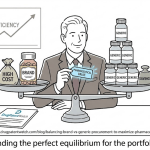
The choice between single and multi-sourcing is not a binary decision but a dynamic portfolio strategy. A generic company should use a risk-based approach, applying multi-sourcing for high-volume, critical products with volatile supply chains, while potentially using single-sourcing for lower-volume or niche products where the cost of qualifying a second supplier outweighs the risk. For a blockbuster generic opportunity, where a supply disruption would be catastrophic, the cost of qualifying a second or even third supplier is a small insurance premium compared to the potential loss of revenue. For a niche product with a smaller market, the company might accept the higher risk of single-sourcing but mitigate it through other means, such as holding a larger safety stock.
Single-Sourcing: Consolidating 100% of the volume for a specific API with a single supplier can yield significant benefits. It can lead to better pricing through volume discounts, foster a stronger and more collaborative partnership, and simplify administrative and quality management.55 However, this strategy creates an extreme vulnerability. A disruption at that single supplier—whether from a quality failure, a natural disaster, or a geopolitical event—can halt production completely, leading to a stock-out and devastating commercial consequences.7
Dual/Multi-Sourcing: Engaging two or more independently qualified suppliers for the same API is a fundamental risk mitigation strategy.2 This approach provides crucial supply redundancy, ensuring business continuity if one supplier fails. It also fosters a competitive environment that can help control prices and provides flexibility in managing supply fluctuations.58 Regulatory bodies like the FDA actively encourage this model, especially for medically necessary drugs, as a means to prevent and mitigate drug shortages.2 The primary disadvantages are the increased complexity and cost of managing multiple suppliers and potentially less negotiating leverage with each individual supplier due to split volumes.56
Single-Sourcing vs. Multi-Sourcing Decision Matrix for Generic APIs
Sourcing Parameter
Single-Sourcing Analysis
Multi-Sourcing Analysis
Strategic Recommendation for Generics
Cost of Goods Sold (COGS)
Pro: Potential for lowest unit price due to volume consolidation and leverage. Con: Lack of competitive pressure can lead to price increases over time.
Pro: Fosters continuous price competition between suppliers. Con: Split volume may limit access to the highest-tier discounts from any single supplier.
Prioritize multi-sourcing for high-volume products to maintain long-term competitive pressure. Use single-sourcing for low-volume products where the administrative overhead of a second supplier is prohibitive.
Supply Chain Resilience/Risk
Pro: Simplified supply chain to manage. Con: Extremely high risk of disruption. A single point of failure can halt all production.
Pro: Fundamentally de-risks the supply chain by providing redundancy. Con: Increased complexity in logistics and inventory management.
Multi-sourcing is mandatory for all critical, high-revenue products and any product targeted for a “first-to-file” launch, where a delay is commercially catastrophic.
Quality Consistency
Pro: Potentially higher consistency as all material comes from one validated process. Con: A systemic quality issue at the supplier affects 100% of the supply.
Pro: A quality issue at one supplier does not halt production. Can compare quality metrics between suppliers. Con: Requires managing potential minor variations between two qualified sources.
Implement a robust quality monitoring program for all suppliers. Use multi-sourcing to benchmark performance and drive quality improvements.
Supplier Relationship & Leverage
Pro: Fosters a deep, strategic partnership. High leverage due to 100% volume. Con: Can lead to supplier complacency if they feel they are the only option.
Pro: Keeps suppliers competitive and responsive. Con: Can create more transactional, less collaborative relationships. Reduced leverage with each supplier.
Develop a “primary” and “secondary” supplier model within a multi-sourcing framework to build a strong partnership with the primary source while maintaining the leverage of a viable alternative.
Administrative Overhead
Pro: Lower overhead for qualification, audits, and relationship management. Con: N/A
Pro: N/A Con: Significantly higher costs and resource allocation for qualifying, auditing, and managing multiple suppliers and contracts.
Utilize third-party and shared audit programs to cost-effectively manage the audit burden of a multi-sourcing strategy.
Speed & Flexibility
Pro: Can be faster to implement initially. Con: Inflexible in the face of disruption.
Pro: High flexibility to shift volumes between suppliers in response to demand spikes or disruptions. Con: Initial qualification of multiple suppliers takes longer.
For new product launches, begin qualification of a secondary source immediately after the primary source is selected to build in flexibility from the start.
4.3 Beyond the Handshake: Crafting Ironclad Quality and Supply Agreements
Verbal agreements and standard purchase orders are insufficient to manage the complexities and risks of API sourcing. Formal, legally binding agreements are essential to define expectations, allocate responsibilities, and provide a framework for governance and dispute resolution. These agreements should be negotiated in concert, as a strong commercial commitment in the Supply Agreement can be used as leverage to secure more favorable terms in the Quality Agreement.
The Quality Agreement (QA): This is a legally binding document that defines the specific quality and GMP-related roles and responsibilities between the generic manufacturer and the API supplier.60 While a best practice globally, it is a specific regulatory expectation in the European Union.60 The QA should be a stand-alone document, separate from the commercial supply agreement, and should take precedence in all matters related to product quality and GMP compliance. Standardized industry templates, such as those developed by APIC, can provide a robust starting point and streamline negotiations.62
The Supply Agreement: This contract governs the commercial and logistical aspects of the relationship. Key clauses should cover pricing structures (including mechanisms for managing price volatility), payment terms, delivery schedules (Incoterms), forecasting and ordering processes, capacity commitments, and intellectual property protection.32 Crucially for a generic manufacturer, it should clearly define penalties for failure to supply and outline a process for managing recalls.61
Key Components of a Pharmaceutical Quality Agreement
Section/Clause
Core Content/Purpose
Critical Negotiation Points for Generics
1. Scope & Term
Defines the specific APIs, manufacturing sites, and duration covered by the agreement.
Ensure the scope is broad enough to cover all relevant sites and potential future product variations.
2. Roles & Responsibilities
A clear matrix (e.g., a RACI chart) defining which party is Responsible, Accountable, Consulted, and Informed for key quality activities.
Explicitly define responsibility for final batch release, handling of regulatory submissions, and communication with health authorities.
3. GMP Compliance
An explicit commitment from the supplier to manufacture the API in accordance with ICH Q7 and all applicable GMP regulations for the target markets.
Require the supplier to promptly notify of any critical or major GMP deficiencies found during any regulatory inspection.
4. Specifications & Testing
The process for establishing and modifying API specifications. Defines responsibilities for testing, method validation/transfer, and handling of Certificates of Analysis (CoA).
Negotiate the right to approve any changes to specifications or analytical methods. Mandate that the supplier’s CoA is based on actual batch results, not historical data.
5. Change Control
Defines the process and timeline for the supplier to notify the customer of any changes to the manufacturing process, facilities, equipment, or specifications.
Negotiate for the shortest possible notification timeline (e.g., 90-180 days) for major changes to avoid delays in filing necessary ANDA supplements. Insist on pre-approval rights for critical changes.
6. Deviations & OOS
The procedure for investigating, documenting, and communicating manufacturing deviations and Out-of-Specification (OOS) laboratory results.
Require immediate notification (e.g., within 24-48 hours) of any confirmed OOS result or critical deviation that could impact product quality.
7. Audits & Inspections
Establishes the customer’s right to conduct routine GMP audits of the supplier’s facility and defines the process for handling inspections by regulatory authorities.
Secure the right to conduct “for-cause” audits on short notice. Ensure the supplier is obligated to share regulatory inspection reports and their responses. Grant the right to audit the supplier’s own critical raw material suppliers.
8. Documentation & Records
Specifies record retention policies, the format of batch documentation, and the customer’s right to access relevant records for quality investigations.
Ensure record retention periods meet the requirements of all target markets, which can be longer than U.S. or EU standards.
Section 5: Building a Resilient Supply Chain: Mitigating Risk in a Volatile World
The traditional, cost-optimized pharmaceutical supply chain has proven to be brittle. In today’s environment of geopolitical instability, climate-related disruptions, and public health crises, building a resilient supply chain is no longer a competitive advantage but a strategic imperative for survival. This requires a fundamental shift in mindset, from viewing resilience measures as costs to be minimized to seeing them as essential investments in business continuity and market stability.
5.1 Mapping the Modern Risk Landscape: From Geopolitical Tensions to Quality Failures
The modern generic drug supply chain is a global, multi-tiered network that is highly vulnerable to a wide array of disruptions. These can range from acute events like natural disasters, pandemics, and geopolitical conflicts to chronic issues like quality failures and logistical bottlenecks.64 Such events can trigger sudden API shortages, dramatic price spikes, and prolonged production halts, with severe consequences for patient health, healthcare system stability, and national security.64 A quality failure at a single, critical supplier—such as the discovery of a new impurity or a data integrity breach—can have a cascading effect, leading to widespread product recalls and creating shortages across the entire market.68
5.2 The China-India Nexus: Managing Concentration Risk in the API Heartland
The overwhelming majority of global API manufacturing is geographically concentrated in India and China.2 The United States, for example, sources an estimated 78% of its APIs from abroad, with a significant and critical portion originating from these two nations.64 This extreme concentration creates critical choke points in the global supply chain.
This risk is compounded by a hidden, second-order dependency. India, often positioned as the “pharmacy of the world” for its massive output of finished generic drugs, is itself critically dependent on China for a high percentage of its Key Starting Materials (KSMs) and chemical intermediates—the building blocks of APIs.2 A generic company that diversifies its final API sourcing from China to India may therefore have a false sense of security. A geopolitical event that disrupts the flow of KSMs from China to India could cripple the Indian API supplier, leaving the generic company with a stock-out despite its seemingly diversified strategy. True diversification requires visibility and risk mitigation at the KSM level, not just the final API manufacturing step.
Recent geopolitical events have starkly exposed the fragility of this arrangement. The U.S.-China trade war introduced tariffs and uncertainty, while India’s export restrictions on certain drugs during the early stages of the COVID-19 pandemic served as a wake-up call to importing nations.64 Furthermore, proposed legislation in the U.S., such as the BIOSECURE Act, could significantly impact sourcing strategies from China in the near future.34
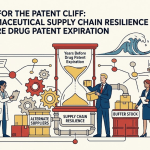
5.3 The Resilience Playbook: Actionable Strategies for Diversification, Redundancy, and Buffer Stocks
Building a supply chain that can absorb and recover from shocks requires a multi-pronged, proactive approach.
Diversification: The most fundamental strategy is to diversify the supplier base, not only by engaging multiple companies but also by ensuring geographic separation.2 This involves actively qualifying suppliers in different regions, including Europe and North America, to mitigate geopolitical and regional risks. This practice, often referred to as “near-shoring” or “on-shoring,” is gaining significant traction as companies seek to shorten supply lines and increase control.65
Redundancy: True resilience goes beyond just having multiple suppliers; it involves ensuring there is redundant manufacturing capacity that can be scaled up in a crisis. This may involve paying a premium to a secondary supplier to maintain a “warm” production line.72
Buffer Stocks (Safety Stock): The industry is shifting from a lean “just-in-time” inventory model to a more robust “just-in-case” approach. Maintaining a strategic reserve—often equivalent to 6 to 12 months of demand—of critical APIs, KSMs, or intermediates is essential to weather short-term disruptions and provide time to activate alternative supply lines.57
Enhanced Visibility and Supply Chain Mapping: Companies can no longer afford to be ignorant of their upstream dependencies. It is imperative to map the entire supply chain, identifying not just the direct API supplier, but also the manufacturers of critical KSMs and raw materials. European regulations, for instance, explicitly require medicinal product manufacturers to document and verify the supply chain back to the starting materials.74 This visibility allows for a more accurate assessment of concentration risks and hidden vulnerabilities.73
5.4 Lessons from Crises: Case Studies in Supply Chain Disruption and Recovery
Recent history provides a series of stark lessons on supply chain fragility and the value of resilience.
The COVID-19 Pandemic: The pandemic was a global stress test that revealed deep-seated vulnerabilities. Lockdowns in key manufacturing regions in China and subsequent export bans from India on critical medicines created widespread disruptions, leading to shortages of essential drugs and highlighting the perils of geographic concentration.64
Hurricane Maria in Puerto Rico (2017): This event underscored the importance of physical infrastructure resilience. Pharmaceutical manufacturing facilities on the island that had invested in preemptive fortification of buildings and, crucially, had on-site backup power generation and fuel reserves, were able to resume operations far more quickly than those dependent on the destroyed public grid.76 This demonstrated that resilience extends to utilities and local logistics.
Geopolitical Conflicts (e.g., Russia-Ukraine War): The conflict highlighted the indirect impacts of geopolitical events. Even for companies with no direct operations in the conflict zone, the war drove up energy prices and disrupted the supply of certain raw materials, increasing API production costs globally and demonstrating the interconnectedness of global markets.66
Suez Canal Blockage (2021): The grounding of the container ship Ever Given showed how a single logistical choke point can have immediate and global repercussions. The blockage delayed shipments of countless goods, including APIs and pharmaceutical products, increasing transportation costs and forcing companies to seek longer, more expensive alternative routes.66
Section 6: The Future of API Sourcing: Integrating Intelligence and Technology
The future of API sourcing for generic drug manufacturers will be defined by a shift from reactive procurement to predictive, intelligence-driven supply chain management. Companies that successfully integrate advanced technology and data analytics into their sourcing operations will build a significant and sustainable competitive advantage, enabling them to navigate complexity, mitigate risk, and capitalize on opportunities with greater speed and precision.
6.1 The Role of Competitive Intelligence Platforms in Opportunity Identification
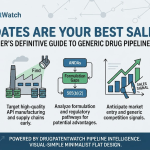
In the generic drug industry, strategic planning begins with identifying the right market opportunities. This requires a deep and timely understanding of the global patent and regulatory landscape. Specialized competitive intelligence platforms like DrugPatentWatch have become indispensable tools for this purpose.2
These platforms provide comprehensive, real-time databases that track patent expiration dates, market exclusivities, and patent litigation, including PIV challenges under the Hatch-Waxman Act.27 By leveraging this intelligence, generic companies can proactively identify high-value opportunities, assess the competitive landscape for a given drug, and make informed decisions about which products to add to their development pipeline.27 This data-driven approach is crucial for aligning the R&D and API sourcing strategies with the most lucrative and strategically sound market entry points, ensuring that resources are focused on targets with the highest probability of commercial success.2 This intelligence democratizes strategic analysis, allowing smaller, more agile players to identify and target niche opportunities that larger firms might overlook.
6.2 Pharma 4.0: Leveraging AI, Data Analytics, and Blockchain for a Predictive and Transparent Supply Chain
The principles of Industry 4.0—digitalization, automation, and data analytics—are beginning to transform the pharmaceutical supply chain, creating a new paradigm known as “Pharma 4.0.”
Artificial Intelligence (AI) and Predictive Analytics: AI algorithms are being deployed to create more sophisticated and accurate demand forecasts, moving beyond simple historical data to incorporate a wide range of variables. More importantly, AI-powered platforms can function as early warning systems, continuously monitoring global data streams—including news reports, shipping data, and financial markets—to predict potential supply chain disruptions and identify at-risk suppliers before a crisis occurs.7 This shifts the risk management posture from reactive to proactive.
Blockchain Technology: Blockchain offers the potential to create an immutable and transparent digital ledger for tracking APIs and other materials throughout the supply chain. Each transaction, from the KSM manufacturer to the API producer to the finished drug manufacturer, can be recorded on a secure, shared ledger. This technology promises to dramatically enhance traceability, provide a powerful tool against counterfeit drugs, and improve data integrity across the entire ecosystem.32
Digital Audit Management: The traditionally manual and paper-intensive process of supplier auditing is being revolutionized by digital platforms. Modern audit management software can streamline the entire audit lifecycle, from scheduling and checklist creation to the tracking of non-conformities and the management of CAPAs. This makes the process more efficient, consistent, and data-driven, providing a clearer, real-time view of supplier compliance.78
The adoption of these Pharma 4.0 technologies will inevitably create a new competitive divide. Companies that invest in AI-driven risk sensing and blockchain-enabled traceability will be able to anticipate and navigate disruptions far more effectively than those still relying on manual processes. This technological capability will become a key differentiator and a critical factor in building resilient and reliable supply networks.
6.3 Strategic Recommendations for Future-Proofing Your API Sourcing Ecosystem
To thrive in the increasingly complex and volatile global market, generic drug manufacturers must adopt a forward-looking, strategic approach to API sourcing.
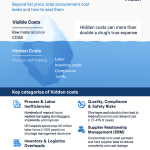
Embrace a “Total Cost of Ownership” Mindset: The evaluation of API suppliers must evolve beyond a narrow focus on the per-kilogram price. A “Total Cost of Ownership” (TCO) model provides a more holistic and accurate assessment. TCO incorporates not only the direct purchase price but also the indirect costs associated with quality, risk, and compliance. A cheaper API from a supplier with a poor regulatory track record may ultimately be far more expensive due to the costs of production delays, batch rejections, additional testing, and the potential for a product recall.
Invest in Strategic Supplier Relationship Management (SRM): The most resilient supply chains are built on deep, collaborative partnerships. Generic companies should treat their critical API suppliers as strategic partners, not as interchangeable, transactional vendors. This involves fostering relationships built on transparency, mutual trust, and shared goals. A strong partnership encourages proactive communication about potential issues, facilitates joint problem-solving, and can lead to preferential treatment in times of market-wide shortages.15
Integrate Technology and Talent: Future-proofing the sourcing function requires a dual investment in both technology and people. Companies must invest in the digital tools—AI platforms, advanced analytics, and supply chain visibility software—that provide the necessary intelligence. Simultaneously, they must invest in developing the talent within their sourcing and supply chain teams, equipping them with the skills to interpret complex data, manage sophisticated supplier relationships, and transform the sourcing function from a cost center into an intelligence-driven hub that provides a strategic advantage to the entire organization.
Effects of Geopolitical Strain on Global Pharmaceutical Supply Chain Design and Drug Shortages – arXiv, accessed August 17, 2025, https://arxiv.org/html/2308.07434v2