Introduction: Beyond the Patent Cliff—Decoding the True Timeline of Biosimilar Entry
Setting the Stage
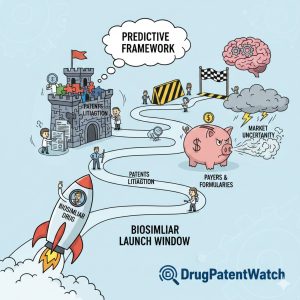
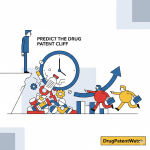
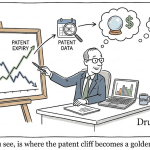
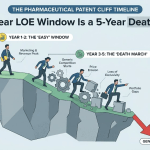
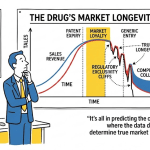
For years, the pharmaceutical industry has been conditioned to think in terms of the “patent cliff”—a single, dramatic date on the calendar when a blockbuster drug’s primary patent expires, unleashing a flood of generic competition and erasing billions in revenue overnight. This model, born from the world of small-molecule drugs, is a dangerously misleading oversimplification when applied to biologics. In the high-stakes, high-complexity world of biosimilars, we are not dealing with a cliff; we are navigating a vast, treacherous mountain range of intellectual property, where each peak represents a new patent battle and the valleys are filled with regulatory fog and commercial ambushes.
The financial stakes could not be higher. The global biosimilar market, valued at just over $20 billion in 2022, is projected to explode to more than $73 billion by 2030, exhibiting a compound annual growth rate (CAGR) of 17.3%.1 In the United States alone, biosimilars are expected to save the healthcare system more than $180 billion over the next five years, a promise of affordability that hinges entirely on their ability to come to market in a timely and predictable manner.2 Yet, this promise is consistently undermined by a landscape where the launch of a biosimilar is less a function of scientific readiness and more a consequence of protracted, multi-year legal warfare.4
This report is designed for the strategists on the front lines of this conflict: the intellectual property attorneys, the business development executives, the R&D leaders, and the investors who need to see through the fog. Our goal is to dismantle the myth of the patent cliff and replace it with a robust, data-driven framework for predicting not a single launch date, but a probabilistic launch window. We will dissect the complex interplay of science, regulation, litigation, and commercial strategy that truly dictates when a biosimilar competitor will arrive.
The Multi-Billion Dollar Question
Why is predicting a biosimilar launch so fundamentally different? A conventional small-molecule generic is chemically identical to its brand-name counterpart. Its path to market, governed by the Hatch-Waxman Act, is a relatively straightforward process of proving bioequivalence and navigating a well-defined patent challenge system. The key patents are typically few and well-understood.
Biologics are another beast entirely. These are large, complex proteins produced in living cells, making exact replication impossible.7 This inherent variability gives rise to a far more demanding regulatory pathway and, crucially, provides originator companies with a near-infinite number of features to patent. The result is the “patent thicket”—a dense web of dozens, sometimes hundreds, of patents covering not just the core molecule but its formulation, its manufacturing process, its delivery device, and every conceivable method of its use.5 In the U.S., branded companies have asserted between 11 and 65 patents per product in biosimilar litigation, creating a legal labyrinth designed to exhaust and deter competitors.11
Therefore, the central question is no longer “When does the main patent expire?” but rather, “How long will it take a challenger to fight their way through the thicket, and on what terms will the originator allow them to exit?” The answer lies in decoding the signals embedded within the litigation process itself.
A Roadmap for This Report
This report will provide a comprehensive, step-by-step guide to building a predictive model for biosimilar market entry. We will begin by laying the foundation, exploring the unique scientific and regulatory characteristics that define the biosimilar landscape. From there, we will move to the primary barrier: the intellectual property fortress and the structured conflict of the “patent dance.”
The core of our analysis will focus on building the predictive engine—transforming raw litigation data from court dockets, patent office challenges, and settlement announcements into actionable market intelligence. We will then apply this framework to the real world, dissecting the seminal case studies of Humira, Remicade, and Enbrel to reveal the strategic playbooks that have defined the market. Finally, we will look beyond legal clearance to the commercial realities of payer negotiations and market access, and cast our gaze toward the horizon, mapping the next wave of blockbuster patent expiries and the challenges that lie ahead. By the end of this journey, you will be equipped not just with knowledge, but with a new lens through which to view the competitive landscape—one that allows you to anticipate market shifts, mitigate risk, and seize opportunities with confidence.
The Foundation: Understanding the Biosimilar Landscape
Before we can predict the timing of a biosimilar launch, we must first grasp the fundamental principles that make this market so unique. The scientific complexity of biologics and the divergent regulatory philosophies of the world’s major health authorities create the foundational landscape upon which all subsequent legal and commercial battles are fought. It is here, in the laboratory and the regulatory filing, that the seeds of delay and uncertainty are first sown.
More Than a Copy: The Scientific and Regulatory Divide
Defining Biologics and Biosimilars
At its core, the challenge of biosimilars stems from their very nature. Unlike small-molecule drugs like aspirin, which are synthesized through predictable chemical reactions and have a small, easily defined structure, biologics are massive, intricate proteins produced by genetically engineered living cells.8 Think of the difference between building a bicycle from a blueprint (a generic drug) and breeding a racehorse (a biologic). You can follow the same genetic lineage and training regimen, but you will never produce two identical animals.
This inherent variability is why regulators like the U.S. Food and Drug Administration (FDA) and the European Medicines Agency (EMA) do not consider biosimilars to be “generics” of biologics.7 A biosimilar is not an identical copy but is instead defined as a biological product that is “highly similar” to an already-approved reference product, with “no clinically meaningful differences” in terms of safety, purity, and potency.7 This distinction is not mere semantics; it is the scientific principle that necessitates a completely different, and far more rigorous, development and approval pathway.
The “Process is the Product” Doctrine
The mantra within the biologics industry is “the process is the product”.13 This means that the final therapeutic protein is inextricably linked to the proprietary manufacturing process used to create it. Every step—from the specific clone of the Chinese Hamster Ovary (CHO) cell line used, to the precise composition of the nutrient-rich cell culture media, to the multi-stage chromatography techniques used for purification—leaves its fingerprint on the final molecule.13 A minor, seemingly insignificant change in temperature, pH, or filtration can alter the delicate three-dimensional folding of the protein or the pattern of sugar molecules attached to its surface (glycosylation), potentially impacting its efficacy, stability, or even causing a dangerous immune reaction in patients.14
For a biosimilar developer, this presents a monumental challenge. They cannot simply copy the originator’s manufacturing process, as it is almost always a closely guarded trade secret and, more importantly, protected by its own thicket of process patents.13 Instead, they must embark on a sophisticated exercise in reverse engineering. They must develop their own, unique manufacturing process that, through a different path, arrives at a final product that is analytically and functionally indistinguishable from the originator’s. This dual challenge—achieving scientific similarity while maintaining legal non-infringement—is the central tension of all biosimilar development.
Global Regulatory Pathways: A Tale of Two Systems
The scientific challenges of developing a biosimilar are universal, but the pathways to get them approved are not. The world’s two leading regulatory bodies, the EMA in Europe and the FDA in the United States, have adopted frameworks with subtle but profoundly different philosophies, leading to starkly different market outcomes. Understanding these differences is crucial, as it reveals that the primary driver of launch delays in the U.S. is not scientific uncertainty, but its unique and deeply ingrained legal framework.
The EMA’s Established Framework
Europe has been the global pioneer in biosimilar regulation. The EMA established its legal framework for biosimilars in 2004 and approved the first biosimilar in 2006, nearly a decade before the first U.S. approval.7 This long history has created a mature, predictable, and scientifically-driven pathway that has become the de facto global standard.
The EMA’s approach is grounded in the “totality of the evidence” concept.7 It places immense emphasis on a comprehensive and robust “comparability exercise” at the analytical level. Developers must use a battery of state-of-the-art techniques to demonstrate that their product is structurally and functionally highly similar to the reference medicine. If this analytical bridge is strong enough, the EMA often allows for a streamlined clinical program, reducing the need for large, expensive, and potentially duplicative Phase III efficacy trials.7 In fact, the EMA is actively exploring ways to further streamline development, with recent reflection papers suggesting that in many cases, comparative efficacy studies may not add significant value and could potentially be waived altogether.17 This pragmatic, science-first approach has fostered a vibrant and competitive biosimilar market in Europe, leading to significant cost savings and increased patient access.18
The FDA’s BPCIA Pathway
The United States entered the biosimilar era much later with the passage of the Biologics Price Competition and Innovation Act (BPCIA) in 2010.20 While it borrows concepts like the “totality of the evidence” from the EMA, the BPCIA framework is fundamentally different in two critical ways: its generous exclusivity provisions for originators and its explicit, intricate link between the regulatory process and patent litigation.
First, the BPCIA grants originator biologics a full 12 years of market exclusivity from the date of their first licensure.13 This is a powerful, patent-independent monopoly that provides a much longer runway of protection than the 8 years of data exclusivity offered in Europe.7 This 12-year clock is a hard stop, representing the absolute earliest a biosimilar can be approved, regardless of the patent situation.
Second, and more consequentially, the BPCIA created a unique, highly structured, and litigation-centric process for resolving patent disputes known as the “patent dance,” which we will dissect in detail later. This system inextricably links the submission of a biosimilar application to the initiation of patent litigation, transforming the regulatory pathway into a legal battlefield. The multi-year lag in U.S. biosimilar launches for molecules that have long been available in Europe—such as adalimumab, which launched in the EU in 2018 but not in the U.S. until 2023 5—is a direct consequence of this system’s prioritization of patent resolution over streamlined scientific approval.
Interchangeability: The Coveted US Designation
A final, critical distinction in the U.S. is the concept of “interchangeability”.22 This is a higher regulatory standard than biosimilarity. An interchangeable biosimilar can be automatically substituted for the reference product at the pharmacy level, much like a small-molecule generic, without needing to consult the prescribing physician (subject to state laws).23
To achieve this coveted status, a developer must not only prove their product is biosimilar but also conduct an additional, expensive, and complex “switching study.” This study must demonstrate that alternating between the reference product and the biosimilar poses no greater risk in terms of safety or efficacy than remaining on the reference product alone.23 This creates a major strategic fork in the road for every U.S. biosimilar developer: Do we invest the extra time and tens of millions of dollars to pursue interchangeability, hoping for a commercial advantage upon launch? Or do we forego it to get to market faster and at a lower cost, potentially sacrificing market share? This strategic calculus is a unique feature of the U.S. landscape and a key variable in predicting not just the timing, but the competitive dynamics of a launch.
The table below summarizes the key differences between the two major regulatory systems, highlighting why a global launch strategy requires two distinct playbooks.
Feature
FDA (United States)
EMA (European Union)
Governing Law
Biologics Price Competition and Innovation Act (BPCIA) of 2010
Scientific viewpoint is that all approved biosimilars are interchangeable; national authorities decide on substitution policies
Link to Litigation
Formal, structured “patent dance” process directly linked to aBLA submission
Patent litigation is handled separately from the regulatory approval process through national courts
Emphasis
Heavily weighted toward resolving patent disputes prior to launch
Heavily weighted toward demonstrating analytical and scientific comparability
First Approval
2015 (Zarxio)
2006 (Omnitrope)
The Great Wall: Intellectual Property as the Primary Barrier
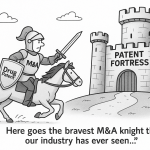
If the scientific and regulatory landscape is the terrain, then intellectual property is the fortress that originator companies build upon it. In the world of biosimilars, predicting a launch timeline is, first and foremost, an exercise in siege warfare. One must be able to assess the strength of the castle walls, identify the weak points, and understand the complex rules of engagement that govern the conflict. The primary barrier to biosimilar entry is not science or regulation, but the sheer, overwhelming force of the originator’s patent portfolio and the legal machinery designed to defend it.
Anatomy of the “Patent Thicket”
The term “patent thicket” has become common parlance, but its true strategic depth is often underestimated. It is not merely a large number of patents; it is a deliberately architected, multi-layered defense system designed to create a legal minefield for any potential challenger.5 Its primary purpose is not necessarily to win every battle in court, but to make the cost, time, and uncertainty of the war so prohibitive that challengers are forced to sue for peace—in the form of a delayed-entry settlement.
Beyond the Core Molecule
The foundation of the thicket is the primary patent, typically a “composition of matter” patent covering the core biologic molecule itself. This is usually the strongest and most valuable patent, but it is also the first to be filed and, therefore, the first to expire. The true genius of the thicket strategy lies in what comes next: a dense and overlapping web of secondary and tertiary patents that extend the originator’s monopoly long after the primary patent has fallen.4 These layers include:
Formulation Patents: Originators will patent every conceivable formulation. When AbbVie faced the initial expiration of Humira’s patents, it had already migrated a significant portion of the market to a new, patented citrate-free formulation that reduced injection-site pain.23 This forced biosimilar developers, who had designed their products to match the older formulation, into a difficult choice: launch a product that was now perceived as inferior or go back to the drawing board. High-concentration formulations are another common tactic.15
Delivery Device Patents: In an era of patient-centric care, the device is often as important as the drug. Originators file numerous patents on their auto-injectors and pre-filled syringes, covering everything from the spring mechanism to the needle guard to the ergonomics of the casing.5 A biosimilar developer might create a perfectly comparable drug, only to find themselves blocked by a dozen patents on the device needed to administer it.
Manufacturing Process Patents: Leveraging the “process is the product” doctrine, originators patent every novel step in their manufacturing chain—the specific cell line, the composition of the growth media, a unique purification column, or a new analytical testing method.13 This creates a formidable barrier, as a biosimilar developer must invent their own non-infringing process that still yields a highly similar product.
Method of Use & Dosing Patents: Every time a biologic is approved for a new disease, that new indication can be patented. This “indication stacking” creates a staggered wall of patents, where even if a biosimilar could launch for an older indication, it might be blocked from the most lucrative new ones. Similarly, improved dosing regimens, such as moving from a bi-weekly to a monthly injection, can also be patented.13
The Art of Extension
A particularly potent tool for thickening the patent portfolio is the use of “continuation” patents. These are applications that claim priority to an earlier patent but contain slightly modified claims. While they do not extend the ultimate expiration date of the original patent family, they dramatically increase the density of the thicket.5 This forces a challenger to fight the same inventive concept across multiple patents, multiplying their legal costs and the complexity of the litigation. The case of Humira is the canonical example of this strategy in action. AbbVie’s portfolio included 105 patents connected by an astonishing 436 terminal disclaimers (a legal mechanism used with continuations), which was instrumental in helping the company secure settlement agreements that delayed U.S. biosimilar entry by five years compared to Europe.5 This practice has drawn the attention of lawmakers, with proposed legislation like the Eliminating Thickets to Increase Competition (ETHIC) Act seeking to limit a patent holder to litigating just one patent from each family of obvious variants.5
The BPCIA “Patent Dance”: A Choreography of Conflict
To manage the inevitable clash over these patent thickets, the BPCIA established a unique and highly formalized pre-litigation process for information exchange, colloquially known as the “patent dance”.20 It is a complex, timeline-driven choreography of disclosures and negotiations designed to identify and narrow the scope of patent disputes before a biosimilar even reaches the market. Far from being a simple procedural formality, the dance is a strategic battlefield where the decisions made can dictate the entire course of the litigation and, ultimately, the launch timeline.
Dissecting the Steps
The dance is triggered after the FDA accepts a biosimilar application (an aBLA) for review. The steps, governed by strict statutory deadlines, unfold as follows 20:
The Opening Move (Day 0 + 20 days): The biosimilar applicant may provide the originator with a copy of its confidential aBLA and detailed information about its manufacturing process.
The Originator’s List (60 days later): The originator reviews the confidential information and provides the applicant with a list of all patents it believes could “reasonably be asserted.”
The Applicant’s Rebuttal (60 days later): The biosimilar applicant responds with its own list of patents from the originator’s list that it wishes to challenge, along with detailed legal arguments for non-infringement or invalidity for each patent.
The Originator’s Counter (60 days later): The originator provides a rebuttal to the applicant’s arguments, detailing its own infringement contentions.
Negotiating the First Wave (15 days): The two parties attempt to negotiate and agree upon a final list of patents that will be litigated immediately in the “first wave” of BPCIA litigation.
The Lawsuit (30 days later): If the parties successfully negotiate a list, the originator must file a patent infringement suit on those patents within 30 days.
This highly structured process is designed to bring order to chaos, forcing both sides to lay their cards on the table early. However, the most critical strategic element of the dance is that the first step is optional.
To Dance or Not to Dance?
In a landmark 2017 decision, Sandoz v. Amgen, the Supreme Court confirmed that a biosimilar applicant cannot be legally forced to participate in the patent dance.20 This ruling transformed the dance from a mandate into a profound strategic choice, creating a classic risk-reward dilemma for the biosimilar developer.
The Case for Dancing: By providing its aBLA and engaging in the process, the biosimilar applicant gains a significant measure of control. They get to see the originator’s full hand (the list of asserted patents) and have a say in negotiating which of those patents will be litigated first. This can narrow the scope of the initial, costly lawsuit and create a more predictable legal path.
The Case for Sitting Out: The price of that control is immense: the applicant must hand over its most valuable trade secrets—the complete blueprint of its product and manufacturing process—to its fiercest competitor. By refusing to dance, the applicant protects its confidential information. However, the BPCIA provides a powerful remedy for the originator in this scenario: they can immediately file a declaratory judgment lawsuit for infringement on any and all patents they believe might be relevant, leading to a broader, more expensive, and less predictable legal battle.20
This choice—control versus confidentiality—is one of the first and most important predictive indicators in the biosimilar launch timeline. A company’s decision reveals its risk tolerance, its confidence in its ability to protect its trade secrets, and its overarching legal strategy.
Key Legal Precedents
The legal landscape of the BPCIA is still evolving, but court decisions have begun to clarify some of its ambiguities. The same Sandoz v. Amgen case also resolved another critical timing question. The BPCIA requires a biosimilar applicant to provide the originator with a 180-day notice of its intent to begin commercial marketing.27 The Federal Circuit had initially ruled that this notice could only be given
after the FDA had approved the biosimilar, effectively adding a mandatory six-month delay to every launch. The Supreme Court overturned this, ruling that the notice can be given before FDA approval.26 This was a major victory for biosimilar developers, as it allows them to serve the notice while their application is still under review, potentially accelerating their market entry by six months the moment litigation is resolved and FDA approval is granted.
The table below visualizes the patent dance not just as a legal procedure, but as a series of strategic decision points for both the challenger and the incumbent.
Step & Deadline
Action
Strategic Considerations for Biosimilar Applicant
Strategic Considerations for Reference Product Sponsor
Step 1 (Within 20 days of aBLA acceptance)
Applicant provides aBLA and manufacturing info to Sponsor.
To Dance: Control litigation scope, gain predictability. Risk: Disclose confidential trade secrets. To Sit Out: Protect IP. Risk: Face immediate, broad litigation from Sponsor.
Hope Applicant dances to gain early intelligence on their product/process. If they don’t, prepare for immediate, comprehensive lawsuit.
Step 2 (Within 60 days of receiving aBLA)
Sponsor provides list of patents it believes could be infringed.
Receive the full scope of the IP threat. Analyze the list for weak vs. strong patents to prioritize challenges.
Must be comprehensive; failure to list a patent can limit future enforcement rights. Can be used to intimidate with sheer volume.
Step 3 (Within 60 days of receiving list)
Applicant provides detailed statement on non-infringement/invalidity for each patent.
Reveals legal strategy and arguments. Opportunity to demonstrate strength of legal position to encourage early, favorable settlement.
First look at the challenger’s legal playbook. Can begin preparing counter-arguments and identifying weaknesses.
Step 4 (Within 60 days of receiving statement)
Sponsor provides detailed response on infringement for each patent.
Finalizes the battle lines for each patent. Provides the basis for negotiating which patents to litigate first.
Last chance to assert strength of patent portfolio before litigation begins.
Step 5 (15-day negotiation period)
Parties negotiate which patents to include in the first wave of litigation.
Goal is to limit the first wave to the weakest patents or a manageable number to control costs and risk.
Goal is to include the strongest patents in the first wave to secure an early injunction or force a favorable settlement.
Step 6 (Within 30 days of agreement/list exchange)
Sponsor files infringement suit on the agreed-upon patents.
The official start of the litigation clock. The outcome of this first wave will heavily influence the launch timeline.
Must file within the 30-day window to preserve full legal remedies.
The Predictive Engine: Turning Litigation Data into Market Intelligence
Having established that the U.S. biosimilar landscape is defined by legal conflict, we now arrive at the core of our predictive framework. If litigation is the primary gatekeeper to market entry, then the data generated by that litigation is the key to unlocking the gate. For the savvy analyst, a lawsuit is not just a legal proceeding; it is a rich, unfolding data stream that provides the most reliable leading indicators of a future launch. The art of prediction lies in knowing which signals to monitor, how to interpret them, and how to integrate them into a cohesive forecast.
Litigation as the Leading Indicator
In most business forecasting, one looks at market trends, supply chain readiness, or regulatory filings. For U.S. biosimilars, these are all secondary. The primary, most crucial predictor is the status and trajectory of the BPCIA litigation. A patent’s expiration date is often a red herring; the date that truly matters is the date on which the legal risk of launching becomes acceptable to the biosimilar developer. This “acceptable risk” date is determined by the outcome of the litigation.
Analyzing Litigation Outcomes
The BPCIA litigation process can conclude in one of three ways, each with a distinct predictive value:
Settlement: This is by far the most common outcome. An analysis of biosimilar patent litigation from 2010 to 2022 found that a remarkable 75% of cases were resolved through settlement.27 When the terms of a settlement are made public, they often include a specific, licensed launch date. This is the gold standard of predictive data—a contractually agreed-upon market entry date. The average time from a reference product’s patent expiry to a settled biosimilar launch is approximately 2.5 years, a clear indication of the delay that patent thickets can impose even without a full trial.27 The very act of settling, and the timing of that settlement, provides a powerful signal. An early settlement may suggest the originator’s patent portfolio was weaker than it appeared, while a late settlement with a significantly delayed launch date, as seen with Humira, signals the immense strength and leverage of the originator’s IP.
Trial Verdict: A full trial is a high-risk, high-reward scenario for both sides. If the biosimilar developer wins—proving the originator’s patents are invalid or not infringed—they can launch much earlier than a settlement would have allowed. The average time from patent expiry to launch after a litigation win is 2.3 years.27 Conversely, if the originator wins, they can secure an injunction that blocks the biosimilar from the market until the last patent expires, which can add years, or even decades, of delay. The average time from patent expiry to launch after a litigation loss is a staggering 16.5 years.27
“At-Risk” Launch: This is the wildcard. An “at-risk” launch occurs when a biosimilar company decides to enter the market before patent litigation has been fully resolved.27 This is a high-stakes gamble, as the company is betting its entire investment, plus potentially billions in damages for infringement, on the belief that it will ultimately prevail in court. While rare, an at-risk launch is one of the most powerful predictive signals, as it demonstrates the developer’s supreme confidence in its legal position and the intense commercial pressure it feels to capture first-mover advantage.
The Role of the PTAB
A critical subplot in the litigation story unfolds not in the district courts, but at the U.S. Patent and Trademark Office’s Patent Trial and Appeal Board (PTAB). The America Invents Act of 2011 created a process called Inter Partes Review (IPR), which allows third parties to challenge the validity of an issued patent directly within the patent office.3
For biosimilar developers, the PTAB offers a faster, less expensive, and often more favorable venue for invalidating weak secondary patents than federal court.13 The burden of proof is lower, and the PTAB’s judges are patent law specialists. Success rates for biosimilar firms challenging patents at the PTAB are high; one analysis found that challengers were successful in invalidating at least one patent claim in 70% of all instituted IPRs against biologic patents, most of which were secondary patents.4 Therefore, monitoring the filing and outcomes of IPRs is a crucial early indicator. A string of successful IPRs against an originator’s patent thicket can significantly weaken their negotiating position and signal that a settlement or an earlier launch is on the horizon.
Building a Predictive Model: Key Data Inputs
A robust predictive model requires the systematic tracking and analysis of key data points throughout the litigation lifecycle. This is not a one-time analysis but a continuous monitoring process that updates the probabilistic launch window as new information becomes available.
Tracking Litigation Milestones
The timeline of a BPCIA lawsuit is punctuated by key events, each of which can shift the odds and refine the forecast:
aBLA Filing & Dance Initiation: The very start of the clock. This signals a developer is serious and has invested the hundreds of millions necessary for development.
Lawsuit Filing: The official start of the litigation. The initial complaint and answer reveal the core patents at issue and the primary legal arguments.
Markman Hearing: This is a crucial pre-trial hearing where the judge construes, or defines, the meaning of key terms in the patent claims. The outcome of the Markman hearing can often decide the entire case, as a favorable or unfavorable definition can make infringement much easier or harder to prove.
Summary Judgment Motions: Motions where one party asks the judge to rule on the case without a full trial. The grant or denial of these motions is a strong indicator of the strength of each side’s case.
Trial Dates & Appeals: The ultimate resolution points. The schedule for these events provides a rough timeline for when a final decision might be reached.
Analyzing Settlement Patterns
History is often the best guide. By analyzing how an originator company has behaved in past biosimilar challenges, one can identify its strategic playbook. Did they settle with the first challenger to Remicade? Did they employ a staggered, “pay-for-delay” style settlement strategy with Humira biosimilars to orchestrate the competitive market? Understanding these patterns allows for more accurate predictions of how they will likely behave with their next product facing loss of exclusivity.
Leveraging Competitive Intelligence Platforms
Manually tracking all these data points across multiple court dockets (PACER), regulatory announcements (FDA), and patent office proceedings (USPTO) is a herculean task. This is where specialized competitive intelligence platforms become indispensable. Services like DrugPatentWatch are designed specifically for this purpose. They aggregate this disparate, unstructured data into a single, searchable database, providing real-time alerts on new lawsuits, patent challenges, and regulatory filings.19 These platforms use sophisticated analytics to connect the dots between a Paragraph IV certification, the ensuing litigation, and historical launch patterns, effectively turning a chaotic stream of legal data into structured, predictive intelligence.28 By systematically tracking and interpreting these legal proceedings, companies can gain crucial insights into launch timing, market disruptions, and competitive threats.28 Other powerful tools like PatSnap, AlphaSense, and Cortellis provide similar capabilities, offering deep dives into patent landscapes, clinical trial data, and expert call transcripts, all of which are vital inputs for a comprehensive predictive model.29
The “At-Risk” Launch: The Ultimate High-Stakes Gamble
While settlements and trial verdicts provide data for a forecast, an at-risk launch is the forecast. It is a company’s public declaration, backed by hundreds of millions of dollars, of its prediction that it will win. Understanding the calculus behind this decision is key to interpreting its signal.
Factors Driving the Decision
The decision to launch at risk is a complex equation involving legal, financial, and strategic variables 27:
Strength of Legal Arguments: The company’s internal and external counsel must have an extremely high degree of confidence that the originator’s patents are either invalid or not infringed. This confidence is often built on successful IPRs or favorable rulings in early litigation milestones like the Markman hearing.
Financial Upside: The potential reward must justify the immense risk. This is most likely to happen with mega-blockbuster drugs, where even a few months of market exclusivity as the first or only biosimilar can generate hundreds of millions in revenue.
Capacity to Absorb Damages: The company must be large and financially stable enough to withstand a worst-case scenario. If they lose the litigation after launching, they could be liable for the originator’s lost profits, which can easily run into the billions, plus potential triple damages for “willful” infringement.28
Precedent: Previous court rulings on similar patents or molecules can provide a strong indication of how a court might rule in the current case.
When a company like Amgen announced its at-risk launch of biosimilars for Herceptin and Avastin, it was a powerful signal to the market that it believed Roche’s patent defenses were vulnerable.33 For analysts, monitoring the factors that lead to such a decision is a critical component of predicting not just
if a launch will happen, but how aggressive and confident the challenger is.
Case Studies: Learning from the Battlefield
Theory and frameworks are essential, but the true art of prediction is honed by studying the past. The first decade of biosimilar competition in the United States has produced a rich set of case studies that serve as a strategic playbook for what’s to come. By dissecting the battles over three of the world’s biggest biologics—Humira, Remicade, and Enbrel—we can identify the archetypal strategies and outcomes that will shape the next wave of launches. These are not just historical anecdotes; they are living models for forecasting the future.
Humira (Adalimumab): The Masterclass in Patent Thicket Defense
If there is one case that defines the modern era of biosimilar strategy, it is Humira. AbbVie’s defense of its mega-blockbuster, which generated over $20 billion in annual revenue at its peak, was not just a legal victory; it was a masterclass in using an intellectual property fortress to control and orchestrate the future competitive landscape.
The IP Fortress
AbbVie’s strategy was built on the most formidable patent thicket the industry had ever seen. While Humira’s primary patent expired in 2016, AbbVie had amassed a portfolio of over 100 patents in the U.S., with the vast majority filed after the drug was first approved.5 This dense web covered every conceivable aspect of the product: dozens of method-of-use patents for its many indications, patents on its citrate-free and high-concentration formulations, and patents on its manufacturing processes.5 This strategy was designed to create a “no-win” scenario for challengers. To launch, a biosimilar developer would have to invalidate not one or two, but dozens of patents in court—a financially ruinous and time-consuming proposition with a high risk of failure.
The Staggered Settlements
Faced with this impenetrable wall, every single Humira biosimilar developer ultimately chose to settle rather than litigate to a final verdict. But AbbVie did not just grant them a launch date; it used its immense leverage to dictate the terms of market entry for the entire class. Starting with Amgen in 2017, AbbVie methodically signed settlement agreements with each challenger—including Boehringer Ingelheim, Sandoz, and Pfizer—that established a carefully staggered launch schedule.34
Amgen was granted the first entry on January 31, 2023, but the majority of other biosimilars were licensed to launch in July 2023 or later.34 This brilliant strategy accomplished two goals. First, it delayed any competition for nearly seven years after the primary patent expired. Second, by preventing a “day one” wave of multiple competitors, it avoided the rapid, generic-style price erosion that would have decimated Humira’s revenue. AbbVie effectively transformed a patent cliff into a gentle, controlled slope, all through the power of its patent thicket and strategic settlements.
Post-Launch Market Dynamics
The launch of the first Humira biosimilars in 2023 did not lead to an immediate market shift. Initial uptake was slow, highlighting that legal clearance is only the first step.23 The real battleground shifted to pharmacy benefit managers (PBMs) and payers. AbbVie leveraged its massive rebate payments to keep Humira in a preferred position on many formularies, effectively blocking access to lower-priced biosimilars.23
Furthermore, the strategic importance of different formulations became clear. Most of the initial biosimilars were approved as low-concentration versions, while AbbVie had already transitioned the majority of the market to its high-concentration, citrate-free product.23 It wasn’t until biosimilars with both high-concentration formulations and the coveted “interchangeable” designation, like Boehringer Ingelheim’s Cyltezo, became available that the market began to show signs of meaningful competition.34 The Humira saga teaches us that the most effective IP defense doesn’t just delay competition; it shapes it.
Archetype:Controlled Market Entry. The key lesson from Humira is that an overwhelmingly strong patent thicket can be used not just to win in court, but to avoid court altogether, forcing competitors into settlements that allow the originator to design the post-exclusivity market to its own advantage.
Remicade (Infliximab): The First Wave of mAb Biosimilars
Remicade was one of the first monoclonal antibody (mAb) blockbusters to face biosimilar competition in the U.S., and its story serves as a crucial cautionary tale. It demonstrates that winning the legal and regulatory battles is not enough; without a sound commercial and reimbursement strategy, a biosimilar launch can falter, ceding years of market share to the originator.
The Launch
Pfizer launched the first Remicade biosimilar, Inflectra (infliximab-dyyb), in late 2016, followed by Merck’s Renflexis (infliximab-abda) in mid-2017.38 On paper, the value proposition was clear. Inflectra launched at a 15% discount to Remicade’s wholesale acquisition cost (WAC), and Renflexis launched at an even steeper 35% discount.39 This was the moment the industry had been waiting for—the first real test of biosimilar competition for a complex, physician-administered biologic.
Early Hurdles
The launch quickly ran into the complex and often perverse incentives of the U.S. healthcare system. The uptake of Inflectra was painfully slow, not because of legal hurdles or manufacturing issues, but because of commercial and reimbursement dynamics.38
First, there was the “ASP trap.” Remicade is a “buy-and-bill” drug, meaning physicians and hospitals purchase it, administer it to patients, and are then reimbursed by payers. Under Medicare Part B, newly launched drugs are reimbursed at 106% of their WAC. However, established drugs like Remicade are reimbursed based on their Average Sales Price (ASP), which already reflects significant, albeit hidden, rebates and discounts.38 The bizarre result was that during the first half of 2017, the actual Medicare payment rate for the “cheaper” biosimilar, Inflectra, was
higher than the payment for the originator, Remicade.38 This created a direct financial disincentive for providers to use the biosimilar.
Second, there was significant physician and payer inertia. Many physicians were reluctant to switch clinically stable patients from a therapy they had been using for years.38 Payers, who were locked into lucrative rebate contracts with Remicade’s manufacturer, Janssen, were slow to change their formulary policies to prefer the biosimilar. One analysis found that for 36% of commercial plans, Inflectra was either not covered or required patients to try and fail on Remicade first.38 The result was that years after launch, biosimilars had captured only a fraction of Remicade’s market share, a stark contrast to the rapid uptake seen in Europe.
Archetype:Commercial Failure. Remicade demonstrates that even with FDA approval and a significant list price discount, a biosimilar can fail to gain meaningful traction if reimbursement incentives are misaligned and the commercial strategy does not effectively address physician and payer reluctance to switch.
Enbrel (Etanercept): When the Thicket Becomes Impenetrable
The case of Enbrel represents the ultimate success for an originator and the most frustrating failure for biosimilar developers. It is a story of how a handful of powerful, late-stage patents, defended with relentless legal force, can extend a drug’s monopoly not just for years, but for more than a decade beyond its expected exclusivity loss, effectively nullifying the promise of biosimilar competition for an entire generation of patients.
The Decades-Long Monopoly
Amgen’s Enbrel was first approved by the FDA in 1998. Under normal circumstances, it would have faced biosimilar competition in the U.S. around 2012. However, through a series of successful legal victories, Amgen has managed to fend off all challengers, securing its U.S. monopoly until 2029—a stunning 31 years of market exclusivity.42
Sandoz received FDA approval for its Enbrel biosimilar, Erelzi, in 2016, and Samsung Bioepis received approval for its biosimilar, Eticovo, in 2019.43 Both have been successfully launched in Europe, where they have captured significant market share and driven down prices.42 But in the U.S., both products remain warehoused, blocked by Amgen’s patent fortress.
The Legal Arguments
The epic legal battle between Amgen and Sandoz hinged on the validity of two key patents that Amgen licensed from Roche.42 Crucially, these patents were not filed in the 1990s when Enbrel was developed; they were issued much later, in 2011 and 2012, covering the fusion protein itself and a method of manufacturing it.43
Sandoz argued that these patents were invalid, claiming they covered inventions that were already known or obvious from earlier patents. However, in a 2019 decision, a New Jersey district court ruled in Amgen’s favor, finding the patents valid.46 The U.S. Court of Appeals for the Federal Circuit affirmed this decision in 2020.47 Sandoz’s last hope was an appeal to the U.S. Supreme Court, but in 2021, the Court declined to hear the case, cementing Amgen’s victory and locking in its market exclusivity until 2029.42 Sandoz has since filed a new antitrust lawsuit in 2025, alleging that Amgen’s acquisition and enforcement of the Roche patents was an unlawful act to extend its monopoly, but the path forward for that case is long and uncertain.42
Archetype:The IP Fortress. Enbrel is the ultimate example of how a well-crafted and aggressively defended patent portfolio, even one relying on late-issued patents, can completely block biosimilar entry through the court system. It proves that a patent thicket doesn’t need to be the size of Humira’s if it contains a few iron-clad patents that can withstand legal challenges. For forecasters, the Enbrel case represents the “worst-case scenario” for a biosimilar launch and the most powerful demonstration of an originator’s legal might.
Commercial Realities: Beyond Legal Clearance
Securing freedom to operate from a legal perspective is a monumental achievement for a biosimilar developer, but it is only half the battle. The moment a biosimilar is cleared for launch, it enters a new and equally challenging arena: the commercial marketplace. Here, the fight is not against patents, but against entrenched market dynamics, powerful intermediaries, and the deep-seated habits of physicians and patients. Predicting a launch’s success—and indeed, its ultimate timing—requires a deep understanding of these commercial hurdles, particularly the complex web of pricing, reimbursement, and formulary access.
The Payer Gauntlet: Navigating Rebate Walls and Formulary Access
In the U.S. healthcare system, the path from the manufacturing plant to the patient is controlled by powerful gatekeepers, primarily PBMs and health insurers. Gaining their approval is paramount, but originators have developed sophisticated strategies to keep the gates closed to new competitors.
Rebate Walls
The most significant commercial barrier is the “rebate wall”.49 Here’s how it works: an originator of a blockbuster biologic like Humira offers a PBM a very large rebate—often 40-50% or more of the drug’s high list price—in exchange for exclusive or preferred placement on its formulary. This rebate is often bundled with other drugs in the manufacturer’s portfolio and contingent on the PBM delivering a certain market share (e.g., 90%) for the originator’s product.49
This creates a powerful disincentive for the PBM to embrace a lower-priced biosimilar. Imagine a biosimilar launches at a 30% discount to Humira’s list price. While this sounds like a good deal, if the PBM adds the biosimilar to its formulary and its market share eats into Humira’s, the PBM might fall below its contractual market share target with AbbVie. This could cause them to lose the massive rebate on all of their Humira spending, a financial loss that could far outweigh the savings gained from the biosimilar.49 The result is a perverse incentive structure where the PBM is financially better off sticking with the high-list-price, high-rebate originator drug, effectively blocking the biosimilar from patient access.50 This dynamic was a major factor in the slow initial uptake of both Remicade and Humira biosimilars.
The Inflation Reduction Act (IRA)
The 2022 Inflation Reduction Act (IRA) introduced several provisions that will reshape the pharmaceutical market, with a mixed and complex impact on biosimilars.
On one hand, the IRA contains a provision specifically designed to encourage biosimilar uptake. For a five-year period, it temporarily increases the Medicare Part B reimbursement add-on payment for qualifying biosimilars. Instead of the standard payment of the biosimilar’s ASP plus 6% of the reference product’s ASP, the new rate is the biosimilar’s ASP plus 8% of the reference product’s ASP.52 This gives physicians a slightly higher margin for administering the biosimilar, creating a direct financial incentive to choose it over the originator. While studies suggest the impact has been modest so far, it represents a clear policy effort to level the playing field at the provider level.54
On the other hand, the IRA’s marquee drug price negotiation program could have a chilling effect on biosimilar development.2 Under the program, Medicare will negotiate prices directly for certain high-spend drugs that have been on the market for a long time without competition. The law includes a provision to delay negotiation for a biologic if a biosimilar manufacturer has a “high likelihood” of launching soon. However, the process is complex and the prospect of a government-negotiated price for a reference product could significantly reduce the potential profit margin for a future biosimilar, making the massive upfront investment in development and litigation less economically viable.2 This creates a new layer of uncertainty for developers and investors, potentially contributing to the “biosimilar void” for drugs that might be targeted for negotiation.
Winning Hearts and Minds: The Importance of Commercial Strategy
Even if a biosimilar can navigate the payer gauntlet, it still needs to be prescribed by physicians and accepted by patients. This requires a thoughtful and well-executed commercial launch strategy that goes far beyond simply offering a lower price.
First-Mover Advantage vs. Interchangeability
As we saw with Humira, the U.S. market presents a unique strategic choice. Is it better to be the first biosimilar to launch, even without an interchangeability designation, to establish an early foothold and secure initial payer contracts? Or is it better to invest the additional time and money to launch later with the “gold standard” interchangeable status, which can drive adoption through automatic pharmacy substitution?.22
Amgen chose the first path with Amjevita, securing a seven-month head start on the competition.36 Boehringer Ingelheim chose the second, launching its interchangeable Cyltezo later but with a potentially more powerful long-term value proposition.34 There is no single right answer; the optimal strategy depends on the competitive landscape, the nature of the product (pharmacy vs. medical benefit), and the company’s own commercial capabilities.
Physician and Patient Education
Unlike small-molecule generics, which are widely accepted, biosimilars still face a degree of skepticism from some physicians and patients.38 A physician who has managed a patient with a complex autoimmune disease on an originator biologic for years may be hesitant to switch them to a biosimilar, even if it is approved and cheaper, for fear of disrupting their clinical stability.
Successful biosimilar launches require a significant investment in medical affairs and education.57 This includes generating and publishing real-world evidence from post-market studies and registries to build confidence, engaging with key opinion leaders, and providing patient support services that rival those of the originator. A real-world study of patients transitioning from Humira to biosimilars found that 91% of patients remained on a biosimilar for at least three months and 91% reported satisfaction with their new treatment, demonstrating that with proper support, successful transitions are the norm.58 Overcoming this “trust deficit” is a critical, non-trivial component of achieving meaningful market share.
The Horizon: Predicting the Next Wave of Biosimilar Launches (2025-2030)
Having built a framework based on the legal, regulatory, and commercial lessons of the past decade, we now turn our attention to the future. The period between 2025 and 2030 represents the largest wave of biologic patent expiries in history, with hundreds of billions of dollars in revenue at stake. Applying our predictive model to this upcoming wave reveals both immense opportunities and a looming crisis that threatens the very sustainability of the biosimilar market.
Mapping the Next Blockbuster Expiries
The next five years will see some of the best-selling drugs in the world lose their primary patent protection. The sheer scale of the revenue at risk is breathtaking and will create intense competition among biosimilar developers vying for a piece of these massive markets. Keytruda alone, Merck’s revolutionary cancer immunotherapy, generated $25 billion in sales in 2023 and is projected to lose exclusivity in 2028.59
The table below provides a high-level overview of the most significant biologics facing loss of exclusivity in the coming years, highlighting the originator, the revenue at risk, and the current state of their biosimilar pipeline. This map serves as the starting point for any strategic analysis, identifying the key battlegrounds that will define the biopharmaceutical landscape for the remainder of the decade.
Active development by multiple players, particularly in India and China, targeting US/EU launch.
Keytruda
Pembrolizumab
Merck
Multiple Cancers
2028
$25.0 Billion
Multiple biosimilars in early- to mid-stage development globally. Litigation expected to be fierce.
Opdivo
Nivolumab
Bristol Myers Squibb
Multiple Cancers
2028
$9.3 Billion (2024 est.)
Several biosimilars in development, often by the same companies targeting Keytruda.
Darzalex
Daratumumab
Johnson & Johnson
Multiple Myeloma
2029
>$8 Billion
Biosimilar development is active but complex due to the molecule and formulation patents.
Ocrevus
Ocrelizumab
Genentech (Roche)
Multiple Sclerosis
2029
$7.6 Billion (2024 est.)
Development is underway but challenging due to the complexity of the biologic and clinical trials.
Cosentyx
Secukinumab
Novartis
Psoriasis, Psoriatic Arthritis
2029
$5.2 Billion (2024 est.)
Biosimilar programs are in progress, with some in late-stage clinical trials.
59
The “Biosimilar Void”: A Looming Crisis
While the competition for mega-blockbusters like Keytruda and Stelara will be intense, a deeply concerning trend is emerging just below the surface. A recent, landmark report from the IQVIA Institute for Human Data Science has identified what it calls the “biosimilar void”.61 The analysis is shocking: of the 118 biologics expected to lose patent protection in the U.S. between 2025 and 2034, a staggering 90% have
no publicly disclosed biosimilars in development.56
This is not a random market failure; it is a rational economic response to the immense barriers we have detailed throughout this report. The combination of high development costs ($100-$300 million), lengthy and uncertain timelines (6-9 years), the prohibitive expense and risk of litigating against patent thickets, and the post-launch commercial hurdles of rebate walls and payer inertia has fundamentally altered the ROI calculation for potential developers.61
The market has learned from the brutal lessons of Humira and Enbrel. The conclusion many companies have reached is that unless the target biologic is a multi-billion dollar behemoth, the potential reward simply does not justify the enormous risk.61 This is creating a dangerous bifurcation in the market: a “haves” category of mega-blockbusters that will see hyper-competition, and a “have-nots” category of hundreds of other biologics—many with annual sales in the hundreds of millions—that will face no competition at all, effectively enjoying a monopoly long after their patents expire. This “biosimilar void” threatens to undermine the core promise of the BPCIA, leaving millions of patients and the healthcare system without access to lower-cost alternatives for a vast swath of important medicines.56
Future Trends Shaping Predictions
As we look ahead, several evolving factors will continue to shape the predictive landscape, potentially altering the strategic calculus for both originators and biosimilar developers.
Evolving Regulatory Standards: The clear trend at both the FDA and, more aggressively, the EMA is toward streamlining biosimilar development.17 As analytical science becomes ever more sophisticated, the reliance on large, comparative clinical efficacy trials is likely to diminish. If the FDA were to follow the UK’s lead and remove the blanket requirement for Phase III trials, it could cut R&D costs in half and shave years off the development timeline, making many of the drugs currently in the “biosimilar void” economically viable targets once again.63
Legislative Patent Reform: The future of patent reform legislation like the ETHIC Act is a major wildcard.5 If Congress passes meaningful reform that limits the number of patents an originator can assert or curbs the use of continuation patents to inflate thickets, it would represent a seismic shift. Such laws would dramatically reduce the cost and risk of litigation, tilting the balance of power toward challengers and making settlements with earlier launch dates more likely. This is perhaps the single most important external factor to monitor.
The Rise of “Bio-betters”: Originator companies are not standing still. A key defensive strategy will be the development of “bio-betters”—next-generation versions of their own biologics with improved features, such as less frequent dosing, a better side-effect profile, or higher efficacy. By launching a bio-better a few years before the original product’s patent expiry, an originator can attempt to proactively switch a large portion of the market to the new, patent-protected product, thereby shrinking the market opportunity for the incoming biosimilars of the older version.
Conclusion: Synthesizing the Framework for Competitive Advantage
The journey through the complex world of biosimilar launch prediction reveals a clear and powerful truth: the old rules no longer apply. The simplistic notion of a “patent cliff” is an artifact of a bygone era, replaced by a dynamic and multi-dimensional landscape of strategic litigation, regulatory nuance, and commercial warfare. For those who can learn to read this new landscape, the ability to accurately forecast a biosimilar’s market entry is no longer just an analytical exercise; it is a foundational element of competitive advantage.
Recap of the Core Predictive Model
A robust and reliable model for predicting a biosimilar launch window must be built on an integrated analysis of four key pillars:
Intellectual Property Strategy: The analysis must begin with a thorough assessment of the originator’s patent portfolio. This is not a simple patent count. It requires a qualitative analysis of the “thicket,” identifying the core composition-of-matter patents, the layers of secondary patents (formulation, device, manufacturing), and the density of continuations. The strength and breadth of this IP fortress dictate the originator’s leverage and inform their entire defensive strategy.
Litigation Trajectory: In the U.S., litigation is the crucible where launch timelines are forged. Continuous monitoring of the BPCIA “patent dance,” key court milestones (Markman hearings, summary judgments), and, most importantly, PTAB challenges provides the most reliable leading indicators. The ultimate predictive data points are the terms of settlement agreements, which represent the negotiated outcome of this legal conflict.
Developer Risk Profile: The characteristics of the biosimilar developer matter. Are they a large, well-capitalized player with a history of aggressive litigation and a high tolerance for risk? Or are they a smaller firm more likely to seek an early, safe settlement? Their propensity to consider a high-stakes “at-risk” launch is a powerful signal of their confidence and the pressure they face.
Commercial Barriers: Legal clearance is necessary but not sufficient. The final piece of the puzzle is an assessment of the commercial landscape. Will the biosimilar face a formidable “rebate wall”? Does it have an interchangeability designation? Has the originator successfully migrated the market to a “bio-better”? These factors determine the speed and trajectory of market uptake post-launch.
Final Thoughts
Predicting when a biosimilar will come to market is an exercise in strategic intelligence, not accounting. It demands a sophisticated, multi-disciplinary approach that blends the precision of a patent attorney, the foresight of a market analyst, and the pragmatism of a business strategist. The data is available, scattered across court dockets, regulatory filings, and investor calls. The challenge—and the opportunity—lies in synthesizing this information into a coherent narrative.
Platforms like DrugPatentWatch and others have become essential tools in this endeavor, providing the data infrastructure needed to track and analyze the thousands of data points that constitute the modern competitive landscape. By leveraging these tools and applying the integrated framework outlined in this report, organizations can move beyond reactive responses to market events. They can begin to anticipate them, shaping their R&D pipelines, their business development strategies, and their legal tactics with a clear-eyed view of the future. In the multi-billion dollar chess game of biosimilars, the ability to see three moves ahead is the difference between winning and being left behind.
Key Takeaways
The “Patent Cliff” is a Myth for Biologics: Replace this concept with the “patent mountain range.” Predicting a launch requires assessing a complex portfolio of secondary patents (formulation, device, manufacturing) and the litigation surrounding them, not a single expiry date.
Litigation is the Primary Predictive Signal in the U.S.: The most reliable indicator of a biosimilar launch timeline is the resolution of BPCIA litigation. Monitor lawsuit milestones, PTAB challenges, and especially settlement terms, as 75% of cases end in settlement.
Archetypes Guide Prediction (Humira, Remicade, Enbrel): Past launches provide a strategic playbook. A new launch will likely follow one of three archetypes: Controlled Market Entry (strong IP forces staggered settlements), IP Fortress (litigation blocks entry for years), or Commercial Failure (launch is stymied by reimbursement and payer hurdles).
Commercial Hurdles Can Veto a Launch: Gaining legal freedom to operate is not enough. “Rebate walls” erected by originators with PBMs can block market access even for lower-priced biosimilars. A successful launch prediction must account for payer strategy.
The “Biosimilar Void” is a Systemic Risk: The high cost and risk of development and litigation are deterring competition for all but the largest blockbuster drugs. 90% of biologics losing exclusivity in the next decade have no biosimilars in development, threatening the long-term cost-saving promise of the BPCIA.
Interchangeability is a Key Strategic Variable: In the U.S., the decision to pursue the “interchangeable” designation is a critical trade-off between a faster launch and a potentially stronger long-term market position. This choice significantly impacts the competitive dynamics.
Data Aggregation is Non-Negotiable: Systematically tracking the necessary legal, regulatory, and commercial data requires specialized competitive intelligence platforms. Services like DrugPatentWatch are essential for turning raw data into predictive insights.
Frequently Asked Questions (FAQ)
1. How does the molecular complexity of a biologic (e.g., a monoclonal antibody vs. a simpler protein like insulin) impact the prediction of its biosimilar launch timing?
The molecular complexity has a profound, multi-stage impact. First, it directly affects the development timeline and cost. A complex monoclonal antibody (mAb) with intricate glycosylation patterns is far more difficult and expensive to successfully reverse-engineer than a simpler protein like insulin or a growth factor. This means the initial investment at risk is higher, which can make a developer more risk-averse in litigation. Second, complexity creates more opportunities for the originator to build a denser patent thicket. Every unique post-translational modification, folding domain, or formulation characteristic can be a potential subject for a secondary patent, making the legal challenge more formidable. Finally, it can influence regulatory scrutiny. While the “totality of the evidence” principle applies to all, a more complex molecule may face more questions from the FDA or EMA, potentially requiring more extensive clinical data and extending the approval timeline, which must be factored into any launch prediction.
2. For an investor conducting due diligence on a biosimilar company, what are the top three “red flags” to look for in their pipeline and strategy?
The top three red flags would be:
An Underestimation of the IP Barrier: If the company’s projected launch date seems to be based primarily on the reference product’s primary patent expiry without a detailed, risk-adjusted analysis of the full patent thicket and a well-funded litigation strategy, it’s a major red flag. Their budget and timeline should explicitly account for 3-5 years of potentially costly litigation.
A Naive Commercialization Plan: A strategy that assumes “build it cheaper and they will come” is doomed to fail. Look for a sophisticated plan that addresses PBM rebate walls, details a strategy for securing formulary access, and includes a robust program for physician and patient education. A lack of a clear strategy for achieving either first-mover advantage or interchangeability is also a warning sign.
Targeting a “Void” for the Wrong Reasons: While the “biosimilar void” presents opportunities, it’s crucial to understand why a biologic lacks competitors. If a company is targeting a product with annual sales under $500 million, they must have a compelling reason why they can succeed where others have not. This could be a proprietary, ultra-efficient manufacturing platform that dramatically lowers costs or a unique legal insight into the originator’s patent portfolio. Without such a clear-cut advantage, targeting a smaller biologic may simply be a sign of a poor investment thesis.
3. How will the increasing use of artificial intelligence (AI) and machine learning change the process of predicting biosimilar launches?
AI and machine learning are poised to revolutionize biosimilar launch prediction by dramatically enhancing the speed and sophistication of data analysis. Currently, a significant amount of work involves manually sifting through court documents, patent filings, and clinical trial data. AI can automate this by using Natural Language Processing (NLP) to extract key information from thousands of legal documents in seconds—identifying litigation milestones, classifying patent claims, and even analyzing the sentiment in a judge’s prior rulings. Machine learning models can then be trained on this structured data to identify complex patterns that correlate with specific outcomes. For example, a model could predict the likelihood of a settlement based on the type of patents being asserted, the jurisdiction, the law firms involved, and the outcomes of early PTAB challenges. This will allow for more dynamic, real-time, and probabilistic forecasting, moving from a static “launch window” to a constantly updating “launch probability score.”
4. If the “patent dance” is optional, why do so many biosimilar developers still choose to participate?
Despite the significant downside of revealing their confidential application, many developers still “dance” for one primary reason: risk mitigation and predictability. By sitting out the dance, a developer hands all control over to the originator, who can immediately sue on a vast, undefined number of patents in a legal “shock and awe” campaign. This creates massive uncertainty and potentially astronomical legal bills. By participating in the dance, the developer forces the originator to put their cards on the table early and engages in a structured negotiation to limit the initial lawsuit to a more manageable number of patents. This allows the biosimilar company to budget more effectively, focus its legal resources on the most critical patents first, and create a more predictable, phased approach to resolving the IP dispute. For a publicly-traded company or one accountable to investors, this added predictability can be worth the price of disclosing their aBLA.
5. How might an originator company’s defense strategy change for a product approved for both chronic and acute indications?
The defense strategy would become more nuanced and targeted. For the chronic indications (e.g., rheumatoid arthritis), where patients are stable on therapy for years, the originator’s commercial strategy will focus on creating switching inertia. They will heavily message physicians about the risks of disrupting a stable patient and use their rebate walls with PBMs to make it financially difficult for plans to encourage switching. For the acute indications (e.g., a cancer treatment administered for a defined period), the focus of the IP strategy might shift. Here, the originator might prioritize patents on specific dosing regimens or methods of use related to that acute treatment protocol. Commercially, they have less to fear from “switching” existing patients, but they must fight to prevent new patients from being started on the biosimilar. This could lead to different messaging and contracting strategies for oncologists versus rheumatologists, and a legal strategy that prioritizes defending patents relevant to the most lucrative patient populations.
Biosimilar Medicines: From Development Process to Marketing Authorization by the EMA and the FDA – MDPI, accessed August 16, 2025, https://www.mdpi.com/2076-3417/14/17/7529
Innovative Formulation Strategies for Biosimilars: Trends Focused on Buffer-Free Systems, Safety, Regulatory Alignment, and Intellectual Property Challenges – PMC – PubMed Central, accessed August 16, 2025, https://pmc.ncbi.nlm.nih.gov/articles/PMC12196224/