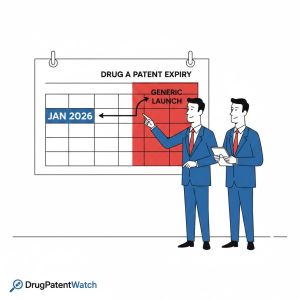
The pharmaceutical business operates on a fundamental cycle of innovation, patent-protected exclusivity, and eventual commoditization. For executives in business development, research and development (R&D), and intellectual property (IP), the transition from a branded monopoly to a competitive generic market represents the most significant event in a product’s commercial existence. Accurately tracking the timing and nature of generic launches is not a mere compliance exercise; it is a requirement for maintaining market share, valuing acquisitions, and allocating capital. The complexity of this task has increased as the regulatory environment shifts, particularly with the implementation of the Inflation Reduction Act (IRA) and evolving judicial interpretations of patent law regarding skinny labeling and induced infringement.
The Economic Gravity of Exclusivity and the 20-Year Illusion
The foundational economic model of the innovator industry is the cycle of investment, exclusivity, and reinvestment.1 Bringing a single new drug to market requires a massive undertaking. Estimates for capitalized costs to bring a new molecule to market now average $2.23 billion to $2.6 billion.1 To recoup this investment, companies rely on the temporary monopoly granted by patents. While the statutory term of a patent is 20 years from the filing date, this number is a deceptive metric for business planning.1
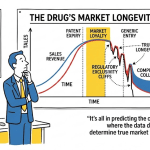
The effective patent life—the actual period during which a drug is sold on the market with patent protection and without direct generic competition—is significantly shorter. The journey from discovery through preclinical research, clinical trials, and regulatory review typically consumes 10 to 15 years of the patent term.1 Consequently, the commercial window of exclusivity usually averages only 7 to 12 years.1 This reality forces firms to begin plotting their defense against generic entry before a drug receives its first regulatory approval. Any predictive model that fails to calculate this effective life builds its strategy on a foundation of sand, as this window defines the entire stream of supranormal profits at risk.4
The Regulatory Framework for Small-Molecule Generic Entry
The entry of generic drugs in the United States is governed by the Drug Price Competition and Patent Term Restoration Act of 1984, known as the Hatch-Waxman Act.6 This legislation created the Abbreviated New Drug Application (ANDA) pathway, allowing generic manufacturers to gain approval by proving bioequivalence to a previously approved reference listed drug (RLD) rather than repeating costly and lengthy clinical trials.7
Bioequivalence is the scientific cornerstone of the generic system. It requires the generic product to have the same active ingredient, dosage form, strength, route of administration, and identity as the RLD.7 From a pharmacokinetic perspective, the generic must demonstrate that its rate and extent of absorption do not differ significantly from the RLD under experimental conditions.7 Specifically, the maximum concentration ($C_{max}$) and the area under the curve (AUC) must fall within tight statistical bounds.10
Feature
Hatch-Waxman (Small-Molecule)
BPCIA (Biologic / Biosimilar)
Product Origin
Chemically synthesized, simple
Living organisms, complex
Approval Standard
Bioequivalence (Identical)
Biosimilarity (Highly Similar)
Primary Registry
FDA Orange Book
FDA Purple Book
Data Exclusivity
5 Years (New Chemical Entity)
12 Years (Reference Product)
Patent Resolution
Paragraph IV Certification
The Patent Dance
Automatic Stay
30-Month Stay of Approval
No Automatic Stay
The Hatch-Waxman framework uses a system of patent certifications to resolve disputes before a generic enters the market. When a generic firm files an ANDA, it must certify against every patent listed by the brand-name manufacturer in the Orange Book.8 A Paragraph IV certification—stating that the listed patent is invalid, unenforceable, or will not be infringed—is the most common route for aggressive generic entry.6 Filing a Paragraph IV certification is a technical act of patent infringement that allows the brand-name company to sue immediately.8 If the branded firm files suit within 45 days, the FDA generally cannot approve the ANDA for 30 months while the parties litigate the dispute.8
The 180-Day Exclusivity and the First-to-File Incentive
To encourage the risk and expense of challenging patents, the law grants 180 days of market exclusivity to the first generic applicant to submit a substantially complete application with a Paragraph IV certification.6 This “first-to-file” (FTF) incentive is the primary driver of generic litigation. During this 180-day window, the FDA is prohibited from approving any other generic competitor, effectively creating a duopoly between the brand and the first generic.2
The financial value of securing 180-day exclusivity is the single most important driver for generic business development.17 For a blockbuster drug, this period can capture a significant portion of the product’s lifetime generic value. However, the 180-day exclusivity is not an absolute barrier. It does not exclude the launch of an authorized generic (AG), which is the branded drug sold in generic packaging under the original New Drug Application (NDA).15
Authorized generics are a potent defensive tool for innovator firms. Because they are approved under the branded drug’s NDA, they can launch at any time, including during the 180-day exclusivity period awarded to the Paragraph IV challenger.16 The entry of an AG during this window typically reduces the price of the generic drug and significantly erodes the first-filer’s revenue—often by 40% to 52%.16 For the brand, an AG allows for continued revenue extraction and disrupts the high margins the generic challenger would otherwise enjoy.21
The Biologic Frontier: BPCIA and the Biosimilar Challenge
The market for complex medicines derived from living cells is governed by the Biologics Price Competition and Innovation Act (BPCIA) of 2010.22 This pathway handles biosimilars—products that are “highly similar” to a reference biologic with no clinically meaningful differences in safety, purity, or potency.23 Unlike small molecules, biologics cannot be exactly replicated due to their size and the variability inherent in living systems.23
The BPCIA offers a more robust 12-year period of reference product exclusivity, during which no biosimilar can be approved.2 The patent resolution process, known as the “Patent Dance,” is a complex, multi-step exchange of information between the biosimilar applicant and the brand.22 Unlike the Hatch-Waxman system, the BPCIA does not provide an automatic 30-month stay of FDA approval; the brand must proactively seek a preliminary injunction in court to block a launch.5
The informational tools also differ. While the Orange Book provides a proactive roadmap of patents for small molecules, the Purple Book for biologics has historically been reactive, listing patent information only after a biosimilar application is filed.22 This information asymmetry increases the risk for biosimilar developers, who must often invest hundreds of millions of dollars in clinical trials before fully understanding the patent terrain they will face.21
Modeling the Patent Cliff: From Cliffs to Slopes
The “patent cliff” describes the sudden decline in revenue experienced by a branded drug when exclusivity ends.2 For small molecules, this decline is often a catastrophic hemorrhage, shedding 80% to 90% of revenue within 12 months of generic entry.2 This is driven by automatic substitution laws in the United States, where pharmacies can substitute an AB-rated generic for the brand without a new prescription.2
“The pharmaceutical industry is experiencing a systemic shift in how we model the loss of exclusivity. The era of the simple, predictable small-molecule cliff is being replaced by the biologic slope, where erosion is more gradual and competition is determined by manufacturing complexity and clinical differentiation rather than mere price.” 2
The biologic “slope” is characterized by slower uptake and less severe price erosion. Biosimilars typically face fewer competitors due to high development costs—often exceeding $100 million compared to $2 million to $5 million for small-molecule generics.10 In the first year of biosimilar competition, a brand might lose 30% to 70% of its market share, a significant drop but far less than the 90% collapse seen in the small-molecule market.10
Erosion Profile
Small-Molecule “Cliff”
Biologic “Slope”
Year 1 Revenue Loss
80% – 90%
30% – 70%
Competitor Count
10+
2 – 5
Price Floor
Near Marginal Cost
15% – 40% Discount
Substitution
Automatic (AB-Rated)
Not Automatic (Unless Interchangeable)
Customer Target
Retail Pharmacy
Payer / Health System / Physician
The Strategic Architecture of Defensive Patent Thickets
Innovator firms engage in lifecycle management to extend the period of market exclusivity beyond the original composition-of-matter patent.5 This often involves creating “patent thickets”—dense webs of secondary patents covering formulations, methods of use, dosages, and manufacturing processes.4
AbbVie’s defense of Humira (adalimumab) provides a masterclass in this strategy. While its core patent was set to expire, AbbVie filed over 250 patents and asserted them against biosimilar challengers, successfully delaying entry for years.5 This strategy creates a massive litigation burden for challengers, who must invalidate dozens of patents to gain market access. If a generic firm faces only one patent, it might gamble on an “at-risk” launch; facing fifty patents makes that gamble nearly impossible.29
Another high-value defensive tactic is securing pediatric exclusivity. By conducting clinical studies in pediatric populations at the request of the FDA, a company can add six months of protection to every patent and regulatory exclusivity listed for the drug.14 For a blockbuster generating $2 billion in annual sales, this six-month extension adds $1 billion in high-margin revenue.21 Given that the cost of these trials is often between $5 million and $35 million, pediatric studies offer perhaps the highest return on investment in the entire industry.21
The “Skinny Label” Minefield and the Silence is Liability Doctrine
A critical development in generic strategy is the erosion of the “skinny label” safe harbor. Section viii of the Hatch-Waxman Act allows a generic firm to carve out patented indications from its label and launch for unpatented uses.12 This practice has historically allowed generic entry while respects the brand’s exclusivity for newer, patented indications.12
However, judicial interpretations have shifted. In GlaxoSmithKline (GSK) v. Teva and Amarin v. Hikma, the Federal Circuit ruled that a generic manufacturer can be liable for “induced infringement” even with a carved-out label.33 The court found that “totality of the conduct”—including press releases calling the product a “generic equivalent” or mentions of its therapeutic equivalence—can demonstrate an intent to induce physicians to prescribe the drug for the patented, carved-out use.33
In Amarin v. Hikma, the court established the “Silence is Liability” doctrine. Hikma launched a generic version of Vascepa with a label for severe hypertriglyceridemia, carving out the patented cardiovascular risk reduction indication.31 The court allowed the case to proceed because Hikma’s marketing materials described the drug as a “generic version of Vascepa” without qualifying that it was approved for only one of the brand’s uses.33 This suggests that generic firms now have an affirmative duty to clarify the limitations of their approval in all public communications.33
On January 16, 2026, the U.S. Supreme Court announced it would hear the Hikma v. Amarin case, a decision that will clarify the boundaries of skinny labeling and induced infringement.12 This case is viewed as a “life or death” issue for the Section viii carve-out pathway.36
The Inflation Reduction Act and the “Pill Penalty”
The Inflation Reduction Act (IRA) of 2022 introduced government price negotiations for high-expenditure drugs in Medicare.37 A significant feature of this law is the “pill penalty”—the distinction between small-molecule drugs and biologics. Small-molecule drugs (pills) are eligible for price negotiation 9 years after approval, whereas biologics are allowed 13 years before price setting begins.37
This disparity is fundamentally altering the investment environment. Because the average time for generic entry is historically 13 to 14 years, the 9-year negotiation window for small molecules mandates price reductions during what were previously the most lucrative years of exclusivity.9 For a generic manufacturer, the IRA creates a “pricing anchor.” If the branded price is already deeply discounted by the government, the potential profit for a generic entrant is diminished, which may deter Paragraph IV challenges and weaken the generic market.9
Industry surveys indicate that nearly 80% of pharmaceutical companies expect to cancel early-stage development projects for small molecules as a result of the IRA.38 Investors are shifting capital toward biologics, cell therapies, and other complex modalities that enjoy the longer 13-year window.9
The Calculation of the “At-Risk” Launch
The most aggressive move in the industry is the “at-risk” launch, where a generic firm begins selling its product while patent litigation is still ongoing.8 The calculation is one of high stakes. If the generic ultimately wins the case, it captures the market years early. If it loses, it is liable for the brand’s lost profits—not just the generic’s revenue.21
The math of damages is often asymmetric. If a brand sells a drug for $100 and a generic sells it for $10, the generic might generate $10 million in revenue from 1 million units. However, if the court finds the patent valid and infringed, the generic owes the brand the profit it would have made on those 1 million units at the $100 price point.30 This can result in damages exceeding the generic’s total revenue by an order of magnitude, often leading to corporate bankruptcy for smaller firms.30
Successful at-risk launches, such as those for Oxymorphone (Opana ER) by Impax or Fexofenadine (Allegra) by Teva and Barr, demonstrate that these moves can force innovators to the negotiating table.29 However, the modern “at-risk” calculus requires sophisticated modeling of litigation probability, judge tendencies, and potential treble damages for willful infringement.21
Quantitative Tools for Loss of Exclusivity Forecasting
Turning patent data into a competitive advantage requires moving beyond simple tracking to predictive and prescriptive analytics. Professionals now use a “Franken-Stack” of intelligence platforms to navigate the LOE environment.40
IQVIA: Dominates the commercial and real-world evidence domain. Its data on prescription behavior and patient longitudinal records is essential for market access strategy and predicting volume erosion.40
Clarivate (Cortellis): The industry standard for R&D and regulatory intelligence. It provides granular data on Chemistry, Manufacturing, and Controls (CMC) requirements and phase success rates.40
DrugPatentWatch: Offers specialized surveillance focused on the patent environment. It is used to track Drug Master Files (DMFs), Paragraph IV filings, and litigation settlements to predict the “effective” commercial end-of-life for an asset.40
Patsnap: Provides integrated patent, regulatory, and scientific literature analysis, with AI modules designed to speed up freedom-to-operate searches.42
The return on investment for these tools is often found in “failure avoidance”—detecting a competitor’s early signal or an FTO conflict years before a launch, saving hundreds of millions in wasted development costs.3
The Multi-Layered Approach to M&A Due Diligence
In the current environment of impending patent cliffs, M&A activity is increasingly focused on acquiring early-stage assets to fill the revenue gap.43 Patent due diligence in these transactions is a rigorous investigation into ownership, validity, and freedom-to-operate.45
A thorough due diligence process must assess the “effective patent life” of the target’s core assets. This involves auditing the chain of title to ensure that every inventor has formally assigned their rights to the company.45 It also requires analyzing the “file wrapper”—the history of communication with the patent office—to identify any statements that might limit the scope of the patents in future litigation.45
Acquirers must also map the regulatory exclusivity landscape. Overlooking an orphan drug exclusivity or a pediatric extension could lead to a significant undervaluation of an asset.45 Financial models such as risk-adjusted Net Present Value (rNPV) are then used to weight these IP risks against the asset’s commercial potential.10
Diligence Domain
Key Investigation Points
Ownership
Auditing chain of title; inventor employment records
Calculating PTE and PTA; tracking pediatric extensions
Encumbrances
Reviewing existing licenses, settlements, or liens
Advanced Modeling for Sales Retention and Erosion
Forecasting the impact of generic entry requires sophisticated mathematical models. A common approach is the three-parameter exponential decay function, which has been shown to capture the initial steep decline and subsequent stabilization of branded sales.48
$$Retention(t) = (a – c) \times e^{-kt} + c$$
Where $a$ is the initial sales, $c$ is the long-term price floor, and $k$ is the decay constant.48 Recent studies show that sales retention typically falls from 73.1% in the first year after generic entry to 31.7% by year five.48 Erosion is significantly faster for “blockbuster” drugs and in markets with multiple generic entrants.21
Diffusion models, borrowed from marketing science, are also used to treat a generic launch as a new product introduction. The Bass Diffusion Model and the Repeat Purchase Diffusion Model (RPDM) help capture the S-shaped curve of generic uptake among physicians and patients over time.5 These models are increasingly fed with real-world data from platforms like DrugPatentWatch to improve accuracy in high-stakes forecasting scenarios.40
Policy Trends and Global Comparisons: US vs. EU
While the United States uses the Orange Book and Paragraph IV system to link drug approval with patent resolution, the European Union has historically rejected such “patent linkage”.2 In Europe, marketing authorizations are granted by the European Medicines Agency (EMA) independently of patent status.49
European countries use Supplementary Protection Certificates (SPCs) to extend patent protection for medicinal products, analogous to Patent Term Extensions (PTE) in the U.S..2 However, SPCs are granted on a national basis, resulting in a fragmented system where a drug might lose protection in different countries at different times.49 This fragmentation complicates global launch planning and requires regional expertise to navigate the various national registries.51
In response to rising costs, the EU is considering reforms that would mandate the disclosure of patents at least one year before loss of exclusivity.49 Furthermore, the proposed EU regulatory protection period would be capped at 11 years, with various extensions available for products addressing unmet medical needs.52
Key Takeaways for Pharmaceutical Professionals
Effective Life Over Nominal Term: The 20-year patent term is a deceptive metric. Regulatory review typically limits the commercial window of protection to between 7 and 12 years.1
Modeling the Cliff vs. the Slope: Small-molecule drugs experience a 90% revenue collapse in months, while biologics face a more gradual “slope” with initial discounts of 15% to 40%.5
The Power of Pediatric Exclusivity: A six-month extension across the entire IP portfolio provides an exceptionally high return on investment, often yielding billions in additional high-margin revenue.21
The Erosion of the Skinny Label: Judicial shifts in induced infringement mean that generic manufacturers have an affirmative duty to clarify approval limitations in all public communications.33
The “Pill Penalty” Realignment: The Inflation Reduction Act is shifting investment toward biologics due to the longer 13-year pricing window compared to the 9-year window for small molecules.37
Probabilistic Forecasting: Strategic success depends on modeling LOE as a distribution of probabilities rather than a fixed date, integrating signals from DMF filings and litigation settlements.5
Frequently Asked Questions (FAQ)
1. What is a “30-month stay” and how does it affect generic entry? The 30-month stay is an automatic hold on the FDA’s ability to approve an ANDA. It is triggered when a brand-name company sues an ANDA applicant for patent infringement within 45 days of receiving a Paragraph IV certification notice. The stay is intended to allow for the resolution of the patent dispute before the generic enters the market.8
2. How does an “authorized generic” impact the first generic filer? An authorized generic (AG) can launch immediately upon generic entry, effectively destroying the “duopoly” profits of a first-filer who earned 180-day exclusivity. Competition from an AG during this period typically reduces the first-filer’s revenue by 40% to 52%.16
3. What is the “patent dance” under the BPCIA? The patent dance is a choreographed exchange of information between a biosimilar applicant and the reference product sponsor. It involves disclosing the biosimilar’s manufacturing process and identifying which patents will be litigated. Unlike the small-molecule system, this process is optional and does not provide an automatic stay of approval.5
4. Why is the “effective patent life” shorter than the 20-year statutory term? The patent term begins at the time of filing, which is usually years before a drug is approved for sale. The time spent in preclinical research, clinical trials, and FDA review consumes a significant portion of the patent’s life, leaving only 7 to 12 years of actual market exclusivity.1
5. How does the “Silence is Liability” doctrine change generic marketing? Established by the Amarin v. Hikma decision, this doctrine suggests that if a generic manufacturer is silent about the limitations of its “skinny label” approval in its marketing or press releases, it can be held liable for inducing infringement of the carved-out indications. Generic firms must now proactively qualify their therapeutic equivalence claims.33
Pharmaceutical Patent Disputes: Generic Entry for Small-Molecule Drugs Under the Hatch-Waxman Act | Congress.gov, accessed January 28, 2026, https://www.congress.gov/crs-product/IF13028
Estimating the Value of Adding 30 Days to the 180-Day Market Exclusivity of the First-to-File Generic Drug Manufacturer – PMC – NIH, accessed January 28, 2026, https://pmc.ncbi.nlm.nih.gov/articles/PMC12796020/
Sales Erosion of Originator Drugs Following Generic Entry: Quantitative Analysis and Predictive Modeling – PubMed, accessed January 28, 2026, https://pubmed.ncbi.nlm.nih.gov/41166003/