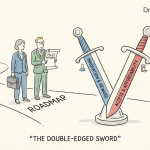
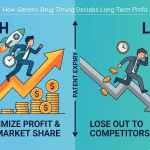
How generic drug companies legally exploit the Hatch-Waxman framework to generate billion-dollar windfalls — and how brand manufacturers fight back
The $6 Billion Weekend
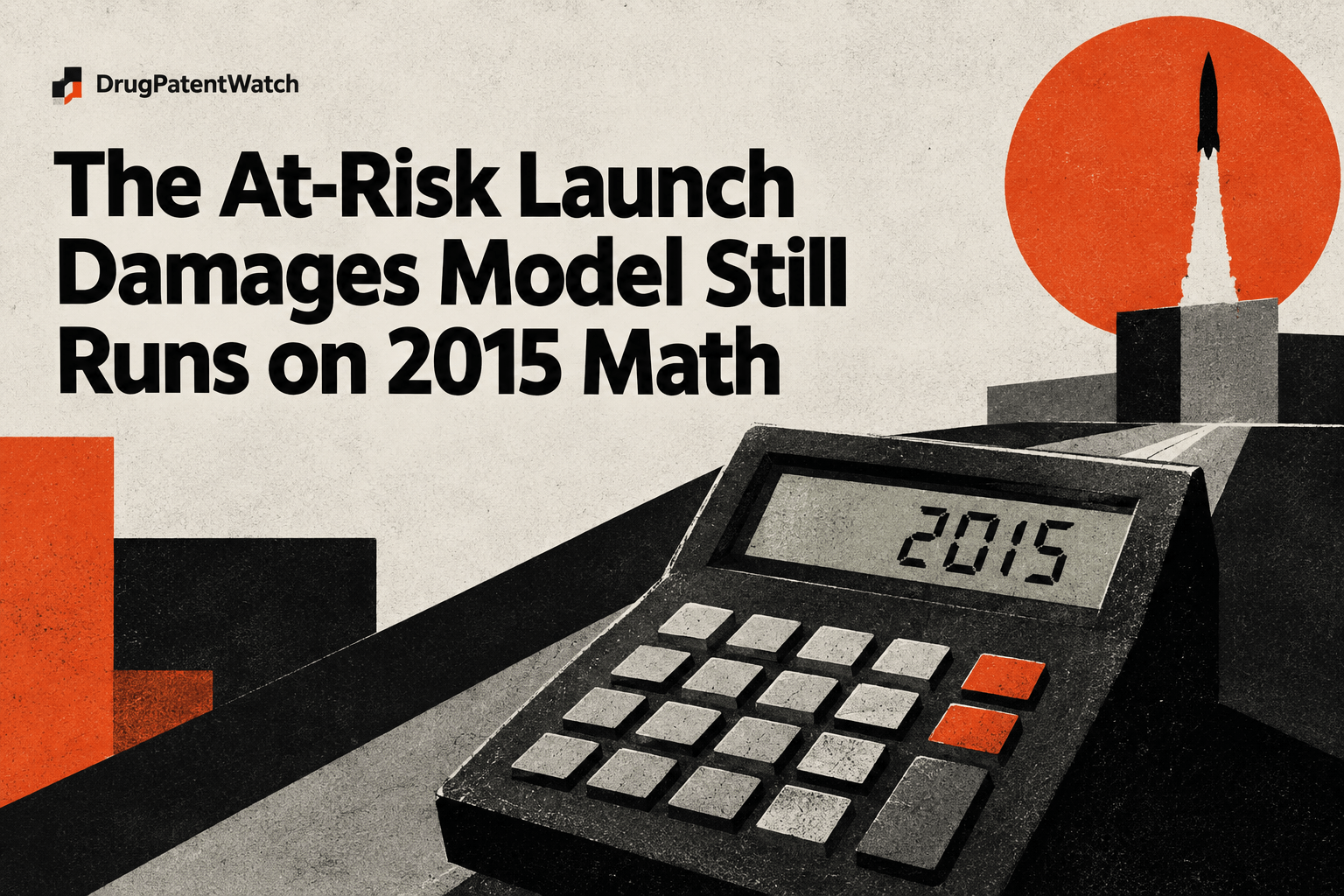
On August 8, 2006, Apotex Inc. launched a generic version of Plavix (clopidogrel bisulfate) in the United States. Apotex did not have a court order permitting the launch. It did not have a settlement agreement. It had a disputed Paragraph IV certification, a contested patent case that had not been fully resolved, and a calculated willingness to absorb whatever damages might follow. Within days, Apotex shipped roughly $300 million worth of generic clopidogrel into U.S. pharmacies [1].
The launch lasted six weeks before a federal court granted an injunction. By then, the at-risk inventory had largely been dispensed. Apotex ultimately paid approximately $440 million to settle the damages claims from Bristol-Myers Squibb and Sanofi-Aventis, the Plavix brand holders. The drug generated $6.8 billion in annual revenues at peak. Apotex had effectively extracted hundreds of millions of dollars in a matter of weeks by exploiting the mechanics of the Hatch-Waxman system more aggressively than almost any company before it.
The Plavix episode is the most dramatic illustration of what the Paragraph IV certification process can produce for a generic company willing to accept litigation risk. It also demonstrates something about the system’s structural logic: Hatch-Waxman was designed to get cheap drugs to patients faster. What it also created, somewhat inadvertently, was one of the most financially lucrative litigation strategies in American corporate law.
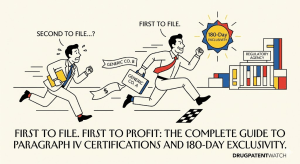
This guide covers the full mechanics of Paragraph IV certifications and the 180-day exclusivity period they can trigger: how they work legally, how they are exploited commercially, what case law has shaped them, where the money comes from, and what the landscape looks like as the next wave of blockbuster patent challenges approaches the 2026-2030 expiration window. The pharmaceutical patent data platform DrugPatentWatch tracks Paragraph IV filings in real time alongside Orange Book listings, litigation histories, and exclusivity periods, making it one of the primary tools the industry uses to monitor this landscape [2].
The Hatch-Waxman Framework: What Congress Actually Built
The Dual Problem That Created the System
By 1984, the U.S. generic drug industry was significantly smaller than it should have been. The FDA had no streamlined pathway for approving a copy of an already-approved drug. Generic manufacturers had to repeat the full clinical trial program even for drugs whose safety and efficacy were already well established. This was inefficient for patients, expensive for manufacturers, and ultimately destructive to competition.
At the same time, brand drug manufacturers were lobbying for relief from a different problem. Because companies could not market their drugs during the FDA review period, they were effectively losing years of their 20-year patent term to regulatory delay. A patent filed at the beginning of clinical development might have only 7 to 10 years of remaining commercial exclusivity by the time the FDA approved the drug.
The Drug Price Competition and Patent Term Restoration Act of 1984, co-sponsored by Senator Orrin Hatch and Representative Henry Waxman, addressed both problems with a single legislative package. Generics received the Abbreviated New Drug Application (ANDA), a pathway that allowed approval based on bioequivalence to the reference listed drug (RLD) rather than independent clinical trials. Brand manufacturers received patent term extensions (PTEs) to restore time lost to FDA review. The patent certification system, including what became Paragraph IV, provided a mechanism for generics to challenge brand patents as part of the ANDA process.
The law was a genuine compromise, and both sides got something meaningful. What neither side fully anticipated was how the Paragraph IV certification and 180-day exclusivity provisions would evolve into a multi-billion-dollar litigation and settlement industry in their own right.
The Orange Book and the Four Certifications
The Orange Book, officially titled “Approved Drug Products with Therapeutic Equivalence Evaluations,” is the FDA’s database of approved drug products and their associated patents. Brand manufacturers are required to list patents that claim the drug or a method of using the drug in the Orange Book within 30 days of patent issuance or drug approval, whichever comes later. Generic ANDA applicants must certify their position with respect to each listed patent before the FDA will accept their application.
There are four possible certifications. A Paragraph I certification states that no patent information has been filed for the listed drug. A Paragraph II certification states that the listed patent has expired. A Paragraph III certification states that the applicant will not seek approval until the listed patent expires, effectively agreeing to wait. A Paragraph IV certification states that the listed patent is invalid or will not be infringed by the generic. Only Paragraph IV triggers the legal and financial machinery that this article addresses.
A Paragraph IV filer must notify the brand manufacturer and patent holder within 20 days of the FDA accepting the ANDA. This notification must include a detailed statement of the legal and factual basis for the Paragraph IV certification, covering every ground on which the generic argues invalidity or non-infringement. This “detailed statement” is effectively the generic’s opening brief in what will almost certainly become patent litigation. Brand companies use it to assess the strength of the challenge before deciding how aggressively to respond.
The Automatic 30-Month Stay
If the brand manufacturer files a patent infringement suit within 45 days of receiving the Paragraph IV notification, the FDA is automatically prohibited from approving the generic ANDA for 30 months or until the patent case is finally resolved, whichever comes first. This 30-month stay was one of the most heavily litigated provisions of Hatch-Waxman until Congress amended it in the Medicare Modernization Act of 2003.
Before 2003, brand manufacturers could trigger multiple 30-month stays by listing new patents in the Orange Book after a Paragraph IV application was filed and then suing the generic on those later-listed patents. This “late listing” strategy allowed some brand companies to stack consecutive 30-month stays, effectively blocking generic entry for five or more years on drugs where the underlying patents might not have warranted such delay. The 2003 amendments limited each ANDA to one automatic 30-month stay, significantly reducing this tactic.
The 30-month stay has substantial financial implications in both directions. For the brand company, it guarantees at least 30 months of additional protected revenue while litigation proceeds, assuming the brand files suit promptly. For the generic, it creates a clock: if the case is not resolved within 30 months, the FDA can approve the ANDA even though litigation is ongoing. Generic companies that feel confident in their invalidity case sometimes prefer to let the 30-month period run rather than seek early resolution, calculating that they can launch at risk once the stay expires.
Who Can List Patents in the Orange Book?
The boundary of what qualifies for Orange Book listing has been heavily contested. Under FDA regulations, a patent is eligible for listing if it claims the drug substance (active ingredient), the drug product (formulation or composition), or a method of using the drug. Manufacturing process patents are explicitly excluded. So are metabolite patents and intermediate patents.
Brand companies have frequently tested these limits by listing patents of questionable eligibility, hoping to trigger 30-month stays before the FDA concludes the patent should not have been listed. The FDA’s current regulations, revised following the 2003 MMA amendments, impose tighter requirements on patent listing certifications, requiring the NDA holder to submit a sworn declaration confirming that each listed patent meets the listing criteria. Despite this, disputes over improper Orange Book listings continue, and the FTC has brought enforcement actions against companies that listed patents it considered ineligible.
In 2023, the FTC used the Drug Supply Chain Security Act to bring a new kind of challenge against Orange Book listings, targeting Pfizer’s listings for Advair Diskus’s inhaler device patents. The FTC argued that device patents on the drug delivery system were not eligible for Orange Book listing because they did not claim the drug product itself. The action signaled a new regulatory appetite for aggressive Orange Book policing that the generic industry has welcomed and the brand industry has contested vigorously.
The 180-Day Exclusivity: A Billion-Dollar Reward for Being First
The Mechanics of First-Filer Status
The 180-day exclusivity period rewards the first ANDA applicant to file a Paragraph IV certification with a period during which no other generic can be approved. The exclusivity attaches to the first filer(s), not the first to win the patent case. If multiple applicants file on the same day and are deemed “first filers,” they share the 180-day exclusivity period rather than each receiving separate periods.
The financial case for being first is straightforward. During the 180-day exclusivity window, only one generic competes with the brand. This duopoly structure typically produces generic prices that are 30 to 50 percent below the brand price rather than the 80 to 90 percent discount that emerges in a fully competitive generic market with five or more entrants. The first filer captures a disproportionate share of the early generic market revenue at prices that, while lower than brand prices, are dramatically higher than post-exclusivity generic prices.
For a drug generating $5 billion in annual U.S. revenues, the 180-day exclusivity window is worth several hundred million dollars to the first filer, even at deeply discounted generic prices. For drugs in the $10 billion to $20 billion range, the first-filer reward can exceed $1 billion. These numbers have made the race to file the first Paragraph IV certification one of the most commercially competitive activities in the generic pharmaceutical industry.
The Trigger: What Starts the 180-Day Clock?
Prior to the 2003 Medicare Modernization Act, the 180-day exclusivity period was triggered by either a commercial marketing date (the day the first filer actually launched the drug) or a court decision holding the patent invalid or not infringed, whichever came first. The “court decision” trigger created problems because brand companies could simply avoid litigating the case to final decision, leaving the exclusivity clock perpetually unstuck and blocking other generics from entering the market even when the first filer had no intention of launching.
The “blocking” problem became acute in several high-profile cases. A first filer with a Paragraph IV certification could sit on its exclusivity indefinitely if it had no court decision and was not ready to launch commercially. Other generics would file their own ANDAs with Paragraph III certifications (agreeing to wait for the patent to expire) and queue behind the first filer’s unstarted exclusivity. The commercial benefit went to the brand, which faced no generic competition even after the 30-month stay expired.
The 2003 MMA addressed this by replacing the court decision trigger with four “forfeiture” provisions that cause a first filer to lose its exclusivity if it fails to meet certain conditions. The first filer forfeits if it does not commercially market the drug within 75 days of the earlier of (a) the first court decision finding the patent invalid or not infringed, or (b) the patent expiration or delisting date. Other forfeiture triggers include failure to obtain tentative approval within 30 months, withdrawal of the ANDA, and amendment of the Paragraph IV certification to a Paragraph III.
The forfeiture provisions dramatically changed the incentive structure. First filers now face a hard deadline to launch once certain triggering events occur. This has reduced but not eliminated the blocking problem, because the forfeiture conditions are specific and the brand industry has developed techniques to avoid triggering them. It has, however, given subsequent ANDA applicants a clearer path to challenging a blocking first filer.
Shared Exclusivity and the Same-Day Filing Race
When multiple generic manufacturers file Paragraph IV ANDAs on the same day, they typically share the 180-day exclusivity period. A shared exclusivity produces a more competitive market during the 180 days than a solo first filer would, since two or three generics compete with one another as well as with the brand. This reduces each filer’s individual revenue during the period while increasing overall patient access to lower-cost drugs.
The same-day filing phenomenon has become common in large-molecule patent challenges. When DrugPatentWatch or other patent intelligence sources signal that a blockbuster patent is approaching expiry or is likely to be challenged, multiple generic companies often prepare their Paragraph IV ANDAs simultaneously and submit them as soon as the application window opens. For drugs where the first filing date is known in advance — such as drugs that have been subject to public patent term extension proceedings — dozens of generics may file on the same day [2].
The largest simultaneous filing events in Hatch-Waxman history have involved drugs like atorvastatin (Lipitor), where at least 10 companies filed Paragraph IV ANDAs in the weeks surrounding the first available filing date. For Lyrica (pregabalin), multiple simultaneous Paragraph IV filers shared exclusivity for a product generating over $3 billion in annual U.S. revenues. Sharing exclusivity across four or five filers still produces substantial revenue for each filer, particularly in the first weeks when prescriptions are still converting from brand to generic.
The 180-Day Exclusivity Financial Table
Drug
First Filer
Peak Brand Revenue
Est. 180-Day Value
Trigger
Plavix (clopidogrel)
Apotex
$6.8B
$600M+
Court decision
Lipitor (atorvastatin)
Ranbaxy
$13.0B
$1.1B est.
Settlement date
Nexium (esomeprazole)
Teva
$3.6B (US)
$300M est.
Agreement date
Effexor XR (venlafaxine)
Teva
$2.6B
$400M est.
Court decision
Actos (pioglitazone)
Mylan/Teva
$3.7B
$500M est.
Court decision
Abilify (aripiprazole)
Teva
$7.8B
$900M est.
Agreement date
Sources: Company reports, SEC filings, IQVIA, DrugPatentWatch [2]. Revenue estimates reflect the 180-day exclusivity period at generic market prices during the window. Actual realizations depend on conversion rates and pricing strategy.
Inside the Paragraph IV Challenge: Strategy and Execution
Assembling the Detailed Statement
The detailed statement filed with the Paragraph IV notification is the single most important document in any ANDA patent challenge. It must cover every patent listed in the Orange Book for the reference listed drug and must set forth the factual and legal basis for invalidity, non-infringement, or both with respect to each claim of each patent. A weak or incomplete detailed statement can expose the generic to claims of willful infringement if it proceeds to launch at-risk.
Generic companies typically invest substantial resources in the detailed statement before filing. A full prior art search and freedom-to-operate analysis is standard. Many generics retain former USPTO examiners and academic researchers to identify prior art that was not before the patent examiner during original prosecution. The invalidity arguments in the detailed statement will form the backbone of the generic’s trial strategy, making the document’s quality critical to the ultimate litigation outcome.
The “non-infringement” component of the detailed statement addresses whether the generic’s specific formulation or method of use falls within the scope of the brand’s patent claims. For compound patents, non-infringement arguments are rare, since the generic necessarily contains the same active ingredient. For formulation patents, process patents, and method-of-use patents, non-infringement can be argued based on differences in inactive ingredients, manufacturing methods, or labeled indications. Generics frequently design their formulations specifically to avoid infringement of formulation patents even when the compound patent is undisputable, and this design-around work is reflected in the detailed statement.
The Standard Invalidity Arguments
Invalidity arguments in Paragraph IV cases cluster around a relatively small number of statutory grounds. The four most common are: anticipation under 35 U.S.C. Section 102 (the patented invention was already disclosed in prior art), obviousness under 35 U.S.C. Section 103 (the invention would have been obvious to a skilled artisan given the prior art), lack of written description or enablement under Section 112, and obviousness-type double patenting.
Anticipation arguments require finding a single prior art reference that discloses every element of the claimed invention. This is a high bar for pharmaceutical patents, where even minor structural variations can distinguish a claimed compound from prior art. Obviousness is more commonly asserted and more commonly won. The question is whether a person of ordinary skill in the art would have had a reason to combine existing prior art teachings and a reasonable expectation of success. In pharmaceutical cases, the “reasonable expectation of success” requirement creates the most contested factual disputes, since drug development outcomes are frequently unpredictable.
Obviousness-type double patenting (ODP) has become an increasingly important invalidity ground in multi-patent pharmaceutical portfolios. ODP applies when a patent claims an obvious variant of an invention claimed in an earlier patent by the same applicant. Because brand companies file multiple patents on the same drug compound, its metabolites, its enantiomers, and its formulations, ODP challenges frequently succeed in invalidating the later-filed continuation and divisional patents that extend the exclusivity timeline beyond the original compound patent. Generic companies monitor multi-patent portfolios specifically to identify ODP vulnerabilities using tools that aggregate patent family information, which DrugPatentWatch makes available alongside expiration and litigation data [2].
Claim Construction: Where Pharmaceutical Cases Are Won and Lost
Before a patent infringement case reaches the merits, the court must determine what the patent claims actually mean. This process, called Markman claim construction after the Federal Circuit’s 1996 decision in Markman v. Westview Instruments, is one of the most consequential legal proceedings in pharmaceutical patent litigation. A narrow claim construction can eliminate infringement arguments. A broad construction can make invalidity easier to prove.
The Federal Circuit reviews claim construction de novo on appeal, meaning it gives no deference to the district court’s interpretation. This creates a significant uncertainty at the trial level: the district court’s Markman ruling may be reversed on appeal even after a full trial. Generic companies that survive an adverse Markman ruling at trial often recover on appeal when the Federal Circuit issues a broader or narrower construction than the district court applied. This appellate dynamic extends the effective duration of Paragraph IV litigation and increases the importance of the initial claim construction briefing strategy.
Generic companies have become sophisticated at framing Markman arguments to set up subsequent invalidity positions. If a generic argues for a broad claim construction, it typically does so because a broad construction makes the claim easier to invalidate under the prior art. If it argues for a narrow construction, the goal is usually to avoid infringement by the specific generic formulation. The choice of Markman strategy is therefore inseparable from the overall theory of the invalidity and non-infringement case.
At-Risk Launches: The Nuclear Option
An at-risk launch occurs when a generic manufacturer begins selling its product before the patent litigation has been finally resolved, accepting the risk that it will owe damages if the brand ultimately prevails. The Apotex-Plavix episode is the most famous at-risk launch in pharmaceutical history, but it is not unique. Teva, Mylan, and other major generic companies have launched at-risk in cases where they were confident in their invalidity arguments and were willing to accept the financial exposure.
The calculus of an at-risk launch depends on several variables. First, how strong is the invalidity or non-infringement case? A generic with a strong obviousness argument based on multiple prior art references is in a better position to launch at risk than one relying on a single anticipatory reference. Second, what is the brand’s likely damage claim? Damages in a successful infringement case are measured as a reasonable royalty or, in some cases, lost profits. For a generic that has already sold $300 million of product, the damages exposure is meaningful but may be less than the profit generated by the launch. Third, is there an injunction risk? If the brand can obtain a preliminary injunction quickly, the at-risk launch may be stopped before enough revenue is generated to justify the risk.
The 2006 eBay Inc. v. MercExchange decision by the Supreme Court changed the preliminary injunction analysis in ways that benefit generic at-risk launchers. eBay held that courts must apply the traditional four-factor equity test for injunctions in patent cases rather than presuming that a patent holder is entitled to an injunction upon finding of infringement. This makes it harder for brand manufacturers to obtain quick injunctions against at-risk launchers, increasing the financial viability of at-risk launches in cases where the generic’s invalidity arguments are strong but not certain.
Pay-for-Delay: The $3 Billion Antitrust Problem
How Reverse Payment Settlements Work
Reverse payment settlements, commonly called pay-for-delay, occur when a brand manufacturer pays a generic challenger to drop its Paragraph IV case and delay entering the market. The payment can take many forms: direct cash, an authorized generic license, a manufacturing agreement, a co-promotion deal, or a license to unrelated intellectual property. What defines a reverse payment is that value flows from the defendant (brand) to the plaintiff (generic), reversing the usual direction of settlement in patent cases.
The economic logic is transparent. Suppose a brand drug generates $10 billion annually and a generic challenges a patent that the brand’s lawyers privately assess as only 60 percent likely to survive litigation. The expected cost of patent failure — generic entry years early — is several billion dollars. The brand can rationally pay the generic $300 million to delay market entry by several years, collecting billions in protected revenues that far exceed the payment. The generic accepts the payment instead of risking litigation it might lose, capturing certain revenue rather than a probabilistic outcome. Both parties are better off. Patients and the public are worse off, since they continue paying brand prices when they could have paid generic prices.
The FTC recognized this problem early and began challenging pay-for-delay settlements in the early 2000s. The agency faced an initial setback when the Eleventh Circuit, in FTC v. Schering-Plough Corp. (2005), held that reverse payment settlements were presumptively lawful unless the settlement excluded competition beyond the scope of the patent. This “scope of the patent” test made most reverse payment settlements very difficult to challenge, since the patent’s own duration set the outer boundary of permissible delay.
Actavis: The Supreme Court Redraws the Line
FTC v. Actavis, Inc. (2013) reversed course. The Supreme Court held, in a 5-3 decision authored by Justice Breyer, that reverse payment settlements are not immune from antitrust scrutiny under the “scope of the patent” test. Instead, courts must apply the rule of reason, considering factors including the size and nature of the reverse payment, its anticompetitive effects, and any procompetitive justifications.
The Court identified the size of the reverse payment as a particularly informative signal. A brand company that pays a generic $200 million to drop a patent case is implicitly acknowledging that it believes the patent is weak. Otherwise, the brand would simply litigate to vindicate the patent rather than paying to avoid judgment. A large unexplained payment therefore suggests that the settlement is buying delayed competition rather than resolving a genuinely uncertain legal dispute.
Actavis did not hold that all reverse payment settlements are unlawful. It held that they are subject to rule of reason antitrust analysis, which requires a full factual inquiry into competitive effects. In practice, most post-Actavis cases have settled rather than proceeding to rule of reason adjudication, because the uncertain legal exposure after Actavis gives both sides incentive to resolve cases early. But the decision fundamentally changed the risk profile of large cash reverse payment settlements and drove the brand industry toward more opaque transfer mechanisms.
The Post-Actavis Landscape: Disguised Payments
After Actavis, brand manufacturers moved aggressively to replace direct cash payments with value transfers that are harder to characterize as reverse payments. The four most common structures are: authorized generic licenses, manufacturing supply agreements, milestone payments tied to future regulatory events, and licenses to non-pharmaceutical intellectual property.
The authorized generic license is the most important. Under this arrangement, the brand agrees to let the generic sell an “authorized generic” version of the brand’s product during the 180-day exclusivity period, in exchange for the generic agreeing to delay its independent market entry. The authorized generic arrangement transfers value (a revenue stream from shared exclusivity) to the generic while ensuring that the brand also participates in the generic market during the 180-day period. The FTC has argued that authorized generic licenses can be reverse payments if the value transferred exceeds what the generic would have captured on its own. Courts have applied Actavis to several such structures with mixed results.
Manufacturing supply agreements transfer value by giving the generic a supply contract or favorable pricing on active pharmaceutical ingredient (API), which directly reduces the generic’s cost structure for the delayed product. The antitrust question is whether the pricing is at market or below market rates, since a below-market supply contract is economically equivalent to a cash payment. These arrangements require detailed economic analysis and are more difficult for the FTC to challenge than direct cash payments.
The Pay-for-Delay Structure Comparison
Structure
Brand Transfer
Generic Gets
Antitrust Exposure
Cash payment
Direct payment
Delay market entry
Highest; FTC targets directly
Authorized generic license
Revenue share post-cliff
Exclusivity period license
High; functionally equivalent to cash
Co-promotion deal
Sales force access
Delay market entry
Moderate; must show fair value
Supply agreement
Manufacturing contract
Delay + supply rights
Moderate; subject to market price test
IP license (unrelated)
Non-pharma IP rights
Delay market entry
High if transfer exceeds fair value
Sources: FTC Annual Drug Company Pay-for-Delay Reports, Actavis rule of reason case law, author analysis [3].
Post-Actavis Enforcement Actions
The FTC has pursued several post-Actavis enforcement actions that illustrate how courts apply the rule of reason to complex pay-for-delay structures. In FTC v. AbbVie Inc. (3d Cir. 2020), the Third Circuit held that AbbVie’s reverse payment settlement involving its testosterone replacement product AndroGel violated the Sherman Act. The settlement involved AbbVie paying Teva through a “no-authorized-generic” commitment — a promise by AbbVie not to launch an authorized generic during Teva’s 180-day exclusivity period. The Third Circuit found this was analytically equivalent to a cash payment since it guaranteed Teva higher revenues during the exclusivity period.
The AbbVie AndroGel case is significant because it extended Actavis to non-cash settlements that primarily benefited generics during the 180-day exclusivity period rather than delaying entry beyond it. The FTC has used this theory in subsequent investigations, and brand manufacturers now face antitrust risk not just from agreements to delay entry but from arrangements that enhance the value of a first filer’s exclusivity period in exchange for anything that could be characterized as a quid pro quo.
The ongoing Bristol-Myers Squibb Revlimid cases apply similar logic to structured settlement agreements that limited generic entry to specific volume caps rather than preventing entry entirely. Courts and the FTC have been asked to address whether a settlement that permits some generic entry but restricts its volume is analytically equivalent to a reverse payment that delays entry completely. The theory, if upheld, would significantly expand the antitrust reach of Actavis.
Case Studies: The Defining Paragraph IV Battles
Plavix: The At-Risk Launch That Changed Industry Thinking
The Plavix litigation is the event against which every subsequent at-risk launch is measured. Apotex filed a Paragraph IV ANDA against clopidogrel bisulfate in 2001, asserting that the key patent claiming the specific salt form was invalid as obvious in light of prior art disclosing the free base of clopidogrel. The invalidity theory was not frivolous: the free base had been disclosed in prior patents, and Apotex argued that selecting the bisulfate salt was obvious to a skilled medicinal chemist.
After years of pretrial proceedings, Apotex and the brand holders — Bristol-Myers Squibb and Sanofi-Aventis — reached a tentative settlement in early 2006 under which Apotex agreed to delay generic entry until 2011 in exchange for a significant authorized generic arrangement. The settlement fell apart when the DOJ and FTC indicated they would likely challenge it on antitrust grounds, and Apotex concluded that litigating the underlying patent was preferable to modifying the settlement terms to address the agencies’ concerns.
When settlement failed, Apotex launched at risk on August 8, 2006. The brand holders obtained a preliminary injunction within weeks, but by then the damage to brand exclusivity was done. Apotex ultimately settled the damages case for approximately $440 million [1]. The patent case itself was decided in favor of the brand on the merits in 2007, when the district court found the bisulfate salt patent valid and infringed. Apotex’s gamble did not fully succeed — it lost the patent case — but the at-risk launch still generated more money than a conservative approach that simply awaited the patent’s expiration would have produced.
Lipitor: The Authorized Generic Masterstroke
Pfizer’s atorvastatin product Lipitor was the best-selling drug in the world when its patent protections approached expiry in 2011. Ranbaxy Laboratories was the first Paragraph IV filer, having filed its ANDA in 2002 and certifying against both the compound patent and several other Lipitor-related patents. The litigation consumed nine years, with multiple district court and Federal Circuit proceedings, before Pfizer and Ranbaxy reached a settlement in 2008.
Under the settlement, Ranbaxy received the right to launch an authorized generic version of Lipitor at the time of patent expiry in November 2011. In exchange, Ranbaxy agreed not to market its independent generic until that date. Pfizer, anticipating that Ranbaxy’s 180-day exclusivity period would produce a duopoly that was less damaging than full generic competition, simultaneously launched its own authorized generic through Greenstone LLC on the same day as Ranbaxy’s product.
The result was a controlled patent cliff. Instead of full generic entry by multiple manufacturers in November 2011, the market saw a three-product market (brand Lipitor, Ranbaxy generic, and Pfizer’s Greenstone authorized generic) for the first 180 days. This kept prices higher than they would have been in a fully competitive market and allowed Pfizer to capture some of the generic market revenue through Greenstone. Pfizer’s revenues declined dramatically but less sharply than a full generic cliff would have produced. The Lipitor settlement became a template for authorized generic strategies that combines pay-for-delay settlement mechanics with revenue protection through the brand’s own market participation.
The FTC investigated the Ranbaxy-Pfizer Lipitor settlement but ultimately declined to challenge it, concluding that the authorized generic arrangement did not meet the Actavis standard for an anticompetitive reverse payment under the analysis then available. The agency has since re-examined authorized generic settlements more carefully in light of the post-Actavis doctrine, and a similar deal today would face closer scrutiny.
Gleevec: When the Brand Wins on the Merits
Novartis’s imatinib product Gleevec (imatinib mesylate) achieved something that brand manufacturers rarely accomplish in major Paragraph IV cases: it won on the merits. Multiple generic manufacturers, including Dr. Reddy’s and Mylan, filed Paragraph IV ANDAs against imatinib’s Orange Book patents. Novartis had a complex patent portfolio including the imatinib free base compound patent, the imatinib mesylate crystal form patent (the “beta crystal” patent), and various method-of-use patents.
The generic challengers focused primarily on the beta crystal patent, arguing that the specific crystal form was an obvious variation of the already-known imatinib compound and that selecting the beta crystal was a routine pharmaceutical optimization. This argument was analytically similar to the type of challenge that had succeeded in many earlier cases. Novartis successfully defended the beta crystal patent by demonstrating that the specific crystal form had unexpected superior properties — including dramatically improved bioavailability — that were not predictable from the prior art and that made the selection non-obvious.
The Federal Circuit affirmed the validity of the beta crystal patent in 2016, finding that Novartis had established unexpected results that rebutted the prima facie case of obviousness. The decision has been cited extensively for its analysis of secondary considerations of non-obviousness in pharmaceutical cases, particularly the “unexpected results” doctrine. For generic companies planning Gleevec-type challenges against drugs where formulation patents are at issue, the decision established a high standard for proving that a formulation choice was truly unexpected.
Abilify: The $900 Million 180-Day Period
Aripiprazole, sold as Abilify (aripiprazole) by Otsuka Pharmaceutical, was approved in 2002 for schizophrenia and generated peak U.S. revenues approaching $7.8 billion annually by 2013. Teva Pharmaceuticals was among the first Paragraph IV filers, and after protracted litigation, the parties reached a settlement that allowed Teva to enter the market in April 2015 — before the compound patent’s scheduled expiry — with a 180-day exclusivity period.
The Abilify 180-day exclusivity window became one of the most valuable in the history of Hatch-Waxman. During Teva’s exclusivity period, Abilify’s price had already declined significantly from peak levels but remained high enough that Teva’s authorized entry generated an estimated $600 million to $900 million in revenues within the six-month window [4]. The drug’s large patient base (schizophrenia requires long-term medication), the lack of immediate therapeutic alternatives with the same profile, and the size of the existing Abilify prescription volume all contributed to the exclusivity’s value.
Otsuka’s settlement strategy for Abilify reflected a lesson learned from Pfizer’s Lipitor approach: grant settlement-authorized entry to a preferred first filer at a date before the hard patent expiry, maintain some control over market dynamics through the settlement terms, and avoid a fully contested litigation outcome that might invalidate the patent entirely and expose the drug to immediate full generic entry without any transition period.
Intelligence and Strategy: Monitoring the Paragraph IV Landscape
How Generic Companies Identify and Sequence Targets
The process of identifying which brand drugs to challenge under Paragraph IV is itself a sophisticated strategic exercise. Generic companies maintain dedicated patent analysis teams that assess large-molecule and small-molecule drug portfolios for challenge viability. The key variables are: patent strength (how likely are the key patents to survive an invalidity challenge?), commercial value (how large is the market?), competitive position (how many other generics are likely to file simultaneously?), and development feasibility (can the generic develop a bioequivalent formulation without violating manufacturing patents?).
Patent strength assessment begins with a detailed review of the prosecution history of each Orange Book-listed patent. Prosecution histories are public records available through the USPTO’s Patent Center database. A prosecution history that shows the applicant repeatedly narrowing claims in response to examiner rejections may indicate vulnerability to obviousness challenges based on the same prior art the examiner relied on. A history that shows broad claims granted without significant examination may indicate either a strong patent or one that was granted without sufficient scrutiny and is therefore vulnerable to post-grant challenge.
DrugPatentWatch aggregates Orange Book patent data, prosecution history summaries, litigation filing records, and exclusivity period information in a single searchable platform. Generic companies use it to monitor not just the drug they are currently challenging but the entire competitive patent landscape: which other generics have filed Paragraph IV ANDAs on the same drug, who filed first, and what the expected timeline to FDA action is. This competitive intelligence is essential for making the economics of a specific challenge work, since the value of the 180-day exclusivity depends heavily on whether it will be shared and with how many co-filers [2].
Brand Company Counter-Strategies
Brand manufacturers have developed a standard playbook for responding to Paragraph IV certifications. The first response is to file suit within 45 days to trigger the 30-month stay. The second is to conduct a thorough internal assessment of the patent portfolio to identify which patents are most likely to survive litigation and which should be deprioritized to avoid adverse precedent. The third is to engage with potential first filers about settlement terms that are defensible under Actavis while providing the brand with control over the generic entry timeline.
Some brand manufacturers have responded to anticipated Paragraph IV filings by preemptively filing citizen petitions with the FDA raising issues about the ANDA’s bioequivalence data or formulation. Citizen petitions require the FDA to respond and can delay ANDA approval by months or years. The FTC has viewed this practice with suspicion when citizen petitions appear to be filed primarily for delay purposes rather than to raise genuine scientific concerns, and the FDA’s current regulations allow it to reject petitions that are determined to be filed primarily for anticompetitive purposes.
The most proactive brand counter-strategy is lifecycle management: filing new patents before the first Paragraph IV certification arrives and listing those patents in the Orange Book to ensure that any generic challenger must address not just the original compound patent but a range of formulation, device, and method-of-use patents. This strategy is most effective when the new patents are filed early enough that they have substantial remaining term at the time of the challenge and when they are genuinely novel enough to withstand invalidity challenges.
Using DrugPatentWatch for Real-Time Patent Intelligence
For both brand and generic companies, the ability to monitor the Paragraph IV landscape in real time provides a material competitive advantage. The FDA does not publish Paragraph IV certification notifications directly; they become public when the brand company files suit. But the FDA does publish ANDA acceptance information and tentative approval letters, which signal that a Paragraph IV challenge is in progress. DrugPatentWatch combines these FDA data streams with Orange Book patent data, litigation filing records, and PTE information to create a consolidated picture of the patent challenge landscape for any given drug [2].
Specific intelligence applications include: identifying which drugs currently face Paragraph IV challenges and how many co-filers are involved; tracking the 30-month stay expiration date and FDA tentative approval status; monitoring litigation outcomes in the district courts and at the Federal Circuit; and assessing the forfeiture risk to a first filer’s exclusivity. For business development teams at generic companies evaluating potential acquisition targets or partnership opportunities, this intelligence is a primary input to deal valuation and timing.
Payer organizations and pharmacy benefit managers have also begun using patent intelligence in their formulary management and contract negotiation processes. A PBM that can accurately forecast when a Paragraph IV challenge is likely to succeed and result in generic entry can negotiate better rebate structures with brand manufacturers and plan formulary switches in advance. The commercial value of accurate patent expiry and litigation timing data extends well beyond the pharmaceutical manufacturers themselves.
The Role of PTAB in Paragraph IV Strategy
The Patent Trial and Appeal Board’s Inter Partes Review (IPR) proceedings, available since the America Invents Act of 2011, have fundamentally changed the Paragraph IV tactical environment. A generic company that files a Paragraph IV ANDA can simultaneously petition the PTAB for IPR of the same Orange Book patents. The two proceedings proceed on different tracks: the PTAB proceeding is faster (typically 18 months to final written decision), cheaper, and applies a lower validity standard than district court litigation.
Generic companies now routinely use IPR petitions as a complement to Paragraph IV litigation. A successful IPR petition that invalidates a key patent provides stronger precedential protection than a district court decision, since a PTAB final written decision canceling claims eliminates the patent entirely rather than just finding non-infringement. An unsuccessful IPR petition, by contrast, establishes a record that will be used against the generic at trial, since the PTAB’s upholding of the patent gives the brand a strong secondary considerations argument.
The strategic timing of PTAB petitions relative to Paragraph IV litigation has become a distinct area of pharmaceutical patent practice. Filing an IPR petition before the 30-month stay expires can cause the district court to stay the litigation pending PTAB review, effectively extending the brand’s delay in facing a final judgment. Filing after the 30-month stay expires allows the district court proceedings to advance while the PTAB provides a parallel invalidity attack. Which timing is optimal depends on the specific patent, the strength of the prior art, and the competitive pressure from other Paragraph IV filers.
Modeling the Value of a Paragraph IV Win
The Generic Company’s Financial Decision Framework
Generic companies evaluate Paragraph IV opportunities using a decision tree that incorporates litigation probability, development cost, exclusivity period value, and time value of money. The expected value of a Paragraph IV challenge is the probability of prevailing in litigation (or reaching a favorable settlement) multiplied by the present value of the 180-day exclusivity revenues, minus the cost of development, litigation, and any settlement payments.
For a large-molecule drug with $5 billion in annual U.S. revenues, the 180-day exclusivity is worth between $500 million and $1 billion depending on conversion rates and the pricing dynamics of the specific market. If the probability of litigation success is 50 percent, the expected value of the 180-day exclusivity alone is $250 million to $500 million. Against this, the ANDA development cost is typically $2 million to $10 million for a standard solid oral dosage form and $10 million to $50 million for a complex formulation. Litigation costs for a full Paragraph IV trial run $10 million to $50 million. The expected net present value of even a 50-percent-confidence challenge against a billion-dollar blockbuster is substantially positive.
This calculation explains the volume of Paragraph IV filings. In fiscal year 2022, the FDA received over 600 ANDA submissions with Paragraph IV certifications [5]. The sheer number reflects the positive expected value of challenges even at moderate success probabilities. It also reflects the competitive dynamics of the “winner take most” first-filer exclusivity, which drives generic companies to file quickly and broadly even when the likelihood of being the first ANDA accepted is uncertain.
Brand Company Revenue Protection Modeling
Brand manufacturers model the revenue impact of Paragraph IV challenges in their long-range financial planning. The core question is: what is the probability-weighted expected date of generic entry, given the Paragraph IV filing, the patent portfolio, and the litigation track record for comparable cases?
A brand company with a drug generating $3 billion annually that faces a Paragraph IV challenge with a 40 percent probability of generic entry three years early is facing an expected loss of approximately $3.6 billion in present value terms (three years of revenue at $3 billion, discounted at 10 percent, multiplied by 40 percent probability). Against this expected loss, the cost of litigation is trivial. Conversely, the cost of a reverse payment settlement that delays entry by three years is worthwhile if it costs less than $3.6 billion, which almost any settlement short of the full revenue stream will.
The post-Actavis antitrust risk complicates this calculation. A brand that pays a generic $400 million to delay entry faces not just the settlement cost but potential FTC enforcement action and follow-on class action antitrust litigation from indirect purchasers. The expected cost of an antitrust challenge must be added to the settlement cost when evaluating whether a reverse payment settlement is economically preferable to litigating the patent case.
The Authorized Generic Optimization Problem
Brand companies that are confident they will lose a Paragraph IV case — either in litigation or through an inevitable expiry — face a decision about whether to launch an authorized generic during the first filer’s 180-day exclusivity period. The authorized generic strategy, as Pfizer demonstrated with Lipitor’s Greenstone LLC, allows the brand to capture some of the generic market revenue while simultaneously reducing the first filer’s profitability.
The authorized generic optimization involves three competing considerations. First, how much revenue can the brand capture through authorized generic sales? This depends on market share dynamics during the 180 days, pricing strategy, and distribution capabilities. Second, does launching an authorized generic reduce the first filer’s revenues enough to deter future Paragraph IV challenges against other drugs in the portfolio? Third, does the authorized generic strategy expose the brand to antitrust liability, either as a reverse payment surrogate (if the authorized generic license was granted as part of a settlement) or under section 2 of the Sherman Act?
Academic research, including work by C. Scott Hemphill at Columbia Law School and Mark Lemley at Stanford, has quantified the deterrence effect of authorized generics on first-filer exclusivity revenues. Hemphill and Lemley found that authorized generics reduced first-filer revenue during the 180-day period by 50 to 60 percent compared to cases without authorized generics [6]. This deterrence effect is sufficiently large that brand companies can use the threat of an authorized generic launch as a bargaining chip in settlement negotiations, offering to withhold the authorized generic in exchange for a longer delay in the generic’s independent entry.
The IRA Overlay: How Medicare Price Negotiation Changes the Math
The Inflation Reduction Act’s Medicare drug price negotiation provisions, which began taking effect for the first drugs in 2026, create a new variable in both generic and brand financial modeling. For drugs subject to IRA price negotiation, the brand’s revenue during the PTE-protected period (which often coincides with the period before a Paragraph IV case is resolved) will be reduced by the negotiated Medicare price for the drug’s Medicare patient population.
From the generic’s perspective, the IRA changes the baseline brand revenue against which the 180-day exclusivity period is measured. If a $10 billion drug has 60 percent of its revenue from Medicare patients and the IRA negotiated price reduces that 60 percent segment by 25 percent, the effective brand revenue during the exclusivity period is closer to $8.5 billion. The 180-day exclusivity value is correspondingly reduced. Generic companies modeling the expected value of Paragraph IV challenges against IRA-eligible drugs need to incorporate the negotiated price scenario into their base case.
For brand manufacturers, the IRA creates an additional consideration in Paragraph IV settlement negotiations. A settlement that allows generic entry in four years generates a revenue stream during those four years that is lower than pre-IRA projections if the drug is selected for Medicare price negotiation. The brand’s willingness to pay for delay is therefore reduced for IRA-eligible drugs, potentially shifting settlement dynamics in favor of generics who press for earlier entry rather than large cash payments.
Complex Formulations and Biologics: The New Frontier
505(b)(2) Applications and the Paragraph IV Hybrid
The 505(b)(2) NDA pathway, available for drugs that rely on published literature or the FDA’s prior findings of safety and efficacy for part of their approval basis, creates a Paragraph IV certification structure similar to the ANDA process. A 505(b)(2) applicant for a modified or new formulation of an approved drug must make the same Paragraph IV certifications as an ANDA filer, triggering the same 30-month stay and 180-day exclusivity provisions if applicable.
The 505(b)(2) pathway is used for extended-release reformulations, new dosage forms, new routes of administration, and certain New Chemical Entity (NCE) applications that rely on safety data from prior approvals. Companies like Depomed (now Assertio), Jazz Pharmaceuticals, and Supernus Pharmaceuticals have built business models around the 505(b)(2) pathway, seeking to extend the commercial life of off-patent drugs by reformulating them and listing new patents that trigger their own Paragraph IV challenges.
The financial dynamics of 505(b)(2) Paragraph IV challenges differ from standard ANDA challenges because the applicant is seeking a different labeling or formulation rather than a direct copy. Non-infringement arguments are more frequently available, since a 505(b)(2) applicant by definition has a different product than the reference listed drug. The 180-day exclusivity, if triggered, rewards the first 505(b)(2) filer to challenge the patents, creating the same first-mover incentive as in the ANDA context.
Biosimilars and the BPCIA Patent Dance Compared to Hatch-Waxman
The Biologics Price Competition and Innovation Act (BPCIA) created a separate patent dispute resolution framework for biosimilars that parallels but differs significantly from the Hatch-Waxman Paragraph IV system. Unlike Hatch-Waxman, there is no automatic 30-month stay in the BPCIA framework. There is no fixed filing deadline for the brand’s patent suit. The information exchange (“patent dance”) is more complex and involves the biosimilar applicant providing its manufacturing process to the reference product sponsor, creating unique confidentiality issues.
There is also no analogue to the 180-day first-filer exclusivity in the BPCIA framework. The first biosimilar applicant to obtain approval and market its product does not receive a period during which other biosimilars are barred from the market. This structural difference, combined with the higher development costs and longer regulatory review timelines for biosimilars, has contributed to the slower penetration of biosimilar competition compared to small-molecule generic markets.
The lack of a 180-day exclusivity equivalent for biosimilars has been criticized by biosimilar manufacturers as a structural disincentive to challenging biologic patents early. Without the first-mover financial reward that the 180-day period provides in the Hatch-Waxman context, biosimilar developers must rely entirely on gaining market share in a fully competitive market rather than capturing a protected exclusivity window. This has led some policymakers to propose adding a 180-day analog to the BPCIA framework, a proposal that the brand biologic industry has predictably opposed.
The Narrow Therapeutic Index Drug Challenge
Drugs with narrow therapeutic indices (NTIs) — where the difference between a therapeutic and toxic dose is small — present unique challenges in Paragraph IV proceedings. The FDA requires enhanced bioequivalence standards for NTI drugs, which makes the ANDA development process more stringent and expensive. At the same time, NTI drugs often have significant brand revenues because patients and physicians are reluctant to substitute generics for products where small pharmacokinetic differences could have clinical consequences.
The Paragraph IV certification for NTI drugs must address not just the standard bioequivalence data but also any pharmacokinetic patents that the brand has listed in the Orange Book specifically to create barriers for generic applicants. Warfarin, levothyroxine, tacrolimus, and cyclosporine have all been subjects of NTI drug debates in the Hatch-Waxman context. Brand companies have used the enhanced bioequivalence requirements as part of their defense in Paragraph IV cases, arguing that the specific formulation parameters in their patents are non-obvious precisely because meeting therapeutic safety margins for NTI drugs required extensive development work.
Complex Drug-Device Combinations and Inhalation Products
Drug-device combinations, including inhalers, auto-injectors, and transdermal patches, create unique Paragraph IV challenges because the drug and device components may have separate, independent patent protections. A generic manufacturer must address patents on both the active ingredient and the delivery device. The FTC’s recent challenge to Pfizer’s Orange Book listings for Advair Diskus inhaler device patents directly targets this area.
For inhalation products like Advair (fluticasone propionate/salmeterol), Symbicort (budesonide/formoterol), and Spiriva (tiotropium), the commercial barrier is typically not the compound patent (which has usually expired) but the device patents and formulation patents that claim the specific inhalation device and the drug-in-device combination. Generic manufacturers developing substitutable products must either design around these device patents or challenge them through Paragraph IV certifications, creating a second round of patent litigation that can extend effective exclusivity years beyond the compound patent expiry.
The Definitive Record: Notable Paragraph IV Battles (2000-2024)
Drug (Brand)
Challenger(s)
Brand Revenue
Outcome
Year
Lipitor (atorvastatin)
Ranbaxy
$13B/yr
Brand settled; authorized generic
2011
Plavix (clopidogrel)
Apotex
$6.8B/yr
Brand prevailed; Apotex at-risk launch
2006
Nexium (esomeprazole)
Multiple ANDAs
$3.6B/yr
Settled; staggered entry
2014
Provigil (modafinil)
Teva, Barr, Ranbaxy
$855M/yr
Pay-for-delay; FTC action
2006
Humira (adalimumab)
Boehringer, Amgen
$21B/yr
Settled; delayed biosimilar
2023
Gleevec (imatinib)
Dr. Reddy’s, Mylan
$4.7B/yr
Brand prevailed; IP sustained
2016
Cialis (tadalafil)
Multiple generics
$2.2B/yr (US)
Settled; entry at patent expiry
2018
Sources: Federal Circuit decisions, district court records, company filings, FTC reports, DrugPatentWatch [2]. Revenue figures are approximate peak U.S. annual revenues at or near the time of the Paragraph IV challenge.
The table above captures the diversity of outcomes that Paragraph IV proceedings produce. The Plavix case demonstrates the risk of at-risk launch. The Lipitor case shows the authorized generic as a sophisticated brand response. Provigil illustrates the FTC’s scrutiny of pay-for-delay settlements before Actavis. The Gleevec case shows a brand victory on the merits based on unexpected results. Together, they map the strategic options available to both brand and generic companies across the range of commercially important pharmaceutical patent challenges.
Venue, Judges, and Litigation Dynamics
The District of Delaware and the District of New Jersey
Pharmaceutical Paragraph IV litigation concentrates in two districts: the District of Delaware and the District of New Jersey. Delaware is the incorporation state of most major pharmaceutical companies, establishing personal jurisdiction. New Jersey is home to large pharmaceutical operations for Pfizer, J&J, Merck, and others, and has a long tradition of pharmaceutical patent litigation with experienced judges. Together, these two districts handle the large majority of significant Paragraph IV cases.
The concentration of pharmaceutical patent litigation in two courts has created specialized bench expertise. Judges in Delaware and New Jersey have developed their own local rules for Hatch-Waxman cases, including specific scheduling orders, claim construction hearing procedures, and expert discovery protocols that reflect decades of experience with the unique dynamics of pharmaceutical patent litigation. A party that files in or transfers to a less experienced court — even one that may seem geographically advantageous — sacrifices the benefits of specialized jurisprudence that can meaningfully affect case outcomes.
The Western District of Texas, which became a significant patent venue after TC Heartland through Judge Albright’s aggressive docket management, has captured fewer pharmaceutical Paragraph IV cases than general patent cases. This reflects the importance of personal jurisdiction in pharmaceutical cases (where the brand companies are typically incorporated in Delaware or have principal operations in New Jersey) and the preference of both brand and generic companies for forums with specialized experience in pharmaceutical patent issues.
The Federal Circuit’s Role in Setting Invalidity Standards
The Court of Appeals for the Federal Circuit reviews all patent case appeals, including Paragraph IV cases from every district. Its decisions directly control the legal standards that govern pharmaceutical patent invalidity and infringement across the country. Several key Federal Circuit decisions have shaped the landscape for Paragraph IV challengers.
In Pfizer, Inc. v. Apotex, Inc. (2007) — the Plavix case on appeal — the Federal Circuit addressed the “obvious to try” standard for pharmaceutical salts and found that selecting the bisulfate salt of clopidogrel was not obvious despite the existence of prior art disclosing the free base. The decision applied a demanding obviousness standard for pharmaceutical salt forms that has influenced numerous subsequent cases.
In Otsuka Pharmaceutical Co. v. Sandoz, Inc. (2012), the Federal Circuit affirmed the validity of aripiprazole’s chemical compound patent, which claimed a specific substituent pattern on a dibenzothiazepine core. The generic challengers had identified prior art disclosing closely related compounds, but the Federal Circuit found that the specific combination of structural elements in aripiprazole was not obvious because the skilled chemist would not have had a specific motivation to choose that exact combination from the broader universe of prior art compounds.
Conversely, in In re Cyclobenzaprine Hydrochloride Extended-Release Capsule Patent Litigation (2012), the Federal Circuit reversed a district court’s finding of non-obviousness for extended-release cyclobenzaprine, holding that formulating a known drug as an extended-release product was routine pharmaceutical science and did not constitute a patentably non-obvious achievement. This decision, and others like it, has established that extended-release and other conventional pharmaceutical modifications of known drugs face a relatively high obviousness hurdle.
The Markman Hearing as Strategic Inflection Point
In a typical Paragraph IV case, the Markman claim construction hearing occurs roughly 12 to 18 months after suit is filed. The district court’s claim constructions determine the frame within which the invalidity and infringement trial will proceed. A construction that broadly reads the patent’s claims typically helps the generic’s invalidity case (more prior art potentially anticipates or renders obvious a broadly claimed invention) while simultaneously helping the brand’s infringement case (a broad claim is harder to avoid). Narrow constructions have the opposite effects.
Generic companies use the strategic tension between broad invalidity and narrow infringement positions to craft their Markman arguments carefully. When both invalidity and non-infringement are being argued simultaneously, the generic must choose a claim construction that is internally consistent across both theories. This requires careful coordination between the invalidity expert witnesses (who opine that the claim, broadly construed, was obvious or anticipated) and the non-infringement experts (who opine that the generic product, under the same construction, does not fall within the claim).
Brand companies face a mirror-image coordination challenge. A brand that argues for a narrow claim construction to win on non-infringement risks making its patent more vulnerable to invalidity. A brand that argues for a broad construction to capture the generic must be prepared to defend that construction against prior art that the broad reading would also capture. This strategic dilemma is one of the factors that makes early settlement economically rational for both sides even when both believe they have strong positions.
The 2026-2030 Paragraph IV Pipeline
Blockbusters Approaching the Challenge Window
The commercial pipeline of brand drugs approaching their Paragraph IV challenge window over the next five years is one of the most valuable in the history of Hatch-Waxman. Eliquis (apixaban), with approximately $11.8 billion in annual revenues and a PTE-extended exclusivity cliff approaching 2026-2028, is already the subject of multiple Paragraph IV filings. Keytruda (pembrolizumab), generating $20.9 billion in 2023, has compound patents expiring around 2028 with potential PTE extension into the early 2030s [7].
Jardiance (empagliflozin), Xarelto (rivaroxaban), Opdivo (nivolumab), and semaglutide (Ozempic/Wegovy) each present major Paragraph IV opportunities for generic and biosimilar manufacturers. For semaglutide specifically, the race to file the first Paragraph IV certification on the compound patent — which expires in the U.S. around 2026, with PTE extension potentially to 2031 — has already begun, with multiple generic companies openly announcing their development programs for semaglutide products.
The GLP-1 category represents an unusual dynamic in Paragraph IV history. The drugs are biologics or peptide-based compounds, with manufacturing complexity and development costs well above standard small-molecule generics. At the same time, the commercial opportunity is extraordinary: semaglutide alone could generate $30 billion or more in annual revenues by the time any generic enters the market. The expected value of the first Paragraph IV ANDA against semaglutide, assuming the filer prevails and receives 180-day exclusivity over a $30 billion market, approaches $3 billion to $5 billion. No prior Paragraph IV challenge in history has had stakes of this magnitude.
AI and Machine Learning in Patent Challenge Strategy
Artificial intelligence tools have entered the pharmaceutical patent challenge workflow at several stages. Prior art search has been transformed by machine learning tools that can identify structurally related compounds across large chemical databases and patent literature, enabling more comprehensive obviousness analyses than manual searches allowed. Companies including Clarivate, PatSnap, and specialized pharmaceutical IP analytics firms have deployed AI-powered prior art search tools that significantly reduce the time and cost of identifying challenging art.
Claim construction analysis using natural language processing has also advanced. AI tools trained on Federal Circuit and district court claim construction decisions can assess how a court is likely to construe a specific patent claim based on the language, the prosecution history, and the outcomes in comparable cases. These tools do not replace expert legal analysis but they can prioritize which claim terms are most likely to generate disputes and which prior art is most likely to be relevant under different construction scenarios.
The most nascent but potentially most transformative application is predicting litigation outcomes. Several academic groups and commercial litigation analytics firms have trained models on historical Paragraph IV case outcomes, attempting to predict win rates based on characteristics of the patent, the parties, the forum, and the legal theories asserted. The predictive accuracy of these models is still limited, but as the dataset of completed Paragraph IV cases grows, machine learning models for litigation outcome prediction will become increasingly valuable inputs to the financial decision models that determine whether a specific challenge is commercially justified.
International Dimensions: EU Regulatory Data Exclusivity and SPC Challenges
The United States Paragraph IV system has no direct equivalent in Europe, but the European system’s regulatory data exclusivity periods and SPC challenges produce similar competitive dynamics. European biosimilar and generic manufacturers challenging the exclusivity of brand drugs must navigate regulatory data exclusivity (which typically runs for eight years from marketing authorization, with an additional two-year marketing exclusivity period) and SPC validity proceedings in national courts and before the Unified Patent Court.
The European system lacks the 180-day first-filer exclusivity that makes U.S. Paragraph IV filings so financially attractive. As a result, European generic entry markets are typically more immediately competitive after exclusivity expires, with multiple generic manufacturers entering simultaneously rather than sequentially. The commercial profile of European generic launches therefore differs from U.S. launches: prices drop more rapidly but there is no single first-mover period during which one generic can capture a disproportionate share of the newly opened market.
U.S.-based generic companies that have built Hatch-Waxman patent challenge capabilities frequently apply those capabilities internationally, adapting the strategic methodology to European regulatory and patent frameworks. The companies most successful at generating 180-day exclusivity value in the U.S. — Teva, Viatris, Sun Pharma, and Hikma — also tend to be the most active challengers in European SPC and regulatory exclusivity proceedings.
Congressional Reform Proposals
The Hatch-Waxman framework has been substantially modified twice since 1984 — in 2003 through the MMA and through scattered amendments in the ACA and other legislation — but more fundamental reforms are periodically proposed and occasionally advanced. Current reform debates focus on four areas.
First, further restrictions on Orange Book listing eligibility. The FTC’s citizen petition enforcement actions and its challenge to Pfizer’s Advair device patent listings reflect a regulatory position that Orange Book listings have expanded beyond their statutory scope. Legislative proposals to codify a narrower definition of “drug product” for listing purposes have been introduced in both chambers.
Second, reform of the 30-month stay to limit gaming. Current rules allow one 30-month stay per ANDA, but brand companies can sometimes circumvent this by filing multiple related patents in separate Orange Book listings. Proposals to allow only one 30-month stay per ANDA regardless of the number of patents challenged would reduce the brand’s ability to use litigation mechanics to extend exclusivity beyond what the patent merits justify.
Third, strengthening the forfeiture provisions for first-filer exclusivity. The current forfeiture provisions have proven less effective at unlocking blocking exclusivity than Congress intended. Proposals to add a “failure to market” forfeiture trigger that operates more automatically — without requiring a court decision or other triggering event — would give subsequent ANDA applicants a clearer path to market when first filers have been inactive.
Fourth, creating a 180-day exclusivity equivalent in the BPCIA framework. This would require the largest structural change and faces the strongest industry opposition, since it would directly alter the commercial incentive structure for biosimilar development. The proposal has attracted academic and policy support but has not yet advanced to markup in either chamber.
Key Takeaways
The following points capture the most operationally important conclusions for practitioners on both sides of the Paragraph IV dynamic:
• The 180-day first-filer exclusivity is the most financially significant patent challenge incentive in pharmaceutical law. For drugs generating $5 billion or more in annual U.S. revenues, the exclusivity period alone can be worth $500 million to $1 billion, generating positive expected value for Paragraph IV challengers even at moderate win probabilities.
• The 30-month automatic stay remains a critical tool for brand manufacturers, but it is not an absolute barrier. Generic companies can accelerate PTAB invalidity challenges, press for early Markman hearings, and in extreme cases launch at risk once the stay expires. Brand manufacturers must evaluate patent portfolio strength honestly to assess whether litigating through the full stay period is cost-effective.
• Pay-for-delay settlements after FTC v. Actavis (2013) carry substantial antitrust risk when they involve large unexplained payments or value transfers that exceed what a generic company could have captured through independent litigation. The safest settlements involve entry dates tied to specific patent expiries rather than cash payments, and they include no authorized generic restrictions or other value transfers that function as disguised payment.
• The Paragraph IV competitive intelligence landscape has become a data-intensive enterprise. Generic companies use platforms like DrugPatentWatch to monitor simultaneously the status of all Paragraph IV ANDAs against a target drug, the litigation history, the 30-month stay expiration dates, and the forfeiture risk on first-filer exclusivity. Brand manufacturers use the same data to monitor which of their products are attracting challenge preparations and to calibrate their Orange Book management and lifecycle strategies.
• The 2026-2030 period will produce the most financially consequential Paragraph IV challenge wave in the framework’s history. Drugs including Eliquis, Jardiance, Opdivo, and semaglutide will attract challenges worth multiple billions of dollars in first-filer exclusivity. The race to be the first Paragraph IV filer against semaglutide, which may be worth $3 billion to $5 billion in 180-day exclusivity value, will likely be one of the defining competitive patent events of the decade.
• Biologics and complex formulations (including inhalation products and drug-device combinations) present distinct Paragraph IV mechanics from standard small-molecule ANDAs. The growing importance of these categories means that generic manufacturers must build capabilities across a wider range of technical development challenges and patent theories than the classic small-molecule Paragraph IV playbook requires.
• IPR petitions at the PTAB have become a standard complement to district court Paragraph IV litigation. The 45 to 50 percent invalidation rate at PTAB, combined with the faster and cheaper proceeding mechanics, makes filing a simultaneous IPR petition an almost automatic consideration for any generic company pursuing a major brand drug challenge.
• Congressional reform of the Hatch-Waxman framework continues incrementally, with the most actionable near-term changes focused on Orange Book listing eligibility, 30-month stay limits, and forfeiture provisions. Generic and brand companies should monitor the legislative calendar and FTC enforcement actions carefully, since regulatory changes that alter Orange Book listing rules or the scope of first-filer exclusivity would have immediate and material effects on ongoing challenge strategies.
FAQ
1. Can a generic company file a Paragraph IV certification before the brand drug’s NDA is approved?
No. A Paragraph IV certification is part of an ANDA submission, which can only reference an already-approved Reference Listed Drug (RLD). The ANDA applicant must designate a specific approved NDA as the reference product and certify with respect to the patents listed in the Orange Book for that product. The FDA will not accept an ANDA that references a drug that has not yet been approved. However, generic companies can and do prepare their ANDA submissions and Paragraph IV detailed statements before a brand drug is approved, so that they can file as quickly as possible after approval and Orange Book patent listing. The first patent listing often occurs within 30 days of NDA approval, and generic companies monitoring anticipated approvals can be ready to file within days of that listing. DrugPatentWatch tracks newly listed Orange Book patents in real time, giving generic companies advance notice of when new Paragraph IV ANDA opportunities become available [2].
2. What happens to the 180-day exclusivity if the first filer is acquired by another company?
The 180-day first-filer exclusivity right transfers with the ANDA if the ANDA is acquired through a corporate acquisition. If a company holds the first-filed ANDA and is acquired, the acquiring company inherits the exclusivity right. The FDA does not cancel first-filer status because of a change in ownership, provided the acquisition is properly disclosed and the ANDA transfer is handled in accordance with FDA transfer procedures. This creates an interesting market dynamic: a first-filer ANDA for a major blockbuster drug has substantial standalone value independent of the underlying business, and smaller generic companies that hold valuable first-filer positions have been acquisition targets specifically because of that ANDA value. The acquirer is effectively purchasing the right to the 180-day exclusivity period, which can be worth hundreds of millions of dollars. The FTC reviews pharmaceutical M&A transactions and has occasionally required divestiture of ANDAs (including first-filer ANDAs) as a condition of clearing mergers that would otherwise reduce competition in specific generic markets.
3. How does the “failure to market” forfeiture actually work in practice, and how is it triggered?
The “failure to market” forfeiture is one of the most complex provisions in the amended Hatch-Waxman framework. A first filer forfeits its 180-day exclusivity if it fails to commercially market the drug by the later of 75 days after (a) the date of a final court decision holding the Orange Book patent invalid or not infringed, or (b) the date of the FDA’s tentative approval of the first filer’s ANDA. The 75-day window applies when either of those triggering events occurs first. If neither event occurs — because the patent case has not been litigated to a final decision and the ANDA has not received tentative approval — the clock does not start. This is the core of the “blocking” problem: a first filer that settles without a court decision and whose ANDA approval is delayed can hold its exclusivity indefinitely. The FDA has developed interpretive guidance and has attempted to use other forfeiture grounds (including withdrawal of the ANDA) to unlock blocked exclusivities, but the statutory structure gives determined first filers significant ability to maintain their blocking position even without a court decision.
4. What is a “skinny label” ANDA and how does it interact with Paragraph IV?
A “skinny label” ANDA is one in which the generic applicant carves out a patented method-of-use from its proposed labeling in order to avoid infringement of method-of-treatment patents while still obtaining approval for non-patented uses. Under 21 U.S.C. Section 355(j)(2)(A)(viii), an ANDA applicant may file a Paragraph III certification (agreeing not to market until the method patent expires) and simultaneously seek approval only for the non-patented indication. This allows the generic to launch for some uses while avoiding infringement claims on the patented use. The skinny label strategy has been controversial because pharmacists often dispense generics for any indication once the generic is approved, meaning that even a skinny-labeled generic may be dispensed to patients using the drug for the patented indication. The Warner-Lambert v. Generics (UK) Ltd case addressed this issue in the UK context, and U.S. courts have also grappled with it. The FTC has expressed concern that brand manufacturers use method-of-use patents specifically to prevent skinny label ANDAs from gaining meaningful market access, since physicians may still prescribe the branded drug even when a skinny label generic is available.
5. How do Paragraph IV dynamics change for orphan drugs with market exclusivity protection?
Orphan drug designations grant seven years of market exclusivity for drugs approved for rare diseases affecting fewer than 200,000 U.S. patients. This exclusivity is a regulatory protection that blocks FDA approval of the same drug for the same indication, independent of patent status. A Paragraph IV certification does not override orphan drug exclusivity: even if a generic successfully invalidates an Orange Book patent, the FDA cannot approve the generic for the orphan indication until the seven-year exclusivity period expires. This creates a strategic asymmetry for generics considering orphan drug challenges. The Paragraph IV certification may still be worthwhile if the drug has non-orphan indications for which orphan exclusivity does not apply, or if the generic intends to market the drug for a different indication using a skinny label approach. For drugs that are exclusively indicated for a rare disease with no non-orphan use, the combination of seven-year orphan exclusivity and Orange Book patent protection creates a dual-layer barrier that generally makes Paragraph IV challenges economically unattractive until the orphan exclusivity itself expires. DrugPatentWatch tracks orphan drug designations alongside patent data, allowing generic companies to identify which apparent Paragraph IV opportunities are actually protected by orphan exclusivity for several additional years [2].
References
[1] Topol, G. (2006). The clopidogrel saga: Apotex’s at-risk launch and its aftermath. Generic Pharmaceutical Association Annual Report. https://www.gphaonline.org
[2] DrugPatentWatch. (2024). ANDA filings, Paragraph IV certifications, and 180-day exclusivity tracker. https://www.drugpatentwatch.com
[3] Federal Trade Commission. (2021). Agreements filed with the Federal Trade Commission under the Medicare Prescription Drug Improvement and Modernization Act of 2003: Overview of agreements filed in FY 2020. FTC Bureau of Competition. https://www.ftc.gov/reports/mma-agreements
[4] IQVIA Institute for Human Data Science. (2022). Global medicine spending and usage trends: Outlook to 2026. IQVIA. https://www.iqvia.com/insights/the-iqvia-institute
[5] U.S. Food and Drug Administration. (2023). Center for Drug Evaluation and Research: ANDA statistics report FY 2022. FDA. https://www.fda.gov/drugs/abbreviated-new-drug-application-anda/anda-submissions-fiscal-year-2022
[6] Hemphill, C. S., & Lemley, M. A. (2011). Earning exclusivity: Generic drug incentives and the Hatch-Waxman Act. Antitrust Law Journal, 77(3), 947-989.
[13] Pfizer, Inc. v. Apotex, Inc., 480 F.3d 1348 (Fed. Cir. 2007).
[14] Berndt, E. R., Mortimer, R., Bhattacharjya, A., Parece, A., & Tuttle, E. (2007). Authorized generic drugs, price competition, and consumers’ welfare. Health Affairs, 26(3), 790-799. https://doi.org/10.1377/hlthaff.26.3.790
[15] Congressional Budget Office. (2021). Research and development in the pharmaceutical industry. https://www.cbo.gov/publication/57126
[16] Federal Trade Commission. (2023). FTC challenges Pfizer’s improper Orange Book patent listings for EpiPen and Advair Diskus. FTC Press Release. https://www.ftc.gov/news-events/news/press-releases
[17] Feldman, R. (2018). May your drug price be evergreen. Journal of Law and the Biosciences, 5(3), 590-647. https://doi.org/10.1093/jlb/lsy022