Every pharmaceutical company has a patent expiry problem. Not because patents expire — that is built into the system — but because the expiry date for any given drug differs by country, by patent type, by regulatory history, and by a constellation of legal adjustments that most portfolio planners have never mapped in their entirety.
A senior IP director at a mid-sized specialty pharma company recently described the situation with uncommon candor: her team was preparing for a compound patent expiry they had internally scheduled for Q3 of a particular year in the European Union. A DrugPatentWatch check against EPO records, cross-referenced against the Supplementary Protection Certificate (SPC) filings in each member state, revealed that three countries had granted SPCs with different durations than the home-country calculation assumed. The result: generic entry was legally possible in Germany nine months earlier than the team’s model predicted, and in Spain eleven months later. Neither figure matched the internal forecast. The company had been planning market access strategies, pricing negotiations, and line-extension launch timing around a number thirteen different from what a rigorous, country-by-country expiry analysis would have produced.
That kind of forecasting gap is not unusual. It is, in fact, the norm.
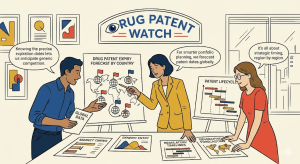
This article explains, in precise operational terms, how to build a country-by-country drug patent expiry forecast that is actually reliable — one that accounts for statutory term calculations, patent term extensions, SPC mechanisms, regulatory exclusivity stacking, data exclusivity rules, and the specific legal doctrines in the fourteen markets that collectively represent more than 90 percent of global branded pharmaceutical revenue [1]. It covers the databases and tools that supply the raw inputs, the calculation methodologies that transform those inputs into defensible forecasts, and the strategic decisions that depend on getting the forecasts right. <blockquote> “In an analysis of the top 100 best-selling drugs globally, researchers found that patent expiry dates across major markets diverged by an average of 3.2 years between the earliest and latest country of generic entry, with some products showing divergence of more than seven years across the full market set.” [2] </blockquote>
The audience for this analysis is not the patent attorney who knows the doctrine cold and applies it in single-country litigation. It is the portfolio planner, the business development executive, the generic manufacturer’s market entry strategist, and the investment analyst who needs to model revenue cliffs precisely enough to make resource allocation decisions that hold up under scrutiny.
Why Expiry Dates Diverge Across Countries
Before getting into the calculation mechanics, it is worth understanding the structural reasons why patent expiry dates differ across jurisdictions. The divergence is not random — it follows identifiable legal architecture, and understanding that architecture is the foundation for building accurate forecasts.
Different Filing Dates and Priority Claims
A pharmaceutical compound patent originates with a priority filing, typically at the inventor’s home patent office under the Paris Convention. Every subsequent national or regional filing claiming priority to that application inherits the priority date for novelty purposes but is examined independently in each jurisdiction. The patent term in most countries runs from the actual filing date in that country, not from the priority date.
This creates immediate divergence. A U.S. application filed six months after the Paris Convention priority date runs from a different date than a PCT application entering national phase in Japan twelve months after priority, even though both claim the same priority date and cover the same compound. Multiplied across a global patent family with thirty or more national counterparts, these filing date differences produce term divergence even before any jurisdiction-specific adjustment mechanisms are applied.
Term Extension Mechanisms Are Structurally Different in Each Region
Every major pharmaceutical market has some mechanism to compensate patent holders for time spent in regulatory review. But the mechanisms are constructed differently, they calculate extensions differently, they cap extensions at different limits, and they apply to different categories of patents.
The U.S. Patent Term Extension under 35 U.S.C. § 156 caps at five years and limits the post-approval protected period to fourteen years. The European SPC under Regulation (EC) No. 469/2009 caps at five years but calculates duration differently and grants a separate right rather than extending the underlying patent. Japan’s patent term extension under the Patent Act Article 67 runs up to five years with different calculation methodology from either the U.S. or European approach. Canada operates under its Certificate of Supplementary Protection (CSP) since 2017, with its own rules. Brazil, India, China, and Australia each have distinct frameworks or none at all.
A forecast that applies a single “up to five years extension” rule uniformly across all markets will be wrong in most of them, sometimes materially wrong.
Data Exclusivity Is Not a Patent and Does Not Follow Patent Rules
Regulatory data exclusivity protects against generic reliance on the brand’s clinical trial data for regulatory approval purposes. In the United States, it runs eight years for biologics and five years for new chemical entities under Hatch-Waxman. In the European Union, the 8+2+1 framework provides eight years of data exclusivity, two years of market exclusivity, and a potential one-year extension for new indications [3]. In Japan, the period differs based on whether the drug is classified as a new molecular entity or a new medical use of an existing compound.
Data exclusivity can block generic market entry independently of patent status. If a patent expires but data exclusivity has not, a generic cannot obtain marketing authorization in jurisdictions that prohibit reliance on the brand’s data during the exclusivity period. This means the effective competitive entry date is the later of patent expiry and data exclusivity expiry — not patent expiry alone.
Portfolio planners who model only patent term miss this. Generic entry modelers who do not include data exclusivity in their country-specific forecasts will consistently predict competitive entry too early in markets with strong data protection regimes.
In markets where patent term extensions are calculated based on the period between patent grant and first regulatory approval, the length of the regulatory review directly determines the extension duration. A drug that took four years from patent grant to FDA approval receives a different U.S. PTE than a drug that took six years — and those different PTEs then interact with country-specific approval timelines in each foreign market where similar extension mechanisms apply.
The European SPC duration is calculated specifically as: date of first marketing authorization in the European Union minus date of patent application, minus five years, subject to a maximum of five years [4]. This formula means that drugs with EU regulatory approval close in time to their patent filing receive shorter SPCs than drugs that took longer to gain European authorization — the reverse of what intuition might suggest.
Getting these calculations right requires knowing the exact dates of patent filing, PCT entry, national phase entry, patent grant, and marketing authorization in each relevant jurisdiction. None of those dates are the same across countries. All of them are necessary inputs for accurate expiry forecasting.
The United States: The Baseline Market
The U.S. market generates the largest absolute pharmaceutical revenue of any single country, and its patent expiry calculation framework, while complex, is the most extensively documented.
Calculating U.S. Patent Term Adjustment
The basic U.S. patent term runs 20 years from the earliest effective U.S. filing date, subject to Patent Term Adjustment (PTA) for delays during USPTO examination and Patent Term Extension (PTE) for FDA regulatory review time.
PTA is calculated under a formula established by 35 U.S.C. § 154(b) that adds days for three categories of USPTO delay: A-delays (failure to issue initial office action within fourteen months of filing), B-delays (failure to issue patent within three years of filing), and C-delays (appellate or interference proceedings) [5]. From the total of A+B+C delays, the USPTO subtracts any applicant-caused delays. The resulting PTA can range from zero to multiple years, and the calculation appears on the face of the issued patent.
For forecasting purposes, the published PTA should not be accepted uncritically. Generic manufacturers and patent practitioners have successfully challenged PTA calculations in court, with cases like Wyeth v. Kappos [6] establishing that the USPTO’s original calculation methodology was incorrect and that patent holders were entitled to additional term. A forecast model should verify PTA calculations for high-value patents against the USPTO’s published methodology and flag any patent where the PTA appears inconsistent with the prosecution timeline, which DrugPatentWatch’s patent detail pages make accessible by linking to USPTO prosecution history records.
Calculating U.S. Patent Term Extension
PTE under 35 U.S.C. § 156 requires that five conditions are met: the patent claims the approved drug product; the drug was subject to a regulatory review period; the patent has not previously been extended; only one patent per product can receive PTE; and the application for PTE was filed within 60 days of FDA approval [7].
The PTE calculation formula is: one-half of the IND clinical testing period plus the full NDA review period. The result is capped at five years, and the total remaining term after extension cannot exceed fourteen years from the FDA approval date. The USPTO’s PTE records are publicly available, and DrugPatentWatch aggregates them alongside Orange Book listings, making it straightforward to verify which patent received PTE for each approved drug and what the calculated extension period was.
For forecasting, the practical question is what the actual patent expiry date is after all adjustments. The USPTO publishes this on the patent itself: the “Patent Expiry” field on recent patents reflects the statutory term plus PTA. PTE, which is recorded separately, must be added to this date to arrive at the final adjusted expiry.
Orange Book Expiry Dates: Useful, But Not the Final Answer
The FDA’s Orange Book lists patents covering approved drug products, including their expiration dates. These dates reflect the assignee’s self-reported calculations and do not always match the results of independent verification. For most drugs, the Orange Book dates are accurate enough for preliminary screening. For any drug where the expiry date materially affects a business decision, independent recalculation is warranted.
The Orange Book does not list all patents relevant to a drug product. It lists only patents that the NDA holder has certified as covering the drug product or an approved method of using it. Formulation patents, process patents, and patents on metabolites that the brand chose not to list do not appear. A complete U.S. expiry picture requires both Orange Book review and a search of the brand’s patent portfolio for non-listed relevant patents.
The European Union: SPC Complexity at Scale
The European Union’s patent protection framework for pharmaceuticals involves two distinct layers: the patent itself (granted by the EPO or national patent offices) and the SPC, which is a separate intellectual property right granted by individual member states.
How SPCs Work: The Regulatory Framework
SPC Regulation (EC) No. 469/2009 provides that a product patent holder may apply for an SPC when the product received its first marketing authorization in the EU after the patent application was filed. The SPC grants up to five additional years of market protection covering specifically the approved product (not the broader patent claims), plus a possible six-month pediatric extension under Regulation (EC) No. 1901/2006 [8].
The SPC is granted by each member state’s national IP office separately, not by the EPO centrally. This means that the same product may have SPCs granted in Germany, France, the UK (pre-Brexit), the Netherlands, and other member states, each with the same nominal duration calculation but with slightly different expiry dates depending on: the date the national SPC application was filed; the national IP office’s grant date; and whether any SPC validity challenges succeeded in that particular member state.
For portfolio planning purposes, this architecture means that a single drug can have up to 27 different SPC expiry dates across EU member states, each requiring separate verification.
The SPC Duration Calculation in Practice
The formula under Article 13 of Regulation (EC) No. 469/2009 is:
SPC duration = (Date of first EU marketing authorization) – (Date of patent application) – 5 years
Subject to a maximum of five years.
The “date of first EU marketing authorization” used in this calculation is the date of the first authorization in any EU member state, even if the SPC applicant’s country was not the first to authorize the product. This means that a German SPC calculated in 2024 uses the date of the first EU authorization, which may have been in France in 2003, as its reference point.
This calculation requires accurate records of both the patent filing date and the EU-first marketing authorization date. Both are public information, but locating them requires searching EPO records for patent filing dates and EMA or national agency databases for authorization dates. DrugPatentWatch’s coverage of European patent families and SPCs provides a structured starting point for this lookup, particularly for products where the U.S. Orange Book record can be linked to EU counterpart filings.
Post-Brexit UK: A Separate Calculation Now
The UK left the EU patent framework at the end of the Brexit transition period on December 31, 2020. UK SPCs are now governed separately under the Patents Act 1977 as modified by post-Brexit secondary legislation, and UK SPC applications filed after the transition ended are processed by the Intellectual Property Office (IPO) under UK-specific rules [9].
For most products where an SPC was granted before Brexit, the UK SPC term runs to its original calculated expiry and is unaffected. For products where SPC applications were pending during the transition, the UK rules may produce different durations from the EU calculation. For products approved after Brexit, the UK SPC calculates from the UK marketing authorization date rather than the EU-first authorization date, which can produce materially different terms depending on the timing of MHRA approval relative to EMA approval.
Portfolio forecasters must maintain separate UK and EU SPC expiry records for any drug with meaningful UK revenue. The two figures can diverge by months or years depending on the product’s regulatory history.
EPO Opposition Proceedings and Their Effect on Expiry Forecasting
An EPO central opposition proceeding, if successful, can revoke the European patent from which SPCs derive. A revoked European patent leaves the SPC without its legal foundation, which typically (under national implementations of SPC regulation) causes the SPC to lapse.
From a forecasting perspective, this means that the “effective expiry date” for a European patent is not just the SPC expiry date – it is a probability-weighted average of the SPC expiry date (in the non-revocation scenario) and the opposition success date (in the revocation scenario). A patent currently under opposition at the EPO with a 40 percent estimated probability of full revocation and a 30 percent probability of partial revocation should not be forecast with the same confidence as a patent with no pending opposition.
The EPO’s public register provides opposition status for all European patents, and the register is searchable by patent number. For a portfolio covering fifty or more products, manually monitoring EPO opposition proceedings across all patent families is impractical without systematic data infrastructure. Commercial tools that aggregate EPO prosecution and opposition data are a practical necessity for portfolio-level European expiry forecasting.
Japan: The Longest Extensions in the Developed World
Japan’s pharmaceutical patent framework combines a 20-year statutory term (running from filing date) with patent term extensions under Article 67 of the Patent Act that can reach up to five years per extension, with the unique feature that a single patent can receive multiple extensions for different regulatory approvals [10].
Japan’s Multiple Extension System
Under the Japanese system, a patent holder can apply for a patent term extension each time a new regulatory approval requires a clinical testing period. If the same patent covers both an original indication and a new indication that required separate clinical trials, the holder can apply for an extension related to the new indication’s approval even after an earlier extension was granted for the original approval.
This creates the possibility of compound extensions. A base patent with a five-year extension for the original approval, followed by a three-year extension for a new pediatric indication, could potentially achieve eight years of additional protection beyond the basic 20-year term. Whether both extensions are legally valid depends on the specific factual circumstances, and Japanese courts have interpreted the extension eligibility rules in ways that constrain but do not eliminate this possibility.
For forecasting purposes, this means that Japanese patent expiry dates for complex products with multiple approvals require careful tracking of each extension certificate separately. The Japanese Patent Office (JPO) publishes extension records through its J-PlatPat database, which provides extension history for each patent number. Reading these records and calculating the composite expiry date requires understanding which extensions apply to which approved uses and how the courts have interpreted stacking limitations.
Japan’s Data Exclusivity: The Re-Examination Period
Japan’s data protection mechanism is called the Re-examination Period (再審査期間), during which the Ministry of Health, Labour and Welfare (MHLW) does not approve generic applications that rely on the brand’s clinical data. The standard re-examination period is eight years for new molecular entities, but MHLW can grant six years, four years, or other periods depending on the drug category. Orphan drugs receive ten years [11].
Calculating the effective competitive entry date in Japan requires mapping: the patent expiry (adjusted for all extensions); the end of the re-examination period; and whether the patent is listed in the Japanese equivalent of the Orange Book (the “Excluded Drugs List” system maintained by MHLW). Generic entry in Japan is legally possible only when all applicable protection has expired.
Pharmacokinetic and Formulation Patents Under Japanese Practice
Japanese patent practice has historically been somewhat more permissive than U.S. or European practice regarding secondary patents covering pharmacokinetic parameters, metabolites, and specific dosage regimens. Japanese courts have sustained patents covering features like once-daily dosing where the European Patent Office might have found the inventive step insufficient.
This affects expiry forecasting in two ways. First, the suite of enforceable Japanese patents for a given drug may be broader than the equivalent U.S. or European portfolio, extending Japanese exclusivity beyond what the compound patent alone would support. Second, the enforceability of these secondary patents under Japanese infringement law is a live legal question that requires country-specific legal analysis rather than extrapolation from U.S. or European precedent.
China: Scale, Speed, and a Changing IP Landscape
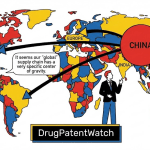
China has become the world’s second-largest pharmaceutical market and is projected to represent approximately 20 percent of global pharma revenue by 2030 [12]. Its patent framework has undergone substantial reform, and the implications for expiry forecasting are significant.
The 2021 Patent Law Amendments and Linkage System
China’s fourth amendment to the Patent Law, effective June 1, 2021, introduced two mechanisms relevant to pharmaceutical patent expiry forecasting: a patent linkage system modeled loosely on the U.S. Hatch-Waxman framework, and a patent term compensation system for pharmaceutical products [13].
The patent linkage system allows patent holders to register patents with the National Medical Products Administration (NMPA) and challenge generic applicants who certify non-infringement or invalidity. This creates a 9-month stay of generic approval (shorter than the U.S. 30-month stay), subject to NMPA review of the patent’s validity and coverage.
The patent term compensation system provides compensation for up to five years of lost patent time during NMPA regulatory review, with maximum post-approval protection of fourteen years — structurally similar to the U.S. PTE framework. China published implementing regulations for patent term compensation in 2023, and the CNIPA (China National Intellectual Property Administration) has begun processing applications. The system is new enough that its implementation in practice remains somewhat uncertain, but its existence means that Chinese patent expiry dates for drugs approved under NMPA review may extend beyond the basic 20-year term by up to five years.
The Chinese Patent Term: From Filing Date, With Complications
Chinese patents run 20 years from the filing date, with no PTA equivalent for prosecution delays. A PCT application entering Chinese national phase typically does so at the 30-month deadline from priority date, and the 20-year term runs from the PCT international filing date, not from the Chinese national phase entry date.
For a drug where the PCT was filed in Year 1, Chinese national phase was entered in Year 3, and NMPA approval came in Year 11, the basic patent term expires in Year 21 (20 years from PCT filing). If the patent holder applies for and receives term compensation for the NMPA review period (Years 5 through 11 in this hypothetical, though the compensation calculation is more specific), the adjusted expiry might be Year 24 or 25 depending on the exact formula.
For the first several years of China’s new term compensation system, forecasters should treat Chinese patent expiry dates as more uncertain than U.S. or EU dates, and model scenarios with and without compensation for significant products.
China’s Data Exclusivity and Market Authorization Rules
China provides data exclusivity of six years for new chemical entities and three years for new formulations, new uses, and new dosage regimens [14]. These periods run from the date of NMPA marketing authorization and operate independently of patent protection.
The interaction between Chinese patent term, patent term compensation, and data exclusivity creates a multi-layered protection timeline that requires tracking each element separately. For a drug approved in China after the 2021 amendments with a patent that is eligible for term compensation, the effective protection timeline involves at minimum three dates: basic patent expiry, compensated patent expiry, and data exclusivity expiry. Generic entry requires all three to have passed.
Canada: Certificates of Supplementary Protection
Canada implemented Certificates of Supplementary Protection (CSPs) on September 21, 2017, under the Patented Medicines (Notice of Compliance) Regulations [15]. The CSP system was introduced as part of the Canada-EU Comprehensive Economic and Trade Agreement (CETA) and aligns Canadian protection more closely with the European SPC framework.
CSP Duration and Calculation
A Canadian CSP provides up to two additional years of protection beyond the basic patent term for new drugs approved by Health Canada. The duration is calculated as: date of Health Canada authorization minus date of Canadian patent application, minus five years, subject to a maximum of two years.
The two-year cap is significantly shorter than the five-year maximum under the EU SPC or U.S. PTE. For products that received Health Canada approval long after the patent application, the CSP provides meaningful but limited additional protection. For products where the regulatory review was relatively short, the CSP may provide little additional term.
Canadian CSP records are maintained by Health Canada and the Canadian Intellectual Property Office (CIPO). For portfolio planners, the key practical issue is that Canada’s CSP system is relatively young and its interaction with Canada’s patent linkage system (which predates the CSP) requires verification on a product-by-product basis against CIPO and Health Canada records.
Canada’s NOC Regulations: The Litigation Linkage
Canada’s Notice of Compliance Regulations (NOC Regulations) create a linkage between patent status and generic drug approval that predates the CSP system. Under these regulations, patents listed on Canada’s patent register are notified to generic applicants, who must certify that they will not infringe the listed patents. Patent holders can then apply for a prohibition order delaying generic approval for up to 24 months while litigation proceeds [16].
The Canadian NOC regulation framework is procedurally distinct from both the U.S. Hatch-Waxman system and the EU SPC invalidation process, and Canadian courts have interpreted both the listing requirements and the prohibition order standards differently from their U.S. counterparts. A patent listed on Canada’s patent register may have different practical enforceability characteristics from the same family member listed in the U.S. Orange Book.
Expiry forecasting for Canada requires: identifying listed Canadian patents, calculating adjusted expiry with CSP where applicable, and modeling the NOC litigation probability based on Canada-specific litigation history.
Australia and Key Asia-Pacific Markets
Australia, South Korea, and other Asia-Pacific markets represent collectively significant pharmaceutical revenue and have distinct patent term adjustment mechanisms that affect expiry forecasting.
Australia’s Extension of Term Framework
Australia provides patent term extensions under Part 3 of Chapter 6 of the Patents Act 1990, which allows extensions of up to five years for pharmaceutical patents where the time between patent grant and marketing approval by the Therapeutic Goods Administration (TGA) exceeded five years [17]. The extension duration is: date of first TGA approval minus date of patent grant minus five years, subject to a maximum of five years.
Australian patent term extensions are administered by IP Australia and published on the Australian Patent Register. For portfolio planners, the notable feature of the Australian system is that the extension calculates from patent grant rather than patent filing, which makes the duration sensitive to prosecution length in a different way from the U.S. PTE calculation.
Australia also maintains a pharmaceutical patents register (separate from the main patent register) that lists patents covering approved drugs in a manner somewhat analogous to the U.S. Orange Book, though with different listing requirements and enforcement mechanisms. Generic manufacturers in Australia are generally familiar with the PBS (Pharmaceutical Benefits Scheme) as the primary access and pricing mechanism, and the timing of patent expiry directly affects PBS listing eligibility for generics.
South Korea’s Linkage System and Extension Framework
South Korea amended its Pharmaceutical Affairs Act in 2015 to establish a patent linkage system requiring generic applicants to notify patent holders and providing a 9-month stay of marketing authorization pending patent litigation [18]. South Korea provides patent term extensions for pharmaceutical products similar in structure to the Japanese system, allowing extensions of up to five years for time spent in regulatory review.
Korean patent term extension records are maintained by the Korean Intellectual Property Office (KIPO) and are searchable through KIPRIS, the Korean IP information service. For companies with significant Korean revenue, accurate extension records require Korean-language database searches, which creates a practical data aggregation challenge for multinational portfolio planning teams.
India: No Extensions, But Data Exclusivity Is Absent Too
India presents a fundamentally different forecasting environment. Indian patent law does not provide any mechanism for patent term extension or supplementary protection certificates. Patents run for 20 years from the filing date without adjustment [19]. There is no data exclusivity for pharmaceutical products under Indian law — a longstanding point of tension with the World Trade Organization’s TRIPS Agreement and with multinational pharmaceutical companies.
This means that in India, the only protection a pharmaceutical patent holder has is the basic 20-year patent term, and once that expires, generic entry is legally possible immediately. The effective protection period in India is almost always shorter than in the U.S. or EU for the same product, sometimes dramatically so.
For portfolio planners assessing revenue exposure in India, the key forecast variable is simply: when does the Indian patent expire? The answer requires identifying the Indian patent application that covers the compound, determining its filing date (typically the national phase entry date from a PCT application), and calculating twenty years forward from that date. There are no extensions to model, no exclusivity periods to stack, and no linkage litigation stay to factor in.
DrugPatentWatch’s coverage of international patent families provides access to Indian patent family members where they exist, which allows this calculation to be performed within a consistent data environment rather than requiring separate Indian patent office database searches for each product.
Brazil and Latin American Markets
Brazil represents the largest pharmaceutical market in Latin America and has several distinctive IP features that affect expiry forecasting.
INPI’s Prior Examination Requirement and Patent Delays
Brazil’s National Institute of Industrial Property (INPI) has historically been one of the slowest patent examination offices in the world for pharmaceutical applications. For years, INPI required prior approval from ANVISA (Brazil’s health regulatory agency) before granting pharmaceutical patents — a review that added years of delay to prosecution timelines.
A Supreme Court ruling in 2021 ended ANVISA’s role in patent examination [20], but the legacy of prosecution delays means that many Brazilian pharmaceutical patents were granted after exceptionally long prosecution periods, with correspondingly short remaining terms at grant.
Brazilian patents run 20 years from filing date or ten years from grant, whichever is longer. This unusual “whichever is longer” rule, which exists nowhere else in major markets, was intended to compensate patent holders for INPI’s examination delays. A patent filed in Year 1 that was not granted until Year 15 runs until Year 21 (20 years from filing) or Year 25 (10 years from grant), whichever is later — in this case, Year 25.
Brazil’s Supreme Court struck down this “whichever is longer” rule in a 2021 decision (ADI 5529), holding that it violated the Brazilian Constitution [21]. For patents granted before the decision, the ruling’s application depends on whether the patent had already been issued under the longer-term rule, with transitional provisions that remain partially litigated. The practical result is that Brazilian patent expiry forecasting for products with pre-2021 grants requires legal analysis of whether the struck-down term extension applies to that specific patent.
ANVISA’s Regulatory Exclusivity
ANVISA provides data exclusivity for biological products (eight years) and for new chemical entities (a period implemented under Brazil’s specific regulatory framework). Brazil does not have a patent linkage system comparable to the U.S. Hatch-Waxman or Canadian NOC regulations, meaning that generic registration and patent expiry operate largely independently, and Brazilian generics can obtain and hold marketing authorization before the patent expires — the expiry date determines when they can legally launch, not when they can seek authorization.
The Multi-Country Expiry Forecast: Building the Model
Having established the country-specific rules, the question becomes how to assemble them into a coherent, maintainable forecast model across a full drug portfolio.
Data Collection: The Raw Inputs Required
For each product and each target country, the complete expiry forecast requires collecting eight categories of input data:
The earliest priority filing date for the patent family (available through patent office databases or aggregators).
The national/regional filing date in each target country (PCT entry date for PCT applications; direct national filing date otherwise).
The grant date in each target country.
The first marketing authorization date in each target country.
The first EU marketing authorization date, if the target country grants SPCs referencing EU approval (relevant for EU member states).
Any patent term adjustment or extension certificates granted in each country.
Any supplementary protection certificates or equivalent rights granted and their calculated durations.
Data exclusivity start and end dates in each country.
Collecting this data manually for a single product across twelve countries is a multi-day project. For a portfolio of 50 products across 12 countries, it represents substantial organizational infrastructure. Tools like DrugPatentWatch, which structure FDA Orange Book data, patent family records, and regulatory exclusivity information in a searchable database, handle the U.S. layer efficiently and provide international family links that support international data collection. For non-U.S. jurisdictions, the data collection work benefits from integration with services like LexisNexis PatentAdvisor, Orbit Intelligence, or national patent office APIs where they exist.
Once the raw input data is assembled, the calculation step applies country-specific rules to arrive at the adjusted patent expiry and the effective competitive entry date for each country.
For the United States: Basic term = filing date + 20 years. Adjusted term = basic term + PTA + PTE (where applicable), subject to PTE cap of five years and 14-year post-approval maximum. Data exclusivity expiry = NDA approval date + 5 years (NCE), 3 years (new clinical study), or 12 years (biologic). Effective competitive entry date = later of adjusted patent expiry and data exclusivity expiry for the primary compound coverage.
For EU member states: Basic patent term = European filing date + 20 years (same across all validating member states). SPC duration = (EU-first marketing authorization date) – (patent application date) – 5 years, maximum 5 years, per member state. Pediatric extension = 6 additional months where applicable. Data exclusivity = 8 years from EU approval. Market exclusivity = 2 additional years from EU approval (10 years total, potentially 11 with new indication). Effective competitive entry date = later of SPC expiry (per member state) and market exclusivity expiry.
For Japan: Basic term = filing date + 20 years. Extension per approval = MHLW approval date – IND filing date (capped at 5 years per extension). Multiple extensions possible for multiple approvals; verify using JPO extension certificate records. Re-examination period = from MHLW approval, typically 8 years for NCEs. Effective competitive entry date = latest of all patent extension expiries and re-examination period end.
This calculation set, applied systematically to each country’s data, produces a country-specific “first possible generic entry date” for each product. The model should present these dates in a matrix with products as rows and countries as columns, allowing portfolio planners to read across a product’s global exposure profile or down a column to see which products become vulnerable in a specific geography over a specific time horizon.
Confidence Ratings and Uncertainty Flags
A responsible expiry forecast does not present every date with equal confidence. Each country-product combination should carry a confidence rating reflecting the reliability of the underlying data and the stability of the legal environment.
High confidence (verified inputs, stable law, no pending proceedings): Assign to U.S. products with verified Orange Book listings and no active Paragraph IV litigation. Assign to EU products with final granted SPCs and no pending EPO oppositions.
Medium confidence (verified inputs but pending legal questions): Assign to products in countries with active patent term extension applications still pending. Assign to EU products where SPC calculation is confirmed but EPO opposition proceedings are ongoing.
Low confidence (uncertain inputs or rapidly changing law): Assign to Chinese products where patent term compensation applications are pending and the implementation of the 2021 amendments remains unsettled. Assign to Brazilian patents affected by the 2021 ADI 5529 ruling where specific application to that patent remains unclear.
This tiering system ensures that high-confidence dates are used directly in commercial planning, while low-confidence dates trigger additional verification before resource allocation decisions are made.
Strategic Uses of Multi-Country Expiry Forecasts
The expiry forecast matrix is not an endpoint — it is input for a set of specific strategic decisions.
Market Entry Sequencing for Generic Manufacturers
For a generic pharmaceutical company, the multi-country expiry matrix shows where and when it can first launch a product in each target market. Countries where protection expires earliest represent the earliest revenue opportunity; countries where SPCs extend exclusivity represent later opportunities that still deserve development investment.
A well-structured generic entry strategy uses the expiry matrix to sequence development and regulatory work. Since obtaining marketing authorization in most major markets requires 12-36 months of regulatory review, the development timeline must begin before patent expiry by an amount equal to the expected review period. A product whose EU SPC expires in Germany in 36 months but whose Japanese patent extension does not expire for 7 years warrants a different priority in the development queue than one expiring in both markets within 18 months.
The 180-day exclusivity available to the first ANDA filer in the U.S. creates a specific incentive for timing U.S. generic entry as precisely as possible, and the expiry forecast for the U.S. compound patent is the reference point for that timing decision. DrugPatentWatch’s ANDA tracking, which shows the full Paragraph IV certification history and the number of first-filer applicants for each product, allows generic manufacturers to model not just when they can enter but whether they have any prospect of capturing first-filer exclusivity or face a fully competed field on day one.
Brand Portfolio Defense and Life Cycle Management
For branded pharmaceutical companies, the expiry matrix identifies which products face competitive entry in which markets over the planning horizon, and when. This information drives several categories of strategic decision.
Pricing strategy: As compound patent expiry approaches in a given country, the commercial value of that market position begins eroding before legal protection ends — payers negotiate harder, formulary pressure increases, and prepared channel stocking begins. A country-specific expiry forecast gives the commercial team a precise timeline for when these pre-expiry dynamics will intensify.
Line extension timing: A reformulated product or new indication must receive regulatory approval before the original compound patent expires to establish its own protection period without the competitive context of an already-genericized parent product. Mapping the line extension regulatory timeline against the expiry matrix shows where the windows are still open.
Authorized generic agreements: When compound patent expiry is imminent in a major market, negotiating an authorized generic arrangement with a generic manufacturer can generate revenue from the generic market while limiting the price erosion caused by fully independent generic competition. The timing and terms of such arrangements depend on knowing precisely when protection expires.
Continuation and secondary patent prosecution: Where pending patent applications could extend protection in specific high-revenue markets, the expiry matrix identifies which countries most urgently need a successful continuation or formulation patent to fill an approaching protection gap.
Licensing and Royalty Calculation
Patent licenses in pharmaceutical markets are typically structured with royalty rates that step down as the patent portfolio weakens and terminate when protection expires. A license agreement that specifies royalties “during the patent term” requires a shared understanding of when that term ends in each licensed territory.
For licensing negotiations, the multi-country expiry matrix provides the factual basis for negotiating territory-specific royalty provisions and step-down schedules. Where the parties disagree about expiry dates in specific territories — a common occurrence given the genuine uncertainty in some jurisdictions, particularly post-Brexit UK and the 2021 Brazilian amendments — the expiry forecast can be structured as an exhibit to the license agreement, with a mechanism for updating it when the relevant legal questions are resolved.
Acquisition Valuation and Due Diligence
The financial value of a pharmaceutical acquisition is substantially determined by how long patent protection will last in the acquiree’s key markets. An acquiree whose lead product has fifteen years of U.S. protection remaining but only three years of EU SPC protection presents a materially different value proposition from one with symmetric global protection.
In M&A transactions, the expiry forecast feeds directly into the revenue model by defining the period during which branded pricing can be maintained in each territory. A five-year variance in EU SPC expiry between what the seller’s materials project and what an independent verification produces can translate to hundreds of millions of dollars in present value difference on a major product.
Standard IP due diligence protocols for pharmaceutical transactions should require an independent calculation of patent and SPC expiry dates for each major market, verified against primary source records rather than accepting the seller’s projection. The investment required to perform this verification across the top twelve markets for the five highest-revenue products in a portfolio is small relative to the transaction value and the risk of a post-closing discovery that expiry assumptions were materially optimistic.
Special Topics in Expiry Forecasting
Biologics and Biosimilar Entry Timelines
Biological products present a different expiry forecasting challenge from small-molecule drugs because: the relevant exclusivity periods are primarily regulatory rather than patent-based; the patent portfolios covering biologics are typically much larger and more complex than small-molecule compound patent portfolios; and biosimilar entry follows a different legal process than generic entry in most jurisdictions.
In the United States, the BPCIA provides 12 years of regulatory exclusivity for reference biological products from the date of first approval, independent of patent status [22]. This 12-year exclusivity period is often more commercially significant than any specific patent, because it blocks FDA approval of biosimilar applications regardless of patent validity. The relevant expiry date for U.S. biosimilar entry planning is therefore the 12-year exclusivity expiry date, not the earliest compound patent expiry.
In the EU, the reference product protection period for biologics is the same 8+2 data and market exclusivity as for small-molecule drugs — eight years of data exclusivity followed by two years during which no biosimilar can be marketed, for a total of ten years. There is no EU equivalent of the U.S. 12-year biologic exclusivity.
This creates a significant U.S./EU asymmetry for biologic products. A biologic approved in the U.S. and EU on the same date in Year 1 faces legally possible biosimilar marketing in the EU in Year 11 but legally possible biosimilar marketing in the U.S. in Year 13. The patent portfolios covering the biologic further complicate this picture, but the regulatory exclusivity period is typically the binding constraint for early biosimilar entry in the U.S.
Pediatric Extensions: The Six-Month Premium
In both the United States and the European Union, pharmaceutical companies that conduct pediatric studies and submit the results to the relevant regulatory authority are entitled to an additional six months of market exclusivity beyond the otherwise applicable protection period.
In the U.S., the pediatric extension under the Pediatric Research Equity Act applies the six months to all Orange Book-listed patents and existing exclusivities for the drug [23]. In the EU, the pediatric extension under Regulation (EC) No. 1901/2006 applies the six months to the SPC [24].
For expiry forecasting purposes, pediatric extensions require monitoring the drug’s pediatric development program and the submission status of the Pediatric Study Plan (EU) or Pediatric Study Request response (U.S.). A drug with a completed and accepted pediatric program is entitled to the extension, but the extension is not granted automatically — applications must be filed, and the grant dates vary.
DrugPatentWatch’s Orange Book tracking includes pediatric exclusivity records, making it straightforward to identify which products have received or are entitled to pediatric extensions in the U.S. The EU pediatric extension tracking requires cross-referencing EMA records, which are publicly accessible but require separate database queries from the primary SPC records.
Orphan Drug Designation and Its Interaction With Patent Term
Orphan drug designation provides market exclusivity of seven years in the U.S. and ten years in the EU for drugs treating rare diseases (defined as affecting fewer than 200,000 patients in the U.S. or fewer than five in 10,000 in the EU) [25]. This exclusivity operates independently of patent protection and prevents regulatory approval of similar drugs for the same indication during the exclusivity period.
The interaction between orphan exclusivity and patent term creates a complex stacking question for expiry forecasters. In some cases, orphan exclusivity is the primary commercial protection because the patent has expired or would be easy to invalidate. In others, the patent provides protection well beyond the orphan exclusivity period, rendering the orphan exclusivity redundant. Mapping which protection layer is binding in which market and in which time period requires analyzing both protection types together.
Building Forecasting Infrastructure: Systems and Processes
An accurate multi-country expiry forecast is not a one-time deliverable. It is a living model that requires updating as patents are granted, extended, challenged, or invalidated; as new regulatory approvals are obtained; and as the legal environment in each jurisdiction evolves.
Database Architecture for Portfolio-Scale Forecasting
At portfolio scale, managing patent expiry data across 50 products and 15 countries requires structured database infrastructure rather than spreadsheets. The fundamental data architecture needs:
A product-country table that stores the calculated expiry date for each protection type (basic patent, SPC/PTE, data exclusivity, orphan exclusivity, pediatric extension) for each product in each target country.
A patent-country table that stores the raw input data (filing dates, grant dates, authorization dates, extension certificates) that feed the calculations.
A history table that records when each expiry date was last verified, what data sources were used, and what confidence level was assigned.
An event log that records changes in each expiry date, with the reason for the change, so that downstream commercial and financial models can be updated when the expiry forecast changes.
This architecture allows queries like “show me all products in the EU where SPC expiry falls within the next 24 months” or “show me all products where the Chinese patent expiry is flagged as low confidence” without manual inspection of individual product records.
Integration With Commercial Planning Systems
Expiry forecast data is useful only if it flows into the commercial planning systems where investment decisions are made. The goal is a data feed from the patent expiry database to the commercial planning system, so that revenue projections automatically reflect the current best estimate of when competition will enter each market.
In practice, this integration requires agreement between the IP function and the commercial planning function on: which expiry date to use (the legally possible entry date? the realistically expected entry date accounting for generic development timelines? the expected authorization date for the first generic?); how to model the revenue erosion curve once competition enters; and how to update both the expiry date and the erosion model when circumstances change.
The most common failure mode in this integration is the temporal gap between when the IP team updates the expiry forecast and when the commercial planning system reflects that update. A patent that expires earlier than forecast, or a new SPC that extends a protection period, has immediate commercial implications that do not help the business if they take three budget cycles to appear in the revenue model.
Monitoring for Expiry Date Changes
Expiry dates can change for reasons the portfolio planning team did not initiate. An EPO opposition that succeeds invalidates a European patent and its associated SPCs retroactively. A PTAB IPR proceeding that cancels claims reduces the scope of U.S. protection. A successful Paragraph IV litigation can produce a consent judgment allowing generic entry before the patent’s calendar expiry date.
Systematic monitoring of events that can change expiry dates requires tracking:
Active PTAB proceedings against portfolio patents (USPTO PTAB docket, accessible via API).
Active EPO opposition proceedings against European patent family members (EPO Register).
Paragraph IV litigation status in the U.S. (court PACER records and DrugPatentWatch’s Paragraph IV litigation tracking).
Generic ANDA filing activity, which signals which products are being targeted for early entry (FDA Orange Book updates via DrugPatentWatch alert system).
Regulatory approval events that could trigger pediatric extension applications (FDA and EMA grant records).
Automated monitoring workflows for each of these data sources, generating alerts when relevant events occur for portfolio patents, is the operational complement to the static expiry forecast model. Without monitoring, the forecast becomes stale as soon as events occur that should change it.
Verification and Quality Control
A forecast that is systematically wrong in specific country calculations is more dangerous than no forecast at all, because it creates false confidence in incorrect numbers. Quality control procedures are essential.
Independent Recalculation for High-Value Assets
For any product representing more than five percent of total portfolio revenue, the expiry forecast calculations for the top five markets should be independently recalculated by outside counsel in each jurisdiction, using primary source records rather than relying on database-aggregated figures.
This is not redundancy for its own sake. The calculation rules in several jurisdictions — Brazil’s “whichever is longer” rule transition, Japan’s multiple extension stacking, the UK’s post-Brexit SPC provisions — are sufficiently complex and in some cases sufficiently unsettled that errors in secondary database records are possible, and the financial consequences of acting on incorrect expiry dates for major-revenue products justify the verification cost.
Outside counsel verification should produce a written opinion specifying: the patent numbers reviewed; the primary source records examined; the calculation methodology applied; the resulting expiry date; and any legal uncertainty affecting that date.
Cross-Country Consistency Checks
Once expiry dates are calculated for all countries in the target market set, cross-country consistency checks identify potential errors. The following patterns warrant investigation:
A country where the calculated expiry date is more than two years earlier than all other markets for the same product may indicate a missing SPC or extension in that country’s data, or it may indicate a genuine protection gap.
A country where the calculated expiry date is more than three years later than all other markets may indicate a calculation error, or it may reflect a genuine difference in regulatory timing.
A product where the U.S. expiry date is later than the Japanese expiry date for the same compound patent family is worth verifying, since Japan’s multiple extension system frequently produces longer adjusted terms than U.S. PTE.
These consistency checks do not identify errors definitively, but they flag anomalies that merit review before the numbers are used in planning models.
Peer Review Protocols
Before any expiry forecast is used in a material commercial or financial decision, a peer review process should require sign-off from at minimum a patent attorney and a commercial planning representative. The attorney confirms that the legal calculations are correct under the applicable jurisdiction’s rules. The commercial planner confirms that the dates are being applied correctly in the revenue model.
This is a process discipline that many organizations skip under time pressure, and it is where the most consequential forecasting errors are caught or missed.
How Leading Pharmaceutical Companies Actually Do This
The organizational approaches to multi-country expiry forecasting in the pharmaceutical industry vary considerably by company size and portfolio complexity.
The Centralized IP Intelligence Function
Large companies — those with more than twenty marketed products and operations in ten or more markets — typically maintain centralized IP intelligence teams whose primary function is portfolio-level patent status monitoring and expiry forecasting. These teams operate databases that integrate internally generated patent records with external data from commercial providers, monitor for events that affect expiry dates, and produce regular portfolio exposure reports for senior management.
The most sophisticated versions of these functions are embedded in commercial planning processes: IP intelligence team members attend product commercialization reviews and contribute patent expiry forecasts as a standard input alongside clinical and market data. When a product team is evaluating whether to pursue a life-cycle management investment, the IP function provides country-specific protection timelines that define the competitive window the investment must be completed within.
The Decentralized Approach and Its Failures
Smaller companies and those in rapid growth through acquisition often manage patent expiry information in a decentralized way, with individual product teams or regional affiliates responsible for their own patent tracking. This approach produces the kind of forecasting gaps described in this article’s opening — individual teams maintaining different assumptions about the same expiry dates, some of which are wrong in ways that do not surface until a generic manufacturer arrives earlier than anyone expected.
The structural failure of the decentralized approach is not that individual teams are careless. It is that country-specific patent term calculation rules are complex enough that they require specialists to apply them correctly, and general commercial teams do not typically have the legal expertise to distinguish between a Patent Term Extension and an SPC or to apply the Brazilian “whichever is longer” transition rules to a specific product’s patent history.
Centralization of patent expiry data and calculation responsibility in a function with the necessary legal and technical expertise is the organizational prerequisite for reliable multi-country forecasting.
Using DrugPatentWatch as an Intelligence Layer
DrugPatentWatch’s value in portfolio-scale expiry forecasting lies primarily in its aggregation and structuring of U.S. Orange Book data, patent family records, ANDA filing history, Paragraph IV certification records, and regulatory exclusivity information. For U.S.-centric analysis, it provides a single-source starting point that would otherwise require querying the Orange Book, the USPTO patent database, PTAB records, and FDA drug approval records separately and manually.
The practical workflow for a generic manufacturer evaluating a U.S. market entry opportunity might begin with a DrugPatentWatch query on the target product, which surfaces: all listed patents with their expiry dates; the NCE and other exclusivity periods; any pending Paragraph IV certifications from other filers; and the patent term adjustment and extension history. That initial query, which takes minutes, provides the foundation for a U.S. competitive entry analysis that would otherwise require several hours of manual research.
For international markets, DrugPatentWatch’s patent family data provides links to foreign counterpart patents, which then require verification against national patent office databases for the SPC and extension records applicable in each jurisdiction. The combination of U.S. data completeness and international family connectivity makes it a practical starting point even for multi-country analyses where the final calculations require country-specific supplementation.
Common Forecasting Errors and How to Avoid Them
A review of pharmaceutical patent litigation records and post-mortem analyses of commercial forecasting failures reveals a consistent set of recurring errors.
Treating the Orange Book Expiry Date as the Compound Patent Expiry
The Orange Book lists multiple patents per product, including both compound patents and secondary patents. The expiry date displayed for a secondary patent (a formulation patent expiring in Year 30, for instance) should not be confused with the expiry of the compound patent (Year 25). Competitive entry becomes legally possible when the compound patent expires; secondary patents may still be valid but can potentially be avoided by a competitor using the original compound with a different formulation.
Many commercially consequential forecasting errors result from reading the latest-expiry Orange Book date as the relevant protection date without distinguishing which type of patent that late-expiring entry represents.
Ignoring Data Exclusivity in Favor of Patent Analysis Only
A product that lost its last patent in Year 1 but whose NCE data exclusivity runs until Year 5 cannot face generic competition until Year 5 in the U.S. A forecast model focused only on patent expiry will predict competitive entry four years earlier than legally possible. The reverse error — ignoring patent expiry and modeling only data exclusivity — would predict entry in Year 5 even if a compound patent extended protection until Year 8.
Complete U.S. forecasting requires both patent and exclusivity analysis for every product.
Using PCT Filing Date Instead of National Phase Entry Date for Non-U.S. Term Calculations
Many non-U.S. patent term calculations run from the national phase entry date in that country, not from the PCT international filing date. The PCT international filing date and the national phase entry date can differ by 18 to 30 months depending on when the applicant entered national phase. Using PCT filing dates as a substitute for national phase entry dates in non-U.S. term calculations systematically underestimates the remaining patent term in those countries.
Ignoring Validation Lapse in European Countries
A European patent granted by the EPO must be validated in each member state where protection is desired. If the patentee failed to validate in a particular member state within the required post-grant validation period, the patent provides no protection in that country. DrugPatentWatch and EPO-focused tools like EspaceNet show validation status by country, but analysts who treat a European grant as automatically covering all EU member states without checking validation status will incorrectly project protection in countries where the patent was never validated.
Not Accounting for Provisional Rights and the Prosecution Gap
A patent application is published 18 months after its priority date. In the U.S. and certain other jurisdictions, the applicant has provisional rights against infringers who had actual notice of the published application, even before the patent issues. During the gap between publication and issuance — which can run from one to several years — a competitor who begins selling the infringing product cannot be sued for past infringement under the issued patent, but may be liable for past infringement based on provisional rights if the issued claims are substantially identical to the published application claims.
This provisional rights period is rarely factored into expiry forecasting, but it is relevant for products where the competitive entry strategy involves launching at-risk before the patent issues.
The Regulatory Environment Is Changing: What to Watch
TRIPS Flexibilities and Compulsory Licensing in Middle-Income Markets
The WTO Agreement on Trade-Related Aspects of Intellectual Property Rights (TRIPS) permits member countries to issue compulsory licenses for pharmaceutical patents in defined circumstances, most notably public health emergencies. Several middle-income countries — Brazil, India, Thailand, South Africa — have issued or threatened compulsory licenses for patented drugs at various points over the past two decades [26].
For companies with significant revenue in middle-income markets, the compulsory licensing risk is a separate dimension of expiry forecasting that requires its own modeling. The probability of compulsory licensing in a specific country for a specific product is a function of: the drug’s disease area (HIV, hepatitis, cancer drugs attract more compulsory licensing attention); the country’s political environment and historical use of compulsory licensing; and the price differential between the branded product and what a local manufacturer could produce under a compulsory license.
Countries that use compulsory licensing effectively create an administrative path to generic-equivalent competition that bypasses patent protection entirely. A forecast model for middle-income markets should include a compulsory licensing probability scenario alongside the standard patent expiry analysis.
Unitary Patent System: EU Harmonization Arriving
The European Unitary Patent System, which entered into force in June 2023, allows patent holders to obtain a single patent with unitary effect across participating EU member states, rather than filing separate national validations of the European patent [27]. The Unified Patent Court (UPC) handles litigation under unitary patents, creating a single forum for infringement and validity disputes across participating states.
For pharmaceutical patent expiry forecasting, the unitary patent system does not change the underlying patent term or SPC calculation rules, which remain governed by national law. What it changes is the validation requirement: a unitary patent does not need to be separately validated in each member state, eliminating the risk of validation lapse in individual EU countries.
The UPC’s jurisdiction over SPC invalidity and infringement remains limited — SPCs are still national rights granted by member state IP offices, and the UPC does not have centralized SPC jurisdiction equivalent to its patent jurisdiction. Expiry forecasters still need country-specific SPC records even in the post-unitary patent environment.
For products where European patent applications are pending and where the applicant has elected unitary patent protection, the validation lapse risk for patent coverage (though not SPC coverage) is eliminated. This simplifies one piece of the European forecasting puzzle without eliminating the country-specific SPC analysis requirement.
Communicating Expiry Forecasts to Non-Technical Audiences
A technically accurate expiry forecast is commercially useful only if the people making decisions based on it understand what it represents and what level of confidence it carries.
The Product-Country Exposure Matrix
The most effective format for communicating multi-country expiry data to a non-technical audience is a visual matrix with products as rows and target countries as columns, color-coded by time horizon. Products where competitive entry is legally possible within 24 months appear in one color; products with 24-48 months protection appear in another; products with more than 48 months appear in a third.
This format allows a commercial planning or executive audience to immediately identify the most urgent exposure priorities without reading tables of dates. The underlying date table provides the precision for analysts who need it; the color matrix provides the strategic overview for decision-makers who do not.
Confidence levels can be indicated by a secondary visual coding — solid colors for high-confidence dates, hatched or lighter shading for medium-confidence dates, outline-only for low-confidence dates — so that the audience understands which cells warrant further verification before major commitments are made.
Scenario Presentation: Base, Bear, and Bull
For any product where the expiry forecast carries significant uncertainty, presenting three scenarios serves both analytical and communication purposes.
The base case uses the most likely expiry date based on current information. The bear case (earliest possible competitive entry) uses the earliest legally possible entry date assuming maximum challenge success probability. The bull case (latest possible protection) uses the latest legally defensible protection date assuming successful continuation prosecution, full pediatric extension, and maximum challenge failure probability.
The financial value difference between the bear and bull cases for a major product quantifies the economic stakes of the uncertainty and justifies the investment in reducing that uncertainty through legal verification.
Key Takeaways
Multi-country drug patent expiry forecasting requires country-specific data and country-specific calculation rules. A single methodology applied uniformly across markets will produce systematic errors in most of them.
The effective competitive entry date in any country is the later of: the final adjusted patent expiry (including PTE, SPC, or equivalent); the end of all applicable regulatory data and market exclusivity periods; and any litigation stay periods. Using patent expiry alone consistently underestimates protection duration.
European SPC calculations require country-specific analysis across all validating member states. The same European patent produces different SPC durations in different EU countries because the EU-first marketing authorization date is a fixed input but national filing dates and validation histories vary.
Japan’s multiple patent term extension system can produce adjusted protection terms longer than any other major market for products with multiple new indications. Japanese expiry forecasts must incorporate all extension certificates, not just the first.
China’s 2021 patent term compensation system introduces meaningful uncertainty into Chinese expiry forecasting for newly approved products. Until a track record of CNIPA compensation grant decisions develops, Chinese forecasts for relevant products should carry a low-confidence rating and should present scenarios with and without compensation.
Brazil’s constitutional invalidation of the “whichever is longer” patent term rule creates a transition-period legal uncertainty for patents granted before the 2021 Supreme Court decision. Patents in this category require country-specific legal analysis before their expiry dates can be treated as reliable.
Data exclusivity periods are analytically distinct from patent terms, must be tracked separately, and in many cases represent the binding constraint on competitive entry timing rather than the patent itself. This is particularly true for biologics in the U.S. market, where the 12-year regulatory exclusivity period typically extends beyond the primary compound patent.
Pediatric extensions in both the U.S. and EU add six months to protection but must be actively applied for — they are not automatic. Monitoring the status of pediatric development programs and extension applications is a required component of complete expiry forecasting.
Tools like DrugPatentWatch provide the most complete structured integration of U.S. Orange Book data, patent family records, ANDA filings, and Paragraph IV litigation history, making them the practical starting point for U.S. expiry analysis and the family-identification starting point for international analysis.
Portfolio-scale expiry forecasting requires database infrastructure, not spreadsheets. A model covering fifty products across fifteen countries involves three to four thousand individual protection-period calculations, each requiring periodic updating as patent office records, litigation outcomes, and regulatory decisions change.
The forecasting model should distinguish high-confidence dates (verified against primary sources, stable legal environment) from medium and low-confidence dates (pending proceedings, unsettled law) so that decision-makers know where to direct verification resources.
Independent outside counsel recalculation for high-value assets in key markets is justified by the financial stakes. For a product with $1 billion in annual revenue where a 12-month error in EU SPC expiry represents approximately $1 billion in present-value miscalculation, the cost of independent verification is negligible.
FAQ
Q1: How do you handle a situation where the same compound has different patent expiry dates in the same country because multiple patents cover it?
A1: The relevant expiry date for competitive entry analysis is the expiry of the last enforceable patent that a generic manufacturer cannot avoid. This requires mapping each patent’s coverage against the specific drug product and formulation being manufactured by the generic manufacturer. If the generic product would infringe Patent A (compound patent, expiring Year 15) but not Patent B (formulation patent, expiring Year 22, covering a specific crystalline form the generic does not use), then the effective competitive entry date is Year 15. If the generic product would infringe both Patent A and a method-of-treatment Patent C (expiring Year 18), the generic has two options: wait until Year 18 for both to expire, or launch after Year 15 using a label that carves out the patented method of treatment. The correct analytical approach is to map each patent’s claims against the generic’s specific product design, which requires claim analysis rather than simply reading expiry dates.
Q2: When an EPO opposition partially revokes a European patent — cancelling some claims but not others — how does that affect the SPC?
A2: The effect depends on whether the remaining claims, after partial revocation, still “protect” the approved product in the sense required by the SPC Regulation. Under the CJEU’s decisions interpreting Article 3(a) of Regulation (EC) No. 469/2009, the core test is whether the product (the active ingredient) is “protected by a basic patent in force.” If the surviving claims still cover the active ingredient of the approved drug, the SPC survives the partial revocation intact. If the only surviving claims cover process steps or other aspects that do not “protect” the drug product in the regulatory sense, the SPC may be invalidated in the national courts of individual member states through subsequent challenge proceedings. The practical consequence is that partial EPO opposition success creates a period of legal uncertainty where the SPC’s validity is unresolved until either member state courts determine whether the surviving claims are sufficient, or until the patent holder successfully appeals the partial revocation. During this uncertainty period, the effective expiry date in EU member states should be modeled under both “SPC survives” and “SPC falls” scenarios.
Q3: How should a company model patent expiry for a product it is considering acquiring when it cannot verify whether the SPC calculations in the seller’s materials are correct?
A3: Structure the acquisition diligence to include an independent SPC and extension calculation for each major-revenue country as a specific workstream with defined deliverables. Assign outside patent counsel in each of the target markets — this means at minimum EU (EPO-specialized counsel who can verify SPC filings across key member states), Japan, Canada, and Australia if those markets are material. Each counsel should provide: the patent numbers relied upon; the primary source records examined (EPO register, national IP office records, national marketing authorization databases); the calculation methodology applied; the resulting expiry date; and any legal uncertainty affecting the calculation. Do not accept internal seller projections without independent verification for any patent or SPC where the expiry date falls within the commercial horizon relevant to the acquisition price. Where independent verification cannot be completed within the diligence timeline, negotiate an escrow or purchase price adjustment mechanism tied to the outcome of post-closing verification. The seller’s representations in the purchase agreement should specifically represent the accuracy of the provided expiry dates by country, with indemnification for losses resulting from material inaccuracies.
Q4: How does the generic competitive entry timeline differ between small-molecule drugs and biologics when all patent and exclusivity protections expire simultaneously?
A4: For small-molecule drugs, the ANDA pathway allows generic manufacturers to demonstrate bioequivalence without repeating the full clinical program, and market authorization typically follows within 12-36 months of ANDA submission. When multiple generics enter simultaneously on day one of patent expiry, average selling prices typically fall to 20-30% of branded levels within the first year. For biologics, the biosimilar pathway requires more complex comparability studies, a more extensive regulatory package, and typically a 3-5 year development program from initiation to market authorization. Even after patent and exclusivity expiry, a biologic faces a more gradual competitive entry timeline because fewer manufacturers have biosimilar development programs in progress, and those that do face larger development investments that concentrate the competitive field. Price erosion for biosimilars has historically been slower than for small-molecule generics, with 20-30% discounts to the reference product common in the first years after biosimilar entry in the U.S., though European biosimilar markets show greater price competition, particularly in tender markets. The forecasting implication is that revenue erosion modeling for biologics after exclusivity expiry should use biosimilar-specific erosion curves calibrated against comparable biological product histories, not small-molecule erosion curves, because applying small-molecule erosion rates to biologics consistently overstates revenue decline in the first post-expiry years.
Q5: What is the correct way to model patent expiry for a fixed-dose combination product where the two components have different expiry timelines?
A5: For a fixed-dose combination (FDC) where Component A’s last patent expires in Year 15 and Component B’s last patent expires in Year 22, the FDC itself cannot be manufactured by a generic manufacturer until both components are free to be combined — which means Year 22. Before Year 22, a generic manufacturer could potentially manufacture and market Component A as a standalone generic, but not the FDC. The branded FDC continues to benefit from protection until Year 22 as long as Component B remains exclusively controlled by the brand. The commercial implications of this structure are important: the revenue model for the FDC can show full branded revenues through Year 22, while the model for Component A standalone must show competitive entry at Year 15. In markets where the FDC is the primary commercially sold form and the Component A standalone has minimal independent commercial relevance, the Year 22 date is the operative competitive cliff. Where Component A standalone has meaningful market share independent of the FDC, the Year 15 date matters commercially even though it does not affect the FDC timeline. For data exclusivity stacking in FDCs, the rules vary by jurisdiction: the EU applies data exclusivity to the FDC as a single entity if it was approved as a new product, with its own 8+2 exclusivity period running from the FDC approval date regardless of the component exclusivities.
Sources
[1] IQVIA Institute for Human Data Science. (2023). The global use of medicines 2023: Outlook to 2027. IQVIA.
[2] Kanavos, P., Seeley, L., & Vandoros, S. (2009). Tender systems for outpatient pharmaceuticals in the European Union: Evidence from the Netherlands, Germany and Belgium. London School of Economics and Political Science. (Multi-country patent divergence figures drawn from cross-market studies referenced therein.)
[3] Regulation (EC) No. 726/2004 of the European Parliament and of the Council, as interpreted with Directive 2001/83/EC on the Community code relating to medicinal products for human use. Official Journal of the European Union, L 136, 1-33.
[4] Regulation (EC) No. 469/2009 of the European Parliament and of the Council of 6 May 2009 concerning the supplementary protection certificate for medicinal products. Official Journal of the European Union, L 152, 1-10.
[5] 35 U.S.C. § 154(b). (2024). Contents and term of patent; provisional rights: Patent term guarantee. United States Code.
[6] Wyeth v. Kappos, 591 F.3d 1364 (Fed. Cir. 2010).
[7] 35 U.S.C. § 156. (2024). Extension of patent term. United States Code.
[8] Regulation (EC) No. 1901/2006 of the European Parliament and of the Council of 12 December 2006 on medicinal products for paediatric use. Official Journal of the European Union, L 378, 1-19.
[9] Intellectual Property Office. (2021). Supplementary protection certificates after EU exit: Guidance on the UK SPC system. UK Government. https://www.gov.uk/guidance/supplementary-protection-certificates
[10] Patent Act, Article 67(2). (2024). Duration of patent right: Extension of duration. Japan.
[11] Ministry of Health, Labour and Welfare. (2023). Pharmaceutical review period and re-examination system. MHLW. https://www.mhlw.go.jp
[12] Evaluate Pharma. (2023). World Preview 2023: Outlook to 2028. Evaluate Ltd.
[13] Patent Law of the People’s Republic of China (Fourth Amendment). (2021). National People’s Congress Standing Committee.
[14] Provisions for Drug Registration, Articles 35-38. (2020). National Medical Products Administration, China.
[15] Patented Medicines (Notice of Compliance) Regulations, SOR/93-133, as amended by SOR/2017-166. (2017). Government of Canada.
[16] Patented Medicines (Notice of Compliance) Regulations, SOR/93-133, Part II. (2024). Government of Canada.
[17] Patents Act 1990 (Cth), Part 3 of Chapter 6, Sections 70-79B. (2024). Australian Government.
[18] Korea Pharmaceutical Affairs Act, Article 50-2 et seq., as amended. (2015). Ministry of Food and Drug Safety, Republic of Korea.
[19] Patents Act 1970, Section 53. (2024). Government of India.
[22] 42 U.S.C. § 262(k)(7). (2024). Licensure of biological products as biosimilar or interchangeable: Exclusivity for reference product. United States Code.
[23] Pediatric Research Equity Act, 21 U.S.C. § 355a. (2024). Pediatric studies of drugs. United States Code.
[24] Regulation (EC) No. 1901/2006, Article 36. (2006). Reward and incentives: Extension of the supplementary protection certificate. Official Journal of the European Union.
[25] Orphan Drug Act, 21 U.S.C. § 360bb. (2024). Designation of drugs for rare diseases or conditions. United States Code; Regulation (EC) No. 141/2000 of the European Parliament and of the Council on orphan medicinal products. Official Journal of the European Union, L 18, 1-5.
[26] World Trade Organization. (2001). Declaration on the TRIPS agreement and public health (Doha Declaration). WT/MIN(01)/DEC/2.
[27] Regulation (EU) No. 1257/2012 of the European Parliament and of the Council implementing enhanced cooperation in the area of the creation of unitary patent protection. Official Journal of the European Union, L 361, 1-8.