The generic pharmaceutical industry has a problem it created for itself. For decades, the dominant growth strategy was volume: file as many Abbreviated New Drug Applications as possible, launch fast, and accept that price erosion would eventually render each product a commodity. That worked when patent cliffs were steep, competition was fragmented, and buyers lacked the market power to dictate terms. None of those conditions hold today.
What you get now is a market worth approximately $445 billion globally [1] where the ten largest competitors control outsized purchasing positions and use them to systematically compress margins. A drug that launches with six generic competitors will, within 18 months, trade at roughly 5-20% of its original branded price [24]. The economics punish the very behavior — rapid ANDA accumulation — that built the industry’s biggest players.
The companies that will grow profitably over the next decade are doing something different. They are selecting candidates with surgical precision, building IP positions rather than waiting for patents to expire, and moving toward product categories that structurally resist the race-to-the-bottom dynamic. This article explains how to do that. It covers market structure, candidate selection, IP strategy, the bioequivalence and regulatory gauntlet, commercialization, supply chain architecture, and the technology investments now separating winning organizations from those slowly suffocating under the weight of an unrationalized portfolio.
Part One: The Market You Are Actually Competing In
Growth Numbers Hide the Structural Reality
Five major research firms project global generic drug market value will land somewhere between $681 billion and $817 billion by 2032-2034, growing at compound annual rates between 5.0% and 5.3% [1]. These numbers look encouraging on a slide deck. They require context to be useful.
The market is growing in nominal terms because patent expirations are relentless. Between 2025 and 2030, branded drugs generating an estimated $217 billion to $236 billion in annual U.S. sales alone will lose market exclusivity [5]. That revenue transfers, predominantly, to the healthcare system as savings and, partially, to generic manufacturers as revenue. The question is not whether generic volumes will grow. They will. The question is whether your company captures any of the margin those volumes theoretically produce, or whether buyer power strips it out before it reaches your income statement.
In the United States, generics fill more than 90% of all dispensed prescriptions but account for only around 18% of total prescription drug spending [4]. That ratio tells you everything about the pricing dynamic. Generic manufacturers deliver an enormous proportion of the therapeutic work of the healthcare system while capturing a thin fraction of its financial value. The system is deliberately designed this way. Group Purchasing Organizations (GPOs) buying for hospitals and Pharmacy Benefit Managers (PBMs) managing outpatient benefits compete fiercely with each other for the lowest price from the manufacturer, then pocket a portion of the spread. The manufacturer at the end of this chain bears all the manufacturing risk and regulatory cost while negotiating from a position of structural weakness.
North America, led by the U.S., holds over a third of global generic market share [1]. Asia-Pacific is the fastest-growing region, driven by India and China, which are simultaneously the largest generic exporters and the most concentrated sources of Active Pharmaceutical Ingredients (APIs). The geographic concentration of API manufacturing in these two countries is one of the industry’s most significant and underappreciated strategic risks, a point we will return to in depth.
The Profitability Paradox in Precise Terms
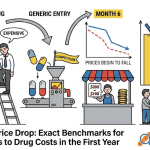
The industry’s core structural problem is that the forces producing its growth also destroy its margins. When a single generic enters the market for a branded drug, price falls by 30-39% relative to brand [24]. That first entrant often does well, particularly if it holds a 180-day first-to-file exclusivity period. As a second and third entrant arrive, prices fall further. At six or more competitors — which is the reality for any drug with substantial brand revenues — prices crater by 80-95% from the original brand price [20].
At that point, profitability depends entirely on manufacturing cost efficiency and volume. A company producing 100 million tablets of a generic worth $0.04 each at the pharmacy level, with a manufactured cost of $0.035, is generating a margin too thin to absorb a single recall, a regulatory warning letter, or an unexpected raw material price increase. And yet thousands of products across the portfolios of the world’s largest generic manufacturers sit in exactly this position.
The Inflation Reduction Act (IRA), signed into law in 2022, introduces an additional distortion that reshapes the profitability of future generic opportunities. The law allows the U.S. government to negotiate a ‘Maximum Fair Price’ (MFP) for certain high-expenditure Medicare drugs, with small-molecule drugs becoming eligible for negotiation just nine years after initial FDA approval [14]. This compresses the timeline between a drug’s peak revenue and its regulated price floor. For a generic company evaluating whether to file against a blockbuster’s patent stack in 2026, the calculation now must include the probability that the brand’s reference price will be substantially lower by the time the generic actually launches than it appears today. The IRA does not eliminate generic opportunities; it selectively eliminates some of the most apparently attractive ones.
How the Market Has Bifurcated
The strategic response among the major generic manufacturers has been a visible divergence. Teva is publicly executing what it calls a ‘Pivot to Growth,’ building an innovative medicine franchise while maintaining its generics base, targeting a branded pharmaceutical revenue contribution exceeding $5 billion by 2030 [29]. Sandoz, spun out of Novartis and repositioned as a pure-play off-patent medicine company, is doubling down on biosimilars as its primary differentiation lever [29]. Viatris, created through the Mylan-Upjohn merger, is actively divesting biosimilars and consumer health assets to concentrate its capital on complex branded generics and a more focused specialty pipeline [29]. Sun Pharma maintains a broader mix of generics, branded generics in India, and a growing specialty portfolio in the U.S.
What these divergent strategies share is a common rejection of the traditional high-volume, broad-portfolio commodity model. Every one of the market’s significant players is making some version of a bet that the future is in higher-barrier products that structurally limit competition and support more durable pricing.
The market has divided into two tiers. The first tier is the commodity market for simple oral solid-dose generics — tablets and capsules of well-understood molecules manufactured in enormous volumes. This tier is characterized by extreme price erosion, buyer leverage, and margins that require massive manufacturing scale to remain positive. The second tier is the market for complex generics, biosimilars, and specialty products. Entry barriers in this tier are scientific, regulatory, and technical rather than simply financial. Fewer competitors can clear them, which produces rational markets where prices stabilize at levels that actually support ongoing R&D and manufacturing investment.
A company that tries to compete in both tiers without a deliberate resource allocation strategy will likely underperform in both. The capabilities required for success in each are different enough that straddling the middle without a clear focus is an operational drag rather than a hedge.
Part Two: Building the Candidate Pipeline — Where Discipline Begins
Why Most Companies Screen Wrong
The default approach to generic candidate identification is to rank branded drugs by U.S. sales, note when their primary composition-of-matter patents expire, and build a target list from the top down. This produces a pipeline dominated by the same blockbuster targets every other company with access to a patent expiry database is chasing. The result is predictable: 15 or 20 ANDA filers for the same drug, a 90%+ price decline within two years of launch, and a portfolio of assets consuming regulatory resources while contributing negligible profit.
The more productive approach inverts this. It starts with barriers, not with market size.
The right question is not ‘What are the biggest drugs going off patent?’ but ‘What are the biggest drugs going off patent where we can credibly enter with three or fewer competitors?’ That second question requires a fundamentally different data infrastructure and analytical process. It requires understanding the formulation complexity of the target drug, the bioequivalence study design challenges that have defeated prior applicants, the patent thicket structure and which elements are genuinely defensible versus which are paper-thin secondary claims, and the manufacturing technology required to produce the dosage form at commercial scale. <blockquote> ‘Generic drugs account for over 90% of all prescriptions dispensed in the U.S. but represent only about 18% of total prescription drug spending — a cost differential that generates hundreds of billions of dollars in annual savings for the healthcare system.’ — Association for Accessible Medicines, 2023 Savings Report [4] </blockquote>
The Five-Layer Screening Framework
A rigorous candidate selection process works through five analytical layers, each applied sequentially to reduce the candidate universe to a manageable shortlist with defensible economic characteristics.
Layer 1: Patent and Exclusivity Calendar
The first layer is systematic, comprehensive monitoring of patent expirations and regulatory exclusivity end-dates across all relevant markets. In the U.S., this involves tracking not just the primary composition-of-matter patent but the full stack of Orange Book-listed patents, including formulation patents, method-of-use patents, and polymorph patents. The FDA’s Orange Book lists the patents an originator company certifies as covering the Reference Listed Drug (RLD), and each of those must be assessed independently.
Platforms like DrugPatentWatch are built for exactly this function. They aggregate patent office data, FDA Orange Book listings, clinical trial records, and ANDA filing activity into a unified analytical layer that allows you to monitor an entire patent landscape without reconstructing it manually from primary sources [47]. For any serious generic pipeline function, this kind of aggregated intelligence platform is not a luxury. Building this data infrastructure internally from raw patent office data is feasible but slow and expensive relative to using a purpose-built commercial system.
The key output of this layer is a dated timeline: which drugs lose which exclusivities when, in which markets, and which secondary patents might extend effective market exclusivity beyond the primary patent expiry.
Layer 2: Commercial Opportunity Sizing
Once you have a patent timeline, you need to filter by commercial opportunity. This means analyzing historical brand sales, prescription volumes, patient demographics, and trajectory to size the total addressable market for the generic.
The analysis should account for IRA risk explicitly. For any drug with substantial Medicare utilization and brand sales above the threshold that makes negotiation likely, the financial model needs a ‘negotiation scenario’ that reduces the peak brand price before generic launch. A drug that looks like a $3 billion opportunity at current brand pricing might be a $1.8 billion opportunity after a negotiated MFP is factored in — still attractive, but not attractive enough to justify the same Paragraph IV litigation investment.
Market size should also be evaluated in the context of expected competition. A drug with $800 million in annual U.S. sales that will face 15 generic entrants has an expected generic revenue pool of perhaps $160 million total, split across all filers. That is a very different investment proposition from a drug with $200 million in sales that, due to formulation complexity, will face only two or three generic entrants.
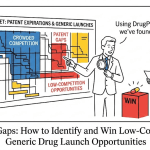
The ‘sweet spot’ that many experienced portfolio managers target is the $50 million to $200 million annual brand revenue range with structural barriers that limit generic entrants to three or fewer [47]. These are not the drugs appearing on conference panel slides about the patent cliff. They are found by screening specifically for competitive dynamics, not just market size.
Layer 3: Patent Thicket Analysis
Originator companies do not rely on a single patent to protect their blockbuster drugs. They build stacks. A typical branded small-molecule drug has its primary composition-of-matter patent, supplemented by additional patents on specific crystalline polymorphs, pharmaceutical formulations, dosing regimens, extended-release mechanisms, methods of treatment for specific indications, and metabolites. Each of these represents a potential barrier to generic entry, and each must be independently assessed for validity and enforceability.
Patent Landscape Analysis (PLA) is the process of mapping this entire structure, identifying which patents are genuinely blocking generic entry and which represent a paperwork burden rather than a scientific barrier. Some secondary patents are granted on grounds that would not survive challenge. Others are legitimate, covering genuinely novel formulation innovations that a generic would need to design around or challenge.
The assessment focuses on two questions: Is this patent valid? And if it is valid, will our generic product infringe it? A formulation patent that would be infringed by the most obvious generic formulation approach must either be challenged or designed around. One that the generic can avoid through a different formulation strategy is not a blocking issue.
Layer 4: Technical and Regulatory Feasibility
Not every drug is technically equivalent to its apparent complexity. Some are straightforward to reverse-engineer; others present genuine scientific challenges that would occupy a formulation team for two to three years and still might not produce a bioequivalent product.
This layer assesses the specific technical challenges associated with the target drug. Complex formulations — extended-release oral delivery systems, sterile injectables, inhalation devices, transdermal patches, ophthalmic solutions — require specialized formulation science, specialized manufacturing technology, and specialized bioequivalence study designs. The FDA has issued product-specific bioequivalence guidance for thousands of drugs, and reviewing that guidance for a target compound gives you a realistic preview of what the agency will require before approving a generic.
FDA’s publicly available list of ‘Off-Patent, Off-Exclusivity Drugs without an Approved Generic’ is a high-value resource at this stage [26]. It identifies markets where the generic opportunity exists but has not yet been captured. These situations can arise because the drug was too small to attract filers, the formulation was considered too difficult, or the market never developed sufficient scale. Each of these situations represents a different kind of opportunity, and the analysis distinguishes between them.
Layer 5: Competitive Intelligence
The final layer is a real-time assessment of what your competitors are already doing in the target space. This means monitoring ANDA filing activity for the target drug, which the FDA makes public through its ANDA database and drug approval lists. It means tracking litigation outcomes for any Paragraph IV challenges already in progress. It means monitoring the clinical development activity of other generic companies that might be building toward a complex generic approval through a 505(b)(2) pathway rather than a standard ANDA.
DrugPatentWatch aggregates much of this competitive filing intelligence in real time, allowing pipeline teams to see how many ANDAs have been filed for a target drug, who filed them, and what the patent challenge status is [47]. This prevents the scenario where a company invests two years of development time and several million dollars in ANDA preparation, only to discover upon filing that seventeen other companies filed before them.
The Portfolio Risk Scoring Model
A quantitative scoring model allows you to compare candidates on a common basis. The specific weights should reflect your company’s strategic priorities and competitive positioning, but a workable structure assigns approximately:
Commercial viability (market size, price erosion risk, IRA exposure): 25%
Technical feasibility (formulation and manufacturing complexity): 20%
Regulatory risk (bioequivalence complexity, expected FDA interaction): 15%
Legal and IP risk (patent strength, litigation cost, probability of success): 20%
A candidate scoring 4.0 or above on a five-point scale across all dimensions — weighted as above — is a strong addition to most portfolios. Candidates scoring below 2.5 on any single dimension should prompt explicit discussion about whether that risk is manageable given your current capabilities.
This model converts candidate selection from a judgment call influenced by whoever argued most persuasively in the portfolio review meeting into a structured, auditable decision with a documented rationale. When a candidate underperforms, the model helps diagnose which factor was misjudged. That institutional learning compounds over time.
Part Three: IP Strategy — The Competitive Advantage Most Companies Waste
Hatch-Waxman Is Not a System — It Is a Strategy
The Drug Price Competition and Patent Term Restoration Act of 1984, universally known as Hatch-Waxman, created the legal architecture for the U.S. generic industry [43]. Its abbreviated approval pathway (the ANDA) allows generic manufacturers to file without conducting the safety and efficacy clinical trials that brand companies require, relying instead on the brand’s approved clinical data combined with a bioequivalence demonstration. This single mechanism has saved the U.S. healthcare system more than $445 billion annually in recent years [4].
Most generic companies treat Hatch-Waxman as a procedural background condition — the regulatory framework in which they operate. The most successful ones treat it as a competitive strategy to be actively deployed.
The specific mechanism that separates strategic from passive engagement is the Paragraph IV certification. When filing an ANDA, a generic company may certify that one or more of the originator’s Orange Book-listed patents are invalid, unenforceable, or will not be infringed by the generic product [43]. This certification is aggressive and consequential. The originator has 45 days to file a patent infringement lawsuit. If it does, a 30-month statutory stay automatically delays FDA final approval while the litigation plays out, unless the generic prevails or the 30-month period expires, whichever comes first.
The 180-Day Exclusivity: What It Is Worth and When
The first generic company to file a substantially complete ANDA with a Paragraph IV certification for a specific patent earns the right to 180 days of market exclusivity once the litigation is resolved or the 30-month stay expires [43]. During those six months, no other generic can enter the market. The first filer and the brand compete, which typically produces a price approximately 20-40% below brand rather than the 80-95% decline seen with multiple entrants.
The financial mathematics here are well-documented. Barr Laboratories’ Paragraph IV challenge to Eli Lilly’s Prozac patent resulted in a 180-day exclusivity period during which Barr captured 65% of the prescription market, generating over $360 million in sales in approximately two months before the full generic competition arrived [43]. That is the archetypal case. Modern examples are structurally similar even if the specific numbers differ by target.
To access this prize, you must file first. The ‘first-to-file’ race for high-value targets is genuinely competitive, and being second — even by a single day — means sharing the exclusivity trigger date rather than holding the sole FTF position. Portfolio teams tracking patent expiry calendars through DrugPatentWatch and similar platforms need to have target filing dates scheduled well in advance of the Paragraph IV opportunity, with ANDA preparation work sufficiently advanced to permit a complete filing at the earliest viable date.
Building a P-IV Litigation Capacity
Taking a Paragraph IV position is a bet that you can prevail in patent litigation. That bet needs to be calibrated against realistic probabilities. Not all originator patents are equally defensible. Secondary patents on polymorphs, formulation methods, or dosing regimens are frequently granted on claims that would not survive rigorous challenge. Primary composition-of-matter patents with substantial experimental support and clear inventive step are much harder to invalidate.
Your legal team’s assessment of invalidity must be grounded in prior art analysis and expert opinion, not just patent office grant data. The fact that a patent was granted does not mean it would survive an inter partes review (IPR) at the Patent Trial and Appeal Board or a district court invalidity challenge under 35 U.S.C. § 103 (obviousness). Historical data suggests that roughly 40-60% of pharmaceutical patents challenged through Paragraph IV litigation are ultimately found invalid or not infringed, depending on the sample and methodology used [43].
The cost of losing, beyond the litigation expense itself, is a delay in market entry that can span years if the 30-month stay runs its course and appeals extend further. This cost is calculable and should be part of the candidate selection model under ‘legal and IP risk.’
Patent Thickets: Where to Attack and Where to Design Around
When facing a multi-patent stack, you have two primary options for each blocking patent: challenge its validity through a Paragraph IV certification, or design your generic formulation to avoid infringement.
Design-around is often the underused option. A formulation patent claiming a specific polymer matrix for extended release does not necessarily block all extended-release formulations of the same molecule. A different polymer system that achieves equivalent dissolution and bioequivalence may not infringe the patent even if it produces the same in-vivo drug release profile. This requires close collaboration between formulation scientists and patent counsel — a cross-functional competency that many generic companies have not systematically built.
The pharmaceutical industry’s largest originator companies have become sophisticated at constructing thickets specifically designed to make design-around difficult. They file continuation patents on multiple variants of a key formulation innovation, file method-of-use patents that can capture administration patterns rather than the molecule itself, and time filings to maximize the period during which at least one patent is blocking even after others expire. Understanding this thicket architecture in detail — not just knowing which patents exist but understanding which ones are genuinely necessary to invalidate or design around versus which are defensive noise — is the distinguishing capability of an effective generic IP function.
Global IP Strategy Is Not Just About Filing More Countries
For companies operating across multiple markets, the intellectual property analysis must be conducted jurisdiction by jurisdiction. The same drug may have a robust patent position in the U.S., a narrower position in Europe due to differences in patent office examination standards, and a minimal position in certain middle-income markets where specific patent filings were never made or have already expired.
This geographic variation in IP position is a strategic variable, not just a legal observation. A company might launch a generic in markets where the brand’s patents are weak or absent while simultaneously filing an ANDA in the U.S. to access the future opportunity, using early revenues from uncontested markets to fund ongoing development and litigation costs.
Part Four: The Development and Approval Gauntlet
Formulation Science: The Unglamorous Foundation
Generic drug development is scientifically demanding work that rarely gets credited as such. The goal is to develop a formulation that is pharmaceutically equivalent to the Reference Listed Drug — same active ingredient, same strength, same dosage form, same route of administration — and bioequivalent, meaning the drug reaches the systemic circulation at the same rate and to the same extent as the brand [18].
Pharmaceutical equivalence is generally straightforward for simple tablets and capsules. The API is the same molecule; the excipients are chemically distinct from the brand but functionally equivalent. The art is in selecting excipients that produce a product with the same stability, dissolution profile, and physical properties, including in some cases disintegration time and appearance, while complying with FDA labeling and trademark requirements that prohibit exact appearance replication.
Extended-release formulations introduce substantial complexity. The drug release mechanism — whether it involves polymer matrix erosion, osmotic pressure, pH-dependent dissolution, or some combination — must be understood well enough to replicate the in-vitro dissolution profile that correlates with the clinical bioequivalence performance standard. For some drugs, FDA has issued detailed product-specific guidance specifying the dissolution testing methodology and acceptance criteria. For others, the applicant must establish the appropriate methodology based on the pharmacokinetics of the molecule.
Complex dosage forms — metered-dose inhalers, dry powder inhalers, nasal sprays, transdermal patches, ophthalmic emulsions, liposomal injectables — require formulation expertise substantially beyond what is needed for oral solid-dose generics. The FDA’s regulatory expectations for demonstrating sameness for these products are more demanding, frequently requiring device characterization studies, in-vitro aerosol performance testing, and pharmacokinetic studies conducted under specific conditions [17]. Many generic companies lack this specialized development capacity internally and partner with contract development organizations (CDOs) for complex formulation work.
API Sourcing: The Vulnerability No One Talks About Until It’s Too Late
The Active Pharmaceutical Ingredient is the single most critical input to any drug product, and the global supply of APIs for generic drugs is heavily concentrated in India and China [8]. By some estimates, these two countries account for the majority of APIs used in generic drugs sold in the U.S. market. This creates a systemic risk that is well-understood in the abstract and consistently underaddressed in practice.
The vulnerabilities are multiple and interact with each other. Regulatory quality issues at a major Indian API manufacturer can simultaneously affect dozens of drug products from multiple finished-dose manufacturers, creating cascading shortages across the supply chain. Geopolitical friction between the U.S. and China raises the prospect of tariffs or export restrictions that could sharply increase the cost or reduce the availability of APIs manufactured in China. The COVID-19 pandemic demonstrated that a regional health crisis can simultaneously disrupt both manufacturing capacity and logistics infrastructure, with consequences that propagate globally [81].
From a portfolio construction standpoint, every candidate should be assessed at the API sourcing layer before commitments are made. Key questions include: How many qualified API suppliers exist for this molecule? Are they geographically concentrated? What is the lead time from order to delivery, and what buffer stock does the supply chain currently hold? Is there a viable domestic or near-shore API manufacturing option, even if more expensive?
For the highest-priority products in a portfolio, dual-sourcing from geographically separate suppliers is prudent risk management even when it increases the unit cost of the API. The cost premium for a second qualified supplier is, for critical products, a reasonable insurance cost against the revenue loss from a supply disruption.
Current Good Manufacturing Practice (cGMP) compliance at API supplier facilities is a non-negotiable requirement. The FDA holds finished-dose manufacturers accountable for the quality of their entire supply chain, including API suppliers [62]. An FDA inspection that uncovers cGMP deficiencies at an API supplier can result in an import alert that effectively blocks use of that API in U.S.-marketed products. The finished-dose manufacturer bears the commercial consequences regardless of whether it was directly responsible for the quality failure.
Best practice requires not just the execution of quality agreements with API suppliers but active oversight through regular facility audits — ideally including unannounced audits — and continuous monitoring of supplier quality metrics. For API sources in India or China, companies should maintain a credentialed local audit presence or retain an experienced third-party audit service rather than relying on self-reported quality data.
Scale-Up: Where Lab Success Becomes Production Reality
A formulation that performs precisely in a 10-kilogram batch in an R&D facility can fail unpredictably when transferred to a 500-kilogram commercial batch in a production-scale facility. The equipment geometry changes, mixing dynamics change, heat and mass transfer characteristics change, and the interplay of these variables can alter dissolution profiles, content uniformity, or physical stability in ways that the R&D work did not anticipate.
Process validation — demonstrating through documented, replicated production runs that the commercial-scale process consistently produces product meeting all quality specifications — is both a regulatory requirement and a practical necessity. The FDA requires that process validation data be included in the ANDA or available for review during pre-approval facility inspections.
Technology transfer from R&D to manufacturing is where relationships between scientists and production engineers matter most. The R&D team’s understanding of which process variables are critical and which are flexible needs to be systematically communicated and documented. Informal knowledge transfer leads to problems when the R&D chemist is unavailable and the production team makes a process adjustment that seems minor but affects a critical quality attribute.
Bioequivalence Studies: The Science Behind the Standard
The regulatory cornerstone of generic approval in the U.S. is bioequivalence (BE) — a demonstration that the generic drug performs identically to the brand in the human body. Instead of repeating the full clinical trials conducted by the originator (which proved safety and efficacy), the generic manufacturer demonstrates that its product delivers the same drug to systemic circulation at the same rate and in the same total amount [18]. The regulatory logic is that if two products are pharmaceutically equivalent and bioequivalent, they are therapeutically equivalent and therefore interchangeable.
The standard study design is a randomized, two-way crossover pharmacokinetic trial in healthy adult volunteers. Each subject receives both the test product (the generic candidate) and the reference product (the brand), in randomized sequence, with a washout period between administrations long enough for the drug to be fully eliminated from the body. Blood or plasma samples are collected at specified time points, and drug concentrations are measured using validated analytical methods [64].
From these concentration-time profiles, two primary pharmacokinetic parameters are calculated:
Cmax: the maximum observed drug concentration in plasma, which measures the peak rate of absorption
AUC (Area Under the Curve): the total drug exposure over time, which measures the extent of absorption
The FDA’s acceptance criterion is that the 90% confidence interval for the ratio of test to reference geometric means for both Cmax and AUC must fall entirely within 80.00% to 125.00% [60]. This range, despite appearing asymmetric in ratio terms, is symmetric on the log scale on which pharmacokinetic data is analyzed. Both endpoints must be within this range simultaneously. Missing on either one requires reanalysis or a new study.
All BE studies conducted on a specific formulation must be submitted to the FDA, including those that failed to demonstrate bioequivalence [65]. This is the FDA’s mechanism for preventing selective reporting. A company that conducts five BE studies and submits only the one that passed has committed a regulatory violation with serious consequences. The transparency requirement forces companies to design their BE programs carefully from the outset rather than relying on repeated attempts until one succeeds by chance.
For drugs with highly variable pharmacokinetics — where intra-subject variability in Cmax or AUC is 30% or greater — the FDA permits reference-scaled average bioequivalence (RSABE) methods that expand the acceptance limits in proportion to the reference drug’s own variability. This approach acknowledges that for highly variable drugs, the 80-125% criterion applied to standard studies can be unnecessarily restrictive and effectively prevent approval of therapeutically equivalent products.
The ANDA: Content, Process, and Timeline
The Abbreviated New Drug Application is the dossier submitted to the FDA containing all the information necessary to establish that the generic drug is safe, effective, and properly manufactured. Its core components are:
Chemistry, Manufacturing, and Controls (CMC) data covering the drug substance (API) and drug product, including specifications, manufacturing processes, stability data, and container-closure system descriptions
Labeling — matching the approved brand label with any permitted modifications, including required differences in inactive ingredient listings
Bioequivalence study data, including protocol, methodology, analytical validation, and results
Certification of patent status (Paragraph I, II, III, or IV, depending on the situation)
The FDA reviews ANDAs under a target goal framework established by the Generic Drug User Fee Amendments (GDUFA), currently targeting a 10-month review for standard applications and an 8-month review for those granted priority status. In practice, the first review cycle frequently results in a Complete Response Letter (CRL) — the FDA’s formal notification that the application cannot be approved in its current form [26].
A CRL lists deficiencies that must be resolved before resubmission. These deficiencies can range from minor formatting issues in labeling to major manufacturing process concerns requiring process changes and new validation data. The practical implication is that the 10-month review timeline is the minimum; actual approval timelines frequently run 24-36 months when CRL cycles are included.
Minimizing CRL cycles is therefore among the most commercially important aspects of ANDA preparation. Pre-ANDA meetings with the FDA — now available for complex products or situations with specific scientific questions — allow applicants to clarify the agency’s expectations before the formal submission and reduce the probability of unexpected review findings. For any ANDA with significant commercial importance, the cost of a pre-submission meeting is trivially small compared to the cost of a 12-month delay caused by an avoidable deficiency.
Europe and the Rest of the World
The European Medicines Agency (EMA) and member state health authorities use a Marketing Authorization Application (MAA) process for generic approval, with centralized, decentralized, or mutual recognition procedures depending on the target market scope [67]. The core scientific principles parallel the U.S. approach: pharmaceutical equivalence plus bioequivalence. The implementation details differ in ways that matter operationally.
European BE requirements specify the conduct of studies under both fasting and fed conditions for most immediate-release oral products, whereas U.S. requirements vary by product. Reference products must generally be sourced from the specific European market for which approval is sought. This country-specific reference product requirement prevents a company from conducting a single BE study against the U.S. brand and using that data across all markets. For a product launching in five European markets, this can mean five separate BE studies, each with its own reference product, its own logistics, and its own analytical work.
International Council for Harmonisation (ICH) efforts have made progress on harmonizing technical requirements for pharmaceutical development data (ICH Q-series guidelines), but BE study requirements remain substantially jurisdiction-specific. True global development program optimization requires regulatory affairs leadership that understands not just the requirements of each market but the sequencing strategy that minimizes total development cost while meeting each jurisdiction’s standards.
Part Five: Commercializing What You Built
The 180-Day Window Is the Most Profitable Six Months You Will Ever Have
If your company wins a first-to-file exclusivity period, the commercial launch strategy for that window should be treated as a distinct event requiring dedicated planning, separate from the ongoing commercial operations that manage the rest of the portfolio.
The economic model for the 180-day period looks very different from what comes after. During exclusivity, you and the brand are the only suppliers. Sophisticated payer customers — GPOs, PBMs, wholesalers — will shift volume to the generic rapidly because the price differential is compelling even if it is smaller than what they will eventually achieve with full competition. Your pricing power during this window is substantially higher than it will ever be again for this product.
Maximizing the window requires three things to be true simultaneously: regulatory approval must be final (not tentative), commercial-scale inventory must be physically available and staged in the distribution channel, and commercial contracts must be in place with key accounts before day one. Missing any of these delays revenue capture during a period of time that is genuinely irreplaceable. Days lost in the 180-day window are not recoverable after it closes.
Companies that have executed this well — and a handful of large U.S. generic manufacturers have institutional process maps for FTF launches — report that pre-staging inventory begins 90 to 120 days before anticipated approval based on regulatory review timelines, and that GPO and wholesale agreements are executed conditionally on FDA approval to avoid any commercial delay.
Pricing: The Three Scenarios
After the 180-day window closes and the broader competitive dynamic takes over, pricing strategy must adapt to market structure rather than driving it.
For a product entering a market with four or more existing generic suppliers, penetration pricing — setting the launch price at or below the lowest established competitor — is usually necessary to gain formulary positions with PBMs and purchasing contracts with GPOs. This is not a strategic choice so much as a competitive reality. Buyers with established supplier relationships at lower prices have no incentive to switch to a higher-priced entrant regardless of supplier quality or service.
For a product entering a market with one or two existing generics — the more desirable competitive structure — there is genuine pricing latitude. Market-based pricing at a modest discount to existing competitors, combined with supply reliability and service quality as differentiating factors, can produce favorable formulary placement without triggering an immediate race to the bottom.
Volume-based pricing, offering lower per-unit prices in exchange for guaranteed volume commitments from major accounts, is the mechanism for converting market share into manufacturing scale efficiency. A fixed-volume contract at a price below spot market rates reduces the manufacturer’s unit cost by filling plant capacity predictably and allows tighter raw material procurement planning.
Distribution: The Intermediary Landscape
In the U.S. market, getting a product approved by the FDA and manufactured at commercial scale does not automatically generate revenue. You need formulary positions with PBMs to reach the outpatient retail channel and supply contracts with GPOs to reach the hospital and institutional channel.
The three largest drug distributors — McKesson, AmerisourceBergen (now Cencora), and Cardinal Health — control the physical distribution infrastructure for most U.S. generic drugs. Distribution agreements with these entities are necessary for reaching the retail pharmacy network at scale. These distributors do not typically make purchasing decisions based on price alone; supply reliability and service quality are meaningful differentiators, particularly for products with historical shortage histories.
The GPO landscape involves a smaller number of large organizations — Premier, Vizient, and HealthTrust are the major players — that negotiate supply contracts on behalf of their hospital member networks. GPO contracts specify price, volume commitments, and supply reliability terms. Being awarded a GPO contract provides access to a significant portion of inpatient demand for a product. Losing a GPO contract — particularly due to supply failures — can remove you from a major market segment with consequences that persist for years.
Emerging markets present a different distribution environment: more fragmented, often more opaque, and frequently dependent on local intermediaries with deep market knowledge and government relationships that a foreign-headquartered manufacturer cannot replicate directly [69]. Joint ventures with local distributors, rather than direct distribution infrastructure, are often the most efficient entry model in markets where regulatory and commercial conditions vary significantly by country.
Portfolio Rationalization: The Products You Need to Kill
Every generic portfolio that has been built over more than a decade has a long tail of products that consume resources out of proportion to their contribution. These are old products that have lost market share to cheaper competitors, products where the market contracted due to therapeutic class disruption, and products where manufacturing complexity has made them structurally unprofitable at any realistic volume.
The cost of maintaining these products is frequently invisible in standard P&L reporting because it is distributed across shared manufacturing facilities, regulatory compliance functions, quality systems, and customer service. A product generating $800,000 in annual revenue while consuming 4% of your quality and regulatory staff’s time may be costing you $1.5 million in fully absorbed cost. The revenue line is real; the cost is obscured.
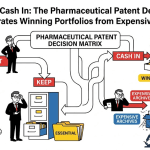
A systematic rationalization process assigns every product a strategic disposition category based on explicit financial and market position criteria. Products above the profitability threshold in growing or stable markets get investment. Products in mature but profitable positions get harvested — maintained with minimal incremental investment while they generate cash flow. Products below the profitability threshold with deteriorating market positions get divested or discontinued [26].
The capital, plant time, and human capital freed by eliminating the bottom quartile of a portfolio typically exceeds what most companies estimate. Redeploying these resources to one or two high-potential complex generic development programs generates far more long-term value than keeping the zombie tail alive.
Part Six: Complex Generics and Biosimilars — The Strategic Pivot
Why Complex Generics Command Attention Now
Complex generics are products where the act of demonstrating ‘sameness’ to the brand is itself scientifically demanding — where the product complexity, the manufacturing process, or the regulatory evidence requirements create natural barriers to entry that limit competition to the handful of companies capable of clearing them [17].
The category is broad and includes:
Sterile injectable products, including complex solutions, suspensions, and emulsions
Inhalation products, including metered-dose inhalers (MDIs), dry powder inhalers (DPIs), and nasal sprays
Transdermal delivery systems (patches)
Ophthalmic products, including complex solutions and suspensions requiring specific particle size or rheological characteristics
Drug-device combination products requiring characterization of both the drug formulation and the delivery device
Locally acting drugs where systemic bioequivalence measures are insufficient to demonstrate local therapeutic equivalence
The regulatory evidence required for complex generics is substantially more extensive than for simple oral products. For an MDI generic, the FDA requires not just in-vivo pharmacokinetic studies but extensive in-vitro aerosol performance characterization matching the reference product’s particle size distribution, device actuation force, and dose delivery consistency [17]. This evidence package takes longer to generate, costs more, and requires scientific expertise that is genuinely scarce.
The commercial payoff is a market with fewer competitors and slower price erosion. Complex generic markets typically stabilize with two to four suppliers, compared to ten or more for simple oral generics, and price erosion is more gradual and less extreme [20]. A complex generic might settle at 50-70% of brand price with three suppliers rather than the 5-10% with twelve. The per-unit margin difference is substantial.
Lupin’s deliberate investment in complex respiratory generics, particularly inhalation products, illustrates this positioning strategy. The company has publicly framed its U.S. strategy around moving beyond commodity oral generics into formulation-complex products where its R&D investments create durable competitive differentiation [74, 75].
The Biosimilar Opportunity: High Barriers, High Payoff
Biosimilars are biological medicines highly similar to an approved reference biologic drug. They are manufactured in living cell systems rather than through chemical synthesis, which means minor differences in post-translational modifications, glycosylation patterns, and higher-order structure are inherent and expected. The regulatory standard is ‘highly similar’ with ‘no clinically meaningful differences’ in safety and efficacy, not identical [2].
Developing a biosimilar requires:
Extensive analytical characterization comparing the biosimilar to the reference product across hundreds of structural and functional attributes
Comparative pharmacokinetic and pharmacodynamic studies
Often, comparative immunogenicity assessments
In some cases, a comparative clinical efficacy study if analytical and functional data alone are insufficient to establish biosimilarity
The total development cost for a biosimilar typically ranges from $100 million to $300 million, compared to $1-5 million for a simple oral generic and $10-30 million for a complex generic [2]. Development timelines run seven to twelve years from cell line development through approval. These numbers explain why the biosimilar competitive landscape looks dramatically different from the small-molecule generic space: only well-capitalized, scientifically sophisticated organizations can play.
The commercial reward for this investment is a market that behaves more like specialty pharmaceuticals than commodity generics. Biosimilar price erosion is typically 30-50% from the brand’s reference price with multiple entrants, compared to 80-95% for small-molecule generics [12]. The absolute dollar margin per unit is substantially larger. A biosimilar of a biologic originally priced at $20,000 per year per patient, launched at a 40% discount, generates $12,000 per patient year in revenue — a fundamentally different commercial scale from a generic tablet.
The commercial complexity is also higher. Biologic prescribing is concentrated among specialist physicians who have established relationships with brand manufacturers, who may have received device training for injectable biologics and are reluctant to switch, and who face biosimilar interchangeability regulations that affect whether pharmacists can substitute at the point of dispensing without prescriber authorization [78, 79]. Building the market access and commercial infrastructure to address these dynamics requires capabilities more like a branded pharmaceutical company than a traditional generic manufacturer.
Sandoz, which launched Zarxio (filgrastim-sndz), the first FDA-approved biosimilar in the United States, has built its entire post-Novartis spin-off strategy around biosimilars as its primary differentiator [29]. The company’s bet is that scale in biosimilar development and manufacturing will compound into a competitive moat that commodity generic competitors cannot replicate.
The 505(b)(2) Pathway: The Strategic Middle Ground
Between the full ANDA pathway (which requires bioequivalence to an existing RLD) and a full New Drug Application (which requires original clinical trials), the FDA’s 505(b)(2) pathway allows applicants to rely in part on existing published literature or previously approved drugs’ safety and efficacy data while conducting additional studies as needed [35].
This pathway is strategic for products that are modifications of existing drugs rather than direct copies — new formulations, new delivery systems, new combinations, or new dosage strengths that cannot be approved as standard generics because they differ in some meaningful way from any existing RLD but do not require a full de novo clinical program to establish safety.
A 505(b)(2) applicant developing, say, an extended-release reformulation of a drug currently available only as an immediate-release generic can rely on the existing safety and efficacy literature for the molecule while conducting specific clinical pharmacokinetic and potentially efficacy studies for the new formulation. If the new formulation offers genuine clinical advantages — once-daily versus three-times-daily dosing, reduced side effect profile, improved stability — it may qualify for a period of new clinical investigation exclusivity (3 years) that creates a temporary proprietary position.
The financial logic is that a 505(b)(2) product occupies the pricing space between a commodity generic and a branded drug. It costs more to develop than a standard generic but does not require the full clinical investment of an innovative drug. If the formulation improvement is meaningful enough to support physician prescribing preference, the commercial life of the product extends beyond the typical generic lifecycle.
Part Seven: Supply Chain Architecture for the Next Decade
Resilience Is Now a Competitive Differentiator
For most of the past twenty years, pharmaceutical supply chain optimization meant one thing: minimize unit cost. That meant concentrating API procurement in the lowest-cost jurisdictions, using single-source suppliers for most raw materials, and running inventory at levels that minimized carrying costs.
The COVID-19 pandemic comprehensively demonstrated the vulnerability of this model [81]. API supply chains linking Indian finished-dose manufacturers to Chinese API suppliers to U.S. distribution warehouses experienced simultaneous disruptions at multiple nodes. The consequences for patients — shortage of generic medicines for conditions ranging from acute infections to chronic disease management — were serious and well-documented.
The industry’s response to this demonstration has been uneven. Regulatory and policy pressure has grown for geographic diversification and onshoring of critical pharmaceutical manufacturing. The FDA’s Drug Shortage Task Force, CARES Act provisions, and subsequent legislative proposals have all addressed supply chain concentration as a policy concern. But actual supply chain restructuring requires capital investment and faces resistance from cost-focused procurement functions that see supply resilience as an expense rather than risk management.
Companies that invest in supply chain resilience now are building a capability that will increasingly matter for regulatory compliance, customer relationships, and competitive differentiation. Healthcare systems and major procurement agencies have learned to prioritize supply reliability as a selection criterion, not just price. A company with demonstrated supply continuity during disruptions — the generic manufacturer that kept shelves stocked when competitors could not — commands negotiating leverage that is difficult to quantify but commercially real.
Dual Sourcing: The Non-Negotiable Baseline
For any product that represents more than 3-5% of a company’s revenue, single-source API supply is not a business model choice — it is a liability. The costs of a supply disruption at a single-source supplier, including emergency procurement at spot prices, potential product recalls if quality cannot be maintained, contract penalty exposure with GPO and PBM partners, and reputational damage with procurement customers, typically exceed the cost savings from not maintaining a second qualified supplier.
Building and maintaining a second qualified API source requires upfront investment: analytical method sharing, qualification batches, stability studies for the finished-dose product using the second source’s API, and regulatory filings with the FDA and other health authorities to add the second supplier to the approved ANDA. This is real cost with a real payoff. For critical products, it should be treated as a standard portfolio maintenance activity rather than an optional risk mitigation initiative [33].
Geographic diversity of API sources matters as much as having multiple suppliers. Two qualified suppliers at facilities within 50 kilometers of each other in the same Indian state are not genuine supply chain diversification. A disruption that affects one is very likely to affect the other — regulatory action, infrastructure failure, or public health events do not respect corporate boundaries.
The economics of onshoring or near-shoring API manufacturing for some products are improving as Chinese and Indian manufacturing costs rise, as automation reduces the labor cost differential between domestic and offshore manufacturing, and as policy incentives create financial support for domestic pharmaceutical manufacturing investment. The calculation is product-specific and needs to be made with current rather than historical cost data.
Inventory Strategy: Rebuilding the Buffer
The just-in-time inventory model that minimizes carrying costs is rational in a stable supply environment. It is a liability in a world where supply disruptions are common enough to be a normal operating risk rather than an exceptional event.
Strategic buffer stocks — finished goods inventory above what current demand forecasts require, held specifically to bridge potential supply interruptions — have a real cost: carrying cost on the inventory value, warehousing space, and potential obsolescence risk for short-shelf-life products. For most generic drugs with multi-year stability, the carrying cost of 90 days of buffer stock is substantially less than the revenue and relationship cost of a 30-day supply disruption [85].
The appropriate buffer stock level varies by product criticality (is this drug on the FDA critical drug list or equivalent?), supply chain complexity (how many processing steps involve geographically concentrated suppliers?), and manufacturing lead time (how long does it take to produce a new batch once raw materials are available?). These inputs should drive buffer stock policy for each product category rather than applying a uniform policy across the portfolio.
Part Eight: Technology and Analytics as Competitive Infrastructure
AI in Portfolio Selection: What It Actually Does
Artificial intelligence applications in generic drug portfolio management are real but frequently overstated. The useful applications are not about AI ‘discovering’ drug candidates that humans would not find; they are about processing more data, faster, with fewer errors than human analysts working on the same questions.
The highest-value current applications of machine learning in generic portfolio selection involve analysis of very large structured datasets: patent filing databases, ANDA approval histories, bioequivalence study outcomes, FDA inspection findings, and market penetration rates for products in specific therapeutic categories. Machine learning models trained on historical data can identify patterns that predict which patent challenges are more likely to succeed, which bioequivalence study designs have historically failed for specific drug categories, and which market segments are likely to remain concentrated versus commoditizing rapidly.
These predictions are probabilistic, not deterministic. An ML model that predicts a 72% probability of bioequivalence study failure for a specific molecule class based on historical patterns does not mean any specific applicant will fail. It means the risk is elevated and should be reflected in the development program design — perhaps through staged development with early go/no-go decision points — and in the financial model with appropriate risk adjustment.
The technology that is farthest from the hype and closest to practical use is advanced analytics for supply chain demand forecasting and inventory optimization. Pharmaceutical demand for most generic drugs is relatively predictable at the market level but noisy at the individual product/NDC level. Better forecasting models reduce safety stock requirements, improve manufacturing scheduling efficiency, and decrease both shortage risk and excess inventory write-offs [54].
Real-Time Patent Intelligence
The ongoing monitoring of patent landscapes for portfolio-relevant drugs is a continuous process that benefits from automated alerting rather than periodic manual review. DrugPatentWatch and similar platforms provide monitoring services that alert users when new patents are filed claiming coverage of a target molecule, when ANDA applications are submitted for a drug in the monitored pipeline, when patent litigation outcomes are entered into court records, and when FDA approvals — including competitive approvals — are issued [47, 52].
This real-time intelligence changes the speed at which strategic decisions can be made. A business development team that learns about a competitor’s ANDA filing for a target molecule within days rather than months has substantially more time to assess whether to accelerate their own filing, modify their formulation approach to differentiate, or redirect resources to an alternative candidate.
The alternative — quarterly portfolio reviews based on data that is weeks old — is not competitive in a market where regulatory milestones and patent developments create first-mover advantages measured in days.
Blockchain and Track-and-Trace in the Supply Chain
The Drug Supply Chain Security Act (DSCSA), fully implemented in the U.S. as of November 2023, requires pharmaceutical distributors and manufacturers to implement electronic interoperable tracking of prescription drugs through the supply chain. Compliance is mandatory. The strategic question is whether the tracking infrastructure built for DSCSA compliance can also generate useful operational intelligence.
The answer, in well-implemented systems, is yes. Real-time product location data through the distribution chain allows early detection of unusual distribution patterns that might indicate diversion, counterfeiting, or stockpiling by distributors. It allows more precise inventory positioning to prevent geographic shortages while avoiding overstock in other regions. And it provides the data foundation for IoT-enabled cold chain monitoring for temperature-sensitive products.
The companies that have invested in sophisticated track-and-trace infrastructure are in a position to leverage that data operationally rather than treating it purely as a compliance cost. Those that implemented the minimum necessary for DSCSA compliance have a compliance box checked but no operational benefit from the investment.
Part Nine: The Regulatory Affairs Function as Competitive Weapon
Speed-to-Market Is a Regulatory Affairs Problem
The development timeline for a generic drug from project initiation to commercial launch is determined, in large part, by the regulatory affairs function. Formulation scientists make the drug; regulatory affairs gets it approved. The commercial value of approval delays is large enough that regulatory excellence is a meaningful source of competitive advantage, not just a compliance function.
The primary controllable variable affecting approval timeline is the quality and completeness of the ANDA submission. FDA review cycles add time when submissions contain deficiencies — missing data, formatting errors, inadequate stability data, incomplete labeling information, or insufficient CMC characterization. Every deficiency that triggers a CRL and a resubmission cycle adds six to twelve months to the approval timeline and equivalent time to revenue generation.
A submission quality program that treats every ANDA as a mission-critical document, with multiple technical review layers before filing, catches most avoidable deficiencies before the FDA sees them. The cost of this pre-submission quality investment is small compared to the cost of a CRL cycle for a commercially significant product.
Pre-ANDA meetings with the FDA are available for complex applications and questions with significant uncertainty. These meetings allow the applicant to get agency feedback on proposed study designs, manufacturing process validation approaches, and novel formulation questions before committing to a development path. For complex generics and biosimilars, pre-submission agency interaction is standard practice and routinely prevents the misdirected development investments that produce CRLs.
Post-Approval Compliance: The Margin That Disappears
Regulatory compliance does not end at approval. The FDA conducts routine facility inspections for all approved manufacturing sites, typically on a two-to-three-year cycle, and for-cause inspections when quality signals are detected. A Warning Letter issued following an FDA inspection triggers a Voluntary Action Indicated (VAI) or Official Action Indicated (OAI) classification. An OAI finding can result in an import alert blocking product entry from an affected facility, effectively shutting off the supply of any product manufactured there.
The commercial consequences of a Warning Letter or import alert can be immediate and severe. Products from the affected facility cannot be imported into the U.S. while the alert is active. If the affected facility is the sole or primary manufacturing source for significant products, the revenue impact is direct. Remediation of facility-level quality issues is a multi-month to multi-year process; there is no fast path through a Warning Letter.
Maintaining cGMP compliance is therefore not a passive background condition but an active operational priority requiring continuous investment in facility upkeep, equipment validation, quality system maintenance, training, and internal audit programs [62]. Companies that underinvest in quality systems to reduce operating costs create a time-delayed financial exposure that, when triggered by an FDA inspection finding, is far more costly than the savings.
Key Takeaways
Select for competitive structure, not just market size. The most sustainable generic portfolio positions are built in markets with inherent barriers to entry — technical complexity, demanding bioequivalence requirements, specialized manufacturing technology — that naturally limit competition to three or fewer suppliers. Blockbuster drugs with high brand revenues and straightforward formulations attract too many competitors to support profitable generic operations.
The IRA has changed the ROI model for high-Medicare drugs. For any drug with substantial Medicare utilization, the financial model for a generic ANDA must include a probability-weighted scenario where the brand’s reference price is negotiated down before the generic launches. This may render some previously attractive targets financially marginal.
Patent strategy is a core business function, not a legal function. First-to-file Paragraph IV challenges remain among the most valuable single opportunities in the U.S. generic market. Building in-house capability to identify weak secondary patents, design effective challenges, and execute design-around strategies creates competitive advantages that commodity manufacturers cannot replicate.
API single-sourcing is not a cost-efficient strategy — it is a liability. The revenue at risk from a supply disruption at a single-source supplier, for any product contributing more than a small percentage of company revenue, exceeds the cost of maintaining a second qualified supplier. Dual-sourcing from geographically diverse facilities is the minimum standard for risk-managed portfolio operation.
Complex generics and biosimilars offer a structural escape from the commodity trap. Products in these categories face fewer competitors, support more durable pricing, and reward scientific and manufacturing investment in ways that simple oral solid-dose generics do not. The transition to higher-barrier products requires genuine capability investment, not just a change in portfolio composition.
Real-time patent intelligence is an operational requirement. Portfolio and business development decisions made on the basis of monthly or quarterly data snapshots are made too slowly in a market where first-mover advantages are measured in days. Continuous monitoring through platforms like DrugPatentWatch allows faster, better-informed responses to competitive developments.
Regulatory affairs quality determines commercial timeline. A ‘right-first-time’ ANDA submission culture, supported by rigorous pre-submission internal review and proactive FDA engagement for complex applications, is one of the most cost-effective speed-to-market investments a generic manufacturer can make.
Frequently Asked Questions
1. How should a mid-sized generic company with limited R&D budget allocate resources between pursuing first-to-file Paragraph IV opportunities and investing in complex generic capabilities?
The answer depends on where your current capabilities sit and what your development pipeline looks like over the next five years. Paragraph IV opportunities offer large, concentrated returns over a defined 180-day window but require legal and IP expertise rather than advanced formulation science. Complex generic development requires sustained scientific investment over three to seven years but produces more durable competitive positions.
For a company with an established IP function and existing litigated P-IV successes, adding one or two complex generic programs in categories adjacent to your current capabilities — a modified-release injectable if you already make standard sterile injectables, for example — diversifies the revenue profile without requiring a wholesale capability transformation. For a company with no current P-IV experience, the cost of building that legal and strategic competency alongside a complex generic program may be more than the budget supports. In that case, focus drives better outcomes than diversification.
2. What is the realistic timeline from ANDA filing to commercial revenue for a complex generic, and how should companies plan cash flow around it?
For a complex generic requiring extensive formulation development, specialized BE studies, and potentially pre-ANDA FDA interaction, the total timeline from project initiation to commercial launch realistically runs four to eight years. This includes two to three years of formulation and analytical development, one to two years of BE study execution and data analysis, and one to two years of FDA review with potential resubmission cycles.
Cash flow planning should treat this as a capital project with a long development phase and no revenue until commercial launch. The peak capital absorption typically occurs during the BE study execution phase, when clinical trial costs accumulate rapidly, and during pre-launch inventory build. Companies that plan only to the ANDA filing date and not through to commercial launch readiness frequently encounter liquidity constraints at the manufacturing scale-up stage that delay revenue even after approval is received.
3. How does the FDA’s ‘product-specific bioequivalence guidance’ affect the development strategy for a target drug, and where do you find it?
FDA’s product-specific guidance documents provide the agency’s current thinking on the recommended approach for demonstrating BE for a specific drug product. They specify the recommended BE study design (in-vivo pharmacokinetic, in-vitro, or a combination), the reference standard, key analytical requirements, and in some cases specific acceptance criteria or study conditions. For complex products — modified-release, inhalation, locally acting drugs — these guidance documents can be highly prescriptive.
The FDA maintains a searchable database of product-specific guidance on its website. Before committing significant development resources to any target, reviewing the current product-specific guidance (or confirming one does not exist, which leaves more methodological latitude but also more uncertainty) is standard due diligence. The guidance can be updated between when a company starts development and when it files; following the current guidance at the time of filing is the standard expectation.
4. What should a generic manufacturer’s response be when a GPO contract that represents 20% of a product’s volume comes up for renewal with a lower price demand?
This scenario is one of the most common and consequential commercial decisions in generic drug management. The response depends on two calculations: what is your contribution margin at the demanded price, and what is the cost of losing the volume?
If the demanded price still generates positive contribution margin — revenue minus variable cost of goods — accepting it and maintaining the volume is usually preferable to losing 20% of a product’s volume and the associated manufacturing scale efficiency. Fixed costs distributed across a smaller volume base will increase per-unit cost, potentially pushing other volume into unprofitability.
If the demanded price is below variable cost — you are being asked to sell below the cost of the materials and direct labor to make the product — declining is necessary unless there is a strategic reason to maintain market presence at a temporary loss. The data to make this decision requires knowing your fully loaded and variable manufacturing cost per unit with current precision, which many generic manufacturers do not have readily accessible. Building cost visibility to the product level is a prerequisite for making these decisions rationally rather than reactively.
5. How do you assess whether a drug on the FDA’s ‘Off-Patent, Off-Exclusivity Without Approved Generic’ list is actually a commercial opportunity rather than a gap that exists because the market is too small or the product too difficult?
The FDA publishes this list specifically to flag markets where no generic has been approved despite the lack of patent or exclusivity barriers. The list includes some genuinely overlooked opportunities and some products that are on the list precisely because prior attempts to develop generics failed, the market is too small to support development costs, or the regulatory pathway is unclear.
Assessment starts with market sizing. Pull prescription data and ex-manufacturer sales data for the brand, if it still exists, or for any available alternative products. If the market is below $10-15 million annually, the economics are challenging for most companies given ANDA filing fees exceeding $300,000 and development costs on top. The FDA’s GDUFA ‘complex drug substance’ or ‘complex drug product’ designations, if applicable to the target, signal why prior developers may have struggled.
Next, pull any FDA feedback documents or prior ANDA receipt or refuse-to-file letters that are publicly available. These sometimes reveal why prior applications were not accepted and whether those barriers are surmountable. If you cannot find evidence of prior failed attempts and the market is commercially viable, the product may genuinely represent a real and uncaptured opportunity. If prior attempts exist without success and the technical reason is unclear, treat it as a signal that requires more investigation before committing development resources.
References
[1] Precedence Research. (2025). Generic drugs market size to hit USD 728.64 billion by 2034. https://www.precedenceresearch.com/generic-drugs-market
[2] PharmiWeb.com. (2025, July 29). Global generic drugs market trends and forecast: 2025 insights. https://www.pharmiweb.com/press-release/2025-07-29/global-generic-drugs-market-trends-forecast-2025-insights
[4] Association for Accessible Medicines. (2023). 2023 U.S. generic and biosimilar medicines savings report. https://accessiblemeds.org/resources/reports/2023-savings-report-2/
[5] DrugPatentWatch. (2025). The global generic drug market: Trends, opportunities, and challenges. https://www.drugpatentwatch.com/blog/the-global-generic-drug-market-trends-opportunities-and-challenges/
[12] Association for Accessible Medicines. (2023). Generic and biosimilar medicines save $445 billion in 2023. https://accessiblemeds.org/resources/press-releases/generic-and-biosimilar-medicines-save-445-billion/
[14] PwC. (2025). Next in pharma 2025: The future is now. https://www.pwc.com/us/en/industries/pharma-life-sciences/pharmaceutical-industry-trends.html
[17] Fortune Business Insights. (n.d.). Specialty generics market size, share and trends. https://www.fortunebusinessinsights.com/specialty-generics-market-107533
[18] IQVIA Institute. (2024). The global use of medicines outlook through 2029. https://www.iqvia.com/insights/the-iqvia-institute/reports-and-publications/reports/the-global-use-of-medicines-outlook-through-2029
[20] Lumanity. (n.d.). Potential impact of the IRA on the generic drug market. https://lumanity.com/perspectives/potential-impact-of-the-ira-on-the-generic-drug-market/
[21] DrugPatentWatch. (2025). Top 10 challenges in generic drug development. https://www.drugpatentwatch.com/blog/top-10-challenges-in-generic-drug-development/
[24] U.S. Department of Health and Human Services, ASPE. (n.d.). Drug competition series: Analysis of new generic markets. https://aspe.hhs.gov/sites/default/files/documents/510e964dc7b7f00763a7f8a1dbc5ae7b/aspe-ib-generic-drugs-competition.pdf
[26] DrugPatentWatch. (2024). From chaos to clarity: Streamlining your generic drug portfolio. https://www.drugpatentwatch.com/blog/from-chaos-to-clarity-streamlining-your-generic-drug-portfolio/
[29] Morningstar. (2025). Generic drug leaders and their unique growth strategies. https://marketing.morningstar.com/content/cs-assets/v3/assets/blt9415ea4cc4157833/blt5100821c0262fa58/680a4bf95ea135471b51e639/Generic_Drug_Leaders_and_Their_Unique_Growth_Strategies.pdf
[33] DrugPatentWatch. (2025). Streamlining the generic drug supply chain: Best practices. https://www.drugpatentwatch.com/blog/streamlining-the-generic-drug-supply-chain-best-practices/
[35] DrugPatentWatch. (2025). Integrating clinical trials and 505(b)(2) pathway into pharmaceutical portfolio management. https://www.drugpatentwatch.com/blog/integrating-clinical-trials-and-505b2-pathway-into-pharmaceutical-portfolio-management-and-generic-launch-strategy/
[43] ParagraphFour.com. (n.d.). Paragraph IV explained. https://paragraphfour.com/paragraph-iv-explained/
[47] DrugPatentWatch. (2025). Uncovering lucrative low-competition generic drug opportunities. https://www.drugpatentwatch.com/blog/uncovering-lucrative-low-competition-generic-drug-opportunities/
[52] DrugPatentWatch. (2025). Key strategies for successfully challenging a drug patent. https://www.drugpatentwatch.com/blog/key-strategies-for-successfully-challenging-a-drug-patent/
[54] DrugPatentWatch. (2025). The economics of generic drug pricing strategies: A comprehensive analysis. https://www.drugpatentwatch.com/blog/the-economics-of-generic-drug-pricing-strategies-a-comprehensive-analysis/
[58] DrugPatentWatch. (2025). The definitive guide to generic drug approval in the U.S.: From ANDA to market dominance. https://www.drugpatentwatch.com/blog/obtaining-generic-drug-approval-in-the-united-states/
[60] Patsnap Synapse. (n.d.). What is a generic drug, and how does it get approved? https://synapse.patsnap.com/article/what-is-a-generic-drug-and-how-does-it-get-approved
[61] DrugPatentWatch. (2025). Generic drug development: Avoid these common pitfalls. https://www.drugpatentwatch.com/blog/generic-drug-development-avoid-these-common-pitfalls/
[62] U.S. Food and Drug Administration. (n.d.). Current Good Manufacturing Practice (CGMP) regulations. https://www.fda.gov/drugs/pharmaceutical-quality-resources/current-good-manufacturing-practice-cgmp-regulations
[64] Allucent. (n.d.). Bioequivalence studies and abbreviated drug applications. https://www.allucent.com/resources/blog/bioequivalence-studies-support-abbreviated-new-drug-applications
[65] Federal Register. (2009, January 16). Requirements for submission of bioequivalence data; Final rule. https://www.federalregister.gov/documents/2009/01/16/E9-884/requirements-for-submission-of-bioequivalence-data-final-rule
[67] European Medicines Agency. (n.d.). Generic and hybrid applications. https://www.ema.europa.eu/en/human-regulatory-overview/marketing-authorisation/generic-hybrid-medicines/generic-hybrid-applications
[69] DrugPatentWatch. (2025). The growing importance of generic drug development for emerging markets. https://www.drugpatentwatch.com/blog/the-growing-importance-of-generic-drug-development-for-emerging-markets/
[75] Lupin. (n.d.). Generics and complex generics: Innovation by Lupin US. https://www.lupin.com/US/generics-complex-generics
[78] Center for Biosimilars. (n.d.). Breaking down biosimilar barriers: Interchangeability. https://www.centerforbiosimilars.com/view/breaking-down-biosimilar-barriers-interchangeability
[79] Pfizer. (n.d.). 5 things worth knowing about biosimilars and interchangeability. https://www.pfizer.com/news/articles/5_things_worth_knowing_about_biosimilars_and_interchangeability
[81] Patheon. (n.d.). COVID-19 threatens pharma’s global supply chain: What next? https://www.patheon.com/us/en/insights-resources/webinars/covid-19-threatens-pharmas-global-supply-chain-what-next.html
[85] Pharma’s Almanac. (n.d.). Rethinking the global pharmaceutical supply chain post-COVID-19. https://www.pharmasalmanac.com/articles/rethinking-the-global-pharmaceutical-supply-chain-post-covid-19