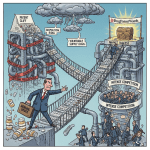
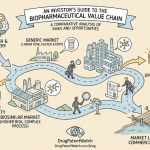
Generics fill more than 90% of U.S. prescriptions yet capture only 18-20% of total drug spend. The math that sounds like a socially virtuous bargain is, at the company level, a margin trap that has become structurally worse since 2022.
Six or more manufacturers in a market drives average prices to 5% of brand. At that point, every dollar of COGS excess destroys equity value faster than any single commercial decision can rebuild it.
The Inflation Reduction Act’s Medicare Drug Price Negotiation Program compresses the pre-expiry brand price for small molecules after nine years of approval, shrinking the patent cliff that historically justified Paragraph IV litigation investment. Portfolio ROI models built before 2022 are now materially wrong for IRA-exposed targets.
Moving up the complexity curve — sterile injectables, long-acting injectables, metered-dose inhalers, complex topicals, biosimilars — is not an option for companies that want to grow. It is a binary survival choice for those that want to stay relevant past 2030.
Supply chain concentration is a portfolio risk, not an operational one. Single-source API dependency from China or India belongs in every product’s risk-adjusted NPV model, not just the manufacturing team’s contingency plan.
AI-based Probability of Technical and Regulatory Success (PTRS) modeling is graduating from pilot project to core portfolio infrastructure. Companies that treat it as optional will consistently mis-price risk on their most capital-intensive bets.
Part I: The Economics of Erosion
The Price Destruction Mechanics Every Portfolio Manager Must Quantify
The generic industry’s pricing dynamic is not a market inefficiency. It is the market working exactly as designed, and that is precisely the problem for anyone trying to build durable portfolio value.
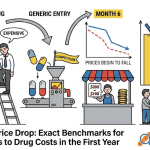
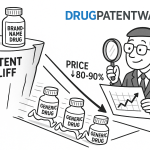
When a single generic enters the market, average manufacturer price drops 30-39% versus brand. That drop is the headline number. The more operationally relevant number is what happens next. Five competitors produce a 60-79% price decline. Ten competitors take the market to 80-95% below brand. At that point, the product is economically indistinguishable from a commodity chemical, and for companies with overhead structures built for quality-compliant pharmaceutical manufacturing, it is often priced below full cost.
The data in the table below is not new, but portfolio managers consistently under-model the speed at which markets move from Stage 2 to Stage 5. First generic exclusivity ends in 180 days. Within six to twelve months of full generic competition, most simple oral solid markets reach equilibrium pricing that barely covers COGS for high-cost producers.
Table 1: The Competitive Price Erosion Curve
Generic Competitor Count
Price vs. Brand
Portfolio Implication
1 (FTF exclusivity)
70-80% of brand
The only window where simple oral solids generate meaningful margins. Requires a successful Paragraph IV or first-to-file position.
2
~50% of brand
Profitable only for low-COGS manufacturers. The window to recoup litigation expense is closing.
3-5
25-40% of brand
Marginal producers begin to exit. Quality failures accelerate as companies cut costs. Shortage risk rises.
6-10+
5-20% of brand
Commodity pricing. Market is sustained only by high-volume, vertically integrated manufacturers.
10+
Near API cost
Economically unsustainable for most. Shortage-prone by structural design.
Source: Synthesized from ASPE HHS competition analysis, AAM market data, and IQVIA white paper data.
The strategic conclusion from this table is not subtle: for any product that will attract more than five generic entrants within its first three years of generic availability, a non-FTF generic player should not be in that market unless their COGS structure is in the bottom decile of the industry. The question is not “can we get approved?” It is “what is our breakeven price, what is the 36-month competitive entry forecast, and do those two numbers leave any margin?”
The IRA’s Structural Distortion of the Patent Cliff
Before the Inflation Reduction Act, the patent cliff was the generic industry’s core economic engine. Brand revenue would hold at monopoly pricing until the day of patent expiry, creating a maximum revenue step-down for the brand and a maximum revenue step-up for the first generic. The spread between brand price and generic price, captured at high volume during a finite exclusivity window, justified the $5-30M litigation spend of a typical Paragraph IV challenge.
The IRA’s Medicare Drug Price Negotiation Program changes this structure for small molecules approved more than nine years before the negotiation selection date. CMS sets a Maximum Fair Price (MFP) for the negotiated drug, which reduces brand-level revenue before patent expiry. The spread that was the Paragraph IV prize shrinks proportionally.
Consider the math on a simplified example. A drug with $3B in annual U.S. brand revenue, post-IRA negotiation that cuts the MFP to 60% of list, now generates $1.8B pre-expiry. The first generic at 80% of a $3B price point would have captured ~$900M in the 180-day window assuming 50% volume capture. Post-IRA, with 80% of a $1.8B MFP as the reference, that same window is now worth ~$540M — a 40% reduction in the economic value of the FTF position. Meanwhile, the litigation cost to secure that position has not changed.
The implications for portfolio selection are direct. IP teams and portfolio managers must now run an “IRA selection probability” layer on top of every small-molecule product ROI model. Drugs in therapeutic categories that have already been targeted by CMS — Part D high spenders in cardiovascular, diabetes, and oncology — carry elevated probability. Drugs with nine-plus years of market history approaching the IRA window require quarterly reassessment of their target product profile valuation. The companies that have not rebuilt their financial models around this variable are systematically overpaying for their pipeline assets.
Investment Strategy Note: Portfolio managers evaluating generic companies should discount pipeline valuations for any company with a heavy small-molecule, IRA-exposed pipeline and limited biosimilar or complex generic exposure. The earnings power of that pipeline is structurally impaired relative to pre-2022 models.
Buyer Consolidation and the GPO Leverage Problem
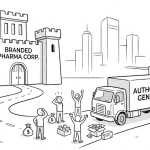
The buy side of the U.S. generic market is oligopolistic in a way that rarely gets sufficient attention in portfolio strategy discussions. Three wholesale distributors — McKesson, AmerisourceBergen (now Cencora), and Cardinal Health — control approximately 90% of pharmaceutical distribution. On the retail pharmacy side, the CVS/Caremark, Express Scripts (Cigna), and OptumRx PBM triad controls a dominant share of prescription adjudication and formulary placement. Group purchasing organizations aggregate hospital and institutional purchasing power, running competitive bidding processes that drive contract awards to single suppliers at the lowest possible prices.
The consequence for a generic manufacturer is that access to the market requires winning a GPO or PBM formulary position, which is functionally a price-taking exercise. The manufacturer is not setting the price; the buyer is selecting the lowest compliant bid. This amplifies price erosion speed and makes the portfolio selection question even more pointed: if market access requires being the lowest bidder, does your cost structure allow you to be that bidder and still generate positive returns?
The companies that win in this environment are those that have solved both the numerator and denominator. They generate revenue through volume at GPO-compliant pricing AND they have structured manufacturing costs to be profitable at that pricing. For small generics without vertical integration or very high volume, that equation rarely closes on simple oral solids. It can close on complex products where fewer companies qualify to bid.
European Pricing: Reference Pricing and the 8% Decade
The European market deserves its own analytical frame because its pricing dynamics differ from the U.S. model in important ways. Over the past decade, generic prices in Europe fell approximately 8% in nominal terms during a period when the broader consumer price index rose roughly 30%. That is a real-terms price decline of approximately 35%. The mechanism is government reference pricing, where reimbursement is set to the price of the cheapest approved product in a therapeutic class. Once a single low-cost generic enters, reimbursement drops for all products in that class, including the brand.
The European market also has substantially higher regulatory fragmentation than it appears on paper. While the EMA provides centralized marketing authorization for new medicines, the actual market access, pricing, and reimbursement decisions are made country by country. A company needs parallel submissions, separate health technology assessments, and country-specific reimbursement negotiations across Germany, France, the UK (now post-Brexit via MHRA), Italy, Spain, and others. The timeline and cost of this country-by-country market access program adds materially to the true cost of an EU generic launch and must be captured in any multi-region financial model.
Key Takeaways for Part I
The economics of the generic market have crossed a threshold. The traditional high-volume, low-margin model for simple oral solids is not challenged — it is largely broken for companies without a structural cost advantage. The IRA has added a new variable that systematically reduces the value of Paragraph IV positions for IRA-exposed drugs. European pricing continues declining in real terms. GPO consolidation ensures that U.S. market access requires price leadership, which requires cost leadership. Every strategic decision downstream of these facts must be calibrated against them.
Part II: The Global Regulatory Maze
ANDA Mechanics: Where Speed Becomes Competitive Advantage
The Abbreviated New Drug Application pathway is “abbreviated” relative to an NDA, meaning it substitutes bioequivalence demonstration for new clinical safety and efficacy trials. In practice, the ANDA process is a multi-year, capital-intensive program where regulatory execution quality directly determines market timing, and market timing determines profitability.
The FDA’s GDUFA-driven review goal is a 10-month standard review cycle for a substantially complete application. That goal is met with reasonable consistency when applications are filed correctly the first time. When they are not — when an Information Request or Discipline Review Letter issues — that 10-month clock restarts effectively. A Complete Response Letter can add 12-24 months to an approval timeline. For a product targeting a patent cliff, that delay can mean the difference between entering during the high-margin early-competition window and entering into a commoditized, multi-competitor market.
The commercial math is stark. For a product where the 180-day FTF exclusivity period represents $200M in revenue, a 12-month delay caused by a preventable submission deficiency costs not just lost exclusivity revenue but also the first-year market share that early entrants lock in through GPO and hospital formulary relationships. First-cycle approval rates — the percentage of ANDAs that achieve approval without a CRL — are the most operationally significant metric for a generic company’s regulatory function.
The ANDA Submission Quality Framework
Achieving high first-cycle approval rates requires investment in four areas that many companies underweight relative to their pipeline volume aspirations.
First, Reference Listed Drug characterization must be exhaustive before any development work begins. The RLD comparison is the standard against which every bioequivalence determination is made. Gaps in the initial characterization create deficiencies that surface during review. Second, bioequivalence study design must anticipate FDA guidance evolution, not just current requirements. Highly variable drugs, modified-release products, and complex formulations each have specific statistical and design requirements that change as the FDA refines its approach. Filing a BE study designed to last year’s guidance for a drug where the FDA has issued new guidance is a CRL in progress. Third, CMC documentation must be complete, consistent with manufacturing reality, and internally cross-referenced. Reviewers flag inconsistencies between sections — a batch size in the CMC section that doesn’t match the exhibit batch record in the BE section, for example — as deficiencies requiring response. Fourth, post-submission monitoring requires a dedicated team that proactively communicates with FDA reviewers, responds to IR queries within the agency’s requested timeframe, and tracks the application’s progress through each discipline review queue.
Global Regulatory Divergence: The Hidden Cost of Multi-Region Programs
The FDA/EMA harmonization story sounds better in industry presentations than it works in practice. The two agencies share a commitment to bioequivalence as the evidentiary standard for generic approval, but the specific requirements for how BE is demonstrated diverge in ways that make efficient global development difficult.
Study conditions differ. The FDA may require both fasting and fed-state BE studies for a modified-release product. The EMA may require only one under specific conditions. The choice of reference product differs. A drug approved in the U.S. as Brand A may have a chemically identical but separately characterized Brand B as the European reference product. If those two reference products differ in any measurable pharmacokinetic characteristic, a single global BE study cannot serve both markets. The company must run two studies, at twice the cost and timeline.
Bioequivalence criteria also differ for highly variable drugs. The FDA’s scaled average BE approach allows for wider acceptance windows when the reference product shows high within-subject variability, but EMA’s implementation of scaled criteria has historically been more restrictive. A product that passes FDA BE criteria may fail EMA criteria using the same dataset, requiring study redesign or a second study in an EU-eligible population.
For a portfolio manager evaluating a multi-region generic program, the financially correct model is not to assume a single global development cost and apply it across markets. The correct model is to map each target market’s specific regulatory requirements, identify where those requirements diverge, estimate the cost of parallel development activities required to address the divergence, and apply those costs against the market-specific revenue model. For many products, the European revenue opportunity does not justify the European development cost when modeled correctly.
The Nitrosamine Crisis: A Permanent Increase in Formulation Risk
The nitrosamine impurity crisis that began in 2018 with the sartan class and expanded across multiple drug categories represents a permanent upward shift in the cost and complexity of generic pharmaceutical development. This is not a regulatory trend that will normalize. It is a new baseline.
The FDA’s August 1, 2025 deadline for confirmatory nitrosamine testing applies broadly across drug categories. Companies that did not complete confirmatory testing and submit required CMC changes by that deadline face enforcement action and potential market withdrawal. Beyond compliance, the crisis has established several enduring precedents.
Nitrosamines can form during manufacturing, during storage, from API impurities, from excipient interactions, from container closure interactions, or from process residuals. Characterizing and controlling these pathways requires highly sensitive analytical methods, including LC-MS/MS at parts-per-billion detection limits. Validating these methods, applying them across an existing product portfolio, and remediating identified pathways is resource-intensive. For companies with broad portfolios of older products, the remediation cost has been material.
The formulation risk implication for new products is also permanent. Before beginning formulation development on any new ANDA target, the development team must now conduct a nitrosamine risk assessment that covers the proposed synthesis route, excipient sourcing, and manufacturing conditions. A drug-specific nitrosamine risk assessment is now part of the CMC package. Missing this step, or doing it inadequately, produces a CRL. For complex formulations where the nitrosamine formation pathway is non-obvious, the assessment may require dedicated analytical work that adds three to six months and meaningful cost to the development program.
IP Valuation Note: Formulation Patents as Nitrosamine Defense
One emerging dynamic in generic IP strategy is the use of novel formulation patents by brand companies to extend exclusivity beyond the compound patent expiration while also addressing nitrosamine risk. A brand company that reformulates a drug to eliminate a known nitrosamine pathway can patent that reformulation, claim superiority over the nitrosamine-containing original, and market the reformulated product as the new reference listed drug. A generic challenger now faces the compound patent’s expiration but must also address the reformulation patent, typically through an additional Paragraph IV certification. This “quality-based evergreening” tactic combines regulatory compliance narrative with IP defense, and it is becoming more common. Patent landscape analysts working on ANDA targets with known nitrosamine pathways should screen for recently filed reformulation patents as a standard step.
Key Takeaways for Part II
Regulatory execution is a financial differentiator, not a compliance function. First-cycle ANDA approval rates directly translate to revenue timing advantages worth tens to hundreds of millions of dollars on high-value products. Multi-region development programs require market-by-market regulatory cost modeling, not a single global development cost assumption. Nitrosamine risk assessment is now a standard, non-optional component of new product development and is generating a new class of formulation patents that must be screened in every patent landscape analysis.
Part III: Supply Chain as a Portfolio Risk Variable
The API Concentration Problem Belongs in Your NPV Model
The pharmaceutical supply chain’s geographic concentration is well-documented. Approximately 80% of global API production is in China and India. India sources 70-80% of its own API raw materials from China. For the U.S. market, roughly 90-95% of sterile injectable generics rely on API or key starting materials from those two countries.
These numbers are treated as operational context by most portfolio managers. They should be treated as financial variables. A product with a single-source API from a facility in China or India carries a different expected cash flow distribution than a product with a dual-qualified, geographically diversified API supply base. Modeling that difference requires assigning a probability and magnitude of supply disruption and discounting expected revenues accordingly.
The Intas Pharmaceuticals shutdown in 2023 provides a calibration point. The FDA shut down the Intas facility following findings that included document destruction — a serious violation that triggered an Import Alert effectively blocking the facility’s products from the U.S. market. Intas supplied approximately 50% of U.S. cisplatin demand. The resulting shortage forced oncologists to ration a cornerstone chemotherapy drug across the country. The financial consequence to Intas was severe. The consequence to competitor companies with cisplatin capacity was a temporary but significant revenue opportunity.
For a portfolio manager, the Intas event has two implications. First, any product with a single-source API supplier that has previously received FDA 483 observations, warning letters, or import alerts carries a material supply disruption risk that must be captured in the base-case revenue model, not just in scenario analysis. Second, products where a competitor’s supply disruption creates a market opportunity represent a category of portfolio value that is rarely modeled explicitly but is economically real.
Total Cost of Ownership vs. Lowest Unit Cost: The Sourcing Reframe
The standard pharmaceutical procurement model selects API suppliers primarily on unit cost. A Total Cost of Ownership (TCO) model adds risk-adjusted costs of supply disruption to the procurement decision.
A TCO calculation for a given API source requires four inputs: baseline unit cost; probability of a supply disruption event over the product’s commercial lifecycle; expected revenue lost per quarter of disruption; and cost of emergency remediation (air freight, accelerated qualification of a backup supplier, customer penalty clauses). For a product generating $50M per quarter, even a 5% annual probability of a quarter-long disruption produces a risk-adjusted expected loss of $2.5M per year. If a dual-source API strategy costs $1.5M per year in additional sourcing and qualification expense, the TCO model makes the investment obvious. But most companies never run this calculation because supply chain decisions and portfolio financial models are maintained by different teams with different metrics.
This structural separation is a portfolio management failure. The correct organizational design puts supply chain risk quantification inside the product-level financial model, with ownership by the portfolio management function rather than procurement. Companies that have made this change consistently find that their dual-source and regionalization investment decisions improve — they invest more where it matters and less where single-source risk is genuinely low.
Geopolitical Risk and Tariff Modeling
The tariff environment for pharmaceutical raw materials has shifted materially since 2022. Proposed and enacted tariffs on Chinese-origin goods create input cost risk for any product with Chinese API sourcing. For a generic product operating on a 15% gross margin at current input costs, a 25% tariff on the API — which may represent 40-60% of COGS — could turn the product unprofitable immediately.
Tariff risk modeling for a generic portfolio requires identifying, for each product, the country of origin for the API and key starting materials, the tariff rate applicable to each under current and proposed trade policy, the cost impact of those tariffs as a percentage of COGS, and whether alternative non-tariffed API sources exist and at what cost premium. Products where tariff exposure combined with current competitive pricing already implies negative contribution should be evaluated for discontinuation as part of the rationalization process, not held in the portfolio based on historical revenue.
Key Takeaways for Part III
Supply chain geography is a financial variable that belongs in product-level NPV models. Single-source API dependency from high-risk regions requires explicit probability weighting of disruption scenarios in revenue forecasts. TCO analysis consistently justifies dual-source API strategies for meaningful-volume products, but only if the calculation is run correctly. Tariff risk modeling is now a standard component of portfolio health reviews and should trigger product discontinuation decisions for products where tariff-adjusted margins are negative.
Part IV: Strategic Portfolio Selection
The Competitive Entry Forecast: What Actually Drives Product Selection
The core analytical question in generic portfolio selection is not “is this drug going off patent?” It is “what will the competitive landscape look like 18-36 months after the first generic entry, and what will our margin be in that environment?”
Answering that question requires a competitive entry forecast that is more granular than most companies produce. A robust forecast identifies every company that has filed an ANDA for the target product, their filing dates, their patent certification types, their historical approval timelines for comparable products, and their commercial track record for similar launches. It also identifies companies that have not yet filed but are likely to based on their stated portfolio strategy, their therapeutic area focus, and their manufacturing capabilities.
The output of this analysis is a probabilistic timeline showing the expected number of market participants at 6, 12, 18, 24, and 36 months post-launch, with a corresponding price forecast at each point. That timeline, combined with the company’s own COGS structure and expected market share at each competitive stage, produces a realistic revenue and margin projection for the product’s commercial life.
Most companies run this analysis at a single point in time during product selection and treat it as static. The correct approach treats it as a living model, updated quarterly as ANDA filings are published, patent litigation resolves, and competitors make public statements about their pipelines.
The Low-Competition Market Map: Finding the Quiet Corners
The most consistently profitable generic products share a structural characteristic: they are technically demanding enough that the market naturally limits its own competition. Understanding which product categories create these conditions, and why, is the foundation of a higher-value portfolio strategy.
Sterile injectables require facilities with Grade A/B cleanroom environments, validated aseptic processes, robust environmental monitoring programs, and qualified personnel with specialized training. FDA inspection standards for sterile manufacturing are among the most rigorous in the regulatory framework. The capital cost of building a new sterile injectable facility — or qualifying an existing one to FDA standards if it has been idle — is $200-500M and requires 3-5 years of construction plus 1-2 years of regulatory validation. This capital and time barrier is real, and it keeps competitor counts low in most injectable markets.
Metered-dose inhalers for complex respiratory drugs present bioequivalence challenges that are more scientific than in vitro testing can fully address. FDA requires in vivo BE studies for most complex inhalers, and demonstrating equivalent local deposition at the site of action requires specialized PK studies or sometimes clinical endpoint studies, which are expensive and slow. The number of companies globally with the formulation science, device engineering, and clinical development capability to successfully bring a complex inhaler generic to market is small. When Mylan brought its Advair Diskus generic to market in 2018 after years of development and regulatory engagement, it entered a market with few competitors because the technical requirements for a successful 505(j) application were too high for most to clear.
Long-acting injectable (LAI) microsphere formulations add polymer chemistry complexity to the sterile manufacturing challenge. The API must be encapsulated in a biodegradable polymer matrix at precise loading percentages, the release profile must match the reference product over weeks to months, and in vivo BE must demonstrate pharmacokinetic equivalence over the full dosing interval. Very few companies have the polymer science and analytical capabilities to develop these formulations. Generic LAI products that do reach market typically face one to three competitors rather than ten or twenty.
IP Valuation Note: Complex Generic Formulation Patents
The IP structure around complex generics differs materially from simple oral solids and warrants specific analytical treatment. A brand company’s complex formulation may be protected not just by a compound patent but by device patents (for inhalers), manufacturing process patents (for LAIs), and polymer composition patents (for depot injectables). These secondary and tertiary patents — the components of the patent thicket — often have later expiration dates than the compound patent and are the real barriers to generic entry.
Patent landscape analysis for complex generic targets must map the full thicket structure and value each component. A device patent with three years of remaining life may be worth more to the brand than the compound patent in terms of blocking generic entry, because the generic must design around or challenge the device patent independently. The valuation of a complex generic program should include a probability-weighted analysis of the cost and outcome of challenging each blocking patent in the thicket, not just the primary compound patent.
Paragraph IV Strategy: Quantifying the Legal Bet
A Paragraph IV certification is a legal and financial bet. The generic company is asserting that the brand’s patent is invalid, unenforceable, or not infringed by the generic product, and it is willing to litigate that assertion. The brand company has 45 days from notification to sue for infringement, and if it does, the FDA cannot grant final approval for 30 months — the Hatch-Waxman 30-month stay.
The financial model for a Paragraph IV program has three main components: litigation cost, probability of success, and FTF exclusivity revenue. Litigation cost for a complex Paragraph IV case runs $10-30M across the full litigation lifecycle, including discovery, expert witnesses, trial preparation, and potential appeals. Probability of success is product- and patent-specific, but historical data shows generic challengers prevailing in approximately 70-75% of completed patent cases, though case characteristics vary enormously. FTF exclusivity revenue is the 180-day window value calculated as described in Part I, adjusted for IRA exposure if applicable.
A simplified risk-adjusted NPV for a Paragraph IV program:
Expected NPV = (P_success x FTF Revenue) + (P_failure x Post-litigation Launch Revenue) – Litigation Cost – Development Cost
P_success and P_failure must be assigned based on patent-specific analysis, not industry base rates. A patent with prior art that directly anticipates its claims has a different success probability than a patent with strong experimental data and no clear invalidating art. The IP team’s assessment of each patent’s strength should translate directly into a numeric probability that feeds the financial model. Companies that run this calculation rigorously consistently make better decisions about which Paragraph IV programs to fund than those that evaluate programs qualitatively.
Investment Strategy Note: For institutional investors, the number of pending first-to-file Paragraph IV positions in a company’s pipeline is one of the highest-quality leading indicators of near-term revenue upside. FTF exclusivity revenue is high-margin, time-limited, and not captured in consensus analyst models until the patent case resolves. Companies with multiple pending FTF positions that are not yet reflected in market pricing represent a specific category of asymmetric upside.
Key Takeaways for Part IV
Generic portfolio selection must be built around a dynamic competitive entry forecast, not a static snapshot. Low-competition markets created by technical barriers — sterile injectables, complex inhalers, LAIs — consistently generate better risk-adjusted returns than simple oral solid markets regardless of the brand revenue size. Patent thicket mapping for complex generics must value each component patent independently and assign litigation costs and probabilities at the individual patent level. Paragraph IV programs are quantifiable financial bets, and the companies that model them quantitatively make better investment decisions than those that evaluate them qualitatively.
Part V: Portfolio Rationalization Frameworks
The Pareto Audit: Running the 80/20 Analysis That Most Companies Avoid
Most generic companies know, at some level, that a small minority of their products generate the majority of their profit. Few have run the number cleanly enough to act on it. A formal Pareto audit — ranking every product or SKU by gross profit contribution, not revenue — is the analytical foundation of product rationalization.
The mechanics are straightforward. Pull three years of product-level gross profit data. Rank every SKU from highest to lowest gross profit. Calculate the cumulative gross profit percentage as you move down the list. In most generic portfolios, 15-25% of SKUs produce 80% of gross profit. The remaining 75-85% of SKUs collectively produce 20% of gross profit while consuming a disproportionate share of manufacturing slots, supply chain attention, regulatory maintenance resources, and working capital tied up in slow-moving inventory.
The goal of this analysis is not to immediately discontinue everything in the long tail. It is to force an evidence-based conversation about each low-profit SKU that has previously been carried on inertia rather than strategy. That conversation has four possible outcomes for each product: invest (the product is strategic, needs resources to grow), maintain (the product is profitable enough to run with minimal investment), harvest (run down inventory and exit over a planned timeline), or discontinue (exit immediately with customer notification and supply transition).
Dr. Reddy’s Laboratories executed a version of this process as part of its API portfolio simplification strategy, concentrating resources on higher-margin, more defensible products and exiting markets where its cost structure was not competitive. The directional result — a more focused portfolio with better capital efficiency — is the consistent outcome when rationalization is executed with discipline.
The Hidden Costs of Long-Tail Complexity
The opportunity cost of a bloated portfolio is rarely quantified explicitly, which is why rationalization programs are consistently underfunded. Consider the manufacturing dimension. A sterile injectable facility running 40 different product campaigns per year is operating at higher complexity than one running 20 campaigns. Each additional SKU requires a setup, a cleaning validation, a changeover, and associated documentation. The practical effect is lower overall facility throughput and higher per-unit manufacturing cost for every product in the portfolio.
The regulatory maintenance dimension is similarly underweighted. An approved ANDA is not a static asset. It requires annual product reviews, stability testing program execution, field alert reporting if quality events occur, CMC supplement submissions for any manufacturing changes, and labeling updates when FDA requires them. A regulatory team that is maintaining 200 approved ANDAs has proportionally less capacity to prepare high-quality submissions for the next wave of development candidates. If those development candidates represent the company’s growth opportunity, the maintenance burden of the long tail is actively cannibalizing the company’s future.
The Strategic Product Scoring Model
A rigorous product rationalization process requires a scoring model that captures both financial and strategic dimensions, because financial metrics alone will occasionally flag a product for discontinuation that has genuine strategic value — perhaps it is the anchor product in a GPO contract that bundles a high-value injectable, or it is a product that maintains a manufacturing capability that the company needs for its pipeline.
The scoring model should weight four primary dimensions. Financial contribution, measured as three-year average gross profit and current gross margin percentage, represents approximately 40% of the total score. Competitive defensibility, measured by the number of approved ANDAs and the product’s position in the competitive entry forecast, represents approximately 25%. Strategic fit, measured by alignment with the company’s stated therapeutic area focus, manufacturing capability investment priorities, and customer relationship value, represents approximately 20%. Supply chain resilience, measured by the number of qualified API sources and the geographic diversification of supply, represents approximately 15%.
Products scoring below a defined threshold on this combined model go into the rationalization review process. The review is a cross-functional exercise involving finance, regulatory, supply chain, and commercial leadership, with a defined output: a disposition decision with an execution timeline.
Maintain with efficiency focus. Run lean, automate supply chain, minimize regulatory maintenance cost.
Tier 3: Monitor
50-70%
6-10 competitors
Low-Medium
Quarterly review. If margin deteriorates further or a competitor exits, reassess.
Tier 4: Exit
Bottom 30%
10+ competitors
Low
Discontinue on planned timeline or divest to a lower-cost operator. Recover working capital.
Financial Modeling for Portfolio Decisions: Beyond the Simple Margin
Generic portfolio financial modeling has a well-documented flaw. Most companies model expected revenue and expected COGS to produce an expected margin. They present that as the product’s value. The problem is that expected values applied to binary outcomes produce misleading conclusions.
A Paragraph IV program is not a product with a 70% expected margin. It is a program with a 75% probability of generating $200M in FTF revenue and a 25% probability of generating $30M in delayed post-exclusivity revenue. Those two outcomes are qualitatively different, and modeling their weighted average obscures the actual decision the company faces.
Monte Carlo simulation applied to generic portfolio decisions converts deterministic models to probabilistic ones. Each key variable — competitive entry count, price at each competitive stage, regulatory approval timing, patent litigation outcome, API cost trajectory — is modeled as a distribution rather than a point estimate. Running 10,000 simulations produces an NPV distribution for the product, showing not just the expected NPV but the range of outcomes and their probabilities.
This output changes the portfolio conversation. The question shifts from “which project has the highest expected NPV?” to “which project offers the best risk-adjusted return at our preferred point on the risk tolerance curve?” A company with a strong balance sheet and stable base business can afford to take higher-variance bets. A company with thin equity and near-term debt maturities may rationally prefer lower expected NPV programs with tighter outcome distributions.
Return on Research Capital (RORC), calculated as current year gross profit divided by prior year R&D spend, is the portfolio-level analog of this thinking. It measures how efficiently the company is converting R&D investment into profitable commercial output. For companies transitioning toward complex generics and biosimilars, where development programs cost 5-10x more than simple ANDA programs, tracking RORC rigorously ensures that the higher development spend is generating proportionally higher commercial returns.
Key Takeaways for Part V
Product rationalization built on Pareto analysis of gross profit — not revenue — consistently reveals that 75-85% of SKUs in a typical generic portfolio produce 20% of gross profit while consuming disproportionate resources. The opportunity cost of long-tail complexity is real but rarely quantified. A four-dimensional product scoring model that weights financial contribution, competitive defensibility, strategic fit, and supply chain resilience produces better rationalization decisions than financial metrics alone. Monte Carlo simulation applied to product financial models converts misleading expected-value outputs into actionable probability distributions that support better capital allocation decisions.
Part VI: KPI Architecture for Portfolio Governance
The Four-Quadrant Dashboard: Measuring What Actually Matters
A KPI dashboard for generic portfolio management must span four domains simultaneously: financial health, commercial performance, R&D and regulatory efficiency, and operational resilience. Over-weighting any single domain produces blind spots. A company that optimizes purely on gross margin may be starving its R&D pipeline. A company that optimizes on pipeline volume may be tolerating a long tail of unprofitable products that drags overall financial performance.
Table 3: Generic Portfolio KPI Dashboard
Domain
KPI
Definition
Target Direction
Financial Health
Portfolio Gross Profit Margin
(Revenue – COGS) / Revenue at portfolio level
Improve or hold
RORC
Current Year Gross Profit / Prior Year R&D Spend
Improve
Product-Level Contribution Margin
Revenue – Variable COGS at individual product level
Hold or improve
Working Capital Intensity
Inventory + AR / Revenue
Decrease
Commercial Performance
FTF Revenue as % of Total
Revenue from 180-day exclusivity windows / Total Revenue
Track (reflects pipeline quality)
Price Erosion Rate vs. Forecast
Actual price decline vs. modeled decline
Within 10% of forecast
New Product Revenue (24-month cohort)
Revenue from products launched in past 24 months
Increase
Market Share on Core Products
Company share in defined target markets
Hold or increase
R&D and Regulatory
First-Cycle Approval Rate
ANDAs approved without a CRL / Total ANDAs reviewed
Increase toward 70%+
ANDA Approval Timeline
Average months from filing to approval
Decrease
BE Study Success Rate
Successful BE studies / Total BE studies initiated
Increase
Paragraph IV Win Rate
Successful challenges / Total completed Paragraph IV litigations
Track vs. industry baseline
Operational Resilience
Dual-Source API Coverage
% of products with qualified second API supplier
Increase, target 80%+ for Tier 1 and 2 products
Facility Inspection Score
FDA PAI and surveillance inspection outcomes
Zero Warning Letters, minimal 483 observations
Inventory Turnover
COGS / Average Inventory
Improve
Drug Shortage Notifications Issued
Count of FDA shortage notifications filed per year
Decrease
The value of this dashboard is not in the metrics themselves but in the governance process that surrounds them. Each KPI requires an owner, a baseline, a target, and a defined review cadence. Metrics reviewed quarterly at the leadership level drive different behavior than those buried in annual reports.
The financial health and commercial performance quadrants should be reviewed monthly at the portfolio manager level and quarterly at the executive level. The R&D and regulatory quadrant should be reviewed at each portfolio governance committee meeting, with individual product-level attention for any product that has received a CRL or an unusual number of IR cycles. The operational resilience quadrant requires annual deep-dive review, with quarterly monitoring for any product where supply chain risk scores have moved materially.
Key Takeaways for Part VI
A four-quadrant KPI structure covering financial health, commercial performance, regulatory efficiency, and operational resilience prevents the organizational blind spots that come from optimizing a single dimension. First-cycle ANDA approval rate is the single most operationally actionable regulatory metric, because it directly translates to revenue timing. Dual-source API coverage percentage is the single most operationally actionable supply chain metric, because it directly measures resilience against the most common category of supply disruption. Both metrics require cross-functional ownership and should be reported at the executive level.
Part VII: Complex Generics and Biosimilars — The Value Chain Ascent
Complex Generics: IP Valuation and the Formulation Patent Premium
Complex generics generate better financial outcomes than simple oral solids for reasons that are structural, not cyclical. Fewer competitors enter because fewer companies have the capability to develop and manufacture them. Price erosion is slower and less severe. Gross margins are meaningfully higher, and they remain at acceptable levels longer into the product lifecycle.
The IP dimension of complex generics adds an additional layer of value that is frequently underestimated. A company that develops a successful generic formulation for a complex product — particularly one that required novel manufacturing process development — may hold patentable know-how in that process. These manufacturing process patents do not block the brand, but they may create barriers for subsequent generic entrants who attempt to develop competing generic versions using similar approaches. This “generic-on-generic” IP strategy is rarely discussed explicitly but is worth systematic evaluation for any company building a complex generic portfolio.
The competitive generic therapy (CGT) designation, created by the FDA to incentivize development of complex generics facing little or no competition, provides up to one year of market exclusivity for the first approved CGT for a product meeting the criteria. This exclusivity is economically meaningful for targeted products and should be incorporated into the financial model for any complex generic candidate that may qualify.
Biosimilars: The $300B Opportunity and Its Structural Constraints
The biologic patent cliff between 2024 and 2030 represents the largest single opportunity in the history of the off-patent pharmaceutical market. Key assets facing biosimilar competition include AbbVie’s Humira (adalimumab) — already experiencing U.S. biosimilar penetration following the January 2023 settlement — Johnson & Johnson’s Stelara (ustekinumab), Novo Nordisk’s Ozempic/Victoza franchise, and multiple oncology biologics from Roche, AstraZeneca, and others. The aggregate annual U.S. sales of biologics facing near-term patent exposure exceed $100B.
But the biosimilar opportunity is structurally different from small-molecule generics in ways that matter enormously for portfolio strategy. Development costs for a biosimilar run $100-300M, compared to $1-5M for a simple generic ANDA. Development timelines run 8-10 years, compared to 3-5 years for a complex generic. The regulatory pathway requires demonstrating “high similarity” to the reference product through extensive analytical characterization and, in most cases, comparative clinical pharmacology and efficacy/safety studies. The FDA’s Purple Book is the biosimilar analog of the Orange Book, listing reference products and approved biosimilars.
Critically, biosimilar price erosion dynamics differ from small-molecule generics. Biosimilar discounts in the U.S. have historically been 15-30% below the reference biologic, compared to 80-95% for small-molecule generics at full competition. Multiple factors drive this difference: physician brand loyalty to the reference biologic, payer uncertainty about interchangeability, and market access complexity that favors established commercial relationships. Biosimilar interchangeability designation — the FDA determination that a biosimilar can be substituted for the reference product at the pharmacy level without physician intervention — is a significant commercial differentiator. Products that achieve interchangeability designation gain a major advantage in pharmacy substitution rates and payer formulary positioning.
Teva and Sandoz: Case Studies in Value Chain Ascent
Teva’s strategic trajectory illustrates both the promise and the difficulty of value chain ascent. As the world’s largest generic drug company by volume, Teva’s core business faced structural margin compression throughout the 2010s. Its response, articulated as the “Pivot to Growth” strategy, combines three elements: sustaining the generics base by concentrating on complex products and biosimilars, building an innovative medicines franchise anchored by CNS-focused branded drugs like Austedo (deutetrabenazine) and Uzedy (risperidone extended-release injectable), and rationalizing the legacy simple generic portfolio.
The Teva case is instructive because the execution is genuinely difficult. Transitioning an organization built for high-volume simple manufacturing into one capable of biosimilar development and branded drug commercialization requires capability investments, cultural shifts, and leadership changes that take years to execute. The financial results have been improving — Teva reported its tenth consecutive quarter of growth in Q2 2025 driven by its innovative portfolio — but the trajectory required significant pain and restructuring before the turn.
Sandoz, spun out of Novartis in October 2023, made a cleaner strategic choice by doubling down on biosimilars as a core identity. The company entered the market as a standalone entity with an existing biosimilar portfolio, established manufacturing, and a clear pipeline of future biologic patent expiries to target. Its strategic clarity — explicitly positioning as the global leader in off-patent biologics — gives it a focused investment thesis that is easier to execute against than a diversified generics-plus-innovation model. Sandoz’s performance as a standalone entity is a real-time test of whether the biosimilar premium in margins and barriers can support a standalone business model.
Key Takeaways for Part VII
Complex generic and biosimilar markets are structurally superior to simple oral solids on every financial metric that matters: gross margin, margin durability, competitive intensity, and barriers to entry. CGT designation creates an additional exclusivity mechanism worth incorporating into complex generic financial models. Biosimilar development requires 5-10x the capital and 2-3x the timeline of a complex generic ANDA, which means biosimilar portfolio decisions require the same probabilistic financial modeling as major pharmaceutical development programs, not generic pipeline administration. Biosimilar interchangeability designation is the commercial inflection point for pharmacy-level market penetration and should be the target end-state for any U.S.-focused biosimilar program.
Part VIII: AI, Technology, and the Future-Ready Portfolio
AI in Portfolio Decision-Making: From Analytics Tool to Infrastructure
Artificial intelligence applied to pharmaceutical portfolio management is graduating from analytical experiment to operational infrastructure. The core value proposition is converting qualitative assessments — “this compound looks promising” or “this patent seems weak” — into quantitative probability estimates grounded in comprehensive historical data.
Intelligencia AI and similar platforms offer AI-based PTRS (Probability of Technical and Regulatory Success) modeling for pharmaceutical development programs. These models are trained on historical clinical trial outcomes, regulatory decisions, patent litigation results, and drug-specific molecular and structural data. The output is a probability estimate — “this generic program has a 68% probability of achieving FDA approval within 30 months” — with uncertainty bounds and the key factors driving the estimate.
For portfolio managers, AI-based PTRS estimates do two things that human qualitative assessments consistently fail to do. First, they are calibrated. If the model says a program has a 70% probability of success, programs in that category should succeed approximately 70% of the time over a large population. Human qualitative assessments are routinely overconfident, with “high likelihood” assessments succeeding less than 70% of the time in practice. Second, AI models process more variables simultaneously than any analyst team can. Regulatory review timelines, competitor behavior patterns, patent litigation precedent, molecular characteristics — all of these influence success probability in ways that are individually well-understood but difficult to integrate analytically at the portfolio level.
The data infrastructure requirement for effective AI portfolio tools is substantial. Models require clean, integrated, recent data on each program’s development status, patent landscape, regulatory history, and market dynamics. Many companies are limited in their AI adoption not by the availability of the tools but by the quality and integration of their underlying data. Building that data foundation — a unified, well-governed data repository covering pipeline, regulatory, commercial, and supply chain information — is the prerequisite investment for AI portfolio infrastructure, and it is a multi-year program for most organizations.
Digital Therapeutics as a Differentiation Strategy
Digital Therapeutics (DTx) — software-based medical interventions designed to treat, manage, or prevent clinical conditions — represent a differentiation pathway for generic companies willing to make a fundamentally different competitive bet.
The core strategy is pairing a generic drug with a clinically validated companion application that demonstrably improves patient outcomes — adherence, symptom management, disease monitoring. The combination creates a value proposition that cannot be price-bid away by a competitor who sells only the molecule. A generic manufacturer of a diabetes medication, for example, could pair the drug with an FDA-authorized DTx application that helps patients manage diet, exercise, and medication timing, and demonstrate through clinical evidence that the combination produces better HbA1c outcomes than the drug alone. That combination can command a premium that the molecule alone cannot, and it creates a commercial relationship with the patient and prescriber that is stickier than a pure price-based formulary position.
The barriers to this strategy are real. True DTx requires clinical evidence, which means clinical trials. It requires software development, which is not a core competency for most generic manufacturers. It requires regulatory authorization (FDA’s De Novo or 510(k) pathway for software as a medical device), which adds a second regulatory program to manage. And it requires a commercial model that can price and contract around a drug-plus-software combination, which most payers are still learning to accommodate.
Despite these barriers, the strategic direction is sound. The generic industry’s existential challenge is commoditization. The solution to commoditization is differentiation. Price competition is a race to the bottom that only the lowest-cost producer can win sustainably. Value competition is a race to the top where clinical evidence, patient outcomes, and prescriber relationships determine position. DTx is one mechanism for making that transition. It will not be appropriate for every product or every company, but for companies targeting chronic disease categories — diabetes, COPD, mental health, oncology supportive care — it warrants genuine strategic investment rather than a pilot project budget.
Key Takeaways for Part VIII
AI-based PTRS modeling is becoming a standard portfolio infrastructure tool, not an experimental add-on. Its primary value is calibrated probability estimation that reduces overconfidence in pipeline assessment and improves capital allocation decisions. Data integration quality — not model sophistication — is the binding constraint on AI portfolio tool effectiveness for most organizations. Digital Therapeutics offers a structural path away from price-only competition for generic companies targeting chronic disease categories, but it requires genuine clinical development investment and a multi-year commercial capability build to generate differentiated value.
Synthesis: The Portfolio Strategy Framework for 2025-2030
The generic pharmaceutical market between 2025 and 2030 will be defined by the intersection of five converging forces. The IRA’s negotiation program will continue to suppress small-molecule brand pricing pre-expiry, reducing the financial incentive for Paragraph IV investment in IRA-exposed categories. The biologic patent cliff will create the largest single off-patent revenue opportunity in pharmaceutical history, concentrated in biosimilars and requiring development capabilities that most generic companies do not yet have. Supply chain geopolitical risk will continue to elevate TCO-adjusted sourcing costs, particularly for API-dependent products with Chinese manufacturing exposure. AI-based analytical tools will increasingly differentiate companies that have made data infrastructure investments from those that have not. And competitive consolidation in the buyer base will continue to compress prices in simple generic markets, accelerating the already-severe margin erosion in the product category that most generic companies have built their businesses around.
Against this backdrop, a clear strategic priority ranking emerges for generic portfolio management functions:
Priority 1: Rationalize the simple oral solid long tail. Free the capital, manufacturing capacity, regulatory resources, and management attention that low-margin, high-competition products are consuming, and redeploy them to higher-value programs.
Priority 2: Build or acquire complex generic development capability. Sterile injectables, complex inhalers, LAI microspheres, and complex topicals offer structurally superior economics to simple oral solids and are accessible to companies willing to invest in the required manufacturing and formulation science capabilities.
Priority 3: Evaluate biosimilar entry with full financial discipline. The opportunity is real and large. The capital and time requirements are also real and large. A single biosimilar program is a development-stage company bet inside a generic pharmaceutical portfolio. It should be evaluated and governed accordingly.
Priority 4: Rebuild financial models to reflect the IRA reality. Every small-molecule target with characteristics that make it susceptible to Medicare negotiation — high Medicare spend, approved more than nine years ago, no close therapeutic substitute — requires a policy-adjusted ROI model that prices in the MFP risk. Models built before 2022 are wrong for these targets.
Priority 5: Integrate supply chain risk into product-level NPV. Single-source API dependency from high-risk geographies belongs in the base-case financial model of every affected product, not in a separate operational risk register. The Intas example showed that this risk is both real and financially material.
The companies that execute against this priority list over the next five years will not look like the generic manufacturers of the past decade. They will be more focused, more scientifically capable, more analytically sophisticated, and more resilient. The transition is difficult and expensive, but the alternative — continuing to compete on price in commoditized markets with fragile supply chains and financial models that don’t reflect the current policy environment — is not a strategy. It is a countdown.
Appendix: Glossary of Core Technical Terms
ANDA (Abbreviated New Drug Application): The FDA regulatory pathway for generic drug approval. Substitutes bioequivalence data for the full clinical trial package required in an NDA.
API (Active Pharmaceutical Ingredient): The therapeutically active chemical component of a drug product.
Bioequivalence (BE): The demonstration that a generic drug is absorbed into the bloodstream at the same rate and to the same extent as the reference listed drug, within specified statistical acceptance criteria.
Biosimilar Interchangeability: An FDA determination that a biosimilar is sufficiently similar to its reference biologic that it can be substituted at the pharmacy level without prescriber intervention.
CGT (Competitive Generic Therapy): An FDA designation for generics with limited competition, providing expedited review and potential market exclusivity.
CRL (Complete Response Letter): An FDA communication indicating that an application cannot be approved in its current form, listing deficiencies requiring resolution.
Evergreening: The practice of obtaining secondary patents on formulations, delivery mechanisms, or uses of an existing drug to extend effective market exclusivity beyond the primary compound patent expiration.
FTF (First-to-File): The generic company that is first to file a substantially complete ANDA containing a Paragraph IV certification for a given reference product, making it eligible for 180-day market exclusivity.
GDUFA (Generic Drug User Fee Amendments): Legislation authorizing FDA to collect fees from generic manufacturers to fund review infrastructure and speed up ANDA review timelines.
IRA (Inflation Reduction Act): Legislation enacted in 2022 that, among other provisions, authorizes CMS to negotiate Maximum Fair Prices for selected high-cost drugs in Medicare Part D.
MFP (Maximum Fair Price): The CMS-negotiated price for drugs selected for Medicare Drug Price Negotiation under the IRA.
NDSRI (N-nitrosamine Drug Substance Related Impurity): A class of potentially carcinogenic impurities that can form in drug products through multiple pathways, subject to comprehensive FDA regulatory requirements since 2018.
Orange Book: The FDA’s publication listing approved drug products with their patent and exclusivity information. The reference document for Hatch-Waxman patent certification decisions.
Paragraph IV Certification: A declaration in an ANDA that a brand’s listed patent is invalid, unenforceable, or not infringed by the generic, triggering potential patent litigation and the 30-month stay on FDA approval.
Patent Cliff: The rapid and steep revenue decline a brand drug experiences upon loss of patent protection and entry of generic competition.
Patent Thicket: A dense, overlapping network of secondary patents around a drug product used to extend effective market exclusivity beyond the primary compound patent.
Purple Book: The FDA’s publication listing approved biologic products and their biosimilars, the biologic analog of the Orange Book.
PTRS (Probability of Technical and Regulatory Success): A quantitative estimate of the likelihood that a pharmaceutical development program will achieve regulatory approval. Increasingly generated by AI-based analytical platforms.
RLD (Reference Listed Drug): The specific brand-name drug product designated by the FDA as the standard for generic bioequivalence comparison.
RORC (Return on Research Capital): Current year gross profit divided by prior year R&D spend. A measure of R&D investment efficiency at the portfolio level.
TCO (Total Cost of Ownership): A procurement analysis framework that incorporates risk-adjusted disruption costs in addition to unit price when evaluating supplier options.