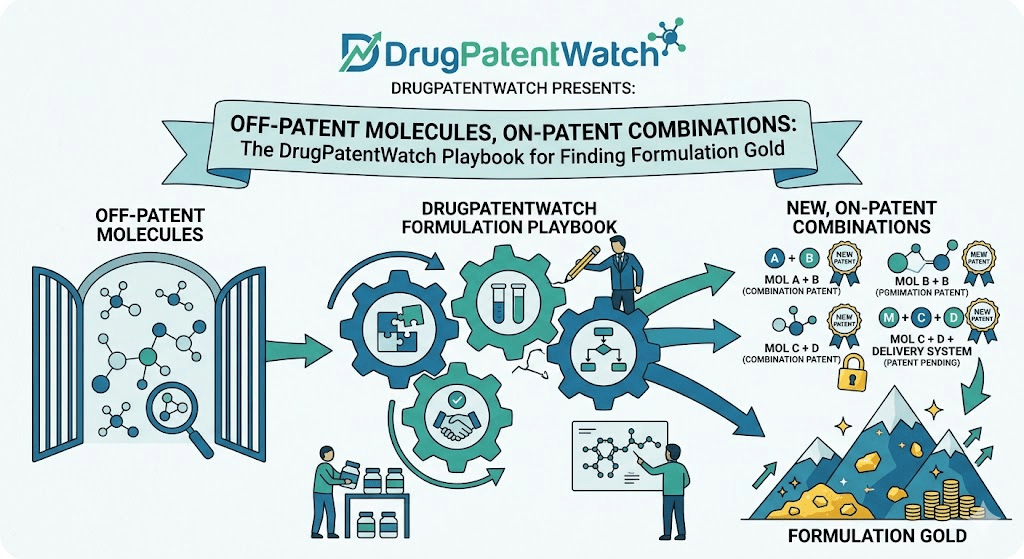
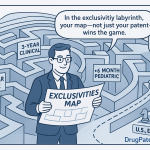
There is a class of pharmaceutical asset that rarely shows up in earnings calls but drives billions in brand revenue every year: the combination product built around an active ingredient that generic manufacturers could legally copy tomorrow. The molecule is off-patent. The delivery system, the fixed-dose ratio, the formulation patent, or a secondary use claim is not. Brand companies exploit this gap routinely. Generic manufacturers, payers, and formulary strategists often do not map it precisely enough.
DrugPatentWatch is the most direct tool available for closing that gap. This guide walks through exactly how to use it—search mechanics, data interpretation, cross-referencing with FDA Orange Book records, and the downstream commercial and litigation intelligence you can extract from the exercise.
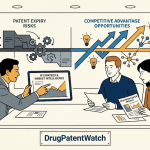
The payoff is concrete: if you are a generic developer, you find exploitable combinations where the underlying API is open but the finished-dose product still carries patent exclusivity you can design around or challenge. If you are a brand strategist, you identify where your own portfolio is vulnerable. If you are a payer or PBM analyst, you forecast when true price competition arrives on high-spend combination products.
What ‘Off-Patent Molecule, On-Patent Combination’ Actually Means
The term needs precision before the analysis can begin. An active pharmaceutical ingredient (API) goes off-patent when the primary composition-of-matter patent—the one protecting the molecule’s chemical structure—expires. From that moment, any manufacturer can, in theory, synthesize or source the API without infringing a composition claim.
A combination product is a finished dose form containing two or more active ingredients. The combination itself, or the specific formulation containing it, may carry its own patents independent of the component APIs. Those secondary patents can, and routinely do, extend beyond the expiry of both component composition patents.
The result: a generic company can manufacture each active ingredient separately. It cannot necessarily manufacture the fixed-dose combination tablet, capsule, or inhaler without infringing a formulation, method-of-use, or dosing-regimen patent that has nothing to do with the chemical structure of either molecule.
Key Definitions for Patent Mapping in Combination Products
Composition-of-matter patent: Protects the molecule itself. Expiry opens the API to generic synthesis.
Formulation patent: Protects a specific physical or chemical form of the drug—extended-release matrix, particle size specification, excipient combination.
Method-of-use patent: Protects a specific therapeutic indication or dosing protocol, not the compound structure.
Combination patent: Protects the specific fixed-dose ratio or physical combination of two or more APIs in a single dosage unit.
Orange Book listing: Only patents the brand holder certifies as covering the approved drug product appear here. Generic filers must address each listed patent.
Why This Distinction Matters Commercially
In 2023, U.S. brand pharmaceutical revenue from combination products exceeded $180 billion across cardiovascular, respiratory, HIV, and diabetes therapeutic classes [1]. A substantial fraction of that revenue comes from products where both constituent APIs have been available as generics for years. The combination formulation carries the pricing power, not the molecule.
Understanding which combinations fall into this category—and exactly which patents protect them—is a prerequisite for any serious generic entry strategy, payer negotiation, or brand defense analysis.
Why Combination Products Outlive Their Component Patents
The mechanism is not accidental. Brand companies invest in combination product development partly because it produces a defensible intellectual property position that outlasts the original molecule’s exclusivity. There are four distinct strategies at work.
The Secondary Patent Stack: How Brands Layer Protection
A single combination product typically carries not one protecting patent but a cluster. A cardiovascular combination might carry the original API composition patent (now expired), a salt-form patent (may or may not be expired), a fixed-dose combination patent, an extended-release delivery mechanism patent, and one or more method-of-use patents covering specific patient populations.
Each patent has its own expiry date. The effective exclusivity end date is the expiry of the last enforceable Orange Book-listed patent—unless a generic challenger successfully invalidates earlier patents through Paragraph IV proceedings.
Why Fixed-Dose Combinations Generate New IP Even With Generic APIs
Combining two off-patent molecules into a single tablet sounds simple. Scientifically, it often is not. Drug-drug interaction in the formulation matrix, differential dissolution rates, incompatible excipient requirements for each API, and stability issues all create genuine technical challenges—and each engineering solution is potentially patentable.
Merck’s combination of sitagliptin and metformin in Janumet illustrates this. Metformin has been off-patent for decades. Sitagliptin’s composition patent expired in 2022 in the United States. The Janumet formulation patents run separately and address the physical compatibility challenges of combining the two molecules. Generic sitagliptin/metformin combinations faced a distinct patent landscape from generic sitagliptin alone.
Pediatric Exclusivity and Orphan Drug Designations as Combination Extensions
FDA can grant six months of pediatric exclusivity, attached to any existing exclusivity or patent protection on a drug, when the brand sponsor completes qualifying pediatric studies under the Best Pharmaceuticals for Children Act (BPCA) or the Pediatric Research Equity Act (PREA). This exclusivity applies to the entire new drug application (NDA), including any combination formulation under that NDA.
Orphan drug designation provides seven years of market exclusivity for drugs treating conditions affecting fewer than 200,000 patients in the United States. Combination products incorporating an active ingredient with orphan designation for a specific rare indication benefit from this exclusivity even if the molecule is widely used off-patent in other indications.
New Chemical Entity (NCE) Exclusivity on Combination Products Containing a Novel API
When a combination contains one molecule with prior approval and one genuinely new chemical entity (NCE), FDA grants five-year NCE exclusivity running from the new NDA approval date. This exclusivity blocks any ANDA filing for the combination—regardless of the patent status of the older constituent—for five years from NDA approval, or four years if the ANDA contains a Paragraph IV certification.
This dynamic creates a common scenario: an older off-patent molecule gets paired with a new API and relaunched as a combination product. The combination receives NCE exclusivity through the new API, effectively resetting the exclusivity clock on the commercial product even though the older molecule has had generic competition for years.
How DrugPatentWatch Works: Data Sources and Architecture
DrugPatentWatch (drugpatentwatch.com) aggregates and cross-references data from several primary sources to build its patent and exclusivity database. Understanding those sources is necessary to interpret the results correctly.
Primary Data Sources Behind DrugPatentWatch’s Database
The core inputs are FDA’s Orange Book (Approved Drug Products with Therapeutic Equivalence Evaluations), the USPTO patent database, FDA’s Paragraph IV certification public disclosures, court records from patent litigation in the District of Delaware, District of New Jersey, and other common pharmaceutical patent venues, and FDA’s Drugs@FDA database for NDA and ANDA approval records.
DrugPatentWatch processes these sources and builds cross-linked records connecting each approved drug product to its Orange Book patent listings, each patent to its prosecution history and expiry date, and each product to ANDA filings and Paragraph IV challenges where those exist.
What DrugPatentWatch Shows That the Orange Book Does Not
The Orange Book is the authoritative source for patent listings on approved NDA products. It does not, however, provide the following: patent prosecution history, claim-level analysis, related patent families, comparable international filings, or the history of patent challenges. DrugPatentWatch layers those elements on top of the Orange Book data.
For combination product analysis, the most useful additions are the related patent family view (identifying patents filed around the same time by the same assignee covering related technology), the exclusivity expiry timeline, and the ANDA filing tracker showing which generic companies have filed on a given product and whether any Paragraph IV certifications have been lodged.
Subscription Tiers and Access Levels for Pharmaceutical IP Research
DrugPatentWatch operates on a tiered subscription model. Free access provides basic product lookups and limited patent information. Professional and enterprise subscriptions unlock full patent family data, ANDA filing history, exclusivity tracking, API-level searches, and bulk export capabilities. For the kind of combination product analysis described in this guide, professional-level access is the practical minimum.
The workflow has four phases: API-level patent search, combination product identification, exclusivity and patent mapping, and commercial prioritization. Each step builds on the previous.
Phase 1: API Patent Expiry Search—Where to Start in DrugPatentWatch
Start at the drug or active ingredient search, not the product search. DrugPatentWatch’s active ingredient database lets you search by INN (International Nonproprietary Name) and returns a list of approved drug products containing that ingredient, together with the patent and exclusivity records associated with each.
For a target API, the key fields to capture are: composition-of-matter patent expiry date, any salt or polymorph patents and their expiry dates, the Orange Book exclusivity code (see the exclusivity type table below), and the last patent expiry date across all Orange Book-listed patents for single-ingredient products containing that API.
If all those dates fall in the past, the API is legally off-patent and off-exclusivity as a standalone. The next question is whether it appears inside any combination products that are still protected.
Phase 2: Cross-Referencing the API Against Combination Product Records
From the active ingredient results page, DrugPatentWatch lists all FDA-approved products containing that ingredient. Filter for combination products—those where the active ingredient count is greater than one. For each combination product, note the NDA number, the brand name, and the listed Orange Book patents.
Pull up each combination product’s patent detail page. The expiry dates on these patents are the operative protection dates, not the API expiry dates you found in Phase 1. A common finding: the API’s composition patent expired years ago; the combination’s formulation or method-of-use patents extend three to twelve years further.
Phase 3: Reading Exclusivity Codes—What ‘NCE,’ ‘ODE,’ and ‘I-1’ Actually Mean
FDA Orange Book exclusivity codes govern the period during which FDA will not approve a competing ANDA or 505(b)(2) application for the same drug. These are distinct from patent protection. A product can be patent-expired but still exclusivity-protected, or patent-protected with exclusivity already expired.
The codes relevant to combination products include NCE (New Chemical Entity, 5 years from NDA approval, blocks ANDA filings except 4-year Paragraph IV filers), ODE (Orphan Drug Exclusivity, 7 years), NP (New Product for certain combination products not qualifying for NCE), I-1 (New Clinical Investigations for products qualifying for 3-year exclusivity based on new clinical studies), and PED (Pediatric Exclusivity, 6-month extension attached to other exclusivity or patent periods).
In DrugPatentWatch, these appear as labeled columns on the product record. For combination product analysis, you need both the patent expiry column and the exclusivity expiry column. Effective market exclusivity ends when the later of those two dates passes.
Phase 4: Building the Expiry Timeline—From API Composition to Last Combination Patent
Compile a single timeline for each combination product you are analyzing. The timeline should show: API-A composition patent expiry, API-B composition patent expiry (for two-molecule combinations), combination product formulation patent expiry date(s), method-of-use patent expiry date(s), FDA exclusivity expiry date, and the effective first possible ANDA approval date based on all of the above.
The gap between the earliest API composition expiry and the effective ANDA approval date is the combination premium window—the period during which the brand collects combination pricing with reduced generic competition. That window can range from under a year to over a decade.
How to Search for Combination Products by Therapeutic Class in DrugPatentWatch
DrugPatentWatch supports therapeutic class filters using ATC (Anatomical Therapeutic Chemical) classification codes and product category tags. To scan an entire therapeutic class for off-patent API / on-patent combination opportunities, filter by ATC class, then sort results by last patent expiry date in descending order. Products at the top have the longest remaining exclusivity. Within those results, flag any where one or more component APIs appear in the off-patent or near-expiry range for their standalone versions.
Reading the Orange Book Alongside DrugPatentWatch
No combination product patent analysis is complete without direct verification against the FDA Orange Book. DrugPatentWatch aggregates Orange Book data and adds layers, but the Orange Book itself is the legally operative reference. Discrepancies—which occasionally exist due to update lag—must be resolved against the Orange Book directly.
How to Cross-Check DrugPatentWatch Data Against FDA Orange Book Records
FDA publishes the Orange Book as a searchable online database (accessdata.fda.gov/scripts/cder/ob/index.cfm) and as annual printed editions with monthly cumulative supplements. For a given NDA number, the Orange Book shows each listed patent number, use code (if applicable), and patent expiry date. It also shows the current exclusivity type and expiry date.
Compare these directly against the DrugPatentWatch record. For combination products, verify that every Orange Book-listed patent appears in the DrugPatentWatch profile, and check whether DrugPatentWatch has flagged any additional non-Orange Book patents covering the product (these would not block ANDA approval but could be asserted in litigation under a separate cause of action).
What Orange Book Use Codes Reveal About Method-of-Use Patent Scope
When a patent covers a specific use rather than the compound itself, the brand holder submits a use code (U-coded entry) in the Orange Book. An ANDA filer may carve out the patented use and seek approval only for non-patented indications under a Section viii statement, rather than filing a Paragraph IV certification challenging the patent.
For combination products, use codes can indicate that the brand’s patent protection is narrower than it appears. If the combination is approved for multiple indications and the Orange Book use code covers only one, a generic filer may pursue approval for the remaining indications without a patent fight. DrugPatentWatch displays use codes on the patent detail page and, in the professional tier, links them to the relevant NDA indication language.
Orange Book Delisting: When Brand Companies Remove Patents After ANDA Filing
Brand holders occasionally delist patents from the Orange Book after ANDA filers have certified against them. Under 21 U.S.C. § 355(c)(3)(D)(ii)(I), a generic applicant who has already submitted a Paragraph IV certification against a delisted patent can continue to rely on first-filer exclusivity status, and the brand’s ability to obtain a 30-month stay on ANDA approval through litigation may be affected. DrugPatentWatch tracks patent delisting events and flags products where delisting has occurred—a commercially important signal that can indicate weakening brand confidence in a patent’s validity or enforceability.
Patent Expiry vs. FDA Exclusivity: Which Clock Governs Generic Entry?
Generic entry requires navigating both clocks simultaneously. Patent expiry and FDA exclusivity are independent legal mechanisms, and either one can block an ANDA approval regardless of the other’s status.
When Patent Expiry Comes First: The Pure Patent-Expiry Scenario
If a combination product’s last Orange Book patent expires before any FDA exclusivity runs out, the patent expiry date is irrelevant to first possible approval. Exclusivity governs. An ANDA cannot receive final approval until the exclusivity period ends, even if every patent has expired or been invalidated.
This scenario is common with older combination products where the brand was approved before robust secondary patenting strategies were standard practice. The brand relies entirely on exclusivity for protection against ANDA filers after the patent period.
When Exclusivity Expires First: Patent Litigation Is the Only Path
More commonly for recently launched combination products, FDA exclusivity expires well before the last Orange Book patent. In this scenario, an ANDA filer can submit four years after NDA approval (for NCE products) with a Paragraph IV certification, triggering a 30-month stay of ANDA approval and immediate patent litigation. The generic entrant must either wait out the 30-month stay with no litigation resolution (and receive ANDA approval at expiry of the stay or last patent, whichever is earlier) or win in court to obtain earlier approval.
The 30-Month Stay Mechanics for Combination Product ANDAs
When an ANDA for a combination product includes a Paragraph IV certification against any Orange Book-listed patent, and the NDA holder files suit within 45 days of receiving the required Paragraph IV notice letter, FDA automatically stays approval of the ANDA for 30 months from the date the brand holder received the notice letter. Multiple patents on a combination product do not generate multiple 30-month stays from a single ANDA filing—there is one 30-month stay per ANDA, triggered by the first Paragraph IV certification submitted at filing or amendment.
First-Filer Exclusivity and Combination Products: 180-Day Generic Exclusivity Explained
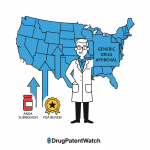
The first ANDA applicant to file a substantially complete application with a Paragraph IV certification against a listed patent on a combination product earns 180-day generic exclusivity. During that 180-day window—which begins on the date of first commercial marketing by the first filer—FDA cannot approve a subsequent ANDA for the same combination product.
For complex combination products with multiple Orange Book patents, the 180-day exclusivity can attach separately to each patent (if subsequent filers certify against different patents). DrugPatentWatch’s ANDA tracker shows which applicants have first-filer status and, where public information permits, when the 180-day clock may have started or is expected to start.
Formulation Patents: How Brands Extend Life Without the API
Formulation patents are the primary instrument through which combination products outlive their component molecules’ composition patents. Understanding the types and vulnerability of formulation patents is central to any Paragraph IV strategy or generic development planning.
Extended-Release Formulation Patents and Their Typical Claim Scope
Extended-release (ER) formulations generate a distinct patent category from the underlying API. An ER patent typically claims a matrix composition (specific polymer types and weight percentages), a dissolution profile (drug release rate at specified time points under specified conditions), or a method of achieving therapeutic plasma levels with a defined dosing interval.
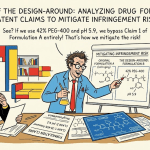
Generic developers challenging ER formulation patents can design around the matrix claims by using different polymers achieving equivalent dissolution, or they can challenge validity based on obviousness over prior art ER technology applied to the same or similar APIs. The dissolution profile claims are harder to design around but potentially vulnerable to prior art challenges if the claimed profile was predictable from the API’s pharmacokinetics.
Salt and Polymorph Patents Layered on Off-Patent APIs: How Common Are They?
A significant fraction of combination products use APIs in a specific salt or crystalline polymorph form that carries its own patent even after the free-base compound enters the public domain. AstraZeneca’s esomeprazole (Nexium) was a high-profile example at the single-agent level—the S-enantiomer of omeprazole was patented separately after omeprazole’s composition patents expired. The same dynamic applies to APIs used in combination products.
In DrugPatentWatch, salt-form and polymorph patents appear in the Orange Book listing alongside composition patents. They are identifiable by examining the claim language in the linked USPTO record. A patent claiming ‘the hydrochloride salt of compound X’ or ‘crystalline form II of compound X’ rather than ‘compound X’ indicates a secondary structural patent that may expire later than the parent composition patent.
Delivery Device Patents in Combination Inhalers: A Distinct IP Layer
Respiratory combination products—fixed-dose inhalers combining an inhaled corticosteroid (ICS) with a long-acting beta agonist (LABA), for example—carry a third IP layer beyond API and formulation: the delivery device itself. GSK’s Advair Diskus (fluticasone propionate/salmeterol) exemplifies this. Both APIs were off-patent. The Diskus device carried separate device patents. Generic entrants needed to develop their own delivery systems, adding development cost and regulatory complexity beyond the API and formulation work.
Device patents on combination inhalers, auto-injectors, prefilled syringes, and transdermal patches are not always Orange Book-listed (device patents are sometimes excluded from Orange Book listing if the brand holder does not certify they cover the approved drug product), but they can be asserted in litigation. DrugPatentWatch captures many device patents through its related-patent-family analysis, even where they are not formally Orange Book-listed.
What Makes a Formulation Patent Vulnerable to Paragraph IV Invalidity Challenge?
The strongest invalidity grounds against formulation patents are anticipation (a prior art reference discloses every element of the claimed formulation) and obviousness (combining prior art references would have led a skilled formulator to the claimed composition with a reasonable expectation of success). Secondary considerations—commercial success, long-felt need, failure of others—can cut against an obviousness challenge if the brand can demonstrate them.
For combination products specifically, obviousness arguments often focus on the following: if both APIs were known, if combining them was suggested by prior clinical literature, and if the formulation approach was routine for the relevant dosage form, then the combination formulation patent is weak. Generic challengers using DrugPatentWatch to map the patent landscape often use the related patent family data to identify prior art references cited during prosecution—those references are the starting point for obviousness construction.
Paragraph IV Litigation and Combination Products: Risk and Reward
Paragraph IV litigation on combination products follows the same basic Hatch-Waxman framework as single-agent products but carries additional strategic complexity from the multi-patent landscape and the compound nature of the exclusivity periods involved.
Filing Strategy: Which Patents to Challenge in a Combination Product Paragraph IV
An ANDA filer has four certification options for each Orange Book-listed patent: Paragraph I (patent has not been filed), Paragraph II (patent has expired), Paragraph III (ANDA approval requested after patent expiry), or Paragraph IV (patent is invalid or will not be infringed). For a combination product with five Orange Book patents at different expiry dates, a filer might submit Paragraph II certifications on expired patents, Paragraph III on near-expiry patents, and Paragraph IV only on the most commercially significant blocking patents—those with the latest expiry dates.
This selective approach reduces the notice letter burden, focuses litigation on the key patents, and avoids triggering additional 30-month stays on patents the filer is not contesting. DrugPatentWatch’s patent expiry timeline view makes the prioritization analysis straightforward: identify the latest-expiring patent blocking market entry, and concentrate Paragraph IV strategy there.
Notable Combination Product Paragraph IV Litigation Outcomes
The District of Delaware and the District of New Jersey handle the majority of Hatch-Waxman combination product cases. Several outcomes have shaped generic entry timelines for major combination franchises.
In the sitagliptin/metformin context, Merck’s Janumet faced multiple ANDA filers through the early 2020s. The core sitagliptin composition patent (US 6,699,871) expired in 2022, opening competition on sitagliptin itself. The Janumet combination patents ran to different dates, and litigation over specific formulation claims resulted in some filers receiving consent judgments and others reaching settlements with authorized generic agreements.
AstraZeneca’s dapagliflozin/metformin combination (Xigduo XR) faced Paragraph IV challenges after dapagliflozin’s composition patents were addressed. The extended-release formulation patents on the combination were the primary litigation battleground. Cases in these proceedings turn heavily on whether the specific ER matrix used in the combination was obvious over prior art ER formulation technology.
Settlement Dynamics: Authorized Generics and Pay-for-Delay in Combination Markets
Settlements in combination product Hatch-Waxman litigation frequently involve authorized generic (AG) licenses—the brand grants the first Paragraph IV filer a right to sell an authorized generic of the combination for a defined period, typically starting before the patent expiry date that the filer could have achieved through a litigation win. The brand retains revenues from the AG sales (typically through a royalty or profit-share arrangement) while the first filer gains certainty of entry without continued litigation cost.
Pay-for-delay settlements—where the brand pays the generic challenger to stay out of the market—have been subject to Federal Trade Commission scrutiny since the Supreme Court’s FTC v. Actavis decision in 2013. Combination products are no less subject to this scrutiny than single-agent drugs, though the complexity of the patent landscape can create factual distinctions that complicate FTC analysis.
Case Studies: Real Combination Products Where the API Went Generic First
The clearest way to understand the off-patent API / on-patent combination dynamic is through products where the sequence has already played out—or is currently in progress.
Symbicort (Budesonide/Formoterol): API Off-Patent, Inhaler IP Still Active
AstraZeneca’s Symbicort combines budesonide (an inhaled corticosteroid) and formoterol fumarate (a long-acting beta agonist). Budesonide has been off-patent for years, available generically in multiple forms. Formoterol’s composition patents expired in the United States by the mid-2010s. Generic formoterol inhalers entered the market.
The Symbicort combination product, however, maintained substantial patent protection through the pressurized metered-dose inhaler (pMDI) formulation patents and device-related claims. Generic developers needed to develop a bioequivalent MDI combination product, file an ANDA demonstrating device and formulation equivalence, and navigate Symbicort’s patent stack. FDA approved the first generic budesonide/formoterol MDI (from Mylan/Viatris) in 2019 after years of ANDA development and regulatory review—well after both APIs’ composition patents had expired.
Advair Diskus (Fluticasone/Salmeterol): The Multi-Layer IP Obstruction Case Study
GSK’s Advair Diskus became one of the longest-running examples of generic delay in a combination inhaler. Salmeterol’s composition patents expired. Fluticasone propionate’s composition patents expired. Generic inhaler developers began working on Advair generics in the early 2000s. The first generic equivalent—Mylan’s Wixela Inhub—did not receive FDA approval until 2019.
The delay stemmed from multiple factors: the complexity of demonstrating bioequivalence for inhaled products, FDA’s development of formal bioequivalence guidance for complex combination inhalers, and GSK’s patent stack covering the Diskus device and the fluticasone/salmeterol dry powder formulation. Brand Advair retained over $2.5 billion in annual U.S. revenues at peak despite both APIs having been off-patent for years.
‘The period between composition patent expiry and first generic launch for complex inhaled combination products averaged 9.3 years across products approved between 2000 and 2015, compared with 3.6 years for oral solid dose combination products.’ — IQVIA Institute, Generic Drug Savings in the U.S., 2022 [2]
Januvia vs. Janumet: Tracking the Gap Between Single-Agent and Combination Generic Entry
Merck’s sitagliptin franchise illustrates the timing gap directly. Januvia (sitagliptin alone) and Janumet (sitagliptin/metformin) both faced generic challenges. Metformin had been off-patent and generically available for decades before Janumet’s launch. The sitagliptin composition patent (US 6,699,871) expired in May 2022 in the United States.
Generic sitagliptin entered the market in 2022 following patent expiry. Generic Janumet’s timeline was governed by the combination-specific patents listed in the Orange Book for Janumet separately from those listed for Januvia. DrugPatentWatch’s product comparison function allows direct side-by-side review of the patent stacks on Januvia and Janumet, making the divergence visible at a glance.
Entresto (Sacubitril/Valsartan): NCE Protection on a Novel/Off-Patent Combination
Novartis’s Entresto pairs sacubitril—a novel neprilysin inhibitor—with valsartan, an angiotensin receptor blocker (ARB) available generically since 2012 after expiry of Diovan patents. Sacubitril qualified as a new chemical entity, giving Entresto five years of NCE exclusivity from its 2015 approval date. Sacubitril’s composition patent runs to 2026. Additional patents on the sacubitril-valsartan complex structure (the drug is actually a novel molecular complex, not simply a physical mixture) carry protection that extends further.
Valsartan is cheaply available from multiple generic manufacturers. But no ANDA for generic sacubitril/valsartan could be filed until 2019 (four years post-approval, the earliest NCE Paragraph IV filing window), and no approval can occur until 2020 (five years post-approval) absent a successful Paragraph IV win. The early generic entrants—Mylan, Alkem, Hetero, MSN Pharmaceuticals among others—filed ANDAs with Paragraph IV certifications and triggered litigation. The case is active.
Biktarvy (Bictegravir/Emtricitabine/TAF): Three APIs, Multi-Tiered Protection in HIV
Gilead’s Biktarvy is a triple combination HIV treatment containing bictegravir, emtricitabine (FTC), and tenofovir alafenamide (TAF). Emtricitabine has been off-patent for years—it was a component of older Gilead HIV combinations like Truvada and Atripla, and generic FTC is widely available. TAF is protected by its own composition patents expiring in the late 2020s. Bictegravir is the newest component with composition protection running into the early 2030s.
The Biktarvy Orange Book listing carries a dense patent stack incorporating both individual component patents and combination-specific patents. The practical result: even though emtricitabine is generically available and has been for years, no full generic Biktarvy equivalent can reach market until the last blocking patent in the combination stack—covering the specific triple combination, not just the individual APIs—allows entry.
Market Impact of API Patent Expiry on Combination Product Pricing
API patent expiry changes the competitive dynamics around combination products even before generic combinations are available. Understanding those dynamics is important for payer strategy and for brand companies projecting revenue curves.
How Single-Agent Generic Entry Pressures Combination Product Pricing
When generic versions of a combination’s individual API components become available, payers and prescribers face a make-or-buy decision on the combination. A formulary committee can place the generic individual agents on lower tiers and require step therapy before approving the brand combination, effectively reducing demand for the still-patented product.
This dynamic is pronounced in cardiovascular therapeutics, where many fixed-dose combinations pair two agents both available as cheap generics. The clinical evidence for the combination’s superior adherence outcomes—fewer pills—competes against the substantial cost differential when both individual generics can be prescribed separately and dispensed together.
Revenue Cliff Forecasting: When Does the Combination Product Lose Pricing Power?
True pricing power on a combination product erodes at two inflection points: when both (or all) component APIs have generic competition, and when a generic version of the combination itself reaches market.
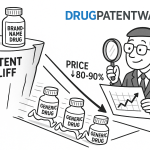
The first inflection typically produces 15–25% net price pressure through formulary management, even with the combination product still on-patent. The second inflection—generic combination entry—typically produces 80–90% price erosion within 12–18 months of first generic launch, consistent with the broader pattern of generic price erosion in oral solid dose markets.
DrugPatentWatch’s timeline data, cross-referenced with ANDA filing records, allows analysts to forecast both inflection points for a specific combination product with reasonable precision. The first inflection date is determined by the latest individual API generic entry. The second is determined by the effective ANDA approval date for the combination—the later of last Orange Book patent expiry and last FDA exclusivity expiry.
Impact of LOE on Combination Product Sales: Cardiovascular and Diabetes Case Data
Revenue data from loss-of-exclusivity (LOE) events in combination cardiovascular and diabetes products shows consistent patterns. In the SGLT-2 inhibitor plus metformin class, brand combination products lost 40–60% of revenue within 24 months of generic combination entry, with the rate of decline accelerating once second and third generic entrants appeared. The metformin component’s long generic history and low cost made the combination’s value proposition difficult to sustain at brand pricing once generic alternatives were available.
Manufacturing and Supply Chain Intelligence from Patent Data
Patent data on combination products provides supply chain intelligence that goes beyond exclusivity timelines. API manufacturer patents, process patents, and formulation manufacturing patents all appear in DrugPatentWatch’s database and collectively reveal where the supply chain is concentrated and where vulnerabilities exist.
API Source Patents: How to Identify Manufacturing IP for Combination Product Inputs
Some API manufacturers hold process patents covering the synthesis of specific active ingredients. These patents do not appear in the Orange Book (which covers drug product patents, not API manufacturing patents), but they do appear in DrugPatentWatch’s broader patent database through the related patent family search.
If the manufacturer of the API used in a specific combination product holds a process patent expiring after the composition patent, a generic developer using a different synthesis route does not infringe—but a developer purchasing API from that manufacturer’s supply chain may need a license. Identifying this layer of IP is particularly relevant for complex APIs with multiple synthesis steps, where a single manufacturer may have a dominant supply position protected partly by process IP.
Drug Master File (DMF) Holdings and Combination Product Generic Development
Combination product ANDA filers need access to Drug Master Files for each API. DMF holders, who may include both API manufacturers and the branded product’s NDA holder, can exert supply leverage over ANDA development timelines. DrugPatentWatch does not directly display DMF data, but combining its patent landscape data with FDA’s DMF database query allows identification of situations where API supply for a generic combination is concentrated in a single or very few suppliers.
Sterile Manufacturing and Device Component Supply Chains for Combination Injectables
Combination injectable products—combination biologics, combination oncology infusions, combination pre-filled syringe products—carry supply chain complexity beyond the API and formulation. Sterile fill-and-finish capacity, container-closure system patents, and co-packaging logistics all affect the timeline to first generic or biosimilar combination launch.
For injectable combination products where one API is a biologic, the applicable pathway shifts from ANDA to 351(k) biosimilar application, and the biosimilar development timeline and exclusivity framework differ substantially from the Hatch-Waxman structure described above.
Building a Competitive Intelligence Workflow Around Combination Products
The analysis described in prior sections becomes most valuable when integrated into a systematic competitive intelligence workflow rather than performed as one-off lookups. This section describes how to build that workflow using DrugPatentWatch as the central data source.
Setting Up DrugPatentWatch Alerts for Combination Patent Expirations and ANDA Filings
DrugPatentWatch supports email alerts on patent expiry events, new ANDA filings, and Paragraph IV certifications for tracked products. For combination product monitoring, configure alerts on the following trigger events: any new ANDA filing for a tracked combination product, any Paragraph IV certification against a tracked combination product’s Orange Book patents, any patent expiry event for tracked combination products, and any FDA first-approval event for a generic version of a tracked product.
These alerts function as an early warning system for competitive events. A Paragraph IV notice letter, which must be sent to the NDA holder within 20 days of ANDA filing under 21 C.F.R. § 314.95, arrives shortly after the DrugPatentWatch alert—giving the brand holder maximum time to evaluate litigation response. For generic developers, the ANDA filing alert confirms competitor activity in a target market.
Building a Combination Product Patent Matrix: Template and Data Fields
A structured patent matrix for competitive intelligence tracking should capture the following fields for each combination product under review: NDA number, brand name, active ingredients (with separate composition patent expiry for each), combination-specific Orange Book patents (patent number, expiry date, use code if applicable), FDA exclusivity code and expiry, ANDA filers (with Paragraph IV certification status), first-filer exclusivity status, authorized generic agreements if known, and effective generic entry date estimate.
This matrix, built from DrugPatentWatch data and verified against the Orange Book, provides a single-view reference for portfolio prioritization and investment decision-making.
Using DrugPatentWatch for Competitive Pipeline Benchmarking in Combination Products
When evaluating a pipeline combination product’s commercial potential, the patent landscape of existing competitive products in the same therapeutic class provides directly relevant benchmarking data. DrugPatentWatch’s therapeutic class filters allow rapid compilation of patent expiry timelines across all current competitors, revealing which products face near-term generic competition and which have long-dated protection.
A pipeline combination entering a class where three of five current brands face generic entry within 24 months faces a very different pricing environment than one entering a class where all competitors have 10-year protection windows. This analysis belongs in any launch valuation model for a combination NDA program.
International Patent Coverage and Its Limits for Combination Products
DrugPatentWatch’s core database focuses on U.S. FDA-approved products and U.S. patent records. For combination products with significant ex-U.S. commercial exposure, a parallel analysis against European Patent Office (EPO) records, individual national patent offices, and regional regulatory databases is necessary. PCT (Patent Cooperation Treaty) filings visible in DrugPatentWatch’s related patent family data provide entry points for this international analysis—a PCT filing typically matures into national/regional applications in the major markets, and the family data identifies the family members to track.
What This Means for Payers, PBMs, and Formulary Committees
The off-patent API / on-patent combination dynamic directly affects drug spend projections, formulary tiering decisions, and step therapy protocol design for payers and pharmacy benefit managers.
Formulary Strategy for Combination Products with Off-Patent Components
When both component APIs of a combination product are available as generics, formulary committees have clear leverage: place generics of each component on preferred tiers and require that members try the individually generic components before the brand combination is covered at brand rates. This step therapy approach is clinically defensible where the combination offers no proven superiority over the individual agents used concurrently—which is often the case for fixed-dose cardiovascular and metabolic combinations whose primary benefit is adherence simplification.
The step therapy design should reference the combination product’s Orange Book patent status. If generic combination entry is imminent (within 12–24 months), the formulary intervention may be of limited duration—it captures savings during the window before generic combination competition eliminates the pricing differential automatically.
Prior Authorization Criteria Design Using Patent Expiry Data
Prior authorization (PA) criteria for combination products can incorporate patent expiry intelligence. A payer can design a PA that sunsets automatically when a generic combination product is FDA-approved—avoiding administrative burden of maintaining PA requirements that become clinically moot once low-cost generic alternatives are on formulary.
DrugPatentWatch’s effective generic entry date estimates, based on patent and exclusivity data, provide the input for PA sunset date planning. The estimates carry uncertainty, but building a PA with a defined review trigger (FDA approval of a generic alternative) rather than a hard sunset date manages that uncertainty appropriately.
Biosimilar vs. Generic Combination Products: Different Pathways, Different Timelines
When one component of a combination product is a biologic (protein, peptide, monoclonal antibody), the combination’s generic pathway shifts. FDA does not approve combination biologics under the ANDA pathway. If the combination includes one small molecule and one biologic, the appropriate regulatory pathway depends on the specific product design. The fully synthetic small molecules may be approvable via ANDA for single-agent use, while a combination product incorporating a biologic component requires a different approach.
For payers modeling biosimilar combination product entry, the relevant data is interchangeability designation status for the biologic component, any combination-specific clinical data requirements FDA has articulated, and the exclusivity period under the Biologics Price Competition and Innovation Act (BPCIA)—the biologic equivalent of Hatch-Waxman, providing 12 years of reference product exclusivity and 4 years of data exclusivity.
Regulatory Pathways for Generic Combinations: 505(b)(2) vs. ANDA
Not all generic combination product applications follow the standard ANDA pathway. Understanding the available regulatory routes—and their IP implications—is necessary for accurate entry timeline forecasting.
When Must a Generic Combination Use 505(b)(2) Instead of ANDA?
An ANDA requires that the proposed generic product be pharmaceutically equivalent to the reference listed drug (RLD)—same active ingredients, same dosage form, same route of administration, and same strength. If a developer wants to market a combination product using the same APIs as an approved combination but in a different dosage form, with different release characteristics, or at different proportions, an ANDA is unavailable. The application must go through the 505(b)(2) pathway, which requires its own clinical bridging data but can rely partially on FDA’s prior findings for the reference product.
For generic combination product developers who see an opportunity to improve on the brand combination’s formulation (different release profile, different dose ratio, different excipient system) while using the same off-patent APIs, 505(b)(2) is the operative pathway. The IP landscape for a 505(b)(2) applicant differs from an ANDA filer: the applicant must certify against Orange Book patents for the reference product (the brand combination) but may also claim that the proposed product does not infringe if its different design does not read on the brand’s formulation patents.
DESI and Pre-1962 Combination Products: FDA Approval History Edge Cases
Some combination products were approved before 1962 under a less rigorous efficacy standard and have complex regulatory histories under FDA’s Drug Efficacy Study Implementation (DESI) program. For these products, the Orange Book records may be incomplete or absent, and the patent landscape requires manual research rather than standard database queries. DrugPatentWatch’s coverage of pre-1962 combination products is less comprehensive than for modern NDA products, and analysts working with legacy combination products should supplement DrugPatentWatch data with direct FDA correspondence and specialized patent counsel review.
FDA’s Complex Drug Substance Guidance and Combination Product Development
FDA has issued guidance documents addressing the bioequivalence requirements for complex combination drug products, including locally-acting products (respiratory inhalers, topical combinations), modified-release oral combinations, and combination products with narrow therapeutic index components. These guidance documents affect the development timeline for generic combinations more than the patent landscape alone, because demonstrating bioequivalence for a complex combination can require clinical endpoint studies (not just pharmacokinetic bridging) and specialized in vitro methods.
For generic developers using DrugPatentWatch to prioritize combination product targets, the regulatory complexity of bioequivalence demonstration should be overlaid on the patent timeline analysis. A combination product with an advantageous patent timeline but extremely difficult bioequivalence requirements may be less commercially attractive than a product with a slightly longer protection window but straightforward bioequivalence demonstration.
Advanced DrugPatentWatch Techniques for Combination Product Research
Beyond the core search workflow described in previous sections, several advanced features of DrugPatentWatch improve the precision and efficiency of combination product patent analysis.
Using the Patent Expiry Calendar to Screen Therapeutic Classes for Off-Patent API Opportunities
DrugPatentWatch’s patent expiry calendar aggregates upcoming patent expiration events across all Orange Book-listed products, filterable by therapeutic class and expiry date range. Running this filter on a specific ATC class for the next 24-month window identifies every product in that class facing imminent generic entry.
Comparing that list against the same class filtered for combination products and sorted by last patent expiry reveals the divergence: single-agent products expiring now versus combination products still carrying protection. The gap between the two lists is the commercial opportunity map for combination generic development in that class.
Patent Assignee Searches: Identifying All Combination Patents Held by a Single Brand
DrugPatentWatch allows patent searches by assignee (the entity holding the patent). Running an assignee search for a major brand company returns all USPTO patents held by that company that appear in the DrugPatentWatch database—including Orange Book-listed patents on combination products. This view reveals the full defensive IP architecture of a company’s combination product portfolio, useful for competitive intelligence and for identifying any gaps or clustering in their protection strategy.
Litigation Status Tracking: How to Monitor Active Hatch-Waxman Combination Cases
DrugPatentWatch tracks active patent litigation by NDA number and patent number. For a combination product under active Paragraph IV litigation, the platform shows the case name, district court, filing date, and, where published, case status. This litigation tracker saves significant time compared to manual PACER searches, though PACER verification remains necessary for complete docket review in any active legal proceeding.
Exporting Combination Product Data for Financial Modeling and LOE Analysis
Professional and enterprise subscribers can export DrugPatentWatch data to CSV for integration into financial models. The export includes patent expiry dates, exclusivity expiry dates, ANDA filer counts, and Paragraph IV certification status for queried products. For LOE (loss of exclusivity) forecasting models used in pharmaceutical equity research and payer budget impact modeling, this export function eliminates manual data entry and reduces transcription error.
Competitive Intelligence Scenarios: What DrugPatentWatch Reveals That Public Filings Do Not
Scenario 1: The Brand Filing New Combination Patents Late in the Product Life Cycle
A late-cycle combination patent filing—occurring five to ten years after product launch, when the primary composition patents are nearing expiry—signals a brand’s defensive extension strategy. DrugPatentWatch surfaces these late filings through its patent family tracking, which flags new Orange Book listings for established products. When a brand company lists a new patent on a fifteen-year-old combination product three years before the original patents expire, that is a signal worth examining closely.
The new patent may cover a previously unclaimed formulation characteristic, a new indication supported by supplemental NDA data, or a reformulated version. In any case, it extends the expiry timeline visible in DrugPatentWatch and may require ANDA filers to update or amend their pending applications to address the new listing.
Scenario 2: Multiple Generic Filers Targeting the Same Combination—What It Means for Pricing
When DrugPatentWatch’s ANDA tracker shows four or more generic applicants with Paragraph IV certifications against a combination product, the market signal is clear: intense competition at generic entry. The first-filer exclusivity will be disputed if multiple applicants filed on the same day (a common occurrence for high-value products). The authorized generic agreement probability increases, as the brand may prefer to participate in the generic market through an AG deal rather than cede all economics to multiple competitors.
The pricing outcome for payers changes materially when five or more generics are competing on day one versus two. The former scenario produces 90%+ price erosion within six months; the latter may sustain higher prices through the 180-day exclusivity window if only one or two generic entrants are active.
Scenario 3: An Off-Patent API Appearing in a New Combination NDA—Evergreening Signal
When an API with established generic competition appears as a component in a new combination NDA, the commercial rationale almost always involves the new combination receiving exclusivity (through the NCE status of the novel co-ingredient, or through clinical data exclusivity on the combination indication) that the single-agent off-patent form does not have. DrugPatentWatch’s new NDA tracking, filtered for combination products containing known off-patent APIs, identifies these evergreening moves as they occur.
The strategic implication for competitors depends on the therapeutic class. If the new combination is entering a class where payers already manage the individual generic agents aggressively, the combination faces formulary access challenges regardless of its patent position. If the combination addresses a genuinely unmet clinical need with the specific dosing or formulation design, it may achieve formulary placement at preferred brand tier despite the availability of the individual generic components.
The Financial Case for Combination Generic Development: When Is the Investment Justified?
How to Estimate the Combination Generic Opportunity Using Patent Expiry and Market Data
Generic combination product development investment is justified when three conditions align: the combination patent stack is cleared or clearable through Paragraph IV challenge; the brand combination’s U.S. revenue is sufficient to support multiple generic competitors; and the bioequivalence demonstration pathway is tractable within a development timeline that preserves commercial value.
Revenue thresholds vary by firm, but a general rule used by mid-tier generic manufacturers is that a combination product generating under $150 million in annual U.S. net revenues is unlikely to justify competitive ANDA development with Paragraph IV litigation costs factored in—unless the product is in a therapeutic class where the developer already has manufacturing and regulatory infrastructure from related single-agent generics.
Paragraph IV Success Rates in Combination vs. Single-Agent ANDA Cases
Academic and industry analyses of Hatch-Waxman litigation outcomes show that generic challengers prevail (patent invalidated or found not infringed) in approximately 70% of cases that reach a final judicial determination, across both single-agent and combination product cases [3]. Combination product formulation patents, however, show somewhat higher brand win rates than composition patents in direct comparisons—likely because formulation patents, when carefully drafted around genuine technical innovations, are harder to characterize as obvious over prior art than composition patents covering known chemical scaffolds.
When to License Rather Than Litigate: Authorized Generic Deals on Combination Products
For some combination products with deep patent stacks, the expected litigation cost and timeline make an authorized generic license economically superior to a contested Paragraph IV path. An AG deal provides certainty of entry date, eliminates litigation risk, and often includes supply security from the brand’s own manufacturing network. The cost is typically a profit share or royalty that reduces the generic manufacturer’s margin below what a contested win would provide.
DrugPatentWatch’s ANDA tracking data reveals which products already have authorized generic agreements in place (these are sometimes disclosed in public company filings or FDA ANDA approvals issued under the NDA holder’s regulatory stewardship). This information informs the negotiating position of subsequent ANDA filers: if an AG deal is already in place for the first-filer, the competitive dynamics at generic entry are partially known.
International Comparison: Off-Patent Combination Molecules in European and Emerging Markets
How EU SPC Rules Affect Combination Product Exclusivity in Europe
In Europe, the Supplementary Protection Certificate (SPC) system provides up to five additional years of exclusivity beyond a medicinal product’s basic patent expiry, compensating for time lost during regulatory approval. SPCs are calculated from the first EU marketing authorization date, not from the patent filing date.
For combination products in Europe, the SPC calculation depends on which active ingredient in the combination was first authorized. If both APIs were previously authorized individually, the combination’s SPC calculation and eligibility is more complex. The Court of Justice of the European Union (CJEU) has issued multiple rulings on SPC eligibility for combinations, including C-443/12 (Actavis v. Sanofi) and C-577/13 (Actavis v. Boehringer), which generally restrict SPC availability for combinations containing an API that has already been the subject of an SPC in the same member state.
Compulsory Licensing of Combination Products in Low- and Middle-Income Countries
The TRIPS Agreement and the Doha Declaration allow WTO member countries to issue compulsory licenses for pharmaceutical products under defined public health circumstances. HIV combination therapies—particularly three-in-one fixed-dose combinations (FDCs) containing off-patent or near-patent APIs—have been subject to compulsory licensing in multiple sub-Saharan African and South Asian jurisdictions. The Medicines Patent Pool (MPP), established in 2010 with UNITAID backing, facilitates voluntary licensing of combination HIV, hepatitis C, and tuberculosis therapies for use in low- and middle-income countries.
Brand holders’ patent positions in these markets are often thinner than in the United States or Europe, with filing gaps and validity challenges that make compulsory licensing politically easier. This geographic variation in combination product patent coverage is visible in part through DrugPatentWatch’s international patent family data, which flags where U.S. combination patents have (or have not) been pursued internationally.
Key Takeaways
An off-patent API does not guarantee a path to generic competition on a combination product containing that API. Formulation, device, method-of-use, and combination-specific patents govern the combination product’s effective exclusivity independently of the component molecules’ composition patent status.
DrugPatentWatch provides the most direct tool for mapping this divergence—cross-referencing API-level patent data against combination product Orange Book listings and FDA exclusivity records to identify the actual effective generic entry date.
The combination premium window—the gap between API composition patent expiry and first possible generic combination entry—ranges from under a year for simple oral solid dose combinations to over a decade for complex inhaled, injectable, or device-dependent combination products.
Paragraph IV litigation on combination products targets formulation and method-of-use patents, not composition patents. Invalidity strategies focus on obviousness over prior art formulation technology applied to the specific API combination.
First-filer 180-day exclusivity on combination products is commercially significant but its value depends heavily on the number of competing ANDA filers and whether an authorized generic agreement is in place.
Payers and PBMs can extract direct formulary strategy value from DrugPatentWatch data by identifying combination products where all component APIs are generically available and forecasting the effective date of generic combination entry for budget modeling.
The 505(b)(2) pathway provides an alternative to ANDA for generic developers pursuing combination products with modified formulations, but carries its own clinical data and patent certification requirements.
International combination product exclusivity—European SPCs, compulsory licensing provisions, and TRIPS flexibilities—follows different rules from U.S. Hatch-Waxman and requires separate analysis for non-U.S. markets.
FAQ: Off-Patent Molecules in On-Patent Combinations
1. Can I file an ANDA for a combination product if one of the APIs is still under composition patent protection?
No. An ANDA must certify against every Orange Book-listed patent for the reference combination product. If any API component’s composition patent is Orange Book-listed for the combination product, the ANDA must include a Paragraph III certification (waiting for expiry) or a Paragraph IV certification (challenging validity/infringement) for that patent. Attempting to file while ignoring a listed composition patent is not a valid ANDA.
2. How do I find all combination products containing a specific off-patent API in DrugPatentWatch?
Search by active ingredient name in the DrugPatentWatch drug/ingredient search. Filter the results for combination products (products with more than one active ingredient). Sort by last patent expiry date to identify those with the most remaining protection. Review the individual patent records for each combination to distinguish API-specific patents from combination-specific ones.
3. What is the difference between Orange Book patent expiry and FDA exclusivity expiry for a combination product?
Patent expiry dates come from USPTO patent records and govern whether a Paragraph IV patent challenge is necessary. FDA exclusivity expiry comes from statutory provisions (NCE, ODE, NP, PED, etc.) and governs whether FDA will accept or approve an ANDA regardless of patent status. Generic entry requires clearing both; the later date controls.
4. Can a combination product receive 180-day first-filer exclusivity if the ANDA challenges a formulation patent rather than a composition patent?
Yes. The 180-day first-filer exclusivity attaches to the first substantially complete ANDA with a Paragraph IV certification against any Orange Book-listed patent for the combination product—including formulation, method-of-use, or device patents. The type of patent certified against is irrelevant to first-filer status determination.
5. How does authorized generic (AG) entry affect the 180-day exclusivity period for combination products?
An AG marketed by the NDA holder (or its designee) does not trigger the 180-day first-filer exclusivity clock and does not count as a generic applicant for purposes of that exclusivity. The first filer’s 180-day period remains intact even while the brand’s AG competes. This means the first generic filer competes against both the brand and the AG during the exclusivity window rather than having the market to itself.
6. What happens to combination product patents when one component API receives a Paragraph IV judgment of invalidity?
A judgment invalidating a composition patent on component API-A in a combination product eliminates that patent as a bar to generic entry—but only for the specific patents adjudicated. Combination-specific formulation patents, method-of-use patents, and patents on component API-B remain enforceable. The generic challenger must separately address each surviving Orange Book-listed patent through litigation, expiry, or certification strategy.
7. Can a 505(b)(2) applicant use a different API salt form than the brand combination and claim non-infringement of the brand’s salt patent?
Yes, this is a legitimate design-around strategy. If the brand combination uses the hydrochloride salt of API-A and holds an Orange Book-listed patent on that salt, a 505(b)(2) applicant proposing the same API as a free base or different salt may be able to certify non-infringement rather than invalidity for that patent. The applicant must demonstrate bioequivalence to the reference combination and obtain FDA approval for the proposed salt form as an acceptable drug substance.
8. How accurate are DrugPatentWatch’s generic entry date forecasts for combination products?
DrugPatentWatch’s forecasts are based on reported patent expiry dates and FDA exclusivity data—they are as accurate as the underlying data. Settlement agreements, consent judgments, and confidential authorized generic launch dates can cause actual generic entry to occur earlier than the forecasted patent expiry date. Conversely, ANDA development delays, FDA review backlogs, and litigation outcomes can push entry later. The forecasts are best used as a baseline estimate with defined uncertainty bounds, not as precise launch date predictions.
9. Do device patents on combination inhalers appear in the Orange Book?
Only if the NDA holder certifies that the device patent covers an approved drug product and submits it for Orange Book listing. Brand holders have discretion over which patents they list, and device-only patents are sometimes not listed if the holder judges them difficult to assert against a generic ANDA filer using a different device. Non-listed device patents can still be asserted through regular patent infringement litigation outside the Hatch-Waxman framework, but they do not generate a 30-month stay of ANDA approval.
10. When does a new combination NDA restart the exclusivity clock on an off-patent API already available generically?
A new combination NDA receives its own exclusivity determination based on the approval date of the new NDA and the status of its novel constituent. If the combination contains a new chemical entity, it receives five-year NCE exclusivity from the combination NDA’s approval date—regardless of how long either component API has been on the market. If the combination does not qualify for NCE exclusivity but required new clinical investigations for approval, it may receive three-year clinical investigation exclusivity. The off-patent status of the older API component does not reduce the exclusivity granted to the combination NDA.
References
IQVIA Institute for Human Data Science. (2023). The Use of Medicines in the U.S. 2023: Usage and Spending Trends and Outlook to 2027. IQVIA Institute. https://www.iqvia.com/insights/the-iqvia-institute/reports/the-use-of-medicines-in-the-us-2023
IQVIA Institute for Human Data Science. (2022). Generic Drug Savings and Access in the United States: 2022. IQVIA Institute. https://www.iqvia.com/insights/the-iqvia-institute/reports/generic-drug-savings-and-access-in-the-united-states-2022
Hemphill, C. S., & Sampat, B. N. (2012). Evergreening, patent challenges, and effective market life in pharmaceuticals. Journal of Health Economics, 31(2), 327–339. https://doi.org/10.1016/j.jhealeco.2012.01.004
Federal Trade Commission. (2023). Agreements Filed with the Federal Trade Commission Under the Medicare Prescription Drug, Improvement, and Modernization Act of 2003: Overview of Agreements Filed in FY 2022. FTC. https://www.ftc.gov/reports/fy-2022-mma-agreements
U.S. Food and Drug Administration. (2023). Approved Drug Products with Therapeutic Equivalence Evaluations (Orange Book), 43rd Edition. FDA. https://www.fda.gov/drugs/drug-approvals-and-databases/approved-drug-products-therapeutic-equivalence-evaluations-orange-book
Grabowski, H., Long, G., Mortimer, R., & Boyo, A. (2014). Recent trends in brand-name and generic drug competition. Journal of Medical Economics, 17(3), 207–214. https://doi.org/10.3111/13696998.2014.884765
Actavis, Inc. v. F.T.C., 570 U.S. 136 (2013).
U.S. Food and Drug Administration. (2023). Guidance for Industry: 180-Day Exclusivity When Multiple ANDAs Are Submitted on the Same Day. FDA. https://www.fda.gov/media/75888/download
Court of Justice of the European Union. (2013). Actavis Group PTC EHF and Actavis UK Ltd v Sanofi, Case C-443/12. CJEU. https://curia.europa.eu/juris/document/document.jsf?docid=144827
Medicines Patent Pool. (2023). Annual Report 2022. MPP. https://medicinespatentpool.org/uploads/2023/06/MPP-2022-Annual-Report.pdf