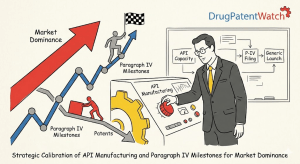
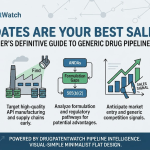
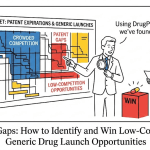
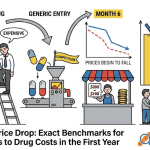
The global pharmaceutical sector is currently confronting a revenue transition of unprecedented scale, characterized by the convergence of the most significant “patent super-cliff” in history and a systemic reorganization of the regulatory landscape.1 Between the years 2025 and 2030, industry projections indicate that nearly $200$ billion in global brand revenue is set to lose exclusivity as approximately $200$ blockbuster drugs face patent expiration.1 Within this high-stakes environment, the Active Pharmaceutical Ingredient (API) manufacturer has evolved from a transactional component supplier into a primary driver of generic business strategy. A particularly sophisticated business development tactic involves the immediate offering of pilot batches to generic manufacturers following the public disclosure of a Paragraph IV (PIV) filing.3 This strategy serves as a critical catalyst for the “second wave” of generic filers, enabling them to compress their development timelines and navigate the complex technical and legal requirements of the Hatch-Waxman Act with greater agility.4
The Regulatory Battlefield: Hatch-Waxman and the Paragraph IV Pivot
The modern generic drug industry is fundamentally a product of the Drug Price Competition and Patent Term Restoration Act of 1984, commonly known as the Hatch-Waxman Act.6 This legislation established a delicate equilibrium between incentivizing pharmaceutical innovation through patent term extensions and facilitating the entry of lower-cost generic alternatives.8 The core of this framework is the Abbreviated New Drug Application (ANDA), which permits generic firms to bypass the exhaustive clinical trials required for a New Drug Application (NDA) by demonstrating bioequivalence to a Reference Listed Drug (RLD).9
The strategic pivot point in this framework is the patent certification process. Any entity filing an ANDA must address the patents listed in the FDA’s “Orange Book” for the target RLD.11 While Paragraph I, II, and III certifications provide pathways for non-confrontational entry, the Paragraph IV certification is a direct challenge to the brand manufacturer’s intellectual property.9 By asserting that a listed patent is invalid, unenforceable, or will not be infringed by the proposed generic, the applicant commits a “technical” or “artificial” act of infringement.7 This legal mechanism triggers a structured litigation process before the generic product ever reaches the market, often resulting in a 30-month stay of FDA approval if the brand manufacturer files suit within $45$ days of receiving the PIV notice.6
The Mechanics of Market Exclusivity and Competitive Incentives
To balance the immense legal risks and costs associated with PIV challenges, the Hatch-Waxman Act offers a “brass ring”: the 180-day period of marketing exclusivity.8 This period is awarded to the “first applicant” to submit a “substantially complete” ANDA containing a PIV certification.13 During these six months, the first-to-file (FTF) generic and the brand manufacturer (or its authorized generic) operate as a temporary duopoly, allowing the generic firm to capture significant market share at prices only slightly discounted from the brand-name product.15
Certification Type
Legal and Strategic Implication
Impact on FDA Approval Timing
Paragraph I
No patent information listed for the RLD.
Approval may be granted immediately upon meeting technical standards.12
Paragraph II
The listed patent has already expired.
Approval may be granted immediately upon technical validation.12
Paragraph III
Generic will not launch until the patent expires.
Approval is delayed until the date of patent expiration.9
Paragraph IV
Patent is asserted as invalid, unenforceable, or not infringed.
Triggers a 45-day litigation window and potential 30-month stay.6
API Pilot Batches: The Strategic Epicenter of Business Development
In the context of generic drug development, the API is the epicenter of cost, quality, and speed.3 For an API manufacturer, the ability to deliver pilot batches—typically ranging from $30$ kg to $250$ kg—immediately after a PIV filing is a transformative business development strategy.17 These batches represent the transition from laboratory-scale synthesis to a scalable, cGMP-compliant manufacturing process that simulates full production.18
Accelerating the Bioequivalence and Stability Timeline
The primary objective of a pilot batch is to provide the necessary material for bioequivalence (BE) studies and formal stability testing required for an ANDA submission.18 Bioequivalence serves as the scientific heart of the application, proving that the generic delivers the same amount of active ingredient to the bloodstream over the same period as the RLD.6 Because the 30-month stay acts as a fixed regulatory ceiling, the speed at which a generic manufacturer can initiate and complete these studies dictates its eventual launch timing.
By proactively offering pilot batches the moment a PIV filing is disclosed, an API manufacturer allows subsequent filers to enter the race with minimal lead time. This is particularly critical for “second wave” filers—those who wait for the initial PIV filing to signal that a brand’s patent is vulnerable.4 The immediate availability of API material reduces the generic filer’s “opportunity cost of delay,” which is often measured in millions of dollars for high-revenue blockbuster drugs.20
Technical Risk Mitigation and Quality by Design
The pilot batch stage is also where a manufacturer validates its “Quality by Design” (QbD) framework.9 This involves identifying critical material attributes (CMAs) and critical process parameters (CPPs) to ensure that every batch meets stringent specifications for identity, strength, purity, and quality (ISPQ).9 For example, the particle size of the API or the specific polymorphic form used can significantly impact the dissolution rate and, consequently, the bioequivalence profile of the finished tablet.9
BE studies, ICH stability testing, process scale-up validation.17
Commercial Batch
$250$ kg – $4,000$ kg
Full market launch supply, validation of large-scale consistency.17
Targeting the “Second Wave”: Strategic Rationale for Multi-Source API Supply
While the first generic to file a PIV certification often captures the most media and legal attention, the “second wave” of filers represents a broader and potentially more lucrative volume opportunity for API manufacturers.4 Subsequent filers seek to enter the market immediately upon the expiration of the 180-day exclusivity period granted to the first-to-file applicant.5
Predicting Market Demand through Patent Intelligence
API manufacturers use PIV filings as a powerful predictive signal.15 A PIV filing effectively announces that the brand’s “moat” is being breached, signaling to the entire industry that it is time to mobilize.4 For an API supplier, this disclosure is a “starting gun”.4 By offering pilot batches to any and all interested generic firms immediately after the first PIV notification, the supplier can secure multiple supply contracts, effectively diversifying its risk across the entire generic landscape.3
This strategy also addresses the “parked exclusivity” problem. In some instances, a first-to-file applicant may reach a “pay-for-delay” settlement with the brand, potentially delaying generic entry for years.6 However, the 2019 BLOCKING Act was designed to prevent such practices by allowing the FDA to move to subsequent filers if the first-filer does not launch within a specified timeframe.28 By providing pilot batches to second-wave filers early, an API manufacturer ensures these firms are “tentatively approved” and ready to launch if the first-filer forfeits its exclusivity.15
The Competitive Dynamics of Multi-Competitor Erosion
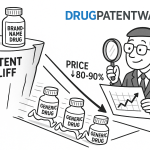
The economic motivation for targeting the second wave is rooted in the volume dynamics of the generic market. While the 180-day exclusivity period offers high margins, the post-exclusivity market is where the majority of prescriptions are filled.15 In the U.S., generic drugs account for over $90\%$ of all prescriptions.15 For a blockbuster drug, this represents a massive volume requirement that single-source suppliers may struggle to meet.3
Number of Generic Entrants
Price Reduction vs. Brand
Market Dynamics and Supplier Role
$1$ (First Filer)
$15\% – 30\%$
Duopoly; high margins; focus on first-to-market speed.15
$2 – 3$
$40\% – 55\%$
Transition to competitive pricing; increasing volume requirements.15
$5 – 9$
$70\% – 85\%$
Commoditization; emphasis on low-cost API manufacturing.15
$10+$
> $90\%$
Extreme price erosion; survival dependent on massive scale and efficiency.7
The 2024-2027 Blockbuster Cliff: Key Targets and Synthesis Complexity
The strategy of offering immediate pilot batches is most effective when applied to high-value blockbusters approaching their patent cliffs. The upcoming window between 2024 and 2027 features several “super-blockbusters” in therapeutic areas such as cardiology, diabetes, and neurology.2
Apixaban is a leading oral Factor Xa inhibitor used for the prevention of stroke and systemic embolism in patients with atrial fibrillation.30 With U.S. sales reaching billions of dollars, it is a primary target for generic filers. The original patent protection for apixaban was extended to November $21$, $2026$, meaning a flurry of generic activity is expected immediately thereafter.1
The synthesis of apixaban is technically demanding, often involving more than $10$ steps starting from precursors like (1S,4S,5S)-4-iodo-6-oxabicyclo[3.2.1]octan-7-one.32 Key challenges for API manufacturers include the management of stereochemistry and the precise control of impurities, particularly the undesired trans-isomer which can be difficult to separate during purification.32 For an API supplier, offering pilot batches for apixaban early is essential to allow generic firms to validate their high-potency manufacturing suites and ensure they can meet the drug’s exacting purity standards.23
Empagliflozin (Jardiance): Polymorphism and IP Compliance
Empagliflozin, an SGLT2 inhibitor used for diabetes and chronic kidney disease, represents another high-volume opportunity with a patent cliff in the mid-2020s.23 The primary manufacturing challenge for empagliflozin lies in polymorphism control.23 The brand manufacturer typically holds patents on specific crystalline forms of the drug.23
To navigate this, generic API manufacturers often develop non-infringing amorphous forms or alternative polymorphs.23 The “pilot batch” strategy for empagliflozin is vital for providing long-term stability data to prove that the API will not spontaneously recrystallize into the brand’s patented form during the drug’s shelf-life.23 Suppliers in manufacturing hubs like Hyderabad, India, have specialized in this type of process chemistry to support global PIV filings.23
Target Molecule
Brand Name
Therapeutic Area
Patent Expiry / Entry Signal
Sitagliptin
Januvia
Diabetes
May $2026$ (Settlement Date).2
Apixaban
Eliquis
Cardiovascular
November $2026$.1
Tofacitinib
Xeljanz
Immunology
$2025 – 2026$ (Varies by patent).34
Brexpiprazole
Rexulti
Psychiatry
April $2026$.1
Synthesis and Impurity Control: The Technical Moat for API Vendors
The “immediate pilot batch” strategy is only as strong as the API supplier’s technical dossier. In a PIV challenge, the brand manufacturer will often scrutinize the generic’s manufacturing process for any hint of infringement on process patents.3 Process patents protect specific methods of synthesizing an API, and even if the molecule itself is off-patent, a protected synthesis route can block generic entry.4
Overcoming the “Patent Thicket” of Synthesis
Innovator companies build “patent thickets” by filing numerous secondary patents on synthesis intermediates, specific reagents, and even residual solvent limits.1 A successful API manufacturer must develop a “Freedom to Operate” (FTO) synthesis route that bypasses these protections.9 This often requires:
Utilizing biocatalysis (enzymatic reactions) to replace patented chemical steps.32
Developing novel “one-pot” reactions to avoid patented isolation steps for intermediates.32
Implementing continuous manufacturing to achieve higher purity levels than possible with traditional batch processes.22
The pilot batch provides the first large-scale validation of this FTO route. If the impurity profile of the pilot batch deviates from the expected RLD profile, it could signal a technical failure that requires months of reformulation, potentially causing the generic filer to lose its place in the “first-to-file” race.3
The Financial Value of Time: Monthly Revenue Analysis
The financial impact of entering the market even one month earlier is staggering. Analysis of IQVIA data for $37$ generic drug markets reveals that first-to-file manufacturers experience a $13\%$ reduction in sales immediately after their $180$-day exclusivity period ends (Month $7$ compared to Month $6$).39 This equates to a loss of approximately $\$870,000$ in sales per month on average for the generic firm as competition intensifies.39 For the API supplier, this underscores why their ability to provide pilot batches immediately after a PIV filing is so valuable: it preserves the high-margin “Month 6” revenue by ensuring a launch on the earliest possible legal date.40
Risk Management and the “At-Risk” Launch Strategy
For many generic firms, the ultimate decision is whether to launch “at risk”—that is, before the final resolution of patent litigation.8 An at-risk launch occurs when a generic company believes so strongly in its legal position (e.g., that the brand’s patent is clearly invalid) that it is willing to risk potentially massive damages to capture the early market share.42
The Role of the API Supplier in At-Risk Scenarios
When a generic firm launches at risk, the API supplier becomes a critical partner in risk management. The generic firm will typically require the supplier to provide:
Comprehensive indemnification against patent infringement claims.43
Guaranteed supply continuity even in the face of brand-initiated injunctions.27
Detailed audit trails of the manufacturing process to support a “non-infringement” defense in court.35
The pilot batch is the material used in the validation batches that precede an at-risk launch.17 If the pilot batch shows any variability in its physical or chemical properties, it can undermine the generic’s legal argument that its product is a stable, consistent non-infringing alternative to the brand.3
Case Study: The Protonix At-Risk Launch
One of the most dramatic examples of an at-risk launch involved the drug Protonix (pantoprazole).42 Teva and Sun Pharma launched generic versions of Protonix at risk in $2007$ and $2008$, respectively.42 While they captured significant initial revenue, a court eventually ruled that the brand’s patent was valid and infringed.42 The result was a massive settlement, with Teva and Sun agreeing to pay a combined $\$2.15$ billion in damages.35 This case highlights the “staggering” risks of at-risk launches and why API suppliers must be meticulously vetted before such a strategy is undertaken.8
Component of At-Risk Risk
Financial and Operational Impact
Lost Profits
Generic firm must pay the brand for the revenue it would have made.42
Reasonable Royalties
A court-mandated fee on every generic unit sold.42
Enhanced Damages
Up to $3\times$ damages for “willful” infringement.42
Preliminary Injunction
Immediate halt to all generic sales and destruction of inventory.35
The Supply Chain as a Strategic Moat: Resilience and Geopolitics
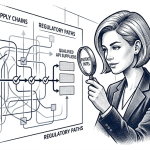
In the modern pharmaceutical landscape, API sourcing has evolved from a procurement function into a core driver of competitive advantage.3 Generic drug leaders are increasingly prioritizing resilience and quality over the absolute lowest line cost.27
Geographic Diversification and the Acetris Decision
The reliance on a single geographic region for API supply (primarily China and India) was exposed as a critical vulnerability during the COVID-19 pandemic.27 In response, generic firms are moving toward dual-sourcing strategies and increasing their safety stocks from $3-4$ months to $6-9$ months.27
A landmark legal decision, Acetris Health v. United States, has further reshaped these strategies.45 The Federal Circuit held that a generic drug manufactured in the U.S. using API from India could still qualify as a “U.S.-made end product” under the Trade Agreements Act.45 This has incentivized API manufacturers to establish finishing facilities in the U.S. while maintaining primary chemical synthesis in cost-effective global hubs, allowing their generic customers to bid on lucrative government contracts.45
Industry 4.0: Transforming API Manufacturing
The future of API business development is increasingly digital.1 “Smarter” manufacturing, powered by Artificial Intelligence (AI) and Machine Learning (ML), is being used to optimize yields and enable predictive maintenance, reducing the risk of unplanned downtime that could ruin a Paragraph IV launch.22
Continuous Manufacturing (CM) is a particular game-changer.22 Unlike traditional batch manufacturing, where a single error can ruin an entire pilot batch, CM allows for real-time quality monitoring and adjustment.38 This ensures that the pilot batches offered to generic filers are of the highest possible consistency, providing a superior foundation for the bioequivalence studies that underpin every ANDA.9
Strategic Implementation: A Playbook for API Manufacturers
To effectively leverage the “immediate pilot batch” strategy, API manufacturers must adopt a proactive, intelligence-driven business development model. This model moves beyond reactive sales and into strategic partnership.
Step 1: Pre-Emptive Route Scouting and FTO Analysis
Years before a patent cliff, the API manufacturer must identify blockbuster targets and develop non-infringing synthesis routes.3 This involves a “Freedom to Operate” analysis that is as rigorous as the brand manufacturer’s own patent defense.35
Step 2: Predictive Monitoring of PIV Intent
Manufacturers should monitor “soft” signals of generic intent, such as requests for reference product samples and Drug Master File (DMF) activations.7 When the first PIV filing appears in the Orange Book or an 8-K filing, the API manufacturer should already have its pilot batches produced and its DMF ready for reference.4
Step 3: Immediate Outreach to the “Second Wave”
The moment a PIV challenge is publicized, the API vendor must initiate outreach to all potential subsequent generic filers.4 By offering pilot batches for immediate BE studies, the vendor helps these firms mitigate the “first-mover advantage” of the initial challenger and ensures they are ready to capture the market the moment the exclusivity window opens.4
Step 4: Robust Legal and Regulatory Support
Success in the Paragraph IV arena requires more than just chemistry; it requires a mastery of regulatory procedure.13 The API manufacturer must provide their customers with comprehensive “Letter of Authorization” (LOA) documentation to allow the FDA to review their DMF in support of the generic ANDA.9
The Future of API Business Development
As the pharmaceutical industry moves into the second half of the decade, the Paragraph IV challenge remains the primary engine of market disruption.1 The “patent super-cliff” of 2025-2030 represents a multi-billion-dollar transfer of wealth, and the winners will be determined by their ability to execute with both technical precision and regulatory speed.2
The immediate offering of pilot batches to generic filers is more than a sales tactic; it is a strategic alignment with the fundamental mechanics of the Hatch-Waxman Act. By providing the essential material for bioequivalence and stability testing at the earliest possible moment, API manufacturers enable their generic partners to navigate the 30-month stay and the 180-day exclusivity period with maximum efficiency.
Ultimately, the most successful API manufacturers will be those that treat their manufacturing process as a “strategic asset” designed to defeat brand patent thickets.3 By combining advanced process chemistry with sophisticated market intelligence and a proactive business development model, these firms will secure their position as the foundational pillars of the global generic drug industry. In a world of “at-risk” launches and multi-competitor erosion, the pilot batch is the “spark” that ignites the generic revolution.9
Unlocking Generic Market Access: A Retrospective Analysis of USFDA Paragraph IV Filings (2020-2024) – PubMed, accessed February 26, 2026, https://pubmed.ncbi.nlm.nih.gov/40660052/
New Method to Large-Scalable Preparation of the Key Chiral Cyclohexane cis-Diamine Intermediate for Edoxaban | Organic Process Research & Development – ACS Publications, accessed February 26, 2026, https://pubs.acs.org/doi/10.1021/acs.oprd.4c00039
Biocatalysis for the Synthesis of Active Pharmaceutical Ingredients in Deep Eutectic Solvents: State-of-the-Art and Prospects – MDPI, accessed February 26, 2026, https://www.mdpi.com/2073-4344/14/1/84
Estimating the Value of Adding 30 Days to the 180-Day Market Exclusivity of the First-to-File Generic Drug Manufacturer – PMC, accessed February 26, 2026, https://pmc.ncbi.nlm.nih.gov/articles/PMC12796020/
Estimating the Value of Adding 30 Days to the 180-Day Market Exclusivity of the First-to-File Generic Drug Manufacturer – PubMed, accessed February 26, 2026, https://pubmed.ncbi.nlm.nih.gov/41004022/