The global CDMO market is on track to reach $465 billion by 2032, driven by the outsourcing of complex modalities that most pharma companies cannot manufacture internally. Cell and gene therapy CDMOs alone are growing at a 27.94% CAGR. Scale alone does not explain this growth: the shift reflects a structural change in how biopharmaceutical R&D economics work. Building proprietary GMP infrastructure for a single clinical-stage program is financially irrational for most organizations. CDMOs exist to solve that problem.
Patent data is not a compliance function. It is the primary instrument for identifying market white spaces, monitoring competitor R&D pipelines, timing generic entry, and structuring CDMO contracts that protect IP ownership. Pharma IP teams that treat patent databases as passive records rather than active intelligence tools leave material competitive information on the table.
The strongest biopharmaceutical scaling strategies couple CDMO operational leverage with patent intelligence. A program that launches six months ahead of a competitor may not just earn first-mover revenue. In categories where formulary positioning and payer contracting are path-dependent, it may establish a pricing anchor that persists for years.
II. The CDMO Market in 2025-2026: Structure, Scale, and Strategic Consolidation
Defining the CDMO: How It Differs from a CMO or CRO
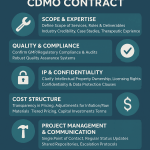
A Contract Development and Manufacturing Organization provides services spanning the full drug product lifecycle: formulation development, analytical method development, process optimization, clinical trial material manufacturing, scale-up, commercial production, packaging, and distribution. That breadth is what separates a CDMO from a Contract Manufacturing Organization (CMO), which historically handled only production, and from a Contract Research Organization (CRO), which operates primarily in preclinical and clinical research.
In practice, the market has not always honored these definitional distinctions. Large players have absorbed capabilities across all three categories, and the term ‘CDMO’ now covers everything from a 50-person peptide synthesis shop to Lonza’s multi-campus global operation. What matters for sourcing decisions is not the label but the specific capability stack: process development throughput, GMP batch record quality, regulatory inspection history, and, critically for complex modalities, whether the organization has manufactured the product type before at clinical scale.
Several organizations now market themselves as integrated CRO-CDMO solutions, offering a single-vendor path from IND-enabling studies through commercial manufacturing. The appeal is real. Every handoff between a CRO and a CDMO represents a data migration, a tech transfer, a new quality agreement, and weeks of alignment time. Eliminating those handoffs can compress development timelines by months, which for a drug that generates $5 million per day in peak sales carries obvious financial weight.
Market Sizing and Growth Drivers
The global CDMO market was valued at approximately $238.92 billion in 2024 and is projected to reach $465.24 billion by 2032 at a 9.0% CAGR. The U.S. segment alone is expected to reach $68.57 billion by 2034. The cell and gene therapy CDMO sub-market carries a projected CAGR of 27.94% through 2034, reflecting the surge in approved and late-clinical-stage CAR-T, AAV-based gene therapy, and mRNA programs requiring manufacturing infrastructure their sponsors do not possess.
Growth comes from several converging factors. Small and mid-sized biotechs, which now account for the majority of NDA and BLA submissions, rarely maintain in-house GMP manufacturing. The capital cost of building a biologics manufacturing suite capable of running 2,000-liter fed-batch bioreactors exceeds $500 million before equipment validation. A CDMO amortizes that cost across its client base, pricing the service at a fraction of the ownership cost. For a pre-commercial biotech burning cash, the conversion of capital expenditure to a variable cost tied to batch completion is not merely convenient. It is the difference between extending runway by 18 months or not.
The pipeline complexity trend also matters. GLP-1 receptor agonists, ADCs, bispecific antibodies, cell therapies, and RNA-based medicines require manufacturing processes substantially more complex than conventional small molecule synthesis. A company developing a GPC3-targeting ADC with a proprietary linker-payload combination has a process chemistry problem that requires specialized expertise and equipment most CDMOs do not carry. The subset that does commands pricing power accordingly.
M&A Consolidation: Who Is Buying Whom and Why
The CDMO sector has been in an active consolidation phase. Several strategic themes drive acquisition activity:
Capability acquisition is the primary driver. When Thermo Fisher acquired Patheon in 2017 for $7.2 billion, it bought a drug product manufacturing network. When Samsung Biologics absorbed a stake in Archigen Biotech and expanded its capacity from 364,000 liters to over 600,000 liters, it bought scale. Acquisition of Lonza’s specialty ingredients division by Bain Capital, WuXi Biologics’ organic capacity expansion, and the Catalent acquisition by Novo Holdings in 2024 for approximately $16.5 billion all reflect the same dynamic: scale and capability breadth are the two variables that determine which CDMOs capture the outsized manufacturing contracts flowing from increasingly complex biopharma pipelines.
Geographic diversification is a secondary driver, accelerated by post-pandemic supply chain analysis. Multiple large pharma organizations identified that their API supply chains had concentrated in single geographies, typically India and China. Acquisitions of U.S. and European CDMOs followed, as did government-incentivized domestic manufacturing investment under the BIOSECURE Act and related policy frameworks. For investors, this trend creates a pricing floor under CDMOs with U.S.-based GMP capacity for regulated starting materials and advanced intermediates.
Modality specialization is the third driver. The manufacturing requirements for an autologous CAR-T cell therapy, an mRNA vaccine, and a small molecule API are largely non-overlapping. A CDMO that tries to serve all three from a single platform serves none particularly well. Acquisitions of specialized operators, such as AGC Biologics’ purchases or Cytovance Biologics’ integration into Oklahoma-based operations, represent bets on specific modality growth curves.
Key Takeaways for Section II
The CDMO market’s 9.0% headline CAGR understates the growth in high-value specialty segments, particularly CGT and ADCs. M&A is rationalizing the market toward integrated platforms with both geographic diversification and modality depth. Companies evaluating CDMO partnerships should assume that any partner’s capability map will shift over a three-to-five year manufacturing agreement: acquisition risk and capability degradation post-acquisition are legitimate due diligence variables.
III. CDMO Service Architecture: What You Are Actually Buying
Drug Substance vs. Drug Product Manufacturing
Every pharmaceutical outsourcing engagement begins with a fundamental distinction: drug substance manufacturing versus drug product manufacturing.
Drug substance (active pharmaceutical ingredient, or API) manufacturing covers synthesis, fermentation, cell culture, or extraction of the active molecule. For small molecules, this involves process chemistry, route scouting, and scale-up from milligram quantities in a fume hood to metric-ton commercial production. For biologics, it involves upstream process development (cell line development, media optimization, bioreactor configuration) and downstream processing (chromatographic purification, viral clearance, ultrafiltration/diafiltration). The two domains require fundamentally different equipment, expertise, regulatory compliance frameworks, and quality systems.
Drug product manufacturing covers formulation, fill-finish, and packaging. A sterile injectable fill-finish suite with validated isolator technology is an expensive, specialized asset. A solid oral dose facility with high-speed tableting equipment and film coating capacity is a different asset serving a different market. Few CDMOs excel equally in both.
IP teams need to understand this distinction because process patents often attach to specific manufacturing stages. A composition-of-matter patent covers the molecule. A process patent may cover the purification sequence, a specific crystallization method, or an encapsulation technology. When a CDMO develops an improved downstream purification process during a client engagement, questions about who owns that improvement, and whether it constitutes a separate patentable invention, are not hypothetical.
Process Development and Analytical Method Development
Process development work conducted by CDMOs generates two categories of commercially valuable output: optimized manufacturing processes and validated analytical methods.
Optimized manufacturing processes include cell culture parameter optimization (pH, dissolved oxygen, temperature shifts, feeding strategies), downstream processing improvements (resin selection, gradient optimization, hold time studies), and formulation development (excipient screening, stability study design, lyophilization cycle development). Each of these activities can generate data that informs patent filings, and each can produce innovations that a CDMO may claim as its own platform technology if the contract does not address ownership explicitly.
Analytical method development produces validated assays for release testing, characterization, and stability monitoring. Proprietary characterization methods, particularly for complex biologics where product quality attributes include glycan profiles, aggregation states, and charge variants, can carry significant competitive value. A next-generation analytical platform that enables faster QC release or more sensitive impurity detection can affect manufacturing cycle times and, consequently, program economics.
Technology Transfer Protocols
Technology transfer, the process of moving a manufacturing process from a sponsor’s internal labs or a predecessor CDMO to the new manufacturing site, is one of the highest-risk phases of any outsourcing engagement. It is also one of the least discussed in commercial literature.
A formal technology transfer package typically includes the Master Batch Record, analytical method documentation, reference standard characterization data, process development history including failed experiments, raw material specifications, equipment qualification requirements, and previous regulatory submissions referencing the process. The quality of this package directly determines whether the receiving CDMO can execute representative batches on schedule.
Common failure modes include inadequate process understanding on the part of the originating organization, undocumented process exceptions embedded in informal operator knowledge, equipment mismatch between the originating site and the receiving CDMO, and reference standard supply issues. A due diligence question often overlooked is whether the technology transfer package reflects actual manufacturing practice or the idealized process described in regulatory filings. The two can diverge substantially over a multi-year commercial supply relationship.
Regulatory Affairs and Submission Support
CDMOs’ regulatory affairs capabilities cover chemistry, manufacturing, and controls (CMC) sections for IND filings, NDA/BLA submissions, and Type II Drug Master Files (DMFs). Their value proposition in this area is not generic regulatory writing. It is accumulated knowledge of what specific agency reviewers and divisions have accepted, rejected, or requested additional information on, across hundreds of similar submissions.
An experienced CDMO regulatory team knows that an FDA Division of Antiviral Products review of a viral vector BLA will scrutinize adventitious agent testing differently than an oncology biologics review. They know the current standard for residual solvent reporting in ANDAs after recent agency guidance updates. They know which manufacturing processes have been accepted with limited process validation data at the IND stage versus which have triggered chemistry holds. This accumulated institutional knowledge reduces regulatory risk in ways that an in-house regulatory team building experience from a single pipeline cannot replicate at the same speed.
Key Takeaways for Section III
Evaluate CDMO service architecture at the level of individual capabilities, not organizational categories. The distinction between drug substance and drug product is a risk and IP allocation boundary. Technology transfer quality is the most common source of program delays and cost overruns in outsourcing relationships. Regulatory support value is proportional to the CDMO’s relevant filing history, not to headcount.
IV. Operational Scaling Through CDMO Partnerships
Time-to-Market Acceleration: The Commercial Calculus
Speed to market in pharmaceuticals is not a qualitative attribute. It is a quantifiable financial variable with a precise formula.
For a drug with $3 billion in projected annual peak sales, each month of accelerated launch generates approximately $250 million in incremental revenue before accounting for the time value of money. Against that backdrop, a CDMO’s stated ability to compress IND filing timelines by eight to twelve weeks carries a specific dollar value that IP teams and CFOs should calculate explicitly rather than treating as an operational benefit.
CDMOs achieve timeline compression through several mechanisms. Simultaneous execution of process development and analytical method development activities, rather than sequential execution, reduces early development phase durations. Pre-validated facility spaces and pre-qualified raw material suppliers eliminate validation activities that a greenfield internal build would require. Established quality management system (QMS) templates with regulatory precedent accelerate CMC documentation. CDMOs with platforms built around specific molecule types, such as peptide CDMOs that have manufactured hundreds of GLP-1 analogs, apply prior manufacturing knowledge to client programs directly rather than developing process understanding from first principles.
The integration of artificial intelligence-driven process optimization in next-generation CDMO platforms adds a quantifiable efficiency layer. AI-driven design of experiments (DoE) approaches can reduce bioreactor optimization cycles from twelve months to four by predicting productive parameter combinations in silico before confirming them empirically. Process analytical technology (PAT) implementation enables real-time quality monitoring and feed-forward process control, reducing out-of-specification batch rates and the associated investigation cycles.
CAPEX-to-OPEX Conversion: The Financial Architecture
A $400 million single-use bioreactor manufacturing suite for a biologics program requires years to design, construct, validate, and staff before producing a single GMP batch. The capital is deployed years before revenue is generated, and the asset becomes largely useless if the program fails in Phase III. Given an industry-wide Phase III success rate of roughly 50-60% for biologics and lower for many small molecules, the risk-adjusted expected value of proprietary manufacturing infrastructure for an unproven product is substantially negative.
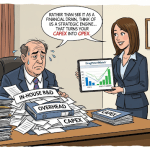
Converting that capital expenditure to an operational expenditure through CDMO outsourcing changes the financial risk profile fundamentally. The company pays for GMP manufacturing services against actual batch completions, scaling payments with program progress. If the program fails at Phase II, the manufacturing contract terminates and the capital is recovered for redeployment. This is not merely a cost management strategy. For pre-commercial biotechs operating against defined cash runways, it is the mechanism that makes capital allocation rational.
The calculus changes, though not uniformly, for commercial-stage programs. A drug generating $2 billion annually with a stable process and a long commercial horizon may warrant proprietary manufacturing infrastructure to eliminate the CDMO margin, secure supply chain control, and build process optimization capabilities for future lifecycle management filings. The decision point typically involves batch volume, process complexity, supply chain criticality, and the company’s long-term manufacturing strategy. Neither full outsourcing nor full insourcing dominates for commercial-stage products: most large pharma operators run hybrid models, retaining internal capacity for flagship products while outsourcing lower-volume or specialty manufacturing.
Scalability Models for Novel Modalities
Cell and gene therapy manufacturing presents scaling challenges structurally different from those of conventional biologics. The manufacturing parameters that produce a therapeutic autologous CAR-T product are not simply scaled by increasing bioreactor volume. They are tied to patient-specific cell populations, variable starting material quality, and process sensitivity that makes lot-to-lot consistency a persistent technical challenge.
CDMO platforms designed for autologous cell therapy have invested heavily in closed-system manufacturing, automation of cell culture processes, and logistical infrastructure that connects patient leukapheresis at clinical sites to GMP manufacturing and back to the patient within narrow treatment windows. Organizations such as Lonza’s Cocoon platform, PCT (a Hitachi subsidiary), and Waisman Biomanufacturing represent different approaches to this scaling problem, with different cost structures and regulatory track records.
Allogeneic cell therapy manufacturing, where a single donor batch produces a defined number of doses, follows a more conventional scaling logic but introduces different manufacturing risks around master cell bank qualification, lot release testing, and shelf life. The CDMO ecosystem for allogeneic programs is less mature than for autologous therapies, which creates both risk (less regulatory precedent) and opportunity (CDMOs building allogeneic capabilities are willing to invest in client programs to build their own reference batch history).
Lipid nanoparticle (LNP) formulation for mRNA programs represents a more tractable scaling challenge than cell therapy but still requires specialized microfluidics expertise and process knowledge that was scarce before COVID-19 dramatically expanded the manufacturing base. CDMOs including Evonik, Precision NanoSystems (now part of Cytiva), and Polymun have built LNP manufacturing capabilities at commercial scale. Process patents covering LNP composition and assembly methods, many held by Arbutus Biopharma and licensed through Genevant, are material IP considerations for any program entering this space.
Continuous Manufacturing Platforms
Continuous manufacturing (CM) for small molecule APIs and oral solid doses has gained regulatory acceptance after FDA issued guidance on the topic and accepted multiple NDA submissions using continuous manufacturing data. The first NDA approved with a continuous manufacturing process was Vertex’s Orkambi in 2015. Since then, Janssen, Eli Lilly, Pfizer, and several generic manufacturers have filed CMC sections supporting continuous processes for commercial products.
The CDMO implications of continuous manufacturing are significant. CM equipment represents a substantial capital investment that most CDMOs have not made comprehensively. CDMOs that have invested, including GEA-equipped facilities at Pfizer’s contract manufacturing division and Continuus Pharmaceuticals’ integrated continuous manufacturing platform, can offer clients genuine timeline and cost advantages. CM eliminates batch waiting times, reduces in-process inventory, and enables real-time release testing that compresses quality control cycles. For high-volume solid oral dose products, the unit economics of continuous manufacturing versus batch processing can reduce manufacturing costs by 20-40%.
The IP landscape around continuous manufacturing is active. Process patents covering specific CM equipment configurations, inline analytics integration, and control algorithms have been filed by equipment manufacturers, academic institutions, and integrated pharma-CDMO collaborations. Companies considering continuous manufacturing should conduct FTO analysis on their specific process design before committing to equipment sourcing.
Key Takeaways for Section IV
Quantify timeline acceleration in dollar terms before CDMO contract negotiations to establish negotiating leverage. CAPEX-to-OPEX conversion is not universally optimal at commercial stage. Novel modality scaling, particularly CGT and LNP, requires CDMOs with specific platform experience and active LNP IP coverage warrants FTO assessment. Continuous manufacturing offers real unit economics advantages but requires CDMO infrastructure investment not yet ubiquitous.
Investment Strategy Note
Institutional investors evaluating CDMO equities should weight capability concentration in high-growth modalities over total revenue. A CDMO with 30% of revenue from CGT manufacturing carries different growth characteristics than one with 30% from legacy small molecule solid dose. Pricing power in CGT is substantially higher: manufacturing costs for an autologous CAR-T lot can reach $150,000-$300,000 per patient dose at current volumes, and CDMOs with validated processes and clean regulatory inspection records for viral vector and cell therapy products command premium margins. Watch for CDMO capacity utilization disclosures in quarterly filings. Utilization below 70% signals near-term pricing pressure; utilization above 85% signals either capital expenditure needs or selective client acceptance, both of which affect growth trajectory.
V. Pharmaceutical Patent Strategy as a Core Business Asset
The Economics of Market Exclusivity
A pharmaceutical patent, at its functional core, is a government-granted right to exclude competitors for 20 years from the filing date. What makes this right commercially extraordinary is the asymmetry of the industry it governs. The average cost to develop and obtain FDA approval for a new molecular entity currently exceeds $2.6 billion by most industry estimates, covering synthesis, formulation, preclinical toxicology, Phase I through Phase III trials, and regulatory submission costs over a timeline that typically runs 10-15 years. Generic entry, when it occurs, can erode brand revenue by 80-90% within 12 months of a first generic launch. Without the revenue window created by patent exclusivity, the economics of drug development collapse.
Patents are not uniform in their commercial value. Composition-of-matter patents, which claim the active molecule itself, provide the broadest and most durable protection because they block all formulations, doses, and indications using that molecule. Method-of-use patents, covering approved therapeutic applications, provide narrower protection that can potentially be carved around through skinny labeling by generic manufacturers. Formulation patents, covering specific drug-device combinations, release profiles, or excipient compositions, provide incremental protection that can extend commercial exclusivity beyond a composition-of-matter expiration.
For biologics, the patent landscape interacts with regulatory exclusivity in ways that differ fundamentally from small molecules. A biologic receives 12 years of reference product exclusivity under the Biologics Price Competition and Innovation Act (BPCIA), independent of patent status. This regulatory exclusivity runs from approval date, not filing date, and cannot be circumvented by a biosimilar applicant filing before it expires. The BPCIA’s patent dance provisions, which govern the exchange of patent and manufacturing information between the reference product sponsor and a biosimilar applicant, create a structured litigation pathway distinct from the Hatch-Waxman Paragraph IV mechanism that governs small molecule generic challenges.
Evergreening: A Technical Taxonomy
‘Evergreening’ describes the set of strategies by which innovator companies extend commercial exclusivity beyond a primary composition-of-matter patent expiration. The term is often used pejoratively, but the practices it encompasses range from legitimate lifecycle management to strategies that have drawn regulatory scrutiny and antitrust challenges.
Formulation patents cover specific drug delivery technologies that produce genuine therapeutic differentiation. AstraZeneca’s extended-release formulation of quetiapine (Seroquel XR) provided a once-daily dosing option versus the three-times-daily original, with clinical evidence supporting improved adherence. The Orange Book listing and subsequent Paragraph IV litigation extended commercial exclusivity and reflected real formulation innovation. Contrast this with the situation where a company files a formulation patent on an obvious modification to an existing product solely to list it in the Orange Book and trigger 30-month litigation stays against generic applicants. Courts have distinguished between these cases, but the line in practice is not always sharp.
Pediatric exclusivity, granted under the Best Pharmaceuticals for Children Act, adds six months to all existing Orange Book-listed patents and regulatory exclusivities when a sponsor completes FDA-requested pediatric studies. This six-month extension requires only the completion of the studies, not demonstration of pediatric benefit, and applies to all Orange Book patents regardless of whether the pediatric indication is commercialized. For drugs with multiple Orange Book-listed patents expiring at different times, pediatric exclusivity can add six months to the final patent expiration, extending commercial exclusivity significantly.
New Chemical Entity (NCE) exclusivity provides five years of data exclusivity for first-time approvals of active ingredients not previously approved by FDA. No generic can file an ANDA during this window. The 505(b)(2) pathway, which allows NDA submissions referencing previously approved products with new clinical data supporting a new indication, dose form, or route of administration, does not receive the full NCE exclusivity period but can receive three years of exclusivity for the specific approval it supports.
Polymorph patents cover crystalline forms of active ingredients that have distinct physicochemical properties. Crystalline form patents have generated substantial litigation: Cephalon’s modafinil polymorph strategy and AstraZeneca’s omeprazole (Prilosec) magnesium salt/polymorph filing are frequently cited case studies. The patent eligibility of polymorph claims requires demonstrating unexpected properties beyond the known compound, a standard that courts have applied inconsistently.
Active metabolite patents cover biologically active metabolites of approved drugs. Fexofenadine (Allegra) was the active metabolite of terfenadine (Seldane), itself withdrawn from the market for cardiac safety reasons. The patent on fexofenadine as a compound was independent of the terfenadine patents and provided a new exclusivity period for what was effectively the active species of the original drug. FDA’s Orange Book listing rules require that the referenced patent claim the approved drug product, but active metabolite patents can be listed where the metabolite is itself an active ingredient.
Combination product patents cover fixed-dose combinations of two or more approved drugs. These are patentable to the extent the combination produces a synergistic or unexpected result not predictable from the components alone. The combination patent for lopinavir/ritonavir (Kaletra), where ritonavir serves as a pharmacokinetic booster for lopinavir rather than providing independent antiviral effect, provided commercial exclusivity for a product that arguably would not meet today’s patent eligibility standards for demonstrating unexpected combination effect.
Process patents cover specific manufacturing sequences, including synthetic routes for APIs, purification methods, and formulation processes. These have direct relevance to CDMO engagements. When a CDMO develops a novel process optimization during a client engagement, whether a new crystallization protocol or a more efficient downstream purification sequence, the question of inventorship and ownership is immediate. A sponsor that does not address this contractually before development work begins may find that a competitor CDMO client ends up manufacturing a superior version of the same molecule using process patents the sponsor effectively funded through service fees.
IP Valuation Frameworks
Pharmaceutical patent portfolios are valued through several methodological approaches, each appropriate to different decision contexts.
The discounted cash flow (DCF) approach applies patent-specific discount rates to projected royalty streams or exclusivity-period revenue. The primary inputs are the projected net present value of sales during the remaining patent term, the probability that the patents survive validity challenges, the probability of successful enforcement against infringers, and a discount rate that reflects the risk profile of the underlying product. DCF valuations are the standard approach for licensing negotiations and M&A diligence.
The royalty relief method estimates the value of a patent by calculating the royalties the patent holder would need to pay if they did not own the IP and had to license it from a third party. This method requires comparator licensing data from similar transactions, which is difficult to obtain for novel technology areas where few arm’s-length licenses exist.
Citation analysis evaluates patent quality through forward citation counts, the number of subsequent patents that cite a given patent. High citation counts generally reflect foundational technology that subsequent inventors must acknowledge. Patent analytics platforms including DrugPatentWatch, Derwent Innovation, and PatSnap provide citation mapping tools that allow IP teams to identify the most structurally important patents in a landscape before conducting more detailed claim analysis.
For CDMO partnerships specifically, IP valuation intersects with commercial deal structure. A sponsor granting a CDMO a license to Background IP for use in manufacturing retains the IP asset on its balance sheet. A sponsor assigning ownership of Foreground IP generated during a CDMO engagement effectively transfers an asset that may have future commercial value, potentially in ways neither party can anticipate at contract execution. The common assumption that ‘I paid for it, I own it’ is not the default rule in many jurisdiction-specific IP frameworks and is explicitly negotiated in CDMO Master Services Agreements.
Investment Strategy Note
For biotech investors, patent expiration timing is a portfolio management tool, not just a risk factor. A product with a composition-of-matter patent expiring in three years but with Orange Book-listed formulation, method-of-use, and polymorph patents extending to seven years carries a different revenue trajectory than one facing a clean patent cliff. DrugPatentWatch and FDA’s Orange Book database provide structured data on listed patents, enabling the construction of revenue at-risk models segmented by patent type and regulatory exclusivity. Investors relying solely on the primary patent expiration date systematically misjudge exclusivity duration for branded drugs with active lifecycle management programs.
The Orange Book as a Strategic Instrument
FDA’s Approved Drug Products with Therapeutic Equivalence Evaluations, universally called the Orange Book, lists all patents that claim an approved drug product or method of using the drug. Patent listing in the Orange Book triggers automatic 30-month litigation stays when a generic applicant files an ANDA with a Paragraph IV certification challenging a listed patent. This 30-month stay runs from the date the generic applicant notifies the NDA holder of the Paragraph IV filing and cannot be shortened absent a court determination of invalidity or non-infringement.
The Orange Book listing rules require that a listed patent ‘claim the drug substance (active ingredient), the drug product (formulation and composition), or an approved method of using the drug.’ Patents claiming manufacturing processes cannot be listed. Patents that have lapsed or been abandoned cannot be listed. The obligation to list is on the NDA holder, and late listing of patents that could have been listed earlier has been challenged in court, though courts have not uniformly penalized late listing.
Strategic Orange Book management involves timing patent filings and NDA submissions to maximize the number of valid, listable patents at the time of approval and throughout the commercial lifecycle. A patent filed after ANDA receipt but before approval creates complex listing questions. A patent granted during the 30-month stay period is listable and can extend the stay period if the generic applicant files a Paragraph IV certification against it. IP teams that monitor NDA approval timelines and coordinate patent prosecution accordingly create additional Orange Book leverage.
Orange Book data is the primary input for loss of exclusivity (LOE) modeling. CDMO business development teams use it to identify products approaching first generic entry. Their clients use it to time lifecycle management formulation work. Generic manufacturers use it to target ANDAs against products where the remaining Orange Book-listed patents are weak or where composition-of-matter patents have expired, leaving only method-of-use or formulation coverage that can be carved around.
Paragraph IV Filing Strategy: The Generic Entry Mechanism
An ANDA applicant seeking to market a generic before all Orange Book-listed patents expire must file a Paragraph IV certification asserting that each listed patent is either invalid or will not be infringed by the proposed generic product. Filing a Paragraph IV certification constitutes statutory patent infringement under 35 U.S.C. Section 271(e)(2), which gives the NDA holder standing to sue even before the generic is marketed.
The first generic applicant to file an ANDA with a Paragraph IV certification receives 180 days of generic exclusivity if they prevail in the patent litigation or if the NDA holder does not sue within 45 days of receiving notification. This 180-day window, where only the first filer and the brand compete in the market, is the most commercially valuable period in generic market entry. For high-revenue drugs, the 180-day exclusivity can generate hundreds of millions of dollars in revenue for a single generic entrant.
From the innovator’s perspective, a Paragraph IV filing is an early warning signal with a defined response window. The 45-day window to file suit triggers the 30-month stay; missing it eliminates this tool. Patent litigation strategy in Paragraph IV cases involves validity defenses (the asserted patent claims are anticipated by prior art, obvious, or non-enabled), non-infringement arguments, and, increasingly, post-grant proceedings at the Patent Trial and Appeal Board (PTAB) through Inter Partes Review (IPR) petitions filed by generic applicants as a parallel litigation track.
The CDMO community monitors Paragraph IV filing activity as a business development signal. When a branded drug receives a Paragraph IV challenge, the countdown to potential generic entry creates urgency for the brand company to execute lifecycle management reformulation. CDMOs that can support expedited formulation development and the CMC sections for a 505(b)(2) NDA for an improved formulation are positioned to capture development work driven directly by Paragraph IV activity.
Key Takeaways for Section V
Composition-of-matter patents are the most commercially valuable type, covering all formulations and indications. Orange Book strategy requires active management throughout the product lifecycle, not just at approval. Paragraph IV filings are commercially actionable intelligence: they identify products under active generic attack and create development urgency that CDMOs can address. Evergreening through formulation development and method-of-use patents is commercially significant but faces increasing scrutiny; each patent in a lifecycle management portfolio requires independent validity and enforceability assessment.
VI. Patent Landscape Analysis: Technical Methodology and Commercial Application
The Analytical Framework: Beyond Patent Searching
Patent landscape analysis, sometimes called patent mapping, is a structured methodology for extracting strategic intelligence from patent databases. It goes beyond keyword search retrieval to produce quantitative and qualitative assessments of innovation density, competitive positioning, and white space opportunity in defined technology areas.
The process typically involves four stages: corpus construction, classification, analysis, and interpretation. Corpus construction uses structured search queries across multiple patent databases, including USPTO, EPO, WIPO, and jurisdiction-specific databases for key markets, to retrieve all relevant patent documents. Classification applies technology codes, therapeutic area tags, and mechanism-of-action descriptors to each document, creating a structured dataset. Analysis examines metrics including filing trends over time, assignee distribution, claim scope, citation networks, and geographic filing patterns. Interpretation translates quantitative outputs into actionable strategic conclusions.
The output of a well-executed patent landscape is not a collection of patent numbers. It is an intelligence product that answers specific business questions: Where are competitors investing R&D resources? Which delivery technologies for a specific molecule type are already claimed? Where are the gaps in the competitive IP landscape that represent opportunities for a new patent filing? Which patents represent potential infringement risks for a proposed product?
For CDMO business development teams, landscape analysis answers a different set of questions: Which companies have recently filed IND applications or phase transition patents that indicate a need for manufacturing partner selection within the next 12-24 months? Which technology platforms have the highest density of recent filings, suggesting clients will need specialized manufacturing capabilities in that area? Which process patents in a given modality are expiring, potentially opening manufacturing approaches previously blocked by existing IP?
White Space Identification
White space analysis identifies areas within a defined technology landscape where patent coverage is limited or absent. These gaps represent opportunities for new research investment, new patent filings, or market entry without infringement risk.
White space is not uniform in commercial significance. A gap in patent coverage for a specific drug delivery mechanism in a high-revenue therapeutic category represents a more actionable opportunity than the same gap in a low-revenue niche. The analytical process combines patent density mapping with market attractiveness assessment, therapeutic need quantification, and technical feasibility evaluation to prioritize white spaces by commercial potential.
For CDMOs, white space analysis in the process technology landscape can identify manufacturing approaches with limited patent coverage, which enables development of proprietary process platforms that are both commercially valuable and free from third-party IP constraints. A CDMO that develops a novel cell culture media formulation that improves biologic titer in a white space area can file its own process patent, creating a platform technology that attracts clients and generates licensing revenue.
Freedom-to-Operate Analysis
Freedom-to-Operate (FTO) analysis determines whether a proposed product or process can be commercialized without infringing valid, enforceable patents held by third parties. It is distinct from patentability analysis, which asks whether something can be patented: FTO asks whether it can be used.
A rigorous FTO analysis for a clinical-stage pharmaceutical program covers the drug substance (active molecule, crystalline form, enantiomers, metabolites), the drug product (formulation, dosage form, delivery device), the method of use (therapeutic indication, dosing regimen, patient population), and the manufacturing process (synthesis route, fermentation process, purification method, fill-finish technology). Each layer requires a separate search and claim mapping exercise.
FTO opinions are legal products prepared by qualified IP counsel. The process involves identifying potentially relevant patents, conducting claim-by-claim analysis against the proposed product or process, assessing the validity of any patents that present infringement risk, and preparing a written opinion that the client can rely on to demonstrate good faith in any subsequent infringement litigation. Demonstrating good faith reliance on an FTO opinion is relevant to willful infringement determinations, which affect the availability of enhanced damages.
CDMOs contribute to the FTO landscape in two ways. Their process development activities can generate prior art that invalidates competitor process patents, particularly when the CDMO publishes manufacturing platform capabilities or files its own process patents that establish an earlier priority date. Their technical teams, with direct manufacturing experience across many similar programs, can identify potentially relevant process patents that a client’s IP team with less manufacturing exposure might overlook.
Competitor Pipeline Monitoring Through Patent Filings
Patent applications become publicly available 18 months after their filing or priority date. This 18-month publication window creates a structured intelligence lag: a competitor’s research investment becomes publicly visible through patent filings roughly 18 months after the work was done. For early-stage research, this means the patent filing reflects work that was sufficiently advanced to patent roughly 18-24 months before the publication date, placing actual research initiation potentially four or more years before public disclosure.
Systematic monitoring of competitor patent filings produces a predictive picture of R&D investment allocation. Changes in filing frequency in a particular target class signal increasing or decreasing investment. New assignee appearances in a technology area signal competitive entry. The progression of patent families from compound patents to formulation patents to manufacturing process patents provides a reliable timeline of program maturity.
For CDMOs, this intelligence supports business development outreach timed to manufacturing readiness milestones. A company that filed composition-of-matter patents for a new biologic two to three years ago, followed by method-of-use filings, and most recently formulation patents, is likely approaching IND filing or early clinical manufacturing decisions. Outreach at this stage, informed by demonstrated technical understanding of the company’s published patent claims, is more effective than cold outreach with a capabilities brochure.
Key Takeaways for Section VI
Patent landscape analysis requires structured methodology, not ad hoc searching. White space identification is only commercially meaningful when combined with market attractiveness assessment. FTO analysis for pharmaceutical programs must cover all four layers: drug substance, drug product, method of use, and manufacturing process. Patent filing progression is a reliable timeline for R&D maturity and manufacturing readiness decisions.
VII. Integrating IP Strategy Within CDMO Engagements
Background IP vs. Foreground IP
The threshold IP concept in any CDMO contract is the distinction between Background IP and Foreground IP.
Background IP is intellectual property that either party brings to the engagement pre-existing the contract. For a sponsor, Background IP typically includes the drug substance patents, existing formulation data, regulatory submissions, and process development work done before CDMO engagement. For a CDMO, Background IP includes its manufacturing platforms, proprietary analytical methods, existing process patents, and accumulated manufacturing know-how. Neither party gives up ownership of Background IP through the contract. The contract merely grants the other party a license to use relevant Background IP for the specific purpose of the engagement.
Foreground IP is intellectual property developed during the engagement. This is where disputes arise. If a CDMO’s fermentation scientists develop a novel media composition that doubles titer for a client’s biologic, is that Foreground IP owned by the client (who paid for the work), the CDMO (whose scientists did the work and whose platform knowledge enabled it), or some form of joint ownership?
The answer depends entirely on what the contract says. There is no universally applicable default rule. U.S. patent law assigns inventorship to the individual inventors, with ownership following from assignment. If the CDMO’s employees are the named inventors on a Foreground IP patent, the CDMO owns that patent absent a contractual assignment. A sponsor who fails to secure an IP assignment clause covering all Foreground IP developed during the engagement may find that process improvements made at the sponsor’s expense belong to the CDMO.
IP Ownership Models and Their Commercial Implications
CDMO contracts adopt several ownership structures, each with distinct risk profiles for clients.
Customer-owns, CDMO-licenses-back is the structure most favorable to the sponsor. The sponsor owns all Foreground IP, including process patents, and grants the CDMO a royalty-free, sublicensable license to use that IP for the sponsor’s manufacturing program. The sponsor bears patent prosecution costs but retains full freedom to change CDMOs without surrendering IP rights. The practical risk is that the CDMO’s internal incentive to generate patentable innovations for the sponsor is reduced when the CDMO will not retain ownership.
CDMO-owns, customer-licenses is less favorable to sponsors but is common where the Foreground IP consists primarily of improvements to the CDMO’s existing manufacturing platform. The sponsor receives a license sufficient for commercialization but may face restrictions on transferring that license to a successor CDMO. This structure creates vendor dependency: switching CDMOs may require renegotiating the license or abandoning the process improvements and investing in re-development at a new site.
Joint ownership introduces complications that both parties often underestimate at contract execution. Under U.S. law, each joint owner of a patent can exploit the patent without the consent of and without accounting to the other joint owner. This means a CDMO that jointly owns a process patent for the sponsor’s drug manufacturing process can license that process to a competitor manufacturing a competing product. Most sponsors, when this implication is explained, prefer either customer-owns or explicit carve-outs that prevent the CDMO from exploiting jointly owned IP in ways that damage the sponsor’s competitive position.
Springing Licenses
A springing license is a license to a CDMO’s Background IP that lies dormant until a triggering event occurs. Common trigger conditions include the CDMO’s failure to supply product for more than a defined period, the CDMO’s insolvency, or a regulatory action that prevents the CDMO from manufacturing the product. Upon trigger, the sponsor receives a license to the relevant Background IP sufficient to enable transfer of manufacturing to an alternative CDMO.
Springing licenses address the practical problem that a CDMO’s proprietary manufacturing process, when embedded in a client’s regulatory filings, can create supply chain dependency. If the client’s BLA references specific bioreactor configurations, cell culture media compositions, or downstream purification sequences that the CDMO owns as Background IP, any manufacturing transfer requires either re-filing the BLA with new process parameters or obtaining a license to use the CDMO’s Background IP at the new manufacturing site. Without a pre-negotiated springing license, the sponsor faces a forced negotiation with a CDMO that has full knowledge of the sponsor’s supply chain vulnerability.
Negotiating springing licenses requires the CDMO to define precisely what Background IP is covered and to be willing to grant the license, which some CDMOs are reluctant to do where the Background IP constitutes core platform technology. The negotiation is easier at contract initiation, when both parties have incentive to reach agreement, than after supply disruptions occur, when the CDMO has leverage. IP counsel should prioritize springing license negotiation as a standard term in any CDMO agreement referencing CDMO-proprietary manufacturing technology.
Technology Transfer IP Risks
Technology transfer from a previous CDMO to a new one involves moving manufacturing processes that may contain third-party IP, proprietary methods, or know-how that does not transfer cleanly.
A common problem is that the technology transfer package for a drug manufactured at a CDMO for several years contains manufacturing knowledge that has evolved significantly from the original process described in regulatory submissions, with intermediate variations documented only in batch record footnotes and informal operator communications. This undocumented process knowledge often includes informal workarounds that constitute inventive steps that may have been patentable if anyone had thought to file. When this knowledge transfers to a new CDMO, questions arise about whether the receiving CDMO now possesses know-how that either party should patent, and whether any of the informal process variations infringe existing third-party patents not captured in the original FTO analysis.
The mitigation strategy is a pre-transfer IP audit that maps all manufacturing process elements in the current process against existing patent coverage and identifies both unprotected innovations that the sponsor should consider filing and potential FTO concerns for the new manufacturing site.
Key Takeaways for Section VII
Background IP and Foreground IP must be defined with precision in every CDMO contract. Joint ownership creates exploitation rights for the CDMO that most sponsors do not intend. Springing licenses are negotiating leverage against supply chain dependency and should be standard terms in agreements where CDMO Background IP is embedded in regulatory filings. Pre-transfer IP audits are required due diligence steps, not optional exercises.
VIII. CDMO Selection: A Technical Due Diligence Framework
RFP Architecture and Capability Scoring
A robust Request for Proposal process begins with internal preparation before any CDMO is contacted. The sponsor must characterize the molecule type and its manufacturing complexity, define development stage and manufacturing volumes needed at each phase, identify specific analytical capabilities required for release and characterization testing, establish timeline requirements and go/no-go decision points, and determine regulatory filing targets that will be supported by CDMO-generated data.
This internal characterization enables an RFP that asks specific technical questions rather than generic capability inventory questions. ‘Do you have bioreactor capacity?’ produces less useful information than ‘What is your experience with perfusion culture for high-titer mAb production, and what is your current utilization rate for 500-2000 liter perfusion bioreactor capacity?’ The latter question generates responses that reveal process platform depth, capacity availability for the specific program, and whether the CDMO has relevant regulatory precedent.
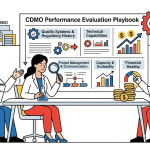
Capability scoring matrices should weight criteria by their project-specific importance. For a Phase I biologic program, process development expertise, project management quality, and IND support capability may outweigh commercial manufacturing scale. For a commercial transfer, supply reliability, quality system maturity, capacity redundancy, and inspection history carry more weight. Applying a single generic weighting matrix across all CDMO selections leads to systematic misalignment between selection criteria and program needs.
Quality Systems Assessment
Good Manufacturing Practice compliance is the minimum qualification standard for any CDMO considered for regulated manufacturing. The more differentiated quality assessment concerns are the consistency and depth of quality system implementation, not mere compliance with GMP requirements.
Key quality system indicators include the frequency and outcome of FDA, EMA, and PMDA inspections over the previous five years, the nature and resolution status of any Warning Letters or import alerts, the CDMO’s deviation management process and average time to closure for critical deviations, the quality agreement coverage and specificity, the data integrity program including computerized system validation and electronic records management, and the stability study capacity and historical on-time completion rate.
Inspection history is publicly accessible through FDA’s EDGAR database, establishment inspection report requests, and the EudraGMDP database for EMA-supervised facilities. A CDMO that has received multiple Warning Letters and has open commitments from previous inspections represents a regulatory risk for any program that requires inspection of the manufacturing facility before approval. An FDA pre-approval inspection (PAI) at a CDMO site with open Warning Letter commitments has historically been a reliable source of complete response letters.
Technology Transfer Readiness
Assessing a CDMO’s technology transfer readiness requires evaluation of their process engineering capability, their documentation infrastructure, and their prior track record with similar transfers.
On the process engineering side, the relevant questions are whether the CDMO’s equipment is capable of running the process as developed, whether scale-down models are available for troubleshooting, and whether the CDMO has experience with the specific equipment configurations described in the tech transfer package. Equipment mismatch is a frequent and expensive problem: a process developed on Sartorius Ambr 250 milliliter bioreactors that is transferred to a site using DASbox systems may require re-optimization.
Documentation infrastructure questions include whether the CDMO uses a validated electronic batch record system, whether they have a structured tech transfer protocol that includes a gap analysis against the technology transfer package, and whether they have a defined process characterization methodology for establishing process understanding at the new site.
Prior transfer track records are the best predictors of future performance. References from clients who have transferred similar products to the CDMO, particularly at similar development stages and with comparable complexity, are more informative than general capability presentations. Asking for specific transfer timelines, cycle times for representative batches, deviation rates during the transfer phase, and any regulatory issues arising from transfer data are all appropriate due diligence steps.
Key Takeaways for Section VIII
Generic RFP processes generate generic responses. Project-specific technical questions reveal actual capability depth. Inspection history is publicly accessible and should be reviewed for every CDMO under consideration. Technology transfer readiness requires equipment compatibility assessment, documentation system evaluation, and reference-based track record review. These are not optional due diligence steps; they are the primary predictors of program timeline and budget performance.
IX. Investment Strategy: Reading the CDMO-Patent Nexus
Institutional investors in biopharma can use the intersection of CDMO market dynamics and patent intelligence to develop more accurate views on company-level risk, competitive positioning, and revenue trajectory. Several specific analytical frameworks apply.
LOE dashboard construction uses Orange Book data, BPCIA exclusivity records, and patent prosecution databases to build program-level revenue-at-risk timelines for innovator portfolios. A company with five major revenue products all facing loss of exclusivity within a two-year window, without visible late-stage pipeline, is a straightforward deteriorating revenue story. The complication arises when lifecycle management investments, 505(b)(2) filings, and patient exclusivity extensions are incorporated: the same five products may face a tiered LOE schedule spread over seven years rather than concentrated in two. Patent intelligence tools make this distinction visible before it becomes apparent in quarterly earnings guidance.
CDMO capacity constraint monitoring provides early signals of clinical-stage pipeline stress. When a CDMO announces capacity expansion in a specific manufacturing category, it either signals successful commercial stage growth or anticipated demand from clients whose Phase III programs are approaching manufacturing scale-up. CDMO earnings calls and capacity announcements are underutilized sources of downstream demand intelligence for biotech pipeline analysis.
Patent filing velocity analysis for clinical-stage biotechs, using forward citation rates and filing frequency metrics, provides a proxy measure of R&D productivity that complements clinical trial data. A company with an active patent filing program across multiple mechanisms in an indication space is demonstrating sustained R&D investment and building a patent portfolio that will support future licensing or M&A activity. A company with a single composition-of-matter patent and no follow-on filings is more binary: it succeeds or fails on that single program without much optionality.
CDMO customer concentration risk is a specific due diligence variable for CDMO equities. A CDMO that derives 40% of revenue from one client faces binary risk on that client’s clinical or commercial program trajectory. Contract concentration disclosures, where available, combined with analysis of which clinical programs the CDMO’s client base is running using patent and trial registry data, can identify CDMO customer concentration risk that is not always apparent from public financial disclosures alone.
For credit analysis, CDMO customer concentration amplifies leverage risk. A CDMO that has borrowed against projected revenues from a single major program, where the underlying drug faces a Phase III readout within 12 months, is carrying hidden event risk in its capital structure. Patent analytics can identify when that program’s composition-of-matter patent expires and when generic entry becomes economically plausible, providing an independent read on whether the commercial revenue projection underpinning the CDMO’s debt service assumptions is realistic.
X. Reference Tables
Table 1: CDMO Modality Capability Requirements and Market Growth Rates
This document is an analytical reference for pharma IP teams, R&D program managers, and institutional investors. It does not constitute legal advice. Patent and regulatory assessments require qualified legal counsel and should not be based solely on the frameworks described herein.
Data sources: Fortune Business Insights CDMO Market Report 2024; FDA Orange Book; Towards Healthcare U.S. Pharmaceutical CDMO Market Report; BioSpace Cell and Gene Therapy CDMO Market Report 2025; DrugPatentWatch patent intelligence platform.