A deep-dive technical guide for pharma IP teams, CDMO business development leads, R&D directors, and institutional investors tracking contract manufacturing assets.
1. The Strategic Stakes: Why IP Defines the Modern CDMO
The pharmaceutical CDMO sector carries a market valuation that reflects its structural indispensability. Grand View Research pegged the global pharma CDMO market at $178.65 billion in 2023, projecting a 7.2% CAGR through 2030. That number captures capacity and labor. It does not capture the real source of competitive differentiation, which is intellectual property literacy.
A CDMO is not a toll manufacturer. The moment your team optimizes a synthesis step, proposes a novel excipient blend, or scales a purification column for a client’s biologic, you have crossed into IP territory. You may have created new IP. You may have infringed existing IP. You may have breached a contractual IP boundary with a prior client whose process looked almost identical. All three events can occur simultaneously, and none of them requires malicious intent.
The sector’s risk profile has also shifted. Biologics and advanced therapy medicinal products (ATMPs) have replaced simple small molecules as the growth frontier. A single CAR-T program can sit at the intersection of fifty or more distinct patent positions held by universities, platform biotech companies, vector manufacturers, and large pharma. CDMOs that approach these programs with the same IP diligence posture they used for oral solid-dose generics are exposed to litigation risk that can dwarf the contract value.
What separates market-leading CDMOs from the rest is not reactor capacity or regulatory track record alone. It is the ability to run patent intelligence as an operational function, not a periodic legal check. That shift, from reactive IP avoidance to proactive IP exploitation, is what this guide covers.
2. IP Asset Taxonomy: What CDMOs Actually Need to Manage
Pharmaceutical IP covers several legally distinct protection types. Each interacts with CDMO operations differently, and each carries a distinct risk profile.
2.1 Composition of Matter Patents
A composition of matter patent covers the chemical or biological entity itself, typically the active pharmaceutical ingredient (API) or the biologic molecule. These are the broadest, most defensible patents in a drug developer’s portfolio. A well-drafted composition of matter claim blocks every manufacturer from making, selling, or importing the claimed structure, regardless of what process they use.
For CDMOs, a composition of matter patent on a client’s API is ordinarily not a manufacturing risk, because your client holds the patent or a license to it. The risk arises when a therapeutic modality involves structural analogs. If your client’s molecule is a structural derivative of a patented scaffold, even with modifications, the original patent holder may assert infringement under the doctrine of equivalents. This is particularly acute in kinase inhibitor programs, PROTAC therapeutics, and peptide conjugates, where the chemical space is densely patented and claim language is often written to capture a genus of compounds, not a single structure.
2.2 Method of Use Patents and Secondary Protection
A method of use patent does not cover the molecule; it covers a therapeutic application. A company may hold composition patents on an API that expired years ago, while still holding valid method of use patents on specific indications, dosing regimens, patient populations, or combination therapies.
For CDMOs manufacturing generic or biosimilar products, method of use patents are a direct concern. If you produce a drug product that a client intends to market for a patented indication, and the product label includes that indication or can readily be used for it, you face induced infringement exposure. The ‘carve-out label’ strategy, where a generic applicant removes the patented indication from the product label, is the standard workaround, but it requires early identification of all live method of use patents, which means your FTO scope must extend beyond the molecule and formulation to every approved indication of the reference listed drug (RLD).
2.3 Formulation Patents
Formulation patents protect the drug product recipe: the combination of API and excipients that produces a specific performance profile, such as sustained release, improved bioavailability, enhanced stability, or reduced toxicity. These patents are a principal infringement risk for CDMOs because formulation development is a core service offering.
The scope of formulation patents varies widely. A narrow formulation patent might claim a specific ratio of two polymers. A broad one might claim any formulation of a particular drug using a defined class of solubilizer that achieves a stated bioavailability threshold. The broad functional claims are the most dangerous because they capture outcomes rather than specific ingredient combinations. A CDMO that develops a ‘novel’ formulation using different excipients but achieving the same functional result may still fall inside the patent’s scope under the doctrine of equivalents.
Particularly hazardous areas include long-acting injectable platforms (PLGA microspheres, in-situ forming depots), lipid nanoparticle (LNP) formulations for nucleic acid delivery, and hot-melt extrusion platforms for poorly soluble compounds. Each of these technology areas has a dense secondary patent landscape that extends well beyond the originator’s IP.
2.4 Process Patents (Method of Manufacture): The Highest-Risk Category for CDMOs
Process patents claim a specific method of making a substance. A CDMO’s core competency, the manufacturing process itself, is the primary target of these patents. This is where most CDMO IP litigation actually originates.
Process patents can cover synthesis routes for API intermediates, catalytic systems, solvent combinations, reaction parameters, purification methods (including specific chromatographic conditions), crystallization techniques, and bioprocessing steps such as cell culture media compositions or viral vector transduction protocols. The patent does not need to cover the final API to block your manufacturing. A single intermediate step using a patented catalyst system is sufficient for an infringement claim.
A particularly treacherous feature of process patent infringement is that it can be invisible in the final product. Unlike composition of matter infringement, which is detectable in the product itself, process infringement leaves no chemical fingerprint. A company may hold a patent on a manufacturing method and wait years before asserting it, monitoring the market until a commercially successful product emerges. This is the ‘submarine’ dynamic: the patent was always there, but the CDMO did not surface it.
The 35 U.S.C. Section 271(g) provision in U.S. law extends process patent protection to imported products. A product manufactured abroad using a patented U.S. process can infringe a U.S. process patent upon import. This has direct implications for CDMOs with international manufacturing sites supplying the U.S. market.
2.5 Polymorph and Salt Form Patents
A distinct crystalline form (polymorph) or salt form of an API can carry its own patent protection, independent of the underlying molecule. Several major pharmaceutical companies have used polymorph patents as the backbone of secondary IP strategies, extending effective exclusivity beyond the primary composition of matter patent expiration.
For CDMOs, polymorph patents are a hazard because manufacturing conditions determine which polymorph precipitates during crystallization. Changing solvent composition, cooling rate, seeding protocols, or drying parameters can shift the product from an unprotected polymorph to a patented one without any intentional design. FTO analysis for small molecule API manufacturing must include a polymorph search as a discrete work stream.
2.6 Trade Secrets and Proprietary Know-How
Trade secrets protect confidential information that has commercial value and is subject to reasonable efforts to maintain secrecy. In the CDMO context, this includes analytical methods, equipment configurations, upstream processing parameters for biologics (cell culture conditions, media formulations), and downstream purification step sequences that are not published or patented.
Trade secrets have no expiration date, but they require active management. The Defend Trade Secrets Act (DTSA) in the U.S. provides federal civil and criminal remedies for misappropriation, but proof of misappropriation depends entirely on the quality of the trade secret owner’s internal protections. A CDMO that cannot demonstrate it had security measures in place when a trade secret was disclosed will struggle to assert protection.
The cross-project contamination risk is the CDMO-specific version of trade secret exposure. When a scientist applies know-how developed under Project A to solve a problem in Project B, the classification of that know-how (client background IP, client foreground IP, or CDMO foreground IP) determines whether the action constitutes a contractual breach, a misappropriation, or a legitimate use of the CDMO’s own technical expertise.
3. IP Valuation as a Core Asset: The Analyst’s Framework
3.1 Why Patent Position Drives CDMO Valuation
When institutional investors and M&A teams value a CDMO, revenue multiples capture the obvious. What they systematically undervalue is the patent position, both the CDMO’s own proprietary technology portfolio and the quality of its IP risk management infrastructure.
A CDMO with three validated, patented process platforms in high-demand therapeutic areas carries a fundamentally different risk-adjusted return profile than a comparable-revenue CDMO that operates entirely on unprotected know-how. The former can embed its IP in client agreements as a licensed platform, generating royalty streams that extend beyond the manufacturing contract. The latter depends entirely on volume throughput and price competition.
The valuation differential is measurable. Biologics CDMOs with proprietary upstream process technologies, specifically patented cell culture media formulations, bioreactor control algorithms, or downstream purification methods, command EBITDA multiples four to six turns higher than pure-capacity players. This premium exists because proprietary process IP creates structural barriers to competitive substitution.
3.2 The Catalent, Lonza, and Samsung Biologics IP Valuation Model
Consider Catalent’s position at the time of its acquisition by Novo Holdings in 2024 for approximately $16.5 billion. Catalent’s valuation was not purely a function of its facility network. The company held proprietary platform technologies including its GPEx cell line engineering technology for biologic drug expression and its OptiMelt thermal analysis technology for formulation development. These platforms were licensed to clients, creating revenue streams that were structurally more defensible than a fee-for-service manufacturing contract. The IP embedded in those platforms, along with the regulatory know-how documented in thousands of batch records, constituted a significant portion of the enterprise value.
Lonza similarly built its CDMO valuation on proprietary bioprocess technologies, including its IBEX manufacturing platform for cell and gene therapies and its Cocoon automated cell processing system. These are patented, platform-level innovations that allow Lonza to price services at a premium and create switching costs that protect client relationships. A CDMO without comparable proprietary technology has no equivalent pricing power.
Samsung Biologics, valued at over $60 billion on the Korea Exchange, built a substantial portion of its valuation on manufacturing process patents for monoclonal antibody production and on its track record in the Orange Book-equivalent regulatory submission context. Its process IP portfolio, combined with its FDA-inspected capacity at Incheon, created a credible moat that justified a multiple unavailable to smaller CDMOs.
The pattern is consistent: proprietary, protected process technology inflates EBITDA multiples, reduces client churn, and creates licensing revenue that is not capacity-constrained. For analysts evaluating CDMO acquisitions or investments, the patent portfolio audit should sit alongside the facility audit, not after it.
3.3 Valuing a CDMO’s Defensive IP Position
Defensive IP value is harder to quantify but equally material. A CDMO with a documented, systematic FTO practice and a clean litigation history trades at a different risk premium than one with unresolved infringement disputes or a known pattern of inadequate due diligence.
For investors, the key metrics are the depth and recency of FTO coverage across active projects, the number and resolution status of IP disputes in the last five years, the quality of contractual protections in the MSA template (specifically indemnification terms and IP ownership provisions), and the existence of a dedicated IP management function (in-house counsel or a structured outside counsel relationship). A CDMO that cannot produce these data points in a due diligence process is either hiding something or has not built the infrastructure, and both scenarios represent risk.
Investment Strategy Note
CDMOs that combine a proprietary process IP portfolio with a rigorously documented FTO program represent the most defensible investment thesis in the contract manufacturing sector. The asymmetric bet is on mid-sized CDMOs that have begun building platform IP in high-demand areas (LNP formulation, cell therapy manufacturing, continuous processing) but have not yet been awarded the valuation premium that platform-level IP justifies. Patent filing activity, specifically the number of new process patent applications filed by a CDMO in the preceding 24 months, is a leading indicator of strategic IP investment and should be part of any sector screening approach.
Key Takeaways: IP Valuation
Proprietary process patents are the primary driver of valuation premium for CDMOs. Fee-for-service operations without IP assets trade at significantly lower multiples.
Catalent, Lonza, and Samsung Biologics all demonstrate that platform-level manufacturing IP creates pricing power and switching costs that justify enterprise values well above pure-capacity peers.
Institutional investors should audit both offensive IP assets (proprietary platform technology) and defensive IP infrastructure (FTO coverage quality, litigation history, MSA terms) as part of standard CDMO due diligence.
New process patent filings are a leading indicator of a CDMO’s strategic investment in IP-based competitive differentiation.
4. Unique CDMO Exposure: Cross-Project Know-How Contamination and Induced Infringement
4.1 The Induced Infringement Trap
35 U.S.C. Section 271(b) holds that whoever actively induces infringement of a patent is liable as an infringer. For a CDMO, this provision creates liability that does not depend on your knowledge that the final marketed product infringes. It depends on whether you knew the patent existed and took actions that facilitated the infringement.
Global-Tech Appliances v. SEB S.A. (2011) established the doctrine of ‘willful blindness’ in induced infringement cases. A CDMO that deliberately avoids learning about a relevant patent cannot use ignorance as a defense. If your contracts with clients do not include a representation that the client has performed a comprehensive FTO, and if you have not conducted your own independent review, a court may find that you were willfully blind to patent risks that a reasonable commercial entity would have investigated.
Contributory infringement under 35 U.S.C. Section 271(c) adds a second vector. If you manufacture a component specifically designed for use in an infringing product, with no substantial non-infringing uses, you face contributory infringement liability. A lyophilized injectable formulation manufactured according to a client’s specification, where that specification mirrors a patented formulation, is a concrete scenario where this exposure materializes.
The practical implication is that client indemnification clauses in an MSA do not eliminate your legal exposure. They create a contractual right to recover from the client after you have already incurred defense costs and potential damages. If the client is an undercapitalized startup, that right is worth close to nothing.
4.2 Cross-Contamination of Know-How: The Legal Architecture of the Problem
The cross-contamination problem has three legally distinct dimensions that are often conflated.
The first is contractual. Most MSAs include a definition of ‘Background IP’ (IP that each party owns before the project) and ‘Foreground IP’ (IP created during the project). Many MSA templates drafted by clients, particularly large pharma companies, include language that assigns all Foreground IP, including process improvements developed by the CDMO, to the client. A CDMO that signs this language without carving out ‘generally applicable manufacturing improvements’ has contractually transferred its own process know-how to the client and cannot legally reuse it.
The second is trade secret misappropriation. Even where the MSA grants the CDMO ownership of general process improvements, applying specific client-funded optimizations to a new client’s project may constitute misappropriation of the first client’s trade secrets, particularly if those optimizations were developed using the first client’s confidential data or proprietary analytical results.
The third is patent infringement. If the first client subsequently patented the process innovation that your team developed during their project, applying that technique to a second client’s project is patent infringement, even if you developed the technique yourself. The patent conveys the right to exclude, and that right extends to the original inventor if they assigned or licensed the patent to the client.
Managing all three dimensions requires clear MSA language, project-level technical firewalls, and a documented protocol for how scientists may or may not carry technical knowledge between projects.
4.3 The Portfolio-Level Risk Accumulation Problem
A CDMO managing forty active projects simultaneously accumulates IP risk across an overlapping technology landscape that no single project-level FTO can capture. Two clients may both be developing extended-release oral formulations using matrix polymer systems. A third client may be developing a topical drug with a similar polymer platform. A blocking formulation patent on a specific polymer combination could affect multiple simultaneous projects without the connection ever being identified if each project’s IP review occurs in isolation.
The solution is a portfolio-level IP audit conducted on a rolling basis. This is not a project-specific FTO. It is a cross-portfolio mapping exercise that identifies shared technology platforms across active projects and subjects those shared elements to a single, comprehensive FTO review. The output is a ‘technology risk matrix’ that flags every project using a specific technology and identifies all live patents that could affect that technology, regardless of which client owns the project.
5. Freedom-to-Operate: A Technical Deep Dive
5.1 What an FTO Actually Assesses
An FTO analysis determines whether a specific commercial act, manufacturing a product, selling it, or importing it, can be performed without infringing an unexpired, valid patent claim. It is not an assessment of patentability. It does not answer whether your process is novel. It answers whether someone else’s patent blocks your commercial activity.
The legal standard for infringement is claim-by-claim comparison. Infringement occurs when a product or process practices every element of at least one independent claim of a patent. This is the ‘all elements rule.’ If a claim has six elements and your process practices only five, there is no literal infringement of that claim. The doctrine of equivalents expands this analysis by asking whether each un-matched element performs substantially the same function, in substantially the same way, to achieve substantially the same result.
A competent FTO for a CDMO project should cover the API synthesis route (every step, including intermediates), the proposed formulation at the component and functional level, the drug delivery mechanism, the analytical testing methods where novel, the polymorph and salt form expected under planned crystallization conditions, the final drug product configuration (including packaging components with drug-contact materials), and any bioprocessing steps for biologic products.
5.2 Structuring the FTO Search
An FTO search uses multiple complementary strategies. Keyword searches identify patents using the language of the technology. CPC (Cooperative Patent Classification) searches identify all patents classified in relevant technical subfields. Assignee searches identify patents owned by known players in the space. Citation searches identify closely related documents referenced by patents already identified as relevant.
For small molecule synthesis, the key CPC subfields include C07B (general chemistry of organic compounds), C07C and C07D (specific compound classes), B01J (catalysis), and C07F (organometallic compounds). For formulation, relevant subfields include A61K (preparations for medical use) and A61P (therapeutic activity). For bioprocessing, C12N (microorganisms, enzymes, cell lines), C12P (fermentation), and A61K 35/17 (immunological preparations) are primary subfields.
A rigorous FTO also includes a review of published patent applications that have not yet granted. Published applications disclose the technology and, if they ultimately issue, may create a blocking patent. Provisionally published applications have provisional protection in some jurisdictions, but more importantly, they signal what IP a competitor is trying to secure.
5.3 Claim Interpretation: Prosecution History Estoppel and Its Practical Impact
Prosecution history estoppel prevents a patent owner from using the doctrine of equivalents to recapture subject matter that was surrendered during prosecution to obtain allowance. This doctrine is one of the CDMO’s most powerful defensive tools.
When a patent examiner rejects a claim as being anticipated by or obvious over prior art, the applicant often responds by amending the claim to narrow it. If that amendment surrenders a specific embodiment (for example, the applicant rewrites ‘palladium or nickel catalyst’ to ‘palladium catalyst’ to distinguish prior art using nickel), the patent owner is estopped from later arguing that a nickel catalyst is an equivalent.
For a CDMO conducting an FTO or defending against an infringement assertion, the prosecution history is mandatory reading. Festo Corp. v. Shoketsu Kinzoku Kogyo Kabushiki Co. (2002) established that a narrowing amendment creates a rebuttable presumption that the entire territory between the original and amended claim was surrendered. This presumption can be rebutted only in limited circumstances, none of which benefit the patent owner in straightforward design-around scenarios.
The practical implication is that a claim that looks broad on its face may be substantially narrower in scope after accounting for prosecution history amendments and arguments. This analysis cannot be performed by reading the patent alone. It requires reviewing the complete prosecution file wrapper, which is publicly available through USPTO Patent Center, the European Patent Register, or equivalent national databases.
5.4 FTO in the Hatch-Waxman and Biosimilar Context
Generic drug development operates inside a statutory framework that directly addresses FTO. The Drug Price Competition and Patent Term Restoration Act of 1984, known as Hatch-Waxman, requires ANDA applicants to certify to each patent listed in the FDA Orange Book with respect to the reference listed drug. A Paragraph IV certification asserts that a listed patent is either invalid or will not be infringed by the generic product. This certification constitutes a technical act of infringement, triggering the right to sue, and results in a 30-month stay of ANDA approval if the brand company files suit within 45 days.
CDMOs manufacturing for generic drug clients operate adjacent to this framework. If the ANDA filer wins the Paragraph IV litigation or the brand company does not sue, the generic can proceed. If the brand wins, the generic is blocked, and the CDMO’s manufacturing program stops. CDMOs need to track Paragraph IV litigation outcomes for their clients’ ANDA programs, because those outcomes directly affect the commercial life of manufacturing contracts.
For biosimilars, the Biologics Price Competition and Innovation Act (BPCIA) establishes a parallel framework with a ‘patent dance’ mechanism. The biosimilar applicant provides the reference product sponsor with its aBLA application and detailed manufacturing information, and the parties exchange patent lists and negotiate which patents will be litigated. The process is more complex than the Hatch-Waxman Paragraph IV pathway and involves litigation of both ‘list 1’ patents (which the reference product sponsor must identify) and ‘list 2’ patents (which the biosimilar applicant may address). CDMOs developing biosimilar manufacturing processes must understand this framework because the manufacturing process disclosure requirements in the BPCIA create specific IP risks around process patent assertion.
Biosimilar interchangeability designation adds a further IP consideration. For a biosimilar to achieve interchangeability status under the BPCIA, the applicant must demonstrate that the product can be expected to produce the same clinical result as the reference product in any given patient and that switching does not present greater risk than maintaining the reference product. This requires extensive analytical characterization data that, in many cases, discloses proprietary manufacturing process details. CDMOs developing interchangeable biosimilars should anticipate that process disclosure will be required and structure IP protections accordingly before data submission.
Key Takeaways: FTO and Claim Analysis
FTO scope for CDMO projects must cover synthesis routes (including all intermediates), formulation at the functional level, polymorph form, delivery mechanism, analytical methods, and bioprocessing steps. A composition of matter-only FTO is inadequate.
Prosecution history estoppel can substantially narrow the effective scope of an apparently broad patent claim. File wrapper analysis is mandatory for any serious FTO.
The Hatch-Waxman 30-month stay and BPCIA patent dance are structural features of the generic/biosimilar competitive framework that directly affect the commercial viability of CDMO manufacturing programs. CDMOs must monitor Paragraph IV and aBLA litigation outcomes for active client programs.
The doctrine of equivalents widens infringement risk beyond literal claim language. Minor design-arounds that change specific parameters without altering the functional outcome may not defeat an infringement claim.
6. Building a Patent Monitoring Infrastructure That Actually Works
6.1 Why Static FTO Is Insufficient
A patent landscape changes faster than most CDMO project timelines. The USPTO grants approximately 350,000 patents per year. The EPO grants roughly 100,000. Patent applications publish 18 months after filing, meaning a competitor who filed a process patent the month before you started your FTO has an application in the system that will not surface in your search until 18 months later. By the time it issues as a granted patent, your manufacturing program may be two or three years into clinical supply production.
This is the functional definition of the ‘submarine patent’ risk: a patent that was not visible at FTO time but surfaces mid-project as a blocking instrument. A systematic monitoring program does not eliminate this risk, but it reduces the detection lag from ‘at commercial scale-up’ to ‘at first publication,’ which gives the CDMO time to design around, negotiate a license, or challenge validity before significant capital is sunk in an infringing manufacturing process.
6.2 Designing a Tiered Monitoring Program
A practical monitoring infrastructure operates at three levels. The project level covers technology-specific searches aligned to each active development project. The portfolio level covers cross-cutting technologies that appear in multiple projects. The competitive intelligence level monitors the patent filing activity of key clients, competitors, and potential targets.
At the project level, the monitoring program should include keyword and classification-based patent searches with automated alerts configured to run on a weekly or biweekly cycle across USPTO, EPO, WIPO PCT, and key national databases (CNIPA for China, J-PlatPat for Japan). Each alert set should be validated by the project’s lead scientist to ensure it captures the relevant technical vocabulary as the project evolves. Alert queries developed at project initiation frequently become stale as the technical direction of the project shifts.
At the portfolio level, the IP function should maintain a ‘technology inventory,’ a document that maps each proprietary platform technology the CDMO uses across multiple projects (specific polymer systems, standard chromatography column configurations, viral vector production methods) and assigns a monitoring profile to each. This cross-cutting monitoring identifies blockers that a project-level search would not surface.
At the competitive intelligence level, assignee monitors on key CDMOs, specialty excipient companies, and platform technology holders provide early warning of new IP that may eventually impede your manufacturing operations or create licensing costs.
6.3 The Human Review Layer: Who Reads the Alerts
Technology generates the signal. People convert it into decisions. The most common failure mode of CDMO monitoring programs is alert fatigue: too many hits, too few qualified reviewers, and a systematic pattern of de-prioritizing the review queue. Within six months of launch, the monitoring program effectively stops functioning because no one is triaging the output.
The solution is a structured triage protocol. Each weekly alert set should first go to the project scientist for a rapid ‘relevance screen.’ The scientist can usually dismiss 80 to 90 percent of alerts in 15 minutes based on technical familiarity. Surviving documents move to a second tier: the project IP manager reviews the full claims and provides a preliminary infringement assessment within five business days. Documents that clear this second tier, those where the IP manager identifies a plausible infringement risk, move to formal review by outside patent counsel.
This protocol generates a documented record of IP diligence at every level. That record is a legal asset. In infringement litigation, a defendant who can demonstrate a systematic, documented monitoring program with contemporaneous reviews is in a substantially stronger position than one relying on testimony that ‘we always monitor the space.’
7. Case Studies: Where IP Risk Management Breaks Down
7.1 The Process Patent Ambush: How a Narrow FTO Costs Eight Figures
A mid-sized synthesis CDMO is contracted to manufacture the API for an oncology compound. The client has a solid composition of matter patent. The CDMO’s FTO confirms the API is not covered by any third-party composition patents. The project proceeds.
The CDMO’s chemistry team develops an efficient synthesis route with an asymmetric hydrogenation step using a proprietary phosphine-ruthenium catalyst system to produce the desired stereoisomer. The step is technically elegant and commercially efficient. Nobody searches for process patents covering asymmetric hydrogenation methods in the relevant compound class, because the scope instruction for the FTO explicitly limited the search to the API structure.
Two years into commercial manufacturing, the original inventor of the catalyst system, a university spinout that licensed the technology to a large pharma company, files an infringement suit. The claim at issue covers ‘a method of producing chiral pharmaceutical intermediates using a bidentate phosphine-ruthenium complex in the presence of a hydrogen donor.’ The CDMO’s catalyst system falls precisely within that claim language.
The damages calculation is based on two years of commercial manufacturing volumes. The CDMO faces a choice between a licensing royalty negotiated from a position of zero leverage, a complete process redesign that sets the client’s product launch back 18 months, and litigation against a well-resourced plaintiff. None of these options are cheap. The total cost, including legal fees, process redesign, and the negotiated license, exceeds $12 million. The contract value was $8 million.
The failure point was a FTO scope instruction that excluded process patents. The instruction came from in-house counsel who understood composition patents but had not worked closely with manufacturing CDMOs. The scientists who understood the process did not know they should have flagged the hydrogenation step for FTO review. The two functions never had a conversation about scope.
7.2 The Formulation Patent Trap: Functional Claims Beat Specific Ingredients
A formulation-focused CDMO develops a long-acting injectable depot for a client’s schizophrenia compound. The API is poorly soluble. The CDMO team, after extensive screening, identifies a PLGA polymer at 65,000 Da molecular weight combined with Polysorbate 80 as the solubilizer that produces the required three-month release profile with adequate physical stability.
The FTO search covers the specific combination of PLGA and Polysorbate 80 with the client’s API. Nothing is found. The team proceeds to IND-enabling studies.
The blocking patent, owned by a specialty formulation company, was not identified because the FTO was structured around specific ingredients rather than functional characteristics. The patent’s independent claim reads: ‘A parenteral depot formulation comprising a biodegradable polyester polymer with a weight-average molecular weight between 50,000 and 100,000 daltons and a non-ionic surfactant at a concentration between 0.1% and 5% w/v, wherein the formulation releases a poorly water-soluble active agent over a period of at least 60 days.’
The CDMO’s formulation uses a PLGA (a biodegradable polyester polymer) at 65,000 Da (within the 50,000 to 100,000 Da range), Polysorbate 80 (a non-ionic surfactant at 1% w/v), and releases the active agent over 90 days. The match is not coincidental; both the CDMO and the patent owner arrived at similar solutions to the same physical chemistry problem.
The formulation patent’s functional claims were written to capture the principle, not the specific ingredients. The FTO search, which searched for the CDMO’s actual ingredients rather than the functional class of each ingredient, missed it. By the time the blocking patent is identified, it is during an NDA review process at the FDA that reveals the formulation’s similarity to the patented one.
The project is not killed, but it requires a license from the formulation company, which by this point holds significant leverage over the timeline. The license terms consume a meaningful fraction of the client’s projected first-year revenue.
The lesson is specific: FTO searches for formulations must be structured around functional ingredient categories (biodegradable polyester polymers, non-ionic surfactants, osmotic agents, mucoadhesive polymers) in addition to specific named excipients. The search strategy must anticipate how a skilled claim drafter would have written claims around the same technical solution.
7.3 The Biosimilar Patent Thicket: Induced Infringement and the Unfunded Indemnity
A biologics CDMO accepts a contract to manufacture a biosimilar monoclonal antibody for a small biosimilar developer. The primary composition of matter patent on the reference biologic expired six months prior. The biosimilar developer provides the CDMO with a legal opinion from their law firm confirming composition patent expiry and asserting FTO for manufacturing and sale.
The CDMO, relying on the client’s legal opinion and motivated to avoid duplicating a costly analysis, does not perform its own FTO. Manufacturing begins.
The CDMO is manufacturing the biosimilar using a specific lyophilization process that produces the drug in a lyophilized form with trehalose as a stabilizer at a specific concentration and pH. This formulation mirrors the commercial presentation of the reference biologic.
Eighteen months into commercial manufacturing, the reference biologic’s originator files a lawsuit. The complaint identifies three live patents: a formulation patent covering the lyophilized form with sugar-based stabilizers at the relevant pH range, a method of use patent covering the specific dosing regimen the biosimilar developer’s prescribing information recommends, and a process patent covering the cell culture conditions used to achieve a specific glycosylation profile. None of these three patents were mentioned in the client’s legal opinion, which had focused exclusively on the composition of matter patents.
The originator names the CDMO as a co-defendant on induced infringement and contributory infringement grounds. The CDMO’s MSA contains an indemnification clause requiring the client to defend and indemnify the CDMO against infringement claims arising from the project. The CDMO’s legal team immediately notifies the client and demands indemnification coverage.
The client, a 40-person company with $20 million in Series B funding left, cannot fund the indemnification. The company declares bankruptcy six months into the litigation. The CDMO is left carrying its own legal costs in a complex multi-patent infringement suit.
The total litigation cost to the CDMO exceeds $18 million over three years. The indemnification clause in the MSA was legally valid but commercially worthless because the counterparty lacked the financial capacity to honor it.
Key Takeaways: Case Study Lessons
FTO scope instructions must be written by people who understand both IP law and the manufacturing process. Scientists and lawyers must design the scope together.
Formulation FTO searches require functional ingredient category searches, not only searches for specific named excipients. Broad functional claims capture equivalent solutions even when the specific ingredients differ.
Client indemnification is a contractual right, not an insurance policy. Its value depends entirely on the client’s financial capacity. CDMOs contracting with undercapitalized biotech clients should price the indemnification risk into the contract or require escrow arrangements.
Patent thickets around branded biologics routinely include secondary formulation, process, and method of use patents that survive primary composition patent expiry. The originator’s complete Orange Book and Purple Book listing, plus a direct patent landscape search, are both mandatory.
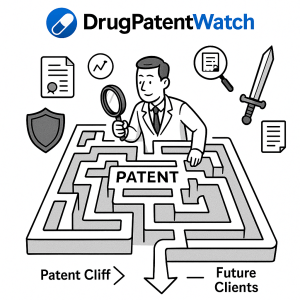
8. The Patent Cliff as a Business Development Engine
8.1 Mapping the Expiry Landscape for Manufacturing Intelligence
The patent cliff is a revenue event for branded pharmaceutical companies and a market creation event for CDMOs. When a blockbuster drug’s primary patents expire, the branded manufacturer faces generic or biosimilar competition that typically reduces market prices by 80 to 90 percent within two years. For the CDMO sector, this price collapse creates a manufacturing surge. Generic and biosimilar producers need contract manufacturing capacity to scale their products quickly, and the complexity of modern drugs means many of them cannot self-supply.
The opportunity is predictable. Patent expiration dates are publicly filed, publicly tracked, and publicly available through platforms including the FDA Orange Book, the FDA Purple Book (for biologics), and commercial databases like DrugPatentWatch. A business development team that is not building a multi-year forward pipeline from patent expiry data is leaving a predictable revenue stream unmapped.
A structured expiry mapping process begins with a query of the target technology type (small molecule oral solid, sterile injectable, biologic, combination product), filtered by therapeutic area alignment with the CDMO’s existing regulatory history, and sorted by remaining patent term and annual sales revenue. The output is a ranked list of upcoming patent cliffs ordered by revenue impact and technical accessibility.
For a sterile injectable CDMO with FDA-inspected capacity and a lyophilization train, the relevant search covers parenteral biologics and complex injectables with primary patents expiring in the 2026 to 2031 window. Sorting that list by 2024 annual revenue identifies the highest-value manufacturing opportunities. Cross-referencing those products against current biosimilar aBLA filings at the FDA identifies which opportunities are already in competitive development and which remain uncontested.
8.2 Proactive Outreach: Reaching Generic and Biosimilar Clients Before the RFP
The standard CDMO business development model is inbound: a client issues an RFP, multiple CDMOs submit proposals, and a selection process determines the winner. The proactive model inverts this. The CDMO identifies the opportunity before the client has issued an RFP and approaches them with a prepared technical and commercial proposal.
The timing window for this proactive approach is 18 to 30 months before expected patent expiry. At this point, biosimilar developers will be in late process development or completing comparability studies. They know they will need commercial manufacturing capacity. They have not yet formalized vendor selection. A CDMO that arrives at this stage with a technically specific, data-supported proposal, rather than a generic capabilities deck, has a structural advantage.
The technical specificity of the proposal is the differentiator. For example, a biologics CDMO targeting the adalimumab biosimilar market would not present a standard mAb manufacturing capabilities overview. They would present specific data on their CHO cell culture platform’s ability to achieve the glycosylation profile and aggregation rates documented in adalimumab comparability literature, their track record in anti-TNF mAb manufacturing, and a preliminary cost model based on the biosimilar’s likely commercial dosing volume. This level of preparation requires patent intelligence to be embedded in the business development function.
8.3 Capital Planning from Patent Expiry Data
Patent expiry data at the portfolio level is an infrastructure investment signal. If analysis of the 2027 to 2032 primary patent expiry calendar shows a cluster of complex high-molecular-weight biologics (PEGylated proteins, ADCs, bispecific antibodies) losing patent protection, that is a concrete forecast of elevated demand for specific manufacturing capabilities over that period. A CDMO with the capital flexibility to invest in those capabilities now, before the demand surge, will command premium pricing when client competition for limited capacity intensifies.
The inverse is equally important. A CDMO that invests heavily in capacity for a technology area whose primary market events are already past the cliff, where generic competition has already collapsed margins, will earn low returns on that capital. The patent expiry calendar is a forward indicator that aligns capital investment with demand timing.
Key Takeaways: Patent Cliff Strategy
Patent expiry calendars are forward demand forecasts for CDMOs. Structured analysis of the Orange Book, Purple Book, and international equivalents should be a routine business development function, not an ad hoc project.
The 18-to-30-month window before primary patent expiry is the optimal time for proactive client outreach, before RFPs are issued and while capacity selection decisions are still being made.
Capital investment in specific manufacturing platforms should be timed to primary patent expiry clusters in relevant therapeutic areas. Patent data, combined with commercial forecasts, makes capacity investment timing quantifiable.
9. White Space Analysis: Methodology and Execution
9.1 Defining Patent White Space in Manufacturing Technology
Patent white space is a region of technology space where there is little or no granted patent coverage. For CDMOs, white space represents either an area where innovation is technically difficult (and thus few have tried), an area that existing patent holders have overlooked, or an emerging technology area where the patent race has not yet begun.
All three types of white space can support a CDMO’s IP development program. Technically difficult white space often offers the most durable competitive advantage, because the barrier to entry for competitors is high. Overlooked white space offers speed advantages, because competitors may not realize the opportunity exists until after the CDMO has secured patent protection. Emerging technology white space offers first-mover positioning, because early patents in a new field can anchor broad claim coverage.
9.2 Executing a White Space Analysis for CDMO Process Technology
A functional white space analysis for a CDMO manufacturing technology requires patent landscape software capable of classifying patents by technical concept, not just keyword. Tools including PatSnap, Derwent Innovation, and Orbit Intelligence can generate patent landscape maps that visualize the density of patent activity across a technology domain.
The execution sequence runs as follows. First, define the technology domain with precision. ‘Drug delivery systems’ is too broad to generate actionable white space data. ‘Solid dispersion technologies for BCS Class II compounds using amphiphilic block copolymers’ is appropriately scoped. Second, build a comprehensive patent set for the domain using both keyword and CPC classification searches, validated by a domain expert who can confirm the set captures the relevant technical vocabulary. Third, classify the patents in the set by technical sub-feature using the landscape software’s categorization tools or manual coding. Fourth, visualize the classified patent set as a density map and identify sub-features with sparse coverage. Fifth, validate each white space against scientific literature and conference proceedings to confirm that the gap is an IP gap rather than a technical feasibility gap.
For a biologics CDMO, an example white space analysis might reveal that there is dense patent coverage for cryoprotectant formulations for monoclonal antibodies (trehalose, sucrose, various polymer combinations) but sparse coverage for cryoprotectant systems specifically optimized for mRNA-lipid nanoparticle constructs at the temperature excursion ranges relevant to cold chain distribution. That gap, if validated technically, represents an opportunity to develop and patent a novel stabilization system that would attract mRNA vaccine developers as manufacturing partners.
9.3 Translating White Space into Proprietary Platform Technology
Identifying white space is the beginning, not the end. The commercial value comes from developing a protectable technological solution that fills the gap and then securing IP protection before competitors recognize the opportunity.
For a CDMO, this means investing R&D resources in a structured discovery program targeted at the identified white space. The key discipline is building the innovation record contemporaneously: dated lab notebooks, internal disclosure forms, prototype batch records, and analytical data that document the date of conception and the dates of progressive refinement. This documentation creates the evidentiary foundation for a patent application and the prior use record needed if the patent is later challenged.
The patent strategy for a CDMO process platform should be layered. The initial application should claim the broadest defensible scope for the core innovation. Continuation applications should claim specific embodiments, manufacturing parameters, and field-of-use restrictions as the technology is further developed. This layered approach creates a patent family rather than a single patent, making the technology substantially more difficult for a competitor to design around without completely abandoning the underlying technical approach.
10. Competitive Patent Intelligence for Business Development
10.1 Monitoring Client Pipelines Through Patent Filings
Patent applications publish 18 months after filing. This 18-month disclosure window means that a pharmaceutical company’s patent application reveals its R&D direction long before the company makes public announcements, initiates clinical trials, or issues an RFP. For a CDMO’s business development team, this intelligence lead is operationally significant.
Setting up assignee-based patent monitoring for target clients and prospects costs almost nothing in commercial patent database subscriptions and delivers a continuous feed of early-stage pipeline intelligence. When a specialty pharma company files its first patent applications on a new chemical scaffold in an oncology indication, the CDMO with an assignee alert on that company learns about it within weeks of publication. The CDMO can then build a detailed technical profile of the compound class, anticipate the manufacturing challenges, and initiate a business development conversation before the client has even named the program publicly.
The quality of the intelligence compounds over time. A company that files ten patents on bicyclic peptide chemistry over 18 months is clearly investing in that platform. The specific technical content of those patents, the synthetic routes, the stability challenges addressed in the examples, the formulation approaches described, is actionable intelligence for a CDMO that has peptide synthesis expertise. The patent applications are a detailed technical briefing delivered free of charge by the potential client.
10.2 Competitive CDMO Intelligence: Tracking Where Others Are Building IP
Monitoring the patent filing activity of competing CDMOs is a direct window into their strategic investment priorities. A CDMO competitor that has filed fifteen process patents related to continuous manufacturing in the past 24 months has signaled an investment in that technology area. A competitor filing ADC conjugation process patents is signaling a move into that modality.
This intelligence serves two functions. It identifies technology areas where your competitor is building a defensible moat, which should inform your own capital allocation decisions. It also identifies areas where your competitor is not filing patents, which may reveal technology areas where your CDMO can establish IP-based differentiation before the competition solidifies.
10.3 Crafting Intelligence-Driven Business Pitches
The business development application of patent intelligence culminates in the proposal meeting. A CDMO that walks into a prospect meeting with a standard capabilities presentation is competing on price and relationship. A CDMO that walks in with a technical briefing built from the prospect’s own patent filings is competing on a different dimension.
A concrete example: a CDMO targeting a mid-sized company that has recently published patent applications on a bispecific antibody using a knob-into-hole assembly format would prepare a proposal that covers the specific challenges of knob-into-hole heavy chain mispairing, the analytical methods required for bispecific purity characterization, the CDMO’s existing experience with heterodimeric mAb production, and a preliminary assessment of the scalability constraints at Phase II and commercial volumes. This preparation demonstrates domain expertise specific to the prospect’s program, not general biologics capability.
The preparation should also include a review of the prospect’s Orange Book or Purple Book entries, their active clinical trial registrations, and the specific claims in their most recently published patent applications to understand both the technical complexity and the IP risks around their program. A CDMO that can reference a prospect’s own patent application number in a proposal meeting makes an unmistakable demonstration of analytical rigor.
Key Takeaways: Competitive Intelligence
Assignee-based patent monitoring on target clients and prospects provides an 18-month intelligence lead on their pipeline development activity. This is the most cost-efficient business development intelligence tool available to CDMOs.
CDMO competitor patent filing patterns reveal strategic investment priorities and technology bets. Monitoring these patterns informs both capital allocation and go/no-go decisions on technology development programs.
Intelligence-driven business proposals, built from a prospect’s own patent filings, shift the competitive dynamic from price to technical partnership. The conversion rate on this type of engagement is structurally higher than responses to open RFPs.
11. Evergreening Tactics and the Secondary Patent Thicket: What CDMOs Must Model
11.1 The Anatomy of Pharmaceutical Evergreening
Evergreening refers to the practice of extending effective market exclusivity beyond the primary composition of matter patent through sequential filings of secondary patents on the same drug. These secondary patents typically cover new salt forms, new polymorphs, enantiomerically pure versions, new dosage forms, new formulations, extended-release versions, new indications, or new delivery technologies.
Evergreening is legal, commercially rational, and extensively practiced by branded pharmaceutical companies. For a CDMO involved in generic or biosimilar development, it is the primary source of post-primary-patent-expiry IP risk. Understanding the full evergreening architecture around a target product is not optional; it is a prerequisite for accurate IP risk assessment.
The AstraZeneca omeprazole-to-esomeprazole transition is the canonical illustration. When Prilosec (omeprazole, composition patent expired) faced generic competition, AstraZeneca introduced Nexium (esomeprazole, the S-enantiomer of omeprazole) under new composition and formulation patents. The new patent position reset the exclusivity clock by roughly a decade. A CDMO manufacturing omeprazole for a generic client in the mid-2000s would have encountered no blocking patents. A CDMO asked to manufacture esomeprazole for a generic client in the same period would have encountered a dense thicket of secondary patents covering the active enantiomer, its magnesium salt form, its delayed-release granule formulation, and its method of use.
11.2 Technology Roadmap: Evergreening Strategies by Drug Type
The specific evergreening tactics available to an innovator depend on the drug type. CDMOs must model these tactics prospectively for any program approaching patent expiry.
For small molecule oral drugs, the primary evergreening sequence runs as follows. The first generation of secondary IP covers salt forms and polymorphs of the API. The second generation covers new dosage form technologies: extended-release matrices, osmotic pump systems, bilayer tablet designs, or modified-release pellet capsules. The third generation covers combination products, where the original API is co-formulated with a second agent under a combination product patent. The fourth generation covers new indications discovered through post-marketing research. Each layer adds patent coverage that must be independently analyzed in an FTO.
For biologics, the evergreening architecture is different and often more extensive. After the composition of matter and method of use patents, formulation patents on the specific lyophilized or liquid presentation are common. Process patents on cell culture conditions or purification methods add a manufacturing-specific layer. Next-generation antibody engineering patents (bispecific versions, antibody fragments, PEGylated derivatives) add further coverage. Finally, device patents on the auto-injector or prefilled syringe delivery system may extend exclusivity on the commercial product even after the biologic itself can be biosimilar-manufactured.
For a CDMO entering any biosimilar program, a systematic evergreening map of the reference product is the foundational IP work. This map should organize secondary patents by expiry date, claim type, and commercial relevance, creating a visual timeline that shows when each layer of IP protection expires and which products or processes each layer affects. Programs where the last secondary patent does not expire until well after primary composition expiry present significantly more complex FTO landscapes than programs where the primary patent is the only material IP.
11.3 Patent Thicket Management for CDMOs
A patent thicket is a dense collection of overlapping patent rights around a technology or product, where any commercial implementation requires navigating licenses, design-arounds, or validity challenges across multiple patent families.
For a CDMO manufacturing a biosimilar with a 15-patent thicket, the management strategy involves several concurrent work streams. The first is the formal FTO, identifying which patents in the thicket pose an actual infringement risk to the specific manufacturing process and formulation. Not all patents in a thicket will read on a given biosimilar’s specific technical implementation.
The second work stream is validity analysis for patents that do present infringement risk. Inter Partes Review (IPR) at the USPTO, post-grant oppositions at the EPO, and equivalent procedures in other jurisdictions provide formal mechanisms to challenge patent validity on the grounds of prior art that the original examiner did not consider. A well-resourced validity challenge can eliminate a blocking patent from the thicket, and the threat of an IPR petition frequently motivates the patent owner to offer a reasonable license.
The third work stream is design-around development, identifying technical alternatives for any process or formulation element where infringement risk is confirmed and licensing is not commercially viable. Design-around work should begin as early as possible in the program, because late-stage changes to a biosimilar manufacturing process can trigger comparability studies and regulatory filing amendments that cost time and money.
12. Technology Roadmap: Biologics, Biosimilars, and ATMPs
12.1 The Biologic IP Stack: A Decomposition for CDMOs
A monoclonal antibody program at commercial scale typically involves IP positions across six distinct technical layers, each requiring separate FTO analysis. The cell line layer covers the host cell (typically CHO) including patents on specific CHO cell strains or genetic modifications that improve expression. The vector and promoter layer covers the expression construct used to produce the antibody gene in the host cell; Lonza’s GS gene expression system and Catalent’s GPEx technology are examples of patented expression platforms. The culture media layer covers proprietary chemically defined media formulations, serum-free supplements, and feeding strategies. The upstream processing layer covers bioreactor control strategies, dissolved oxygen setpoints, pH excursion management, and temperature shift protocols. The downstream processing layer covers chromatography step sequences, buffer compositions, filter selection, and viral inactivation/clearance methods. The formulation and drug product layer covers the final drug substance stabilization and drug product presentation as analyzed under Section 2 above.
A CDMO that enters a biosimilar mAb program without decomposing the IP landscape into all six layers is conducting an incomplete risk assessment. Each layer may have multiple blocking patents from different assignees, requiring separate licensing or design-around analysis.
12.2 ATMPs: The Cell and Gene Therapy IP Complexity Roadmap
CAR-T cell therapies, AAV gene therapies, and ex vivo gene editing programs have the most complex IP landscapes in pharmaceutical manufacturing. A single CAR-T program may involve patents from the National Institutes of Health (NIH) covering T-cell activation methods, from academic institutions (Penn, Stanford, Sloan Kettering) covering CAR design architectures, from lentiviral vector manufacturers covering transduction protocols, from bioreactor manufacturers covering closed-system cell expansion, and from the drug developer covering the specific target antigen and the clinical application.
For a CDMO entering cell therapy manufacturing, the IP decomposition must cover the CAR construct (antigen-binding domain, spacer, transmembrane domain, costimulatory domain, signaling domain) as separate IP items. Each structural element of the CAR design may have distinct patent coverage. The University of Pennsylvania holds foundational patents on CD19-targeting CARs. Memorial Sloan Kettering and St. Jude Children’s Research Hospital have substantial positions in CAR architecture patents. The specific viral vector delivery system adds another patent family, typically controlled by a specialized vector manufacturer like Oxford Biomedica or Spark Therapeutics.
For AAV gene therapy programs, the capsid IP landscape is itself a major FTO challenge. Spark Therapeutics, Penn’s Gene Therapy Program, Harvard’s Broad Institute, and several others hold patents covering specific AAV serotypes and capsid modifications that affect tissue tropism and transduction efficiency. A CDMO manufacturing AAV products must secure licenses or FTO clearance across all relevant capsid IP before manufacturing begins, because capsid selection is determined by the drug developer before the CDMO is engaged, and the CDMO will be manufacturing a vector that uses that capsid.
The CRISPR/Cas9 gene editing IP landscape is dominated by the UC Berkeley versus Broad Institute patent dispute, which allocates rights across different cell types between the two institutions. CDMOs manufacturing cell therapy products that incorporate CRISPR editing need to understand which patent position covers their specific cellular application (eukaryotic cells generally, or specific human cell types) and secure licenses accordingly.
12.3 Continuous Manufacturing: The Emerging IP Frontier for CDMOs
Continuous manufacturing (CM) is shifting from regulatory pilot projects to commercial implementation across several major drug programs. The FDA has encouraged the transition from batch to continuous processes for API synthesis and drug product manufacture. For CDMOs, this shift creates both capability differentiation opportunities and new IP risk surfaces.
The CM patent landscape covers continuous flow reactor designs, real-time process analytical technology (PAT) integration protocols, control algorithm designs for maintaining steady-state conditions, and specific reactor-process combinations validated for pharmaceutical use. Eli Lilly, Vertex Pharmaceuticals, and MIT have all been active filers in CM-related process IP. Several equipment manufacturers hold patents on specific reactor modules and inline mixing systems that are used in continuous synthesis trains.
A CDMO building a continuous manufacturing capability today must assess the IP landscape for both the equipment it purchases (supplier patents are separate from product patents) and the process it designs around that equipment. The supplier’s patent on a reactor module does not grant the CDMO a license to use the reactor in a commercially patented process that happens to specify that reactor type.
Key Takeaways: Biologics and ATMP IP
The six-layer biologic IP stack (cell line, expression vector, culture media, upstream process, downstream process, formulation) requires six distinct FTO work streams. Reviewing only the formulation and composition layer is inadequate for biologic programs.
CAR-T, AAV, and CRISPR-based programs involve fundamental IP held by academic institutions that may not appear in commercial patent searches. NIH, Penn, Stanford, MIT, and the Broad Institute are key assignees to monitor in the ATMP space.
Biosimilar interchangeability designation requires process disclosure that can expose manufacturing IP. CDMOs should structure IP protections before aBLA data submission, not after.
Continuous manufacturing creates a new IP risk surface. Equipment supplier patents are distinct from process patents that specify use of specific equipment. Both require independent FTO analysis.
13. The MSA as Legal Architecture: IP Clauses That Carry Real Weight
13.1 Background IP, Foreground IP, and the Carve-Out Problem
The MSA is the primary document governing the IP relationship between a CDMO and its client. The most consequential IP provision is the allocation of ownership for inventions created during the project. The standard industry terminology distinguishes between ‘background IP’ (existing IP each party brings to the project) and ‘foreground IP’ or ‘arising IP’ (IP created during the project).
Many client MSA templates claim all foreground IP for the client, including process improvements developed by the CDMO using the client’s compound as the test substrate. Signing this language without a carve-out transfers your own process innovations to the client every time you develop a better way to manufacture their drug. Across multiple projects, this results in systematic erosion of the CDMO’s own technology base.
The appropriate carve-out protects CDMO process improvements that are generally applicable (not specific to the client’s compound or therapeutic target) and not derived from the client’s confidential information. A well-drafted carve-out reads approximately as: ‘The CDMO retains all right, title, and interest in any improvement to its manufacturing platforms, analytical methods, or process technologies that is not specific to the Client’s compound or directly derived from the Client’s Confidential Information, regardless of when such improvement is developed during the course of the project.’ This language is frequently resisted by large pharma clients but is standard practice for CDMOs that have built and maintained proprietary process platforms.
13.2 Indemnification Architecture: Who Pays When It Goes Wrong
As demonstrated by the case studies in Section 7, indemnification clauses fail in practice when the indemnifying party lacks financial capacity. The legal architecture of a CDMO-protective MSA addresses this through several mechanisms.
The first is a mutual indemnification structure that covers the CDMO for third-party infringement claims arising from the client’s instructions, the client’s IP, or the client’s FTO representations. The client indemnifies the CDMO for claims arising from use of the client’s background IP. The CDMO indemnifies the client for claims arising from the CDMO’s background IP. This mutual structure is a baseline; the specific scope of each indemnity should be defined precisely, not described in general language.
The second mechanism is a credit rating or financial capacity threshold for the indemnification commitment. For contracts with undercapitalized clients, a CDMO can require an IP insurance policy naming the CDMO as an additional insured, an escrow account specifically allocated to IP litigation defense, or a parent company guarantee if the client is a subsidiary of a larger entity. These mechanisms convert the indemnification right into a funded commitment.
The third mechanism is a caps and carve-outs structure. Total liability under the MSA is typically capped at a multiple of contract fees. However, IP indemnification claims should be carved out from the cap or given a separately higher cap, because IP litigation costs can easily exceed contract value.
13.3 Confidentiality Provisions: Scope, Duration, and Residuals
CDMO confidentiality provisions must address the residuals clause, which is one of the most frequently litigated provisions in technology contracts. A residuals clause provides that a party’s personnel who have had access to confidential information are not prohibited from using information retained in unaided memory (not written down, not deliberately memorized) in subsequent work. Tech industry MSAs often include broad residuals clauses that effectively allow scientists to use technically absorbed knowledge from one project in subsequent unrelated work.
For pharma CDMOs, a broad residuals clause substantially undermines the trade secret protection architecture. A scientist who has worked extensively on a client’s biologic manufacturing process retains detailed technical knowledge of culture conditions, purification column specifications, and downstream formulation parameters. If the MSA includes a residuals clause, that knowledge is arguably not protected as a trade secret in the scientist’s subsequent work.
CDMOs should resist residuals clauses in their client MSAs or limit their scope narrowly to general principles of chemistry or biology that are genuinely available in the public literature, explicitly excluding any knowledge derived from client-specific experimental data, formulation screening results, or proprietary manufacturing parameters.
14. Building an IP-Literate Organization
14.1 The Invention Disclosure Program
The most valuable proprietary technologies a CDMO develops are often invisible until they leave the building in a scientist’s head. An invention disclosure program creates a formal channel for employees to report potentially patentable innovations before they are disclosed externally, published internally, or allowed to become prior art through operational use.
The program requires a simple disclosure form that a scientist can complete in 20 minutes, covering the technical description of the innovation, its departure from prior approaches, the date of first conception, and the date of first reduction to practice. The form goes to a designated IP coordinator, who does a preliminary patentability screen and routes candidates to outside patent counsel for formal evaluation within 30 days. Disclosure submissions are tracked, and inventors receive recognition in the form of attribution in patent filings, financial awards tied to patent issuance and licensing revenue, and documented contributions to performance review.
A disclosure program only functions if the volume of submissions is manageable. A CDMO that receives 200 disclosures per year and has the budget to file 20 patents must have a rigorous triage process. The triage criteria should prioritize innovations that address demonstrated manufacturing challenges (high commercial value), innovations in technology areas where the CDMO is building a platform (strategic fit), and innovations that the patent landscape analysis suggests have clear freedom-to-patent (no blocking prior art).
14.2 Lab Notebook Standards and Legal Admissibility
The evidentiary requirements for patent prosecution and IP litigation have specific implications for how scientific notebooks are maintained. For patent prosecution under the America Invents Act (AIA), which replaced the first-to-invent system with first-to-file in the United States, the primary function of the lab notebook shifted from invention date documentation to reduction-to-practice documentation. The notebook establishes that the invention works as claimed, provides the enablement disclosure for the patent application, and documents the inventive process for attribution purposes.
For litigation defense, the notebook’s function is to establish dates of first use for prior use rights assertions, document the technical basis for design-around arguments, and demonstrate good-faith independent development when a client or third party alleges misappropriation.
Electronic laboratory notebooks (ELNs) with time-stamped, cryptographically signed entries are the current standard for legal-grade documentation. ELN platforms from LabArchives, Benchling, and similar providers create audit trails that satisfy the authentication requirements for court admissibility. Physical notebooks remain legally valid, but require contemporaneous signing by the inventor and witnessing by a non-inventor colleague to establish date and authenticity.
The protocol that matters most in both contexts is the same: document the reasoning, not just the result. An entry that records ‘experiment 14 failed, yield 23%, product analysis attached’ carries far less legal value than one that records ‘hypothesis: reducing NaOAc concentration to 50 mM will improve crystal habit; result: yield improved to 41% but polymorph analysis by XRPD shows Form II in addition to target Form I; next step: investigate effect of seeding temperature on polymorph selectivity.’ The second entry documents an inventive thought process, not just a data point.
15. AI, Patent Analytics, and the New Intelligence Stack
15.1 Semantic Patent Search and the Limits of Keyword Methods
Traditional patent searching operates on keyword matching and classification code assignment. Both have systematic blind spots. Keyword searches miss patents that describe the same technology using different terminology. Classification code searches miss patents that cover the technology incidentally rather than primarily, and therefore were classified in a different subfield.
Large-language-model-based patent search systems, now deployed commercially by PatSnap Eureka AI, Clarivate, and Lens.org’s AI tools, perform semantic searches that identify conceptual similarity rather than keyword overlap. A semantic search for ‘methods of improving the thermal stability of mRNA lipid nanoparticles during lyophilization’ will surface patents about related topics (protein stabilization, nanoparticle cryopreservation, lipid phase transition management) that share conceptual relationships with the query even if they do not use the exact query terms.
For CDMO FTO work, semantic search changes the completeness profile. The residual risk of missed patents in keyword-only searches was always the patents that used non-standard terminology or non-obvious conceptual framings. Semantic tools reduce, though do not eliminate, this residual risk. The practical workflow for a comprehensive CDMO FTO combines semantic search for concept coverage with traditional keyword and CPC classification searches for systematic coverage, and assignee searches for coverage of known active players in the field.
15.2 AI in Process Development and the Resulting IP Questions
Machine learning applications in pharmaceutical process development range from reaction optimization (using Bayesian optimization or multi-objective optimization algorithms to identify optimal synthesis conditions) to formulation prediction (using composition-property prediction models to screen excipient combinations computationally). These tools are now embedded in R&D workflows at both major pharma companies and leading CDMOs.
The IP questions these tools create are not yet fully resolved. The patent offices of the U.S., Europe, Japan, and Australia have all addressed the question of whether an AI system can be listed as an inventor on a patent application. The uniform answer, as of 2025, is that inventorship requires a natural person. An AI system cannot hold a patent.
The CDMO’s practical question is how to document human inventorship when an AI system substantially contributes to the technical development. The answer requires documenting the human decisions that guided the AI: the choice of training data, the selection of objective functions, the interpretation of model outputs, and the experimental validation choices made by the scientist acting on the model’s suggestions. These human decision points constitute the inventive contribution. A scientist who programs an optimization run, reviews its output, selects a specific candidate from among several the model suggested, and then validates that candidate through experiments is a plausible inventor. A scientist who simply runs an off-the-shelf optimization tool and accepts its first recommendation without intellectual engagement is on less solid ground.
CDMOs using AI in process development should establish a documentation protocol specifically for AI-assisted development work that captures the human decision layer in addition to the standard experimental record.
16. Global Patent Divergences and the CDMO Risk Surface
16.1 Key Jurisdictional Differences in Pharmaceutical Patent Law
A global FTO requires jurisdiction-specific analysis. The pharmaceutical patent law differences between the U.S., EU, India, China, and Japan are substantial enough that a process that is FTO-clear in one jurisdiction may be blocked in another.
The U.S. patent system allows patenting of methods of medical treatment, including dosing regimens and patient selection methods. The European Patent Convention prohibits method of treatment claims, substituting ‘purpose-limited product claims’ (also called Swiss-type claims under the older standard, or EPC 2000 second medical use claims under current practice) that achieve similar protection through a different legal form. A European claim may be phrased as ‘Compound X for use in treating condition Y by administering dose Z on a weekly schedule’ rather than ‘A method of treating condition Y comprising administering compound X.’ The scope of these European claim types can differ from the equivalent U.S. method claim, and both need to be considered in an FTO for products marketed in both jurisdictions.
India’s Patent Act Section 3(d) bars patents on new forms of known substances (polymorphs, salts, esters, ethers) unless they show significantly enhanced efficacy. This provision, challenged unsuccessfully by Novartis in the Novartis v. Union of India case decided by the Indian Supreme Court in 2013, substantially limits secondary pharmaceutical patents in India. A polymorph patent that is valid in the U.S. and EU may not be enforceable in India. For CDMOs with Indian manufacturing sites supplying global markets, this creates a different FTO profile depending on where the product is manufactured.
China’s CNIPA has processed a rapidly expanding volume of pharmaceutical patent applications over the past decade, and Chinese courts have become more active in pharmaceutical patent enforcement. The 2021 amendment to China’s Patent Law introduced a Hatch-Waxman-equivalent patent linkage system for drug regulatory approvals, creating an Orange Book analog that ANDA-style applicants must certify against. For CDMOs with Chinese manufacturing operations or supplying Chinese market products, monitoring CNIPA filings and the Chinese patent linkage registry is a new and growing compliance requirement.
16.2 The UPC and Its Implications for CDMO European Operations
The Unified Patent Court (UPC), operational since June 2023, created a new judicial venue for patent infringement and validity proceedings covering all participating EU member states in a single action. This eliminates the prior requirement to litigate patent disputes in each national court separately across multiple European jurisdictions, which was expensive but also meant that an injunction in Germany did not automatically apply in France or the Netherlands.
For CDMOs with European manufacturing operations, the UPC changes the risk profile in both directions. On the upside, a successful invalidity challenge in the UPC invalidates the patent across all participating member states, which is a more powerful weapon than a single-country invalidity proceeding. On the downside, an infringement finding in the UPC results in a pan-European injunction and damages award, which represents a substantially higher enforcement consequence than any single national court proceeding previously offered. The UPC also introduces a new set of procedural rules, including preliminary injunction standards that some practitioners assess as more plaintiff-friendly than the pre-UPC German national court standards. CDMOs should ensure their European outside counsel is experienced in UPC procedure, not just national court practice.
17. Investment Strategy for Analysts
17.1 Screening CDMOs on IP Quality Metrics
For institutional investors, allocators, and M&A teams evaluating CDMOs as acquisition or investment targets, the following IP quality metrics provide a structured framework for distinguishing platform-IP CDMOs from capacity-only players.
The first metric is proprietary patent count by technology area. Count the number of granted patents owned by the CDMO in its core service areas (biologics upstream, downstream, formulation, continuous manufacturing, cell therapy). Normalize by revenue to avoid scale bias. A CDMO with a disproportionately high ratio of process patents to revenue is investing in IP-based differentiation at a rate that justifies a premium multiple.
The second metric is patent citation rate. Patents that are frequently cited by subsequent patents are influential in the field. A CDMO whose process patents are frequently cited by pharmaceutical company and equipment manufacturer patents is building IP that the industry recognizes as foundational. Citation rate is available in patent databases and is a proxy for technological relevance.
The third metric is licensing revenue as a percentage of total revenue. A CDMO earning a material fraction of revenue from technology licensing, rather than purely from manufacturing services, has an IP-enabled revenue model with margin characteristics that are structurally superior to fee-for-service manufacturing.
The fourth metric is FTO infrastructure quality, assessed through management interviews and document review during due diligence. Questions should cover the FTO scope protocol, the frequency and documented record of monitoring reviews, the number of in-house IP professionals, the outside counsel relationship structure, and the track record of resolved and open IP disputes. A CDMO that cannot answer these questions in detail is not managing IP as an operational function.
17.2 Red Flags in CDMO IP Due Diligence
The following patterns are red flags in CDMO IP due diligence, each indicating potential unquantified IP liability or strategic underinvestment.
A pattern of MSA indemnification clauses without financial capacity requirements paired with a client base concentrated in undercapitalized biotech indicates structural IP liability that is not reflected in current financial statements. An open IP dispute with no reserve on the balance sheet, particularly one involving process patent claims, requires specific attention. A CDMO with no in-house IP function and an inconsistent outside counsel relationship suggests that IP is managed reactively rather than operationally. A technology platform described by management as a key competitive differentiator but with no supporting patent filings suggests the platform is unprotected know-how that can walk out the door when key personnel leave. A history of personnel departures followed by competitor announcements of similar technology capabilities is a canary for trade secret management failures.
17.3 The CDMO Patent Cliff Arbitrage
The most tactically specific investment thesis available to analysts focused on contract manufacturing is the patent cliff arbitrage: identify CDMOs whose manufacturing capabilities are well-matched to a wave of near-term primary patent expiries, particularly in therapeutic areas where the CDMO already has FDA-inspected capacity and a validated regulatory track record.
The framework: identify the top ten products by 2025 annual revenue with primary patent expiry before 2030. Cross-reference against therapeutic area and dosage form. Match against CDMOs with validated capacity in those specific manufacturing modalities. Weight by likelihood of biosimilar/generic entry (complexity of product, number of active aBLA/ANDA filers, market price premium over cost of goods). The output is a ranked list of CDMOs positioned to capture manufacturing volume from patent cliff events, which represents a quantifiable and time-bounded revenue catalyst.
Investment Strategy Summary
CDMOs with proprietary process patent portfolios, demonstrated FTO infrastructure, and manufacturing capabilities aligned to near-term patent cliff events represent the most defensible long positions in the contract manufacturing sector. The near-term catalysts are patent expiry events in the 2027 to 2031 window, particularly for parenteral biologics and complex injectables where manufacturing barriers are high and CDMO capacity is limited. Risk factors include unresolved process patent disputes, MSA indemnification exposure from undercapitalized clients, and failure to maintain proprietary IP in the face of key personnel turnover.
18. Key Takeaways
Part 1: IP Asset Taxonomy
The six patent types most relevant to CDMOs, composition of matter, method of use, formulation, process, polymorph, and trade secrets, each carry distinct risk profiles and require distinct FTO coverage strategies.
Process patents are the highest-risk category for CDMOs because manufacturing processes are the CDMO’s core deliverable, and process infringement leaves no chemical fingerprint in the final product.
Trade secrets are only as valuable as the active measures taken to protect them. An undocumented, unprotected process innovation is not a trade secret; it is a business risk.
Part 2: IP Valuation
Proprietary process IP inflates CDMO enterprise value multiples by four to six turns compared to capacity-only competitors.
Both offensive IP assets (owned platform technology) and defensive IP infrastructure (FTO documentation, MSA terms, litigation history) contribute to value and should be audited separately in due diligence.
Part 3: FTO and Risk Management
FTO scope must extend to synthesis intermediates, functional formulation categories, polymorph forms, bioprocessing steps, and analytical methods. A composition-focused FTO misses the most common CDMO infringement risk.
Client indemnification in an MSA is not insurance. A CDMO’s own independent FTO is the only reliable protection against infringement liability.
Prosecution history estoppel can substantially narrow the effective scope of a patent that appears broad on its face. File wrapper review is mandatory for any patent identified as a potential blocker.
Part 4: Business Development
Patent expiry data is a forward demand forecast. Business development teams that map this data against CDMO capabilities systematically outperform those that rely on inbound RFPs.
Assignee monitoring of prospect and client patent filings provides an 18-month intelligence lead on pipeline development. This is the most cost-efficient business development tool available.
White space analysis, executed rigorously with patent landscape software, identifies opportunities to develop proprietary platform technologies that create durable competitive advantages and attract premium-margin contracts.
Part 5: Evergreening and Thickets
Evergreening creates secondary patent layers that survive primary composition patent expiry. A complete IP landscape map of any biosimilar or generic target must cover all secondary patents, not only the primary composition position.
Patent thicket management requires concurrent FTO, validity analysis, design-around development, and licensing negotiation tracks. Sequential execution of these activities adds months or years to program timelines.
Part 6: Organizational and Contractual
MSA foreground IP allocation, indemnification capacity, residuals clauses, and confidentiality scope are all negotiable and all material. Each deserves specific attention, not boilerplate acceptance.
An invention disclosure program, ELN-based documentation, and a structured IP review process are operational requirements for any CDMO that views process IP as a strategic asset.
19. Frequently Asked Questions
Q1: What is the minimum FTO scope that a CDMO should conduct for a new small molecule project?
At minimum, the FTO should cover: (a) composition of matter patents on the API and any key synthetic intermediates; (b) all process patents in the CPC classes covering the planned synthesis route, including intermediate steps; (c) polymorph and salt form patents covering the specific physical form expected under planned crystallization conditions; (d) formulation patents relevant to the planned dosage form; and (e) any delivery system patents if the product uses a non-standard delivery mechanism. Each of these five elements requires a separate search strategy because they are classified under different CPC subfields and owned by different types of assignees. An FTO limited to only the first element is inadequate for commercial manufacturing.
Q2: How do we handle FTO for a project in an extremely crowded technology area, such as lipid nanoparticle delivery for mRNA, where hundreds of potentially relevant patents exist?
Crowded technology areas require a staged FTO approach. The first stage is a landscaping exercise that maps the LNP patent space by assignee and sub-feature (ionizable lipid structure, helper lipid type, molar ratio parameters, particle size range, surface modification). This map identifies which claim elements of the specific product at issue face the highest density of patent coverage. The second stage focuses the formal FTO analysis on the highest-density sub-features, prioritizing patents with claim language that most closely matches the specific product parameters. The third stage involves licensing strategy development for those patent families where infringement risk is confirmed. Major LNP patent holders including Moderna, BioNTech/Acuitas, Intellia, Precision Biosciences, and the University of British Columbia (through Arbutus Biopharma) have all been active in asserting and licensing LNP IP. Understanding each party’s licensing posture before initiating negotiations saves significant time.
Q3: A client is asking us to sign an MSA that assigns all foreground IP to them. What is the appropriate counter-position?
The appropriate counter-position distinguishes between product-specific foreground IP and process-specific foreground IP. Product-specific innovations, those that are specifically directed to the client’s molecule, target, or therapeutic indication, should be assigned to the client. Process-specific innovations that improve the CDMO’s manufacturing platform generally, without being specific to the client’s compound, should be retained by the CDMO or licensed to the client on a non-exclusive basis for use with the specific product. The CDMO’s negotiating position is that signing a blanket foreground IP assignment would prevent it from using general process knowledge gained on every project, which is commercially unreasonable and would ultimately degrade the CDMO’s ability to serve all clients. Framing the distinction as a standard commercial practice rather than a resistance to the client’s interests generally produces a workable negotiated position.
Q4: We are entering the cell therapy CDMO space. What are the most critical IP licenses to secure before beginning manufacturing services?
The four most commonly required license categories for cell therapy manufacturing CDMOs are: (a) viral vector production licenses, particularly for lentiviral and AAV vectors, where Emory University, Penn, and multiple spinout companies hold foundational production method patents; (b) CAR architecture licenses for the signaling domain components if you will be manufacturing CAR-T products under proprietary CAR designs; (c) cell culture and activation reagent licenses, where GMP-grade activation beads, cytokine formulations, and culture supplements may have patented compositions; and (d) closed-system processing equipment licenses, where the bioreactor and cell processing system manufacturers may have use-of-process patents in addition to equipment sales. Securing these licenses proactively, before the first client contract, allows the CDMO to offer a ‘pre-cleared platform’ that eliminates a significant portion of the client’s IP diligence burden.
Q5: We suspect a competitor CDMO is manufacturing a biosimilar using a process that infringes our granted process patent. What are our options?
Your options run from informal to formal. At the informal end, a letter from your patent counsel identifying the patent and requesting information about the competitor’s process may prompt a licensing conversation without litigation. At the formal end, filing an infringement suit in U.S. district court or seeking an ITC exclusion order for imported products are available remedies. A middle path is an IPR-based leverage strategy: if the competitor’s process patent (if they hold one) can be challenged, an IPR petition can create reciprocal pressure that motivates a cross-license negotiation. Before any formal action, confirm that your patent is actually infringed, that it is valid over any prior art you are aware of (because an infringement defendant will invariably file an IPR), and that the damages available justify the litigation cost, which typically runs $3 to $10 million for a complex patent suit through trial.
This guide was developed for informational purposes only and does not constitute legal advice. IP-specific decisions should be made with the assistance of qualified patent counsel in the relevant jurisdictions.
Sources referenced: Grand View Research (Pharmaceutical CDMO Market Report, 2024); BPCIA, 42 U.S.C. Sec. 262; Hatch-Waxman Act, 21 U.S.C. Sec. 355(j); Global-Tech Appliances v. SEB S.A., 563 U.S. 754 (2011); Festo Corp. v. Shoketsu Kinzoku Kogyo Kabushiki Co., 535 U.S. 722 (2002); Novartis AG v. Union of India, Civil Appeal Nos. 2706-2716 of 2013 (India Supreme Court); EPC 2000, Rule 43(2); UPC Agreement, June 2023; FDA Orange Book and Purple Book current edition; 35 U.S.C. Sec. 271; DTSA (18 U.S.C. Sec. 1836); America Invents Act (AIA), Pub. L. 112-29 (2011).