Engaging a contract development and manufacturing organization (CDMO) has gone from tactical cost arbitrage to board-level strategic decision. That shift is not rhetorical. It follows the economics of modern drug development, where a single manufacturing failure can cost a sponsor hundreds of millions in lost patent-protected revenue, and where the right CDMO partnership can shave 18 months off a commercial timeline.
The global pharmaceutical CDMO market sits at approximately USD 255 billion in 2025 and is forecast to reach USD 465 billion by 2032 at a 9.0% CAGR. The biologics segment alone is growing at 13.7% CAGR through 2029. Demand for cell and gene therapy manufacturing, antibody-drug conjugate (ADC) production, and lipid nanoparticle (LNP) formulation capabilities is driving a supply crunch in specialized capacity that most sponsors will feel directly in the next 24 to 36 months.
Against that backdrop, this pillar page covers every operational layer of the CDMO relationship: market intelligence, selection due diligence, IP ownership structure, Quality Agreement drafting, technology transfer execution, supply chain integration, and risk-adjusted governance. It also covers, in granular detail, the patent economics of the five largest CDMOs by revenue, because the IP portfolios those organizations are building will determine the pricing power and the lock-in risk sponsors face over the next decade.
Section 1: The Modern CDMO Landscape
1.1 Market Dynamics and Growth Trajectory
The CDMO market does not move in a single direction. Three distinct sub-markets are growing at different rates, driven by different forces, and they require different strategic responses from sponsors.
The broadest measure, the global pharmaceutical CDMO market, was valued at USD 255.01 billion in 2025 and is projected to reach USD 465.24 billion by 2032. That 9.0% CAGR is driven by a well-documented set of forces: rising R&D outsourcing, the preference of large pharma to redeploy capital toward late-stage assets rather than manufacturing infrastructure, and the continued expansion of the global clinical trial ecosystem.
The biologics CDMO segment is growing significantly faster than the overall market. Technavio forecasts a USD 16.32 billion absolute increase in biologics CDMO market value between 2025 and 2029, representing a 13.7% CAGR. Mordor Intelligence places the biologics CDMO market at USD 25.32 billion in 2025, reaching USD 36.51 billion by 2030. These two projections differ in base value but agree on trajectory. Mammalian cell culture systems, primarily Chinese hamster ovary (CHO) cell platforms for monoclonal antibody production, held over 62% of the biologics CDMO market in 2024.
The investigational new drug (IND) CDMO market is a more precise leading indicator of pipeline activity. It was valued at USD 5.61 billion in 2025 and is expected to reach USD 10.26 billion by 2034 at a 6.93% CAGR. North America captured 44% of that market in 2024 by revenue. This segment tracks early-stage outsourcing, which means it tells analysts where the outsourcing demand pipeline will be in three to five years.
Geographically, two dynamics are worth tracking separately. North America holds the largest revenue share across all segments, with USD 92.22 billion in 2024. Asia-Pacific is the fastest-growing region, with biologics CDMO capacity in the region growing at 10.76% annually. China and India are the primary growth engines, though their strategic roles are diverging rapidly in the wake of U.S. biosecurity legislation covered in Section 1.4.
API manufacturing remains the largest single service category, accounting for 70.68% of global pharmaceutical contract manufacturing revenues in 2024 per Grand View Research. This share reflects both the volume economics of small molecule production and the outsourcing behavior of large generics manufacturers, who contract out API synthesis while retaining finished dose formulation in-house.
1.2 The Strategic Rationale for Outsourcing Has Changed
Cost reduction drove outsourcing in the 1990s and early 2000s. That argument holds less weight today because fully-burdened CDMO costs for complex biologics often exceed internal manufacturing cost at scale. The current rationale is structured around four distinct strategic objectives.
Speed-to-market is the first and most financially significant. Bringing a new drug to market takes 10 to 15 years on average and costs approximately USD 2.6 billion when capital costs and failures are included. CDMOs with purpose-built facilities and experienced manufacturing teams can compress development timelines by 12 to 24 months compared with greenfield internal build-out. For a drug with annual peak sales of USD 1 billion, each month of accelerated launch translates to roughly USD 83 million in additional patent-protected revenue. Put differently, the cost of a CDMO relationship is often the cheapest way to buy time.
Access to specialized capabilities is the second driver. The modern drug pipeline is concentrated in modalities that require manufacturing expertise that has taken CDMOs a decade to accumulate: cell therapies using viral vector-based gene editing, mRNA vaccine production requiring closed-loop LNP encapsulation, ADCs using highly toxic payload conjugation chemistry under cytotoxic containment protocols, and bispecific antibody formats requiring multi-step purification schemes. Building that expertise in-house requires capital investment in the hundreds of millions of dollars and a five-to-seven-year talent development program. For emerging biotechs with virtual or minimal internal operations, these capabilities are simply not available on any other timeline.
Strategic flexibility is the third driver, and it matters most to large pharmaceutical companies. By routing products through CDMOs rather than dedicated internal facilities, large pharma creates the option to wind down outsourcing agreements when a drug loses exclusivity, rather than carrying fixed manufacturing costs on a product that will be margin-compressed by generic entry. The commercial logic here is straightforward: captive manufacturing capacity is a fixed cost that persists regardless of revenue trajectory, while CDMO agreements convert that fixed cost to variable.
Risk mitigation through supply chain redundancy is the fourth driver. The COVID-19 pandemic forced widespread recognition that single-source manufacturing is an existential vulnerability. Sponsors who had distributed manufacturing relationships, including Moderna’s network-based mRNA vaccine production, demonstrated the value of that approach at a scale that was difficult to ignore. This experience accelerated a trend toward deliberate multi-CDMO redundancy, even when it adds cost.
1.3 Industry Consolidation and the IP Arms Race
Consolidation Mechanics
The CDMO market is consolidating. Larger players are acquiring smaller specialists to build end-to-end service platforms that can guide a sponsor’s asset from drug substance development through commercial fill-finish and packaging. The strategic goal is to increase revenue per client relationship and create switching costs by embedding CDMO services across multiple development stages.
Recent transactions illustrate the pace of this consolidation. The merger of BioCina and NovaCina created an integrated global CDMO with coverage across drug substance and drug product manufacturing on two continents. Thermo Fisher Scientific’s acquisition of Patheon created one of the largest integrated CDMOs in the world, with coverage from early API development through clinical supply and commercial manufacturing. But the most significant recent transaction is Novo Holdings’ acquisition of Catalent for USD 16.5 billion, with Novo Nordisk subsequently acquiring three Catalent fill-finish sites for USD 11.5 billion.
That Novo Nordisk move deserves specific analysis. The acquisition was driven by Novo’s inability to manufacture enough semaglutide (Ozempic, Wegovy) to meet demand rather than by traditional financial or strategic rationale. Wegovy’s U.S. net revenue reached USD 4.56 billion in 2024; global semaglutide revenues exceeded USD 21 billion across the portfolio. At that revenue scale, every week of supply constraint represents hundreds of millions in lost revenue. Paying USD 11.5 billion for fill-finish capacity that guarantees supply security is straightforward capital allocation. The consequence for other sponsors is that significant injectable fill-finish capacity has exited the open market, which will intensify competition for the remaining commercial fill-finish slots at large CDMOs and drive up pricing.
IP Valuation: The Five Dominant CDMOs
Pharma and biotech IP teams often assess CDMOs on technical capability and quality history but underweight patent portfolio analysis. That is a significant due diligence gap, because a CDMO’s patent portfolio determines the value of the process IP it creates during any collaboration, the license fees it can extract in future negotiations, and the lock-in risk it poses to sponsors who do not negotiate IP ownership terms carefully upfront.
Lonza Group AG holds one of the most valuable manufacturing process patent portfolios in the CDMO sector. Its IBEX Solutions platform, covering large-scale continuous bioprocessing and single-use bioreactor systems, is supported by a dense cluster of patents in cell culture media optimization, continuous chromatography, and downstream processing. Lonza’s patent portfolio related to its Cocoon platform for closed-system cell therapy manufacturing represents IP that is directly relevant to sponsors in the autologous CAR-T space. A sponsor who licenses Cocoon manufacturing without negotiating robust background IP licenses exposes themselves to supply dependency if that relationship terminates. Lonza’s 2024 revenues from its Biologics segment exceeded CHF 3.5 billion, and management has guided for continued double-digit growth through 2028, which supports continued R&D and patent filing activity.
Catalent, Inc. built its IP estate primarily around drug delivery technology platforms: Optiform Solution Suite for oral solubility enhancement, OptiMelt HME for hot melt extrusion, and SMARTag site-specific conjugation technology for ADC payloads. Before the Novo Holdings acquisition, Catalent held approximately 400 issued patents and a large portfolio of trade secrets related to proprietary formulation and conjugation processes. Post-acquisition, the strategic question for sponsors is whether Novo Nordisk’s ownership of three Catalent fill-finish sites will introduce information barriers or prioritization conflicts that affect non-GLP-1 clients. That question has no clean answer yet, but it is one every sponsor using Catalent fill-finish capacity should be asking directly.
WuXi Biologics has built its IP position primarily through CRDMO (contract research, development, and manufacturing) integration, holding patents across its WuXiBody bispecific antibody platform and its continuous manufacturing WuXi CRDMO process technologies. WuXi Biologics’ revenue grew 35.5% year-over-year in 2023 to HKD 18.5 billion, reflecting its status as one of the most cost-competitive large-scale biologic manufacturing options available to Western sponsors. The IP risk for sponsors using WuXi platforms, however, is now inseparable from geopolitical risk. The U.S. BIOSECURE Act, discussed in detail in Section 1.4, has placed WuXi AppTec and WuXi Biologics on a list of entities of concern. Even if a sponsor is not subject to federal contracting restrictions, major investors, partners, and out-licensing counterparties may be unwilling to accept WuXi-entangled manufacturing processes in any deal.
Thermo Fisher Scientific (Patheon) has a broader patent portfolio than most CDMOs because it encompasses Thermo Fisher’s own scientific instruments and lab consumables IP alongside Patheon’s manufacturing process IP. The Patheon-derived portfolio covers Vial2Bag aseptic drug transfer technology, biologics upstream and downstream process development methods, and drug product formulation patents. For sponsors, the practical concern is that Thermo Fisher’s scale (USD 42.9 billion in 2024 revenues) means CDMO services are a high-margin but non-core business. Client prioritization decisions can favor larger sponsors, and IP terms may be less favorable than sponsors expect from a partner where their program represents a small share of total revenue.
Boehringer Ingelheim Biopharmaceuticals GmbH is the only top-tier CDMO that is itself a fully integrated pharmaceutical company. Its CDMO division competes alongside its own proprietary biologics pipeline. That dual role creates both advantages and risks for clients. On the positive side, Boehringer Ingelheim brings regulatory expertise and manufacturing process depth that reflects decades of internal drug development. The risk is that Boehringer Ingelheim’s proprietary pipeline receives resource priority in periods of capacity constraint, and that the information barriers between its commercial and CDMO operations are difficult to verify externally.
1.4 Emerging Trends: Geopolitics, AI, and the Specialization Bifurcation
Understanding where biologics manufacturing is heading is necessary for making CDMO selection decisions that hold up five years from now. The following roadmap reflects publicly disclosed investment commitments, regulatory guidance on advanced manufacturing, and the published R&D directions of the major CDMOs.
2025 to 2026 represents an intensification phase in continuous manufacturing adoption. Continuous bioprocessing, integrating perfusion bioreactors with continuous capture chromatography, is moving from early commercial adoption to mainstream implementation for monoclonal antibody production at scale. The FDA’s draft guidance on continuous manufacturing, published in 2019, has matured into a series of regulatory precedents that reduce the approval risk for new filings. CDMOs who filed supplemental biologics license applications (sBLAs) with continuous manufacturing process changes in 2023 and 2024 are providing the industry with real-world regulatory data that will accelerate broader adoption.
2026 to 2028 will see widespread deployment of process analytical technology (PAT) with AI-driven control loops. Real-time process monitoring using Raman spectroscopy, near-infrared spectroscopy, and inline mass spectrometry is generating data volumes that exceed what human operators can interpret during a manufacturing run. CDMOs are investing in AI-based process control systems that can adjust bioreactor parameters in real time based on spectroscopic data, reducing batch-to-batch variability and improving yield. This capability is becoming a differentiator in CDMO selection, particularly for sponsors manufacturing biologics with tight critical quality attribute (CQA) ranges.
2028 to 2030 marks the expected scale-up phase for decentralized and modular manufacturing. The FDA’s Project Orbis and parallel regulatory frameworks at EMA and PMDA are establishing pathways for modular manufacturing facilities that can be deployed closer to patient populations. CDMOs who have invested in prefabricated modular manufacturing units will have a structural advantage in delivering commercial supply for cell and gene therapies, where shipping frozen autologous cell therapy products introduces logistical risk that point-of-care manufacturing would eliminate.
2030 to 2032 is when the first wave of mRNA platform manufacturing partnerships signed in 2020 to 2022 will reach natural contract termination or renegotiation points. Sponsors who have not built internal mRNA manufacturing capability will face leverage-disadvantaged renegotiations with CDMOs who have accumulated deep process IP during years of commercial production. Starting those renegotiations now, including negotiating favorable step-in rights and technology transfer obligations into the original contracts, is the appropriate response.
The BIOSECURE Act and Supply Chain Regionalization
The U.S. BIOSECURE Act, introduced in Congress in 2024, targets specific Chinese biomanufacturing companies, including WuXi AppTec and BGI Group, by prohibiting U.S. government agencies from contracting with them or with companies that use their services. Regardless of the Act’s final legislative status, the reputational and deal-risk implications are already affecting Western pharmaceutical company behavior.
In a CPHI Milan survey conducted in late 2024, a majority of CDMO industry participants indicated they expected to see accelerated diversification of supply chains away from Chinese manufacturers over the next 24 months. India has been the primary beneficiary of this shift, with multiple large Indian CDMOs, including Divi’s Laboratories, Laurus Labs, and Piramal Pharma Solutions, reporting increased inquiry volumes from Western sponsors seeking to qualify alternative API and intermediate suppliers.
The practical implication for sponsors is not necessarily to exit Chinese manufacturing relationships immediately. Many existing contracts have multi-year terms and technology lock-in that makes rapid transition costly. The appropriate response is to audit the Chinese-sourced manufacturing processes in any active CDMO relationships, assess the exposure to the specific named entities in the BIOSECURE Act, and develop a transition timeline that balances regulatory compliance risk against the operational cost of re-qualification.
Specialization vs. Integration
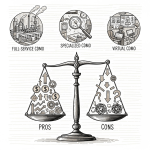
The CDMO market is bifurcating between integrated “one-stop-shop” platforms and specialized boutique operators. Both models are growing, but they are serving different needs. Large integrated CDMOs, where Lonza, Thermo Fisher Patheon, and Samsung Biologics are the clearest examples, compete on capacity scale, geographic reach, and end-to-end service coverage. Their primary client targets are mid-to-large biopharmaceutical companies that need commercial-scale manufacturing with multi-regional supply capability.
Boutique CDMOs have emerged to serve the technical complexity that integrated CDMOs struggle to address at depth. LNP formulation CDMOs including Precision NanoSystems and Polymun Scientific, viral vector CDMOs including Oxford Biomedica and Vigene Biosciences, and ADC CDMOs including Lonza’s ADC-specific Visp site and Abzena exist because the manufacturing science for these modalities requires dedicated facilities, specialized equipment, and personnel whose entire career is focused on one technology class. A large integrated CDMO can claim ADC manufacturing capability, but the actual depth of that capability varies significantly.
Key Takeaways: Section 1
The CDMO market is growing at a rate that will exceed most internal forecast models for outsourcing spend. The Novo Holdings acquisition of Catalent has removed significant fill-finish capacity from the open market, which will drive price increases for injectable drug product manufacturing. CDMO patent portfolios are an underanalyzed source of lock-in risk, particularly for sponsors using proprietary platform technologies owned by their manufacturing partners. The BIOSECURE Act, regardless of its final form, has already changed the risk calculus for Chinese CDMO relationships, and the transition cost of moving away from those relationships will only increase the longer sponsors wait to plan for it.
Investment Strategy: Section 1
Institutional investors evaluating pharma and biotech portfolios should apply a CDMO supply chain audit as a standard due diligence step. Any portfolio company with more than 40% of its commercial manufacturing capacity concentrated at a single CDMO, or with critical Chinese manufacturing relationships, carries supply chain risk that may not be reflected in current valuations. CDMOs themselves, particularly publicly traded entities with significant cell and gene therapy capacity (Samsung Biologics: KRX 207940; Catalent: now private under Novo Holdings), represent direct exposure to the sector’s structural growth. For biotech acquirers, acquiring a CDMO or a significant minority stake in one with strategic capacity for a priority modality is increasingly common as a supply assurance strategy.
Section 2: The Selection Gauntlet
2.1 Defining Needs Before Reaching Out
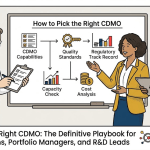
The most common mistake sponsors make in CDMO selection is entering the market before they know precisely what they need. An imprecisely scoped project generates proposals that are incomparable, negotiations that stall on undefined scope, and an eventual partner selection that reflects which CDMO had the most persuasive sales team rather than which one had the right capabilities.
The starting point is a cross-functional internal assessment involving R&D, CMC, QA, regulatory affairs, and supply chain. This team needs to produce a documented requirements specification before contacting any CDMO. The specification should cover the molecule type and complexity (small molecule, peptide, monoclonal antibody, bispecific, cell therapy, gene therapy), the required dosage form (oral solid, sterile injectable, inhalation, topical, infusion), the target manufacturing scale by clinical phase and at commercial launch, the target markets and the regulatory agencies whose standards apply, and any process constraints imposed by the molecule itself (potency, temperature sensitivity, viscosity, formulation complexity).
From this specification, the team builds a weighted selection scorecard before evaluating any candidates. The weighting exercise is itself valuable because it forces explicit prioritization decisions. A team that has not agreed on whether regulatory history or technical depth is more important will disagree again when evaluating actual CDMOs, and that disagreement will delay or distort the selection.
The Request for Proposal (RFP) then translates the internal requirements into objective, testable criteria. Rather than asking for “experience in biologics,” the RFP should specify “aseptic fill-finish experience with high-concentration monoclonal antibody formulations above 100 mg/mL, minimum five commercial product launches, with at least one product approved by the FDA and one by EMA.” That level of specificity allows for direct comparison and eliminates candidates who cannot meet the threshold before any further engagement.
2.2 One-Stop-Shop vs. Best-of-Breed: A Decision Framework
The integrated CDMO model and the best-of-breed multi-vendor model have fundamentally different risk profiles. Choosing between them is a decision that should be made explicitly, with awareness of those risk profiles, rather than by default.
The integrated model’s primary advantage is reduced coordination burden. A single partner managing the full development and manufacturing lifecycle means one set of contracts, one project management interface, one data management system, and one quality audit to maintain. For virtual biotechs with five to fifteen employees, this simplification can be the difference between manageable and unmanageable operational complexity. The trade-off is that integrated CDMOs typically optimize their internal service hand-offs for efficiency rather than quality, and their breadth means they are rarely best-in-class across all service areas.
A documented case study in the outsourcing literature illustrates the failure mode of the integrated model: a sponsor seeking high-volume sterile manufacturing for a parenteral product selected an integrated CDMO on the expectation that it would bundle development and commercial manufacturing at a single site. When the sponsor audited the CDMO’s actual site configuration, it discovered that development services were based in a different country from commercial fill-finish, requiring a formal technology transfer between two separate operating entities within the same parent organization. The sponsor ended up managing a multi-site, multi-contract relationship despite paying an integrated CDMO premium.
The best-of-breed model delivers technical depth at each development stage, direct access to subject matter experts, and often more agile project management in boutique settings. The critical risk is technology transfer complexity. Each time a process moves from one CDMO to another, there is a structured transfer risk, a potential for loss of process knowledge that is not captured in written documentation, and a compliance gap during the transition period. Sponsors who pursue best-of-breed must build strong internal CMC program management capabilities or hire an experienced external CMC consultant to manage the inter-CDMO hand-offs. They also need to assess scale-up capability at each boutique partner before starting Phase 1 work. A CDMO that is excellent for GMP clinical material production at 10-liter scale may not have the 2,000-liter commercial bioreactor capacity needed for a Phase 3 or commercial program.
There is a third model that receives less attention: the hybrid. A sponsor can use a single large integrated CDMO for drug substance manufacturing and a specialized boutique for the formulation or fill-finish stage, contracting separately with each and managing the technology transfer between them. This approach is more complex than full integration but often delivers better technical outcomes than expecting a generalist CDMO to handle both.
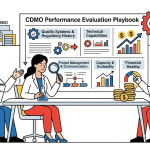
2.3 Multi-Domain Due Diligence
Technical Capability Verification
Verifying technical capability requires going beyond capability lists. A CDMO that lists CHO-based monoclonal antibody manufacturing among its services may have one 500-liter bioreactor and two people with relevant experience, or it may have a dedicated GMP biologics suite with twelve 2,000-liter bioreactors and a team of 200 trained operators. Those are categorically different capabilities that both show up as a check box on a capability list.
The sponsor should request detailed batch records from recent comparable campaigns. These records should show equipment configuration, yields, deviation frequency, and resolution timelines. Batch records are confidential, but a CDMO can provide anonymized or redacted versions that demonstrate process maturity without revealing client identity. A CDMO that declines to provide any historical performance data, citing confidentiality, is not being truthful. All CDMOs with sophisticated clients provide sanitized performance data in due diligence.
Scale-up history is particularly important and particularly scrutinized. The FDA’s guidance on process validation for biologics requires that a sponsor demonstrate process performance at commercial scale before approval. A CDMO that has only manufactured clinical trial material at 200-liter scale will introduce significant process development and validation risk when scaling to 2,000 liters or higher. That risk has a cost, both in time and in re-formulation or process redesign work, that sponsors often fail to budget for at the outset.
Quality and Regulatory History
The quality due diligence process should treat the CDMO’s regulatory history as objective performance data. The FDA’s Establishment Inspection Report (EIR) database and Warning Letter database are public records. A CDMO that has received a Warning Letter within the past five years has a documented quality system failure. The nature of the finding matters: a Warning Letter citing data integrity violations is fundamentally different from one citing documentation gaps in an isolated process. The sponsor’s QA team should read the original Warning Letter, the CDMO’s response, and the FDA’s subsequent closeout letter to understand whether the root cause was genuinely addressed.
Successful pre-approval inspections (PAIs) for comparable products are strong positive indicators. A CDMO that has navigated multiple PAIs for biologics at the FDA and EMA has demonstrated that its quality system, its manufacturing processes, and its regulatory dossier preparation are all at a standard that satisfies the world’s two most demanding regulatory agencies.
The formal quality audit, conducted on-site before contract execution, is a non-negotiable step. This audit should specifically evaluate the change control system, the deviation and CAPA process, the training records for manufacturing personnel, the data integrity controls, and the batch record system. A quality audit checklist should run to 100 or more specific evaluation criteria, structured around ICH Q10 Pharmaceutical Quality System requirements. The time pressure of deal timelines is not a valid reason to skip or compress this audit. Discovering a material quality system gap after manufacturing has started costs orders of magnitude more than discovering it before.
Financial Health and Counterparty Risk
A CDMO that cannot sustain its operations through your product’s development timeline is not a viable partner. The due diligence process should evaluate the CDMO’s balance sheet, its debt obligations, its revenue concentration (what share of revenue comes from its largest single client), and its history of capital investment. A CDMO that has not invested in facility upgrades or new equipment in five or more years may be generating cash for a private equity owner rather than reinvesting in capability.
Client concentration risk is less often examined but critically important. A case documented in CDMO consulting literature describes a prospective buyer of a CDMO discovering during due diligence that 65% of the target’s revenues came from a single large pharmaceutical client whose lead program was in Phase 3 trials. A failed Phase 3 would potentially bankrupt the CDMO. The buyer was able to negotiate protective clauses and a price adjustment based on this risk, but only because the due diligence was thorough enough to uncover the concentration.
2.4 Patent Intelligence as a Due Diligence Layer
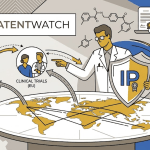
Patent analysis adds an objective, evidence-based dimension to CDMO due diligence that traditional capability assessments cannot provide. A CDMO’s marketing materials describe what it claims to do. Its patent portfolio describes what it has actually invented.
Analyzing a CDMO’s patent filings in a specific technology area answers several questions simultaneously. The volume of filings in a specific technology area correlates with actual R&D investment and technical depth. The recency of filings indicates whether capability is current or historical. The jurisdictions covered indicate where the CDMO expects to compete commercially. And the specific claims in the patents reveal exactly what proprietary methods the CDMO has developed, which is relevant to the IP ownership analysis covered in Section 3.
For example, a sponsor developing an mRNA therapeutic needs a CDMO with deep LNP formulation expertise. Rather than relying on the CDMO’s assertion that it has this capability, the sponsor can search the Espacenet or USPTO patent database for patents assigned to the CDMO in the LNP, ionizable lipid, and lipid nanoparticle encapsulation areas. A CDMO with five or more issued patents in LNP formulation filed in the past three years has demonstrated real inventive activity. A CDMO with no patents in this area despite claiming LNP capability is likely licensing or sublicensing technology from a third party, which introduces supply security and IP licensing risk that the sponsor should understand before contracting.
Patent intelligence also allows sponsors to identify CDMOs who are actively developing capabilities relevant to their pipeline before those capabilities are publicly marketed. A case study from DrugPatentWatch describes a CDMO that analyzed the patent landscape for mRNA delivery systems, identified a gap in LNP manufacturing process patents, invested in developing a proprietary LNP process, filed patents protecting that process, and built a service offering around it before most competitors recognized the demand. Sponsors who track CDMO patent filings systematically can identify these emerging capabilities early and secure partnerships before capacity becomes competitive.
Key Takeaways: Section 2
CDMO selection is not a procurement exercise. It requires multi-domain due diligence covering technical performance history, quality regulatory track record, financial stability, cultural fit, and patent portfolio analysis. The integrated vs. best-of-breed decision should be made explicitly based on a sponsor’s internal project management capacity, the technical complexity of the product, and the scale-up requirements of the development plan. Patent intelligence is the most underused due diligence tool in pharma outsourcing, and it provides objective evidence of technical capability that no other method can replicate.
Investment Strategy: Section 2
For institutional investors conducting due diligence on clinical-stage biotech companies, CDMO selection quality is a proxy for management execution capability. A company with a single-sourced CDMO relationship, an unsigned quality agreement, or no documented IP ownership terms in its manufacturing contract carries operational risk that may not be priced into the stock. Red flags include reliance on a CDMO under active FDA enforcement action, no conducted quality audit before contract execution, and technology transfer status that is “planned” rather than “complete” within 18 months of an anticipated commercial launch.
Section 3: Legal and Contractual Architecture
3.1 The Master Service Agreement
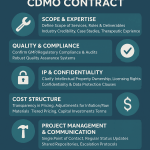
The Master Service Agreement (MSA) governs every project in the CDMO relationship. Getting it right at the outset is worth the investment in outside counsel with pharmaceutical manufacturing experience, because the MSA’s core terms, particularly on IP ownership, liability limitation, and termination, are rarely renegotiated during an active project.
The MSA should be structured as a framework agreement with individual Statements of Work (SOWs) or Work Orders containing project-specific details. This structure allows parties to add new projects under the MSA without reopening the core commercial terms. The MSA’s scope definition clause must describe categories of services rather than specific projects, and it must establish a formal change order process that requires written authorization from designated signatories on both sides before any additional work begins.
Payment terms in CDMO agreements typically run 30 to 60 days for academic clients but 45 to 90 days for commercial pharma and biotech clients. The MSA should define the invoicing schedule by development milestone or by calendar, specify applicable taxes and withholding obligations for cross-border payments, and address currency risk for international agreements. For large commercial manufacturing campaigns, milestone payments tied to batch release rather than batch initiation reduce the sponsor’s exposure to batch failure risk.
Indemnification and limitation of liability are the most financially consequential clauses in the MSA, and they are almost always negotiated intensively. CDMOs will insist on capping their total liability, typically at the fees paid under the relevant SOW or at a multiple of annual fees. They will also seek to exclude liability for consequential damages, which includes the sponsor’s lost revenue from a delayed product launch. This exclusion, if left unchallenged, can immunize a CDMO from the most significant economic harm its failures can cause.
Sponsors should negotiate specific carve-outs to both the liability cap and the consequential damages exclusion for events within the CDMO’s direct control. These carve-outs typically cover confidentiality breaches, IP infringement, gross negligence, and willful misconduct. The argument for these carve-outs is straightforward: if a CDMO intentionally or recklessly damages a sponsor’s product or confidential information, the standard fee-based liability cap is an inadequate remedy. Most CDMOs, when represented by experienced manufacturing counsel, accept these carve-outs as commercially reasonable, though the scope of each carve-out will be negotiated.
For batch failure specifically, industry practice has evolved toward a shared-cost model. When a batch failure is attributable to the CDMO’s manufacturing error, the CDMO waives its manufacturing fees for the re-run while the sponsor covers the cost of new raw materials and starting materials. This model avoids the litigation cost of assigning blame while still creating financial accountability for manufacturing quality.
3.2 The Quality Agreement
The Quality Agreement (QA) is a regulatory requirement under both FDA guidance (21 CFR Parts 210, 211, and the associated contract manufacturer guidance) and EU GMP Annex 16. Its function is to allocate every quality-related responsibility between the sponsor and the CDMO with enough specificity that a regulatory inspector can determine, without asking questions, which party is responsible for each cGMP activity.
Every quality responsibility that is not explicitly assigned in the QA defaults to the sponsor, at least from the FDA’s perspective. That means a QA that leaves responsibility ambiguous, or that uses language like “CDMO will support sponsor’s release testing” without specifying who actually performs the testing, performs the data review, and issues the release, is a compliance liability.
The QA should address raw material release, in-process testing, end-of-batch testing, analytical method validation, equipment qualification and calibration, environmental monitoring, batch record review, deviation investigation, CAPA implementation, change control, label reconciliation, and the specific signatory for the batch disposition decision. This last point is often contested. Many CDMOs insist on issuing a “CDMO release” based on their own GMP review before transferring the batch to the sponsor for “sponsor release.” Both releases need defined roles, timelines, and authority in the QA.
For cell and gene therapy products, the QA has to accommodate biological variability that does not apply to small molecules or conventional biologics. Autologous CAR-T manufacturing, where each batch is derived from a single patient’s leukapheresis material, requires QA provisions that address what happens when starting material quality falls outside specification ranges (poor T-cell viability, low CD4/CD8 ratio, prior treatment with certain chemotherapy agents). The QA should define responsibility for the starting material quality assessment, decision authority for proceeding with borderline starting material, and the protocol for patient notification if manufacturing fails.
3.3 IP Protection in CDMO Agreements
Background vs. Foreground IP
Every CDMO collaboration involves two categories of intellectual property. Background IP is what each party brings to the collaboration: the sponsor’s drug substance patents, its formulation know-how, and its clinical data; the CDMO’s platform manufacturing processes, its equipment configurations, its analytical methods, and its trade secrets. Foreground IP is what gets created during the collaboration: process improvements developed while manufacturing the sponsor’s product, novel formulation approaches identified during development work, new analytical methods developed specifically for the sponsor’s molecule.
The IP ownership clauses in the MSA must address both categories with precision. The sponsor retains ownership of its background IP as a matter of course, and the CDMO retains ownership of its background IP. The critical negotiation is over foreground IP, and the outcome has lasting consequences for both parties.
IP Ownership Models: Strategic Implications
The “customer owns developed IP” model assigns all foreground IP to the sponsor. This is the preferred model for sponsors because it provides the maximum freedom to transfer the manufacturing process to a second CDMO if the first relationship fails, terminates, or if a supply emergency requires parallel manufacturing. It also prevents the CDMO from using improvements developed on the sponsor’s program to benefit competing clients. The trade-off is that CDMOs price this model with a premium, since they are permanently foregoing any proprietary value from the process improvements they develop.
The “CDMO owns developed IP” model is the default position for many CDMOs when sponsors do not negotiate actively. Under this model, if the CDMO develops an improved purification step while manufacturing the sponsor’s antibody, the CDMO owns that improvement and can choose whether to allow the sponsor to continue using it. More significantly, if the sponsor wants to move manufacturing to a different CDMO, the improved process stays with the original CDMO. This is the vendor lock-in risk that IP counsel most frequently cites in CDMO contract reviews, and it is avoidable with explicit contractual language.
Joint ownership of foreground IP appears equitable but creates practical problems in most jurisdictions. In the United States, any co-owner of a patent can license or practice the patent without the consent of the other co-owner and without accounting to the other co-owner for any revenues. That means a CDMO who is a co-owner of a foreground IP patent can license that patent to a competitor of the sponsor without requiring the sponsor’s approval. Joint ownership in the EU requires the consent of all co-owners for licensing, which means a CDMO can block a license the sponsor wants to grant to a sub-contractor. Neither outcome is acceptable. Joint ownership should be avoided in CDMO agreements where the foreground IP has commercial significance.
The “springing license” is the most important protective mechanism for sponsors who cannot fully prevent CDMO ownership of certain background IP elements. A springing license grants the sponsor a fully-paid, sublicensable, irrevocable license to the CDMO’s background IP that is necessary to practice the manufacturing process, but only upon specific trigger events. Those trigger events are defined in the contract and typically include CDMO insolvency, CDMO failure to meet agreed supply requirements for more than a defined period, regulatory action that prevents the CDMO from manufacturing, material breach of the MSA, and change of control of the CDMO that the sponsor does not consent to. The springing license does not give the sponsor ongoing rights to the CDMO’s background IP. It gives the sponsor the right to transfer the complete process to another manufacturer if the relationship fails, without having to renegotiate or litigate licensing rights in the middle of a supply emergency.
3.4 Freedom to Operate
Freedom to Operate (FTO) is one of the most frequently misallocated responsibilities in CDMO agreements. FTO analysis determines whether a product or process can be commercialized without infringing valid third-party patent rights. Both the product itself and the manufacturing process used to produce it require FTO analysis.
The sponsor bears FTO responsibility for the product. No CDMO will accept liability for FTO of a client’s drug candidate. The CDMO cannot conduct a legally valid FTO opinion on a drug it did not develop, and any representation it made about third-party IP would be immediately disclaimed in any litigation context.
The CDMO does, however, bear FTO responsibility for its own manufacturing processes and platform technologies. The MSA should include a warranty from the CDMO, made to the best of its knowledge after reasonable diligence, that its manufacturing processes and platform technologies do not infringe any issued patents of which it is aware. This warranty is commercially standard and most CDMOs accept it with appropriate knowledge qualifiers.
The MSA should also define what happens if a third-party infringement claim arises against the manufacturing process during the collaboration. Specifically, the agreement should address whether the CDMO is obligated to defend such a claim, whether the sponsor has the right to take control of the defense, how costs are allocated based on whether the infringed patent relates to the CDMO’s platform technology or to the sponsor’s product-specific process, and whether either party has the right to seek a license from the third-party patent holder.
Key Takeaways: Section 3
The MSA and QA are strategic instruments, not administrative formalities. Every hour invested in negotiating IP ownership terms before a collaboration starts saves days of litigation and millions in potential damages later. The springing license is the single most important IP protection mechanism for sponsors who rely on CDMO background IP for their manufacturing process. FTO responsibilities must be allocated explicitly: the sponsor owns FTO for the product, the CDMO owns FTO for its process technology.
Investment Strategy: Section 3
M&A due diligence teams assessing pharma and biotech acquisition targets should systematically review all active CDMO agreements for IP ownership terms, liability cap structures, and springing license provisions. A target company whose commercial manufacturing process is entirely contained within CDMO-owned foreground IP has a supply chain dependency that could impair the acquirer’s ability to vertically integrate or dual-source manufacturing post-acquisition. That dependency has a quantifiable cost that should be reflected in deal pricing.
Section 4: Technology Transfer Execution
4.1 The Tech Transfer Playbook
Technology transfer is the highest-risk operational phase of any CDMO engagement. The process involves moving a manufacturing process, with all of its tacit knowledge, equipment dependencies, and process sensitivities, from one facility to another while maintaining product quality and regulatory compliance. Treating it as a documentation hand-off leads to failures. Treating it as a formal project with defined stages, dedicated personnel, and hard success criteria leads to successful transfers.
The transfer team should be assembled before any documentation is prepared. This team must include process development scientists who actually developed the process at the sending unit, QA personnel from both sending and receiving organizations, manufacturing engineers from the receiving CDMO who will be running the process going forward, analytical development scientists who will be validating the analytical methods at the receiving site, and regulatory affairs representatives who understand how process changes need to be documented and filed.
A gap analysis is the first formal output of the transfer team. This document compares the manufacturing process requirements, equipment specifications, utilities requirements, and material specifications against the receiving CDMO’s actual capabilities. The gap analysis should be completed on paper before any GMP manufacturing is attempted at the new site. It exists specifically to identify incompatibilities before they become deviations in a GMP batch.
Common gap categories include bioreactor geometry (aspect ratio and impeller configuration affect mixing dynamics and gas transfer, which affect cell growth and product quality), chromatography column dimensions (a change in column height-to-diameter ratio changes residence time and capacity), and water system specifications (water-for-injection generation and distribution systems must meet the same conductivity and endotoxin specifications, but the generation process may differ). Each identified gap requires a technical justification for why the difference is acceptable, or a remediation plan to eliminate it, before GMP manufacturing begins.
The transfer package itself should be comprehensive enough that a scientist with no prior knowledge of the product could reproduce the process from the documentation alone. In practice, this standard is never fully met, which is why the person-in-plant approach during engineering runs is so valuable. Having the process development scientist from the originating site present during the first manufacturing attempts at the new site allows real-time knowledge transfer that no written protocol can substitute.
Engineering runs, which are non-GMP manufacturing attempts conducted before any GMP commitment, are the most cost-effective risk management step available during technology transfer. They reveal equipment compatibility issues, operator training gaps, and process sensitivities before any regulatory commitment is made. The cost of one or two engineering runs typically represents 5 to 10% of the cost of a failed GMP batch, and far less than the cost of a failed Phase 3 study attributable to inconsistent manufacturing.
Technology Roadmap: Cell and Gene Therapy Technology Transfer
Cell and gene therapy technology transfer requires a distinct approach from conventional biologics or small molecule transfers. Three specific characteristics drive this requirement.
First, the starting materials are biological and variable. For autologous CAR-T products, the starting material is a specific patient’s leukapheresis cells. Those cells vary in phenotypic composition, activation status, and manufacturing responsiveness based on the patient’s prior treatment history. A technology transfer for an autologous CAR-T process must include specification of acceptable starting material ranges and a decision tree for out-of-specification starting material, both of which require regulatory filing and approval.
Second, the manufacturing process uses biological reagents that are themselves manufactured by third parties. Viral vectors used for gene transduction in CAR-T manufacturing are manufactured by specialized CDMOs who themselves have their own manufacturing processes, lot-to-lot variability, and supply constraints. A technology transfer for CAR-T manufacturing is incomplete if it does not include qualification of the viral vector supply chain at the receiving CDMO’s site.
Third, the regulatory filing requirements for cell and gene therapy technology transfers are more complex than for conventional products. A manufacturing site change for a biologics license application (BLA) may require submission of a prior approval supplement (PAS) rather than a changes being effected (CBE-30) supplement, depending on the nature and extent of the changes. The regulatory strategy for the technology transfer should be determined before the transfer begins, because the data package required for the regulatory filing shapes the manufacturing verification campaign.
Current industry practice is evolving toward using digital twin modeling to de-risk technology transfers before physical execution. A digital twin is a computational model of the manufacturing process that can simulate the behavior of the process under different equipment configurations, scale factors, and process parameter settings. CDMOs including Lonza and Sartorius have published data showing that digital twin-based scale-up predictions reduce the number of engineering runs required before first GMP batch success, with reported reductions in transfer lead time of 20 to 35%.
Key Takeaways: Section 4
Technology transfer is a project, not a document delivery. It requires a dedicated cross-functional team, a formal gap analysis before GMP manufacturing begins, and engineering runs to de-risk the process at the new site. The person-in-plant approach during early manufacturing runs at the receiving CDMO is the single most effective way to transfer tacit process knowledge that written documentation cannot capture. For cell and gene therapy products, the technology transfer must include starting material qualification, viral vector supply chain qualification, and regulatory filing strategy determination before any GMP manufacturing begins.
Section 5: Operational Governance and KPI Management
5.1 Joint Project Management Structure
Effective governance does not emerge from the contract. It requires active construction and ongoing investment from both parties. The governance structure should be multi-tiered, matching the level of issue severity to the level of decision-making authority.
The Joint Steering Committee (JSC), composed of senior leaders from both the sponsor and the CDMO, reviews strategic program status and resolves issues that cannot be addressed at the operational level. JSC meetings typically occur monthly during active development phases and quarterly during steady-state commercial manufacturing. The JSC agenda should be structured: progress against program milestones, unresolved operational issues escalated from below, budget and resource adequacy, and forward-looking risk assessment.
Operational Working Groups cover the functions that require ongoing coordination: manufacturing, analytical development, quality, supply chain, and regulatory affairs. Each working group should have a designated lead from each organization and a documented charter defining its scope, meeting frequency, and escalation criteria. These groups communicate far more frequently than the JSC, with weekly or bi-weekly calls being standard during active development phases.
Communication outside the formal meeting structure is where most collaboration friction occurs. Email chains involving ten people across two organizations generate significant noise and can obscure critical information. The partnership governance plan should establish explicit protocols for which types of communication go through which channel. Routine project updates belong in shared project management platforms. Process deviations and quality events require immediate direct communication to designated contacts, not routing through project management tools where response times are unpredictable.
5.2 KPI Framework
Key performance indicators should be defined jointly before the program begins, not imposed by one party on the other after a performance issue arises. The KPI set should be specific enough to be meaningful and narrow enough to be tracked without creating reporting overhead that consumes the resources it is supposed to measure.
Batch success rate is the primary manufacturing KPI for most programs. It should be defined as the percentage of GMP batch attempts that pass all release specifications, reported over a rolling 12-month period. Batch success rate below 85% for a well-characterized conventional biologics process warrants a formal root cause investigation and process improvement plan. For complex modalities like viral vectors or cell therapies, expectations should be calibrated to industry norms, where batch success rates of 70 to 80% are common during early commercial stages.
Deviation rate and deviation resolution time measure the quality system’s responsiveness. Both the number of deviations per batch and the average calendar days from deviation identification to CAPA closure should be tracked. A rising deviation rate trend, even if individual batches are passing release specifications, is an early warning of process instability or quality system deterioration.
Schedule adherence measures how often the CDMO delivers against committed timelines. It should be tracked at two levels: milestone adherence (did the program hit agreed development or manufacturing milestones on the committed date) and campaign completion adherence (did the manufacturing campaign complete within the agreed window). Schedule adherence data is essential context for capacity planning discussions and for evaluating the CDMO’s project management capability over time.
On-time, in-full delivery rate is the primary commercial supply KPI. For a product in commercial distribution, late or short deliveries have direct revenue impact and patient supply implications. The contract should specify a minimum on-time, in-full delivery rate, typically 95% or higher for commercial supply, and define the remediation process and any penalties applicable when that threshold is not met.
Key Takeaways: Section 5
Governance structure needs to be built before the first project begins, not constructed reactively after the first problem. The JSC and operational working group structure should be defined in the MSA or in a separate governance charter that is executed at program initiation. KPIs should be jointly defined, measurable, and connected to contractual remedies when thresholds are not met. Governance that lacks consequences for underperformance does not change behavior.
Section 6: Risk Management and Conflict Resolution
6.1 Proactive Risk Framework
The guiding principle for sponsor oversight of a CDMO is trust but verify. The CDMO needs operating autonomy to execute manufacturing efficiently. The sponsor needs visibility sufficient to detect problems before they compound into crises. These requirements are not in conflict, but they require deliberate design.
Risk identification should be systematic and comprehensive. Timeline delay risks in CDMO partnerships typically trace to four sources: unanticipated capacity constraints at the CDMO, technology transfer failures that require additional engineering work, raw material or single-use component supply shortages, and regulatory agency delays in reviewing manufacturing site filings. Each of these risks has a different probability profile and a different mitigation strategy.
Quality and regulatory risks are the most consequential in both probability and impact. A CDMO whose quality system degrades under business pressure can generate a cascade of problems: out-of-specification results that require investigation and delay batch release, deviations that require CAPA commitments before manufacturing can resume, and ultimately regulatory action including Warning Letters or Import Alerts that can shut down a manufacturing site entirely. The FDA issued 48 Warning Letters to drug manufacturers in FY2024, and approximately 30% of those actions involved contract manufacturing sites.
Supply chain disruptions have become a major risk category since 2020. Single-use bioreactor bags, cell culture media components, and chromatography resins from specific suppliers experienced availability constraints that lasted 18 months or longer during the pandemic period. CDMOs who had not qualified secondary suppliers for these materials were forced to either halt production or substitute materials mid-campaign, both of which carry regulatory and quality implications. Best-practice CDMOs now maintain safety stock of critical single-use components covering at minimum 90 days of production, with qualified secondary suppliers for all Tier 1 critical materials.
Scope creep is a budget risk that sponsors systematically underestimate. In time-and-materials contracts, which are common for development-stage work, every informal request for additional analysis, additional engineering work, or additional regulatory documentation review generates billable cost. A well-managed CDMO relationship requires that the project team on the sponsor’s side has both the authority and the discipline to route all additional work requests through the formal change order process. This discipline is difficult to maintain under development time pressure, but the financial consequences of scope creep on a multi-year development program can reach tens of millions of dollars.
Contingency planning is not an optional add-on to risk management. Every program should have a pre-identified alternative CDMO who has been evaluated, at minimum through a paper qualification, and who could be engaged within 60 to 90 days in a crisis. This pre-qualification should not wait until a crisis is underway. Running the qualification process under time pressure, in the middle of a supply emergency, generates errors and increases the likelihood of selecting a suboptimal backup partner.
6.2 The Full Cost of CDMO Failure
Financial modeling of CDMO failure risk often focuses on direct batch costs because those are the easiest to quantify. A failed GMP batch for a commercial biologics product typically costs USD 500,000 to USD 5 million in wasted materials, labor, and facility time, depending on the molecule complexity and scale. The one real-world IT failure documented in published case studies resulted in a direct loss of USD 1 million. These costs are significant but recoverable.
The costs that are not recoverable are those driven by time loss. A drug with USD 1 billion in annual peak sales has a per-day revenue rate of approximately USD 2.74 million. A six-month delay in commercial launch, whether from a failed technology transfer, a manufacturing site regulatory action, or a repeat batch failure campaign, costs approximately USD 500 million in lost peak-exclusivity revenue. That loss cannot be recovered after the fact by improving the CDMO relationship.
The strategic implication is that the cost-benefit analysis for CDMO quality investment should always be calculated against patent-protected revenue, not against manufacturing cost. Spending USD 2 million to qualify a second CDMO as a backup manufacturer protects access to hundreds of millions or billions in patent-protected revenue. Spending USD 500,000 on an additional person-in-plant campaign during technology transfer is the cheapest possible insurance against a failed GMP batch at launch.
Reputational consequences of quality failures extend beyond the immediate product. An FDA Warning Letter issued to a CDMO creates credibility risk for all clients of that facility, because the Warning Letter puts all manufacturing at the cited facility under regulatory scrutiny. A product recall attributable to a manufacturing error at a CDMO damages the brand of the sponsor, not the CDMO. From the patient and physician perspective, the sponsor is responsible for the product regardless of who manufactured it.
6.3 Conflict Resolution
Conflict in CDMO partnerships typically originates in scope disputes, timeline accountability disagreements, or quality responsibility allocation failures. Each of these has a root cause in under-specification, and the most effective conflict prevention is up-front specificity in the SOW and QA.
When conflict does arise, the escalation pathway defined in the MSA should be the first structured response. The joint project team attempts resolution first. If they cannot resolve within a defined timeframe (typically 10 to 15 business days), the issue escalates to the JSC. If the JSC cannot resolve, the issue escalates to the executive sponsors on each side. If executive-level resolution fails, the alternative dispute resolution mechanism defined in the MSA applies, typically mediation before arbitration.
The behavioral principles that distinguish productive from unproductive conflict resolution in CDMO relationships mirror those in any high-stakes commercial negotiation. Understanding the other party’s constraints is more useful than cataloguing their failures. A CDMO that is consistently late on timelines may be managing capacity conflicts driven by another client’s emergency, a staffing problem, or an equipment failure. Understanding the actual constraint allows for collaborative problem-solving. Demanding contract compliance without understanding the constraint creates adversarial dynamics that slow resolution.
Patience is a structural requirement of productive conflict resolution. Most material disputes in CDMO partnerships span weeks or months, involve multiple functions on both sides, and require iterative data sharing, analysis, and proposal generation before a resolution is reached. The expectation that a conflict will resolve in a single meeting or within a single email exchange is a misunderstanding of complexity that leads to rushed agreements that do not address root causes.
Key Takeaways: Section 6
The most significant financial risk in CDMO partnerships is not batch failure cost; it is the irreversible loss of patent-protected revenue from timeline delays. Budget approximately 10 to 15% of program cost for contingency, pre-qualify at least one backup CDMO before a crisis requires it, and build buffer time into every development milestone. Quality audits should be ongoing, not one-time events conducted at contract execution. The escalation pathway defined in the MSA should be tested before it is needed.
Investment Strategy: Section 6
Investors assessing the riskiness of a biotech’s pipeline should request documentation of the backup CDMO strategy for each commercial-stage program. A company with no pre-qualified backup CDMO for its lead commercial program has accepted supply concentration risk that is arguably uninsurable. For earlier-stage programs, the most important risk indicator is the status of the technology transfer: a company that has not completed its first successful GMP batch at its commercial manufacturing site within 24 months of projected launch should be considered high-risk for a supply-related delay.
Section 7: The Future of CDMO Partnerships
7.1 Outcome-Based and Value-Sharing Models
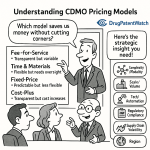
The traditional fee-for-service model compensates the CDMO for activity, not outcome. This creates a misalignment: the CDMO is paid for running a manufacturing campaign whether the batch succeeds or fails, and it bears no share of the commercial upside when a well-executed campaign accelerates a product’s market entry.
Outcome-based models attempt to correct this misalignment by tying CDMO compensation partially to program outcomes. The most straightforward version links a portion of fees to milestone achievement: regulatory filing completion, first successful PAI, first commercial batch release. A more sophisticated version includes a value-sharing component, where the CDMO receives a small royalty on net sales for a defined period, in exchange for a lower upfront fee structure. This model has historically been rare outside of licensing agreements with CMC consulting firms, but it is receiving increased attention as large biotechs look for ways to align CDMO incentives with their own commercial success metrics.
The practical challenge with value-sharing is information asymmetry. CDMOs lack visibility into the net sales performance of the products they manufacture, and they have limited ability to monitor or audit sales data. Sponsors are reluctant to share commercial sensitivity with a manufacturing partner. These information challenges are solvable through contractual design, including audit rights for the royalty calculation and most-favored-nation provisions for royalty rates, but they require additional contractual complexity that many organizations prefer to avoid.
Regardless of the compensation model, the direction of the CDMO sector is toward deeper integration between sponsor and manufacturing partner operations. This means joint investment in digital infrastructure, shared data platforms that give both parties real-time visibility into manufacturing and supply chain performance, co-located project teams during critical development phases, and governance structures that operate more like a joint venture than a vendor relationship.
7.2 AI Integration in Manufacturing
AI applications in CDMO manufacturing are advancing beyond process optimization toward predictive quality management and generative process design. The current generation of deployments, which focus on using historical manufacturing data to train predictive models for batch outcome prediction, are commercially active at Lonza, Cytovance, and several other large CDMOs. These models can identify, 24 to 48 hours before end-of-batch testing, whether a batch is trending toward failure based on in-process monitoring data. Early failure prediction allows manufacturing teams to make real-time decisions about whether to continue, modify parameters, or halt a campaign before wasting additional materials and resources.
The next generation of AI application, which is in early development at multiple CDMOs, uses generative AI models to propose novel process parameter settings or formulation compositions in response to a specific quality challenge. This is a fundamentally different use of AI than predictive modeling: rather than predicting the outcome of a defined process, it generates candidate solutions to a process problem. The intellectual property generated by these AI tools, including novel process parameters or formulation approaches discovered through AI-assisted optimization, creates a new category of foreground IP ownership dispute that most current MSA templates do not address.
Sponsors who are engaging CDMOs in 2025 should include explicit provisions in their MSA governing the ownership of IP generated by AI-assisted process development. The relevant question is whether a process improvement discovered by an AI model trained on historical data from the sponsor’s manufacturing campaign is the sponsor’s property, the CDMO’s property, or a shared asset. Current legal frameworks in most jurisdictions do not definitively resolve AI inventorship questions, which means that contractual allocation of ownership is the only reliable way to address this risk.
7.3 Strategic Recommendations for Executive Leaders
Elevating CDMO management to a core strategic function requires structural changes at most pharma and biotech organizations. CDMO management should not be nested inside procurement; it belongs alongside business development and corporate strategy, reporting at the same organizational level. The people who manage CDMO relationships should have the authority to make binding commercial decisions without routing through multi-level approvals that slow response during time-critical program phases.
Investing in internal CMC program management capability is not optional for organizations with more than two active CDMO relationships. Each CDMO relationship requires a dedicated internal counterpart who has both the technical knowledge to engage with the CDMO’s scientists and the commercial authority to manage scope, timeline, and budget decisions. Organizations that substitute this internal capability with entirely outsourced program management lose the institutional knowledge about their own manufacturing processes that is necessary to negotiate effectively with CDMOs.
Digital integration with CDMO partners should be treated as a supply chain security measure, not as a technology project. A sponsor who cannot access real-time manufacturing data from its commercial CDMO is operating with a significant information lag that makes risk management reactive rather than proactive. Requiring data integration as a term of commercial supply agreements, rather than as a negotiated add-on, is the appropriate way to establish this capability.
Supply chain resilience requires proactive geopolitical analysis as an ongoing input. The firms that anticipated the BIOSECURE Act’s impact on WuXi relationships two years before its introduction had time to qualify alternative suppliers and negotiate transitions without supply risk. Firms that waited until legislative language was finalized are managing disruption under time pressure.
Key Takeaways: Section 7
The CDMO sector is moving toward deeper, more integrated partnership models where incentive alignment, data transparency, and co-investment in manufacturing infrastructure are becoming standard expectations. AI-assisted process development creates a new category of IP ownership dispute that current MSA templates do not address. Supply chain geopolitical risk is a permanent input to CDMO strategy, not a temporary disruption. Organizations that invest in internal CDMO management capability, digital integration, and backup supplier qualification will outperform those that treat CDMO management as a procurement function.
Investment Strategy: Section 7
The structural shift toward outcome-based CDMO compensation models creates a new disclosure risk for publicly traded biotechs. If a commercial manufacturing agreement includes a royalty-bearing IP license to the CDMO, or a value-sharing component, these terms represent a material commitment that should be disclosed in SEC filings. Analysts covering biotech companies should specifically request disclosure of any non-standard CDMO compensation arrangements and should model the gross margin impact of any royalty obligations on commercial manufacturing IP.
Gap analysis before GMP; engineering runs; person-in-plant
Halt GMP; joint root cause analysis; additional engineering runs before re-attempt
Budget/Scope
Unbudgeted additional work requests driving cost overruns
High
Medium
Rigorous SOW definition; formal change order process; no informal work authorizations
Apply 10-15% contingency reserve; route all additions through change order review
Geopolitical
CDMO subject to U.S. trade restriction or sanction
Low
High
Audit Chinese CDMO exposure; pre-qualify Western alternative suppliers
Execute pre-qualified transition; notify investors and partners of timeline impact
Copyright notice: This pillar page incorporates publicly available market data from Fortune Business Insights, Technavio, Mordor Intelligence, Precedence Research, and Grand View Research, as well as operational frameworks synthesized from regulatory guidance published by the FDA and EMA. All market figures cited reflect published forecasts. The IP portfolio analysis sections reflect publicly available patent filing data and disclosed financial information.