Mark Cuban built a $5.8 billion fortune buying and selling assets that others undervalued. In January 2022, he turned that instinct on the U.S. generic drug supply chain—a market so structurally broken that an $11 million fill-finish facility in Dallas, Texas could realistically threaten companies worth tens of billions of dollars. [1]
The question is no longer whether the Mark Cuban Cost Plus Drug Company (MCCPDC) can manufacture generics at scale. In 2024, it started shipping sterile injectables from its 22,000-square-foot Dallas plant, producing commercial batches of epinephrine and norepinephrine. [2] In May 2025, the company was named a partner in the federal government’s Equip-A-Pharma program alongside DARPA and HHS, tasked with demonstrating AI-driven manufacturing for lidocaine and diltiazem. [3] By December 2025, Cuban was at the Forbes Healthcare Summit telling the Trump administration he could manufacture 100 generic drugs domestically—within a year—if the FDA waived its $365,000-per-drug approval fees. [4]
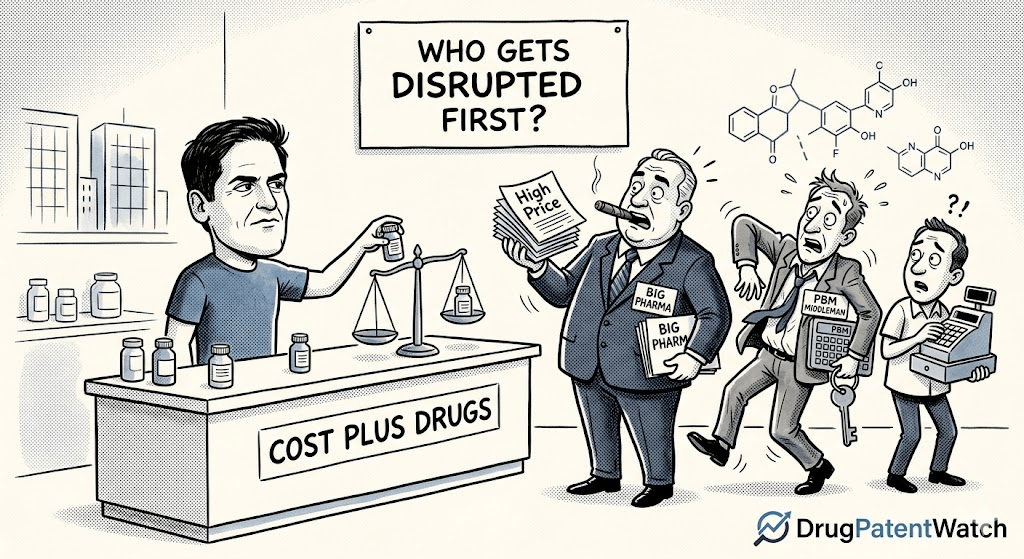
The question now is who absorbs the hit first.
This article maps the disruption sequence: which players in the generic drug supply chain are most exposed, which competitive moats are thinner than they appear, and why the standard industry playbook of scale and PBM relationships may not protect the incumbents the way it once did.
The Architecture of a Broken Market
To understand who gets hurt, you need to understand how the current system actually works—not the sanitized version that appears in annual reports, but the raw mechanics of how a $4 pill ends up costing $80 at a retail pharmacy.
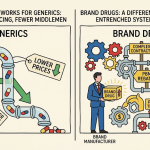
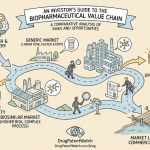
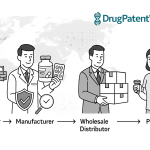
Generic drugs account for over 90% of all prescriptions dispensed in the United States but only about 18% of total prescription drug spending. [5] That ratio is not a sign of health. It is a structural artifact of a supply chain where a drug’s journey from manufacturer to patient passes through four distinct commercial layers—API supplier, generic manufacturer, wholesale distributor, and pharmacy—before arriving at a fifth: the pharmacy benefit manager (PBM) that decides whether the patient can access it at all.
Each layer extracts margin. The PBM layer, which includes Express Scripts (owned by Cigna), CVS Caremark, and OptumRx (owned by UnitedHealth), controls more than 90% of U.S. prescription volume. [6] Their business model depends on the gap between the price they negotiate from manufacturers and the price they charge plan sponsors—a spread that becomes invisible once it disappears into contracted reimbursement rates and rebate arrangements that no individual employer or insurer can fully audit.
Cuban has called this arrangement, publicly and repeatedly, a form of institutionalized theft. He is not wrong in the functional sense: PBMs have a documented financial incentive to prefer higher-list-price drugs that generate larger rebates over cheaper alternatives that generate none. The FTC’s 2024 interim report on PBMs found that the three largest PBMs marked up certain specialty drugs by 1,000% or more above their acquisition cost. [7]
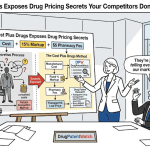
Cost Plus Drugs entered this market in January 2022 with a deliberately simple pricing structure: the actual cost of the drug, plus a 15% markup, plus a $5 dispensing fee and $5 shipping. No insurance required. No rebate games. The company now carries approximately 2,500 medications. [8]
The disruption Cuban is now accelerating is not incremental. Moving from retail pharmacy to active manufacturing is a different category of threat. A retailer can be managed; it can be excluded from formularies, undercut on price, or simply absorbed as a rounding error. A manufacturer who owns both the production cost and the distribution channel is a different problem entirely.
The Manufacturing Pivot: What Cost Plus Is Actually Building
The Dallas Plant and What It Proves
In early 2024, MCCPDC opened its $11 million fill-and-finish facility in Deep Ellum, Dallas. The facility uses aseptic robotic filling lines and AI computer vision technology capable of switching between drug types within approximately four hours. [9] That flexibility matters because the traditional economics of generic manufacturing reward specialization: you build a plant to make one class of products at enormous scale. Cost Plus has inverted this model by designing for reconfiguration rather than volume.
The initial products were epinephrine and norepinephrine—sterile injectables that have been in intermittent shortage since at least 2012. [10] The choice was strategically sound. Shortage-designated drugs carry less price competition from the existing generic field, face immediate hospital procurement demand, and face no PBM intermediation since they are administered in clinical settings, not dispensed at retail.
The company then announced it would manufacture pediatric oncology drugs. The cisplatin and carboplatin shortages that began in 2023, when a key Indian manufacturing facility failed an FDA inspection, put pediatric oncology at the center of the public conversation about drug supply fragility. [11] Cost Plus was positioning itself as the manufacturer of last resort—which is not charity work; shortage drugs command pricing power that commodity generics do not.
Equip-A-Pharma and the Government Subsidy of Disruption
In May 2025, the Trump administration’s ASPR and DARPA announced the Equip-A-Pharma initiative, selecting Cost Plus Drugs as one of four manufacturing partners alongside Battelle/Aprecia, BrightPath Laboratories, and Rutgers University. [3] Each partner was tasked with demonstrating agile, AI-enabled manufacturing for specific essential medicines and submitting the resulting data to support Abbreviated New Drug Applications (ANDAs).
Cost Plus drew lidocaine and diltiazem. Both are high-volume commodity generics that are cheap to buy but expensive to manufacture domestically at competitive cost. If Cost Plus can demonstrate at ANDA-submission quality that its modular manufacturing platform produces these drugs below current import prices, it will have proven something the industry has resisted accepting: that the case for offshore generic manufacturing is not permanent, only current.
The government partnership does something else. It de-risks Cuban’s ANDA filing costs—the $365,000-per-application barrier he cited at the Forbes Healthcare Summit [4]—by embedding the manufacturing validation inside a federally funded program. The regulatory data generated under Equip-A-Pharma feeds the ANDA submissions directly, meaning Cost Plus does not have to fund the bioequivalence studies and manufacturing validation reports independently. It is a substantial indirect subsidy, and Cuban understands exactly what it is worth.
The Modular Pod Strategy and Its Ceiling
Cuban’s stated ambition is 100 generic drug ANDAs initially, scaling to 1,000. [4] The modular manufacturing approach—self-contained pods that can be replicated and reconfigured—is the mechanism. He has been explicit that the model does not require a large facility. Instead, it requires capital to replicate pods and regulatory capacity to file ANDAs.
The FDA fee issue is real, not rhetorical. An ANDA for a simple oral solid costs approximately $1 to $5 million to develop and file, including the bioequivalence studies, chemistry and manufacturing controls documentation, and the PDUFA application fee. [12] For a complex generic or sterile injectable, those costs escalate to $5-25 million. Across 100 products, the math becomes prohibitive for a company that cannot cross-subsidize ANDA costs from a large branded drug portfolio the way Teva, Viatris, or Sandoz can.
The structural solution is either fee waivers (Cuban’s ask) or partnerships that share regulatory costs. Equip-A-Pharma is the first example of the latter. The Humana partnership announced in late 2025 is the commercial bridge that could fund the former: if Cost Plus can route sufficient employer prescription volume through its SwiftyRx platform, the revenue may fund its own ANDA pipeline. [13]
The Disruption Sequence: Who Gets Hit, and When
Layer One: The Mid-Tier Generic Manufacturers
The first companies exposed to a manufacturing Cost Plus are not Teva or Viatris. They are the mid-tier generic manufacturers whose portfolios are concentrated in simple oral solid dosage forms—standard-release tablets and capsules with no meaningful technical barrier to entry—and who have no biosimilar pipeline, no complex generic franchise, and no specialty drug revenue to cushion margin compression.
This segment includes companies like Amneal Pharmaceuticals, Hikma’s U.S. generics operations, Lannett Company, and the U.S.-facing generic arms of Indian manufacturers like Aurobindo and Alkem Laboratories. These companies compete almost exclusively on price in markets where, according to IQVIA data, oral generic prices fall by an average of 79% within the first 12 months after a branded drug loses exclusivity. [14] By the time a molecule reaches Cost Plus’s target catalog—high-volume, off-patent, cash-pay accessible—multiple ANDA holders are already competing for it.
Cost Plus does not need to win on price alone in this space. It needs to win on channel. Its direct-to-consumer model bypasses the standard path where a generic manufacturer sells to a wholesale distributor (McKesson, Cencora, or Cardinal Health) who sells to a pharmacy chain who sells to a PBM-contracted patient. Each handoff in that chain takes margin. Cost Plus, when manufacturing its own products, collapses the chain to two nodes: factory to patient. The margin it captures is additive, not comparative—it wins not by being cheaper than Teva at the manufacturer level, but by capturing distribution margin that Teva surrenders to wholesalers and PBMs.
The companies most exposed here are those whose market position rests entirely on being a low-cost ANDA filer in commodity therapeutic categories. These manufacturers have no distribution moat, no brand recognition, and no technical differentiation. A competitor with lower distribution costs and a direct consumer relationship can price below their current market clearing levels and still earn better margins.
Layer Two: The Pharmacy Benefit Managers
The PBMs represent Cost Plus’s deepest structural conflict and the layer where the disruption is already measurable.
Use of transparent PBMs among employers increased to 31% in 2025 from 12% in 2024, according to the National Alliance of Healthcare Purchaser Coalitions. [15] That 19-percentage-point shift in 12 months is not noise; it reflects real employer dissatisfaction with the opacity of traditional PBM contracts and active switching toward pass-through models. Cost Plus, through its SwiftyRx employer platform, is the most visible alternative in that conversation.
The Humana partnership announced in late 2025 is structurally significant. Humana’s CenterWell Pharmacy became an official pharmacy partner of Cost Plus Drugs, adopting the SwiftyRx platform for medication order intake. [13] Humana holds approximately 8% of PBM market share. [16] The arrangement creates a template for how a large, vertically integrated health insurer can use Cost Plus’s pricing model to reduce its own pharmacy benefit costs—and, in doing so, reduce the volume flowing through the Express Scripts/CVS/OptumRx oligopoly.
Cuban’s relationship with TrumpRx adds a political dimension that is not purely rhetorical. Cost Plus confirmed its participation in the TrumpRx platform in October 2025. [17] TrumpRx, which launched in early 2026 as a direct-to-consumer drug purchasing portal, does not sell drugs directly—it routes patients to participating pharmacies and DTC sellers, with Cost Plus as the primary generic drug destination. [18] Every prescription routed through TrumpRx to Cost Plus is one that does not generate a PBM spread, a PBM rebate, or a PBM formulary placement fee.
The PBMs are not defenseless. Their structural moat rests on employer and health plan contracts that run on 1-3 year cycles, formulary administrative infrastructure that is expensive to replicate, and specialty drug pipelines that generics-focused players cannot yet touch. The large PBMs also own pharmacies outright—CVS owns CVS Pharmacy, OptumRx owns Optum Specialty Pharmacy—creating vertical integration that Cost Plus cannot match at its current scale.
But the PBM model’s weakness is the same as it has always been: it depends on opacity. When employers can see what drugs actually cost and what the spread is, they switch. The FTC investigation, the employer transparency movement, and the TrumpRx channel are all applying pressure to the same vulnerability.
Layer Three: The Drug Wholesalers
McKesson, Cencora, and Cardinal Health together control more than 90% of U.S. drug distribution by revenue. [19] They are, individually, among the largest companies in the United States by revenue. They are also, in a narrow sense, the most structurally protected players in the chain.
Their moat is not technology or intellectual property. It is logistics and switching costs. Hospitals and large pharmacy chains have deeply integrated supply chain relationships with wholesalers, with just-in-time inventory systems, credit arrangements, and secondary distribution contracts that make switching painful and expensive. [19]
Cost Plus’s manufacturing ambition does threaten the wholesalers, but at the margin and over time. If Cost Plus achieves meaningful ANDA volume in shortage drugs and high-cost generics, it will sell some of those drugs directly to hospitals and health systems—bypassing the wholesale layer entirely. The company’s sterile injectable facility is already configured for direct hospital sales; that is the nature of the product category.
The more durable threat to wholesalers is indirect. If the employer pharmacy benefit market continues shifting toward transparent PBMs and direct manufacturer relationships, the volume flowing through traditional wholesale channels for retail generics will contract. The wholesalers will retain their specialty drug and hospital distribution businesses, which are technically complex and margin-rich. But their generic drug volume, which supports the fixed cost base of their distribution networks, will face pressure.
Layer Four: Retail Pharmacy Chains
CVS, Walgreens, and Rite Aid collectively dispense the majority of U.S. retail prescriptions.
For retail pharmacies, Cost Plus is not primarily a price threat—it is a volume threat. When a patient fills a prescription on CostPlusDrugs.com instead of at a physical pharmacy, the pharmacy loses the dispensing fee, the front-of-store traffic, and the opportunity to fill related prescriptions. The uninsured and underinsured—who pay cash price at retail—are the patients most likely to switch to Cost Plus, and they are also disproportionately high-volume users of generic drugs for chronic conditions.
The pharmacy chains have been attempting to compete on convenience and clinical services (MinuteClinic, pharmacist consultations) rather than price. That strategy works for patients who have insurance and prefer in-person service. It does not work for the patient who is looking at a $180 retail price for a medication they can order from Cost Plus for $14.
The Patent Intelligence Layer: Why DrugPatentWatch Matters Here
Any manufacturer entering the generic market needs to understand, in granular detail, which patents cover which products, when exclusivity periods expire, what Paragraph IV challenges are pending, and which ANDA filers have 180-day exclusivity windows. This is not information that can be assembled from public sources without significant analytical infrastructure.
DrugPatentWatch provides exactly this layer of competitive intelligence for generic drug market participants—tracking Orange Book listings, ANDA filing activity, litigation status, and patent expiry timelines across the U.S. pharmaceutical market. For a company like Cost Plus, which needs to prioritize its ANDA pipeline across potentially hundreds of molecules, patent intelligence determines which products are worth the $365,000 FDA application fee and which will be overrun by existing filers before a single vial ships. The difference between a first-filer with 180-day exclusivity and a fifteenth filer in a fully commoditized market is the difference between a profitable product and a manufacturing liability.
Cost Plus’s ANDA strategy, to the extent it has been disclosed, focuses on shortage drugs and high-cost generics. Both categories align with what patent intelligence reveals: shortage drugs often have thin filer fields because the economics are unattractive to large volume manufacturers; high-cost generics often carry patent thickets that have deterred earlier challengers but are now vulnerable to IPR proceedings. The ability to read that landscape accurately, using tools like DrugPatentWatch, is a core competency that separates disciplined ANDA prioritization from undifferentiated filing.
Teva, Viatris, and Sandoz: The Incumbents’ Actual Exposure
Teva’s “Pivot to Growth” Is a Hedge Against Exactly This
Teva Pharmaceutical Industries is the world’s largest generic drug company by volume. After navigating a severe debt crisis stemming partly from its 2016 Actavis acquisition, Teva has been executing what it calls a “Pivot to Growth” strategy: moving away from commodity oral solid generics toward complex generics, biosimilars, and innovative branded products. [21] Its 2024 FDA approvals for biosimilars of Humira and Stelara signal genuine strategic intent.
Teva’s exposure to Cost Plus’s manufacturing push is concentrated in its commodity generic business—the legacy oral solids and simple injectables that represent declining share of Teva’s revenue but still support its manufacturing fixed cost base. If Cost Plus captures share in these segments, particularly through direct employer and government channels, it compresses the volume that Teva needs to maintain its manufacturing overhead.
The more immediate threat Teva faces is pricing pressure, not volume loss. If Cost Plus establishes a credible price anchor for high-volume generics—and the academic literature already documents that its prices are 60-80% below standard Medicare Part D formulary prices for many molecules [22]—then payers who are currently accepting higher prices will have a documented benchmark to negotiate against. Teva loses pricing power in its installed base before it loses a single unit of volume.
Viatris: The Most Vulnerable Major Player
Viatris was formed in 2020 from the merger of Mylan and Pfizer’s Upjohn division. It has since divested its biosimilars arm to Biocon and its OTC division, sharpening focus on core generics. [21] That strategic clarity is also its vulnerability: Viatris’s growth strategy centers on complex generics and opportunistic deal-making, which is exactly the space Cost Plus is targeting with its shortage-drug and high-cost-generic manufacturing focus.
Viatris does not have Teva’s biosimilar pipeline depth or Sandoz’s complex formulation expertise. It has scale in oral solid generics and a geographic commercial presence in regulated markets. Neither asset provides meaningful protection against a domestic U.S. manufacturer with government backing and a direct-to-consumer distribution channel.
Morningstar’s analysis of the major generic players concluded that Viatris “needs to catch up in terms of portfolio strength and pipeline depth” compared to Teva and Sandoz. [23] In a market where a new entrant is attacking the commodity base that Viatris depends on for operating cash flow, that assessment understates the problem.
Sandoz: The Best-Positioned Incumbent
Sandoz, Novartis’s former generics division, is now independent and pursuing a strategy centered on complex generics and biosimilars. Its 2025-2030 plan explicitly targets doubling biosimilar revenues. [24] Sandoz competes in product categories—inhalables, complex injectables, biosimilars—where Cost Plus’s current manufacturing capability does not reach. The Dallas facility makes sterile injectables; Sandoz makes Glatopa (glatiramer acetate), a complex injectable with a multistep manufacturing process requiring biological characterization that no modular pod can replicate with current technology.
Sandoz’s exposure is real but limited to its commodity oral solid business. Its strategic pivot away from that segment means the revenue at risk from Cost Plus’s manufacturing expansion is a declining share of Sandoz’s total. The incumbents most at risk are those who have not made that pivot.
The Shortage Drug Strategy: Where Cost Plus Has Structural Advantage
Drug shortages are not random events. They are the predictable output of a market structure that has driven prices for some generic drugs to levels that cannot support resilient manufacturing. The HHS white paper on drug shortages noted that prices for some generics are “driven to levels so low that they create insufficient incentives for redundancy or resilience-oriented manufacturing.” [25]
Analgesics and anesthetics, anti-infectives, and cardiovascular drugs collectively account for 42% of all ongoing shortages as of early 2024. [26] These are also precisely the therapeutic categories in Cost Plus’s manufacturing pipeline: epinephrine (anaphylaxis/cardiovascular), norepinephrine (cardiovascular), lidocaine (anesthetic), diltiazem (cardiovascular), bupivacaine (anesthetic), cisplatin and carboplatin (oncology). The overlap is not coincidental.
Shortage-designated drugs have a structural economic advantage for a new manufacturer: they carry meaningful pricing power because existing supply is constrained. The FDA facilitates expedited review for shortage drugs. Hospital procurement officers, who normally have long-standing distributor relationships, will deviate from those relationships when a critical drug is unavailable. Cost Plus has essentially built its ANDA queue around products where the competitive field is thin not because the molecule is technically complex, but because the economics of manufacturing it reliably are unattractive at current commodity prices.
“Generic drugs now account for over 90% of all prescriptions dispensed in the United States yet represent only about 18% of total U.S. prescription drug spending. That ratio is not a sign of health—it is a structural artifact of a market that has driven manufacturing margins to levels incompatible with supply chain resilience.”
— DrugPatentWatch analysis of the global generic drug market, 2026. [27]
The Oral Solid Tablet Question: Can Cost Plus Actually Compete Here?
Cuban’s statement at the Forbes Healthcare Summit deserves careful reading: “Even if we buy APIs—the advanced pharmaceutical ingredients overseas—we’re going to be able to make generic tablets cheaper than what we can buy from overseas.” [4]
That is a specific claim, not a general aspiration. It says that Cost Plus’s domestic modular manufacturing, using imported active pharmaceutical ingredients, can produce finished oral solid dosage forms at a total cost below the current import price of the finished generic from India or China. If true, it eliminates the cost case for offshore finished-dose manufacturing for a meaningful portion of the generic catalog.
The claim’s plausibility rests on three factors. First, Cost Plus is not trying to compete on the most commoditized products where 15+ ANDA filers compete and margins are already below the cost of domestic manufacturing—the $4 generics at Walmart that Cuban has explicitly said he has no interest in. [28] Second, its modular approach avoids the massive fixed cost base of a traditional generic manufacturing facility, which requires minimum volume thresholds to justify. Third, AI-driven process optimization and in-line quality metrology reduce the labor and quality control overhead that makes domestic manufacturing uncompetitive versus Indian GMP facilities.
Whether the claim holds at the economics of specific drugs, at specific volumes, against specific competitors, will only be known once Cost Plus files ANDAs and prices products. The Equip-A-Pharma program for lidocaine and diltiazem will be the first real-world test. Both drugs are high-volume, multi-ANDA markets. If Cost Plus can file competitive ANDAs and price competitively against existing filers, the oral solid ambition is credible. If it cannot, Cuban’s 1,000-drug aspiration will resolve into a specialty shortage portfolio.
The Employer Benefit Channel: The Commercial Bridge
SwiftyRx and the Employer Bypass
Cost Plus’s SwiftyRx platform represents its most commercially sophisticated asset. It provides medication order intake, automated benefit checks, and pass-through pricing for employer-sponsored health plans. The Humana CenterWell Pharmacy partnership applies this platform to Humana’s employer customer base. [13]
The employer pharmacy benefit market is large. U.S. employers spend approximately $350 billion annually on employee health benefits, with prescription drugs accounting for an increasing share. The shift of 19 percentage points in one year toward transparent PBMs [15] represents a structural opening that Cost Plus is well-positioned to capture because it has the manufacturer-direct pricing that transparent PBM models require.
A traditional PBM earns its margin from the spread between manufacturer rebates and the price it charges the plan sponsor. When an employer uses a transparent PBM with pass-through pricing, that spread disappears—and the PBM must earn its fee from explicit administrative charges, which employers can see and negotiate. Cost Plus, when also acting as the generic drug manufacturer, eliminates the spread at the source: it sets the price at manufacturing cost plus 15%, and no intermediary can insert a hidden markup because there is no intermediary.
For large self-insured employers—the primary customer for transparent PBM models—this is an analytically compelling proposition. The PharmacoEconomics study published in August 2024 estimated total Medicare Part D savings of $8.6 billion using 90-day Cost Plus pricing, with surgical drugs alone accounting for over $900 million. [29] Employers negotiating pharmacy benefits are reading the same literature and running the same math against their own claims data.
The TrumpRx Political Channel
The TrumpRx announcement on September 30, 2025 named Cost Plus Drugs as the primary generic drug partner for a federal direct-to-consumer drug purchasing portal. [18] The political alignment is situational—Cuban has been publicly critical of Trump in other contexts—but the commercial logic is clear: TrumpRx routes uninsured and cash-pay consumers to participating pharmacies and drug sellers, with Cost Plus as the generic drug default.
TrumpRx also participated in Most Favored Nation pricing arrangements with Pfizer, AstraZeneca, and Merck for selected brand drugs. [18] In this context, Cost Plus serves as the branded-drug complement: it provides generic drug access at cost-plus pricing, while brand manufacturers provide MFN-priced access for branded products. Together, the TrumpRx ecosystem attempts to cover both sides of the prescription formulary without a PBM intermediary.
The question for Cost Plus is volume. TrumpRx is a cash-pay channel. Most Americans with insurance will not use it for drugs covered by their benefit plan. The uninsured and underinsured populations—Cost Plus’s core market—do use it, and TrumpRx gives Cost Plus a federal government marketing channel for that population at no additional customer acquisition cost.
The FDA Fee Problem: The Real Regulatory Barrier
Cuban’s ask at the Forbes Healthcare Summit was specific: eliminate the ANDA application fees that the FDA charges under the Generic Drug User Fee Amendments (GDUFA) framework. The current fee is approximately $365,000 per application. [4] For 100 drugs, that is $36.5 million in regulatory fees alone, before chemistry development, bioequivalence studies, or manufacturing validation.
The FDA fee structure was designed with a different generic drug industry in mind—one dominated by large pharmaceutical companies that could absorb application costs across deep pipelines. For a company with Cost Plus’s model, where the product portfolio is built around low-margin generics that will be priced at cost plus 15%, the fee structure inverts the economics: a drug priced at $12 per 90-day supply may generate $3 million per year in total revenue at full market penetration, against a $365,000 one-time regulatory fee plus $2-5 million in development costs. The math only works at very high patient volume, which requires a distribution channel that Cost Plus is still building.
The Equip-A-Pharma program partially addresses this by embedding ANDA preparation costs inside a federally funded manufacturing demonstration. The regulatory data generated under the program counts toward the eventual ANDA submission. If DARPA and HHS fund the manufacturing validation, Cost Plus’s ANDA cost drops by the amount of that validation work—potentially 30-50% of total per-drug development cost.
Whether the FDA will grant the broader fee waivers Cuban has requested remains uncertain. Cuban acknowledged as much: “I know they’re at least discussing it.” [4] The Trump administration’s domestic manufacturing agenda creates political alignment, but FDA fee structures are set by statute (GDUFA), which requires congressional action to change. The regulatory path is longer than the manufacturing path.
The Biosimilar Ambition: The Next Escalation
At the Forbes Healthcare Summit, Cuban mentioned biosimilars. [4] That single mention deserves more attention than it received in coverage of the event.
Biosimilars are the generic-equivalent substitutes for large-molecule biologic drugs—Humira, Stelara, Keytruda, Ozempic. They require clinical trials (not just bioequivalence studies), sophisticated cell-line manufacturing, extensive analytical characterization, and capital investment of $100-250 million per product. [12] The market is currently dominated by Teva, Sandoz, Amgen, and Biocon Biologics.
Cost Plus cannot manufacture a biosimilar in a modular pod. The biology does not permit it. A recombinant protein therapeutic requires bioreactor culture, upstream and downstream processing, aseptic fill-finish, and stability characterization that is order-of-magnitude more complex than a small molecule injectable.
What Cost Plus can do is act as a biosimilar distributor—buying biosimilars from manufacturers and selling them through its direct-to-consumer channel at cost plus 15%, bypassing the PBM rebate structure that has allowed Humira to retain formulary share despite the availability of biosimilars priced 15-30% below its list price. The biosimilar market’s dysfunction is almost entirely a PBM problem: rebate walls have kept AbbVie’s Humira on preferred formularies even after multiple biosimilars entered the market. [15] Cost Plus’s direct employer channel bypasses that rebate wall.
This is why the biosimilar mention at the Forbes Healthcare Summit matters. Cost Plus does not need to manufacture biosimilars to disrupt the biosimilar market. It needs to distribute them outside the PBM rebate system. That capability it already has.
What the Research Literature Says About Cost Plus Prices
The academic evidence on Cost Plus pricing is unusually consistent. Multiple independent analyses across multiple journals have reached the same conclusion: Cost Plus prices for generic drugs are substantially below what Medicare Part D beneficiaries currently pay through insurance.
The original 2022 Annals of Internal Medicine paper estimated potential Medicare Part D savings of $3.3 billion in 2020 if Cost Plus pricing had been applied, representing approximately 36% of total Medicare Part D generic spending that year. [30] A 2023 Journal of Clinical Oncology analysis found that replacing Medicare Part D median formulary prices with Cost Plus pricing for seven generic oncology drugs would yield savings of $661.8 million, a 78.8% reduction. For individual beneficiaries, savings could reach $25,200 annually for abiraterone. [22] The August 2024 PharmacoEconomics study found total Medicare Part D savings of $8.6 billion using 90-day Cost Plus pricing across a broader drug catalog. [29]
These numbers are not Cost Plus’s marketing claims. They are peer-reviewed calculations by academic health economists using actual pricing data. They represent the scale of the economic rent currently being extracted from the generic drug supply chain above what a transparent cost-plus model would charge.
The research literature also documents a structural anomaly: for some drugs, Cash Pay prices at Cost Plus are lower than what Medicare Part D catastrophic coverage charges. [22] This means some Medicare beneficiaries are better off opting out of their drug benefit and paying cash directly to Cost Plus. That is not a marginal edge case; it is a systemic failure of the insurance and PBM intermediation model for generic drugs.
The Competitive Countermoves: What the Incumbents Can Do
The PBM Response: Vertical Integration and Political Defense
The three largest PBMs have spent the past several years vertically integrating to reduce their exposure to disintermediation. CVS’s acquisition of Aetna made it a health insurer, PBM, and pharmacy chain simultaneously. UnitedHealth Group’s Optum division combines insurance, PBM, pharmacy, and physician practice ownership. These vertical structures reduce the probability that a single employer will successfully route around the entire PBM layer, because doing so means simultaneously changing their insurance carrier, their pharmacy benefit manager, and their network contracts.
The PBMs have also mounted a significant political defense against reform. The FTC’s interim PBM report has been subject to industry legal challenges and lobbying pressure. [7] The newly appointed board chair of the major PBM industry lobby is a top Express Scripts executive. [31] PBM legislation that reached committee markup in multiple congressional sessions has failed to advance to a floor vote.
None of this stops employer switching at the margin. But it slows systemic reform and protects the core PBM business model from legislative disruption. The PBM incumbents are buying time—time to deepen vertical integration, time to build proprietary clinical programs that create switching costs independent of drug pricing, and time to develop their own pass-through pricing products that can compete with transparent PBMs without surrendering the spread entirely.
The Generic Manufacturer Response: Move Upmarket
Teva, Sandoz, and the more strategically capable mid-tier manufacturers have been migrating upmarket for several years. The complex generics market, which includes sterile injectables, inhalation products, transdermal patches, drug-device combinations, and long-acting depot injections, is projected to grow from $84 billion in 2024 to $170 billion by 2035, a CAGR of 8%. [32] These products carry technical barriers that Cost Plus’s current manufacturing platform cannot clear.
Complex generics typically require $5-25 million in development costs and 5-10 years of development time to achieve approval, compared to $1-5 million and 2-4 years for simple oral solids. [12] The capital and time investment creates a natural moat. Cost Plus, even with government support and modular manufacturing innovation, is not positioned to file a complex generic ANDA for an inhaled corticosteroid or a transdermal hormone system in the near term.
The upmarket migration is the correct strategic response for incumbents facing cost-plus commodity competition. The risk is execution—achieving the technical quality and regulatory success rate that complex generics require while simultaneously managing margin compression in the base business. Viatris, in particular, has shown less strategic conviction here than Teva or Sandoz.
The Wholesale Distributor Response: Deeper Integration
McKesson, Cencora, and Cardinal Health have been spending aggressively to expand beyond distribution. As of 2025, the Big Three have collectively spent more than $16 billion acquiring management service organizations (MSOs) that oversee physician practices in oncology, gastroenterology, ophthalmology, and urology. [33] This moves them from drug distribution into clinical service provision—a position from which they can influence prescribing decisions, control buy-and-bill drug purchases, and create service relationships that are independent of generic drug pricing.
The vertical integration into physician practices is specifically designed to protect buy-and-bill revenue—the margin earned when physicians purchase specialty injectables at distributor cost and bill insurers at ASP plus 6%. Cost Plus’s sterile injectable manufacturing threatens this model only if it can supply physician offices directly at prices below what the Big Three charge. At current scale, it cannot. The Big Three have the logistical infrastructure, credit terms, and formulary management relationships that a 22,000-square-foot facility in Dallas cannot replicate.
The Market Segments Cost Plus Cannot Easily Touch
It is worth being precise about the boundaries of Cost Plus’s disruption capability.
Specialty drugs, which account for roughly 50% of U.S. drug spending, are largely outside Cost Plus’s reach. These are biologics, cell and gene therapies, complex injectables requiring cold chain distribution and patient support programs, and oral oncology agents that require risk evaluation and mitigation strategies (REMS). The manufacturing, distribution, and clinical support requirements for specialty drugs are categorically different from what Cost Plus has built.
Biosimilars of specialty biologics are accessible through distribution, as discussed above, but not through manufacturing. The capital requirements and manufacturing complexity are beyond Cost Plus’s current capabilities.
Retail pharmacy chains are disrupted primarily at the cash-pay, uninsured/underinsured margin. For the insured majority, who pay a fixed copay regardless of the underlying drug price, the pharmacy choice is driven by convenience and network, not Cost Plus’s pricing model. The pharmacy chains’ insured business is more durable than their cash-pay business.
The FDA regulatory timeline also constrains Cost Plus’s speed. Even with manufacturing infrastructure in place, an ANDA review takes a minimum of 10 months for a first-cycle review for simple products, and significantly longer for complex generics or if a Complete Response Letter is issued. [12] The company cannot manufacture a drug it does not have an approved ANDA for, except in specific shortage-exempted circumstances. Building a 100-drug ANDA portfolio from scratch takes years, regardless of manufacturing capability.
The Financial Stakes: What “Winning” Actually Looks Like for Cost Plus
Cost Plus is a private company. Its financials are not disclosed. It has been clear about its pricing model (cost plus 15% plus fees) but not about its revenue, margins, or profitability. The $11 million manufacturing facility investment and the SwiftyRx software platform suggest a total capital deployment in the tens of millions rather than hundreds of millions. [34]
The company’s financial model is fundamentally different from a traditional generic manufacturer’s. A company like Teva or Viatris is trying to maximize margin per unit while managing a massive fixed cost base. Cost Plus is trying to maximize volume at thin but guaranteed margins while minimizing fixed costs through modular manufacturing. The profitability threshold is lower per unit but requires scale to cover operating costs.
The employer channel is the key revenue driver. If Cost Plus can route 2-3 million beneficiaries through employer direct-pay programs by 2027, with an average of 10-15 generic prescriptions per year at $15-25 each, it approaches $300-500 million in annual revenue at its pricing model. That is a viable standalone business. If it also achieves ANDA approvals for shortage drugs priced at market rates during shortage periods—not at cost-plus, but at whatever the market will bear in a shortage—the margins improve significantly.
The company’s public benefit corporation structure insulates it from the pressure to maximize short-term profitability. It can accept lower margins than a publicly traded generic manufacturer, which matters when competing on price in commodity generic markets.
The Geopolitical Overlay: Domestic Manufacturing in a Tariff Environment
The Trump administration’s pharmaceutical tariff proposals—which have ranged from 50% to 200% on imported drugs at various points in 2025 and 2026—create a structural tailwind for any domestic generic manufacturer. [35] More than half of U.S. drugs are manufactured overseas, and generic drugs, which account for 90% of filled prescriptions, are especially vulnerable due to low margins and reliance on imported APIs and finished doses. [36]
If pharmaceutical tariffs are implemented at anything approaching the rates discussed, the landed cost of imported generic finished doses increases substantially. Indian and Chinese manufacturers, who supply the majority of U.S. generic drug volume, face either margin compression (absorbing the tariff) or price increases (passing it to buyers). Either outcome benefits a domestic manufacturer whose cost base is in Dallas, Texas.
Cost Plus’s manufacturing platform was not designed as a tariff play—it predates the current tariff discussion by years. But the policy environment has shifted to align with the model’s economics in a way that could not have been predicted when the Dallas facility broke ground. The Equip-A-Pharma program, the TrumpRx partnership, and the domestic manufacturing conversation at the Forbes Healthcare Summit are all products of the same policy logic: reduce U.S. dependence on foreign drug manufacturing by creating economic incentives for domestic production.
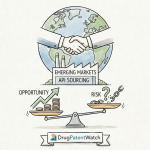
API dependency is the remaining vulnerability. Cost Plus has acknowledged that even its domestic manufacturing model will rely on imported APIs for many products. [4] API sourcing is concentrated in India and China, and API tariffs would raise Cost Plus’s input costs alongside everyone else’s. The full supply chain resilience case requires domestic API production as well, which is a multi-billion dollar infrastructure problem that no single company can solve.
The Timeline: A Realistic Disruption Forecast
Working from the publicly available facts, the disruption sequence runs roughly as follows.
In the near term (2025-2026), Cost Plus’s primary impact is pricing pressure on PBMs through the employer benefit channel. The Humana partnership and TrumpRx integration are the commercial catalysts. The Equip-A-Pharma program generates ANDA-ready manufacturing data for lidocaine, diltiazem, bupivacaine, albuterol, levetiracetam, linezolid, and carboplatin. If FDA fee waivers or reductions are granted, ANDA filing for these products begins.
In the medium term (2026-2028), the first ANDA approvals arrive for shortage drugs and high-cost generics. Cost Plus begins competing directly in hospital procurement for sterile injectables, bypassing the wholesale distributor layer for those products. Employer channel volume grows as the Humana partnership scales and TrumpRx builds its user base. Mid-tier commodity generic manufacturers face accelerating pricing pressure in the therapeutic categories Cost Plus has entered.
In the longer term (2028-2032), if the modular manufacturing platform proves scalable and the ANDA pipeline reaches the 100-drug target, Cost Plus becomes a material generic drug manufacturer by volume. Its disruption of the PBM model deepens as the employer transparent PBM trend continues. The Big Three wholesale distributors are not existentially threatened but lose a portion of generic drug volume to direct manufacturer-to-hospital and manufacturer-to-employer channels.
The scenario where Cost Plus achieves its 1,000-drug ambition and becomes a Teva-scale manufacturer requires either congressional action on FDA fees, sustained government subsidy of manufacturing infrastructure, or a private capital raise that would fundamentally change the company’s ownership structure. None of these is impossible, but none is certain.
The Broader Lesson: What This Disruption Actually Reveals
The reason Cost Plus can threaten a multi-hundred-billion-dollar supply chain with an $11 million factory is not that Cuban is uniquely capable. It is that the existing supply chain has been so thoroughly optimized for extracting margin at each intermediary layer that its total cost structure is indefensible against a model that removes those layers.
The academic literature documenting Cost Plus prices at 60-80% below PBM-intermediated generic prices is not evidence that Cost Plus has found extraordinary manufacturing efficiency. It is evidence that 60-80% of what patients pay for some generic drugs goes to intermediaries who do not manufacture, formulate, or clinically develop those drugs. That is a market structure problem, not a manufacturing problem. Cost Plus’s manufacturing ambition is the mechanism for permanently relocating that margin out of the intermediary chain, not just for patients who order online, but for the entire market through the pricing pressure it creates.
The incumbents who will navigate this best are those who have already anticipated it. Teva’s pivot to complex generics and biosimilars is the right strategic response. Sandoz’s biosimilar investment is defensible. The companies that have remained in commodity oral solid generics without diversifying into technically complex products or into clinical service models are the ones whose financial models are most directly threatened.
The PBMs face a more fundamental challenge because their model depends on opacity that is now under attack from multiple directions simultaneously: federal investigation, employer switching, direct-to-consumer platforms, and a domestic manufacturer who will price publicly and transparently. Opacity is not a moat that can be fortified. It can only be preserved until it cannot.
Key Takeaways
1. The disruption sequence runs from mid-tier commodity generic manufacturers first, then PBMs, then retail pharmacies, then wholesale distributors. The Big Three wholesalers are the most structurally protected; the mid-tier commodity generic manufacturers are the most immediately exposed.
2. Cost Plus’s manufacturing credibility is real but bounded. It has a functioning $11 million sterile injectable plant, a federal government manufacturing partnership (Equip-A-Pharma), and an active ANDA filing strategy for shortage drugs and high-cost generics. It does not yet have the ANDA portfolio or distribution scale to threaten large-cap generic manufacturers across their full product lines.
3. The pricing pressure Cost Plus creates is already larger than its market share. When academic researchers can document $8.6 billion in potential Medicare Part D savings using Cost Plus pricing, every payer negotiating generic drug contracts has a benchmark they cannot ignore. Teva and Viatris lose pricing power before they lose volume.
4. The employer channel is the commercial bridge that funds the manufacturing ambition. SwiftyRx and the Humana partnership represent Cost Plus’s path to the revenue scale that finances ANDA filings. Transparent PBM adoption growing from 12% to 31% of employers in a single year suggests the channel is real, not hypothetical.
5. The FDA fee barrier is the most actionable regulatory obstacle. At $365,000 per ANDA application, the pathway to 100 generic drug approvals costs $36.5 million in regulatory fees before any manufacturing or bioequivalence study investment. The Equip-A-Pharma program partially addresses this; fee waivers from Congress or the FDA would accelerate the pipeline materially.
6. The biosimilar market is accessible to Cost Plus through distribution, not manufacturing. Cost Plus cannot manufacture biosimilars with current technology, but it can distribute them outside the PBM rebate wall, which is the primary dysfunction in the biosimilar market today.
7. Domestic manufacturing tailwinds are real but API dependency remains. Pharmaceutical tariffs and domestic manufacturing policy create favorable economics for Cost Plus’s factory model, but API sourcing from India and China represents a residual supply chain vulnerability that Cost Plus shares with the industry.
FAQ
Q1: Does Cost Plus Drugs actually manufacture drugs, or does it just sell them cheaply?
Both. Cost Plus launched in 2022 primarily as a direct-to-consumer generic drug retailer, buying from third-party manufacturers and passing savings directly to patients at cost plus 15%. In early 2024, it opened a 22,000-square-foot sterile injectable fill-and-finish facility in Dallas and began manufacturing commercial batches of epinephrine and norepinephrine. In May 2025, it joined the federal Equip-A-Pharma initiative, tasked with manufacturing lidocaine and diltiazem using AI-enabled modular manufacturing, with the goal of submitting those drugs for ANDA approval. The company’s ambition is to manufacture 100 generic drugs domestically and eventually scale to 1,000, subject to FDA regulatory fee structures and financing.
Q2: Why can’t existing PBMs simply match Cost Plus’s prices?
PBMs are not structured to match transparent cost-plus pricing because their business model is built on the spread between what they negotiate from manufacturers and what they charge plan sponsors—a spread that disappears at transparency. A traditional PBM that switches to pass-through pricing surrenders its primary revenue mechanism. Some PBMs have launched pass-through models as separate products (SmithRx, Capital Rx), but the large integrated PBMs—Express Scripts, CVS Caremark, OptumRx—have massive vertical integration and long-term contracts that create structural inertia. They can lose employers at the margin without existential threat, which is the strategy they are currently executing: yield the most price-sensitive employers while retaining the embedded base.
Q3: What is the 180-day exclusivity period, and does Cost Plus try to exploit it?
Under the Hatch-Waxman Act, the first ANDA filer to mount a successful Paragraph IV patent challenge against a branded drug’s patents earns 180 days of market exclusivity before other generic manufacturers can enter. During this window, the first filer and the branded manufacturer are the only suppliers, and prices remain substantially above the eventual commodity level—often at 20-40% of brand price rather than the 5-10% that emerges once 10+ generics compete. Cost Plus, with its stated focus on high-cost generics, would benefit enormously from 180-day exclusivity windows. However, winning those windows requires filing Paragraph IV challenges and prevailing in patent litigation, which is expensive (typically $5-30 million in legal costs) and uncertain. DrugPatentWatch’s patent intelligence tools are exactly the kind of resource a company uses to identify Paragraph IV opportunities where the patent challenges are most likely to succeed, and where the commercial upside justifies the litigation investment.
Q4: Can Cost Plus’s modular manufacturing model work at Teva’s scale?
Probably not at equivalent cost for all products, but that is not Cost Plus’s goal. Teva’s manufacturing scale supports its strategy of competing in high-volume markets where marginal cost per unit is minimized. Cost Plus’s modular strategy supports competing in medium-volume markets where flexibility and speed-to-product matter more than marginal cost at full scale. The modular model allows Cost Plus to manufacture 50 units of 20 different drugs rather than 1,000 units of one drug. This is a competitive advantage in shortage drugs (where volume is low and pricing power exists) and high-cost generics (where volume is moderate but margin is higher). It is not a competitive advantage in metformin or amoxicillin, which is why Cuban has explicitly said he will not compete for those products.
Q5: How does the TrumpRx partnership actually benefit Cost Plus commercially, given that it is a cash-pay platform for a population that is politically and economically diverse?
TrumpRx functions as a federally branded customer acquisition channel at zero marginal cost to Cost Plus. Every uninsured or underinsured American who uses TrumpRx to shop for prescription drugs and arrives at Cost Plus as the generic drug supplier is a patient Cost Plus did not have to market to directly. The political branding also provides regulatory goodwill during a period when Cost Plus is asking the Trump administration to waive FDA ANDA application fees. The direct commercial benefit is modest in the near term—TrumpRx is a cash-pay channel and most Americans use insurance. The strategic benefit is the relationship it establishes with the administration and the visibility it creates with consumers who have never heard of Cost Plus Drugs. Patient volume data from TrumpRx also provides Cost Plus with market intelligence about which drugs cash-pay consumers are seeking most frequently, which can directly inform ANDA prioritization decisions.
Citations
Wikipedia contributors. (2025). Cost Plus Drugs. Wikipedia. https://en.wikipedia.org/wiki/Cost_Plus_Drugs
Landi, H. (2024, March 5). Mark Cuban says Cost Plus Drugs targeting generic meds in short supply as it opens manufacturing facility. Fierce Healthcare. https://www.fiercehealthcare.com/health-tech/mark-cuban-says-cost-plus-drugs-has-couple-million-patients-2500-generic-drugs-it-moves
Administration for Strategic Preparedness and Response. (2025, May 15). HHS, DARPA collaborate with private sector to demonstrate use of AI in producing essential medicines. HHS ASPR. https://aspr.hhs.gov/newsroom/Pages/EQUIP-A-Pharma-15May2025.aspx
Hartnett, K. (2025, December 5). Lowering FDA fees would spur generics manufacturing in US, Mark Cuban says. Fierce Pharma. https://www.fiercepharma.com/manufacturing/cuban-tells-trump-waiving-fda-approval-fees-would-spur-generics-manufacturing-us
DrugPatentWatch. (2026). The global generic drug market: Trends, opportunities, and challenges. https://www.drugpatentwatch.com/blog/the-global-generic-drug-market-trends-opportunities-and-challenges/
University of Pennsylvania Leonard Davis Institute. (2025, January 8). Mark Cuban explains his battle against pharmacy benefit managers. Penn LDI. https://ldi.upenn.edu/our-work/research-updates/mark-cuban-explains-his-battle-against-pharmacy-benefit-managers/
Federal Trade Commission. (2024). Pharmacy benefit managers: The powerful middlemen inflating drug costs and squeezing main street pharmacies (Interim report). U.S. FTC.
Mark Cuban Cost Plus Drug Company. (2025). About us. https://www.markcubancostplusdrugcompany.com/
Oshmyansky, A., & Cuban, M. (2024, March 5). Cost Plus manufacturing announcement. White House Roundtable on Lowering Healthcare Costs. Reported in Fierce Healthcare.
Becker’s Hospital Review. (2024, March 5). Mark Cuban’s pharma company to start manufacturing 2 drugs this week. https://www.beckershospitalreview.com/pharmacy/mark-cubans-pharma-company-to-start-manufacturing-2-drugs-this-week/
VytlOne. (2025, August 4). Drug shortage update: How 2025’s drug supply chain is evolving. https://vytlone.com/blog/drug-shortage-update-2025/
DrugPatentWatch. (2026, March 24). Win the generic drug market: Patents, ANDAs, IP valuation, and the tactics that separate first-movers from also-rans. https://www.drugpatentwatch.com/blog/how-to-succeed-in-generic-drug-market-entry/
Brave, A. (2025, April 28). Humana’s CenterWell, Mark Cuban Cost Plus Drugs partner to tackle employers’ drug costs. Fierce Healthcare. https://www.fiercehealthcare.com/payers/humanas-centerwell-mark-cubans-cost-plus-drugs-handle-employers-prescriptions
DrugPatentWatch. (2026). Global perspectives: A strategic analysis of the generic drug market for the next decade. https://www.drugpatentwatch.com/blog/global-perspectives-a-strategic-analysis-of-the-generic-drug-market-for-the-next-decade/
Employee Benefit News. (2026, April 29). Employers ditch traditional PBM models. https://www.benefitnews.com/advisers/opinion/employers-ditch-traditional-pbm-models
Managed Healthcare Executive. (2025). Beyond the big three PBMs. https://www.managedhealthcareexecutive.com/view/beyond-the-big-three-pbms
Healthcare Dive. (2025, October 20). Mark Cuban says Cost Plus Drugs will partner with TrumpRx. https://www.healthcaredive.com/news/mark-cuban-cost-plus-drugs-partner-trumprx/803180/
Truveris. (2025, December 31). TrumpRx and MFN pricing: What plan sponsors should know. https://truveris.com/trumprx-and-mfn-pricing/
Morningstar. (2025, June 4). Drug distribution industry trends for 2025. https://www.morningstar.com/stocks/drug-distribution-industry-trends-2025
DrugPatentWatch. (2025). Global perspectives: A strategic analysis of the generic drug market for the next decade. [See citation 14]
Baxi, S. H., et al. (2023). Projected savings for generic oncology drugs purchased via Mark Cuban Cost Plus Drug Company versus in Medicare. Journal of Clinical Oncology, 41(15). https://ascopubs.org/doi/10.1200/JCO.23.00079
Morningstar. (2025, February 6). 3 generic drug stocks to watch. https://www.morningstar.com/stocks/3-generic-drug-stocks-watch
DrugPatentWatch. (2025, August 5). The high-stakes chess game: A strategic framework for selecting generic drug winners. https://www.drugpatentwatch.com/blog/factors-influence-development-generic-drugs-us/
HHS Office of the Assistant Secretary for Planning and Evaluation. (2024). Impact of drug shortages on consumer costs. https://aspe.hhs.gov/sites/default/files/documents/87781bc7f9a7fc3e6633199dc4507d3e/aspe-rtc-costs-drug-shortages.pdf
DrugPatentWatch. (2026, March 30). The persistent problem: Why hospitals keep running out of generic drugs. https://www.drugpatentwatch.com/blog/the-persistent-problem-why-hospitals-keep-running-out-of-generic-drugs/
DrugPatentWatch. (2026). The global generic drug market: Trends, opportunities, and challenges. [See citation 5]
Pharmaceutical Commerce. (2026, February 15). Mark Cuban pushes for generic drug fee waivers, as Cost Plus Drugs eyes US manufacturing expansion. https://www.pharmaceuticalcommerce.com/view/mark-cuban-pushes-for-generic-drug-fee-waivers
Penn LDI. (2025). [See citation 6]. Citing: Lalani H.S. et al. (2024). Total estimated Medicare Part D savings were $8.6 billion using 90-day CostPlusDrugs.com pricing. PharmacoEconomics.
Lalani, H. S., Kesselheim, A. S., & Rome, B. N. (2022). Potential Medicare Part D savings on generic drugs from the Mark Cuban Cost Plus Drug Company. Annals of Internal Medicine, 175(7), 1053-1055. https://doi.org/10.7326/M22-0756
Healthcare Dive. (2025, October 8). Influential PBM lobby appoints top Express Scripts executive as board chair. https://www.healthcaredive.com/
DrugPatentWatch. (2025, December 18). Are you falling behind? The new rules of generic drug portfolio management. https://www.drugpatentwatch.com/blog/are-you-falling-behind-the-new-rules-of-generic-drug-portfolio-management/
Landi, H. (2024, August 15). Mark Cuban wants to keep shaking up healthcare. Here’s Cost Plus Drug’s next move. Fierce Healthcare. https://www.fiercehealthcare.com/health-tech/mark-cuban-wants-keep-shaking-healthcare-heres-cost-plus-drugs-next-move
Pharmaceutical Commerce. (2026, March 20). Pharma wholesalers: Looking for growth. https://www.pharmaceuticalcommerce.com/view/pharma-wholesalers-looking-for-growth
Gateway Health Partners. (2025, June 24). Drug shortage update: A closer look at how 2025’s drug supply chain is evolving. https://gatewayhealthpartners.com/drug-shortage-update-a-closer-look-at-how-2025s-drug-supply-chain-is-evolving/