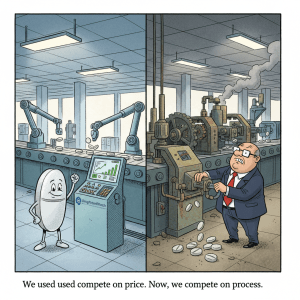
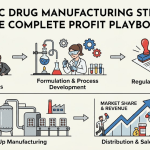
The generic pharmaceutical industry has spent thirty years perfecting a business model that no longer works. The playbook was elegant in its simplicity: monitor patent expiry dates, file an Abbreviated New Drug Application (ANDA), demonstrate bioequivalence, and race the field to market. Teva, Mylan (now Viatris), Dr. Reddy’s, and Sun Pharma all built multi-billion-dollar enterprises on exactly this logic. The problem is that the returns from that logic have collapsed, and the structural forces driving that collapse are permanent.
This pillar page covers the full competitive and operational case for Process Analytical Technology (PAT) and Quality by Design (QbD) as the dual-engine replacement for the exhausted volume-operations model. It goes beyond the surface-level ROI argument to address the IP strategy implications, the regulatory filing mechanics, the technology stack required, and the specific portfolio decisions that separate companies capturing long-term margin from those grinding toward irrelevance.
The Commoditization Math That Broke the Old Playbook
The Price Destruction Sequence in Generic Markets
The financial erosion that follows generic entry follows a predictable sequence, and the data is unambiguous. When a first generic competitor enters a market, average selling prices fall 30% to 39% off the reference listed drug (RLD) price. The entry of a second and third competitor pushes prices down an additional 15% to 40% from that already-reduced baseline. Once a market holds ten or more approved generics, prices compress by 70% to 95% of the original innovator price. At that point, gross margins on standard oral solid dosage (OSD) products routinely fall below 20%, and for undifferentiated API-commodity categories, below 10%.
This pricing sequence is not cyclical. It is structural. GPO consolidation, PBM formulary leverage, and retail chain purchasing power mean that once a drug enters the commodity tier, it never climbs out. The IQVIA data on price erosion over rolling five-year windows shows the trajectory only moves in one direction post-entry. Volume can temporarily offset the per-unit margin compression, but only until the next competitor files and the cycle repeats.
Drug Shortages: The Public Health Cost of Race-to-the-Bottom Manufacturing
The commercial consequences of commoditization connect directly to a public health failure. A staggering 84% of reported drug shortages involve generic medicines, and the primary mechanism is straightforward: when margins collapse, manufacturers exit the market or run facilities at maximum utilization with minimal investment in redundancy or process robustness. A batch failure at a single contract manufacturer can remove 30% to 40% of the supply for a given molecule from the market within weeks.
This is not a regulatory compliance problem. It is an engineering problem rooted in the ‘quality by testing’ manufacturing philosophy that the traditional model never had financial incentive to abandon. Companies running thin margins cannot justify the capital spend for real-time process monitoring when the alternative, end-product batch testing, is cheaper upfront. The result is a fragile supply chain that periodically breaks, and patients bear the cost.
The Strategic Divide: Volume Operations vs. Science and Technology
Consulting firm analyses and internal strategy documents from major generics players converge on the same diagnosis. The market has bifurcated into two viable archetypes. The first is a pure volume-operations model, viable only for companies with the scale, vertical API integration, and geographic cost arbitrage of a Teva or Sun Pharma. The second is a science-and-technology model, where companies compete on process mastery, complex formulation capability, and a willingness to pursue molecules that are technically difficult to replicate. The middle ground, mid-size generics with commodity OSD portfolios and no differentiation strategy, is where value is being systematically destroyed.
PAT and QbD are the primary operational tools of the science-and-technology model. They are not production efficiency tweaks. They represent a fundamentally different theory of how a manufacturing organization creates value and, critically, how that value gets protected as intellectual property.
Key Takeaways
The first-generic price advantage is real but temporary, lasting 180 days of exclusivity under Hatch-Waxman before the market opens to all ANDA filers. Drug shortages affecting 84% of generic medicines trace directly to margin-compressed, process-fragile manufacturing. Companies without a differentiation strategy beyond ANDA timing face structural margin compression with no exit. The science-and-technology model requires PAT and QbD as its operational foundation, and that foundation generates IP.
Investment Strategy Note
For portfolio managers covering generics: screen for companies with disclosed PAT capital investment programs, continuous manufacturing (CM) infrastructure, or complex generic pipeline concentration above 40% of their ANDA filings. These are leading indicators of a science-and-technology orientation. Companies with greater than 70% of their pipeline in standard OSD categories and no disclosed investment in advanced manufacturing are structurally exposed to the commoditization math described above.
QbD Architecture: The ICH Q8-Q11 Framework in Operational Detail
What ICH Q8 Actually Requires, and What Companies Get Wrong
Quality by Design is defined in ICH Q8(R2) as ‘a systematic approach to development that begins with predefined objectives and emphasizes product and process understanding and process control, based on sound science and quality risk management.’ That definition is compact, but the operational implications are extensive.
The QbD framework flows from a Quality Target Product Profile (QTPP) through a hierarchy of decisions that most companies conceptually understand but consistently under-execute at the process level. The QTPP defines the desired clinical and pharmacokinetic characteristics of the final product: dosage form, delivery route, dosage strength, pharmacokinetic profile, and product-quality criteria linked to safety and efficacy. From the QTPP, the development team identifies Critical Quality Attributes (CQAs), the physical, chemical, biological, or microbiological properties of the drug substance or drug product that must be within defined limits to ensure the QTPP is met.
The second tier of the hierarchy, and the one with the most direct manufacturing implications, is the identification of Critical Process Parameters (CPPs). A CPP is a process parameter whose variability has a direct impact on a CQA and therefore must be monitored or controlled to ensure the process produces the desired quality. The relationship between CPPs and CQAs is the core scientific knowledge asset of a QbD submission. It is documented in the design space, which ICH Q8 defines as ‘the multidimensional combination and interaction of input variables (e.g., material attributes) and process parameters that have been demonstrated to provide assurance of quality.’
The design space distinction matters legally as much as it matters scientifically. Changes within the design space are not considered regulatory changes by FDA or EMA and do not require prior approval. This is the manufacturing flexibility argument at the heart of QbD’s commercial value. A company that has documented its design space in a knowledge-rich ANDA submission can respond to supply disruptions, API sourcing changes, or process optimization opportunities without the 6-to-24-month lag of a Prior Approval Supplement (PAS). Competitors operating on frozen-process submissions cannot.
Critical Quality Attributes: A Tiered Risk Framework
Not every quality attribute is a CQA. The ICH Q8 guidance and the accompanying ICH Q9 quality risk management framework establish a tiered approach to attribute classification. A systematic risk assessment, typically using tools like Failure Mode and Effects Analysis (FMEA) or a cause-and-effect matrix (Ishikawa diagram), drives which attributes receive CQA status and therefore require PAT-enabled monitoring.
For a standard immediate-release oral tablet, candidate CQAs typically include assay (drug content), content uniformity, dissolution rate, hardness, and related substances. Not all of these require equal monitoring intensity. Dissolution is frequently the most critical because its relationship to bioavailability is direct and its sensitivity to process variation is high. Content uniformity for low-dose potent compounds, where blend heterogeneity risk is elevated, often warrants continuous in-line NIR monitoring during blending and granulation. The risk tier assigned to each CQA determines the monitoring architecture, and that architecture determines the PAT instrument selection.
ICH Q10 and Q11: The Full Lifecycle and API Implications
ICH Q10 extends the QbD framework to the pharmaceutical quality system governing the entire product lifecycle, from development through commercial manufacturing and discontinuation. For generics companies, Q10 has a specific implication: it creates a regulatory expectation of continual improvement and change management systems. A company that installs PAT, collects process data, and does not use that data to refine its control strategy is not operating within the spirit of Q10 and may face observations during FDA pre-approval inspections (PAIs) or post-approval facility inspections.
ICH Q11, addressing development and manufacture of drug substances (APIs), brings QbD principles upstream into API synthesis. For generic companies that manufacture their own APIs or work closely with contract API manufacturers, Q11 is directly relevant to impurity control strategies and the documentation of synthetic route understanding. The GlaxoSmithKline casopitant mesylate work, discussed in the case studies section below, is one of the best-documented examples of Q11 principles applied to impurity fate-and-purge analysis using Design of Experiments (DoE).
The Design Space as a Protectable IP Asset
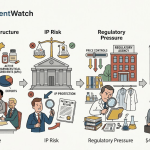
The design space documented in a regulatory submission is not just a manufacturing tool. It is a technical disclosure with IP implications. A detailed, scientifically rigorous design space covering specific parameter ranges, interaction effects between CPPs and CQAs, and the multivariate modeling underlying those relationships constitutes a body of proprietary technical knowledge. This knowledge can support process patent applications covering the specific manufacturing method.
This is where IP strategy and manufacturing strategy converge. A generic company that develops a genuinely novel PAT-enabled manufacturing process, with documented kinetic models and real-time release testing (RTR) capability, can file for process patent protection on that method. The result is a situation where a ‘generic’ product carries its own proprietary manufacturing IP. Competitors filing ANDAs on the same molecule face the choice of either replicating the patented process (infringement risk) or developing an alternative process (development cost and time). Either way, the original filer has converted process mastery into a defensible market position.
Key Takeaways
ICH Q8 through Q11 collectively create a regulatory framework that rewards process understanding and penalizes frozen-process manufacturing. The design space, once documented in a filing, provides manufacturing flexibility that competitors on traditional submissions lack. CQA risk tiering drives PAT instrument selection and monitoring architecture. The proprietary technical knowledge embedded in a rigorous design space filing has standalone IP value and can support process patent applications.
Process Analytical Technology: Instrumentation, Integration, and Data Architecture
PAT Is Not a Single Technology
The FDA’s 2004 PAT guidance defines the framework as ‘a system for designing, analyzing, and controlling manufacturing through measurements, during processing of critical quality and performance attributes of raw and in-process materials and processes, with the goal of ensuring final product quality.’ The word ‘system’ is precise. PAT is an integrative framework, not a product category.
In practice, a fully deployed PAT environment in an OSD facility integrates spectroscopic analyzers, particle size analyzers, multivariate data analysis (MVDA) software, advanced process control (APC) algorithms, and a manufacturing execution system (MES) layer that closes the control loop. Each element is a distinct market segment with distinct vendors, and the integration between them is where most implementation failures occur.
Near-Infrared Spectroscopy: The Workhorse of OSD PAT
Near-infrared (NIR) spectroscopy covers the 780-2500 nm wavelength range and detects molecular overtone and combination band absorptions. In pharmaceutical manufacturing, NIR is used for raw material identification, in-line blend uniformity monitoring, granule moisture determination, tablet coating endpoint detection, and quantitative content uniformity measurement. The technique is non-destructive, requires no sample preparation, and delivers results in seconds rather than the 30 to 60 minutes required by offline HPLC.
The analytical challenge with NIR is its lack of selectivity. NIR spectra are broad and overlapping, and quantitative models require partial least squares (PLS) or principal component regression (PCR) chemometric models developed against reference datasets. Model development, validation, and maintenance represent the largest recurring investment in a NIR-based PAT program. A properly built and validated NIR model for content uniformity monitoring in a single product requires 100 to 300 reference samples collected across the full design space, calibration against a reference method (typically HPLC), and ongoing model maintenance as raw material sources or grades change.
The business case for this investment is substantial. One analysis of an average OSD facility calculated that implementing in-line NIR across blending, granulation, and tablet compression reduces analytical laboratory labor by up to 90% for those unit operations. The same analysis showed that rejection and rework costs drop by a commensurate percentage because process deviations are caught in real-time rather than discovered in end-product testing 24 to 72 hours after the batch is complete.
Raman Spectroscopy: Selectivity Where NIR Falls Short
Raman spectroscopy covers fundamental molecular vibrations through inelastic light scattering rather than absorption. Its key advantage over NIR is selectivity: Raman spectra have sharper, more characteristic peaks that differentiate chemically similar compounds more reliably. For polymorph discrimination, cocrystal characterization, and monitoring of low-API-load formulations where NIR sensitivity is insufficient, Raman is the preferred tool.
Raman’s limitation is fluorescence interference from colored excipients and certain API functional groups, which can overwhelm the Raman signal. Spatially offset Raman spectroscopy (SORS) and transmission Raman spectroscopy (TRS), the latter developed specifically for pharmaceutical tablet analysis, address this by varying the depth of sampling within the solid dosage form. TRS in particular is capable of non-destructive quantitative analysis of API content and polymorph form throughout the tablet core, not just at the surface.
For controlled release formulations where polymorph stability is a CQA, TRS provides a monitoring capability that NIR cannot replicate. This is commercially relevant for molecules with known polymorphic instability during manufacturing, such as carbamazepine or ranitidine (prior to its withdrawal), where conversion between forms during wet granulation affects dissolution and bioavailability.
Mid-Infrared for Biopharmaceutical Downstream Processing
AGC Biologics’ implementation of mid-infrared (MIR) spectroscopy for real-time monitoring of protein and excipient concentrations during ultrafiltration/diafiltration (UF/DF) demonstrates how PAT principles translate into biopharmaceutical manufacturing, specifically into downstream processing (DSP) operations where the stakes are highest. UF/DF is the step where therapeutic protein concentration, buffer exchange, and excipient loading are finalized before drug product formulation. Errors in this step are extremely costly because they involve high-value, late-stage material.
Traditional UF/DF monitoring relies on offline UV absorbance measurements and osmolality testing taken at defined intervals. The time lag between a process deviation and its detection can be 15 to 30 minutes, during which the concentrated protein solution may have already been damaged. MIR in-line monitoring provides a continuous signal tracking both protein concentration (via amide bond absorptions) and buffer component concentrations simultaneously. The resulting CPP-CQA relationship data, gathered over multiple batches, forms the quantitative basis for an ICH Q10-compliant continuous process verification (CPV) program.
This matters commercially because UF/DF process PAT data, once translated into a validated RTR framework, reduces release testing cycle time by eliminating offline concentration assays and osmolality measurements from the critical path before product release.
Particle Size Analysis: Acoustic and Laser Diffraction In-Line
Particle size is a CQA for a wide range of drug products, from inhalation products where the aerodynamic particle size distribution (APSD) directly determines lung deposition to injectable suspensions where particle size controls both filterability and in vivo release kinetics. In oral solid dosage manufacturing, particle size of granules affects both tableting compressibility and dissolution.
Offline laser diffraction (HELOS, Malvern Mastersizer) is the standard characterization method, but in-line options include focused beam reflectance measurement (FBRM) and ultrasound-based acoustic spectroscopy, both of which operate in high-solids slurries where optical methods fail. FBRM measures chord length distributions rather than true spherical equivalent diameters, which requires a conversion model, but its real-time capability in wet granulation end-point detection has been validated in multiple published studies.
Data Architecture: From Sensor to Control Loop
A mature PAT environment generates continuous high-dimensional data from multiple sensors operating simultaneously. A single NIR analyzer scanning a continuous blender at 1-second intervals produces several thousand spectra per batch. Multiplied across a facility with 10 to 15 installed instruments, the data volume exceeds the capacity of conventional batch records and requires a purpose-built data architecture.
The standard architecture is a three-layer system: a sensor layer (instruments and in-line probes), a process data historian (OSIsoft PI is the dominant platform in pharmaceutical manufacturing), and an MVDA/APC layer where chemometric models run in real-time against the historian data stream and feed back to the process control system (DCS or PLC). Connecting these layers requires validated interfaces at each junction, documented in the validation master plan as part of the computer system validation (CSV) program required by 21 CFR Part 11 for FDA-regulated facilities.
The integration complexity is real, and it is the most commonly cited technical barrier to PAT adoption. A probe integration failure, data latency issue, or model drift event in the MVDA layer can produce false control actions. For this reason, PAT control loops are typically implemented with a manual override capability and alert thresholds that notify operators before automated control actions are taken. Full closed-loop control, where APC algorithms adjust process parameters without human intervention, is the advanced state that most facilities are still working toward.
Key Takeaways
PAT is a multi-instrument, multi-software integration challenge, not a single product purchase. NIR is the standard for OSD content uniformity and blend monitoring; Raman adds polymorph selectivity; MIR addresses biopharmaceutical DSP monitoring needs. Particle size PAT covers wet granulation, suspension manufacturing, and inhalation product development. The data architecture connecting sensors to control loops requires validated interfaces and represents the primary integration risk. Real-time release testing (RTR) is the downstream output of a mature PAT system and the most compelling commercial justification.
Investment Strategy Note
Evaluate equipment vendors by the depth of their chemometrics software integration and historian connectivity, not just instrument specifications. Mettler-Toledo iC Software, Thermo Fisher GRAMS Suite, and Siemens SIPAT are the primary APC/MVDA platforms in pharmaceutical PAT. Companies that have disclosed multi-vendor PAT integrations with documented RTR submissions to FDA have demonstrated a capability level that is meaningfully differentiated from companies with isolated, single-unit-operation PAT pilots.
Continuous Manufacturing: The Technology Roadmap from Batch to End-to-End Integration
Why Batch Manufacturing Is Structurally Inefficient
The pharmaceutical industry’s attachment to batch manufacturing is an artifact of its regulatory history, not its engineering preferences. Batch processes were the norm when regulatory frameworks were designed, so those frameworks assumed batch processing as the default. ICH Q7 for API manufacturing, 21 CFR Parts 210 and 211 for drug product manufacturing, and the EU’s EudraLex Volume 4 all reflect batch-era assumptions. Each batch is a discrete unit of production with its own batch record, release testing package, and accountability trail.
The inefficiency of batch processing is quantifiable. A typical OSD batch spends 80% to 90% of its cycle time waiting: waiting for blend samples to come back from the lab, waiting for granulation moisture assay results, waiting for tablet hardness measurements, waiting for dissolution results from the quality control laboratory. The actual processing time, the time the product is in motion, represents a fraction of the total batch cycle. This dead time is not just inefficient. It creates risk. Extended hold times for in-process materials introduce opportunities for polymorphic conversion, moisture uptake, and microbial growth in susceptible formulations.
The GEA ConsiGma: A Reference Architecture for Continuous Granulation
GEA’s ConsiGma continuous twin-screw wet granulation (TSWG) and fluid-bed drying system is the most widely cited reference architecture for continuous OSD manufacturing. The system integrates powder dosing (API and excipients), twin-screw granulation, continuous fluid-bed drying, and milling in a single instrumented line. The granulate output feeds directly into a tablet press without intermediate hold steps.
The ConsiGma design resolves several manufacturing problems simultaneously. First, batch size is determined by run time, not by equipment volume. The same physical line produces a 1 kg development batch and a 500 kg commercial batch by running for different durations with the same validated process parameters. This eliminates scale-up as a distinct development stage. Scale-up failure, the inability to reproduce development results at commercial scale, is one of the most costly and time-consuming problems in pharmaceutical development. Regulatory submissions that include scale-up data require scale-up to succeed before approval can be sought. A continuous process that does not scale because it does not change fundamentally restructures the development-to-approval timeline.
Second, PAT integration is structurally simpler in a continuous process than in a batch process. In batch granulation, the blend or granulate passes through discrete processing steps with hold periods between them. Each hold represents a monitoring gap. In a continuous process, the material stream is continuous, enabling continuous in-line monitoring at every point in the line without the need to coordinate with batch boundaries.
The Novartis-MIT Center for Continuous Manufacturing: A Proof of Concept at Scale
The Novartis-MIT Center for Continuous Manufacturing, established in 2007, produced the pharmaceutical industry’s first end-to-end continuous manufacturing line for a small molecule drug. The pilot plant demonstrated a process that synthesized an API from starting materials, purified it, and converted it to a final tablet without batch interruption. The total cycle time from chemical synthesis to finished tablet was reduced from approximately 300 hours using batch methods to around 40 hours using the continuous process.
The academic-industrial collaboration also produced quantitative work on the business case for continuous manufacturing, published through MIT’s DSpace repository. The analysis found that for a molecule with global sales of $400 million annually, transitioning to continuous manufacturing could reduce cost of goods sold (COGS) by 30% to 50%, depending on API complexity, formulation requirements, and facility utilization rates. The primary drivers were reduced in-process inventory, lower energy consumption from smaller equipment footprints, and elimination of scale-up costs.
Novartis subsequently pursued FDA approval for continuous manufacturing at its East Hanover facility. FDA approved the first new drug application (NDA) with a continuous manufacturing process for Orkambi (lumacaftor/ivacaftor) in 2015, a product of Vertex Pharmaceuticals’ manufacturing process. For generics, the first ANDA approved for a continuously manufactured product came in 2016 when Vertex and then Janssen received approvals. The regulatory pathway is established, and FDA has published detailed guidance on continuous manufacturing submissions, including its January 2019 guidance document on quality considerations for continuous manufacturing.
Technology Roadmap: Four Stages of Continuous Manufacturing Maturity
Transitioning from batch to continuous manufacturing is a multi-year program, not a procurement event. The maturity progression follows four recognizable stages.
Stage one is isolated continuous unit operations within an otherwise batch process. This includes continuous blending (e.g., a continuous twin-shell blender replacing a batch V-blender) or continuous coating (e.g., a Wurster continuous coater replacing a batch pan coater). Each unit operation runs continuously but feeds into and receives from batch operations. PAT tools deployed at this stage focus on end-point detection for the specific continuous operation. Stage one investments typically range from $500,000 to $2 million per unit operation.
Stage two is a linked continuous granulation and drying train, as represented by the GEA ConsiGma or the Glatt GCG-70 continuous granulator. This connects powder feeding, granulation, and drying in a single continuous process, with integrated PAT monitoring. The output is a continuously flowing granulate that feeds a batch tablet press. Capital investment at this stage is typically $3 million to $8 million for the integrated line, plus the PAT instrumentation and informatics infrastructure.
Stage three is end-to-end continuous drug product manufacturing: continuous blending, granulation, drying, tableting, and coating in a single integrated line. This stage requires not just the equipment but a full PAT framework with RTR capability, since traditional end-product testing on a continuous process creates a logical inconsistency: continuous processes do not produce discrete batches to release. RTR, using in-line PAT data as the release test rather than offline laboratory analysis, is the regulatory mechanism that makes stage three commercially viable.
Stage four is the integration of API synthesis (continuous flow chemistry) with drug product manufacturing in a single plant, as demonstrated in the Novartis-MIT pilot. This stage is currently practiced by a small number of companies for specific molecules and is not yet a commercial standard. Continuus Pharmaceuticals, spun out of the MIT work, has the most advanced commercial offering in this category.
Real-Time Release Testing: The Regulatory Unlock
RTR is the mechanism by which PAT data replaces offline end-product testing as the basis for batch (or continuous process lot) release. FDA’s guidance on RTR, described in ICH Q8(R2) and supported by FDA’s process validation guidance (January 2011), allows a manufacturer to forgo traditional dissolution, content uniformity, and hardness testing on final product if the in-line PAT data provides equivalent or superior assurance of quality.
The commercial significance of RTR is not primarily in eliminating laboratory costs, though that is real. The primary commercial value is in release cycle time. A traditional batch release process takes 5 to 15 business days after batch completion, including lab testing, QC review, and QA batch record review. RTR reduces that timeline to hours. For a product with a 30-day shelf life (certain biological products, reconstituted products, certain injectable suspensions), 5 to 15 days of release time consumes 15% to 50% of the total shelf life available. RTR gives that time back, expanding the commercial distribution window and reducing product write-offs at end of shelf life.
Key Takeaways
Scale-up failure is eliminated by continuous manufacturing because the process does not change between development and commercial scale. RTR is both the operational and regulatory capstone of a mature PAT/CM program, reducing release cycle time from weeks to hours. The four-stage maturity model lets companies build toward continuous manufacturing incrementally, capturing ROI at each stage rather than requiring full commitment upfront. FDA’s regulatory framework for continuous manufacturing is established, with published guidance and approved product precedents.
Investment Strategy Note
Companies at stage two or three continuous manufacturing maturity have structurally lower COGS, shorter release cycle times, and a defensible competitive position in product categories where others remain at stage zero. When evaluating generics companies, disclose continuous manufacturing certifications or FDA inspection outcomes for continuous manufacturing facilities as a leading indicator of long-run manufacturing margin.
Case Studies: PAT and QbD Producing Quantifiable Outcomes
GlaxoSmithKline Casopitant Mesylate: QbD Impurity Control at the Limits of Process Understanding
Casopitant mesylate, a neurokinin 1 (NK1) receptor antagonist that GSK developed for chemotherapy-induced nausea (the compound was later discontinued after Phase III), became one of the pharmaceutical industry’s most detailed documented case studies for QbD applied to API impurity control. The case is instructive precisely because it demonstrates QbD’s value in a crisis scenario rather than in a clean development program.
During late-phase development, a new synthetic impurity was identified in casopitant mesylate batches that had not appeared in earlier process development work. In a traditional development program, this discovery would trigger an empirical troubleshooting campaign: systematically varying one parameter at a time, running dozens of small-scale batches, and hoping to identify the causative variable through trial and error. Cycle time for this approach is typically six to eighteen months.
GSK instead applied a QbD-based DoE approach. By mapping the full design space of the synthesis, including temperature, reagent stoichiometry, reaction time, and pH, and deliberately running experiments at the extremes of each parameter, the team was able to observe a broader range of organic impurities at elevated levels. This approach exploited the design space as a diagnostic tool rather than just a manufacturing envelope. The result was a mechanistic understanding of the impurity’s formation pathway, a quantitative model relating CPPs to the impurity CQA, and the ability to propose updated intermediate specifications that controlled the impurity without requiring a new synthetic route.
The downstream regulatory outcome was a real-time release capability for the intermediate in question, which increased process throughput and eliminated a non-value-added offline analytical step. The scientific rigor of the QbD documentation also supported a more streamlined regulatory review because the submission provided mechanistic justification rather than empirical batch data.
IP Valuation Note on Process Patents from QbD Data
The mechanistic process understanding generated by this type of QbD work has direct IP valuation implications. A process patent on an API synthesis route that controls a specific impurity through a documented CPP-CQA relationship is a meaningful legal asset. It creates a freedom-to-operate barrier for generic companies seeking to replicate the synthesis. To design around the patent, a generic company must develop and validate an alternative process that achieves the same impurity control through different mechanisms, a non-trivial development investment. The commercial value of this type of process patent for a $500 million-plus annual revenue API is routinely in the tens of millions of dollars on a net present value basis.
AGC Biologics UF/DF MIR Monitoring: PAT in Biopharmaceutical DSP
AGC Biologics’ implementation of in-line MIR spectroscopy during ultrafiltration/diafiltration at their biopharmaceutical contract manufacturing facility demonstrates PAT at the point of highest value destruction risk in biologics manufacturing: late-stage concentration and buffer exchange.
UF/DF is a tangential flow filtration (TFF) unit operation. The protein solution circulates across a semipermeable membrane under transmembrane pressure, concentrating the protein while allowing buffer components and low-molecular-weight impurities to pass through. The process endpoint is defined by both protein concentration (determined by UV absorbance at 280 nm) and conductivity (a proxy for buffer concentration and ionic strength).
Traditional monitoring takes both measurements offline at defined time intervals. AGC’s MIR in-line approach placed an attenuated total reflectance (ATR) probe directly in the recirculation loop, enabling simultaneous real-time measurement of protein concentration (amide I and amide II band integration) and buffer component concentrations (ionic species-specific absorptions). The CPP dataset generated across multiple batches of the same molecule allowed construction of a process model relating transmembrane pressure, flow rate, temperature, and feed concentration to final product concentration and conductivity endpoints.
The commercial output of this work was a reduction in development timeline for UF/DF processes on new molecules. By having a parameterized process model rather than an empirical ‘run and check’ protocol, AGC’s development scientists could predict UF/DF performance for a new molecule based on its known biophysical properties rather than running a full empirical optimization. The IP value of this capability resides in the process models themselves, which are proprietary to AGC and represent a competitive differentiator in the CDMO market where UF/DF development timeline is a selection criterion for sponsors.
The Puerto Rico OSD Facility Financial Model: Full Cost-Benefit Accounting
The most comprehensive publicly available financial analysis of PAT implementation ROI covers an average oral solid dosage manufacturing facility in Puerto Rico. The analysis calculated the total capital investment for a full PAT implementation, including multiple in-line NIR analyzers for blending and granulation, a particle size PAT system for granule characterization, and the required data historian and MVDA software infrastructure, at over $4.5 million.
Against this investment, the analysis quantified annual operational savings across several categories. Analytical laboratory labor costs for in-process testing were reduced by approximately 90%, representing several hundred thousand dollars per year depending on facility headcount. Work-in-progress inspection, rejection, and rework costs fell by a similar percentage as real-time process control reduced batch failures. Inventory holding costs fell by approximately 50% because PAT-enabled continuous processes carry far less in-process inventory than batch processes with extended hold times.
When PAT was combined with other Lean manufacturing principles (specifically, value stream mapping to eliminate non-value-added process steps identified by the enhanced process data visibility), some facilities achieved process cycle time reductions of up to 50% with an increase in operating margins of 6 percentage points. The annual savings at this level of optimization were $6 million to $8 million per facility. On a $4.5 million capital investment, the payback period is less than one year at full optimization. Even at partial optimization, the payback period is two to three years.
Key Takeaways
The GSK casopitant case demonstrates QbD as a crisis management tool that converts process understanding into IP and regulatory efficiency. AGC Biologics’ MIR work shows PAT’s application extending fully into biopharmaceutical DSP, with process models as a protectable CDMO competitive asset. The Puerto Rico facility analysis provides the most detailed financial model available, showing sub-one-year payback at full optimization and $6 million to $8 million in annual savings. These are not theoretical projections: they are operational outcomes from documented facility data.
Process IP Strategy: Turning PAT Data into Patents, Design-Arounds, and Litigation Defense
The Generic IP Landscape After Hatch-Waxman
The Drug Price Competition and Patent Term Restoration Act of 1984 (Hatch-Waxman) established the ANDA pathway and created the Paragraph IV certification mechanism that allows generic companies to challenge innovator patents before expiry. A Paragraph IV filer certifies that the listed patents are invalid, unenforceable, or will not be infringed by the proposed generic product. Filing a Paragraph IV triggers a 30-month stay of FDA approval pending litigation resolution, and the first Paragraph IV filer (for a small molecule NDA) earns 180 days of marketing exclusivity upon approval.
The traditional view of generic IP strategy is passive: monitor the Orange Book, identify weak or expiring patents, file ANDAs, and challenge patents where the invalidity or non-infringement case is strong. PAT and QbD change this calculus in several ways that receive insufficient attention in generic strategy discussions.
Process Patents on Novel Manufacturing Methods
A generic company that develops and validates a novel manufacturing process for an off-patent molecule, using PAT-enabled continuous manufacturing, DoE-based process optimization, or a uniquely documented design space, can file for process patent protection on that method. The resulting process patent does not extend product exclusivity for the molecule, which is freely available. However, it creates a proprietary manufacturing method that competitors must design around.
The commercial value of a proprietary low-cost process for a high-volume generic is significant. If the PAT-enabled process reduces COGS by 30% relative to conventional batch manufacturing, and annual sales are $200 million, the process advantage is worth $60 million per year in gross profit. A process patent protecting that advantage for 20 years has an NPV that justifies substantial IP prosecution investment.
The scope of process patent protection available depends on the novelty and non-obviousness of the specific method. A process that simply applies known NIR monitoring to a known blending step with no novel parametric relationships documented is unlikely to be patentable. A process that discovers and documents a previously unknown CPP-CQA relationship using in-line spectroscopic monitoring during a novel continuous granulation sequence, and demonstrates that controlling that CPP within a specific range is critical to achieving the CQA, has a more defensible novelty argument. The QbD documentation itself, including the design space boundary conditions, kinetic models, and CPP criticality assessments, forms the technical basis for the patent claims.
Paragraph IV Strategy: PAT as Litigation Readiness
In Paragraph IV litigation, the generic company challenging innovator patents typically faces an 18-to-36-month litigation timeline before trial. During this period, the generic company must demonstrate commercial readiness: validated manufacturing process, stability data, and the ability to launch at scale immediately upon a favorable ruling or settlement. A company with a PAT-enabled, well-characterized manufacturing process has a significant litigation readiness advantage.
First, the comprehensive process knowledge documented in a PAT-enabled ANDA submission reduces the risk of manufacturing-related FDA observations during pre-approval inspection (PAI), which are a major source of ANDA launch delays independent of litigation outcomes. An innovator company defending its patents will closely monitor FDA inspection outcomes for at-risk generic challengers. A PAI failure, even on administrative rather than scientific grounds, can delay a launch by 12 to 24 months, during which a settlement favorable to the innovator becomes more attractive to the generic filer.
Second, the speed of PAT-enabled process development, specifically the ability to build a validated process and generate stability data more quickly than a conventional development program, compresses the time from ANDA filing to launch readiness. For a 180-day exclusivity period where the commercial window is time-bounded, every month saved in launch preparation translates directly to revenue.
Evergreening Defense: Identifying Weak Process and Formulation Patents
Innovator companies use multiple mechanisms to extend effective market exclusivity beyond the original compound patent term. These include secondary patents on formulation, dosage form, manufacturing process, polymorph, and metabolite, collectively described as ‘evergreening.’ The Orange Book lists all patents that the NDA holder believes a generic ANDA would infringe, and challenging these secondary patents is a central element of generic IP strategy.
PAT and QbD provide tools to evaluate and challenge process-related secondary patents specifically. A detailed understanding of the manufacturing process for the reference listed drug, obtained through literature review, reverse engineering, and regulatory document analysis, allows a generic IP team to assess whether a disclosed process patent is actually practiced in commercial manufacturing or whether it is a defensive filing for exclusivity purposes.
Process patents that claim broad manufacturing parameters, such as any granulation process that achieves a specific particle size distribution, are vulnerable to invalidity arguments on non-obviousness grounds if the claimed result is achievable through multiple known methods. A PAT-enabled generic manufacturer that can demonstrate multiple documented process alternatives all achieving the claimed CQA outcome has strong prior art arguments against such claims. The design space data itself, showing the range of process conditions that achieve the desired quality outcome, can be powerful prior art against overly broad process patent claims.
Value-Added Medicines and New IP Creation: The Super-Generic Pathway
Beyond defensive IP strategy, PAT and QbD enable the creation of value-added medicines (VAMs), also called ‘super-generics,’ ‘hybrid medicines,’ or ‘505(b)(2) products’ in the US regulatory context. A super-generic is a product based on a known off-patent molecule but with a meaningful difference in formulation, delivery, or clinical utility that supports a new regulatory application and potentially new patent protection.
Examples of PAT-enabled super-generic innovation include modified release formulations, where a QbD-based understanding of dissolution kinetics enables the design of a release profile that is clinically or compliance-superior to the reference product; combination products, where process mastery allows the stable co-formulation of two or more off-patent molecules with incompatibility challenges; and patient-adapted dosage forms, such as orally disintegrating tablets (ODTs) or multiparticulate systems, where continuous manufacturing and in-line PAT monitoring enable consistent CQA control for technically demanding formulations.
A super-generic following the 505(b)(2) pathway requires demonstration of safety and efficacy for the novel element, which adds development cost relative to a straightforward ANDA, but the regulatory approval can include new patent protection for the formulation innovation, a new clinical investigation exclusivity period (3 years), and in some cases orphan drug designation (7 years) or pediatric exclusivity (6 months). The revenue premium for a clinically differentiated product over a commodity generic in the same molecule can be 5x to 20x on a per-unit basis.
Key Takeaways
PAT-enabled process knowledge is patentable when it documents novel CPP-CQA relationships and specific parametric ranges not previously disclosed. Paragraph IV litigation readiness is materially improved by PAT-enabled process development speed and the reduced PAI failure risk that comes with a well-characterized manufacturing process. Evergreening defense analysis benefits from a deep, QbD-grounded understanding of the reference product’s manufacturing process. The VAM/super-generic pathway converts process mastery into a new IP estate with revenue premiums of 5x to 20x over commodity generics.
Investment Strategy Note
When screening ANDA filers for Paragraph IV activity, pair patent challenge data with disclosed manufacturing capability. A filer with documented CM/PAT capability challenging formulation or process patents on complex generics or 505(b)(2) products has a meaningfully better risk-adjusted commercial outcome than a commodity ANDA filer challenging the same patents. The IP litigation bet is more credible when the company demonstrably can manufacture the product at scale before the litigation concludes.
Implementation Roadmap: From Pilot to Full Program
Stage Zero: Organizational Assessment and Program Design
The most common PAT implementation failure occurs not in the laboratory or on the production floor, but in the organizational design phase. Survey data consistently shows that the most frequently cited barrier to PAT adoption is ‘too many other priorities,’ which reflects both a resource allocation problem and a cultural one. A PAT program that is not a stated strategic priority with executive sponsorship will be deprioritized in every budget cycle and every staffing decision until it quietly dies.
Before selecting instruments or identifying pilot molecules, a company needs an honest organizational assessment. This covers the current state of process understanding in the development and manufacturing organization, the availability of chemometrics and data science expertise internally or through contract, the regulatory submission track record (understanding whether the company’s regulatory affairs team has submitted or reviewed a QbD-based ANDA), and the financial authorization process for capital investments in the $1 million to $10 million range. Each of these dimensions represents a potential failure mode that should be addressed in the program design before any hardware is purchased.
Stage One: Pilot Selection and Proof of Value
The ideal PAT pilot has four characteristics. First, it targets a unit operation with documented, quantifiable variability: a blending process with known content uniformity failures, a granulation step with inconsistent moisture endpoints, or a coating process with unpredictable appearance defects. Choosing a pilot where the problem is well-characterized means the PAT implementation has a clear success metric against which ROI can be calculated.
Second, the pilot molecule should be technically straightforward. A PAT pilot is an organizational learning exercise as much as a technical one. Choosing a complex molecule with multiple interacting CQAs, unstable API, or challenging excipient chemistry adds technical risk to an already demanding organizational change management challenge. A single-CQA, high-volume oral tablet is a more tractable starting point.
Third, the pilot should be positioned to demonstrate financial return within 12 to 18 months. For water for injection (WFI) monitoring, the analytical cost reduction is nearly immediate. For blend uniformity monitoring, the reduction in content uniformity failures and the associated investigation costs begins with the first batch run under PAT control. These early returns build the internal credibility that sustains program investment through the slower-payback stages of broader rollout.
Fourth, the pilot team needs genuine cross-functional representation: analytical chemistry, process development, manufacturing operations, quality assurance, and IT. PAT integration failures are frequently at the interfaces between these functions, not within them. A cross-functional team identifies and resolves interface problems earlier and with less cost.
Stage Two: Method Development and Validation
Spectroscopic PAT methods require formal method development and validation before use in GMP manufacturing. For NIR content uniformity monitoring, this involves collecting reference spectra across the full range of expected process conditions, building and cross-validating a PLS or PCR quantitative model, and demonstrating model performance against an independent validation set. The validation should cover specificity (the model responds to the API and not to common excipients), linearity, accuracy (versus reference HPLC method), precision, and robustness (model performance under variations in environmental conditions such as temperature and humidity).
FDA’s Process Validation guidance (January 2011) describes process validation in three stages: process design, process qualification, and continued process verification (CPV). PAT method validation maps to stage one and stage two. Stage three, CPV, is where PAT provides its most sustained regulatory value: the continuous stream of in-process data collected during commercial manufacturing constitutes the evidence base for CPV programs required by the guidance. Without PAT, CPV relies on periodic offline testing, which provides statistical power limited by sampling frequency. With PAT, CPV receives continuous data, enabling much more sensitive detection of process drift and trend analysis.
Stage Three: Scaling and Regulatory Submission
The regulatory submission strategy for a PAT-enabled ANDA requires early alignment with the FDA’s Office of Pharmaceutical Quality (OPQ) and, where relevant, the Office of Bioequivalence (OBE) for dissolution method considerations. FDA has issued specific guidance supporting RTR in ANDA submissions, and the Office of Process and Facilities (OPF) within OPQ reviews the process validation and PAT-related sections of generic submissions.
The PAT-related content in an ANDA submission sits primarily in the P.3 (Description of Manufacturing Process and Process Controls), P.3.4 (Controls of Critical Steps and Intermediates), and P.5 (Control of Drug Product) sections under the CTD format. A QbD-based submission expands these sections substantially, adding a design space description, a control strategy narrative, and the PAT method validation data. The additional submission complexity is offset by the reduced regulatory uncertainty during post-approval changes: once the design space is approved, changes within it require no prior approval.
Stage Four: Continuous Process Verification and Lifecycle Management
A mature PAT program is not a project that concludes. It is a continuous improvement infrastructure. The CPP-CQA models built during development require maintenance as raw material grades change, equipment ages, or process understanding deepens. Drift in NIR calibration models, changes in API particle size from new suppliers, or shifts in granule density from equipment wear can all affect model performance without triggering obvious production anomalies.
A formal CPV program, structured as required by FDA’s process validation guidance, uses the continuous PAT data stream to detect these drifts statistically before they cause product quality failures. Statistical process control (SPC) charts, multivariate statistical process control (MSPC), and principal component analysis (PCA) of the ongoing NIR score plot data are the standard analytical tools for CPV in PAT-enabled facilities. Companies with mature CPV programs detect process drift in weeks rather than discovering quality problems in annual product reviews or, worse, in market complaints.
Overcoming the Cultural Barrier
Cultural resistance is the most documented barrier to PAT adoption in the pharmaceutical industry. The ‘too many other things to do’ response that survey respondents most frequently give reflects a deeper problem: in organizations where quality is a compliance function rather than a competitive differentiator, PAT’s value is not self-evident to the production managers, site directors, and budget owners who control implementation decisions.
The framing that consistently breaks through this cultural resistance is the supply disruption cost argument. Drug shortages cost the US healthcare system an estimated $230 million annually in healthcare provider time, substitution costs, and suboptimal therapy outcomes. For a generics manufacturer, the internal cost of a major batch failure, including investigation, disposal, remanufacturing, and the commercial cost of a supply interruption, can range from $1 million to $20 million depending on the product. Framing PAT as insurance against this risk, with a quantified expected value based on historical batch failure rates, reaches budget owners more effectively than abstract arguments about process understanding.
Key Takeaways
PAT implementation requires executive sponsorship to survive budget cycles and competing priorities. Pilot selection criteria: documented variability, technical simplicity, 12-to-18-month payback, and cross-functional team representation. Method validation for spectroscopic PAT is a formal GMP activity requiring FDA-compliant documentation, not a laboratory exercise. CPV, as required by FDA’s 2011 process validation guidance, is structurally dependent on continuous PAT data for statistical power. Cultural adoption requires a commercial risk framing, not a scientific quality framing, to reach operational budget owners.
The Biosimilar Extension: PAT and QbD in Complex Biologic Manufacturing
Why Biosimilars Are the Natural Next Frontier for PAT Strategy
The biosimilar market represents the most significant near-term growth opportunity in generic-adjacent pharmaceutical manufacturing. Over $160 billion in biologic revenues are expected to lose reference product exclusivity between 2024 and 2029, including etanercept (Enbrel), adalimumab (Humira, whose US market opened to biosimilar competition in 2023), bevacizumab (Avastin), trastuzumab (Herceptin), and rituximab (Rituxan). These are not commodity markets. Biosimilar gross margins on a fully allocated cost basis are typically 60% to 75% for established products, compared to 10% to 30% for standard OSD generics.
The manufacturing challenge for biosimilars is proportionally greater than for small molecules. A recombinant protein’s CQA profile includes glycosylation pattern, charge variant distribution, aggregation state, oxidation profile, and deamidation level, among others. Each of these attributes is influenced by multiple CPPs across upstream (cell culture), purification (chromatography, UF/DF), and drug product formulation steps. The CPP-CQA relationship network for a monoclonal antibody biosimilar has far higher dimensionality than for an OSD small molecule, and the consequences of CQA non-conformance are more severe: a protein with an altered glycosylation profile may have different pharmacokinetics, immunogenicity, or efficacy compared to the reference product.
Analytical Similarity: The Regulatory Framework That Demands PAT
The FDA biosimilar approval pathway under the Biologics Price Competition and Innovation Act (BPCIA) requires demonstration of ‘no clinically meaningful differences’ between the biosimilar and the reference product. The analytical similarity assessment, the foundation of the biosimilar dossier, compares the biosimilar’s quality attributes to those of the reference product using a tiered, risk-based approach described in FDA’s guidance documents on analytical procedures for biosimilars.
Tier 1 attributes (most critical, highest clinical risk) include potency, binding affinity, and glycosylation. Tier 2 attributes (moderate criticality) include charge variant distribution and aggregation. Tier 3 attributes (lower criticality) include secondary structure characterization and general purity measures. The analytical similarity report must demonstrate attribute-by-attribute comparability using statistical methods (equivalence testing, quality range analysis) that require extensive characterization data from both the biosimilar manufacturing process and the reference product.
The PAT implication is direct. A biosimilar manufacturer that monitors glycosylation in real-time using at-line HPLC or in-line fluorescence spectroscopy during cell culture, or tracks charge variant distributions during polishing chromatography using in-line UV spectroscopy, generates a dataset that is both richer and more statistically powerful than offline grab sample characterization. This data improves the analytical similarity assessment directly, because a larger, time-resolved dataset reduces the uncertainty in equivalence testing and strengthens the argument for no clinically meaningful differences.
IP Valuation: Reference Product IP Estates and the Biosimilar Patent Dance
The BPCIA’s patent resolution mechanism, informally known as the ‘patent dance,’ requires a biosimilar applicant to exchange a list of manufacturing process information with the reference product holder and engage in a structured negotiation over which patents will be litigated. The biosimilar applicant’s PAT-informed process documentation is relevant in both the manufacturing information exchange and in any subsequent process patent litigation.
Biologic reference product IP estates typically include compound patents (expiring earliest), manufacturing process patents (covering cell line, media, purification processes, and formulation), use patents (covering approved indications), and device patents (autoinjectors, prefilled syringes). For Humira (adalimumab), AbbVie built a patent estate of over 250 patents, with manufacturing process patents being among the most strategically important for delaying biosimilar entry. A biosimilar developer with deep process analytical knowledge, backed by PAT data demonstrating its manufacturing process’s distinguishing characteristics from the reference process, is better positioned to argue non-infringement of process patents during the patent dance.
Upstream PAT: Cell Culture Monitoring and Glycoengineering
The upstream manufacturing step, mammalian cell culture in a bioreactor, is where the most consequential CQAs for monoclonal antibody biosimilars are established, specifically glycosylation. N-linked glycosylation at Asn-297 on the Fc region of IgG antibodies controls Fc receptor binding, complement activation, and serum half-life. Differences in galactosylation, sialylation, fucosylation, or high-mannose content between a biosimilar and its reference product can affect ADCC (antibody-dependent cellular cytotoxicity) potency, and may require clinical bridging studies if the difference falls outside FDA’s analytical similarity range.
PAT tools for upstream monitoring include in-line Raman spectroscopy for real-time monitoring of glucose, lactate, glutamine, glutamate, ammonium, and viable cell density in the bioreactor. The Raman approach was pioneered in academic collaborations and has been commercialized by companies including Kaiser Optical Systems (now part of Endress+Hauser) and Tornado Spectral Systems. A Raman bioreactor monitoring system provides a continuous dataset of culture metabolite concentrations that correlates, through established bioprocess models, to glycosylation outcomes.
Feeding strategy decisions, specifically the timing and composition of glucose and amino acid feeds based on the real-time Raman metabolite profile, are the primary lever for glycosylation control in fed-batch cell culture. A QbD-based feeding strategy with Raman-enabled CPP monitoring is a proprietary process asset that produces more consistent glycosylation profiles than a fixed feeding schedule. For a biosimilar where narrow glycosylation control is required to maintain analytical similarity across commercial batches, this represents a genuine manufacturing competitive advantage.
Key Takeaways
Biosimilar manufacturing’s elevated CQA complexity, covering glycosylation, aggregation, charge variants, and potency, makes PAT more valuable, not less. Analytical similarity assessment quality is directly proportional to the density and statistical power of characterization data, which PAT enables. The BPCIA patent dance involves process information exchange where PAT-documented manufacturing knowledge informs non-infringement arguments against reference product process patents. Raman-enabled bioreactor monitoring with QbD-based feeding strategies is a proprietary glycosylation control asset for biosimilar developers.
Investment Strategy Note
Biosimilar developers with disclosed PAT infrastructure for upstream cell culture monitoring have a manufacturing quality edge that is relevant to both FDA analytical similarity outcomes and patent dance negotiations. Evaluate biosimilar pipeline disclosures for the combination of analytically complex reference molecules and documented PAT manufacturing capability as a screening criterion for risk-adjusted development success probability.
Final Analysis: What Separates Winners from Casualties in the Next Generic Cycle
The generic pharmaceutical market’s next decade will not reward the companies with the most ANDA filings or the lowest API procurement costs. Those advantages are necessary but no longer sufficient for sustained profitability. The companies that emerge with durable margin positions will share three characteristics.
First, they will have replaced reactive quality control with proactive process control. The cultural and organizational work required to achieve this is harder than the technical work, but it is the foundation on which everything else rests. A frozen-process manufacturing philosophy cannot generate the process knowledge required to create and defend IP, cannot compress release timelines through RTR, and cannot scale efficiently to continuous manufacturing.
Second, they will have connected their manufacturing data to their IP strategy in a systematic, documented way. The CPP-CQA relationships established through PAT-enabled experiments are not just manufacturing records. They are the technical basis for process patent claims, the analytical foundation for Paragraph IV litigation readiness, and the scientific evidence for 505(b)(2) or biosimilar analytical similarity submissions. Organizations where manufacturing and IP teams operate in silos will fail to capture this value.
Third, they will have made PAT and QbD infrastructure investments early enough to generate the multi-year data packages that FDA’s CPV requirements demand and that process patent prosecution requires. These are not short-cycle investments. The companies that are positioned to leverage this infrastructure in the 2027 to 2032 patent cliff window are the ones making the capital allocation decisions now.
The financial arithmetic is clear. At $6 million to $8 million in annual facility-level savings, sub-one-year payback on capital investment, and a process IP estate that can protect COGS advantages for patent terms of up to 20 years, PAT and QbD are not a premium on top of a generic strategy. They are the generic strategy, for any company that intends to still be competing at acceptable margins in ten years.
Key Takeaways
Commodity OSD without manufacturing differentiation is a structurally declining business. PAT generates both operational savings and IP assets from the same data stream. The organizational and cultural transformation required is the primary bottleneck, not the technology. The capital investment case closes in under one year at full optimization, making the ROI argument one of the clearest in pharmaceutical capital allocation. Companies that delay investment until the competitive pressure is visible will lack the process data history needed to support RTR submissions, process patents, or CPV programs when they need them.
Frequently Asked Questions
What is the regulatory pathway for a Paragraph IV ANDA that relies on a proprietary continuous manufacturing process?
The ANDA follows the standard Paragraph IV pathway regardless of manufacturing method. The continuous manufacturing process details sit in the P.3 chemistry, manufacturing, and controls (CMC) section. FDA OPQ reviews the CM-specific sections under the January 2019 continuous manufacturing guidance. The Paragraph IV certification and any resulting patent litigation proceed on the same legal track as conventional ANDA filings. The CM manufacturing documentation does not affect the Paragraph IV timing or the 30-month stay, but it materially reduces the pre-approval inspection risk that can delay commercial launch independent of litigation outcomes.
Can a generics company patent a PAT-enabled process for an off-patent molecule without triggering secondary patent concerns from the innovator?
Yes. A process patent filed by a generics company on its own manufacturing method for an off-patent molecule does not create an infringement issue with the original innovator because the claim is to the generic company’s process, not to the molecule itself. The innovator’s existing patent estate covers the compound and its previously patented manufacturing methods. A novel process developed by the generic filer, documented through PAT data and QbD methodology, is independently patentable subject matter. The generic company becomes both a patent holder and a patent challenger simultaneously, which is a standard posture in the pharmaceutical industry.
How does FDA treat RTR data in a bioequivalence context when dissolution testing is replaced by in-line NIR?
FDA guidance on RTR in ANDAs requires that the in-line PAT data demonstrate equivalent or superior predictive accuracy for the CQAs of interest compared to the traditional offline dissolution or content uniformity test. This requires a validation dataset showing that the in-line PAT result correctly predicts the outcome of the offline compendial test across the full range of expected process variation. In practice, the ANDA must include a method bridging validation showing correlation between the NIR-based RTR result and the USP dissolution or content uniformity procedure. Successful RTR submissions have been filed for solid oral dosage products, and the regulatory precedent is established, though each submission is evaluated on the completeness of its validation data.
What is the minimum organization size for a PAT program to be financially justified?
There is no binding minimum, but the economics favor facilities producing at least 15 to 20 batches per year of the target product, given the upfront model development and validation costs. For a high-volume commodity product with annual batch counts above 50, the NIR model development cost ($200,000 to $500,000 depending on API complexity) is recovered within one to two years from batch failure reduction alone. For smaller-volume products, the business case is stronger when PAT is applied to a platform process (e.g., a twin-screw granulation platform covering multiple products) rather than to a single-product implementation.
How do biosimilar applicants use PAT data in the patent dance exchange under the BPCIA?
Under BPCIA Section 351(l), the biosimilar applicant provides the reference product sponsor with a detailed description of the manufacturing process, including a list of process parameters, analytical methods, and manufacturing controls. PAT-enabled manufacturing generates a more comprehensive and scientifically documented process description than conventional manufacturing records, which can support non-infringement arguments against reference product process patents. The completeness and technical depth of the PAT-backed process description can also support requests for limitation of the patents included in the patent dance to those where genuine infringement risk exists, reducing the scope of litigation.