Most biopharma packaging sales reps knock on the wrong doors at the wrong time. They call on brand-side procurement teams managing products with eight years of exclusivity left, or they show up at generic manufacturers the week before an ANDA is approved, with no real relationship built and nothing differentiated to offer.
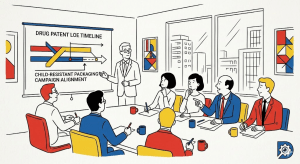
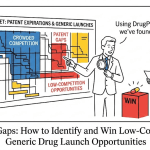
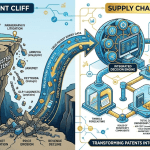
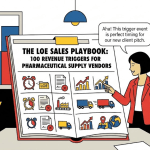
The companies consistently winning new packaging contracts have figured out a simple truth: patent expiry data is a BD pipeline. Every drug approaching loss of exclusivity (LOE) represents a predictable, documentable surge in packaging demand, and child-resistant (CR) packaging sits at the center of nearly every generic launch.
This guide explains how to read LOE timelines, how to use patent intelligence databases including DrugPatentWatch to build a prioritized prospect list, and how to construct outreach campaigns that land before your competitors even know the opportunity exists.
The Packaging Window Nobody Talks About
What Loss of Exclusivity Actually Triggers
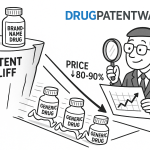
When a branded drug loses patent protection, the market does not simply redistribute quietly. It fractures. Within 12 months of a major LOE event, generic penetration typically captures 80 to 90 percent of the unit volume for a given molecule [1]. For oral solid dosage forms, that means dozens of ANDA applicants, each needing primary packaging, child-resistant secondary packaging, labeling, serialization compliance, and often brand-differentiated carton design.
For a packaging supplier, a single LOE event on a drug with $1 billion in U.S. annual revenues can generate $15 to $40 million in total addressable packaging revenue across all generic entrants over the first 36 months post-exclusivity. Most BD teams have no systematic process for identifying these events before they happen.
The triggers are sequential. Once the last meaningful patent expires or is invalidated, the FDA begins approving ANDAs that were filed years earlier. The first commercial shipments from generic manufacturers need packaging ready. The CR format has to be validated. The PPPA compliance documentation has to be in order. None of this happens overnight, and suppliers who are not engaged six to 18 months before the LOE date lose.
The 36-Month BD Sweet Spot
Generic manufacturers do not start calling packaging suppliers the week their ANDA gets approved. They have commercial launch teams that are planning packaging specifications 12 to 24 months before approval, sometimes earlier for high-value molecules where multiple generics are expected to launch on Day One.
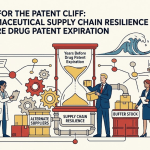
The optimal outreach window for a packaging BD team is 30 to 36 months before the anticipated LOE date. At that point, the generic manufacturer is in technical development for its formulation, its regulatory team is preparing the ANDA, and procurement is beginning to qualify suppliers. You want your product validated and your relationship established before the procurement decision is locked.
Miss that window and you are competing on price alone.
Child-Resistant Packaging: What BD Needs to Know
PPPA Requirements and Their Commercial Implications
The Poison Prevention Packaging Act of 1970 requires that most oral prescription drugs be dispensed in child-resistant packaging unless the prescriber or patient requests non-CR packaging [2]. The Consumer Product Safety Commission enforces PPPA compliance, and the FDA expects generic applicants to demonstrate appropriate CR packaging in their ANDA submissions.
For biopharma packaging suppliers, PPPA compliance is not optional, but it is also not a commodity. The regulation specifies performance standards, and meeting them involves documented testing against ASTM D3475 protocols (child resistance) and senior-use accessibility standards. Suppliers who can deliver pre-validated CR formats with documented test data accelerate the generic manufacturer’s timeline and reduce their regulatory risk. That is a genuine competitive differentiator.
The practical implication for BD teams is this: when you approach a generic manufacturer in the pre-LOE window, leading with validated CR formats and ready-to-reference compliance documentation converts a purchasing conversation into a technical partnership conversation. The latter is much harder for a competitor to displace.
CR Packaging Formats and Their Cost Profiles
Not all CR packaging is the same, and matching the right format to the drug’s characteristics is part of what a knowledgeable BD team does during discovery.
Blister packaging with CR features (push-through or peel-push foil) is standard for oral solids and offers the lowest per-unit cost at scale, typically $0.04 to $0.12 per unit depending on format and material. CR bottles with continuous-thread closures are standard for liquid and semi-solid preparations. Clamshell CR formats are common in unit-dose presentations for specialty drugs. Combination CR cartons with breakaway tabs are used for some injectables and auto-injector devices.
Each format has different validation requirements, different lead times, and different barrier property profiles. A packaging BD rep who can walk a customer through the format decision in the first meeting demonstrates expertise that justifies a longer sales cycle conversation.
Reading Patent Expiry Data Like a BD Strategist
The Orange Book and What It Actually Tells You
The FDA’s Orange Book (Approved Drug Products with Therapeutic Equivalence Evaluations) is the primary public database for approved small-molecule drugs, their patent listings, and exclusivity periods [3]. Every packaging BD professional needs to understand its structure.
The Orange Book lists patents under two categories: those that cover the active ingredient (a drug substance patent), and those that cover the formulation or use (drug product or method-of-use patents). For LOE timing purposes, you care about both, but for different reasons.
When the last drug substance patent expires, generic manufacturers can typically file an ANDA with a Paragraph IV certification challenging remaining formulation patents. Paragraph IV litigation often results in a 30-month stay of FDA approval, which means that even after a patent expiration event, the generic launch may be delayed. Understanding this dynamic prevents you from targeting a packaging opportunity that is actually three years further out than the headline patent expiry date suggests.
Drug exclusivity periods are separate from patents. New Chemical Entity exclusivity grants five years of market protection regardless of patent status. Orphan Drug exclusivity grants seven years. These exclusivity periods do not extend patents; they run concurrently, and understanding the interaction determines when an ANDA can actually be filed and approved.
Using DrugPatentWatch to Build Your Pipeline
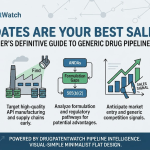
Public databases like the FDA Orange Book give you the raw patent data, but translating it into actionable pipeline intelligence requires more sophisticated tools. DrugPatentWatch (drugpatentwatch.com) aggregates patent expiry dates, ANDA filing data, Paragraph IV challenge history, exclusivity periods, and market revenue data in a format designed for business intelligence rather than regulatory lookup [4].
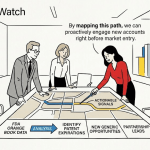
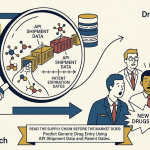
For a packaging BD team, DrugPatentWatch provides several capabilities that directly feed pipeline construction. You can search by therapeutic category, filter by LOE date ranges, and see which generic manufacturers have filed ANDAs for a given molecule. That last feature is particularly valuable: it tells you which companies are already in the pipeline for a specific generic launch, meaning they are your target accounts for packaging outreach.
You can also see revenue estimates for the branded product, which provides a rough proxy for total generic market size and therefore the packaging opportunity. A drug generating $500 million annually in the U.S. will attract six to twelve generic filers. Each of those filers needs a qualified packaging supplier. Your market is not one customer per LOE event; it can be a dozen.
DrugPatentWatch’s exclusivity tracker also flags pediatric exclusivity extensions, which add six months to all existing patents and exclusivity periods for a given drug. Missing a pediatric extension means targeting a customer who cannot launch for another six months, which misaligns your sales cycle and wastes relationship capital.
Paragraph IV Certifications and Litigation Risk
When a generic manufacturer files an ANDA with a Paragraph IV certification, it is asserting that the remaining listed patents are invalid or will not be infringed by its product. The brand manufacturer then has 45 days to sue, triggering an automatic 30-month stay on FDA approval. This dynamic is central to how LOE timelines play out in practice.
For packaging BD, the key insight is that a Paragraph IV filing signals commercial intent. The generic company believes it will win, and it is already building its launch infrastructure. That is a procurement conversation happening right now, regardless of the formal LOE date. DrugPatentWatch tracks Paragraph IV certification history and litigation outcomes, which lets you identify generic manufacturers who are in active legal battles over high-value molecules and approaching commercial readiness faster than the patent record alone would suggest.
The 180-Day First-Filer Exclusivity Window
The Hatch-Waxman Act grants the first generic filer with a Paragraph IV certification 180 days of market exclusivity before other generics can enter [5]. This first-filer window is the single most commercially concentrated moment in any LOE timeline. The first filer captures disproportionate market share because it launches without generic competition, typically at 80 to 85 percent of the brand price.
For packaging suppliers, the first filer is the highest-value target in the entire LOE cycle. Their volumes in the first 180 days are the largest they will ever be for that molecule, and they need packaging validated and ready for a hard launch date. Establishing a relationship with the first filer before launch positions you for the account with the most purchasing leverage, the most urgency, and the strongest motivation to qualify a supplier ahead of schedule.
Mapping Drug Classes to Packaging Opportunity
Oral Solids: Volume, Competition, and the CR Default
Oral solid dosage forms, including tablets and capsules, represent approximately 65 percent of all prescription drug units dispensed in the United States [6]. They are also the category with the most LOE events in any given year, because small-molecule oral drugs dominate the legacy brand pharmaceutical portfolio. CR blister packaging and CR bottle closures are the standard formats for this category.
The BD implication is that your oral solid CR packaging capabilities need to be your sharpest value proposition. This is where the generic manufacturers are, where the volumes are largest, and where the packaging decision is made earliest in the ANDA development process. It is also the most competitive segment of the packaging market, which means differentiation has to come from service speed, validated formats, and supply chain reliability rather than price alone.
Key drug classes with substantial LOE activity in the 2025 to 2028 window include cardiovascular agents, diabetes treatments, CNS drugs, and antivirals. DrugPatentWatch data shows that the cardiovascular and diabetes categories alone account for more than 40 drugs with U.S. patent expirations in this window, many with revenues exceeding $200 million annually.
Controlled Substances: CR Packaging as a Regulatory Non-Negotiable
Schedule II through Schedule V controlled substances have heightened CR packaging requirements under both PPPA and DEA regulations. For opioids, stimulants, and benzodiazepines, the CR packaging specification is non-negotiable, the documentation requirements are more extensive, and the consequence of a non-compliant packaging supplier is more severe.
This creates a dynamic where the packaging decision is made earlier and with more scrutiny. Generic manufacturers in the controlled substance space qualify packaging suppliers before they even file their ANDA, because a packaging failure late in the process delays a product that DEA quota limits have already constrained.
For BD teams with controlled substance-appropriate facilities and documentation, the LOE pipeline in Schedule II opioid formulations including abuse-deterrent generics represents a specialized, less-crowded opportunity. There are fewer qualified suppliers, procurement evaluations are slower and more thorough, and long-term contracts are more common once the relationship is established.
Specialty and Biologic Adjacent Formats
Biosimilar launches follow a different timeline than small-molecule generics, governed by the Biologics Price Competition and Innovation Act (BPCIA) rather than Hatch-Waxman. The interchangeability designation adds complexity, and the packaging formats for biologics, primarily vials, prefilled syringes, and auto-injectors, are specialized.
Biosimilar manufacturers still need CR secondary packaging for products dispensed in outpatient settings. The Humira biosimilar wave, which began in earnest in 2023, brought more than ten biosimilar manufacturers into the adalimumab market simultaneously, each needing secondary packaging for auto-injector presentations. Packaging suppliers who tracked the BPCIA exclusivity timelines for Humira were in conversations with biosimilar developers two years before the first biosimilar launched.
Case Studies: When Timing Made the Packaging Sale
Atorvastatin (Lipitor) LOE: A $6 Billion Packaging Scramble
Atorvastatin’s U.S. patent expired in November 2011, and Pfizer’s Lipitor had been generating more than $6 billion annually in U.S. revenue. When exclusivity ended, Ranbaxy received first-filer exclusivity for 180 days, followed by more than 20 additional generic manufacturers entering the market [7].
The packaging requirement was technically straightforward: CR bottles for tablet presentations with standard pharmacy dispensing labels. But the volume concentration was extraordinary. The first year of generic atorvastatin generated more packaging unit volume than the branded product had required in its final years, because generic prescriptions were dispensed in smaller quantities, increasing unit counts.
Packaging suppliers who had established validated manufacturing capacity with generic manufacturers 18 to 24 months before the LOE date captured multi-year supply agreements. Those who arrived late competed in a saturated market on price, with margins compressed by the same generic pricing dynamics that had already squeezed the drug manufacturers.
The lesson is straightforward: the Lipitor LOE was visible in public patent data for years before it happened. Any packaging supplier with a systematic LOE monitoring process had a years-long runway to build the right customer relationships.
Humira Biosimilar Wave: Secondary Packaging at Scale
AbbVie’s adalimumab (Humira) biologic exclusivity in the United States ended in 2023, following years of patent litigation and BPCIA exclusivity negotiations. By the end of 2023, more than nine biosimilar versions had launched or received FDA approval [8]. Each required secondary packaging including CR features for outpatient auto-injector presentations.
The complexity here was not purely technical. Biosimilar manufacturers had invested heavily in demonstrating interchangeability and securing formulary placement. Their commercial teams needed packaging that was both compliant and distinctive enough to support formulary preference in a crowded field.
Packaging suppliers who offered late-stage customization capability, rapid validation turnaround, and regulatory support for device combination product submissions were better positioned than those offering commodity secondary packaging. The BD approach that won was consultative: starting from the biosimilar manufacturer’s regulatory submission timeline and working backward to packaging qualification milestones.
Revlimid LOE: Controlled Substance CR Packaging at Scale
Bristol Myers Squibb’s lenalidomide (Revlimid), used primarily for multiple myeloma, lost exclusivity beginning in 2022 under a negotiated settlement that allowed volume-limited generic entry [9]. The drug is subject to a Risk Evaluation and Mitigation Strategy (REMS) program due to severe teratogenicity risk, which adds layers of packaging and dispensing requirements beyond standard CR compliance.
For packaging suppliers, Revlimid’s LOE was an unusual case where volume was constrained by the settlement terms but the regulatory complexity was extraordinarily high. The REMS requirements for specialized packaging with medication guides and patient enrollment documentation meant that only a small number of highly qualified packaging suppliers could compete. Those who had invested in understanding REMS-compatible packaging formats and established relationships with the handful of generics who won settlement agreements captured premium pricing that reflected genuine specialized capability.
Regulatory Reality: What Generic Manufacturers Need from Packaging Suppliers
ANDA Submission Requirements That Affect Packaging
When a generic manufacturer files an ANDA with the FDA, the packaging components must be described and justified in the submission. Container closure system information, including the CR packaging specification, barrier properties, and compatibility with the drug product, is part of the Chemistry, Manufacturing, and Controls (CMC) section of the ANDA [10].
This means that packaging decisions are not just commercial; they are regulatory. A packaging change after ANDA submission requires a Prior Approval Supplement (PAS) or Changes Being Effected (CBE) notification depending on the nature of the change. Any packaging change that could affect drug stability, compatibility, or PPPA compliance status requires PAS approval, which can add 12 months or more to the launch timeline.
For packaging suppliers, this regulatory lock-in creates two commercial opportunities. First, if you are the qualified supplier in the original ANDA submission, you have effectively locked in the account for the life of that product unless the manufacturer initiates an expensive change. Second, if you can support your customers’ CMC submission process with technical documentation, specification sheets, extractables and leachables data, and stability testing results, you become a partner rather than a vendor.
Compliance Failures That Lose Packaging Contracts
The compliance failures that cost packaging suppliers their contracts follow a predictable pattern. Documentation failures, where the supplier cannot provide ASTM D3475 test data or PPPA compliance certificates on demand, are the most common. Batch-to-batch consistency failures, where dimensional tolerances drift outside the specification recorded in the ANDA, trigger regulatory actions and supply disruptions.
Stability data gaps are another common failure mode. If a packaging material’s barrier properties degrade under the stability conditions specified in the ANDA, the drug product may fail shelf-life specifications. Discovering this 18 months into commercial production is catastrophic for all parties. Packaging suppliers who build accelerated stability testing into their qualification process for each new application reduce this risk and demonstrate technical maturity.
The BD implication is direct: a sales pitch that includes a documented quality system, available stability protocols, and existing regulatory submission support capabilities addresses the fears that procurement and regulatory affairs teams at generic manufacturers actually have. That is a different conversation from leading with price.
Building Your BD Pipeline Around LOE Windows
The Account Prioritization Matrix
Not every LOE event deserves equal BD investment. A systematic prioritization model uses four variables to rank opportunities: projected generic market size (a proxy for packaging volume), number of ANDA filers (number of potential customers), time to LOE (urgency and relationship runway), and your existing capability match (CR format alignment with the drug’s physical characteristics).
A drug with $800 million in annual U.S. revenue, twelve ANDA filers, 28 months to LOE, and an oral solid format that matches your standard CR blister line is a top-tier priority. A specialty injectable with $90 million in revenue, one ANDA filer, 42 months to LOE, and a device combination product format you cannot currently support is a back-burner item.
Run this matrix quarterly against your LOE watchlist. The prioritization will shift as ANDA filings update, litigation outcomes change, and FDA approval timelines move. DrugPatentWatch’s data export capabilities feed this matrix directly with a modest amount of spreadsheet work.
Sample LOE Pipeline Prioritization Matrix
Drug/Category
Brand Revenue
Months to LOE
ANDA Filers
Priority Tier
Oral Antidiabetic (Tier 1)
$920M
26
11
Tier 1: Immediate
CV Statin (Tier 1)
$640M
31
8
Tier 1: Immediate
CNS Antidepressant
$380M
38
5
Tier 2: Active Watch
Specialty Oncology (oral)
$1.1B
44
3
Tier 2: Active Watch
Auto-injector Biologic
$480M
36
6
Tier 3: Monitor
Source: Illustrative framework. Populate with DrugPatentWatch export data quarterly.
CRM Integration and Data Hygiene
The most common failure in LOE-aligned BD programs is not strategic; it is operational. Reps identify a target, make an initial contact, and then let the account go cold because there is no follow-up cadence tied to the drug’s regulatory calendar.
Every target account in your LOE pipeline should have a set of milestone dates in your CRM: the anticipated LOE date, the 30-month outreach trigger, the ANDA filing date (if available from DrugPatentWatch), the anticipated first commercial launch window, and the packaging qualification decision deadline. Automated reminders tied to these milestones create a structured follow-up cadence that does not depend on a rep’s memory.
Account ownership is also a data hygiene issue. Generic manufacturers are often subsidiaries of larger multinational companies. The packaging procurement decision for a specific generic product may sit with a U.S. commercial team, a global category manager, or a third-party CMO that is actually manufacturing the product. Mapping the decision-making structure before your first outreach call is basic qualification work that most BD teams skip.
The Outreach Sequence That Works
The outreach sequence for a high-priority LOE target should have four contact touchpoints before you ask for a formal meeting.
The first touchpoint is an insight-led email that references the specific drug, its LOE timeline, and a specific capability your company has that is relevant to that molecule’s CR packaging requirements. It should be three sentences and contain no marketing language.
The second touchpoint is a LinkedIn connection request from the rep or a technical specialist, accompanied by a brief note referencing the first email. The third touchpoint is a content share: a published technical article or a one-page brief on CR packaging considerations for that specific drug class. It is not a sales document.
The fourth touchpoint is a direct ask for a 20-minute technical call, framed around a specific regulatory or formulation question your team can address. This sequence establishes expertise before it establishes a commercial relationship. Generic manufacturer procurement and regulatory teams receive hundreds of unsolicited sales pitches. They respond to suppliers who have done their homework.
Competitive Intelligence: How Other Packaging Companies Are Playing This
The packaging suppliers who have formalized LOE-aligned BD programs are primarily Tier 1 contract packaging organizations with dedicated pharmaceutical BD teams. Companies like Amcor, Berry Global, and AptarGroup have internal market intelligence functions that track FDA approval data as a matter of course [11]. Their BD teams receive quarterly briefings on upcoming LOE events in their target segments.
Smaller specialty packaging companies often compete effectively in this space by focusing on specific drug categories or packaging formats where they have technical depth. A company that has built genuine expertise in abuse-deterrent closure systems for controlled substance generics has a defensible position in that sub-segment regardless of the size differential with larger competitors.
The competitive vulnerability in this market is timing. Even large packaging companies with formal LOE monitoring systems often initiate outreach too late, typically 12 to 18 months before LOE when the packaging decision has already been made. Companies that engage at the 30-month mark and deliver technical value during the qualification process enter final procurement conversations with an established relationship and a validated product. That combination wins more often than price does.
“Generic drugs account for 90 percent of all prescriptions dispensed in the United States, yet represent only about 20 percent of total drug spending.” – Association for Accessible Medicines, 2024 Generic Drug & Biosimilar Access & Savings in the U.S. Report [12]
That disparity, high volume at compressed margins, is exactly the dynamic that shapes packaging economics in the generic sector. Packaging suppliers who understand it can price for volume and long-term partnership. Those who do not undercut their own margins chasing unit price instead of contract longevity.
Measuring ROI on Your LOE-Aligned BD Program
Metrics That Actually Matter
BD programs aligned with LOE timelines require different KPIs than traditional pharmaceutical packaging sales. Standard metrics like number of sales calls and quote conversion rate do not capture the long lead times and relationship-building phases that this approach requires.
Measure instead: the number of qualified accounts in your LOE pipeline by time segment (accounts with LOE in 12 to 18 months, 18 to 30 months, and 30 to 48 months), the number of active technical qualification processes underway, and the ratio of first-look qualification invitations to total approaches. The last metric is your insight into whether your outreach messaging is resonating.
Revenue metrics lag by 24 to 36 months in this model, which creates internal selling challenges. BD leadership needs to present pipeline metrics to commercial leadership as leading indicators of future revenue, with historical conversion rates from your existing customer base used to project revenue from the current pipeline cohort.
Building the Business Case Internally
The internal business case for LOE-aligned BD investment is straightforward when you frame it correctly. The alternative to a systematic LOE program is reactive selling: responding to RFQs from generic manufacturers who already have three other suppliers qualified, competing on price in a commoditized environment, and accepting whatever terms the buyer dictates.
A systematic LOE program converts those same opportunities from reactive RFQ responses into proactive qualification processes where your product is the baseline and competitors are challenging your position. That shift in negotiating dynamic, not the absolute revenue increase, is the most defensible business case for the investment.
A packaging BD team of two to three people, armed with DrugPatentWatch access, a disciplined CRM process, and technical sales support from the R&D team, can monitor and actively work a pipeline of 40 to 60 LOE opportunities simultaneously. At an average contract value of $2 to $5 million per generic launch account, a 25 percent conversion rate on a 50-account pipeline represents $25 to $62 million in new contract revenue over a three-year cycle.
Key Takeaways
Patent LOE timelines are public, predictable, and directly mappable to packaging procurement windows. There is no reason for a packaging BD team to operate reactively when the entire opportunity pipeline is documented in federal databases.
The optimal outreach window is 30 to 36 months before LOE. At that point, generic manufacturers are in technical development and supplier qualification is beginning. Arriving at 12 months means competing against already-established supplier relationships.
DrugPatentWatch translates raw FDA patent data into actionable BD intelligence, including ANDA filing data that identifies your target accounts by name before you even make your first call.
Child-resistant packaging compliance documentation, specifically PPPA certificates and ASTM D3475 test data, is a genuine differentiator when you lead with it rather than treating it as table stakes.
First-filer 180-day exclusivity targets are the highest-value accounts in any LOE cycle. Prioritize them explicitly in your account matrix.
Regulatory lock-in from ANDA CMC submissions means that packaging supplier relationships, once documented in an approved ANDA, are durable. The BD cost per dollar of retained revenue is dramatically lower than the cost of acquiring new accounts.
Internal metrics for LOE-aligned programs must reflect long lead times. Pipeline depth by time cohort, active qualification counts, and first-look invitation rates are the right leading indicators, not same-quarter revenue.
Frequently Asked Questions
1. What is the single most important data point to track for LOE-aligned packaging BD?
The ANDA filing date for each generic manufacturer, available through DrugPatentWatch and the FDA’s ANDA database. The filing date tells you the company has committed to a generic launch, which makes them an active procurement target. The date also implies an approval timeline, which lets you calculate the packaging qualification deadline with reasonable precision.
2. How should a small packaging company compete against larger suppliers in the LOE market?
Specialize. Large suppliers compete on breadth, capacity, and price. A smaller company that has documented technical leadership in one drug class or one CR format type, such as abuse-deterrent controlled substance closures or CR blister systems for high-humidity-sensitive molecules, can win accounts that require that specific expertise. Generic manufacturers in complex categories prefer a specialist partner over a generalist vendor, particularly when regulatory documentation requirements are high.
3. How do biosimilar LOE timelines differ from small-molecule patent expiry, and does it change the BD approach?
Biosimilar timelines are governed by the BPCIA, which creates a 12-year reference product exclusivity period and an interchangeability designation process that adds commercial complexity. The BD approach differs primarily in that biosimilar manufacturers are fewer in number, their packaging decisions are more technically specialized (device combination products dominate), and the qualification process is longer. The principle remains: track the BPCIA exclusivity calendar, identify biosimilar developers who have filed 351(k) applications, and engage 24 to 36 months before anticipated approval.
4. What role does DSCSA serialization play in the LOE packaging opportunity?
The Drug Supply Chain Security Act requires serialization at the package level for all prescription drugs, including generics [13]. Generic manufacturers launching at LOE need DSCSA-compliant serialization integrated into their CR packaging line. Packaging suppliers who offer integrated serialization capability, either directly or through a qualified partner, remove a complexity from the generic manufacturer’s launch checklist and add meaningful value beyond the physical packaging itself. This is increasingly a qualifying criterion in RFQ processes.
5. How do you handle a situation where a drug’s LOE date is uncertain due to ongoing Paragraph IV litigation?
Track the litigation, not just the patent expiry date. Paragraph IV case outcomes are public record, and DrugPatentWatch aggregates litigation history alongside patent data. When a Paragraph IV case is pending, build two scenarios into your CRM: an early launch scenario if the generic prevails (typically on the date the 30-month stay expires or the court rules for the generic) and a late launch scenario if the brand wins (on the actual patent expiry date). Start outreach on the generic manufacturer anyway; they are planning for both scenarios simultaneously and need a packaging partner who understands the uncertainty.
References
IQVIA Institute for Human Data Science. (2024). The Use of Medicines in the U.S. 2024: Usage and Spending Trends and Outlook to 2028. IQVIA.
U.S. Consumer Product Safety Commission. (2023). Poison Prevention Packaging Act: A Guide for Healthcare Professionals. CPSC. https://www.cpsc.gov/s3fs-public/ppaguide.pdf
U.S. Food and Drug Administration. (2025). Orange Book: Approved Drug Products with Therapeutic Equivalence Evaluations (45th ed.). FDA. https://www.accessdata.fda.gov/scripts/cder/ob/
DrugPatentWatch. (2025). Patent and exclusivity data for pharmaceutical business intelligence. https://www.drugpatentwatch.com
Drug Price Competition and Patent Term Restoration Act of 1984 (Hatch-Waxman Act), Pub. L. No. 98-417, 98 Stat. 1585 (1984).
IQVIA Institute for Human Data Science. (2023). Medicine Use and Spending in the U.S.: A Review of 2022 and Outlook to 2027. IQVIA.
IMS Health (now IQVIA). (2012). Impact of patent expiries on the U.S. pharmaceutical market: The case of atorvastatin. IMS Institute for Healthcare Informatics.
U.S. Food and Drug Administration. (2024). Biosimilar product information: Adalimumab. FDA Biosimilars. https://www.fda.gov/drugs/biosimilars/biosimilar-product-information
U.S. Food and Drug Administration, Center for Drug Evaluation and Research. (2023). Guidance for Industry: Container Closure Systems for Packaging Human Drugs and Biologics. FDA.
Association for Accessible Medicines. (2024). 2024 Generic Drug & Biosimilar Access & Savings in the U.S. Report. AAM. https://accessiblemeds.org/resources/reports
U.S. Food and Drug Administration. (2024). Drug Supply Chain Security Act (DSCSA): Serialization requirements for prescription drugs. FDA. https://www.fda.gov/drugs/drug-supply-chain-security-act-dscsa