How generic drug suppliers’ litigation histories expose supply chain risk, financial fragility, and competitive staying power — before you sign the contract.
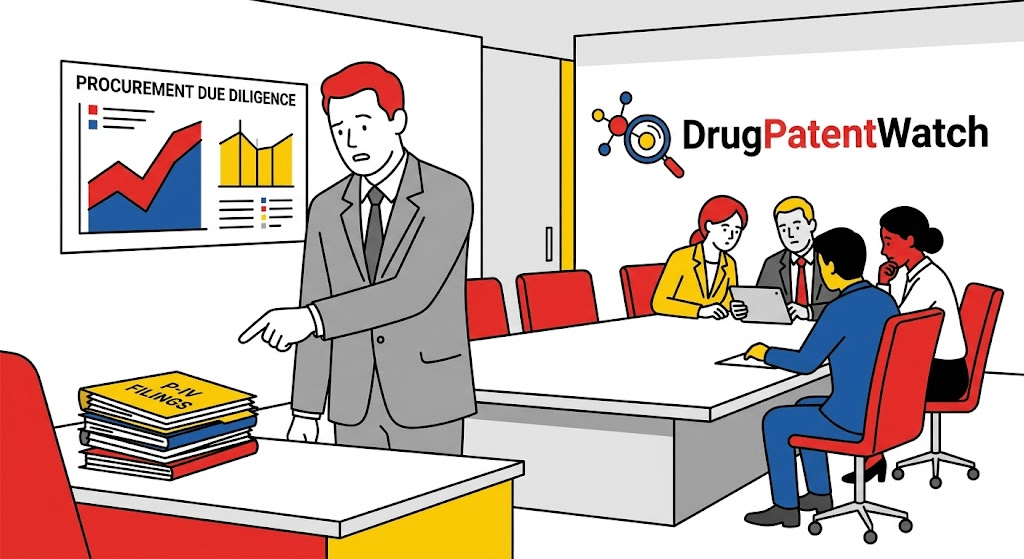
A procurement director at a mid-size specialty pharma company recently learned an expensive lesson about supplier vetting. Her company had contracted with a generic manufacturer to supply a critical active pharmaceutical ingredient — a high-volume compound used in a cardiovascular product generating $180 million in annual revenue. The supplier had passed standard quality audits, had FDA registration, and had provided clean financial statements.
What nobody had checked was the supplier’s Paragraph IV certification history.
Three months into the supply agreement, the brand-name drug company whose patent the generic was challenging obtained a preliminary injunction. The generic manufacturer’s U.S. distribution — and with it, the API supply — halted for eight months while litigation proceeded. The specialty pharma company scrambled for an emergency alternative source, paid 40% above contracted price to secure interim supply, and missed two quarterly shipment commitments to its own customers.
The litigation outcome was public. The supplier’s Paragraph IV filing was in the FDA’s Orange Book. The patent holder’s lawsuit was in the federal district court docket. Every piece of information needed to anticipate this disruption was available before the contract was signed.
This article explains how to find it, read it, and use it to build a procurement due diligence process that treats patent risk as a first-order supplier qualification criterion.
What Paragraph IV Filings Actually Are — and Why Procurement Ignores Them
The Legal Structure Most Buyers Have Never Read
The Hatch-Waxman Act of 1984 created the modern generic drug market. Before Hatch-Waxman, generic manufacturers faced enormous uncertainty about whether launching a drug would expose them to patent infringement liability. The Act resolved this by creating a structured process for generic manufacturers to challenge brand-name drug patents before their products entered the market.
Central to this process is the patent certification system. When a generic manufacturer files an Abbreviated New Drug Application (ANDA) with FDA, it must certify one of four things about each patent listed in FDA’s Orange Book that covers the brand-name reference drug:
Paragraph I: No patent has been listed for the brand drug.
Paragraph II: The listed patent has expired.
Paragraph III: The generic manufacturer will not launch until the listed patent expires.
Paragraph IV: The listed patent is invalid, unenforceable, or will not be infringed by the generic.
Paragraph IV certifications are the only certification that directly challenges patent rights. When a generic manufacturer files a Paragraph IV, it must notify the brand-name company and patent holder. If the brand-name company sues for patent infringement within 45 days, FDA automatically imposes a 30-month stay on ANDA approval — meaning the generic cannot launch for at least 30 months, regardless of the merits of the patent challenge.
The generic manufacturer that files the first Paragraph IV certification on a given drug is potentially entitled to 180 days of market exclusivity before other generics can enter. This ‘first filer’ advantage has enormous economic value — often worth hundreds of millions of dollars for major drugs — and drives significant investment and litigation strategy in the generic industry.
For procurement professionals, understanding this structure matters because it determines whether a supplier’s product is legally clear to supply, how likely that clearance is to be disrupted, and what the supplier’s financial and legal exposure looks like at any given moment.
Why Procurement Teams Don’t Use This Data
The short answer is organizational siloing. Patent due diligence lives in legal departments. Supplier qualification lives in procurement and quality. The two functions rarely share data in structured ways, and when they do, it’s usually in response to a crisis rather than as a standard qualification workflow.
There’s also a perception problem. Patent litigation feels arcane to procurement professionals trained in quality systems, logistics, and financial analysis. The language is specialized, the documents are dense, and the outcomes are uncertain. Most procurement teams default to checking whether a supplier has FDA approval, an acceptable audit score, and adequate financial reserves — and stop there.
That approach misses the most predictive leading indicator of supply disruption for generic drug suppliers: their active litigation exposure.
A generic manufacturer with three Paragraph IV certifications pending, two of which have triggered 30-month stays, is not the same risk profile as a manufacturer with a clean patent certification history, even if both have identical audit scores and financial ratios. The first supplier could face simultaneous injunctions across multiple product lines. The second could not.
Reading the Orange Book: Your First Data Source
What the Orange Book Contains and How to Access It
FDA’s Approved Drug Products with Therapeutic Equivalence Evaluations — universally called the Orange Book — is the authoritative public database of approved drugs and their associated patents and exclusivities. It’s searchable at FDA’s website and updated daily.
For each approved drug, the Orange Book lists:
The approved drug products and their dosage forms
Patents that the drug sponsor has submitted for listing (including patent numbers and expiration dates)
Exclusivity periods (including 180-day generic exclusivity, pediatric exclusivity, and new chemical entity exclusivity)
Therapeutic equivalence codes (the AB, BX, and other codes that determine substitutability)
When a generic manufacturer files a Paragraph IV certification, that certification and the resulting first-filer status appear in the Orange Book data. Specifically, you can see whether a given ANDA has a Paragraph IV certification and whether the first-filer 180-day exclusivity has been triggered.
The Orange Book does not, by itself, tell you whether patent litigation has been filed. For that, you need federal court docket searches — discussed below. But the Orange Book tells you which drugs have Paragraph IV certifications pending, which can tell you where to look.
Therapeutic Equivalence Codes and Supplier Qualification
The Orange Book’s therapeutic equivalence codes determine whether FDA considers a generic product substitutable for the brand-name drug at the pharmacy level. The ‘AB’ code means FDA considers the products therapeutically equivalent and substitutable. Other codes — ‘BX,’ ‘BC,’ ‘BD,’ and others — indicate varying degrees of equivalence uncertainty or non-equivalence.
For procurement purposes, a supplier’s therapeutic equivalence code matters in two ways. First, it affects whether the supplier’s product can be used as a direct substitute for the reference product or for competing generic products, which affects procurement flexibility. Second, it’s a proxy for the regulatory robustness of the supplier’s ANDA — a supplier with an AB-rated product has cleared a higher bar than one with a less favorable rating.
Procurement teams sourcing generic APIs or finished dosage forms should treat therapeutic equivalence codes as a baseline qualification criterion, not an afterthought.
Exclusivity Periods and Supply Timing
The Orange Book also tracks drug-specific exclusivity periods that affect when generic competition can legally begin. New chemical entity (NCE) exclusivity gives a brand-name company five years of market protection from any generic competition. Orphan drug exclusivity provides seven years. Pediatric exclusivity adds six months to existing patents or exclusivities.
For procurement teams sourcing branded drugs or monitoring when generic alternatives will become available, exclusivity periods are the relevant planning horizon. A drug with three years of remaining NCE exclusivity will not have a generic alternative regardless of how many Paragraph IV filings are pending — those generics cannot launch until exclusivity expires.
Understanding which exclusivity types apply to a drug, and their expiration timelines, is the starting point for any procurement strategy that involves generic substitution or competitive sourcing.
The Patent Litigation Database: Finding the Risk That’s Already Live
PACER and the Federal District Court Record
When a brand-name company sues a generic manufacturer for patent infringement following a Paragraph IV notification, the lawsuit lands in federal district court. Most Hatch-Waxman patent cases are filed in the District of Delaware, the District of New Jersey, or the Southern District of New York — jurisdictions with specialized patent litigation expertise and concentrated pharmaceutical industry presence.
The Public Access to Court Electronic Records system (PACER) provides access to federal court dockets for a nominal fee. Using PACER, procurement teams can pull the full docket for any active Hatch-Waxman patent case, including:
The complaint and the specific patents being asserted
The ANDA products at issue
Any preliminary injunction motions and their outcomes
The current litigation schedule and trial date
Settlement agreements (to the extent they’re publicly filed)
Court orders, including any that affect the supplier’s ability to launch
This isn’t specialized legal work. A procurement analyst who spends two hours with PACER can pull every active patent case involving a supplier and understand, at a basic level, what products are affected and what the current status is.
The analysis doesn’t require understanding patent claim construction or the technical merits of the litigation. For procurement purposes, the relevant questions are simpler: Is this supplier currently subject to a 30-month stay? Has a preliminary injunction been sought? Has a trial date been set? What’s the settlement history for this plaintiff-defendant pair?
The 30-Month Stay: Procurement’s Key Variable
The automatic 30-month stay is the single most important patent litigation concept for procurement due diligence. When a brand-name company files an infringement suit within 45 days of receiving Paragraph IV notification, FDA cannot approve the generic ANDA until either the 30 months expire, a court finds the patent invalid or not infringed, or the patent expires — whichever comes first.
This means a supplier with an active 30-month stay cannot legally market its product in the United States during the stay period. If you’ve contracted with that supplier for a product under stay, you will not receive supply during that period.
The 30-month clock starts from the date of Paragraph IV notification, not the date the lawsuit was filed. Tracking this clock requires knowing both the notification date (which is often reflected in court filings) and any extensions or modifications that courts have granted.
Courts can also cut the 30-month stay short if the brand-name company fails to prosecute the case diligently. This happens infrequently but does occur, and it’s worth tracking for suppliers whose products are under stay but where the plaintiff’s litigation activity appears to have slowed.
Preliminary Injunctions: Higher Risk Than the Stay
A preliminary injunction is more serious than a 30-month stay, and procurement teams need to understand the difference.
The 30-month stay only applies before FDA grants ANDA approval. Once a generic ANDA is approved, the generic can market the drug even if litigation is still pending — unless the court enters a preliminary injunction separately.
A preliminary injunction is a court order prohibiting the generic from marketing its product during litigation. To get one, the brand-name company must demonstrate likelihood of patent infringement, likely irreparable harm, that the balance of hardships favors the brand, and that the public interest supports the injunction. Courts grant preliminary injunctions in Hatch-Waxman cases regularly — perhaps 30-40% of cases where they’re sought, according to data compiled from Lex Machina’s pharmaceutical litigation database.
If a supplier has received ANDA approval but faces a pending preliminary injunction motion, its ability to supply is at imminent risk. Procurement teams should monitor active preliminary injunction motions involving suppliers with the same urgency as a supplier quality hold.
DrugPatentWatch: Making Paragraph IV Data Actionable
What the Platform Does That Manual Research Cannot
Manual Orange Book searches and PACER docket pulls can tell you a lot about a specific supplier’s patent exposure if you know what to look for and where to look. The limitation is scalability. A procurement team managing fifty generic suppliers cannot conduct manual patent searches on each supplier’s product portfolio regularly enough to catch changes in real time.
DrugPatentWatch aggregates, structures, and monitors pharmaceutical patent and exclusivity data from the Orange Book, federal court records, and other public sources. It provides structured alerts for patent expirations, new Paragraph IV filings, litigation filings, and settlement events — the signals that matter most for supplier risk monitoring.
For procurement teams, the specific value of a platform like DrugPatentWatch is the ability to set up systematic supplier monitoring at scale. You define your supplier list and the relevant products, and the platform surfaces relevant patent events — a new lawsuit filed, a 30-month stay triggered, a court decision issued — without requiring your team to check each docket manually.
DrugPatentWatch’s database also allows reverse searches that are not intuitive from the Orange Book structure. You can search by company name to see all Paragraph IV certifications that a given generic manufacturer has filed, all active litigation involving that company, and the historical pattern of its patent challenges — how many it has filed, how many have proceeded to trial, and what the outcomes have been.
This historical litigation data is procurement intelligence of the first order. A generic manufacturer with a strong track record of winning Paragraph IV challenges — or settling on commercially favorable terms — represents a different risk profile than one with a history of losing patent disputes and facing extended stay periods.
Reading a Supplier’s Paragraph IV History
When you pull a supplier’s Paragraph IV filing history from DrugPatentWatch or comparable sources, you’re looking at several dimensions simultaneously.
Volume tells you something about the supplier’s business strategy. A manufacturer with 40 active Paragraph IV certifications has made aggressive patent challenges a core of its growth strategy. That’s not inherently bad — many of the most successful generic companies, including Teva, Mylan (now Viatris), and Aurobindo, have built major businesses on aggressive first-filer strategies. But high Paragraph IV volume means high litigation exposure. A supplier with 40 active certifications almost certainly has multiple active lawsuits, multiple 30-month stays, and complex litigation management challenges.
Outcome history is more useful than volume. How many of this supplier’s Paragraph IV challenges have resulted in market entry? How many have been lost at trial? How many have settled, and under what apparent terms? (Settlement terms in Hatch-Waxman cases are often confidential, but the timing and structure of settlements provide useful signals. A settlement in which the generic agrees to a specific entry date is called an ‘authorized generic’ arrangement or ‘pay-for-delay’ settlement — these have faced regulatory scrutiny and may affect when the supplier can actually supply.)
Product concentration is critical. A supplier with ten Paragraph IV certifications all in the same therapeutic category is more concentrated in litigation risk than one with ten certifications spread across five therapeutic areas. If the brand-name companies in that concentrated therapeutic area win their cases, the supplier could lose access to its entire product strategy simultaneously.
Monitoring for Real-Time Events
Static patent analysis — a one-time review of a supplier’s filing history at the time of contract signing — is necessary but insufficient. Patent litigation is dynamic. New lawsuits get filed. Preliminary injunctions get sought and decided. Courts issue claim construction rulings that signal likely outcomes. Settlements are reached.
A supplier qualification standard that requires patent due diligence at contract signing but not during the contract term misses the most common failure pattern: a supplier that looked fine at signing and ran into trouble eighteen months later.
DrugPatentWatch’s alert functionality addresses this by pushing relevant event notifications to procurement teams when patent events occur for monitored suppliers. This converts patent surveillance from a project into a process — which is where it belongs.
The practical implementation requires deciding which event types trigger which procurement responses. A new Paragraph IV certification filing by a supplier is a low-urgency alert — it indicates the supplier has challenged a patent, but litigation hasn’t started and a stay hasn’t been triggered. A new lawsuit filed against a supplier is a medium-urgency alert requiring assessment of which products are affected and what the timeline looks like. A preliminary injunction motion or a court order granting an injunction is a high-urgency alert requiring immediate supply continuity assessment.
Building these triage rules into your alert handling process before a supplier crisis occurs is far more effective than trying to assess the urgency of a patent event in the middle of an emergency.
The Financial Dimension of Paragraph IV Exposure
How Patent Litigation Affects Supplier Financial Health
Patent litigation is expensive. A fully contested Hatch-Waxman patent case through trial costs between $5 million and $15 million per side in legal fees, according to the American Intellectual Property Law Association’s survey data [1]. For a large generic manufacturer with dozens of active cases, annual litigation expenditure can reach tens of millions of dollars.
This isn’t necessarily a distress signal — Teva, Viatris, and Sun Pharma all carry significant annual patent litigation costs as a routine cost of business. But for mid-size and smaller generic manufacturers, concentrated litigation expense can be a meaningful financial burden, particularly if the supplier has pursued aggressive Paragraph IV strategies that have not yet generated offsetting first-filer revenues.
The analysis gets more specific when you look at a supplier’s litigation mix. A supplier with three large active cases against major pharmaceutical companies, all at the preliminary injunction stage, may be spending $20 million or more annually on legal defense while simultaneously facing uncertainty about whether its priority products can launch. If those products represent the majority of the supplier’s projected revenue for the next two years, the financial picture is precarious.
Procurement teams that incorporate patent litigation data into their supplier financial assessments — alongside standard ratio analysis and credit checks — will catch this precariousness earlier than teams that look at financial statements in isolation.
The First-Filer Opportunity and Its Financial Risk
The 180-day first-filer exclusivity period is the most significant financial incentive in generic drug economics. For a major branded drug approaching patent expiration, the first generic entrant can charge prices close to brand-name levels for the entire exclusivity period, then face price compression as other generics enter. The revenue difference between being the exclusive generic and being one of many is often 60-80% in terms of per-unit pricing.
For Lipitor (atorvastatin), the first generic launch in 2011 generated over $1 billion for Ranbaxy (the first filer) during its exclusivity period. For Plavix (clopidogrel), first-filer economics for Apotex were valued in the hundreds of millions before the case settled under complicated circumstances. These are outlier cases, but they illustrate why generic manufacturers invest heavily in Paragraph IV strategies for major drugs.
The financial risk for suppliers — and by extension for their procurement partners — is what happens when first-filer strategies fail. A supplier that has invested heavily in the litigation process for a major drug, expecting to capture first-filer exclusivity, and then loses the patent case or settles on terms that delay entry, may face a significant revenue shortfall relative to its projections.
This scenario creates procurement risk through two channels. First, if the supplier was counting on first-filer revenues to fund operations or service debt, a loss or unfavorable settlement can create immediate financial strain. Second, if the supplier had anticipated launching the challenged drug as a capacity-absorbing product and now cannot, its manufacturing economics may deteriorate, creating cost pressure that gets passed to contract customers.
Authorized Generics and Their Supply Chain Implications
One settlement structure that procurement teams need to understand is the authorized generic arrangement. When a generic manufacturer settles a Paragraph IV case with the brand-name company, one common settlement term is an agreement under which the brand-name company licenses its own manufacturing to produce a ‘generic’ version of the drug — the authorized generic — that the settled generic manufacturer can distribute.
This is commercially and legally complex. The authorized generic counts against the settling generic manufacturer’s 180-day exclusivity calculation in ways that the FTC has scrutinized extensively. More importantly for procurement purposes, the authorized generic may come from the brand-name company’s supply chain, not the generic manufacturer’s own facilities.
If you have contracted with a generic manufacturer that subsequently enters an authorized generic arrangement, you need to understand whether the product you’re receiving is manufactured at the supplier’s own facilities (which you’ve audited and qualified) or at the brand-name company’s facilities (which you have not). This is not a hypothetical concern — authorized generic arrangements are common settlement terms, and they do create supply chain transparency issues.
Building the Paragraph IV Due Diligence Framework
Pre-Qualification Patent Assessment
A systematic pre-qualification patent assessment has four components.
The first is Orange Book verification. Before qualifying any generic drug supplier, pull the current Orange Book listing for every product in the proposed supply relationship. Verify the ANDA approval status, therapeutic equivalence code, and any listed patents and exclusivities. This takes under an hour per product using FDA’s online Orange Book search, and it establishes the baseline patent landscape.
The second is Paragraph IV certification review. For each approved ANDA, check whether the supplier has filed Paragraph IV certifications against any listed patents. If so, determine whether those certifications triggered patent holder notifications, and whether lawsuits followed. DrugPatentWatch’s company-level search makes this straightforward for a supplier’s entire ANDA portfolio, not just the products in the proposed supply agreement.
The third is active litigation assessment. Using PACER, pull the current docket for any active Hatch-Waxman case involving the supplier. At minimum, determine: which products are affected; whether a 30-month stay is in effect; whether any preliminary injunction has been sought or granted; and what the current case schedule shows for trial or resolution.
The fourth is outcome pattern analysis. Look at the supplier’s historical Paragraph IV outcomes over the past five years. How many challenges has it filed? How many have resulted in product launches? How many have been lost at trial or settled on terms requiring delayed entry? This historical pattern is a better predictor of future litigation success than any single case assessment.
Weighting Patent Risk in Supplier Scoring
Most pharmaceutical procurement organizations use some form of supplier scoring or qualification matrix. Patent risk is rarely one of the scored dimensions. It should be.
A practical patent risk score for generic drug suppliers has four dimensions, each scored on a five-point scale.
Active litigation exposure scores the current volume and severity of patent litigation. A supplier with no active Paragraph IV litigation scores five. A supplier with multiple active lawsuits, including at least one where a preliminary injunction has been sought, scores one or two.
First-filer risk concentration scores the degree to which the supplier’s projected revenue depends on first-filer exclusivity periods that have not yet been established. Heavy dependence on anticipated first-filer revenues that hinge on winning pending litigation represents significant financial risk and scores low.
Litigation outcome history scores the supplier’s historical track record in Paragraph IV challenges. A supplier that consistently wins or achieves favorable settlements scores high. One with a pattern of losses or delays scores low.
Paragraph IV portfolio breadth scores the therapeutic area concentration of the supplier’s Paragraph IV challenges. Broad distribution across therapeutic areas scores higher than concentration in one or two areas where simultaneous losses could eliminate most of the supplier’s growth pipeline.
These four dimensions, combined into a single patent risk subscore and weighted alongside quality, financial, and logistics scores in the overall supplier rating, give procurement a quantified basis for comparing patent risk across suppliers.
Contract Provisions That Address Patent Risk
The standard pharmaceutical supply contract addresses quality holds, force majeure, and delivery commitments. Paragraph IV litigation risk is almost never addressed explicitly. It should be.
Four contract provisions can materially reduce procurement exposure to supplier patent risk.
First, a patent status representation and warranty clause requires the supplier to represent, at contract signing and throughout the agreement, that it is not subject to any court order prohibiting the marketing of the contracted products, and that it will notify the buyer within a specified number of business days of any preliminary injunction motion, court order, or regulatory action affecting its ability to supply.
Second, a supply continuity trigger clause defines specific patent events — a preliminary injunction order, a court finding of patent validity, a 30-month stay that will extend beyond a specified date — that constitute supply continuity events giving the buyer the right to immediately qualify an alternative source at the supplier’s expense, without breach of any exclusivity provisions in the contract.
Third, a litigation disclosure obligation requires the supplier to disclose, on a quarterly basis, the current status of all patent litigation involving the contracted products, including any settlement discussions that could affect entry timing.
Fourth, a force majeure carve-out explicitly excludes patent litigation outcomes from the definition of force majeure. A supplier that is enjoined from supplying because it lost a patent case should not be able to invoke force majeure — the litigation risk was foreseeable at the time of contracting.
These provisions are not exotic. They reflect a straightforward allocation of risk between buyer and seller based on information that both parties can access. A supplier that objects strongly to these provisions may be signaling that its litigation exposure is more severe than it has disclosed.
Case Studies in Paragraph IV Procurement Failures
The Ranbaxy Supply Crisis: Patent Risk and Quality Collide
The Ranbaxy case is the most extensively documented intersection of patent risk and supply chain failure in pharmaceutical history. While the primary cause of Ranbaxy’s supply disruptions was ultimately data integrity fraud rather than patent litigation alone, the Ranbaxy experience illustrates how patent strategy and manufacturing risk can amplify each other in ways that procurement due diligence must address.
Ranbaxy had built its U.S. market position aggressively on Paragraph IV challenges, including the landmark atorvastatin first-filer exclusivity. The company’s aggressive filing strategy generated enormous projected revenues that depended on winning or settling patent litigation on favorable terms — and on maintaining FDA-compliant manufacturing to actually supply those drugs when exclusivity periods began.
When FDA issued import alerts against Ranbaxy’s Paonta Sahib and Dewas facilities in 2008 and 2009, the consequences cascaded across every product line where Ranbaxy had pending or achieved Paragraph IV certifications. The company could not supply, regardless of its legal right to do so. Procurement teams that had contracted with Ranbaxy for generic supply found their contracts worthless because the supplier could not pass the regulatory bar needed to actually ship product to the U.S. market.
The deeper procurement lesson from Ranbaxy is that patent due diligence and quality due diligence are not independent functions. A supplier’s patent strategy can create financial and operational pressures that manifest as quality failures. A company that has invested heavily in patent litigation, anticipated first-filer revenues, and built out manufacturing capacity in anticipation of those revenues — only to lose patent cases or face litigation delays — may cut corners on quality systems to manage cash flow. The Ranbaxy situation involved deliberate data fraud rather than cost-cutting shortcuts, but the dynamic of financial pressure creating quality risk is real.
Teva and the Forest Labs Escitalopram Dispute
The Lexapro (escitalopram) patent battle is a cleaner illustration of how Paragraph IV litigation affects supply timing and competitive positioning. Teva filed a Paragraph IV certification against Forest Laboratories’ Lexapro patents in 2005, triggering a patent suit from Forest. The 30-month stay ran, the case proceeded, and ultimately Forest and Teva settled in 2011 under terms that allowed Teva to enter with an authorized generic.
For buyers who had been monitoring Teva’s escitalopram ANDA and planning to source generic escitalopram from Teva at patent expiration, the settlement’s authorized generic provisions created a supply chain transparency question: was Teva’s escitalopram going to be manufactured at Teva’s facilities, or under an authorized generic arrangement using Forest’s manufacturing?
This matters for procurement because the audit trail and facility qualification history differs depending on which manufacturing site produces the drug. A buyer that had qualified Teva’s New Jersey facilities for escitalopram production and then received product manufactured at a different site under an authorized generic arrangement would have a gap in its supply chain qualification.
The lesson isn’t that authorized generic arrangements are problematic per se — they’re commercially rational and sometimes create value for buyers through stable supply during exclusivity periods. The lesson is that procurement teams need to track settlement outcomes closely enough to understand exactly what they’re receiving, from which facilities, under which regulatory approvals.
Apotex and the Plavix Situation
The Apotex/Bristol-Myers Squibb Plavix case is one of the most consequential Paragraph IV disputes in pharmaceutical history, and it produced procurement disruption on a massive scale.
Apotex filed a Paragraph IV certification against Bristol-Myers Squibb’s and Sanofi’s patents on Plavix (clopidogrel bisulfate) in 2002. After years of litigation and a settlement that the FTC rejected as anti-competitive (the ‘pay-for-delay’ settlement that became the focus of regulatory scrutiny), Apotex launched its generic clopidogrel in August 2006 before litigation was fully resolved — what lawyers call an ‘at-risk’ launch.
Apotex manufactured and distributed approximately $1 billion worth of generic clopidogrel before a court order required it to stop. BMS/Sanofi obtained a preliminary injunction requiring Apotex to stop selling and to sequester proceeds from sales already made.
For any buyer that had entered into a supply agreement with Apotex for clopidogrel during that period, the preliminary injunction meant an abrupt supply termination. The drug was widely used — Plavix was one of the best-selling drugs in the world at that time — and the supply disruption created significant procurement problems for hospitals and wholesalers that had stocked Apotex product.
Importantly, all of this was foreseeable from public records. The litigation was active. Apotex’s decision to launch at-risk was publicly disclosed. The risk that a preliminary injunction could follow an at-risk launch is well-established in pharmaceutical patent law. Procurement teams that were monitoring Apotex’s clopidogrel litigation through PACER and patent databases had the information needed to avoid overreliance on Apotex supply during the at-risk period.
Therapeutic Category Risk Profiles
Why Some Drug Categories Carry Higher Paragraph IV Density
Patent challenge activity is not uniformly distributed across therapeutic categories. Certain drug categories consistently attract higher Paragraph IV filing rates, and procurement teams operating in those categories face systematically higher supplier patent risk.
The primary driver of Paragraph IV density is commercial value. Generic manufacturers file Paragraph IV challenges where the expected first-filer exclusivity revenue is highest, which means they concentrate challenges on high-revenue brand drugs. Therapeutic categories with multiple billion-dollar drugs are therefore breeding grounds for Paragraph IV activity.
Central nervous system drugs (including antipsychotics, antidepressants, and ADHD medications) have historically been among the highest Paragraph IV density categories. Oncology biologics are increasingly contested as biosimilar regulations have evolved (though biosimilars use a different regulatory pathway, the BPCIA and biosimilar patent dance, rather than Hatch-Waxman). Cardiovascular drugs — statins, antihypertensives, anticoagulants — have been heavily contested for two decades. Diabetes drugs, particularly the SGLT2 inhibitors and GLP-1 receptor agonists, are now the most actively contested category by filing volume.
For procurement teams, the therapeutic category risk profile has direct sourcing implications. A company sourcing in high-density Paragraph IV categories needs more rigorous and more frequent patent surveillance than one sourcing in categories with stable, expired patent landscapes.
The GLP-1 Category: The Current High-Risk Environment
No therapeutic category illustrates the current Paragraph IV procurement risk environment more clearly than the GLP-1 receptor agonists.
Novo Nordisk’s semaglutide franchise (Ozempic, Wegovy, Rybelsus) and Eli Lilly’s tirzepatide franchise (Mounjaro, Zepbound) are among the most commercially valuable drug portfolios in pharmaceutical history. Combined annual revenues for these two product families exceeded $35 billion in 2024, making them obvious targets for generic patent challenges.
The patent landscapes for these drugs are complex. Novo Nordisk has pursued an aggressive patent strategy for semaglutide, layering formulation patents, manufacturing process patents, and dosing regimen patents onto the core compound patents in ways designed to extend exclusivity. The Orange Book listings for Ozempic and Wegovy include dozens of patents with varying expiration dates, creating a ‘patent thicket’ that any generic challenger must navigate.
Multiple generic manufacturers have filed Paragraph IV certifications against semaglutide patents, including Novo Nordisk’s litigation against several Indian and Chinese manufacturers. These cases were actively proceeding in 2024 and 2025, with Novo Nordisk aggressively asserting its patent estate against generic challengers.
For procurement teams at healthcare systems, pharmacy benefit managers, or specialty pharma companies planning for future generic semaglutide sourcing, the current litigation landscape means that any generic supply arrangement made before these patent disputes are resolved carries significant risk. A manufacturer that achieves ANDA approval for a semaglutide generic while litigation is still pending is in exactly the at-risk launch situation that produced the Apotex/Plavix disruption.
The compounding pharmacy situation adds complexity specific to this category. During FDA’s shortage designations for semaglutide and tirzepatide (2022-2024), compounding pharmacies legally produced versions of these drugs. FDA resolved the semaglutide shortage in early 2024 and the tirzepatide shortage in late 2024, ending the legal basis for compounding. Procurement teams at specialty pharmacies or health systems that sourced compounded semaglutide during the shortage period and did not adjust their sourcing plans after FDA’s shortage resolution announcements faced regulatory compliance risk that was clearly telegraphed in public FDA communications.
Oncology: The BPCIA Patent Dance and Biosimilar Procurement
Oncology biologics follow a different regulatory pathway than small-molecule generics, but the procurement due diligence logic is similar.
The Biologics Price Competition and Innovation Act (BPCIA) of 2010 created the biosimilar pathway, analogous to Hatch-Waxman for biologics. The patent dispute mechanism under BPCIA is called the ‘patent dance’ — an exchange of information and litigation in a defined sequence that differs from the Paragraph IV structure but serves a similar function.
For procurement teams sourcing oncology biosimilars, the key surveillance activities are:
Tracking the patent dance status for specific biosimilar applications, which FDA publishes in the Purple Book (the biologic equivalent of the Orange Book). The Purple Book lists reference biological products and their biosimilar approvals, along with exclusivity periods.
Monitoring biosimilar patent litigation filed in federal district courts, which proceeds under BPCIA timelines rather than the Hatch-Waxman 30-month stay structure. The litigation can still result in injunctions that affect supply.
Understanding reference product exclusivity, which for biologics includes twelve years of exclusivity for the reference biologic — significantly longer than the Hatch-Waxman NCE exclusivity — plus an additional period of exclusive biosimilar marketing for the first biosimilar applicant.
The practical procurement implication in oncology is that biosimilar supply may be more legally stable than small-molecule generic supply, because the reference biologic’s exclusivity periods tend to be longer and better established before biosimilar competition begins. But it’s not immune to disruption, and the BPCIA patent dance structure is complex enough that procurement teams sourcing oncology biosimilars benefit from specialized patent tracking support.
International Suppliers and Cross-Border Patent Risk
Why Indian and Chinese Generic Manufacturers Add Complexity
A large fraction of pharmaceutical APIs and generic finished dosage forms supplied to the U.S. market are manufactured in India and China. Procurement teams sourcing from Indian manufacturers (Sun Pharma, Cipla, Dr. Reddy’s, Aurobindo, Glenmark, and dozens of smaller manufacturers) and Chinese API manufacturers face patent risk that interacts with additional layers of regulatory complexity.
The Paragraph IV filing itself is a U.S. legal mechanism — it applies regardless of where the manufacturing occurs. An Indian manufacturer that has filed a Paragraph IV certification in the U.S. and been sued by a U.S. patent holder faces U.S. federal court litigation, with all the consequences for U.S. supply described above.
What’s specific to international suppliers is the interaction between patent litigation and FDA import and manufacturing compliance. An Indian manufacturer that is simultaneously navigating U.S. patent litigation and an FDA import alert, warning letter, or 483 observation faces compounded supply risk. Both problems affect the same supply channel, and both require monitoring by procurement teams.
Several major Indian generic manufacturers have had periods where both patent litigation and FDA compliance issues were active simultaneously. Dr. Reddy’s, Wockhardt, and Cipla have all faced FDA facility issues while also managing active Paragraph IV litigation portfolios. For procurement teams sourcing from these companies during periods of overlapping risk, the due diligence burden is doubled.
DrugPatentWatch covers U.S. patent status for drugs regardless of manufacturer nationality. For facility-level compliance monitoring of international manufacturers, FDA’s inspection database (which tracks facility inspection dates, outcomes, and any import restrictions) is the companion data source.
The ANDA Transfer and Acquisition Risk
ANDA ownership changes hands regularly. Generic manufacturers sell, license, and acquire ANDAs as part of routine portfolio management. They also acquire each other — the generic pharmaceutical industry has been through significant consolidation, most notably Teva’s acquisition of Actavis Generics in 2016 and Pfizer’s Upjohn/Mylan merger to form Viatris.
When an ANDA transfers ownership, the Paragraph IV certification history, the active litigation, and the associated risk all transfer with it. A buyer that qualified Supplier A for a specific product may find that the ANDA has been acquired by Supplier B, with different manufacturing facilities, different litigation exposure, and different organizational capacity to manage patent risk.
FDA requires notification of ANDA ownership transfers, and these are reflected in the Orange Book data — though sometimes with a lag. Procurement contracts should include provisions requiring the supplier to notify the buyer of any ANDA transfer or sublicense that affects contracted products, with sufficient advance notice to reassess the supply relationship.
For major portfolio acquisitions, procurement due diligence should be triggered automatically. If a supplier that accounts for significant spend is acquired by a larger manufacturer, the combined entity’s patent litigation portfolio may look very different from the original supplier’s standalone exposure.
Procurement’s Role in Strategic Sourcing Decisions
Using Paragraph IV Data to Time Generic Sourcing
One of the most valuable but underused applications of Paragraph IV data for procurement is informing the timing of generic sourcing transitions. Specifically: when is the right time to contract with a generic supplier for a product that’s still under brand-name patent protection?
The wrong approach is to wait until generic products are commercially available and then competitively bid. By that point, you’ve left significant price leverage on the table — first-filer generics are priced at modest discounts to brand in the exclusivity period, and the real price competition doesn’t arrive until multiple generics enter.
The right approach is to monitor the patent landscape from the moment a drug becomes clinically important to your organization, understand the litigation timeline, and begin supplier conversations at the appropriate point in the litigation cycle.
This requires understanding two things: when the earliest legally possible generic entry could occur (based on patent expiration and exclusivity timelines), and how close the pending Paragraph IV challenges are to resolution. If the core patent expires in 18 months and five generic manufacturers have pending ANDAs with Paragraph IV certifications, some of which are in the resolution phase of litigation, that’s the time to begin serious supplier qualification — not after the first generic launches.
Procurement teams that use Paragraph IV data to anticipate generic launches six to twelve months before they occur can negotiate better terms, qualify backup suppliers, and avoid the rush of late movers who scramble to source generics after launch with no negotiating leverage.
First-Filer Exclusivity as a Dual-Use Signal
When a generic manufacturer achieves first-filer status for a major drug, that exclusivity period is a procurement signal with two interpretations.
For buyers of that specific generic drug, the exclusivity period is a constrained-competition window. During the 180-day exclusivity, there’s one generic source (the first filer) and no competitive generics to drive price down. Contracts signed during this window should reflect the reality that you’ll be paying above post-exclusivity generic prices. Building a contract that anticipates the post-exclusivity price drop — with automatic price reopener provisions tied to entry of additional generics — captures the eventual price benefit without requiring a renegotiation.
For buyers of other drugs in the first filer’s portfolio, the exclusivity period can create capacity and attention risk. A supplier managing a major first-filer launch — particularly for a high-volume drug like atorvastatin or clopidogrel was at their generic launch dates — is allocating significant manufacturing, regulatory, and commercial capacity to that launch. This creates risk for buyers of other products from the same supplier, whose orders may receive lower operational priority during the launch period.
Procurement teams should monitor their suppliers’ first-filer exclusivity launches with the same attention that a logistics team monitors a supplier’s major new customer launch — as an event that potentially stresses the supplier’s capacity across its entire customer base.
Building a Patent Cliff Sourcing Calendar
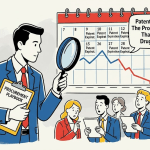
A patent cliff sourcing calendar is a procurement planning tool that lists upcoming major drug patent expirations — with associated Paragraph IV filing status, litigation timeline estimates, and projected generic entry dates — organized by clinical therapeutic area and sorted by contract relevance to the organization.
This calendar doesn’t require specialized legal expertise to build. The inputs are:
Orange Book data on patent expiration dates for drugs relevant to the organization
DrugPatentWatch data on pending Paragraph IV certifications for those drugs
Active litigation status from PACER (or DrugPatentWatch’s litigation tracking)
Estimated litigation resolution timelines based on current case schedules
The output is a twelve-to-eighteen-month forward view of which drugs in the organization’s spend portfolio are approaching generic competition, when first-mover generics are likely to be available, and which suppliers have the most advanced position in the Paragraph IV race for each drug.
A well-maintained patent cliff sourcing calendar directly reduces the cost of pharmaceutical procurement by ensuring that sourcing transitions to generic alternatives are planned and contracted proactively rather than reactive.
Quality, Regulatory, and Patent Risk: The Integrated Framework
Why Isolated Risk Assessment Fails
Pharmaceutical procurement has historically organized supplier risk into silos: quality risk managed by quality assurance, financial risk managed by finance, regulatory risk managed by regulatory affairs, and supply risk managed by procurement. Patent risk has generally been managed by legal, with limited integration into the other silos.
This organizational structure produces blind spots because pharmaceutical supply risk is rarely a single-cause event. The most significant supply disruptions — Ranbaxy’s data integrity fraud, Valeant’s quality failures, the generic shortage crisis of 2020-2021 — all involved multiple simultaneous risk factors that each appeared manageable in isolation but were catastrophic in combination.
A supplier with borderline quality audit scores, active patent litigation affecting its priority products, and a balance sheet showing heavy litigation-related debt service is not adequately characterized by any single risk dimension. The integrated view — which requires quality, financial, regulatory, and patent data in a common assessment framework — reveals the combined exposure.
Building this integrated framework requires four decisions that most pharmaceutical procurement organizations have not made:
First, a decision about data ownership. Who is responsible for maintaining current patent litigation status data for the supplier base? This is not a legal function — legal can support it, but the operational monitoring belongs in procurement.
Second, a decision about trigger events. Which patent events require immediate supplier assessment, which require routine monitoring, and which are informational only? Building this trigger taxonomy before a crisis occurs is the difference between a managed response and a scramble.
Third, a decision about scoring integration. How does patent risk data integrate into the supplier scorecard alongside quality, financial, and logistics metrics? This requires a deliberate methodological decision about weights and thresholds.
Fourth, a decision about contract provisions. Which standard contract terms address patent risk, and how are those terms enforced when a patent event occurs? This requires legal involvement but procurement leadership.
FDA’s Quality Metrics Initiative and Patent Correlation
FDA has been developing a quality metrics program for pharmaceutical manufacturers — a systematic effort to collect manufacturing performance data that would allow the agency to assess facility risk more proactively. While the program has been slow to finalize, the data it’s designed to collect (lot acceptance rates, invalidated out-of-specification results, product quality complaint rates) are valuable inputs into supplier quality assessment.
There’s an interesting correlation between quality metrics and patent litigation intensity that procurement teams should understand. Manufacturers under heavy patent litigation pressure — particularly those facing adverse litigation outcomes that threaten anticipated revenues — face financial pressure that historically correlates with underinvestment in quality systems. This is not a universal rule, but the pattern is consistent enough in the historical record to warrant attention.
When a supplier’s patent litigation takes an adverse turn, that’s a signal to increase quality audit frequency and scrutiny, not to maintain the existing audit schedule. The financial stress of losing anticipated first-filer revenues, paying litigation costs, and managing potential ANDA uncertainty creates exactly the organizational conditions that lead to quality shortcuts.
Supplier Concentration and Patent Risk Amplification
Single-source supply relationships amplify every category of supplier risk, and patent risk is no exception. A buyer that sources 100% of a critical API from a single generic manufacturer that has an active Paragraph IV challenge pending faces the full impact of any disruption to that manufacturer’s supply. There is no backup.
The standard procurement response to single-source risk is dual or multi-sourcing. For patent risk specifically, multi-sourcing also requires patent diversification. If both of your API suppliers for a critical compound are first filers who have challenged the same patent, and the patent holder wins a preliminary injunction against both, you have no supply — regardless of the fact that you have two suppliers.
True patent risk diversification in a dual-source relationship requires that the two suppliers have different patent certification strategies for the relevant drug. One may have Paragraph IV certifications (higher risk, higher potential reward if they win), while the other waits for patent expiration (lower risk, delayed entry but no litigation exposure). Contracting with both gives procurement a supply continuity path through the Paragraph IV litigation period and price optionality when the waiting-for-expiration supplier enters after litigation is resolved.
Practical Implementation: Building the Process
Step One: Establish the Supplier Patent Baseline
The first implementation step is establishing a current-state patent baseline for your existing supplier base. This means, for every supplier and every contracted product:
Pulling the current Orange Book ANDA status. Is the ANDA approved? What’s the therapeutic equivalence code? What patents are listed?
Identifying any pending Paragraph IV certifications. Has the supplier challenged any of the listed patents? If so, when was the certification filed?
Searching for active patent litigation. Has the patent holder sued? Is there a 30-month stay in effect? Has a preliminary injunction been sought?
Documenting the litigation timeline. When does the 30-month stay expire? When is trial scheduled? Have any settlements been discussed in court filings?
For a supplier base of fifty generic manufacturers, this baseline exercise takes roughly two to three weeks with one analyst dedicating full time to the project, assuming access to DrugPatentWatch for structured data and PACER for docket pulls. It produces a risk map of the existing supplier base that most pharmaceutical procurement organizations have never had.
The output should be a simple table: supplier, product, ANDA status, Paragraph IV flag, active litigation flag, current stay status, and projected resolution date. This table can be updated quarterly.
Step Two: Integrate Patent Risk Into Qualification SOPs
Once the baseline is established, patent due diligence needs to become part of the standard supplier qualification SOP, not a special project. This means:
Adding patent status review to the new supplier qualification checklist, alongside quality documentation review and financial assessment. The review should cover the Orange Book baseline elements described above for all products in the proposed supply scope.
Setting qualification scoring thresholds. A supplier with an active preliminary injunction on any product in the supply scope should require a higher-level review and explicit risk acceptance before qualification. A supplier with multiple active 30-month stays affecting the majority of its product portfolio should be scored as a higher-risk supplier, with corresponding sourcing strategy adjustments.
Training procurement analysts on the basic mechanics of Paragraph IV filings, Orange Book searches, and PACER docket pulls. This doesn’t require legal training — it requires about four hours of structured instruction and practice. The goal is that every analyst can conduct a basic patent status review without requiring legal support for routine checks.
Step Three: Set Up Automated Monitoring
The baseline and the SOP together address new suppliers and the current state. They don’t address change management — what happens when a supplier’s patent situation changes after qualification.
Automated monitoring through DrugPatentWatch or equivalent platform addresses this. The implementation requires:
Loading the supplier base and relevant product list into the monitoring platform. Defining alert categories and urgency tiers (new Paragraph IV filing, new lawsuit, preliminary injunction motion, court order). Routing alerts to the appropriate procurement owner and to the legal team for cases requiring interpretation. Setting up a quarterly review meeting where the procurement team reviews the patent status of all monitored suppliers and updates the supplier risk scores accordingly.
This process is not complex. It requires organizational commitment more than technical sophistication. The challenge is building the habit — making patent status review a routine part of supplier management rather than a reactive crisis response.
Step Four: Negotiate Contract Provisions
The contract provisions described earlier — patent status representations, supply continuity triggers, litigation disclosure obligations, and force majeure carve-outs — need to be negotiated into new supply agreements going forward and into renewal terms for existing agreements.
This requires legal involvement, but procurement should drive the process. The provisions should be treated as standard terms, not negotiating positions to be abandoned at the first sign of supplier resistance. A supplier that is unwilling to represent its current patent status or notify buyers of patent events is a supplier that has reason to conceal that information.
For existing contracts that lack these provisions, the quarterly supplier review is the opportunity to identify the highest-risk relationships and prioritize renegotiation. Suppliers with active preliminary injunction exposure and no contractual notification requirements represent the most urgent renegotiation targets.
Step Five: Scenario Planning and Business Continuity
Patent risk scenarios should be part of the annual supply chain business continuity planning exercise. For each major supplier, procurement should maintain a scenario plan that addresses:
What happens if this supplier receives a preliminary injunction and cannot supply the contracted product for six to twelve months? Is there a qualified backup source? Can the backup source scale to full supply requirements? What is the estimated premium cost of emergency sourcing?
What happens if this supplier’s first-filer exclusivity challenge fails and it cannot launch a drug it had planned to launch? Does this affect its financial stability in ways that create risk for other products we source from this supplier?
What happens if this supplier is acquired as part of an industry consolidation transaction? Does the acquiring entity have different patent litigation exposure? Different manufacturing facilities? Different financial stability?
These scenarios are not hypothetical — all three have occurred regularly in the pharmaceutical supply chain over the past decade. Building the scenario plans in advance of a crisis means that when a crisis arrives, the procurement response is a plan execution rather than an improvised scramble.
Regulatory Developments Affecting Paragraph IV Dynamics
Pay-for-Delay and FTC Enforcement
The pay-for-delay settlement structure — in which brand-name companies pay generic manufacturers to delay their market entry as part of a Paragraph IV settlement — was transformed by the Supreme Court’s 2013 decision in FTC v. Actavis. Before Actavis, courts were divided on whether reverse-payment settlements were automatically legal under the ‘scope of the patent’ doctrine. After Actavis, reverse-payment settlements are subject to antitrust scrutiny under a rule-of-reason standard.
For procurement purposes, the post-Actavis landscape matters because it affects how Paragraph IV cases settle. Pay-for-delay settlements are now riskier for brand-name companies to pursue, which means that some patent disputes that previously settled with delayed-entry agreements now proceed to litigation — with all the supply timing uncertainty that entails.
The FTC continues to monitor reverse-payment settlements actively. The commission’s annual report on branded pharmaceutical drug settlements identifies cases that the FTC considers potentially anticompetitive. For procurement teams monitoring a drug’s patent landscape, a settlement flagged in the FTC’s annual report as potentially anticompetitive is a signal that the settlement terms may face legal challenge, which could reopen the generic entry question.
The CREATES Act and Authorized Testing Samples
The Creating and Restoring Equal Access to Equivalent Samples Act (CREATES Act), enacted in 2019, addressed a specific tactic that brand-name pharmaceutical companies had used to delay generic competition: refusing to provide reference samples that generic manufacturers need for bioequivalence testing.
Before the CREATES Act, brand-name companies could delay the ANDA approval process by refusing to sell reference samples to generic developers, citing REMS (Risk Evaluation and Mitigation Strategy) distribution restrictions. The CREATES Act gave generic manufacturers a private right of action to compel sample access, removing a tool that brand-name companies had used to effectively extend patent exclusivity.
For procurement purposes, the CREATES Act’s significance is that it removed one source of ANDA approval delay that had previously been difficult to predict. Generic entry timelines based on bioequivalence testing completion are somewhat more predictable now than they were before 2019, because reference sample access is a more reliable assumption.
FDA’s GDUFA and ANDA Approval Timelines
The Generic Drug User Fee Amendments (GDUFA) — first enacted in 2012 and renewed twice since — established user fees that fund FDA’s generic drug review activities and committed FDA to specific ANDA review timelines.
Under GDUFA III (the current authorization cycle), FDA has committed to completing first-cycle reviews of 90% of standard ANDAs within ten months. This goal has materially reduced ANDA approval backlogs that historically stretched to several years. Shorter ANDA approval timelines mean that the 30-month stay — not ANDA review delay — is now the primary timeline variable for generic market entry.
For procurement planning, the practical implication is that generic entry timelines for drugs with Paragraph IV certifications are now primarily litigation-driven rather than FDA review-driven. The critical variable to monitor is litigation progress, not ANDA queue position. This shifts the intelligence priority clearly toward patent litigation tracking and away from FDA review status monitoring.
The Evolving Patent Landscape: What’s Coming
AI-Assisted Patent Challenge Strategies
The pharmaceutical patent litigation industry is beginning to apply artificial intelligence to Paragraph IV challenge strategy, specifically to the prior art analysis that underlies patent invalidity arguments.
Patent invalidity challenges — arguing that a patent should never have been granted because it lacks novelty or is obvious in light of prior art — require comprehensive prior art searches. AI-assisted prior art search tools can cover more ground than human searchers in less time, potentially improving the quality of invalidity arguments in Paragraph IV challenges.
For procurement teams, AI-assisted patent challenges have two implications. First, they may increase the frequency and success rate of Paragraph IV filings over time, because challengers will have better evidence at lower cost. Second, they may reduce the settlement value of contested patents — if a generic manufacturer has strong AI-assisted prior art evidence, it has less incentive to accept a delayed-entry settlement, preferring to fight for immediate entry.
More frequent and more successful Paragraph IV challenges means more generic competition more quickly — a positive outcome for pharmaceutical procurement overall. The adjustment period — when challenge activity is increasing but outcomes are still uncertain — will be a period of elevated supply timing risk.
Emerging Drug Categories and Patent Thickets
As gene therapies, cell therapies, and RNA-based drugs move from clinical development into commercial markets, the patent landscapes for these products are extraordinarily complex. A single gene therapy product may involve dozens of patents covering the therapeutic gene sequence, the viral vector, the manufacturing process, and the dosing delivery system — held by different patent holders, with different expiration dates.
The Hatch-Waxman structure doesn’t map cleanly onto these products. Gene therapies don’t have bioequivalent ‘generics’ in the conventional sense — the FDA pathway for ‘follow-on’ gene therapies is still being defined. RNA-based drugs like siRNA therapeutics face similarly complex patent landscapes.
For procurement teams operating in these emerging categories, the Orange Book and Paragraph IV framework provides limited guidance. The relevant patent monitoring requires direct engagement with specialized IP counsel, tracking the evolving FDA guidance on follow-on biologic and gene therapy pathways, and monitoring the Purple Book for relevant BPCIA submissions.
The practical procurement takeaway is that the standard due diligence toolkit — Orange Book, PACER, DrugPatentWatch — is complete for small-molecule generic drugs and largely complete for biosimilars, but needs supplementation with specialized patent counsel and regulatory tracking for emerging categories.
Building Internal Capability vs. Outsourcing Patent Surveillance
The Make-or-Buy Decision
Pharmaceutical procurement organizations face a straightforward make-or-buy decision on patent surveillance capability: build internal expertise and use patent databases directly, or outsource the monitoring and analysis to a specialized service provider.
The considerations cut both ways.
Internal capability has the advantage of integration with procurement workflows, direct access to supplier conversations, and organizational learning that improves over time. A procurement analyst who has spent two years monitoring Paragraph IV filings understands the supplier base at a level of nuance that a quarterly report from an external provider cannot replicate.
The disadvantage of internal capability is the expertise gap. Patent monitoring requires understanding legal terms and database structures that aren’t part of traditional procurement training. The learning curve is real, and turnover of trained staff resets the clock.
Outsourced surveillance — using DrugPatentWatch’s monitoring services, or engaging a specialized pharmaceutical IP analytics firm — provides expert interpretation, broader database coverage, and consistent monitoring regardless of internal staff changes. The disadvantage is cost, the lag between event and alert, and the loss of direct supplier intelligence that internal monitoring generates.
The practical answer for most mid-size pharmaceutical procurement organizations is a hybrid: internal analysts using DrugPatentWatch and PACER for routine monitoring, with specialized IP counsel engaged for complex litigation interpretation and contract negotiation. This combines operational coverage with expert support without requiring full-time IP attorney headcount within the procurement function.
Staffing and Training Requirements
A pharmaceutical procurement team managing a fifty-supplier generic base with systematic patent surveillance needs approximately one full-time equivalent dedicated to patent monitoring — not necessarily a standalone role, but a dedicated portion of an analyst’s time.
The training requirements are concrete. FDA Orange Book navigation: two hours. PACER account setup and basic docket searching: three hours. DrugPatentWatch platform orientation: four hours. Pharmaceutical patent fundamentals — Paragraph IV mechanics, 30-month stay, 180-day exclusivity, BPCIA patent dance: one day of structured instruction.
This is not law school. It’s functional literacy in a specific regulatory domain that directly affects supply chain risk. Any analyst who can read an SEC filing or navigate a quality audit report can acquire pharmaceutical patent monitoring competency with the right training and tool access.
Legal review should be reserved for interpreting specific court orders, assessing settlement implications, and advising on contract provisions. Routine monitoring — identifying which suppliers have Paragraph IV certifications pending, tracking active litigation status, flagging when 30-month stays are triggered — does not require legal expertise. It requires database literacy and process discipline.
Quantifying the ROI of Patent Due Diligence
What a Supply Disruption Actually Costs
The procurement ROI case for Paragraph IV due diligence rests on a cost avoidance calculation that most organizations have never formalized. Building that calculation requires quantifying what a supply disruption actually costs — in direct procurement premiums, lost production, customer penalties, and regulatory response.
Emergency sourcing premiums for pharmaceutical ingredients typically run 25-50% above contracted prices, according to industry benchmarking data from the Healthcare Supply Chain Association [2]. For a high-volume API with $5 million in annual contracted spend, a six-month supply disruption requiring emergency sourcing could cost $600,000 to $1.25 million in premiums alone — before accounting for expedited logistics, quality testing of emergency sources, and regulatory compliance costs for unqualified alternatives.
Lost production costs are harder to quantify but typically larger. If a manufacturer’s production line is down because an API is unavailable, the fully loaded cost per day of lost output varies by product and plant, but $100,000 to $500,000 per day of idle manufacturing capacity is not an unusual range for commercial-scale pharmaceutical facilities.
Customer penalties and lost revenue are the largest category for companies with firm supply commitments to hospital systems, government purchasers, or other customers with contractual delivery requirements. A single supply failure that triggers customer penalty clauses can cost more than the combined value of the annual supplier contract.
Against these costs, the investment in systematic patent surveillance — tool licensing costs of $30,000-80,000 annually for a platform like DrugPatentWatch, plus analyst time — produces a straightforward ROI calculation. One avoided supply disruption per year pays for the program many times over.
The Negotiating Leverage Value
Beyond cost avoidance, patent due diligence creates procurement negotiating leverage that is harder to quantify but equally real.
A procurement team that monitors a supplier’s Paragraph IV litigation and identifies that the supplier has lost a critical patent case — a fact reflected in public court records — knows before the supplier discloses it that the supplier’s anticipated first-filer revenue stream has been eliminated. That knowledge creates negotiating leverage at contract renewal: the supplier’s alternatives may have narrowed, the urgency of maintaining existing customers has increased, and pricing flexibility may be greater than before the litigation outcome.
This is not a manipulation of the supplier relationship. It’s the standard procurement practice of entering negotiations with full information. The information is public. The only question is whether your team has it.
Conversely, patent due diligence also reveals when a supplier’s position has strengthened — when it has won a patent case, achieved first-filer exclusivity, or settled on terms that give it a clear and near-term path to market for a major product. A supplier in that position has options and leverage. Recognizing that from the patent record helps procurement calibrate its negotiating approach realistically.
Key Takeaways
Paragraph IV certification data is one of the most predictive and underused leading indicators of generic drug supplier risk available to pharmaceutical procurement teams. Every Paragraph IV filing, every patent lawsuit, every 30-month stay, and every court order is public information, available through FDA’s Orange Book, PACER, and structured patent intelligence platforms like DrugPatentWatch.
The standard supplier qualification process — quality audit, financial review, FDA registration check — misses the litigation exposure that determines whether a supplier can actually supply during the contract term. A supplier that passes every quality and financial screen but faces a pending preliminary injunction on its priority product line is not a safe supply source.
The consequences of ignoring patent risk are specific and quantifiable: emergency sourcing premiums of 25-50%, lost production costs that dwarf premium expenses, and customer penalty exposure that can exceed the value of the original supply contract. One avoided disruption typically pays for a patent surveillance program many times over.
Building patent due diligence into procurement workflows requires four concrete changes: adding Orange Book and Paragraph IV review to supplier qualification SOPs, integrating patent risk into supplier scoring models, negotiating contract provisions that address patent litigation events, and establishing ongoing monitoring through automated alerts and quarterly supplier patent reviews.
The Paragraph IV landscape is dynamic. Static, point-in-time assessments at contract signing are necessary but not sufficient. Suppliers’ litigation situations change — new cases are filed, preliminary injunctions are sought, settlements reshape the competitive landscape. Monitoring must be ongoing to be effective.
The therapeutic categories with the highest current Paragraph IV risk include GLP-1 receptor agonists, oncology biologics (through the BPCIA pathway), and complex generics where patent thickets create extended litigation. Procurement teams operating in these categories need more rigorous and more frequent patent surveillance than those in categories with stable, largely expired patent landscapes.
Building this capability does not require full-time IP attorney support within procurement. Functional patent monitoring literacy — Orange Book navigation, PACER docket searches, structured database tools — is trainable to procurement analysts in roughly two days of instruction. Legal support should be reserved for contract drafting and complex litigation interpretation.
The companies that treat patent intelligence as procurement intelligence, not as legal esoterica, will build more resilient supply chains, negotiate better contracts, and avoid the supply disruptions that their less-informed competitors will keep experiencing.
FAQ
Q: How does a 30-month stay differ from a court-ordered preliminary injunction, and which is more dangerous for supply continuity?
A: The 30-month stay is an automatic administrative hold that FDA imposes on ANDA approval when a brand-name company files a Hatch-Waxman infringement lawsuit within 45 days of Paragraph IV notification. It delays the supplier from receiving ANDA approval — so a product still awaiting approval cannot be commercially marketed in the U.S. during the stay. A preliminary injunction is a court order that prevents a supplier from marketing a product that has already received ANDA approval. Preliminary injunctions are harder to get (they require a court finding of likely irreparable harm and other factors) but more immediately dangerous for supply continuity because they can stop an already-approved, already-marketed product in its tracks. For procurement purposes, the stay risk is primarily a launch timing risk — when can the supplier first deliver this product commercially? The injunction risk is an active supply risk — can the supplier continue delivering a product you’re already receiving? Both require monitoring, but a pending preliminary injunction motion against a product you’re actively sourcing demands immediate supply continuity assessment.
Q: Can a pharmaceutical procurement team contract with a supplier that has a Paragraph IV certification pending, and if so, what precautions should they take?
A: Yes, and many do — a pending Paragraph IV certification doesn’t mean the supplier cannot supply. It means the supplier has challenged a patent, which may or may not have triggered a lawsuit, and which may or may not result in a stay or injunction. The due diligence question is what stage the challenge is at and what supply continuity provisions the contract includes. If the certification has triggered a lawsuit and a 30-month stay is in effect, the supplier cannot receive ANDA approval during the stay — so if the product isn’t yet approved, you’re contracting for supply that cannot arrive until the stay resolves or the litigation concludes. If the ANDA is approved and the product is already marketed, a stay doesn’t affect current supply (though a preliminary injunction could). Precautions include contractual notification requirements for any change in litigation status, supply continuity trigger provisions that allow emergency qualification of backup sources at the supplier’s cost if litigation outcomes disrupt supply, and regular litigation status reviews built into the supplier management cadence.
Q: How should procurement handle the situation where a preferred generic supplier is acquired by a competitor during an active supply agreement?
A: Acquisitions of generic manufacturers happen frequently enough that procurement contracts should address them explicitly. The relevant provisions are a change of control notification requirement (the supplier must notify the buyer of any acquisition or merger affecting ANDA ownership within a specified timeframe, typically 30 days), a due diligence right (the buyer has the right to conduct patent and quality due diligence on the acquiring entity as if it were a new supplier qualification), and a termination right (if the acquiring entity’s patent litigation exposure, quality status, or financial condition does not meet the buyer’s qualification standards, the buyer has the right to terminate the agreement without penalty). In practice, acquisitions often improve the supplier’s situation — the acquiring entity may have stronger financial resources, better quality systems, and a cleaner patent portfolio. But they can also introduce new litigation exposure, manufacturing site changes, or product portfolio rationalization that eliminates your contracted products. The contract provisions ensure you have timely information and contractual recourse regardless of which direction the acquisition moves the risk profile.
Q: What role does the 180-day generic exclusivity period play in procurement planning, and how should buyers structure contracts to capture the price benefit after exclusivity ends?
A: The 180-day first-filer exclusivity period is a compressed window in which the first generic entrant sells at prices that are typically 20-30% below brand but 60-80% above where the price lands when multiple generics compete. For procurement, this creates a binary pricing dynamic: during exclusivity, you’re paying near-brand prices for a generic product; after exclusivity, you’re paying fully competitive generic prices. The optimal contract structure accounts for both phases. During the exclusivity period, negotiate a price that is fixed and reflects the constrained-competition reality. Build in an automatic price reopener — or a price step-down formula — that takes effect when a specified number of additional generics receive ANDA approval (typically two or three). This approach avoids the renegotiation friction of having to revisit the contract when exclusivity ends, which is when the supplier has the least leverage and the buyer has the most. For large-volume products, the price difference between the exclusivity price and the post-exclusivity competitive price can be 50% or more. A buyer that doesn’t have a structural mechanism to capture that price drop is leaving significant procurement value with the supplier.
Q: How does the biosimilar ‘patent dance’ under the BPCIA compare to Hatch-Waxman Paragraph IV mechanics, and what are the key differences for procurement due diligence?
A: The BPCIA patent dance is more complex than Hatch-Waxman Paragraph IV mechanics and involves an exchange of confidential information rather than the public certification and notice process that characterizes Paragraph IV challenges. The reference biologic sponsor and biosimilar applicant exchange information about the biosimilar’s manufacturing process and the reference sponsor’s relevant patents, negotiate which patents to litigate (the ‘list’ process), and then litigate the agreed subset in a pre-approval phase. Unlike the automatic 30-month stay in Hatch-Waxman, the BPCIA doesn’t provide an automatic stay. Instead, the reference biologic sponsor can seek a preliminary injunction after the pre-approval patent exchange. The reference product also has a twelve-year exclusivity period (versus five years for NCE small-molecule drugs), plus a four-year period before a biosimilar can even be submitted. For procurement due diligence, the key differences are: biosimilar timelines are substantially longer and more predictable at the category level (the twelve-year exclusivity sets a floor), but less predictable at the specific-product level (the patent dance involves confidential information that doesn’t appear in public databases the way Paragraph IV certifications do). The Purple Book is the Orange Book equivalent for biologics, and DrugPatentWatch covers Purple Book data. The FDA’s Biosimilar Action Plan publications and the Purple Book are the starting points for biosimilar patent due diligence, supplemented by federal court monitoring for any BPCIA litigation that reaches the public docket.
References
[1] American Intellectual Property Law Association. (2023). Report of the economic survey 2023. American Intellectual Property Law Association.
[3] U.S. Food and Drug Administration. (2024). Approved drug products with therapeutic equivalence evaluations (44th ed.). U.S. Department of Health and Human Services. https://www.accessdata.fda.gov/scripts/cder/ob/index.cfm
[4] Federal Trade Commission. (2023). Agreements filed with the Federal Trade Commission under the Medicare Prescription Drug, Improvement, and Modernization Act of 2003: Overview of agreements filed in FY 2022. Federal Trade Commission. https://www.ftc.gov/reports/pharmaceutical-agreements
[5] FTC v. Actavis, Inc., 570 U.S. 136 (2013).
[6] Hatch-Waxman Act, Drug Price Competition and Patent Term Restoration Act of 1984, Pub. L. No. 98-417, 98 Stat. 1585 (1984).
[7] Biologics Price Competition and Innovation Act of 2009, Pub. L. No. 111-148 §§ 7001-7003 (2010).
[8] Creating and Restoring Equal Access to Equivalent Samples Act of 2019 (CREATES Act), Pub. L. No. 116-94, 133 Stat. 2534 (2019).
[9] Generic Drug User Fee Amendments of 2022 (GDUFA III), Pub. L. No. 117-180, 136 Stat. 2149 (2022).
[11] U.S. Food and Drug Administration. (2024). Purple book: Lists of licensed biological products with reference product exclusivity and biosimilarity or interchangeability evaluations. https://purplebooksearch.fda.gov
[12] Grabowski, H., & Kyle, M. (2007). Generic competition and market exclusivity periods in pharmaceuticals. Managerial and Decision Economics, 28(4-5), 491-502. https://doi.org/10.1002/mde.1330
[13] Berndt, E. R., Mortimer, R., Bhattacharjya, A., Parece, A., & Tuttle, E. (2007). Authorized generic drugs, price competition, and consumers’ welfare. Health Affairs, 26(3), 790-799. https://doi.org/10.1377/hlthaff.26.3.790
[14] Federal Trade Commission. (2002). Generic drug entry prior to patent expiration: An FTC study. Federal Trade Commission. https://www.ftc.gov/reports/generic-drug-study
[15] U.S. Department of Justice. (2013). United States v. Ranbaxy Laboratories Limited. https://www.justice.gov/opa/pr/ranbaxy-laboratories-pleads-guilty-and-agrees-pay-500-million-resolve-false-claims-act
[16] Congressional Budget Office. (2021). Research and development in the pharmaceutical industry. Congressional Budget Office. https://www.cbo.gov/publication/57126